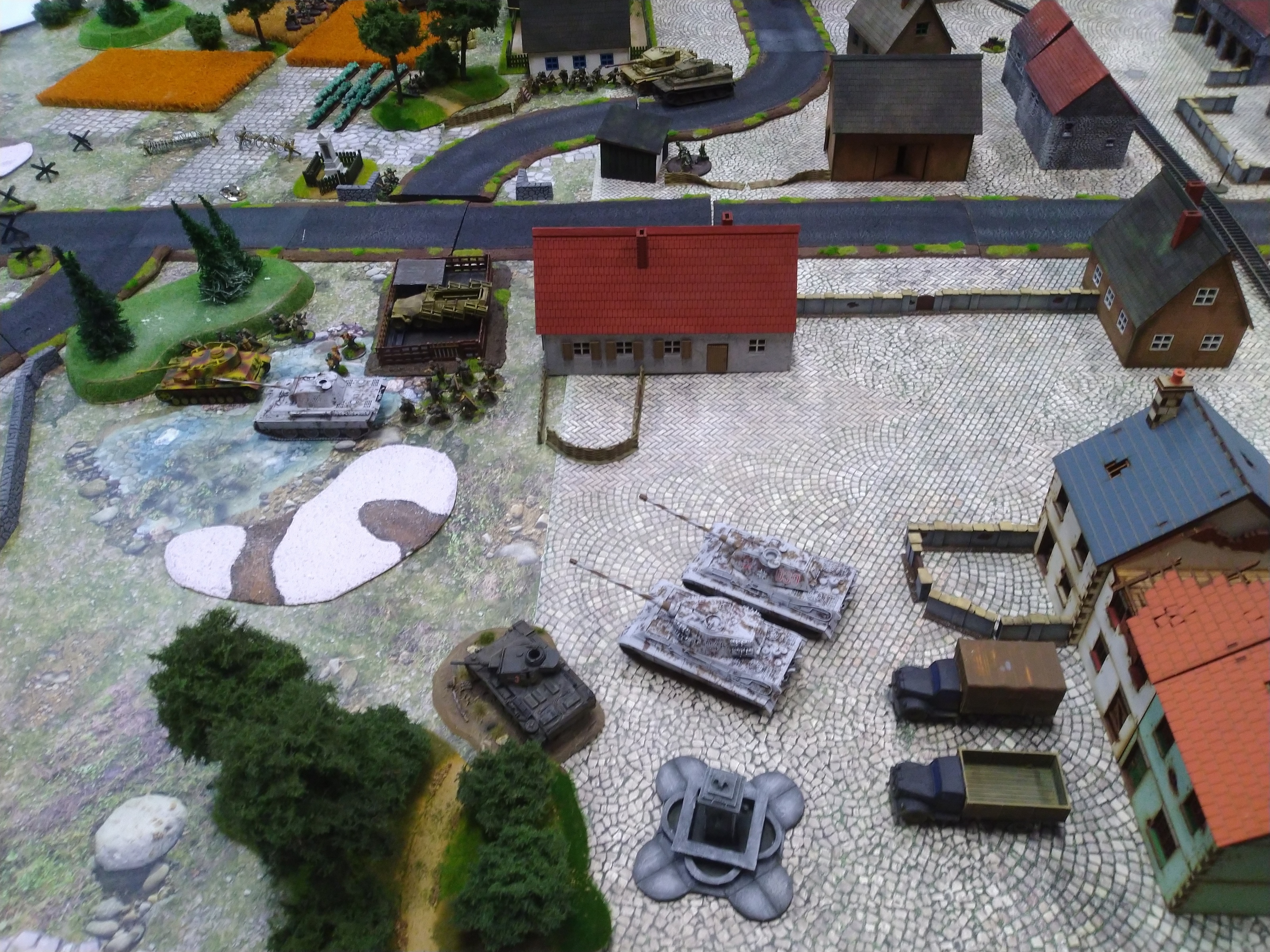
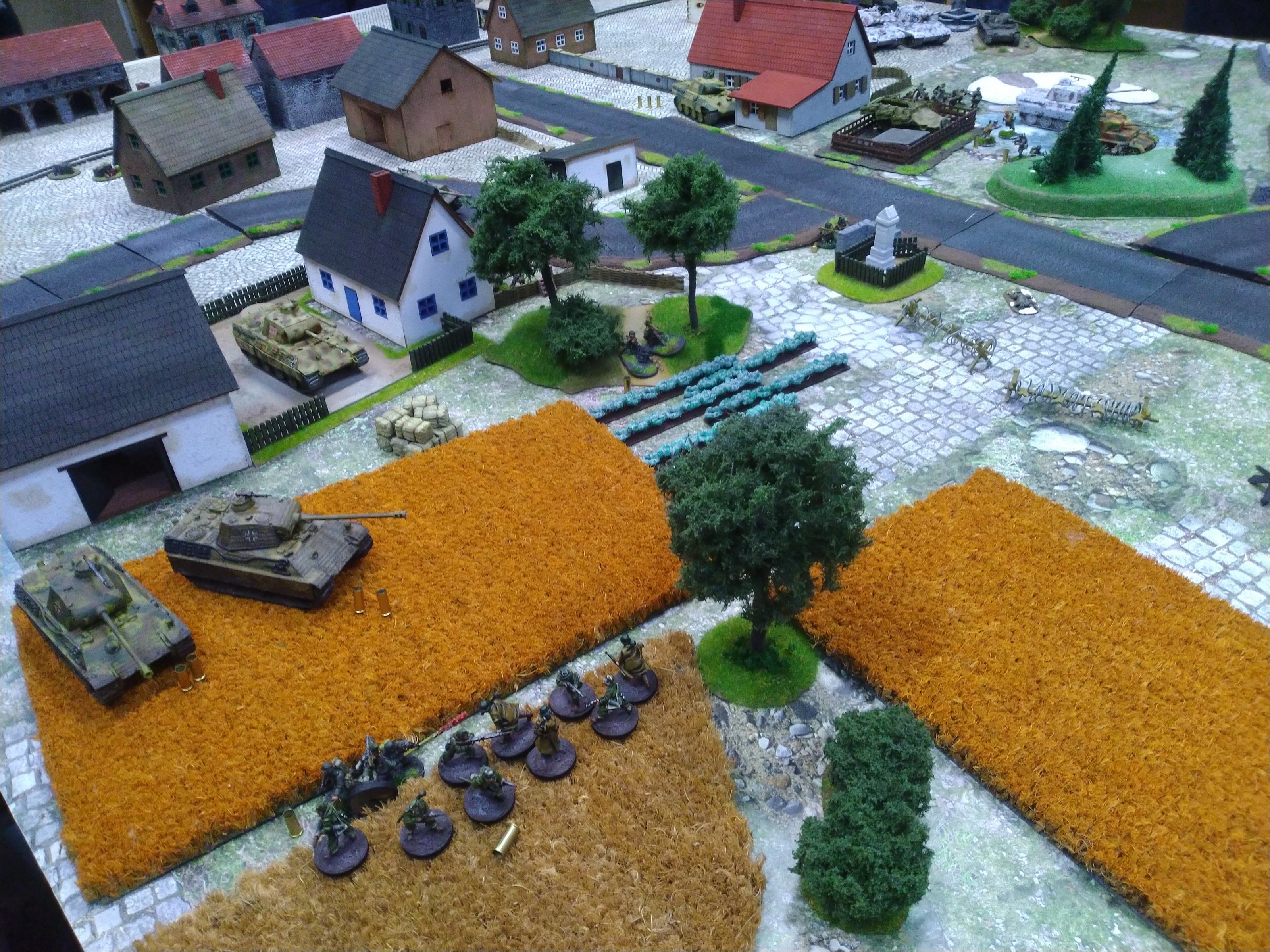
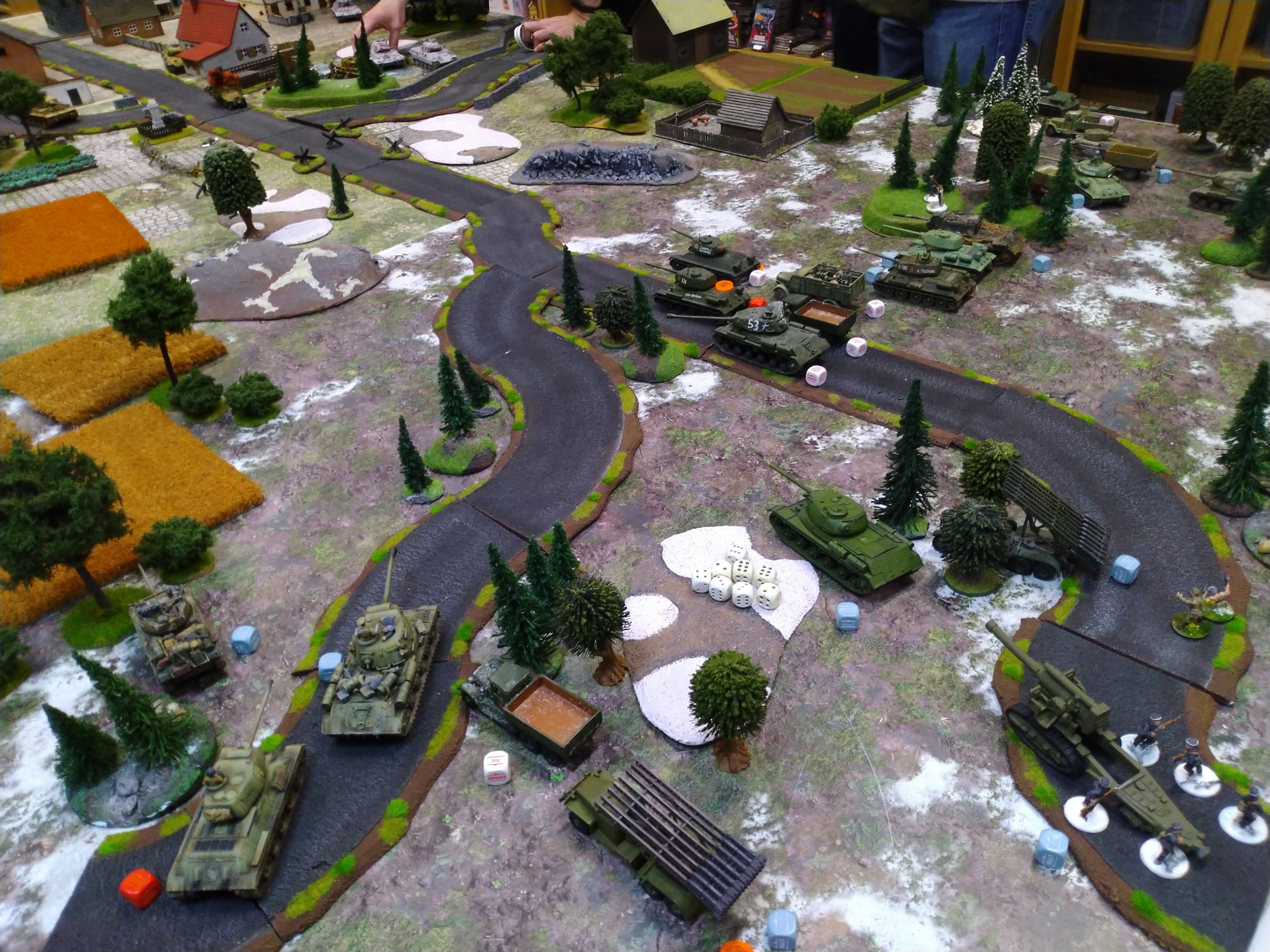
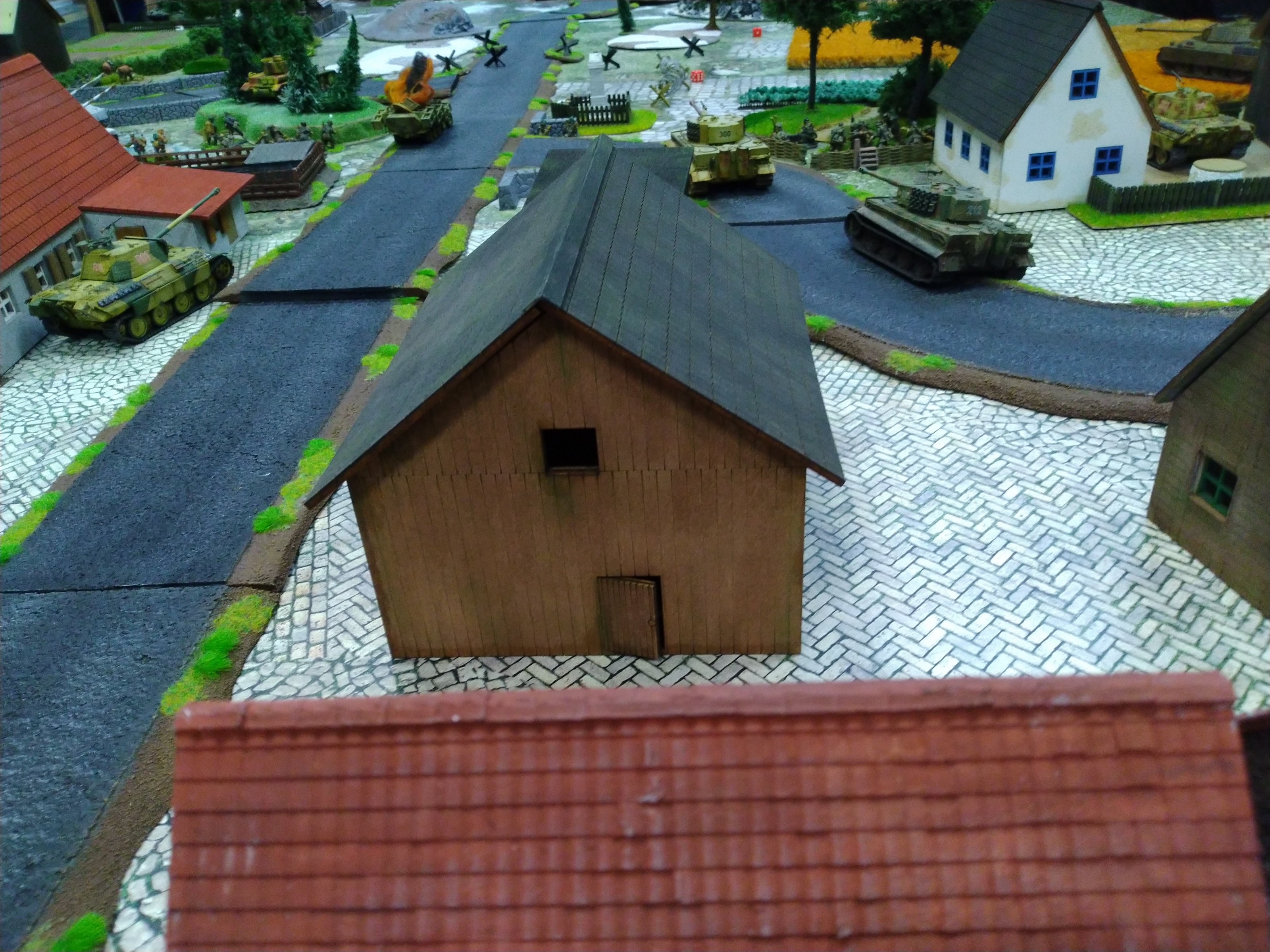
Yesterday we played another game representing siege of Budapest – after initial fail with getting into the city in previous scenario, Red Army finally reached outskirts of the city and prepared assault on the city itself.
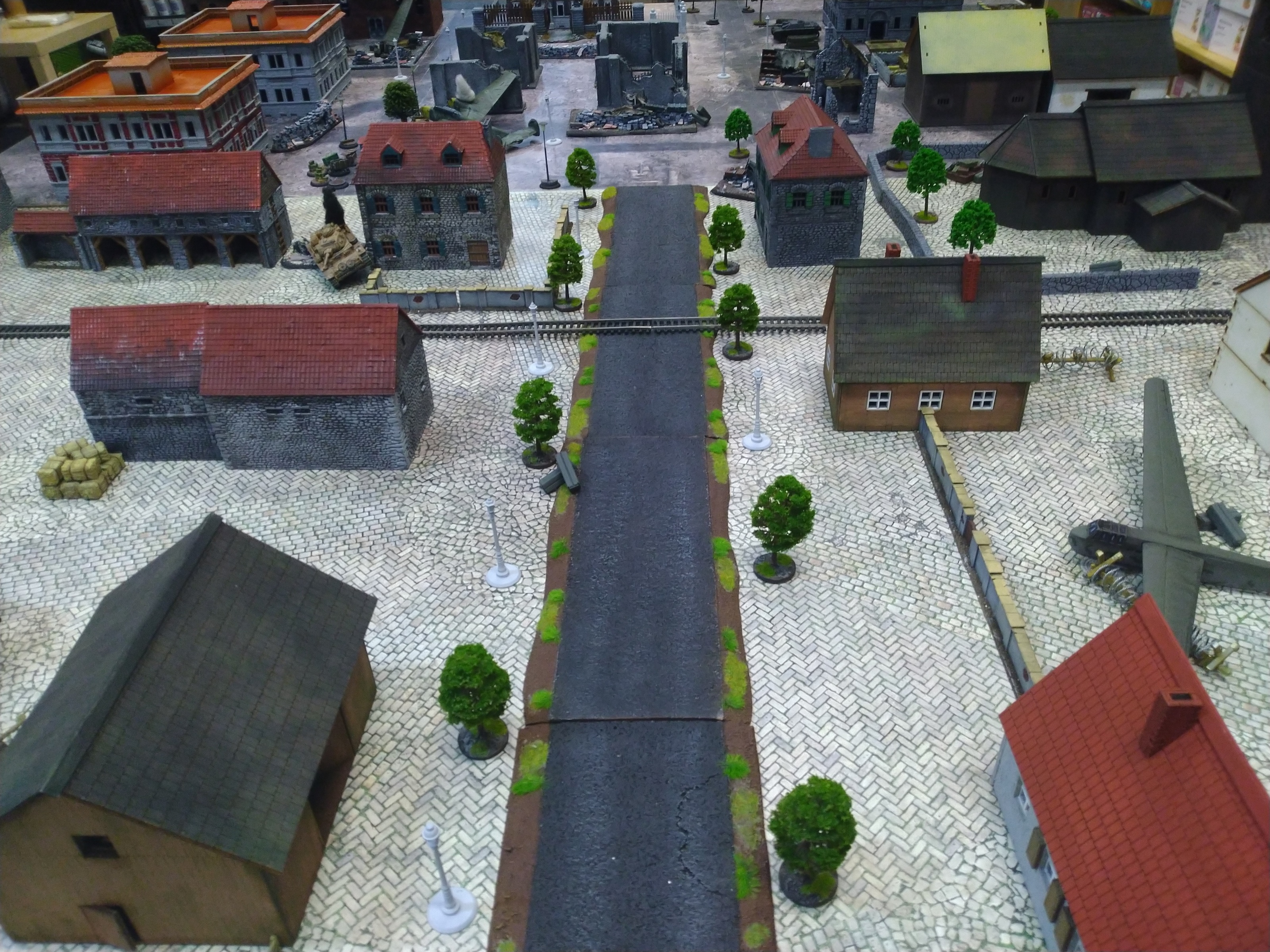
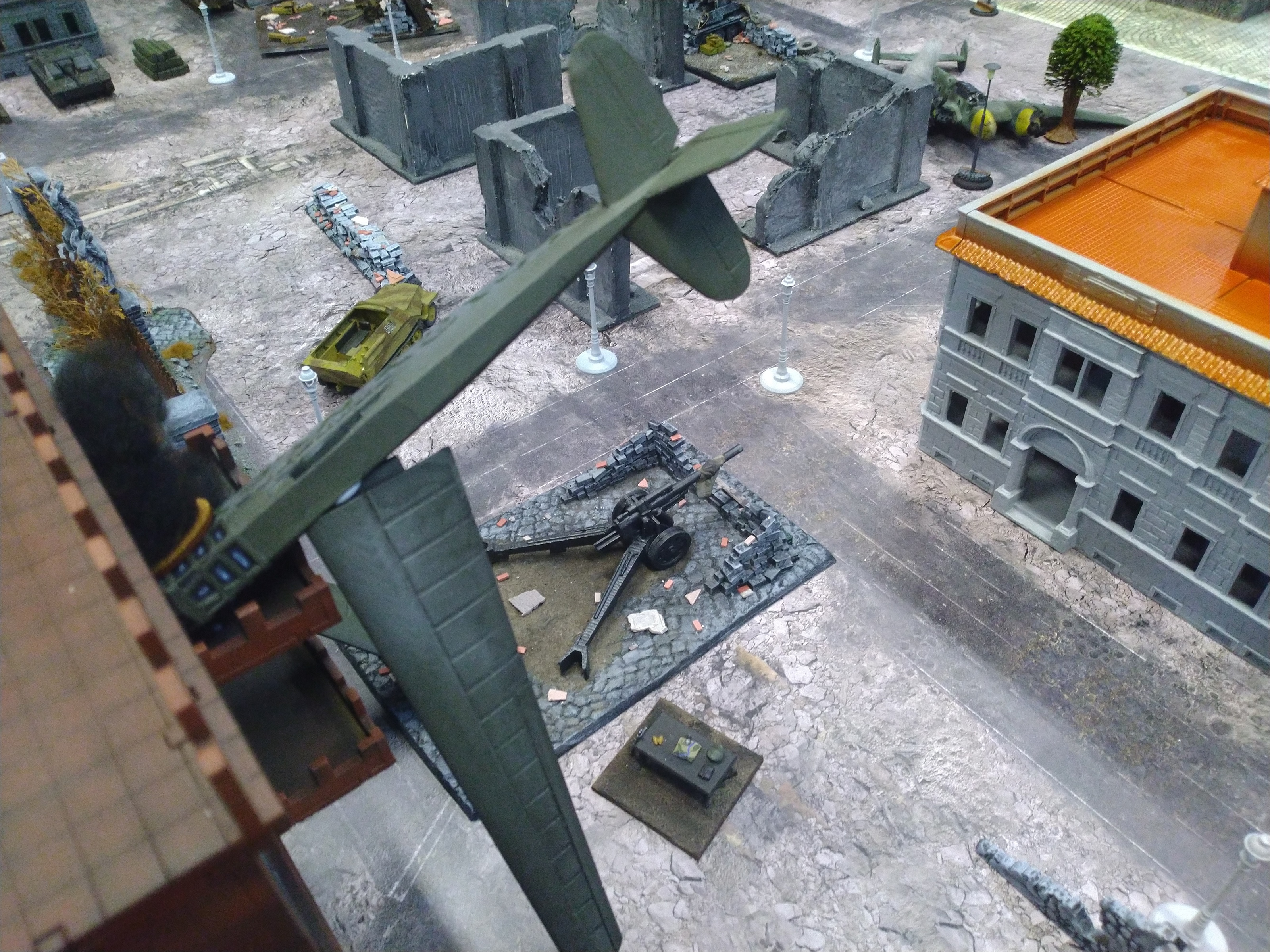
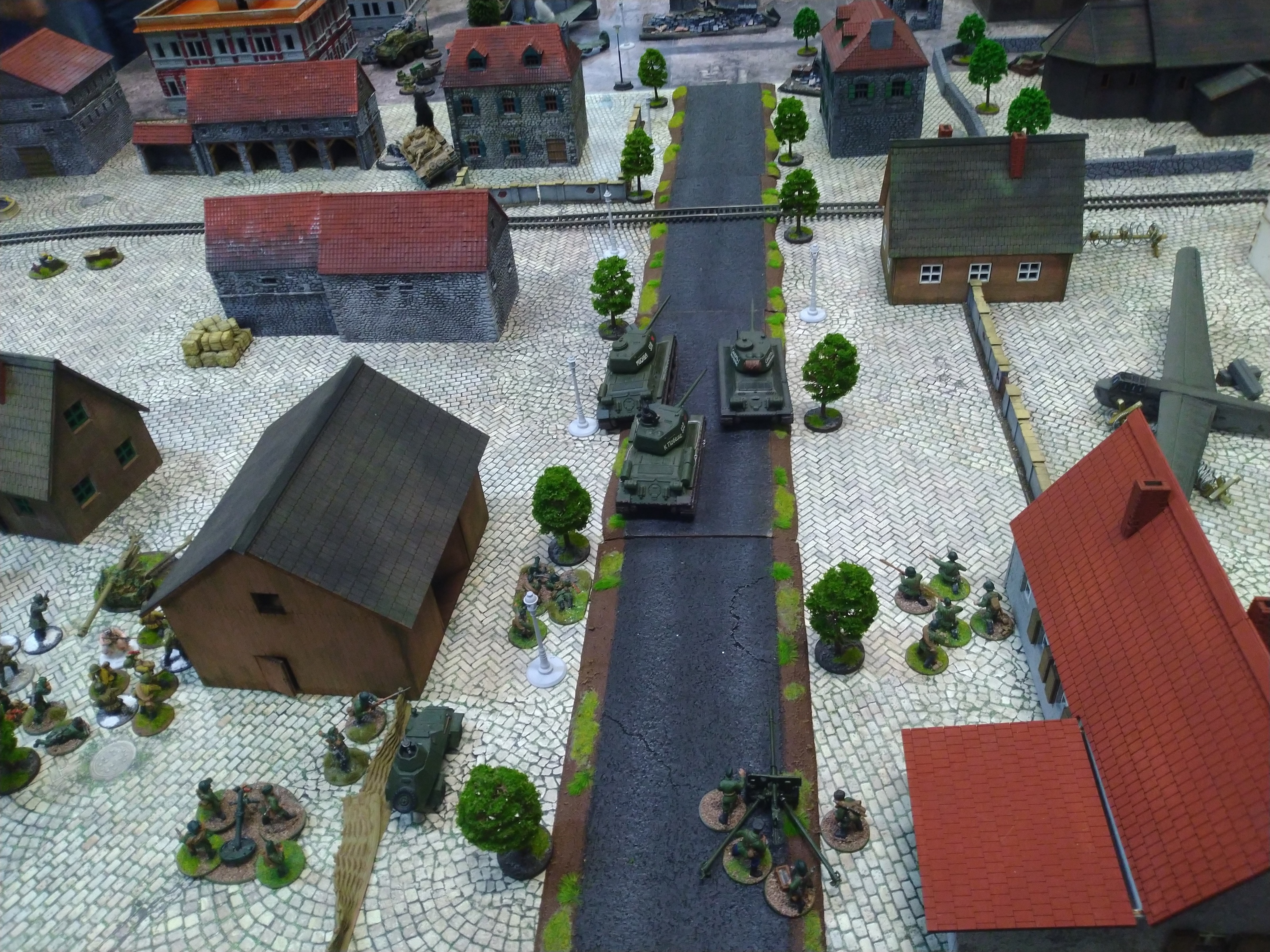
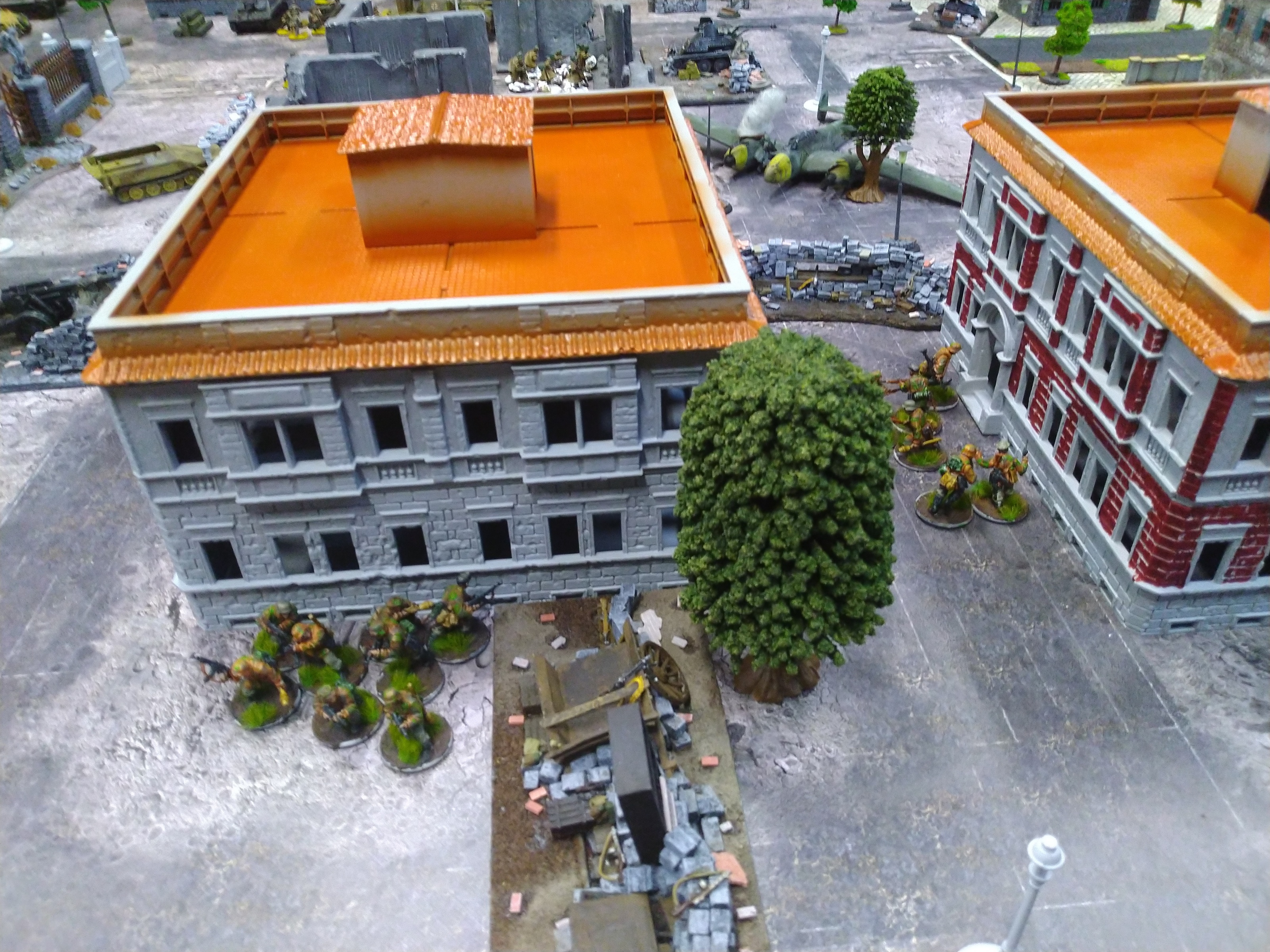
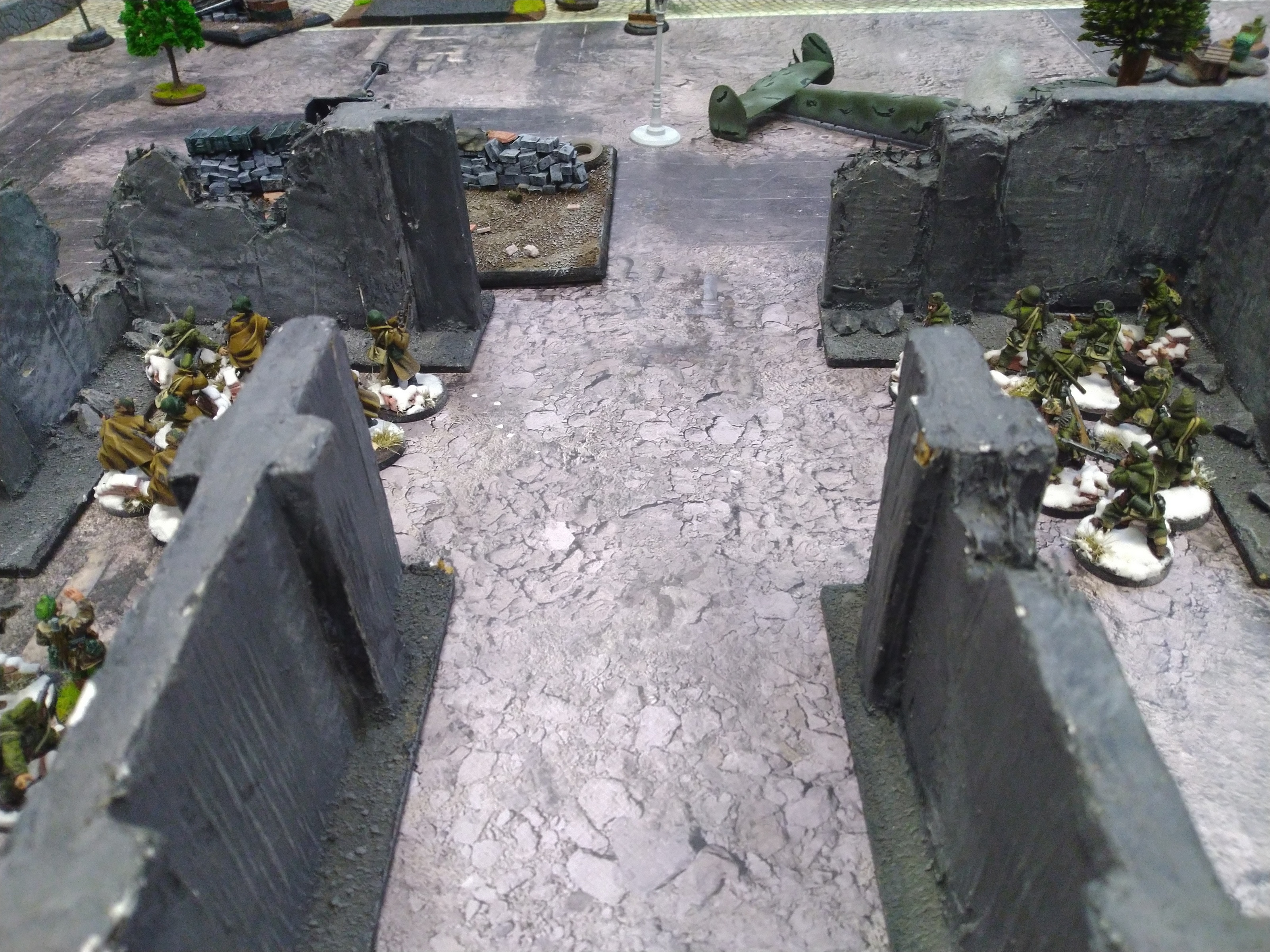
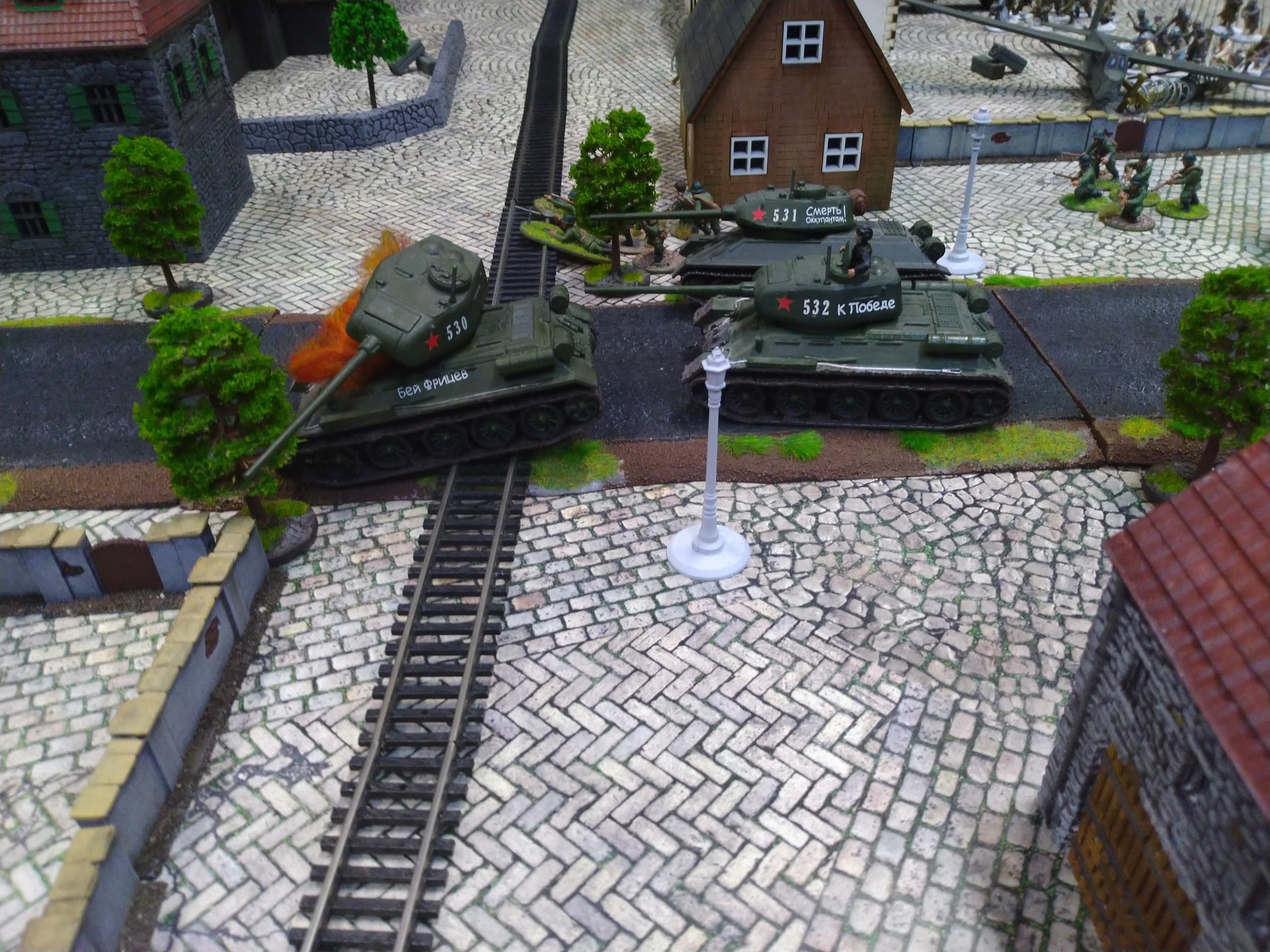
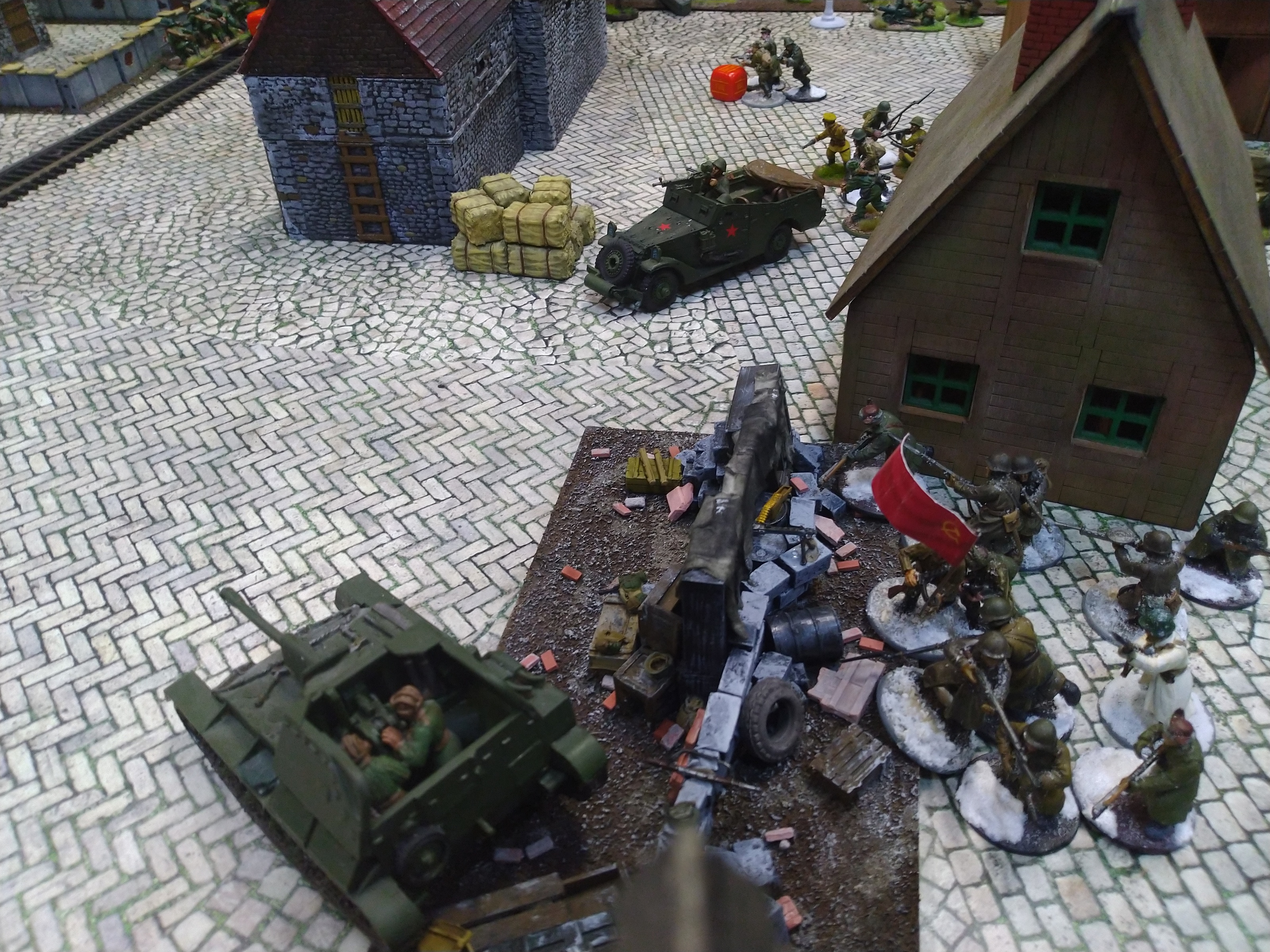
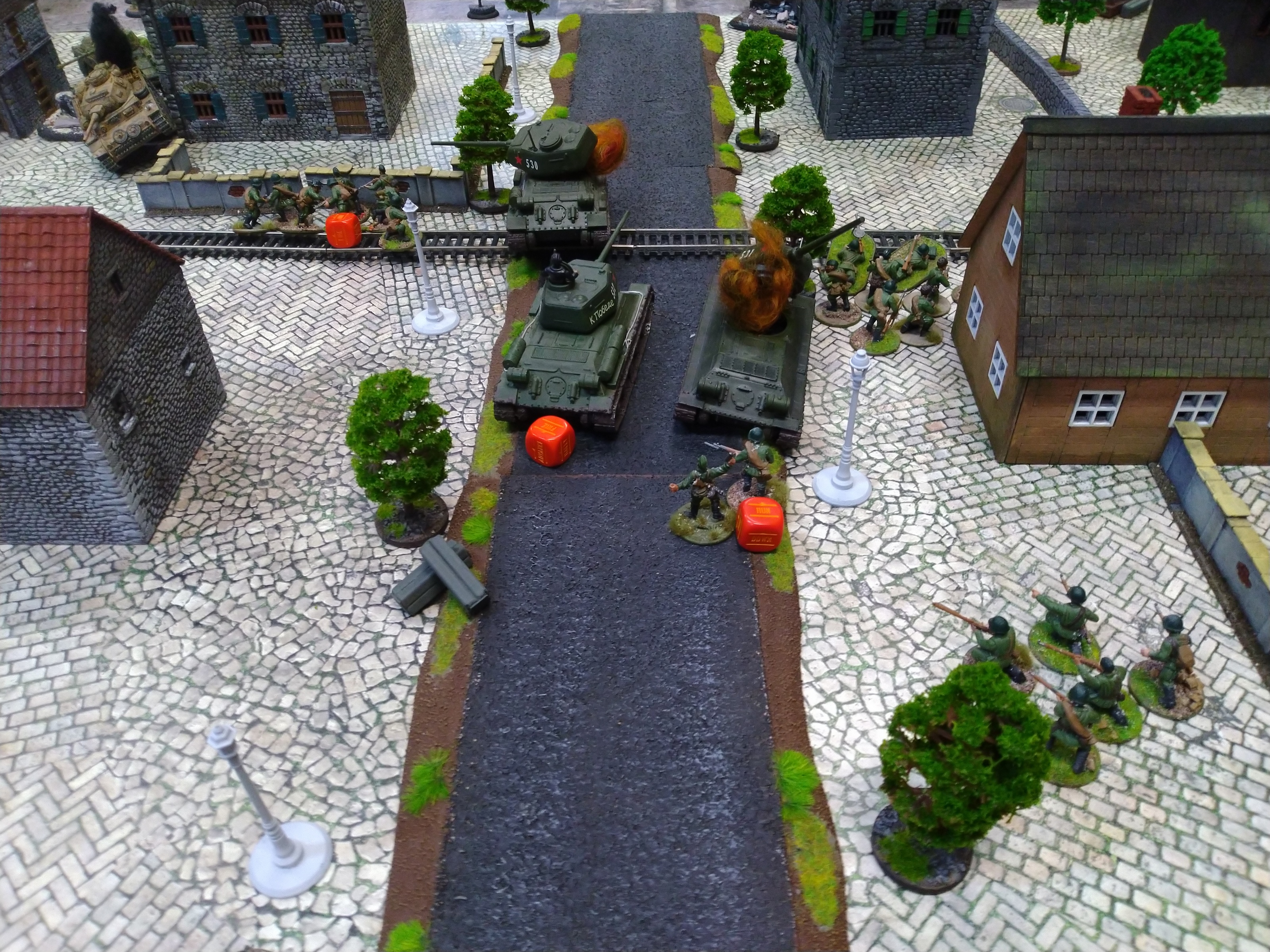
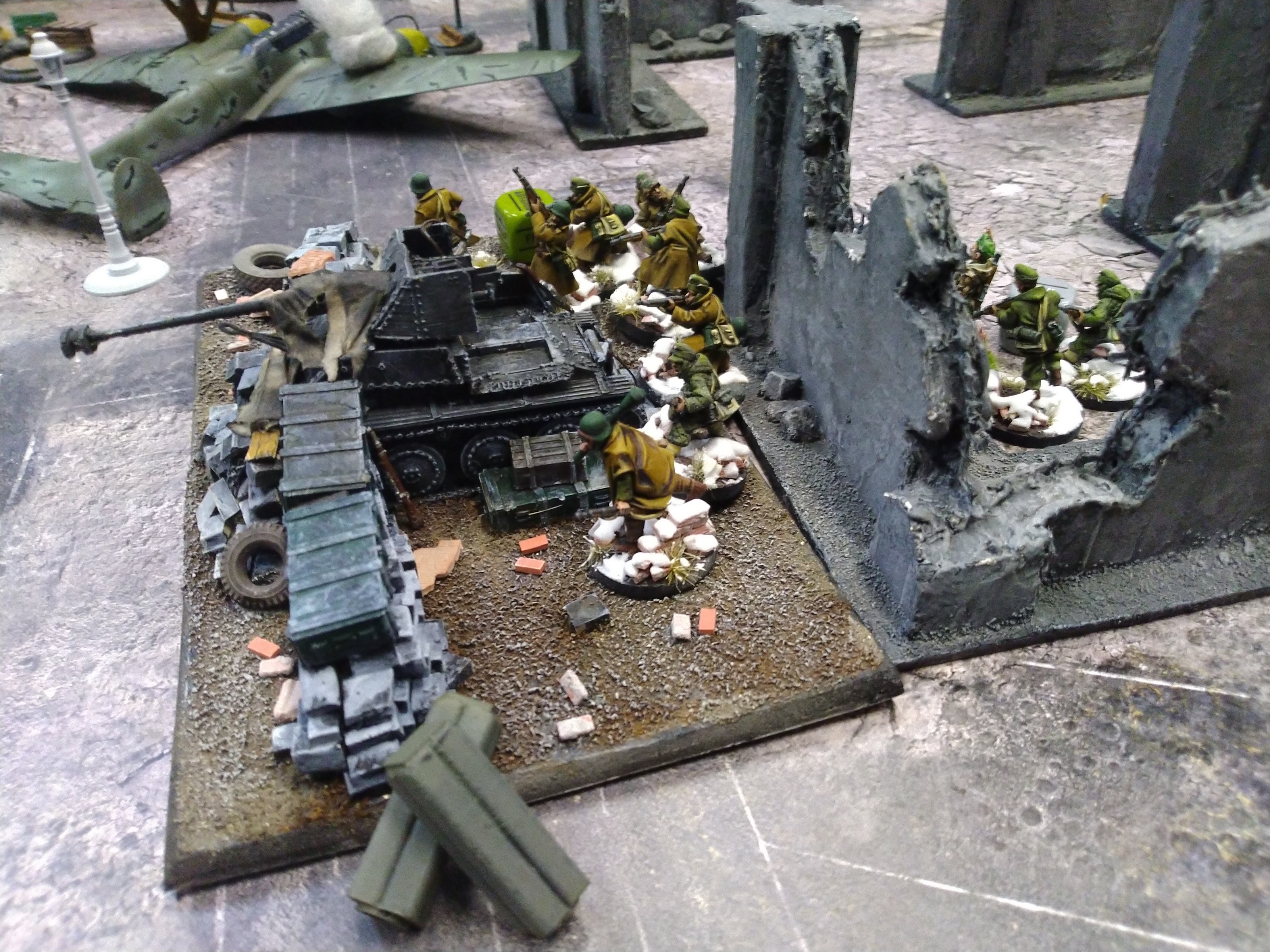
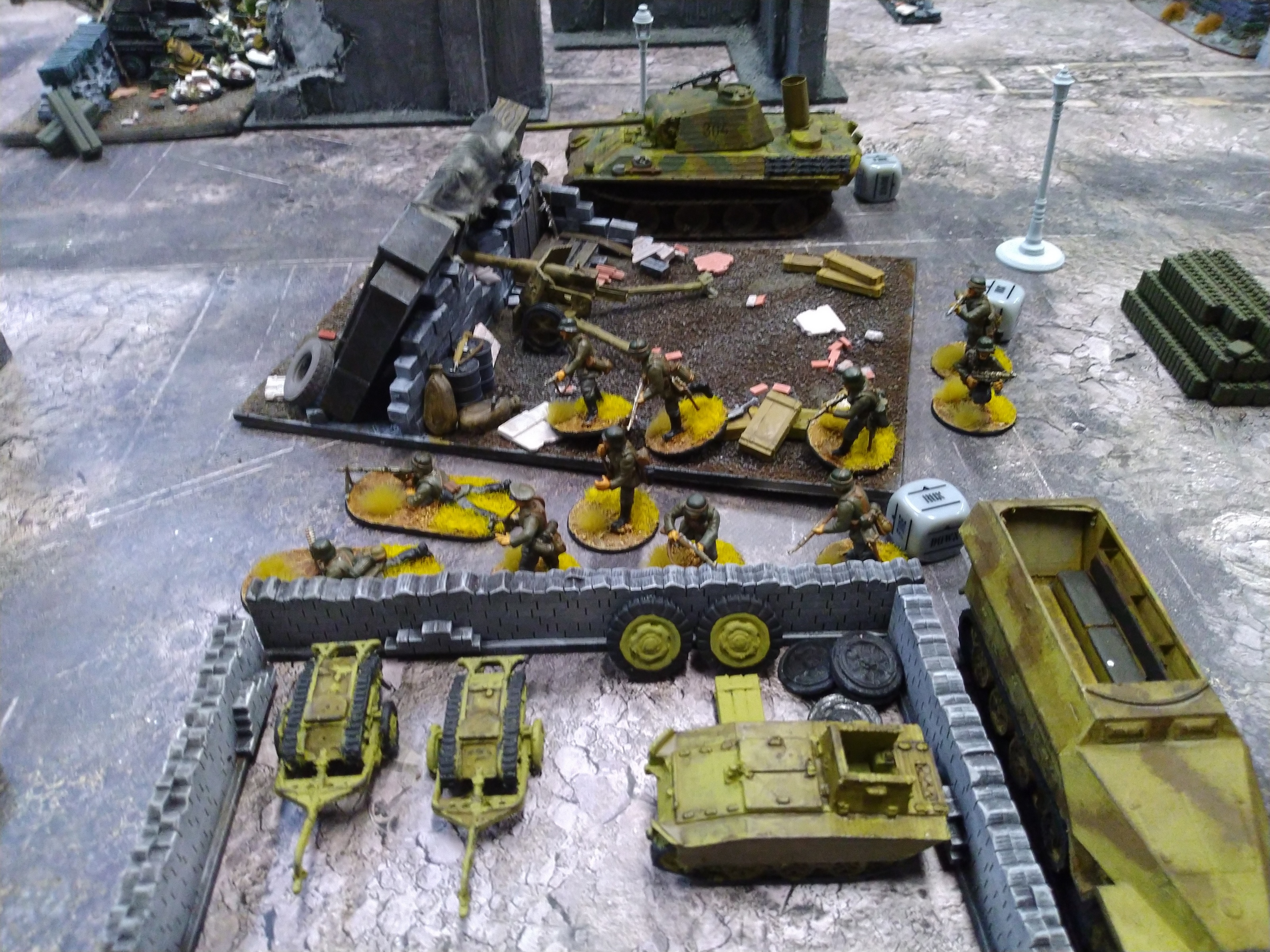
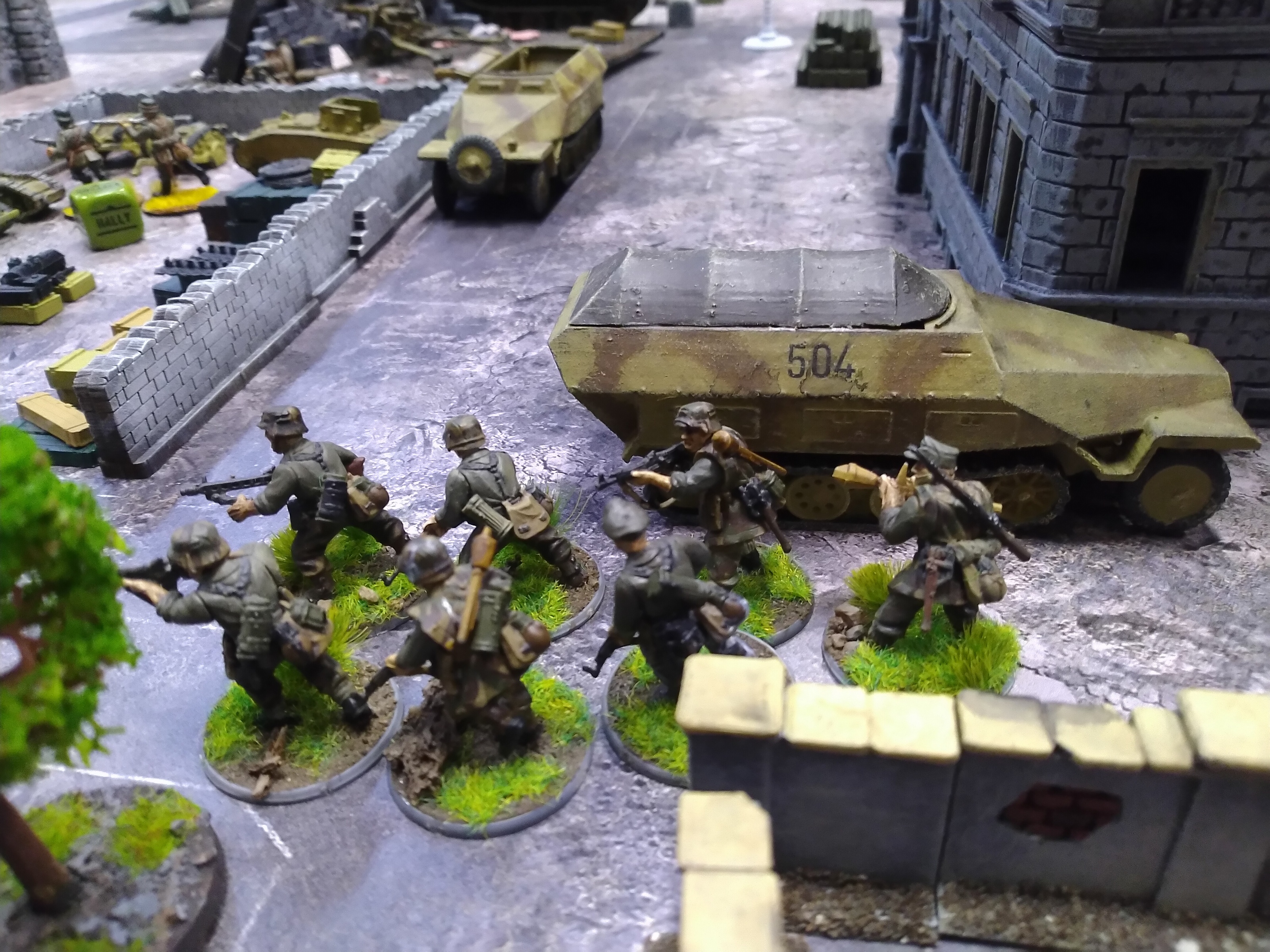
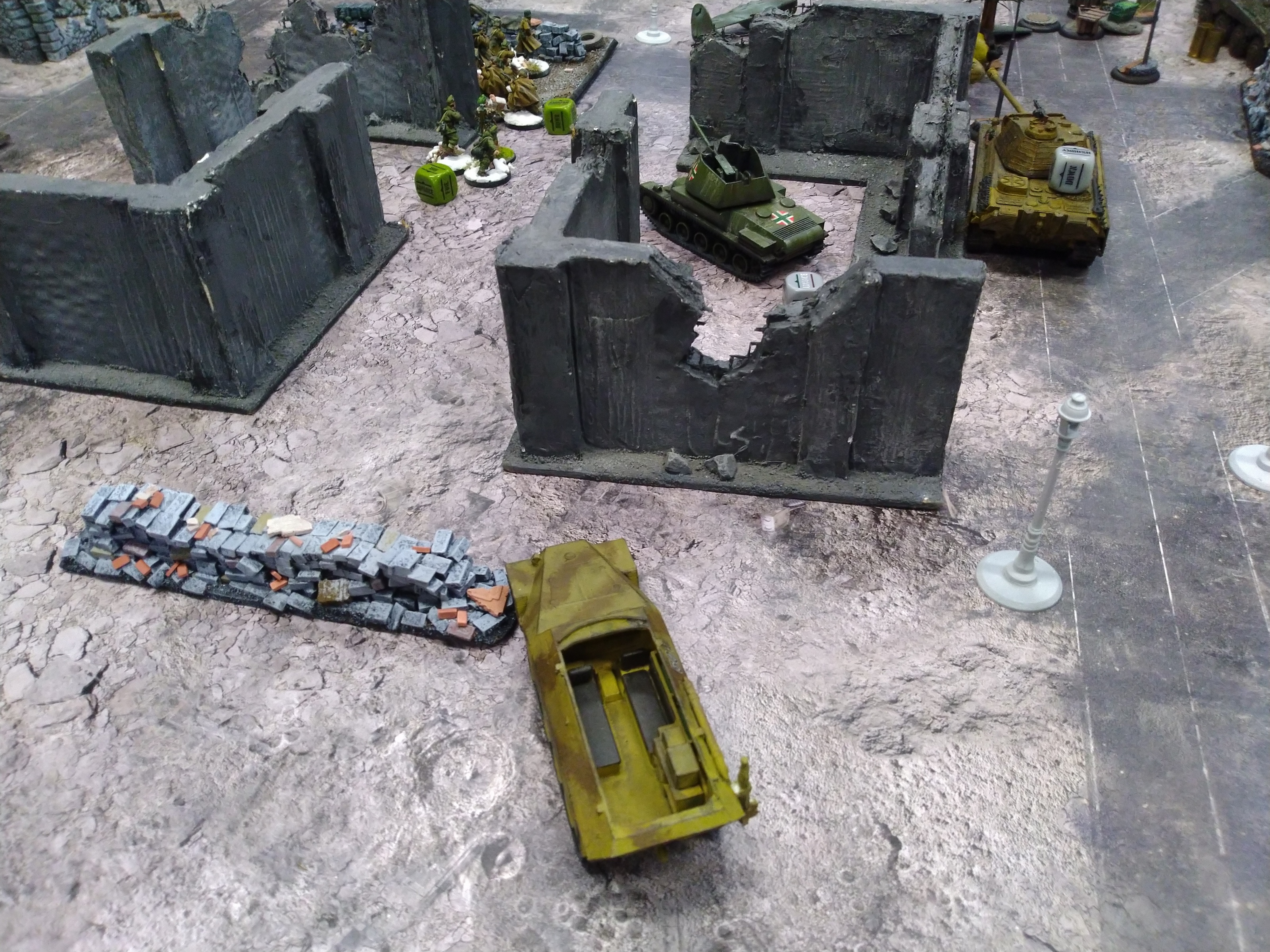
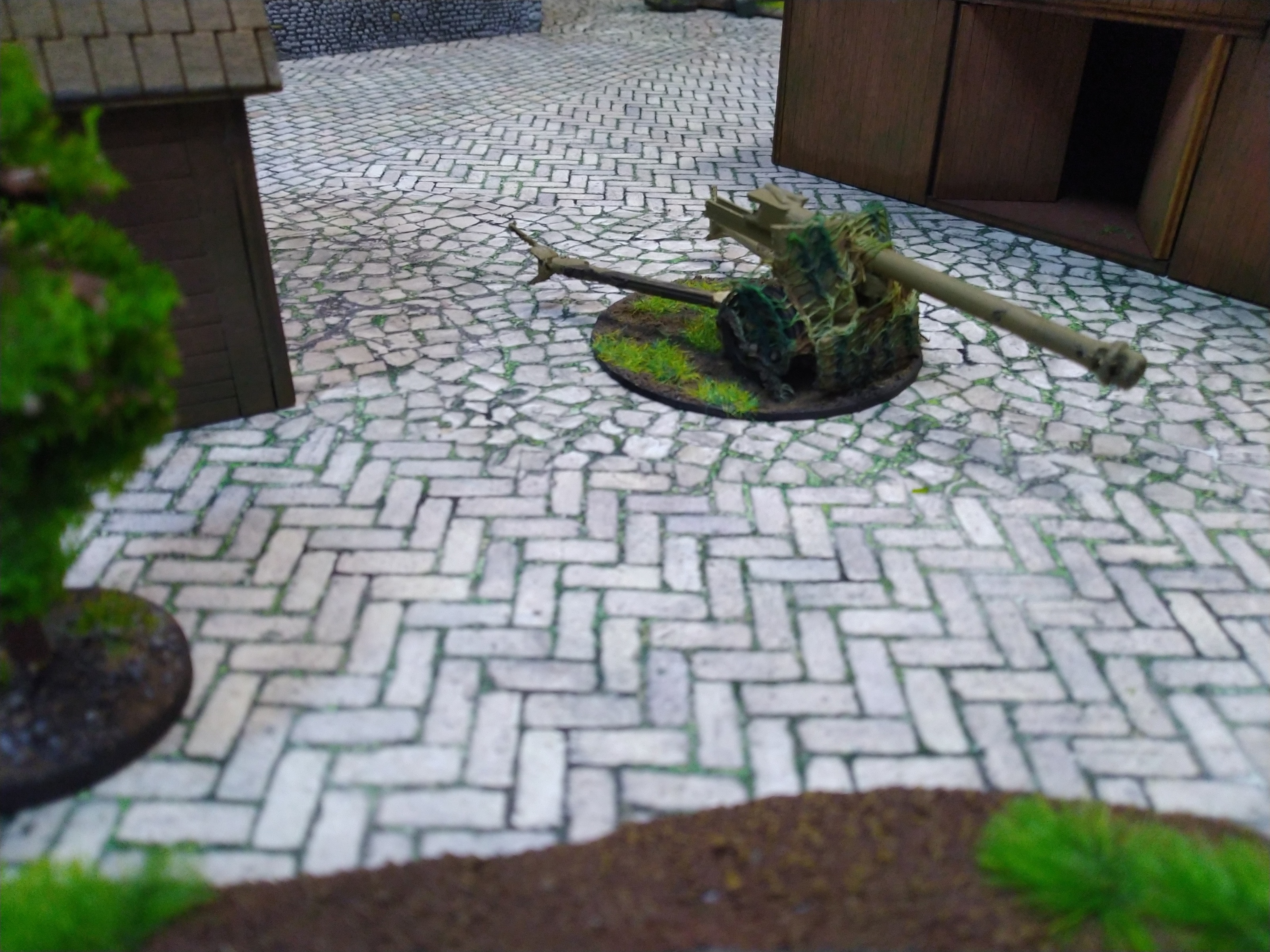
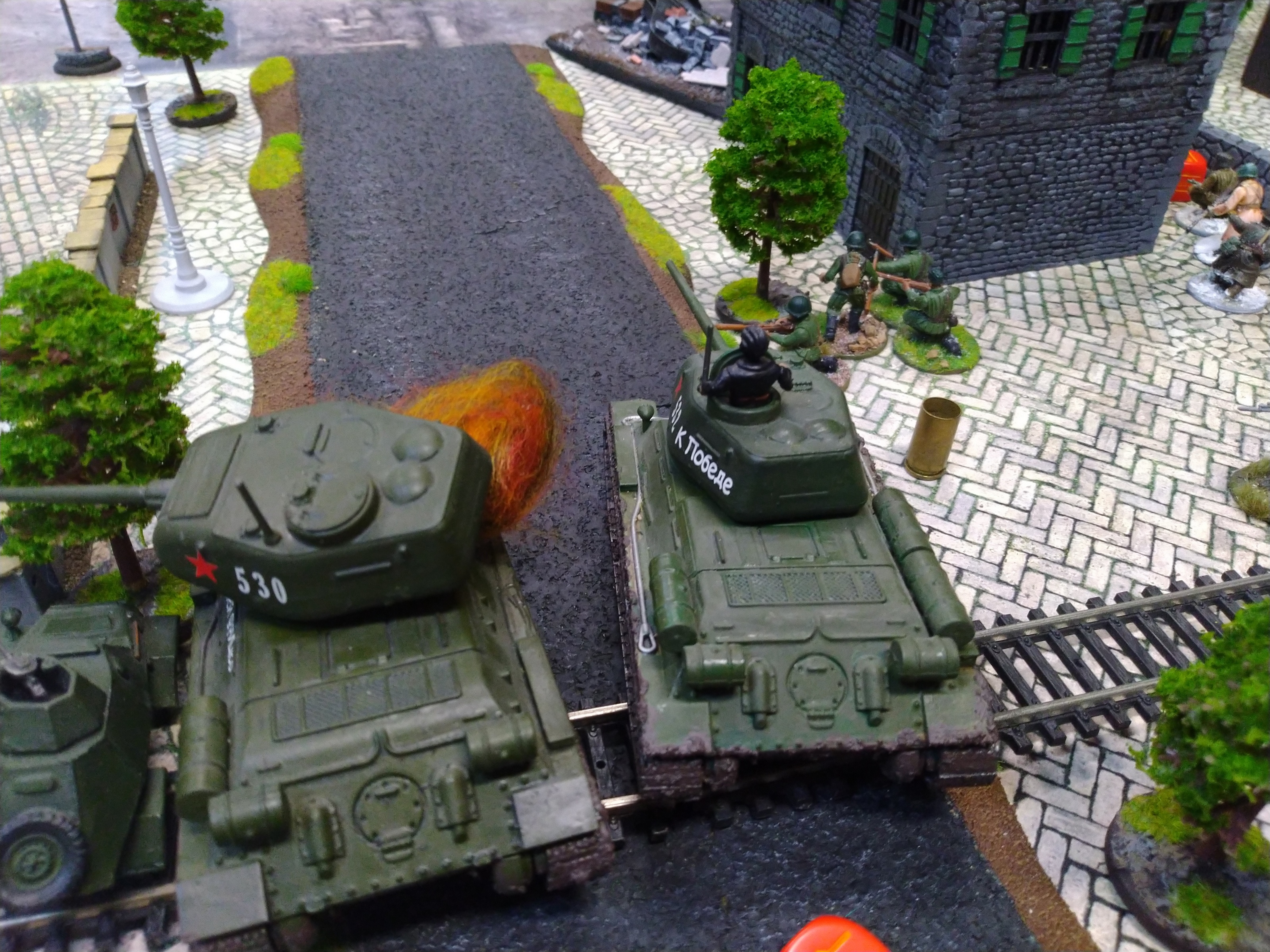
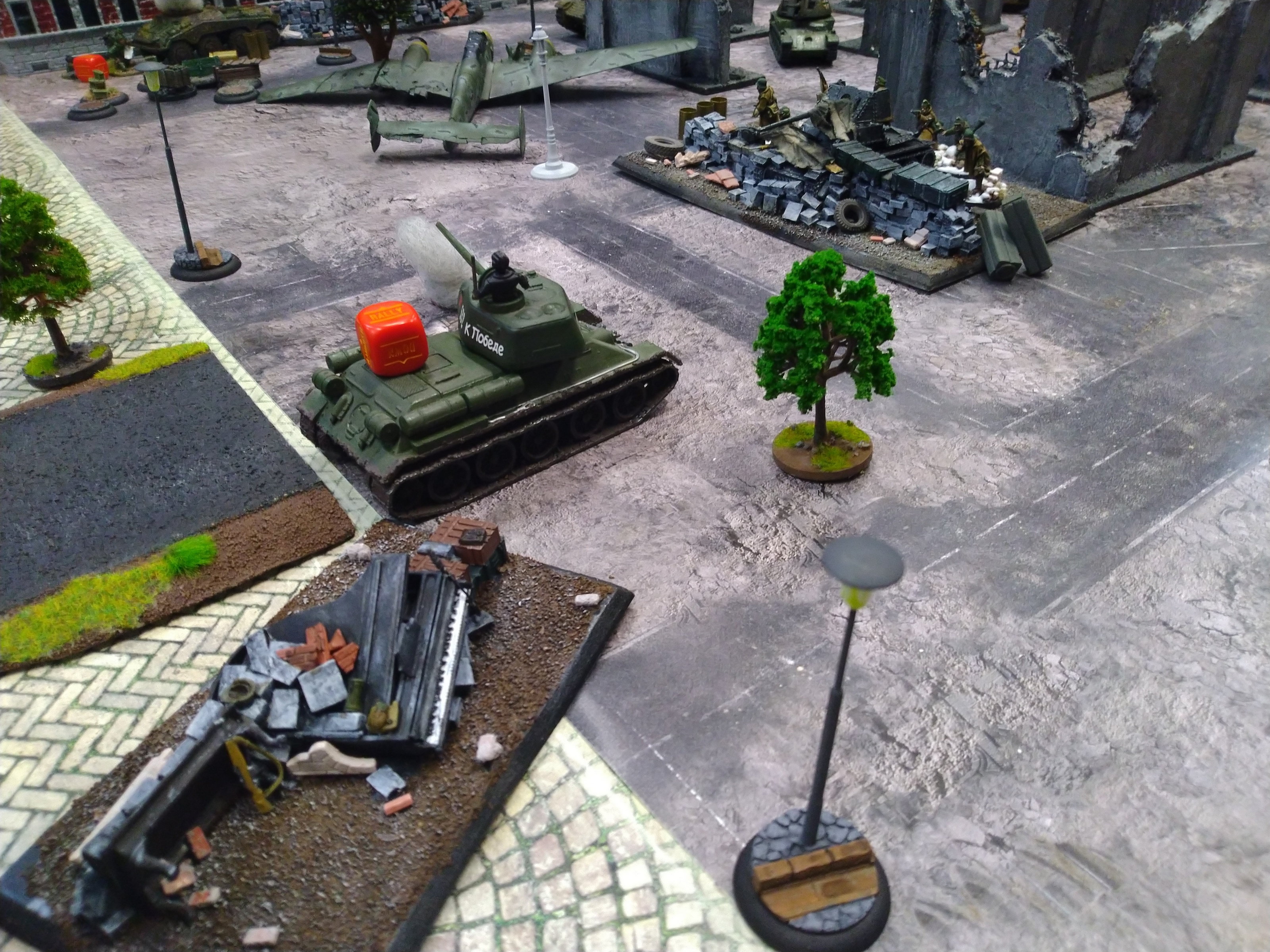
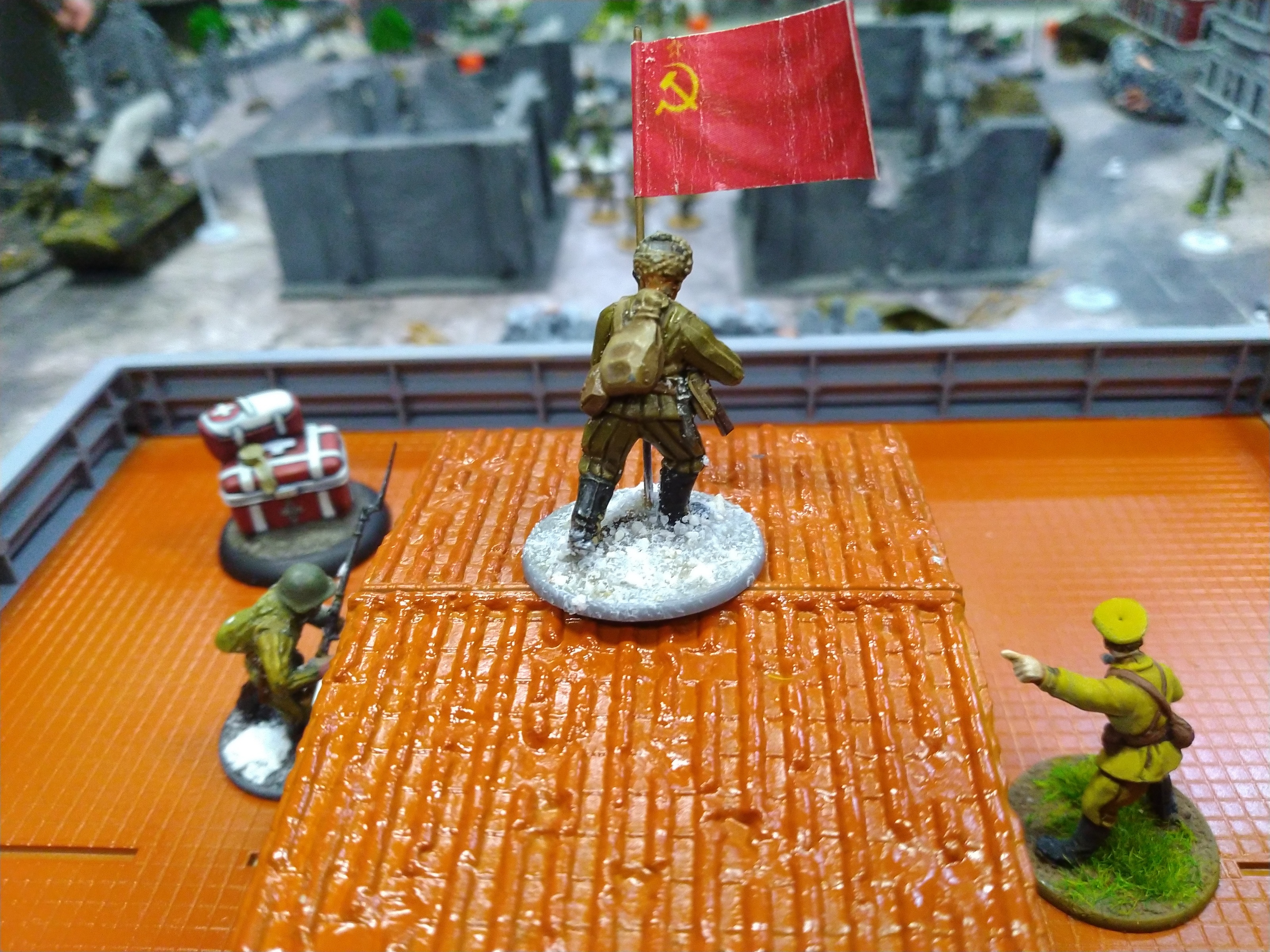
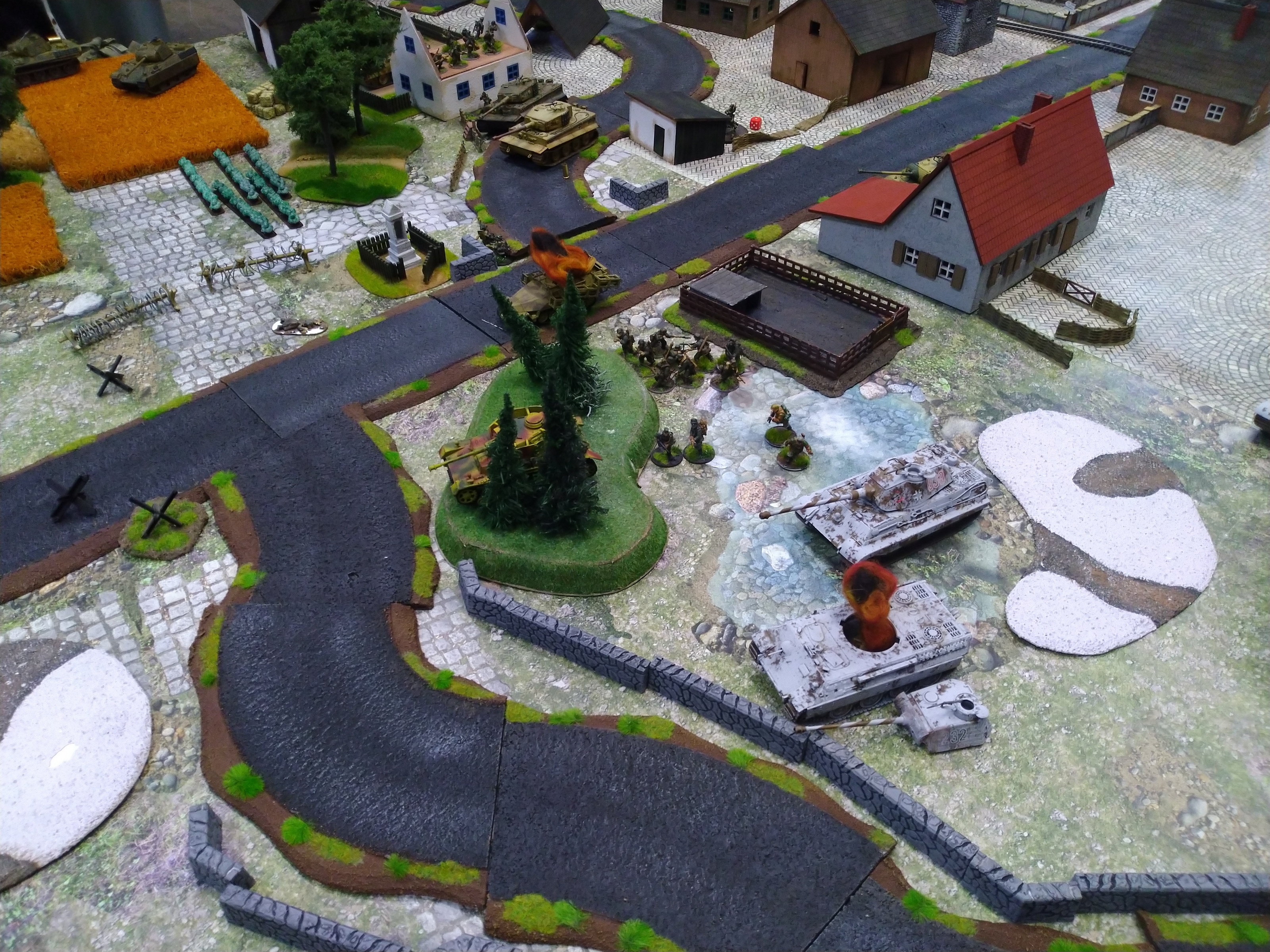
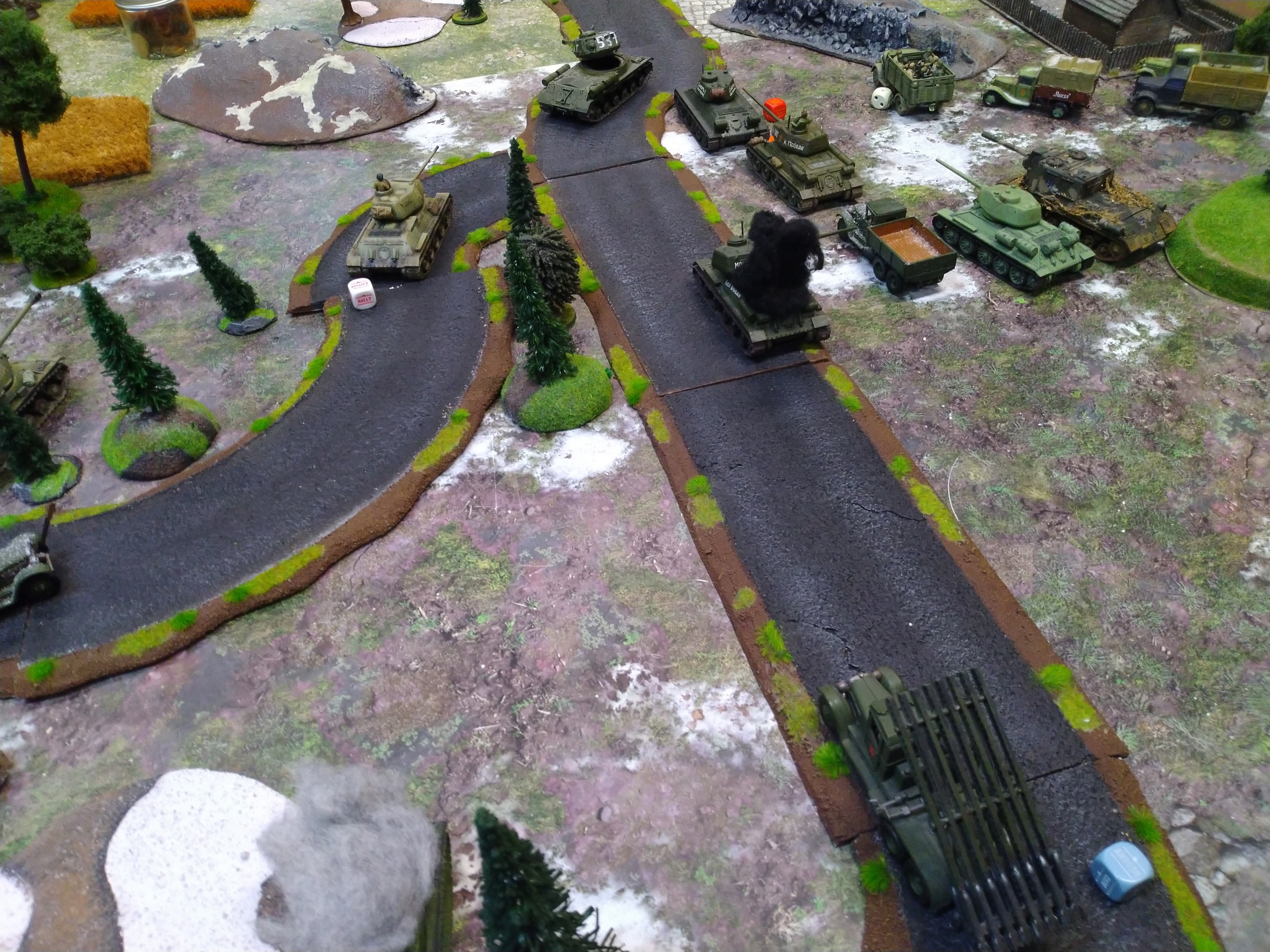
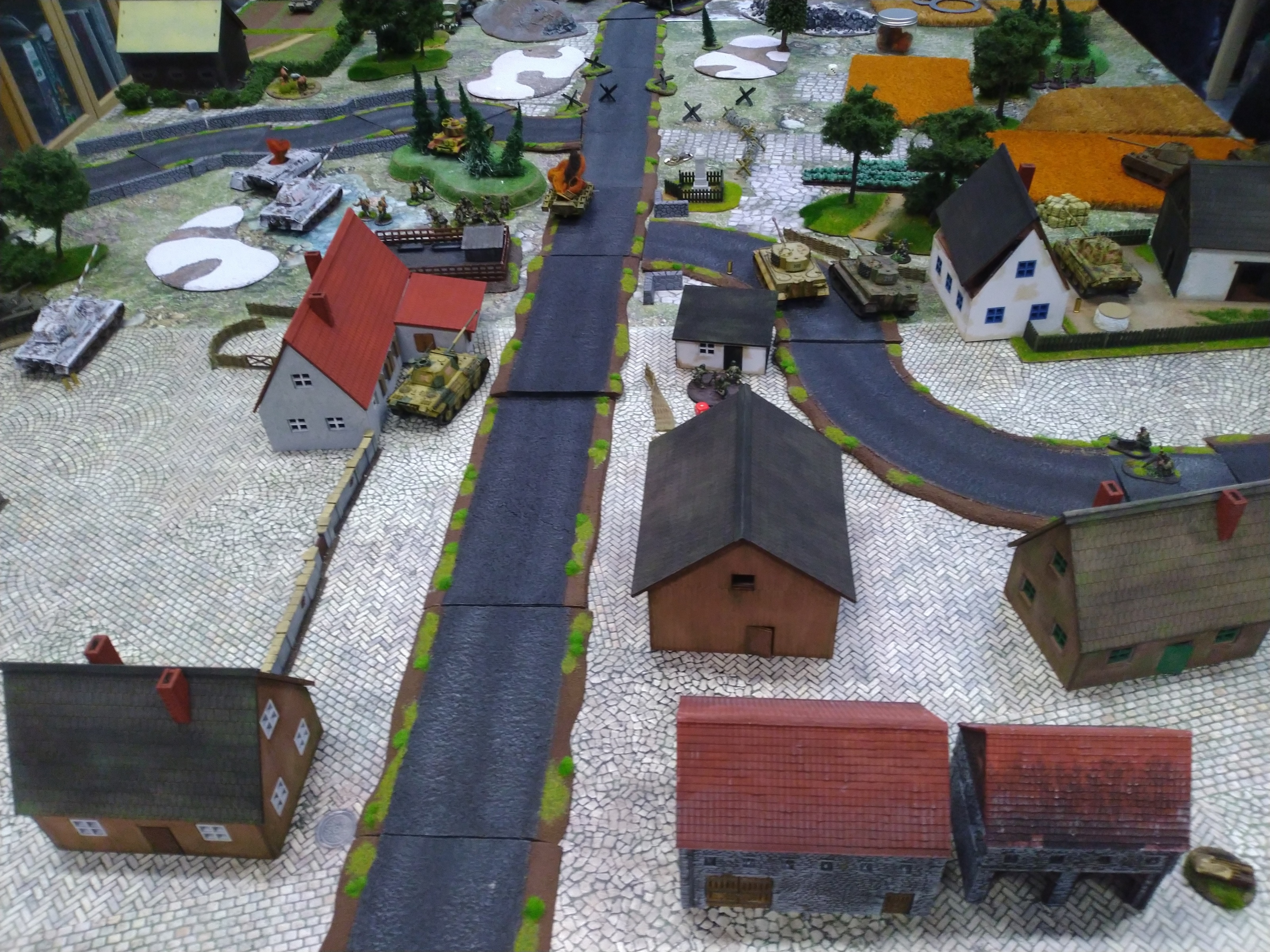
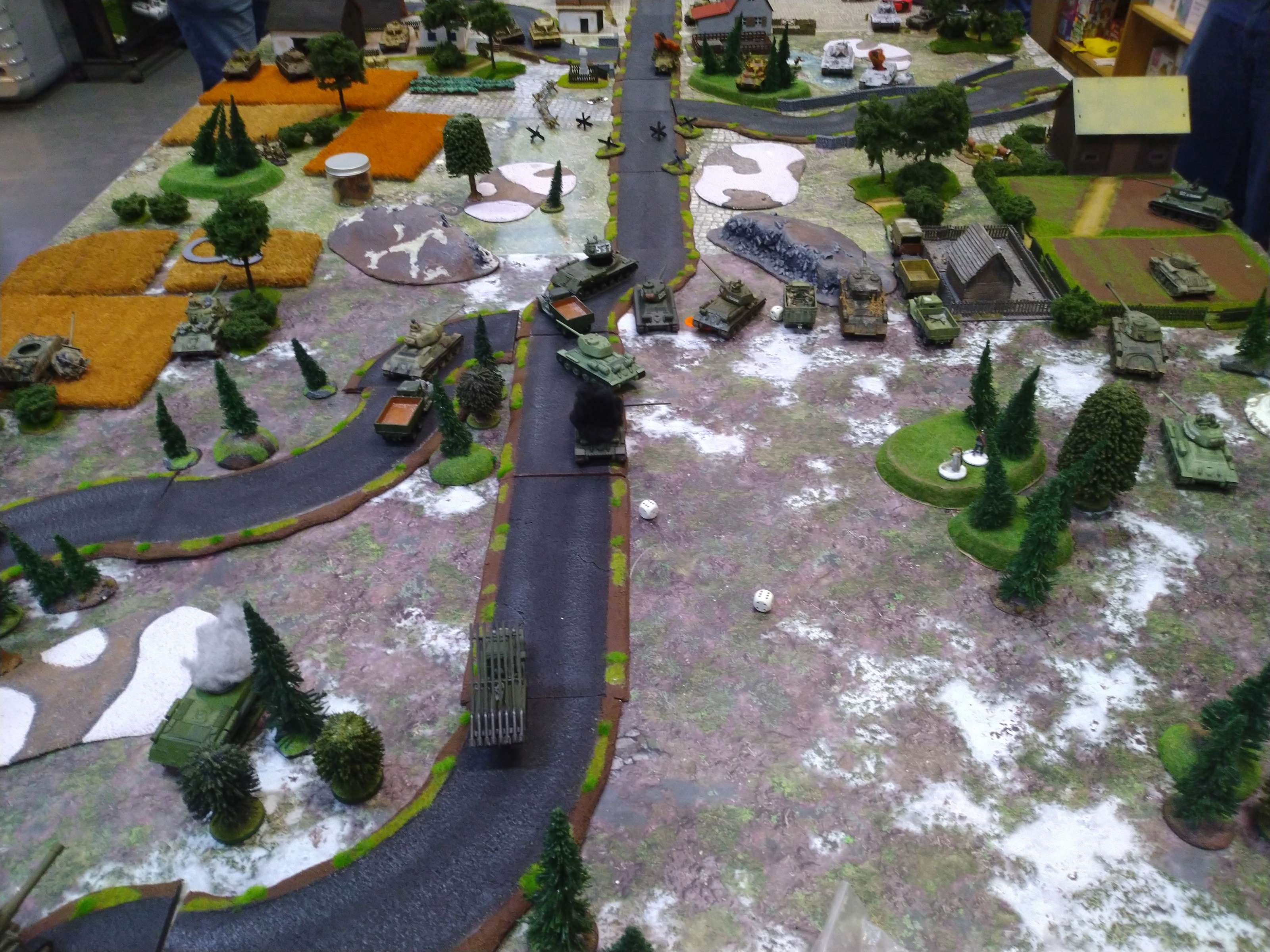
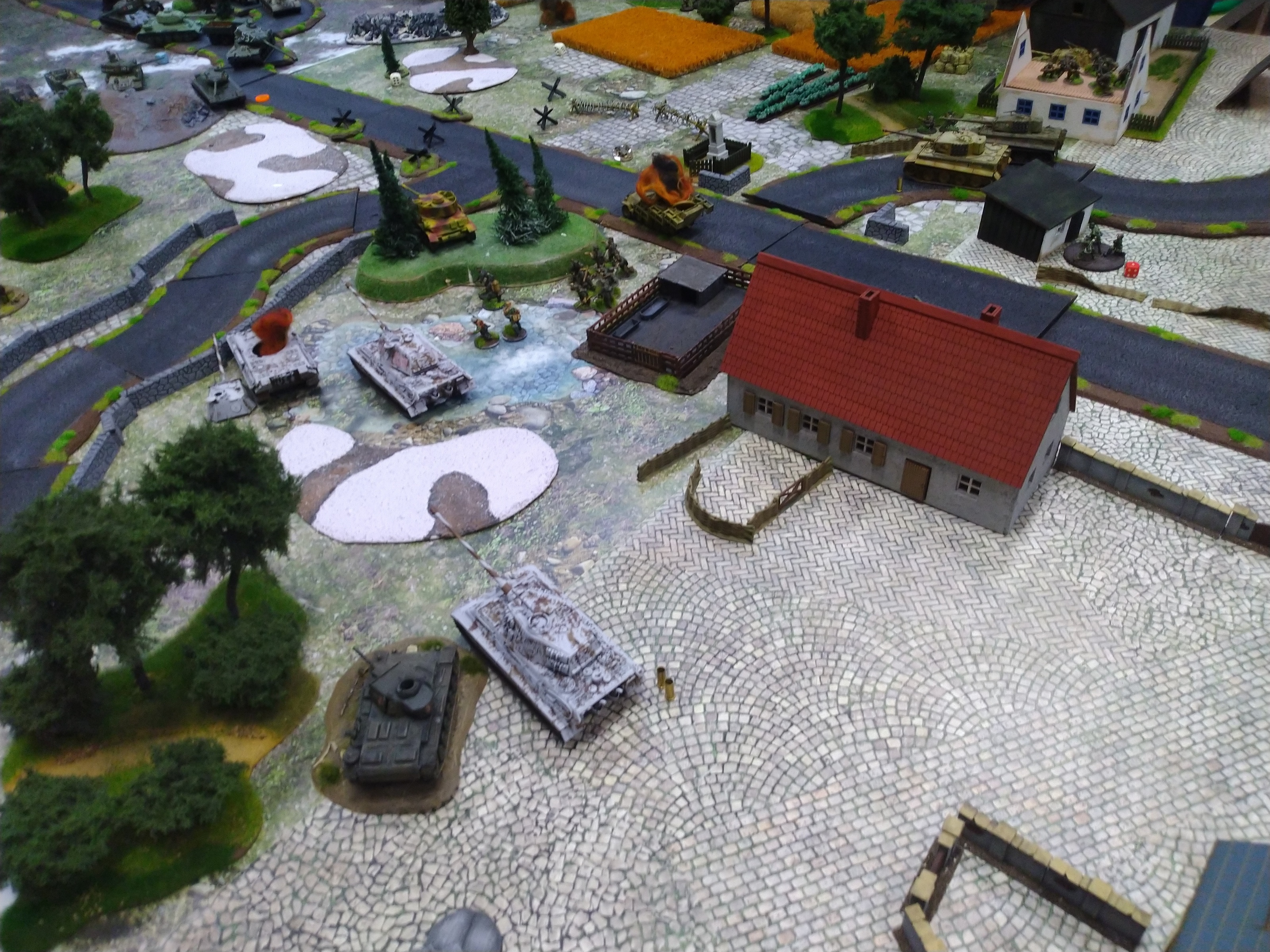
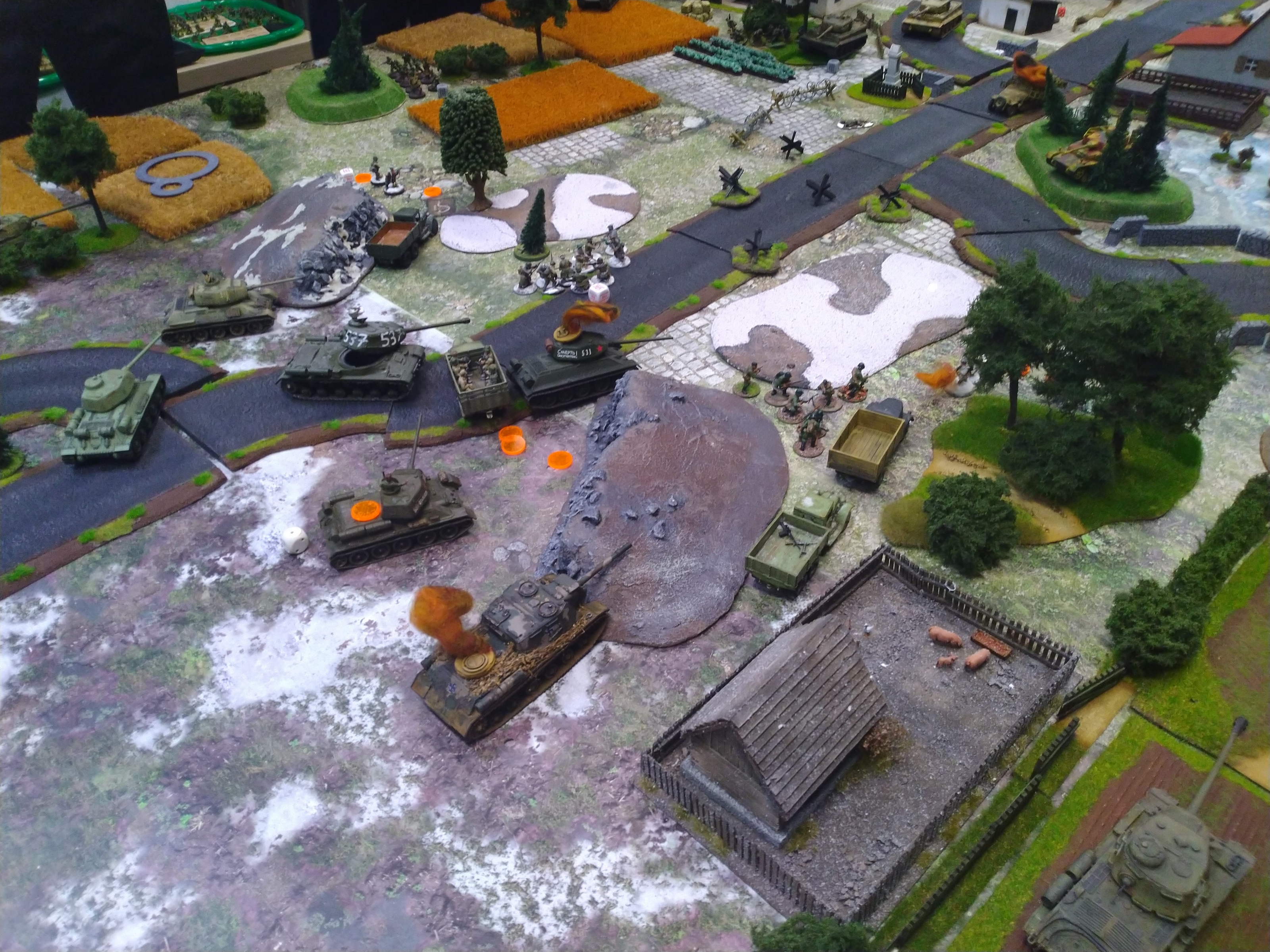
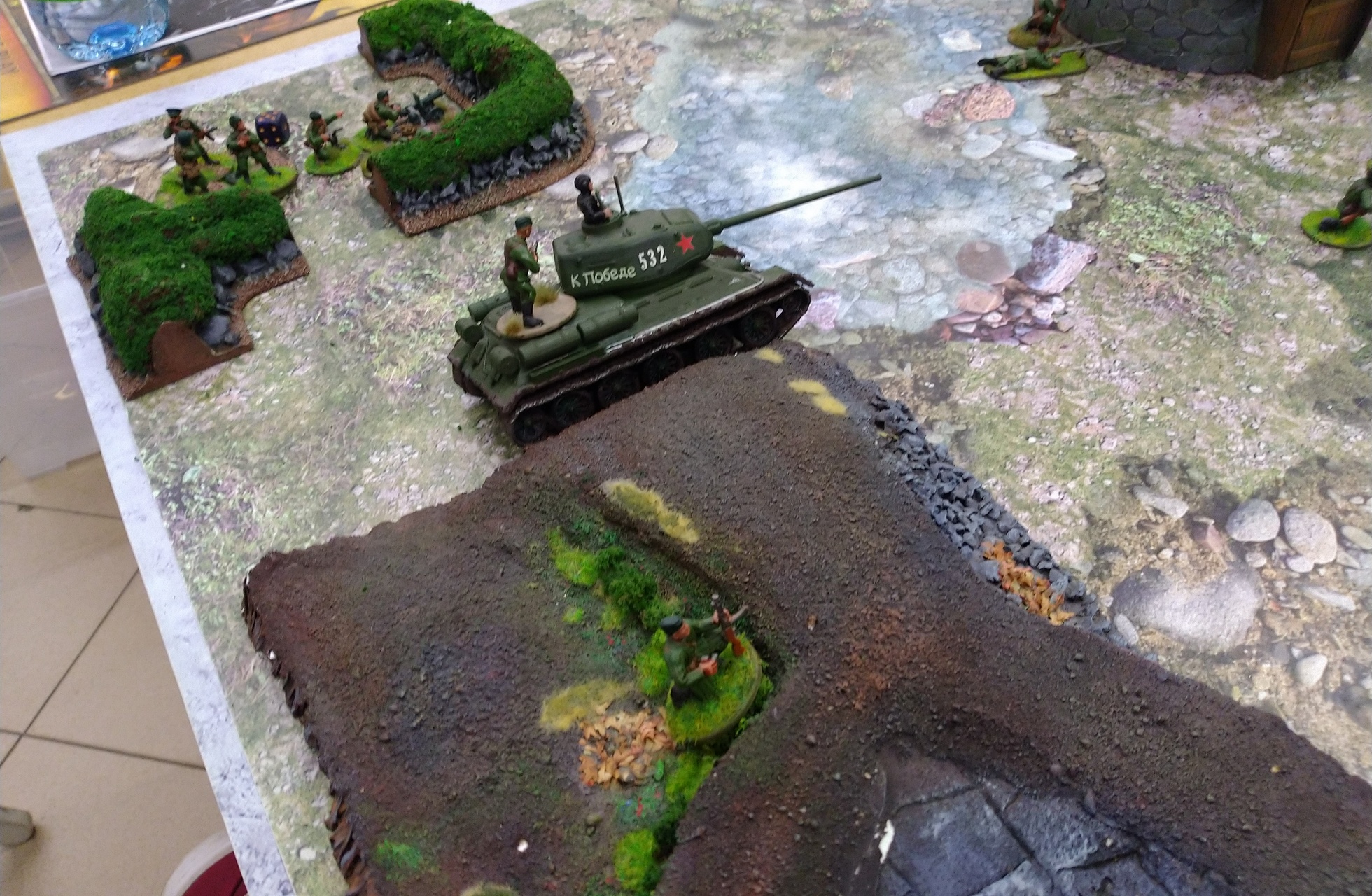
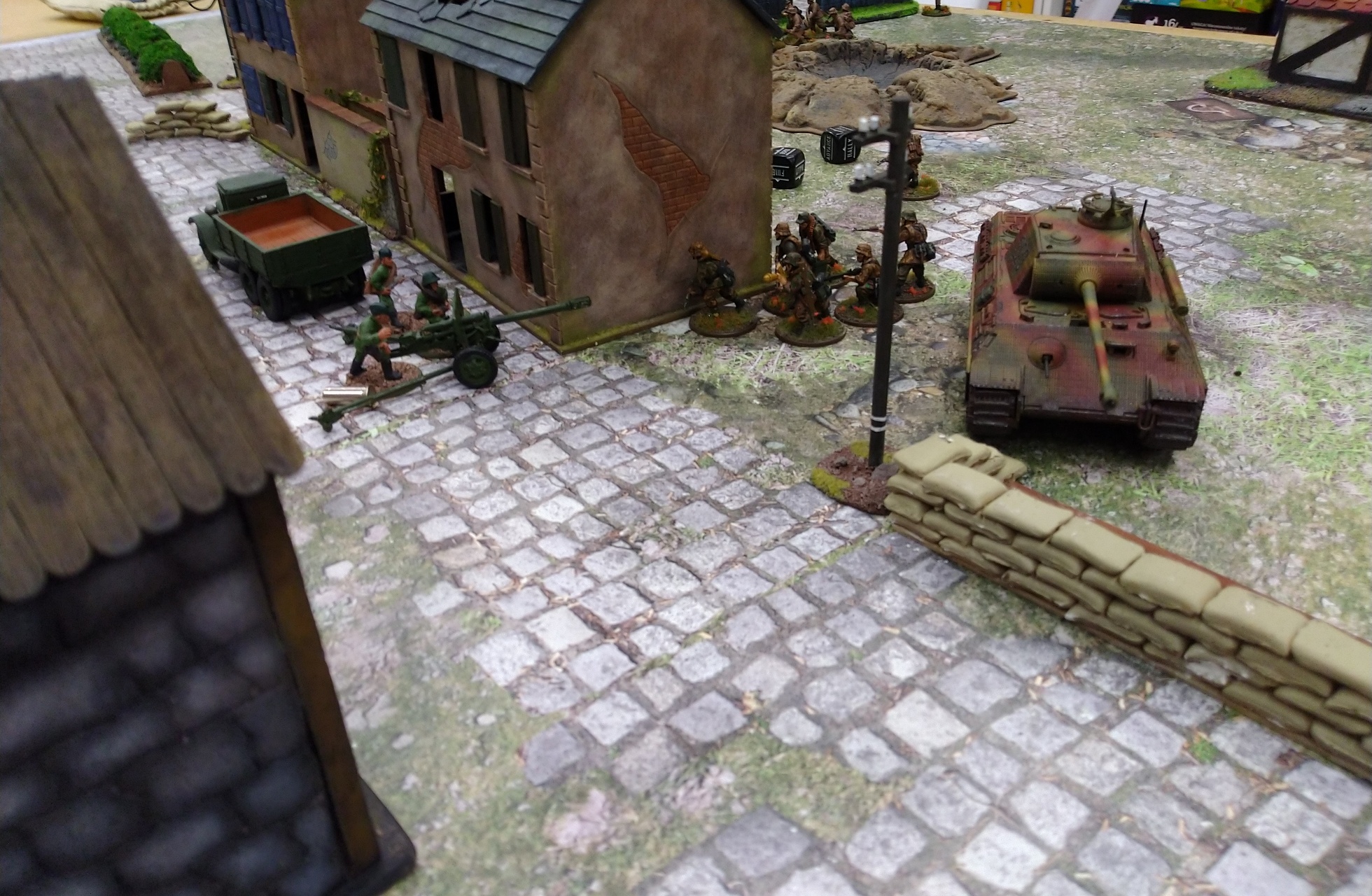
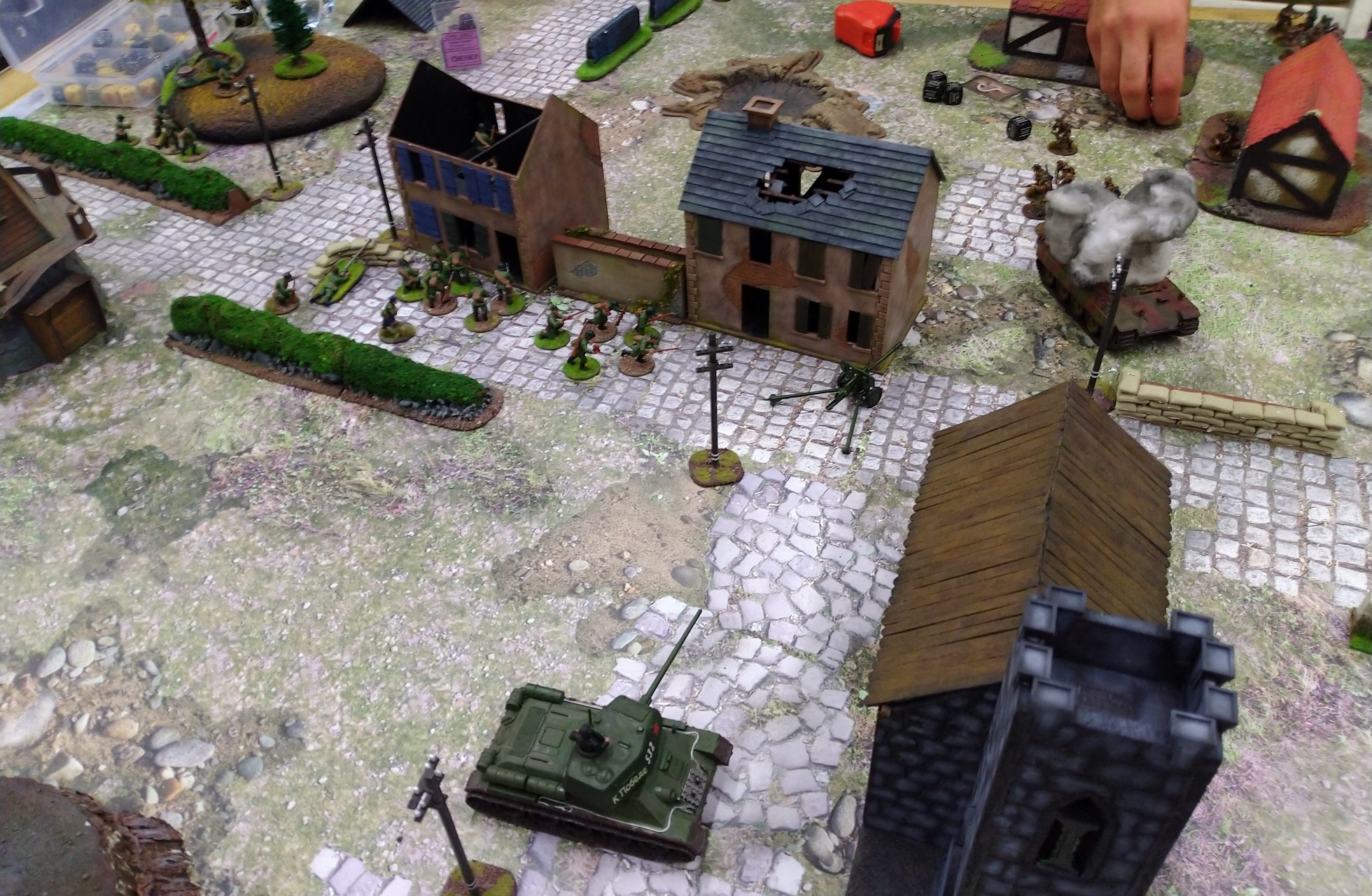
Part of the table was recreated to be similar, to table from our first game.That plane wasn’t lucky.Hungarians and Germans prepare to defend Budapest at all costs.There are several places, where Germans stored they equipment – like goliats or workshop with Tiger tank.Red Army advances into the city.Katyusha called by my Kasia (Polish short version of Catherina/Jekaterina).With support of some Panther tanks Germans and Hungarians advanced.Hungarians took position in the ruins of some wealthy palace before.Leading T-34-85 tank „Moscow” was destroyed by Panther tank.Huraaa! Red Army soldiers run to take terrain. Brave Wehrmacht soldiers advanced under fire from Katyusha.Su-76, M3-White Scout Car and many nameless soldiers advanced.Another tank losed – still we had T-34-85 number 532 „To victory” which was my first tank I painted, when I came back to hobby after years of stagnation – many thanks for this to Planszowka.pl – Rafał, Patryk and Gargamel.Order is order, infantry advances.Brave Hungarians took cover behind barricade.Another squad of German heer move passed some damaged SDKFZ.German PAK left by it crew.Katyusha hat Hungarian anti air defense.T-34-85 destroyed Puma.Victory!(*)
Summary: – one more game and we will learn more, thank you guys Rafał from Bolter.pl, our enemies from Germans&Hungarians side: Daniel, Karol, Kuba, Maciej and our side: Franek, Krzysiu and Łukasz. Thank you all for game! – it was German and Hungarians victory(*). – at least we destroyed Panther and Puma from vehicles.
Today we started Budapest campaign where Red Army attempted to take capital of Hungary from march. On they way stood German panzers from feline family, famous Tigers I, Konigtigers and the best of them – Panthers. We played in Bolter in company of good comrades – thank you Ostrów for coming to us.
Outskirts of the Budapest.Red Army arrived with several Katyushas.Road to the city.Red Army advance.Panther and Konigtiger took positions behind wall, lone Panzer IV hide in the forest.First loses on German side.Loses on both sides.Katyusha took heavy toll on German infantry behind forest.No one dare to get into city, defended by Germans.Soviets moving close to the crossroad.Last hope of Red Army officers – infantry, jet in smoke they open fire on a friends.This is perfect for Mordheim too 🙂 .More Soviet Russia tanks burns.On turn 6th Soviet side weren’t able to take crossroad.
Summary: – thank you guys for great game! – especially people responsible for Order Dices – I always forget at some moment about them 😉 . – as better is always enemy of good, I will think what we can improve during such epic games.
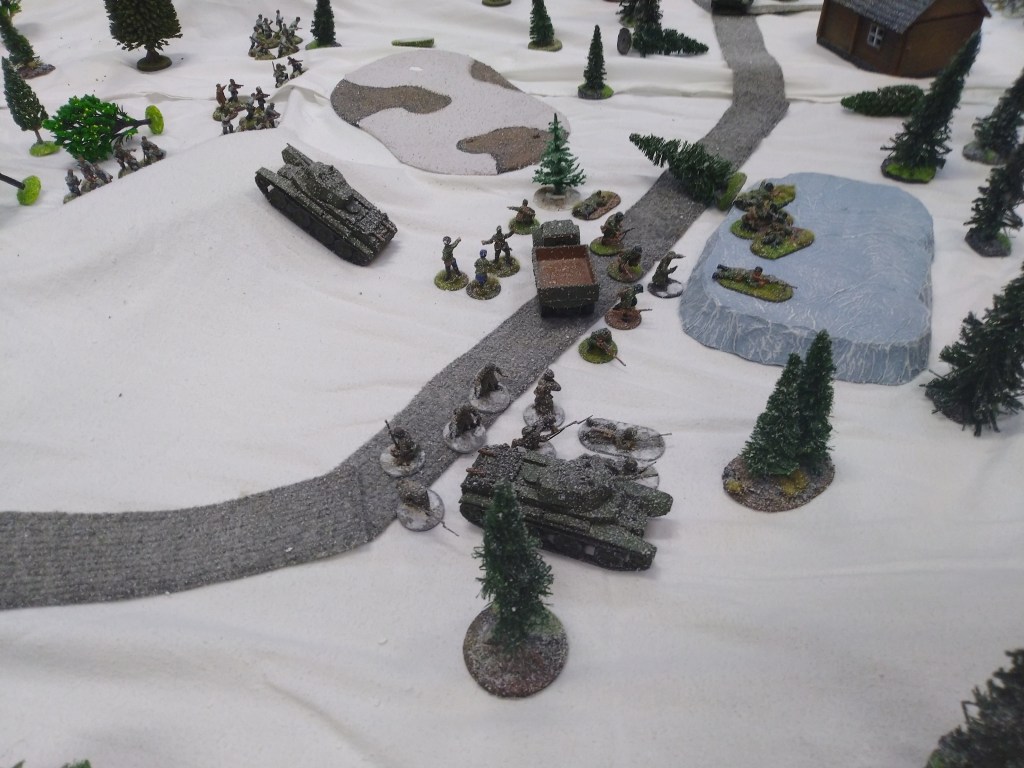
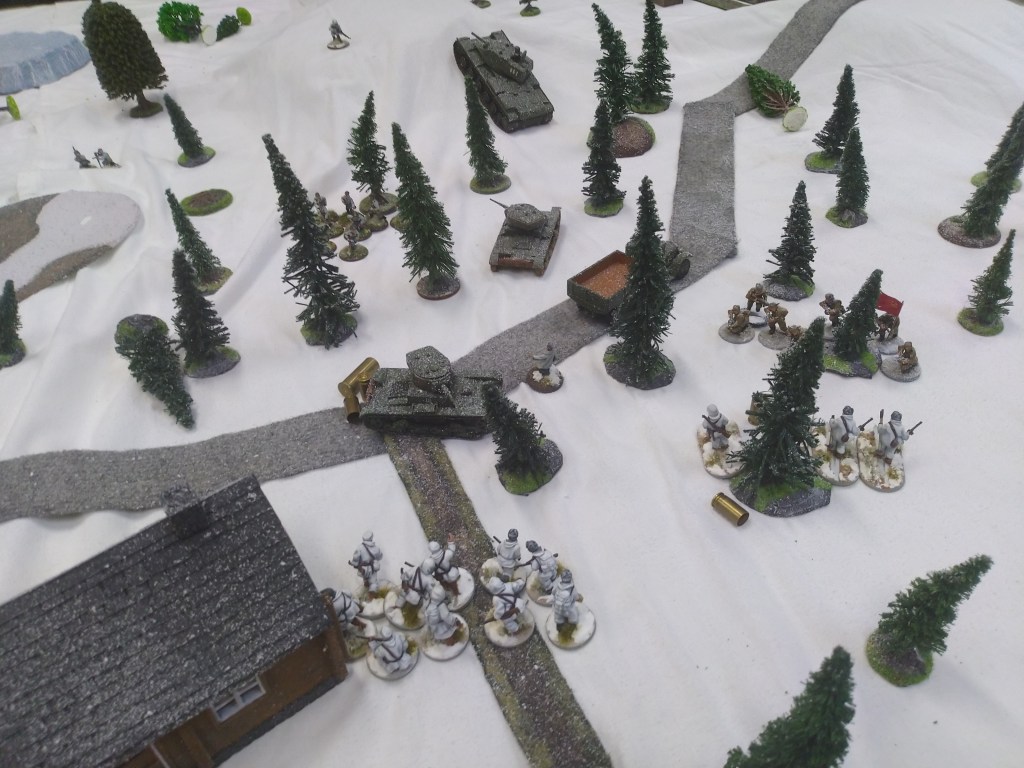
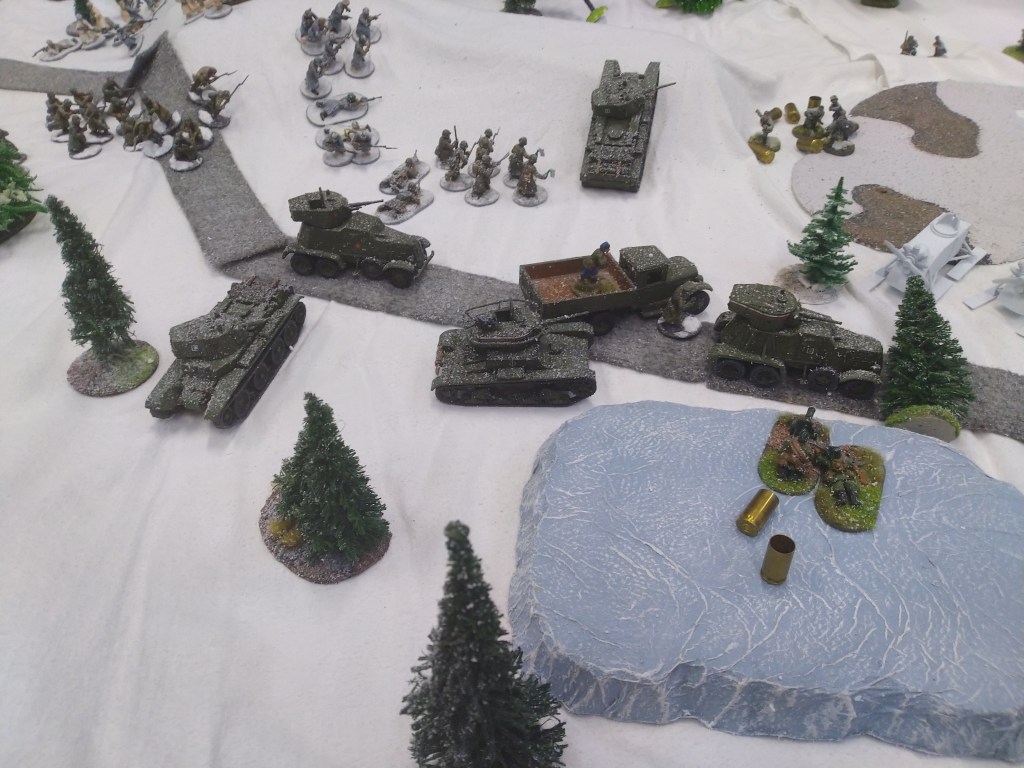
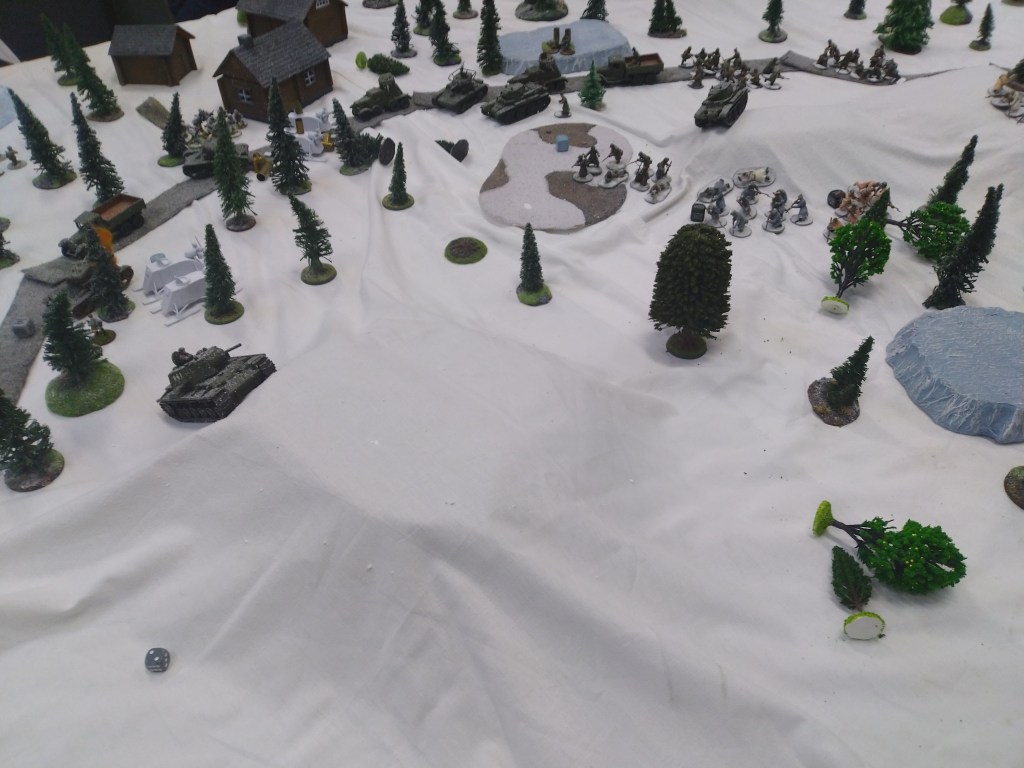
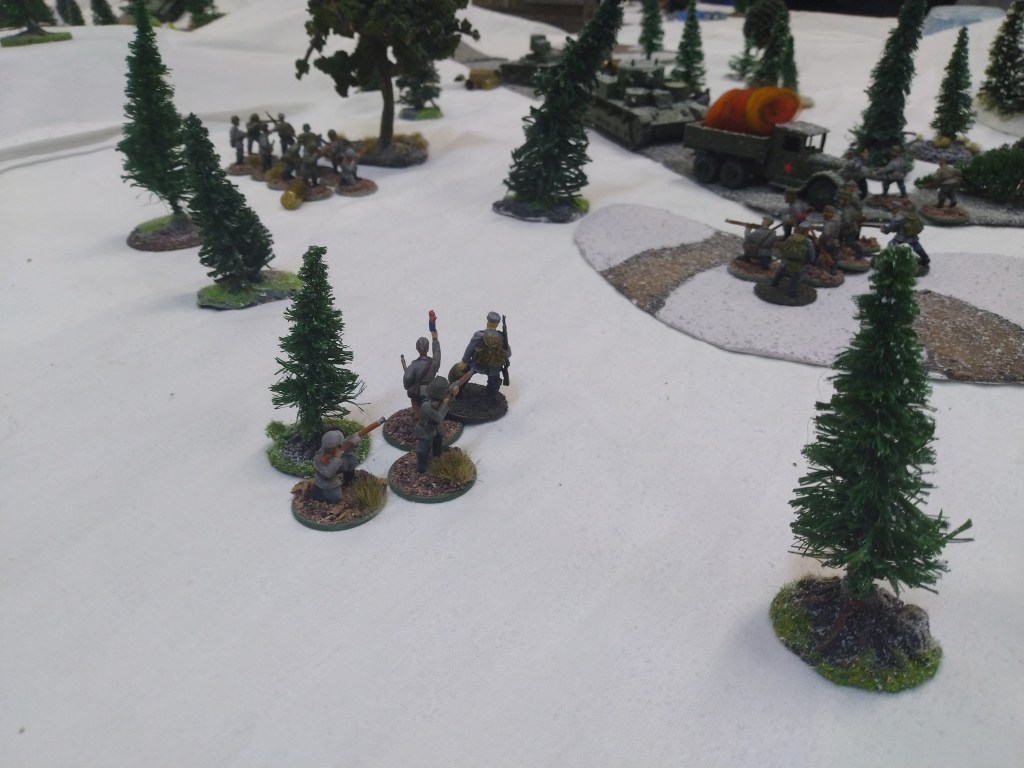
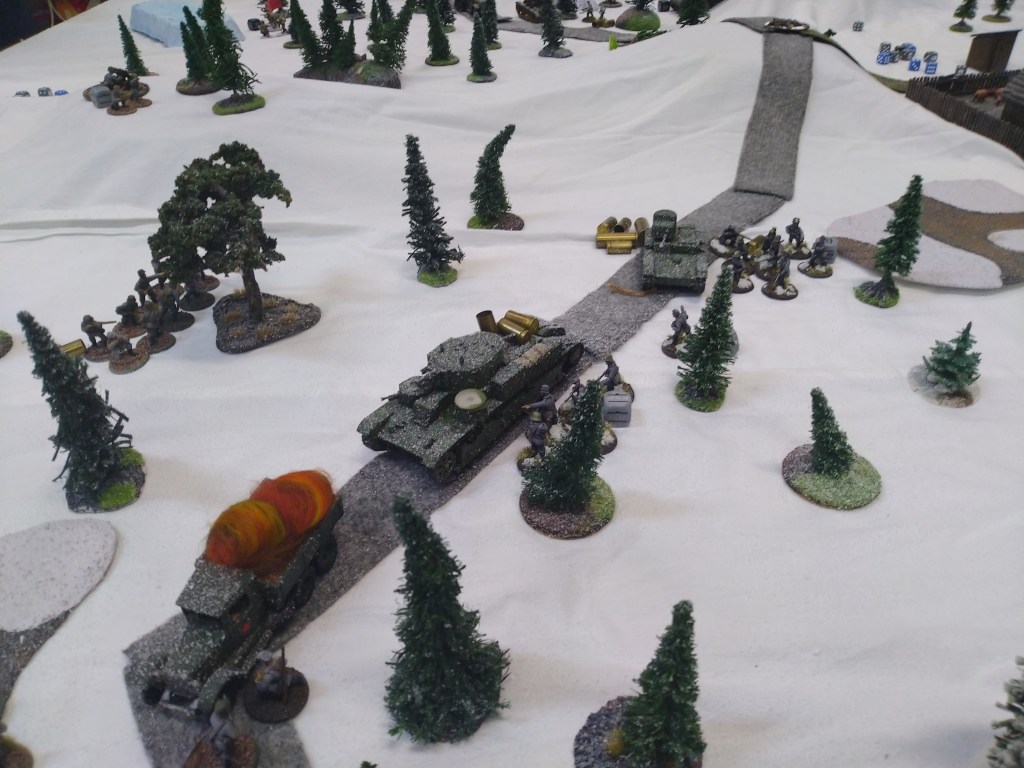
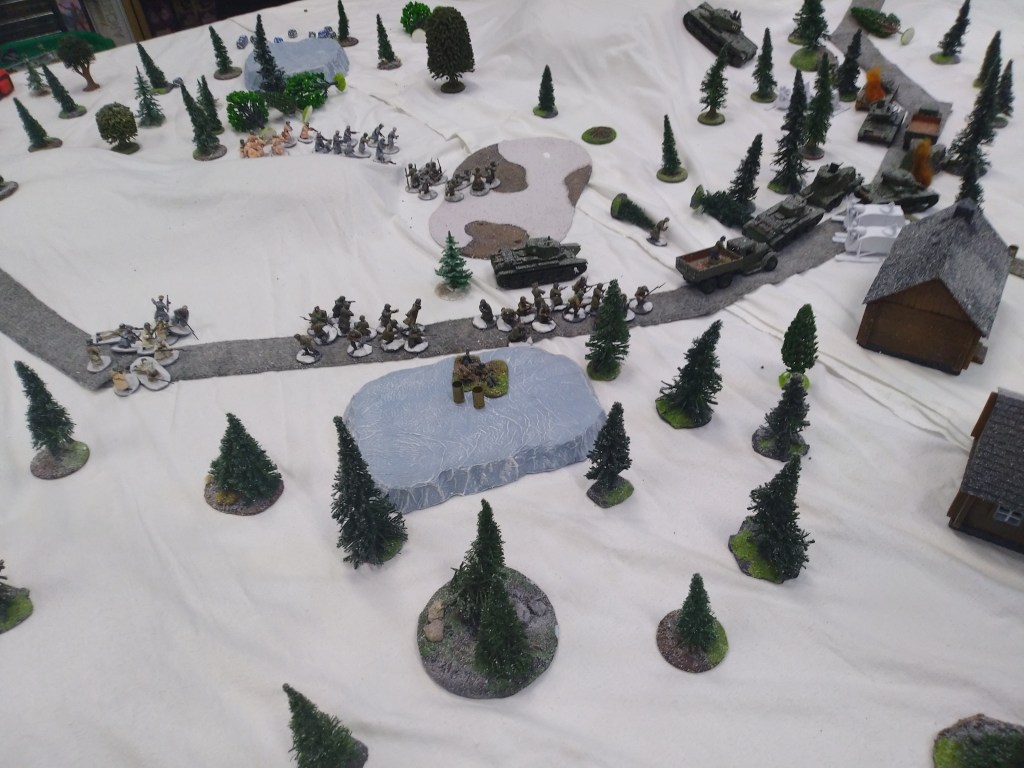
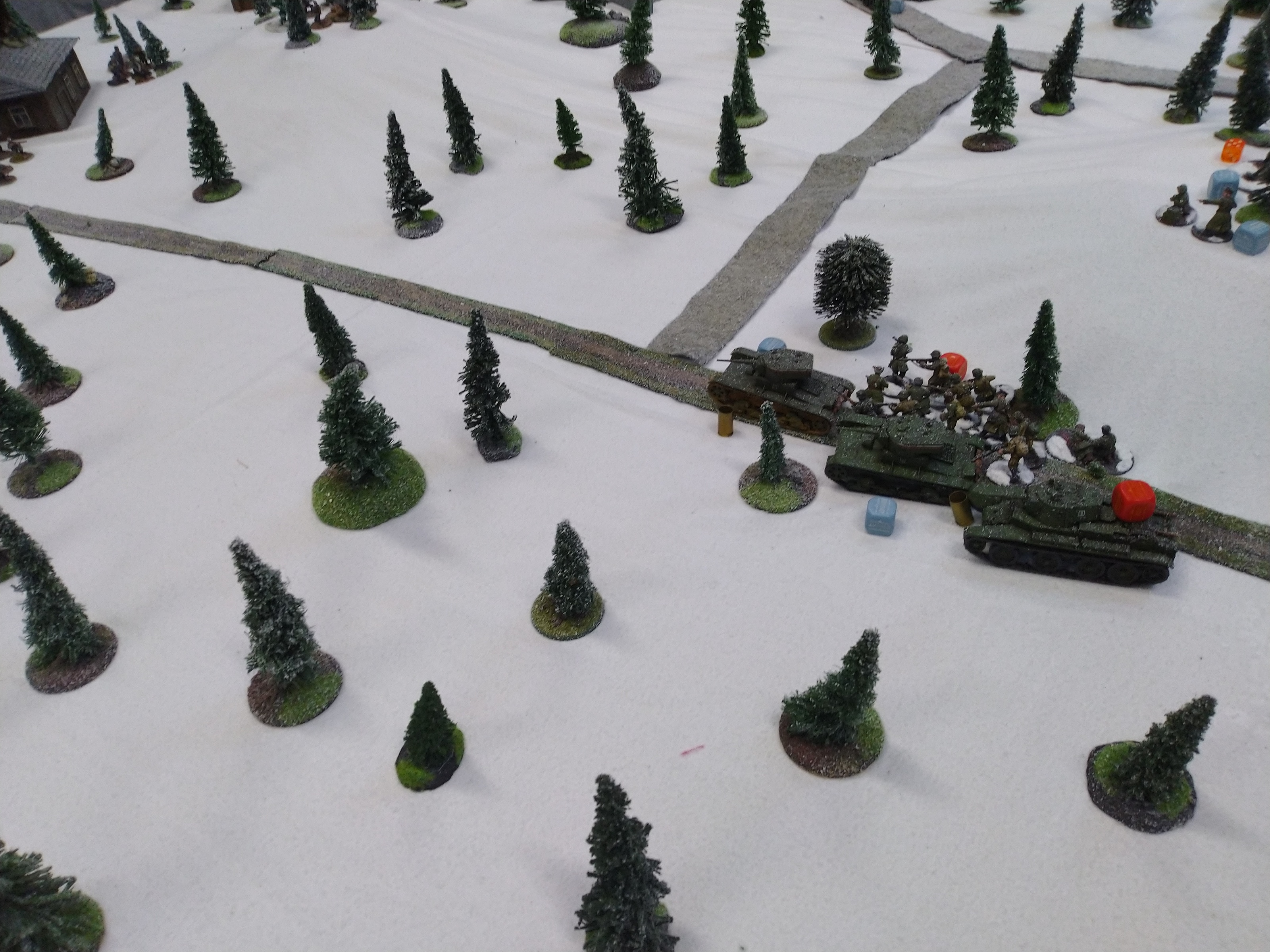
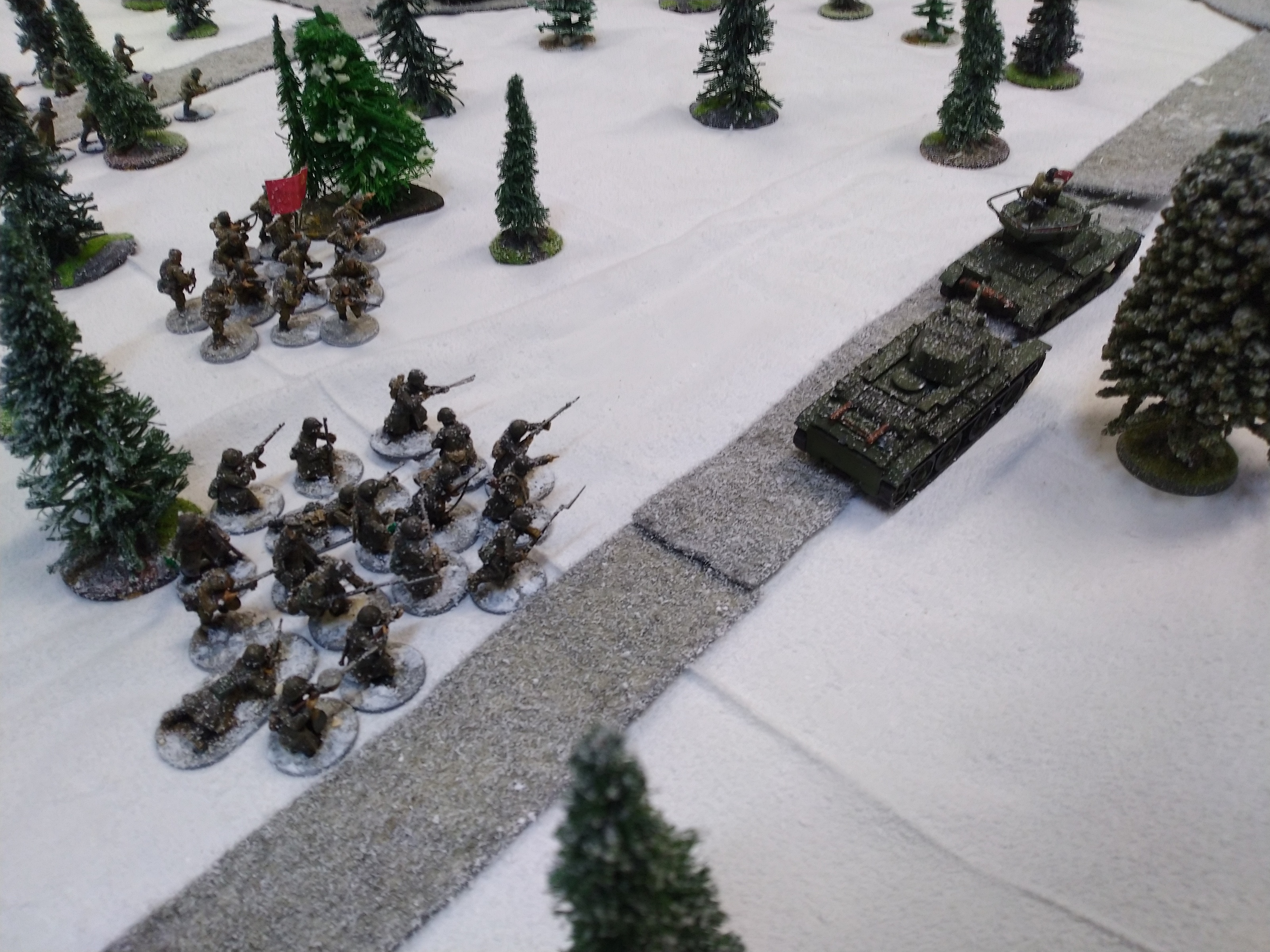
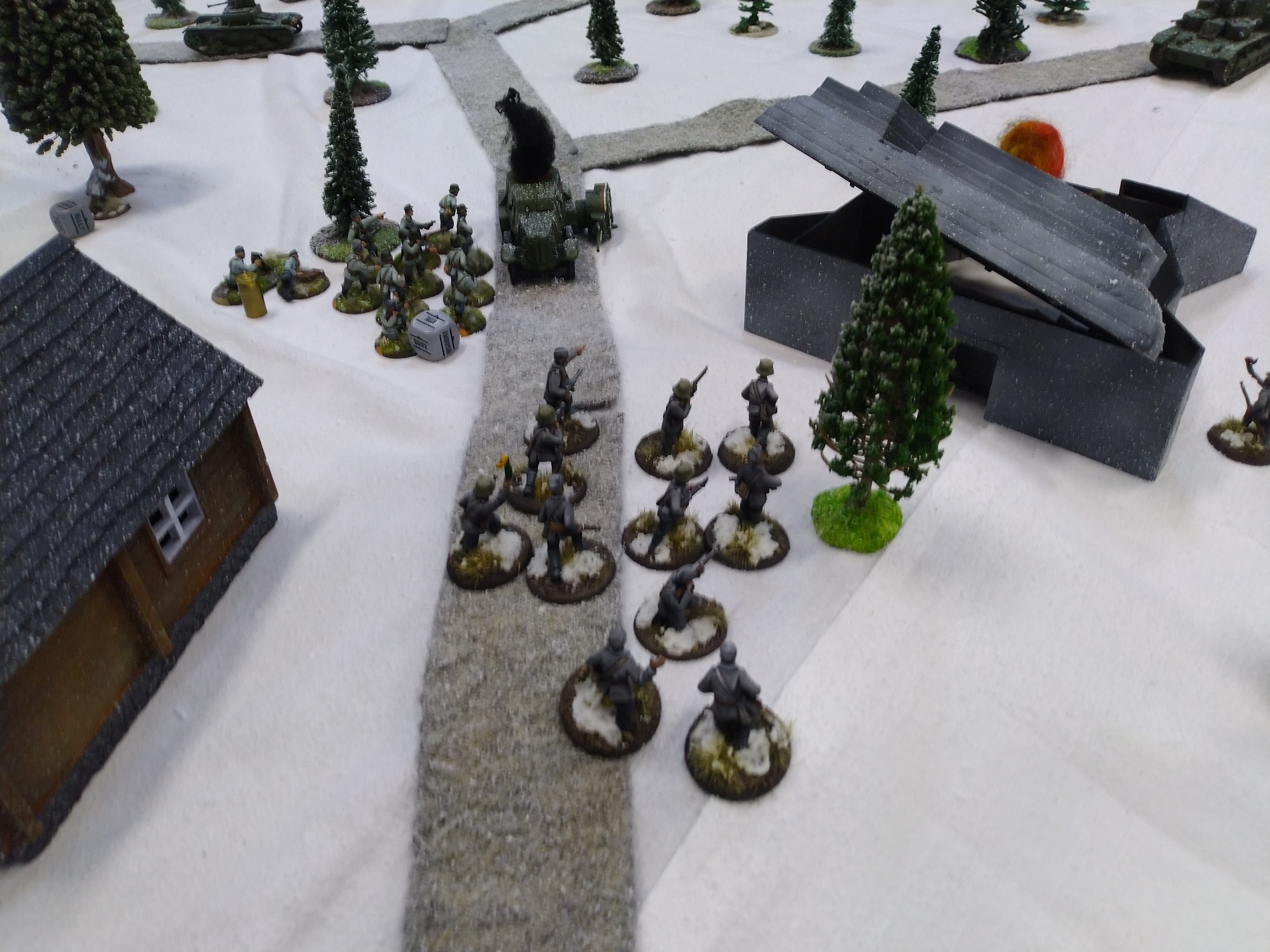
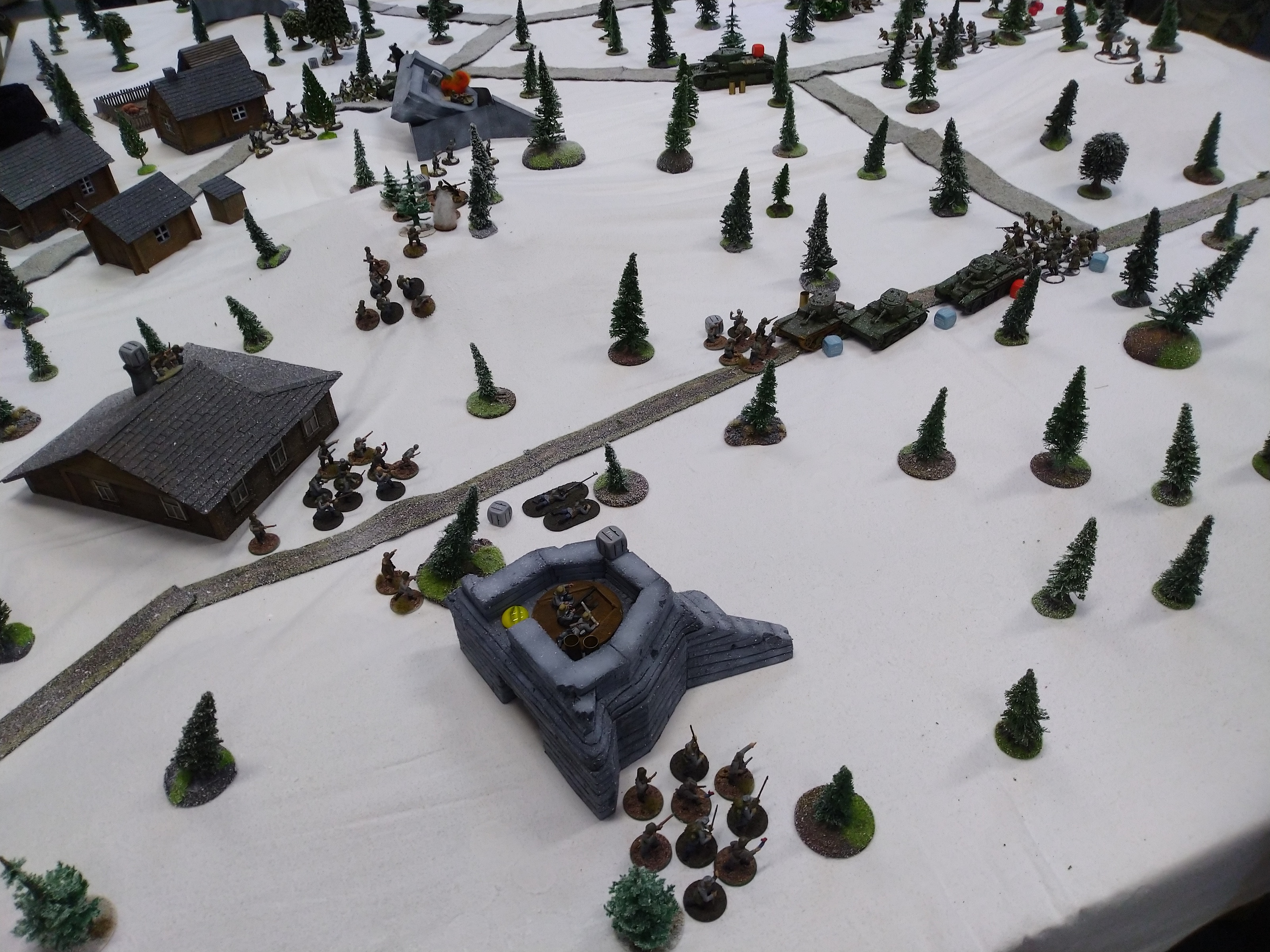
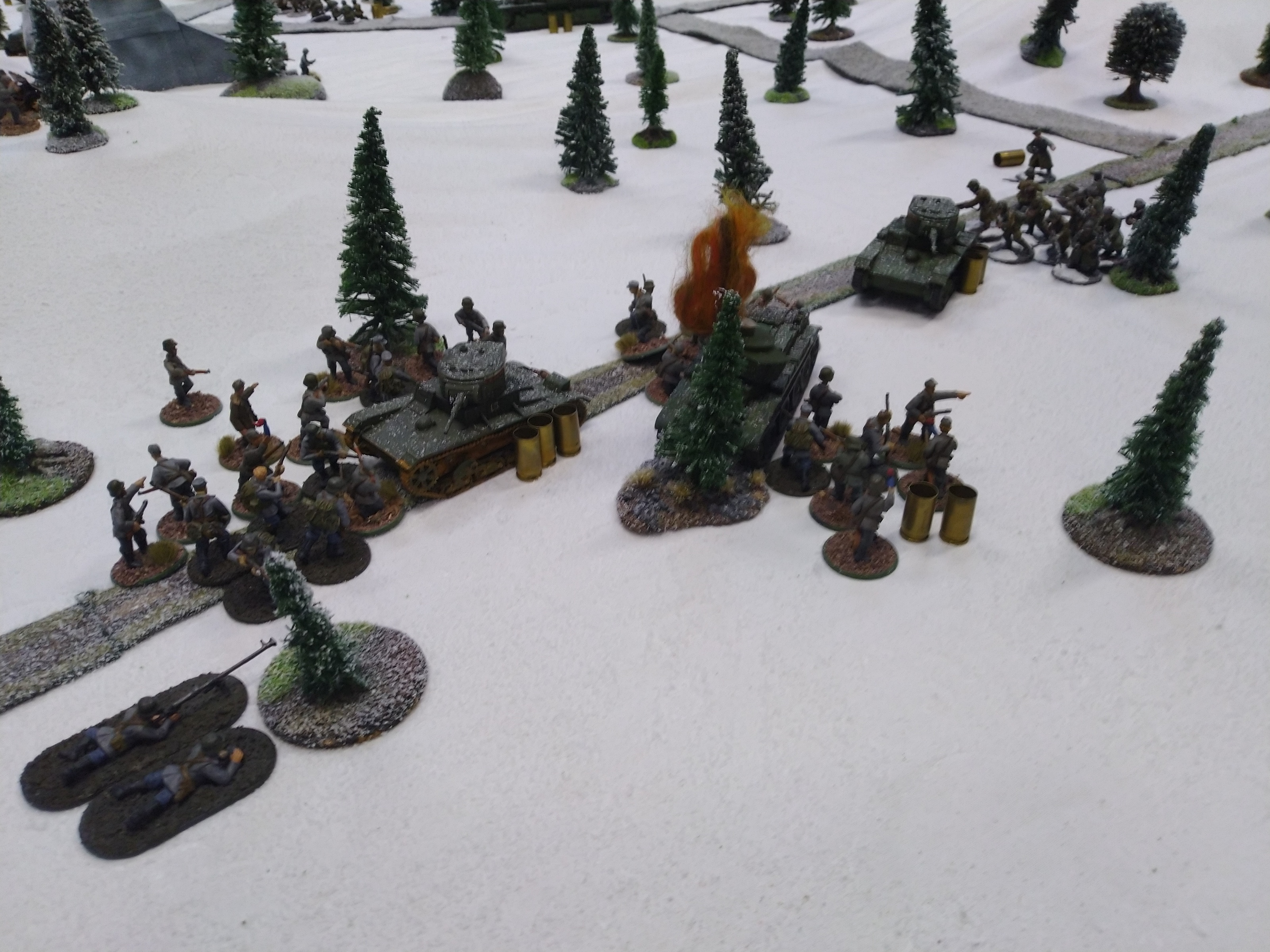
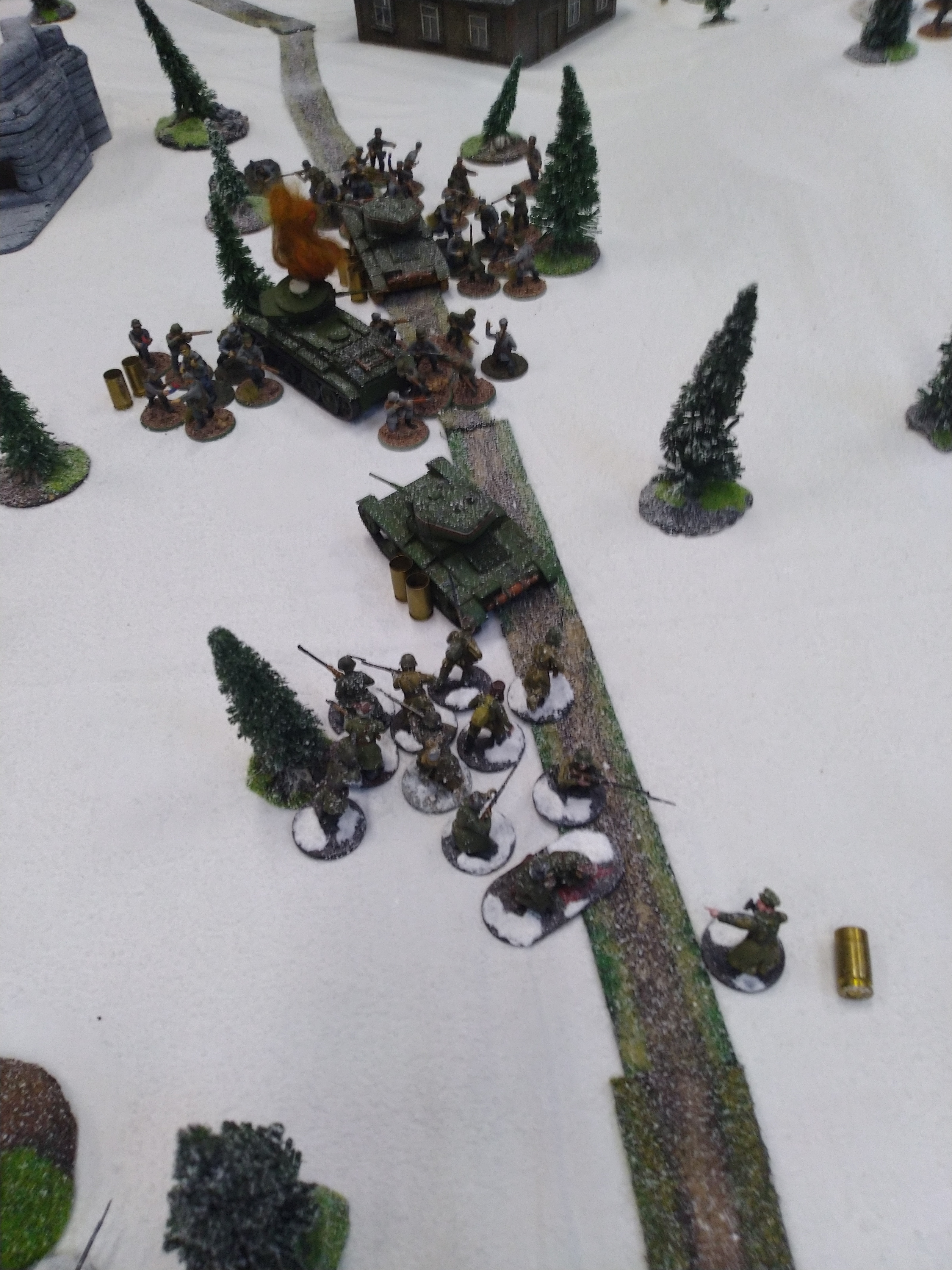
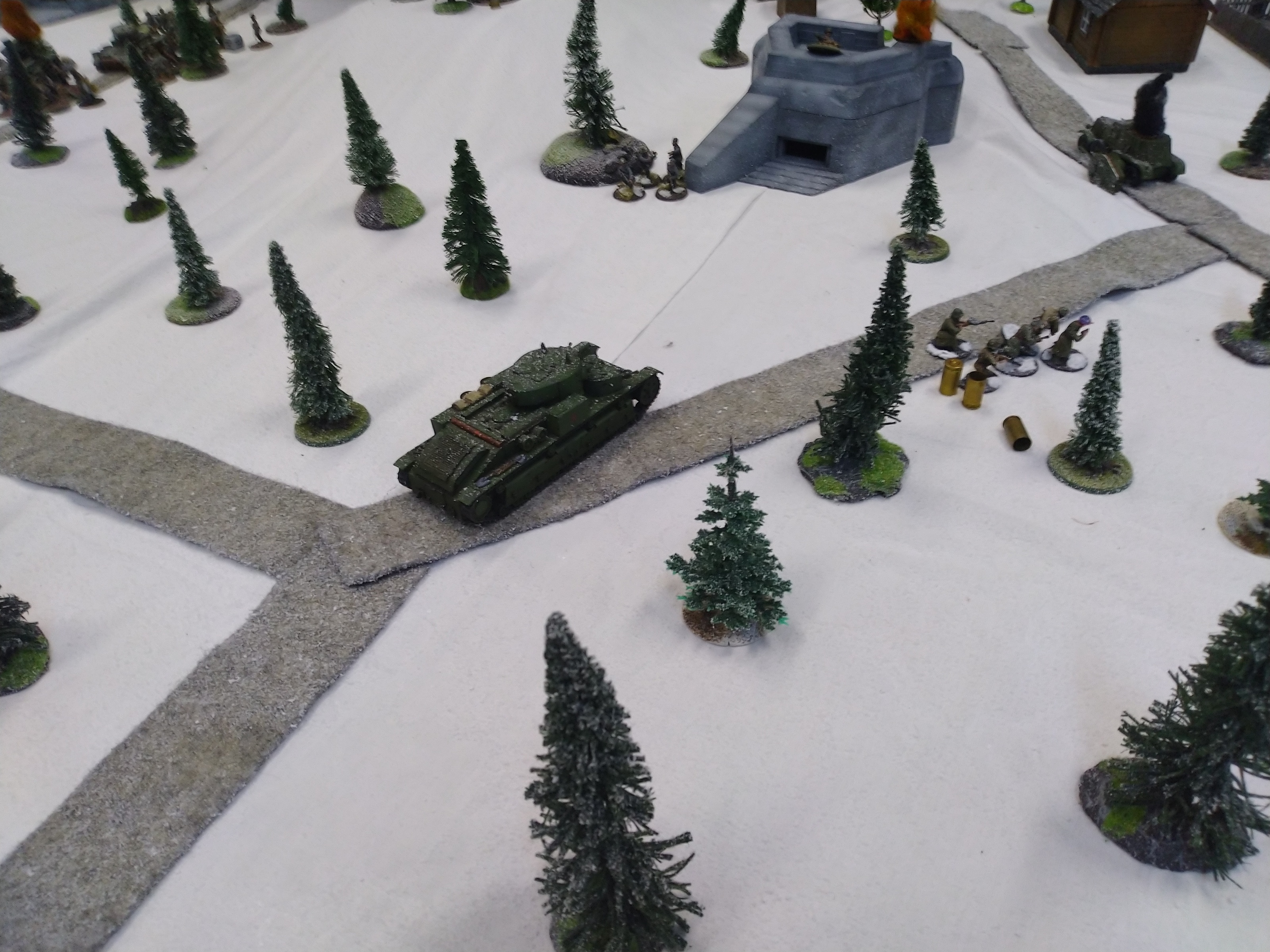
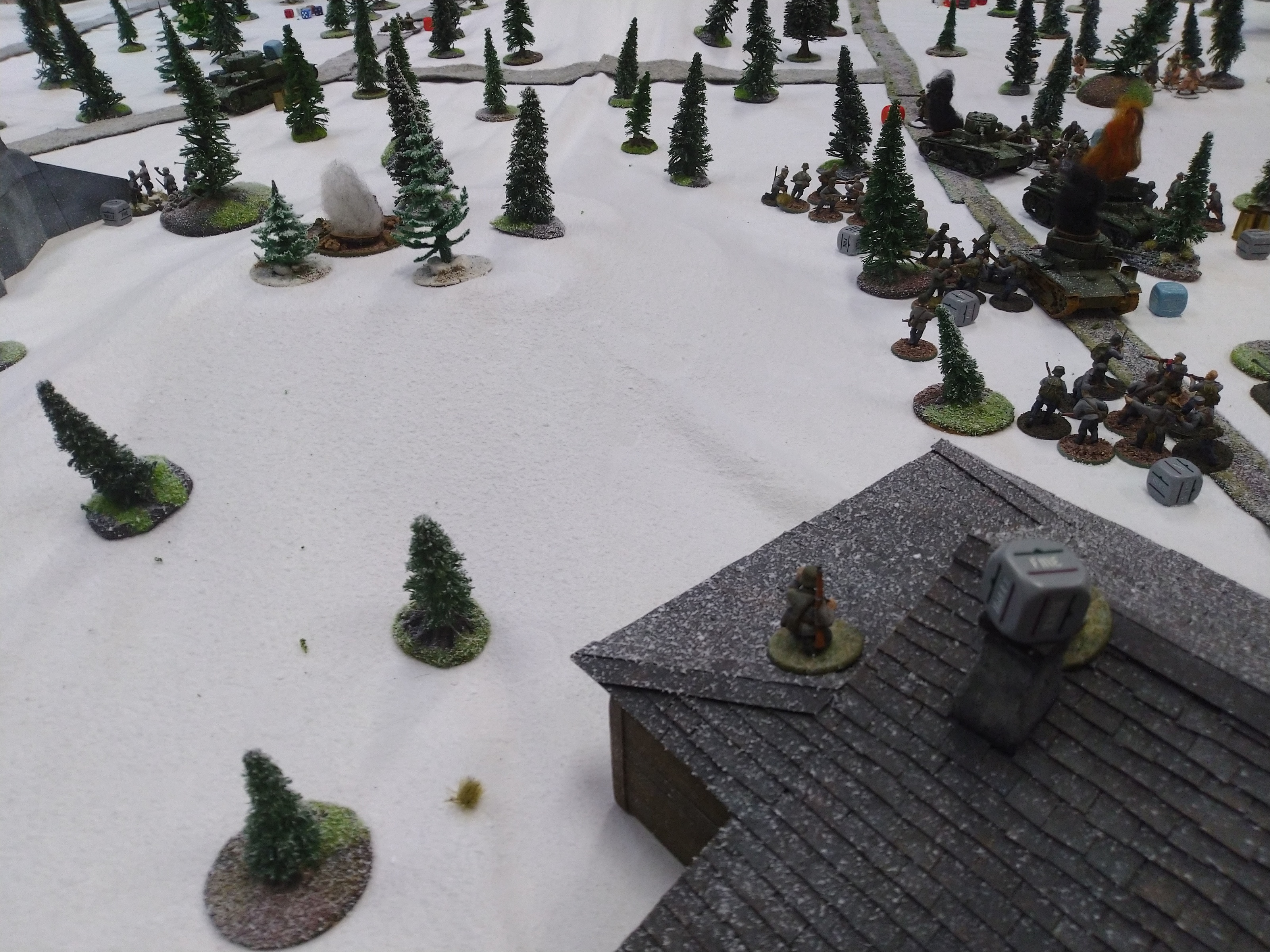
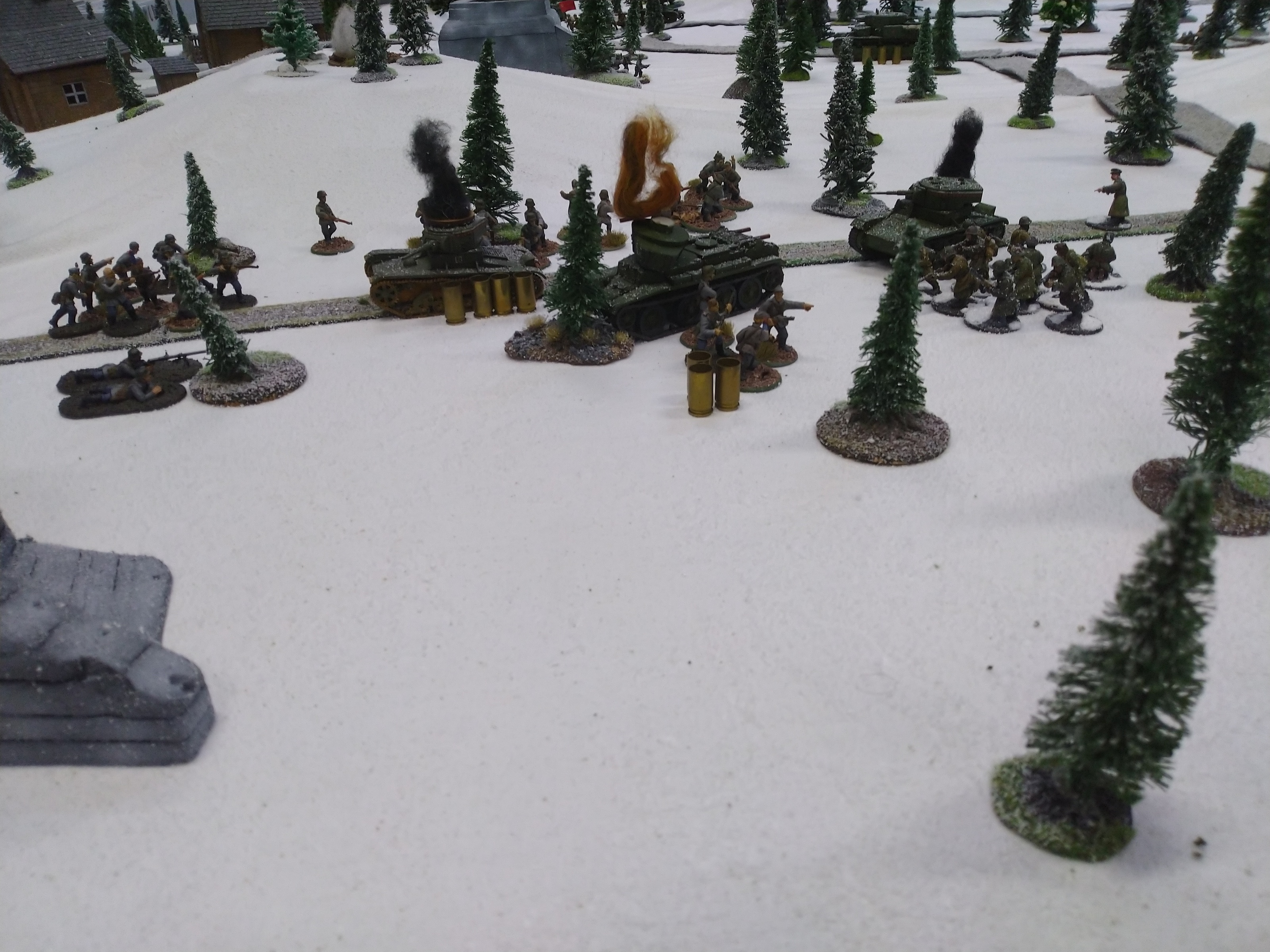
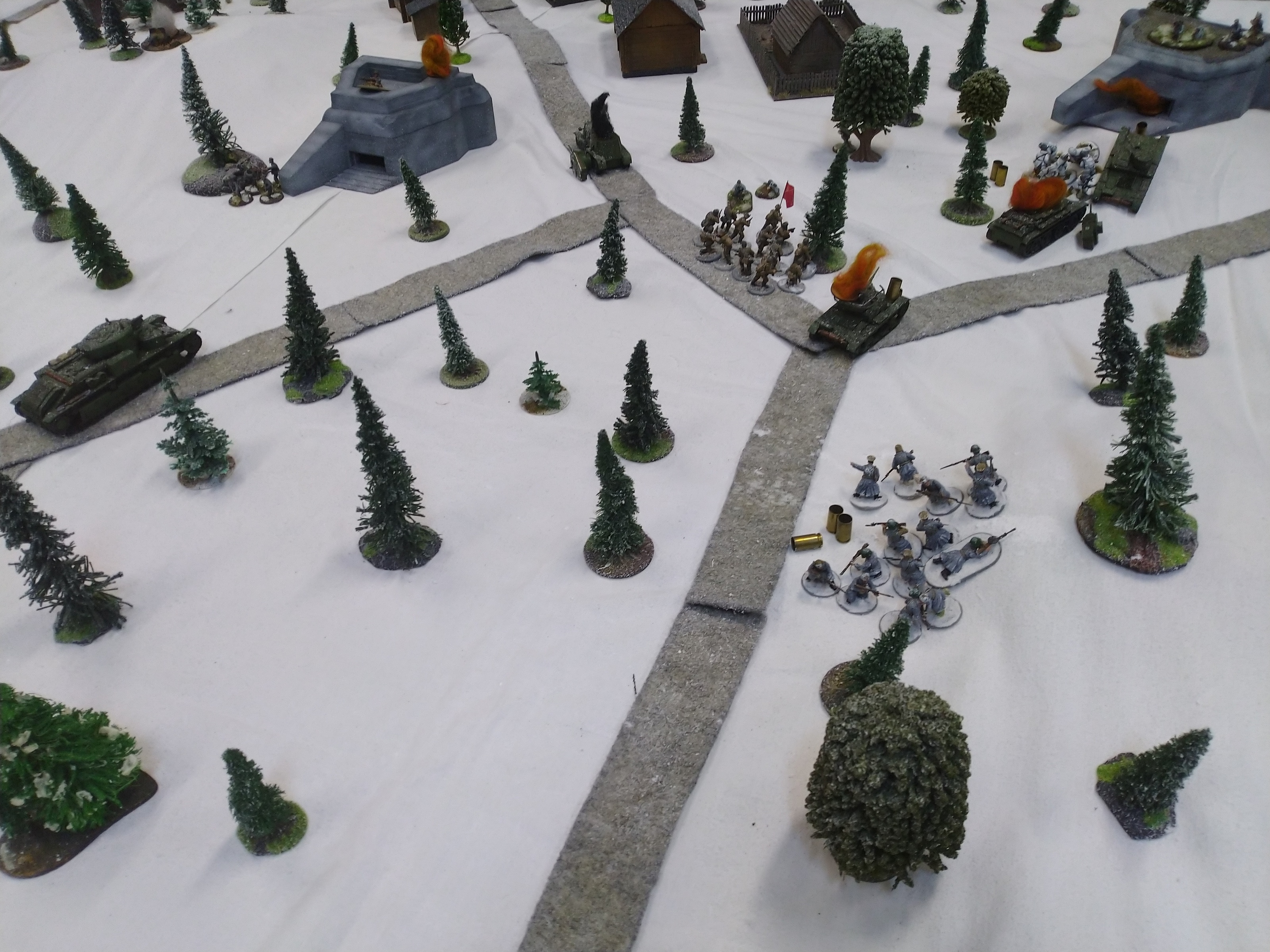
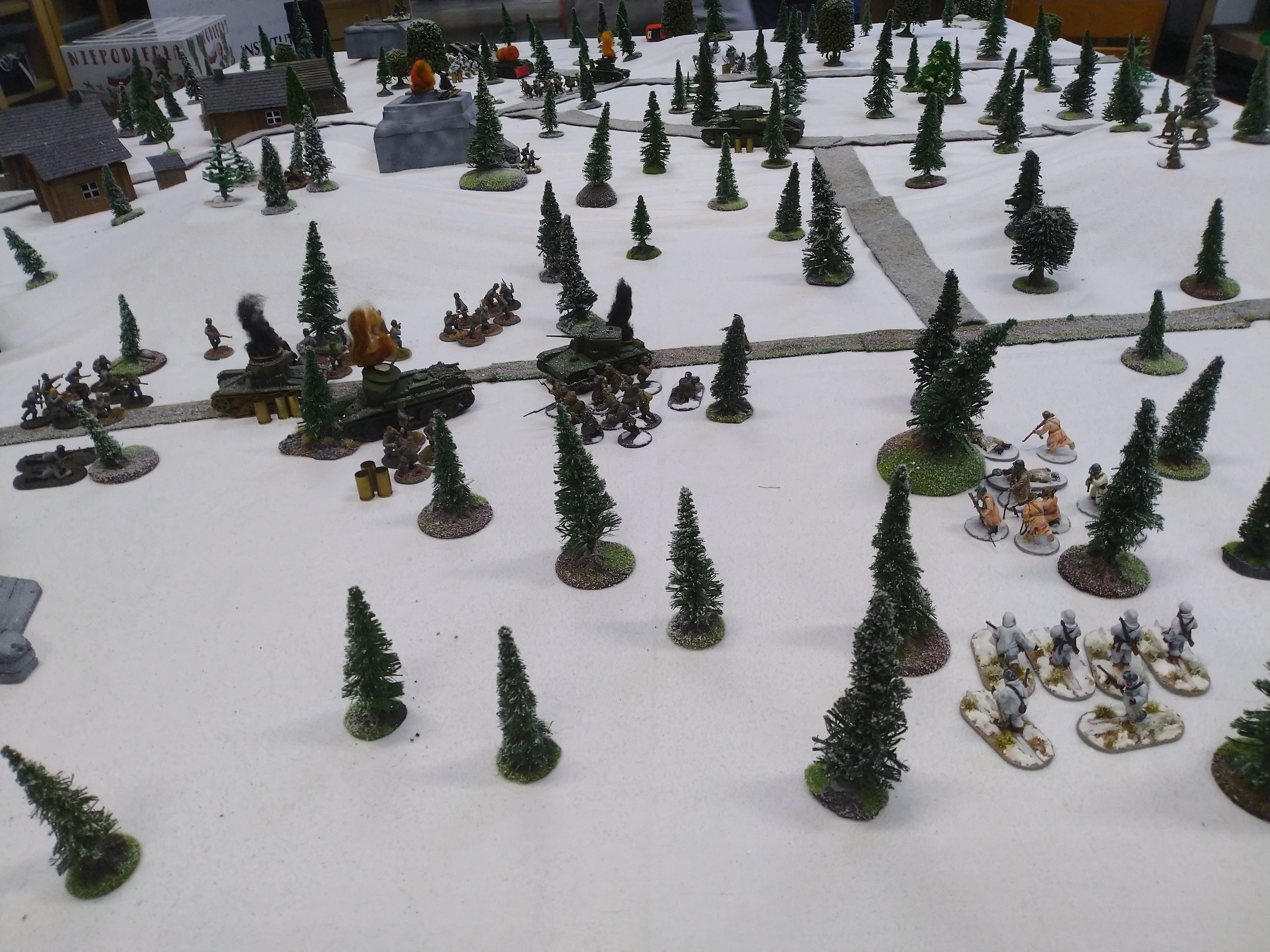
Today we played second game in our Winter War campaing of 1939′ – Soviet troops were advancing into Finnland, but brave Finns were preparing ambush – Soviet troops were separated in several pockets called in Finish „motti”. Yes, you can see there one big beast – KV-1 tank – along prototypes single tank was used for tests.
Main target for Red Army was to free they units from pockets and go from one side of the table to the other along heavily forested road. Soviet tanks in pockets have fuel issues, the trucks are objectives to be destroyed by Finns.
We played in Bolter, Wrocław, Poland – we are open to play with ppl who speak English – Germans, Russians, Czechs and everyone generally 😉 . I invited my Russian friend, but he was invited by his colleagues to a bowl.
Moment before forest started moving. Below are Soviet reinforcements.
Thank you Daniel for organising event.
Thanks for IPN for being a sponsor and for Michał!
A tree on the road, what is going on?
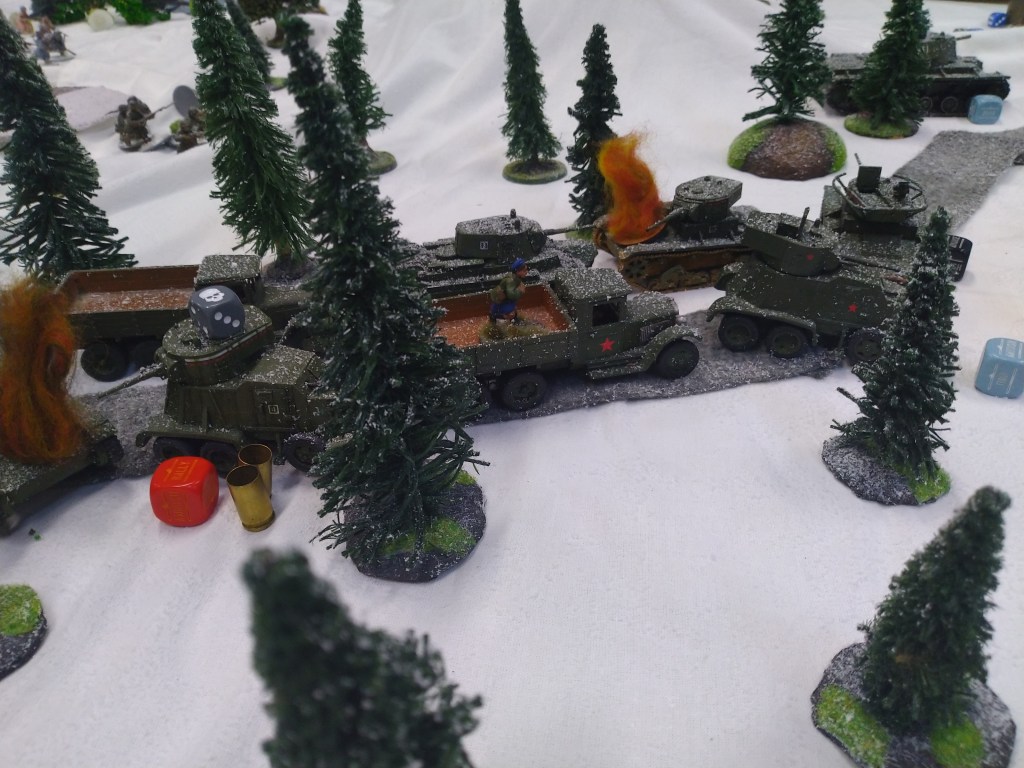
Soviet reinforcements – they have fuel.
Ivan, I hear something, did you?
Forest started moving.
Last Soviet pocket.
That wood is moving Sasha, look!
Finnish skii troops as well as infantry advanced on unprepared Soviets.
Comrades – our brothers in arms wait for us!
Soviet politruk ordered his squads to clear forest from capitalistic elements.
Finns soldiers ready to die in the name of they small patria.
Shooting beetwen both sides.
First pocket was almost freed.
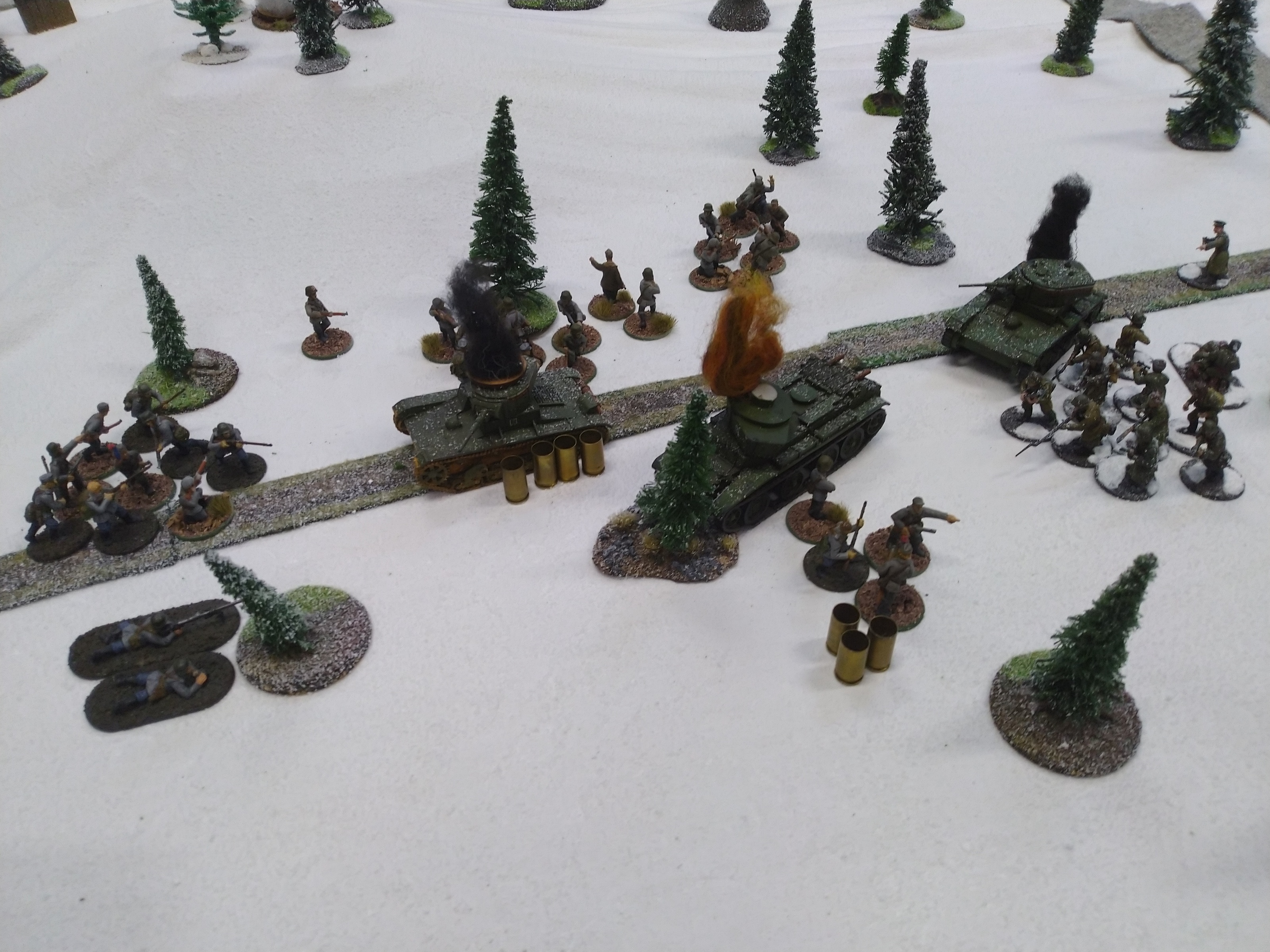
Boom, Finns managed to destroy one supply ZiS-6 truck, other squads tried to throw Molotov coctail on the flame tank, without success jet.
Soviets arrived and then encircled Finns.
More Finns with molotov coctails arrived.
Bravely last stand gave some time for the other Finns units.
Knock, knock – we have moonshine!
That board saw many cruel things, as „war, war never change” (Fallout).
For Mannerheim, for our nation advance!
Strong in number Soviet column broke Finns resistance.
Going forward but with many buring tanks along they route.
Finally one brave soldier put appropriate bottle on the T-28. The Finns retreat back into the forest, when more and more Soviets arrived on the hill.
After all, Red Army released two of three pockets.
In historical contest for me both flags should be there, as we should remember past to build better future.
Summary: – after all it was great to find common sense in playing again Bolt Action, as it’s really great game from Warlord Games, especially playing such events. – for me we should remember soldiers of both sides, all the time I think that most of them could be a friends in normal times, of course we should remember who was invader and why. – link to KV-1 I will add tomorrow.
Today in Bolter, Wrocław, PL we played first scenario covering Winter War, when Soviet Union invaded small but brave land of Finns. IPN (Instytut Pamięci Narodowej in eng. Institute of National Remembrance) took patronage over this event – here is they Wrocław page.
After taking before half of Poland IInd Republic along with Nazi Germany and Slovakia, Soviet Union turn they eyes onto Finland – sparsely populated and heavily forested country which border was 30 kilometers from Leningrad (all the time Sankt Petersburg), too close for Soviet officials – more about it here: Winter War 1939-1940.
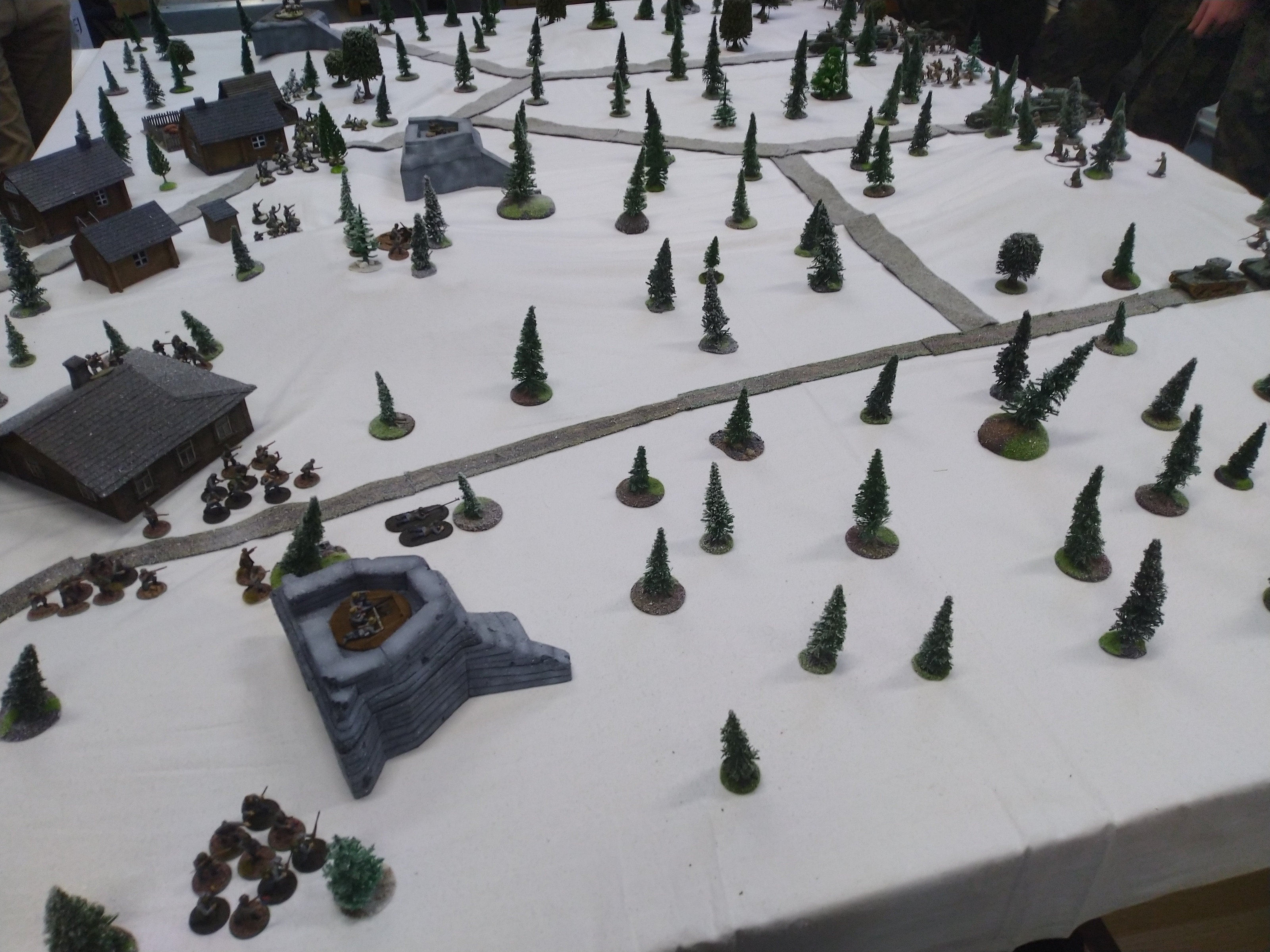
Finnish troops preparing for incomming tank assault of Red Army.
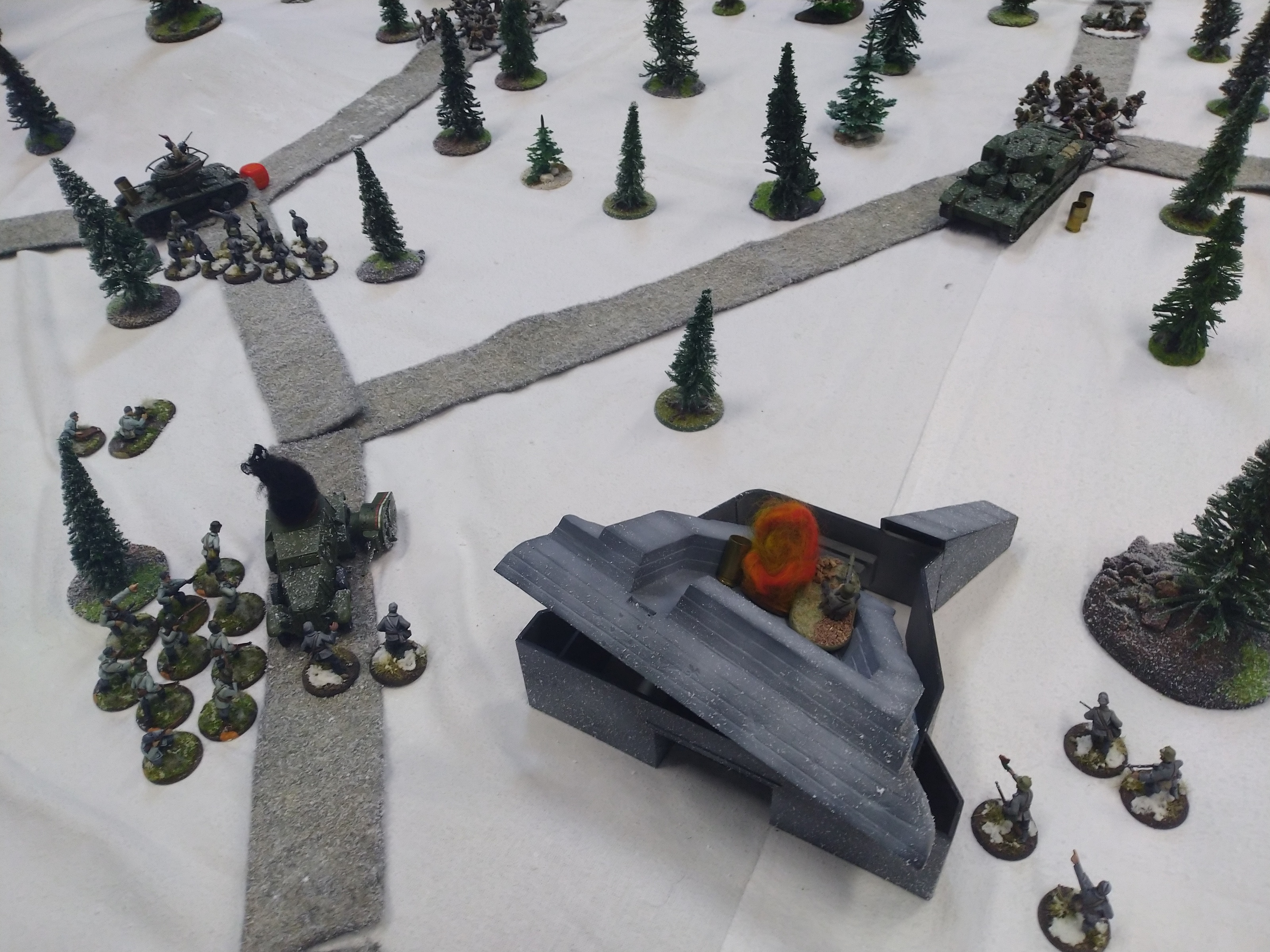
37 mm Bofors antitank gun hidden on the hill.
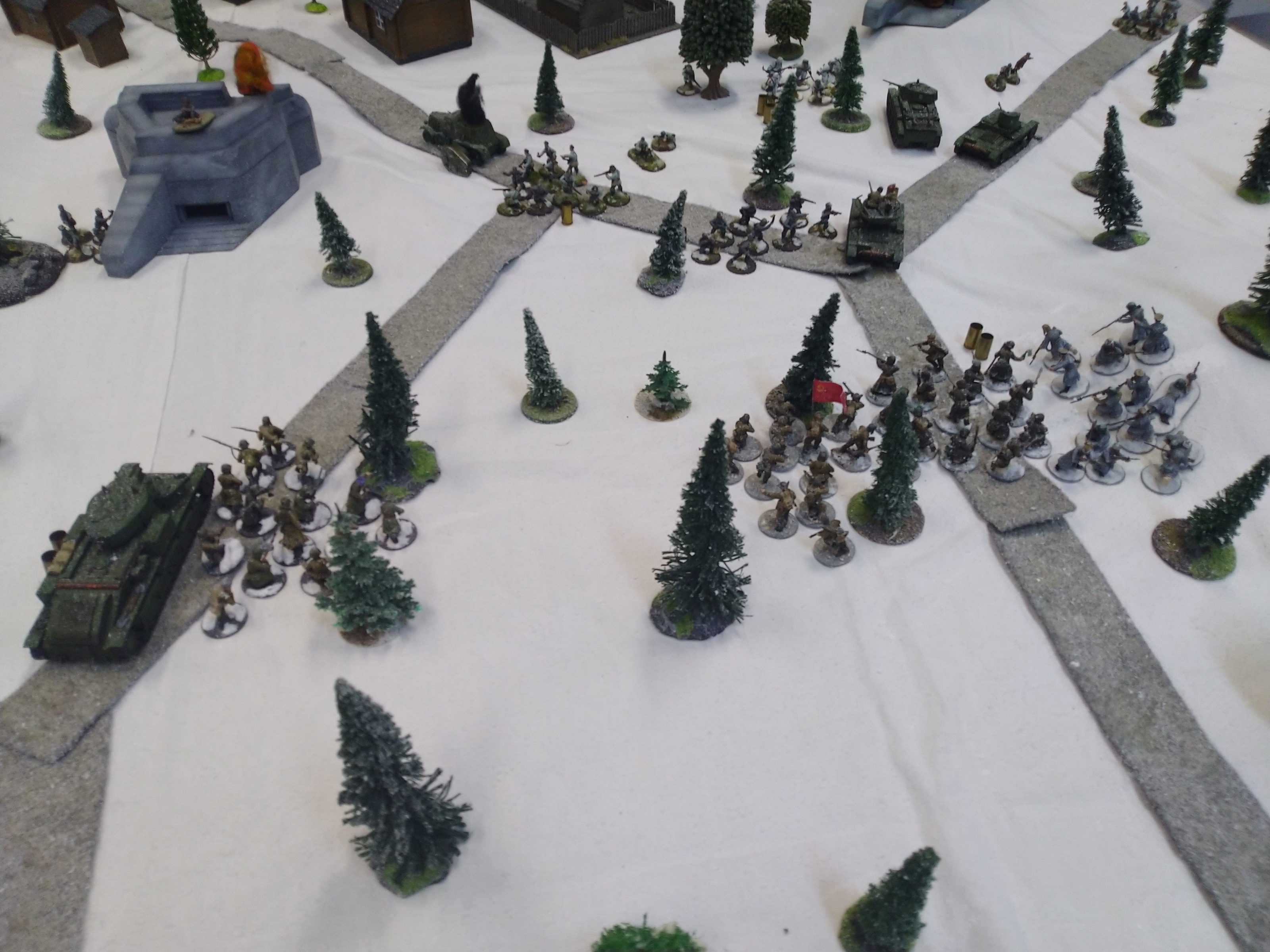
Soviet column advanced toward Finns positions.
Mortar started shooting at our medium machine gun.
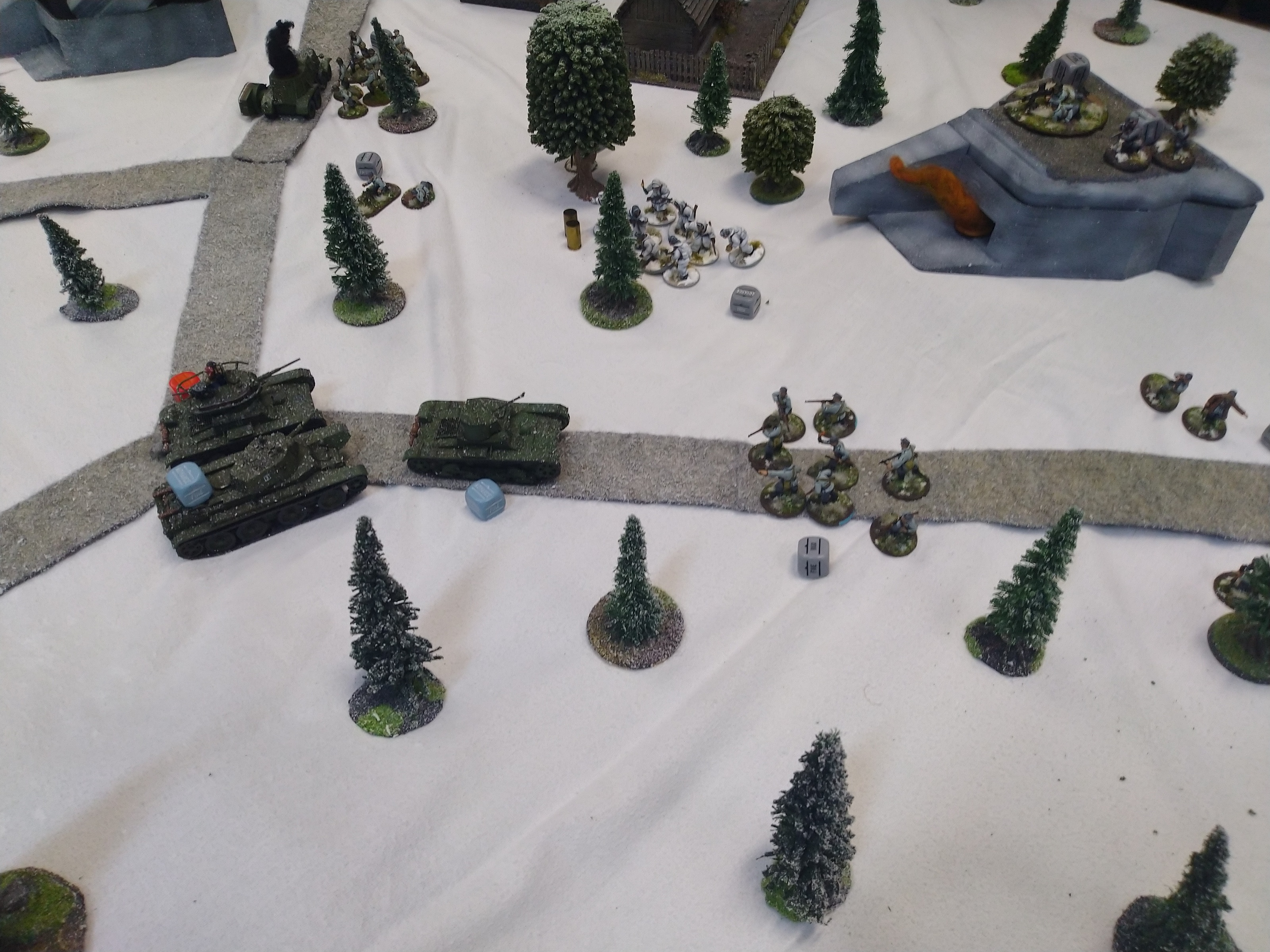
BA-6 and T-26 with flame thrower bravely moved forward.
We lost one bunker from T-28 howitzer shell, then enemy losed they armoured car from some well thrown bottle.
Brave Finns assaulted first tank on right flank.
Bofors managed to pin down T-28.
On our left flank Soviet advanced.
More Finns come from the forest to assault Soviet tanks with molotov coctails.
On left flank Soviet advanced forward with loses of men and equipment.
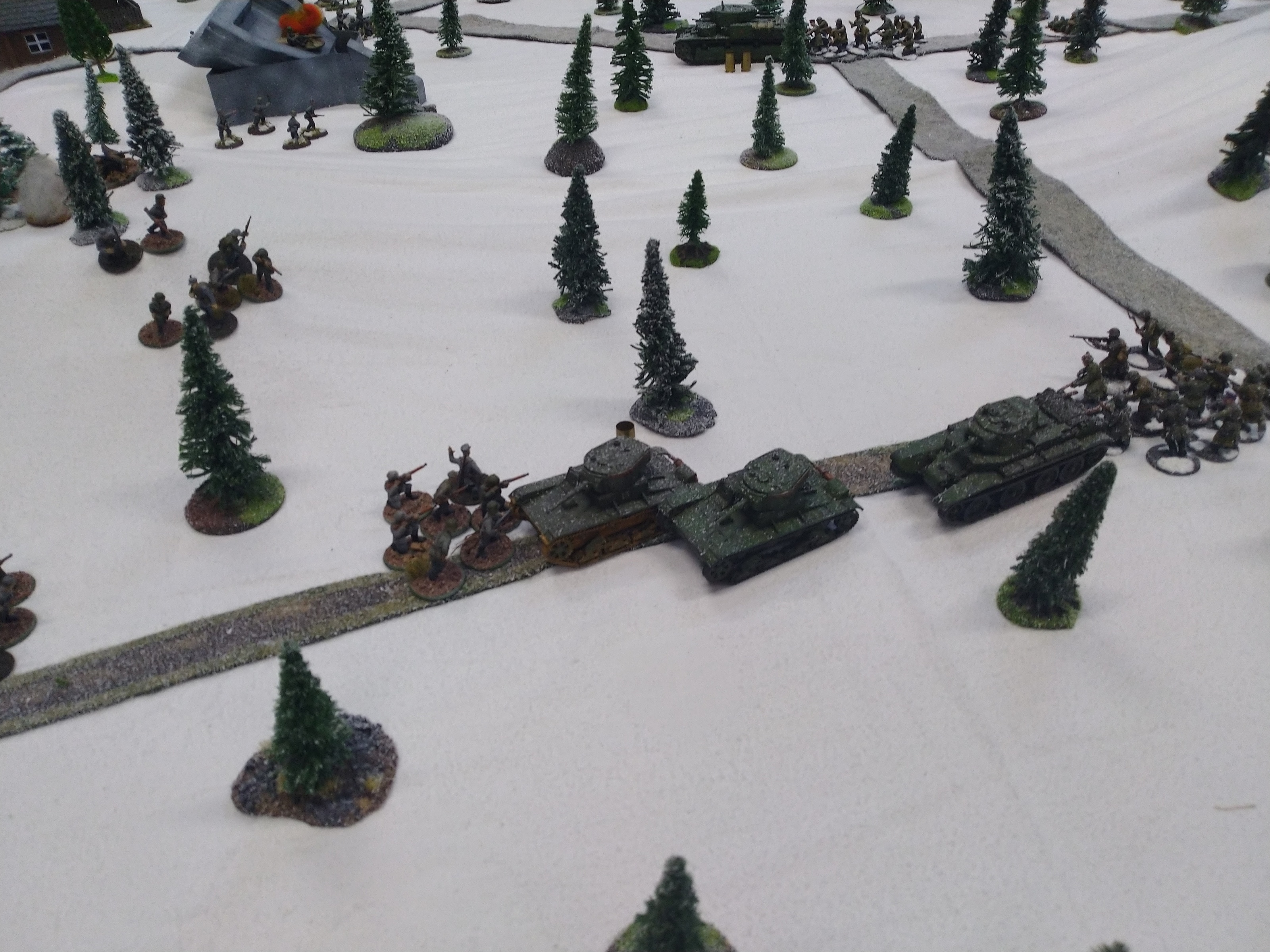
First tank burn on right flank.
Burning tanks on left flank.
T-28 staying on crossroads for most of the game.
Another thank losed on right flank.
Succesful hit from mortar finally eliminated our Bofors.
Ski troops arrived on flank.
All tank burns on right flank.
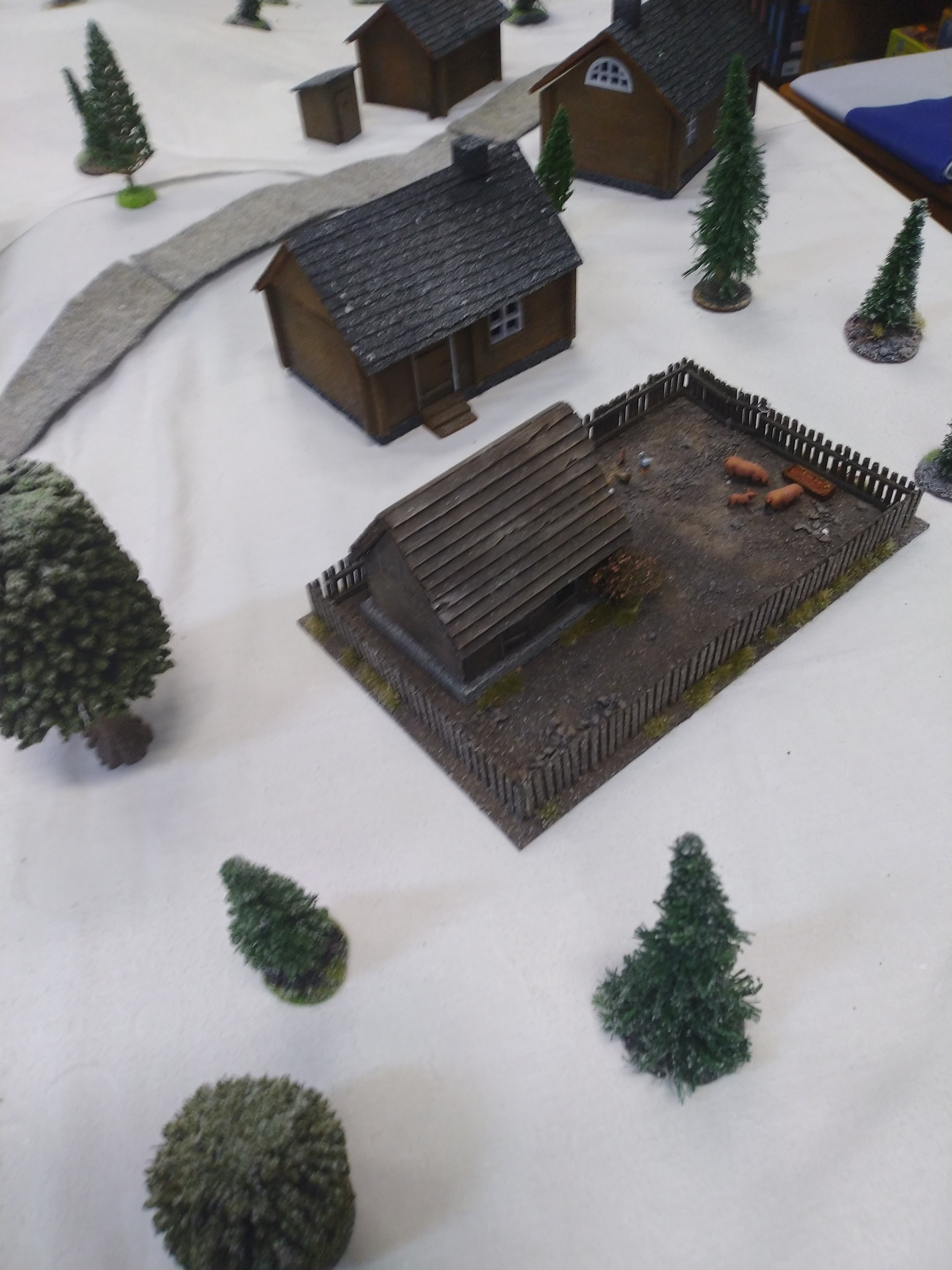
Beautiful scenery.
Summary: – it was interesting battle and as part of campaing will be continued. – Finns held Soviet advance destroying most of the vehicles. – first game in Bolt Action for a long time of absence. – Hope that next time will remember all names of co-players.
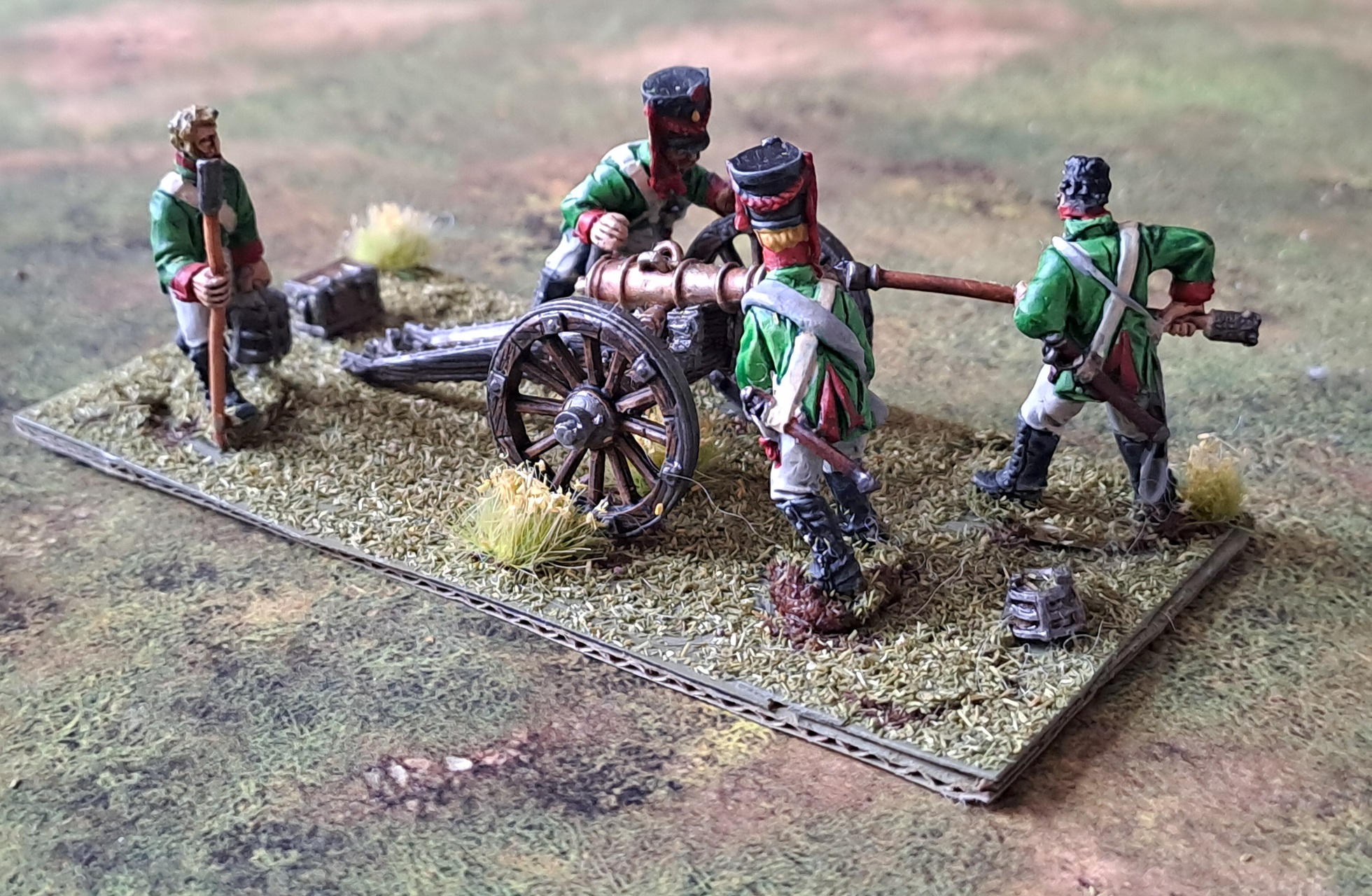
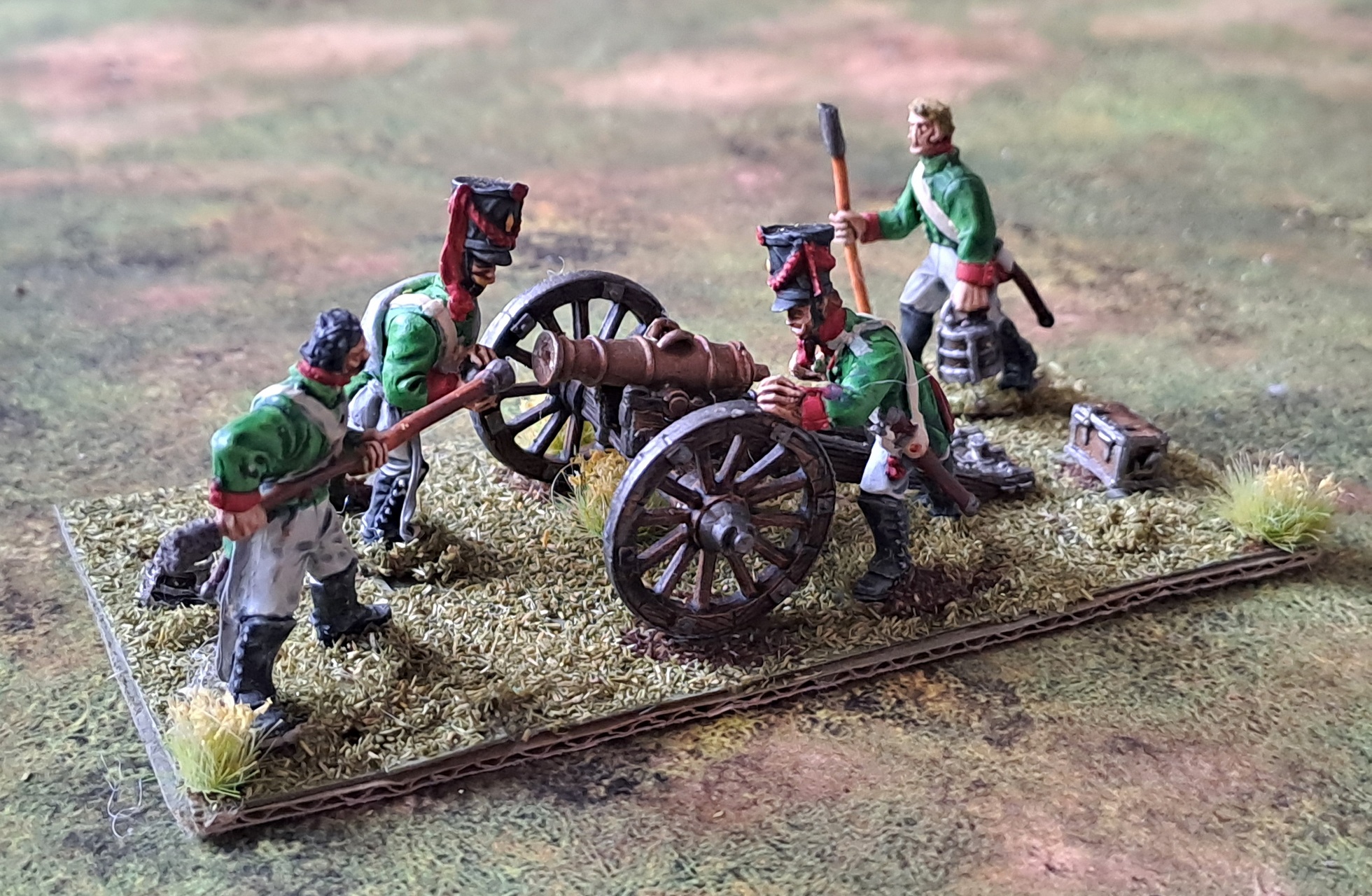
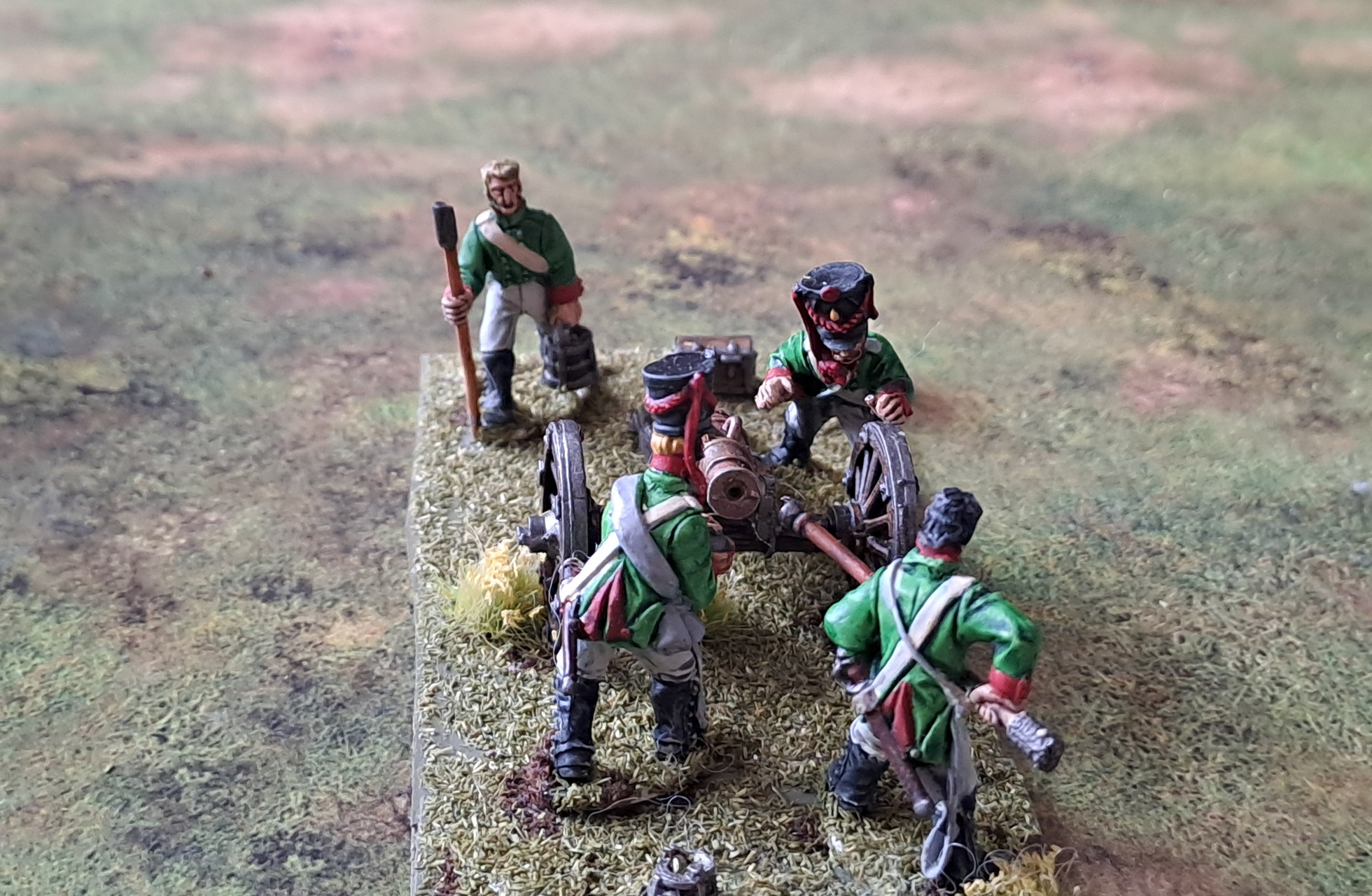
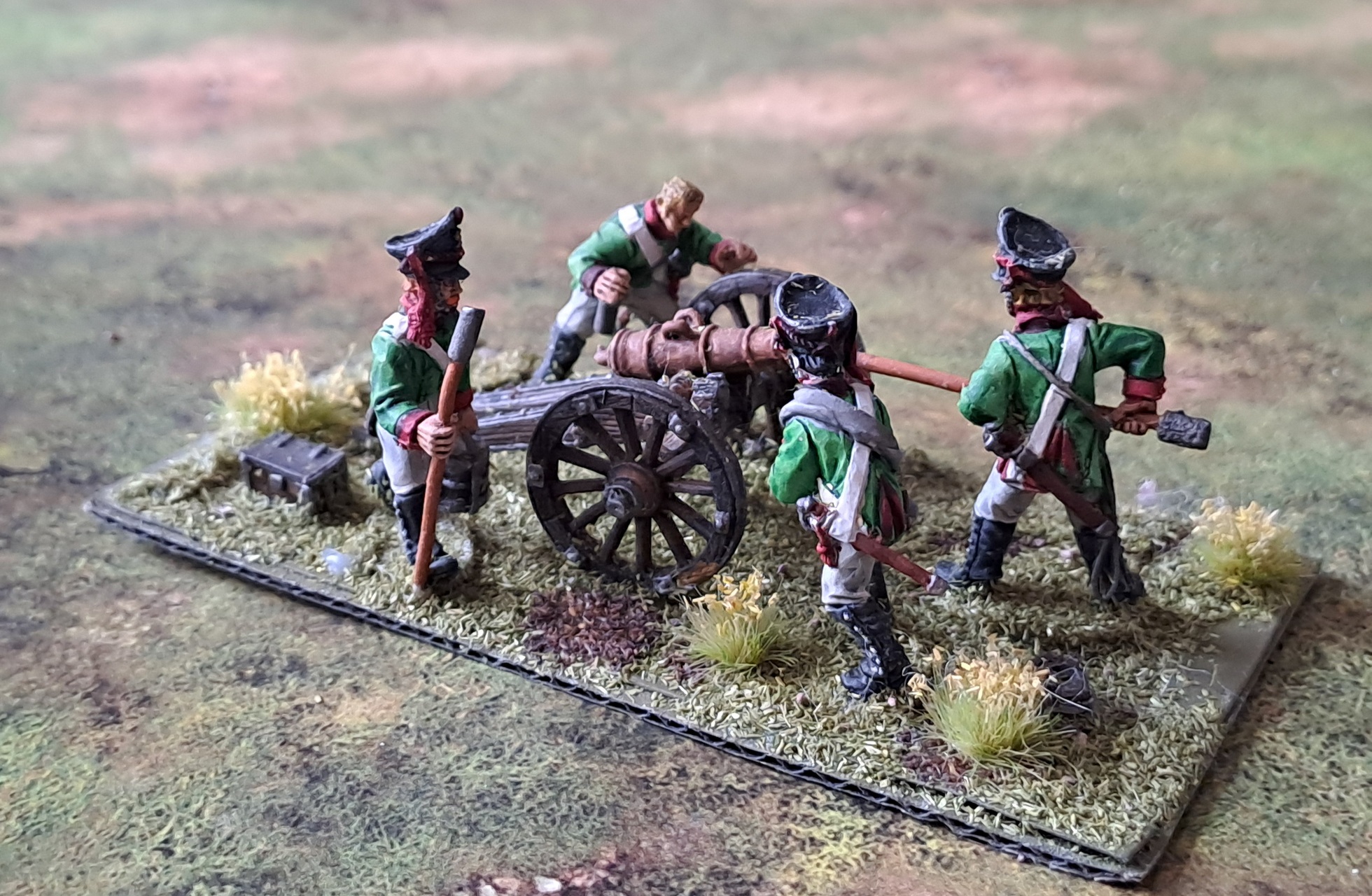
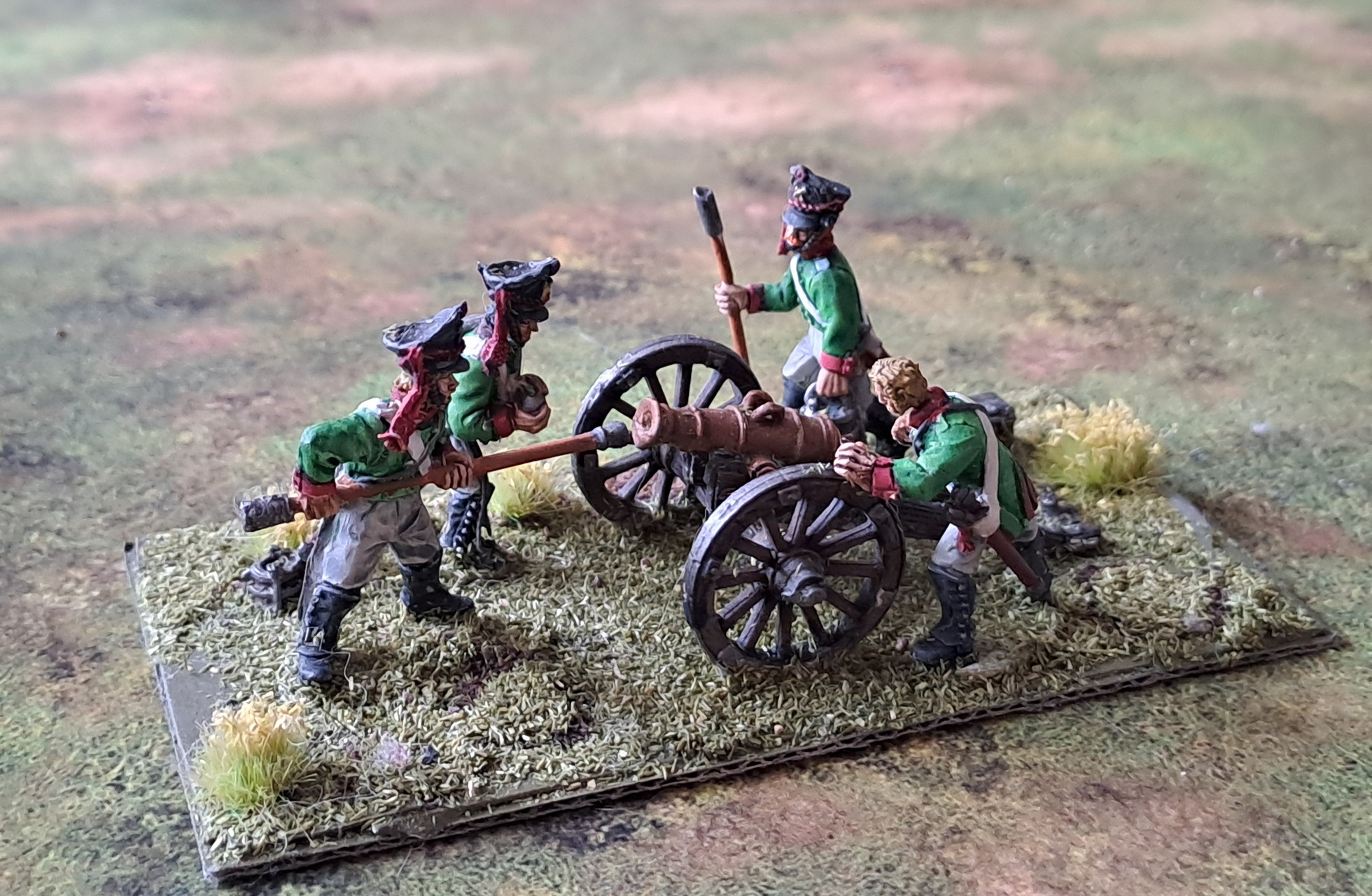
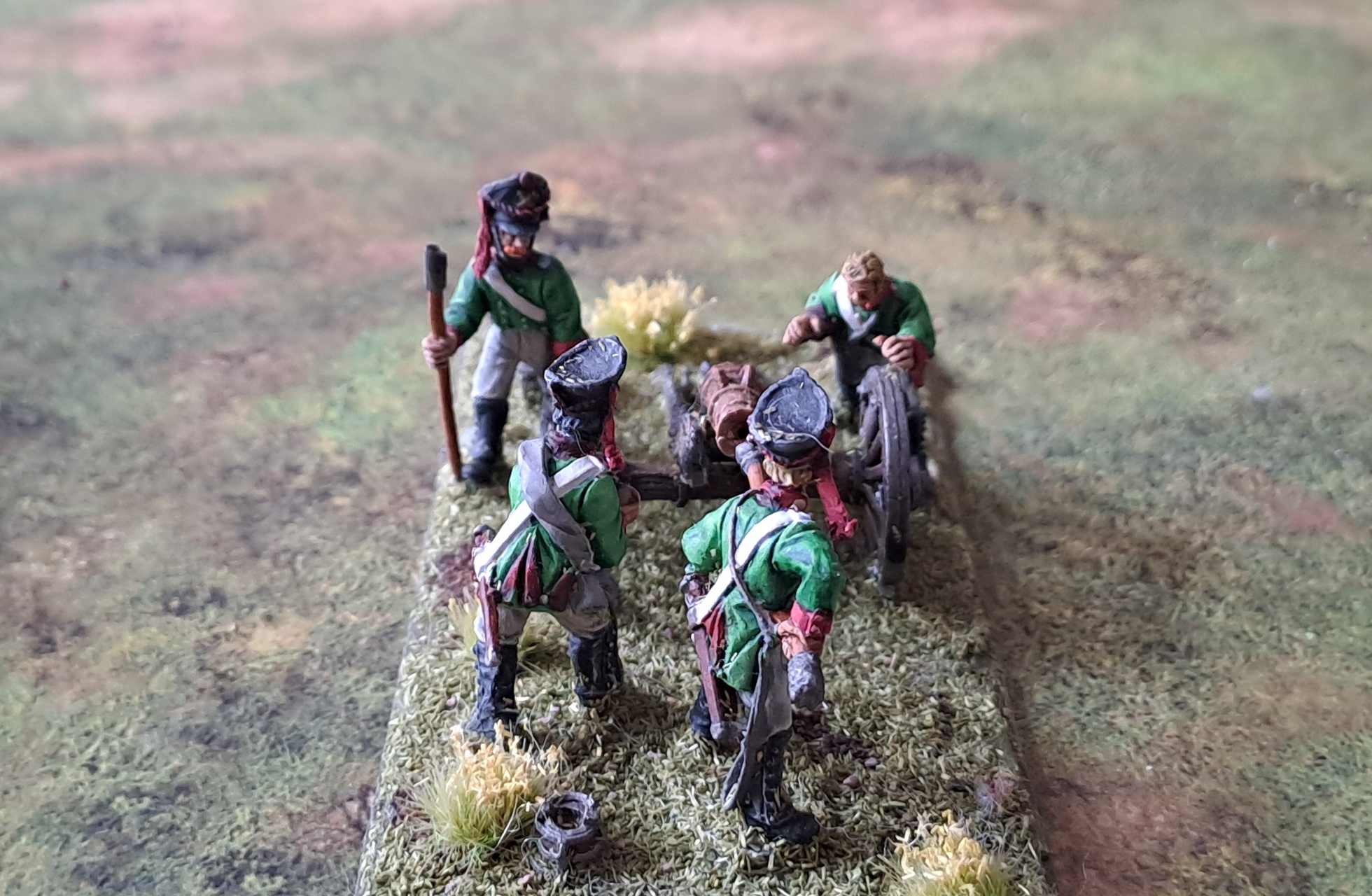
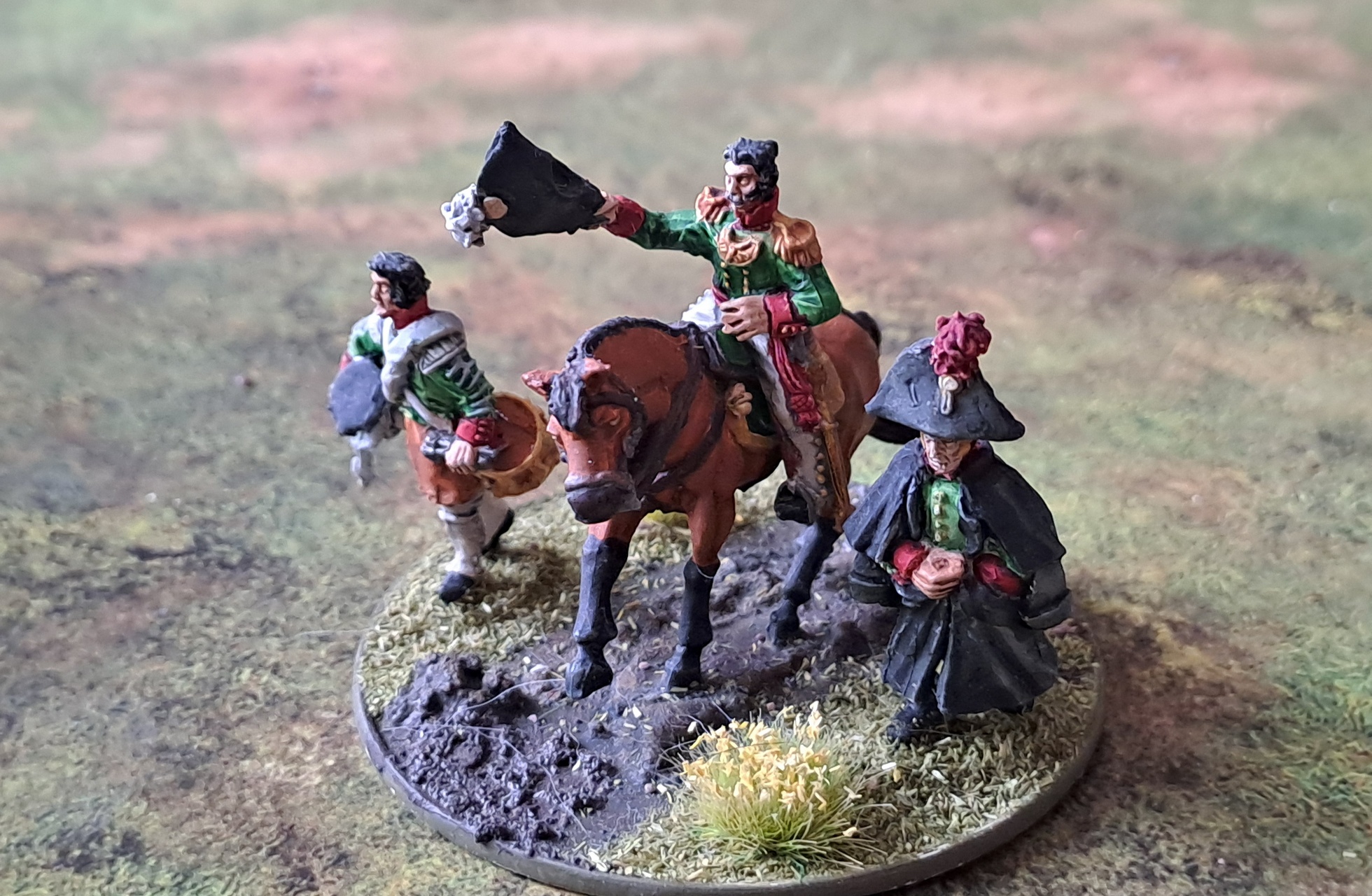
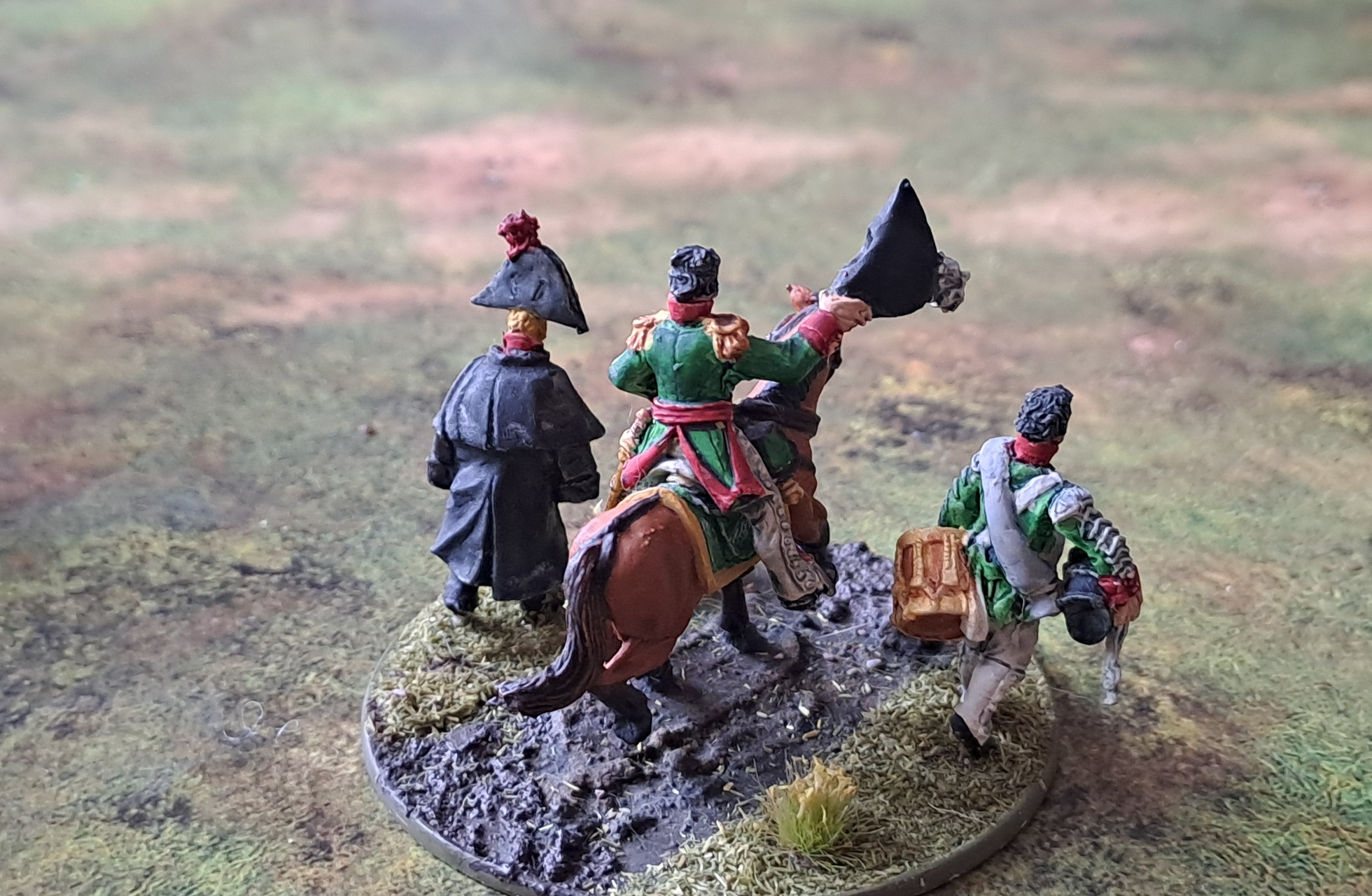
🇵🇱 W końcu przybyło kolejne działo dla Rosjan od Warlord Games. Mimo to w najbliższej przyszłości czeka mnie jeszcze malowanie 12 ułanów, 3 oficerów oraz dwóch kolejnych batalionów piechoty z Moskwy.
🇬🇧 At last, there is another gun for the Russians from Warlord Games. Even so, in the near future I still have 12 uhlans, 3 officers, and two more infantry battalions from Moscow waiting to be painted.
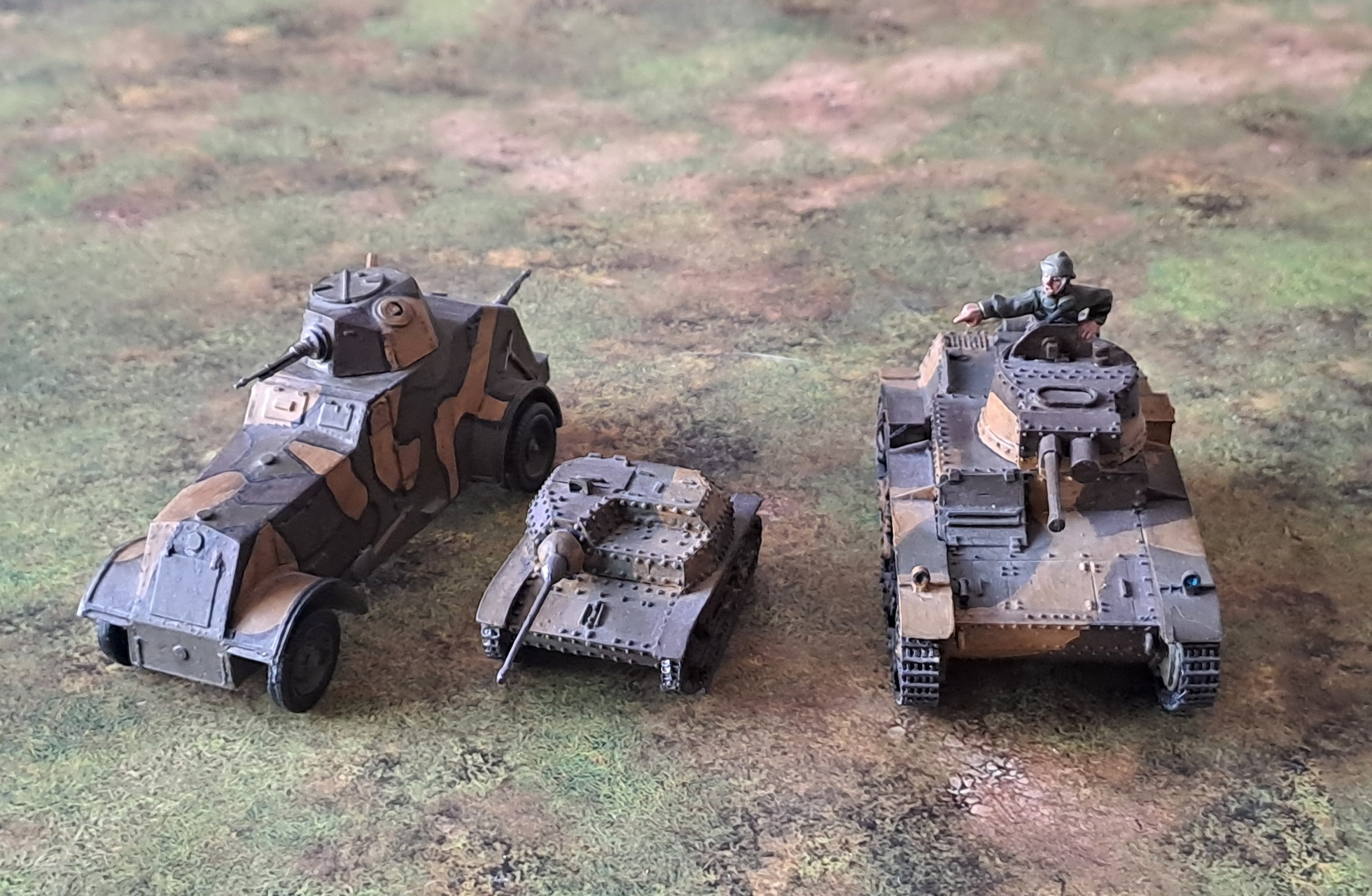
🇵🇱 Wczoraj w nocy pomalowałem polski TKS uzbrojony w 20 mm NKM (najcięższy karabin maszynowy). We wrześniu 1939 roku Wojsko Polskie używało około 570 tankietek TK-3 i TKS, z czego około 20 było uzbrojonych w NKM. Na takim pojeździe walczył polski as broni pancernej Edmund Roman Orlik, który podczas jednej z walk w rejonie Pociechy, jako dowódca plutonu, zdołał zniszczyć dwa niemieckie Pz.35(t) oraz Panzer IV dowodzony przez Wiktora IV Albrechta von Ratibor. Jego ojciec był przeciwnikiem nazizmu, a sama służba Wiktora miała być prawdopodobnie formą odwetu.
Polskie tankietki były najliczniejszymi pojazdami pancernymi Wojska Polskiego w 1939 roku. Obok nich znajdowały się także lekkie czołgi 7TP – około 132–134 egzemplarze, samochody pancerne wz. 34 – około 90, czołgi FT-17 – około 50 zmobilizowanych, oraz Vickersy E – około 32. Było też około 50 francuskich czołgów R-35, lecz tylko trzy z nich użyto bojowo.
Jeśli chodzi o polskie pojazdy pancerne, wozy wsparcia, ciężarówki i pociągi pancerne, warto zajrzeć na tę świetną stronę:http://derela.pl/armcarpl.htm
Wszystkie pojazdy ze zdjęcia są w skali 1:56 i zostały wyprodukowane przez Warlord Games.
🇬🇧 Yesterday night I painted Polish TKS with 20 mm NKM (najcięższy karabin maszynowy – heaviest machine gun). Around 570 tankettes TK-3 and TKS were used by Polish Army in September 1939′ – of whom around 20 were armed with NKM. Polish tank ace Edmund Roman Orlik fought on this vehicle and during one fight near Pociecha village he as leader of platoon managed to destroyed two German Pz.35 and Panzer IV commanded by Wiktor IV Albrecht of Racibor – who father was antinazist and his service was probably just revenge.
Polish tankettes were most numerous vehicles of Polish Army in 1939′. Next to them were 7-TP light tank – 132-134, wz. 34 – around 90, FT-17 – around 50 mobilized, Vickers E – around 32. There were also around 50 R-35 French tanks, but only three were used in combat.
In case of Polish armour, support vehicles, trucks and armoured trains – look on this great page: http://derela.pl/armcarpl.htm
All the vehicles in the photo are in 1:56 scale and were produced by Warlord Games.
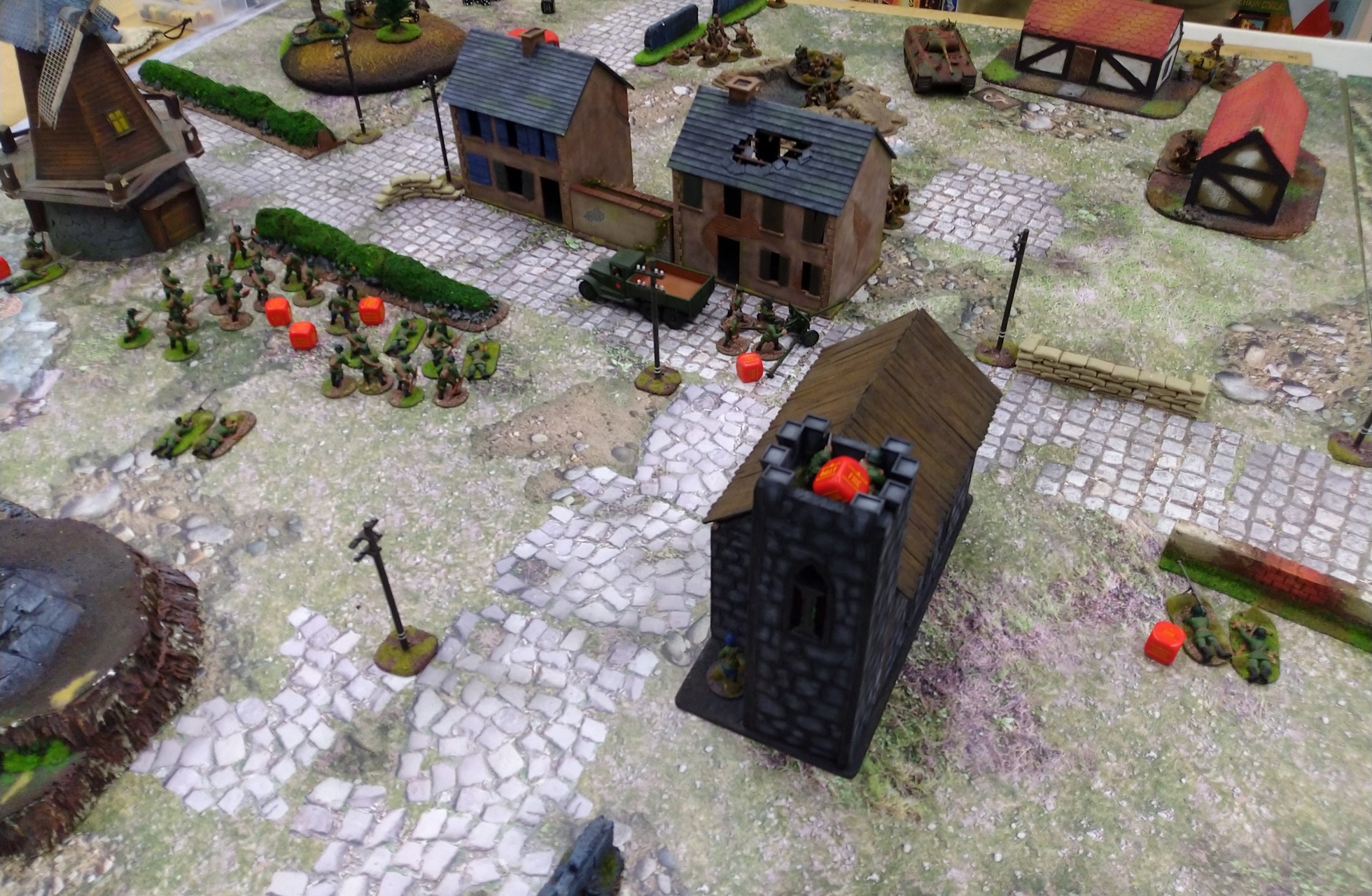
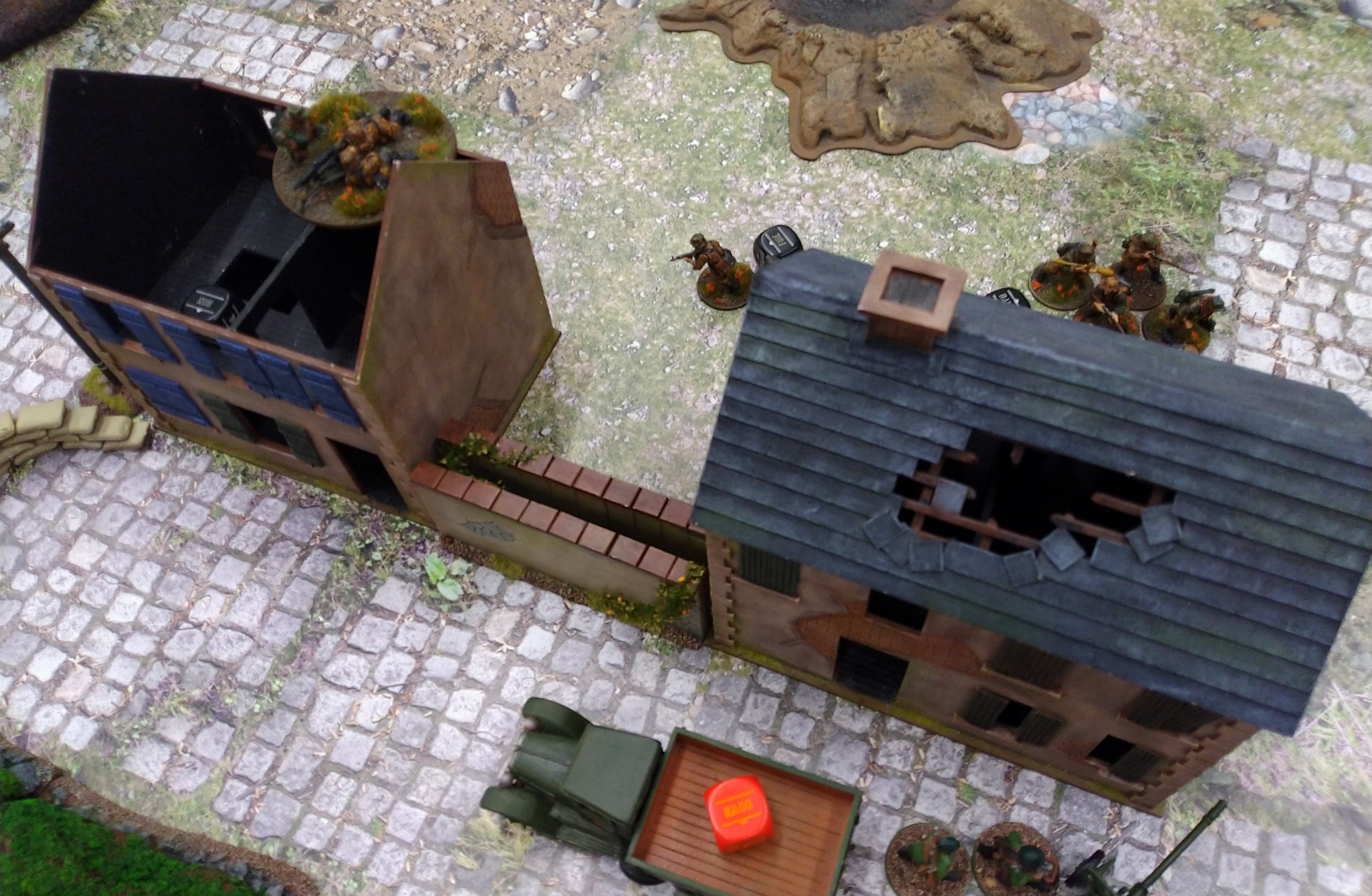
🇵🇱 W ostatnią sobotę zagraliśmy w Planszóweczce w Astrze bitwę na 1250 punktów na stronę. Do starcia doszło w niewielkiej wiosce pod koniec II wojny światowej.
Początek starcia – celem obu stron było zdobycie przewagi w liczbie kości rozkazu.
🇬🇧 Last Saturday, we played a 1250-point-per-side battle at Planszóweczka in Astra. The clash took place in a small village near the end of the Second World War.
The beginning of the battle – both sides aimed to gain the advantage in order dice.
🇵🇱 Podsumowanie: – Po raz pierwszy trafiłem z moździerza już przy pierwszym strzale. – Ani razu nie udało mi się trafić z działa ZiS-3, a ze snajperem nie było wcale lepiej. – BA-6 i odwaga skończyły się utratą tego samochodu pancernego. – Na szczęście radziecka technologia w końcu zaczęła działać i T-34-85 wyeliminował Panterę. – Dynamiczna gra w doborowym towarzystwie. – Moja rozpiska.
🇬🇧 Summary: – For the first time, I scored a hit with my mortar on its very first shot. – I did not manage to hit anything with the ZiS-3 even once, and things did not go any better with the sniper. – The BA-6 and a bit too much bravery ended with the loss of that armoured car. – Fortunately, Soviet technology finally started working, and the T-34-85 took out the Panther. – A dynamic game in excellent company. – My army list.
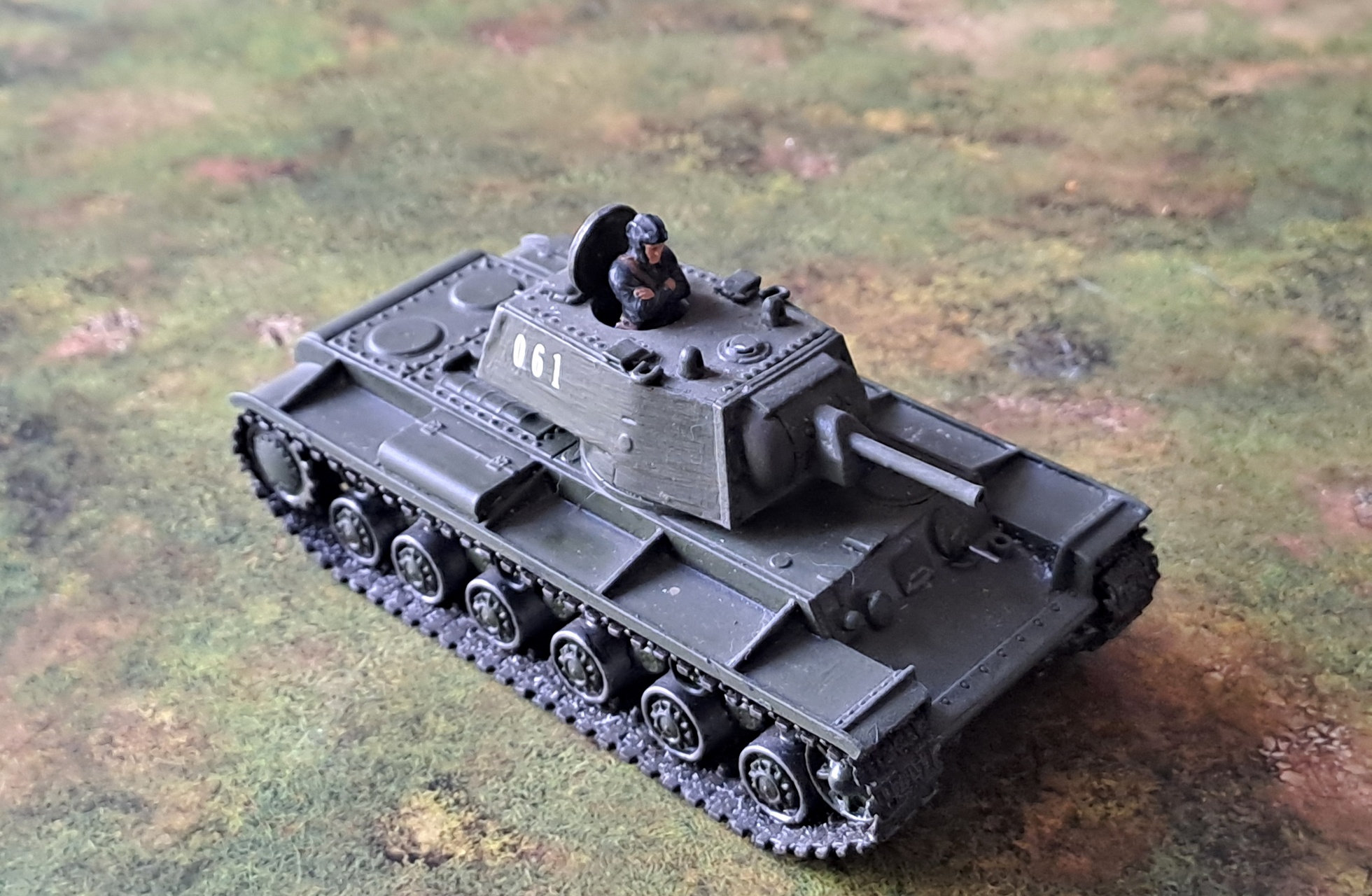
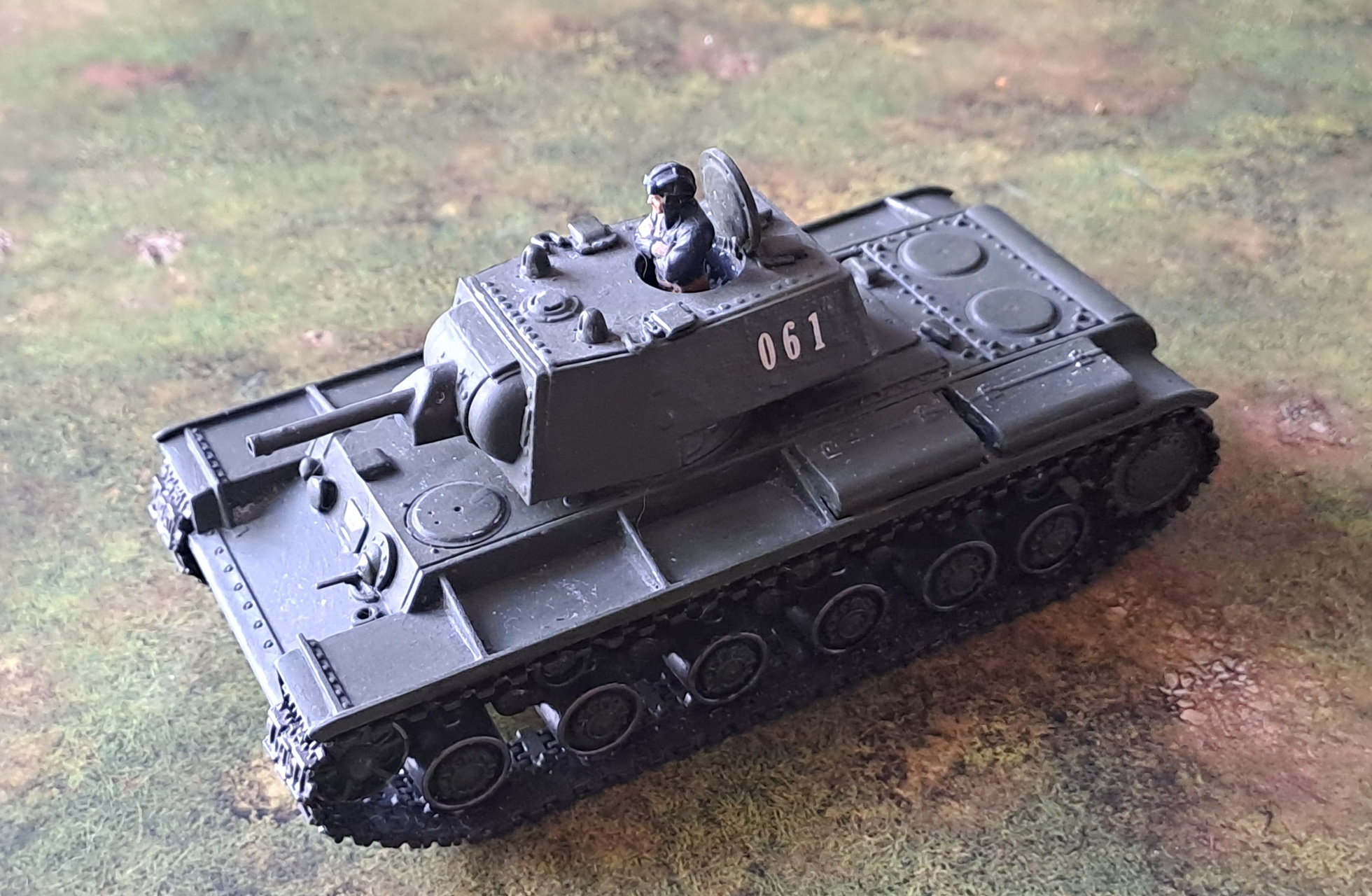
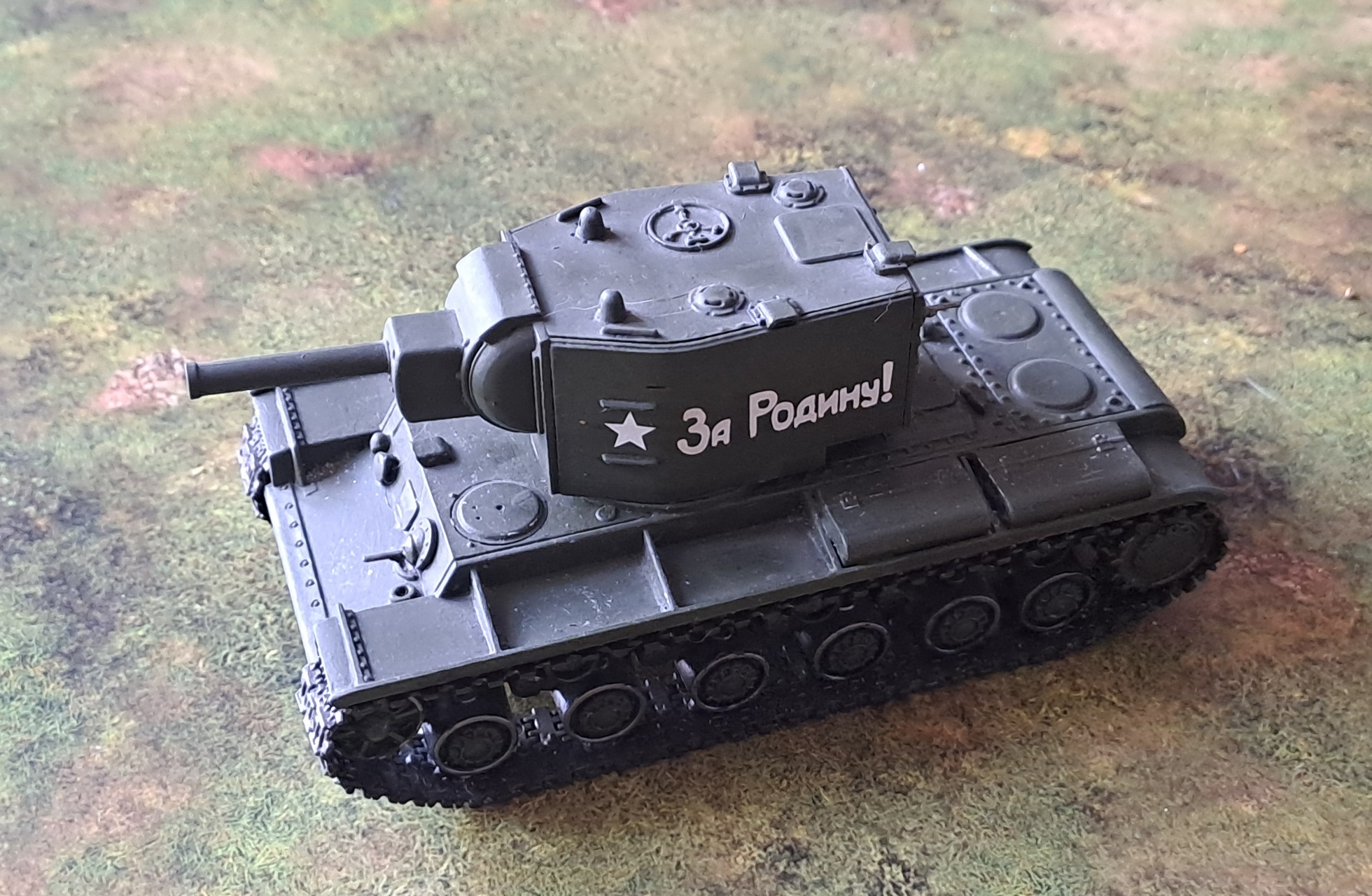
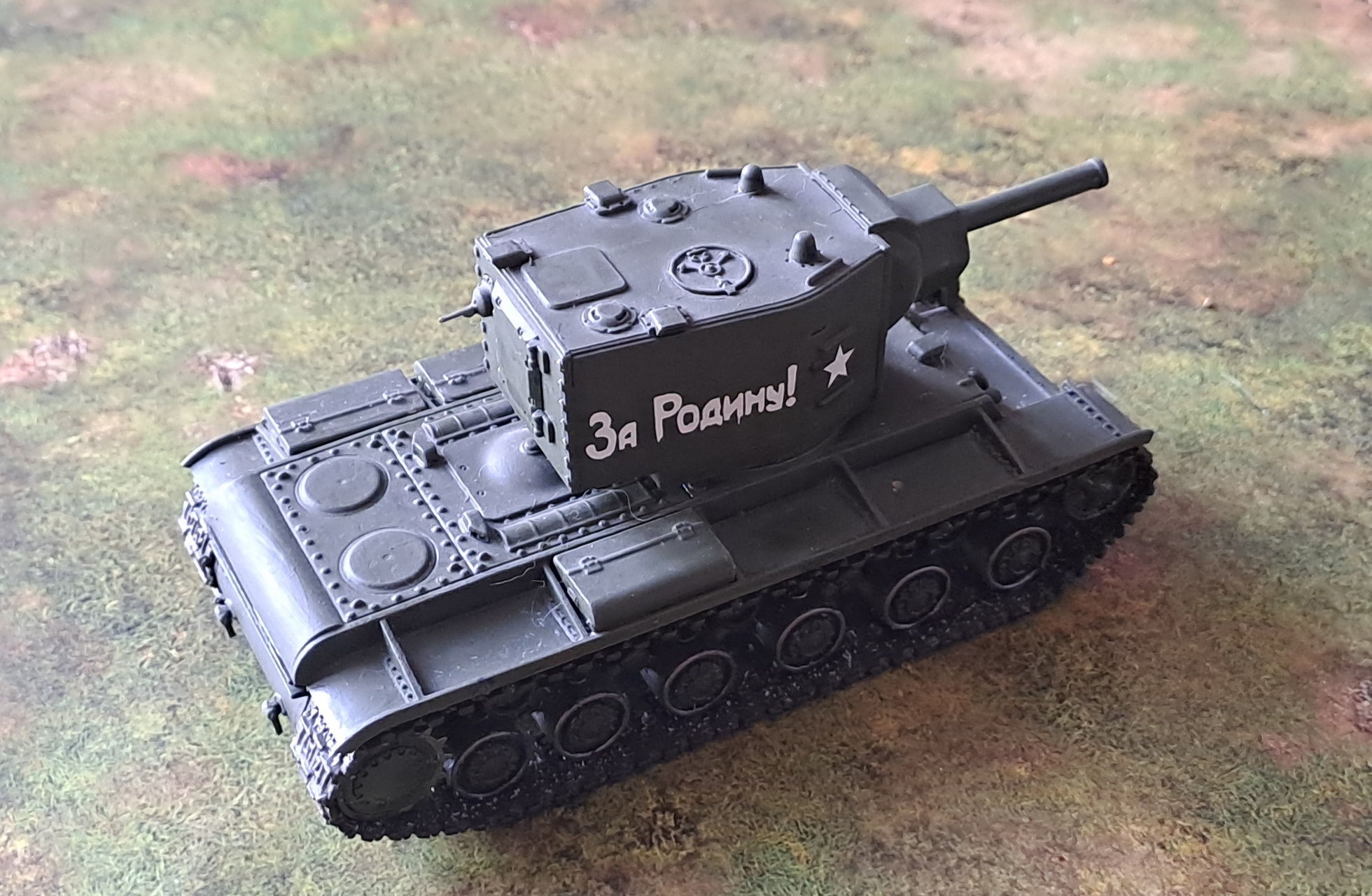
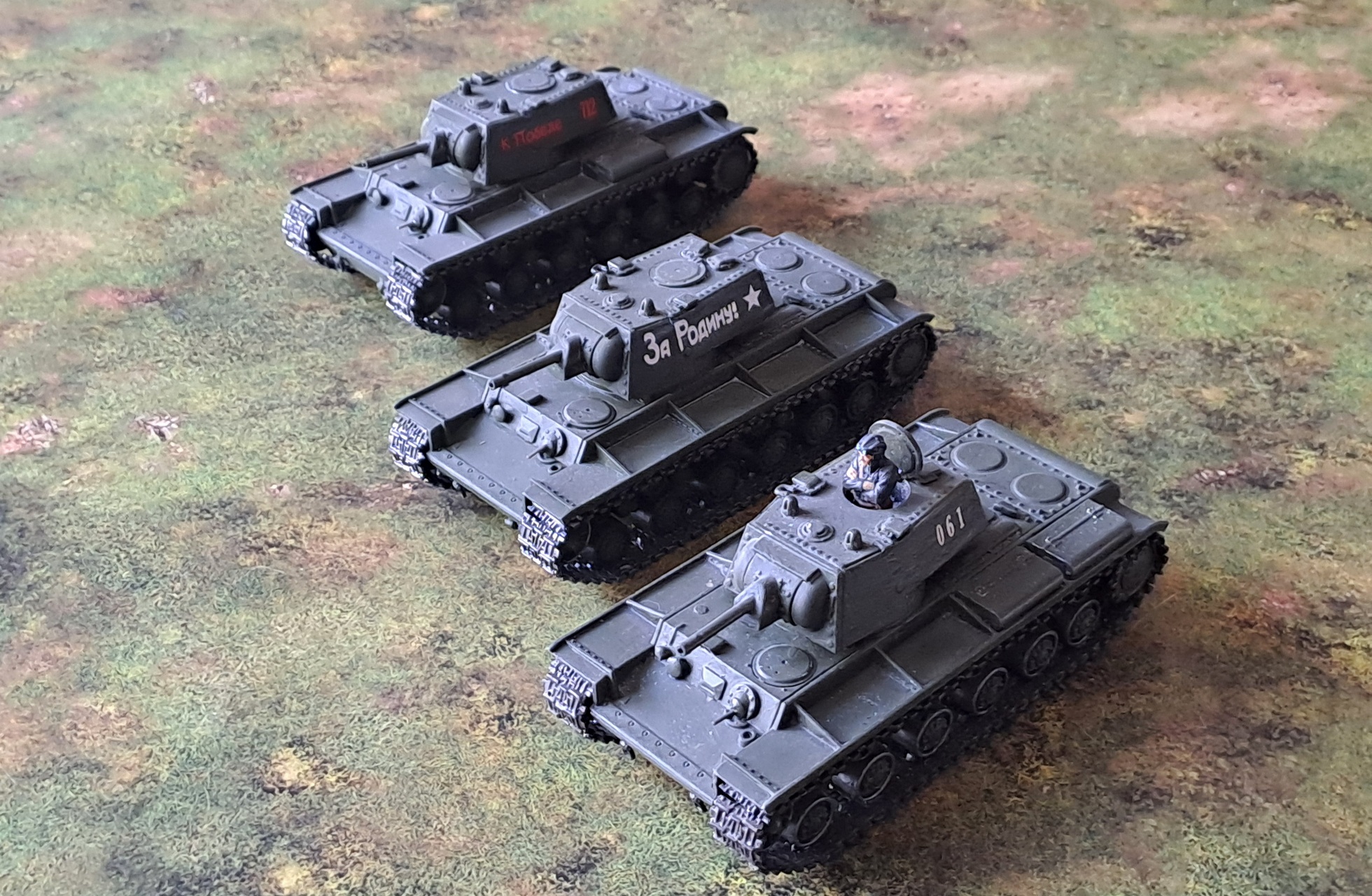
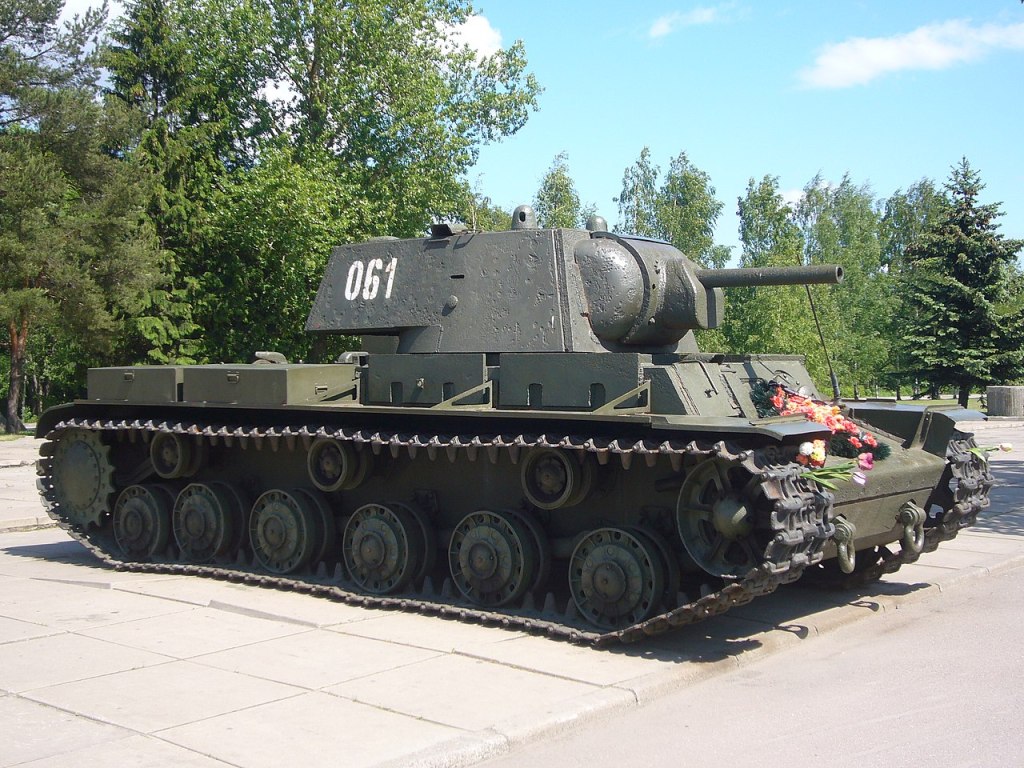
🇵🇱 W końcu skończyłem model czołgu KW (od ministra Klimenta Woroszyłowa): warianty KW-1 z armatą 76,2 mm oraz KW-2 z haubicą 152 mm. O ile wariant KW-2 był gotowy od dawna, to wariant KW-1 czekał na dowódcę oraz na numerację (chciałem nadać mu numery historyczne). Historycznie: na początku wojny radziecko-niemieckiej w 1941′ roku Związek Radziecki dysponował liczbą ponad 500 wozów bojowych tego typu (na 22k czołgów w ogóle) – moim zdaniem był to najnowocześniejszy czołg ciężki tego okresu (bez wątpienia lepszy od francuskiego Char B1-Bis, inne nacje nie posiadały odpowiednika – niemiecki najcięższy czołg produkowany wtedy seryjnie to udany czołg średni PzKpfv.IV). KW dowolnej wersji były właściwie niezniszczalne dla niemieckiej broni pancernej czy przeciwpancernej tamtego okresu. Na ogół do ich niszczenia używano słynnych dział przeciwlotniczych acht coma acht czy ciężkiej artylerii. I tak pod Rosienipojedynczy KW-2 zatrzymał na cały dzień niemiecką dywizję, walcząc aż do wyczerpania amunicji. Pod Krasnogvardeysk zgrupowanie pięciu KW-1 pod dowódctwem Zinoviy Kolobanova zatrzymało awangardę niemieckiej 6 Dywizji Pancernej. Armia Czerwona bez strat własnych zniszczyła 43 niemieckie czołgi oraz dwa holowane działa. A zapewne o niejednej bitwie nie wiemy, w końcu wielu świadków tych bojów poległa w bezsensownej wojnie na wyniszczenie.
🇬🇧 Finally I finished model of tank KV (from minister Kliment Voroshilov): variants of KV-1 with 76,2 mm gun and also KV-2 with 152 mm howitzer. KV-2 was finished in past, jet KV-1 was waiting for a leader and numbers (I wanted to give it some historical numbers). Historically: at the start of Soviet-German war Soviet Union had something more than 500 combat vehicles of this type (on total number of tanks counting 22 thousands) – in my opinion it was the best heavy tank of this period of war (better than French Char B1-Bis, other nation did not had such tank, German heaviest tank used that time was great PzKpfv.IV). KV of any version were almost indestructible for German tanks or antitank guns of this period. In many cases to destroy them Germans used famous acht coma acht antiaircraft guns and heavy artillery. And so on Rosieni single KV-2 hold on entire German division for whole day, fighting till the end of ammo. On Krasnogvardeysk group of five KV-1 under leadership of Zinoviy Kolobanov hold spearhead of German 6th Panzer Div. Red Army without losing a single tank destroyed 43 German tanks and two towed guns. Probably we don’t know about many other battles, as many witness perished during this pointless total war.
Obrazek z wikipedii gdzie znalazłem inspirację do oznaczenia KW-1. Picture from wikipedia where I found inspiration for numbers on KV-1.













































 tancreddebeauville

