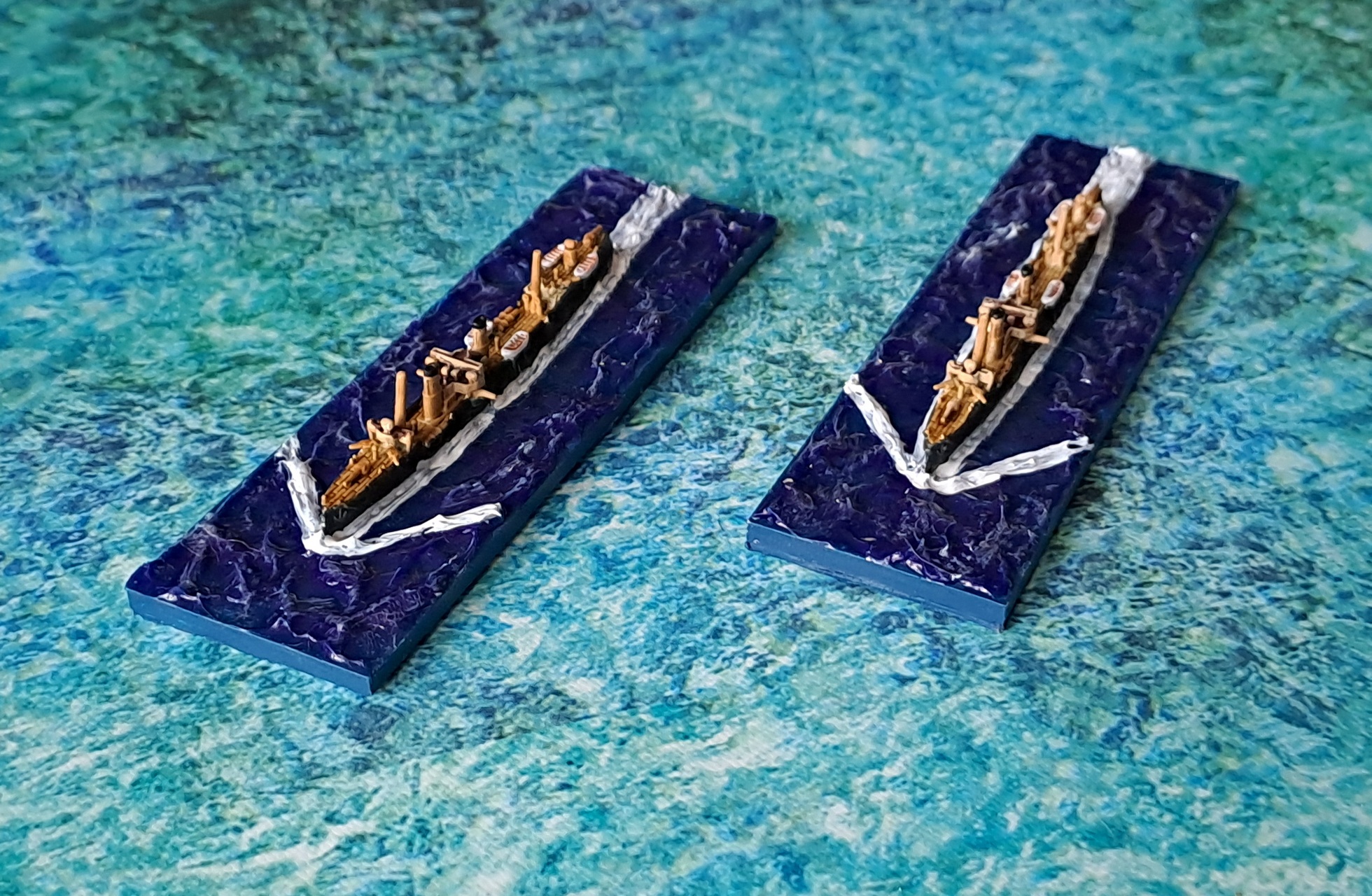
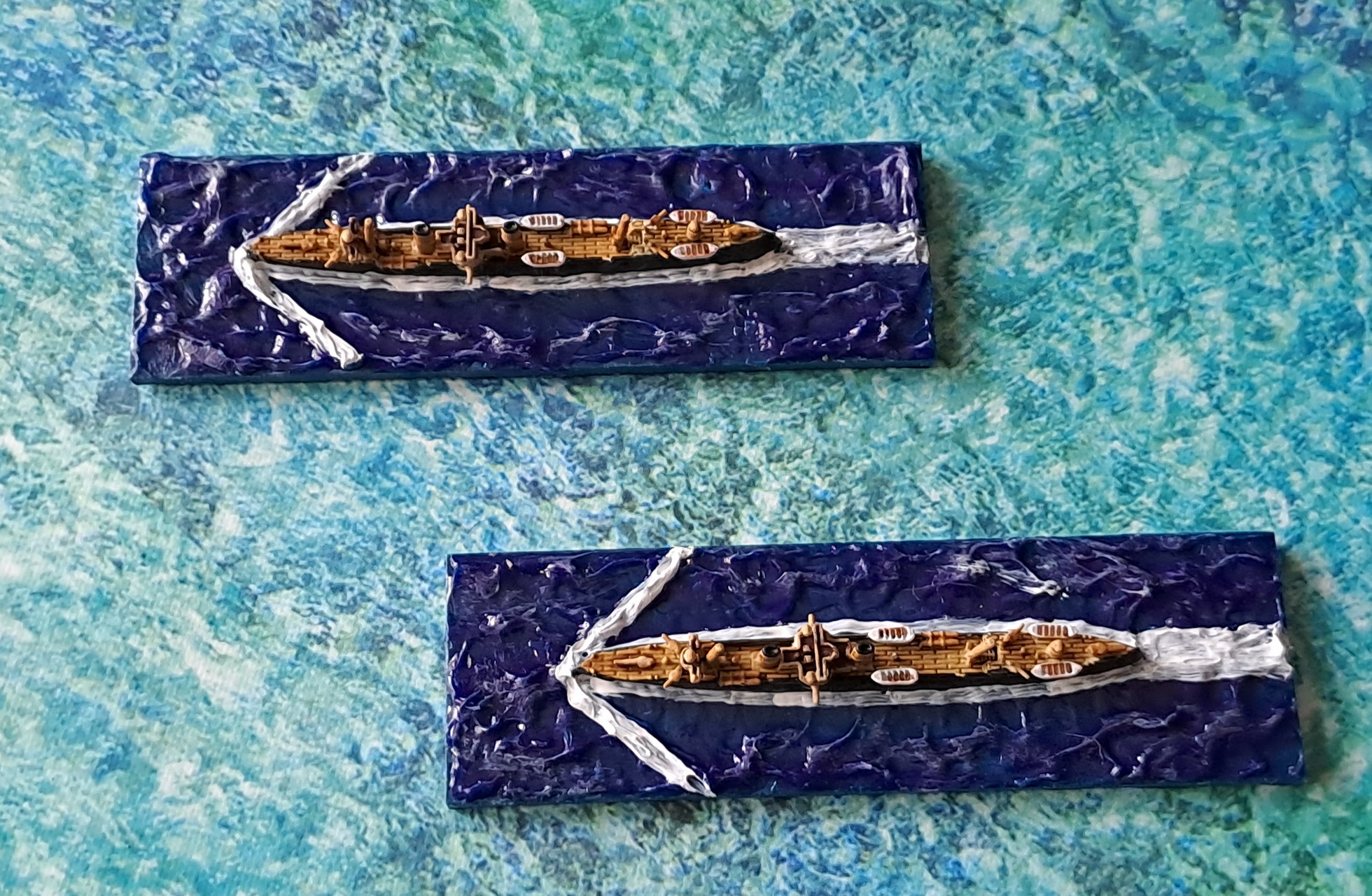
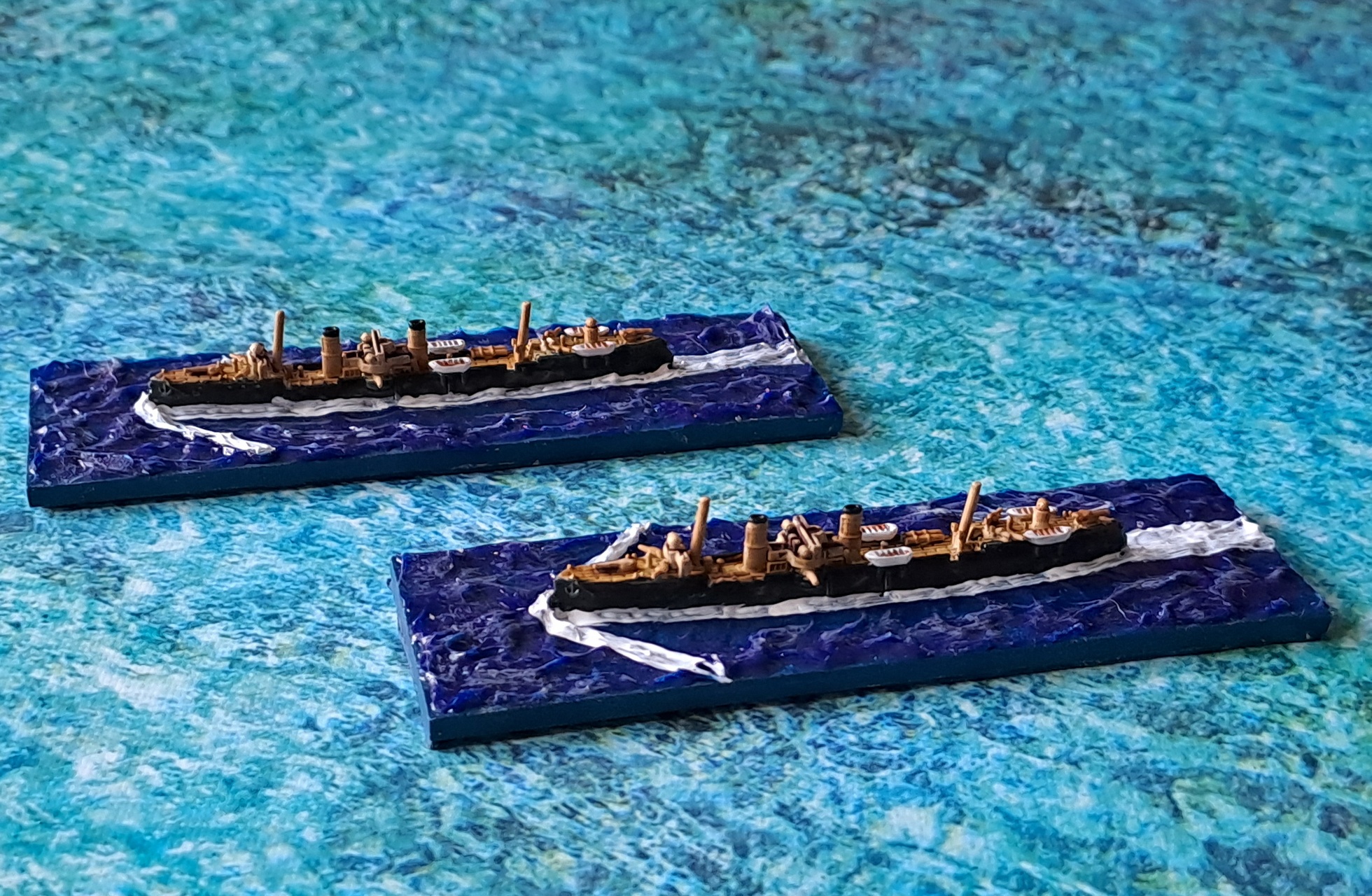
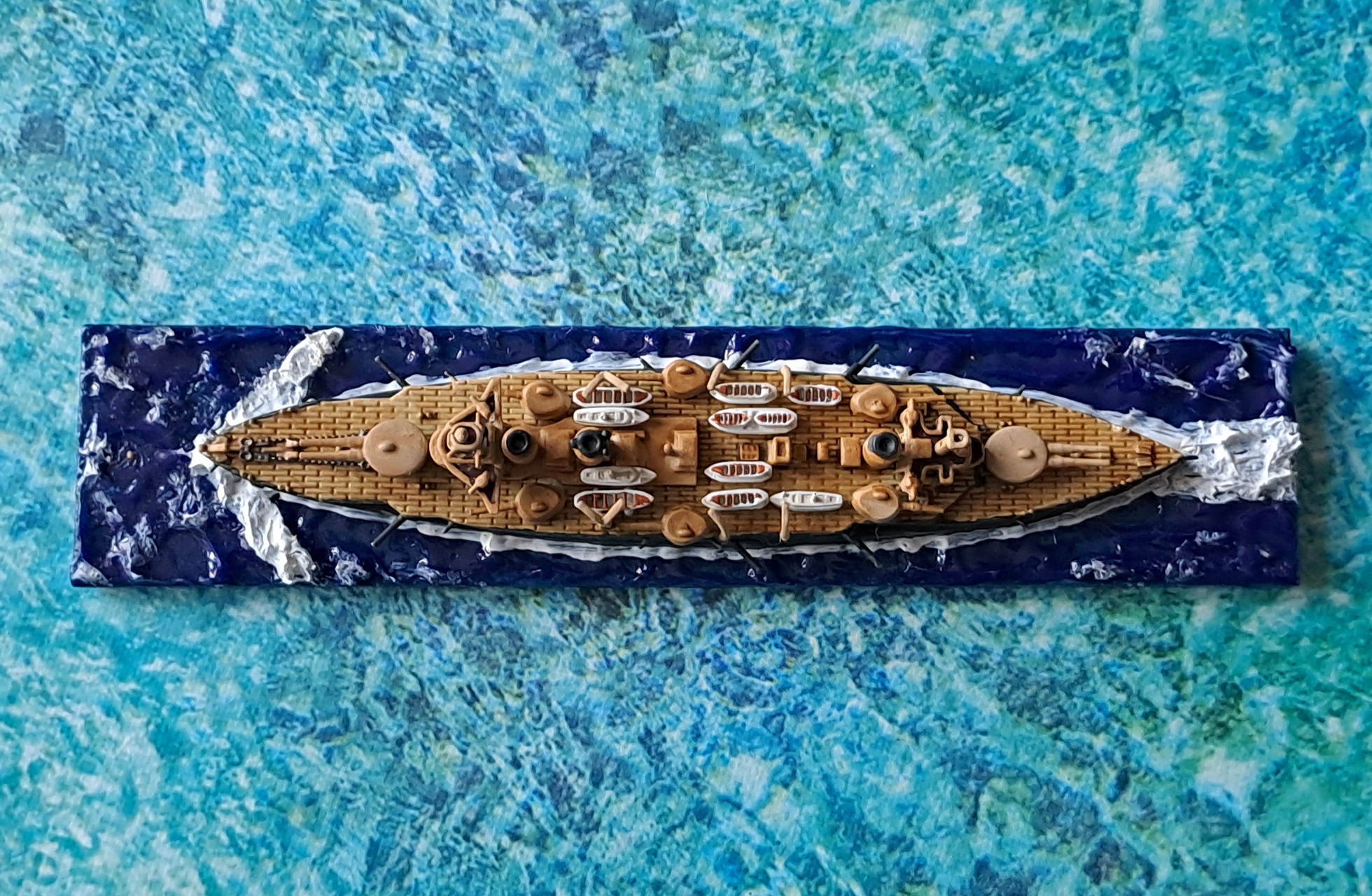
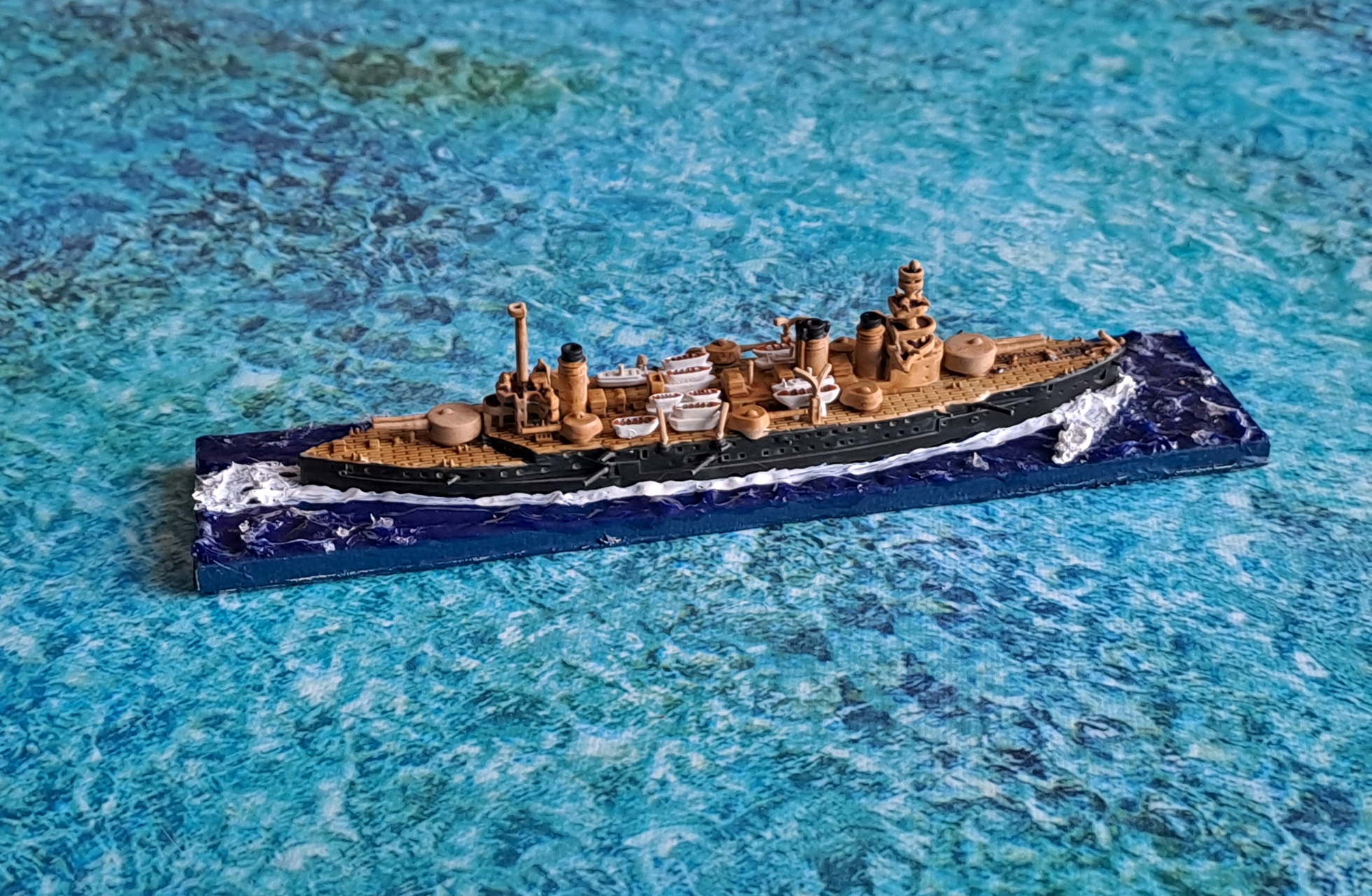
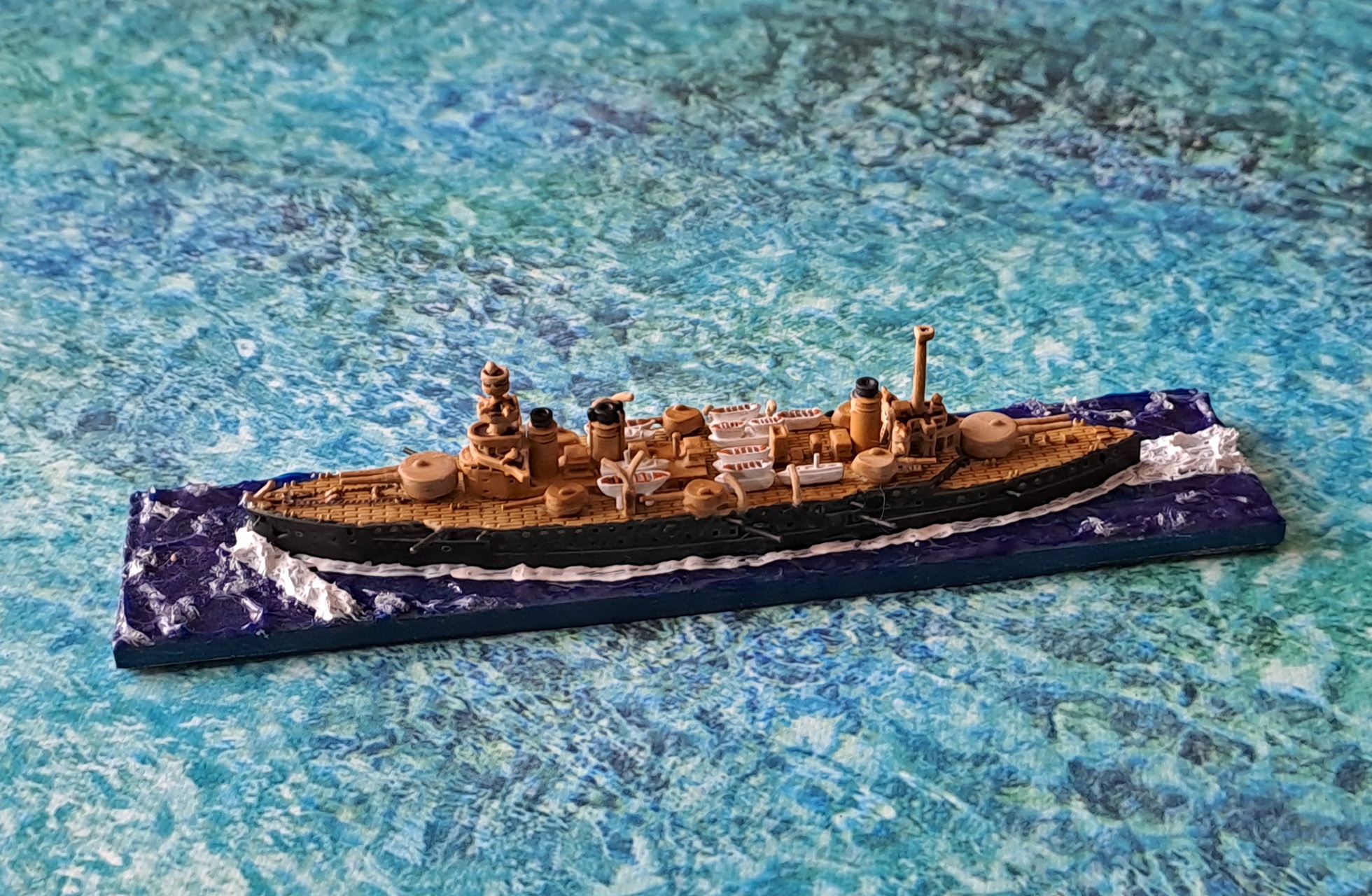
🇬🇧 Recently, along with Gloire and Liberté, I also painted two smaller vessels — D’Iberville-class torpedo cruisers. ⚓
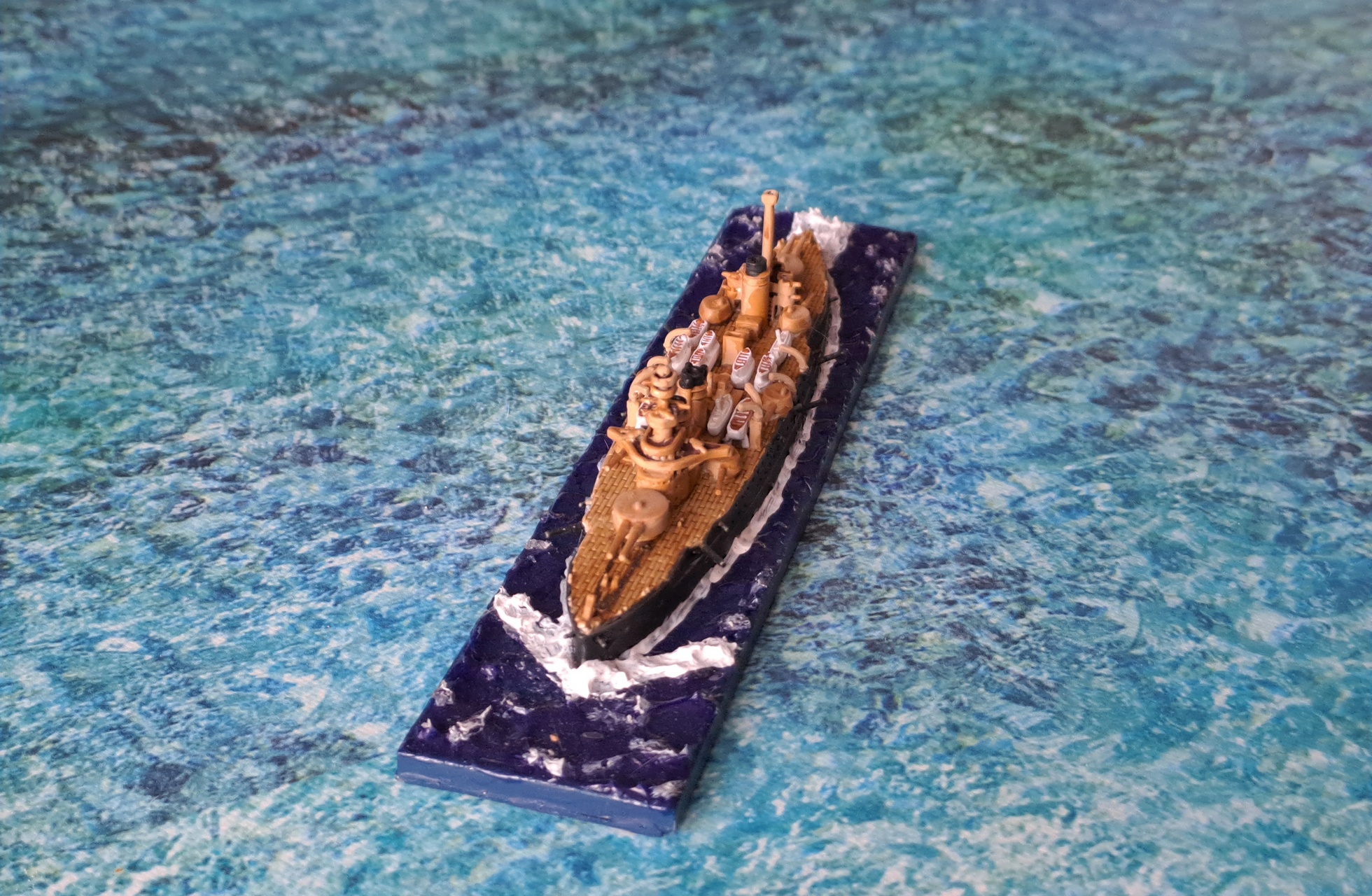
Cornholio’s Marine Nationale squadron has been significantly reinforced, and I still have a second Gloire to finish — the one I got with the vouchers I won at Bolter. 🇫🇷🌊
The D’Iberville-class torpedo cruisers were built in the first half of the 1890s. The first vessel of the series was named in honour of the explorer Pierre Le Moyne d’Iberville. They displaced around 950 tons and measured 80 metres in length. Designed for speed and agility, they were powered by triple-expansion steam engines enabling a top speed of 21 knots, making them one of the fastest vessels of the French Navy at the time.
Her armament as a lead ship of the class consisted of one 100 mm (3.9 in) guns, three 65 (3 pounder) guns, seven 47 mm (1.9 in) guns, and six 450 mm (17,7 in) torpedo tubes. This combination allowed D’Iberville to engage both enemy large vessels and torpedo boats, while her speed enabled rapid reconnaissance and raiding missions.
D’Iberville’s service was largely in the Mediterranean and along the French Atlantic coast. She participated in numerous naval exercises and maneuvers, helping refine tactics for torpedo cruisers. Her design and performance influenced subsequent classes of French light ships.
In the game, D’Iberville represents a fast, lightly armoured vessel capable of devastating torpedo attacks, and protecting larger ships from small, aggressive enemy vessels.
* – description of the D`Iberville class by GMBoardgames.
🇵🇱 W ostatnim czasie wraz z Glorią i Libertii pomalowałem również dwie mniejsze jednostki – krążowniki torpedowe D`Iberville. ⚓
Eskadra Marine Nationale w służbie Cornholio została solidnie wzmocniona, przede mną jeszcze do dokończenia druga Gloire, którą wziąłem za wygrane w Bolterze bony. 🇫🇷🌊
Oczywiście to dopiero początek — w przyszłości na pewno zostanie wzmocniona kolejnymi jednostkami.
Krążowniki torpedowe typu D’Iberville zostały zbudowane w pierwszej połowie lat 90. XIX wieku. Pierwszy okręt serii otrzymał imię na cześć odkrywcy Pierre’a Le Moyne d’Iberville. Okręty te miały wyporność około 950 ton i długość 80 metrów. Zaprojektowano je z myślą o szybkości i zwrotności – maszyny parowe potrójnego rozprężania pozwalały osiągać 21 węzłów, co czyniło je jednymi z najszybszych jednostek francuskiej marynarki w tym czasie.
Uzbrojenie okrętu wiodącego obejmowało jedno działo kal. 100 mm, trzy działa kal. 65 mm, siedem dział kal. 47 mm oraz sześć wyrzutni torped kal. 450 mm. Takie połączenie uzbrojenia pozwalało D’Iberville atakować zarówno duże okręty, jak i torpedowce, a prędkość umożliwiała szybkie rozpoznanie i działania rajderskie.
D’Iberville służył głównie na Morzu Śródziemnym i wzdłuż wybrzeży Atlantyku. Brał udział w licznych ćwiczeniach i manewrach marynarki, przyczyniając się do rozwoju taktyki krążowników torpedowych. Jego projekt i osiągi miały wpływ na kolejne klasy francuskich lekkich okrętów.
W grze D’Iberville reprezentuje szybki, lekko opancerzony okręt, zdolny do niszczących ataków torpedowych oraz ochrony większych jednostek przed małymi, agresywnymi okrętami przeciwnika.
* – opis klasy D`Iberville wg GMBoardgames.

🇬🇧 Summary:
For a fourth-class ship, it is quite a large model – and there are two in the box, each with its own base.
– The ship has better armour than most units of this class in the game. It also has six torpedoes – the same number as, for example, the Russian Bujny class. Apart from torpedoes, it has a medium-calibre gun on the bow and a small number of light guns on both broadsides and at the stern. It is slower than most torpedo boats — after all, it is still a torpedo cruiser. A huge advantage is the ram.
– I think that its cost of 80 points means it will appear in more than one Marine Nationale squadron.
🇵🇱 Podsumowanie:
– Jak na czwartą klasę jest to całkiem spory model – a w pudełku są dwa, każdy ma swoją podstawkę.
– Okręt dysponuje lepszym pancerzem od większości występujących w grze jednostek tej klasy, poza tym posiada sześć torped – tyle co np. rosyjska klasa Bujny. Poza torpedami posiada armatę średniego kalibru na dziobie oraz nieliczną lekką artylerię na obu burtach i na rufie. Jest wolniejszy od większości torpedowców – mimo wszystko jest to krążownik torpedowy. Olbrzymią zaletą jest taran.
– Wydaje mi się, że koszt 80 punktów sprawi, że będzie się pojawiał w niejednej eskadrze Marine Nationale.



 tancreddebeauville
 Tancred’s Tabletop Tales