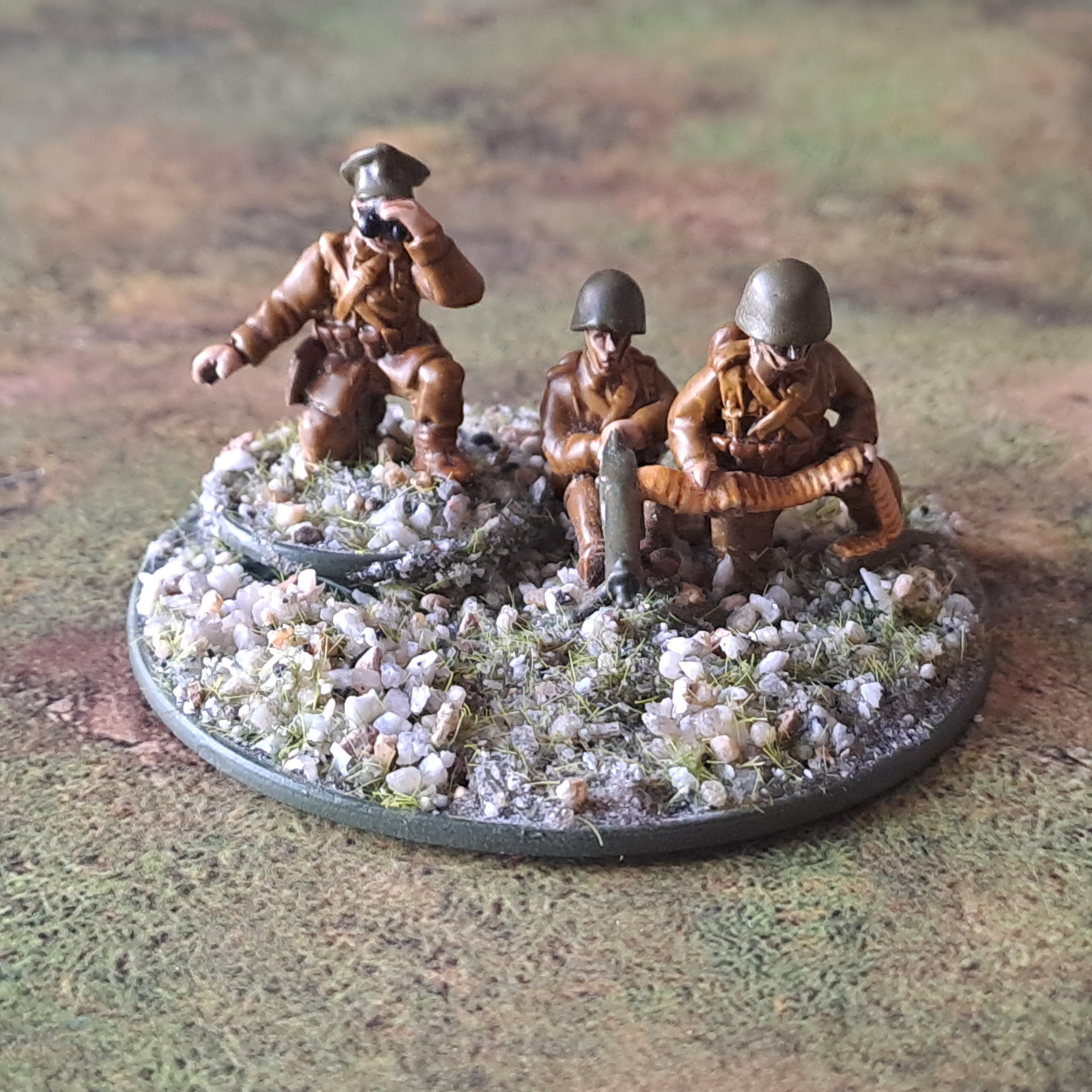
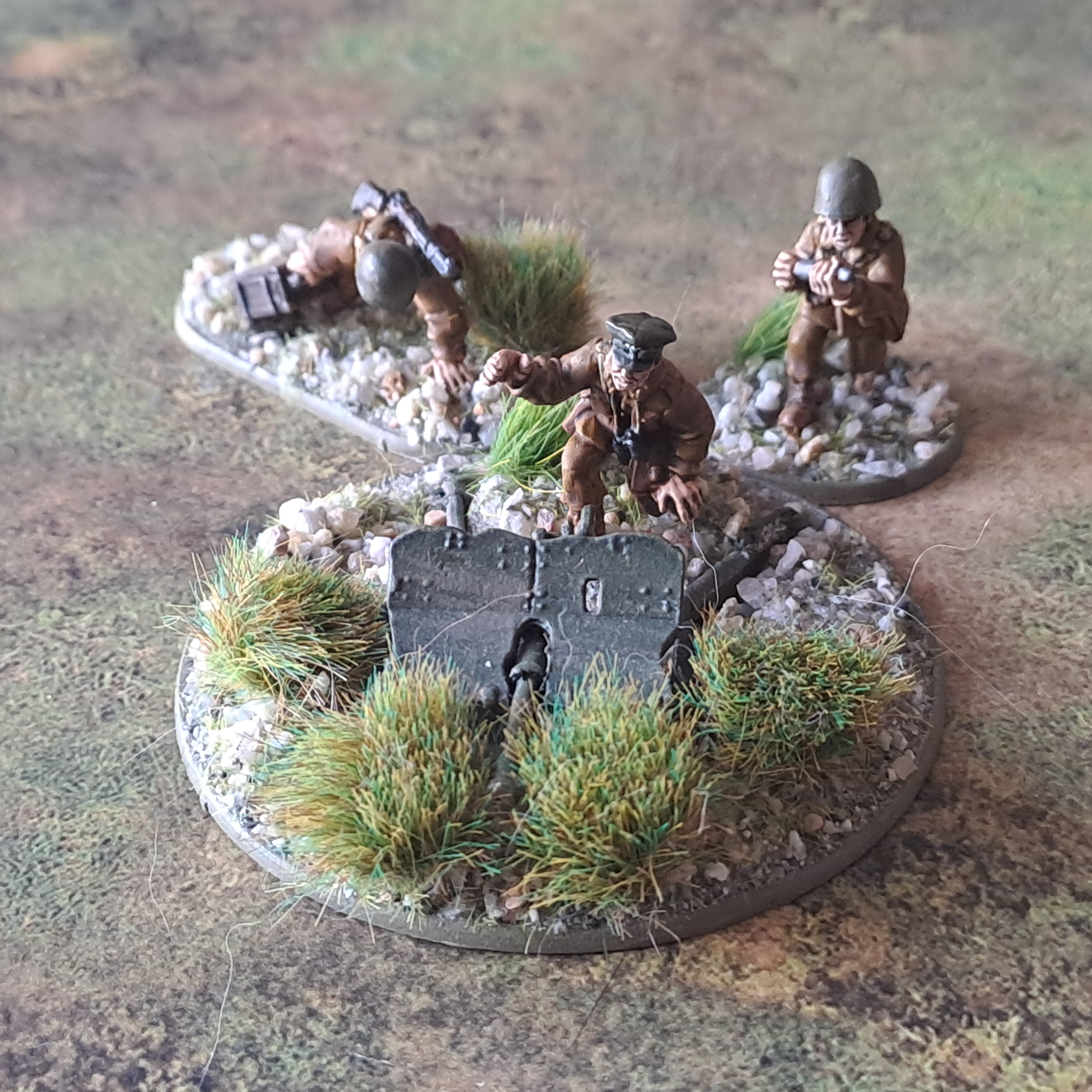
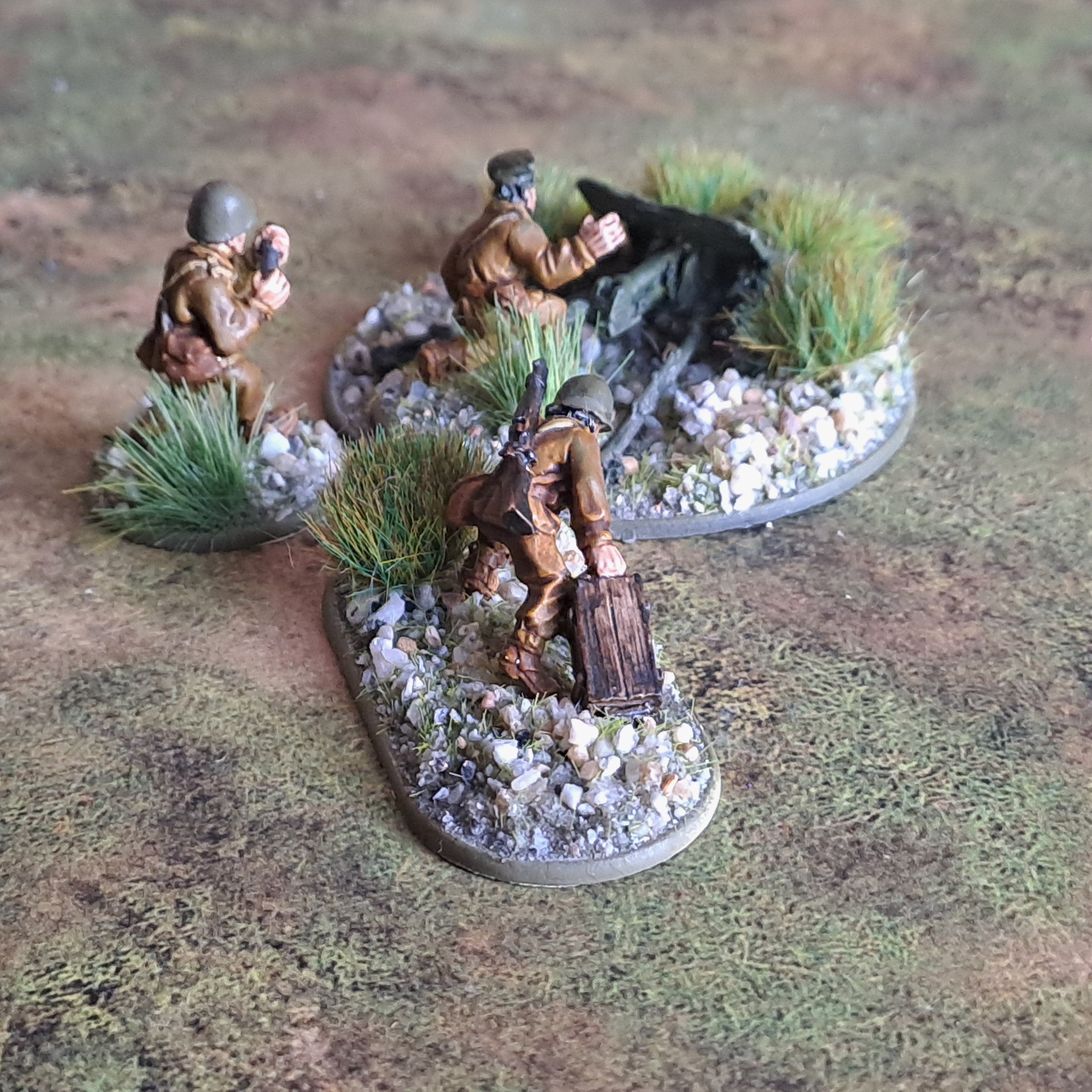
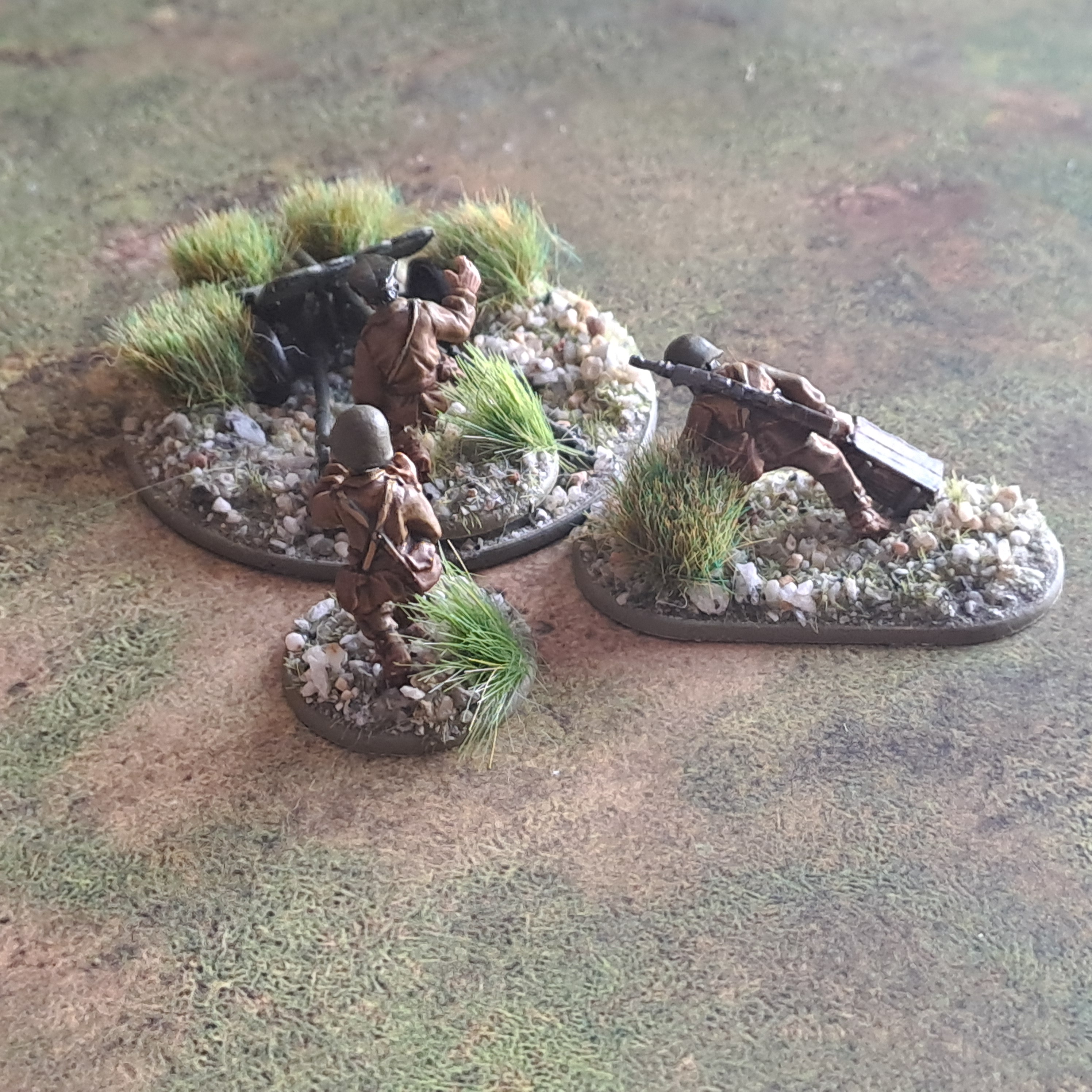
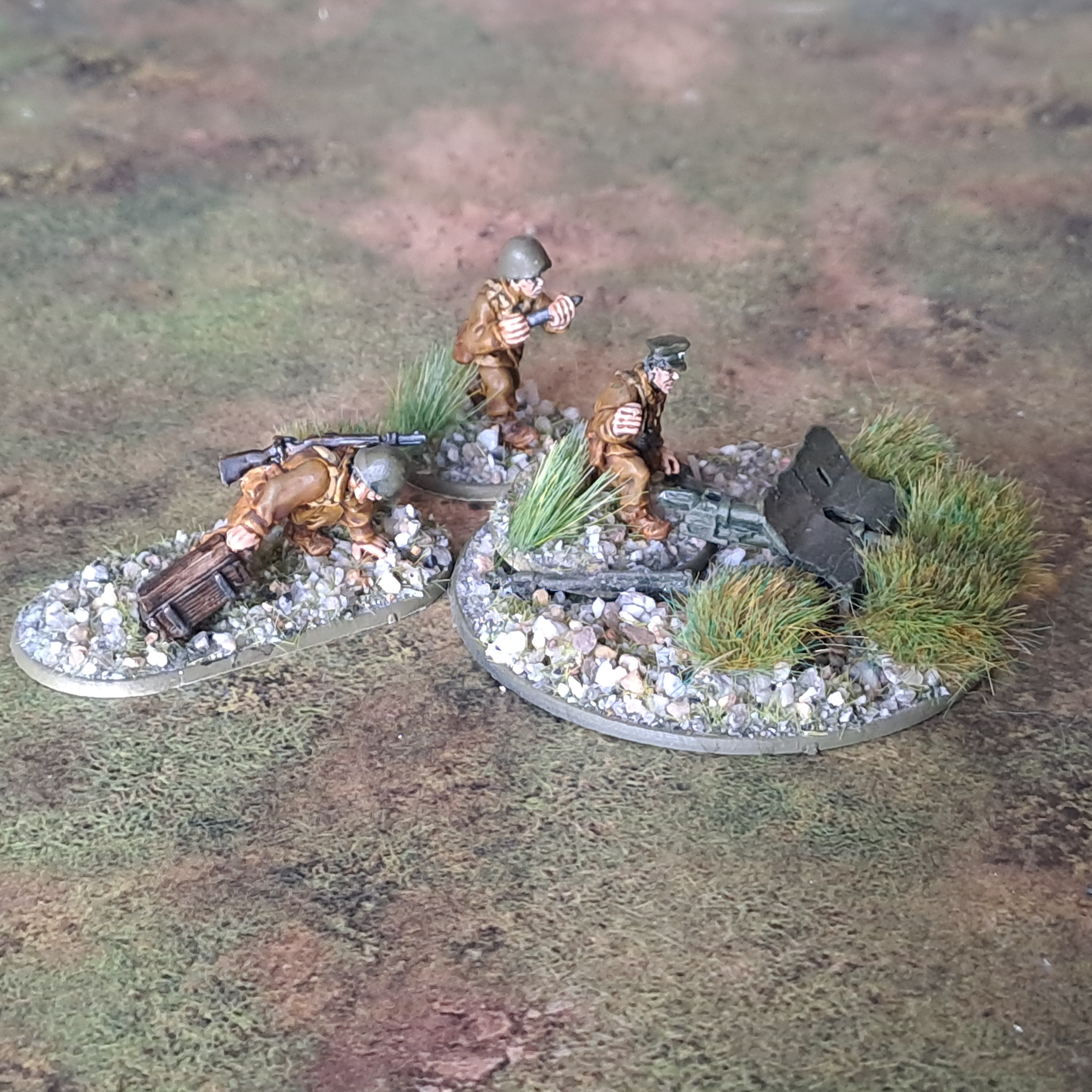
🇵🇱 W ostatnich dniach skończyłem polską armatkę przeciwpancerną, czyli słynnego Boforsa 37 mm – postrach niemieckich czołgów we wrześniu 1939′. Sama armatka jest produkcjiWarlord Games, a malowałem ją w podobny sposób co polską piechotę, którą opisałem TUTAJ.
🇬🇧 Over the last few days, I finished a Polish anti-tank gun — the famous 37 mm Bofors, a real threat to German tanks in September 1939.
The gun itself is made byWarlord Games, and I painted it in a similar way to the Polish infantry squad I described HERE.
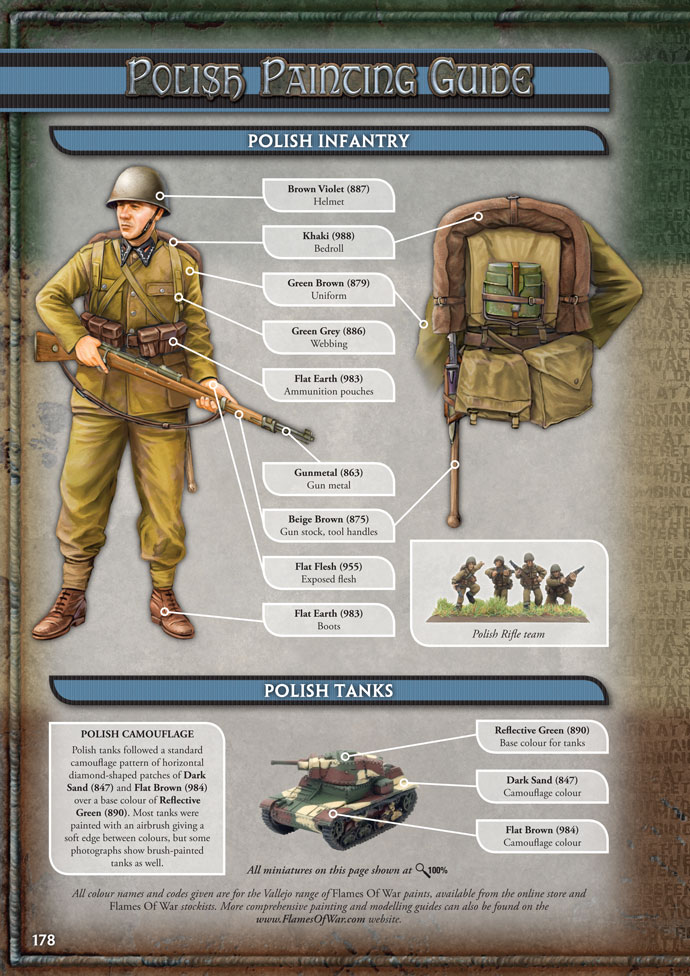
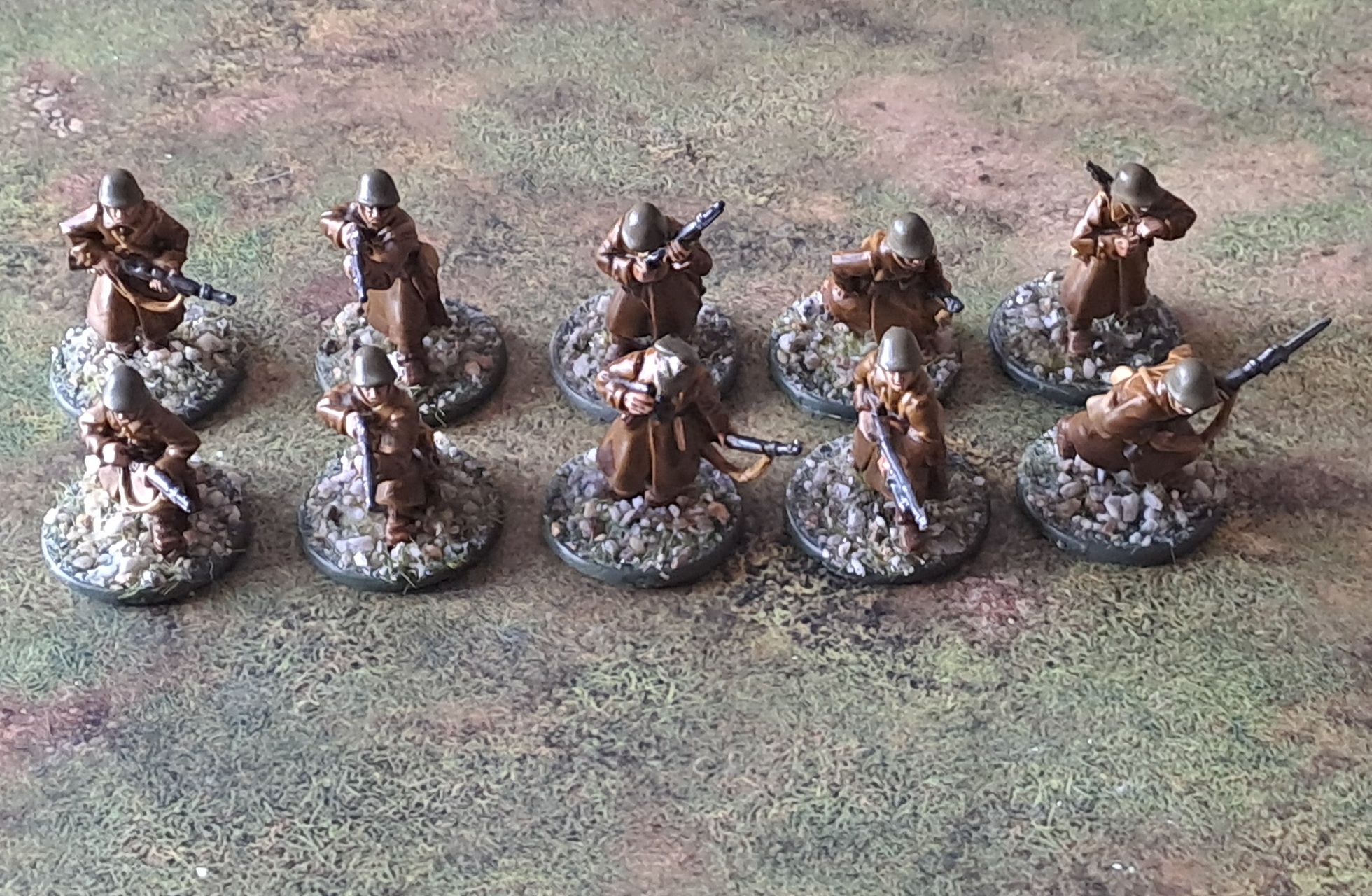
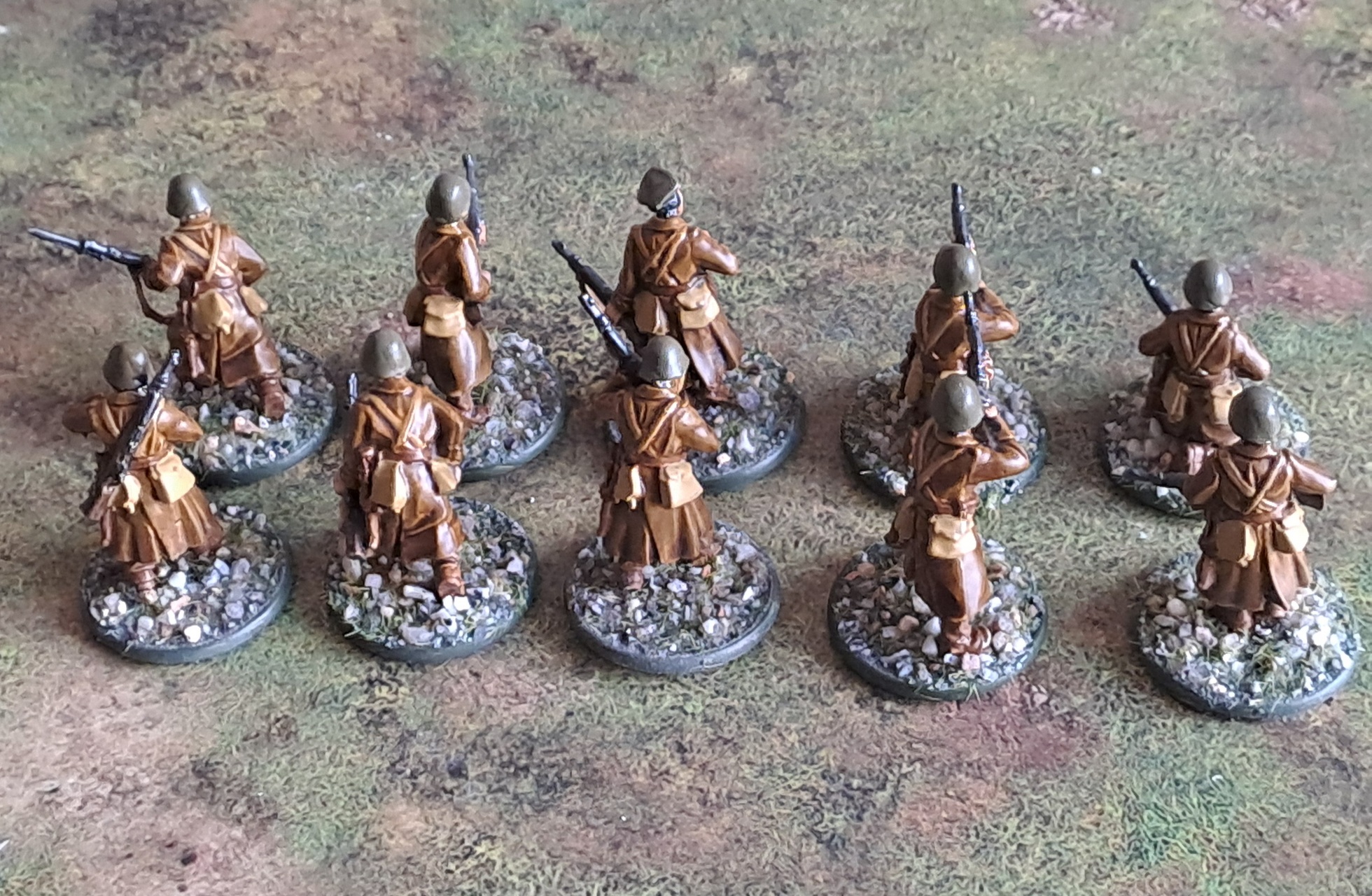
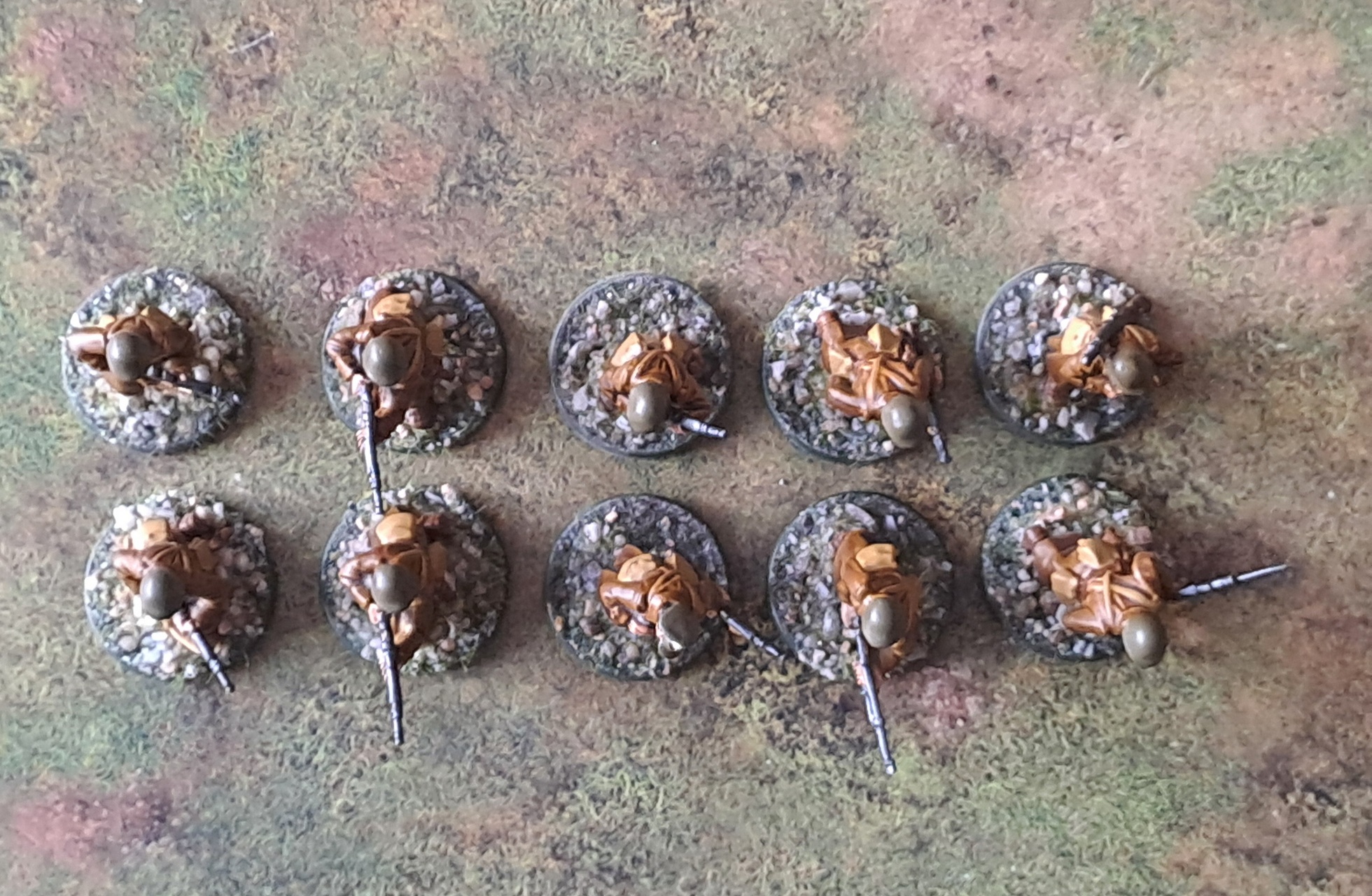
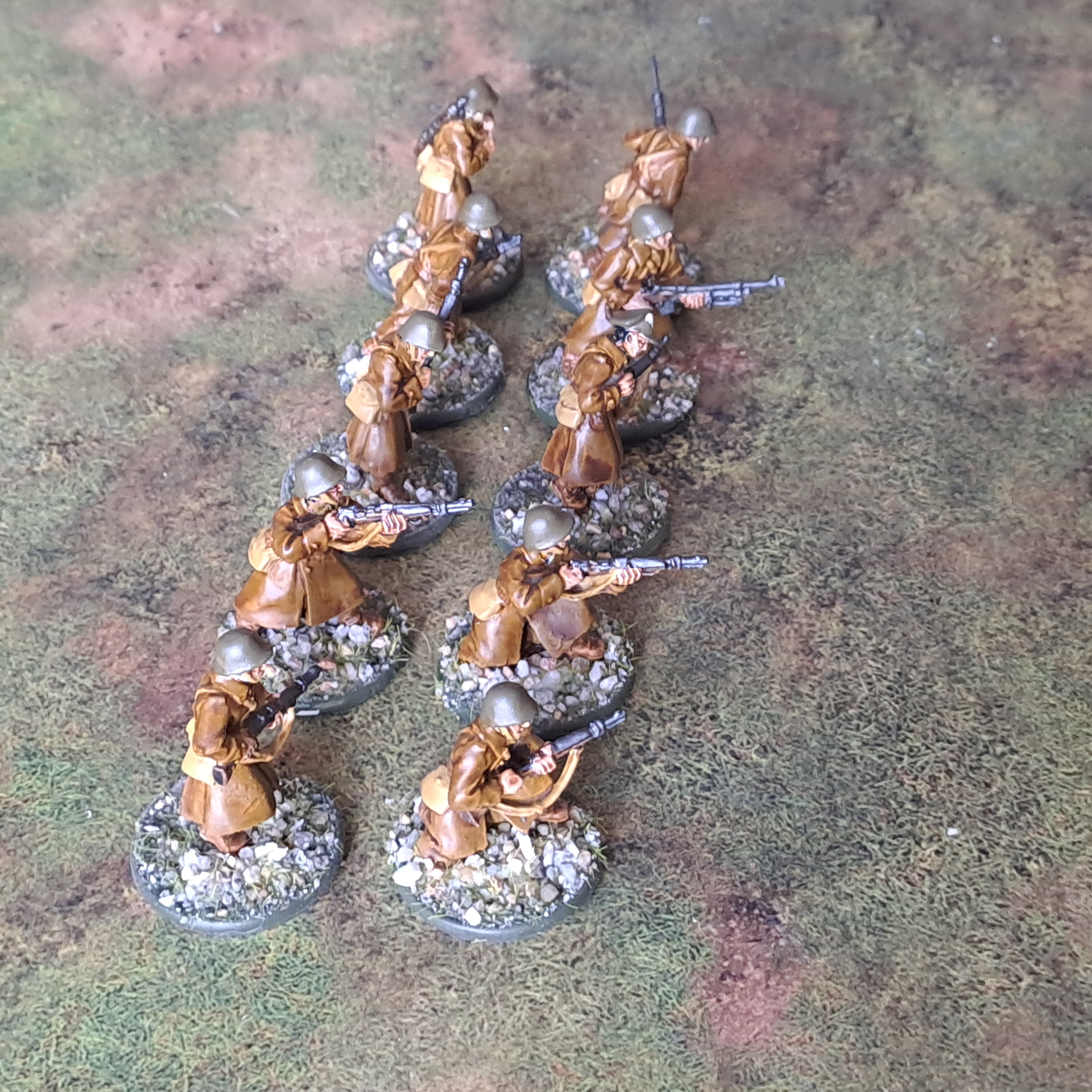
🇵🇱 W ostatnich dniach udało mi się pomalować pierwszą drużynę do Wojska Polskiego z września 1939′. Kolorystycznie inspirowałem się poradnikiem do Flames of War znalezionym TUTAJ. Same miniaturki są produkcji Warlord Games – słynna polska piechota w wielkich płaszczach dostępna na stronieproducenta.
Miniaturki wymyłem mydłem przed podkładowaniem, następnie nałożyłem parę warstw podkładu od Games Workshop, czyli mojego ulubionego Wraith Bone.
Następnie zacząłem malować następującymi farbkami i kontrastami w większości pochodzącymi od Games Workshop i Vallejo: – dłonie i twarz – Contrast Guilliman Flesh – hełm – Brown Violet – mundur – Khaki wraz z Seraphin Sephia – buty i torby – Flat Earth – drewniana część karabinu – Contrast Wyldwood – elementy metalowe – Gunmetal wraz z Nuln Oil – szelki i jasne oporządzenie – Green Grey
Przede mną jeszcze 30 kolejnych metalowych piechurów od Warlord Games.
🇬🇧 Over the last few days, I managed to paint my first squad for the Polish Army of September 1939. For the colour scheme, I took inspiration from a Flames of War painting guide found HERE.
The miniatures themselves are made by Warlord Games – the famous Polish infantry in greatcoats, available on the manufacturer’s website.
Before priming, I washed the miniatures with soap. Then I applied a few coats of primer from Games Workshop, using my favourite Wraithbone.
After that, I started painting them with the following paints and Contrast colours, mostly from Games Workshop and Vallejo:
hands and faces – Contrast Guilliman Flesh
helmets – Brown Violet
uniforms – Khaki with Seraphim Sepia
boots and bags – Flat Earth
wooden parts of the rifles – Contrast Wyldwood
metal parts – Gunmetal with Nuln Oil
straps and lighter equipment – Green Grey
Scattering material from K&K Hobby – No Man’s Land
I still have another 30 metal infantrymen from Warlord Games ahead of me.
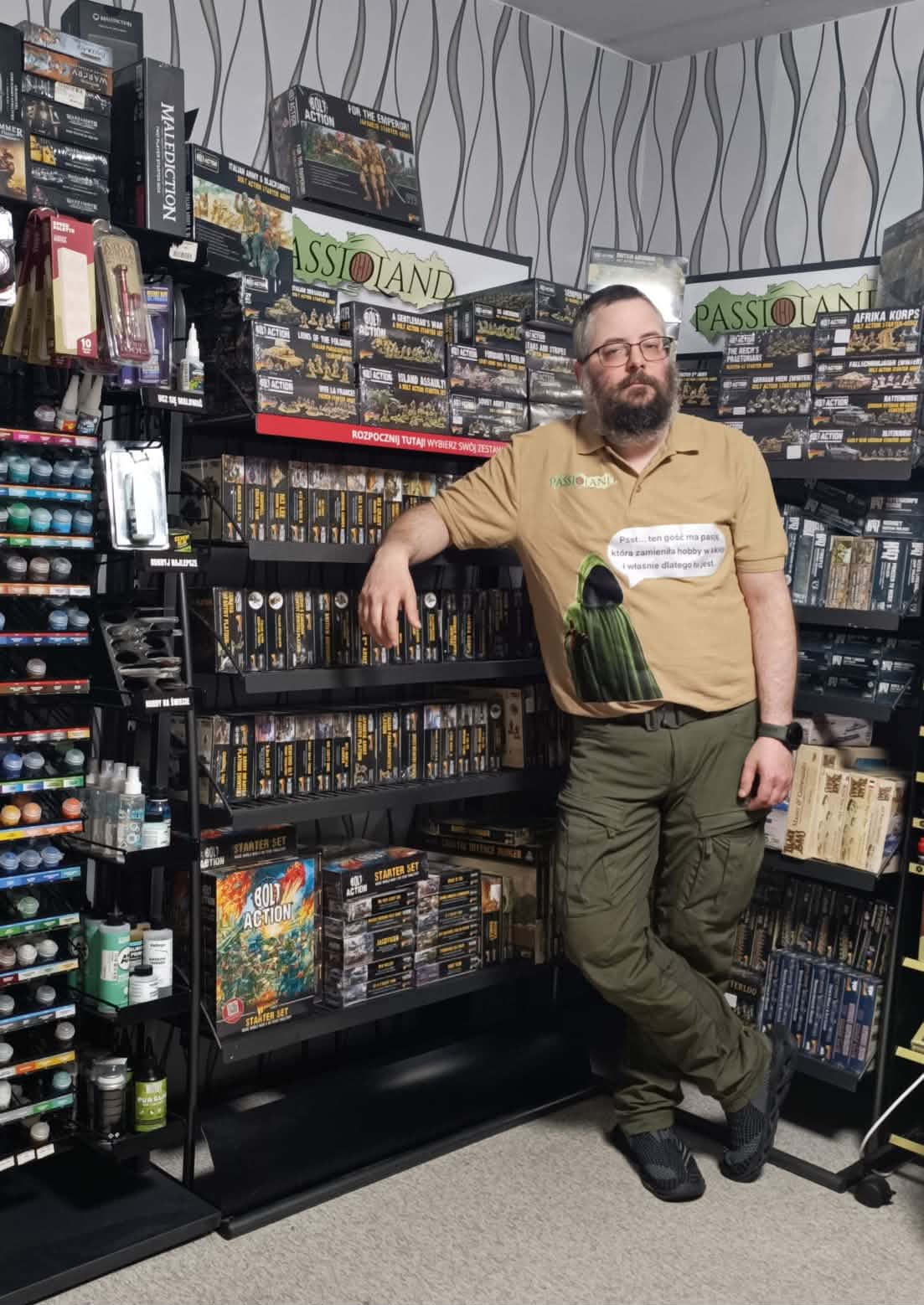
🇵🇱 Tym razem pora na kolejny wywiad z Jarkiem, założycielem sklepu hobbistycznego PassioLand z Łodzi!
Hej Jarek, czy mógłbyś w skrócie opowiedzieć parę słów o sobie?
Po krótce to mniej więcej tak…mam ponad 20 lat doświadczenia w ASG, moja pasja do militariów i szeroko pojętej historii była budowana przez mojego ojca no i tak już zostało. Niestety poważna choroba spowodowała u mnie konieczność zaprzestania biegania z karabinem po lesie więc znalazłem zamiennik w postaci gier figurkowych, bitewnych i planszowych. Do tego ponad 6 lat zajmowałam się w poprzedniej pracy działem modelarstwa i gier figurowych, a teraz mam już swój sklep PassioLand – https://passioland.com/.
I teraz przejdźmy do pytań:
1. Drogi Jarku na parowym turnieju w Bolt Action w Poznaniu zmierzyliśmy się z Tobą i Radkiem, kiedy byłem w parze z Łukaszem – jak wspominasz nasze starcie Łódź vs Wrocław ?
Mirku, ale wymyśliłeś pytanie 😊. Mam trochę gier za sobą ale grę z wami mogę określić tylko w jeden sposób. NIGDY SIĘ TAK NIE UBAWIŁEM. Fajnie jest pojechać na turniej i spotkać ludzi którzy się nie spinają tylko bawią się grą na 100%. Ja grając rozpiską pod szturm SS nie bałem się waszych czołgów, bo miały załatwić je czołgi Radka co udało się tylko częściowo bo finalnie to moja piechota je powstrzymała. Bałem się twoich Finów bo wiedziałem że to bardzo mocna piechota.
2. Skoro przeszliśmy przez to jak się poznaliśmy, opowiedz parę słów o tym kiedy zacząłeś grać w gry figurkowe i który system był Twoim pierwszym?
Tak trochę bardziej zacząłem grać w 2020 roku jak wymyślili pandemie. Wtedy powróciłem do pomysłu z dzieciństwa i Warhammera. Próba była krótka bo nie wciągnęło mnie to tak jak myślałem.
3. Co możesz polecić dla początkujących graczy – który system jest według Ciebie najlepszy dla początkujących?
Ciężko jednoznacznie odpowiedzieć na to pytanie. Każdy system ma swoich zwolenników i zaraz posypią się teksty, że nie mam racji albo gadam głupoty. Ale wydaje mi się że Bolt Action jest dość stabilnym systemem, wejście nie jest też wygórowane cenowo i ma dość łatwe do opanowania podstawowe zasady.
4. Jeśli kiedyś uczyłeś kogoś grania, opowiedz coś o tym? Może masz jakieś rady dla tych, którzy wprowadzają do systemy tych, którzy nigdy nie grali?
Robiłem nie jedną grę pokazową/wprowadzającą. Nie są to łatwe gry, ani dla gracza wprowadzanego ani dla wprowadzającego. Jako wprowadzający ważne jest, aby dawkować stopniowo informacje, inaczej wprowadzany jest przeładowany informacjami, my to nazywamy że WYWALIŁO MU KORKI. Czyli natłok informacji pomieszany z tym, że jeszcze musi wykonać ruch i pomyśleć co zrobić na stole, powoduje chwilowe zaćmienie.
Moją radą jest to, aby gry wprowadzające robić na około 750 pkt. Mało jednostek= mniej myślenia dla wprowadzanego przez co jest większa szansa, że więcej wyniesie z takiej gry wprowadzającej.
5. Grałeś kiedyś w systemy RPG – Warhammera czy D&D, a może w coś innego?
Grałem ale to było z 20 albo i więcej lat temu. Kiedyś był taki polski podręcznik, przepraszam jeżeli pomylę nazwę, Kryształy Czasu.
Mirek: tak, był taki system i jego autor Artur Szyndler publikował Orchię również w artykułach, które były w Magii i Mieczu.
6. Magia i Miecz – znasz czy nie? Jeśli tak, to co możesz o tym czasopiśmie powiedzieć?
Kojarzę że takie czasopismo było wydawane. Chyba już nie jest, ale nie zgłębiałem tematu. Moim hobby było ASG.
7. Co sprawiło, że otworzyłeś własny sklep w Łodzi? Opowiedz nam o tym?
W sumie to los tak zdecydował, ponieważ poprzedni pracodawca zlikwidował dział którym się zajmowałem, co spowodowało moje odejście z tego miejsca pracy. Stanąłem przed wyborem nowej pracy i tutaj właśnie los sprawił, że miałem możliwość wraz ze wspólnikiem otworzyć sklep w którym mogę wykorzystać swoją wiedzę i doświadczenie oraz będę mógł rozwijać świat bitewniaków. PassioLand ma swoje hasło- Kraina Twoje Pasji, sklep dla każdego kto żyje swoim hobby. Czyli tak jak ja.
8. Czy w Passioland uczysz grania lub malowania, a może masz tam wieczory temu poświęcone?
Mamy możliwość zrobienia wprowadzenia do Bolt Action i Maladum. Jestem kiepskim malarzem więc te sprawy zostawiam lepszym i bardziej doświadczonym.
9. A teraz wracając do systemu przy którym się poznaliśmy, co możesz polecić dla graczy, którzy chcą zacząć grać w ten system?
Przede wszystkim bo to według mnie najważniejsze. Bawcie się grą. Na początku będzie sporo przegranych gier, ale każda podnosi umiejętności i powoduje kombinowanie z rozpiską. Mnie zbudowanie rozpiski, która mi się podoba u Niemców zajęło ponad rok.
10. Na którym turnieju w dowolny system w który grasz bawiłeś się najlepiej?
Bawię się na każdym turnieju, czy to jako uczestnik czy Arbiter. Ale chyba na turnieju na którym się poznaliśmy, bawiłem się najlepiej.
11. Gry planszowe – grasz w to czy odpuszczasz, a może tylko do piwa?
Tak jak tylko znajdę na to czas gramy z rodziną w Zombiecide 2, Wiedźmin Stary Świat, Maladum i inne oraz tytuły typowo dla dzieci.
12. W który system masz zamiar wejść w najbliższym czasie, jeśli środki i czas pozwolą?
Zaciekawiło mnie Malediction. Ciekawe połączenie karcianki z figurkami. Łatwe zasady i możliwość grania pionkami albo figurkami z druku 3d oraz chcę zgłębić bardziej Konflikt’ 47.
Od przeprowadzającego wywiad – z Łukaszem z którym gram regularnie zagraliśmy świetną parówkę na Jarka i Radka – był to turniej u naszych wspólnych przyjaciół w Poznaniu. Nasza gra była pełna poczucia humoru i uprzejmości, czego życzę wszystkim grającym w każdy system figurkowy 😉 . A każdego zapraszam do Passioland w Łodzi na ulicę Osterwy 31, spotka Was tam gotowa do pomocy i bardzo sympatyczna ekipa!
Z pozdrowieniami, Mirek wraz z Jarkiem z Passioland!
🇬🇧 This time, it is time for another interview—this one with Jarek, the founder of PassioLand, a hobby shop based in Łódź!
Hi Jarek, could you briefly tell us a little about yourself?
In short, it goes something like this… I have over 20 years of experience in airsoft. My passion for militaria and history in the broadest sense was nurtured by my father, and it has stayed with me ever since. Unfortunately, a serious illness meant that I had to stop running around the woods with a rifle, so I found an alternative in miniature, tabletop wargames and board games. On top of that, in my previous job I spent more than six years managing the modelling and miniature games department. Now I have my own shop, PassioLand – https://passioland.com/.
And now, let’s move on to the questions:
1. Dear Jarek, we faced you and Radek at a doubles Bolt Action tournament in Poznań, where I teamed up with Łukasz. How do you remember our Łódź versus Wrocław clash?
Mirek, you have certainly come up with quite a question 😊. I have played quite a few games, but there is only one way I can describe the game against you: I HAVE NEVER HAD SO MUCH FUN. It is great to attend a tournament and meet people who do not get overly competitive but simply enjoy the game to the fullest.
I was playing an SS assault list and was not afraid of your tanks, because Radek’s tanks were supposed to deal with them. That plan was only partly successful, as it was ultimately my infantry that stopped them. I was worried about your Finns, however, because I knew they were very powerful infantry.
2. Now that we have covered how we met, tell us a little about when you started playing miniature games and which system was your first.
I started playing more seriously in 2020, when they invented the pandemic. At that point, I returned to a childhood idea of mine and tried Warhammer. The attempt did not last long, as it did not draw me in as much as I had expected.
3. What would you recommend to beginners? Which system do you think is the best for new players?
It is difficult to give a definitive answer to that question. Every system has its supporters, and people will immediately start saying that I am wrong or talking nonsense. Still, I think Bolt Action is a fairly stable system. The cost of getting started is not too high, and its basic rules are relatively easy to learn.
4. Have you ever taught someone how to play? If so, tell us something about that experience. Perhaps you have some advice for people introducing complete beginners to a system?
I have run more than a few demonstration and introductory games. They are not easy, either for the new player or for the person teaching them. As an instructor, it is important to introduce information gradually. Otherwise, the beginner becomes overloaded with information—we call it “blowing a fuse.” In other words, the sheer amount of information, combined with having to move units and think about what to do on the table, causes their mind to go temporarily blank.
My advice is to play introductory games at around 750 points. Fewer units mean less to think about for the beginner, which increases the chance that they will learn and remember more from the game.
5. Have you ever played any RPG systems—Warhammer, Dungeons & Dragons, or perhaps something else?
I have, but that was 20 years ago or even longer. There used to be a Polish rulebook called, if I remember the title correctly, Kryształy Czasu (Crystals of Time).
Mirek: Yes, such a system existed. Its creator, Artur Szyndler, also presented the world of Orchia in articles published in Magia i Miecz.
6. Magia i Miecz—are you familiar with it? If so, what can you tell us about the magazine?
I remember that a magazine with that title used to be published. I do not think it is published anymore, but I have never looked into the subject in any depth. Airsoft was my hobby.
7. What made you open your own shop in Łódź? Tell us how it happened.
In a way, fate made the decision for me. My previous employer closed down the department I was responsible for, which led to me leaving that job. I then had to decide what to do next, and fate presented me with an opportunity to open a shop together with a business partner.
It is a place where I can use my knowledge and experience while helping the tabletop wargaming community grow. PassioLand has its own motto: “The Land of Your Passions”—a shop for everyone who lives and breathes their hobby. Just like I do.
8. Do you teach people how to play or paint miniatures at PassioLand? Perhaps you organise dedicated gaming or painting evenings?
We can provide introductory sessions for Bolt Action and Maladum. I am not a particularly good painter, so I leave that side of the hobby to people who are more skilled and experienced.
9. Returning to the system through which we first met, what advice would you give to players who want to start playing it?
First and foremost—and this is the most important thing in my opinion—have fun with the game. You will lose quite a few games at the beginning, but every one of them will improve your skills and encourage you to experiment with your army list. It took me more than a year to create a German list that I was happy with.
10. At which tournament, in any of the systems you play, did you have the most fun?
I enjoy every tournament, whether I attend as a player or as a referee. However, I probably had the most fun at the tournament where we first met.
11. What about board games—do you play them, give them a miss, or perhaps only enjoy them casually over a beer?
Whenever I can find the time, I play games with my family, including Zombicide 2nd Edition, The Witcher: Old World, Maladum, and others, as well as titles designed specifically for children.
12. Which system would you like to get into next, provided that time and money allow it?
Malediction has caught my interest. It offers an intriguing combination of a card game and miniatures, with straightforward rules and the option to play using either tokens or 3D-printed miniatures. I would also like to explore Konflikt ’47 in greater depth.
A note from the interviewer: Łukasz, whom I regularly play with, and I had a fantastic doubles match against Jarek and Radek during a tournament hosted by our mutual friends in Poznań. Our game was full of humour, courtesy, and good sportsmanship—something I wish for everyone playing any tabletop miniature game 😉 .
I also invite everyone to visit PassioLand at 31 Osterwy Street in Łódź, where you will find a friendly and helpful team ready to assist you!
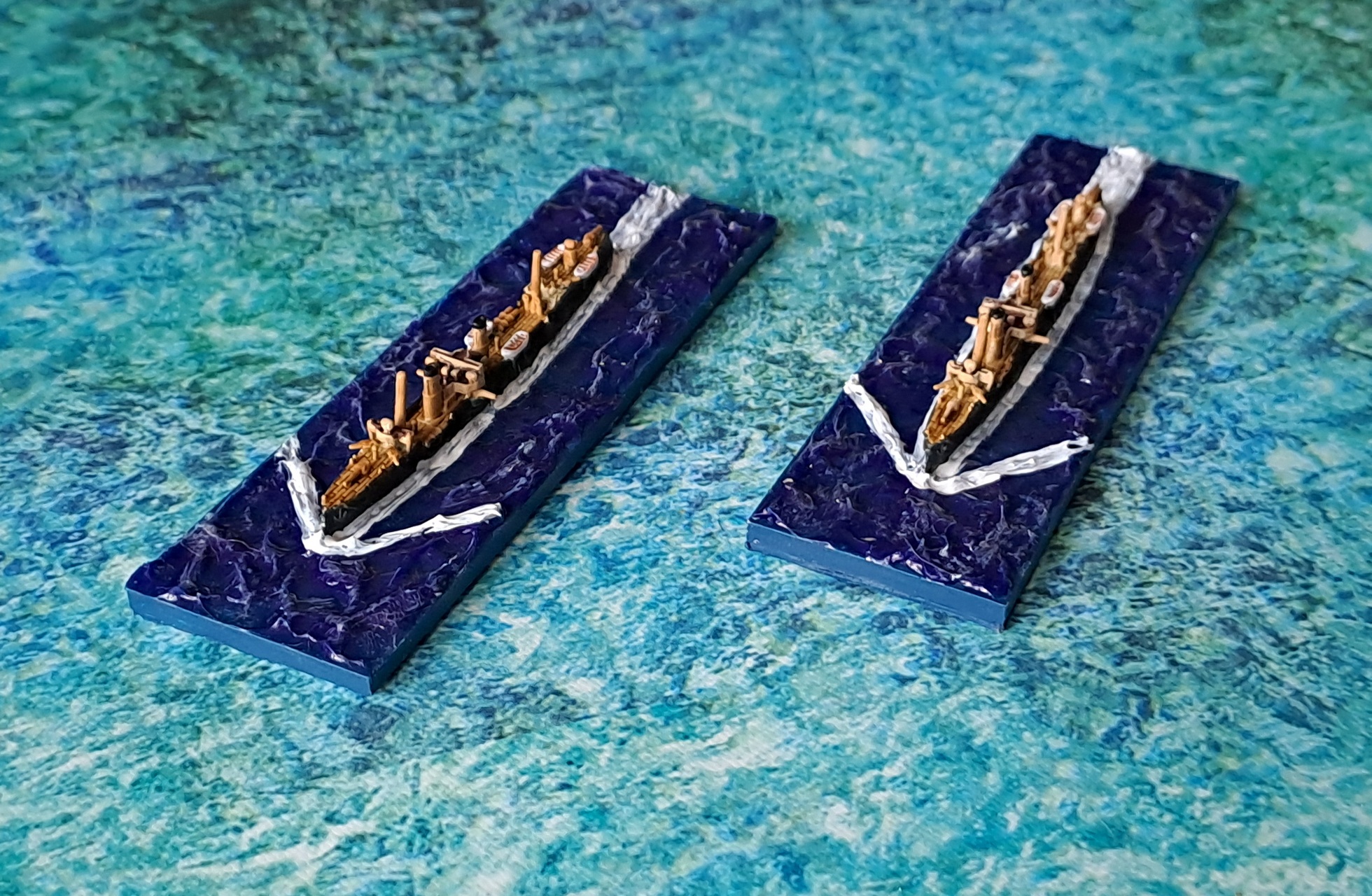
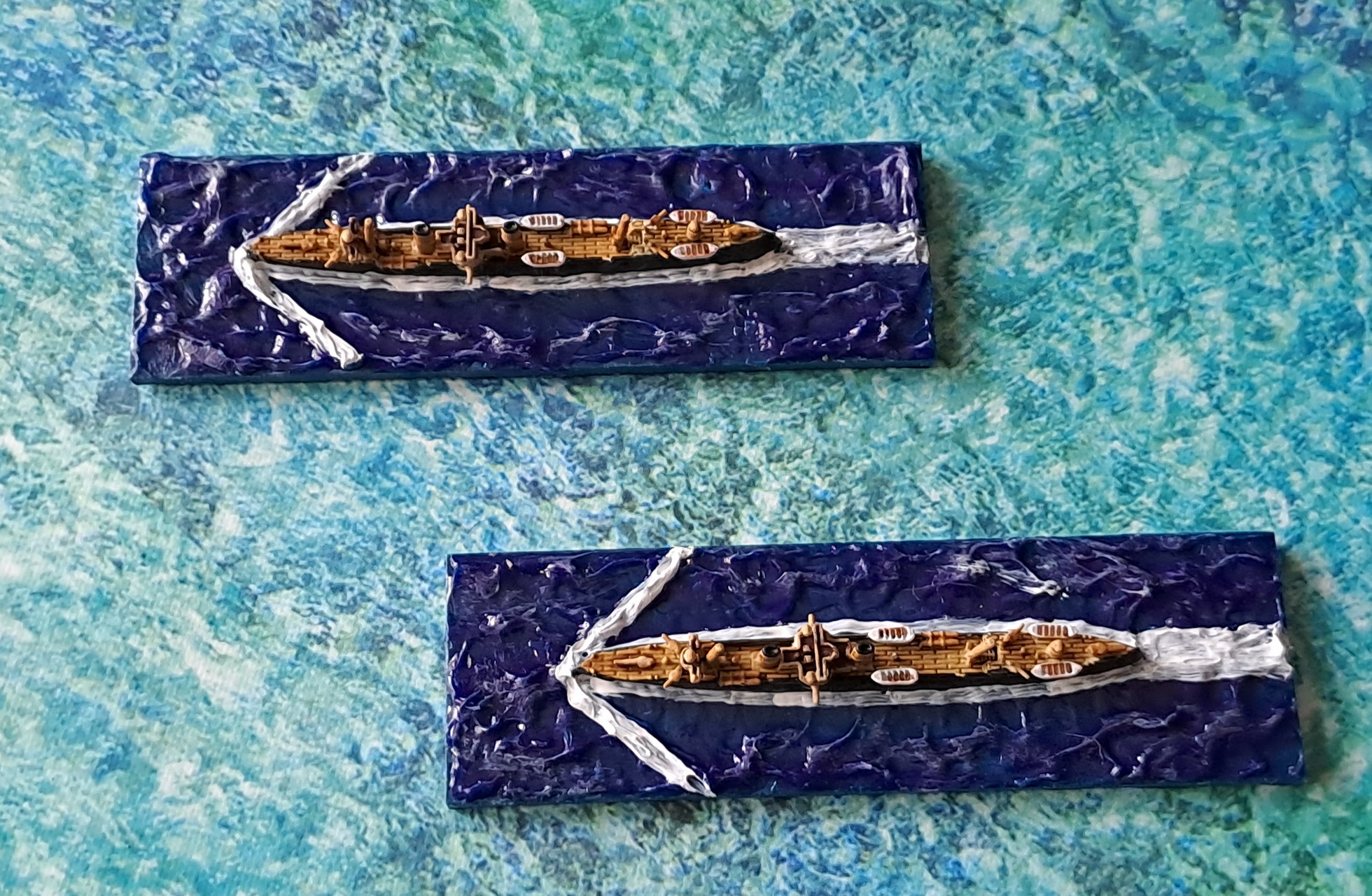
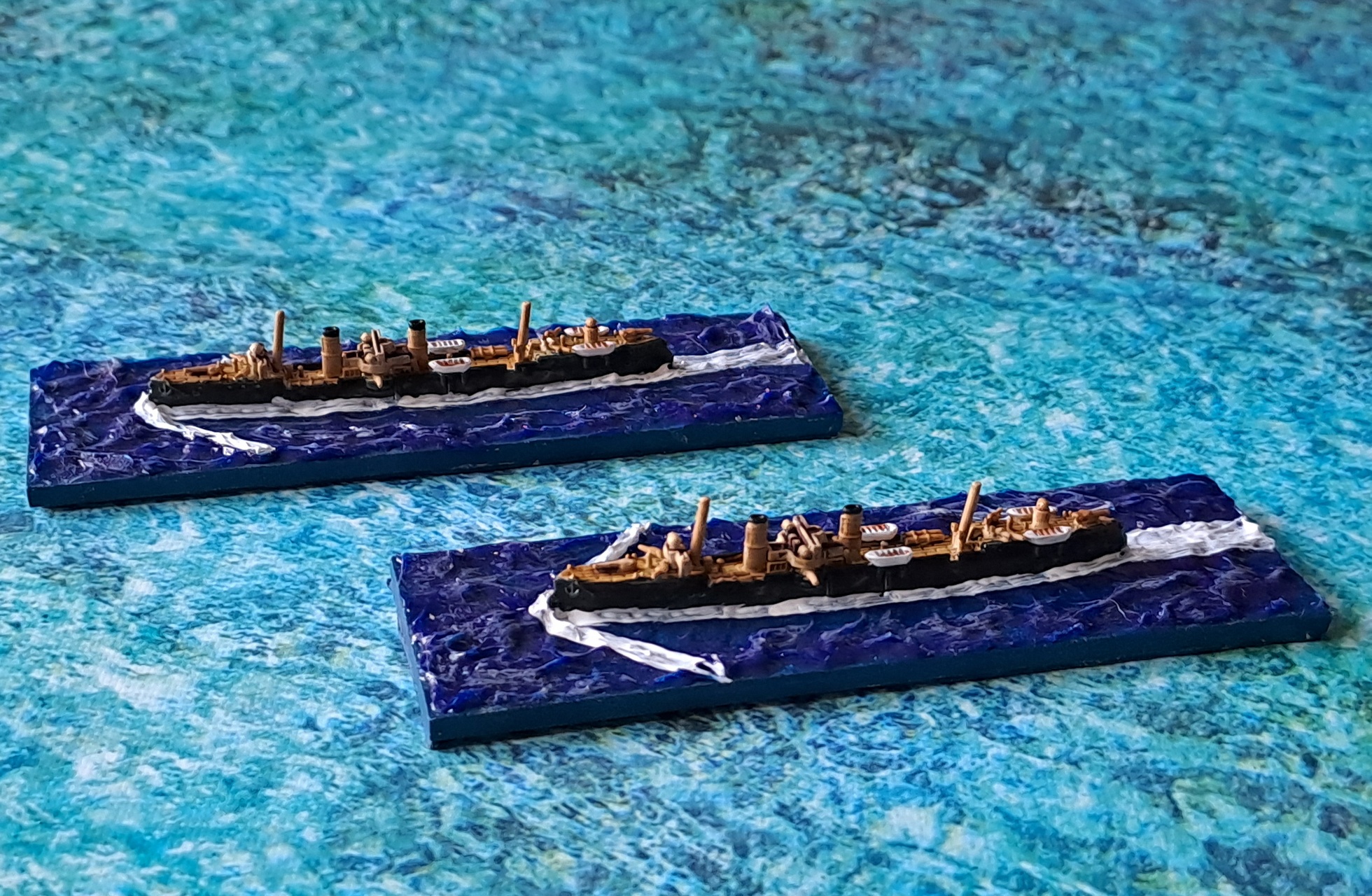
🇬🇧 Recently, along with Gloire and Liberté, I also painted two smaller vessels — D’Iberville-class torpedo cruisers. ⚓
Cornholio’s Marine Nationale squadron has been significantly reinforced, and I still have a second Gloire to finish — the one I got with the vouchers I won at Bolter. 🇫🇷🌊
The D’Iberville-class torpedo cruisers were built in the first half of the 1890s. The first vessel of the series was named in honour of the explorer Pierre Le Moyne d’Iberville. They displaced around 950 tons and measured 80 metres in length. Designed for speed and agility, they were powered by triple-expansion steam engines enabling a top speed of 21 knots, making them one of the fastest vessels of the French Navy at the time.
Her armament as a lead ship of the class consisted of one 100 mm (3.9 in) guns, three 65 (3 pounder) guns, seven 47 mm (1.9 in) guns, and six 450 mm (17,7 in) torpedo tubes. This combination allowed D’Iberville to engage both enemy large vessels and torpedo boats, while her speed enabled rapid reconnaissance and raiding missions.
D’Iberville’s service was largely in the Mediterranean and along the French Atlantic coast. She participated in numerous naval exercises and maneuvers, helping refine tactics for torpedo cruisers. Her design and performance influenced subsequent classes of French light ships.
In the game, D’Iberville represents a fast, lightly armoured vessel capable of devastating torpedo attacks, and protecting larger ships from small, aggressive enemy vessels.
* – description of the D`Ibervilleclass by GMBoardgames.
🇵🇱 W ostatnim czasie wraz z Glorią i Libertii pomalowałem również dwie mniejsze jednostki – krążowniki torpedowe D`Iberville. ⚓ Eskadra Marine Nationale w służbie Cornholio została solidnie wzmocniona, przede mną jeszcze do dokończenia druga Gloire, którą wziąłem za wygrane w Bolterze bony. 🇫🇷🌊
Oczywiście to dopiero początek — w przyszłości na pewno zostanie wzmocniona kolejnymi jednostkami.
Krążowniki torpedowe typu D’Iberville zostały zbudowane w pierwszej połowie lat 90. XIX wieku. Pierwszy okręt serii otrzymał imię na cześć odkrywcy Pierre’a Le Moyne d’Iberville. Okręty te miały wyporność około 950 ton i długość 80 metrów. Zaprojektowano je z myślą o szybkości i zwrotności – maszyny parowe potrójnego rozprężania pozwalały osiągać 21 węzłów, co czyniło je jednymi z najszybszych jednostek francuskiej marynarki w tym czasie.
Uzbrojenie okrętu wiodącego obejmowało jedno działo kal. 100 mm, trzy działa kal. 65 mm, siedem dział kal. 47 mm oraz sześć wyrzutni torped kal. 450 mm. Takie połączenie uzbrojenia pozwalało D’Iberville atakować zarówno duże okręty, jak i torpedowce, a prędkość umożliwiała szybkie rozpoznanie i działania rajderskie.
D’Iberville służył głównie na Morzu Śródziemnym i wzdłuż wybrzeży Atlantyku. Brał udział w licznych ćwiczeniach i manewrach marynarki, przyczyniając się do rozwoju taktyki krążowników torpedowych. Jego projekt i osiągi miały wpływ na kolejne klasy francuskich lekkich okrętów.
W grze D’Iberville reprezentuje szybki, lekko opancerzony okręt, zdolny do niszczących ataków torpedowych oraz ochrony większych jednostek przed małymi, agresywnymi okrętami przeciwnika.
🇬🇧 Summary: For a fourth-class ship, it is quite a large model – and there are two in the box, each with its own base. – The ship has better armour than most units of this class in the game. It also has six torpedoes – the same number as, for example, the Russian Bujny class. Apart from torpedoes, it has a medium-calibre gun on the bow and a small number of light guns on both broadsides and at the stern. It is slower than most torpedo boats — after all, it is still a torpedo cruiser. A huge advantage is the ram. – I think that its cost of 80 points means it will appear in more than one Marine Nationale squadron.
🇵🇱 Podsumowanie: – Jak na czwartą klasę jest to całkiem spory model – a w pudełku są dwa, każdy ma swoją podstawkę. – Okręt dysponuje lepszym pancerzem od większości występujących w grze jednostek tej klasy, poza tym posiada sześć torped – tyle co np. rosyjska klasa Bujny. Poza torpedami posiada armatę średniego kalibru na dziobie oraz nieliczną lekką artylerię na obu burtach i na rufie. Jest wolniejszy od większości torpedowców – mimo wszystko jest to krążownik torpedowy. Olbrzymią zaletą jest taran. – Wydaje mi się, że koszt 80 punktów sprawi, że będzie się pojawiał w niejednej eskadrze Marine Nationale.
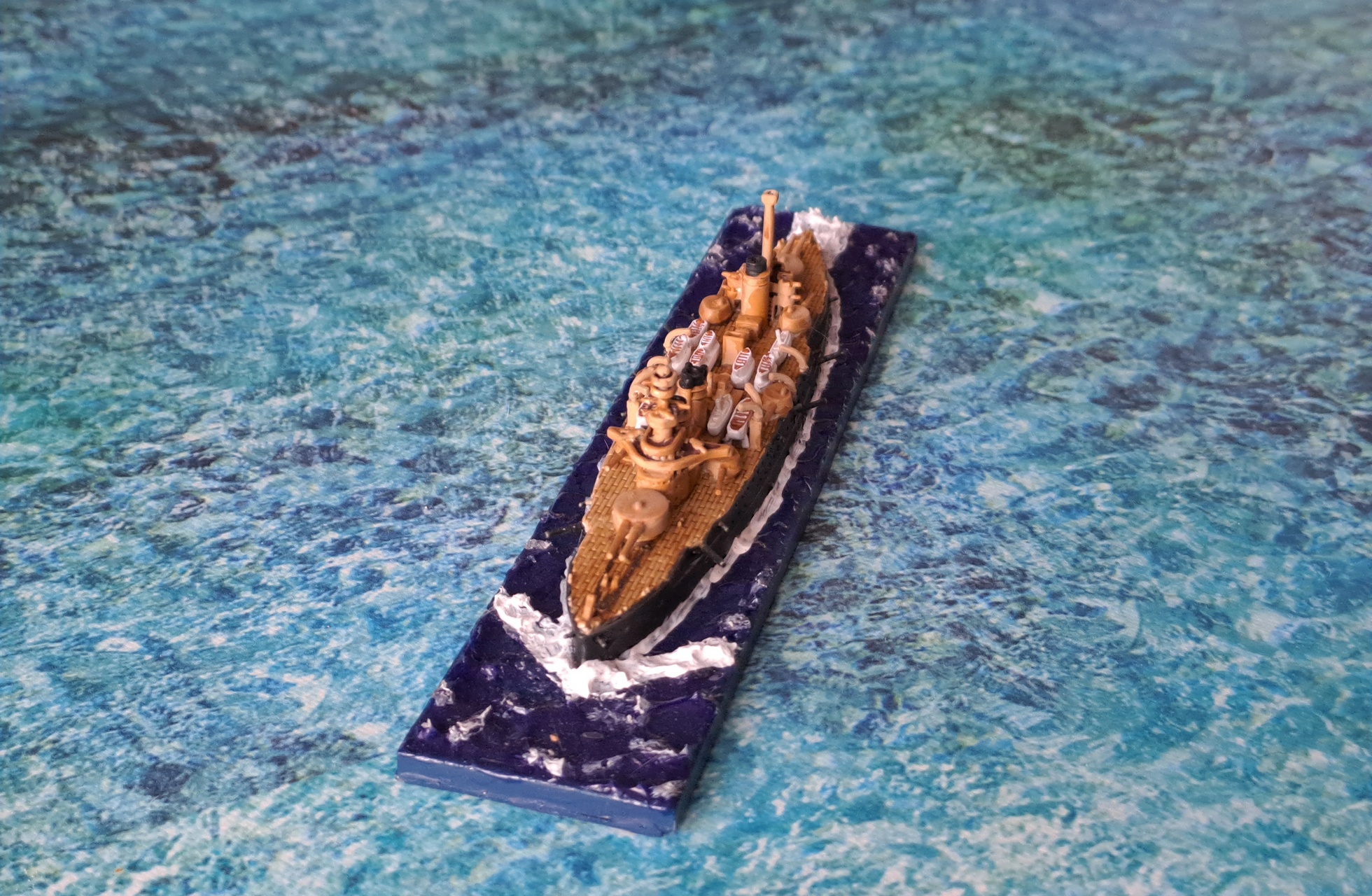
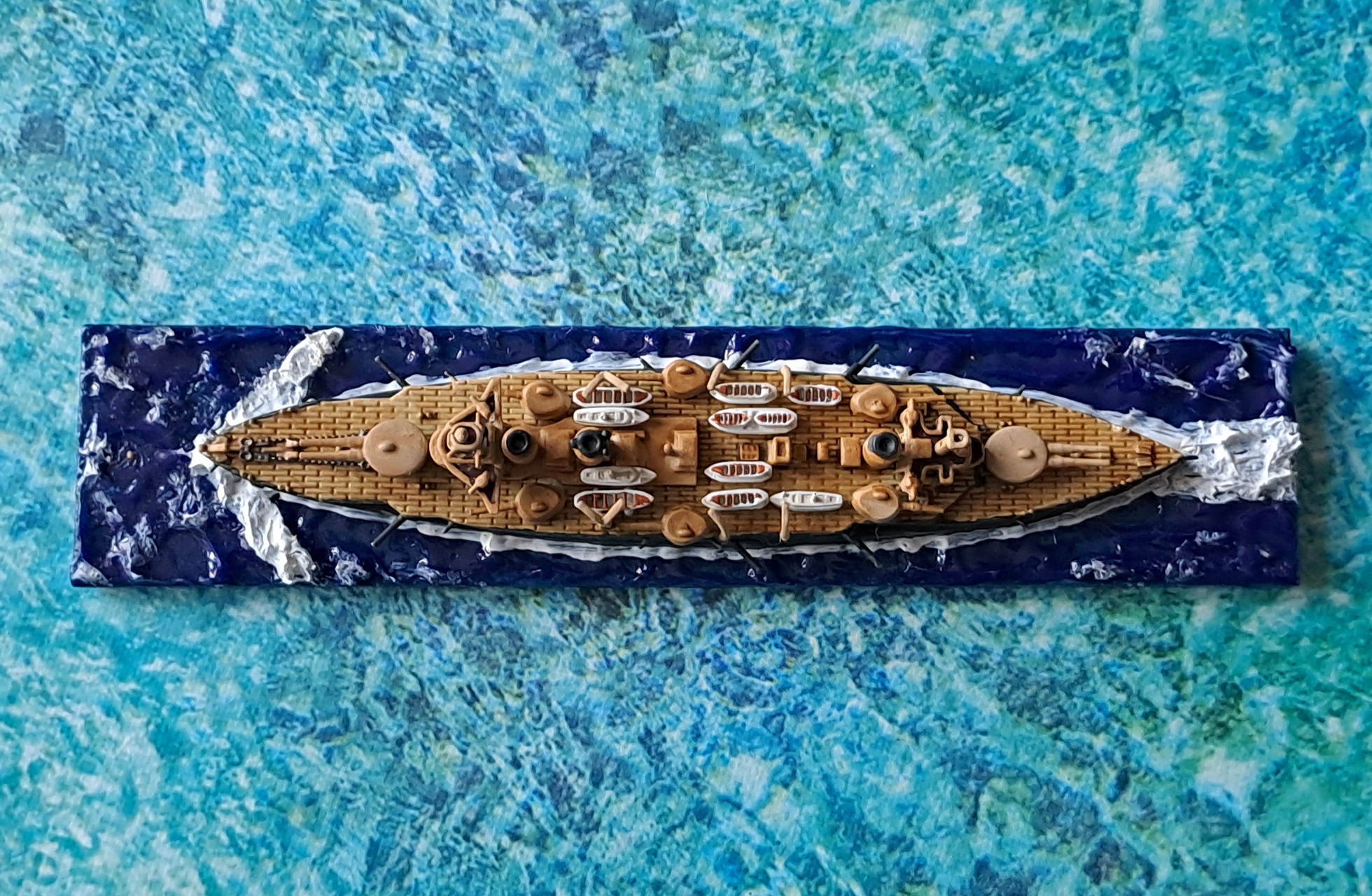
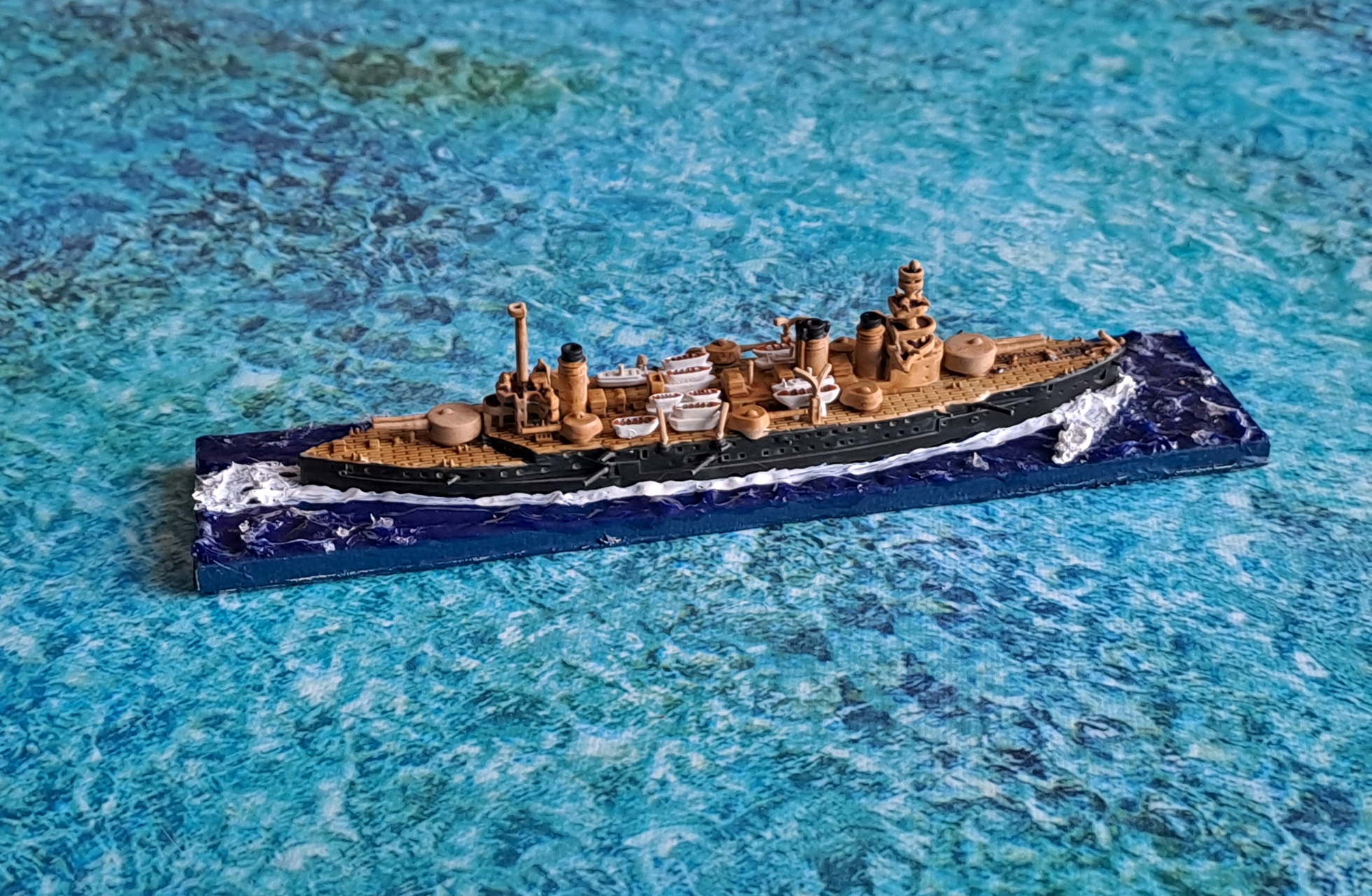
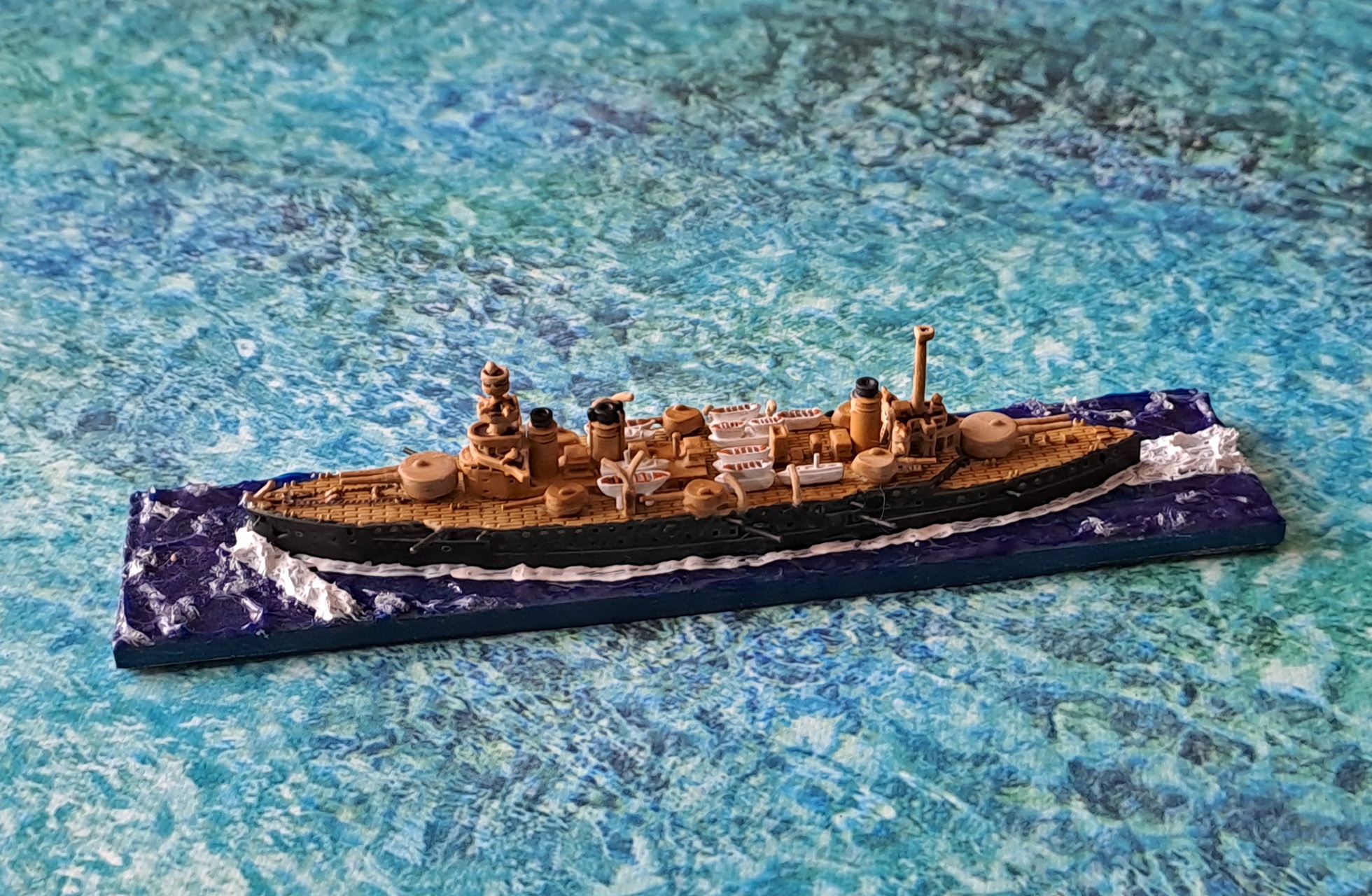
🇬🇧 Recently, I managed to launch the battleship Liberté — although this kit can also be used to build the battleship République. ⚓
With her launch, Cornholio has gained another battleship with a fighting chance against King Edward or the Martians. 🇫🇷🌊
The République-class consisted of two pre-dreadnought battleships built for the French Navy in the early 1900s. Their construction was a clear signal of France’s departure from the Jeune École concept and from building small battleships displacing no more than 12,000 tons. République and Patrie displaced 14,870 tons and measured 135 metres long, with a beam of 24.25 metres and a draught of 8.2 metres. Powered by three triple-expansion steam engines and 24 Niclausse boilers, they could reach 19 knots and carried a crew of around 750.
Their main armament included four 305 mm (12 in) guns in two twin turrets, supported by eighteen 164 mm (6.5 in) guns, twelve 65 mm (2,6 in) guns, and six 47 mm guns for close defence. Armour protection reached 280 mm on the belt and 360 mm on turrets.
After their launch, they became the most powerful French battleships. Already during construction, it was noticed that other navies were introducing a higher calibre of secondary artillery, but the work on the first two vessels was too far advanced; therefore, heavier guns were only introduced with the Liberté class.
République-class ships are powerful pre-dreadnoughts with strong armament and very good armour, able to withstand heavy fire while commanding the battle line.
* – description of the Libertéi République by GMBoardgames.
🇵🇱 W ostatnich czasie udało mi się zwodować pancernik Liberté– chociaż z tego zestawu można złożyć również pancernik République. ⚓
Wraz z jego wodowaniem Cornholio doczekał się kolejnego pancernika mającego szanse z Królem Edwardem czy Marsjanami. 🇫🇷🌊
Oczywiście to dopiero początek — w przyszłości na pewno zostanie wzmocniona kolejnymi jednostkami.
Typ République obejmował dwa pancerniki przeddrednoty zbudowane dla francuskiej marynarki na początku XX wieku. Ich konstrukcja była wyraźnym sygnałem odejścia Francji od koncepcji „Jeune École” i od budowy mniejszych pancerników o wyporności nieprzekraczającej 12 000 ton. République i Patrie miały wyporność 14 870 ton, długość 135 metrów, szerokość 24,25 metra i zanurzenie 8,2 metra. Trzy maszyny potrójnego rozprężania i 24 kotły Niclausse pozwalały osiągnąć 19 węzłów. Załoga liczyła około 750 ludzi.
Główne uzbrojenie obejmowało cztery działa kal. 305 mm w dwóch wieżach podwójnych, wspierane przez osiemnaście dział kal. 164 mm, dwanaście dział kal. 65 mm i sześć dział kal. 47 mm do obrony bliskiej. Opancerzenie sięgało 280 mm na pasie burtowym i 360 mm na wieżach artylerii głównej.
Po wodowaniu stały się najpotężniejszymi francuskimi pancernikami. Już w trakcie ich budowy zauważono, że marynarki innych państw wprowadzają silniejsze działa artylerii średniej, jednak prace nad pierwszymi dwoma okrętami były zbyt zaawansowane, aby wprowadzać zmiany – dlatego dopiero w typie Liberté zastosowano cięższe działa.
Pancerniki typu République to potężne przeddrednoty o silnym uzbrojeniu i bardzo dobrym opancerzeniu, zdolne wytrzymać silny ostrzał i przewodzić linii bojowej.
🇬🇧 Summary: – This kit gives you the option to build one of two battleships: Liberté or République. – The assembly itself requires a bit of patience, as the kit includes boats and the cranes used to lower them into the water. The model itself is pleasant to put together – in my case, I decided to build Liberté. – So, what are the differences between Liberté and République? Apart from a cosmetic difference in the amount of light artillery -one gun fewer per broadside on République – the biggest difference concerns the medium artillery. République has a total of nine medium guns per broadside with a range of 30″, while Liberté has only five on each broadside, but with a range of 38″ and much better penetration. – Since I have told you about the differences, it is time to discuss this class of ship. Liberté/République are characterised by very good armour and good speed for ships of this class. Their light artillery is not as numerous as on Russian ships, while their heavy artillery has a slightly shorter range than, for example, the heavy guns of Borodino or Tsesarevich, but offers greater penetration. The ship also has a ram, which can sometimes come in handy 😉 . – These ships are worth their cost: 865 points for Liberté and 870 points for République.
🇵🇱 Podsumowanie: – Ten zestaw oferuje możliwość sklejenia jednego z dwóch pancerników czyli: Libertélub République. – Samo sklejanie wymaga odrobiny cierpliwości, ponieważ zawiera łodzie oraz żurawie do ich spuszczania na wodę, sam model jest przyjemny w montażu – u mnie padło na złożenie Liberté. – Czym się więc różnią od siebie Libertéi République? Poza kosmetyczną różnicą w ilości lekkiej artylerii – jedno działo mniej na burtę u République największa różnica dotyczy średniej artylerii – République ma łącznie dziewięć średnich dział na burtę o zasięgu 30″, Liberté ma ich tylko pięć na każdą burtę, ale za to o zasięgu 38″ i o wiele lepszym przebiciu. – Skoro opowiedziałem Wam o różnicach, to pora omówić te klasy okrętu – Liberté/République cechują się bardzo dobrym pancerzem i dobrą prędkością jak na okręt tej klasy. Lekka artyleria nie jest tak liczna jak w przypadku okrętów rosyjskich, za to ciężka artyleria ma nieco mniejszy zasięg od np. ciężkich dział Borodino czy Cesarewicza, za to większą siłę przebicia. Okręt ma również taran, który czasem się przydaje 😉 . – Okręty są warte swojej ceny i kosztują 865 dla Libertéi 870 dla République.
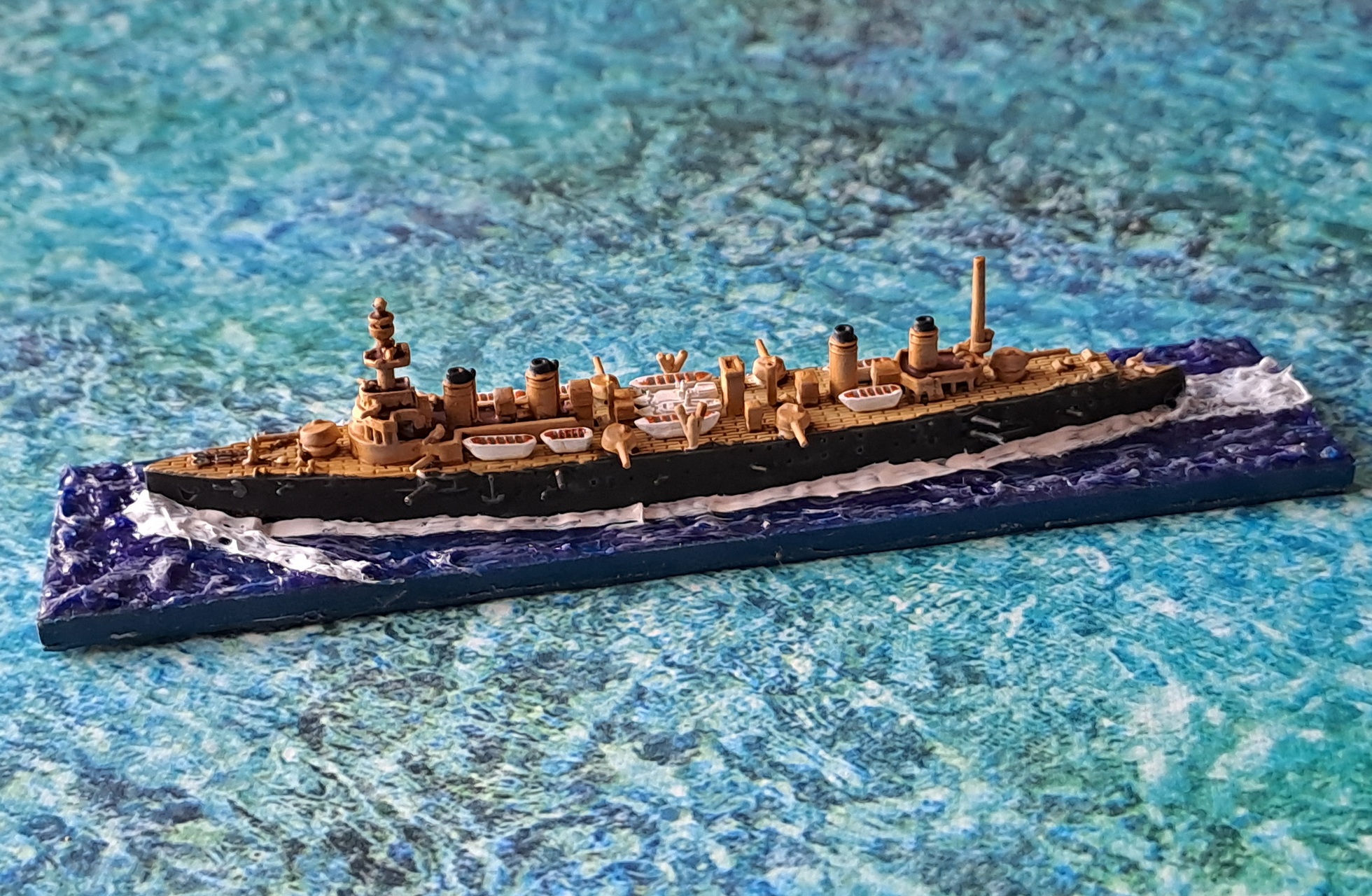
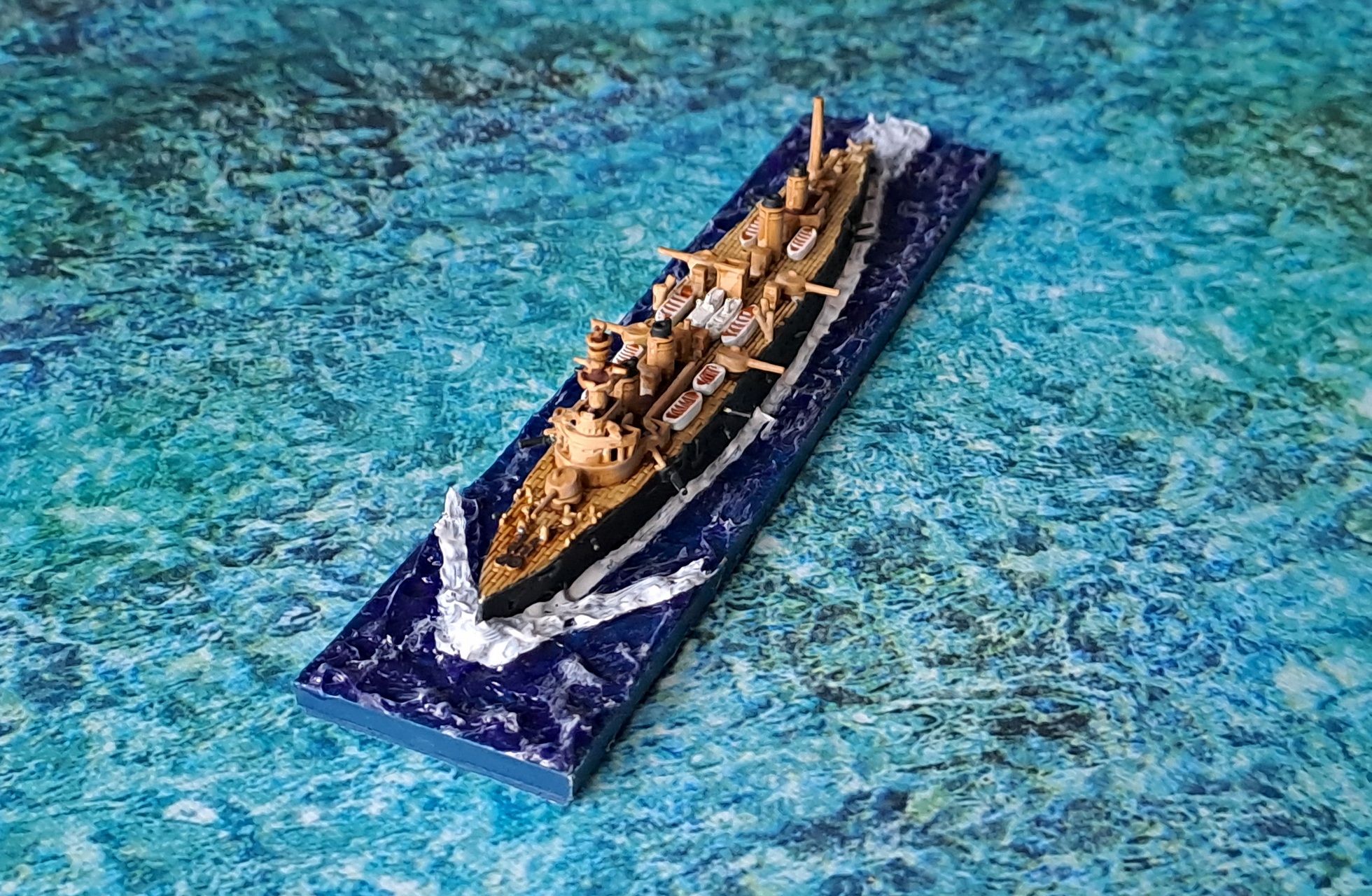
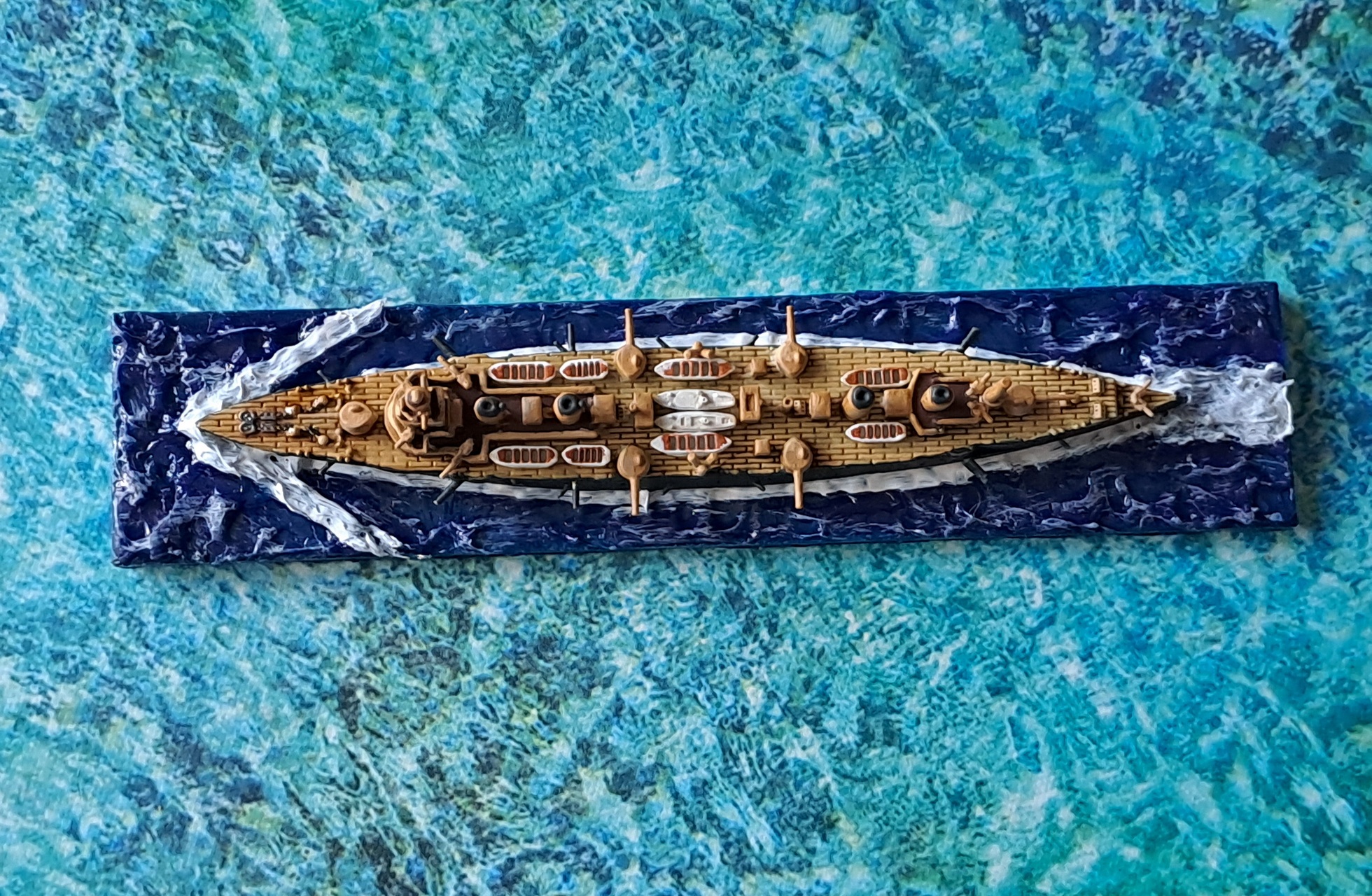
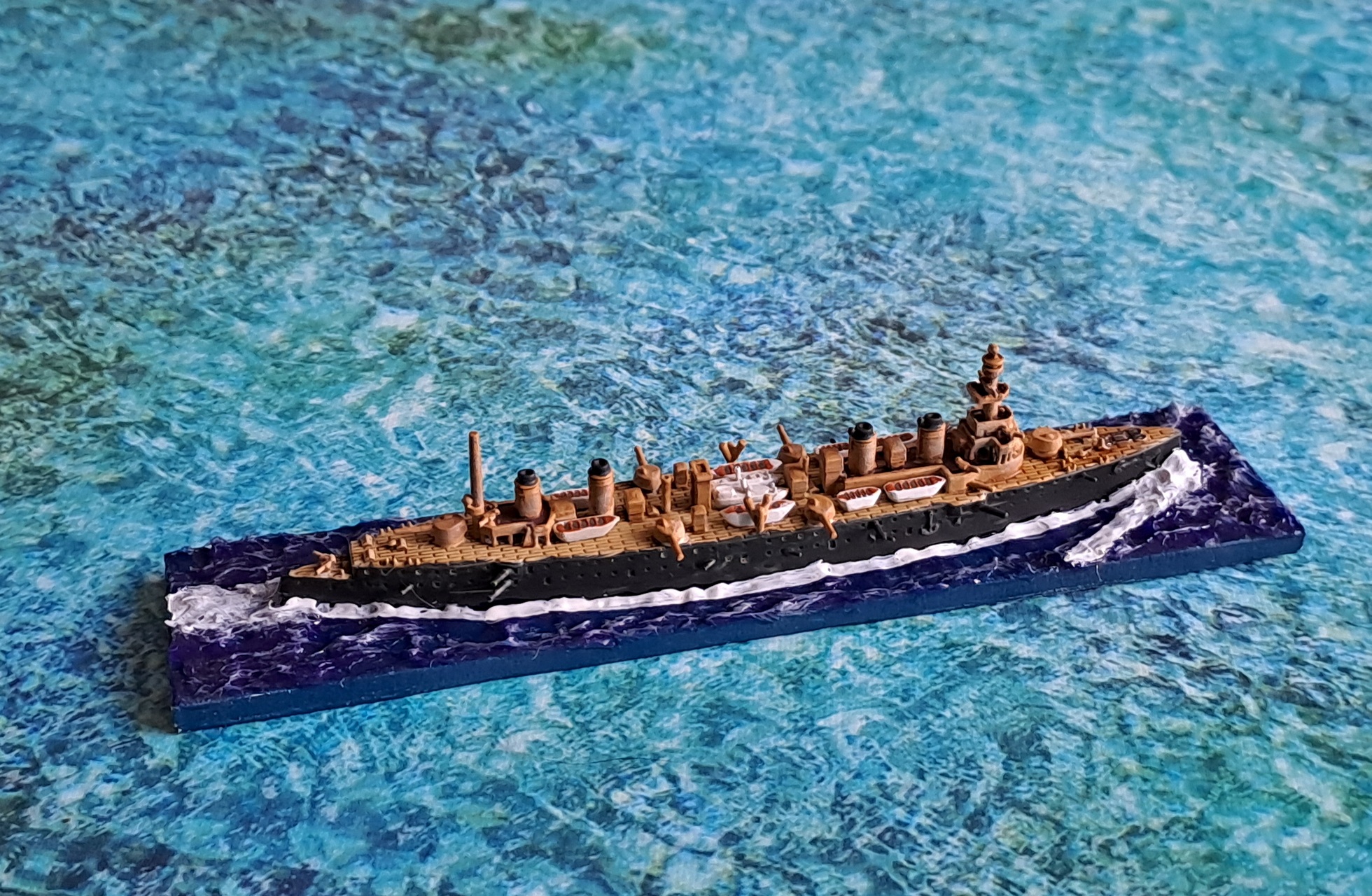
🇬🇧 Some time ago, I managed to finish a French Gloire-class cruiser. ⚓ This ship has already joined the rest of Cornholio’s squadron. 🇫🇷🌊
At the end of the 19th century, various factions within the French Navy had differing visions of the role armoured cruisers were meant to play. The Gloire class was created as a compromise: it was concluded that a sufficiently large armoured cruiser could serve both as a raider and as a ship capable of accompanying the fleet. With a displacement of almost 10,000 tons, it could reach a speed of 21 knots and was armed with two 194 mm guns, eight 164.7 mm guns mounted in turrets and casemates, six 100 mm guns, as well as 22 light guns and five torpedo tubes. It was therefore a ship with considerable firepower, good armour protection, and high speed.
Five ships of this class were built and entered service from 1904 onwards. One of them, Sully, struck uncharted rocks in Asia, while the remaining four served during the First World War. They were scrapped during the interwar period. The longest-serving ship was Condé — converted first into a barracks ship and later into a target ship, she was sunk by Allied aircraft in 1944, 40 years after entering service.
The Gloire class is a very valuable addition to the Marine Nationale, offering an interesting alternative to other armoured cruisers. Thanks to its characteristics, it is capable of engaging any ship of this class in any enemy fleet on equal terms.
* – description of the Gloire class translated from Polish version.
🇵🇱 W ostatnich czasie udało mi się ukończyć francuski krążownik klasy Gloria. ⚓ Okręt ten już dołączył do reszty eskadry Cornholio. 🇫🇷🌊
Pod koniec XIX wieku różne frakcje w ramach francuskiej marynarki wojennej miały odmienne wizje na temat roli, jaką miałyby pełnić krążowniki pancerne. Typ Gloire powstał jako kompromis, uznano, że rolę zarówno rajdera, jak i okrętu, który mógłby towarzyszyć flocie, może pełnić odpowiednio duży krążownik pancerny. Dzięki wyporności prawie 10.000 ton, mógł rozwijać prędkość 21 węzłów i był uzbrojony w 2 armaty kalibru 194 mm, osiem kalibru 164,7 mm (w wieżach i kazamatach), sześć kalibru 100 mm, a także 22 lekkie armaty i 5 wyrzutni torped. Był zatem to okręt o pokaźnej sile ognia, dobrym opancerzeniu i szybkości.
Zbudowano 5 jednostek tego typu (oddawano je do służby od 1904 roku), z czego jedna (Sully) wpadła na nieoznaczone skały w Azji, pozostałe cztery walczyły w trakcie I wojny światowej. Zostały oddane na złom w okresie dwudziestolecia międzywojennego. Najdłużej w służbie został Condé – przemieniony na okręt koszary i potem okręt cel – został zatopiony przez alianckie lotnictwo w 1944 roku – 40 lat po wcieleniu do służby.
Typ Gloire jest jest bardzo wartościowym dodatkiem do Marine Nationale, stanowiąc ciekawą alternatywę dla innych krążowników pancernych, dzięki swoim parametrom może podjąć samodzielną walkę z każdym okrętem tej klasy w jakiejkolwiek flocie przeciwnika.
🇬🇧 Summary: – A very enjoyable cruiser to paint and assemble. It has numerous boats and cranes, for which it is good to have a bit of patience -and preferably an empty desk, in case any part slips from your hand or tweezers 😉 . – As a ship for the game, it looks interesting thanks to its numerous medium-calibre guns, as well as quite a lot of light artillery. In addition, it has five torpedoes. What is also important – and something that, for example, Russian cruisers do not have – is that it has very good armour and considerable speed. It does not have a ram. – If I played Marine Nationale, I would definitely consider a fleet list including Jeanne d’Arc and two Gloria-class ships. Its points cost is 340 points – so there is nothing left to do but start thinking about building cruiser-based lists.
🇵🇱 Podsumowanie: – Bardzo przyjemny krążownik w malowaniu i składaniu Posiada liczne łodzie i żurawie do których dobrze mieć odrobinę cierpliwości i najlepiej puste biurko, gdyby jakiś element wypadł z dłoni czy pensety 😉 . – Jako okręt do gry przedstawia się interesująco ze względu na liczną średnią artylerię, a także całkiem sporo lekkiej. Ponadto posiada pięć torped. Dodatkowo co ważne, a czego nie posiadają np. krążowniki rosyjskie posiada bardzo dobry pancerz oraz znaczną prędkość. Nie posiada taranu. – Gdybym grał Marine Nationale, na pewno pomyślałbym o rozpisce zawierającej Joannę d’Arc oraz dwa okręty klasy Gloria – jego koszt punktowy wynosi 340 punktów – nic tylko myśleć o budowaniu rozpisek na krążownikach.
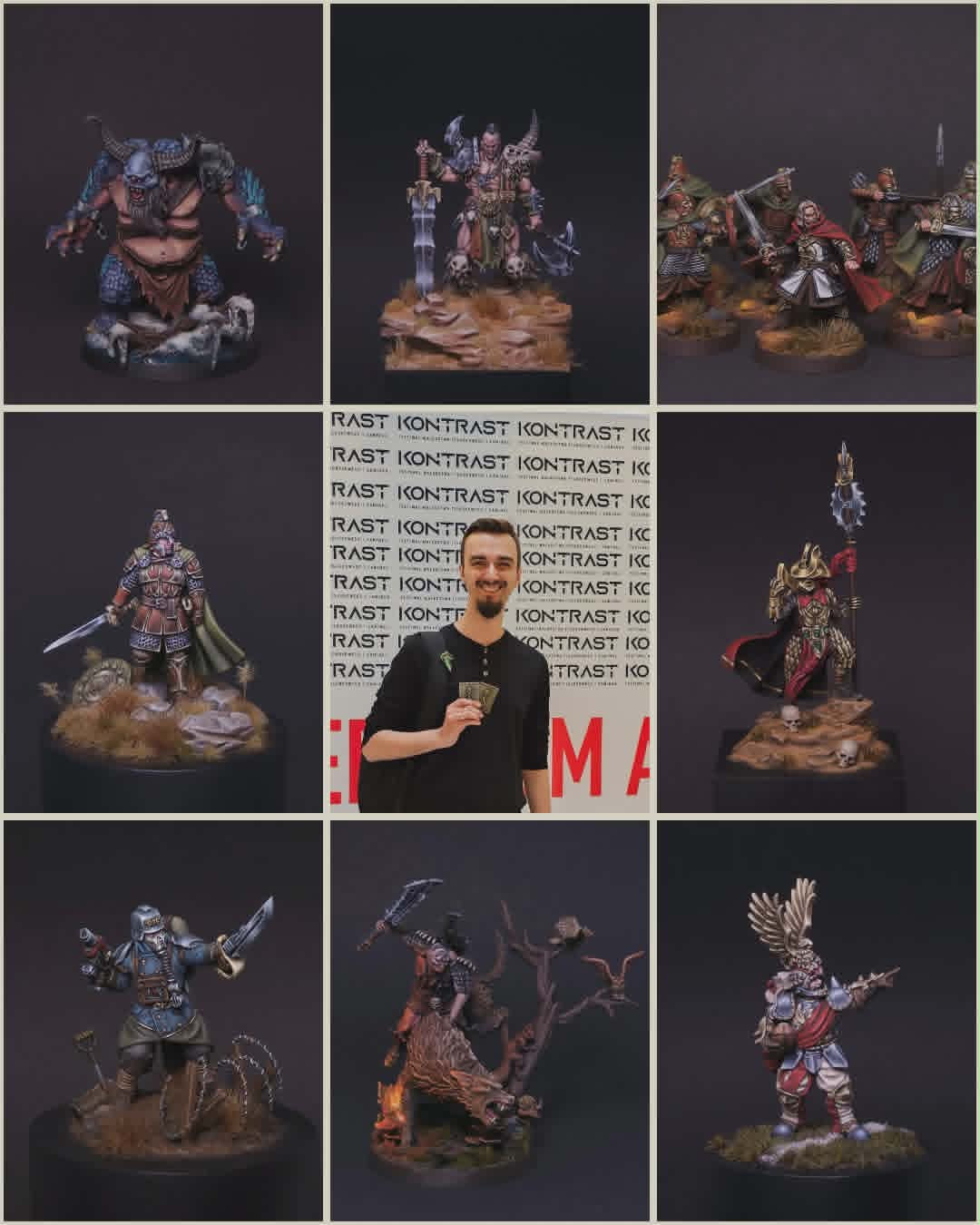
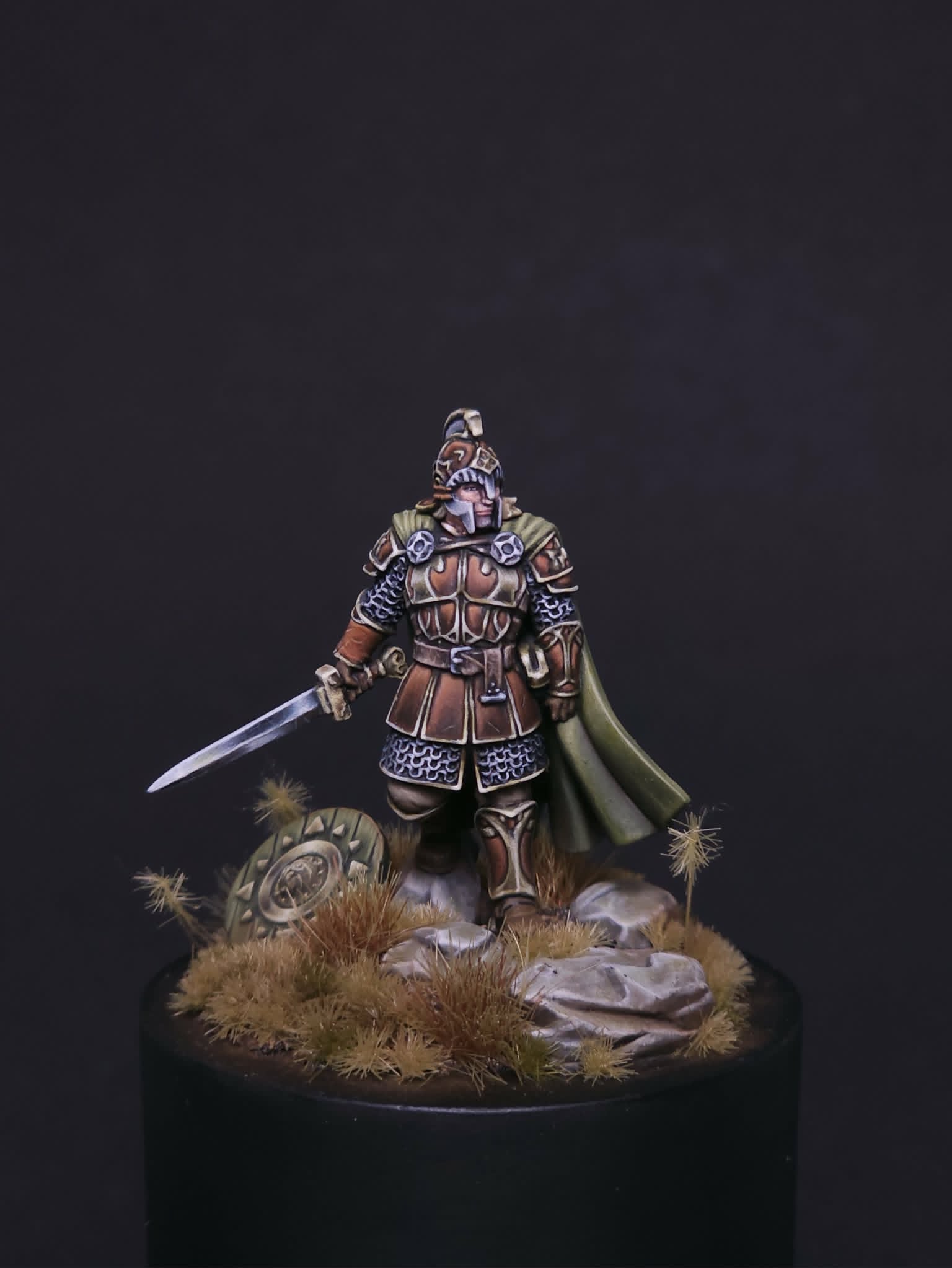
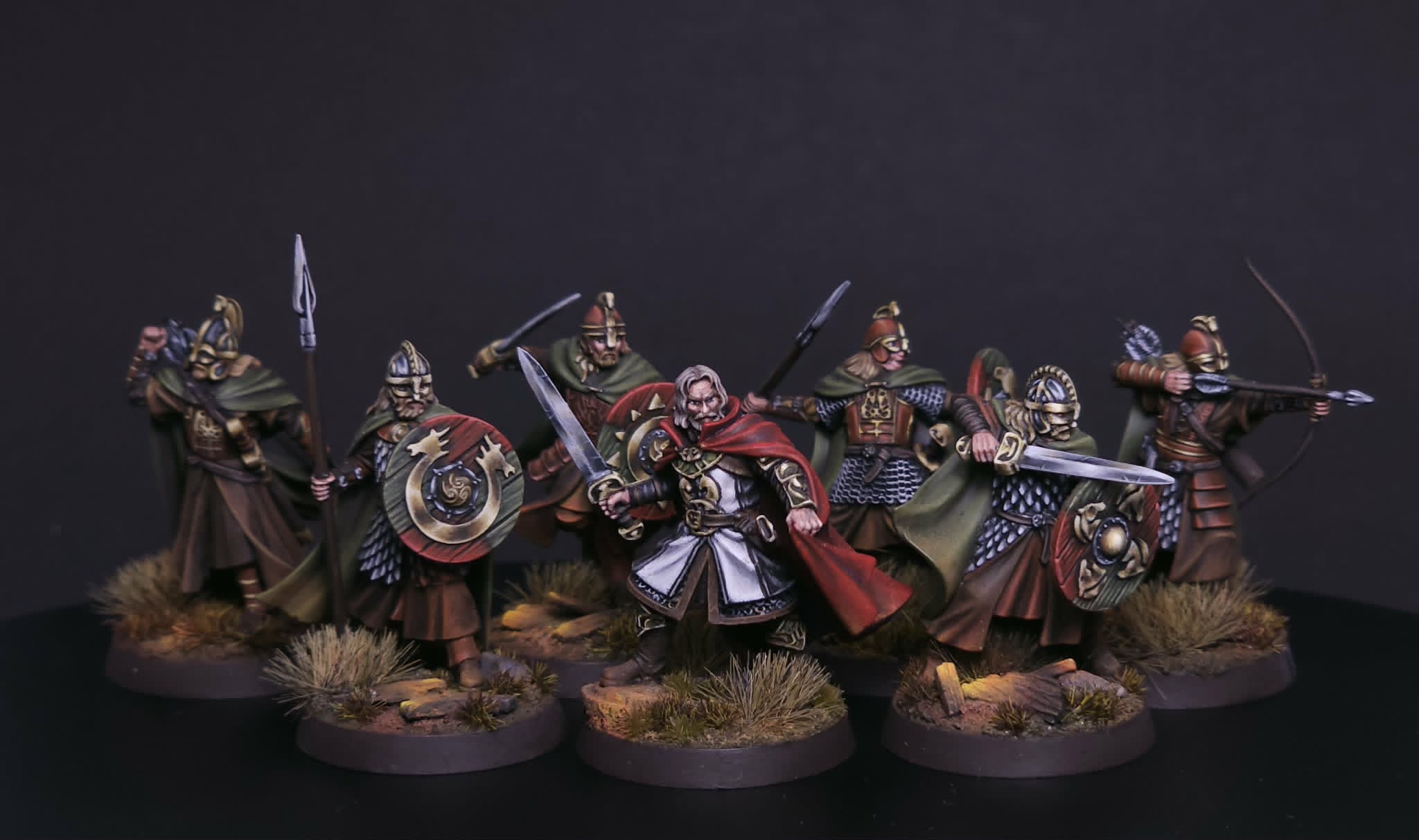
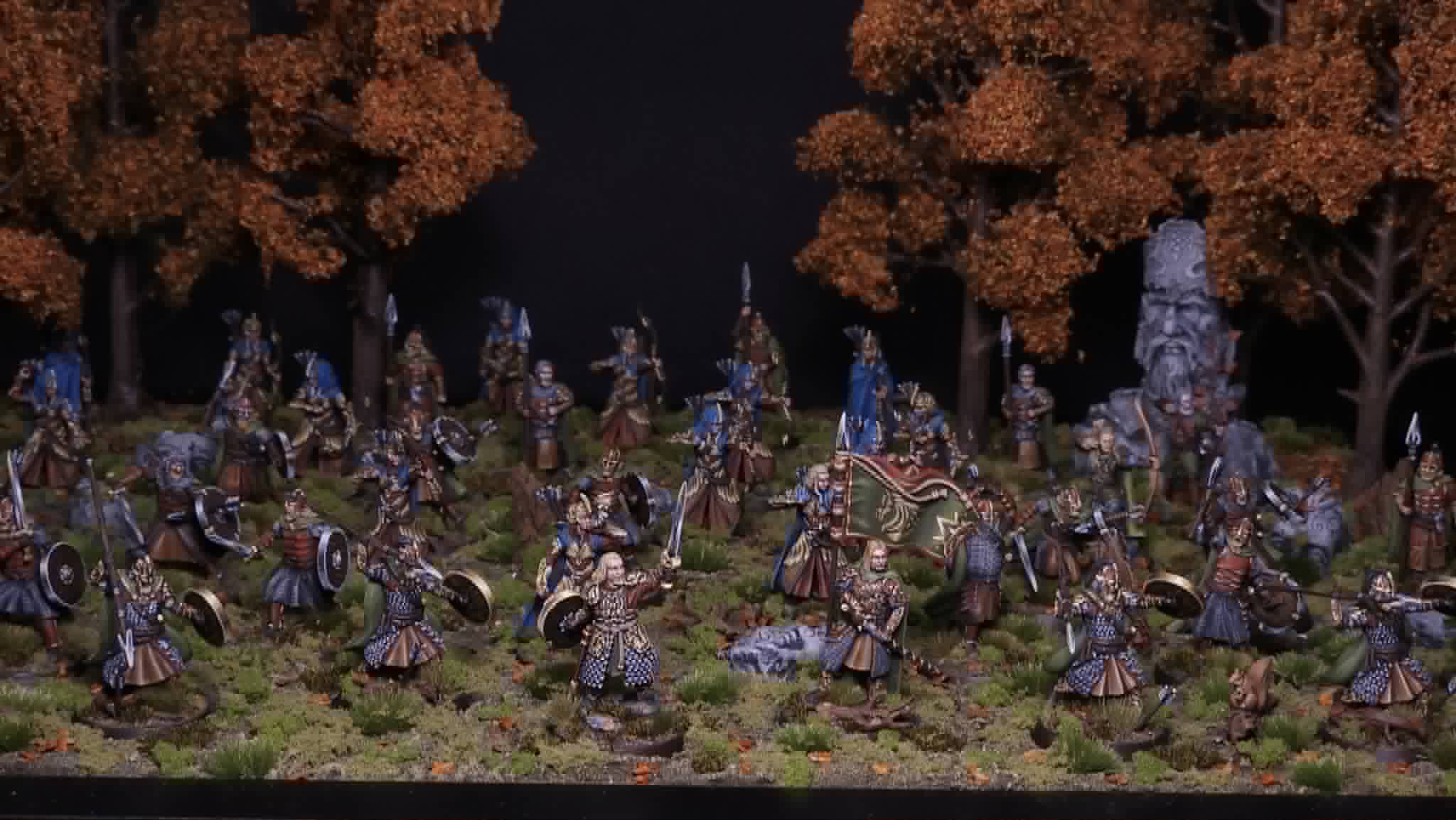
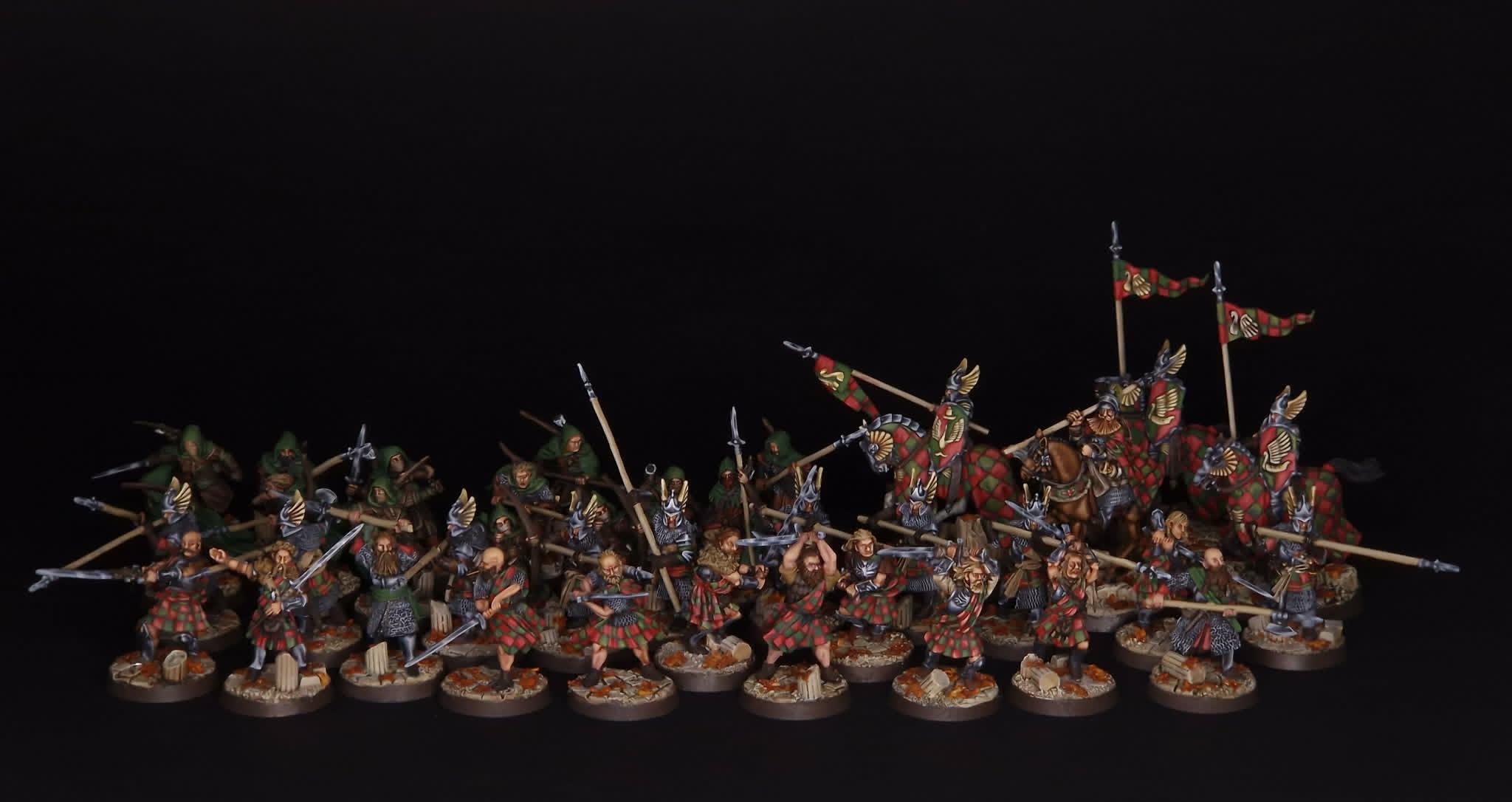
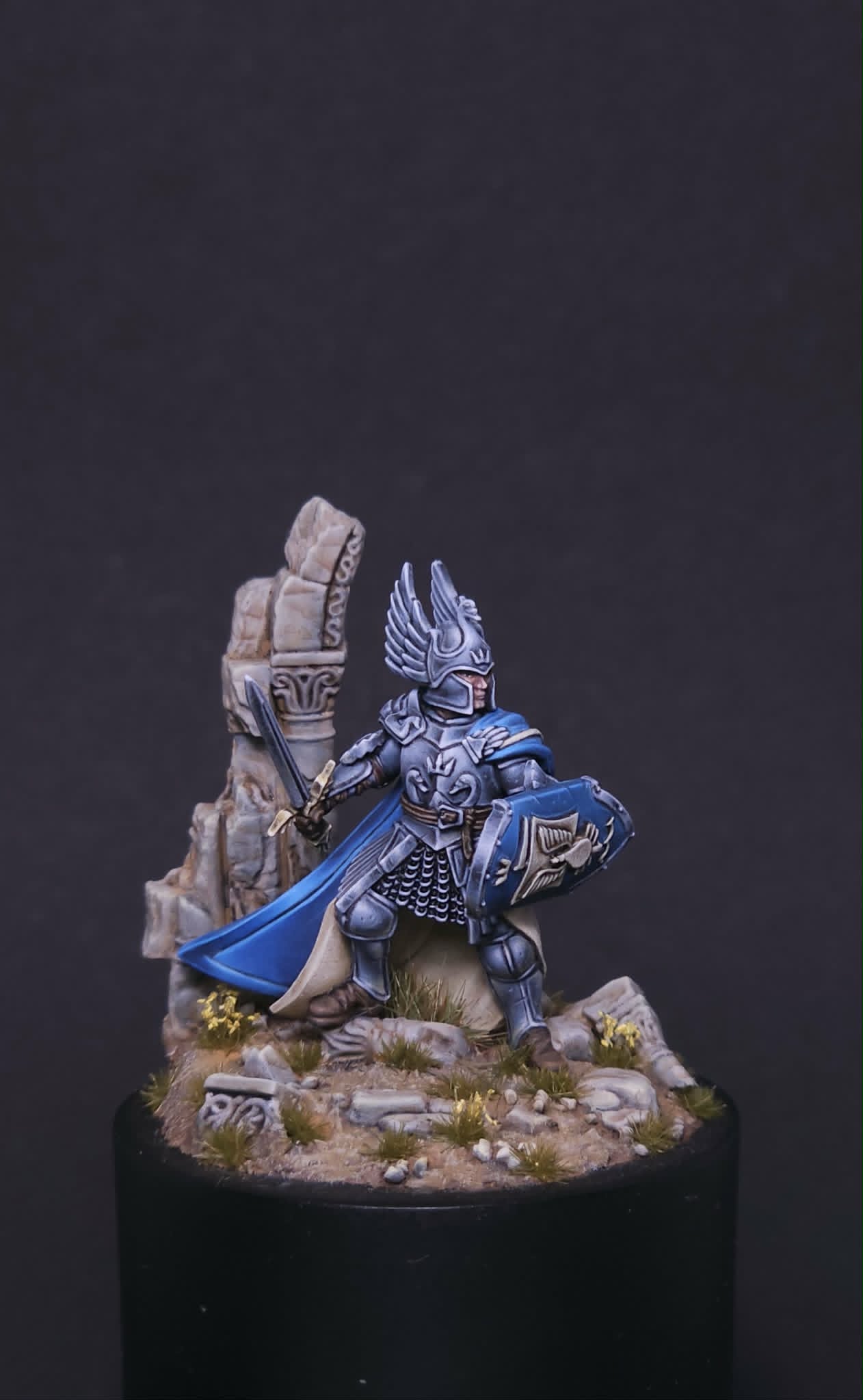
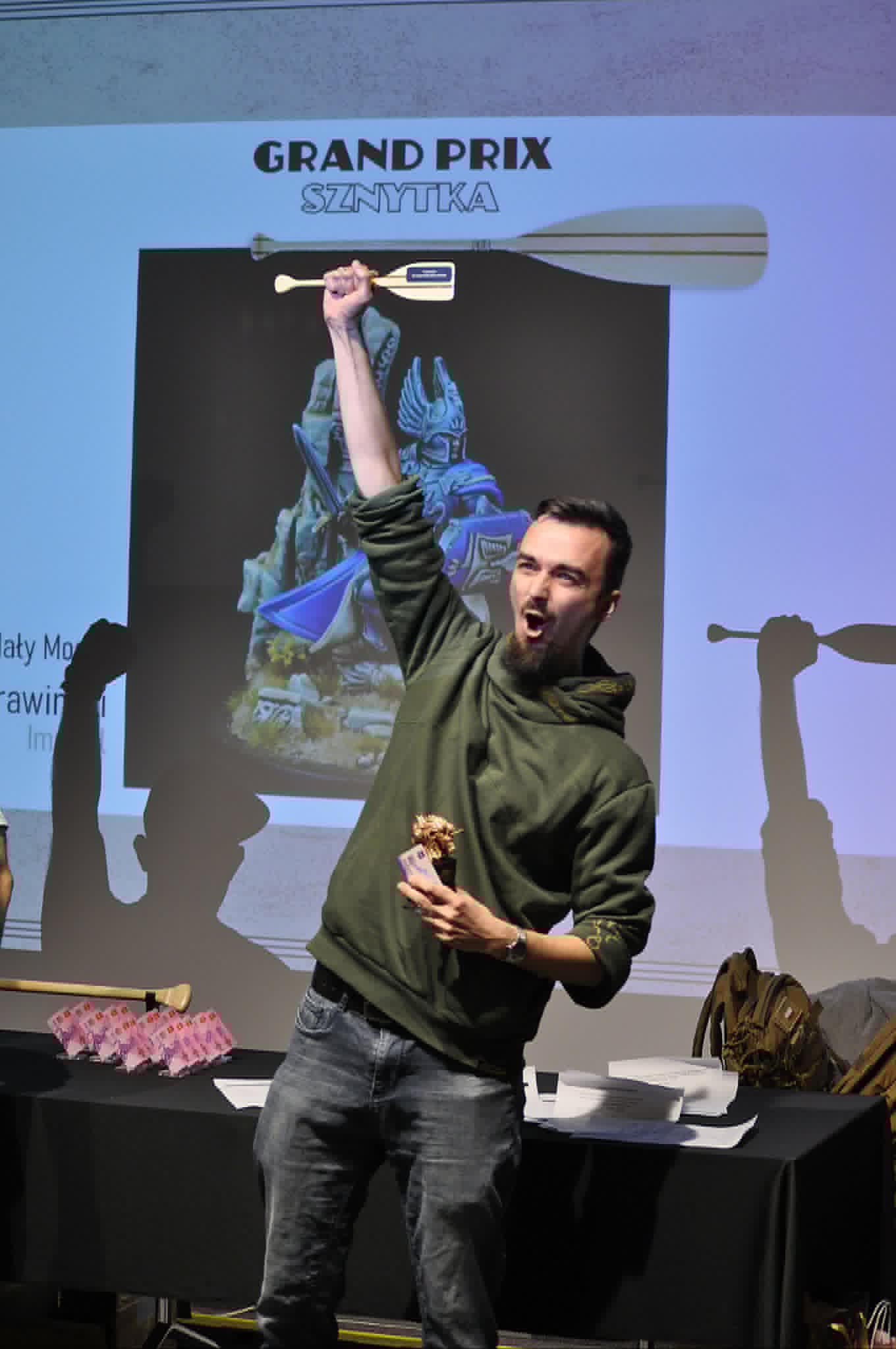
🇵🇱 Za uprzejmością Jakuba „Kronosa” Morawińskiego – członka GBW, utalentowanego malarza, który w tym roku ruszył ze swoimi pracami na podbój konkursów malarskich.
1. Jak i kiedy zaczęła się Twoja przygoda z Middle-earth: SBG i co najbardziej Cię przyciągnęło do tego systemu?
Przygoda zaczęła się podobnie jak dużej części z nas, mianowicie od gazetek wydawanych w okolicy 2004 roku. Uniwersum Tolkiena działało mocno na młody umysł, a okres wokół premier filmów był wtedy mocno hypowany czy w postaci kart w chipsach choćby, więc nietrudno było trafić też na figurki.
2. Co przyszło u Ciebie najpierw – granie czy malowanie figurek? A może obie rzeczy naraz?
Pierwsze było malowanie – od dziecka mnie do tego ciągnęło choć z mizernym efektem, niemniej jednak to był mój pierwszy kontakt z modelami, pierwsze farby akrylowe itd. Granie przyszło kilka lat później, ale zawsze szło w parze z malowaniem.
3. Która armia w Middle-earth: SBG jest Twoją ulubioną i dlaczego właśnie ona?
Od początków mojej przygody z ME mam jakąś niezrozumiałą sympatię do Isengardu jest to o tyle śmieszne, że ostatnio nią grałem chyba z 10 lat temu jak nie dawniej. Wynika ona prawdopodobnie z filmów i sekwencji polowania Lurtza na Drużynę oraz oblężenia Helmowego Jaru, które to sceny są jednymi z moich ulubionych. Aktualnie natomiast zarówno wizualnie jak i gameplayem najbardziej pasują mi Defendersi Helmowego Jaru i Harad.
4. Czy przy wyborze armii bardziej kierujesz się jej siłą na stole, wyglądem modeli czy klimatem świata Tolkiena?
To nie jest zero-jedynkowa kwestia bo zależy czy gram w duecie/drużynie czy solo natomiast prawdą jest, że o wiele przyjemniej gra mi się modelami, które podobają mi się wizualnie.
5. Który model albo bohater sprawił Ci najwięcej radości podczas malowania?
Tyle ich było a Ty każesz mi wybrać jeden? 😀 Generalnie bardzo lubię malować bohaterów Rohanu, zwłaszcza nowe rzeźby. Bardzo wpisują się w mój styl malarski i czuję ich klimat, więc postawiłbym na plastikowego Theodena czy też nowego Haletha z WofR. Jest też coś nad czym właśnie pracuje z LotRa ale nie chcę jeszcze odkrywać kart – poczekajmy do Kontrastu 😛 Bardzo dużo funu miałem też malując Imrahila.
6. Czy masz swój ulubiony styl malowania figurek do Middle-earth: SBG – bardziej filmowy, książkowy, realistyczny czy może własny?
Mam swój comfort-zone, który aktualnie łamię malując modele Warhammera 40k, natomiast jeśli chodzi stricte o LotRa to lubię malować w sposób dość stonowany ale kontrolowany. Powiedziałbym, że to taki low-fantasy. Co do schematów/kolorystyk i innych to nie ograniczam się do lore-accurate tak jak przy malowaniu armii Lenników ale też doceniam filmowe klimaty Rohanu czy elfów. W malowaniu konkursowym z kolei często inspiruję się ekranizacjami lub concept-artami popularnymi w kulturze masowej.
7. Jak wygląda u Ciebie proces pracy nad armią: najpierw rozpiska, potem malowanie, czy odwrotnie?
Niezależnie czy to armia czy model displayowy zawsze lubię mieć plan zanim zacznę realizację. Jeśli to armia to są to konkretnie dobrane modele, odpowiednio złożona z nich rozpiska, jasny plan na ich malowanie i dopiero jak faza pracy „w głowie” jest zamknięta, przechodzę do konkretów. Tak samo z modelami displayowymi – tu nacisk na fazę wstępną kładę jeszcze większy, dziesiątki concept-artów, wizualizacji, szkiców dobranych schematów kolorystycznych – słowem, mój telefon pęka już w szwach od materiałów ze zrealizowanych i przyszłym projektów.
8. Czy masz model albo oddział, z którego jesteś najbardziej dumny? Czy mogę prosić o ich zdjęcia?
Z wielu prac jestem bardzo zadowolony i we wszystkich widzę też braki, które można by wyciągnąć, ale to niekończąca się historia. Jestem bardzo zadowolony np. ze swojej armii „kratkowanych” Lenników, Galadhrimów czy Rohanu. Nad wszystkimi spędziłem setki godzin i obecnie czuje, że bym tego nie powtórzył, z uwagi na obecny cel jaki obrałem w malowaniu. Z modeli, muszę przyznać, że najbardziej jestem zadowolony z Imrahila. Uważam tą pracę za definicję mojego stylu malowania i wyciągnięcia większości wniosków z dotychczasowej drogi malarskiej (Całkiem możliwe, że niedługo jego miejsce zajmie coś nowego :P).
9. Która armia była dla Ciebie najtrudniejsza do pomalowania i z jakiego powodu?
Jeśli chodzi o armię, to najtrudniejsze chyba były wspomniane wcześniej lenna, masa kratkowanych szat + NMMy na 40+ modelach to było wyzwanie. Była to też w sumie chyba pierwsza armia na której stosowałem non-metalic. Ahh no i zdecydowanie najtrudniejsza dla mnie okazała się armia Easterlingów, którą założyłem sobie do pomalowania też w NMM), która po cesarzu i kilku modelach przerosła mnie czasowo i od dłuższego czasu czeka i czeka… i się raczej prędko nie doczeka.
10. Jakie znaczenie ma dla Ciebie pełne pomalowanie armii przed wystawieniem jej na stół?
Szczerze mówiąc – kluczowe. Jestem wyczulony na punkcie estetyki modeli, bardzo rzadko gram modelami niepomalowanymi a tak jak już wspominałem – o wiele więcej przyjemności przynosi mi granie ładnie pomalowaną armią (i najlepiej na przeciwnika z równie ładną). Jestem wyznawcą, że hobbystyka jest integralną częścią tej gry.
11. Co sprawia Ci większą satysfakcję: osiągnięcia w konkursie malarskim czy zwycięstwo na turnieju w Middle-earth: SBG?
Z całą pewnością do pierwsze. Zwłaszcza jeśli mówimy tu stricte o konkursach malarstwa figurkowego, zdobycie medalu za pracę nad którą spędziłem 100+ godzin to niesamowita satysfakcja i zwieńczenie masy pracy.
12. Jaką jedną radę dałbyś osobie, która dopiero zaczyna swoją przygodę z malowaniem i graniem w Middle-earth: SBG?
Do zaczynających grać – grajcie tym co najbardziej podoba Wam się klimatem/wizualnie, nie zwracajcie uwagi na metę! A co do malowania, wymaga ono mnóstwa cierpliwosci, więc jeśli chcecie efektów, nie spieszcie się i nic na siłę.
🇬🇧 Courtesy of Jakub „Kronos” Morawiński – a member of GBW and a talented painter, who this year has begun taking his work to painting competitions.
1. How and when did your adventure with Middle-earth: SBG begin, and what attracted you most to the system?
My adventure began much like it did for many of us – with the magazines that were being published around 2004. Tolkien’s universe had a strong effect on a young mind, and the period around the film premieres was hugely hyped at the time, whether through things like collectible cards in crisps or otherwise, so it was not hard to come across the miniatures as well.
2. What came first for you – playing or painting miniatures? Or perhaps both at the same time?
Painting came first – I had been drawn to it since childhood, even if the results were rather modest. Still, that was my first contact with miniatures, my first acrylic paints, and so on. Playing came a few years later, but it always went hand in hand with painting.
3. Which army in Middle-earth: SBG is your favourite, and why that one?
Since the very beginning of my journey with Middle-earth, I have had some inexplicable fondness for Isengard. It is funny, because I think the last time I actually played it was about ten years ago, if not longer. That fondness probably comes from the films – especially the sequence of Lurtz hunting the Fellowship and the siege of Helm’s Deep, which remain some of my favourite scenes. At the moment, however, both visually and in terms of gameplay, I am most drawn to the Defenders of Helm’s Deep and Harad.
4. When choosing an army, do you care more about its strength on the table, the look of the models, or the atmosphere of Tolkien’s world?
It is not really a black-and-white matter, because it depends on whether I am playing in a pair/team or solo. But it is true that I enjoy playing much more with models that I like visually.
5. Which model or hero has given you the most joy while painting?
There have been so many, and you want me to choose just one? 😀 In general, I really enjoy painting Rohan heroes, especially the newer sculpts. They fit my painting style very well and I really feel their atmosphere, so I would probably choose the plastic Théoden or the new Haleth from War of the Ring. There is also something from The Lord of the Rings that I am working on right now, but I do not want to reveal my cards just yet – let us wait until Kontrast 😛 I also had a great deal of fun painting Imrahil.
6. Do you have a favourite style of painting miniatures for Middle-earth: SBG -more film-like, book-inspired, realistic, or perhaps your own?
I have my own comfort zone, which I am currently breaking out of by painting Warhammer 40,000 models. But when it comes strictly to The Lord of the Rings, I like to paint in a fairly subdued yet controlled way. I would say it is a kind of low fantasy style. As for schemes, colour choices, and so on, I do not limit myself to being strictly lore-accurate, as I did when painting my Fiefdoms army, but at the same time I also appreciate the cinematic feel of Rohan or the Elves. In competition painting, on the other hand, I often take inspiration from film adaptations or concept art popular in mainstream culture.
7. What does your process of working on an army look like: army list first and then painting, or the other way round?
Whether it is an army or a display model, I always like to have a plan before I start. If it is an army, that means specifically chosen models, a properly built list using them, a clear painting plan, and only once the “mental work” phase is complete do I move on to the practical side. It is the same with display models – only there I place even more emphasis on the preparation stage: dozens of concept artworks, visual references, sketches, selected colour schemes. In short, my phone is already bursting at the seams with materials from finished and future projects.
8. Do you have a model or unit you are most proud of? Could I ask for photos of them?
There are many works I am very happy with, and in all of them I can also see flaws that could be improved – but that is an endless story. I am very pleased, for example, with my army of chequered Fiefdoms, my Galadhrim, and my Rohan force. I spent hundreds of hours on all of them, and at the moment I feel I would not be able to repeat that, given the direction I have now chosen in painting. As for individual models, I have to admit that I am proudest of Imrahil. I consider that piece the definition of my painting style and the result of drawing most of the lessons from my journey as a painter so far. (It is entirely possible that something new will soon take his place :P)
9. Which army was the hardest for you to paint, and why?
If we are talking about an army, then probably the hardest were the Fiefdoms I mentioned earlier. A mass of chequered robes plus NMM on more than 40 models was quite a challenge. It was also, I think, the first army where I used non-metallic metal throughout. And yes, the hardest of all for me turned out to be the Easterlings army, which I also decided to paint in NMM. After painting the Emperor and a few more models, it simply became too time-consuming for me, and it has been waiting ever since… and it probably will not be finished any time soon.
10. How important is it to you to have a fully painted army before putting it on the table?
Honestly – it is crucial. I am very sensitive when it comes to the appearance of models. I play with unpainted miniatures very rarely, and as I mentioned before, I get far more enjoyment from playing with a nicely painted army – ideally against an equally well-painted one. I believe that the hobby side is an integral part of this game.
11. What gives you greater satisfaction: success in a painting competition or victory in a Middle-earth: SBG tournament?
Definitely the former. Especially if we are talking strictly about miniature painting competitions – winning a medal for a piece I spent 100+ hours on is an incredible feeling and the culmination of a huge amount of work.
12. What one piece of advice would you give to someone who is just starting their adventure with painting and playing Middle-earth: SBG?
For those who are starting to play – play what appeals to you most in terms of atmosphere and visuals; do not pay attention to the meta. And as for painting, it requires a lot of patience, so if you want results, do not rush and do not force anything.
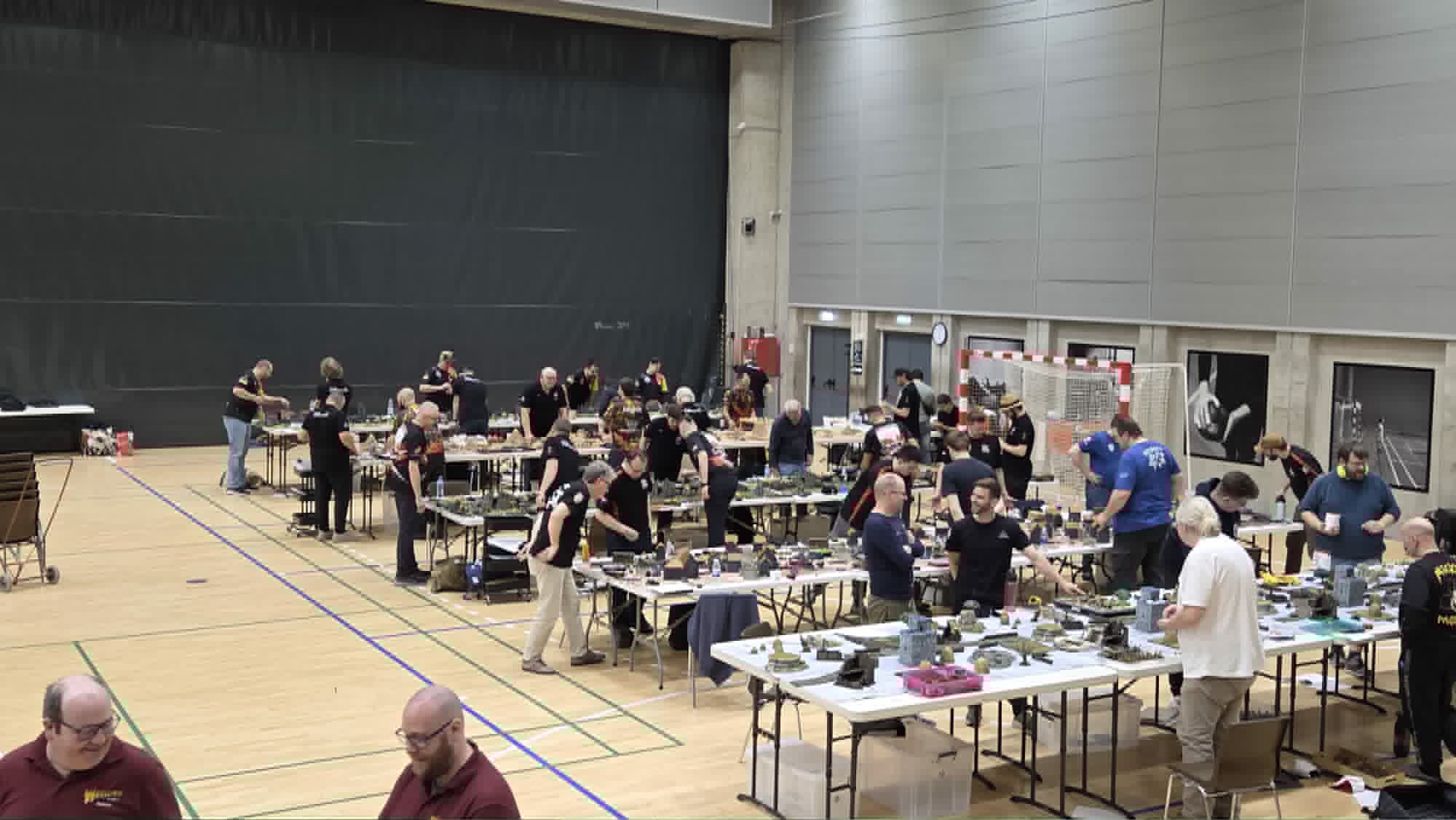
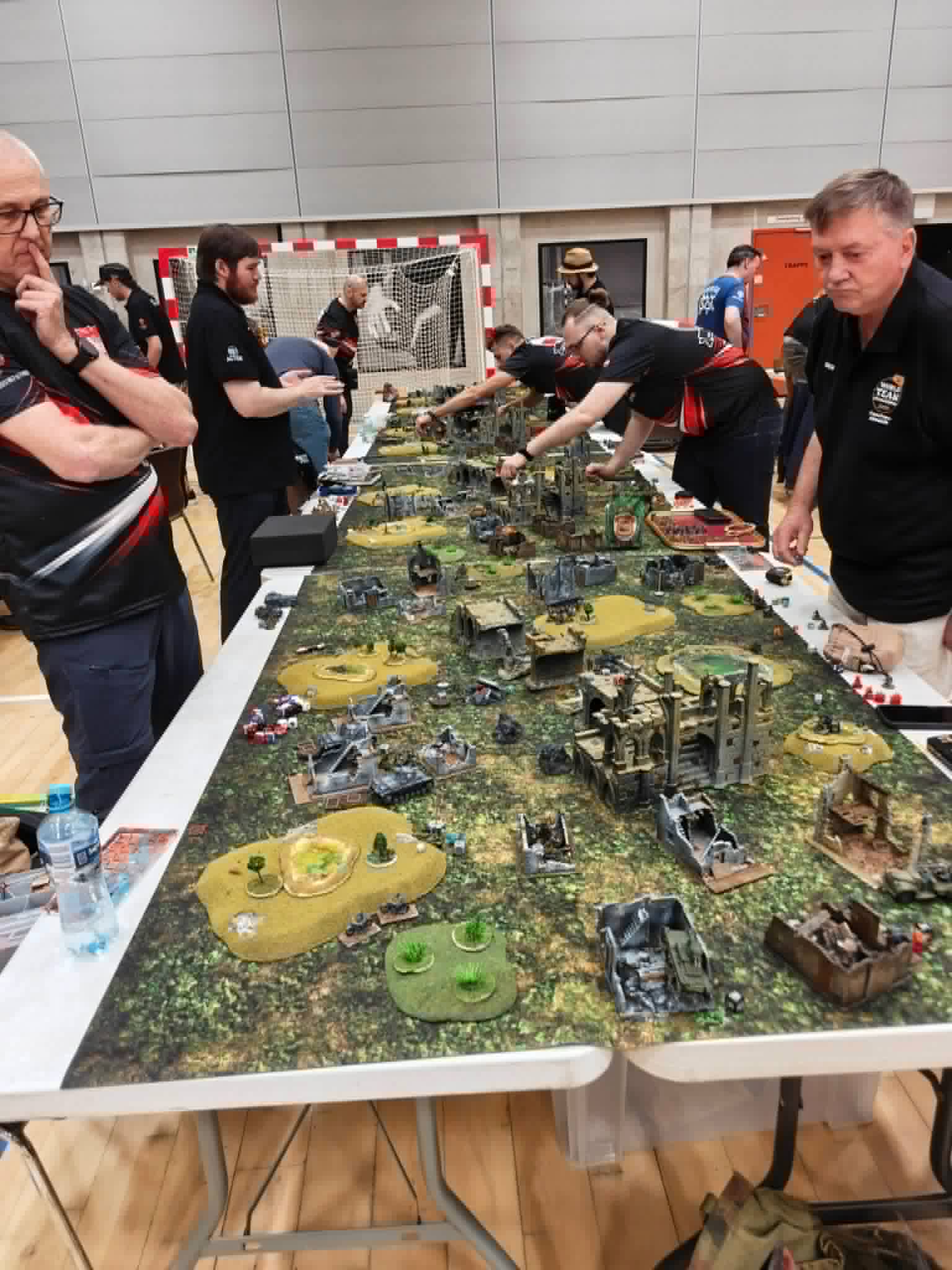
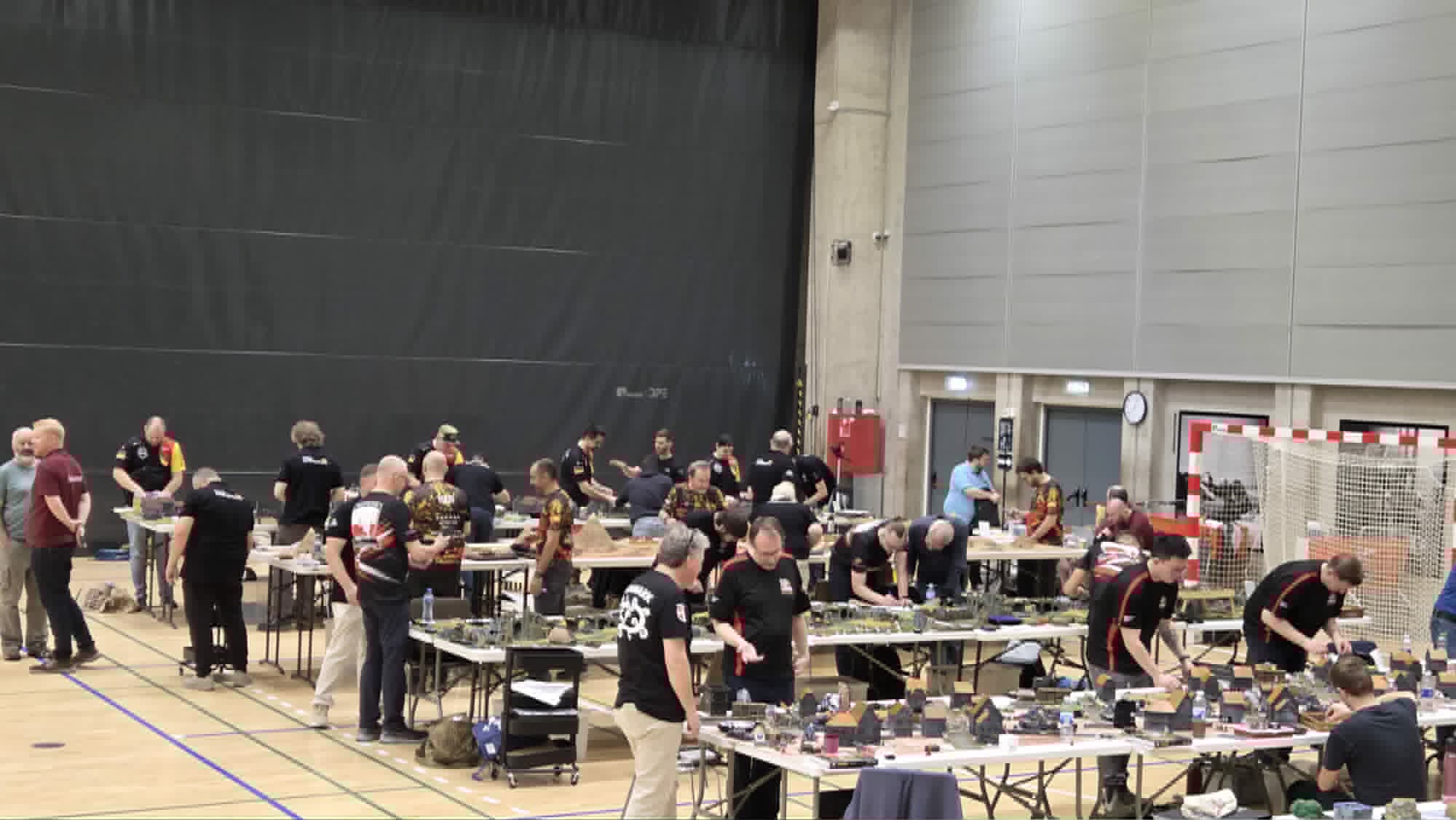
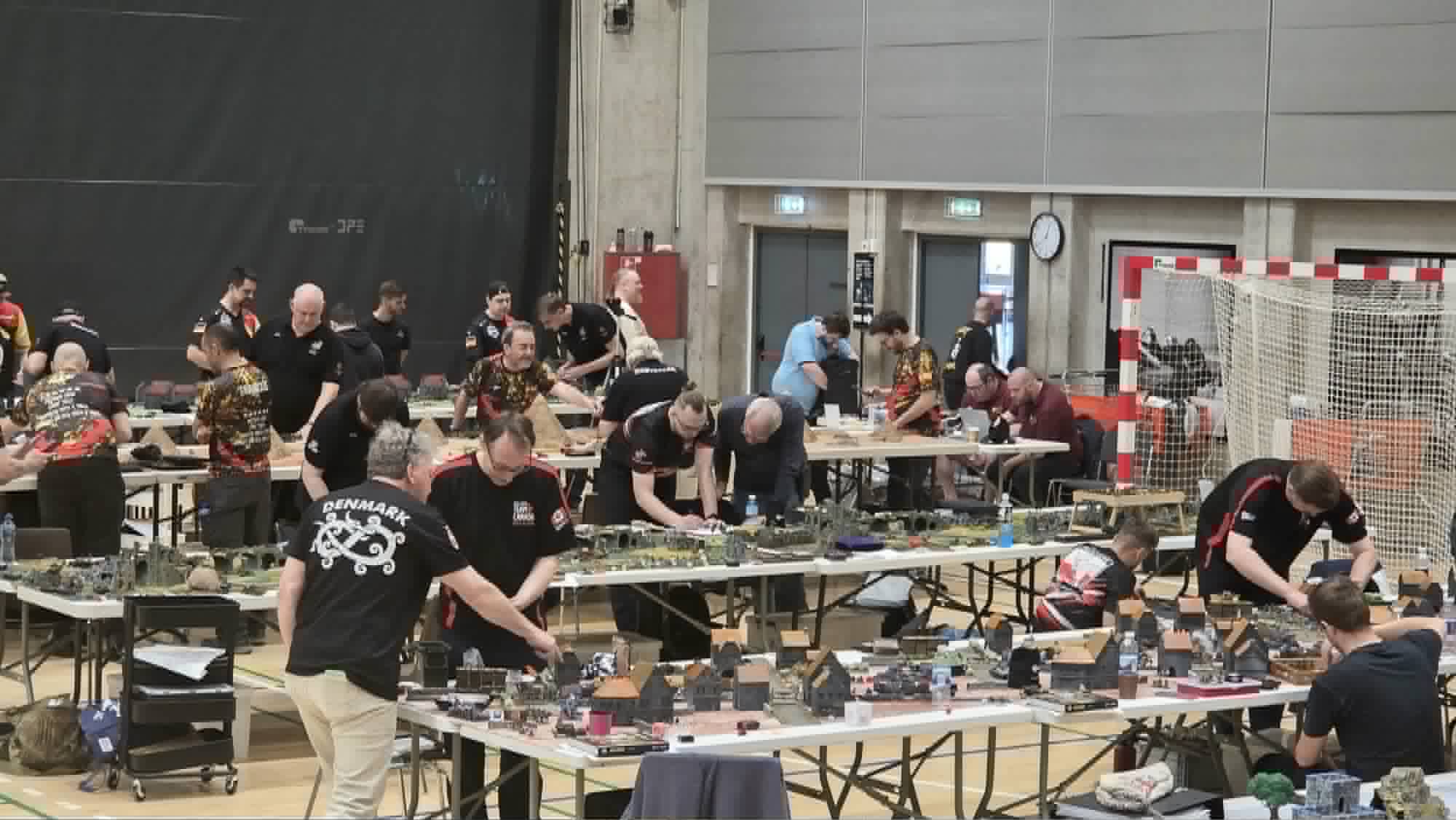
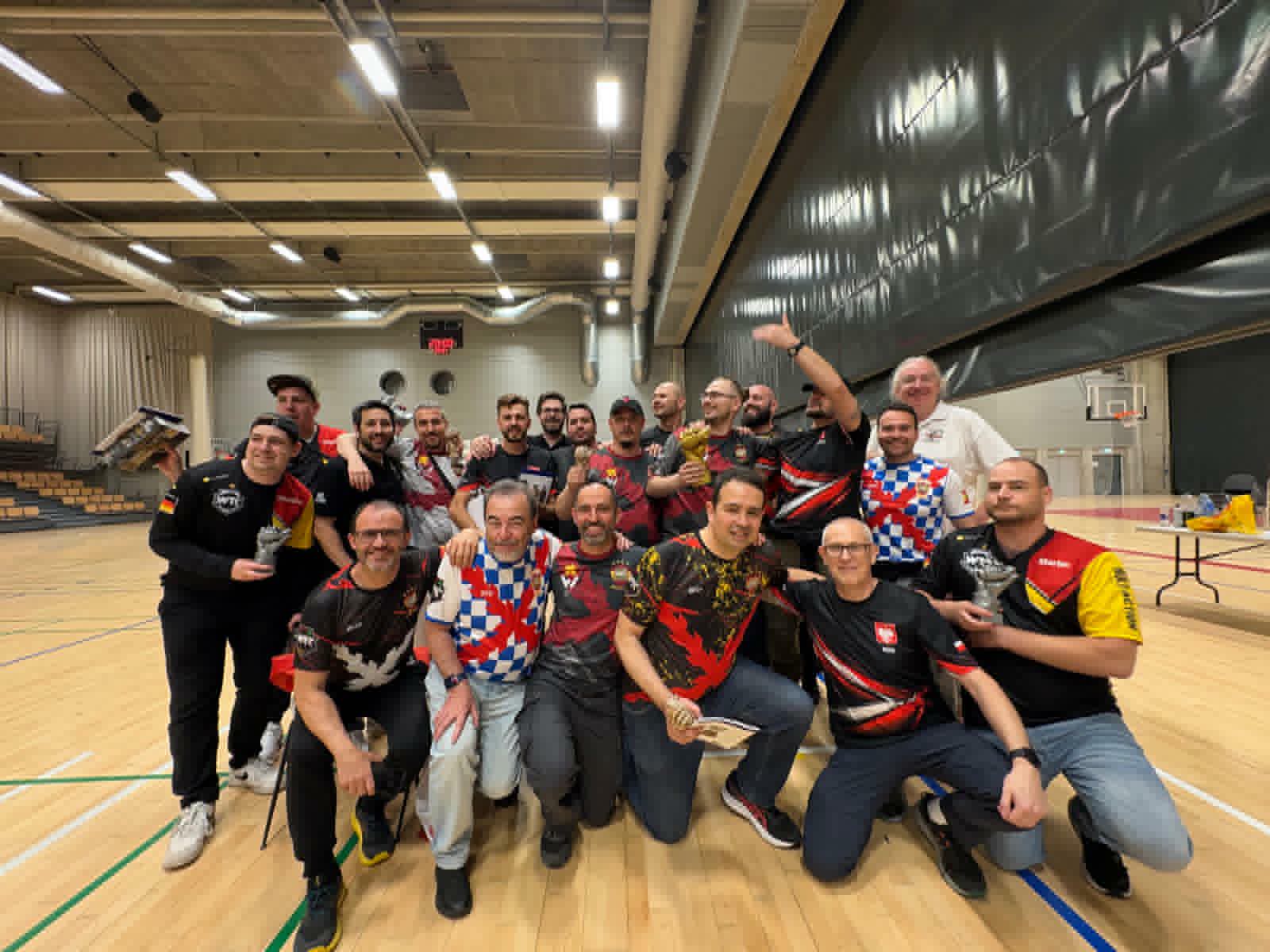
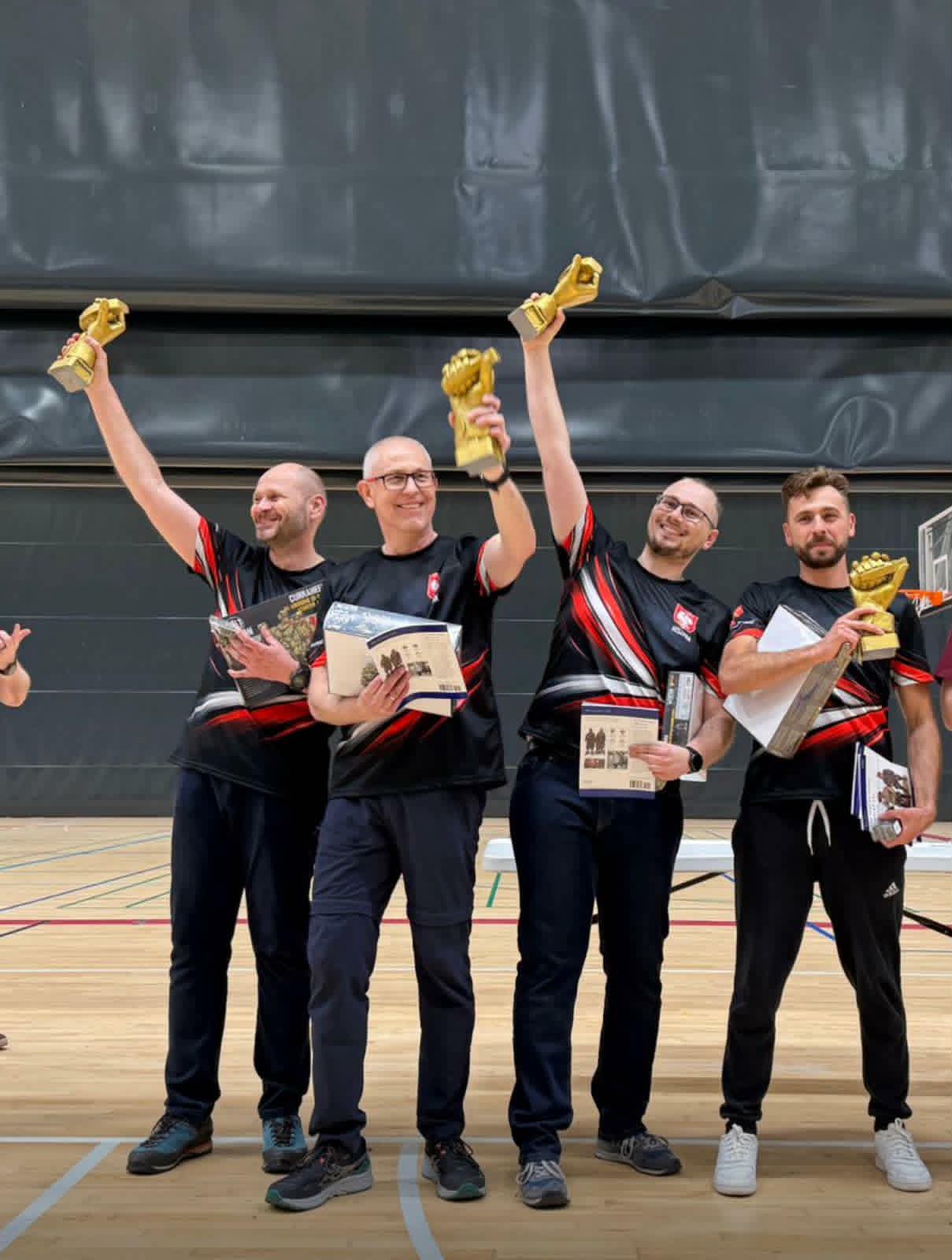
🇵🇱 Przed Wami wywiad z Jędrzejem Paluszyńskim, jednym z członków zwycięskiej, polskiej drużyny w międzynarodowych, Drużynowych Mistrzostwach Świata w Bolt Action, które odbyły się w dniach 9-10 maja w Kopenhadze. O wynikach czy rozpiskach możecie przeczytać TUTAJ. Tymczasem przejdźmy do Jędrzeja, który znalazł dla mnie parę chwil i udzielił tego zacnego wywiadu.
1. Przed Wami Mistrzowie Świata w drużynowych Mistrzostwach w Bolt Action 2026. Drużyna w skład której wchodził Jędrzej Paluszyński, Marek Zieliński oraz – no właśnie?
– W skład naszej drużyny wchodzili: Marek Zieliński, Krzysztof Zieliński, Michał Brzeźnicki i ja. 2. Jakie to uczucie zostać drużynowymi mistrzami świata w Bolt Action?
– Na pewno przyjemne. Oczywiście Bolt, to przede wszystkim hobby i należy pamiętać, że nie ma powodu do puszenia się i zadzierania nosa. Sukces jaki udało nam się odnieść motywuje do tego, aby jeszcze lepiej przygotować się do turnieju WTC w przyszłym roku.
3. Która runda była dla Was najtrudniejsza?
– Najtrudniejsze dla nas były rundy z Australią 1 i Niemcami. Niemcy we wszystkich dotychczasowych edycjach WTC byli w topie, a w ubiegłym roku zdobyli mistrzostwa. Australijczycy w zeszłym roku zadebiutowali na WTC i zaskoczyli wszystkich bardzo dobrą grą. W tym roku byli równie dobrze przygotowani. Oba te teamy to bardzo dobrzy gracze, świetnie skomponowane rozpiski.
4. W którym momencie uwierzyliście, że możecie wygrać cały turniej?
– Myślę, że dopiero przed ostatnią grą. Wcześniej skupialiśmy się na bieżącej turze. Przed parowaniem do ostatniej tury zorientowaliśmy się, że do wygrania turnieju wystarczy nam drużynowy remis. Z tego względu zagraliśmy Duńczykami bardzo zachowawczo. No i udało się.
5. Co było kluczem do zwycięstwa: rozpiski, parowania czy ogranie?
– Wszystkie te elementy miały duże znaczenie, choć kluczowe według mnie było parowanie, i tu należy podkreślić zasługi naszego kapitana, którym był Krzysztof.
6. Czy coś w mecie turnieju Was zaskoczyło? Jaki mecz był punktem zwrotnym mistrzostw?
– Raczej nie było wielkich zaskoczeń. Jak zwykle rozpiski były bardzo zróżnicowane – były i takie, które opierały się na piechocie, inne na artylerii, czy pojazdach opancerzonych Może jedynie dość spora liczba używanych hgm, których u nas raczej niewiele widuje się na stołach. Dla mnie osobiście największym zaskoczeniem była rozpiski armii holenderskiej, która okazała się bardzo mocno (choć muszę przyznać, że grający nią Australijczyk to naprawdę twardy przeciwnik). Nie dostrzegam jakiegoś punktu zwrotnego. Po wygraniu pierwszej rundy stale utrzymywaliśmy się w górnej części stawki.
7. Która drużyna zrobiła na Was największe wrażenie?
– Chyba jednak Niemcy. Jak zwykle bardzo dobrze przygotowani. Ich rozpiski są bardzo przemyślane i skomponowane pod wymogi grania zespołowego.
8.Jak wyglądała współpraca i podział ról w Waszym zespole?
– Współpraca układała się wzorowo. Przed turniejem postaraliśmy się przejrzeć rozpiski innych drużyn, wychwycić największe zagrożenia dla naszych rozpisek i zaplanować parowanie, które by te zagrożenia minimalizowały.
9. Jaka była najważniejsza decyzja podjęta w trakcie turnieju?
– Nie widzę jakiejś jednej genialnej i przełomowej decyzji. Cały turniej wymagał pełnej koncentracji nad każdą gra i każdą pojedynczą decyzją w grze.
10.Jaką jedną radę dalibyście drużynom, które chcą kiedyś wygrać ten tytuł?
– Grajcie. Grajcie tak, żeby ta gra sprawiała Wam frajdę. Pamiętajcie, że to nie walka o życie, tylko hobby. Że bez względu na to czy wygracie, przegracie, czy zremisujecie jutro tez wstanie słońce i będzie nowy dzień. Że udział w międzynarodowym turnieju to okazja, że spotkać i poznać ludzi z innych krajów. Pogadać z nimi o wspólnych pasjach, ale także o życiu. 11.Co ten sukces znaczy dla Was osobiście? I na koniec – jak będziecie świętować?
-Świętować, to już świętowaliśmy – wieczór po zakończonym WTC. Potem był czas na wspólne zwiedzanie Kopehagii (polecam, bardzo ładne miasto), a potem trzeba było wracać do domu i pracy. Co ten sukces znaczy dla nas? To na pewno nagroda za wysiłek włożony w przygotowanie do turnieju i zachęta to dalszego rozwijania tego hobby.
12. A teraz najcięższe pytanie, czy Bolt Action to gra turniejowa i dlaczego tak?
– Bolt Action to gra jak każda inna. Super nadaje się do rozgrywania klimatycznych bitew, których scenariusz oparty jest o historyczne wydarzenia z okresu II Wojny Światowej. Nic nie stoi jednak na przeszkodzie aby grać w nią na turniejach. Jak już wcześniej mówiłem takie imprezy to świetne okazje do poznania innych graczy.
🇬🇧 Before you is an interview with Jędrzej Paluszyński, one of the members of the victorious Polish team at the international Team World Championships in Bolt Action, held on 9–10 May in Copenhagen. You can read about the results and army lists HERE. In the meantime, let us turn to Jędrzej, who found a few moments for me and kindly agreed to give this fine interview.
1. Before you stand the World Champions of the 2026 Team World Championships in Bolt Action. The team included Jędrzej Paluszyński, Marek Zieliński, and — well, who exactly?
– Our team consisted of Marek Zieliński, Krzysztof Zieliński, Michał Brzeźnicki, and me.
2. What does it feel like to become team world champions in Bolt Action?
– Definitely pleasant. Of course, Bolt is first and foremost a hobby, and it is important to remember that there is no reason to get puffed up and arrogant. The success we managed to achieve motivates us to prepare even better for the WTC tournament next year.
3. Which round was the toughest for you?
– The hardest rounds for us were against Australia 1 and Germany. Germany has been at the top in every WTC edition so far, and last year they won the championship. The Australians made their WTC debut last year and surprised everyone with how well they played. This year they were just as well prepared. Both of those teams are made up of very strong players with excellently designed lists.
4. At what moment did you believe that you could win the whole tournament?
– I think only before the last game. Earlier, we were focused on the current round. Before the pairings for the last round, we realised that a team draw would be enough for us to win the tournament. Because of that, we played very cautiously against the Danes. And it worked.
5. What was the key to victory: army lists, pairings, or experience?
– All of these elements mattered a lot, although in my opinion the key factor was the pairings, and here the заслуги of our captain, Krzysztof, should be emphasised.
6. Did anything about the tournament meta surprise you? Which match was the turning point of the championship?
– There were no major surprises, really. As usual, the lists were very diverse — some were infantry-based, others focused on artillery or armoured vehicles. Perhaps the only thing that stood out was the fairly large number of HMGs being used, which we do not really see that often on our tables. Personally, the biggest surprise for me was the Dutch army list, which turned out to be very strong (although I have to admit that the Australian player using it was a really tough opponent). I do not see any single turning point. After winning the first round, we stayed near the top of the standings the whole time.
7. Which team impressed you the most?
– Probably Germany. As usual, they were extremely well prepared. Their lists are very carefully thought out and designed specifically for team play.
8. What did the cooperation and division of roles look like within your team?
– The cooperation worked perfectly. Before the tournament, we tried to go through the lists of the other teams, identify the biggest threats to our own lists, and plan pairings that would minimise those threats.
9. What was the most important decision made during the tournament?
– I do not see any one brilliant or breakthrough decision. The whole tournament required full concentration on every single game and every single decision made during it.
10. What one piece of advice would you give to teams who want to win this title one day?
– Play. Play in a way that makes the game enjoyable for you. Remember that this is not a fight for your life, just a hobby. No matter whether you win, lose, or draw, the sun will still rise tomorrow and it will be a new day. Taking part in an international tournament is an opportunity to meet and get to know people from other countries. To talk with them about shared passions, but also about life.
11. What does this success mean to you personally? And finally – how are you going to celebrate?
– We have already celebrated – on the evening after the WTC ended. After that, there was time for some sightseeing in Copenhagen (I recommend it, it is a very beautiful city), and then it was time to go back home and back to work. What does this success mean to us? It is certainly a reward for the effort put into preparing for the tournament, and an encouragement to keep developing this hobby further.
12. And now the hardest question – is Bolt Action a tournament game, and why?
– Bolt Action is a game like any other. It is great for playing atmospheric battles based on historical events from the Second World War. But there is nothing stopping people from playing it in tournaments as well. As I said before, such events are a great opportunity to meet other players.
 ?
?





 tancreddebeauville