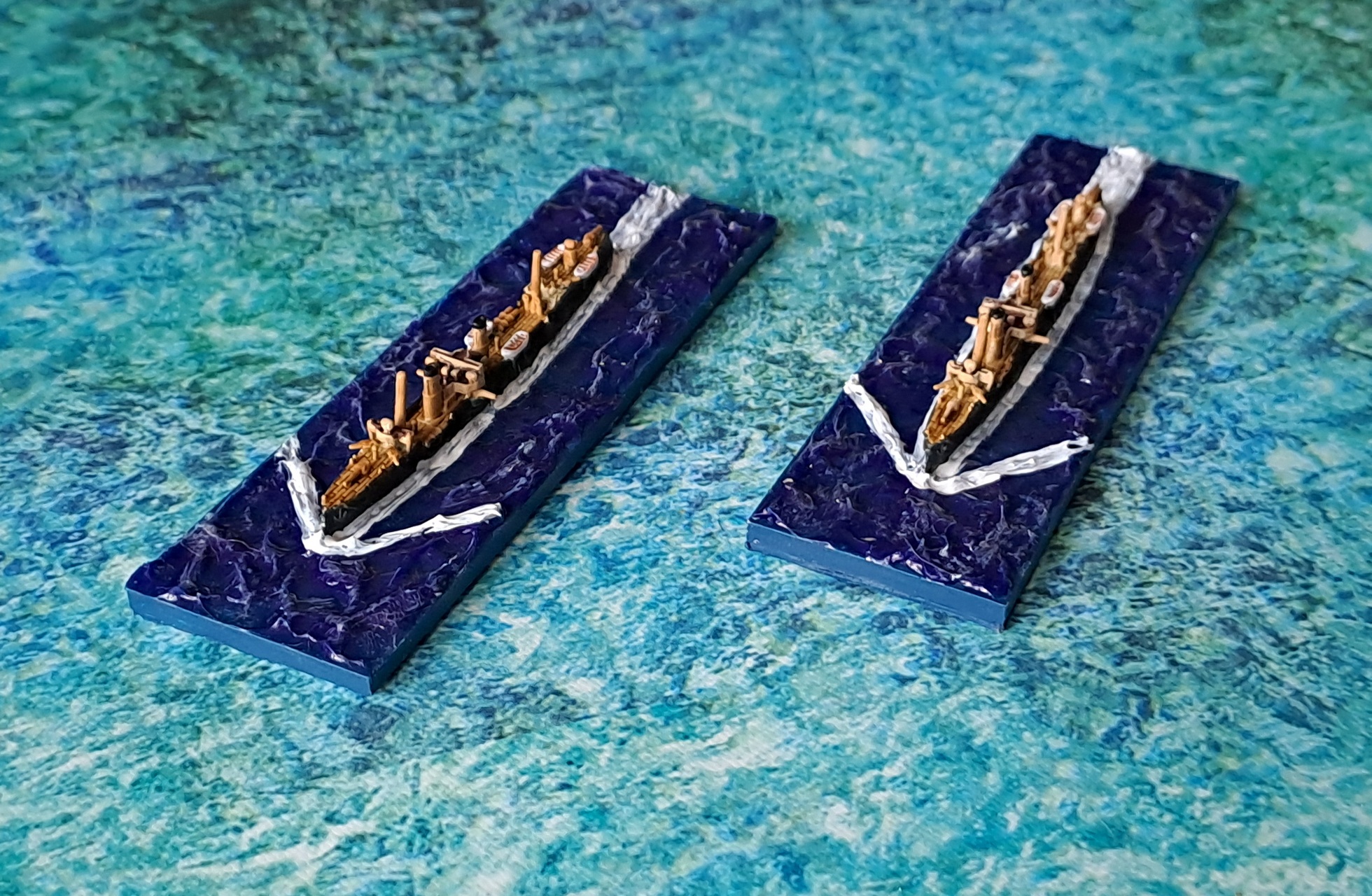
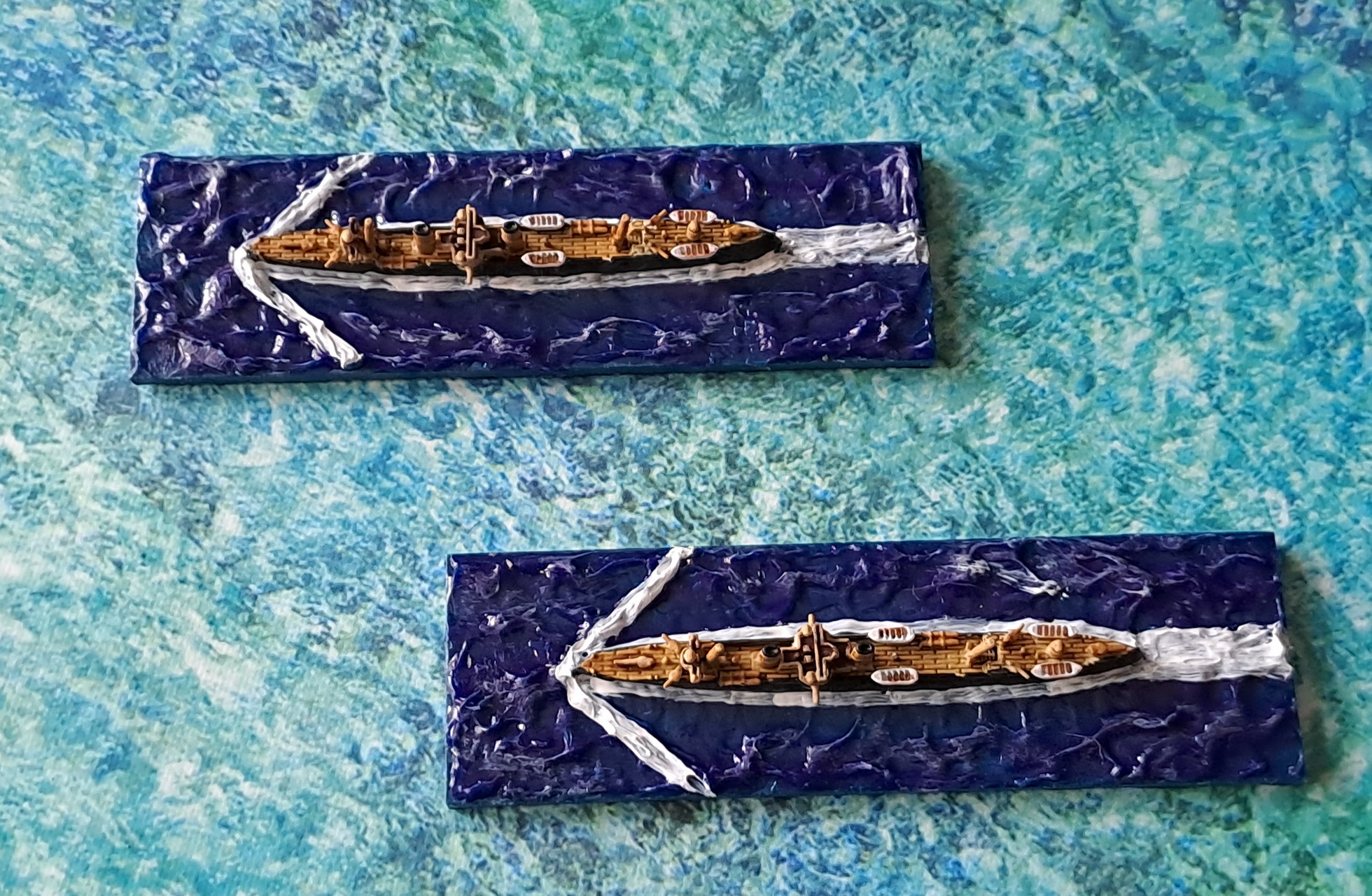
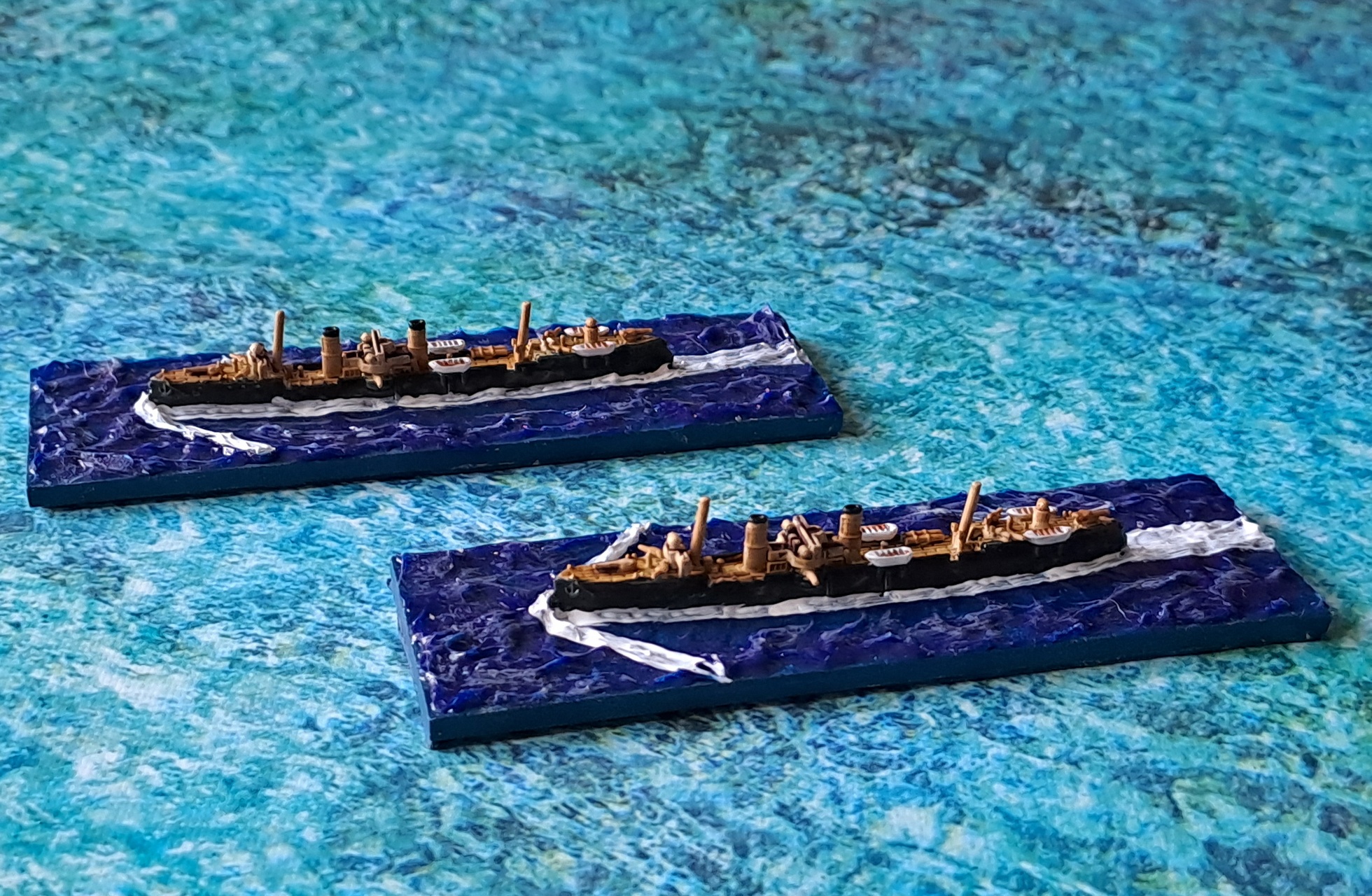
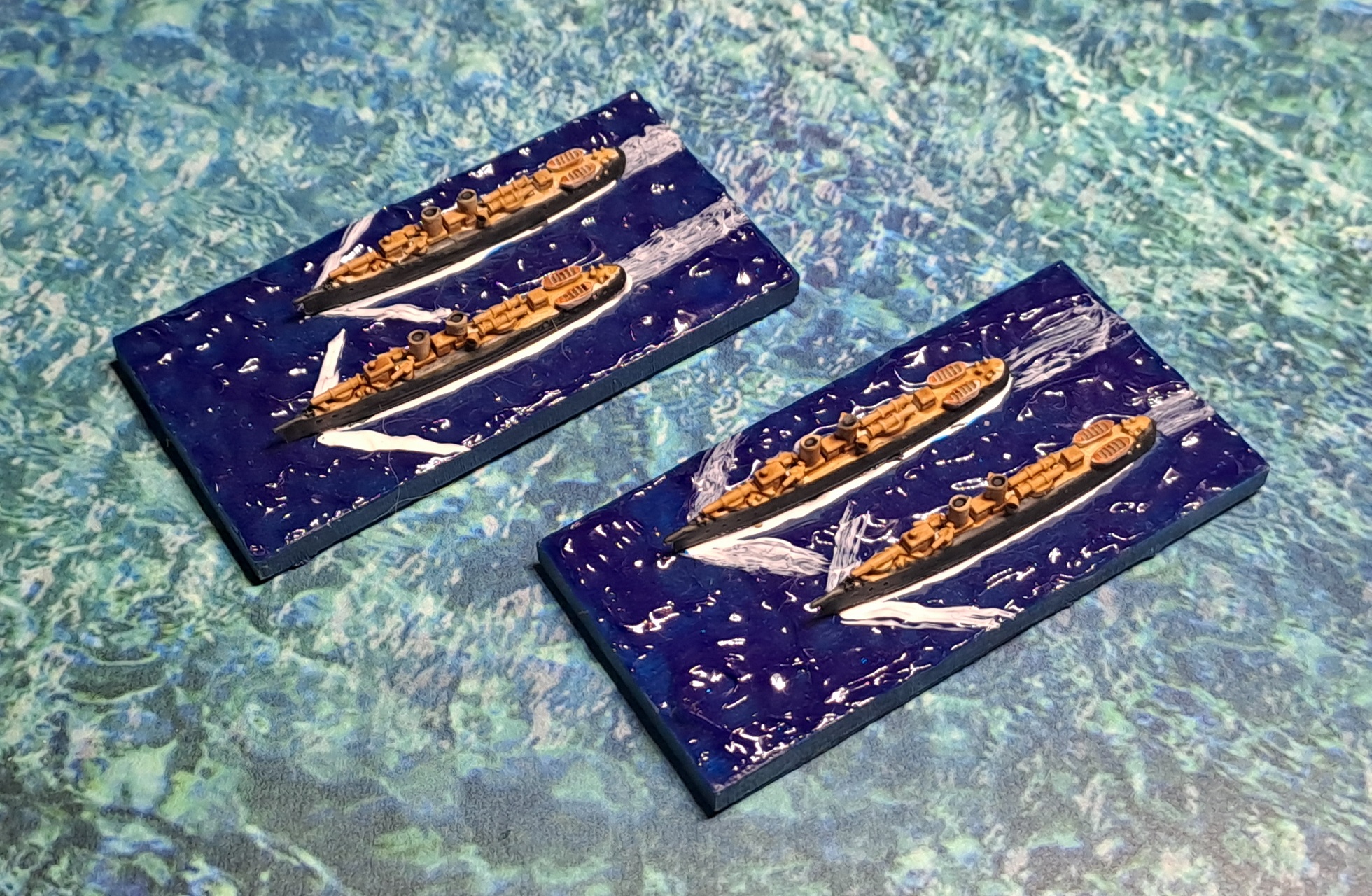
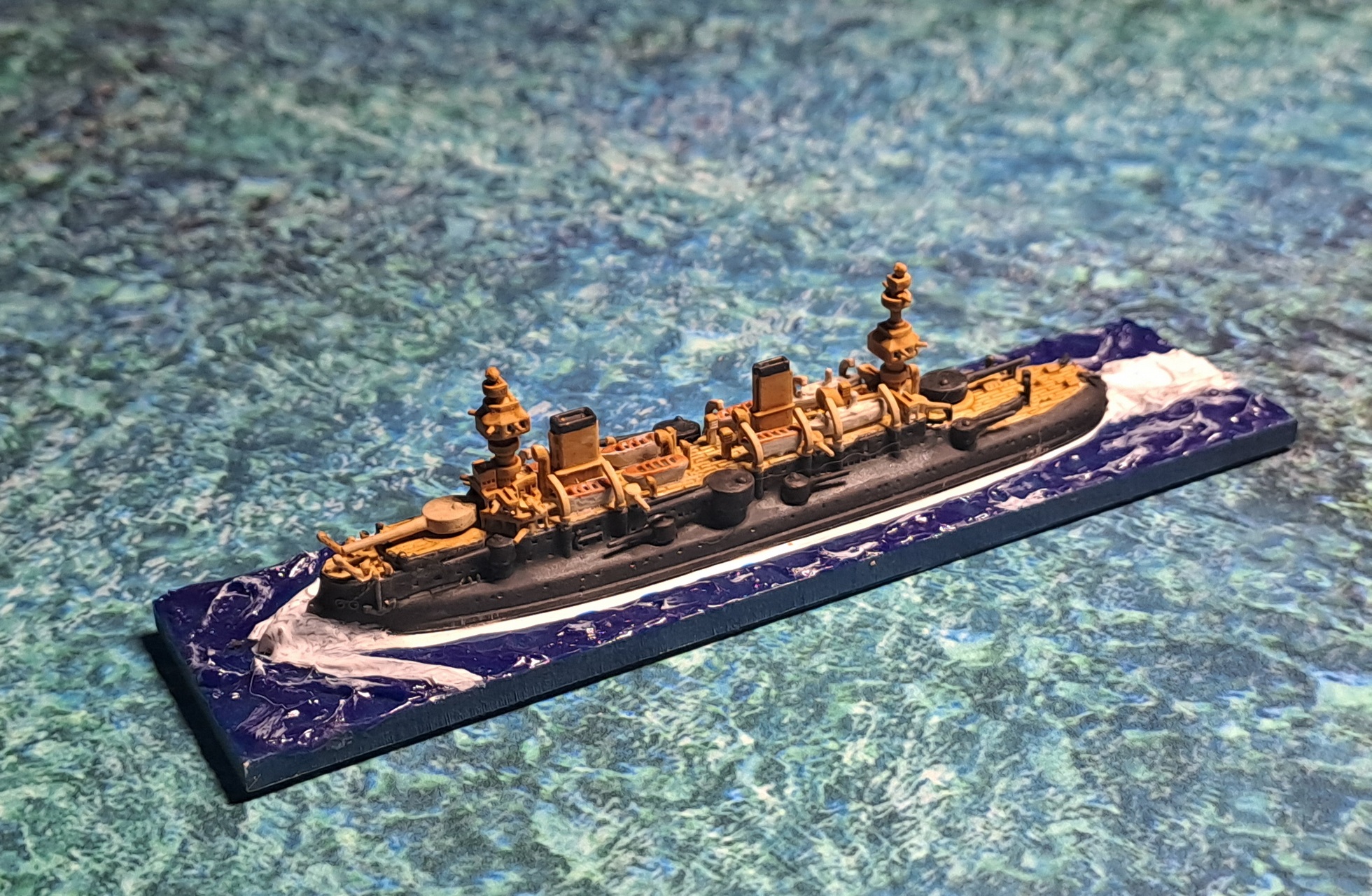
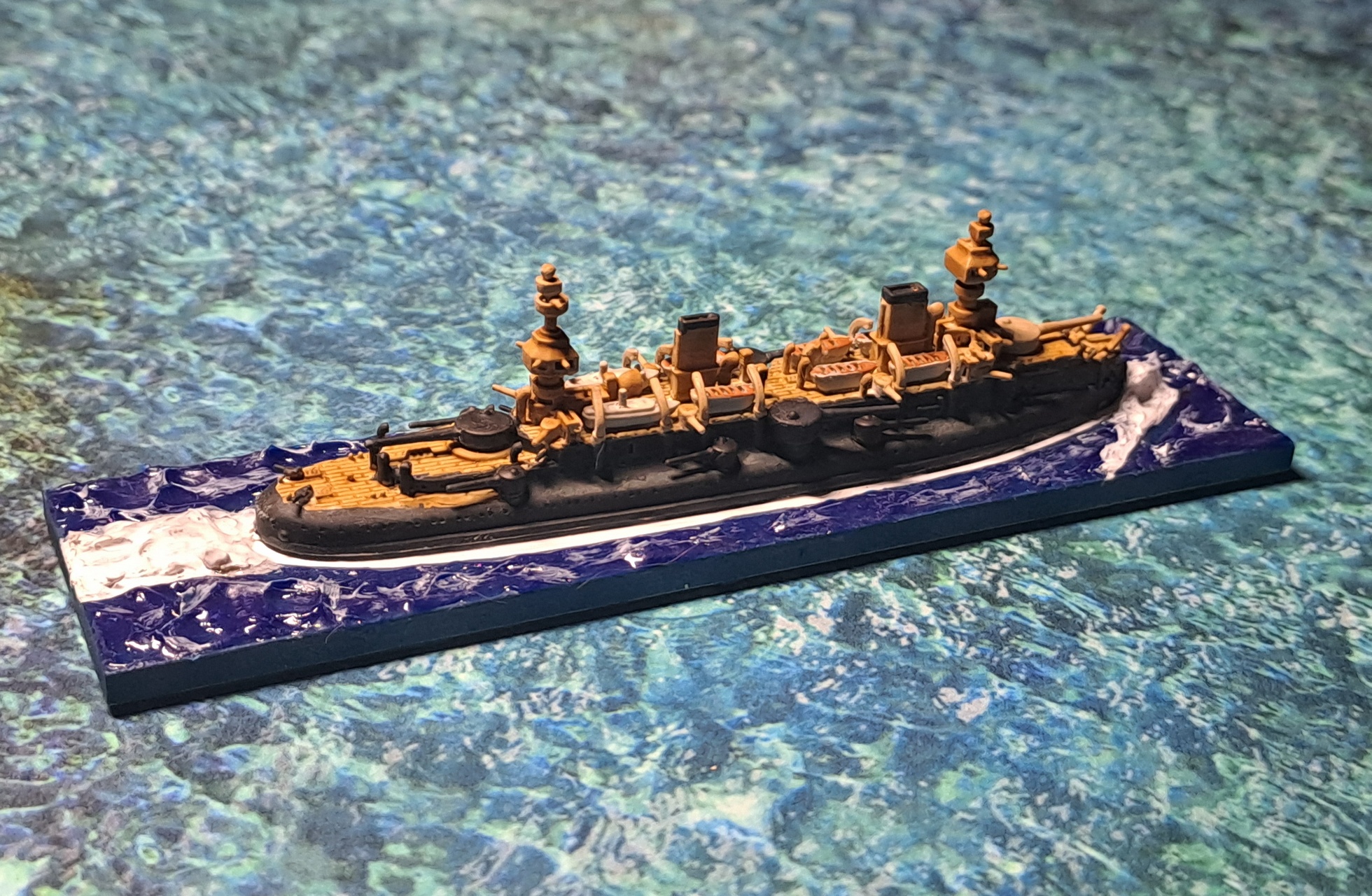
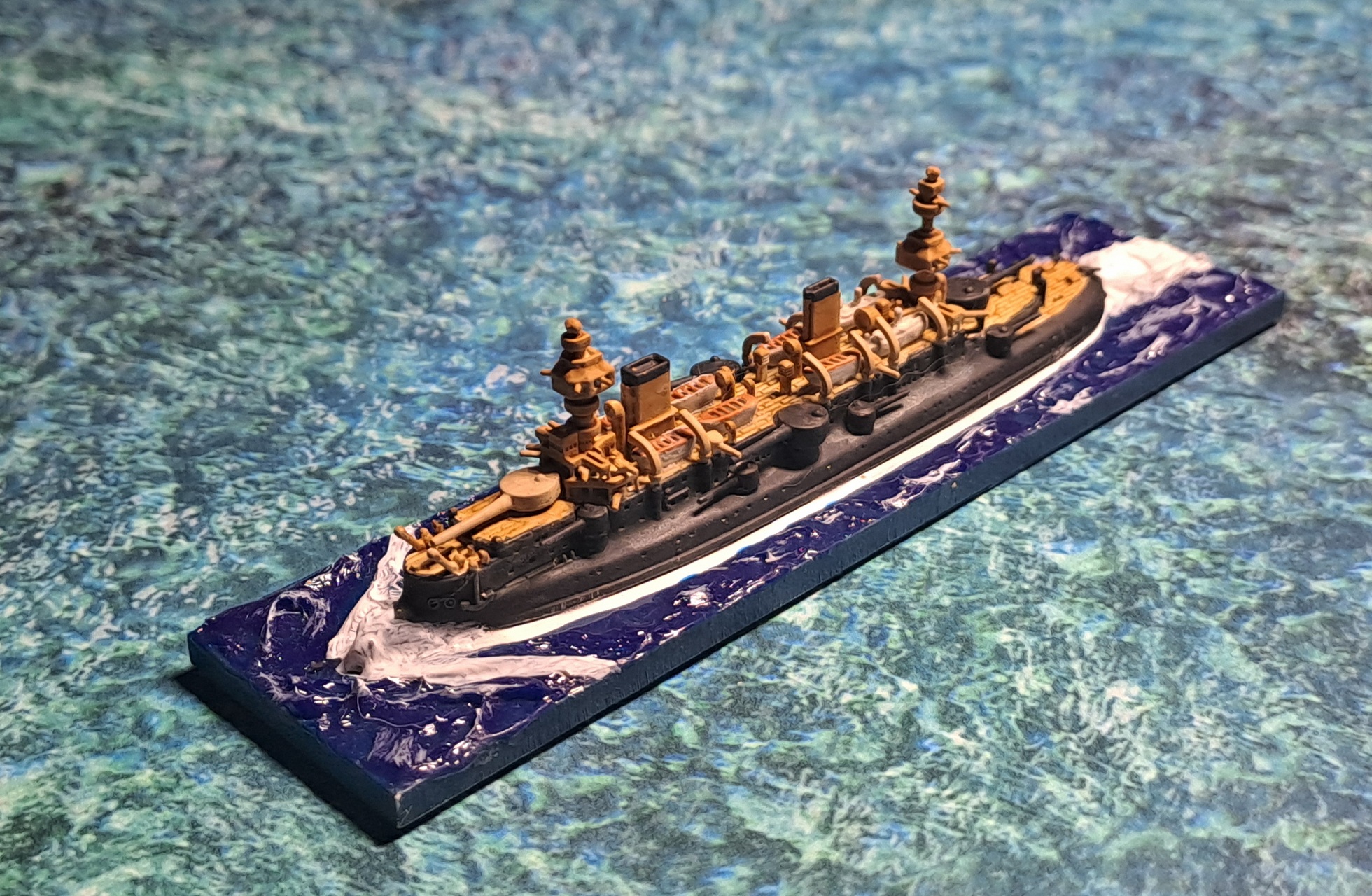
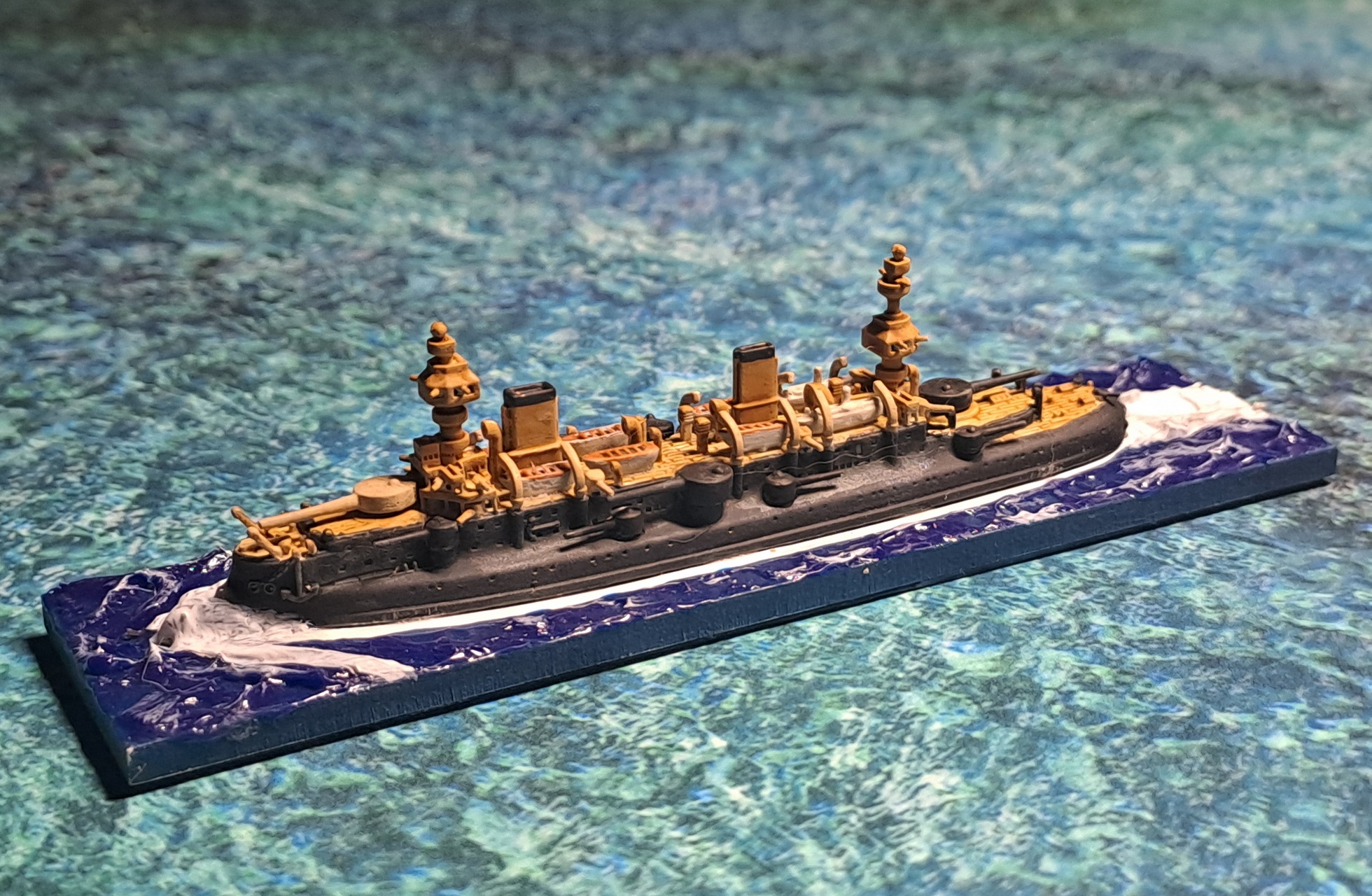
🇬🇧 Recently, along with Gloire and Liberté, I also painted two smaller vessels — D’Iberville-class torpedo cruisers. ⚓
Cornholio’s Marine Nationale squadron has been significantly reinforced, and I still have a second Gloire to finish — the one I got with the vouchers I won at Bolter. 🇫🇷🌊
The D’Iberville-class torpedo cruisers were built in the first half of the 1890s. The first vessel of the series was named in honour of the explorer Pierre Le Moyne d’Iberville. They displaced around 950 tons and measured 80 metres in length. Designed for speed and agility, they were powered by triple-expansion steam engines enabling a top speed of 21 knots, making them one of the fastest vessels of the French Navy at the time.
Her armament as a lead ship of the class consisted of one 100 mm (3.9 in) guns, three 65 (3 pounder) guns, seven 47 mm (1.9 in) guns, and six 450 mm (17,7 in) torpedo tubes. This combination allowed D’Iberville to engage both enemy large vessels and torpedo boats, while her speed enabled rapid reconnaissance and raiding missions.
D’Iberville’s service was largely in the Mediterranean and along the French Atlantic coast. She participated in numerous naval exercises and maneuvers, helping refine tactics for torpedo cruisers. Her design and performance influenced subsequent classes of French light ships.
In the game, D’Iberville represents a fast, lightly armoured vessel capable of devastating torpedo attacks, and protecting larger ships from small, aggressive enemy vessels.
* – description of the D`Ibervilleclass by GMBoardgames.
🇵🇱 W ostatnim czasie wraz z Glorią i Libertii pomalowałem również dwie mniejsze jednostki – krążowniki torpedowe D`Iberville. ⚓ Eskadra Marine Nationale w służbie Cornholio została solidnie wzmocniona, przede mną jeszcze do dokończenia druga Gloire, którą wziąłem za wygrane w Bolterze bony. 🇫🇷🌊
Oczywiście to dopiero początek — w przyszłości na pewno zostanie wzmocniona kolejnymi jednostkami.
Krążowniki torpedowe typu D’Iberville zostały zbudowane w pierwszej połowie lat 90. XIX wieku. Pierwszy okręt serii otrzymał imię na cześć odkrywcy Pierre’a Le Moyne d’Iberville. Okręty te miały wyporność około 950 ton i długość 80 metrów. Zaprojektowano je z myślą o szybkości i zwrotności – maszyny parowe potrójnego rozprężania pozwalały osiągać 21 węzłów, co czyniło je jednymi z najszybszych jednostek francuskiej marynarki w tym czasie.
Uzbrojenie okrętu wiodącego obejmowało jedno działo kal. 100 mm, trzy działa kal. 65 mm, siedem dział kal. 47 mm oraz sześć wyrzutni torped kal. 450 mm. Takie połączenie uzbrojenia pozwalało D’Iberville atakować zarówno duże okręty, jak i torpedowce, a prędkość umożliwiała szybkie rozpoznanie i działania rajderskie.
D’Iberville służył głównie na Morzu Śródziemnym i wzdłuż wybrzeży Atlantyku. Brał udział w licznych ćwiczeniach i manewrach marynarki, przyczyniając się do rozwoju taktyki krążowników torpedowych. Jego projekt i osiągi miały wpływ na kolejne klasy francuskich lekkich okrętów.
W grze D’Iberville reprezentuje szybki, lekko opancerzony okręt, zdolny do niszczących ataków torpedowych oraz ochrony większych jednostek przed małymi, agresywnymi okrętami przeciwnika.
🇬🇧 Summary: For a fourth-class ship, it is quite a large model – and there are two in the box, each with its own base. – The ship has better armour than most units of this class in the game. It also has six torpedoes – the same number as, for example, the Russian Bujny class. Apart from torpedoes, it has a medium-calibre gun on the bow and a small number of light guns on both broadsides and at the stern. It is slower than most torpedo boats — after all, it is still a torpedo cruiser. A huge advantage is the ram. – I think that its cost of 80 points means it will appear in more than one Marine Nationale squadron.
🇵🇱 Podsumowanie: – Jak na czwartą klasę jest to całkiem spory model – a w pudełku są dwa, każdy ma swoją podstawkę. – Okręt dysponuje lepszym pancerzem od większości występujących w grze jednostek tej klasy, poza tym posiada sześć torped – tyle co np. rosyjska klasa Bujny. Poza torpedami posiada armatę średniego kalibru na dziobie oraz nieliczną lekką artylerię na obu burtach i na rufie. Jest wolniejszy od większości torpedowców – mimo wszystko jest to krążownik torpedowy. Olbrzymią zaletą jest taran. – Wydaje mi się, że koszt 80 punktów sprawi, że będzie się pojawiał w niejednej eskadrze Marine Nationale.
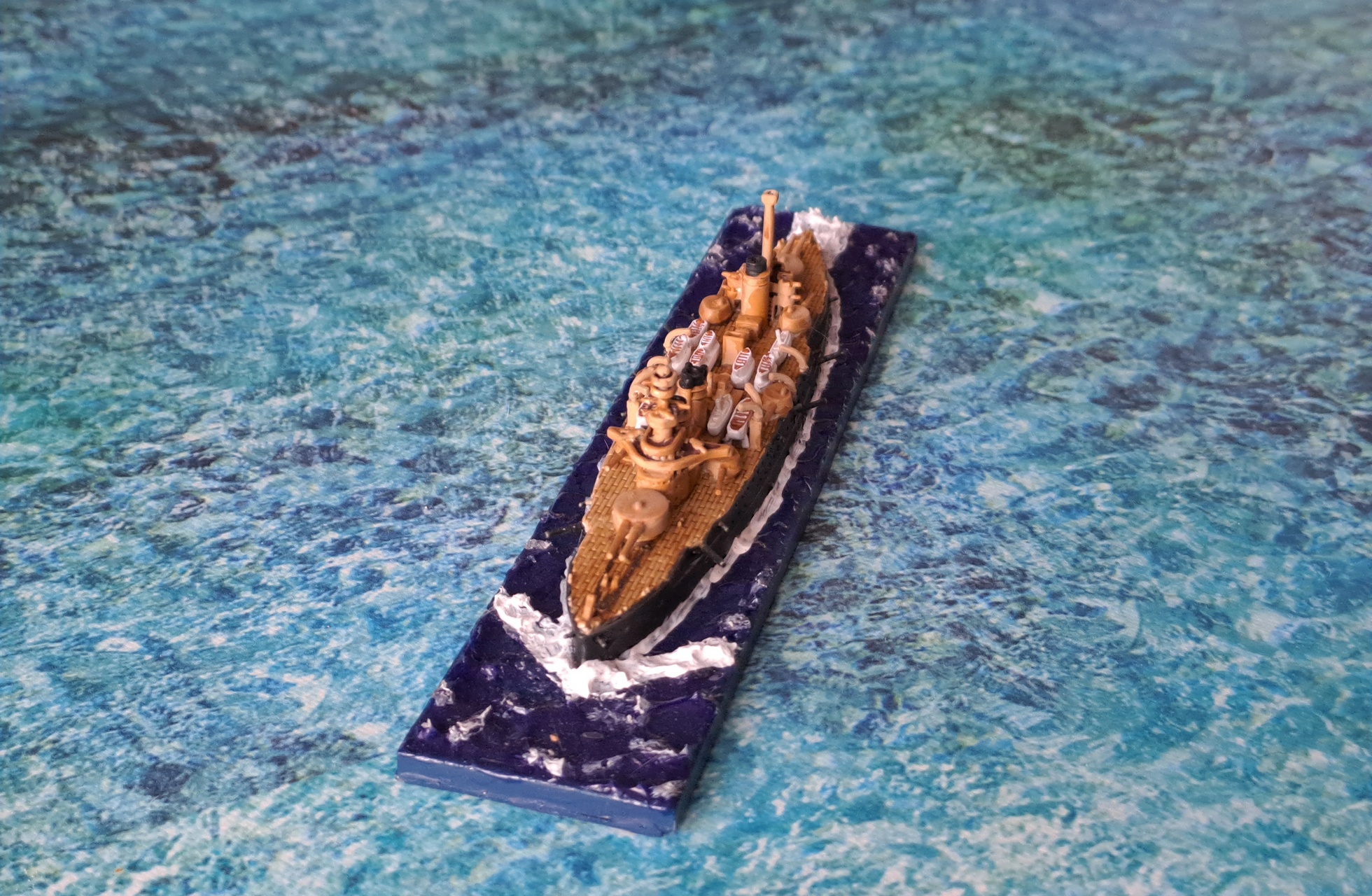
🇬🇧 Recently, I managed to launch the battleship Liberté — although this kit can also be used to build the battleship République. ⚓
With her launch, Cornholio has gained another battleship with a fighting chance against King Edward or the Martians. 🇫🇷🌊
The République-class consisted of two pre-dreadnought battleships built for the French Navy in the early 1900s. Their construction was a clear signal of France’s departure from the Jeune École concept and from building small battleships displacing no more than 12,000 tons. République and Patrie displaced 14,870 tons and measured 135 metres long, with a beam of 24.25 metres and a draught of 8.2 metres. Powered by three triple-expansion steam engines and 24 Niclausse boilers, they could reach 19 knots and carried a crew of around 750.
Their main armament included four 305 mm (12 in) guns in two twin turrets, supported by eighteen 164 mm (6.5 in) guns, twelve 65 mm (2,6 in) guns, and six 47 mm guns for close defence. Armour protection reached 280 mm on the belt and 360 mm on turrets.
After their launch, they became the most powerful French battleships. Already during construction, it was noticed that other navies were introducing a higher calibre of secondary artillery, but the work on the first two vessels was too far advanced; therefore, heavier guns were only introduced with the Liberté class.
République-class ships are powerful pre-dreadnoughts with strong armament and very good armour, able to withstand heavy fire while commanding the battle line.
* – description of the Libertéi République by GMBoardgames.
🇵🇱 W ostatnich czasie udało mi się zwodować pancernik Liberté– chociaż z tego zestawu można złożyć również pancernik République. ⚓
Wraz z jego wodowaniem Cornholio doczekał się kolejnego pancernika mającego szanse z Królem Edwardem czy Marsjanami. 🇫🇷🌊
Oczywiście to dopiero początek — w przyszłości na pewno zostanie wzmocniona kolejnymi jednostkami.
Typ République obejmował dwa pancerniki przeddrednoty zbudowane dla francuskiej marynarki na początku XX wieku. Ich konstrukcja była wyraźnym sygnałem odejścia Francji od koncepcji „Jeune École” i od budowy mniejszych pancerników o wyporności nieprzekraczającej 12 000 ton. République i Patrie miały wyporność 14 870 ton, długość 135 metrów, szerokość 24,25 metra i zanurzenie 8,2 metra. Trzy maszyny potrójnego rozprężania i 24 kotły Niclausse pozwalały osiągnąć 19 węzłów. Załoga liczyła około 750 ludzi.
Główne uzbrojenie obejmowało cztery działa kal. 305 mm w dwóch wieżach podwójnych, wspierane przez osiemnaście dział kal. 164 mm, dwanaście dział kal. 65 mm i sześć dział kal. 47 mm do obrony bliskiej. Opancerzenie sięgało 280 mm na pasie burtowym i 360 mm na wieżach artylerii głównej.
Po wodowaniu stały się najpotężniejszymi francuskimi pancernikami. Już w trakcie ich budowy zauważono, że marynarki innych państw wprowadzają silniejsze działa artylerii średniej, jednak prace nad pierwszymi dwoma okrętami były zbyt zaawansowane, aby wprowadzać zmiany – dlatego dopiero w typie Liberté zastosowano cięższe działa.
Pancerniki typu République to potężne przeddrednoty o silnym uzbrojeniu i bardzo dobrym opancerzeniu, zdolne wytrzymać silny ostrzał i przewodzić linii bojowej.
🇬🇧 Summary: – This kit gives you the option to build one of two battleships: Liberté or République. – The assembly itself requires a bit of patience, as the kit includes boats and the cranes used to lower them into the water. The model itself is pleasant to put together – in my case, I decided to build Liberté. – So, what are the differences between Liberté and République? Apart from a cosmetic difference in the amount of light artillery -one gun fewer per broadside on République – the biggest difference concerns the medium artillery. République has a total of nine medium guns per broadside with a range of 30″, while Liberté has only five on each broadside, but with a range of 38″ and much better penetration. – Since I have told you about the differences, it is time to discuss this class of ship. Liberté/République are characterised by very good armour and good speed for ships of this class. Their light artillery is not as numerous as on Russian ships, while their heavy artillery has a slightly shorter range than, for example, the heavy guns of Borodino or Tsesarevich, but offers greater penetration. The ship also has a ram, which can sometimes come in handy 😉 . – These ships are worth their cost: 865 points for Liberté and 870 points for République.
🇵🇱 Podsumowanie: – Ten zestaw oferuje możliwość sklejenia jednego z dwóch pancerników czyli: Libertélub République. – Samo sklejanie wymaga odrobiny cierpliwości, ponieważ zawiera łodzie oraz żurawie do ich spuszczania na wodę, sam model jest przyjemny w montażu – u mnie padło na złożenie Liberté. – Czym się więc różnią od siebie Libertéi République? Poza kosmetyczną różnicą w ilości lekkiej artylerii – jedno działo mniej na burtę u République największa różnica dotyczy średniej artylerii – République ma łącznie dziewięć średnich dział na burtę o zasięgu 30″, Liberté ma ich tylko pięć na każdą burtę, ale za to o zasięgu 38″ i o wiele lepszym przebiciu. – Skoro opowiedziałem Wam o różnicach, to pora omówić te klasy okrętu – Liberté/République cechują się bardzo dobrym pancerzem i dobrą prędkością jak na okręt tej klasy. Lekka artyleria nie jest tak liczna jak w przypadku okrętów rosyjskich, za to ciężka artyleria ma nieco mniejszy zasięg od np. ciężkich dział Borodino czy Cesarewicza, za to większą siłę przebicia. Okręt ma również taran, który czasem się przydaje 😉 . – Okręty są warte swojej ceny i kosztują 865 dla Libertéi 870 dla République.
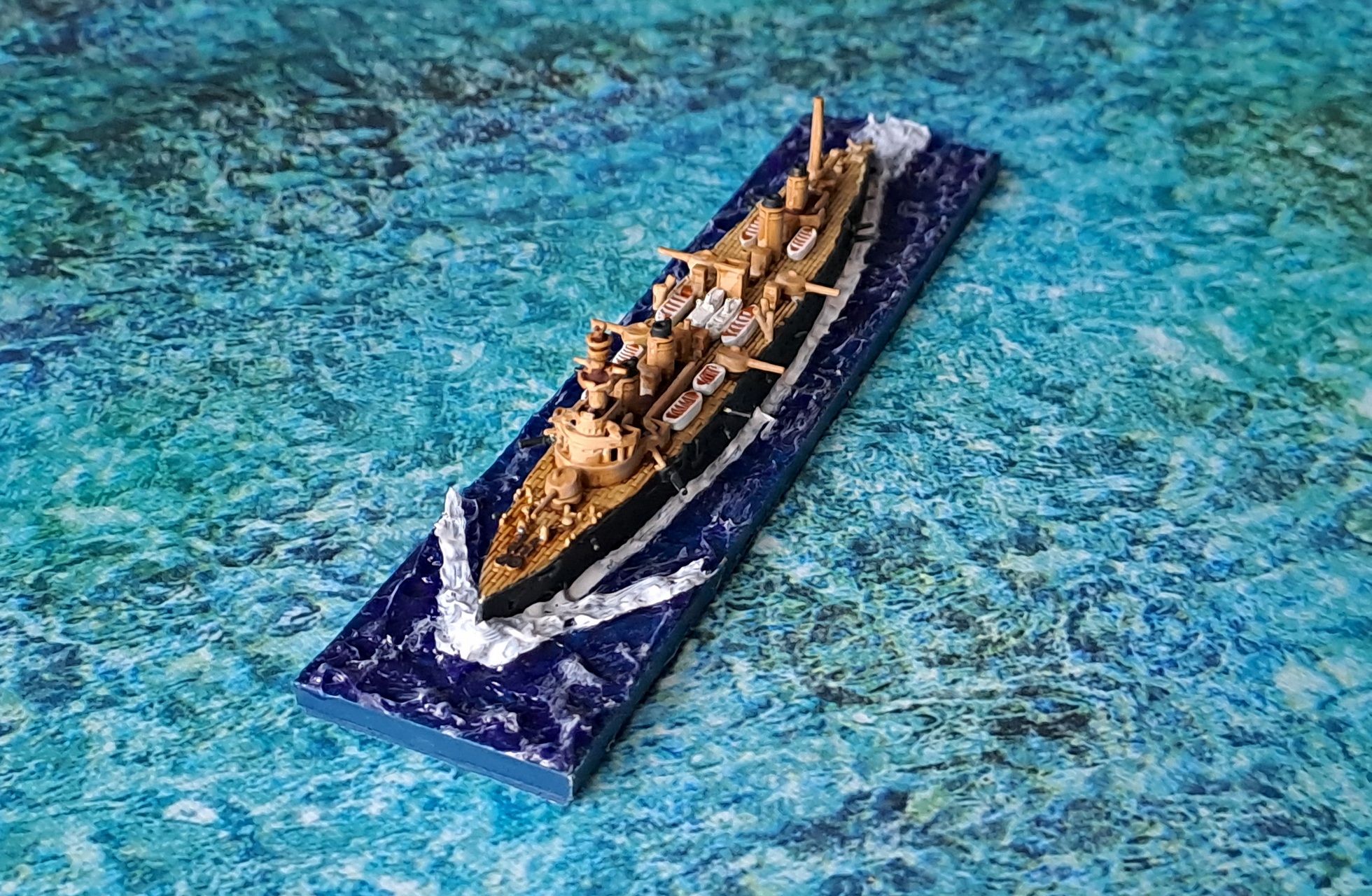
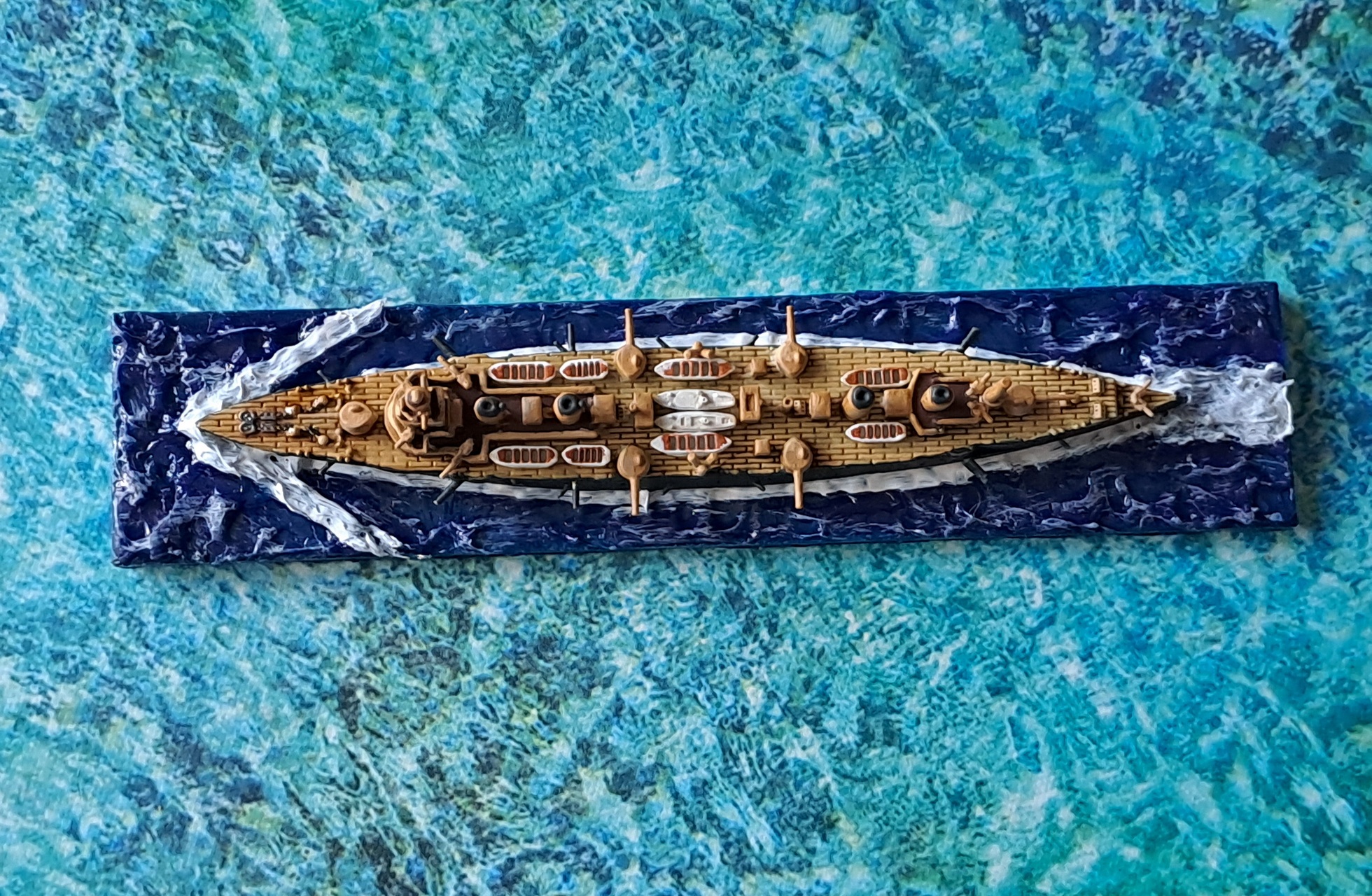
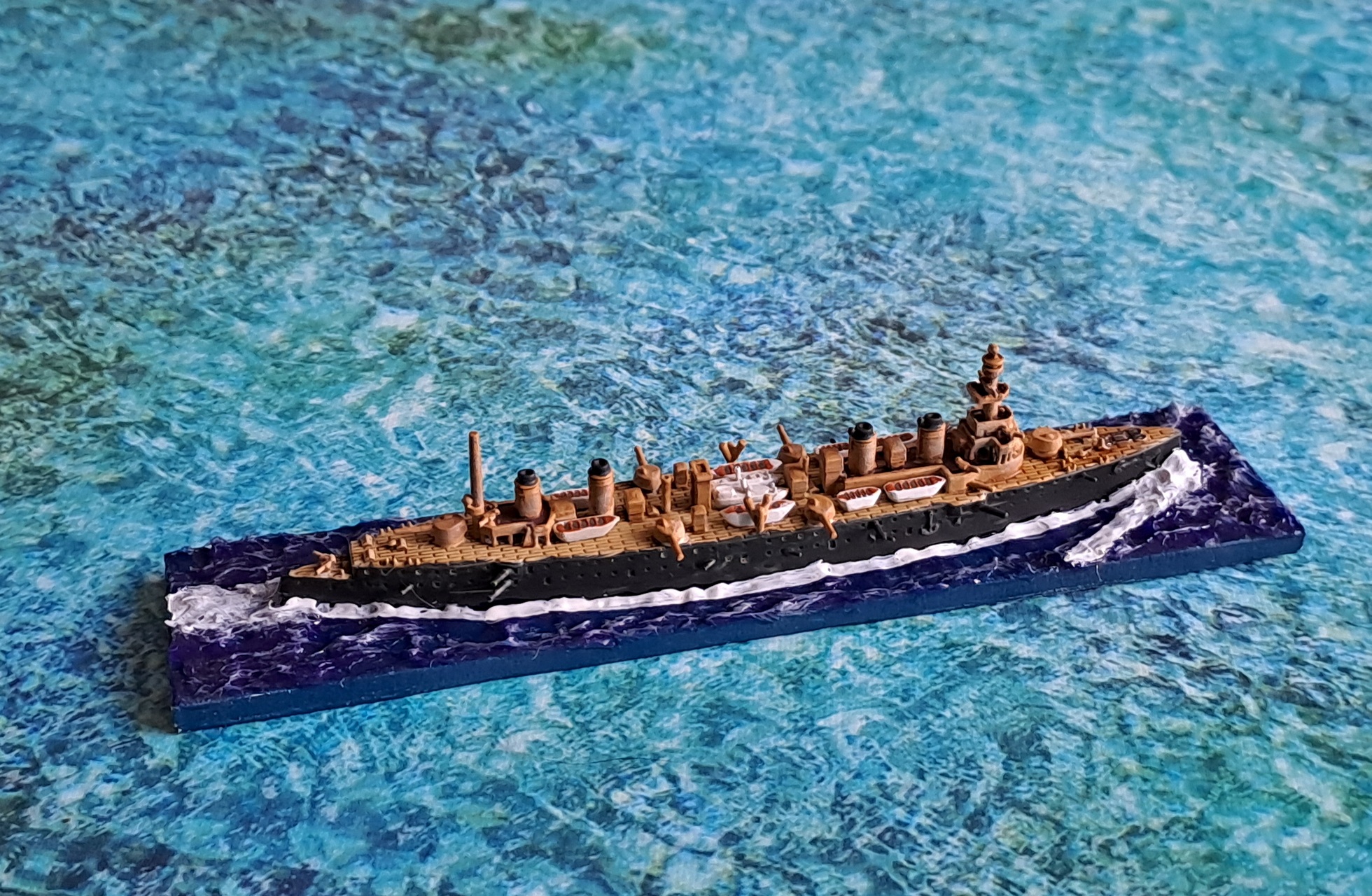
🇬🇧 Some time ago, I managed to finish a French Gloire-class cruiser. ⚓ This ship has already joined the rest of Cornholio’s squadron. 🇫🇷🌊
At the end of the 19th century, various factions within the French Navy had differing visions of the role armoured cruisers were meant to play. The Gloire class was created as a compromise: it was concluded that a sufficiently large armoured cruiser could serve both as a raider and as a ship capable of accompanying the fleet. With a displacement of almost 10,000 tons, it could reach a speed of 21 knots and was armed with two 194 mm guns, eight 164.7 mm guns mounted in turrets and casemates, six 100 mm guns, as well as 22 light guns and five torpedo tubes. It was therefore a ship with considerable firepower, good armour protection, and high speed.
Five ships of this class were built and entered service from 1904 onwards. One of them, Sully, struck uncharted rocks in Asia, while the remaining four served during the First World War. They were scrapped during the interwar period. The longest-serving ship was Condé — converted first into a barracks ship and later into a target ship, she was sunk by Allied aircraft in 1944, 40 years after entering service.
The Gloire class is a very valuable addition to the Marine Nationale, offering an interesting alternative to other armoured cruisers. Thanks to its characteristics, it is capable of engaging any ship of this class in any enemy fleet on equal terms.
* – description of the Gloire class translated from Polish version.
🇵🇱 W ostatnich czasie udało mi się ukończyć francuski krążownik klasy Gloria. ⚓ Okręt ten już dołączył do reszty eskadry Cornholio. 🇫🇷🌊
Pod koniec XIX wieku różne frakcje w ramach francuskiej marynarki wojennej miały odmienne wizje na temat roli, jaką miałyby pełnić krążowniki pancerne. Typ Gloire powstał jako kompromis, uznano, że rolę zarówno rajdera, jak i okrętu, który mógłby towarzyszyć flocie, może pełnić odpowiednio duży krążownik pancerny. Dzięki wyporności prawie 10.000 ton, mógł rozwijać prędkość 21 węzłów i był uzbrojony w 2 armaty kalibru 194 mm, osiem kalibru 164,7 mm (w wieżach i kazamatach), sześć kalibru 100 mm, a także 22 lekkie armaty i 5 wyrzutni torped. Był zatem to okręt o pokaźnej sile ognia, dobrym opancerzeniu i szybkości.
Zbudowano 5 jednostek tego typu (oddawano je do służby od 1904 roku), z czego jedna (Sully) wpadła na nieoznaczone skały w Azji, pozostałe cztery walczyły w trakcie I wojny światowej. Zostały oddane na złom w okresie dwudziestolecia międzywojennego. Najdłużej w służbie został Condé – przemieniony na okręt koszary i potem okręt cel – został zatopiony przez alianckie lotnictwo w 1944 roku – 40 lat po wcieleniu do służby.
Typ Gloire jest jest bardzo wartościowym dodatkiem do Marine Nationale, stanowiąc ciekawą alternatywę dla innych krążowników pancernych, dzięki swoim parametrom może podjąć samodzielną walkę z każdym okrętem tej klasy w jakiejkolwiek flocie przeciwnika.
🇬🇧 Summary: – A very enjoyable cruiser to paint and assemble. It has numerous boats and cranes, for which it is good to have a bit of patience -and preferably an empty desk, in case any part slips from your hand or tweezers 😉 . – As a ship for the game, it looks interesting thanks to its numerous medium-calibre guns, as well as quite a lot of light artillery. In addition, it has five torpedoes. What is also important – and something that, for example, Russian cruisers do not have – is that it has very good armour and considerable speed. It does not have a ram. – If I played Marine Nationale, I would definitely consider a fleet list including Jeanne d’Arc and two Gloria-class ships. Its points cost is 340 points – so there is nothing left to do but start thinking about building cruiser-based lists.
🇵🇱 Podsumowanie: – Bardzo przyjemny krążownik w malowaniu i składaniu Posiada liczne łodzie i żurawie do których dobrze mieć odrobinę cierpliwości i najlepiej puste biurko, gdyby jakiś element wypadł z dłoni czy pensety 😉 . – Jako okręt do gry przedstawia się interesująco ze względu na liczną średnią artylerię, a także całkiem sporo lekkiej. Ponadto posiada pięć torped. Dodatkowo co ważne, a czego nie posiadają np. krążowniki rosyjskie posiada bardzo dobry pancerz oraz znaczną prędkość. Nie posiada taranu. – Gdybym grał Marine Nationale, na pewno pomyślałbym o rozpisce zawierającej Joannę d’Arc oraz dwa okręty klasy Gloria – jego koszt punktowy wynosi 340 punktów – nic tylko myśleć o budowaniu rozpisek na krążownikach.
🇬🇧 In recent days, I managed to complete the Mistral-classtorpedo boat squadron. ⚓ With their launch, the French squadron is now fully ready to embark on its first battle. 🇫🇷🌊
Of course, this is just the beginning — it will definitely be reinforced with additional units in the future.
The Mistral-class consisted of six French torpedo boats, all launched in 1901 and built at the Normand, Graville, and Loire shipyards. Based on the earlier Cyclone design, these vessels were the first French torpedo boats to feature proper splinter armour. A 25 mm thick nickel-steel armoured box protected their engine rooms, while a 9 mm deck offered additional protection. The added armour increased their displacement by 18 tons, slightly reducing speed (to 26 kts).
Mistral-class torpedo boats measured 47 metres in length with a beam of 5.15 metres and a draught of 1.6 metres. They displaced 113 tons standard, with a crew of 30.
Their armament included two 15-inch torpedo tubes and two 47 mm QF guns, making them capable of both offensive torpedo strikes and self-defence against smaller vessels. All six vessels served actively during World War I, performing coastal patrols, escort duties, and fast attack missions. They were decommissioned and broken up between 1924 and 1928.
* – description of the Mistral class by GMBoardgames.
🇵🇱 W ostatnich dniach udało mi się ukończyć dywizjon torpedowców klasy Mistral. ⚓ Z ich wodowaniem francuska eskadra jest już w pełni gotowa, by ruszyć do swojego pierwszego boju. 🇫🇷🌊
Oczywiście to dopiero początek — w przyszłości na pewno zostanie wzmocniona kolejnymi jednostkami.
Typ Mistral obejmował sześć francuskich torpedowców, wszystkie zwodowane w 1901 roku w stoczniach Normand, Graville i Loire. Oparte na wcześniejszym typie Cyclone, były pierwszymi francuskimi torpedowcami wyposażonymi w prawdziwy pancerz przeciwodłamkowy. Niklowo-stalowe pudło pancerne o grubości 25 mm chroniło siłownię, a dodatkowa pokładówka 9 mm wzmacniała ochronę. Dodanie pancerza zwiększyło wyporność o 18 ton i nieco obniżyło prędkość (do 26 węzłów).
Torpedowce typu Mistral miały długość 47 metrów, szerokość 5,15 metra i zanurzenie 1,6 metra. Wyporność standardowa wynosiła 113 ton, a załoga liczyła 30 ludzi. Uzbrojenie obejmowało dwie wyrzutnie torped kal. 15 cali oraz dwa działa szybkostrzelne kal. 47 mm.
Wszystkie sześć jednostek aktywnie służyło podczas I wojny światowej, wykonując zadania patrolowe, eskortowe i ataki torpedowe. Zostały wycofane i złomowane w latach 1924–1928.
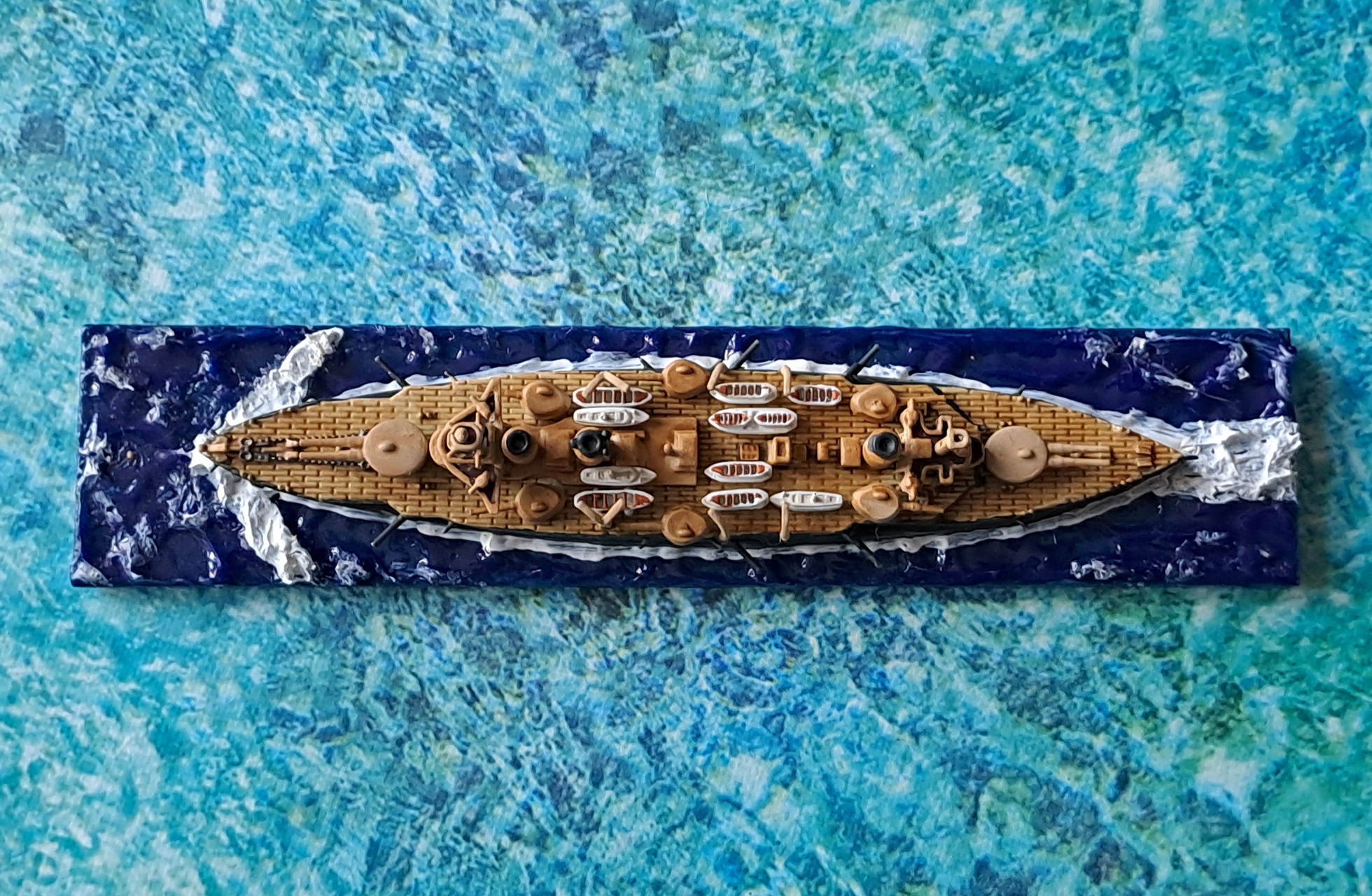
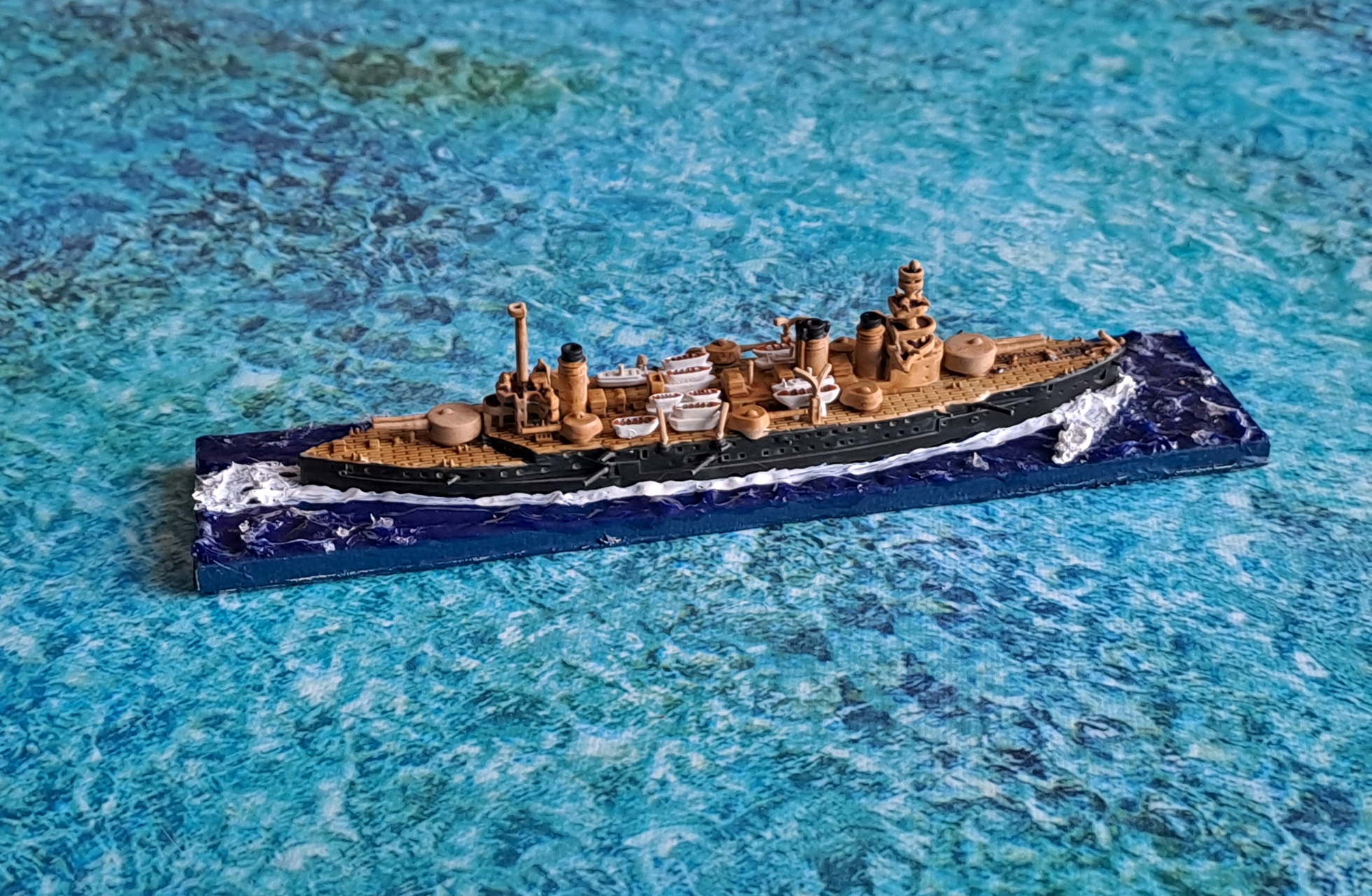
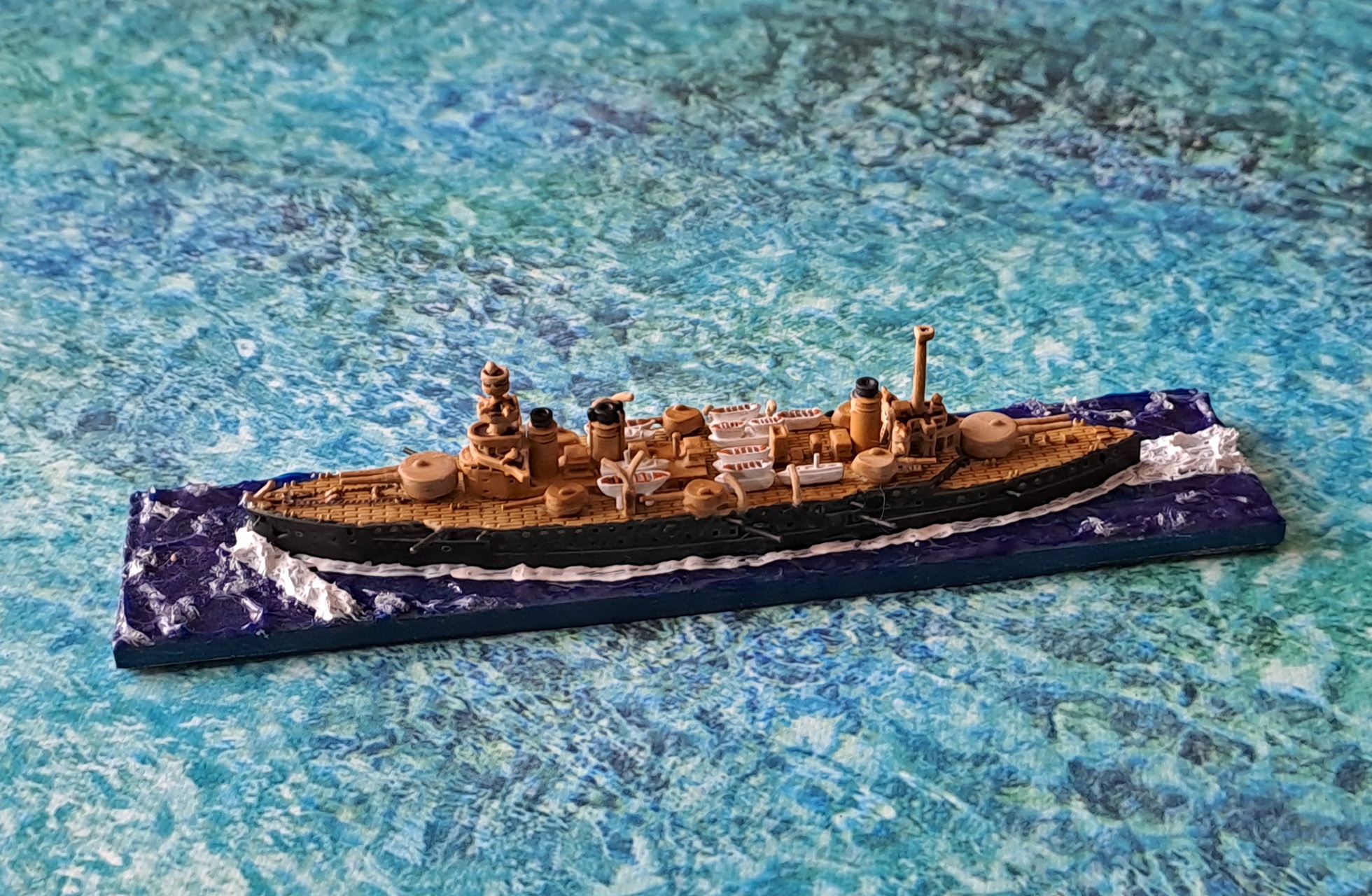
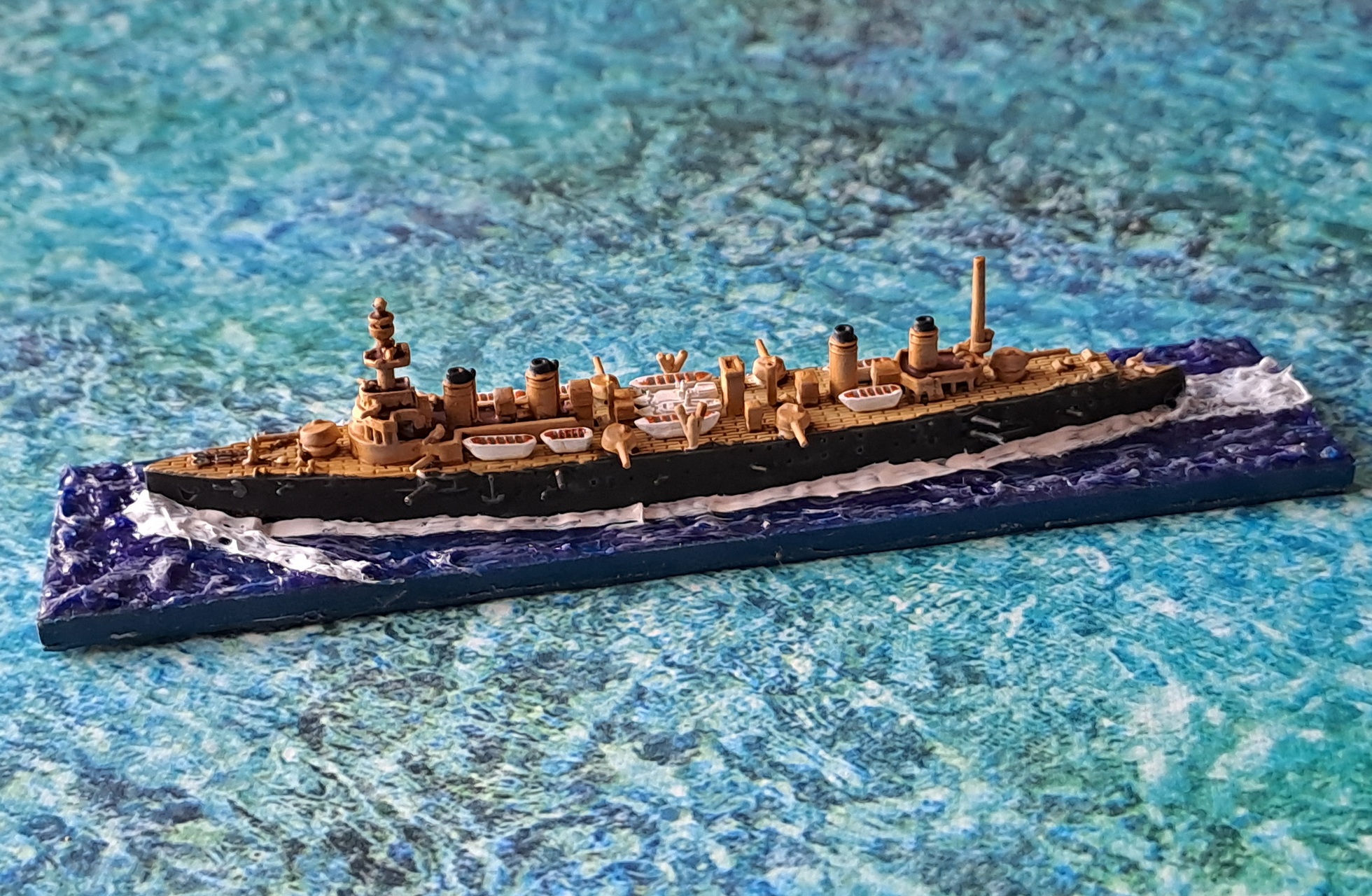
🇬🇧 In recent days, I managed to complete the D’Entrecasteaux cruiser. ⚓ The French squadron as a whole is getting closer to completion and setting out to the open sea. 🇫🇷🌊
In the mid-1890s two concepts of fleet development clashed within the French Navy. One – more traditional – supported the construction of small reconnaissance cruisers and large armoured cruisers. The other – associated with the Jeune École (Young School) – called for the creation of large, fast, armoured protected cruisers intended to serve as raiders or flotilla leaders in the colonies. The construction of D’Entrecasteaux was the result of the temporary dominance of the latter concept.
The ship was built by the Société Nouvelle des Forges et Chantiers de la Méditerranée and entered service in 1899 (five years after being launched). Her displacement was nearly 8,000 tons and her maximum speed was about 19 knots.
Her armament consisted of two 240 mm guns (no other French cruiser of that era carried such large guns), twelve 138 mm guns, twelve 47 mm guns, six 37 mm guns, and four torpedo tubes.
After entering service, she became the flagship of the French fleet stationed in Indochina. She took part in the suppression of the Boxer Rebellion and later served during the First World War. After the war, in 1927, she was sold to Poland, where she was first renamed the training hulk ORP Król Władysław IV, and later ORP Bałtyk. She remains the largest ship in the history of the Polish Navy.
* – description of the D’Entrecasteaux by GMBoardgames.
🇵🇱 W ostatnich dniach udało mi się ukończyć krążownik D’Entrecasteaux. ⚓ Eskadra francuska jako całość jest coraz bliższa ukończenia i wyruszenie na pełne morze. 🇫🇷🌊 W połowie lat 90. XIX wieku we francuskiej marynarce ścierały się dwie koncepcje rozwoju floty. Jedna – bardziej tradycyjna – opowiadała się za budową małych krążowników rozpoznawczych i dużych krążowników pancernych. Druga – związana ze szkołą „Jeune École” (Młoda Szkoła) – postulowała tworzenie dużych, szybkich, opancerzonych krążowników pancernopokładowych, które miały służyć jako rajdery bądź liderzy flotylli w koloniach. Budowa D’Entrecasteaux była wynikiem tymczasowej przewagi tej drugiej koncepcji.
Okręt zbudowała stocznia Société Nouvelle des Forges et Chantiers de la Méditerranée. Wszedł do służby w 1899 roku (pięć lat po wodowaniu). Jego wyporność wynosiła niemal 8000 ton, a prędkość maksymalna około 19 węzłów. Uzbrojenie składało się z dwóch dział kal. 240 mm (żaden inny francuski krążownik tej epoki nie miał tak dużych dział), 12 dział 138 mm, 12 dział 47 mm, 6 dział 37 mm oraz czterech wyrzutni torped.
Po wejściu do służby stał się okrętem flagowym francuskiej floty stacjonującej w Indochinach. Wziął udział w tłumieniu powstania bokserów, a następnie służył w czasie I wojny światowej. Po wojnie, w 1927 roku, został sprzedany Polsce, gdzie najpierw przemianowano go na hulk szkolny ORP „Król Władysław IV”, a później na ORP „Bałtyk”. Pozostaje największym okrętem w historii polskiej marynarki wojennej.
🇬🇧 Summary: – Just like the other French ships, the model is very enjoyable to paint. – However, it requires great caution when working with the lifeboat mounts — unfortunately, I wasn’t able to avoid damaging them. – A cruiser equipped with heavy artillery is something I can only envy as a commander of the Rossiyskiy Imperatorskiy Flot. On top of that, it has a standard amount of medium artillery. Without a doubt, it will be a reliable part of the French squadrons.
🇵🇱 Podsumowanie: – Tak jak pozostałe francuskie okręty, model jest bardzo przyjemny w malowaniu – Wymaga jednak dużej ostrożności przy pracy z mocowaniami szalup — niestety mnie nie udało się uniknąć ich uszkodzenia. – Krążownik wyposażony w ciężką artylerię to coś, czego jako dowódca Rossiyskiy Imperatorskiy Flot mogę tylko zazdrościć. Do tego posiada standardową ilość artylerii średniej. Bez wątpienia będzie pewnym elementem francuskich eskadr.
🇬🇧 In recent days, I managed to complete the beautiful first-class French battleship – Masséna. ⚓ The French squadron as a whole is getting closer to completion and setting out to the open sea. 🇫🇷🌊
Masséna, named in honour of Marshal of France André Masséna, was a battleship of the French Navy, built by Ateliers et Chantiers de la Loire shipyard and commissioned in 1898. She was a member of a group of five broadly similar battleships, along with Charles Martel, Jauréguiberry, Bouvet, and Carnot, that were ordered in response to the British Royal Sovereign class. Masséna displaced 11,735 tons and measured 112 metres in length. Her main battery consisted of two 305 mm (12 in) guns, and two 274 mm (10,8 in) guns in two single-gun turrets, one amidships on each side. Her secondary armament consisted of eight 138,6 mm guns, eight 100 mm (3.9 in) quick-firing guns, and twenty small calibre guns. In 1900, Masséna took part in very important manoeuvres, during which part of the French fleet simulated a blockade of Brest, followed by an attack on Cherbourg. In 1903, Masséna was transferred to the Mediterranean Squadron and placed in reserve. She was temporarily reactivated for the period of the great fleet manoeuvres. The ageing battleship was scuttled at the end of 1915 as a breakwater during the evacuation of the Entente forces from Gallipoli.
🇵🇱 W ostatnich dniach udało mi się ukończyć piękny francuski pancernik pierwszej klasy – Masséna. ⚓ Eskadra francuska jako całość jest coraz bliższa ukończenia i wyruszenie na pełne morze. 🇫🇷🌊 Masséna, nazwany na cześć marszałka Francji André Massény, był pancernikiem francuskiej marynarki, zbudowanym w stoczni Ateliers et Chantiers de la Loire i wcielonym do służby w 1898 roku. Należał do grupy pięciu pancerników o podobnej konstrukcji (obok Charles Martel, Jauréguiberry, Bouvet i Carnot), zamówionych w odpowiedzi na brytyjską klasę Royal Sovereign.
Masséna miał wyporność 11 735 ton i długość 112 metrów. Główne uzbrojenie składało się z dwóch dział kal. 305 mm (12 cali) oraz dwóch dział kal. 274 mm (10,8 cala) w pojedynczych wieżach, po jednej na każdej burcie, w części śródokręcia. Uzbrojenie dodatkowe obejmowało osiem dział kal. 138,6 mm, osiem dział kal. 100 mm oraz dwadzieścia dział małego kalibru.
W 1900 roku Masséna wziął udział w ważnych manewrach, podczas których część francuskiej floty symulowała blokadę Brestu, a następnie atak na Cherbourg. W 1903 roku przeniesiono go do Eskadry Śródziemnomorskiej i przeniesiono do rezerwy, choć na czas dużych manewrów został czasowo reaktywowany.
Podczas I wojny światowej, pod koniec 1915 roku, wysłużony pancernik został samozatopiony jako falochron podczas ewakuacji sił Ententy z Gallipoli.
🇬🇧 Summary: – The ship was a real pleasure to paint — working on it was highly satisfying. – The model consists of many components, which I painted in parallel with the hull, greatly simplifying the whole process. – Thanks to its affordable price and solid armament, including heavy artillery, it will surely become a frequent guest on the battlefields of Gods of War: Togo.
🇵🇱 Podsumowanie: – Okręt był bardzo przyjemny w malowaniu — praca nad nim sprawiała sporo satysfakcji. – Model składa się z wielu elementów, które malowałem równolegle z kadłubem, co zdecydowanie ułatwiło cały proces. – Dzięki swojej korzystnej cenie i solidnemu uzbrojeniu, w tym ciężkiej artylerii, z pewnością będzie częstym gościem na stołach bitewnych w Bogowie Wojny: Togo.
🇬🇧 In the past few days, I managed to finish the beautiful French third-class cruiser – Friant. ⚓ Just a few more ships to complete, and the French Marine Nationale will be ready to set sail for its first naval battles. 🇫🇷🌊
Three Friant-class cruisers were built in the first half of the 1890s. The naval manoeuvres conducted at that time clearly showed that France lacked modern cruisers that could serve as fleet scouts. This led to the development of the Friant-class cruisers. These units displaced just over 3,700 tons, measured just under 100 meters in length, and could reach a speed of about 18 knots, which was a decent value for the mid-1890s, though not groundbreaking. Their armament consisted of 6×164 mm guns, 4×100 mm guns, 8×47 mm guns, 3×37 mm guns, and two torpedo tubes. The three ships of this class were divided between the Northern Squadron and the Mediterranean Fleet, but in 1900, all three were sent to China to participate in suppressing the Boxer Rebellion. Two of these ships took part in World War I, albeit in a support role. These ships have a beautiful, classic French silhouette, with a characteristic strong tumblehome hull and a very prominent ram. Despite their relatively modest speed for their class, they were useful in fulfilling many auxiliary roles, including combat against destroyers, gunboats, controlling buoys, zones, and port bombardment. The six 164 mm guns made them a threat to any ship within their combat range.
🇵🇱 W ostatnich dniach udało mi się ukończyć piękny francuski krążownik trzeciej klasy – Friant. ⚓ Jeszcze kilka ukończonych jednostek i francuska Marine Nationale będzie gotowa, by wyruszyć na swoje pierwsze morskie zmagania. 🇫🇷🌊
Trzy krążowniki typu Friant zbudowano w pierwszej połowie lat 90. XIX wieku. Manewry morskie prowadzone w tym czasie jasno pokazały, że Francji brakuje nowoczesnych krążowników zdolnych pełnić rolę zwiadowców floty. To doprowadziło do powstania typu Friant.
Jednostki te miały wyporność nieco ponad 3700 ton, długość nieco poniżej 100 metrów i mogły osiągać prędkość około 18 węzłów – przyzwoitą w połowie lat 90., choć nie przełomową. Ich uzbrojenie obejmowało 6 dział kal. 164 mm, 4 działa kal. 100 mm, 8 dział kal. 47 mm, 3 działa kal. 37 mm oraz dwie wyrzutnie torped.
Trzy okręty tego typu rozdzielono pomiędzy Eskadrę Północną i Flotę Śródziemnomorską, ale w 1900 roku wszystkie wysłano do Chin, by uczestniczyły w tłumieniu powstania bokserów. Dwa z nich brały udział w I wojnie światowej, choć pełniły już rolę pomocniczą.
Te okręty mają piękną, klasyczną francuską sylwetkę, z charakterystycznym mocnym przewężeniem burt i wyraźnym taranem. Mimo stosunkowo skromnej prędkości jak na swoją klasę, były przydatne w wielu rolach pomocniczych: zwalczania niszczycieli, kanonierek, kontroli boi, stref, a także ostrzału portów. Sześć dział kal. 164 mm czyniło je groźnymi przeciwnikami dla każdego okrętu w ich zasięgu ognia.
🇬🇧 Summary: – I wrote about the Friant in my Marine Nationale summary before its debut at Fields of Glory — you can read about it in the blog post HERE. – Quoting from that post: it’s a third-class cruiser worth 155 points, equipped with a fairly large number of medium-caliber guns and solid armor. Another advantage is its ram, which makes it a dangerous opponent in close-range engagements. – The model itself was a real pleasure to paint, and the lifeboats were easy to place on the deck without any trouble. ⚓🎨
🇵🇱 Podsumowanie: – o Friancie napisałem w podsumowaniu Marine Nationale przed jej debiutem na Polach Chwały, możecie o nim przeczytać we wpisie na moim blogu TUTAJ. – przytaczając słowa z powyższego wpisu, jest to krążownik trzeciej klasy o koszcie 155 punktów. Dysponuje dość liczną artylerią średniego kalibru oraz solidnym pancerzem. Jego kolejnym atutem jest również taran, który czyni go groźnym przeciwnikiem w starciach na bliski dystans. – sam okręt malowało się bardzo przyjemnie, a szalupy ratunkowe nie sprawiały problemu z umieszczeniem ich na pokładzie. ⚓🎨
🇬🇧 Last Saturday, the authors of the fleet builder tool for Gods of War: Togo added the Marine Nationale, the French fleet. Its official debut will take place during this year’s Fields of Glory event in Niepołomice — and that’s already this coming weekend! Without waiting for the first ships to leave the shipyards, I decided to take a closer look at their profiles and describe them all, one by one, on my blog. I invite you to check out their short descriptions and unit cards. So let’s begin with the first one — the Republique-class battleship.
🇵🇱 W ostatnią sobotę w narzędziu do budowy flot do „Bogów Wojny: Togo” autorzy dodali Marine Nationale, czyli flotę francuską. Jej oficjalny debiut odbędzie się już podczas tegorocznych Pól Chwały w Niepołomicach — a to przecież nadchodzący weekend! Nie czekając na pierwsze okręty opuszczające stocznię, postanowiłem przyjrzeć się ich profilom i opisać je wszystkie, jeden po drugim na swoim blogu. Zapraszam do zapoznania się z ich krótkim opisem i kartami jednostek. A więc zacznijmy od pierwszego czyli pancernika Republique-class.
🇬🇧 Republique-class – a first-class ship with a cost of 895 points. This battleship is equipped with the standard number of heavy artillery guns and an extensive array of medium artillery. It features excellent armor and a solid hull. Although the range of its heavy artillery is not the greatest, it makes up for it with high penetration power. An additional advantage is its slightly higher speed compared to other ships of this class, as well as the presence of a ram.
🇵🇱 Republique-class – okręt pierwszej klasy o koszcie 895 punktów. To pancernik wyposażony w standardową liczbę dział ciężkiej artylerii oraz rozbudowaną artylerię średnią. Charakteryzuje się bardzo dobrym pancerzem i solidnym kadłubem. Choć zasięg ciężkiej artylerii nie należy do największych, nadrabia to wysoką siłą przebicia. Dodatkowym atutem jest nieco wyższa prędkość w porównaniu z innymi jednostkami tej klasy, a także obecność taranu.
🇬🇧 Liberté-class – a first-class battleship with a cost of 880 points. It is equipped with the standard number of heavy artillery guns and a somewhat more modest array of medium artillery. It boasts excellent armor and a solid hull. The range of its heavy artillery is similar to that of the Republique-class, while the medium artillery, though less numerous, stands out with its good range and firepower. An additional advantage is its slightly higher speed compared to other ships of this type, as well as the presence of a ram.
🇵🇱 Liberté-class – pancernik pierwszej klasy o koszcie 880 punktów. Wyposażony w standardową liczbę dział ciężkiej artylerii oraz nieco skromniejszą artylerię średnią. Dysponuje bardzo dobrym pancerzem i solidnym kadłubem. Zasięg ciężkiej artylerii jest zbliżony do jednostki klasy Republique, natomiast artyleria średnia, choć mniej liczna, wyróżnia się dobrym zasięgiem i siłą ognia. Dodatkowym atutem jest prędkość nieco wyższa niż u innych okrętów tego typu, a także obecność taranu.
🇬🇧 Suffren-class – a first-class battleship with a cost of 740 points. It is equipped with the standard number of heavy artillery guns and an exceptionally numerous array of medium artillery. Its armor and hull are solid, comparable to the standard of battleships across various fleets. The range of its heavy artillery is similar to the previously described units, while its speed is slightly lower than that of other battleships of this class. Additionally, the ship is fitted with a ram.
🇵🇱 Suffren-class – pancernik pierwszej klasy o koszcie 740 punktów. Wyposażony w standardową liczbę dział ciężkiej artylerii oraz wyjątkowo liczną artylerię średnią. Pancerz i kadłub są solidne, porównywalne ze standardem wśród okrętów liniowych różnych flot. Zasięg ciężkiej artylerii jest podobny do wcześniej opisanych jednostek, natomiast prędkość okrętu jest nieco niższa niż u innych pancerników tej klasy. Dodatkowo jednostka posiada taran.
🇬🇧 Massena-class – a first-class battleship with a cost of 620 points. Compared to other ships of this type, it carries fewer heavy artillery guns but is equipped with an exceptionally large array of medium artillery. Its armor and hull are solid, in line with the standard for battleships of this era. The range of its heavy artillery is similar to the previously described ships, though part of its medium-caliber artillery has a slightly shorter range. The ship’s speed is lower than that of most battleships in this class. It is also fitted with a ram. The Massena’s main advantages are its attractive cost and the very large number of medium artillery pieces.
🇵🇱 Massena-class – pancernik pierwszej klasy o koszcie 620 punktów. W porównaniu z innymi jednostkami tego typu dysponuje mniej liczną artylerią ciężką, ale za to wyjątkowo rozbudowaną artylerią średnią. Pancerz i kadłub są solidne, zgodne ze standardem dla pancerników tej epoki. Zasięg ciężkiej artylerii jest podobny do wcześniej opisanych okrętów, natomiast część dział średniego kalibru ma nieco krótszy zasięg. Prędkość jednostki jest niższa niż u większości pancerników tej klasy. Okręt wyposażono również w taran. Atutem Masseny pozostaje przede wszystkim atrakcyjna cena oraz bardzo liczna artyleria średnia.
🇬🇧 Jeanne d’Arc-class – a second-class cruiser with a cost of 310 points. Equipped with a very large array of medium-caliber artillery, it stands out with excellent speed and remarkable armor for a ship of this class in Gods of War: Togo. Its solid hull further enhances its combat value. This is a ship well worth having in your fleet — its cost makes it a great choice even for lower-point battles.
🇵🇱 Jeanne d’Arc-class – krążownik drugiej klasy o koszcie 310 punktów. Wyposażony w bardzo liczną artylerię średniego kalibru, wyróżnia się świetną prędkością oraz znakomitym pancerzem, jak na jednostkę tej klasy w systemie Bogowie Wojny: Togo. Solidny kadłub dodatkowo podnosi jego wartość bojową. To okręt, który zdecydowanie warto mieć w swojej flocie – jego cena sprawia, że świetnie sprawdzi się również w rozgrywkach na mniejsze punkty.
🇬🇧 D’Entrecasteaux-class – a second-class cruiser with a cost of 260 points. Equipped with relatively few heavy-caliber guns, which nonetheless surpass the armament of most cruisers from other nations. In addition, it carries a fairly numerous medium artillery and torpedo armament. Its armor and hull are in line with the standard for ships of this class in the game. The ship’s strengths also include a ram and torpedoes, which significantly increase its combat versatility.
🇵🇱 D’Entrecasteaux-class – krążownik drugiej klasy o koszcie 260 punktów. Wyposażony w stosunkowo nieliczną artylerię ciężkiego kalibru, która jednak przewyższa uzbrojenie większości krążowników innych nacji. Do tego dochodzi całkiem liczna artyleria średnia oraz uzbrojenie torpedowe. Pancerz i kadłub odpowiadają standardowi dla jednostek tej klasy w grze. Atutami okrętu są także taran i torpedy, które zwiększają jego wszechstronność bojową.
🇬🇧 Friant-class – a third-class cruiser with a cost of 155 points. It is equipped with a fairly numerous medium-caliber artillery and solid armor. Another advantage is its ram, which makes it a dangerous opponent in close-range engagements.
🇵🇱 Friant-class – krążownik trzeciej klasy o koszcie 155 punktów. Dysponuje dość liczną artylerią średniego kalibru oraz solidnym pancerzem. Jego kolejnym atutem jest również taran, który czyni go groźnym przeciwnikiem w starciach na bliski dystans.
🇬🇧 D’Iberville-class – a fourth-class torped cruiser with a cost of 90 points. This is an inexpensive torpedo vessel, equipped with a fairly large number of torpedo launchers and surprisingly solid armor for a ship of this class. An interesting feature is the single medium-caliber gun mounted on the bow. An additional advantage is the presence of a ram, which is rarely found among ships of this category.
🇵🇱 D’Iberville-class – krążownik torpedowy czwartej klasy o koszcie 90 punktów. To niedroga jednostka torpedowa, wyposażona w dość liczne wyrzutnie torped oraz całkiem solidny pancerz, jak na okręt tej klasy. Ciekawostką jest pojedyncze działo średniego kalibru zamontowane na dziobie. Dodatkowym atutem jest taran, rzadko spotykany wśród jednostek tej kategorii.
🇬🇧 Framee-class – fourth-class destroyers with a cost of 125 points. A half-squadron of destroyers equipped with a standard number of torpedoes for vessels of this category, as well as a fairly large complement of light-caliber artillery. This is a fast and flexible formation, perfectly suited for escort and maneuvering operations.
🇵🇱 Framee-class – niszczyciele czwartej klasy o koszcie 125 punktów. Pół dywizjonu niszczycieli, wyposażonych w standardową liczbę torped dla jednostek tej kategorii oraz dość liczną artylerię lekkiego kalibru. To szybka i elastyczna formacja, doskonale sprawdzająca się w działaniach osłonowych i manewrowych.
🇬🇧 Mistral-class – fourth-class torpedo boats with a cost of 115 points. A half-squadron of torpedo boats equipped with numerous torpedo launchers for vessels of this category, along with better-than-standard armor. Their artillery armament is more modest, limited to a small number of light-caliber guns.
🇵🇱 Mistral-class – torpedowce czwartej klasy o koszcie 115 punktów. Pół dywizjonu torpedowców wyposażonych w liczne wyrzutnie torped, jak na jednostki tej kategorii, a także lepszy niż standardowy pancerz. Uzbrojenie artyleryjskie jest skromniejsze i ogranicza się do niewielkiej liczby dział lekkiego kalibru.
🇬🇧 Belem – a fourth-class sailing ship with a cost of 15 points. A charming vessel that serves primarily auxiliary roles in the game: it can transport landing troops or carry out non-combat tasks. While it cannot match the power of mighty ships of the line, it adds atmosphere and variety to the fleet.
🇵🇱 Belem – żaglowiec czwartej klasy o koszcie 15 punktów. Urokliwa jednostka, która w grze pełni głównie funkcje pomocnicze: może transportować desant żołnierzy lub realizować zadania niebojowe. Choć nie dorównuje potężnym okrętom liniowym, dodaje flocie klimatu i różnorodności.
🇬🇧 Of course, all the nations available in the game, along with their ships, can be viewed at the link below, which leads to the fleet builder tool: 👉 gmboardgames.com/togo/ab/index.php
🇵🇱 Oczywiście wszystkie dostępne w grze nacje, a wraz z nimi ich okręty, można obejrzeć pod poniższym linkiem prowadzącym do narzędzia do budowy floty: 👉 gmboardgames.com/togo/ab/index.php
🇬🇧 Summary: – The first ships of the French fleet look very promising and are tempting enough to make one want to start an adventure with the Marine Nationale. – The many battleships released at the start are quite diverse, giving players plenty of options — from heavily armored giants to lighter, more affordable vessels. – The situation is less favorable with second-class cruisers: while decent, the choice is very limited. Here, patience will be required until more ships of this class are released. – Third-class ships are represented by the excellent Friant-class cruiser. – The last category, fourth-class ships, includes as many as four units, one of which is a transport. In this case, the selection is solid right from the start. – In total, there are ten warships and one transport available — a strong lineup for a debut! Well done, GM Boardgames! – French ships are already available from the publisher’s store, the Wrocław-based Bolter club, at this address: https://bolter.pl/en_US/c/French-Navy/2037 – Their official debut will take place during Fields of Glory in Niepołomice – an event that every year attracts history and reenactment enthusiasts from all over Poland. – You can find more details about the event here 👉 polachwaly.pl
🇵🇱 Podsumowanie: – pierwsze jednostki do floty francuskiej wyglądają ciekawie i kuszą by rozpocząć swoją przygodę z Marine Nationale. – Liczne wypuszczone na starcie pancerniki są dość różnorodne, że jest w czym wybierać. Zaczynając od potężnie opancerzonych okrętów, przez te lżej opancerzone i tańsze punktowo. – Gorzej z krążownikami drugiej klasy, które mimo tego, że przyzwoite, są bardzo nieliczne w wyborze, tu pozostaje uzbroić się w cierpliwość i czekać na kolejne okręty tej klasy. – Okręty trzeciej klasy są reprezentowane przez świetny okręt klasy Friant. – Ostatnią klasę okrętów reprezentują aż cztery jednostki w tym jedna transportowa, tu na starcie nie ma co narzekać na wybór. – Łącznie do wyboru jest dziesięć okrętów i jeden transportowiec, nieźle jak na początek, tak trzymać GM Boardgames! – Okręty francuskie są już dostępne na sklepie wydawcy czyli wrocławskiego klubu Bolter pod tym adresem: https://bolter.pl/pl/c/Flota-Francuska/2037 – Ich oficjalny debiut będzie miał miejsce już podczas Pól Chwały w Niepołomicach – wydarzenia, które co roku przyciąga miłośników historii i rekonstrukcji z całej Polski. – Szczegóły o samym wydarzeniu znajdziecie tutaj 👉 polachwaly.pl









 tancreddebeauville
