Gods of War: Togo – Liberté 🇫🇷 (🇬🇧EN/🇵🇱PL) Wtorek, Czer 9 2026 

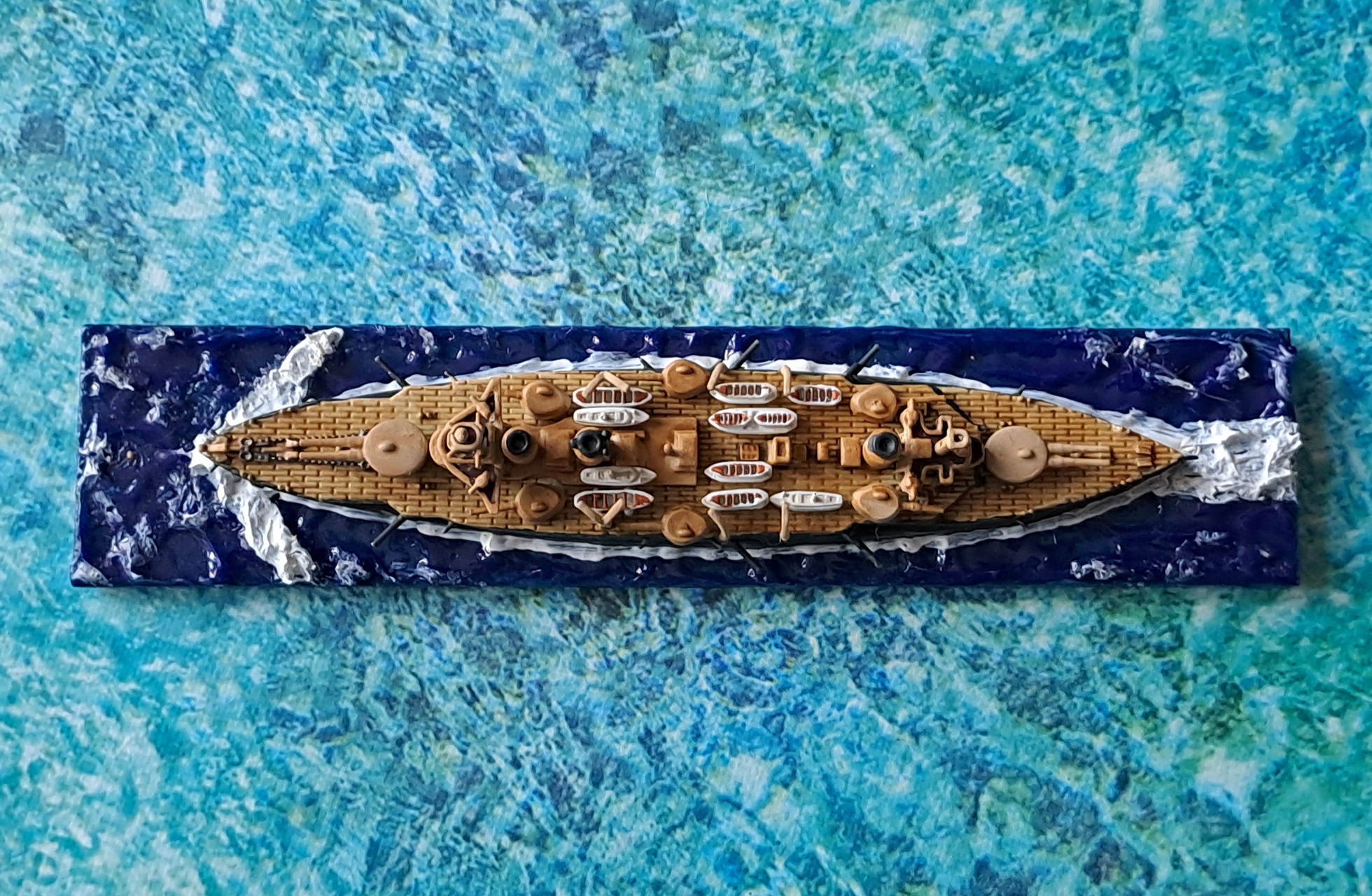
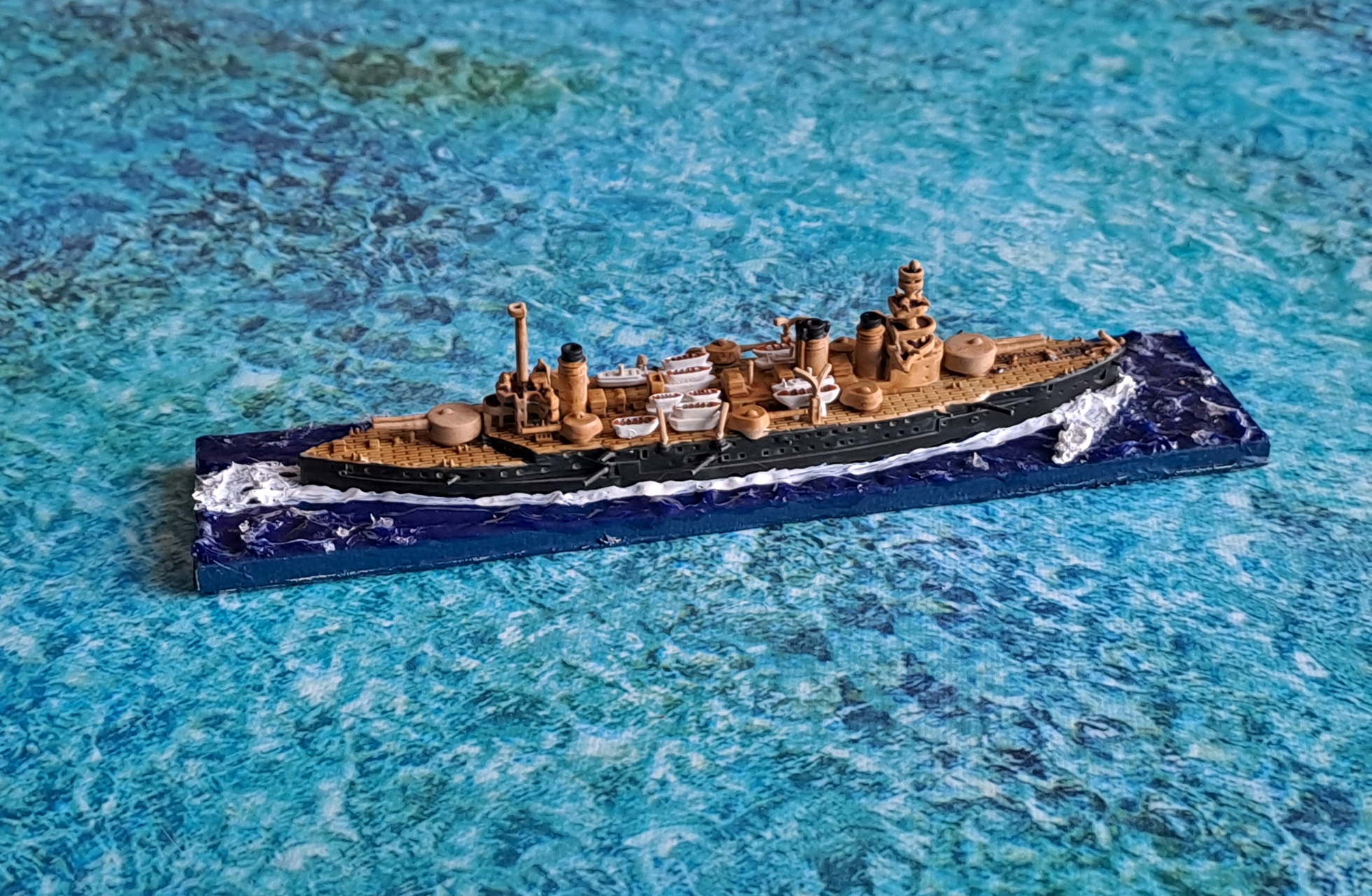
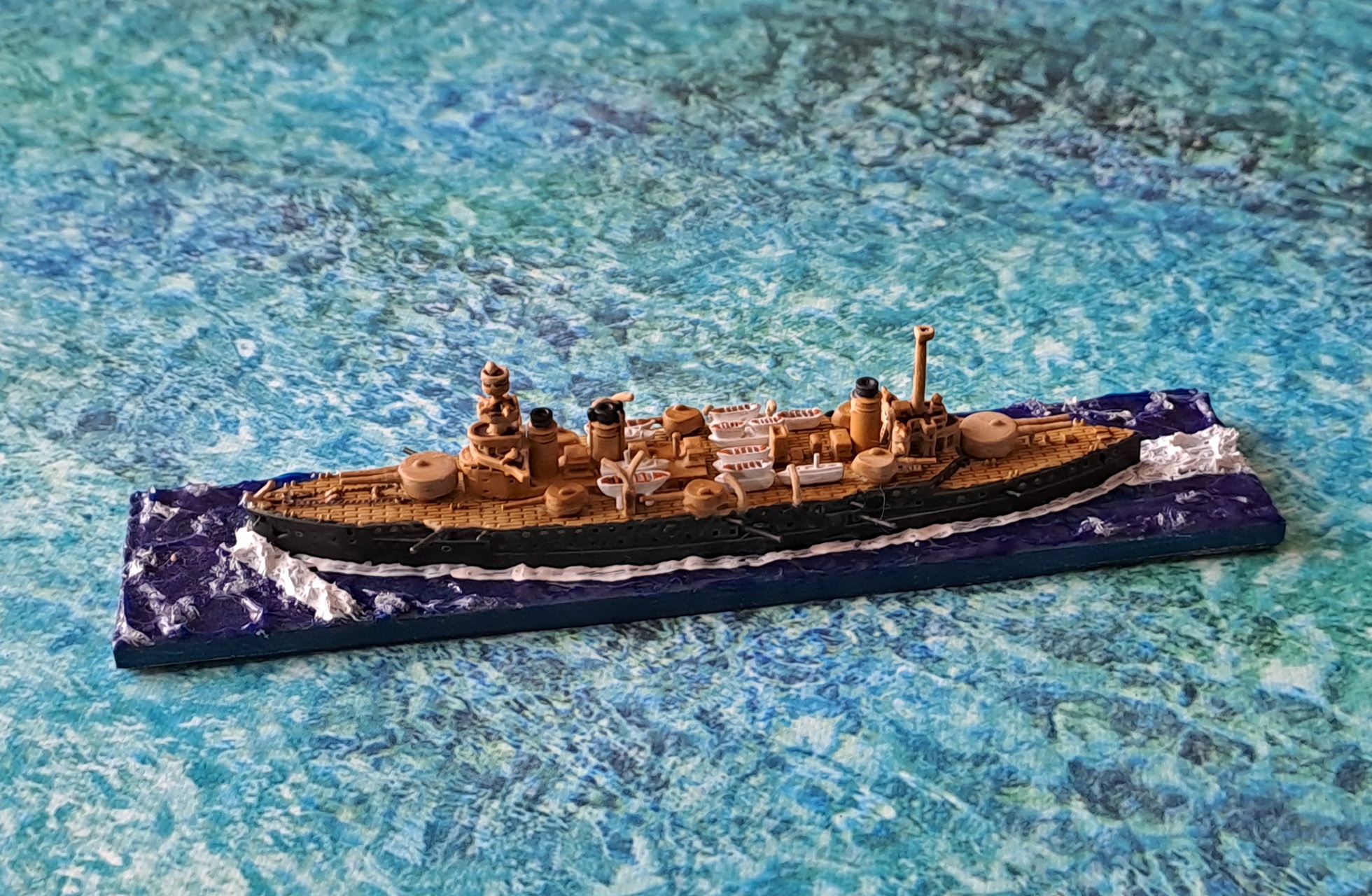
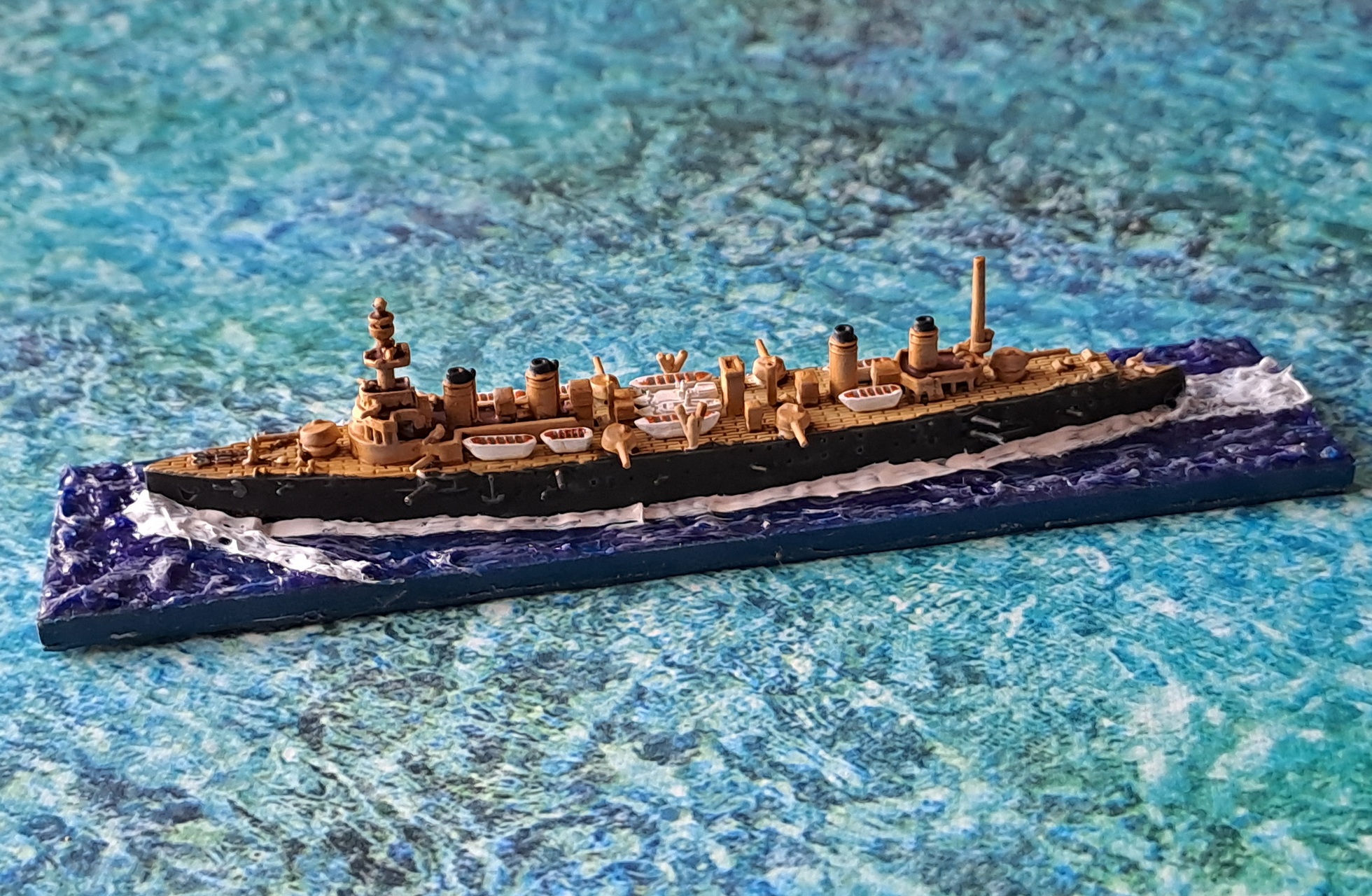
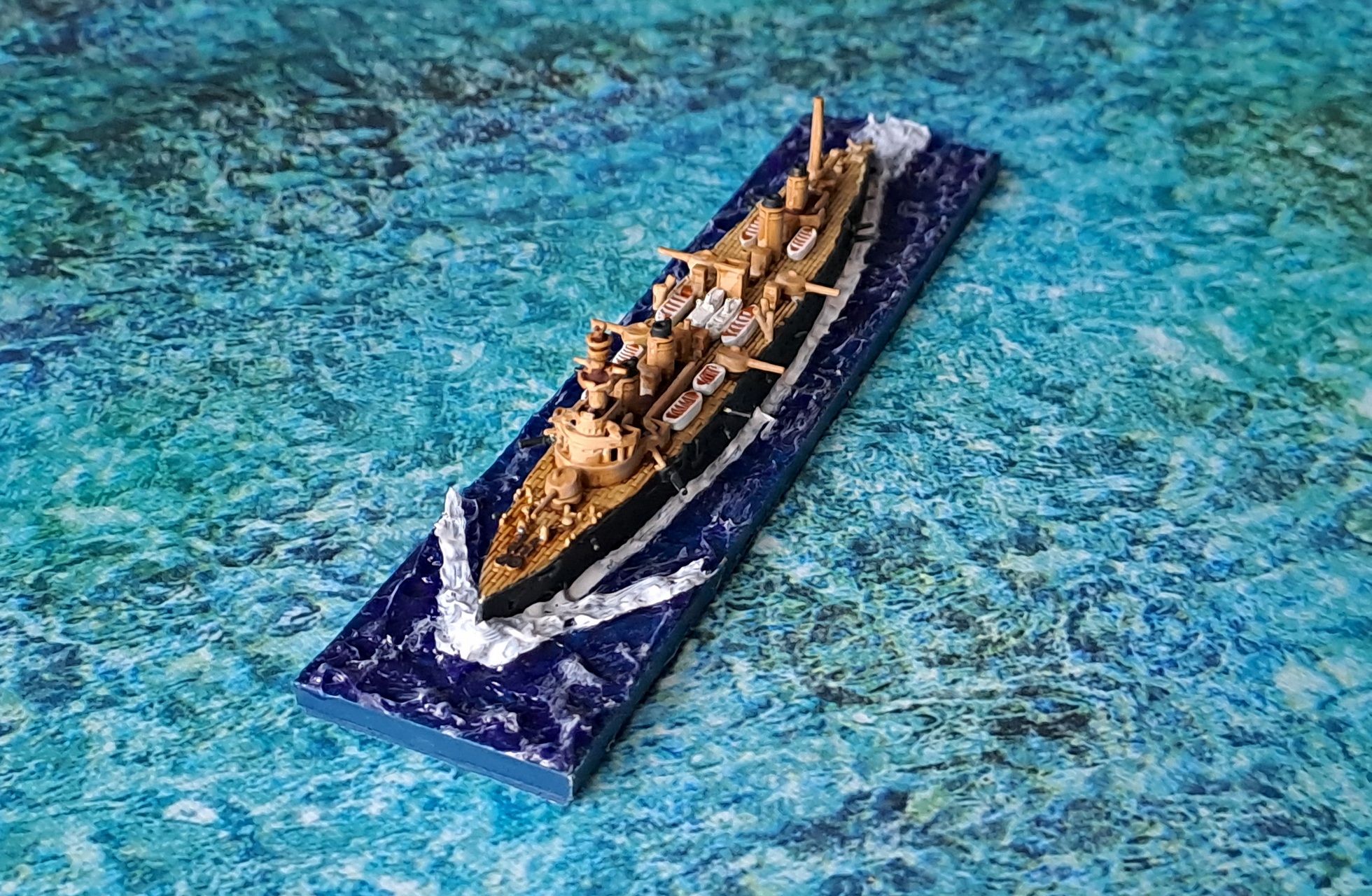
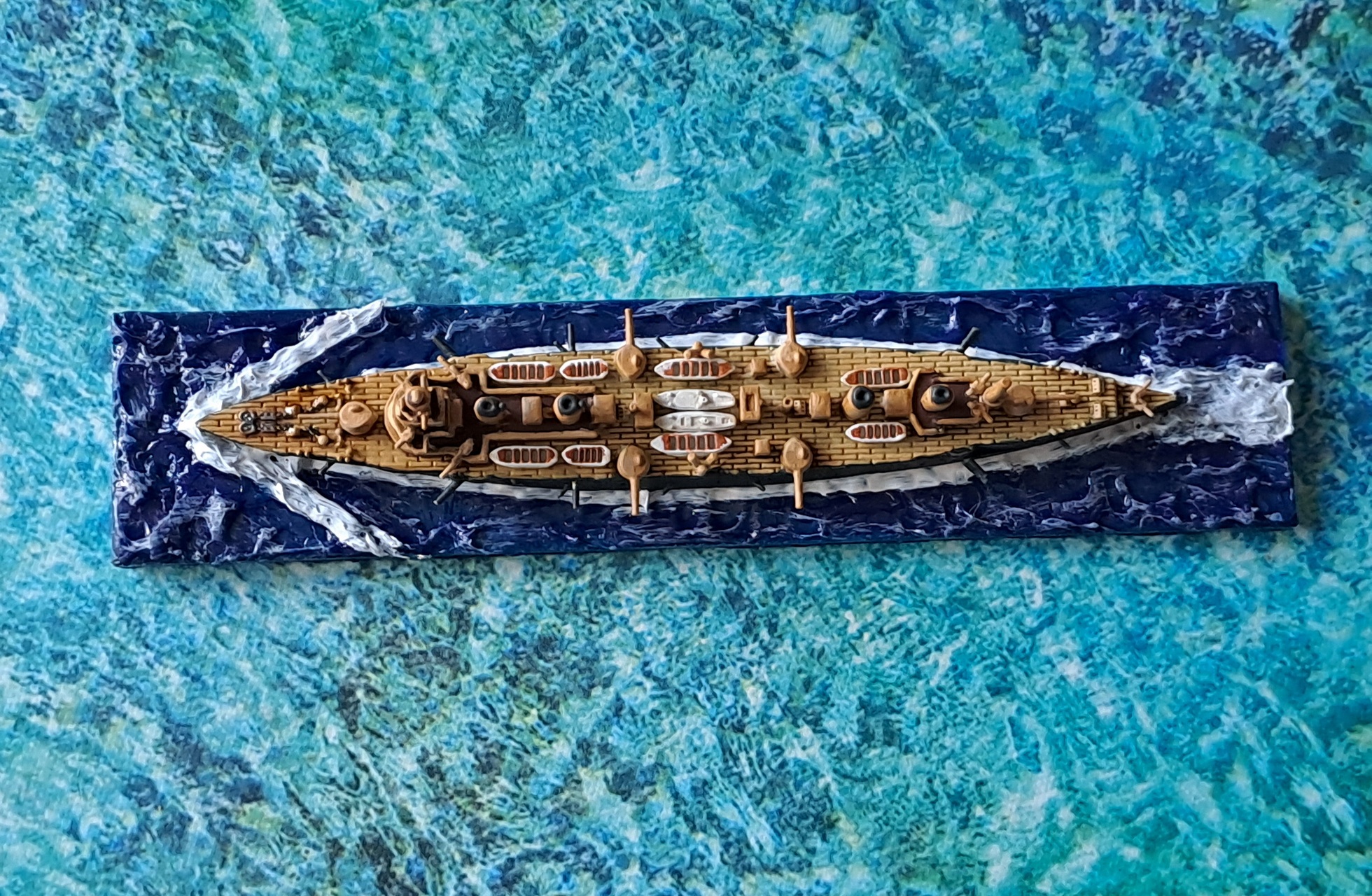
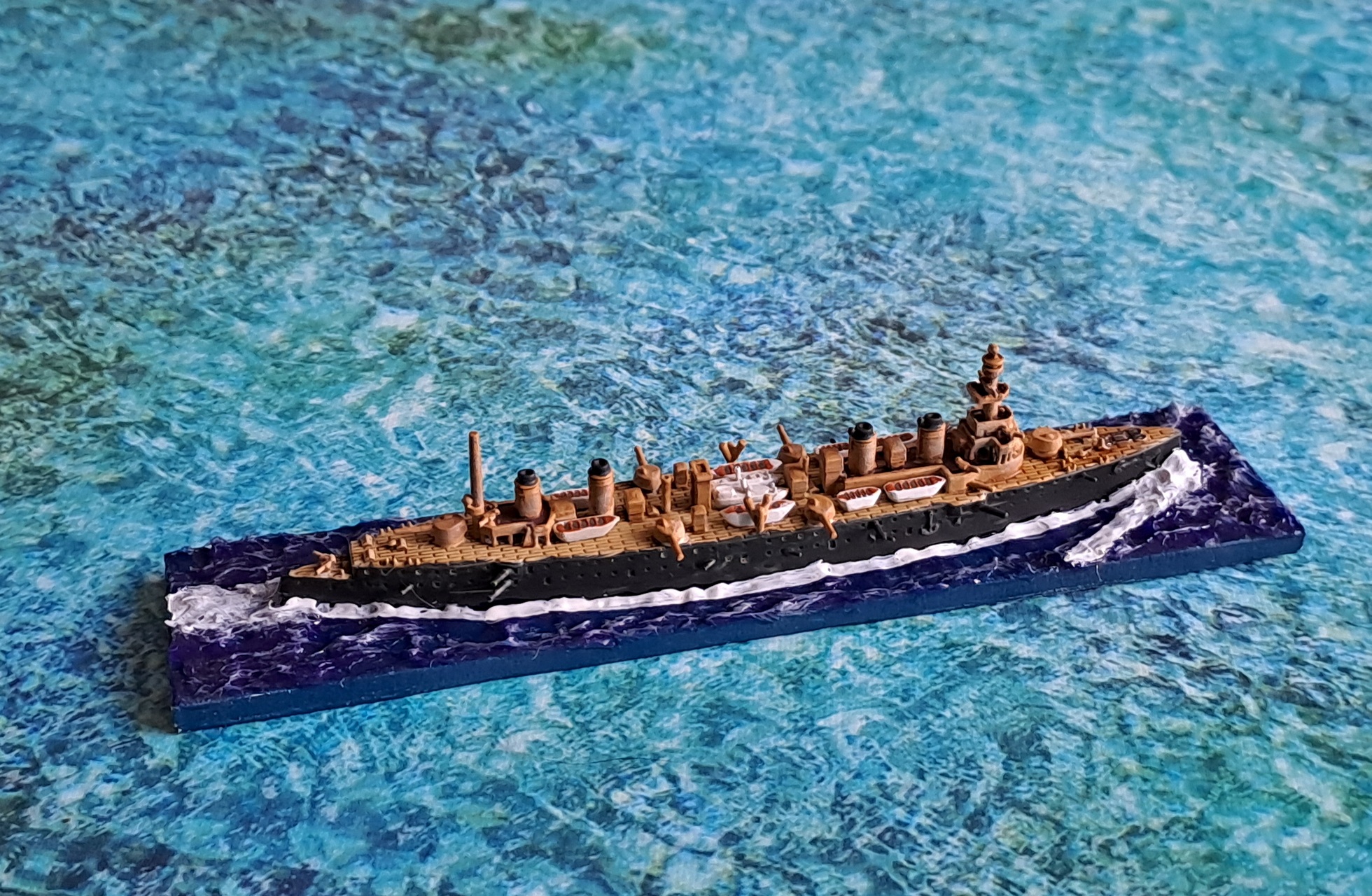
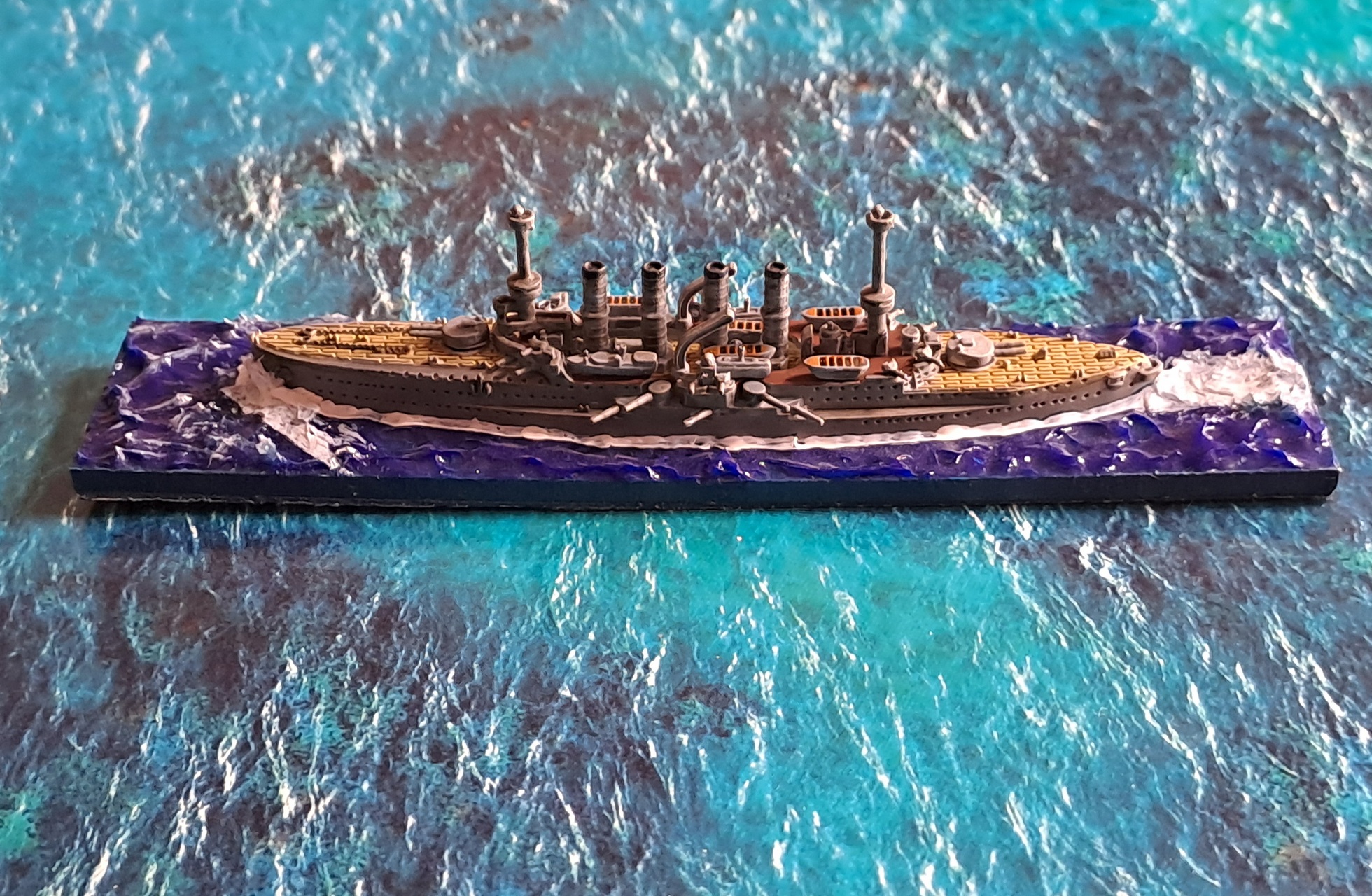
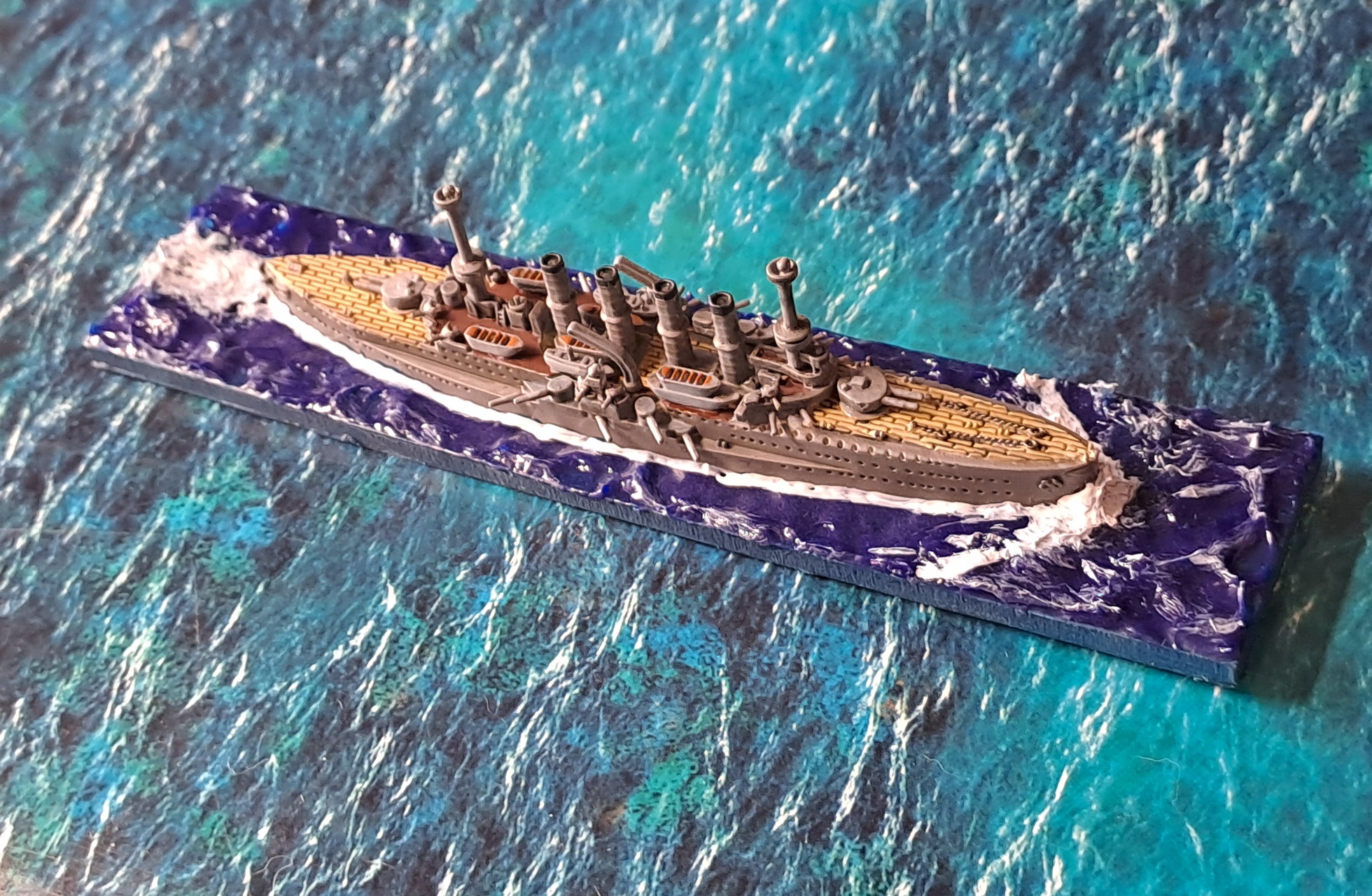
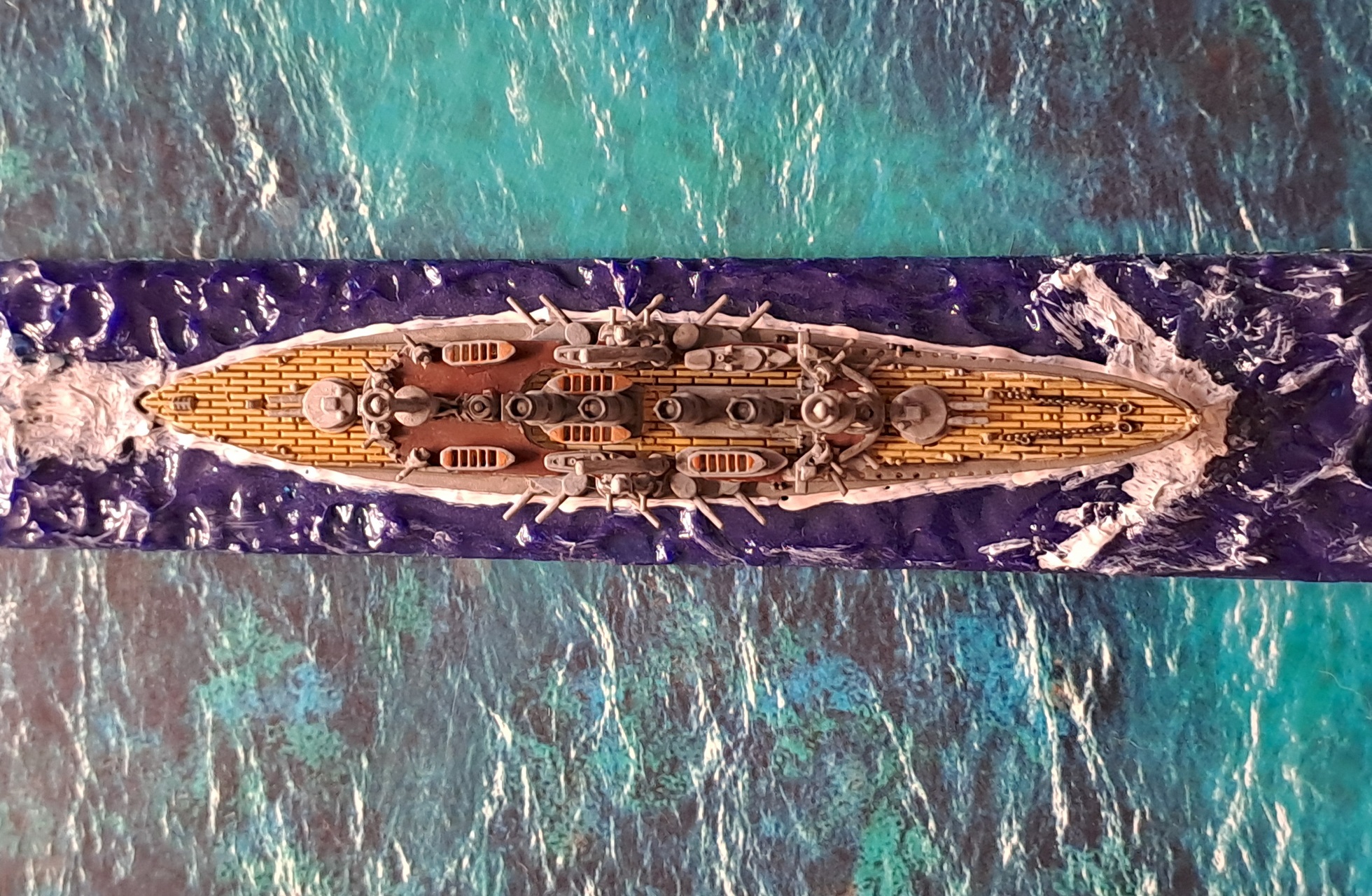
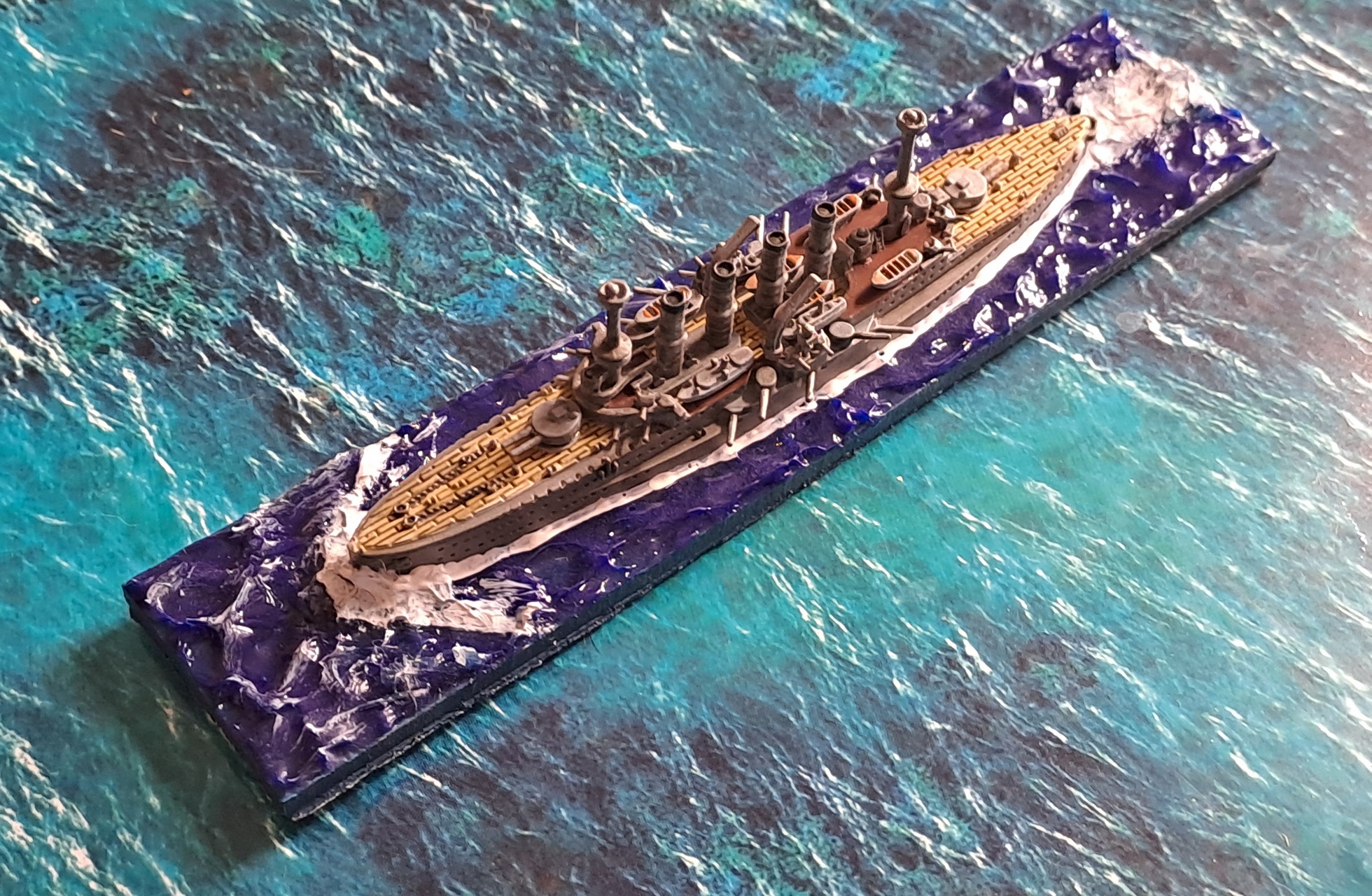
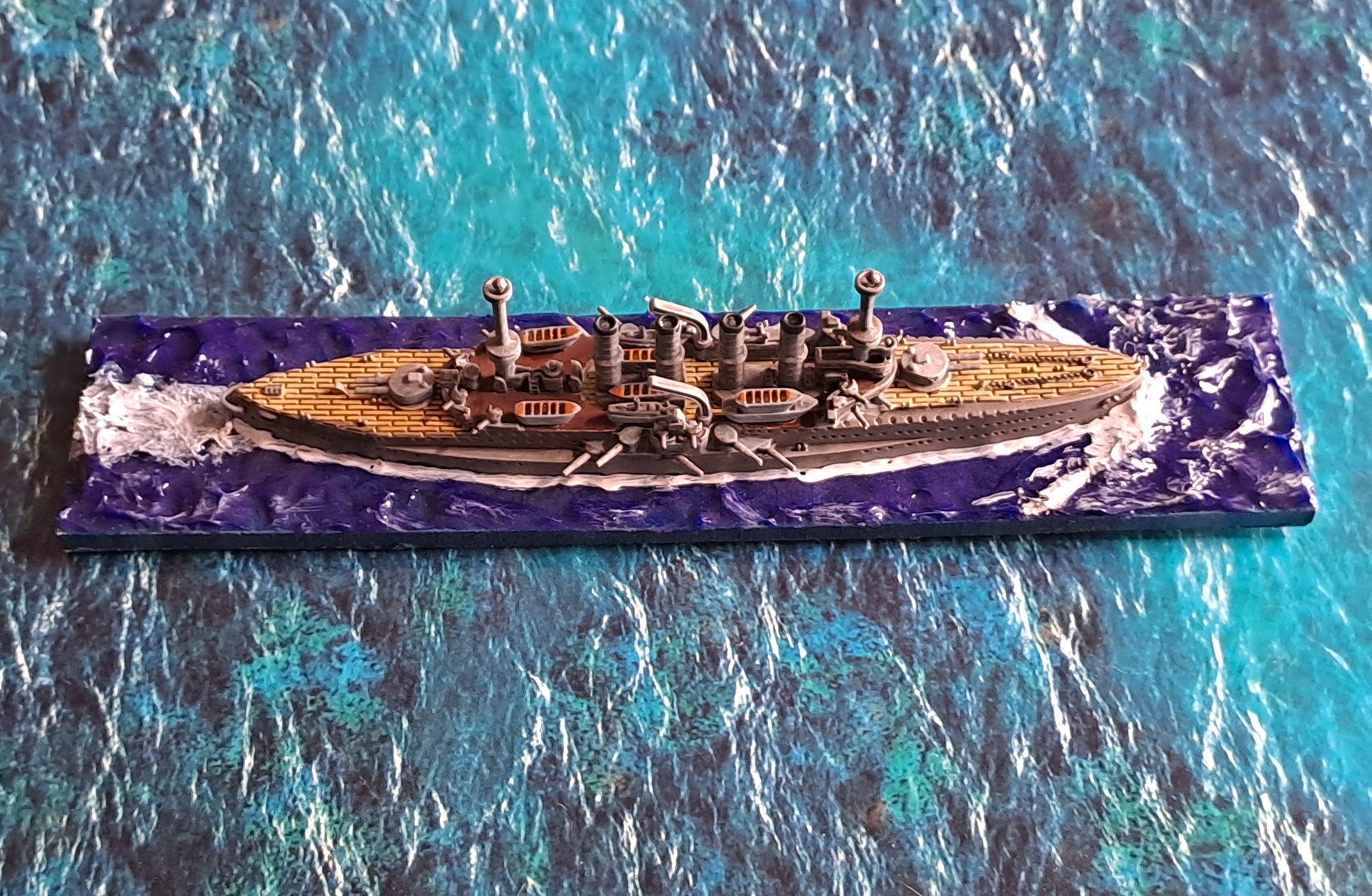
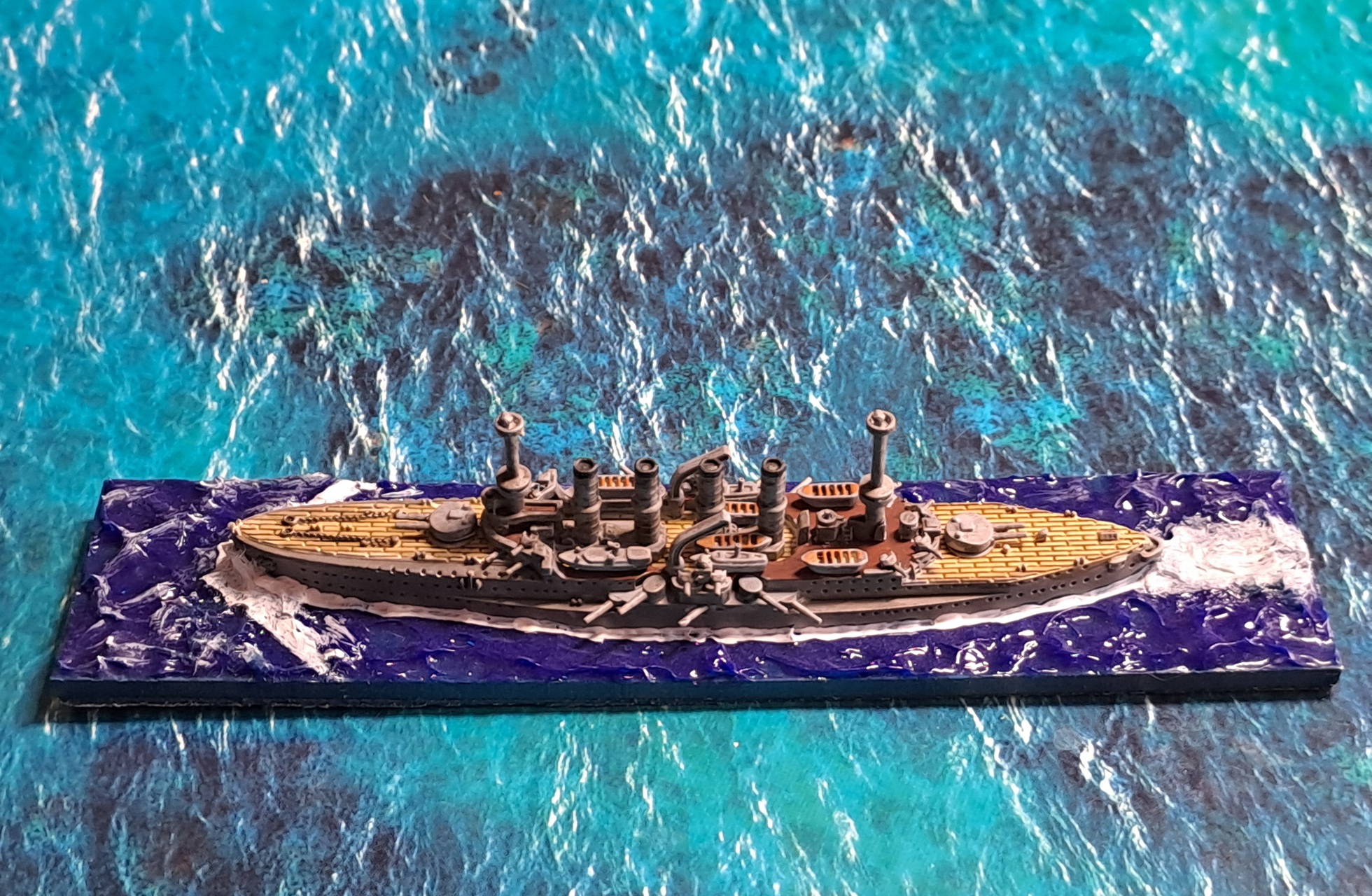
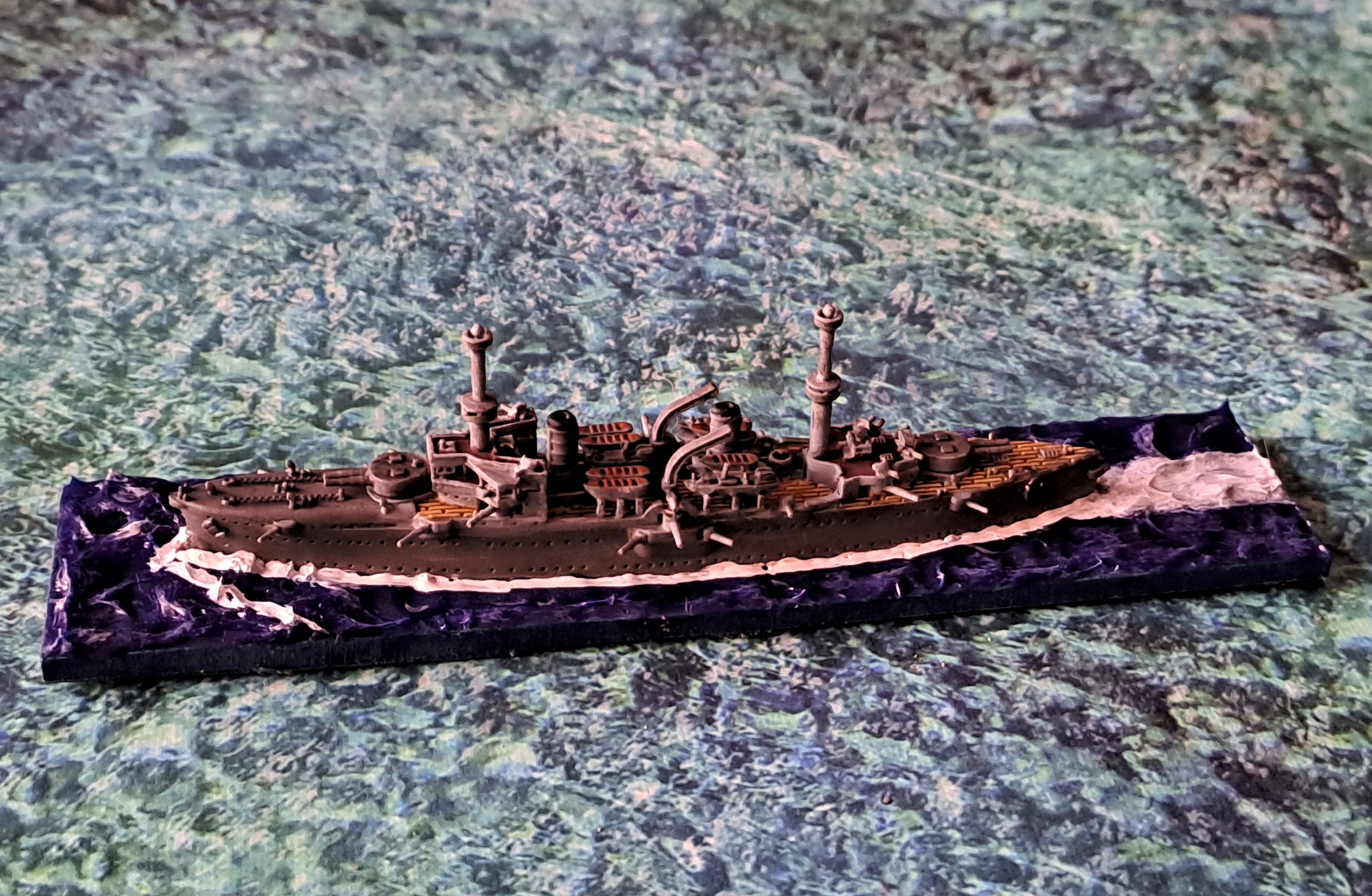
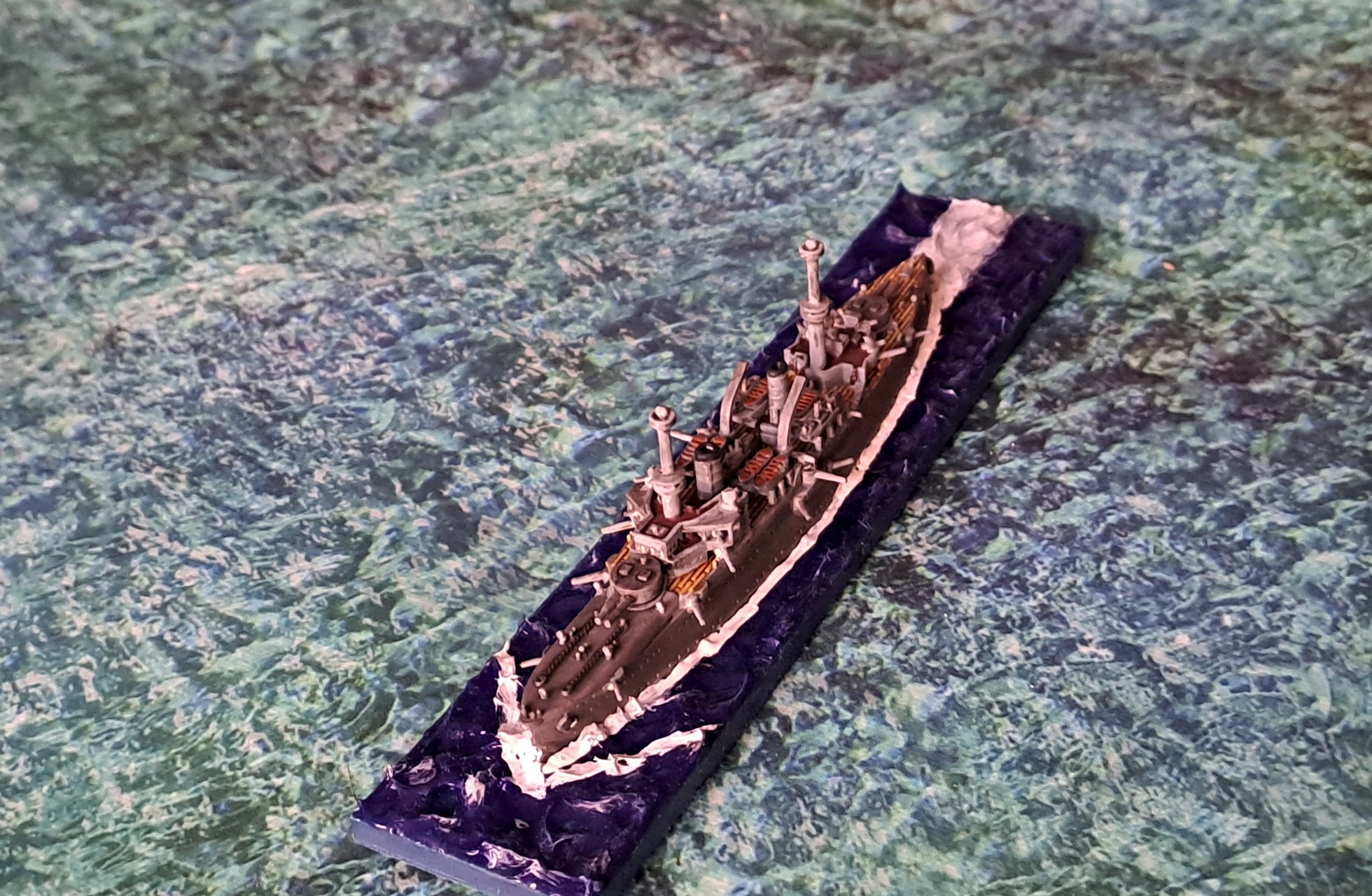
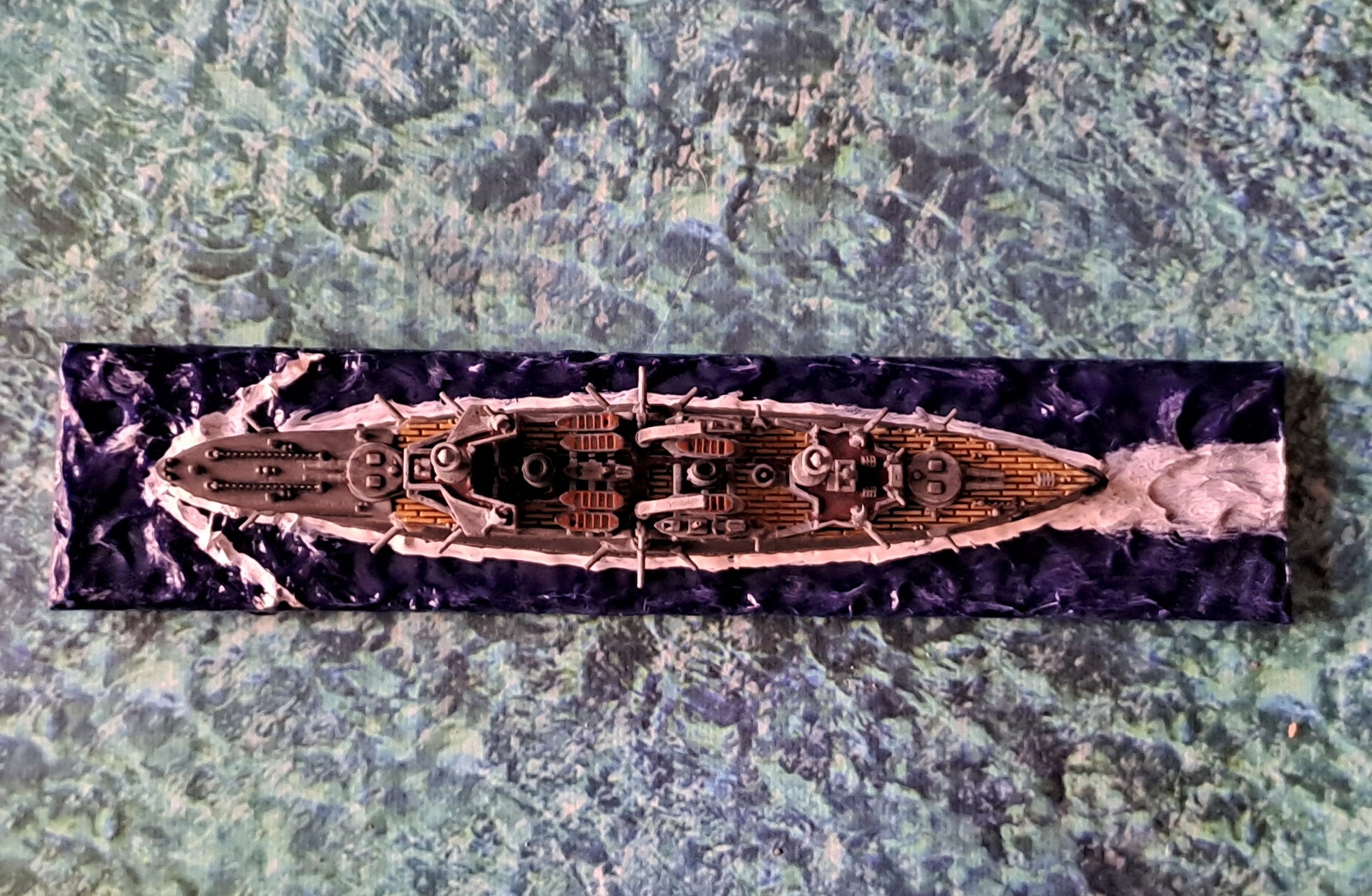
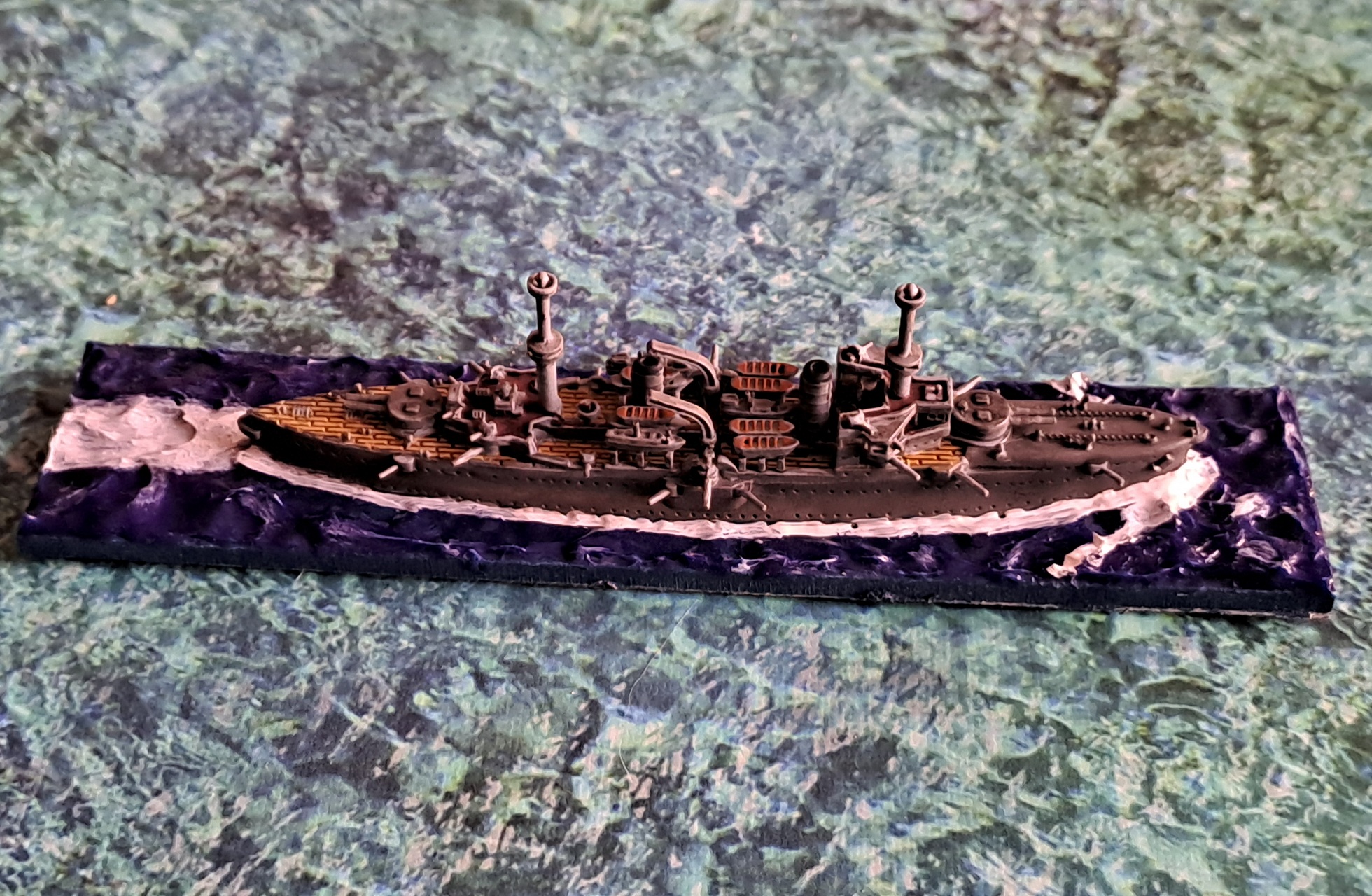
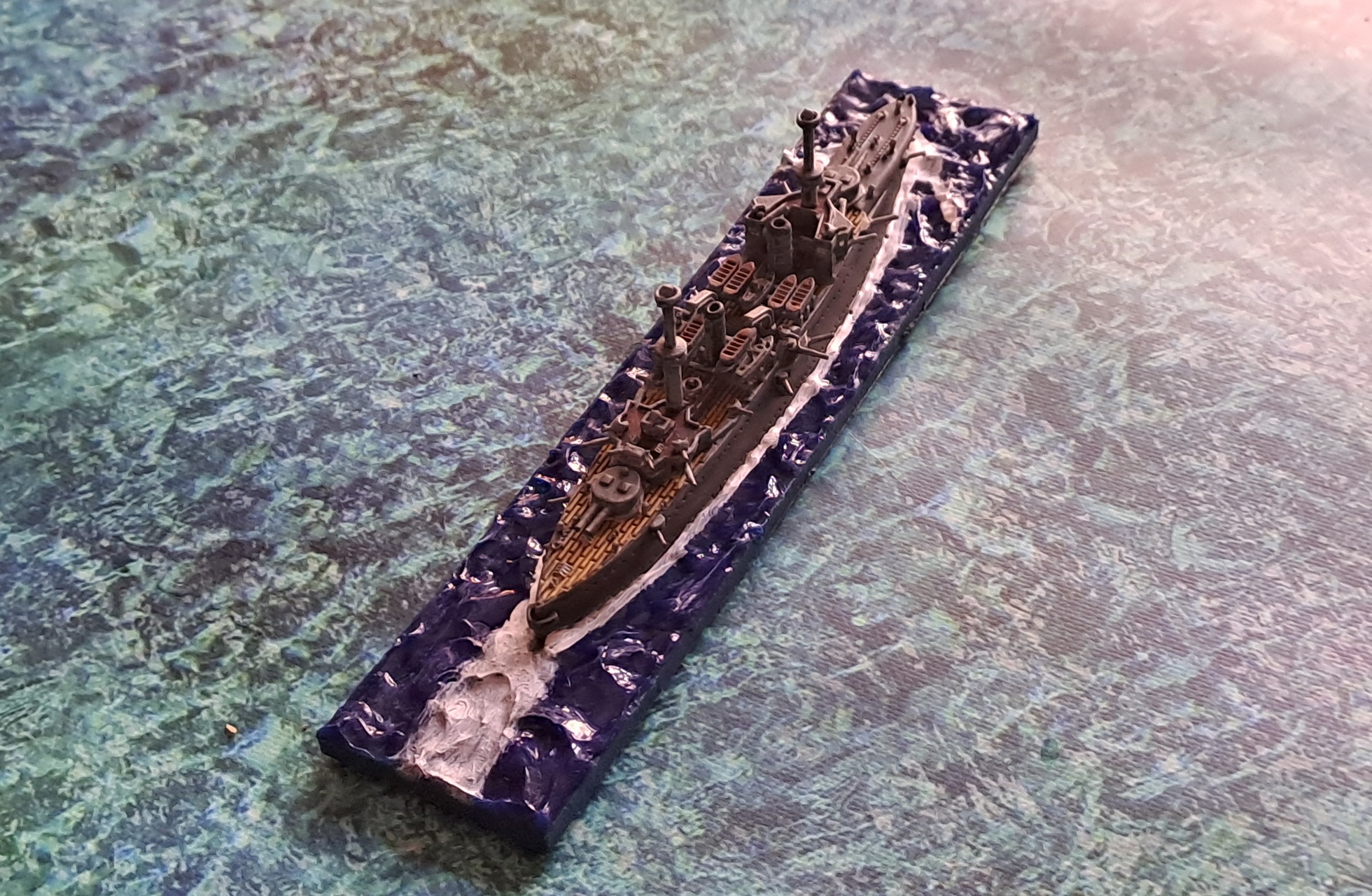
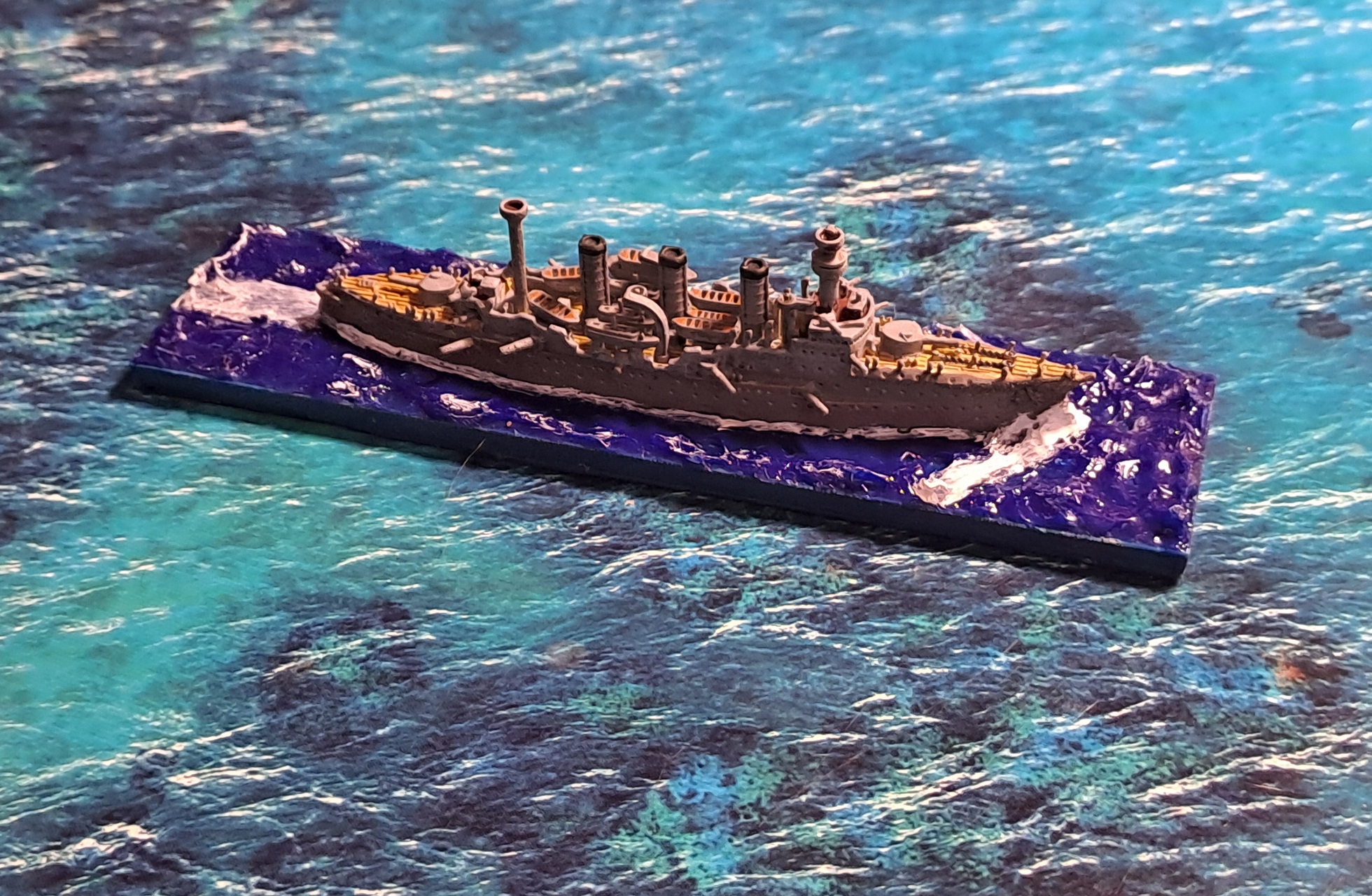
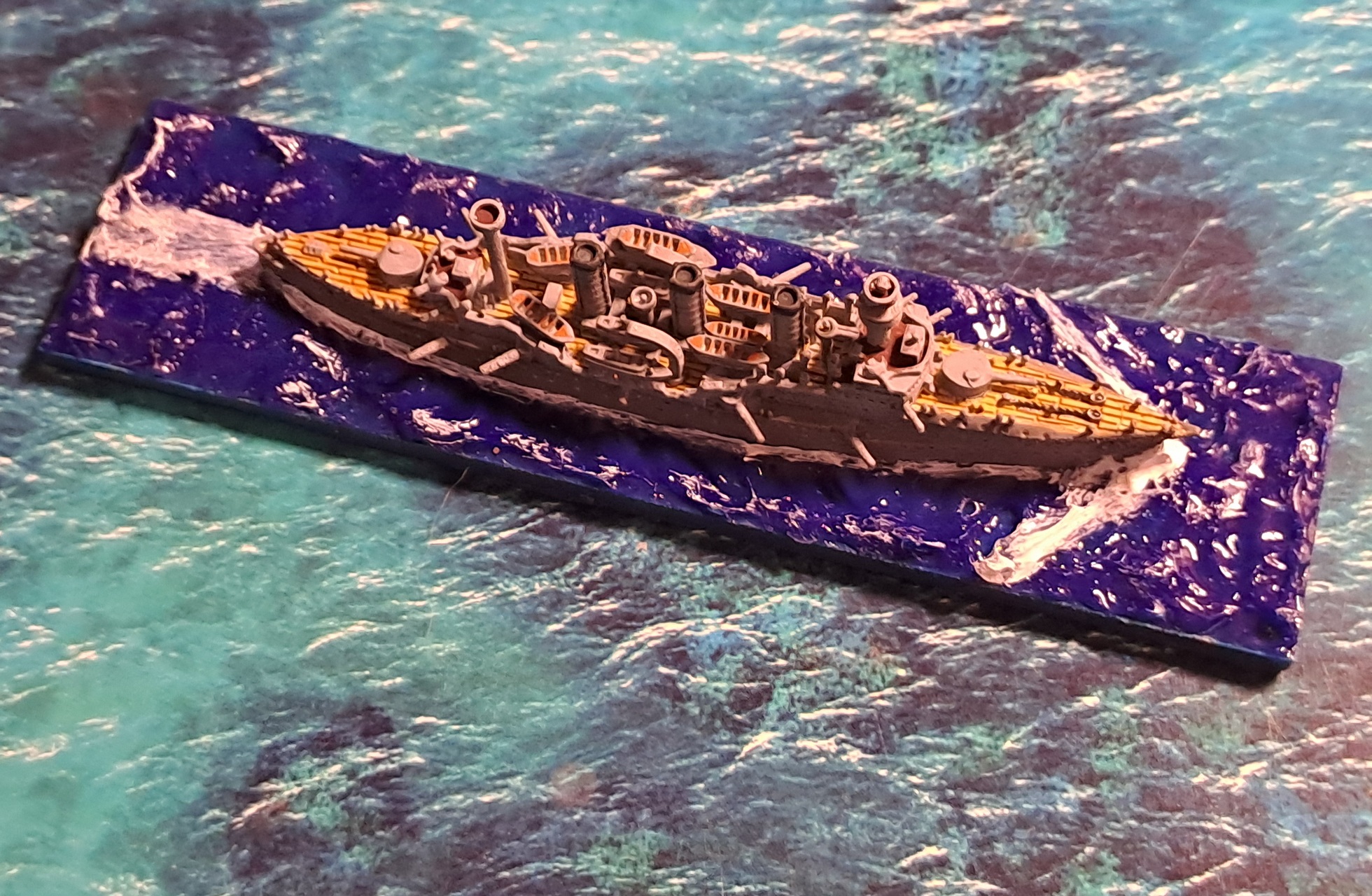
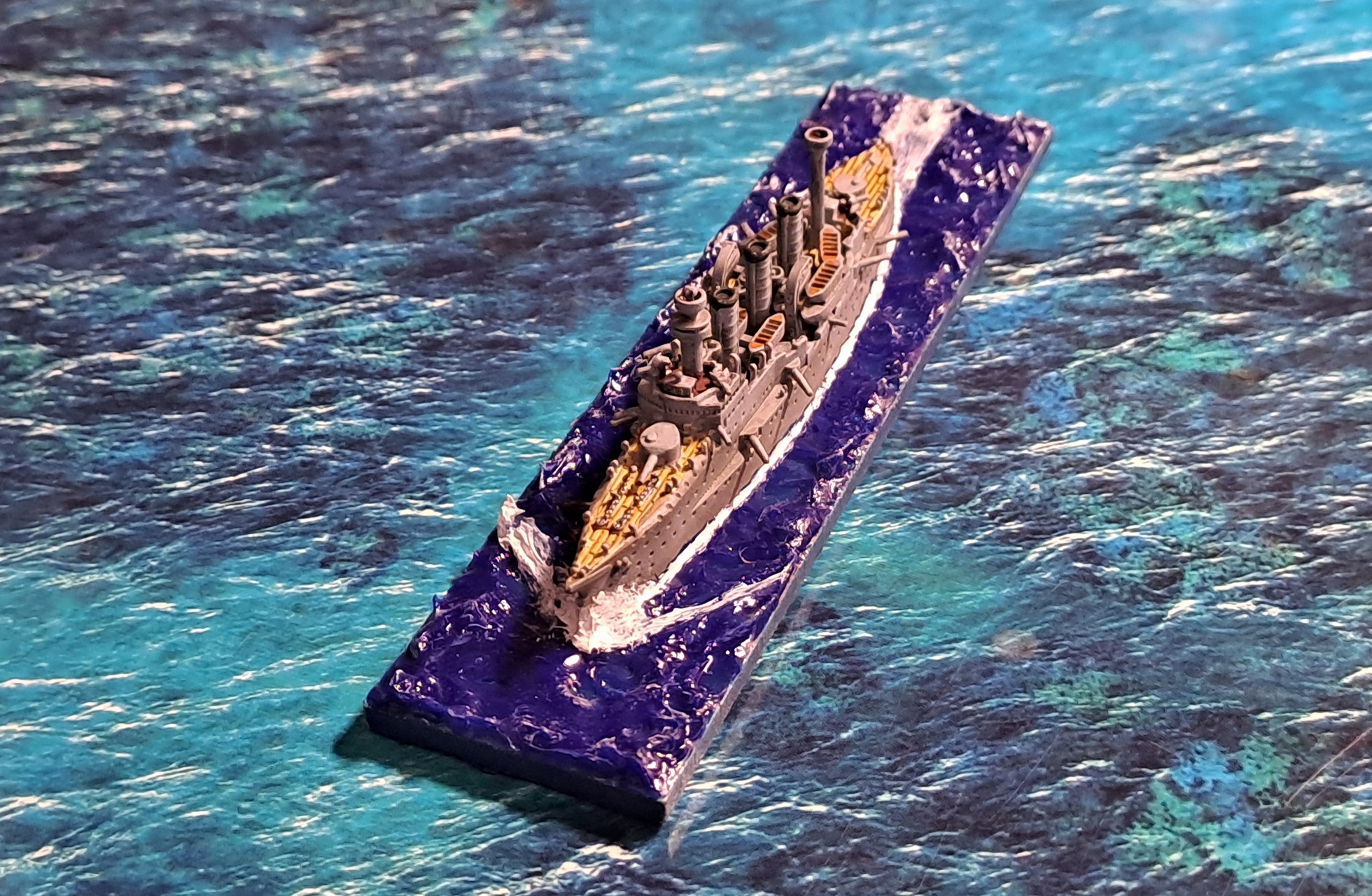
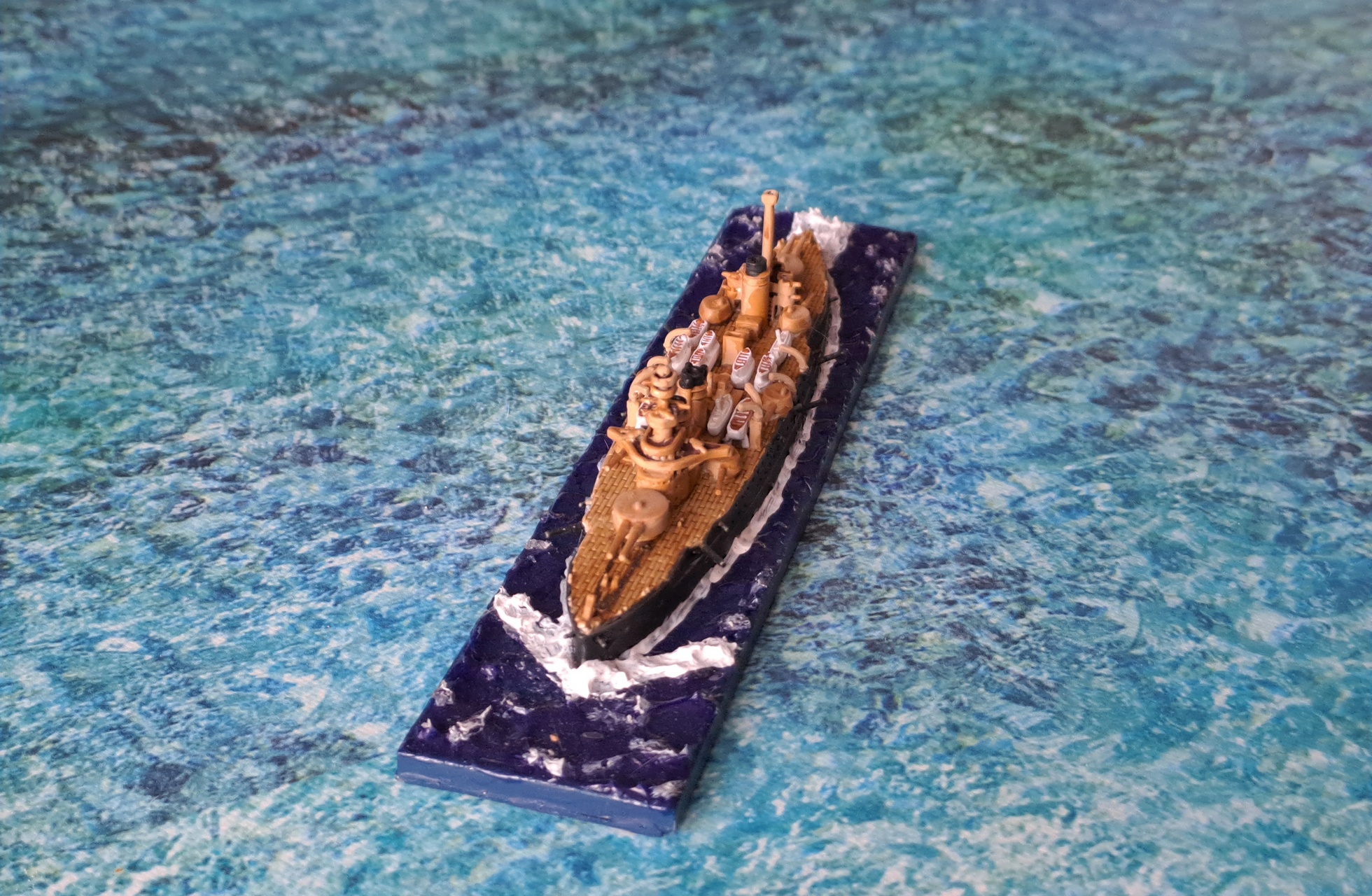
🇬🇧 Recently, I managed to launch the battleship Liberté — although this kit can also be used to build the battleship République. ⚓

With her launch, Cornholio has gained another battleship with a fighting chance against King Edward or the Martians. 🇫🇷🌊

The République-class consisted of two pre-dreadnought battleships built for the French Navy in the early 1900s. Their construction was a clear signal of France’s departure from the Jeune École concept and from building small battleships displacing no more than 12,000 tons. République and Patrie displaced 14,870 tons and measured 135 metres long, with a beam of 24.25 metres and a draught of 8.2 metres. Powered by three triple-expansion steam engines and 24 Niclausse boilers, they could reach 19 knots and carried a crew of around 750.

Their main armament included four 305 mm (12 in) guns in two twin turrets, supported by eighteen 164 mm (6.5 in) guns, twelve 65 mm (2,6 in) guns, and six 47 mm guns for close defence. Armour protection reached 280 mm on the belt and 360 mm on turrets.

After their launch, they became the most powerful French battleships. Already during construction, it was noticed that other navies were introducing a higher calibre of secondary artillery, but the work on the first two vessels was too far advanced; therefore, heavier guns were only introduced with the Liberté class.

République-class ships are powerful pre-dreadnoughts with strong armament and very good armour, able to withstand heavy fire while commanding the battle line.

* – description of the Liberté i République by GMBoardgames.

🇵🇱 W ostatnich czasie udało mi się zwodować pancernik Liberté – chociaż z tego zestawu można złożyć również pancernik République. ⚓

Wraz z jego wodowaniem Cornholio doczekał się kolejnego pancernika mającego szanse z Królem Edwardem czy Marsjanami. 🇫🇷🌊

Oczywiście to dopiero początek — w przyszłości na pewno zostanie wzmocniona kolejnymi jednostkami.

Typ République obejmował dwa pancerniki przeddrednoty zbudowane dla francuskiej marynarki na początku XX wieku. Ich konstrukcja była wyraźnym sygnałem odejścia Francji od koncepcji „Jeune École” i od budowy mniejszych pancerników o wyporności nieprzekraczającej 12 000 ton. République i Patrie miały wyporność 14 870 ton, długość 135 metrów, szerokość 24,25 metra i zanurzenie 8,2 metra. Trzy maszyny potrójnego rozprężania i 24 kotły Niclausse pozwalały osiągnąć 19 węzłów. Załoga liczyła około 750 ludzi.

Główne uzbrojenie obejmowało cztery działa kal. 305 mm w dwóch wieżach podwójnych, wspierane przez osiemnaście dział kal. 164 mm, dwanaście dział kal. 65 mm i sześć dział kal. 47 mm do obrony bliskiej. Opancerzenie sięgało 280 mm na pasie burtowym i 360 mm na wieżach artylerii głównej.

Po wodowaniu stały się najpotężniejszymi francuskimi pancernikami. Już w trakcie ich budowy zauważono, że marynarki innych państw wprowadzają silniejsze działa artylerii średniej, jednak prace nad pierwszymi dwoma okrętami były zbyt zaawansowane, aby wprowadzać zmiany – dlatego dopiero w typie Liberté zastosowano cięższe działa.

Pancerniki typu République to potężne przeddrednoty o silnym uzbrojeniu i bardzo dobrym opancerzeniu, zdolne wytrzymać silny ostrzał i przewodzić linii bojowej.

* – opis Liberté i République wg GMBoardgames.
🇬🇧 Summary:
– This kit gives you the option to build one of two battleships: Liberté or République.
– The assembly itself requires a bit of patience, as the kit includes boats and the cranes used to lower them into the water. The model itself is pleasant to put together – in my case, I decided to build Liberté.
– So, what are the differences between Liberté and République? Apart from a cosmetic difference in the amount of light artillery -one gun fewer per broadside on République – the biggest difference concerns the medium artillery. République has a total of nine medium guns per broadside with a range of 30″, while Liberté has only five on each broadside, but with a range of 38″ and much better penetration.
– Since I have told you about the differences, it is time to discuss this class of ship. Liberté/République are characterised by very good armour and good speed for ships of this class. Their light artillery is not as numerous as on Russian ships, while their heavy artillery has a slightly shorter range than, for example, the heavy guns of Borodino or Tsesarevich, but offers greater penetration. The ship also has a ram, which can sometimes come in handy 😉 .
– These ships are worth their cost: 865 points for Liberté and 870 points for République.

🇵🇱 Podsumowanie:
– Ten zestaw oferuje możliwość sklejenia jednego z dwóch pancerników czyli: Liberté lub République.
– Samo sklejanie wymaga odrobiny cierpliwości, ponieważ zawiera łodzie oraz żurawie do ich spuszczania na wodę, sam model jest przyjemny w montażu – u mnie padło na złożenie Liberté.
– Czym się więc różnią od siebie Liberté i République? Poza kosmetyczną różnicą w ilości lekkiej artylerii – jedno działo mniej na burtę u République największa różnica dotyczy średniej artylerii – République ma łącznie dziewięć średnich dział na burtę o zasięgu 30″, Liberté ma ich tylko pięć na każdą burtę, ale za to o zasięgu 38″ i o wiele lepszym przebiciu.
– Skoro opowiedziałem Wam o różnicach, to pora omówić te klasy okrętu – Liberté/République cechują się bardzo dobrym pancerzem i dobrą prędkością jak na okręt tej klasy. Lekka artyleria nie jest tak liczna jak w przypadku okrętów rosyjskich, za to ciężka artyleria ma nieco mniejszy zasięg od np. ciężkich dział Borodino czy Cesarewicza, za to większą siłę przebicia. Okręt ma również taran, który czasem się przydaje 😉 .
– Okręty są warte swojej ceny i kosztują 865 dla Liberté i 870 dla République.

Gods of War: Togo – D`Iberville class 🇫🇷 (🇬🇧EN/🇵🇱PL) Wtorek, Czer 9 2026 

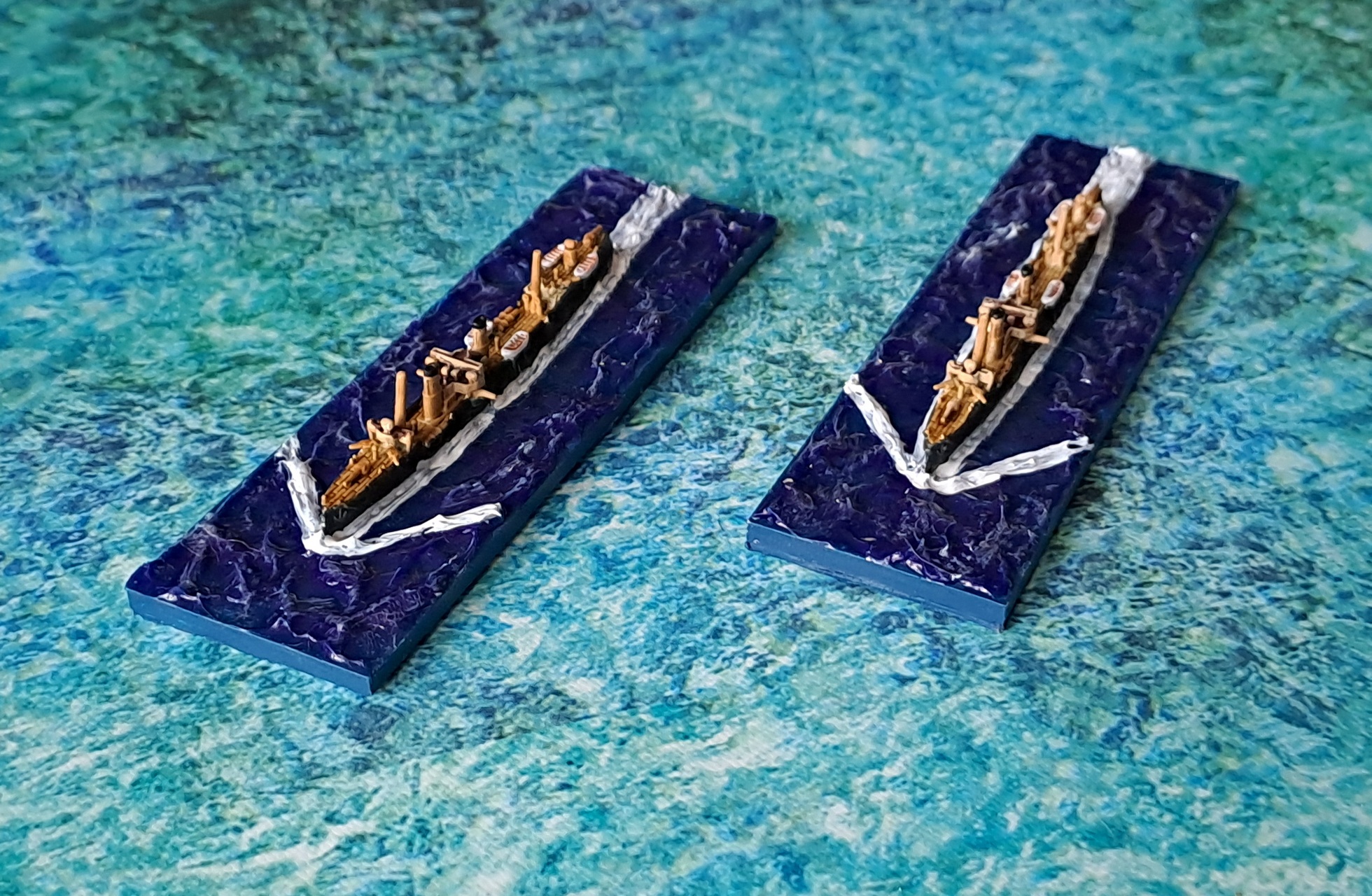
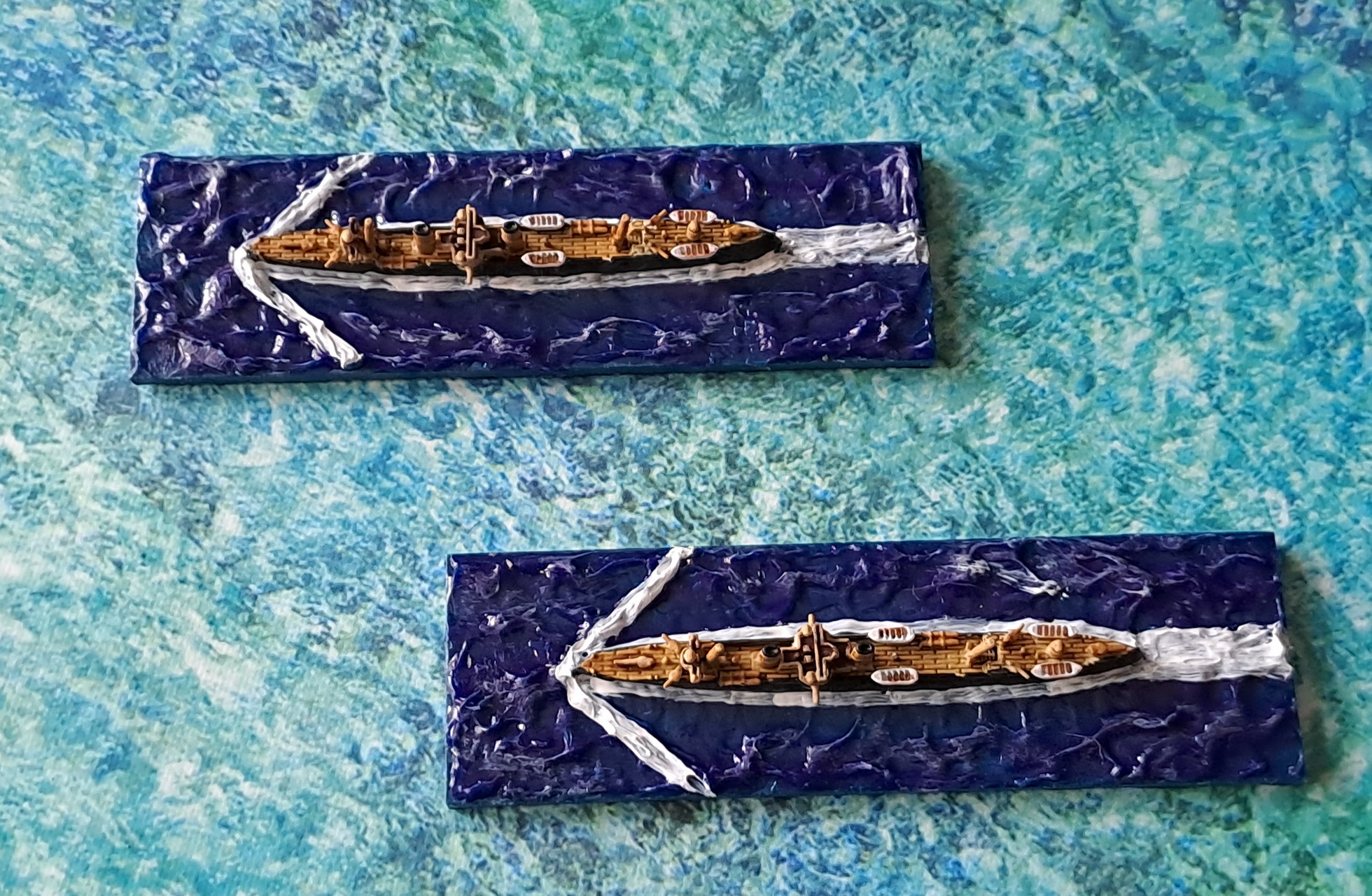
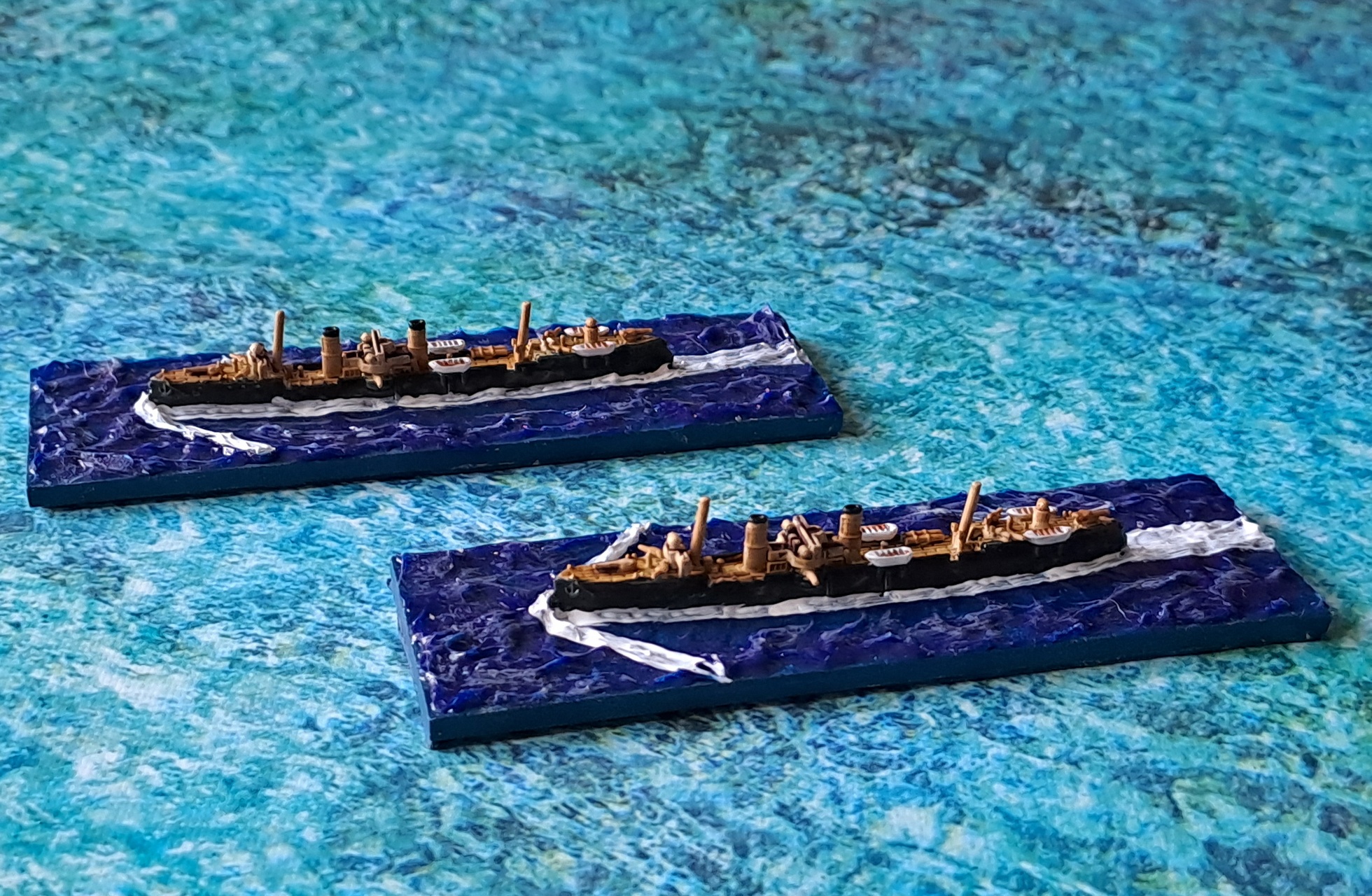
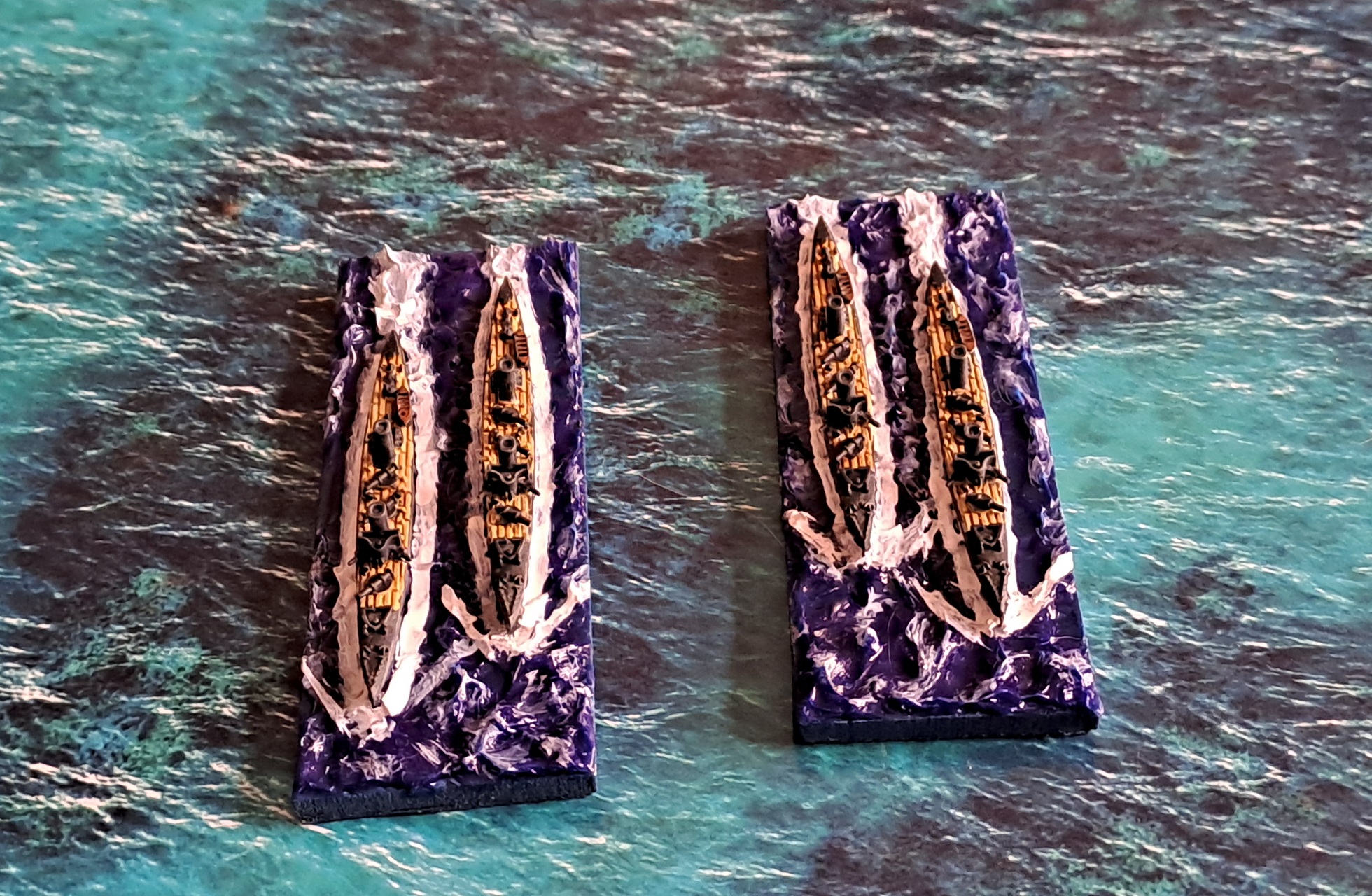
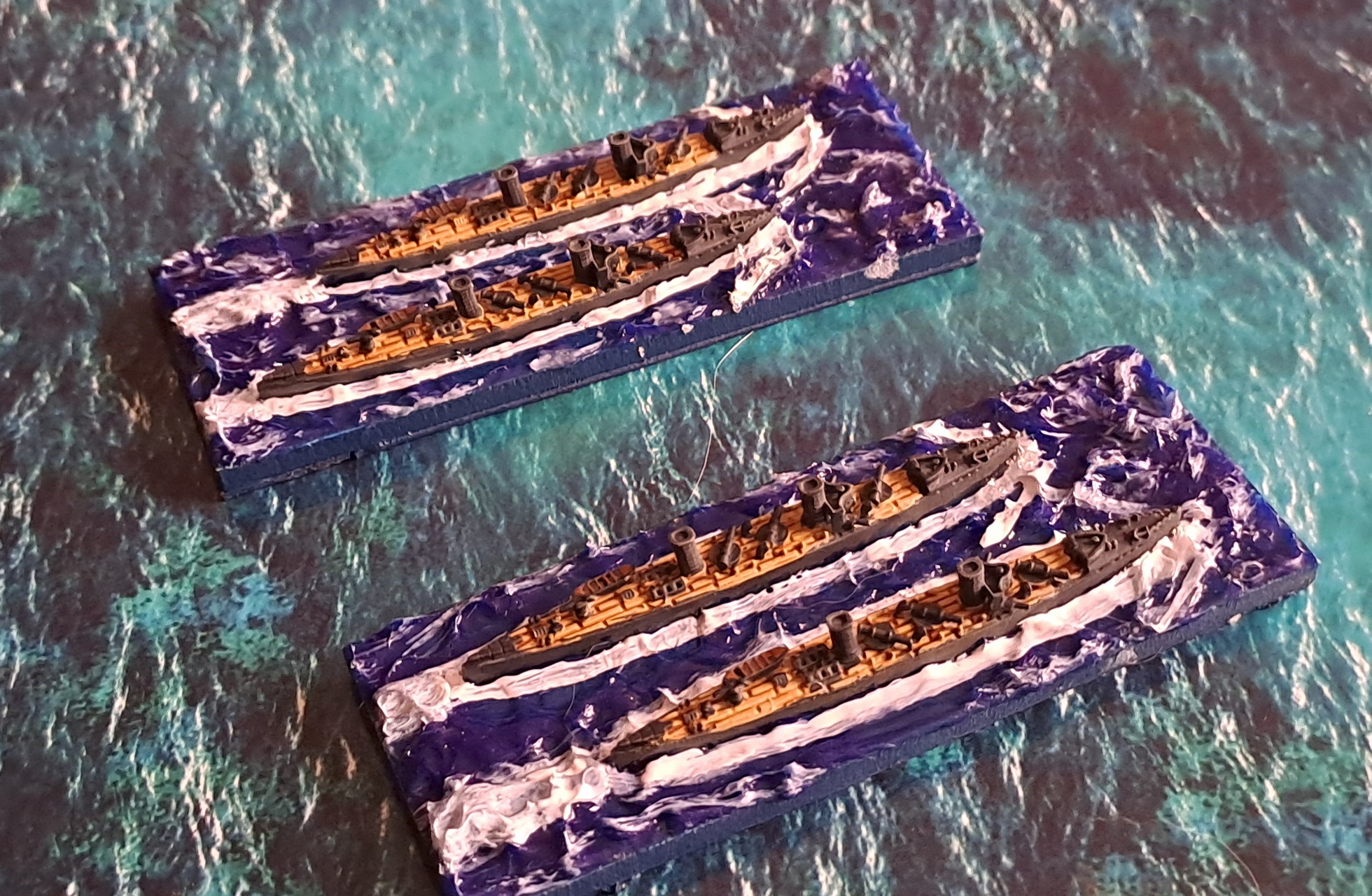
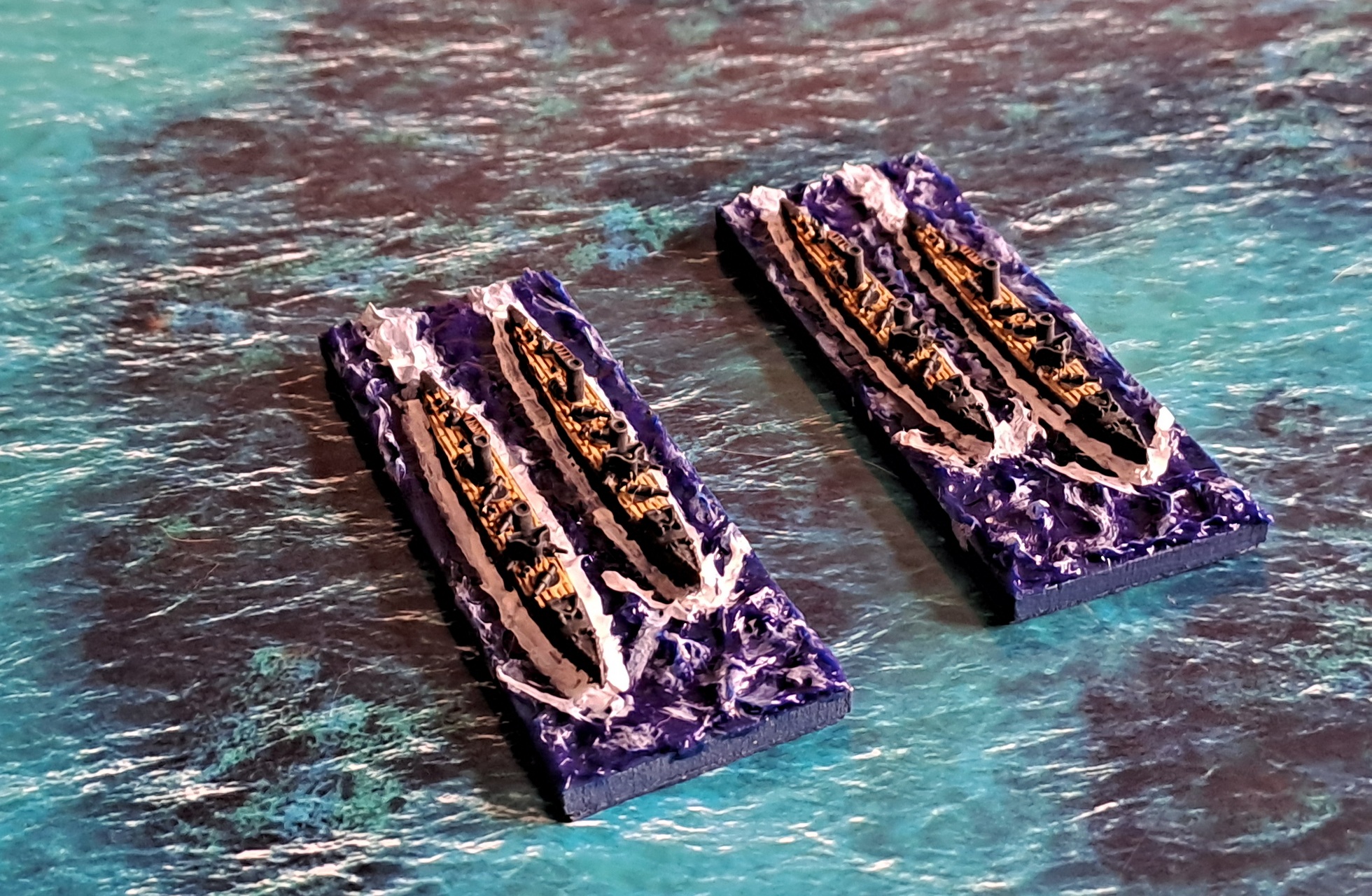
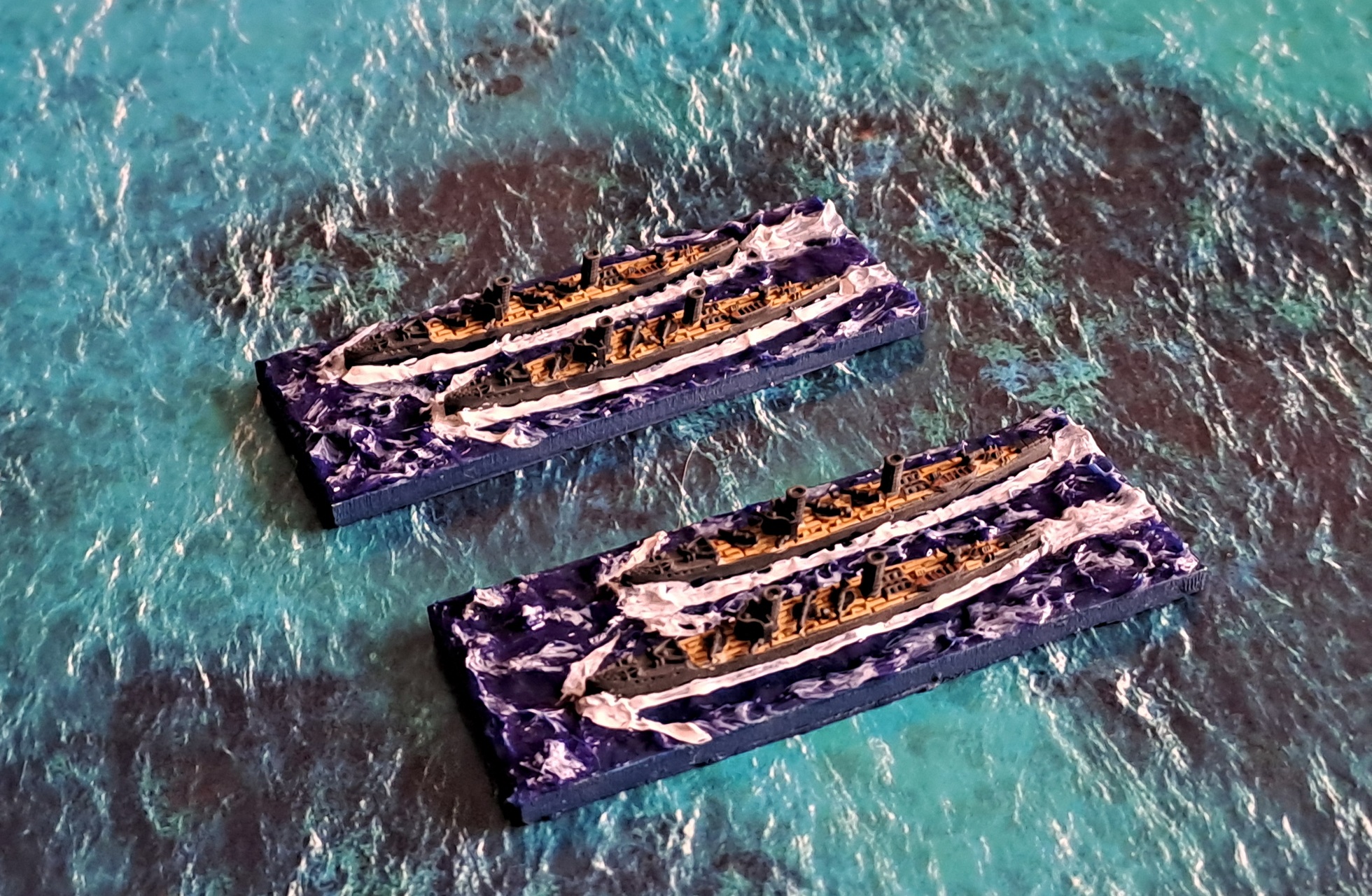
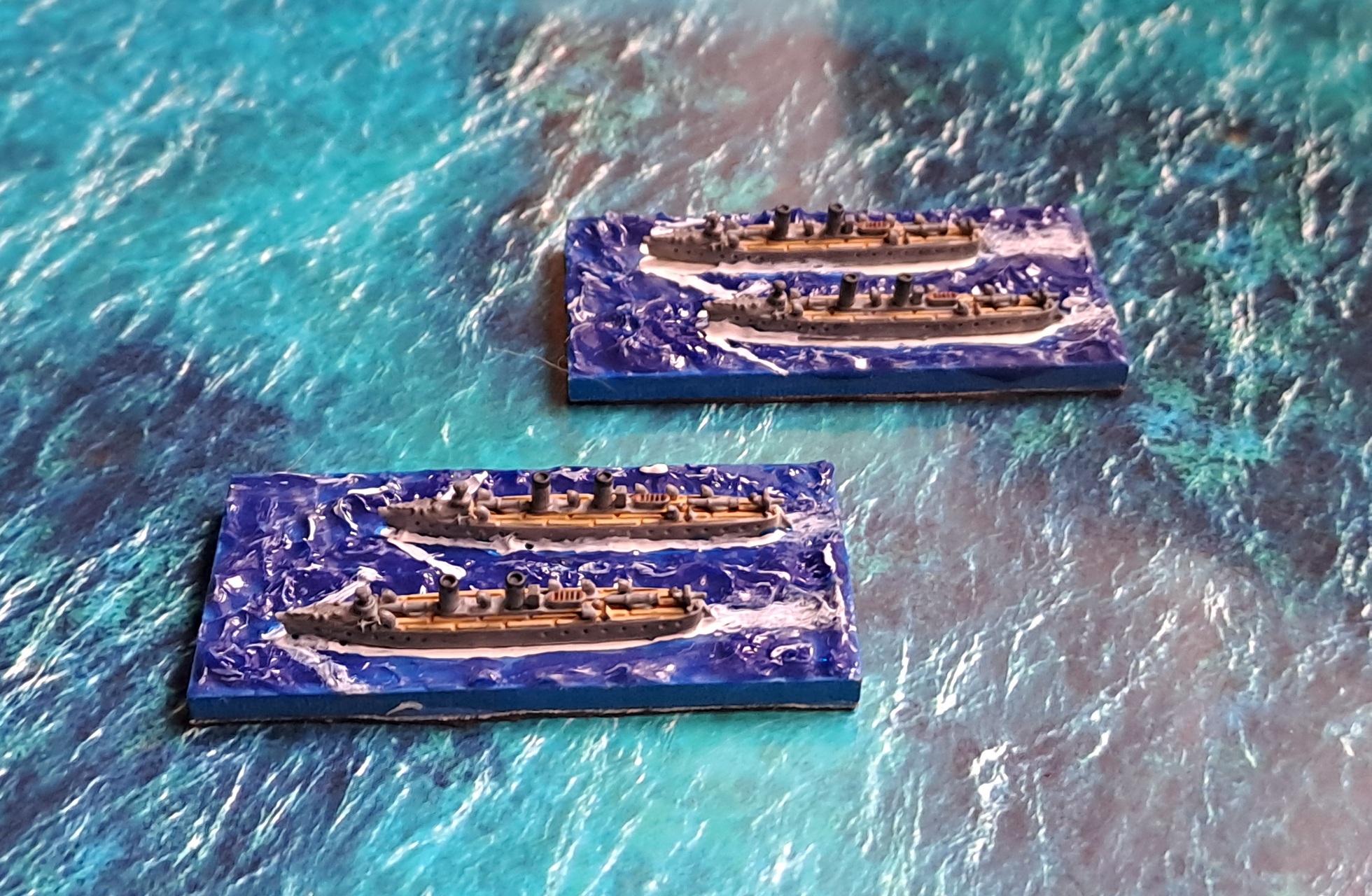
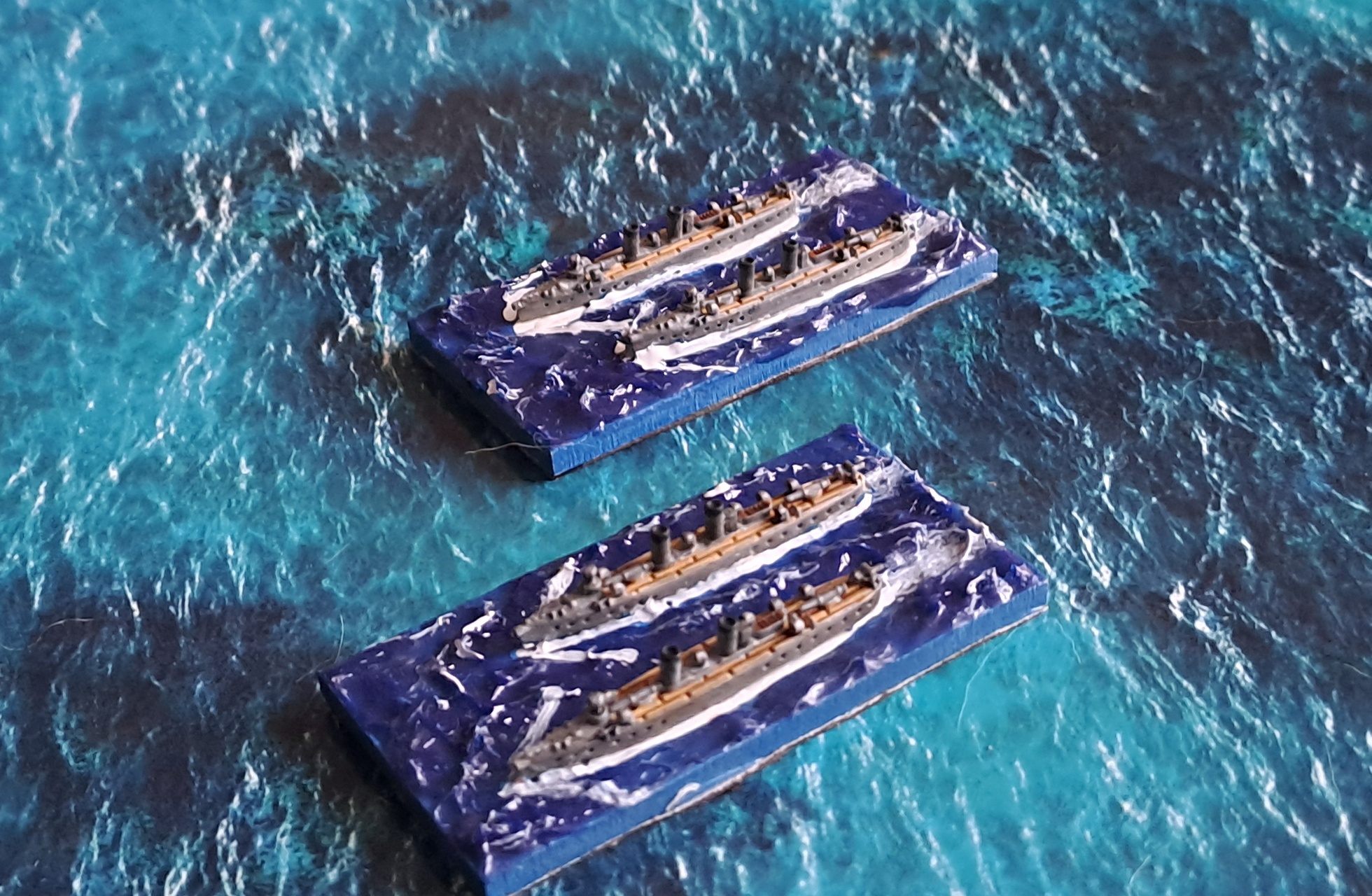
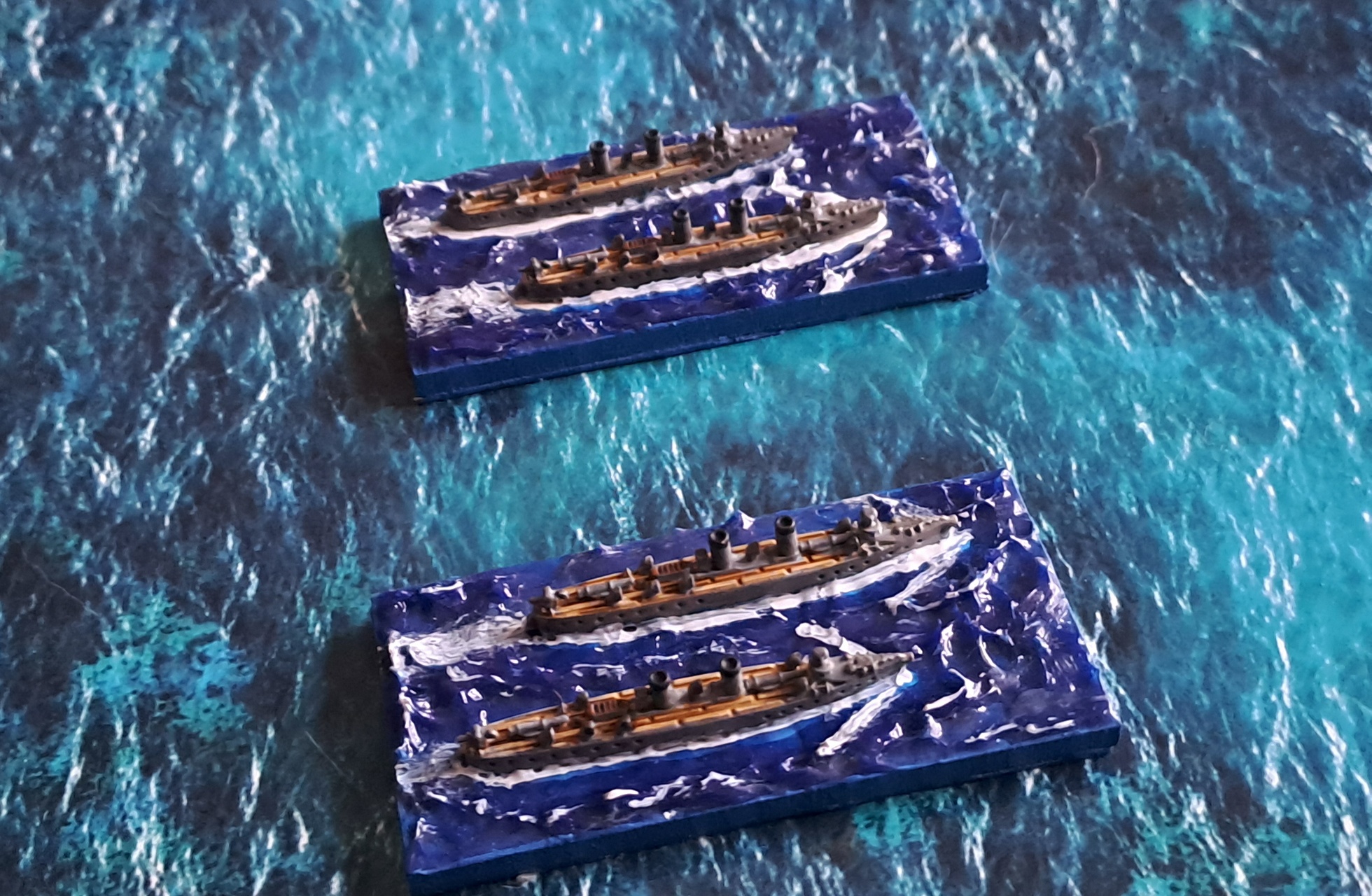
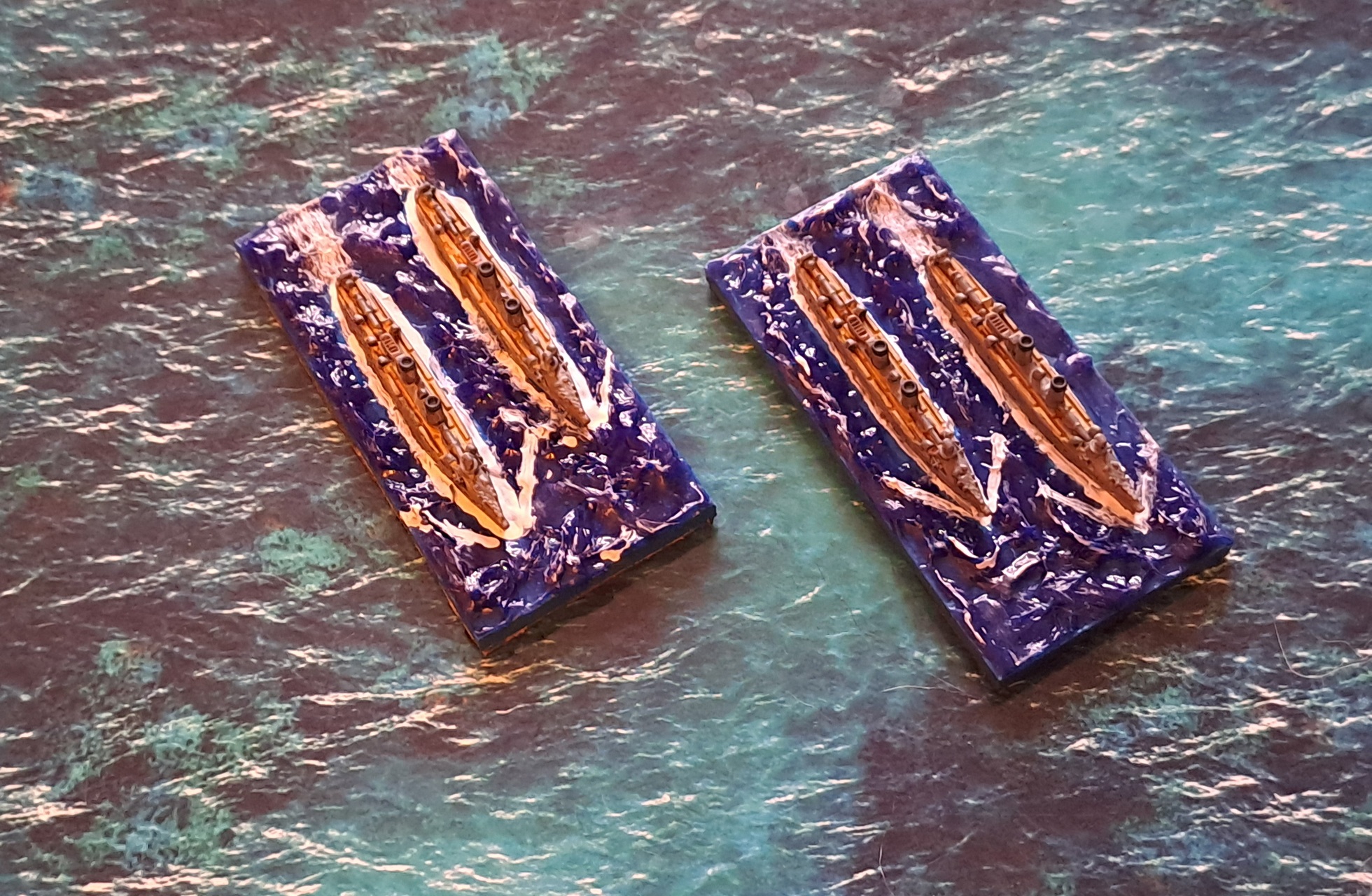
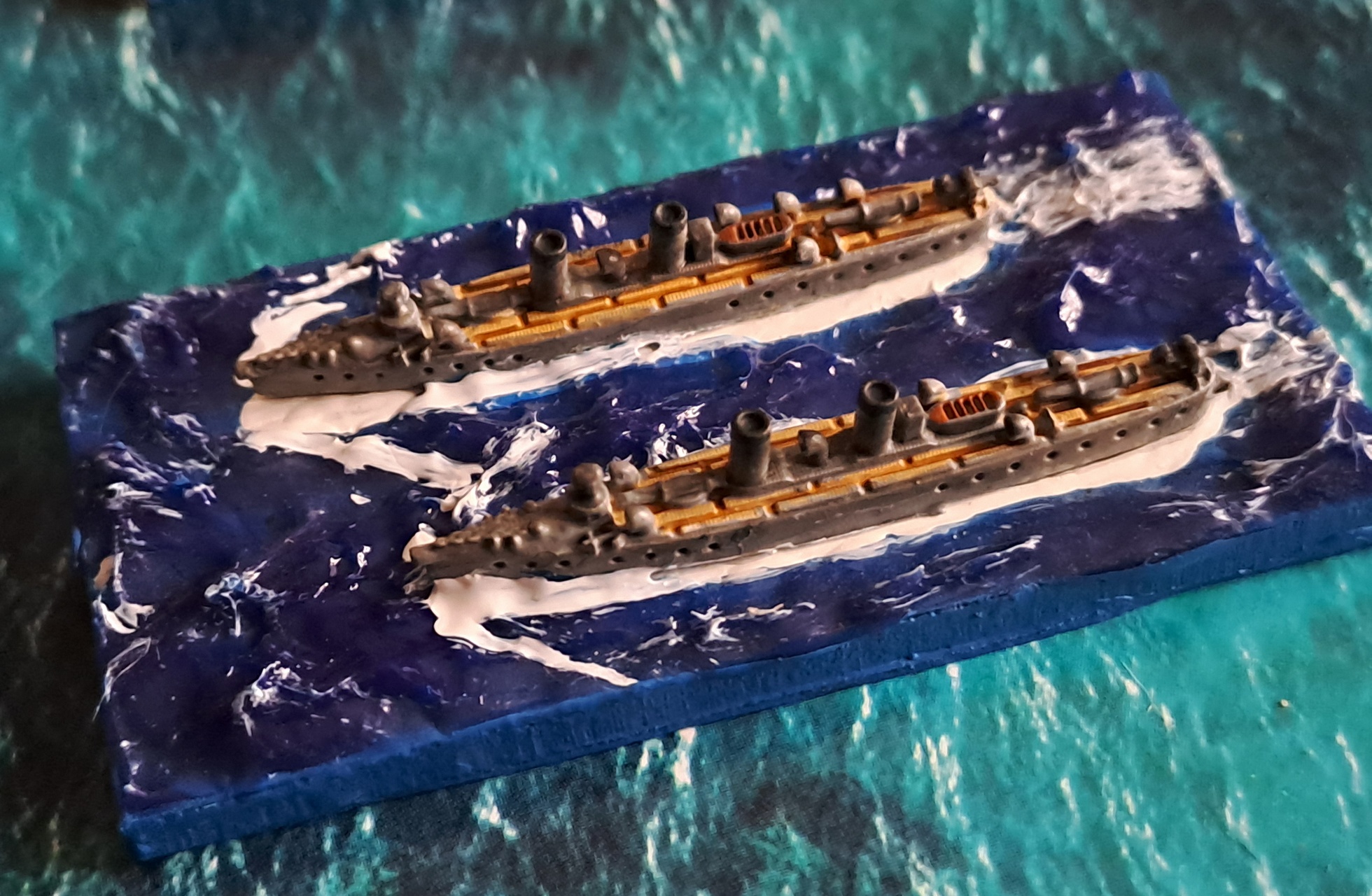
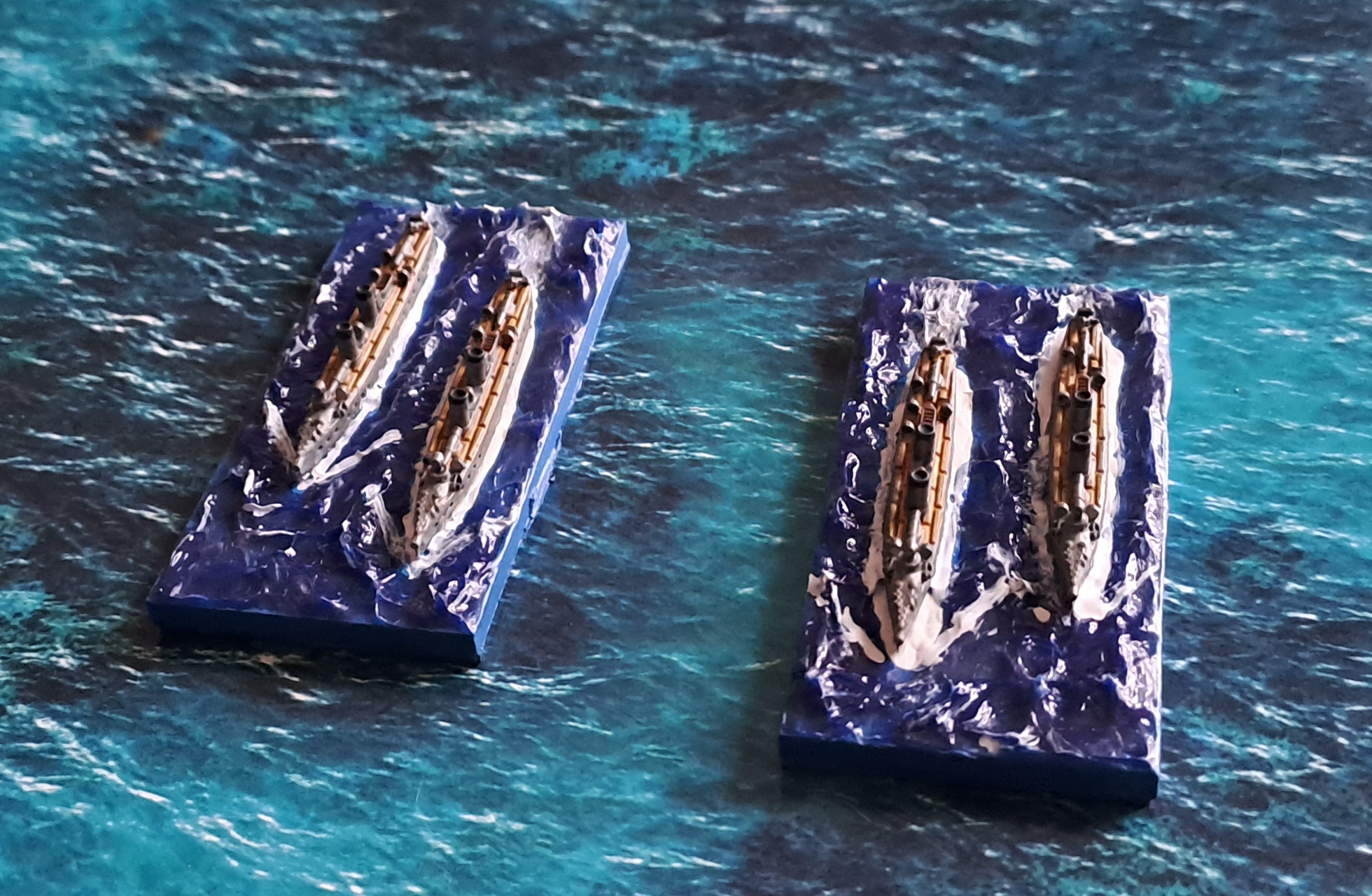
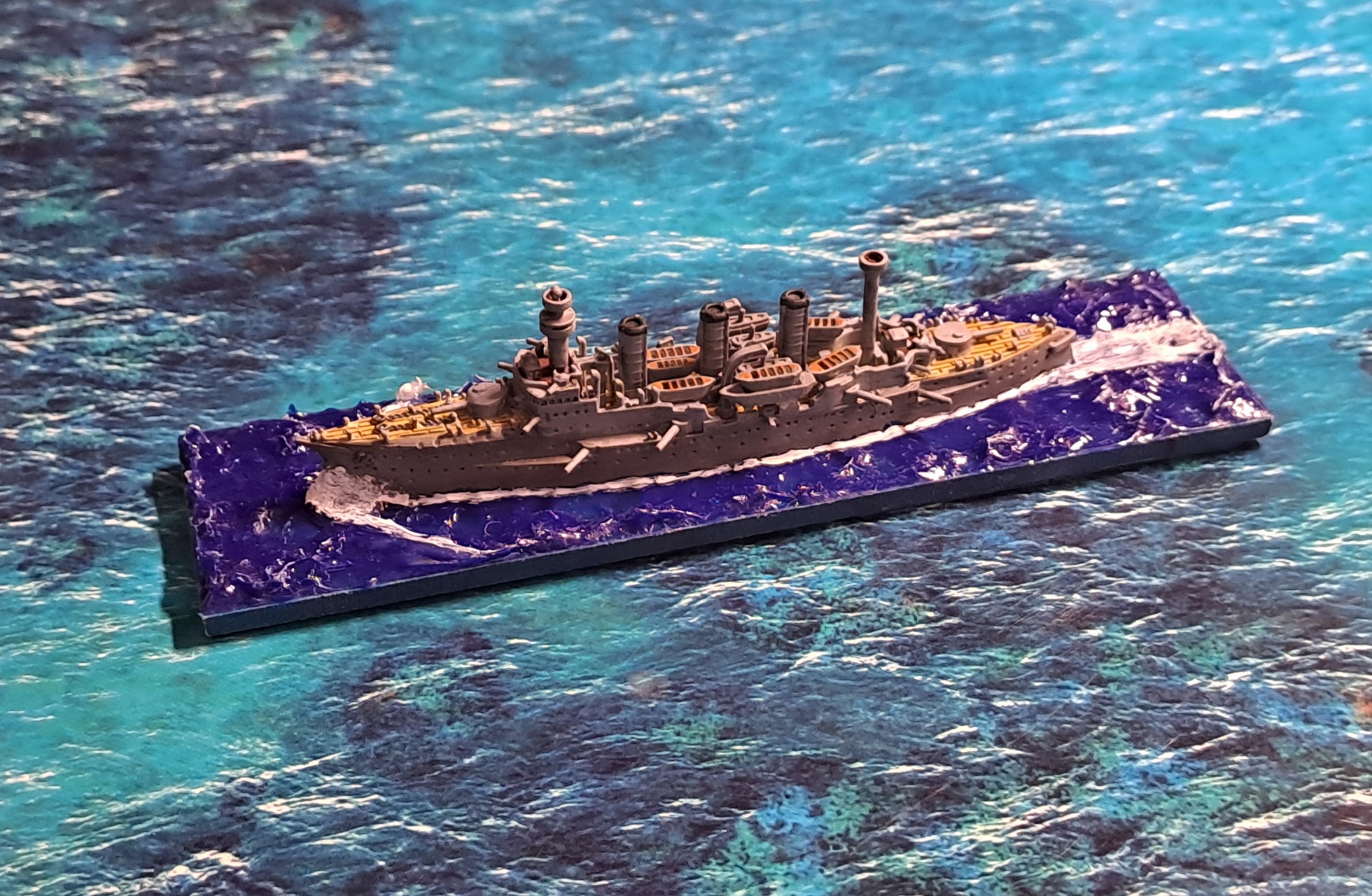
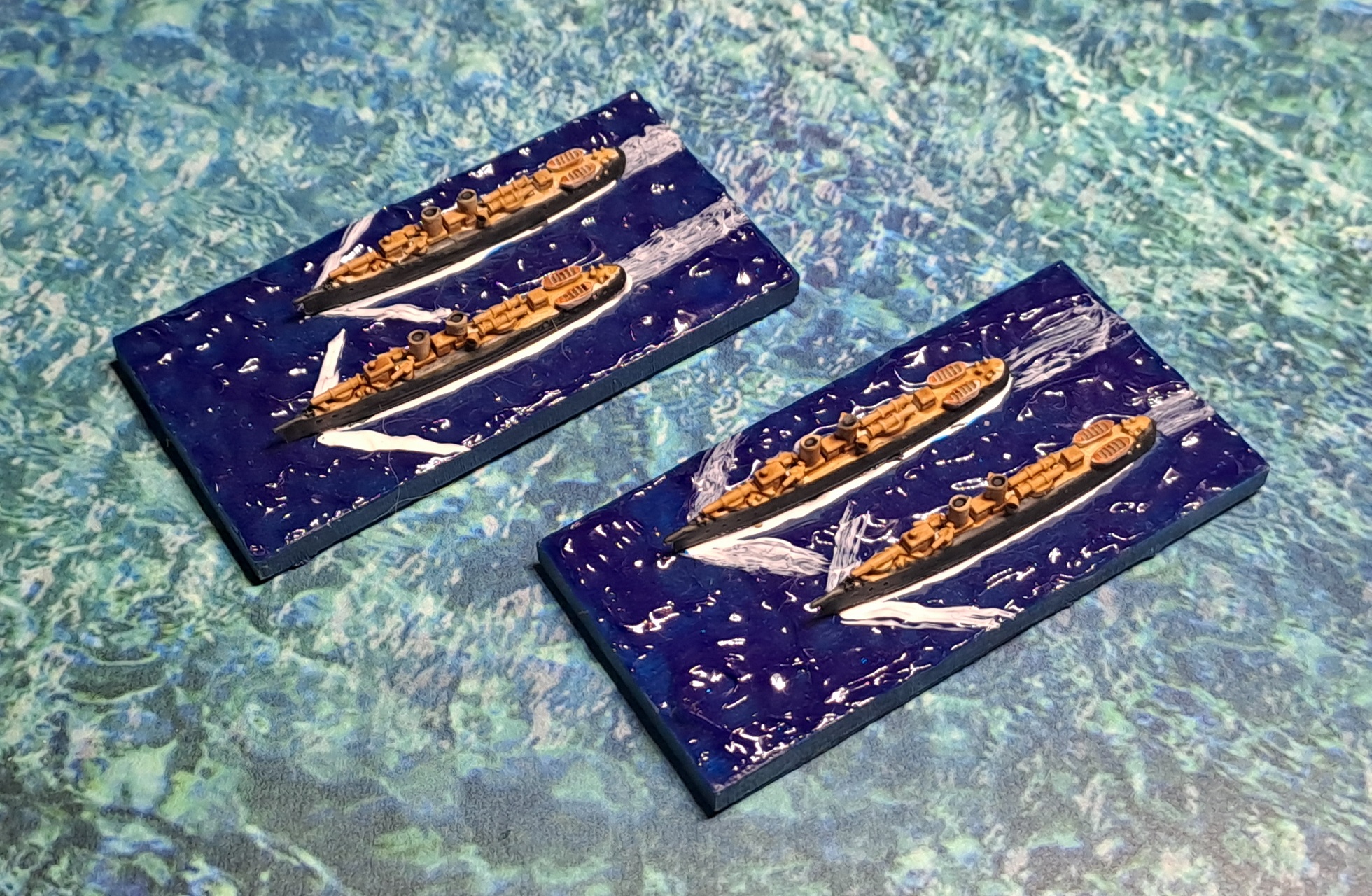
🇬🇧 Recently, along with Gloire and Liberté, I also painted two smaller vessels — D’Iberville-class torpedo cruisers. ⚓

Cornholio’s Marine Nationale squadron has been significantly reinforced, and I still have a second Gloire to finish — the one I got with the vouchers I won at Bolter. 🇫🇷🌊

The D’Iberville-class torpedo cruisers were built in the first half of the 1890s. The first vessel of the series was named in honour of the explorer Pierre Le Moyne d’Iberville. They displaced around 950 tons and measured 80 metres in length. Designed for speed and agility, they were powered by triple-expansion steam engines enabling a top speed of 21 knots, making them one of the fastest vessels of the French Navy at the time.
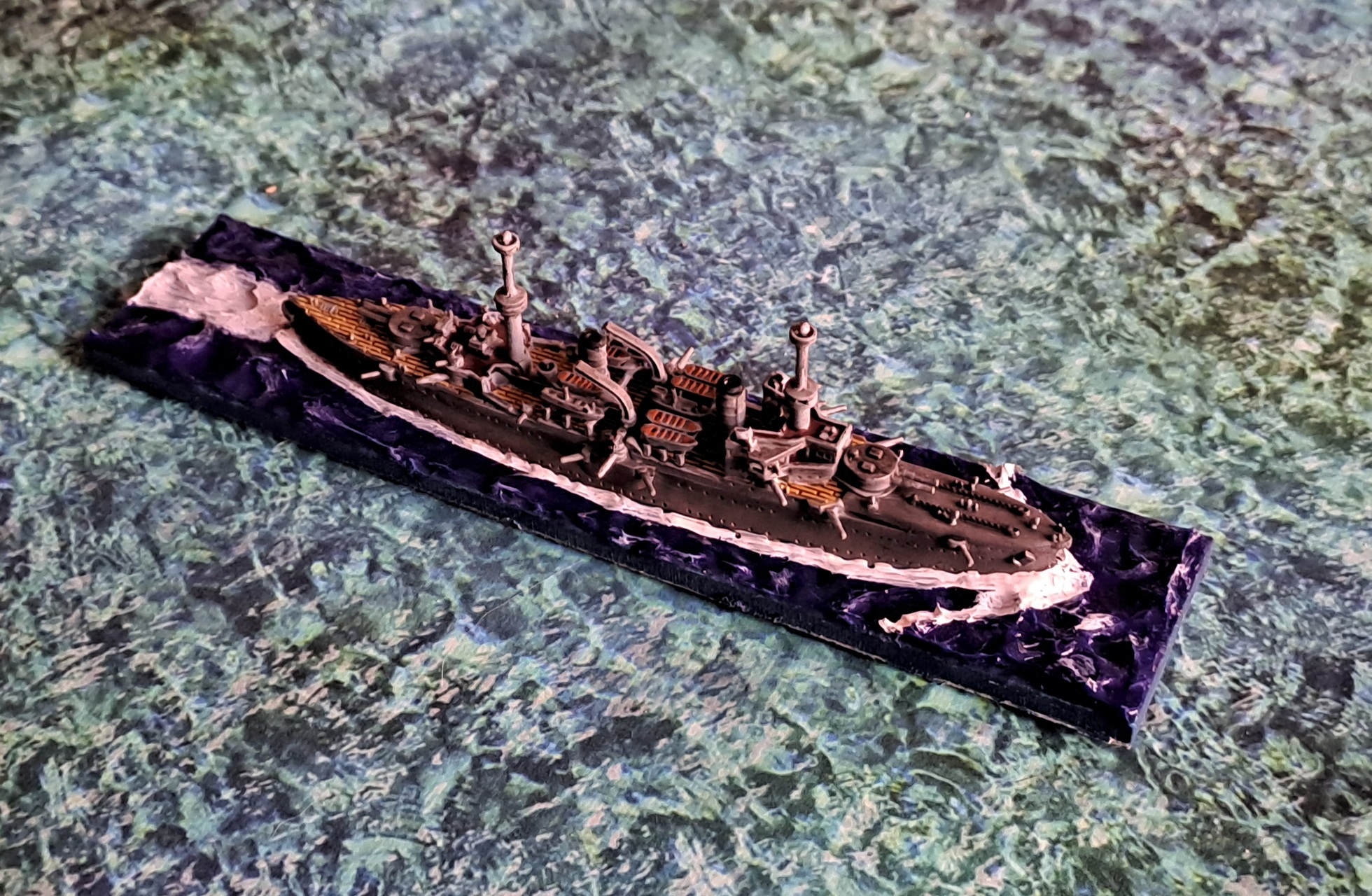
Her armament as a lead ship of the class consisted of one 100 mm (3.9 in) guns, three 65 (3 pounder) guns, seven 47 mm (1.9 in) guns, and six 450 mm (17,7 in) torpedo tubes. This combination allowed D’Iberville to engage both enemy large vessels and torpedo boats, while her speed enabled rapid reconnaissance and raiding missions.

D’Iberville’s service was largely in the Mediterranean and along the French Atlantic coast. She participated in numerous naval exercises and maneuvers, helping refine tactics for torpedo cruisers. Her design and performance influenced subsequent classes of French light ships.

In the game, D’Iberville represents a fast, lightly armoured vessel capable of devastating torpedo attacks, and protecting larger ships from small, aggressive enemy vessels.

* – description of the D`Iberville class by GMBoardgames.

🇵🇱 W ostatnim czasie wraz z Glorią i Libertii pomalowałem również dwie mniejsze jednostki – krążowniki torpedowe D`Iberville. ⚓
Eskadra Marine Nationale w służbie Cornholio została solidnie wzmocniona, przede mną jeszcze do dokończenia druga Gloire, którą wziąłem za wygrane w Bolterze bony. 🇫🇷🌊

Oczywiście to dopiero początek — w przyszłości na pewno zostanie wzmocniona kolejnymi jednostkami.

Krążowniki torpedowe typu D’Iberville zostały zbudowane w pierwszej połowie lat 90. XIX wieku. Pierwszy okręt serii otrzymał imię na cześć odkrywcy Pierre’a Le Moyne d’Iberville. Okręty te miały wyporność około 950 ton i długość 80 metrów. Zaprojektowano je z myślą o szybkości i zwrotności – maszyny parowe potrójnego rozprężania pozwalały osiągać 21 węzłów, co czyniło je jednymi z najszybszych jednostek francuskiej marynarki w tym czasie.

Uzbrojenie okrętu wiodącego obejmowało jedno działo kal. 100 mm, trzy działa kal. 65 mm, siedem dział kal. 47 mm oraz sześć wyrzutni torped kal. 450 mm. Takie połączenie uzbrojenia pozwalało D’Iberville atakować zarówno duże okręty, jak i torpedowce, a prędkość umożliwiała szybkie rozpoznanie i działania rajderskie.

D’Iberville służył głównie na Morzu Śródziemnym i wzdłuż wybrzeży Atlantyku. Brał udział w licznych ćwiczeniach i manewrach marynarki, przyczyniając się do rozwoju taktyki krążowników torpedowych. Jego projekt i osiągi miały wpływ na kolejne klasy francuskich lekkich okrętów.

W grze D’Iberville reprezentuje szybki, lekko opancerzony okręt, zdolny do niszczących ataków torpedowych oraz ochrony większych jednostek przed małymi, agresywnymi okrętami przeciwnika.

* – opis klasy D`Iberville wg GMBoardgames.

🇬🇧 Summary:
For a fourth-class ship, it is quite a large model – and there are two in the box, each with its own base.
– The ship has better armour than most units of this class in the game. It also has six torpedoes – the same number as, for example, the Russian Bujny class. Apart from torpedoes, it has a medium-calibre gun on the bow and a small number of light guns on both broadsides and at the stern. It is slower than most torpedo boats — after all, it is still a torpedo cruiser. A huge advantage is the ram.
– I think that its cost of 80 points means it will appear in more than one Marine Nationale squadron.

🇵🇱 Podsumowanie:
– Jak na czwartą klasę jest to całkiem spory model – a w pudełku są dwa, każdy ma swoją podstawkę.
– Okręt dysponuje lepszym pancerzem od większości występujących w grze jednostek tej klasy, poza tym posiada sześć torped – tyle co np. rosyjska klasa Bujny. Poza torpedami posiada armatę średniego kalibru na dziobie oraz nieliczną lekką artylerię na obu burtach i na rufie. Jest wolniejszy od większości torpedowców – mimo wszystko jest to krążownik torpedowy. Olbrzymią zaletą jest taran.
– Wydaje mi się, że koszt 80 punktów sprawi, że będzie się pojawiał w niejednej eskadrze Marine Nationale.

Gods of War: Togo – Gloire class 🇫🇷 (🇬🇧EN/🇵🇱PL) Poniedziałek, Czer 8 2026 

🇬🇧 Some time ago, I managed to finish a French Gloire-class cruiser. ⚓ This ship has already joined the rest of Cornholio’s squadron. 🇫🇷🌊

At the end of the 19th century, various factions within the French Navy had differing visions of the role armoured cruisers were meant to play. The Gloire class was created as a compromise: it was concluded that a sufficiently large armoured cruiser could serve both as a raider and as a ship capable of accompanying the fleet. With a displacement of almost 10,000 tons, it could reach a speed of 21 knots and was armed with two 194 mm guns, eight 164.7 mm guns mounted in turrets and casemates, six 100 mm guns, as well as 22 light guns and five torpedo tubes. It was therefore a ship with considerable firepower, good armour protection, and high speed.

Five ships of this class were built and entered service from 1904 onwards. One of them, Sully, struck uncharted rocks in Asia, while the remaining four served during the First World War. They were scrapped during the interwar period. The longest-serving ship was Condé — converted first into a barracks ship and later into a target ship, she was sunk by Allied aircraft in 1944, 40 years after entering service.

The Gloire class is a very valuable addition to the Marine Nationale, offering an interesting alternative to other armoured cruisers. Thanks to its characteristics, it is capable of engaging any ship of this class in any enemy fleet on equal terms.

* – description of the Gloire class translated from Polish version.

🇵🇱 W ostatnich czasie udało mi się ukończyć francuski krążownik klasy Gloria. ⚓ Okręt ten już dołączył do reszty eskadry Cornholio. 🇫🇷🌊

Pod koniec XIX wieku różne frakcje w ramach francuskiej marynarki wojennej miały odmienne wizje na temat roli, jaką miałyby pełnić krążowniki pancerne. Typ Gloire powstał jako kompromis, uznano, że rolę zarówno rajdera, jak i okrętu, który mógłby towarzyszyć flocie, może pełnić odpowiednio duży krążownik pancerny. Dzięki wyporności prawie 10.000 ton, mógł rozwijać prędkość 21 węzłów i był uzbrojony w 2 armaty kalibru 194 mm, osiem kalibru 164,7 mm (w wieżach i kazamatach), sześć kalibru 100 mm, a także 22 lekkie armaty i 5 wyrzutni torped. Był zatem to okręt o pokaźnej sile ognia, dobrym opancerzeniu i szybkości.

Zbudowano 5 jednostek tego typu (oddawano je do służby od 1904 roku), z czego jedna (Sully) wpadła na nieoznaczone skały w Azji, pozostałe cztery walczyły w trakcie I wojny światowej. Zostały oddane na złom w okresie dwudziestolecia międzywojennego. Najdłużej w służbie został Condé – przemieniony na okręt koszary i potem okręt cel – został zatopiony przez alianckie lotnictwo w 1944 roku – 40 lat po wcieleniu do służby.

Typ Gloire jest jest bardzo wartościowym dodatkiem do Marine Nationale, stanowiąc ciekawą alternatywę dla innych krążowników pancernych, dzięki swoim parametrom może podjąć samodzielną walkę z każdym okrętem tej klasy w jakiejkolwiek flocie przeciwnika.

* – opis Glorii wg GMBoardgames.

🇬🇧 Summary:
– A very enjoyable cruiser to paint and assemble. It has numerous boats and cranes, for which it is good to have a bit of patience -and preferably an empty desk, in case any part slips from your hand or tweezers 😉 .
– As a ship for the game, it looks interesting thanks to its numerous medium-calibre guns, as well as quite a lot of light artillery. In addition, it has five torpedoes. What is also important – and something that, for example, Russian cruisers do not have – is that it has very good armour and considerable speed. It does not have a ram.
– If I played Marine Nationale, I would definitely consider a fleet list including Jeanne d’Arc and two Gloria-class ships. Its points cost is 340 points – so there is nothing left to do but start thinking about building cruiser-based lists.

🇵🇱 Podsumowanie:
– Bardzo przyjemny krążownik w malowaniu i składaniu Posiada liczne łodzie i żurawie do których dobrze mieć odrobinę cierpliwości i najlepiej puste biurko, gdyby jakiś element wypadł z dłoni czy pensety 😉 .
– Jako okręt do gry przedstawia się interesująco ze względu na liczną średnią artylerię, a także całkiem sporo lekkiej. Ponadto posiada pięć torped. Dodatkowo co ważne, a czego nie posiadają np. krążowniki rosyjskie posiada bardzo dobry pancerz oraz znaczną prędkość. Nie posiada taranu.
– Gdybym grał Marine Nationale, na pewno pomyślałbym o rozpisce zawierającej Joannę d’Arc oraz dwa okręty klasy Gloria – jego koszt punktowy wynosi 340 punktów – nic tylko myśleć o budowaniu rozpisek na krążownikach.


Gods of War: Togo – S90/G135 torpedo boat 🇩🇪 (🇬🇧EN/🇵🇱PL) Poniedziałek, Mar 16 2026 

🇬🇧 Today I managed to finish S90/G135 torpedo boat division – for the Kaiserliche Marine, the fleet of the German Empire at the turn of the 19th and 20th centuries. So I’m ready to fight Cornholio and his Marine Nationale. ⚓

Although the Germans classified them as torpedo boats, the S90 class ships, displacing around 400 tons, were more akin to contemporary destroyers than torpedo boats. Their design and development were closely tied to one of the primary tactical doctrines of the German Imperial Navy. Due to the Royal Navy’s superiority in the number of battleships and cruisers, the Germans planned their fast torpedo vessels to work closely with the main fleet forces and, at the opportune moment, launch a torpedo attack on enemy battleships or other large vessels. Therefore, their primary role was not reconnaissance or engaging other torpedo boats, but executing torpedo attacks against larger ships during battle. The S90 class was designed with this philosophy in mind. Their artillery armament was relatively weak (for ships of their size), but they were equipped with very powerful torpedo armament.

These ships were mainly built by the Schichau shipyard in Elbląg (36 vessels) and Germaniawerft in Kiel (12 vessels). They were designated with the letters of the shipyards where they were built (S or G). As the shipyards constructed additional ships, they introduced numerous changes, including variations in the size of the ships themselves. For example, the G135 series had slightly stronger artillery armament.

The first ship of this class, S90, participated in the defence of Tsingtao in 1914, where it sank the Japanese cruiser Takachiho with its torpedoes.

* – description of the S90/G135 by GMBoardgames.

🇵🇱 Dziś udało mi się ukończyć dywizjon torpedowców S90/G135 do Kaiserliche Marine – floty Cesarstwa Niemieckiego z przełomu XIX i XX wieku. Teraz jestem gotów by z Cornholio rozegrać starcie z jego Marine Nationale. ⚓

Choć Niemcy klasyfikowali je jako torpedowce, to wypierające około 400 ton, okręty typu S90, były odpowiednikami ówczesnych niszczycieli, niż torpedowców. Ich powstanie i kształt wiąże się z jednym z głównych założeń taktycznych niemieckiej Cesarskiej Marynarki Wojennej. Z uwagi na przewagę Royal Navy w liczbie pancerników, czy krążowników, Niemcy – aby wyrównać szanse – zakładali, iż ich szybkiej jednostki torpedowe będą blisko współpracować z głównymi siłami floty i w odpowiednim momencie wykonają atak na pancerniki, czy inne większe jednostki przeciwnika. Ich głównym zadaniem nie było zatem wykonywanie zwiadu, walka z innymi torpedowcami, lecz atak torpedowy przeciwko dużym jednostkom w trakcie bitwy. S90 zostały zatem zaprojektowane zgodnie z tą właśnie filozofią. Ich uzbrojenie artyleryjskie było relatywnie słabe (jak na jednostki tej wielkości), za to posiadały bardzo silne uzbrojenie torpedowe – ich główną broń.

Okręty tego typu zbudowała głównie stocznia Schichau w Elblągu (36 jednostek) oraz Germaniawerft w Kilonii (12 jednostek). Oznaczono je literami stoczni, w których zostały zbudowane (S lub G). Stocznie te w trakcie budowy kolejnych okrętów, wprowadzały do nich liczne zmiany, w tym w rozmiarach samych jednostek. Np. seria G135 miała nieco silniejsze uzbrojenie artyleryjskie.

Pierwsza z jednostek tego typu – S90 w 1914 roku wzięła udział w obronie Tsingtao, w trakcie której za pomocą swoich torped zatopiła japoński krążownik Takachiho. 

* – opis S90/G135 wg GMBoardgames.

🇬🇧 Summary:
– Another set of torpedo boats which, despite their small size, require quite a bit of attention if you want to paint them neatly. They are enjoyable models to paint, full of the fine details that GM Boardgames has already accustomed us to.
– The box includes two cards – one for S90 and one for G135. They differ primarily in their light artillery armament: G135 is equipped with more powerful guns and has a higher speed. Both half-flotillas, however, have access to six powerful D4 torpedoes, which, when they hit, can seriously damage many a ship – and thoroughly ruin its commander’s mood.
– As befits fourth-class torpedo boats, they are highly manoeuvrable and present a small target, which is one of their major strengths. Their weakness, however, is their shallow draft, which may prove problematic in poor weather conditions.
– The base cost is 140 points for the S90 and 145 for the G135 – not a bad price at all for ships equipped with the best torpedoes in the game.
– The full Gods of War assortment is available at: https://bolter.pl/en_US/index.


🇵🇱 Podsumowanie:
Kolejne torpedowce, które – wbrew swoim niewielkim rozmiarom – wymagają sporo uwagi, jeśli chcemy pomalować je schludnie. To okręty przyjemne w malowaniu, pełne licznych detali, do jakich GM Boardgames zdążyło nas już przyzwyczaić.
W pudełku znajdują się dwie karty – odpowiednio dla S90 oraz G135. Różnią się one przede wszystkim uzbrojeniem artylerii lekkiej: G135 dysponuje mocniejszymi działami i rozwija większą prędkość. Oba półdywizjony mają jednak do dyspozycji sześć potężnych torped D4, które po trafieniu potrafią solidnie uszkodzić niejeden okręt – i skutecznie popsuć humor jego dowódcy.
– Jak na torpedowce czwartej klasy przystało, cechują się wysoką manewrowością i są małym celem, co stanowi ich dużą zaletę. Ich wadą jest natomiast niskie zanurzenie, które może okazać się problematyczne przy złych warunkach pogodowych.
– Koszt bazowy wynosi 140 punktów za S90 i 145 za G135 – nie jest to zła cena za okręty z najlepszymi w grze torpedami.
– Cały asortyment do Bogowie Wojny: Togo jest dostępny tutaj: https://bolter.pl/pl/c/BOGOWIE-WOJNY-TOGO/1787.

Gods of War: Togo – 39-Go 🇯🇵 (🇬🇧EN/🇵🇱PL) Piątek, Mar 13 2026 

🇬🇧 Yesterday I managed to finish 39-Go, another torpedo boats for the Imperial Japanese Navy of Cornholio.

Following the victory in the First Sino-Japanese War (1894-1895), Japan received substantial war reparations, enabling an intensive fleet expansion program. As part of this initiative, the augmentation of torpedo boats, including smaller second-class ones, designed for operations near Japanese shores, was initiated. The construction of the 39-go torpedo boat series began in 1899 at the British Yarrow shipyard, adhering to Japanese specifications.

All vessels of this type participated in the Russo-Japanese War of 1904-1905, achieving modest success.
The 39-go torpedo boat will be an intriguing alternative for players commanding the Japanese navy. Slower and less heavily armed than Japanese destroyers or later torpedo boats, they will, however, be competitively priced, making them a viable choice for players looking to have multiple vessels in their fleet.


* – description of the 39-Go by GMBoardgames.

🇵🇱 Wczoraj udało mi się skończyć 39-Go, kolejny okręt do cesarskiej floty Japonii Cornholio.

Po zwycięstwie w pierwszej wojnie chińsko-japońskiej (1894-1895) Japonia otrzymała znaczne reparacje wojenne, co umożliwiło intensywny program rozbudowy floty. W ramach tej inicjatywy rozpoczęto zwiększenie liczby kutrów torpedowych, w tym mniejszych, drugiej klasy, przeznaczonych do operacji w pobliżu japońskich wybrzeży. Budowa serii kutrów torpedowych 39-go rozpoczęła się w 1899 roku w brytyjskiej stoczni Yarrow, zgodnie z japońskimi specyfikacjami.

Wszystkie jednostki tego typu brały udział w wojnie rosyjsko-japońskiej w latach 1904-1905, osiągając umiarkowane sukcesy. Torpedowiec typu 39-go będzie interesującą alternatywą dla graczy dowodzących japońską marynarką. Wolniejszy i słabiej uzbrojony niż japońskie niszczyciele lub późniejsze torpedowce, jednak będzie konkurencyjnie wyceniony, co czyni go atrakcyjnym wyborem dla graczy, którzy chcą mieć w swojej flocie wiele jednostek.

* – opis 39-Go wg GMBoardgames.

🇬🇧 Summary:
– Small ships that are quite enjoyable to paint.
– Their greatest strength is their six D2 torpedoes. Although their light artillery plays only a symbolic role, these vessels make up for it with good speed and high manoeuvrability, typical of this class. Their weaker points, on the other hand, are their light armour and fragile hull. An additional drawback, as with most ships of this type, is their shallow draft, which can become a real issue in poor weather conditions.
– The base cost is 100 points.
– The full Gods of War assortment is available at: https://bolter.pl/en_US/index.


🇵🇱 Podsumowanie:
Niewielkie, a przy tym całkiem przyjemne w malowaniu okręty.
– Ich największym atutem jest sześć torped D2. Choć artyleria lekka odgrywa tu jedynie symboliczna rolę, jednostki nadrabiają to dobrą prędkością oraz wysoką manewrowością, typową dla tej klasy. Ich słabszą stroną są natomiast lekki pancerz i kruchy kadłub. Dodatkowym utrudnieniem, podobnie jak w przypadku większości tego typu jednostek, jest niskie zanurzenie, które może dać się we znaki przy gorszych warunkach pogodowych.
– Koszt bazowy wynosi: 100 punktów.
– Cały asortyment do Bogowie Wojny: Togo jest dostępny tutaj: https://bolter.pl/pl/c/BOGOWIE-WOJNY-TOGO/1787.

Gods of War: Togo – Roon 🇩🇪 (🇬🇧EN/🇵🇱PL) Poniedziałek, Mar 9 2026 

🇬🇧 Today I managed to finish Roon – another armored cruiser for the Kaiserliche Marine, the fleet of the German Empire at the turn of the 19th and 20th centuries.

To complete the squadron and play the first game, I still need to finish the S90/G135 torpedo boat division and I’ll be able to play a battle with Cornholio against his Marine Nationale. ⚓

The Roon-class armoured cruisers were based on the preceding Prinz Adalbert class, though they incorporated certain improvements. However, not all of these enhancements were successful; for instance, the ships failed to achieve their initially projected speed, casting doubt on their effectiveness as the fleet’s fast wing.

These cruisers were intended not to attack enemy shipping but to operate alongside the main fleet, similar to the Japanese “L” tactic. Unfortunately, the Roon-class ships were too lightly armoured and too slow for this role. Despite these less-than-ideal characteristics, they could still be effectively employed in other capacities, particularly in destroying enemy protected cruisers and smaller vessels, for which their armament and armour would be more than adequate.

* – description of the Roon by GMBoardgames.

🇵🇱 Dziś udało mi się ukończyć Roona – kolejny krążownik pancerny do Kaiserliche Marine – floty Cesarstwa Niemieckiego z przełomu XIX i XX wieku.

Do ukończenia eskadry i pierwszej gry pozostał jeszcze dywizjon torpedowców S90/G135 i będę mógł z Cornholio rozegrać starcie z jego Marine Nationale. ⚓

Krążowniki pancerne typu Roon były oparte na poprzedzającym je typie Prinz Adalbert, aczkolwiek zastosowano na nich pewne udoskonalenia. Nie wszystkie skończyły się sukcesem, gdyż jednostki np. nie osiągnęły zakładanej wcześniej prędkości, przez co ich służba jako szybkiego skrzydła floty stała pod znakiem zapytania. Ich przeznaczeniem miało być bowiem nie uderzanie w nieprzyjacielską żeglugę, ale właśnie współpraca z flotą główną, podobnie jak to czynili np. Japończycy (słynna taktyka “L”).

Niestety do tej roli jednostki typu Roon były zbyt słabo opancerzone i zbyt wolne do swojej roli. Mimo tych nienajlepszych charakterystyk mogą być jednak z powodzeniem wykorzystane do wielu innych ról, przede wszystkim niszczenia krążowników pancernopokładowych i jeszcze mniejszych jednostek przeciwnika, do czego ich uzbrojenie i opancerzenie będzie w zupełności wystarczające.

* – opis Roona wg GMBoardgames.

🇬🇧 Summary:
– Just like the previously painted SMS Fürst Bismarck, this ship was very enjoyable to paint, and the boats did not pose any major difficulties during assembly.
– Two ships of this type were launched, so Roon, unlike the aforementioned SMS Fürst Bismarck, appears in more than a single unit.
– The ship is equipped with numerous medium-caliber guns with above-average range and good penetration. It is also armed with a considerable amount of light artillery, which is typical for German ships. Additionally, it carries four D4 torpedoes, and a successful hit from them can quickly cool many ambitions.
– The armor is quite good for cruisers present in the game-much better than that of Russian cruisers, although weaker than Japanese second-class cruisers. The ship is also equipped with a ram.
Base cost: 385 points.
– The full Gods of War assortment is available at: https://bolter.pl/en_US/index.


🇵🇱 Podsumowanie:
– Podobnie jak poprzednio pomalowany SMS Fürst Bismarck okręt malowało się przyjemnie, łodzie nie sprawiły większych trudności w montażu.
– Zwodowano dwie takie jednostki, tak więc Roon w przeciwieństwie do wymienionego powyżej SMS Fürst Bismarck występuje w więcej niż jednej sztuce.
– Okręt posiada liczną średnią artylerię posiadającą ponad przeciętny zasięg i dobrą siłę przebicia, dodatkowym uzbrojeniem jest liczna jak na okręty niemieckie artyleria lekka. Dodatkowym uzbrojeniem są cztery torpedy D4 których trafienie może skutecznie ochłodzić nie jedną ambicję.
– Pancerz jak na krążowniki występujące w grze jest całkiem dobry, o wiele lepszy od pancerza krążowników rosyjskich, za to gorszy od krążowników japońskich drugiej klasy. Dodatkowo okręt posiada taran.
Koszt bazowy wynosi: 385.
– Cały asortyment do Bogowie Wojny: Togo jest dostępny tutaj: https://bolter.pl/pl/c/BOGOWIE-WOJNY-TOGO/1787.

Gods of War: Togo – SMS Fürst Bismarck 🇩🇪 (🇬🇧EN/🇵🇱PL) Czwartek, Lu 19 2026 

🇬🇧 Today I managed to finish SMS Fürst Bismarck — an armored cruiser for the Kaiserliche Marine, the fleet of the German Empire at the turn of the 19th and 20th centuries.

To complete the squadron and play the first game, I still need to finish the S90/G135 torpedo boat division and Roon. ⚓

SMS Fürst Bismarck was commissioned on 1 April 1900, on the birthday of Chancellor Otto von Bismarck, one of the architects of German unification “by blood and iron”. Interestingly, Bismarck was quite offended when the German Navy decommissioned the old corvette bearing his name. However, he was appeased when he was assured that the next great warship of the Kaiserliche Marine would be named after him. Unfortunately, the Iron Chancellor passed away before Fürst Bismarck was launched.

She was the first German armoured cruiser, an evolution of the Victoria Louise class. Many of the design features used in her construction were later adopted for subsequent German armoured cruisers.

The ship displaced nearly 10,700 tons, with engines capable of reaching almost 19 knots. Her primary armament included four 24 cm guns (in two turrets), twelve 15 cm guns, ten 8.8 cm guns, additionally machine guns and six torpedo tubes.

She had very thick armour, but her belt armour covered a relatively small area, a design approach that was beginning to be abandoned in favour of broader protection, based on lessons from the 1898 Spanish-American War and the 1894-1895 First Sino-Japanese War.

SMS Fürst Bismarck spent much of her career in the Far East, taking part in the suppression of the Boxer Rebellion. Before the First World War, she was converted into a training ship. By then, she was too outdated to have any real combat value and was ultimately disarmed, never taking part in the Great War.

She had a beautiful silhouette, with a distinctive tumblehome hull, and was well-armed for her time, although her relatively low speed was a drawback. Nevertheless, she will prove to be a valuable asset for any admirals commanding the Kaiserliche Marine.

* – description of the SMS Fürst Bismarck by GMBoardgames.

🇵🇱 Dziś udało mi się ukończyć SMS Fürst Bismarck – krążownik pancerny do Kaiserliche Marine — floty Cesarstwa Niemieckiego z przełomu XIX i XX wieku.

Do ukończenia eskadry i pierwszej gry pozostał jeszcze dywizjon torpedowców S90/G135 oraz Roon. ⚓

Krążownik pancerny SMS Fürst Bismarck został wcielony do służby 1 kwietnia 1900 roku, w rocznicę urodzin kanclerza Otto von Bismarcka, jednego z autorów zjednoczenia Niemiec („krwią i żelazem”). Co ciekawe Bismarck obraził się bardzo, kiedy niemiecka marynarka wycofała ze służby starą korwetę, która nosiła jego imię, ale dał się udobruchać, gdy przekonano go, że kolejny, wielki okręt Kaiserliche Marine będzie nosił jego nazwisko. Jednakże żelazny kanclerz zmarł zanim SMS Fürst Bismarck został zwodowany.

Okręt ten był pierwszym, niemieckim krążownikiem pancernym, rozwinięciem typu Victoria Louise. Wiele wykorzystanych w trakcie jego budowy rozwiązań było później powielanych w trakcie budowy kolejnych, niemieckich krążowników pancernych.

Wypierał prawie 10700 ton, a jego maszyny mogły go rozpędzić prawie do prędkości 19 węzłów. Główne uzbrojenie stanowiły cztery armaty kalibru 24 cm (w dwóch wieżach), dwanaście armat kalibru 15 cm i 10 armat kalibru 8.8 cm oraz dodatkowo karabiny maszynowe i sześć wyrzutni torped.

Okręt miał bardzo gruby pancerz, ale pas pancerny pokrywał dosyć małą powierzchnię, co było rozwiązaniem od czego zaczęto odchodzić w konstrukcji okrętów (np. bazując na doświadczeniach wojny 1898 roku, czy wcześniejszej japońsko – chińskiej).

SMS Fürst Bismarck spędził dużą część swojej służby na Dalekim Wschodzie, biorąc m.in. w tłumieniu powstania bokserów. Przed pierwszą wojną światową został przekształcony w okręt szkoleniowy. Zbyt przestarzały, aby mieć realną wartość bojową, został ostatecznie rozbrojony i nie wziął udział w wielkiej wojnie.

Okręt ten miał piękną sylwetkę, z charakterystycznym zawałem burtowym, a jak na swoją epokę był bardzo dobrze uzbrojony, choć jego słabszą stroną była stosunkowo mała prędkość. Będzie on jednak bardzo przydatnym okrętem dla wszystkich admirałów, dowodzących Kaiserliche Marine.

* – opis SMS Fürst Bismarck wg GMBoardgames.

🇬🇧 Summary:
– The ship was very enjoyable to paint; the cutters, lifeboats, and cranes proved especially straightforward to assemble.
– A unique unit within its class, meaning only one such vessel can be fielded in the game.
– A defining feature of the SMS Fürst Bismarck is its four heavy guns with solid penetration and range. These are complemented by a standard cruiser layout of medium-caliber artillery – six guns per side. The light artillery is also typical for its class (although ships like Rossija or Gromoboy can surpass it in this regard). Another standout feature of Bismarck is its six torpedoes – and the best kind at that, rated D4.
– Its armor and displacement are quite respectable for a cruiser in the game; additionally, the ship is equipped with a ram.
– The base cost is 460 points – a fair price for a vessel with solid heavy artillery and fairly strong armor. Since I’ve recently been playing mostly cruisers, it will undoubtedly always find a place in my German squadron.
– All Gods of War asortiment is avaible on: https://bolter.pl/en_US/index.


🇵🇱 Podsumowanie:
– Okręt bardzo przyjemny w malowaniu; kutry, szalupy oraz żurawie okazały się wyjątkowo przystępne w montażu.
– Jednostka unikatowa w swojej klasie, dlatego w grze można wystawić tylko jeden taki okręt.
– Cechą charakterystyczną SMS Fürst Bismarck są aż cztery ciężkie działa o dobrej sile przebicia i zasięgu. Uzupełnia je standardowa dla wielu krążowników liczba dział średniego kalibru – po sześć na każdą burtę. Lekka artyleria również utrzymana jest na typowym poziomie dla tej klasy (choć np. Rossija czy Gromoboj potrafią ją przewyższyć). Kolejną rzeczą która wyróżnia Bismarcka, to sześć torped – i to tych najlepszych, czyli D4.
– Pancerz i wyporność są całkiem solidne jak na krążownik występujący w grze; dodatkowo okręt posiada taran.
– Koszt bazowy wynosi 460 punktów – uczciwa cena za okręt posiadający porządną, ciężką artylerię i dość dobry pancerz. Ponieważ ostatnio gram głównie na krążownikach, bez wątpienia zawsze znajdzie miejsce w mojej niemieckiej eskadrze.
– Cały asortyment do Bogów Wojny: Togo jest dostępny tutaj: https://bolter.pl/pl_PL/index.

Gods of War: Togo – Victoria Louise 🇩🇪 (🇬🇧EN/🇵🇱PL) Czwartek, Sty 8 2026 

🇬🇧 Today I managed to finish my first cruiser for the Kaiserliche Marine — the Imperial German Navy of the late 19th and early 20th centuries. The ship, as you can see for yourselves, is simply beautiful, much like the German aristocrat after whom she was named — Viktoria Luise von Preußen.

But this is only the beginning. The shipyard is working at full capacity, and more German vessels are already waiting on the slipway: Gazelle/Nymphe, Roon, the S90 and G135 torpedo boats, and SMS Fürst Bismarck.

Built at the end of the 19th century, the Victoria Louise-class ships were the last protected cruisers constructed for the Kaiserliche Marine. Their development was the result of a lengthy program, initiated in the 1880s, aimed at designing new cruiser types. The lack of consensus among the Empire’s authorities regarding the goals and missions of the fleet led to uncertainty about the role these new ships should fulfil. Should they be raiders, colonial service ships, or perhaps scout vessels for the main fleet? Kaiser Wilhelm II played a significant role in the final decision about their purpose. The result was a class of fairly large, heavily armed ships that emphasised the value of medium-calibre, rapid-firing artillery, a lesson learned from the Sino-Japanese War. Many design elements of these cruisers later served as a foundation for the development of subsequent German armoured cruisers.

Although these ships were well-armed and well-protected for their class, they were not particularly fast, achieving speeds of around 19 knots. This limited speed meant that there was little difference between them and contemporary battleships, reducing their effectiveness as fleet scouts or raiders. After their construction, they primarily served in the colonies and were later converted into auxiliary and training ships.

* – description of the Victoria Louise by GMBoardgames.

🇵🇱 Dziś udało mi się ukończyć mój pierwszy krążownik do Kaiserliche Marine — floty Cesarstwa Niemieckiego z przełomu XIX i XX wieku. Okręt, jak sami możecie zobaczyć, jest po prostu przepiękny, podobnie jak niemiecka arystokratka, na cześć której otrzymał swoją nazwę — Viktoria Luise von Preußen.

To jednak dopiero początek. Stocznia pracuje pełną parą, a na pochylni czekają już kolejne niemieckie jednostki: Gazelle/Nymphe, Roon, torpedowce S90 i G135 oraz SMS Fürst Bismarck. ⚓

Zbudowane pod koniec XIX wieku, jednostki typu Victoria Louise, były ostatnimi krążownikami pancernopokładowymi zbudowanymi dla Kaiserliche Marine. Ich budowa była rezultatem długiego, rozpoczętego jeszcze w latach 80-tych XIX wieku, programu konstrukcji nowych typów krążowników. Brak porozumienia we władzach Cesarstwa odnośnie celów i zadań jakie ma spełniać flota, doprowadził do tego, że długo nie wiedziano, jaka ma być rola, którą miałyby pełnić nowe jednostki. Czy będą to rajdery, czy okręty służące w koloniach, czy może ich rolą będzie zwiad na rzecz floty głównej? Dużą rolę w ostatecznej decyzji co do ich przeznaczenia odegrał cesarz Wilhelm II. Powstały dosyć duże, silnie uzbrojone okręty, odzwierciedlające dużą rolę średniej, szybkostrzelnej artylerii, której zalety zauważono w trakcie wojny chińsko – japońskiej. Wiele elementów konstrukcyjnych tych krążowników, stanie się później podstawą do stworzenia późniejszych, niemieckich krążowników pancernych.

Okręty te choć dobrze uzbrojone i jak na podobne jednostki tej klasy – dobrze chronione – nie należały do zbyt szybkich jednostek, osiągając w okolicy 19 węzłów – była to zbyt mała różnica w porównaniu z ówczesnymi pancernikami, aby mogły pełnić realną rolę zwiadowców floty, czy skutecznych rajderów. Po wybudowaniu pełniły głównie służbę w koloniach, a następnie – po przebudowie – jako jednostki pomocnicze i szkoleniowe.

* – opis Victorii Louisy wg GMBoardgames.

🇬🇧 Summary:
– A very enjoyable model to work with, both in terms of assembly and painting. In my case, following my usual approach, I painted the hull separately, and the cranes, lifeboats, and gun turrets separately as well.
– Since I currently play mainly with cruisers, my fleet for now consists exclusively of ships of this type and lighter vessels. Further plans will definitely include another cruiser — which one exactly remains to be seen.
– The ship itself has quite respectable armor for its class — better than the Russian Askold, Pallada, or Varyag, though weaker than the French Jeanne d’Arc or the German Roon. It also carries a fairly substantial light armament, very useful against third- and fourth-class vessels, a standard complement of medium artillery, and three D3-strength torpedoes, which makes them genuinely dangerous.
– Without a doubt, it will feature frequently in my squadrons, and its attractive cost of 200 points only makes that easier.

🇵🇱 Podsumowanie:
– Model bardzo przyjemny zarówno w składaniu, jak i w malowaniu. W moim przypadku, zgodnie z tradycją, kadłub malowałem osobno, a osobno dźwigi, szalupy oraz wieże artyleryjskie.
– Ponieważ obecnie gram głównie krążownikami, moja flota składa się na razie wyłącznie z jednostek tego typu oraz lżejszych okrętów. W dalszych planach na pewno pojawi się kolejny krążownik — który dokładnie, jeszcze się okaże.
– Sam okręt dysponuje całkiem dobrym pancerzem jak na swoją klasę — lepszym niż rosyjskie Askold, Pallada czy Wariag, choć słabszym od francuskiej Jeanne d’Arc czy niemieckiego Roona. Posiada również dość liczną artylerię lekką, bardzo użyteczną w zwalczaniu okrętów trzeciej i czwartej klasy, standardową ilość artylerii średniej oraz trzy torpedy o mocy D3, co czyni je naprawdę groźnymi.
– Bez wątpienia będzie często gościł w moich eskadrach, a atrakcyjna cena 200 punktów tylko to ułatwi.

Gods of War: Togo – Mistral 🇫🇷 (🇬🇧EN/🇵🇱PL) Wtorek, List 25 2025 

🇬🇧 In recent days, I managed to complete the Mistral-class torpedo boat squadron. ⚓
With their launch, the French squadron is now fully ready to embark on its first battle. 🇫🇷🌊

Of course, this is just the beginning — it will definitely be reinforced with additional units in the future.

The Mistral-class consisted of six French torpedo boats, all launched in 1901 and built at the Normand, Graville, and Loire shipyards. Based on the earlier Cyclone design, these vessels were the first French torpedo boats to feature proper splinter armour. A 25 mm thick nickel-steel armoured box protected their engine rooms, while a 9 mm deck offered additional protection. The added armour increased their displacement by 18 tons, slightly reducing speed (to 26 kts).

Mistral-class torpedo boats measured 47 metres in length with a beam of 5.15 metres and a draught of 1.6 metres. They displaced 113 tons standard, with a crew of 30.

Their armament included two 15-inch torpedo tubes and two 47 mm QF guns, making them capable of both offensive torpedo strikes and self-defence against smaller vessels. All six vessels served actively during World War I, performing coastal patrols, escort duties, and fast attack missions. They were decommissioned and broken up between 1924 and 1928.

* – description of the Mistral class by GMBoardgames.

🇵🇱 W ostatnich dniach udało mi się ukończyć dywizjon torpedowców klasy Mistral. ⚓
Z ich wodowaniem francuska eskadra jest już w pełni gotowa, by ruszyć do swojego pierwszego boju. 🇫🇷🌊

Oczywiście to dopiero początek — w przyszłości na pewno zostanie wzmocniona kolejnymi jednostkami.

Typ Mistral obejmował sześć francuskich torpedowców, wszystkie zwodowane w 1901 roku w stoczniach Normand, Graville i Loire. Oparte na wcześniejszym typie Cyclone, były pierwszymi francuskimi torpedowcami wyposażonymi w prawdziwy pancerz przeciwodłamkowy. Niklowo-stalowe pudło pancerne o grubości 25 mm chroniło siłownię, a dodatkowa pokładówka 9 mm wzmacniała ochronę. Dodanie pancerza zwiększyło wyporność o 18 ton i nieco obniżyło prędkość (do 26 węzłów).

Torpedowce typu Mistral miały długość 47 metrów, szerokość 5,15 metra i zanurzenie 1,6 metra. Wyporność standardowa wynosiła 113 ton, a załoga liczyła 30 ludzi. Uzbrojenie obejmowało dwie wyrzutnie torped kal. 15 cali oraz dwa działa szybkostrzelne kal. 47 mm.

Wszystkie sześć jednostek aktywnie służyło podczas I wojny światowej, wykonując zadania patrolowe, eskortowe i ataki torpedowe. Zostały wycofane i złomowane w latach 1924–1928.

* – opis Mistrali wg GMBoardgames.

🇬🇧 Summary:
– Small ships with a lot of details.

🇵🇱 Podsumowanie:
– Małe okręty z całkiem sporą ilością detali.

Gods of War: Togo – D’Entrecasteaux 🇫🇷 (🇬🇧EN/🇵🇱PL) Wtorek, List 25 2025 

🇬🇧 In recent days, I managed to complete the D’Entrecasteaux cruiser. ⚓ The French squadron as a whole is getting closer to completion and setting out to the open sea. 🇫🇷🌊

In the mid-1890s two concepts of fleet development clashed within the French Navy. One – more traditional – supported the construction of small reconnaissance cruisers and large armoured cruisers. The other – associated with the Jeune École (Young School) – called for the creation of large, fast, armoured protected cruisers intended to serve as raiders or flotilla leaders in the colonies. The construction of D’Entrecasteaux was the result of the temporary dominance of the latter concept.

The ship was built by the Société Nouvelle des Forges et Chantiers de la Méditerranée and entered service in 1899 (five years after being launched). Her displacement was nearly 8,000 tons and her maximum speed was about 19 knots.

Her armament consisted of two 240 mm guns (no other French cruiser of that era carried such large guns), twelve 138 mm guns, twelve 47 mm guns, six 37 mm guns, and four torpedo tubes.

After entering service, she became the flagship of the French fleet stationed in Indochina. She took part in the suppression of the Boxer Rebellion and later served during the First World War. After the war, in 1927, she was sold to Poland, where she was first renamed the training hulk ORP Król Władysław IV, and later ORP Bałtyk. She remains the largest ship in the history of the Polish Navy.

* – description of the D’Entrecasteaux by GMBoardgames.

🇵🇱 W ostatnich dniach udało mi się ukończyć krążownik D’Entrecasteaux. ⚓ Eskadra francuska jako całość jest coraz bliższa ukończenia i wyruszenie na pełne morze. 🇫🇷🌊

W połowie lat 90. XIX wieku we francuskiej marynarce ścierały się dwie koncepcje rozwoju floty. Jedna – bardziej tradycyjna – opowiadała się za budową małych krążowników rozpoznawczych i dużych krążowników pancernych. Druga – związana ze szkołą „Jeune École” (Młoda Szkoła) – postulowała tworzenie dużych, szybkich, opancerzonych krążowników pancernopokładowych, które miały służyć jako rajdery bądź liderzy flotylli w koloniach. Budowa D’Entrecasteaux była wynikiem tymczasowej przewagi tej drugiej koncepcji.

Okręt zbudowała stocznia Société Nouvelle des Forges et Chantiers de la Méditerranée. Wszedł do służby w 1899 roku (pięć lat po wodowaniu). Jego wyporność wynosiła niemal 8000 ton, a prędkość maksymalna około 19 węzłów.
Uzbrojenie składało się z dwóch dział kal. 240 mm (żaden inny francuski krążownik tej epoki nie miał tak dużych dział), 12 dział 138 mm, 12 dział 47 mm, 6 dział 37 mm oraz czterech wyrzutni torped.

Po wejściu do służby stał się okrętem flagowym francuskiej floty stacjonującej w Indochinach. Wziął udział w tłumieniu powstania bokserów, a następnie służył w czasie I wojny światowej. Po wojnie, w 1927 roku, został sprzedany Polsce, gdzie najpierw przemianowano go na hulk szkolny ORP „Król Władysław IV”, a później na ORP „Bałtyk”. Pozostaje największym okrętem w historii polskiej marynarki wojennej.

* – opis D’Entrecasteaux wg GMBoardgames.

🇬🇧 Summary:
Just like the other French ships, the model is very enjoyable to paint.
However, it requires great caution when working with the lifeboat mounts — unfortunately, I wasn’t able to avoid damaging them.
A cruiser equipped with heavy artillery is something I can only envy as a commander of the Rossiyskiy Imperatorskiy Flot. On top of that, it has a standard amount of medium artillery. Without a doubt, it will be a reliable part of the French squadrons.

🇵🇱 Podsumowanie:
Tak jak pozostałe francuskie okręty, model jest bardzo przyjemny w malowaniu
Wymaga jednak dużej ostrożności przy pracy z mocowaniami szalup — niestety mnie nie udało się uniknąć ich uszkodzenia.
Krążownik wyposażony w ciężką artylerię to coś, czego jako dowódca Rossiyskiy Imperatorskiy Flot mogę tylko zazdrościć. Do tego posiada standardową ilość artylerii średniej. Bez wątpienia będzie pewnym elementem francuskich eskadr.

Następna strona »