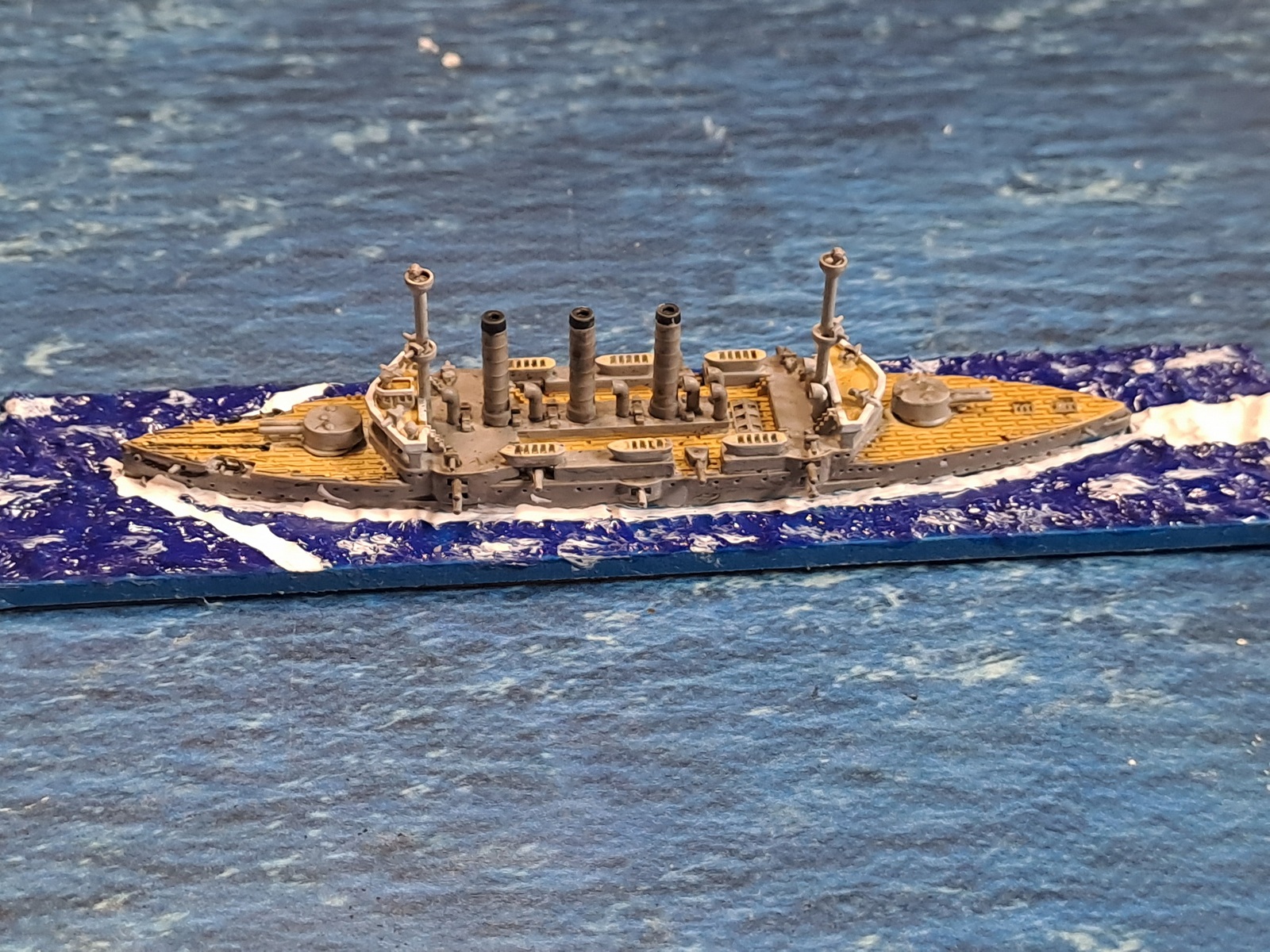
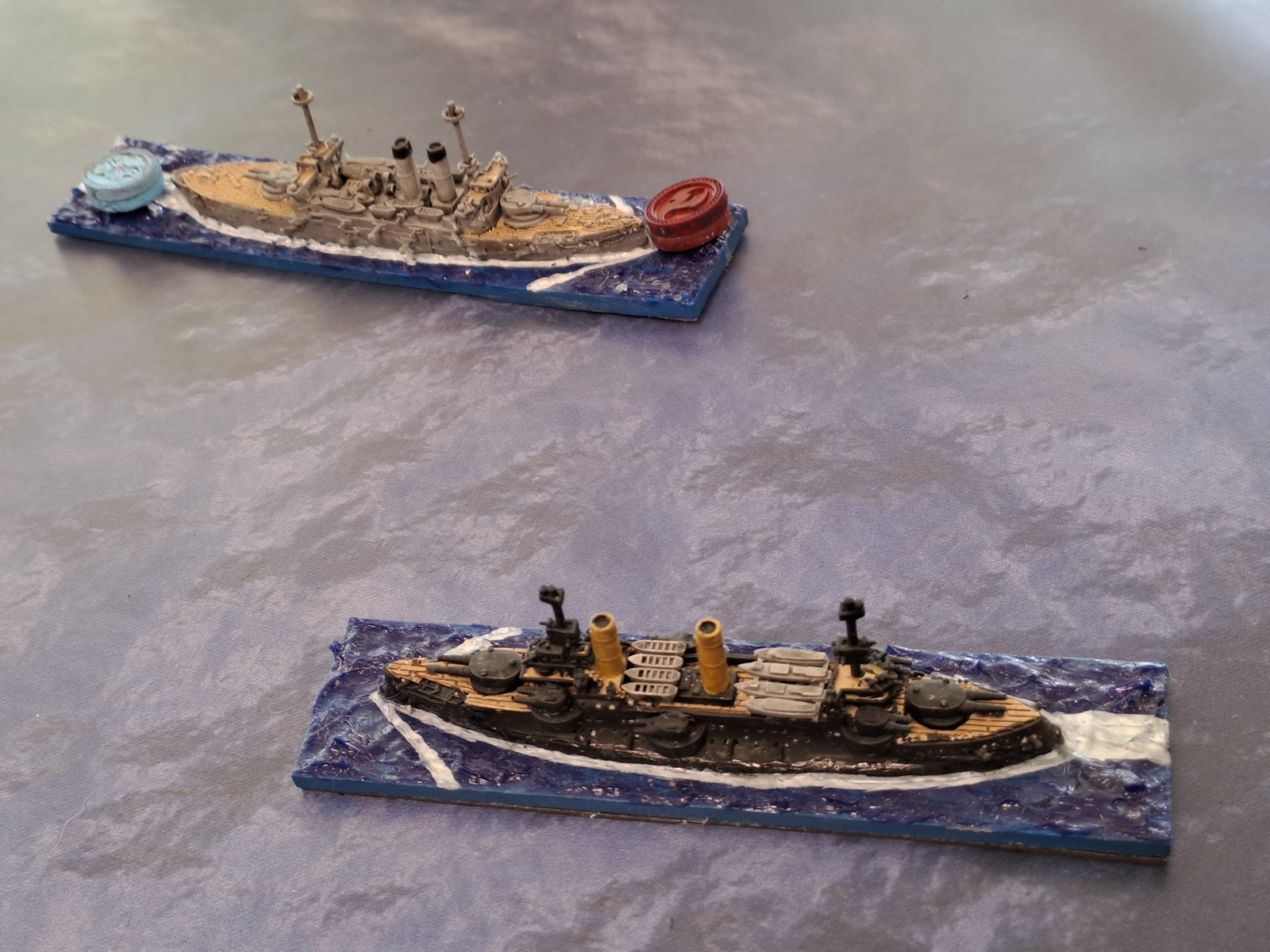
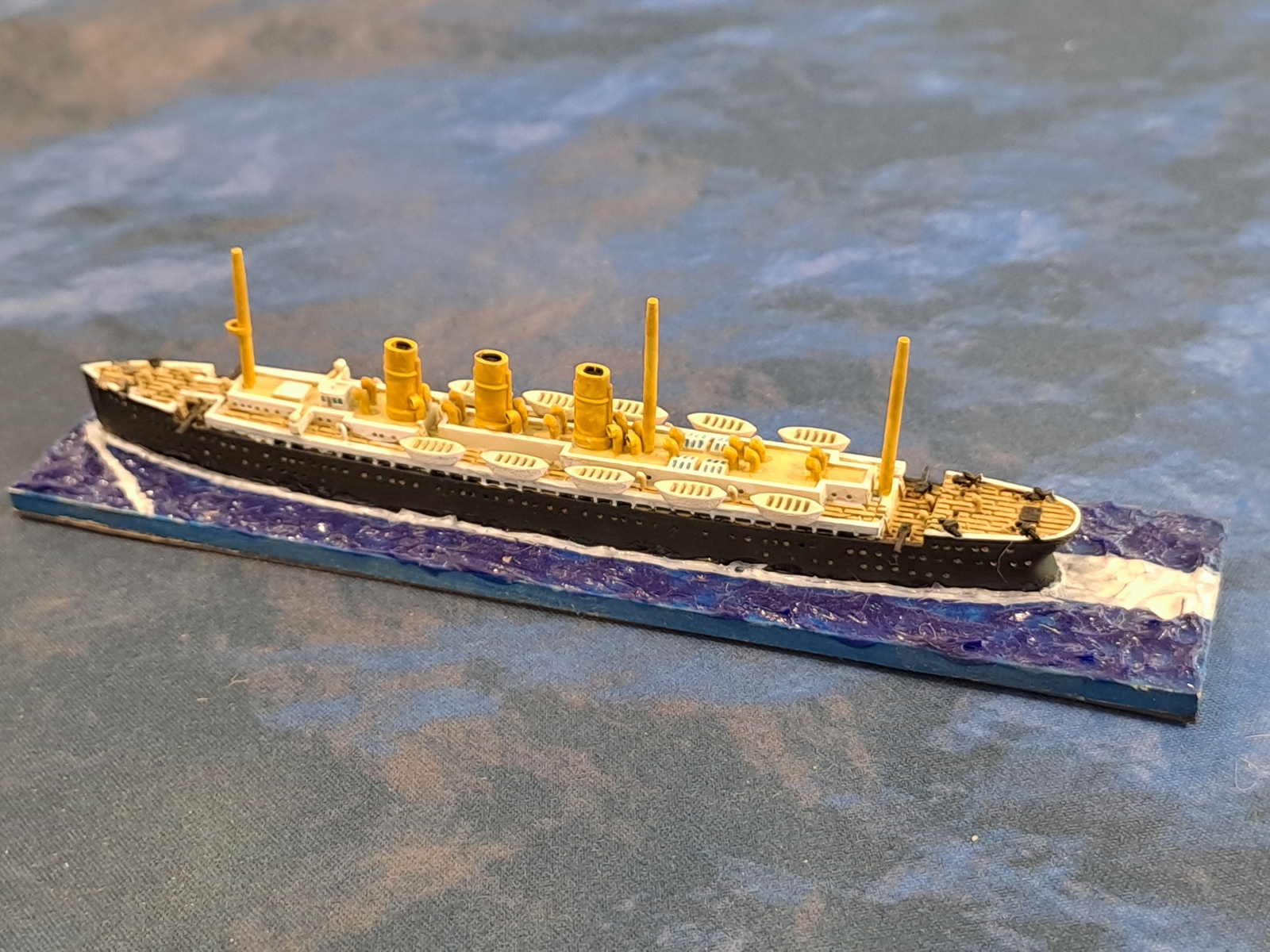
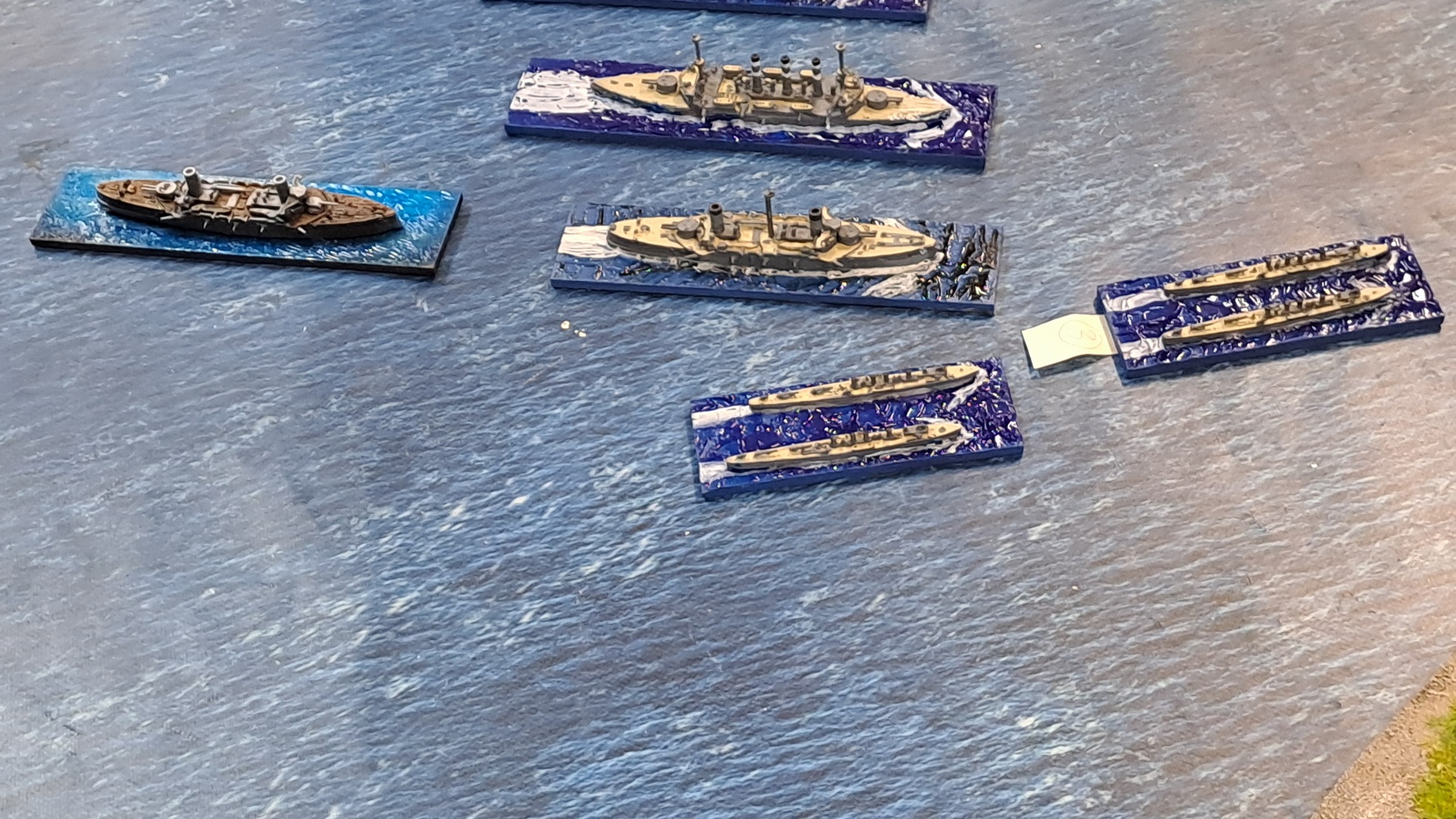
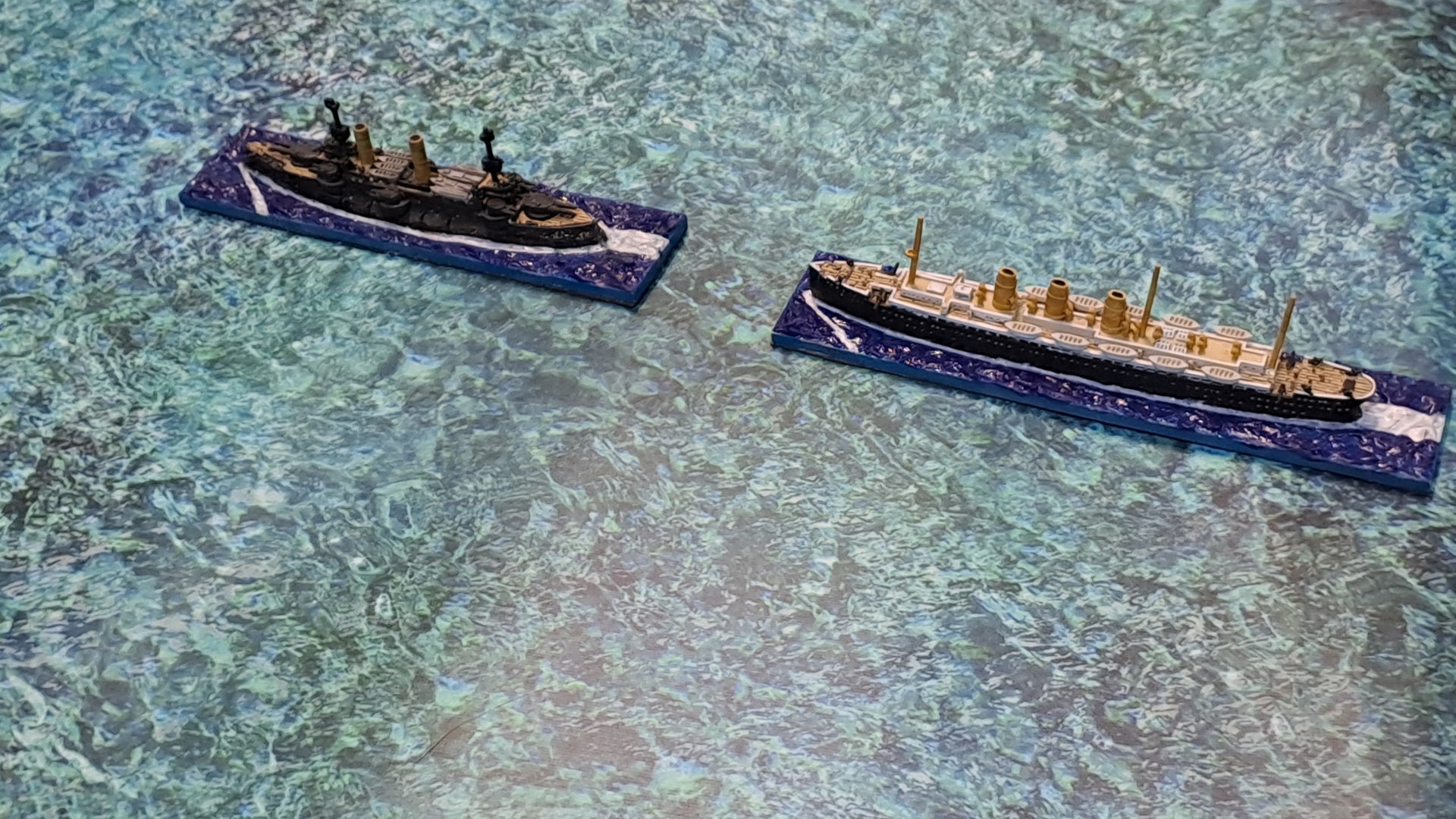
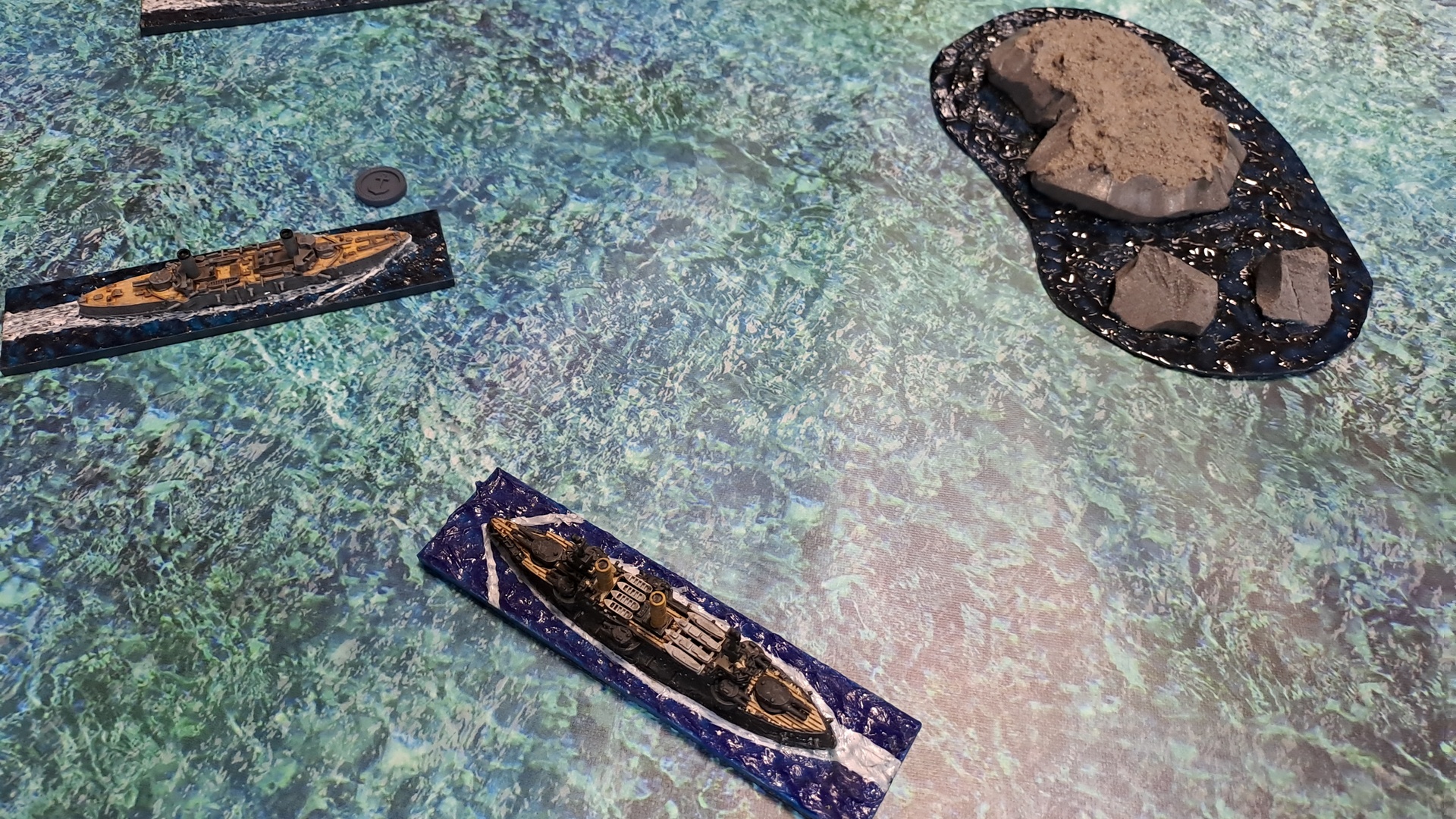
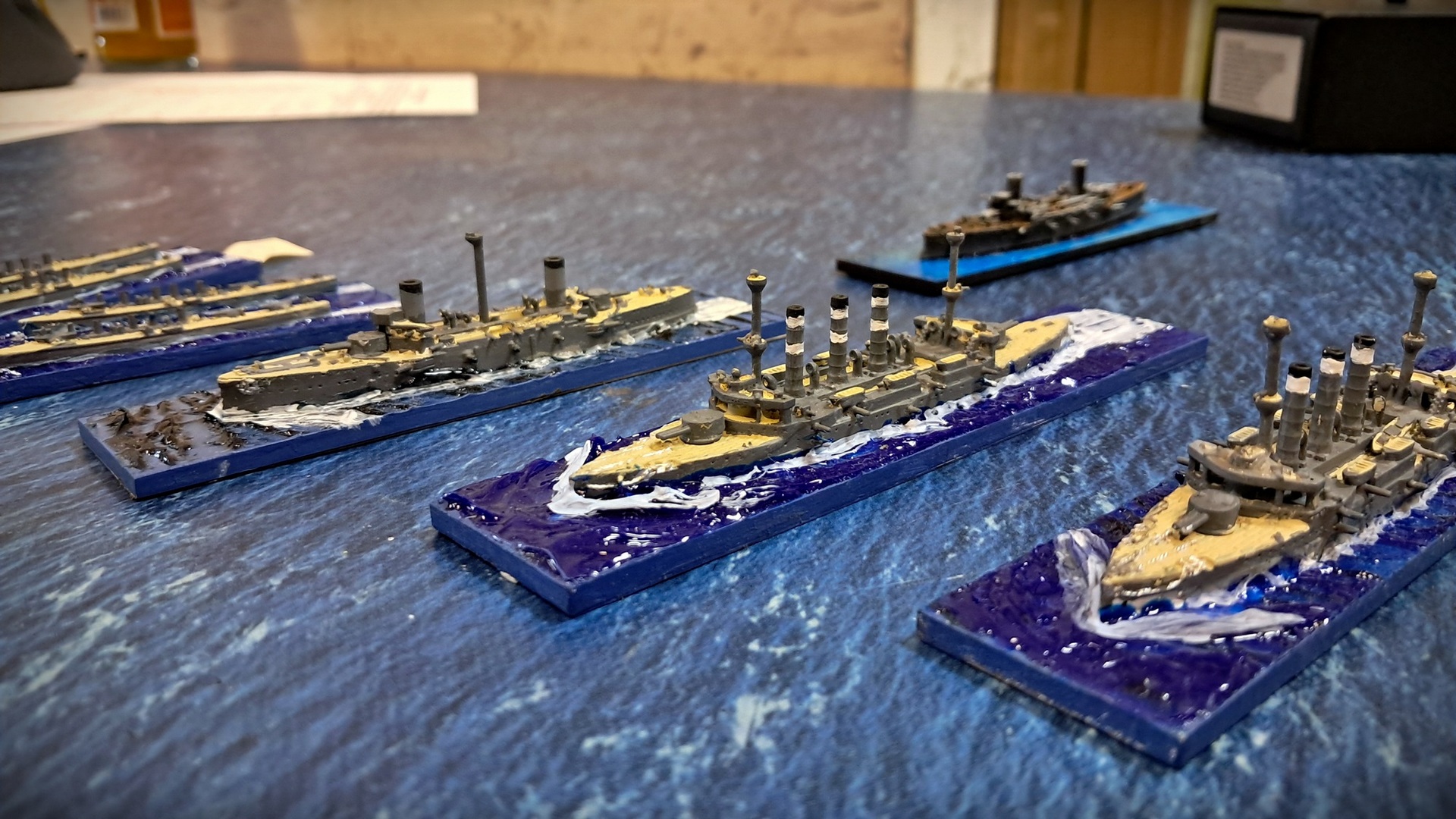
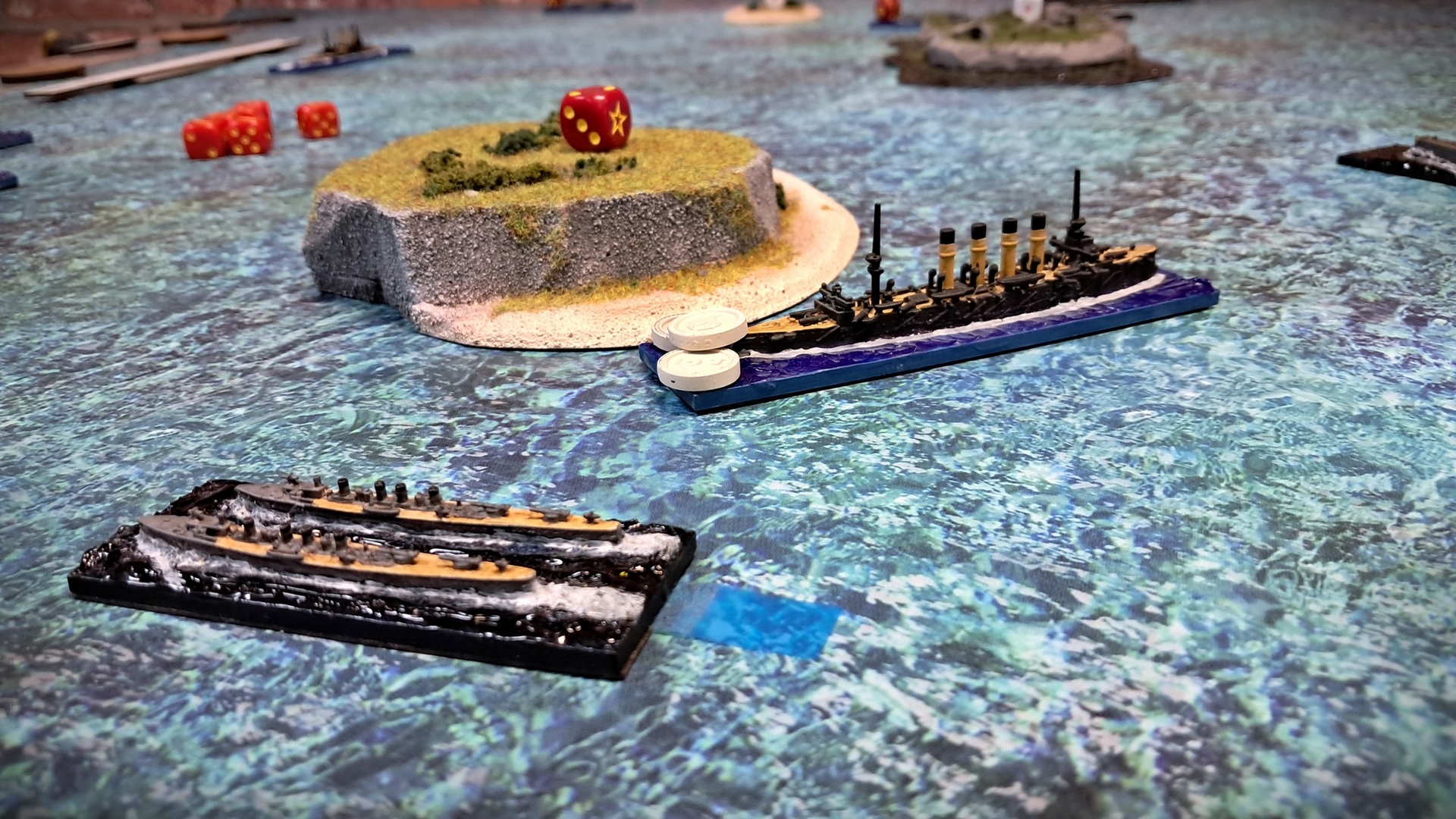
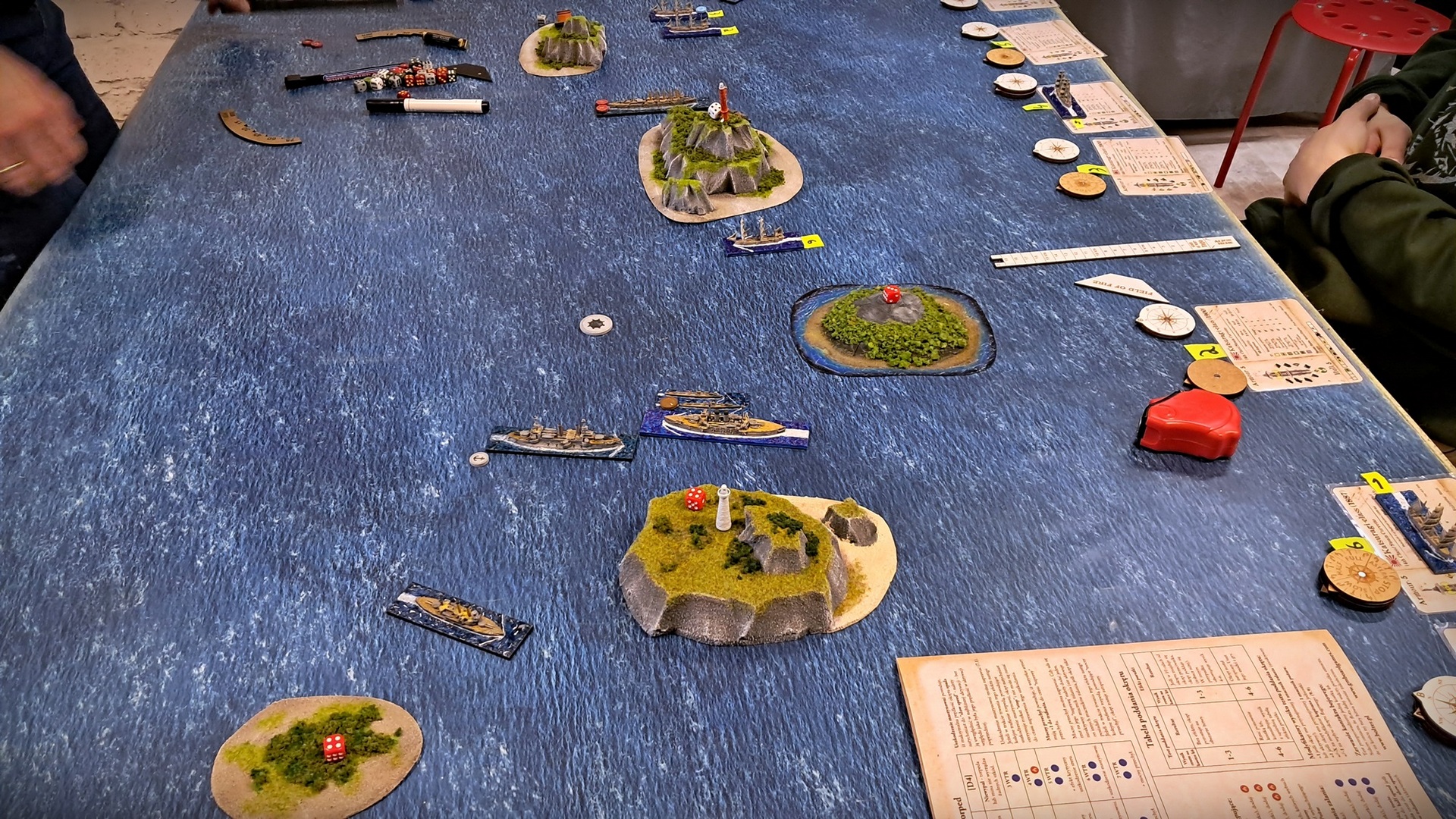
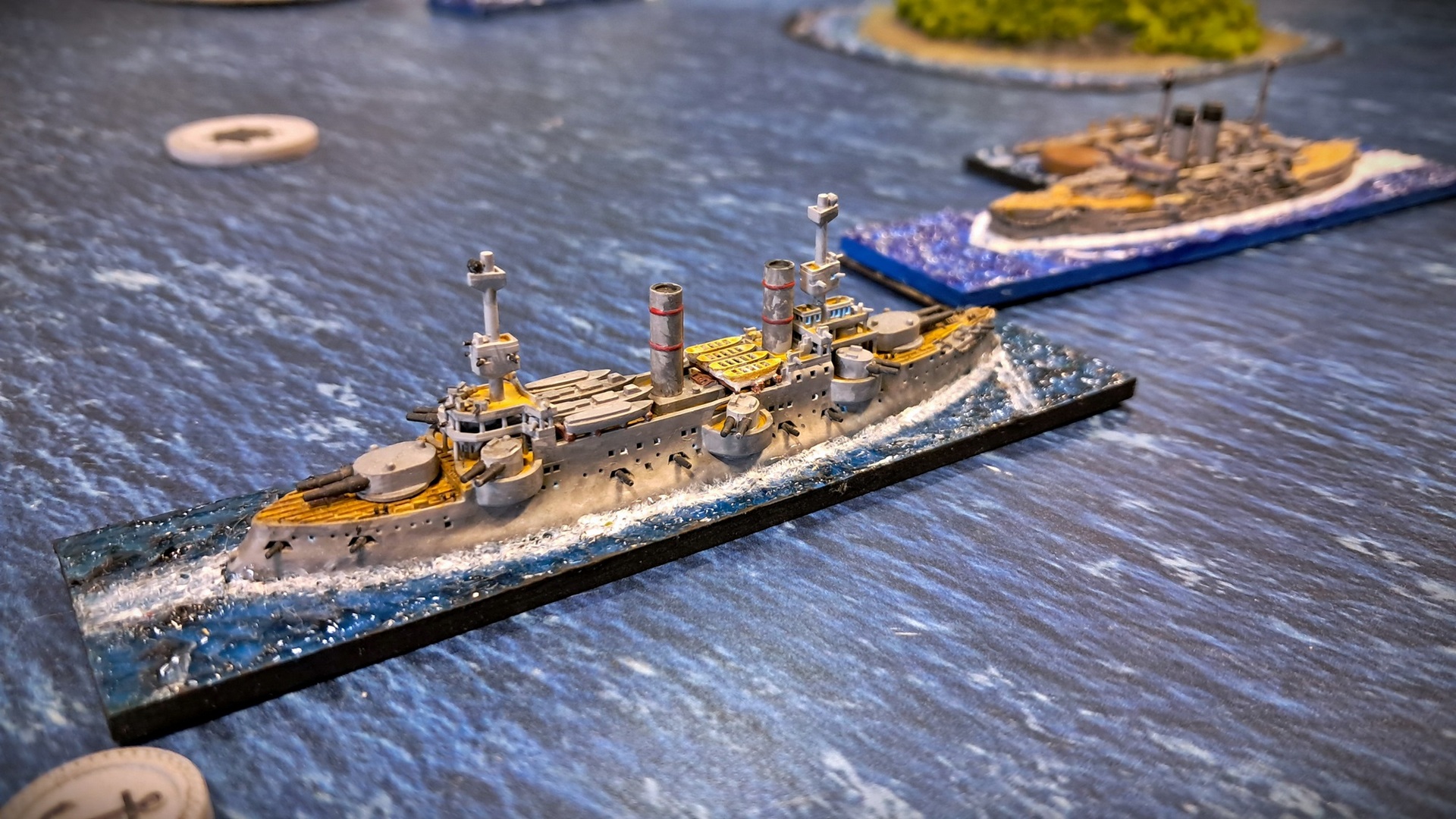
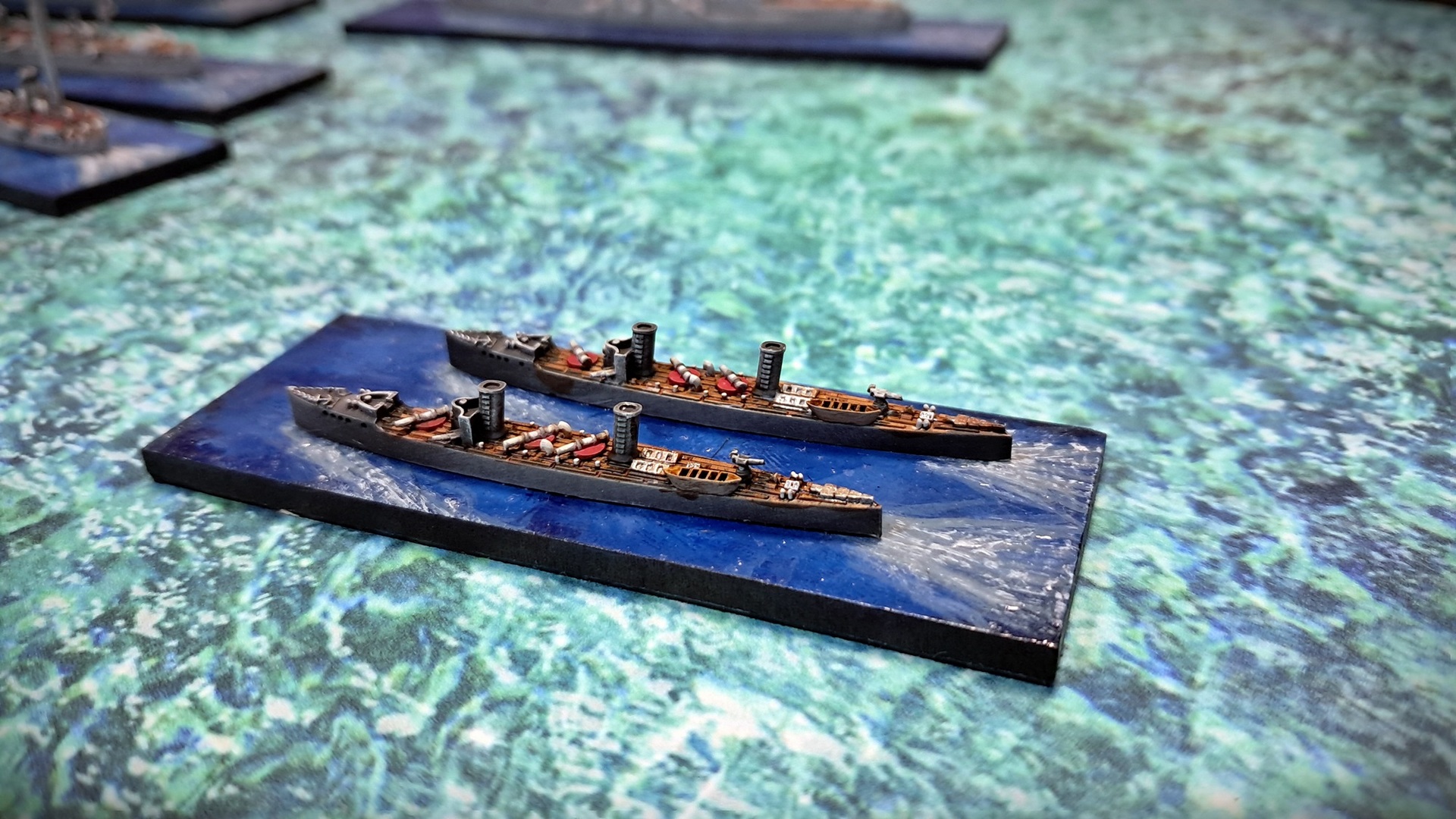
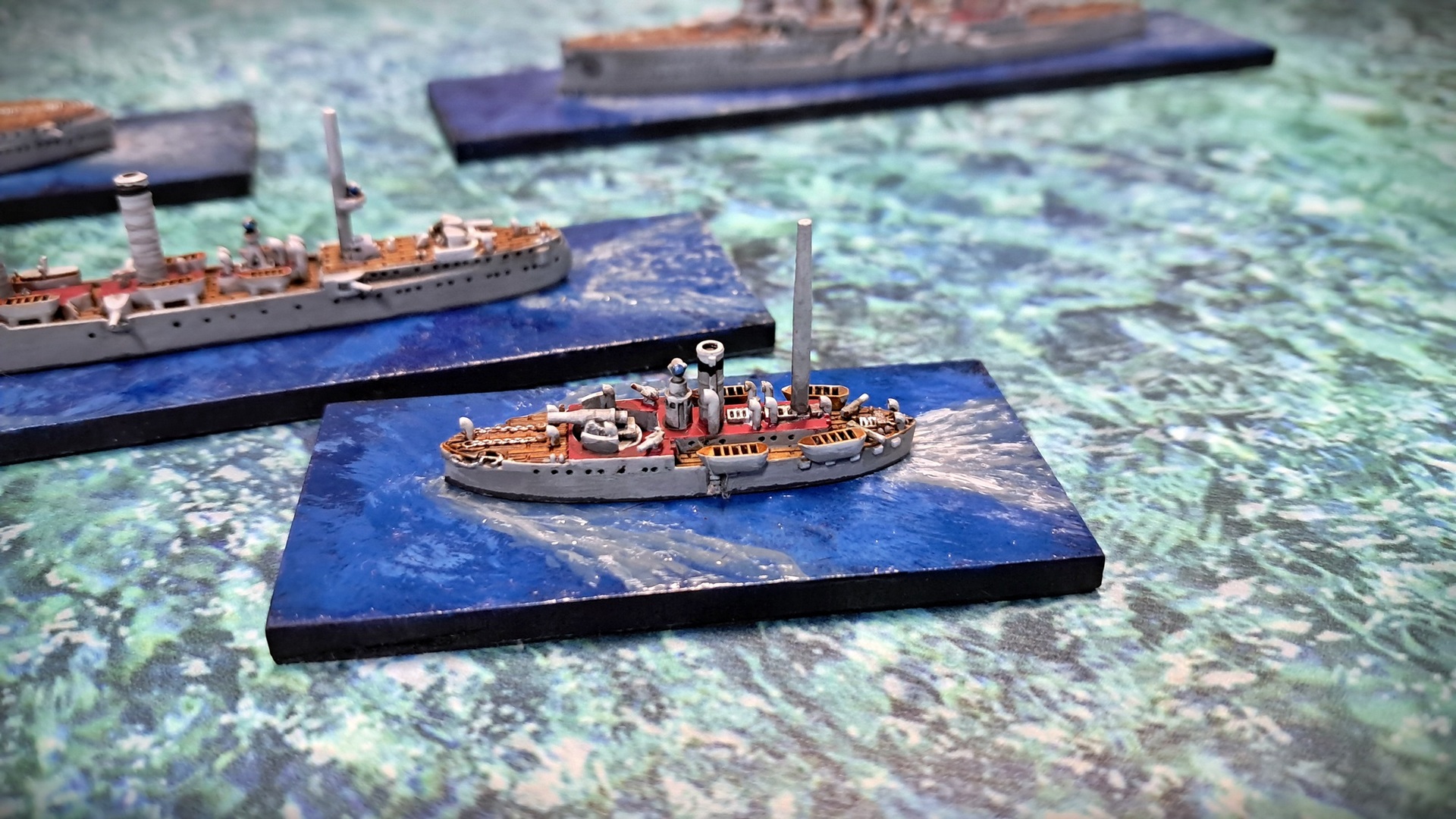
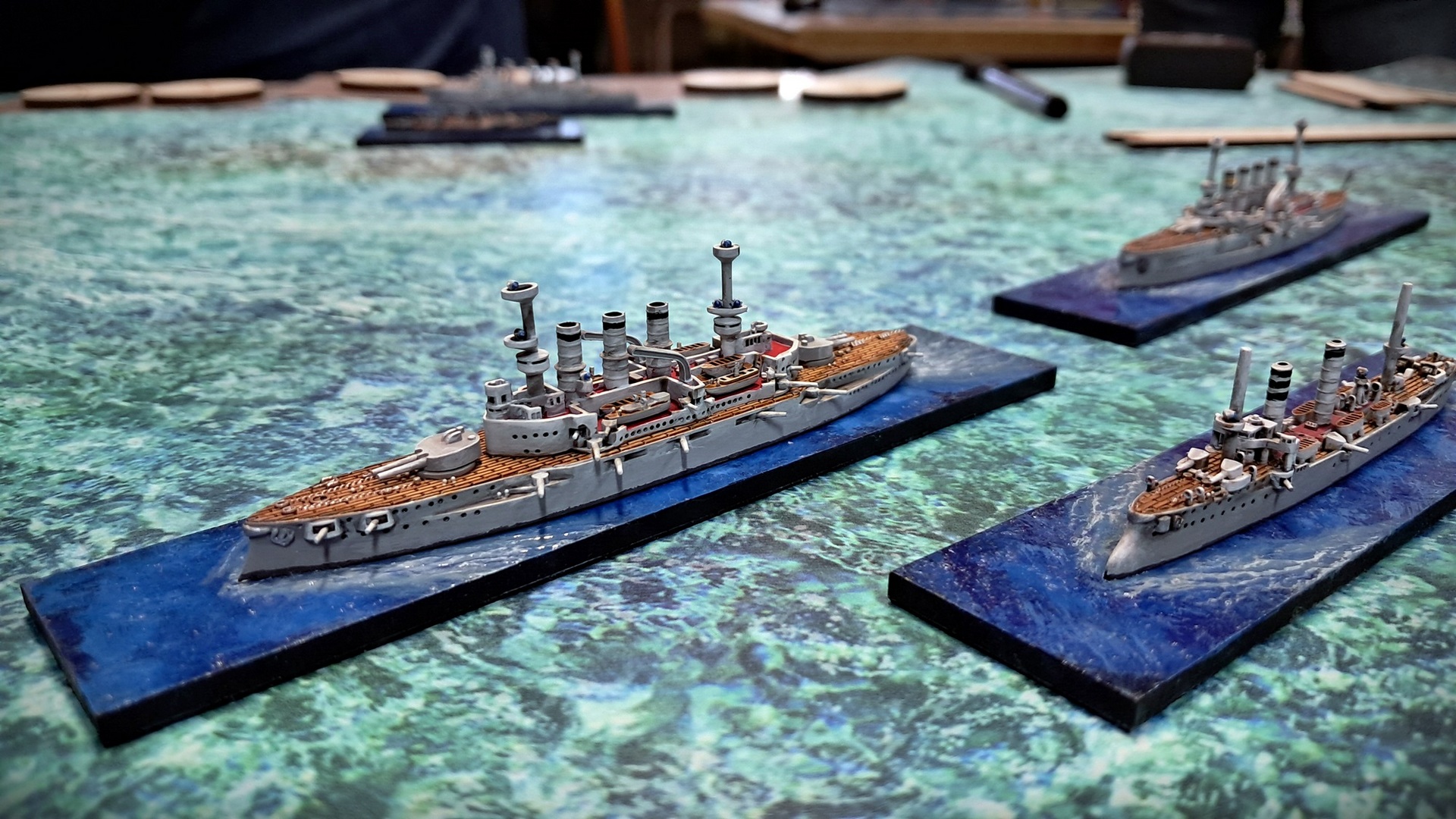
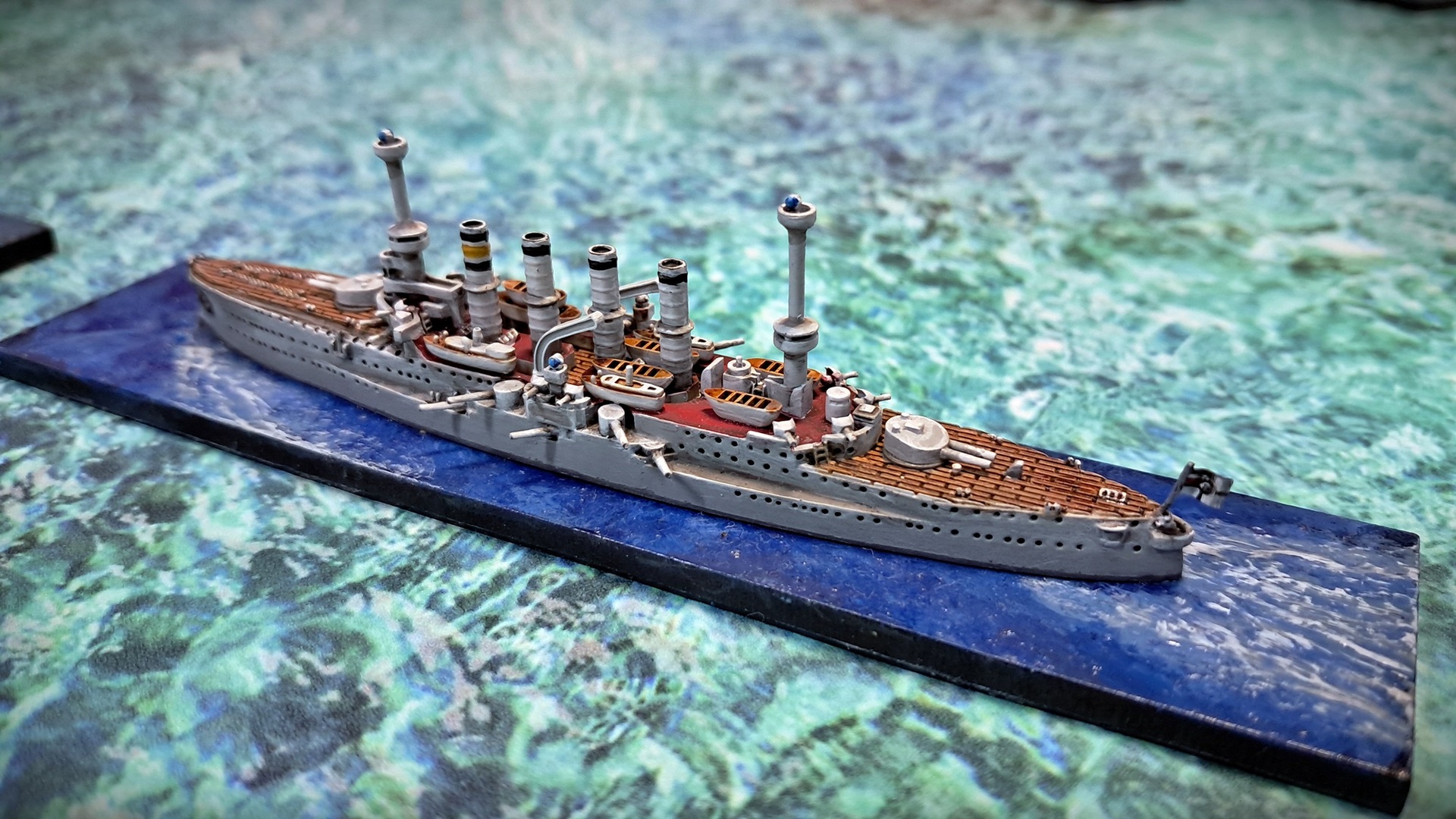
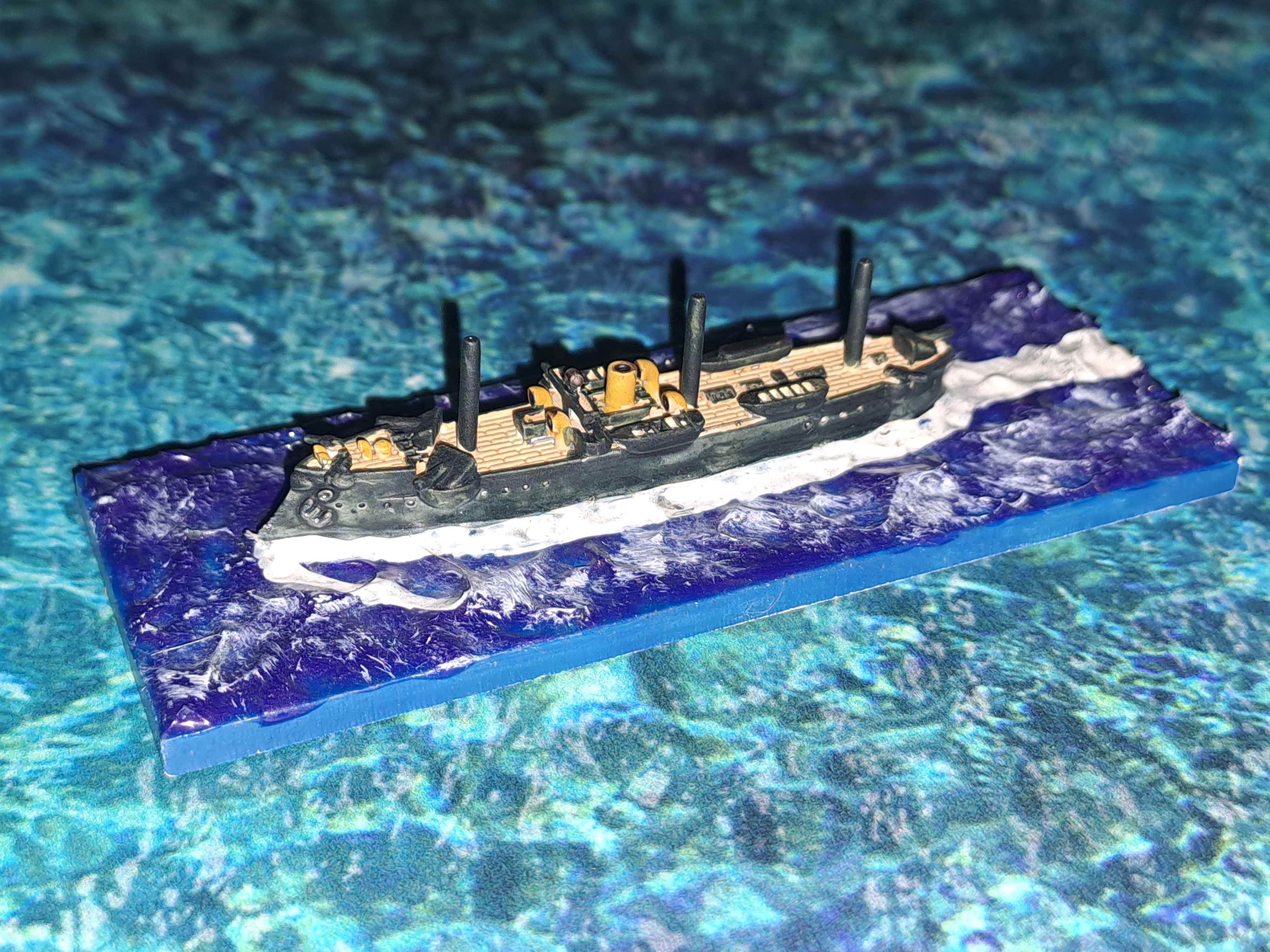
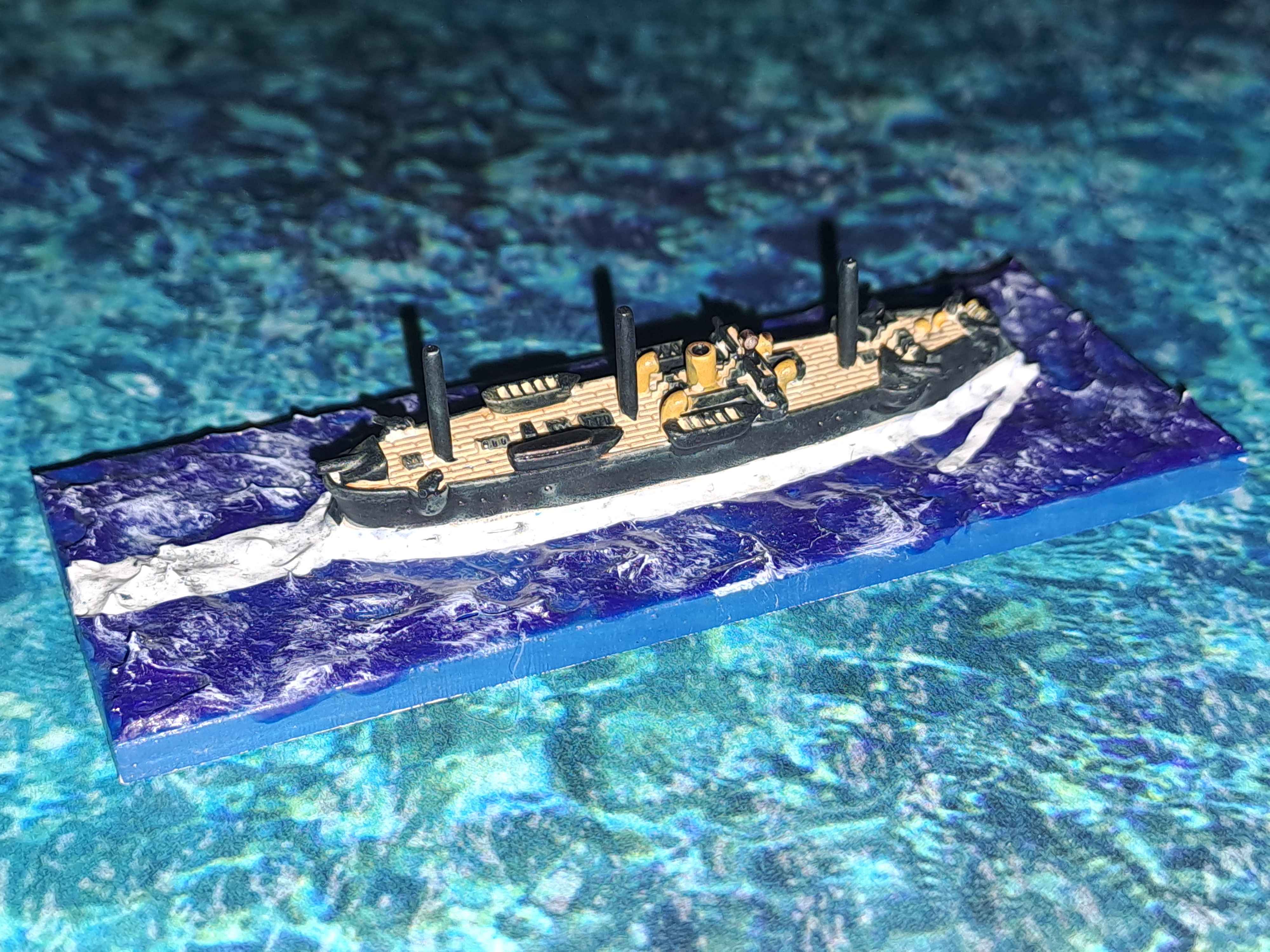
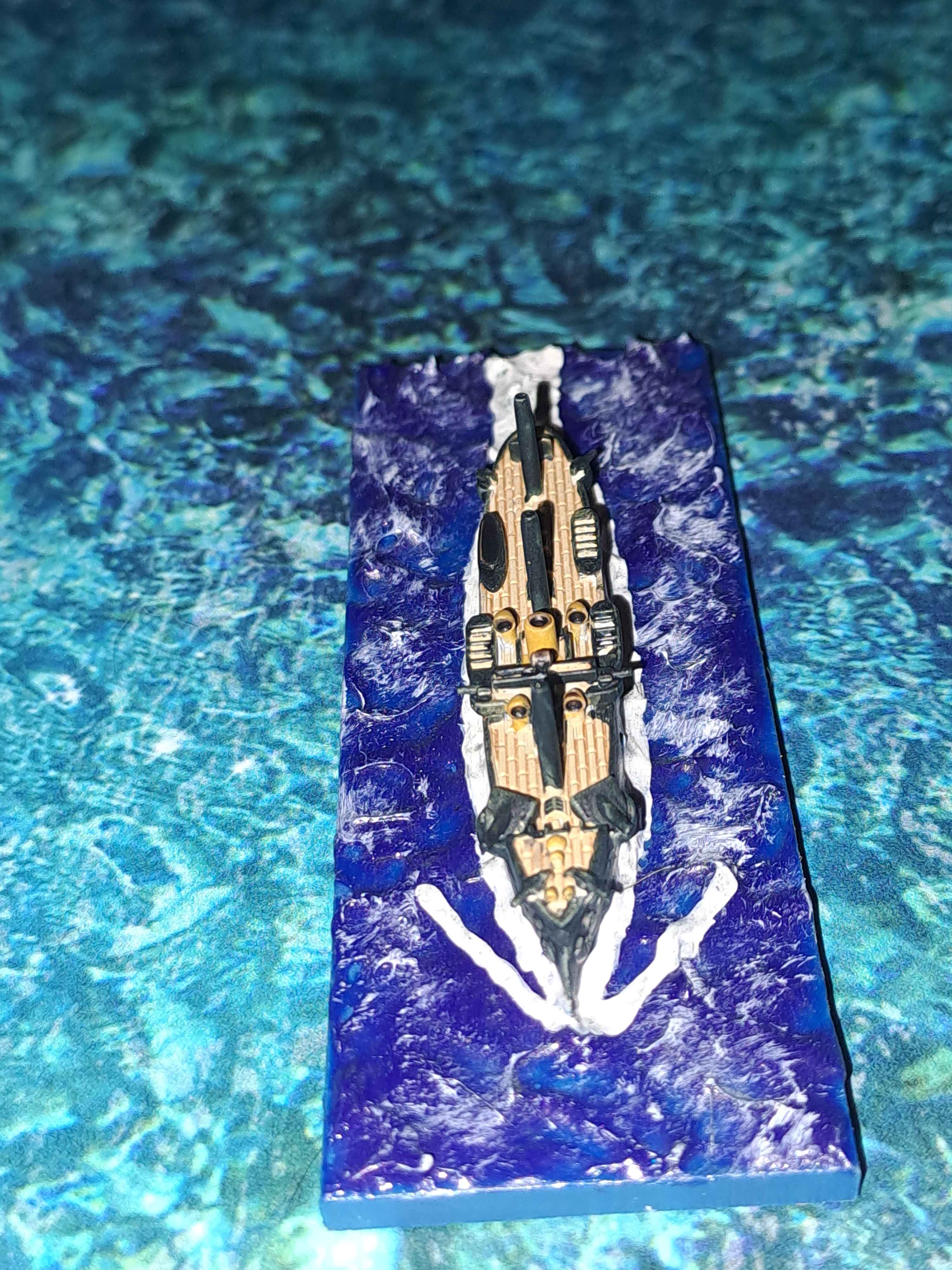
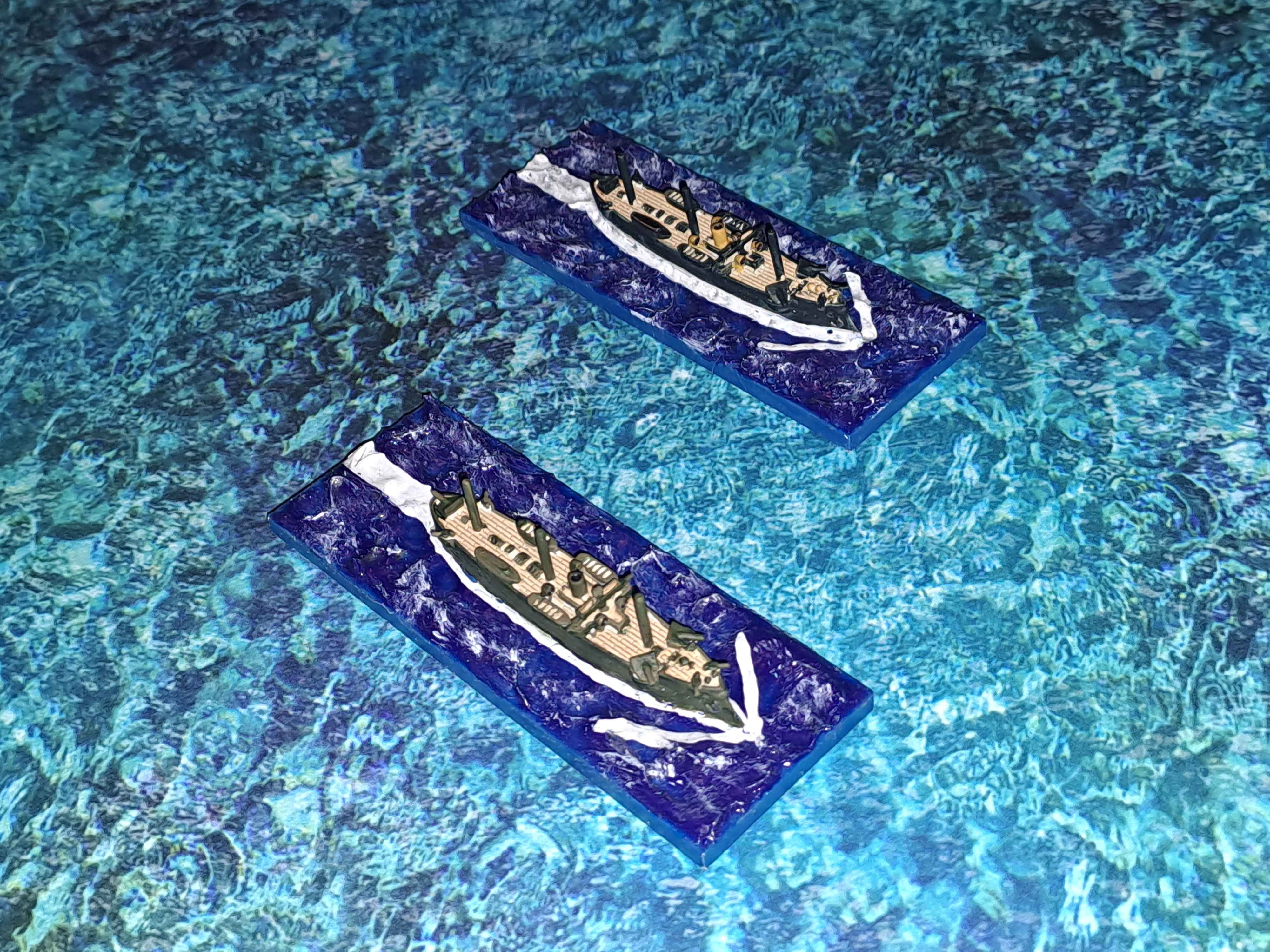
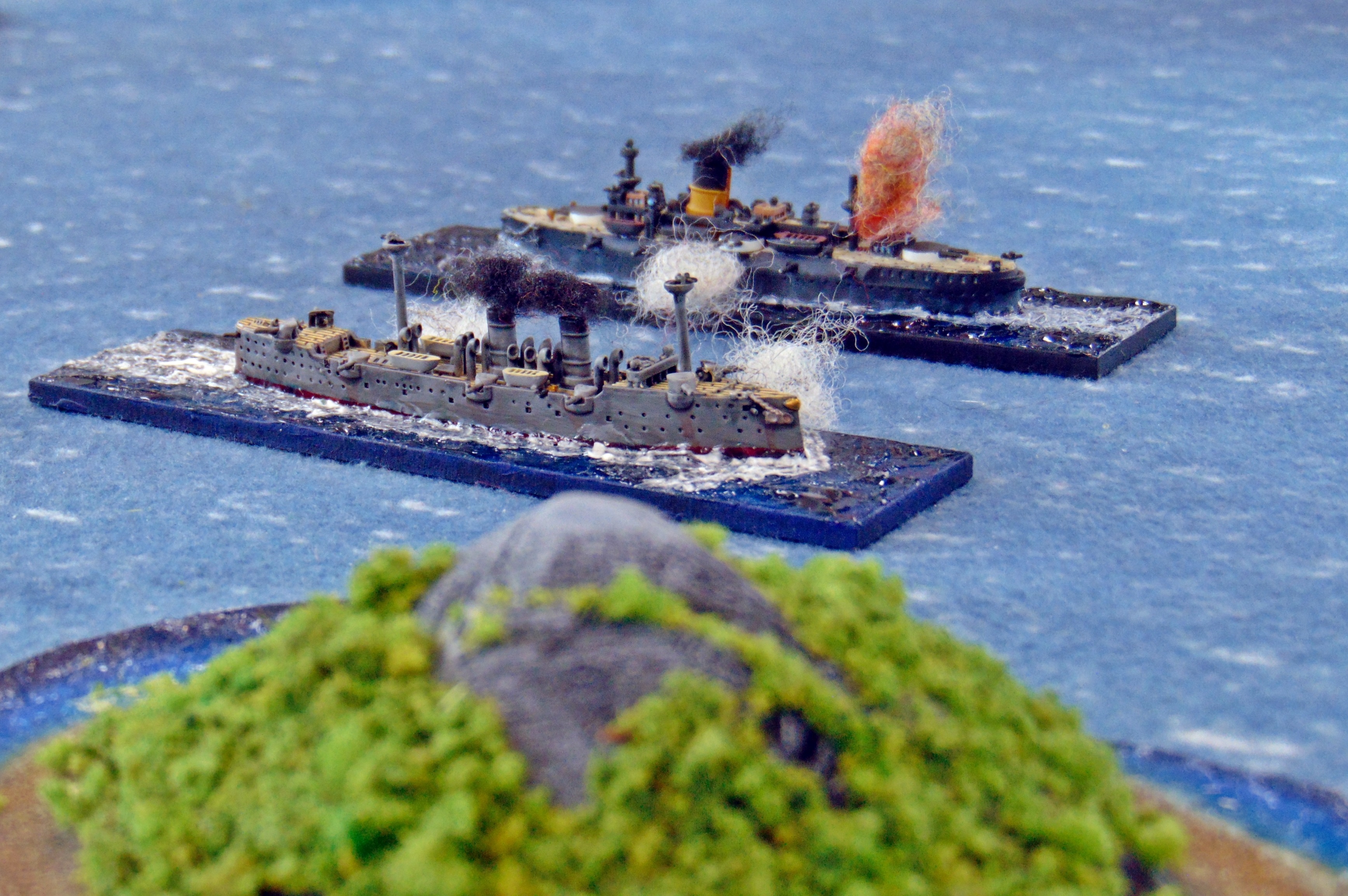
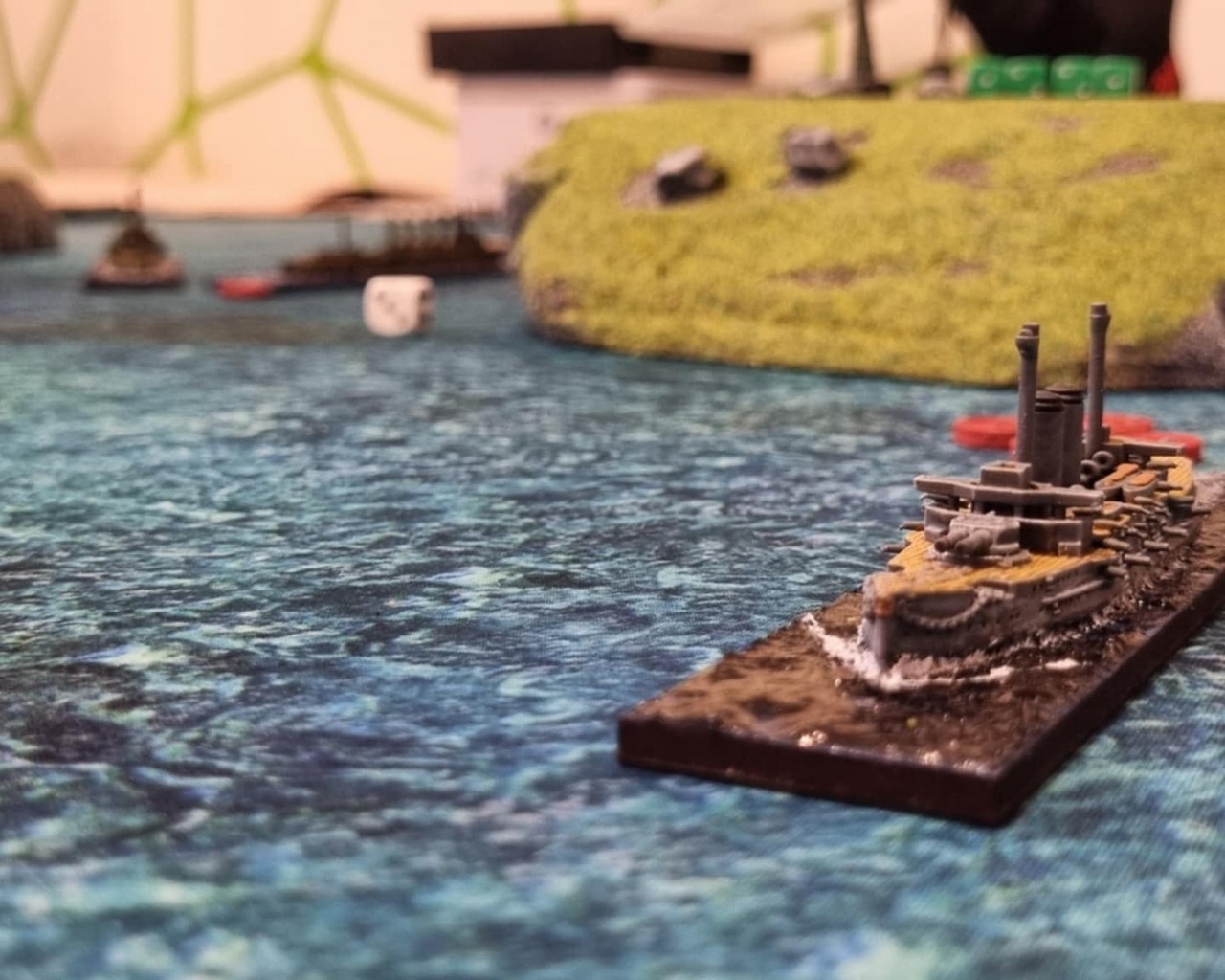
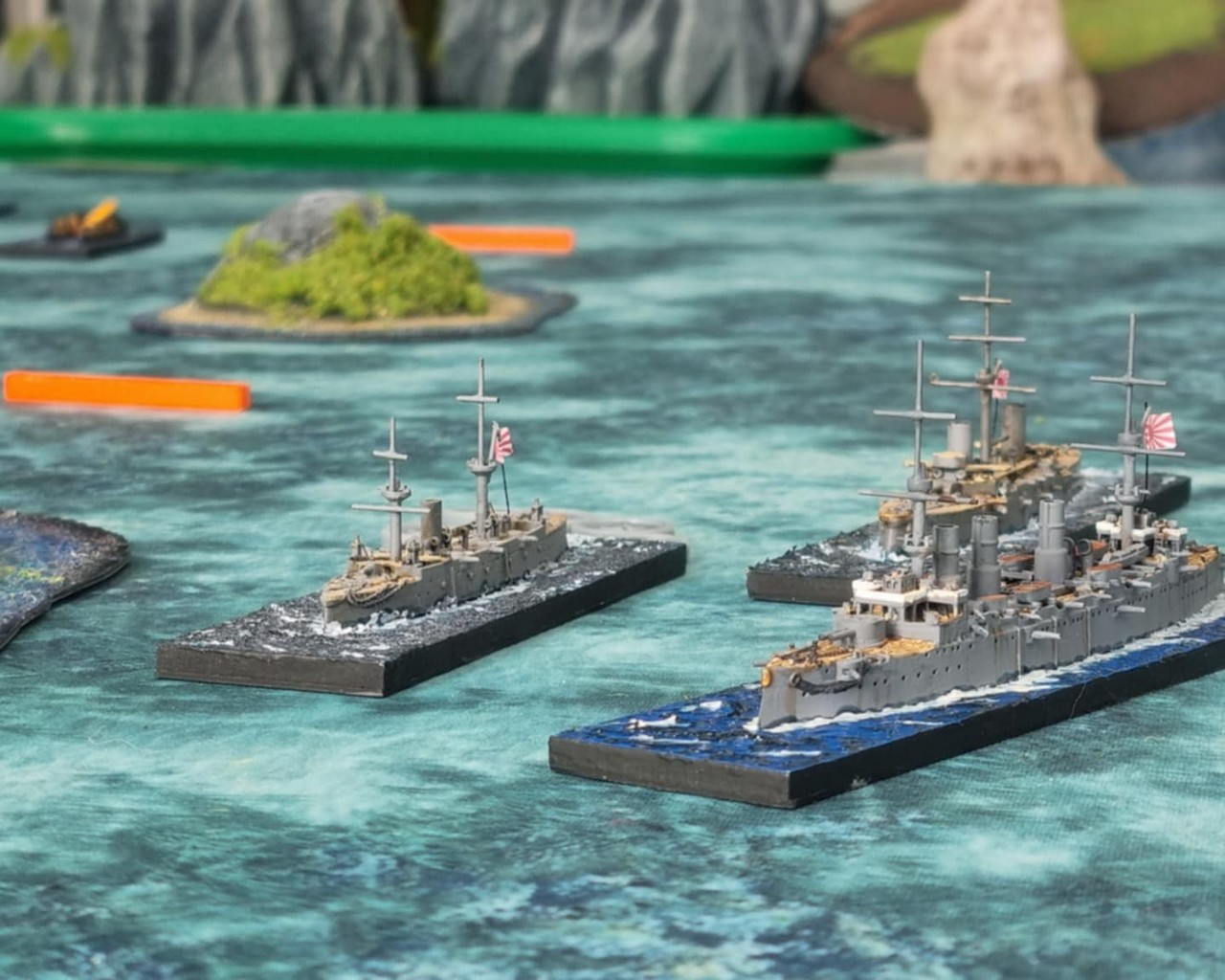
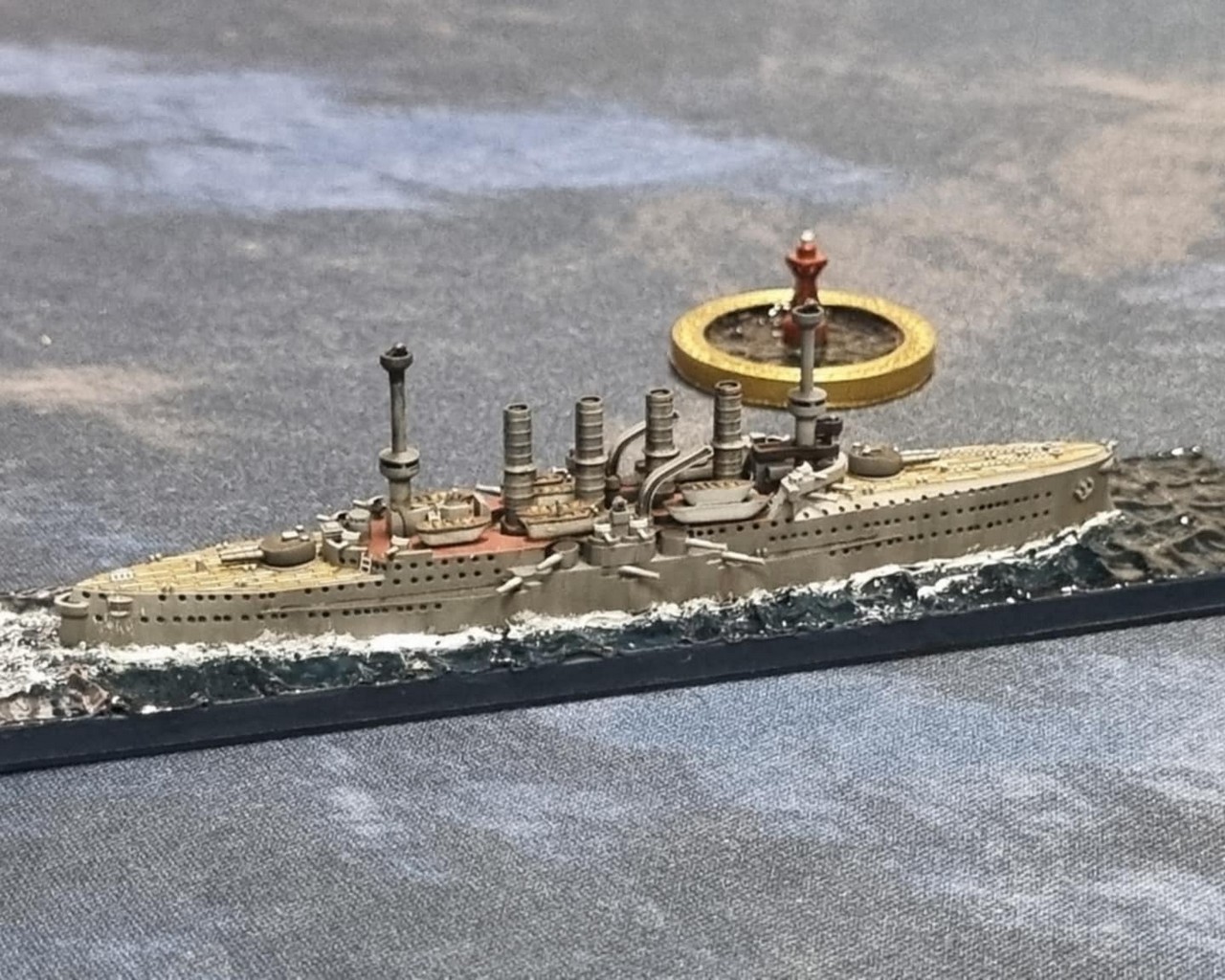
🇬🇧 Last weekend I finished few ships for my friend for his Nippon Kaigun – Japan Empire fleet. Among them most important was „Izumo„.
The Izumo-class cruisers were a pair of armored cruisers built for the Imperial Japanese Navy in the late 1890s. The sister ships were part of the “Six-Six Fleet” expansion program that began after the defeat of China during the First Sino-Japanese War of 1894–1895. The main task of cruisers of this type was reconnaissance and cooperation with battleships, hence they were – for this class of ships – very well armored and armed.
* – description of Izumo according to GMBoardgames.
🇵🇱 W ostatni weekend udało mi się ukończyć kilka okrętów dla przyjaciela dla jego Nippon Kaigun – cesarskiej floty Japonii. Wśród nich najważniejszym ukończonym okrętem był „Izumo„.
„Po zwycięstwie nad Chinami, Japończycy rozpoczęli program rozbudowy floty, nazwany później programem 6+6. Zakładał on budowę 6 pancerników i 6 krążowników pancernych. Japońskie krążowniki pancerne miały pełnić rolę zwiadowców floty i walczyć w linii, współpracując z pancernikami.
Zgodnie z tą filozofią Izumo był takim pomniejszonym pancernikiem. Uzbrojenie główne stanowiły 4 armaty kalibru 203 mm, uzupełnione przez aż 14 dział kalibru 152 mm. Uzbrojenie uzupełniały armaty lekkie i wyrzutnie torped kalibru 457 mm. Jak na okręty tej wielkości były też naprawdę dobrze opancerzone. Dzięki zainstalowaniu nowoczesnych kotłów, mogły rozwijać prędkość około 20 węzłów.”
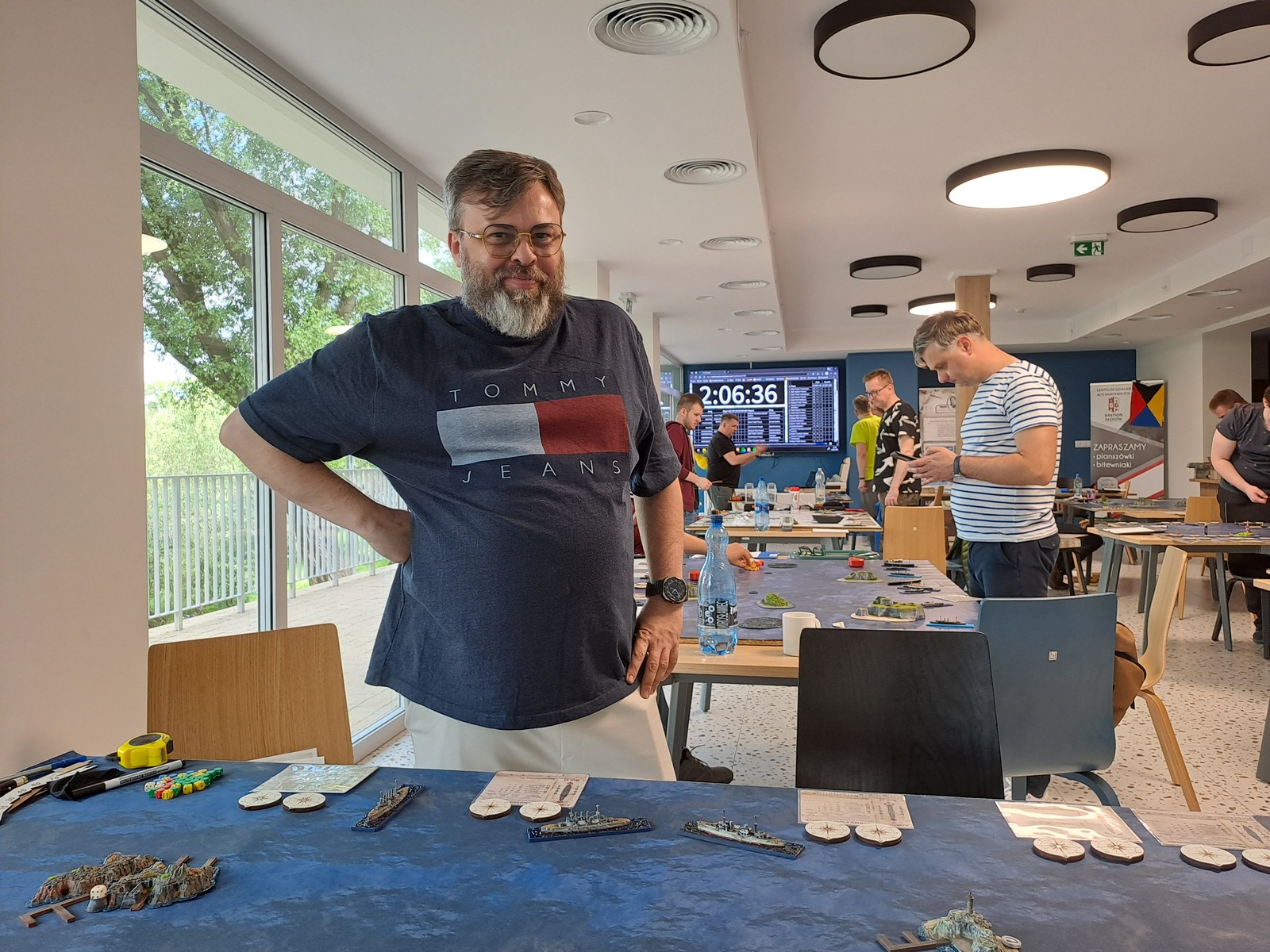
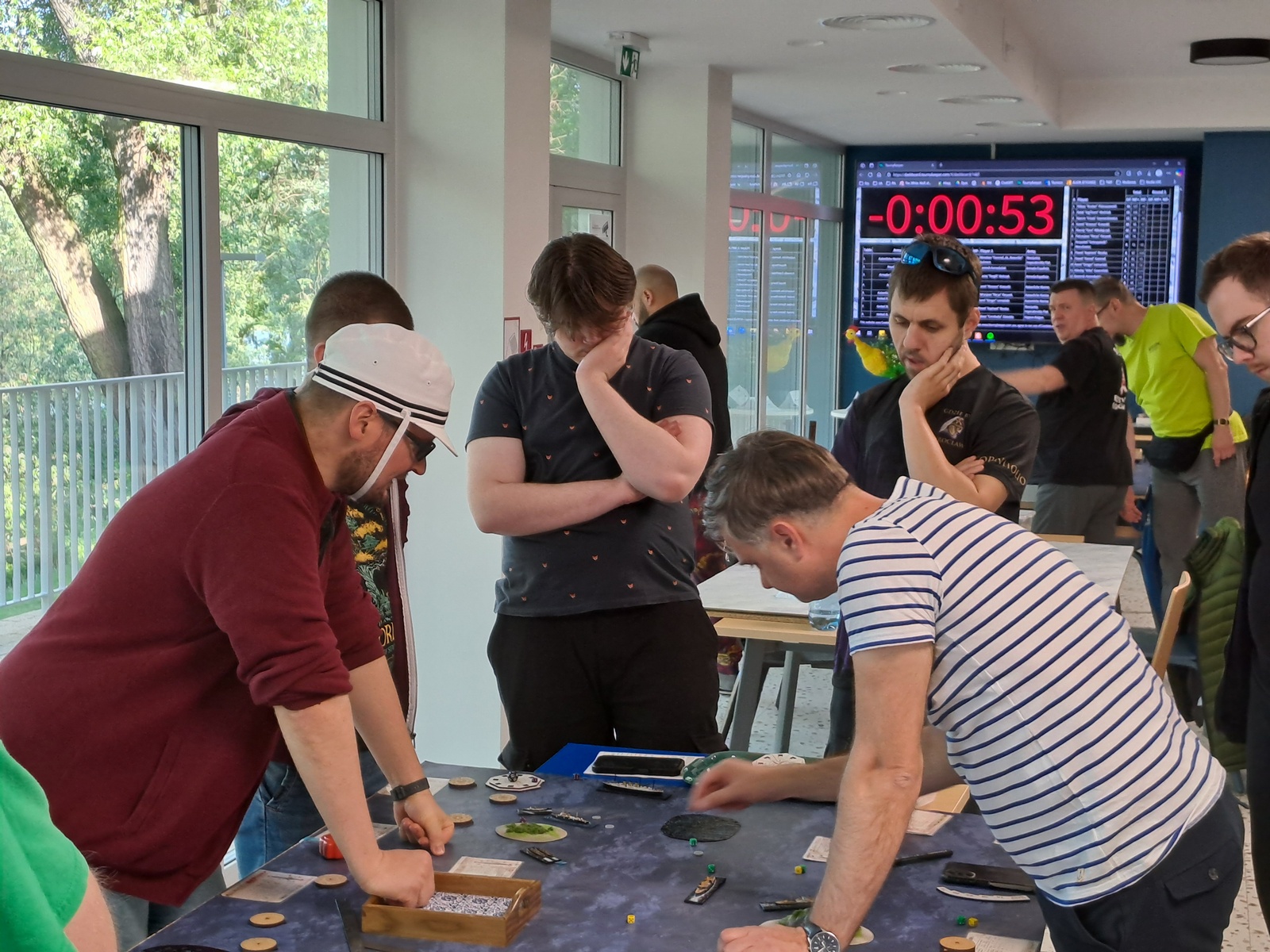
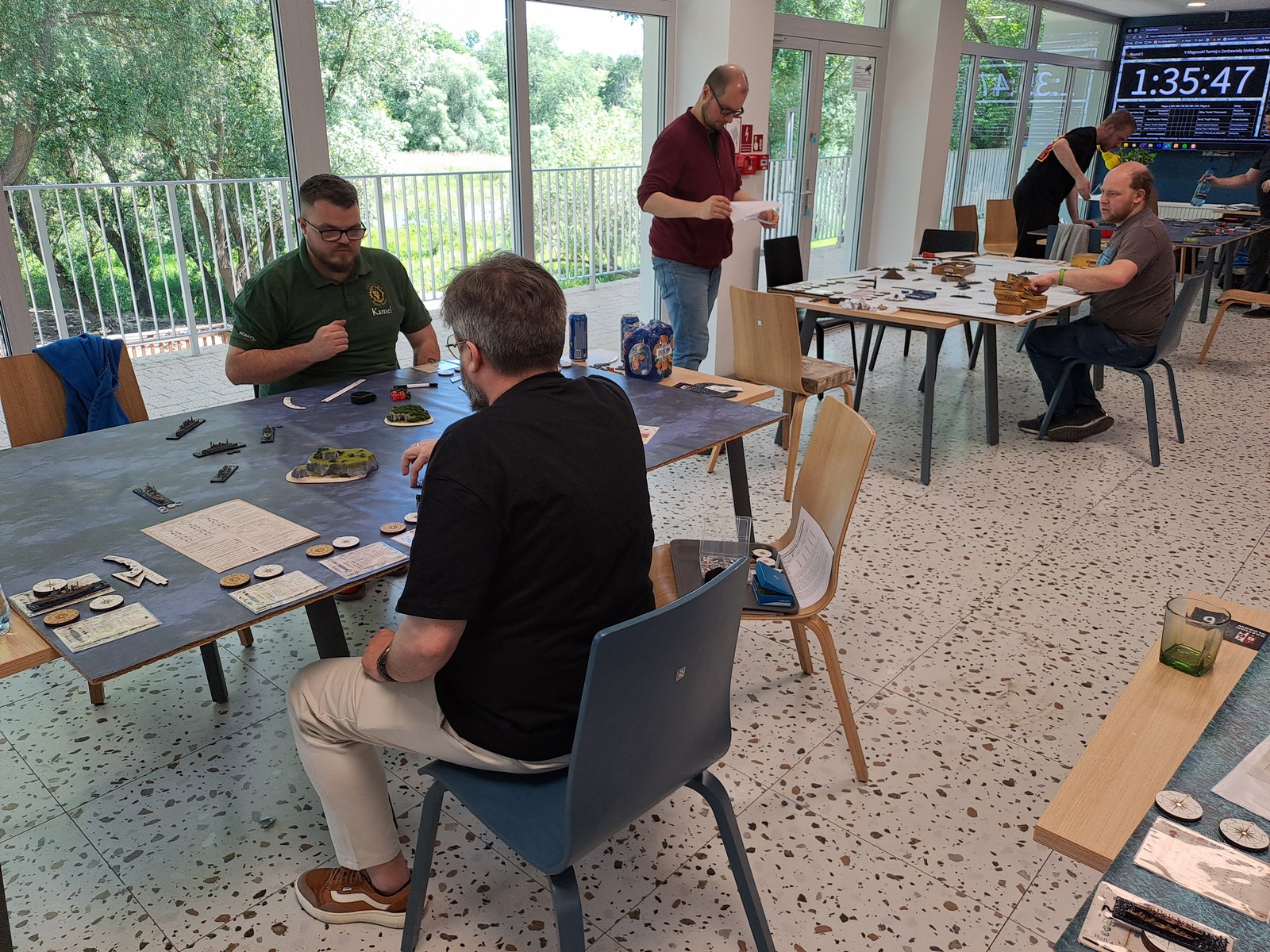
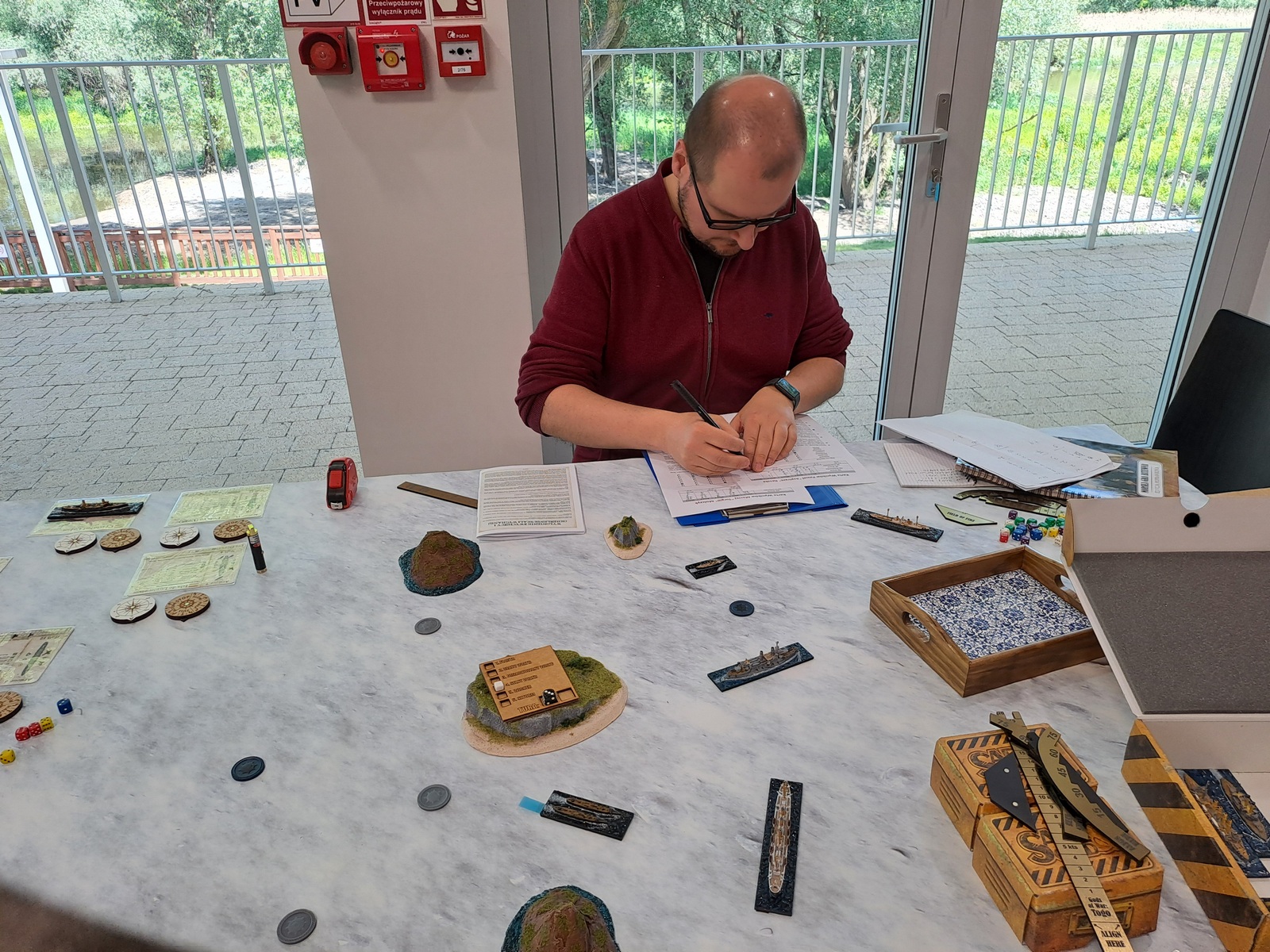
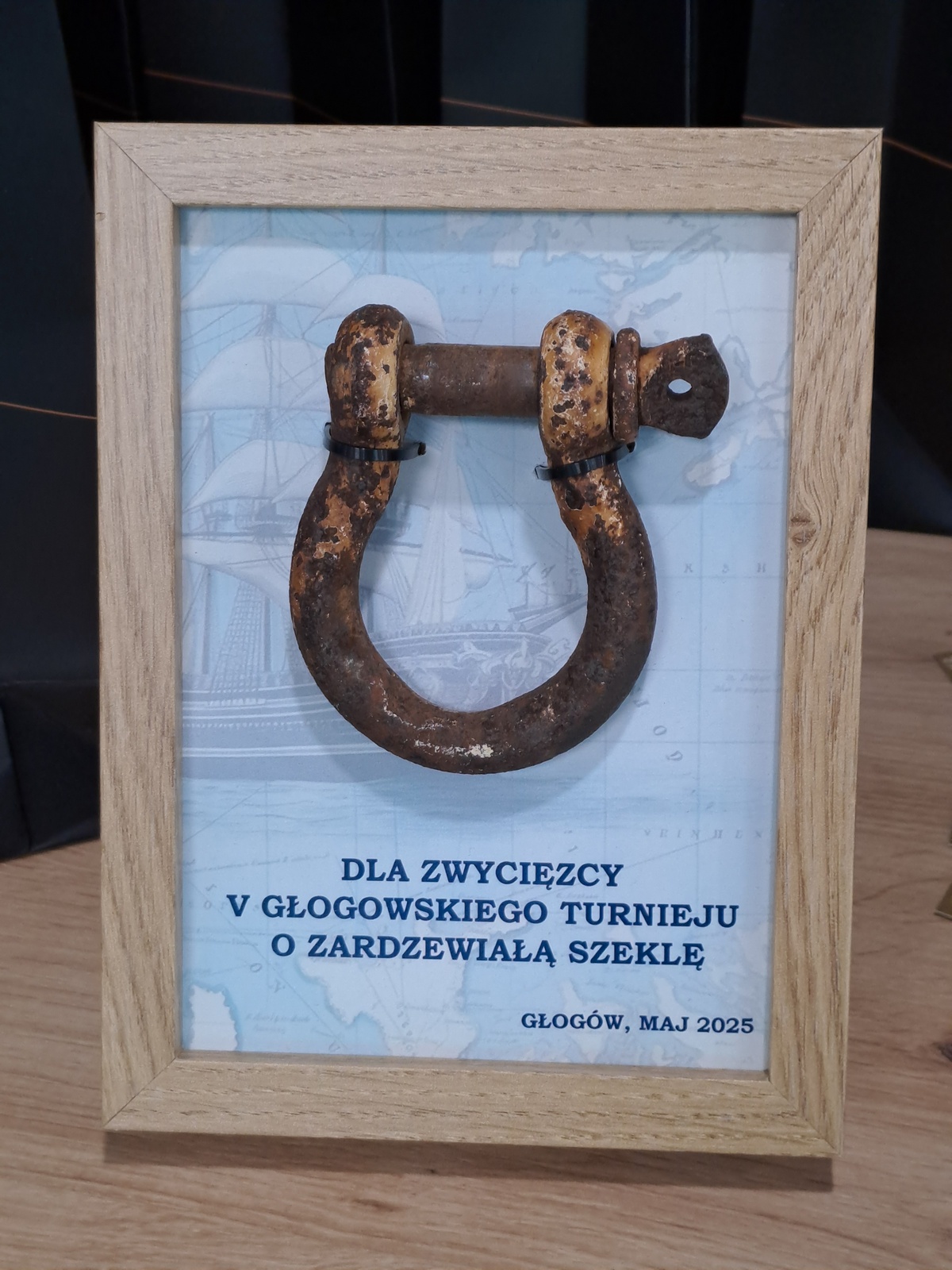
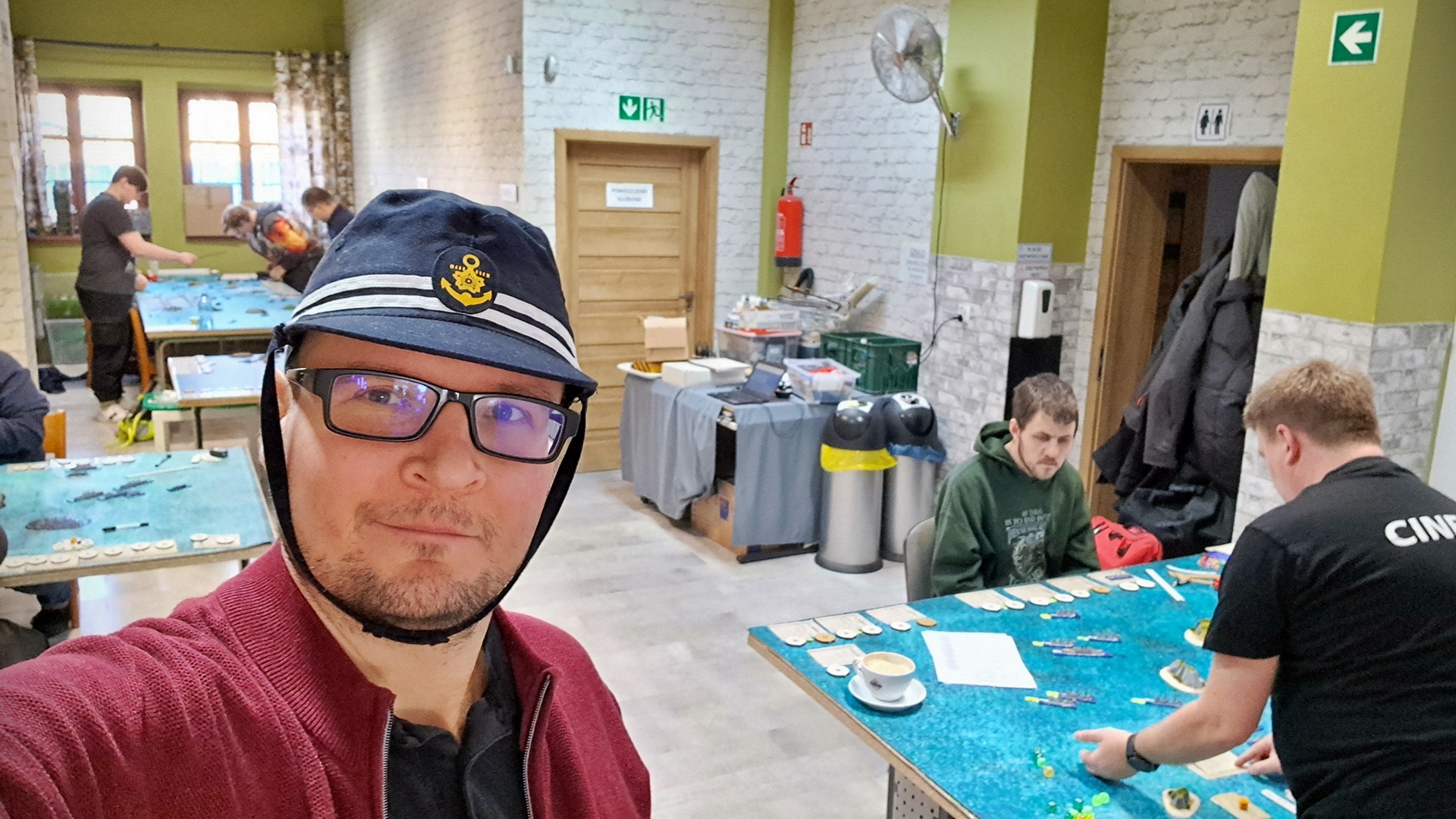
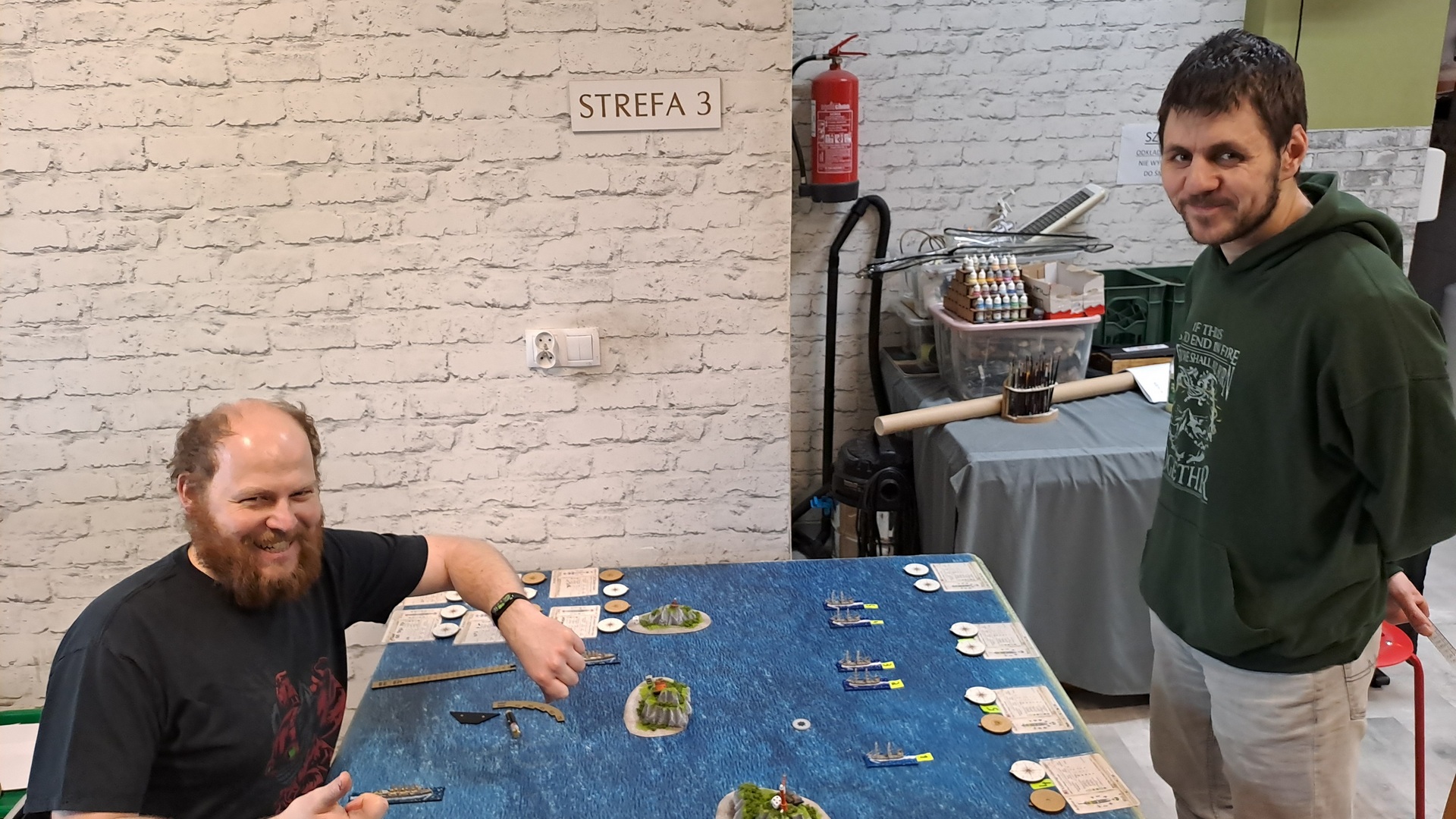
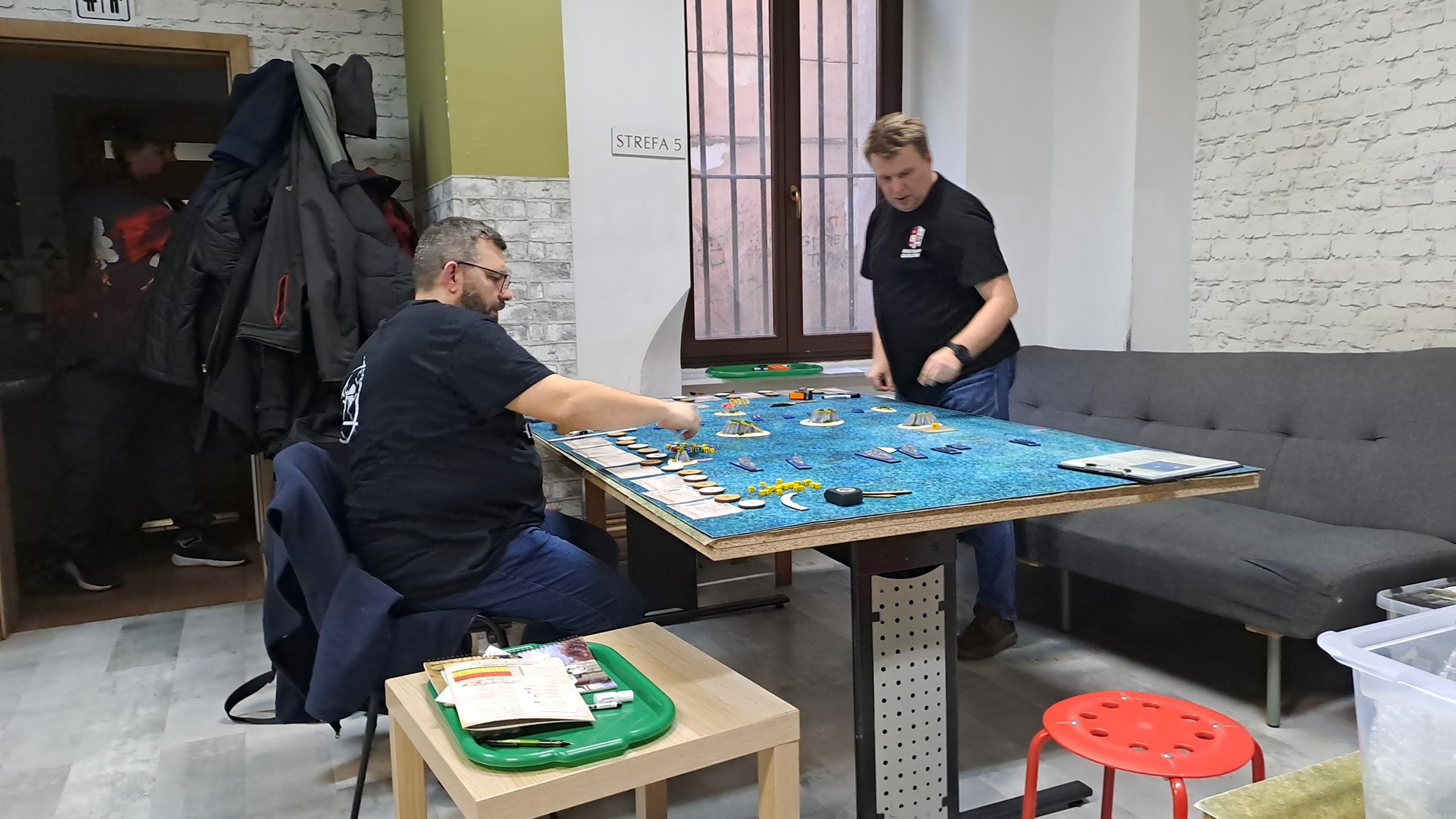
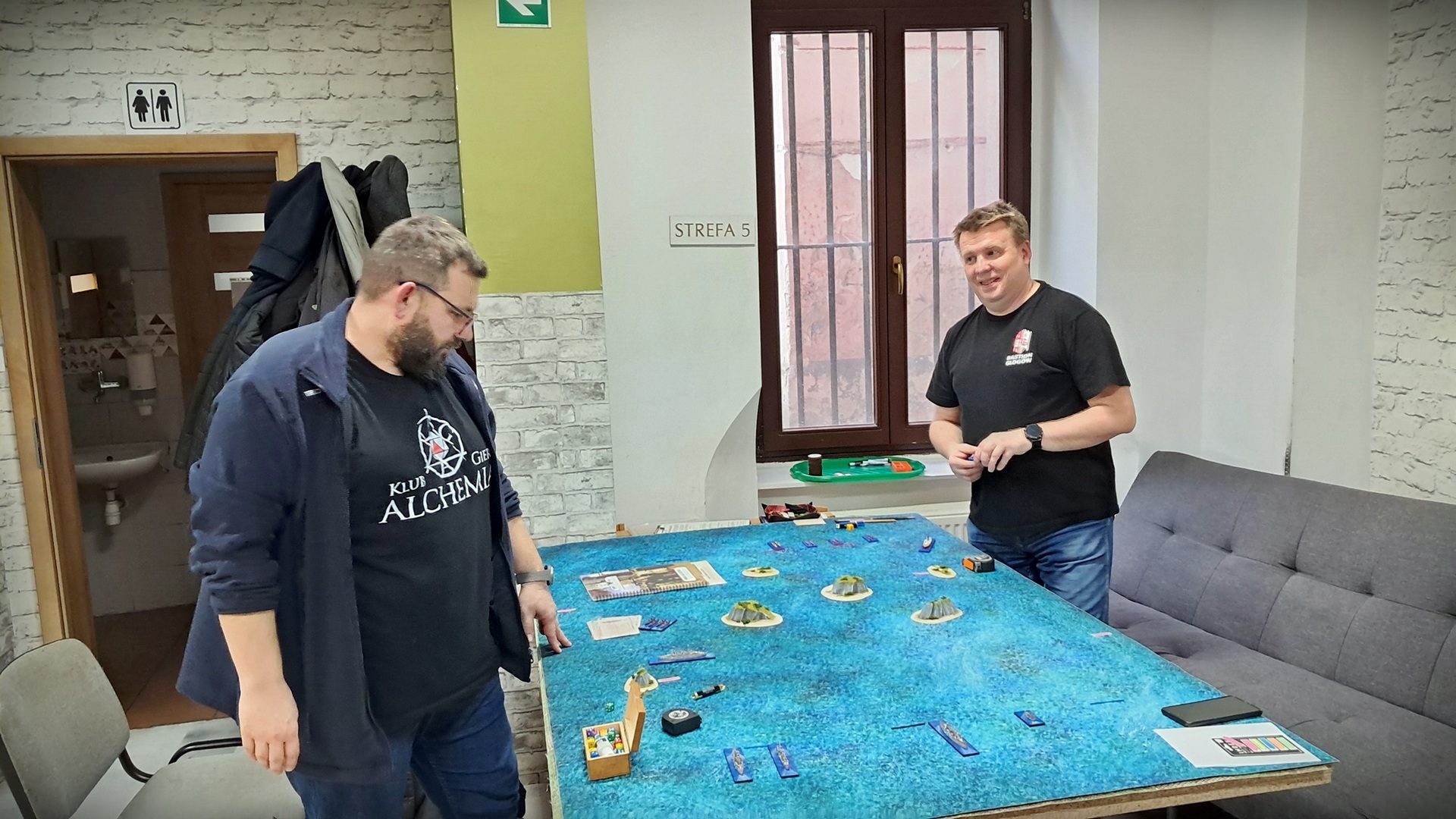
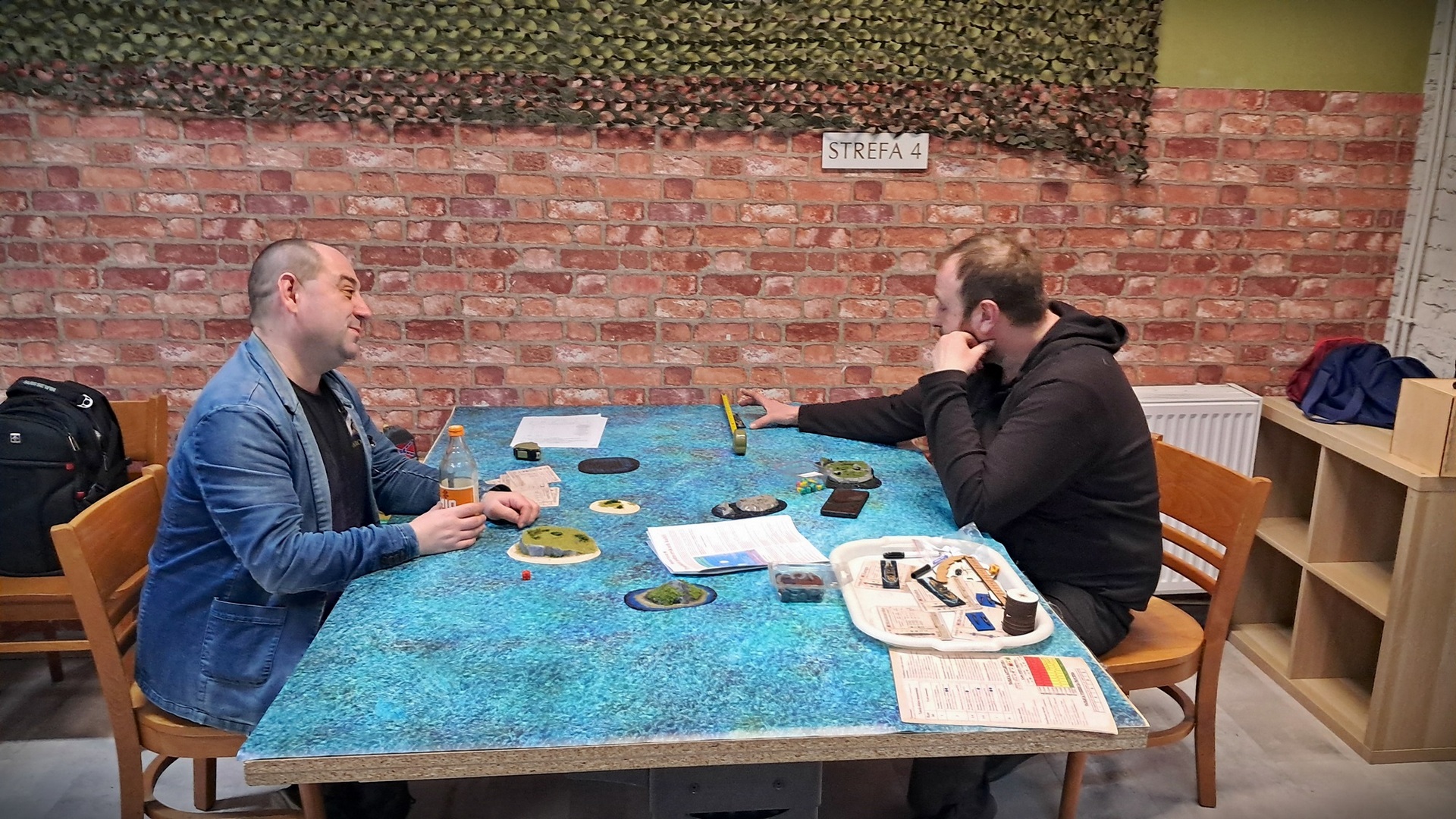
🇵🇱 W miniony weekend 23-25.05 miałem przyjemność spędzić bardzo dobrze czas na wydarzeniu zorganizowanym przez naszych przyjaciół w Głogowie, a sam turniej w którym wziąłem udział toczył się o bezcenną Zardzewiałą Szeklę. Nasza przygoda zaczęła się na Dworcu Głównym we Wrocławiu w piątek dwudziestego trzeciego maja, gdzie o 18:09 ruszyliśmy pociągiem do celu wraz z Cornholio, Gingerhead i Torgillem, czyli większością wrocławskiej drużyny która tam się wybrała. Aspirant ze względu na sytuację losową dotarł do nas później. Tak czy inaczej stawiło się nas 18 graczy, z miasta gospodarza Głogowa, z Gorzowa Wielkopolskiego, Poznania, Wiązowa, Wrocławia, Sosnowca i Zielonej Góry. Bardzo przyjemne towarzystwo, zagrałem pięć różnych gier i wśród nich oczywiście pierwszą grę musiałem zagrać na kompana z Gdzie był Wrocław… oczywiście by ironii było zadość graliśmy w koszulkach naszej grupy. Z Cornholio mamy szczęście, że zawsze na turniejach gramy na siebie, czy jest na nich 18 osób, czy prawie 100.
W kwestii rozgrywek – zagrałem swoją flotą rosyjską, której jestem wierny od kiedy zacząłem przygodę w Bogów Wojny: Togo – nie ma co się męczyć z flotą, której się nie lubi i dotyczy to armii do każdego systemu figurkowego. Niestety zapomniałem zorganizować sobie portret cara Mikołaja II z dynastii Romanowów. Pierwszą grę rozegrałem z Łukaszem „Cornholio” grającym flotą cesarstwa Japonii, drugą z Krzyśkiem „Kolospoksik” grającym marynarką USA – super widzieć tak młodych graczy – oby więcej osób w tak młodym wieku interesowało się figurkami. Trzecią grę zagrałem z Marcinem „Prezesem”, który grał kaiserowskimi Niemcami, a naszym celem było przecięcie kabli – nikomu z nas się to nie udało. W czwartej grze rozegranej z poznanym jeszcze w Planszóweczce Mateuszem „Condotierro” który prowadził flotę królestwa Hiszpanii za cel mieliśmy bombardowanie portu co w jakimś stopniu udało się tylko mojemu oponentowi i na koniec z Dominikiem – również z flotą hiszpańską – starcie na kontrkursach. Każda gra była przyjemna i z chęcią powtórzę te rozgrywki w przyszłości w tym samym gronie i miejscu.
Po piątej grze wyłoniło się Top 3 i wyglądało następująco: 1. Maciej „Pyra” Mikołajczyk grający Kaiserliche Marine 🇩🇪 2. Rafał „SigThorn” Woźniak grający Nippon Kaigun 🇯🇵 3. Karol „Ginger” Lemański grający Kaiserliche Marine 🇩🇪
Więcej o wynikach możecie przeczytać na Tournykeeper TUTAJ. O samym wydarzeniu więcej możecie przeczytać też na stronie wydarzenia TUTAJ.
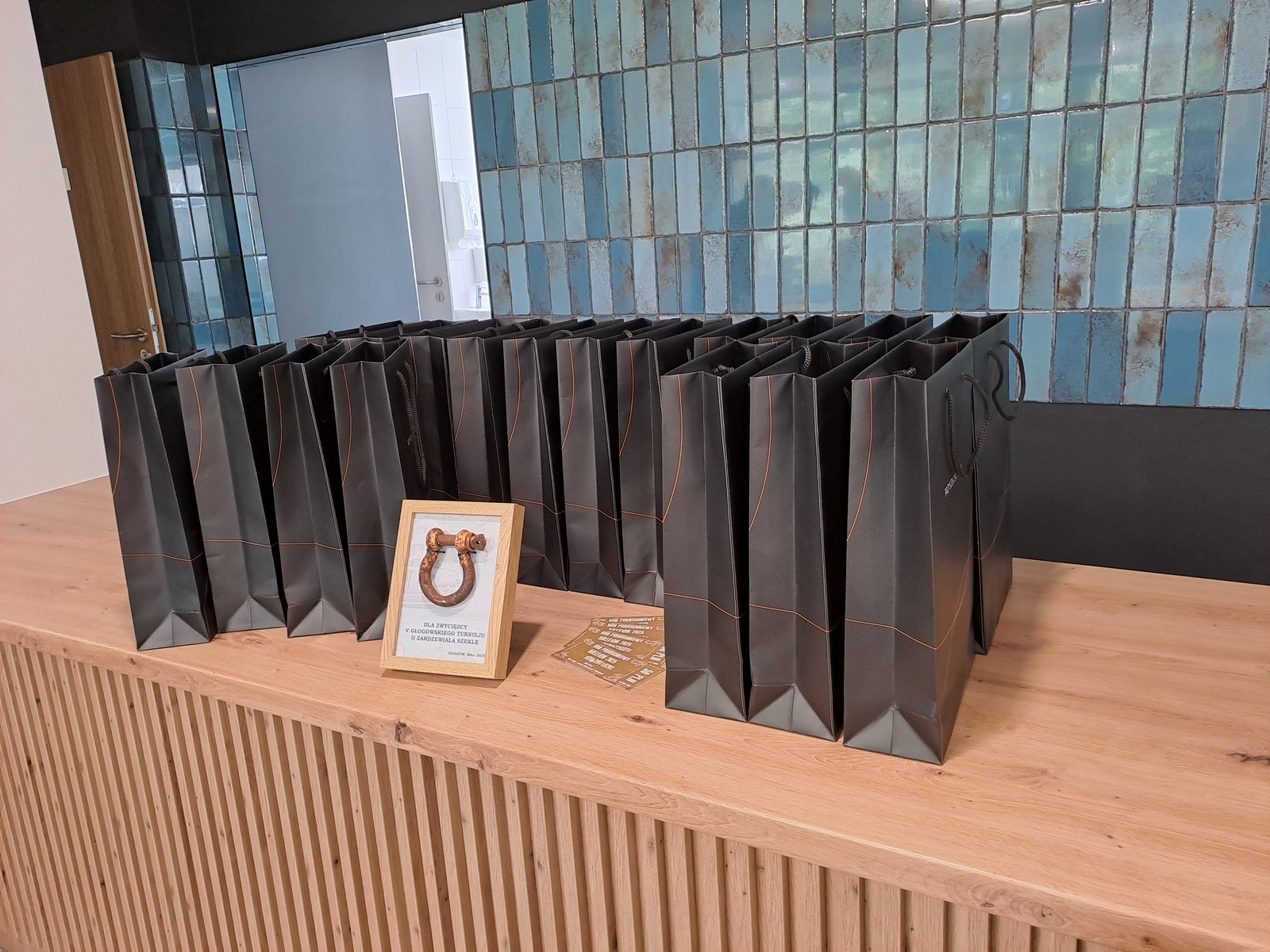
Każdy z uczestników otrzymał nagrodę dzięki KGHM Polska Miedź, a niektórzy otrzymali również dodatkowe nagrody w postaci bonów do wrocławskiego klubu Bolter, który jest wydawcą Bogów WojnyTogo, wydawnictwa GM Boardgames.
Translations to English done with help from ChatGPT. 🇬🇧 Last weekend, on May 23–25, I had the pleasure of spending a great time at an event organized by our friends in Głogów. The tournament I took part in was all about competing for the priceless Rusty Shackle.
Our adventure started at the Wrocław Main Station on Friday, May 23rd, where at 6:09 PM we boarded a train to our destination, along with Cornholio, Gingerhead, and Torgill — that is, most of the Wrocław team who attended the event. Aspirant joined us later due to unforeseen circumstances.
All in all, there were 18 players from the host city of Głogów, as well as from Gorzów Wielkopolski, Poznań, Wiązów, Wrocław, Sosnowiec and Zielona Góra. A very pleasant crowd, and I played five different games. Naturally, the first game had to be against my companion from „Where was Wrocław…?” — and to complete the irony, we were both wearing the shirts of our group. With Cornholio, we’re lucky that we always end up playing against each other at tournaments, whether there are 18 people or nearly 100.
As for the games — I played with my Russian fleet, which I’ve been loyal to since I started my adventure with Bogowie Wojny: Togo. There’s no point in struggling with a fleet you don’t enjoy — that goes for any miniatures game system. Unfortunately, I forgot to bring a portrait of Tsar Nicholas II of the Romanov dynasty!
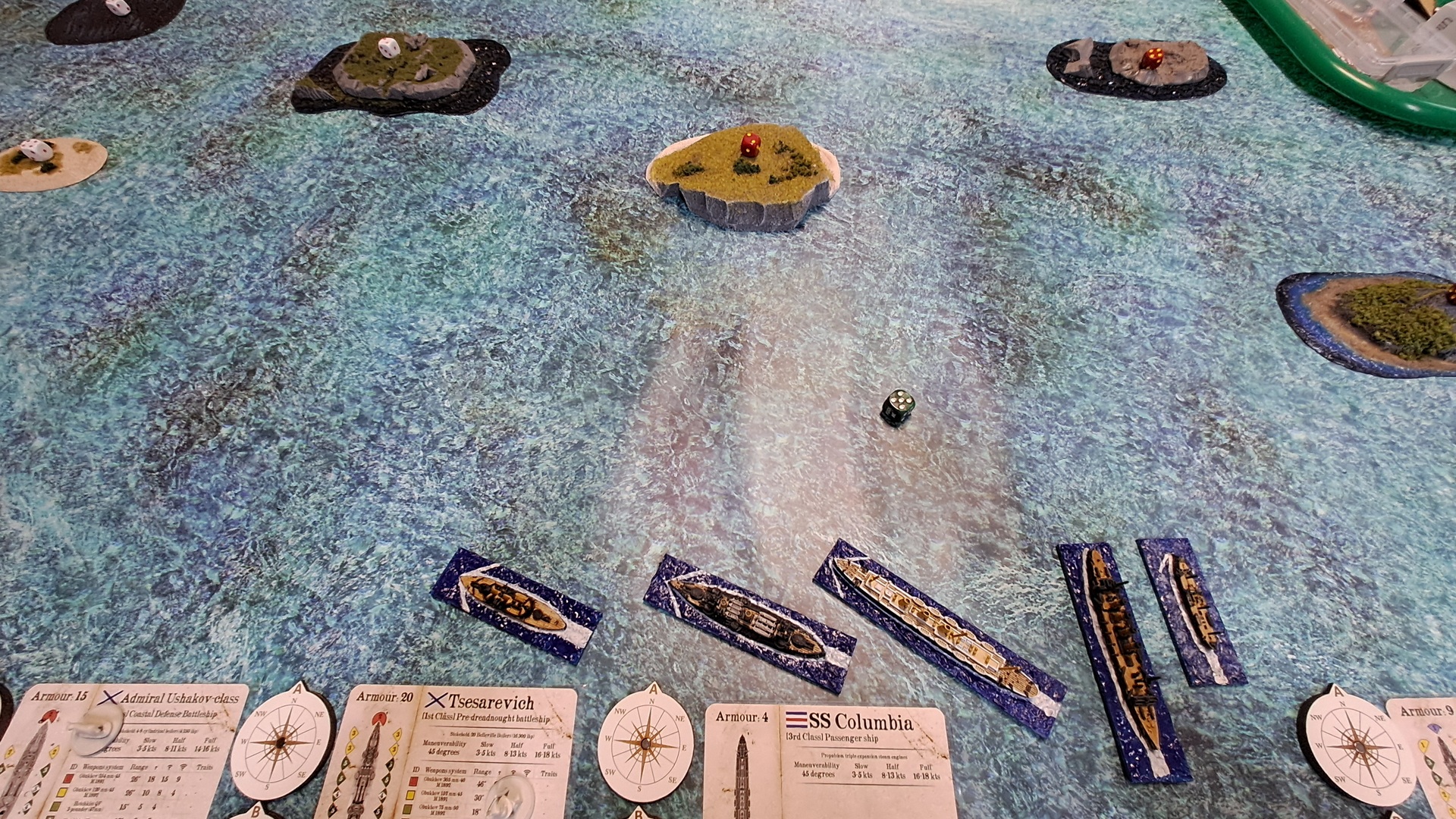
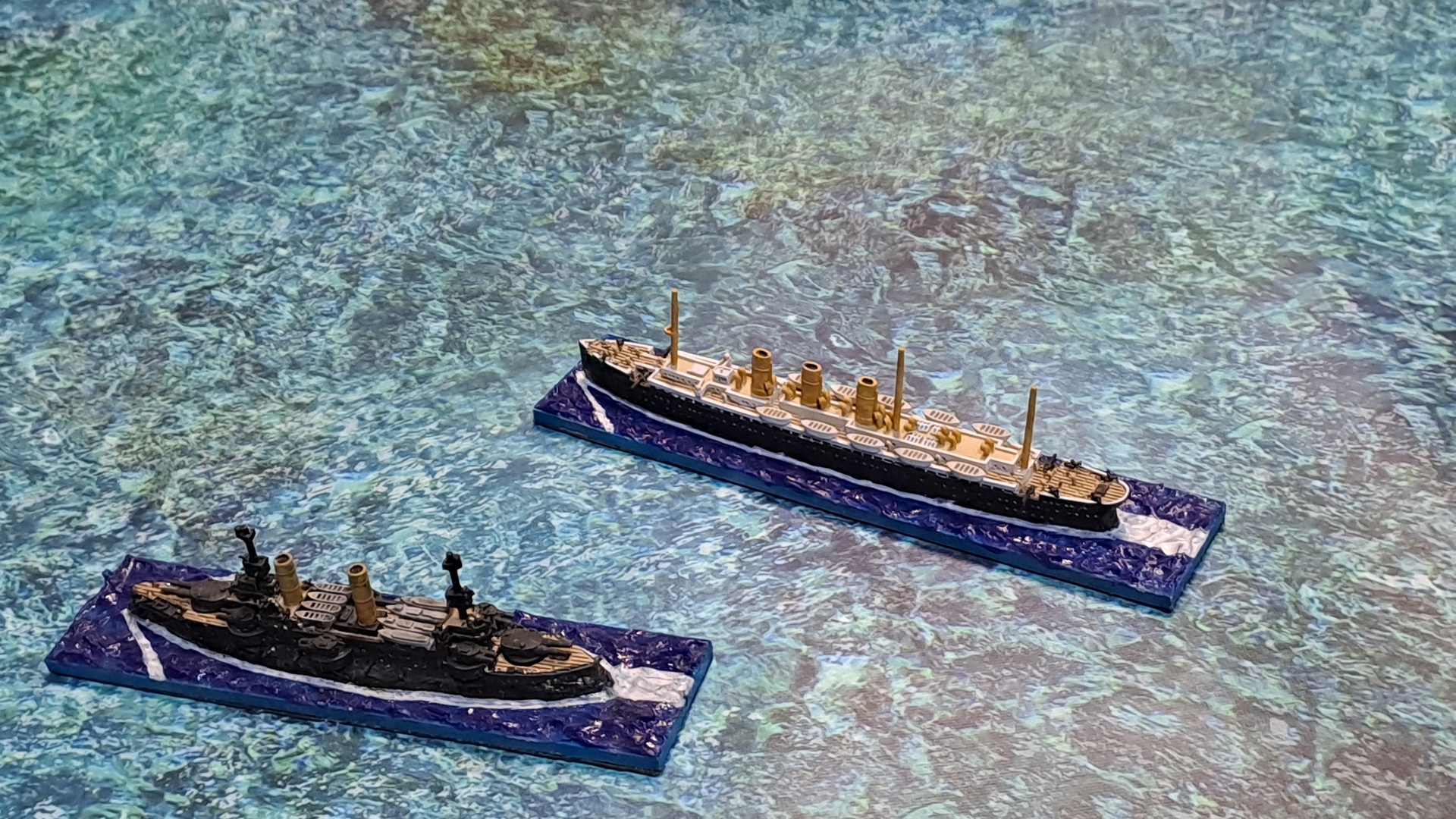
My first game was against Łukasz „Cornholio,” playing the Imperial Japanese Navy. The second game was with Krzysiek „Kolospoksik,” commanding the US Navy — it’s great to see such young players getting into miniatures gaming, and I hope more people in that age group get involved. The third game was with Marcin „Prezes,” who played the Kaiserliche Marine. Our goal was to cut the cables — but neither of us succeeded. The fourth game was against Mateusz „Condotierro,” whom I met earlier at Planszóweczka. He was leading the Spanish Navy, and our mission was to bombard a port — which only my opponent partially succeeded in doing. And the final game was with Dominik, also commanding the Spanish Navy — a classic convoy clash.
Each game was a pleasure, and I’d gladly play them again with the same group and in the same place.
After the fifth game, the Top 3 emerged:
Maciej „Pyra” Mikołajczyk playing the Kaiserliche Marine 🇩🇪
Rafał „SigThorn” Woźniak playing the Nippon Kaigun 🇯🇵
Karol „Ginger” Lemański playing the Kaiserliche Marine 🇩🇪
You can read more about the results on Tournykeeper HERE. And more about the event itself on the event page HERE.
Every participant received a prize thanks to KGHM Polska Miedź, and some also got additional prizes in the form of vouchers to the Wrocław-based Bolter club, the publisher of Bogowie Wojny: Togo by GM Boardgames.
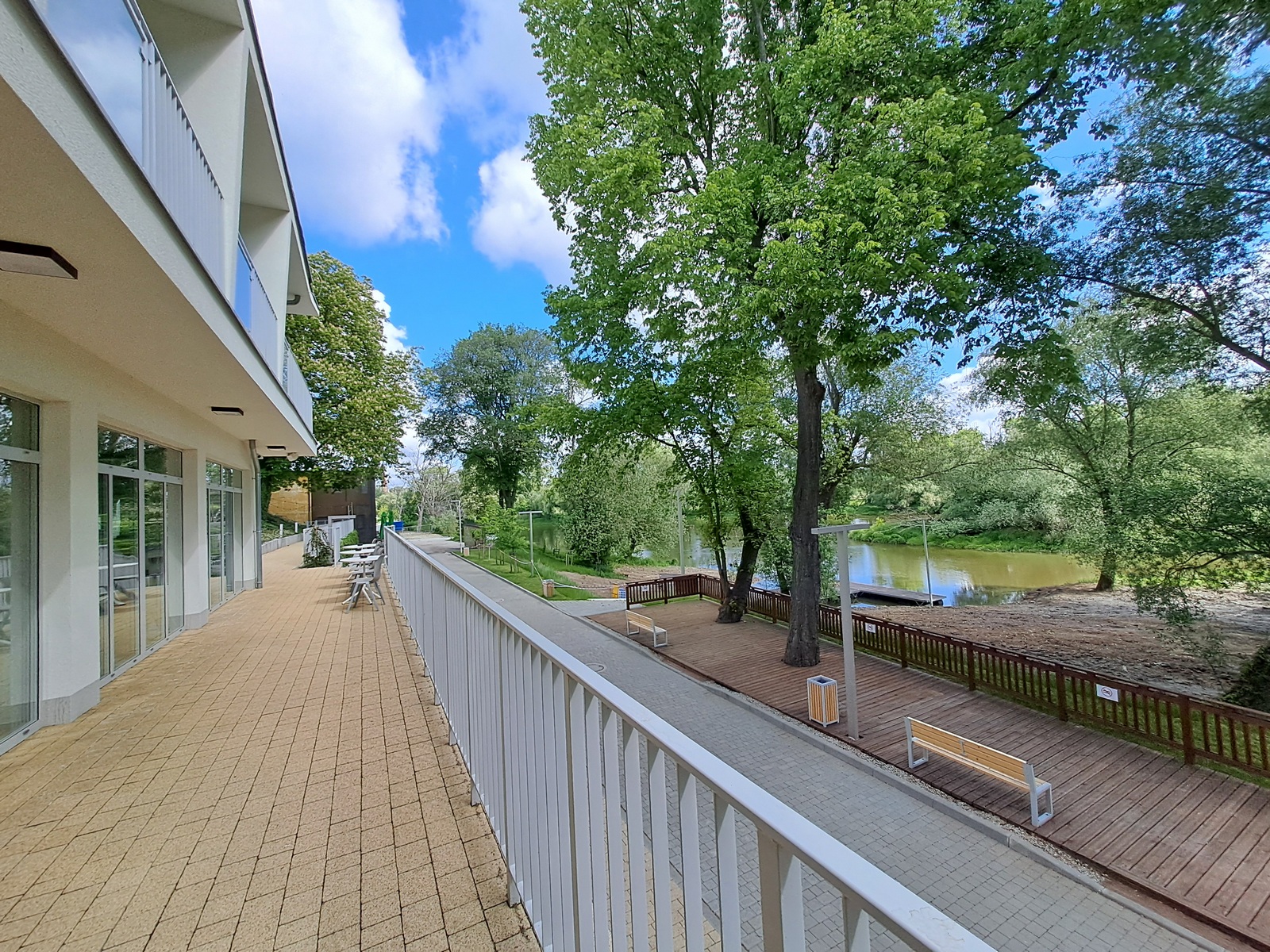
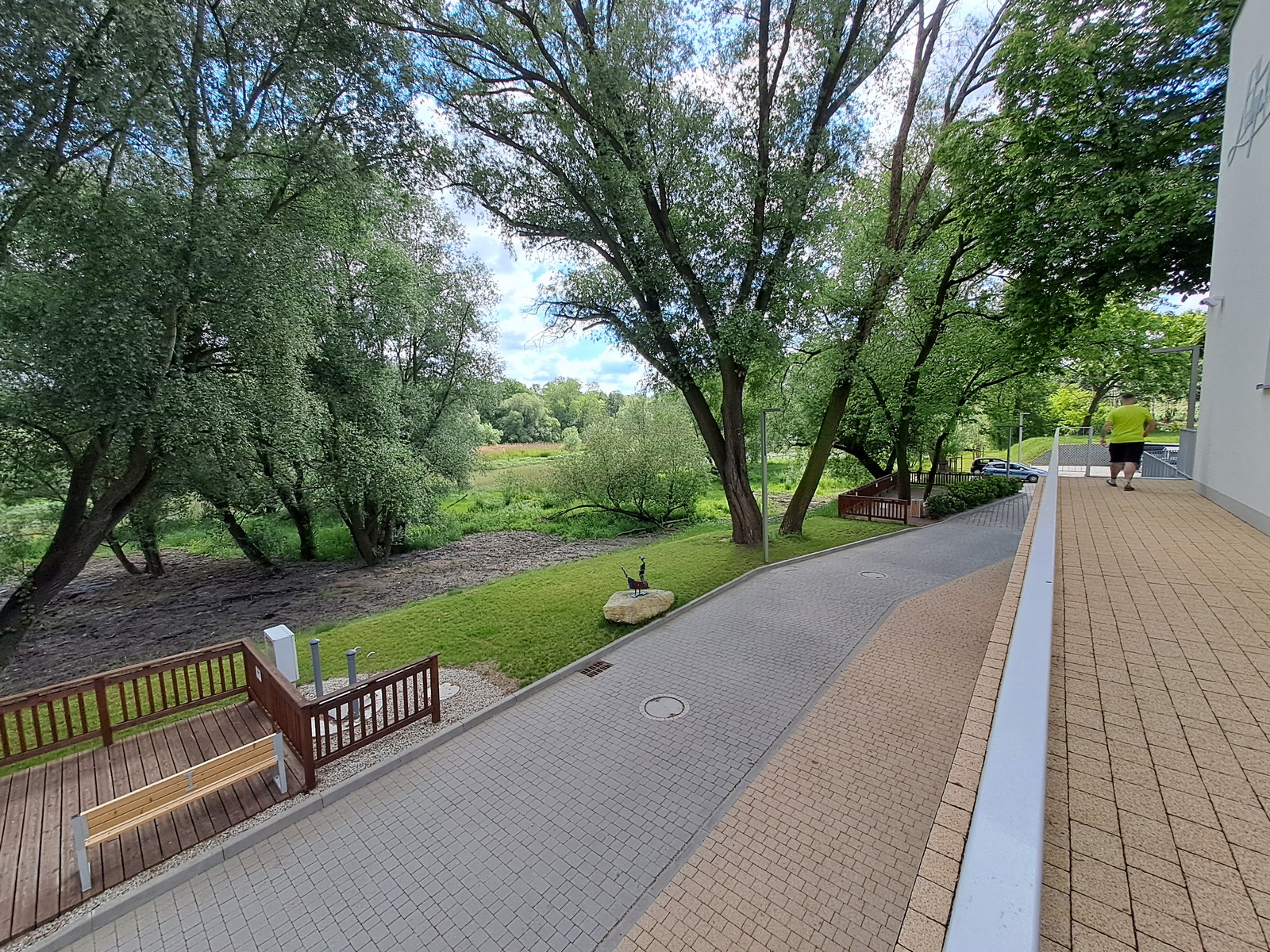
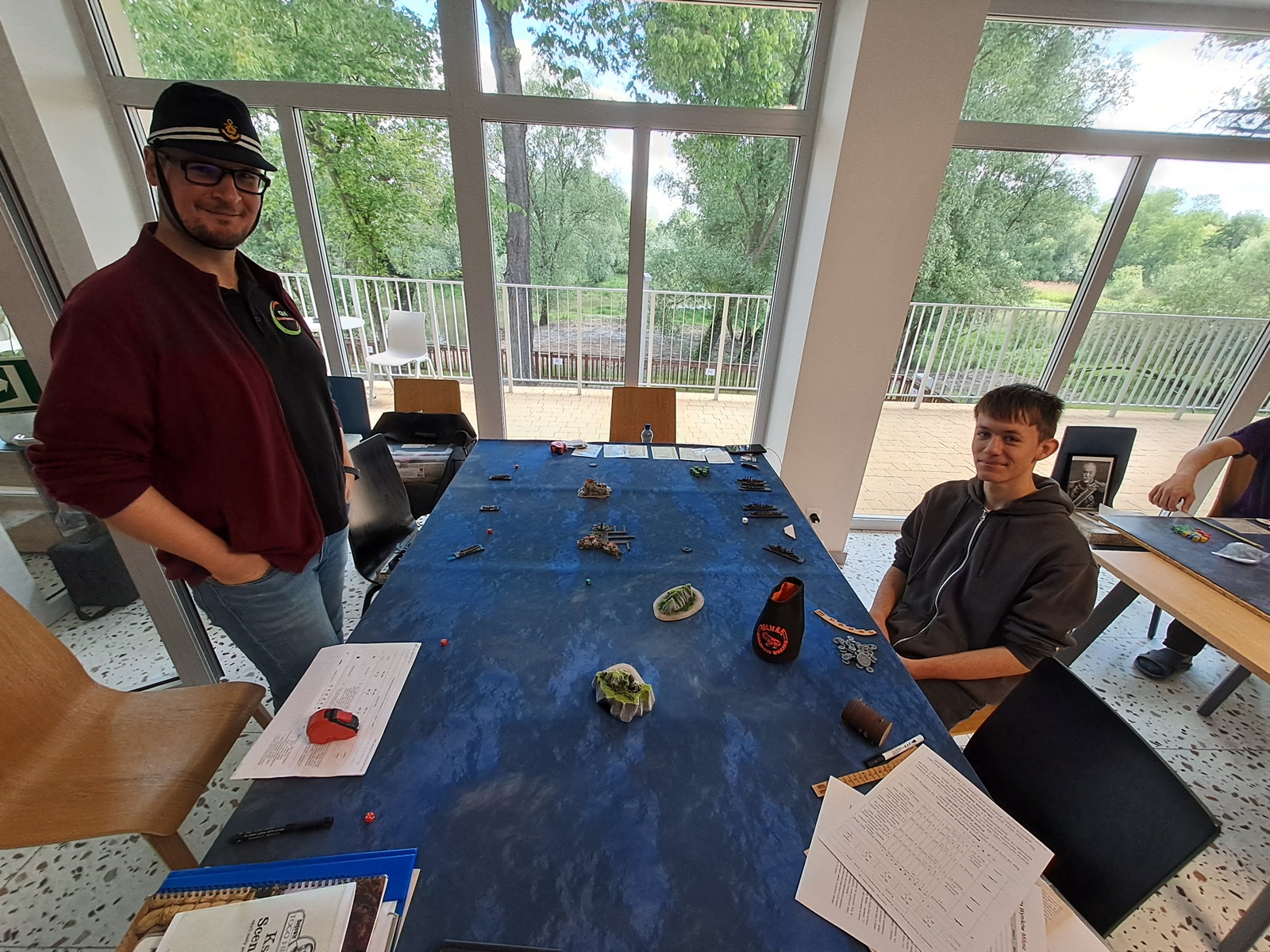
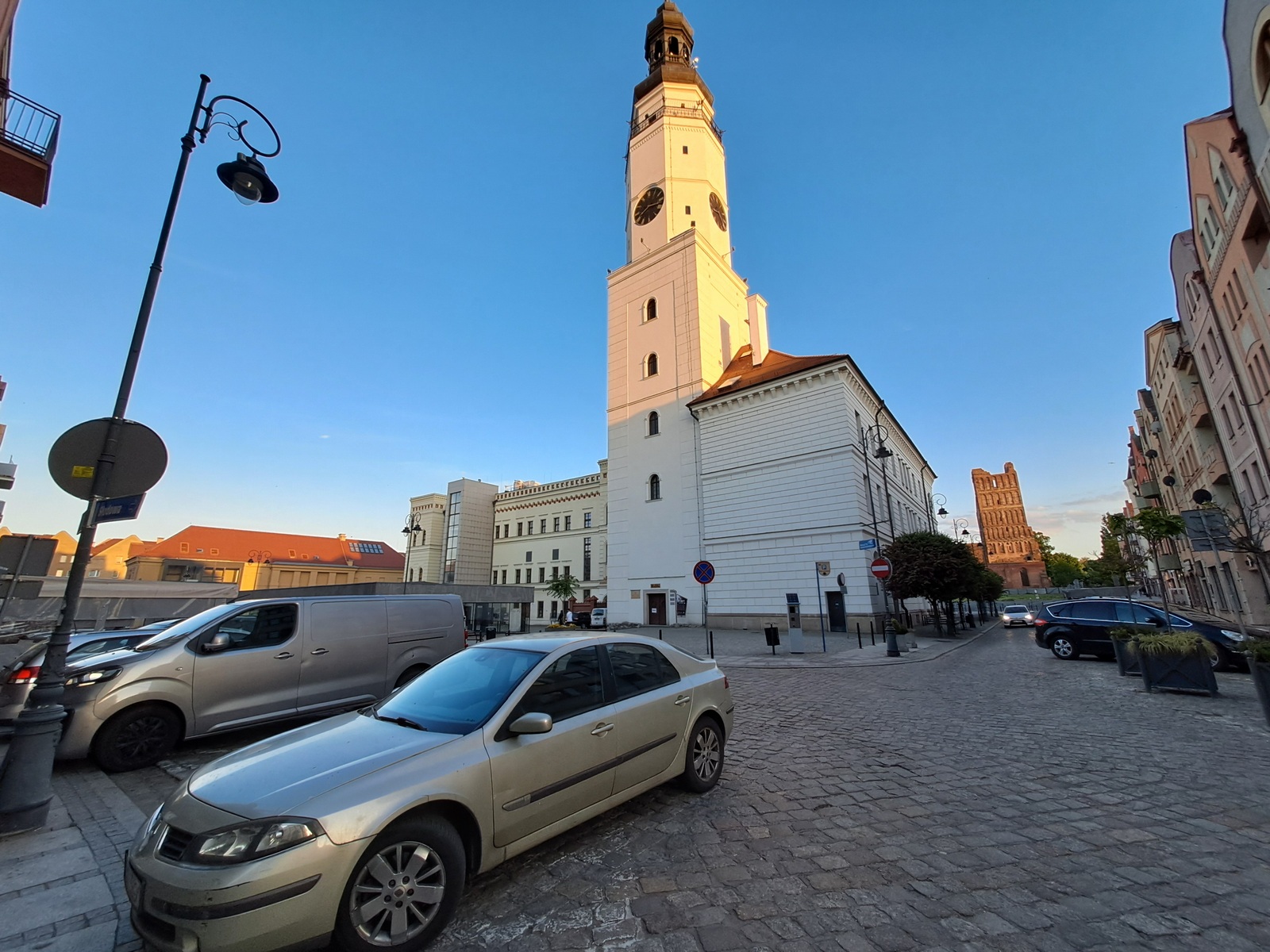
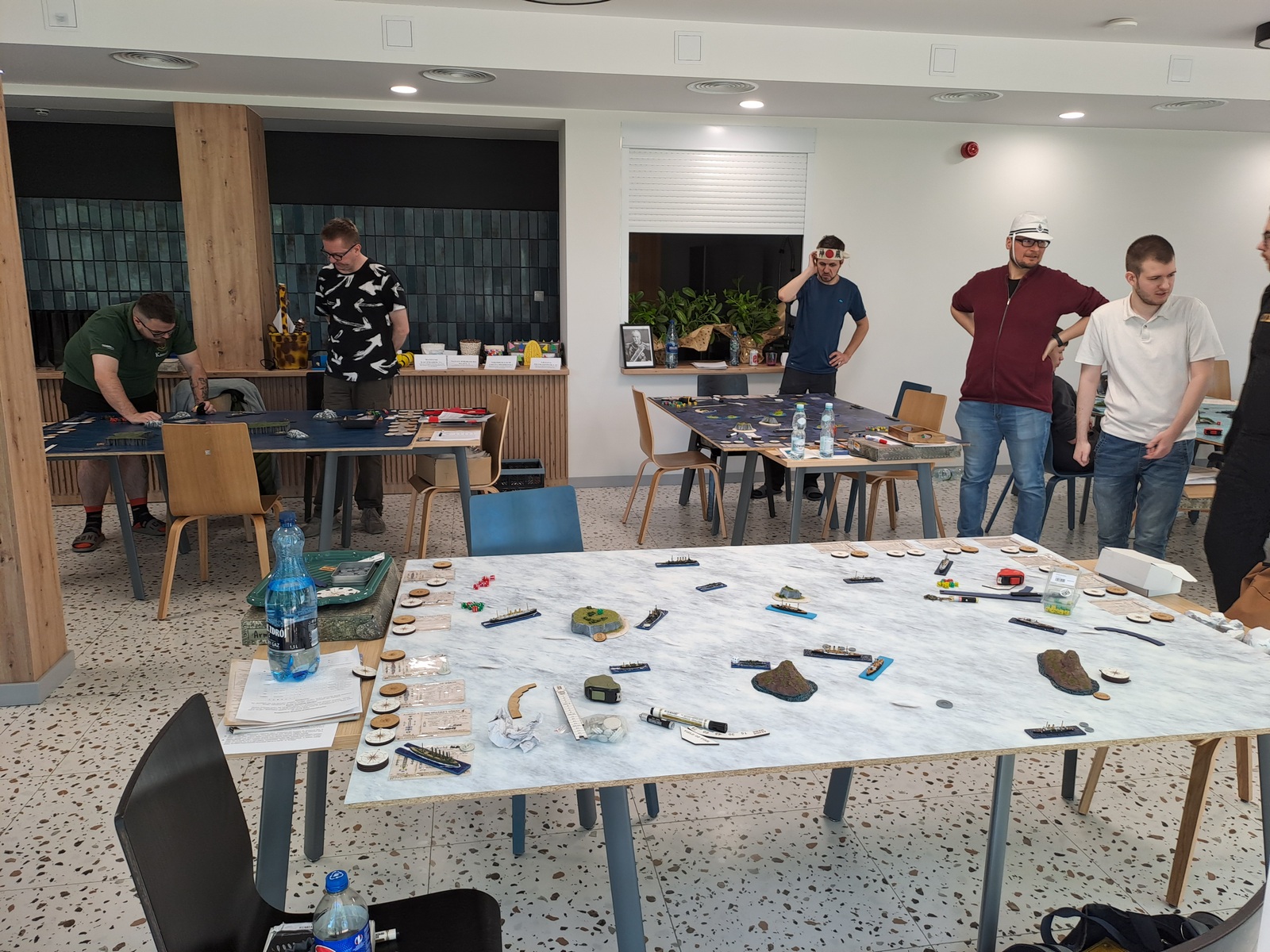
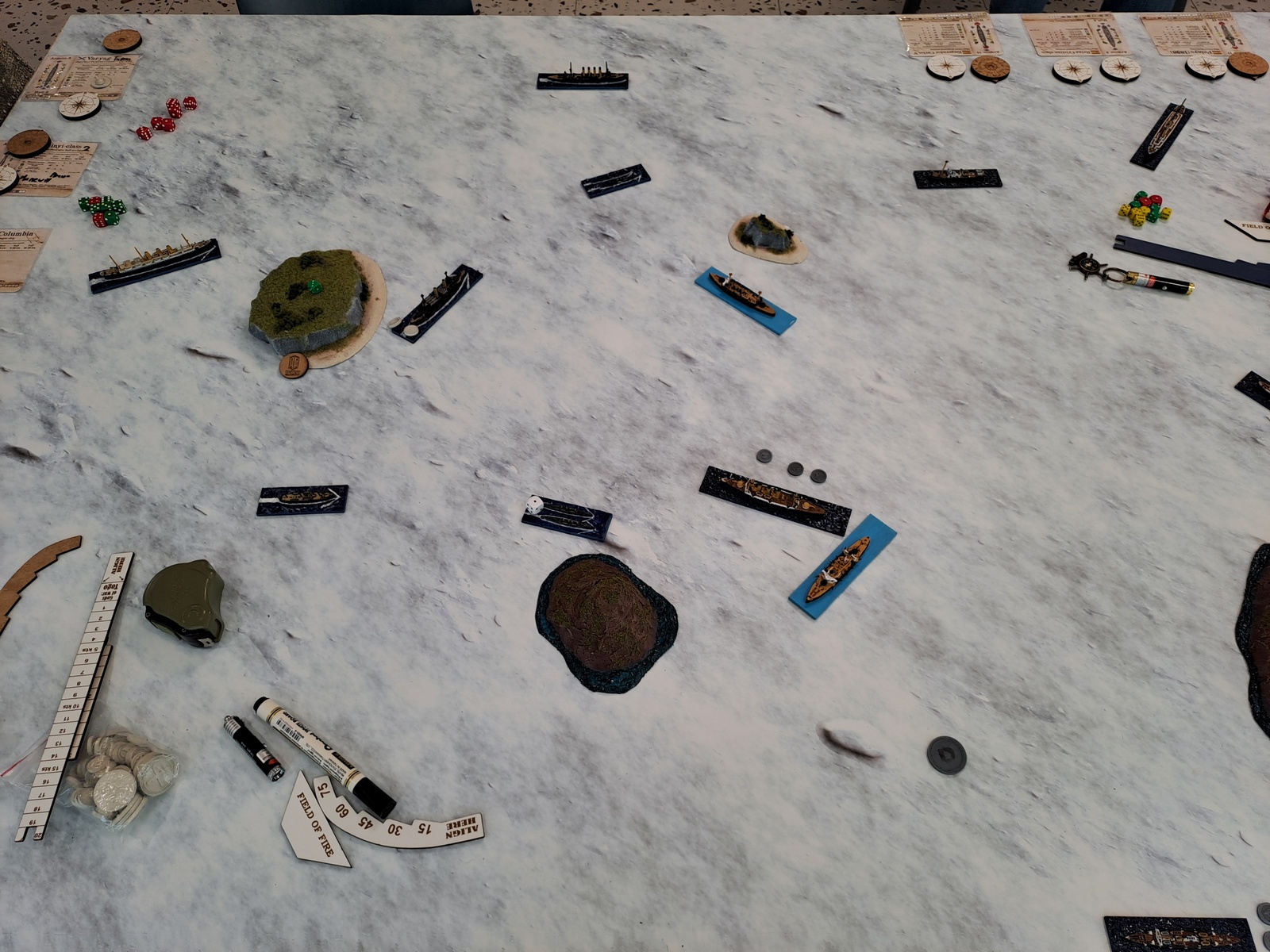
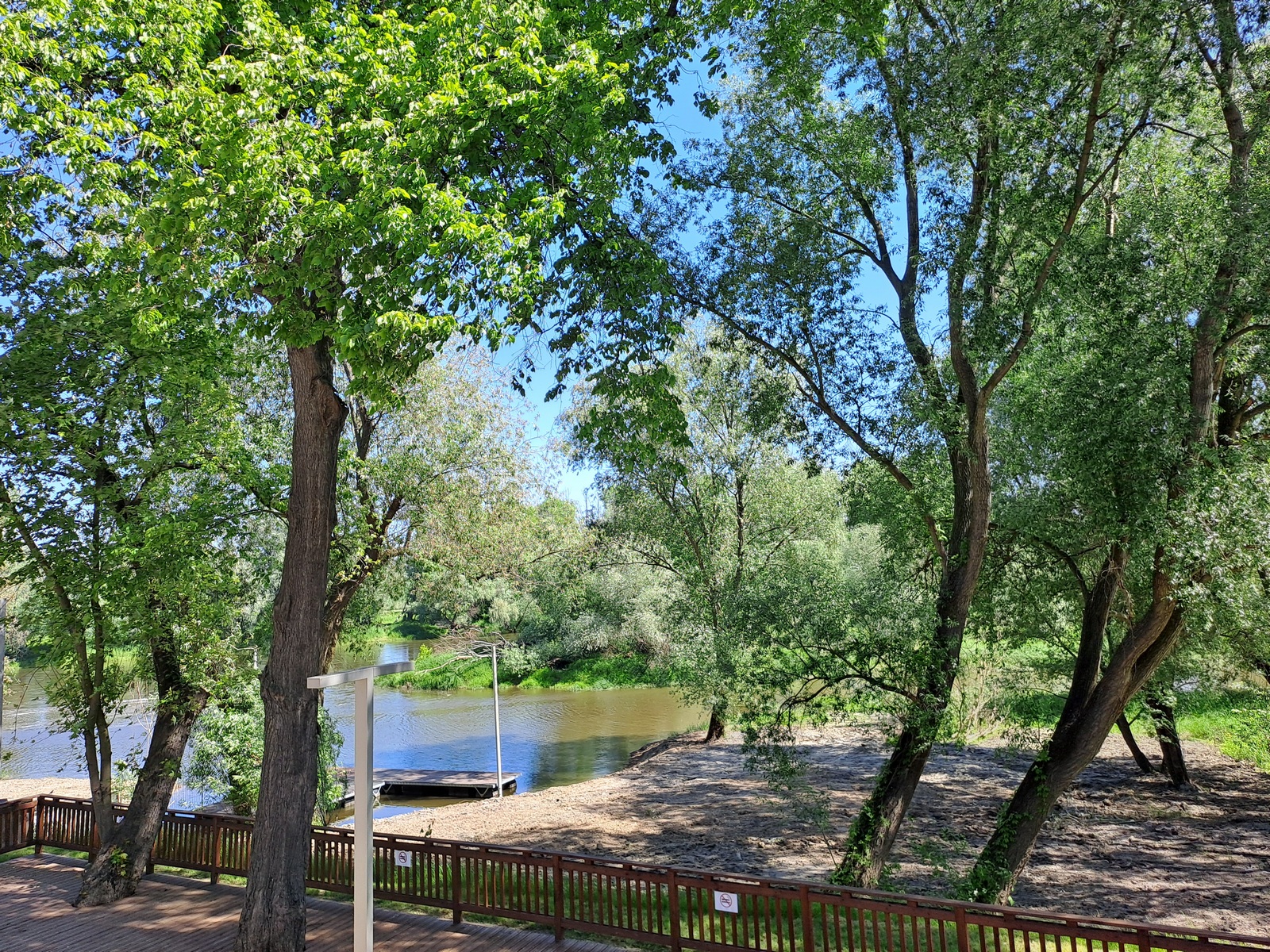
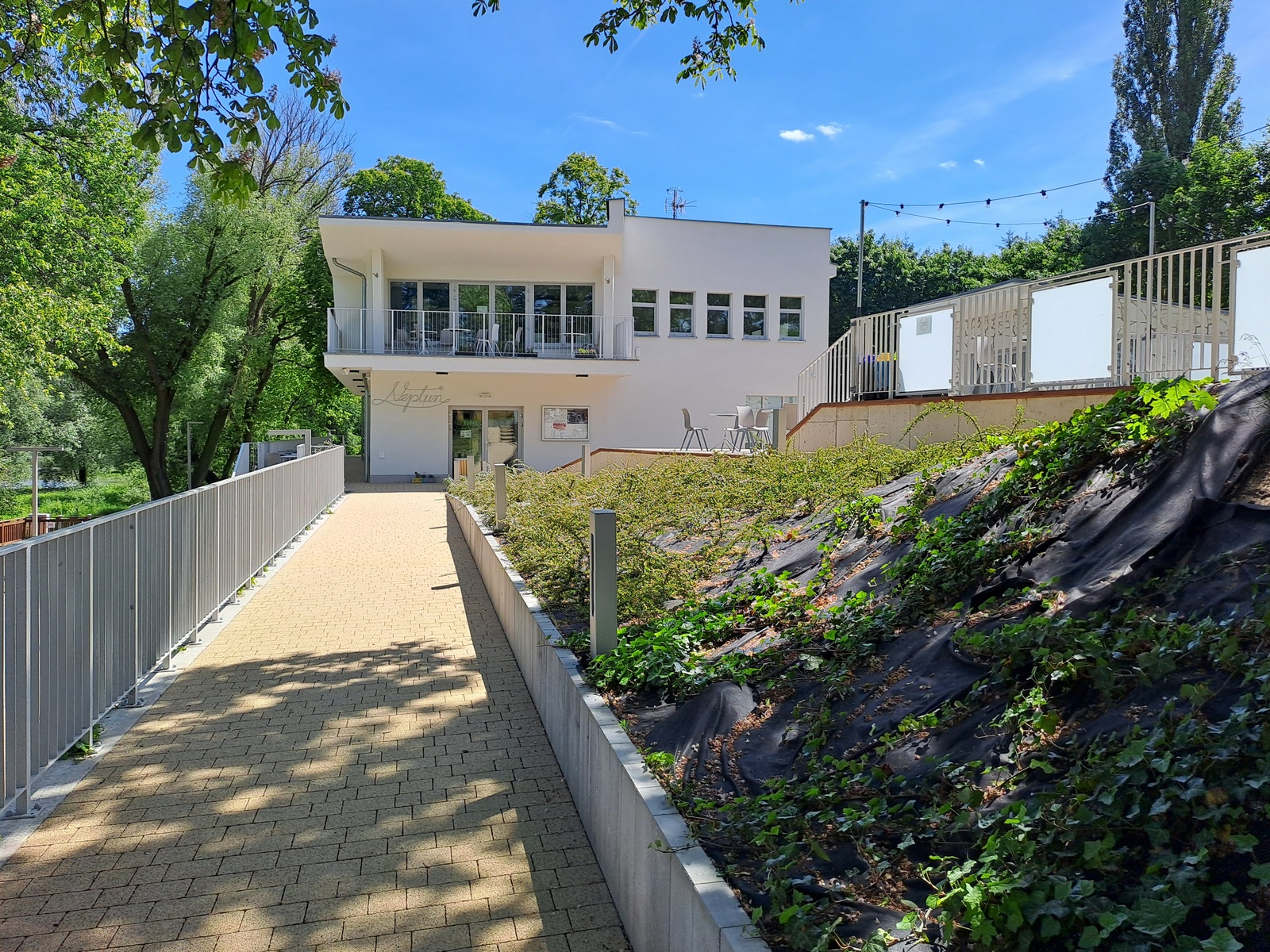
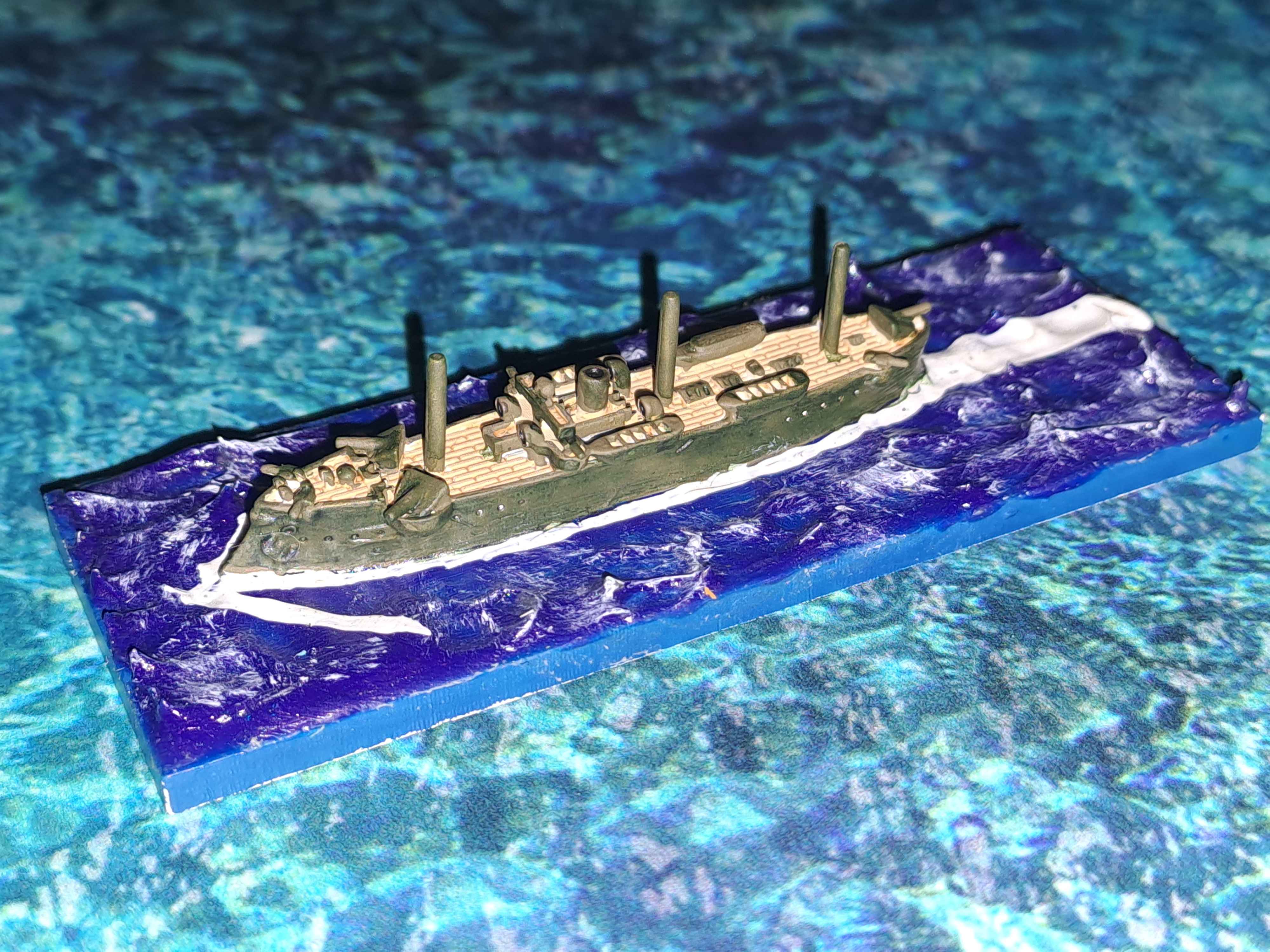
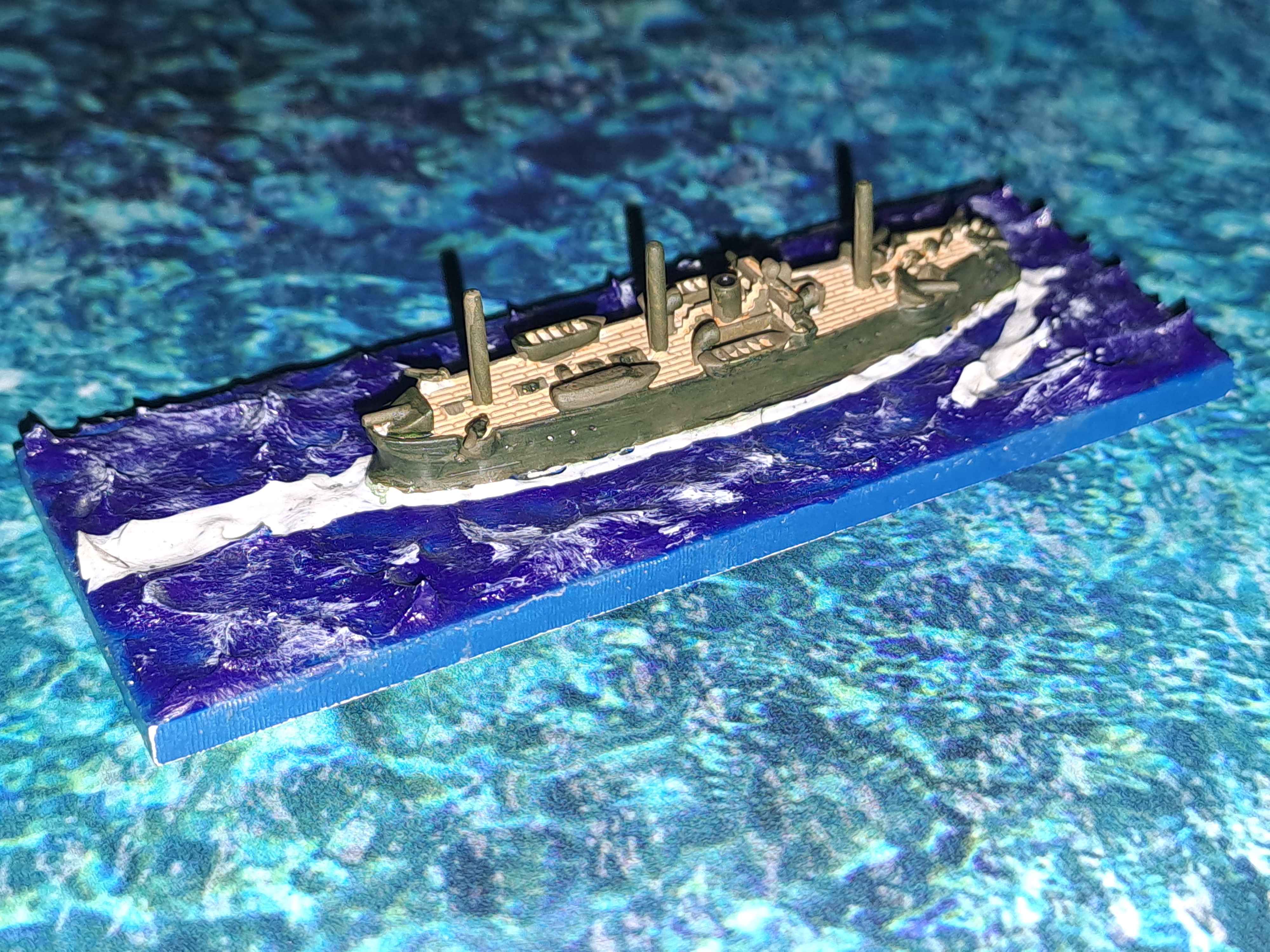
Piątkowy wieczór. Friday evening.Sobotni poranek, nim rozbrzmiał huk dział. A Saturday morning, before the roar of cannons erupted.Przed pierwszym starciem. Before first game. Wszyscy uśmiechnięci i gotowi do działania. Everyone smiling and ready for action.Moja pierwsza gra z Cornholio. My first game with Cornholio. Gra druga z Krzyśkiem. Second game with Christofer. Ustawione zdjęcie SS Columbii pod teren. ChatGPT powiedział: A staged photo of the SS Columbia set against the background.Trzecia gra z Prezesem. Third game with Prezes. Prezezes we własnej osobie. The Prezes (President in EN) in person.Oryginalne trafianie z torped i tak przez całą grę z Prezesem 😉 . Original hits with torpedoes, and that’s how it went throughout the entire game with the Prezes 😉 .Variag&SS Columbia.Co on rzucił? What did he roll?Pierwszy dzień w pizzeri Affamato na Rynku, mieli też bardzo dobre piwo. First day at the Affamato pizzeria in the Market Square, they also had great beer.Ratusz. Townhall.Autor tego bloga drugiego dnia z rana. The author of this blog on the morning of the second day.Czwarta gra z Condottiero. Fourth game with Condottiero.Część świetnie zorganizowanego turnieju. A part of a well-organized tournament.Główny twórca gry Torgill. Main creator of this game Torgill.I zwycięzca – „Pyra” z Poznania. And the winner – „Pyra” from Poznań. Ostatnie odliczanie. Final countdown. Piękno Głogowa i rzeki Odry na tym i kolejnych zdjęciach. Neptun gdzie graliśmy. Neptun where we played.
Podsumowanie: – bardzo dobrze zorganizowany turniej, gdzie wszystko było na swoim miejscu – włącznie z interesującymi kartami graczy. Na pewno z chęcią tutaj wrócę. Świetna atmosfera, bardzo dobre towarzystwo, interesujące pogawędki o innych systemach na pizzy w lokalu Affamato. – świetna okolica, pełna zieleni, porządny hotel Neptun, do tego położony blisko starówki Głogowa, do tego w przystępnej cenie. Do najbliższej Żabki do której udaliśmy się pierwszego dnia razem z Cornholio i Gingerhead jest około pół kilometra. – o wydarzeniu pisały lokalne media i można o tym przeczytać TUTAJ. Jest to link do Głogów Nasze Miasto. – Głogówz chęcią znowu odwiedzę i zwiedzę, miasto zostało niemal kompletnie zniszczone w trakcie walk Armii Czerwonej z Niemcami w 1945′ roku. Pozostało jednak sporo zabytków, w tym np. fragmenty murów miejskich, arterie komunikacyjne w przeciwieństwie do mojego rodzimego Wrocławia nie zostały poprzecinane blokami. – serdecznie dziękuję wszystkim za świetne towarzystwo, organizatorom, za poświęcony czas który zaowocował naprawdę świetnym wydarzeniem w postaci turnieju!
Summary: – A very well-organized tournament where everything was in its place – including interesting player cards. I’ll definitely be happy to come back here. Great atmosphere, wonderful company, and fascinating chats about other systems while having pizza at Affamato. – A fantastic area, full of greenery, with a decent Neptunhotel, conveniently located near Głogów’s Old Town, and at a reasonable price. The nearest Żabka, which we visited on the first day together with Cornholio and Gingerhead, is about half a kilometer away. – Local media covered the event, and you can read about it HERE. It’s a link to Głogów Nasze Miasto. – I’d love to visit and explore Głogówagain. The city was almost completely destroyed during the fighting between the Red Army and the Germans in 1945. However, quite a few historical landmarks remain, such as fragments of the city walls. Unlike in my hometown of Wrocław, the main roads haven’t been cut off by apartment blocks. – I’d like to thank everyone for the great company, and the organizers for their time and effort, which resulted in an amazing event in the form of a tournament!
Z dedykacją dla uczestników. With dedication to participatns.
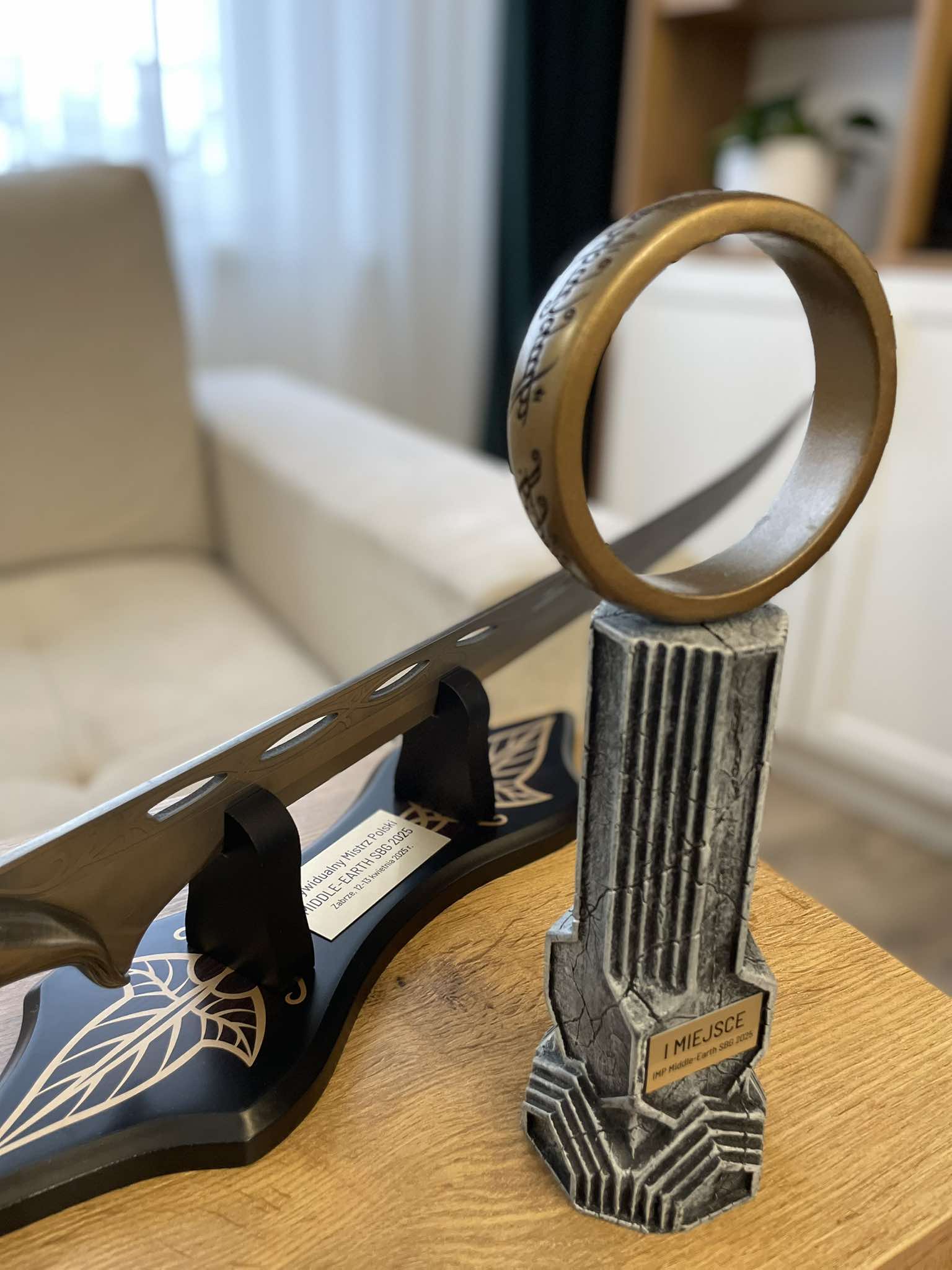
Chciałbym was zaprosić do wywiadu, który przeprowadziłem z aktualnym mistrzem Indywidualnych Mistrzostw Polski, które z zeszłym miesiącu zostały rozegrane w Zabrzu – Adamem „Adaś” Howańcem z Gdzie był Wrocław.
Cześć Adaś, czy możesz opowiedzieć nam parę słów o sobie? Skąd jesteś, czym się zajmujesz na codzień, skąd wzięło się Twoje zainteresowanie figurkową grą Middle Earth SBG?
Siemka, Mam 28 lat, pochodzę z Katowic choć od 7 lat żyję we Wrocławiu. Z zawodu i wykształcenia jestem programistą. Zainteresowanie MESBG wzięło się fascynacją światem Tolkiena jak również grami strategicznymi. Poza MESBG do niedawna grałem półprofesjonalnie w League of Legends, a obecnie interesuję się takimi rzeczami jak improwizacja teatralna, górskie wędrówki i gry (planszowe/figurkowe/rpg).
Jak długo grasz w Middle Earth SBG, czy poza tym systemem figurkowym grałeś lub grasz w inne systemy bitewne, a może grasz w RPG, jeśli tak to które?
W MESBG gram ponad 15 lat, zaczynałem jako mały pyrtek jeżdżąc ze starszym bratem na turnieje w rodzinnych Katowicach. Tak się stało że utrzymałem się w hobby, może z kilkoma krótszymi przerwami. W inne bitewniaki nie grałem i chyba na ten moment nie zamierzam przez brak czasu. Poza bitewniakami prowadzę sesje RPG w przeróżnych systemach (Warhammer, Wampir Maskarada, Cthulu, LoTR czy zwykły Storytelling w klimatach zarówno komediowych jak i horrorowych).
Czy pamiętasz swoją pierwszą pomalowaną figurkę? Czy nadal jest w stanie w którym ją wtedy pomalowałeś?
Niestety nie pamiętam, chyba to był jakiś ork ale nie wyszedł najpiękniej nawet jak na orka. Ja jestem raczej malarzem z tych co malują szybciej niż ładniej choć ostatnimi czasy staram się przykładać większą wartość do estetyki, może pod wpływem ciągłego oglądania modeli Kronosa.
A może pamiętasz swoją pierwszą grę lub swój pierwszy turniej, opowiedz nam coś o tym?
Na początek swojej przygody z Lotrem umawiałem się z bratem i kolegami z klatki na granie na styropianowej makiecie. Potem zacząłem jeździć na turnieje lokalne w Katowicach gdzie mama zostawiając mnie tam śmiała się że ma świetlicę, gdzie może mnie zostawić na pół dnia, załatwić swoje sprawy i potem odebrać. Przypominam że miałem wtedy niewiele więcej niż 10 lat.
Co myślisz o aktualnej edycji Middle Earth SBG? Moim zdaniem niektóre armie są po prostu lepsze od pozostałych, Angmar czy Orły to są bardzo ciężcy przeciwnicy dla wielu innych armii.Oczywiście w grę wchodzą inne czynniki takie jak teren czy np. posiadanie sztandaru w niektórych scenariuszach, lub po prostu szczęście.
Uważam że póki nie mamy nowego booka armijnego i matched play guida to mocno ta edycja ogranicza tworzenie armii, co z jednej strony jest dobre dla graczy nowych bo zasady kompozycji armii są bardzo proste a z drugiej dla takich starych wyjadaczy jak ja mocno ogranicza możliwości komponowania armii i kontrowania niektórych zbyt mocnych armii. Dla mnie sporą częścią poprzedniej edycji była analiza potencjalnej mety przed turniejem (czyli tego co się spodziewam że będzie grało na topowych stołach na te punkty) i skomponowanie z dostępnych sojuszy czegoś co na tą metę odpowie. Teraz niestety tego nie ma w takim zakresie.
Poza tym uważam że nowa edycja wprowadziła sporo dobrych zasad jak Dominant czy decyzja o pierwszeństwie po wygranym rzucie. Mocno liczę że nowe booki zbalansują trochę armylisty i drugie takie zawody gołębiarskie jakie były na IMP (ponad 1/4 graczy miała orły) już się nie powtórzą.
Zdjęcie od IMP, autor najpewniej z GBW.
Skoro było o obecnej edycji, to może przyznaj się, którą część twórczości Mistrza lubisz najbardziej, jako kumpel doskonale wiem, że stworzyłeś mnóstwo pytań pod quiz z świata Tolkiena, który doskonale przyjął się w naszym środowisku, wpierw na naszym masterze we Wrocławiu, potem w mieście Kraka – drugiej stolicy polski – Krakowie.
Jestem team Silmarillion zdecydowanie i za każdym razem z ogromną przyjemnością odświeżam sobie tą pozycję. Uwielbiam też Dzieci Hurina, moim zdaniem mocno niedoceniona powieść a napisana naprawdę pięknie. Z bólem serca przyznaję że Władcę czyta mi się ciężko i nie jest to moja ulubiona pozycja.
Jak wiele czasu poświęcasz na granie w Middle Earth SBG? Czy są to tylko turnieje lokalne, czy jednak wolisz mastery?
Czasem aż za dużo biorąc pod uwagę inne obowiązki 😀 Ale raczej dla mnie priorytetem są mastery a na lokale wpadam jeśli termin nie koliduje z niczym innym. Poza tym oczywiście Puchar Wrocławia którego jestem współorganizatorem który dzieje się trochę w tle do innych rozgrywek.
Którą filmową część Hobbita lub Władcy Pierścieni lubisz najbardziej? Dlaczego właśnie ją?
Druga część LoTRa, najlepszy klimat i soundtrack moim zdaniem (King of The Golden Hall <3). Honorable mention dla 3 części za majstersztyk z szarżą Rohirimów która za każdym razem wywołuje u mnie ciarki.
Ostatni lokal we wrocławskim klubie Bolter. Marian i Adaś.
Którą armię z dobra i zła lubisz najbardziej, która sprawia Ci najwięcej przyjemności z grania nią i dlaczego?
Ze zła w obecnej edycji najbardziej lubię legion Nekromanty, mam masę funu grając tą armią a przy tym armia jest dość wymagająca jeśli chodzi o poziom kminy. Z dobra chyba jakąś odmianę konnego Rohanu na ten moment, uważam że Rohan sporo zyskał w tej edycji nowymi legionami a granie konnymi armiami daje sporo frajdy.
A jeśli patrzymy też na wcześniejsze edycje to jak dotychczas najwięcej przyjemności miałem z grania moją „kminą” Lennoelfów czyli falangi Clansman – pikinier Dol Amroth – Pikinier Elficki. Lubię bardzo wymyślać nowe kombinacje które mogą być odpowiedzią na panującą metę i ta rozpiska taką była, do tego stopnia że po kilku turniejach zagranych tą armią weszła ona do mety i ludzie zaczęli to wyciągać na masterach.
Jak zdobywa się tytuł Mistrza Adaś – „szybko i przyjemnie” czy jednak jest tutaj inny trud o którym możesz mi odpowiedzieć?
Dość niespodziewanie. W samochodzie jak jechaliśmy na ten turniej mówiłem chłopakom że może i turnieju nie wygram ale będę miał fun z grania Nekromantą. Miałem trochę dość grania oklepanych schematów i „wałek na wałek” czyli armiami po 50 modeli gdzie tej kminy nie ma dużo. Po analizie potencjalnej mety na turnieju stwierdziłem że Nekromanta nieźle się w niej odnajdzie, do tego dobrałem orły które uważam za topową rozpiskę na 500 pkt. Podczas samego turnieju przeprawę określiłbym jako solidny marsz do przodu w bardzo dobrej atmosferze fair-play za co dziękuję przeciwnikom bo udało się rozegrać cały turniej bez nieprzyjemnych sytuacji czy „spin” a przy tym w fajnym sportowym zacięciu. Najcięższa była finałowa bitwa na Kisa, raz że wchodzi stres kiedy masz świadomość że grasz o tytuł. Dwa że matchup był ciężki – ja orłami vs skauty ugluka w To The Death gdzie sporo osób dookoła mówiło mi że to zły matchup, tym bardziej po tym jak przeciwnik wygrał stronę z 2 lasami w których się okopał. Zrobiłem swoiste mission impossible Gwaihirem który jako jedyny wszedł do lasu (reszty orłów nie chciałem puszczać ze względu na brak możliwości latania w lesie co skutkowałoby łatwym okrążeniem przez przeciwnika. Czekały więc zaraz przed dopingując Gwaihira i czekając na wyrzucane bargem z lasu uruki). W końcu Gwaihir się dokopał, zabił Ugluka i zacząłem palić wroty bo wynik (5:4) dawał mi już tytuł. Tak się też gra skończyła.
Może masz jakieś rady dla nowych graczy? Wielu ludzi chce zacząć, czasem nie wie jak – wiemy, że najlepiej jest poszukać lokalnej grupy czy to na Gry Bitewne, czy na dedykowanej polskiej grupie Zasady Middle EarthSBG– może masz jakieś rady dla nich?W każdym większym polskim mieście istnieją grupy grające w Middle Earth SBG, w mniejszych zresztą również się znajdują.
Myślę że przede wszystkim nie zrażać się po jednej czy drugiej porażce albo jednym czy drugim nieudanym rzucie. Jest to mimo wszystko gra z czynnikiem losowym i trzeba o tym pamiętać. Poza tym polecam po grze zapytać przeciwnika czy gdzieś się zrobiło błąd albo co można było zrobić lepiej i samemu też robić analizy swoich partii. I chyba najważniejsze: czerpać przyjemność z gry, żeby w pogoni za wynikiem nie zapominać że to przede wszystkim hobby i zabawa 😉 .
🇬🇧 – translated with use of ChatGPT I’d like to invite you to read the interview I conducted with the current Polish Individual Champion, whose finals took place last month in Zabrze — Adam “Adaś” Howaniec from Gdzie był Wrocław.
Hi Adaś, could you tell us a few words about yourself? Where are you from, what do you do on a daily basis, and how did you get into the Middle-earth SBG miniature game?
Hi there, I’m 28 years old, originally from Katowice, though I’ve been living in Wrocław for the past 7 years. I’m a programmer by education and profession. My interest in MESBG comes from a fascination with Tolkien’s world and strategic games. Besides MESBG, I used to play League of Legends semi-professionally, and nowadays I’m into things like improv theater, mountain hiking, and all sorts of games (board games/miniatures/RPGs).
How long have you been playing Middle-earth SBG? Have you played or do you play any other wargaming systems or RPGs? If so, which ones?
I’ve been playing MESBG for over 15 years. I started as a little kid, going to tournaments in my hometown of Katowice with my older brother. Somehow, I stuck with the hobby, with only a few short breaks. I haven’t really played other wargames, and currently, I don’t plan to because of time constraints. Outside of wargaming, I run RPG sessions in various systems (Warhammer, Vampire: The Masquerade, Call of Cthulhu, LoTR, or just regular Storytelling in both comedic and horror settings).
Do you remember your first painted miniature? Is it still in the condition you painted it back then?
Unfortunately, I don’t remember. I think it was some kind of orc, but even by orc standards, it didn’t look great. I’m more of a painter who paints faster than beautifully, although recently, I’ve been trying to focus more on aesthetics—perhaps influenced by constantly seeing Kronos’ models.
Maybe you remember your first game or tournament? Tell us about it.
At the start of my LotR journey, I used to play with my brother and friends from the neighborhood on a styrofoam terrain. Later, I began attending local tournaments in Katowice, where my mom used to joke that she found the perfect daycare—she could leave me there for half a day, run her errands, and pick me up later. Mind you, I was barely over 10 years old at the time.
What do you think about the current edition of Middle-earth SBG? I think some armies are just better than others; Angmar or the Eagles are very tough opponents for many other armies. Of course, factors like terrain, having a banner in certain scenarios, or just luck also play a role.
I think that until we get a new army book and matched play guide, this edition really limits army building. On the one hand, it’s good for new players because the army composition rules are very simple, but for veterans like me, it heavily restricts the possibilities for building and countering some of the overpowered armies. A big part of the previous edition for me was analyzing the potential meta before a tournament and creating something from available alliances that could respond to that meta. Unfortunately, that’s no longer possible to the same extent.
That said, the new edition introduced many good rules like Dominant and the choice of priority after winning a roll-off. I’m really hoping the new books will balance out army lists, and we won’t see another “pigeon-fest” like at the last championships (over a quarter of the players brought eagles).
Since we’re on the topic of the current edition, tell me — which part of Tolkien’s works do you like most? I know you’ve created tons of quiz questions for our Tolkien-themed quizzes, first for our master tournament in Wrocław, and later in Kraków — Poland’s second capital.
I’m definitely Team The Silmarillion, and I reread it with great pleasure every time. I also love The Children of Húrin, which I think is an underrated novel and beautifully written. Painful as it is to admit, The Lord of the Rings is a tough read for me, and it’s not my favorite.
How much time do you dedicate to playing Middle-earth SBG? Do you only attend local tournaments, or do you prefer master-level events?
Sometimes a bit too much, considering other responsibilities. 😀 But I definitely prioritize master events, and I attend local tournaments if the dates don’t conflict with anything else. Besides that, I co-organize the Wrocław Cup, which runs alongside other events.
Which movie from The Hobbit or The Lord of the Rings do you like the most? Why that one?
The second part of LotR — in my opinion, it has the best atmosphere and soundtrack (King of the Golden Hall <3). Honorable mention goes to the third part for the masterpiece that is the Rohirrim charge — it gives me chills every time.
Which army from the Good and Evil factions do you enjoy the most, and why?
From Evil, in the current edition, I really enjoy the Necromancer legion. I have a lot of fun playing this army, and it’s quite challenging in terms of strategy. From Good, probably some version of a mounted Rohan force at the moment. I think Rohan gained a lot in this edition with new legions, and playing cavalry armies is just fun.
Looking at previous editions, the most fun I’ve had was with my “brainchild” of the Allied Elves: a phalanx of Clansmen, Dol Amroth pikemen, and Elven pikemen. I really enjoy coming up with new combinations that can counter the current meta, and this list was exactly that. It got so popular that after a few tournaments, people started bringing it to master events.
How do you become a champion, Adaś — “quick and easy,” or is there another struggle you can tell me about?
Quite unexpectedly, actually. On the car ride to the tournament, I told the guys that I might not win, but I’d have fun playing the Necromancer. I was pretty tired of playing cookie-cutter armies with 50 models where there’s not much room for strategy. After analyzing the meta, I decided that the Necromancer would do well, and I paired it with Eagles, which I think is the top list for 500 points.
During the tournament, I’d describe the experience as a solid march forward in a very fair-play atmosphere — big thanks to my opponents for that, as the whole event went smoothly without any unpleasant situations or drama, but still with great competitive spirit.
The hardest part was the final battle against Kisa — there’s the stress of knowing you’re playing for the title, and it was a tough matchup. I was playing Eagles vs. Ugluk’s Scouts in To the Death, and many people around told me it was a bad matchup, especially after my opponent won the side with two forests to fortify in. I pulled off a kind of “mission impossible” with Gwaihir, who was the only one to enter the forest (I didn’t want to send in the other eagles due to the lack of flying and the risk of getting surrounded). They waited outside, cheering Gwaihir on and waiting for the Uruks to be thrown out of the woods.
In the end, Gwaihir fought his way through, killed Ugluk, and I started burning down the remaining forces since the 5:4 score was enough to secure the title. And that’s how the game ended.
Maybe you have some advice for new players? Many people want to start but sometimes don’t know how – we know that it’s best to look for a local group, whether it’s on „Gry Bitewne” or the dedicated Polish group „Zasady Middle Earth SBG” – maybe you have some tips for them? In every major Polish city, there are groups that play Middle Earth SBG, and even in smaller towns you can often find some as well.
I think the most important thing is not to get discouraged after one or two losses or a couple of bad rolls. After all, it’s a game with a random element, and that’s something to keep in mind. Besides that, I recommend asking your opponent after the game if you made any mistakes or what you could have done better, and also analyzing your games yourself. And probably the most important thing: enjoy the game – don’t forget, in the pursuit of results, that this is first and foremost a hobby and a source of fun 😉 .
🇵🇱 W ostatni weekend w stolicy Wielkopolski – Poznaniu odbyło się wydarzenie w formie turnieju, na którym drużyna Aliantów zmierzyła się z drużyną Osi. Tak, tym razem plutony alianckie zmierzyły się z plutonami drugiej strony – po jednej i drugiej stronie byli gracze z różnych miejscowości w Polsce w tym z Bydgoszczy, Łodzi, Międzyrzecza, Piotrkowa Trybunalskiego, Poznania, Swarzędza, Torunia, Warszawy, Wołomina i Wrocławia skąd przyjechało nas dwóch. Turniej odbył się na 1350 punktów z limitem kości 21, chociaż wielu graczy miało tych kości mniej, moi weterańscy Finowie zamknęli się na 13 kościach.
Tradycyjnie na poznańskim wydarzeniu organizowanym przez Z Kostką i Miarką dopisała świetna atmosfera oraz przepiękne stoły w liczbie 10 – część z nich pojawiła się dzięki uprzejmości od Micro Art Studio, chociaż nie byli oni jedynym sponsorem tego wydarzenia – więcej o pozostałych można przeczytać TUTAJ. Miejscem wydarzenia był tradycyjnie sklep Wargamer położony w pobliżu ulicy Święty Marcin, miejsce do którego można z łatwością dostać się z stacji Poznań Główny.
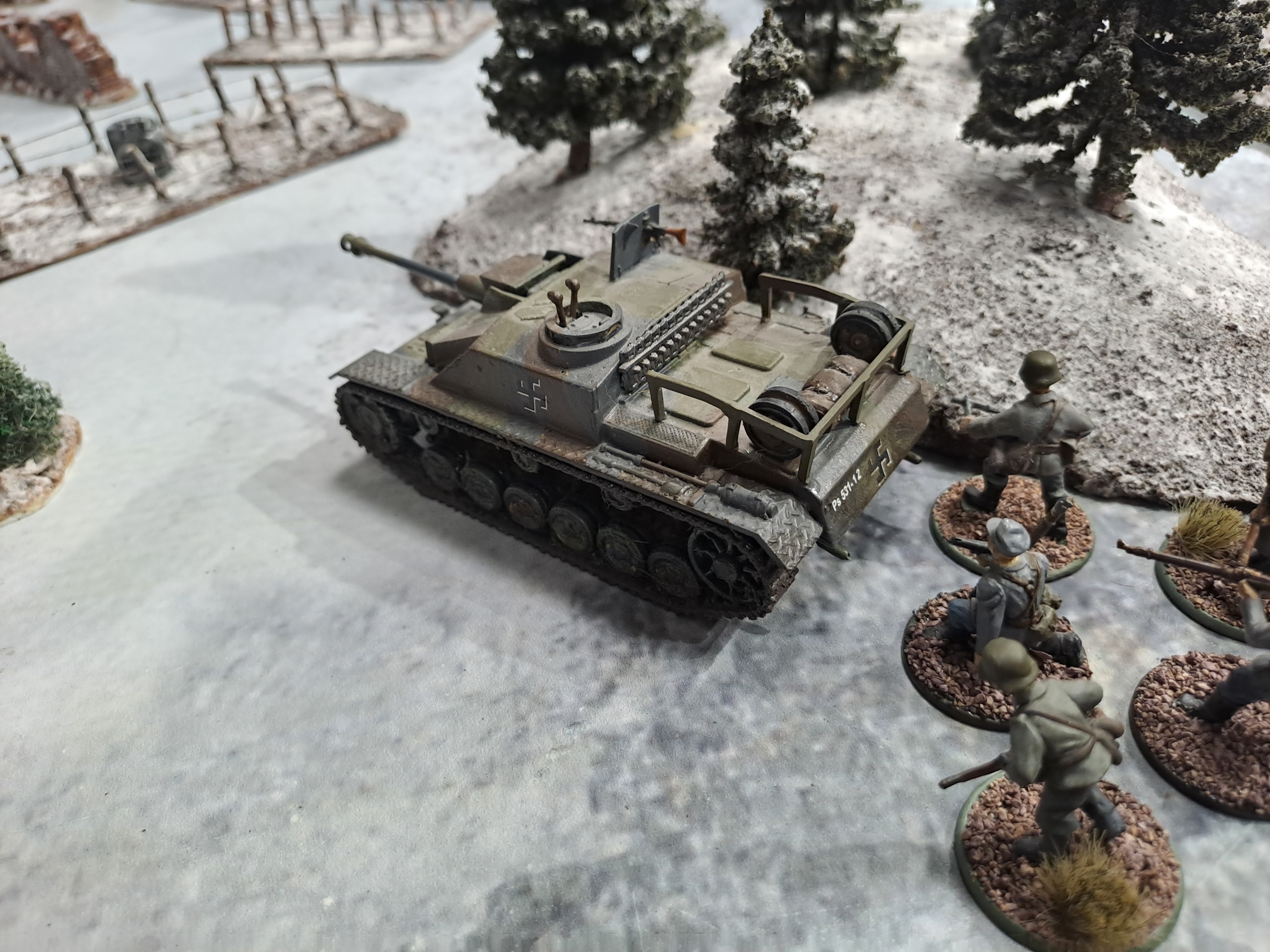
I tak przed każdym uczestnikiem były do rozegrania trzy gry z graczami z obozu przeciwnika. Zagrałem Finami na późną wojnę, większość stanowili weterani wsparci dwoma działkami przeciwlotniczymi oraz działami pancernymi typu Sturmi. I tak pierwszą grę zagrałem z Piotrkiem grającym Polakami, celem aliantów w pierwszym scenariuszu była obrona składów paliwa – to Piotrkowi wyszło świetnie, punktowo prowadziłem. Drugie starcie rozegrałem amerykańską piechotą morską Kuby, walczyliśmy o kontrolę punktów, tu nikt z nas ich ostatecznie nie kontrolował punktów, ale mimo wszystko grę udało się wygrać. Trzecia gra ostatnia – była historycznym starciem z Armią Czerwoną Amadeusza i kombinowanie jak tą grę ugrać najlepiej.
Trzy interesujące gry z świetnymi ludźmi, dlatego na pewno wrócę do Poznania na kolejne wydarzenie w formie turnieju.
🇬🇧 Last weekend, in the capital of Greater Poland — Poznań — an event in the form of a tournament took place, where the Allied team faced off against the Axis team. Yes, this time Allied platoons clashed directly with Axis platoons. Players from various cities in Poland participated on both sides, including Bydgoszcz, Łódź, Międzyrzecz, Piotrków Trybunalski, Poznań, Swarzędz, Toruń, Warsaw, Wołomin, and Wrocław, from where two of us traveled. The tournament was played at 1,350 points with a limit of 21 order dice, although many players brought fewer dice — my veteran Finns fit into just 13 dice.
As usual at the Poznań event organized by „Z Kostką i Miarką”, the atmosphere was fantastic, and there were ten beautifully prepared tables. Some of them were provided thanks to the courtesy of Micro Art Studio, although they weren’t the only sponsor of the event — you can read more about the others HERE. The event took place, as traditionally, at the Wargamer store located near Święty Marcin Street, a place easily accessible from the Poznań Główny train station.
Each participant was set to play three games against players from the opposing camp. I played my Finns in a late-war setup, mostly consisting of veterans supported by two anti-aircraft guns and Sturmi assault guns. In the first game, I faced Piotrek playing the Polish forces. The objective for the Allies in the first scenario was to defend fuel depots — Piotrek did a great job with that, although I was ahead in points. The second battle was against Kuba’s U.S. Marine Corps; we fought for control points, but neither of us ultimately controlled them — however, I still managed to win the game. The third and final game was a historical matchup against Amadeusz’s Red Army, where I had to figure out the best way to secure a win.
Three interesting games with great people — that’s why I’ll definitely return to Poznań for another tournament-style event.
Start.Pierwsza runda. First round.Moja pierwsza gra z Piotrkiem. My first game with Peter.Przed kolejną rundą. Before another round.Druga gra z Kubą. Round two with Kuba.Ostatnia z moich gier z Amadeuszem. Last of my games with Amadeusz.Nagrody. Prizes.
Podsumowanie: – jeden z powodów dla których nadal zdarza mi się grać w trzecią edycję Bolt Action. W drugą grałem bardzo dużo, trzecia mi nie podeszła i nie wiem czy to się kiedyś zmieni. Mimo wszystko nadal mam rewanże do rozegrania na kolejnym turnieju w Poznaniu 😉 . – bardzo przyjemny turniej, w świetnym towarzystwie, na pewno do zobaczenia w przyszłości! – moja lista jest TUTAJ.
Summary: – One of the reasons why I still occasionally play the third edition of Bolt Action. I played the second edition a lot, but the third just didn’t click with me, and I’m not sure if that will ever change. Still, I’ve got some rematches to play at the next tournament in Poznań 😉 . – A very enjoyable tournament, with great company — definitely see you in the future! – my rosteer is HERE. –
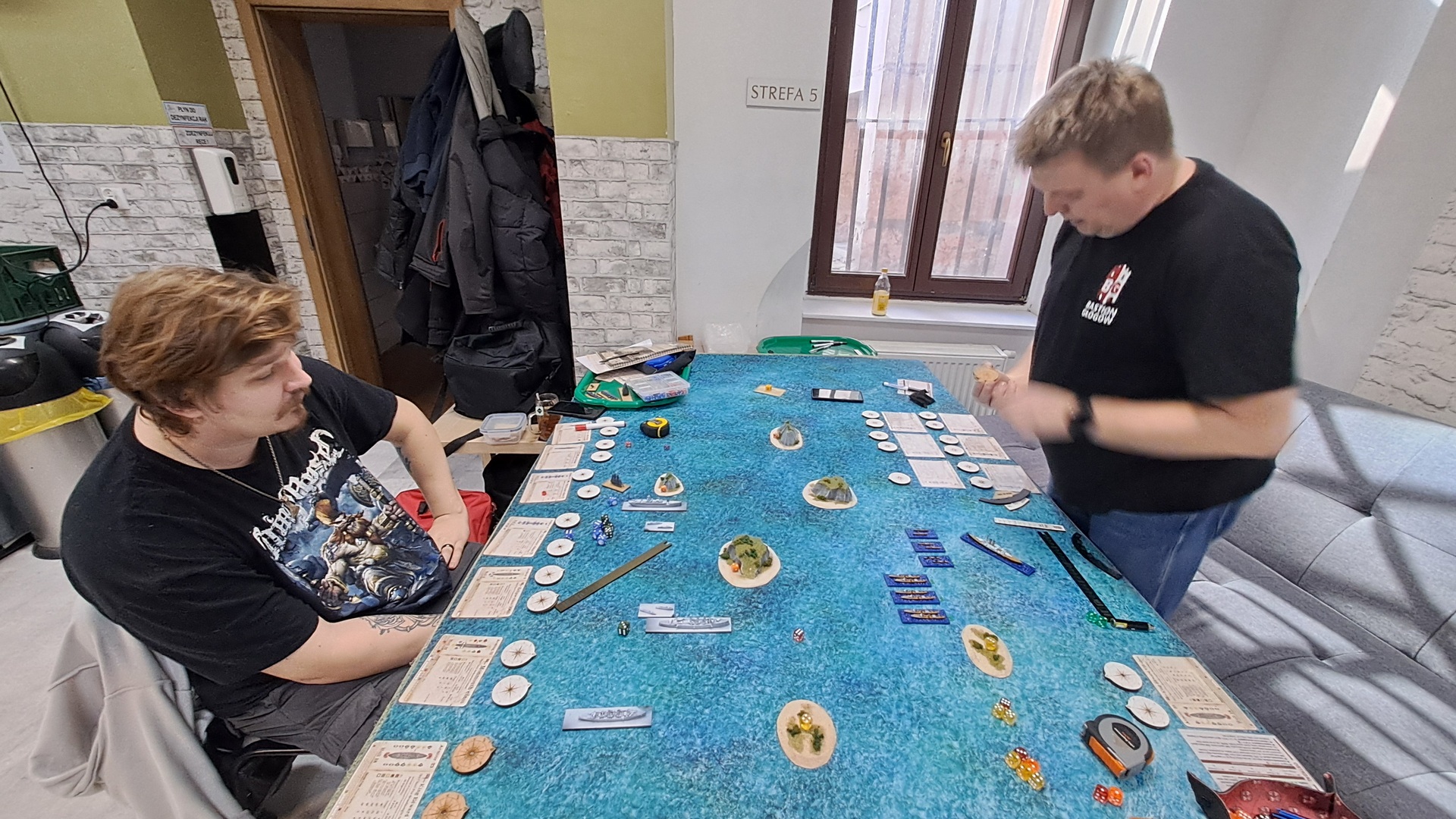
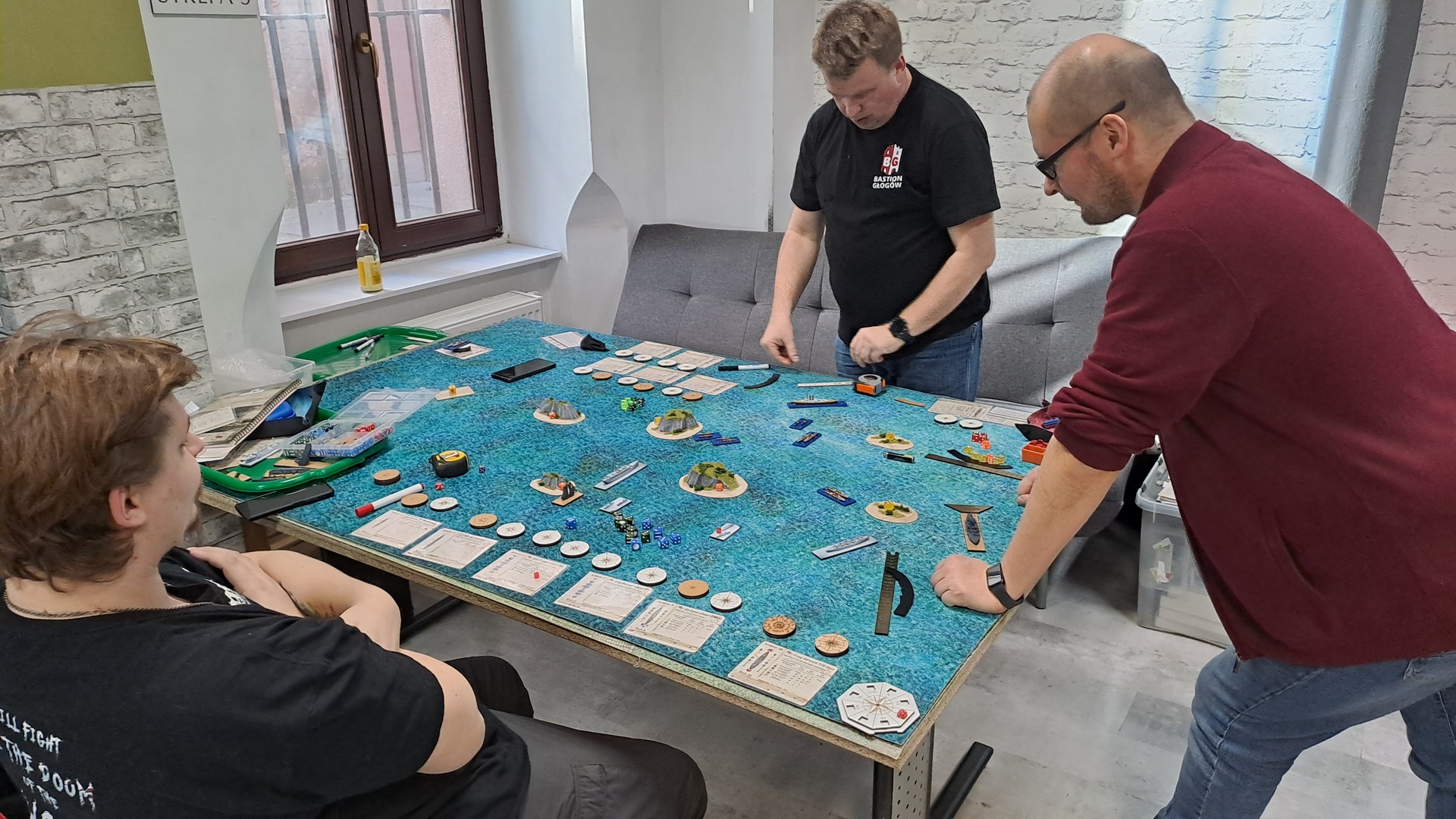
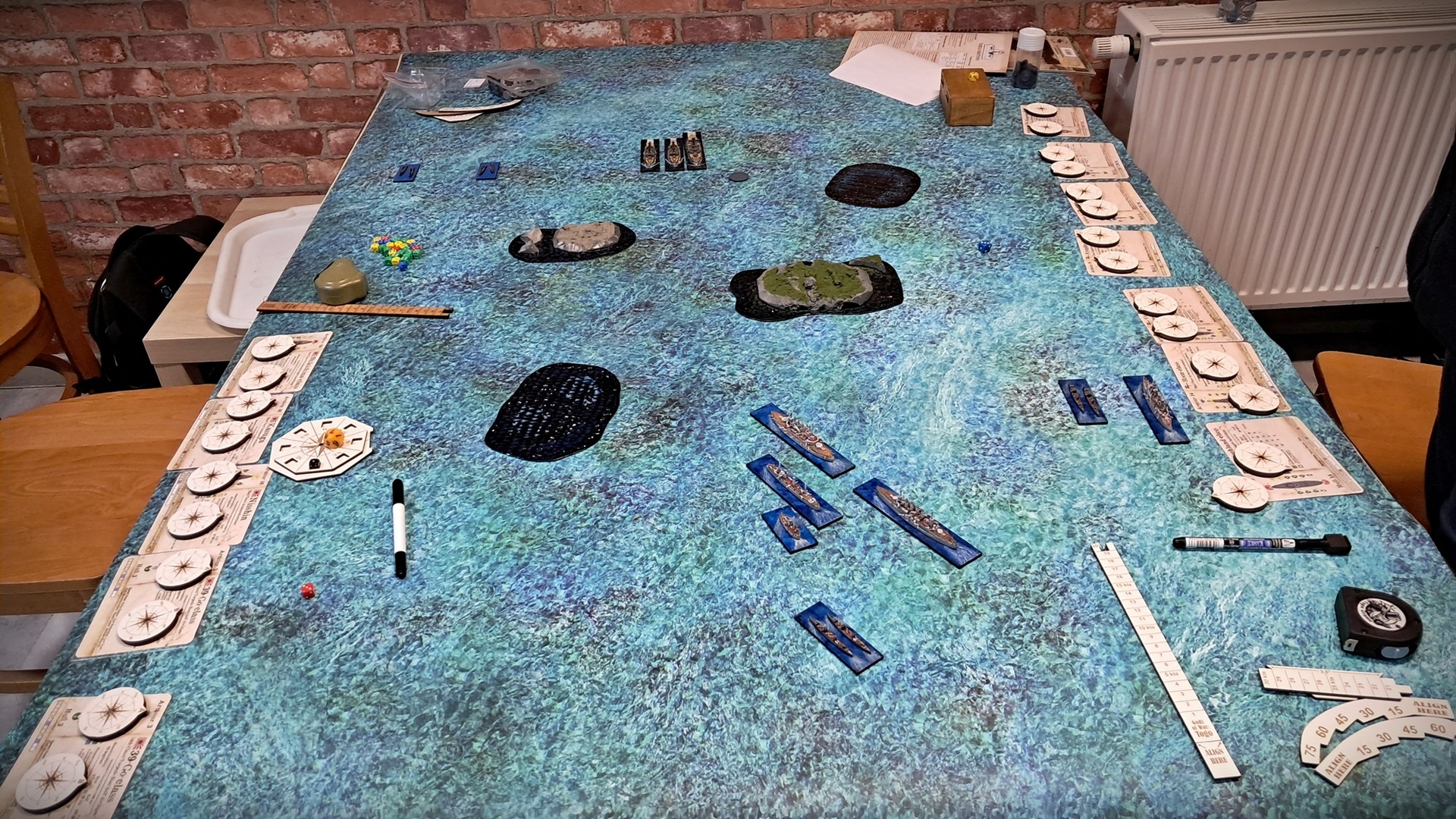
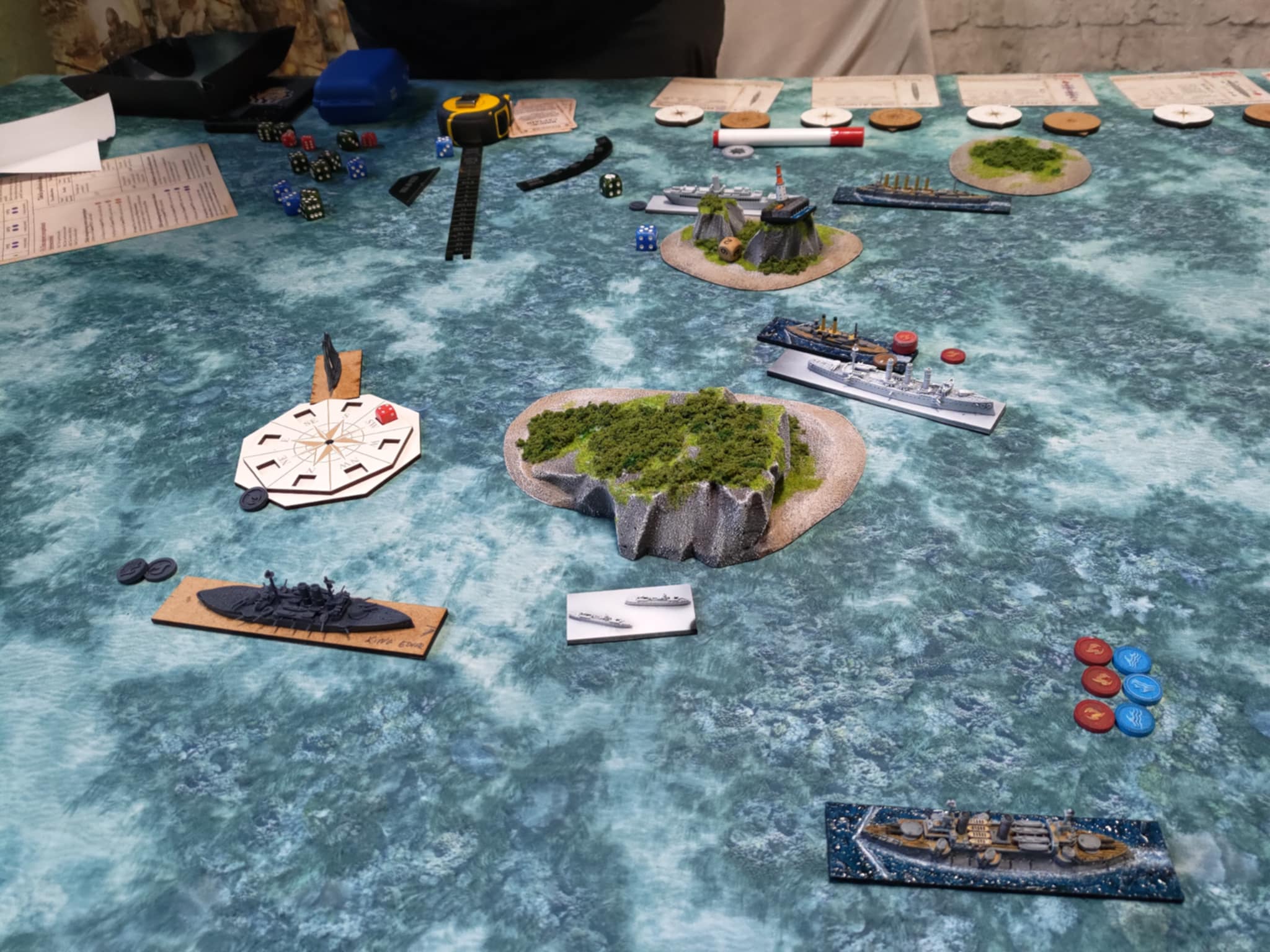
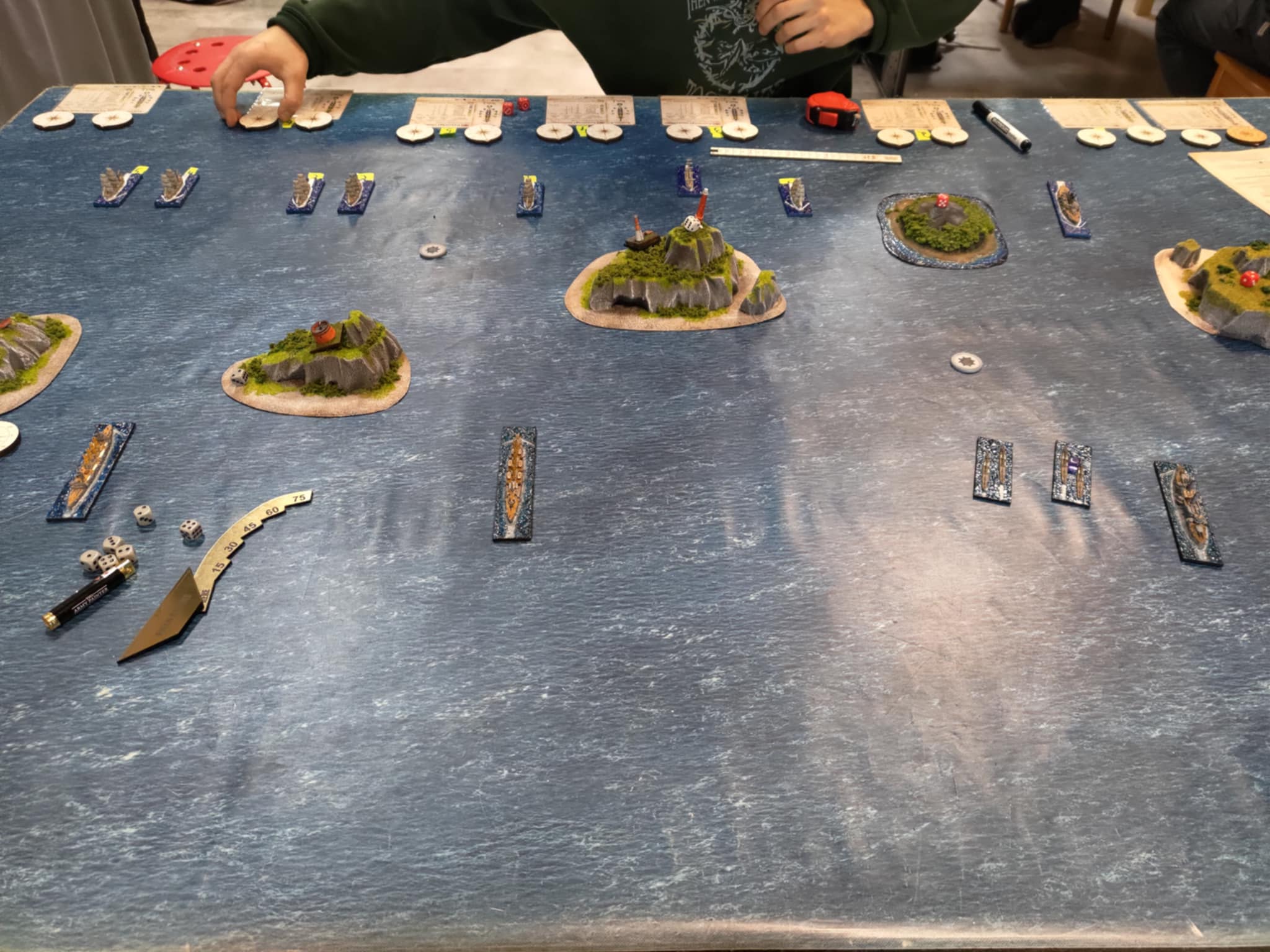
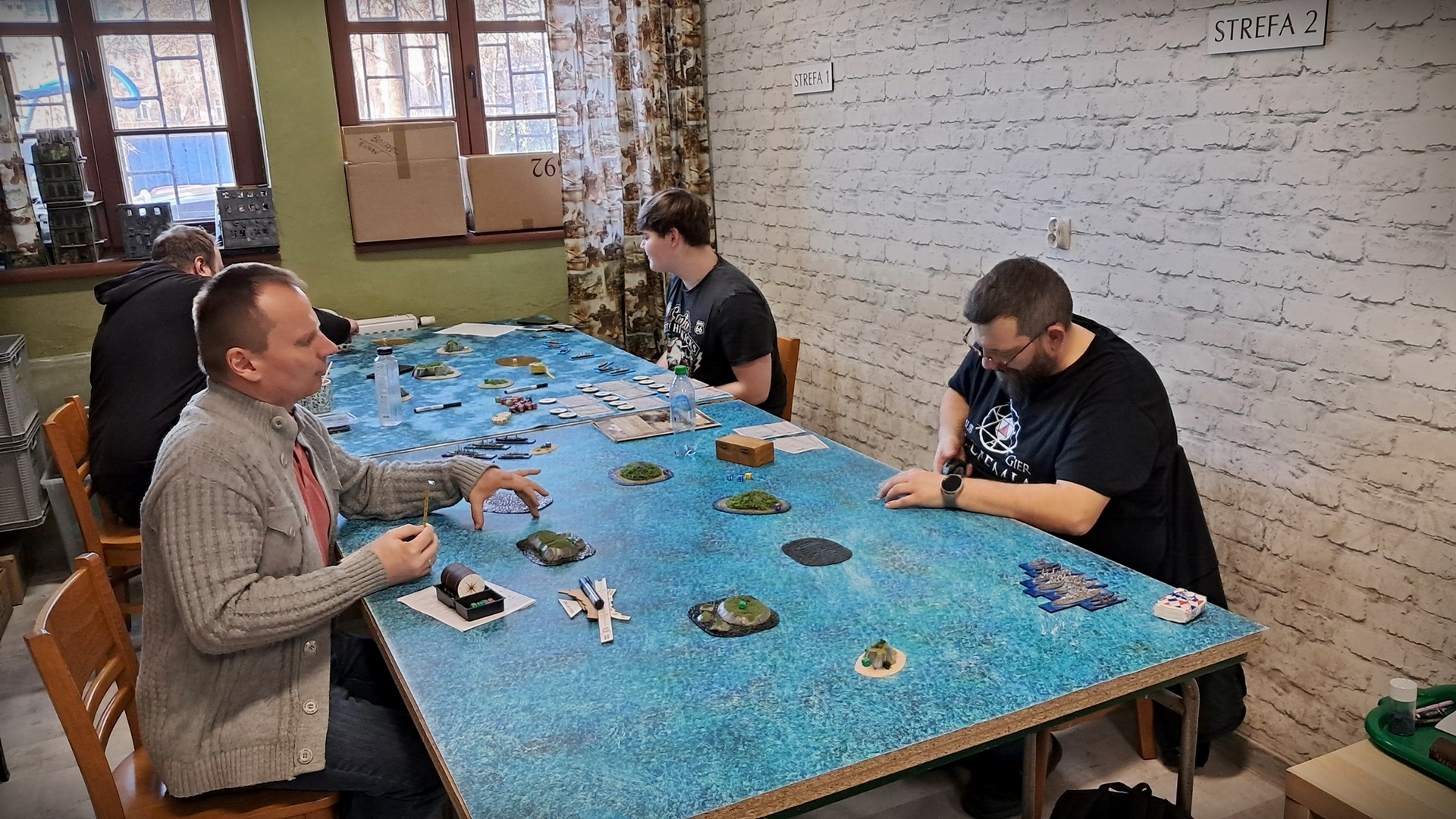
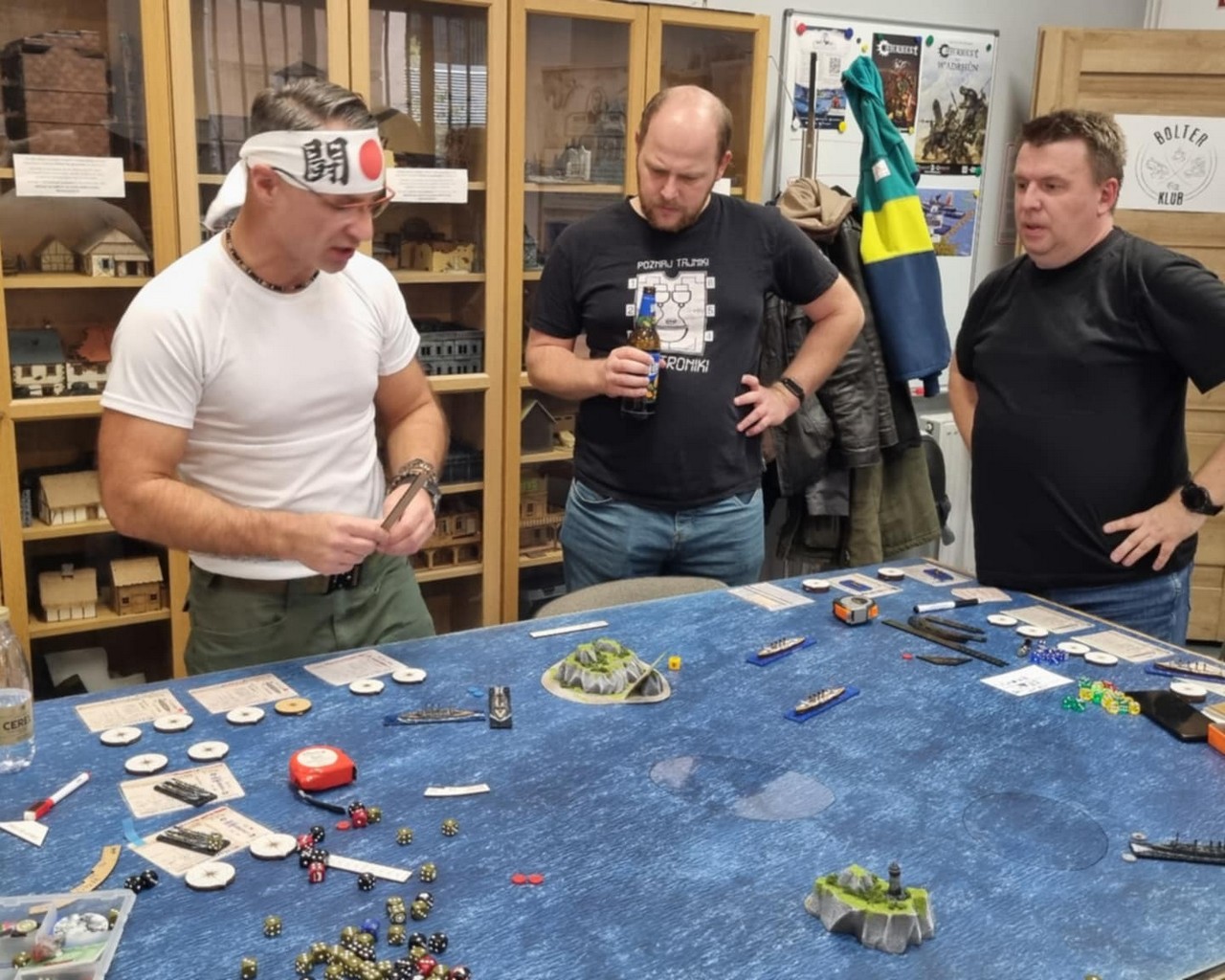
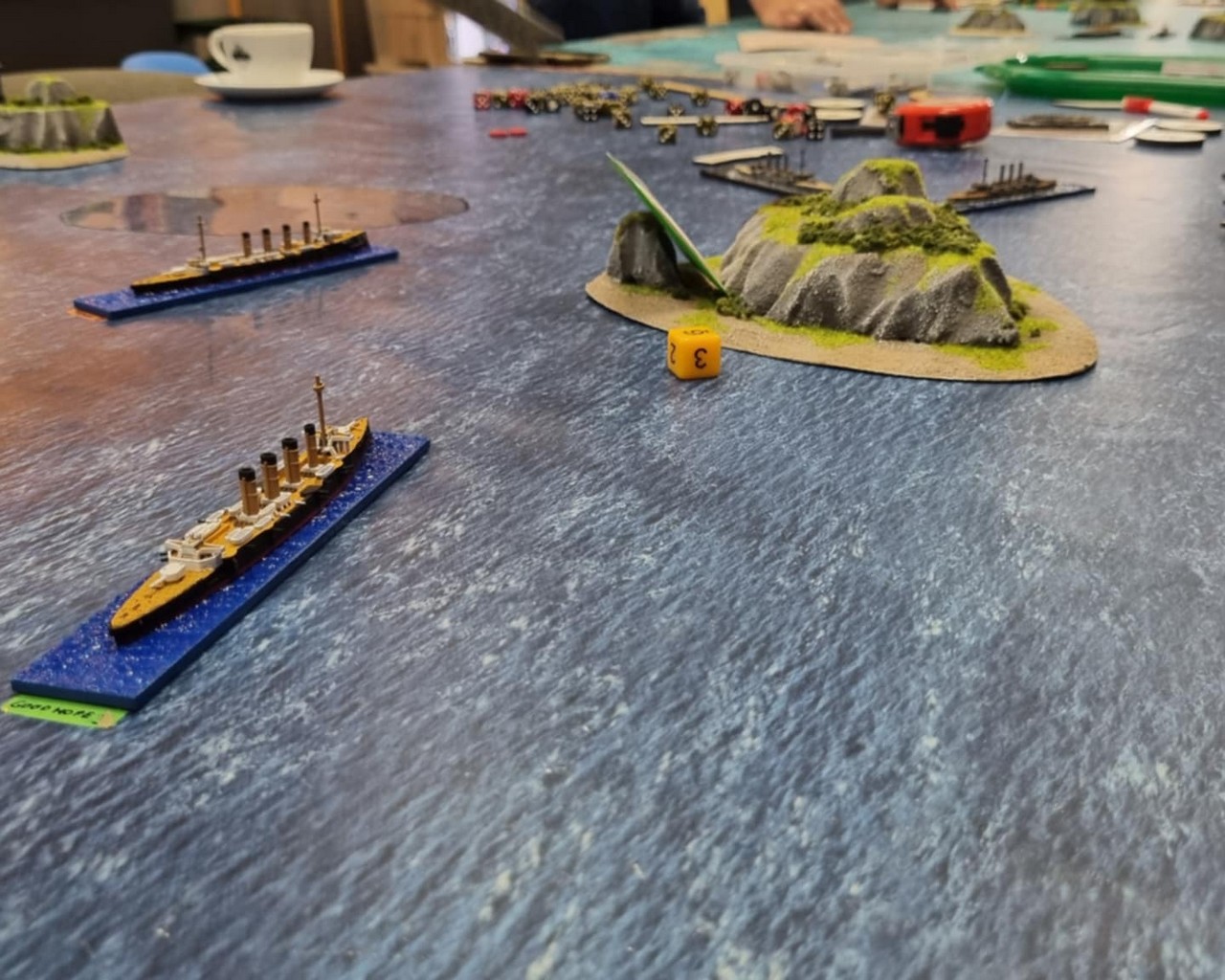
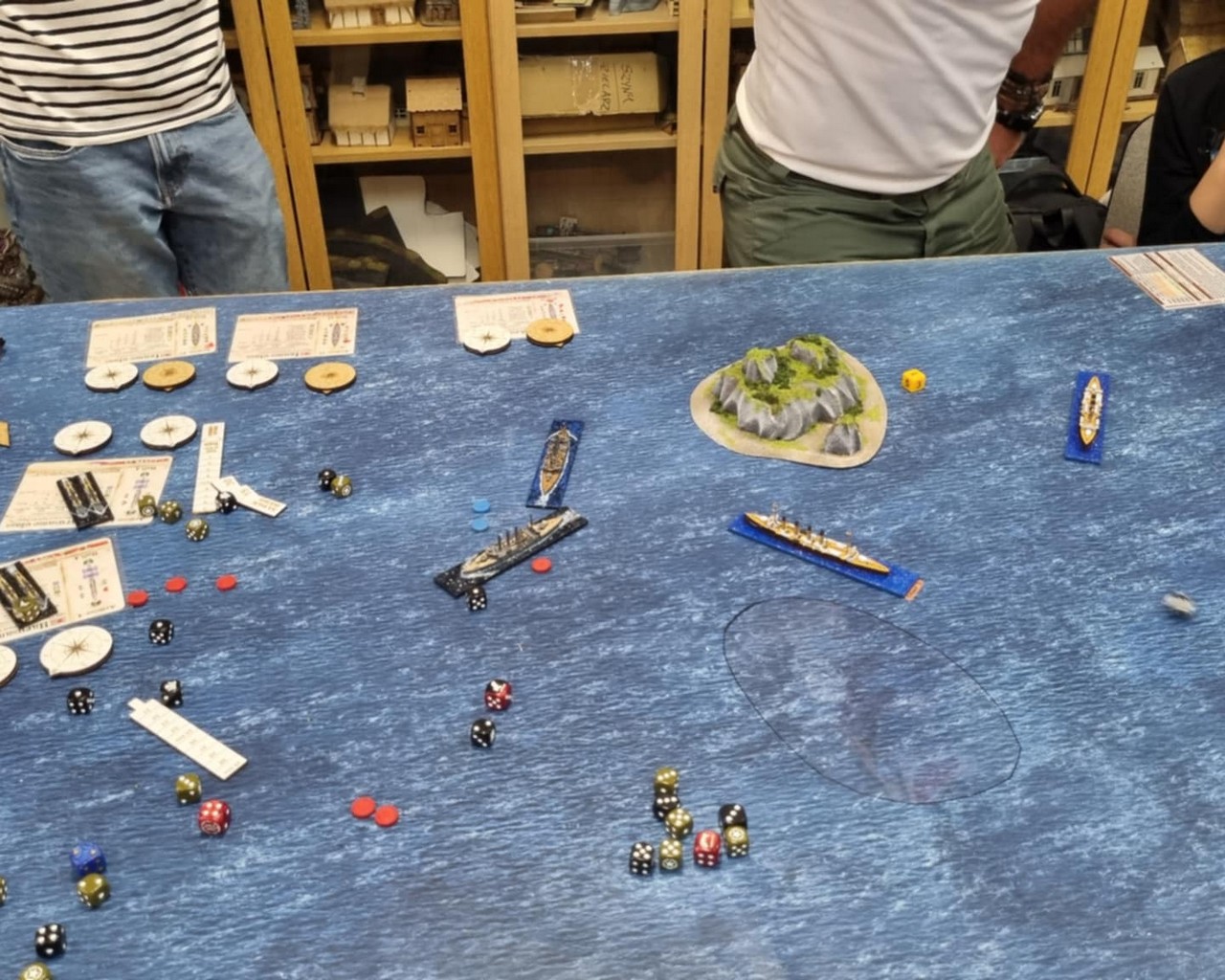
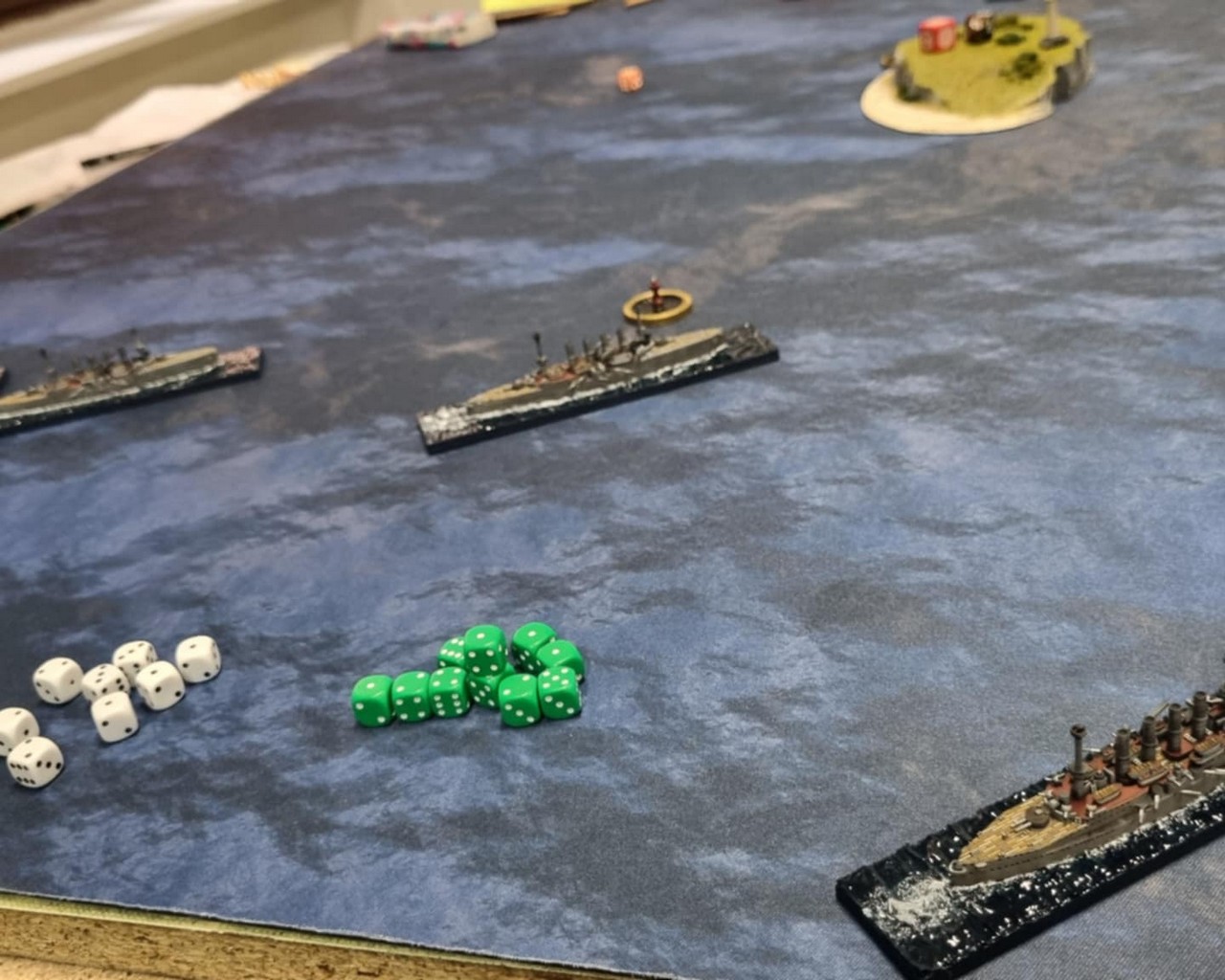
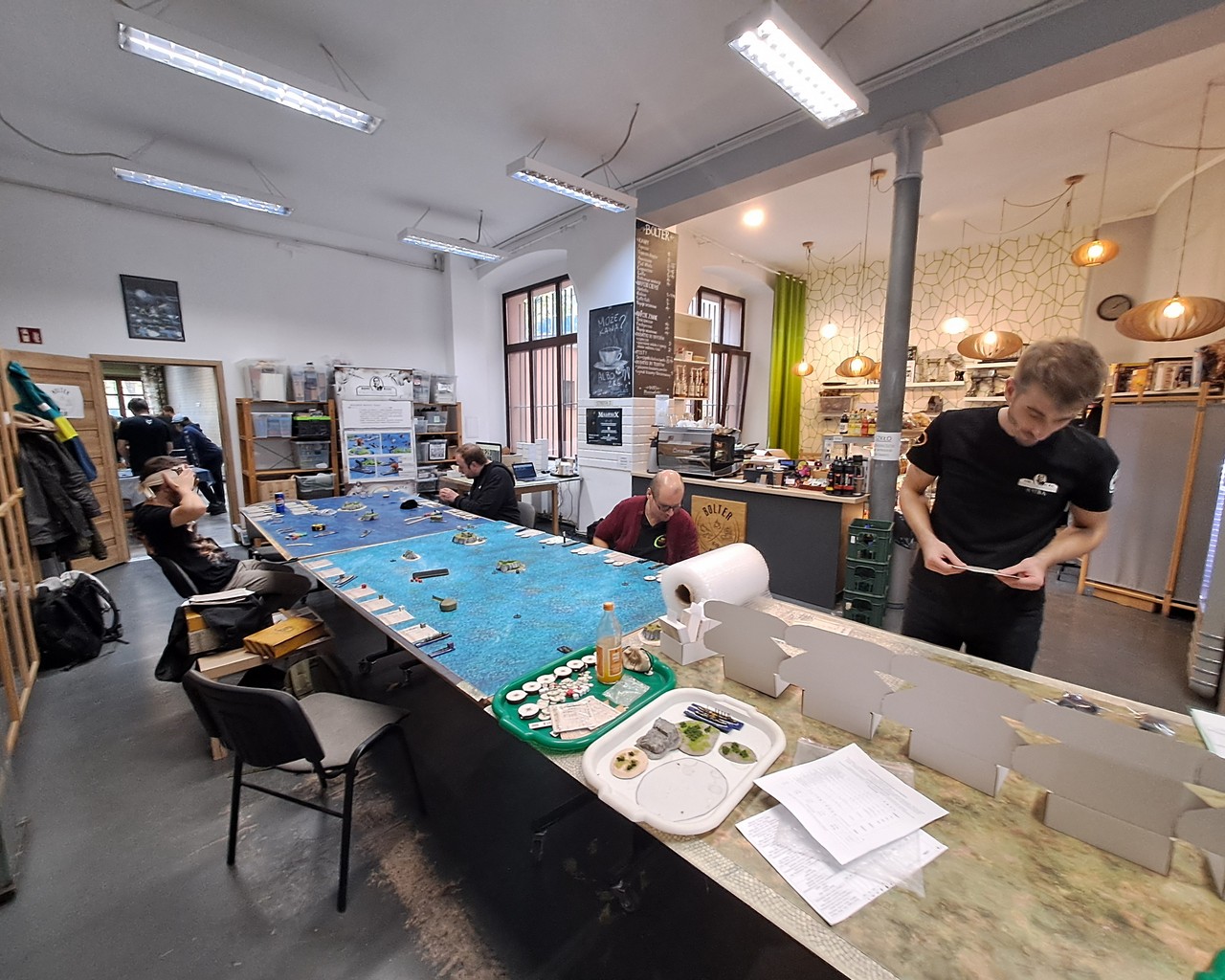
🇬🇧 Last Saturday, on February 22, 2025, another event took place in the capital of Lower Silesia – Wrocław: a tournament for Bogowie Wojny: Togo, organized by the creators of the system, GM Boardgames studio.
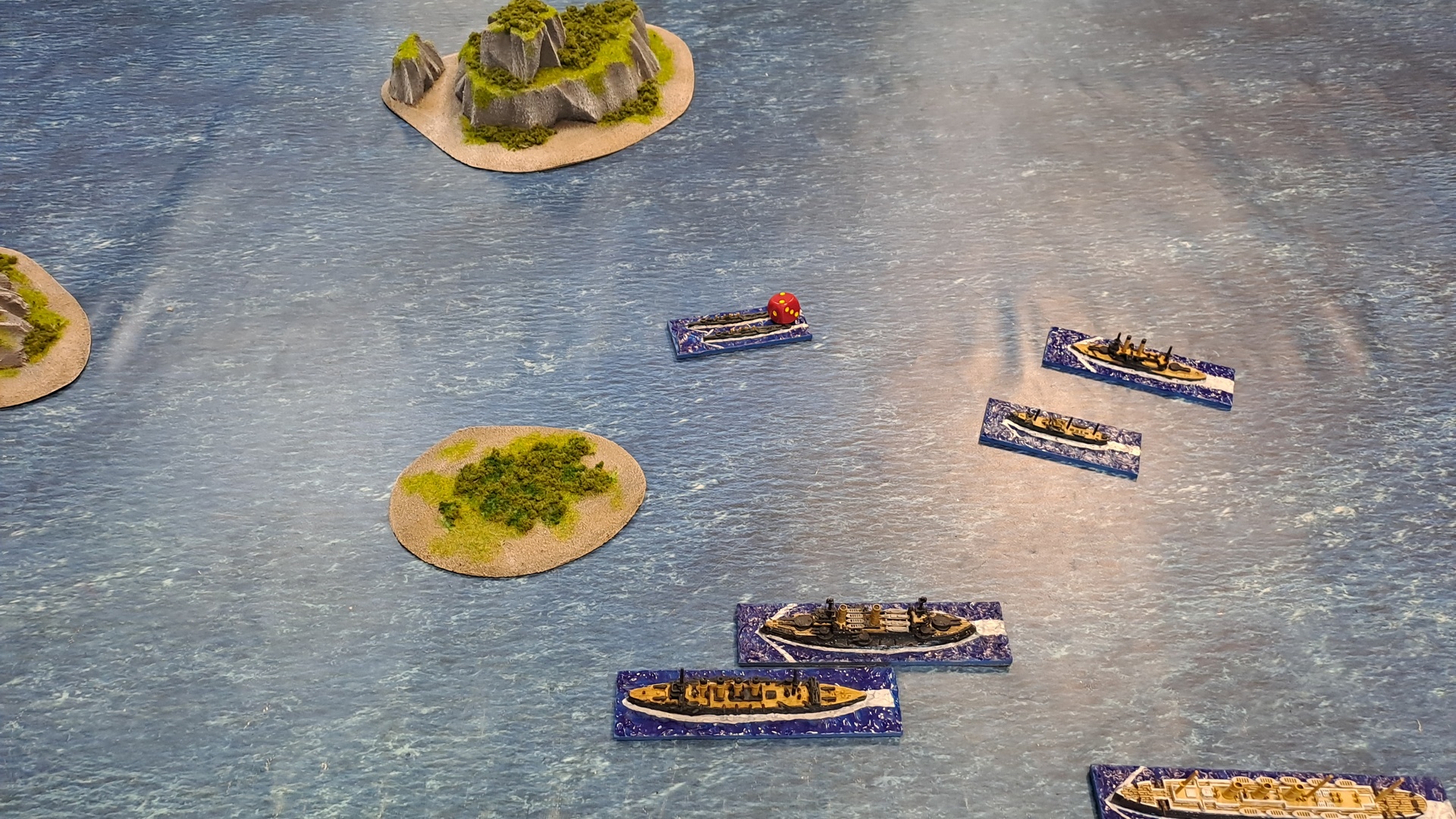
This time, we played with 2,000 points, which allowed for the appearance of battleships on the tables. During the tournament, whose event page is available HERE, each participant played three battles against opponents who traveled from Głogów, Kędzierzyn-Koźle, Sosnowiec, and Żerniki Wrocławskie.
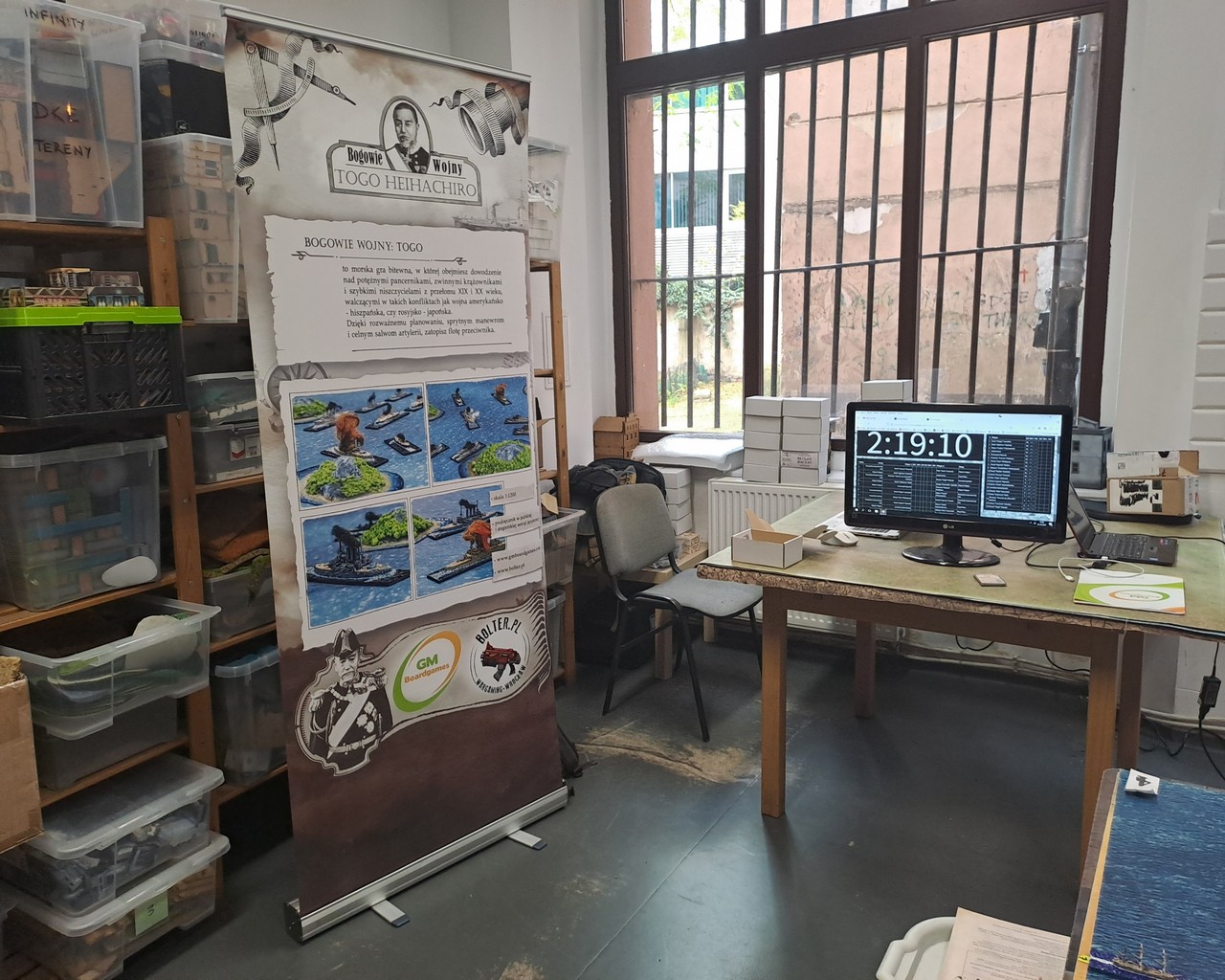
The results and army lists can be viewed on Tournekeeper. The tournament was held at the Bolterin Wrocław, where most of the released fleets could be seen in action.
Below are some photos from the event.
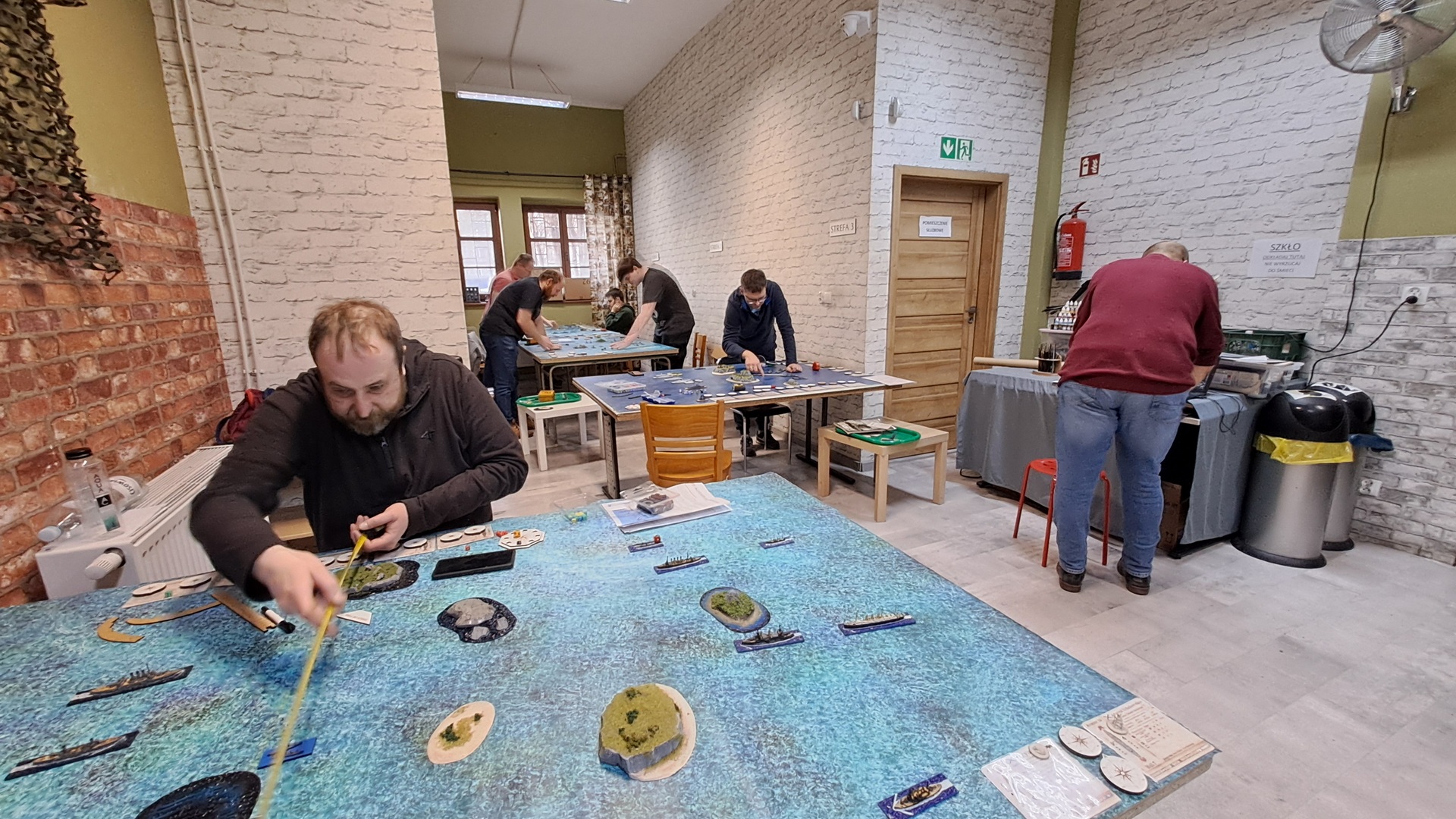
🇵🇱 W ostatnią sobotę 22.02.2025 w stolicy Dolnego Śląska – Wrocławiu odbyło się kolejne wydarzenie w postaci turnieju w Bogów Wojny: Togo organizowane przez twórców tego systemu czyli studio GM Boardgames. Tym razem zagraliśmy na dwa tysiące punktów – dzięki czemu na stołach pojawiły się dna przykład pancerniki. W trakcie turnieju którego wydarzenie jest dostępne TUTAJ, każdy uczestnik rozegrał trzy potyczki z graczami, którzy dotarli do nas z Głogowa, Kędzierzyna Koźla, Sosnowca i Żernik Wrocławskich. Wyniki oraz rozpiski można podejrzeć na Tournekeeper. Turniej odbywał się we wrocławskim klubie Bolter i można było na nim spotkać większość wydanych do tej pory flot.
Poniżej trochę zdjęć z wydarzenia.
Zdjęcie od GM Boardgames. A photo from GM Boardgames.Zdjęcie od GM Boardgames. A photo from GM Boardgames.Zdjęcie od GM Boardgames. A photo from GM Boardgames.Zdjęcie od GM Boardgames. A photo from GM Boardgames.Zdjęcie od GM Boardgames. A photo from GM Boardgames.Zdjęcie od GM Boardgames. A photo from GM Boardgames.Zdjęcie od GM Boardgames. A photo from GM Boardgames.Zdjęcie od GM Boardgames. A photo from GM Boardgames.Zdjęcie od GM Boardgames. A photo from GM Boardgames.Zdjęcie od GM Boardgames. A photo from GM Boardgames.Zdjęcie od GM Boardgames. A photo from GM Boardgames.Zdjęcie od GM Boardgames. A photo from GM Boardgames.Zdjęcie od GM Boardgames. A photo from GM Boardgames.Zdjęcie od GM Boardgames. A photo from GM Boardgames.Zdjęcie od GM Boardgames. A photo from GM Boardgames.Zdjęcie od GM Boardgames. A photo from GM Boardgames.Zdjęcie od GM Boardgames. A photo from GM Boardgames.Zdjęcie od GM Boardgames. A photo from GM Boardgames.Zdjęcie od GM Boardgames. A photo from GM Boardgames.Zdjęcie od GM Boardgames. A photo from GM Boardgames.Zdjęcie od GM Boardgames. A photo from GM Boardgames.Zdjęcie od GM Boardgames. A photo from GM Boardgames.Zdjęcie od Aspirant. Photo from Aspirant.Zdjęcie od Aspirant. Photo from Aspirant.Zdjęcie od Aspirant. Photo from Aspirant.Zdjęcie od Aspirant. Photo from Aspirant.Zdjęcie od GM Boardgames. A photo from GM Boardgames.Zdjęcie od GM Boardgames. A photo from GM Boardgames.Zdjęcie od GM Boardgames. A photo from GM Boardgames.Zdjęcie od GM Boardgames. A photo from GM Boardgames.
Summary: – A great tournament with wonderful company—definitely looking forward to the next one! – And here’s a preview of upcoming releases from the publishers: http://www.gmboardgames.com/blog/en/starters-squadrons-and-new-ship-releases/ – personally, I’m eagerly waiting for the armored cruisers for my Imperial Russian fleet!
🇬🇧 This is my first post of 2025, dedicated to one of my favorite systems, which I haven’t played recently. A lack of time in January—partly due to spending a week on sick leave and partly because of my involvement in organizing the Wrocław Master tournament for Middle-earth: SBG—meant that if I posted anything, it was on the Wrocław Facebookgroup related to that system.
Nevertheless, it’s time to slowly get back to playing Bogowie Wojny: Togo. Lately, I’ve only been testing scenarios, and I can’t reveal much more—though I’m sure players will enjoy them. I also plan to return to Bolt Action (third edition) and Blood Red Skies. Of course, I’ll probably play Middle-earth most frequently.
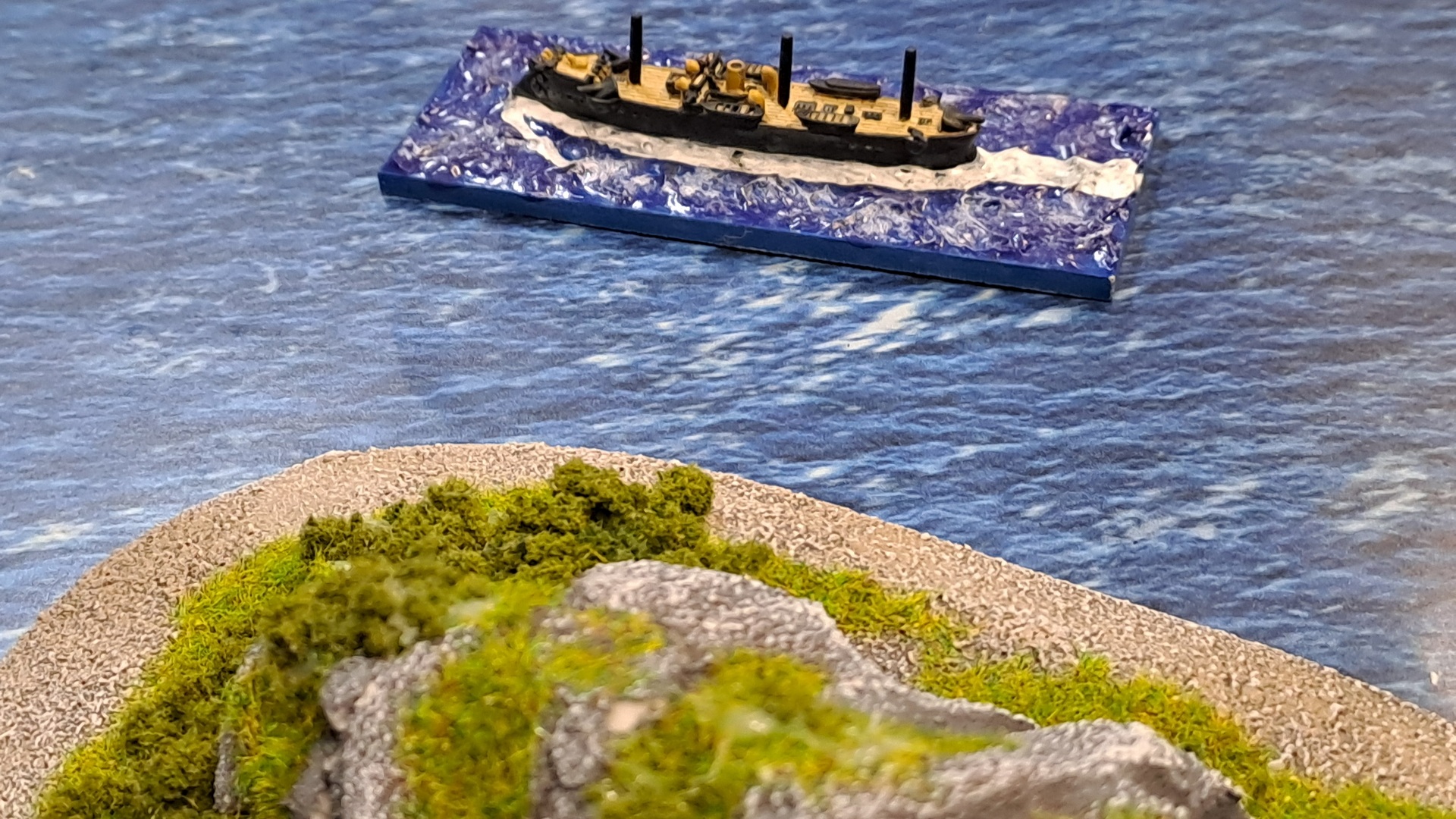
Below are pictures of two Russian Korietz-class (Koreanets-class) gunboats: Korietz, which served in Port Arthur, and Mandzhur, which served in the Baltic Fleet. Both have now reinforced my Rossiyskiy Imperatorskiy Flot—the Imperial Russian Navy. The remaining six ships of this class served in the Black Sea Fleet, and their names were Donets, Kubanets, Terek, Uralets, Chernomorets, and Zaporozhets (translated based on the names from this source).
With permission from GM Boardgames: The Korietz (Koreanets) class consisted of gunboats built in the 1880s by shipyards in Sweden and other locations. Two of these vessels (Korietz and Mandzhur) operated in the Pacific, while the rest served in the Black Sea.
Korietz took part in the Battle of Chemulpo alongside the cruiser Varyag. However, due to its weak armor, it stayed in the rear. Interestingly, the ship had not yet been repainted in wartime colors and still sailed in its original white paint.
Korietz can be a very useful unit, both in engaging light enemy vessels—since, as a Class 4 ship, it will have an easier time hitting them—and in harassing larger enemy ships. Its main armament consists of 203mm caliber guns.
🇵🇱 To pierwszy wpis w 2025 roku i jest poświęcony jednemu z moich ulubionych systemów, w którego ostatnio nie grałem. Brak czasu w styczniu związany z przespaniem tygodnia na urlopie chorobowym oraz w jakimś stopniu współudział w organizacji wrocławskiego mastera w Middle Earth: SBG sprawiły, że jeśli coś wrzucałem, to na wrocławską grupę na Facebooku związaną z tym ostatnim systemem. Mimo wszystko pora powoli wrócić do grania w Bogów Wojny: Togo – ostatnio były to testy scenariuszy i nic więcej dodać nie mogę, na pewno spodobają się graczom, a także do Bolt Action trzecią edycję czy Blood Red Skies. Oczywiście pewnie najczęściej będę grać w Middle Earth.
A poniżej zdjęcia dwóch rosyjskich kanonierek klasy Korietz (Koreańczyk), a mianowicie Korietza który pełnił służbę w Port Artur i Mandżura który pełnił służbę we flocie Bałtyckiej – oba właśnie wzmocniły mój Rossiyskiy Imperatorskiy Flot czyli flotę rosyjską. Pozostałych sześć służyło we flocie Morza Czarnego i były to okręty o nazwach: Doniec, Kubaniec, Teriec, Uraliec, Czarnomoczyk i Zaporożec (tłumaczenie własne bazując na nazwach stąd).
Za zgodą GM Boardgames: Korietz (Koreańczyk) to klasa kanonierek, zbudowanych w latach 80-tych XIX wieku przez stocznie m.in. w Szwecji. Dwie z jednostek tego typu (Korietz i Mandżur) operowały na Pacyfiku, pozostałe na Morzu Czarnym. Korietz wziął udział wraz z krążownikiem Wariag w bitwie pod Czemulpo, choć z uwagi na słabe opancerzenie trzymał się z tyłu. Co charakterystyczne nie zdążono jeszcze pomalować tego okrętu na barwy wojenne, nadal pływał pomalowany na biało. Korietz może być bardzo przydatną jednostką zarówno do walki z lekkimi jednostkami, będzie mu je łatwiej trafiać (bo sam jest okrętem 4 klasy), ale również do kąsania większych okrętów przeciwnika. Jego główne uzbrojenie stanowią bowiem armaty kalibru 203mm.
Korietz.Mandżur.Korietz&Mandżur.
Summary: – interesting page I found with model of Korietz is HERE. – really nice models, wish to see them soon on the board.
Podsumowanie: – interesująca strona z modelem Korietz jest TU. – bardzo ładne modele okrętów, mam nadzieję zobaczyć je wkrótce na stole.
🇵🇱 W ostatnią sobotę 28.12.2024 wyruszyliśmy z Wrocławia do stolicy Wielkopolski – Poznania na wydarzenie w formie turnieju o nazwie Zimowy Turniej Bolt Action Poznań zorganizowane przez Kostką i Miarką. Na turnieju który odbył się w Wargamerze poza gospodarzami i naszą ekipą z Wrocławia byli także gracze z Międzyrzecza i Swarzędza. Do sobotnich starć nie udało się niestety dołączyć ekipie z Ostrowa Wielkopolskiego. Przed uczestnikami były trzy gry stoczono na bogato rozstawionych stołach obfitujących w gęsty teren wszelkiego rodzaju, bo pustynne miasteczko, tereny wiejskie, tereny miejskie czy np. zimowy stół kojarzony z Wojną Zimową czy szeroko rozumianym frontem wschodnim. Pojechaliśmy z Wrocławia w cztery osoby w ekipie Łukasz z Polską 1939′, Paweł z armią USA, Rafał z Niemcami i ja kolejny raz z Finlandią – Rosjan przemalowuję, więc póki co nimi nie gram. Udało nam się dotrzeć na czas – na szczęście po drodze nie wydarzyło się żadne zdarzenie losowe które mogłoby nas opóźnić.
Turniej odbywał się na 1250 i z limitem 20 kości rozkazu oraz innymi ograniczeniami jak np. brak możliwości wystawienia broni typu Katiusza czy Nebelwelfer – jak dla mnie sporo za dużo kości rozkazu – mniej kości sprawia, że gra jest płynniejsza – pewnie limit 15 mógłby znacznie przyspieszyć rozgrywkę. Graliśmy oczywiście w najnowszą edycję Bolt Action o numerze trzy. Było to moje kolejne podejście do tej edycji, która już przed wydaniem budziła u mnie i nadal budzi wątpliwości. Mimo tychże pojechałem spotkać świetnych ludzi z którymi dobrze bawiłem się na turniejach organizowanych w drugą edycję. Do trzeciej może kiedyś przywyknę, czas pokaże – po prostu nie lubię zmian, zwłaszcza takich jak te pomiędzy drugą a trzecią. Może podręcznikom armijnym i selektorom uda się naprawić to co w moich oczach mi się nie podoba.
Sam turniej odbył się w świetnej atmosferze, jak już wspomniałem były to trzy gry – rozgrywane na różnych stołach, obfitujących w liczne, ładne tereny. Pojawiły się przeróżnie zorganizowane armie – miło było zobaczyć Tygrysa 2 i inne pojazdy których nie spodziewałem się na turnieju z limitem 20 kości, na szczęście ten limit nie wpłynął na wybór ulubionych pojazdów przez graczy. Pierwszą grę rozpoczęliśmy po 9:30, ostatnią kończyliśmy około 18:00. Potem poszliśmy pogadać przy piwie, wróciliśmy do Wrocławia około 2-giej w nocy, sam wyjazd uważam za bardzo udany i na pewno dam sobie więcej czasu dla trzeciej edycji Bolt Action.
🇬🇧 On the last Saturday, December 28, 2024, we set out from Wrocław to the capital of Greater Poland – Poznań – to attend a tournament-style event called the Winter Bolt Action Tournament Poznań organised by Kostką i Miarką (in English: By Dice and Measure Tape) . At the tournament, held at Wargamer, besides the hosts and our team from Wrocław, players from Międzyrzecz and Swarzędz were also present. Unfortunately, the team from Ostrów Wielkopolski couldn’t join the Saturday battles. Participants engaged in three games played on beautifully arranged tables featuring dense terrain of all kinds: a desert town, rural areas, urban environments, and a winter-themed table reminiscent of the Winter War or the broader Eastern Front.
We traveled from Wrocław as a team of four: Łukasz with the 1939 Poland army, Paweł with the USA army, Rafał with the Germans, and myself, once again with Finland – my Russians are still being repainted, so I didn’t play with them. We managed to arrive on time – thankfully, nothing unexpected occurred during our journey that could have delayed us.
The tournament was played at 1250 points with a limit of 20 order dice and other restrictions, such as the inability to deploy weapons like the Katyusha or Nebelwerfer. For me, 20 order dice felt like too much – fewer dice make the game flow more smoothly. A limit of 15 would likely speed up gameplay significantly. We, of course, played using the latest edition of Bolt Action, version three. This was another attempt for me with this edition, which, even before its release, had raised concerns for me and still does. Despite these reservations, I went to meet great people with whom I had a wonderful time during tournaments organized under the second edition. Perhaps I’ll get used to the third edition over time – we’ll see. I simply dislike changes, especially those as significant as between the second and third editions. Maybe the army books and selectors will address the aspects I currently dislike.
The tournament itself took place in a fantastic atmosphere. As I mentioned, there were three games, played on various tables featuring numerous, beautiful terrains. A wide array of well-organized armies made an appearance – it was a pleasure to see a Tiger II and other vehicles I didn’t expect in a tournament with a 20-dice limit. Fortunately, this limit didn’t seem to affect players’ choice of their favorite vehicles. The first game began after 9:30 a.m., and we wrapped up the last one around 6:00 p.m. Later, we went for a chat over beers, and we returned to Wrocław around 2 a.m. I consider the trip very successful and will definitely give more time to the third edition of Bolt Action.
Moja pierwsza gra przeciwko Włochom Wojtka. My first game against Wojteks Italians.Sturmi.T-28.Pierwsza gra Łukasza. First Łukasz game.Wzgórze artylerii Wojtka. Artillery hill of Wojtek.Tiger II.Moja druga gra na USA. My second game against USA.Początek mojej trzeciej gry z Tymoteuszem. Beginning of my third game with Tymoteusz. Od tego momentu do końca zdjęcia Mateusza Bulińskiego. From this moment to the end are photos from Mateusz Buliński.Rozdanie nagród. Prizes.
🇵🇱Podsumowanie: – zawsze lubię wracać do ekipy z Poznania by pograć w Bolt Action i póki co najwięcej gier w trzecią edycję zagrałem w Poznaniu. Trzy gry wobec dwóch rozegranych u siebie. – cieszy fakt, że w Poznaniu środowisko Bolt Action żyje i ma się dobrze, a nasi koledzy zaakceptowali trzecią edycję i się dobrze bawią. – na pewno do zobaczenia niebawem!
🇬🇧Summary: – I always enjoy returning to the crew in Poznań to play Bolt Action, and so far, I’ve played the most games of the third edition there. Three games compared to two played in my hometown. – It’s great to see that the Bolt Action community in Poznań is alive and well, and our friends have embraced the third edition and are having a great time. – Definitely see you soon!
🇵🇱Poznań – miasto którego Muzeum broni pancernej posiada sprawny czołg Armii Czerwonej IS-2. Mam nadzieję, że w końcu uda mi się odwiedzić to muzeum. 🇬🇧Poznań – city which The Armoured Weapons Museum owns operable IS-2 Red Army tank. I hope that one day I will manage to visit this museum.
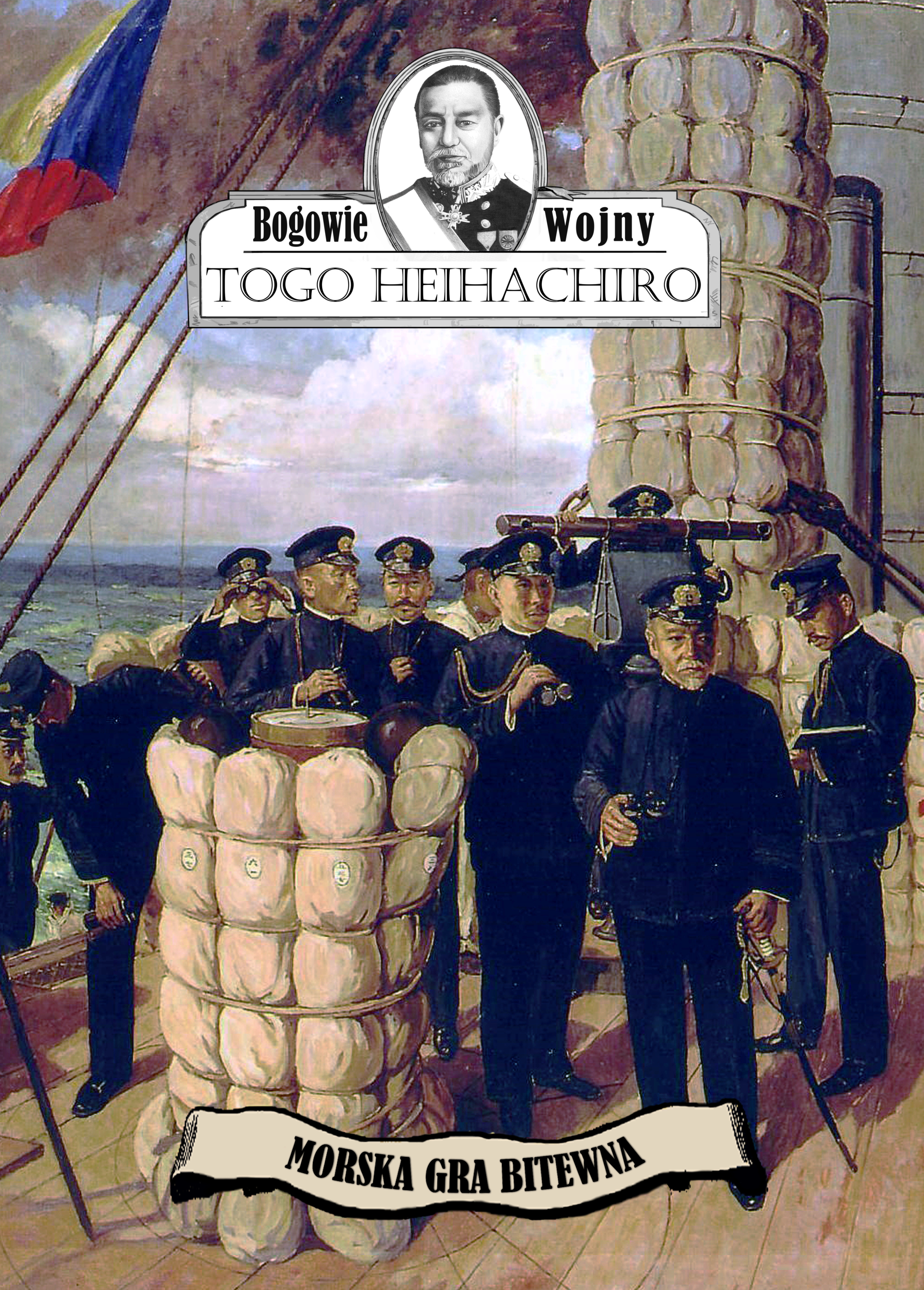
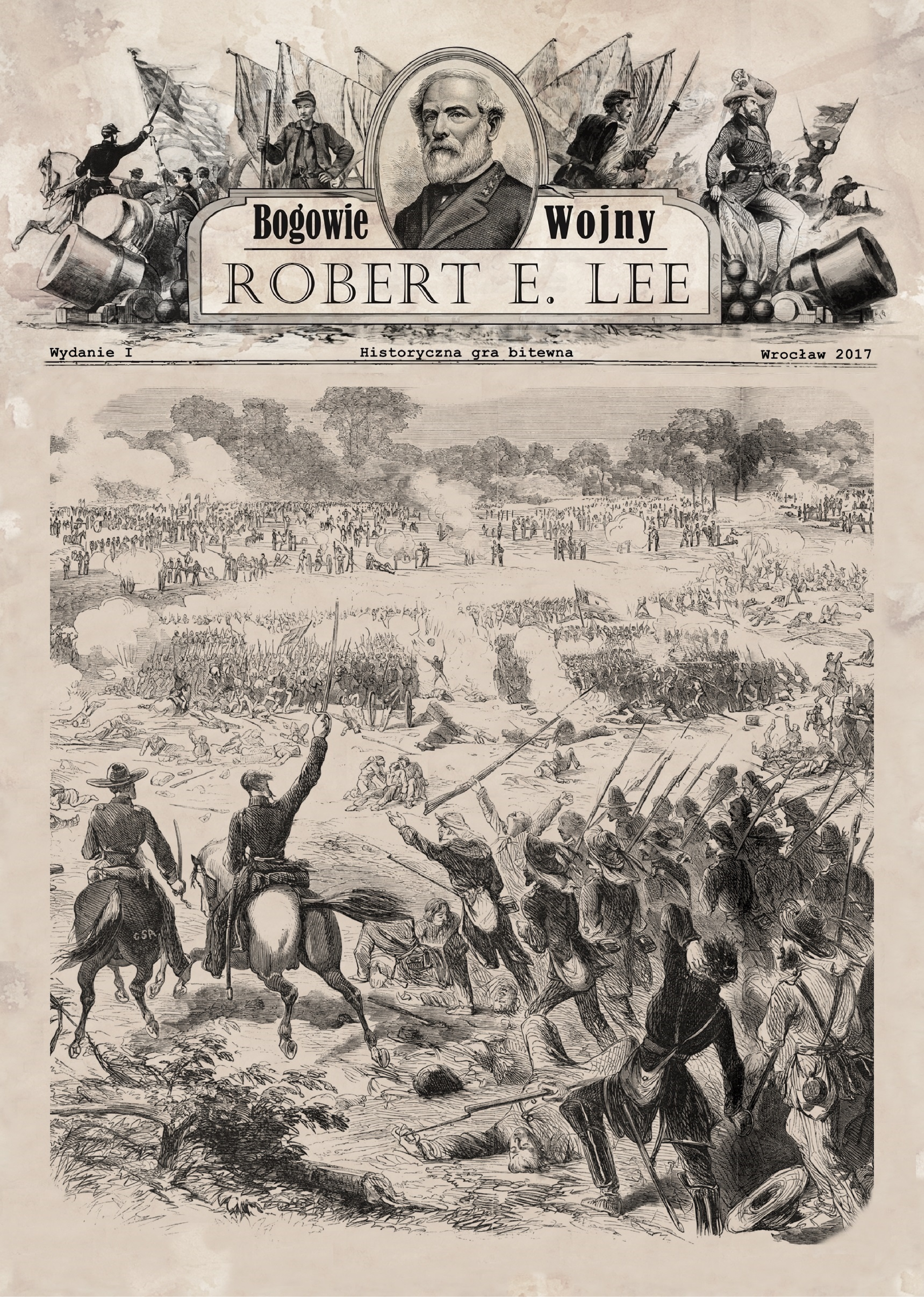
Interview with brothers Grzegorz and Maciej Molczyk – owners of GM Boardgames studio, Jakub Golec, a member of this esteemed team, and Adam Cwynar – owner of Bolterand the official publisher of the games under the banner of Gods of War: General Lee and Gods of War: Togo.
Maciej and AdamMolczyk brothersJakub
A long time ago, beyond seven seas, seven rivers, and seven mountains, in a nearby galaxy — specifically in the capital of Lower Silesia — there lived two brothers, Grzegorz and Maciej. Behind who they are today stood their late father, Teodor, of blessed memory, who sparked their interest in history (Historia magistra vitae est – History is the teacher of life – author) and the profound influence it had and continues to have on the world as we know it. He also taught them to draw conclusions from this discipline of knowledge, equal in rigor to mathematics.
And it all began with chess — who among you hasn’t played chess? Do you remember the plastic soldiers from the communists era (PRL in polish)? I do, as do my conversation partners, who were born in those times. Then came The Battle of the Pelennor Fields, Dragon games, Desert Storm, and that’s how it all started, and then…
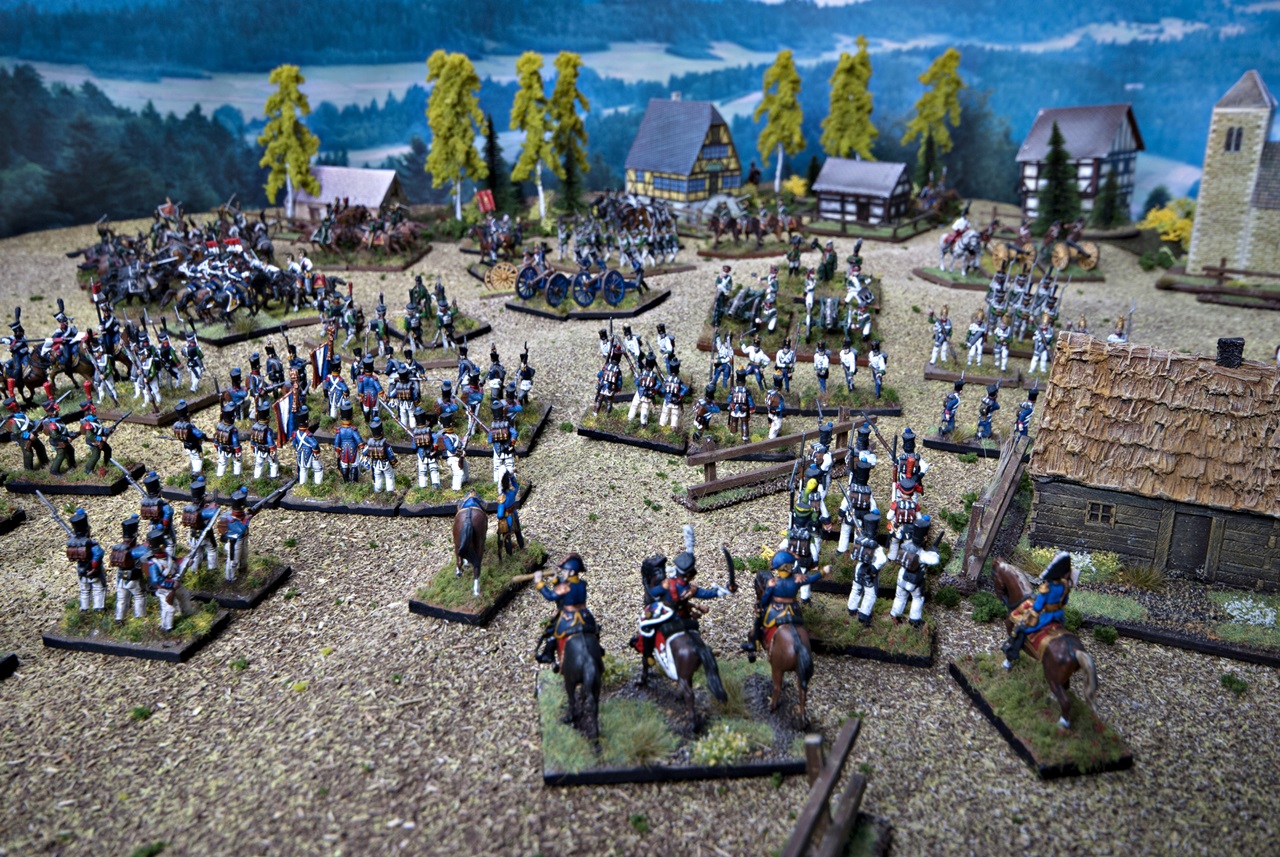
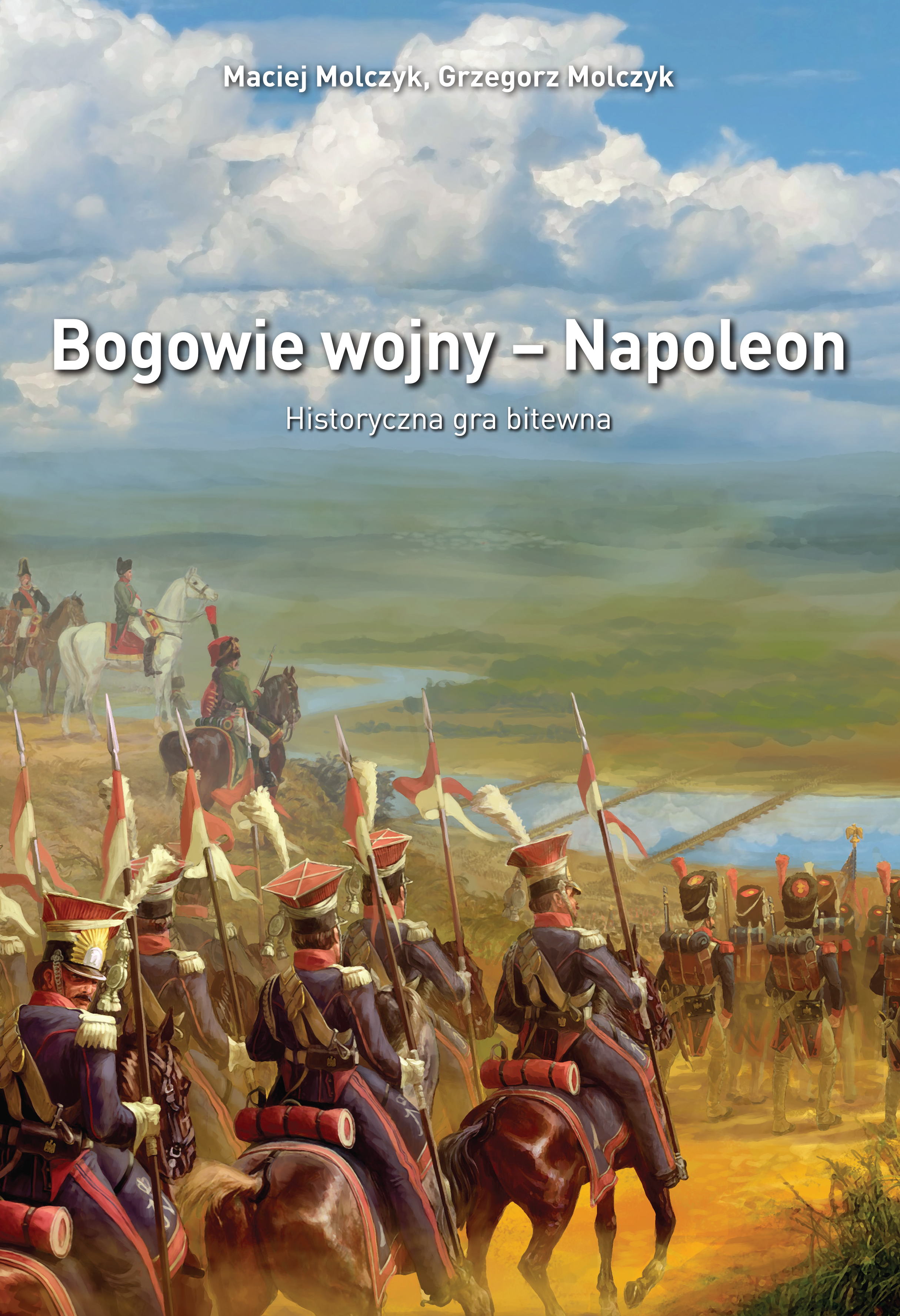
Test game for Gods of War: NapoleonMap game, Gods of War: NapoleonGrzesiek creates a game with his son
Transitioning to our interview, let’s go:
Hello Adam, Grzesiek, Jakub, Maciej! How are you all doing? You probably know why we’re here, right?
Hey, yeah, Maciek mentioned that you wanted to talk to us.
How long have you been playing miniature games as players? What systems did you start with? Which systems have you played or are you still playing?
Adam: My first encounter with miniature games was in the early 1990s with Warhammer 40,000 2nd Edition and, to a lesser extent, Epic. At that time, I was serving in the military as a chronicler, and since there often wasn’t much to write about, I would sometimes paint miniatures during shifts. After Warhammer 40k 2nd Edition came the 3rd Edition, Warmachine 1st Edition, and along the way, I tried a wide range of systems like Anima Tactics, Infinity, and briefly Malifaux. Some systems resonated with me, and I stuck with them for longer, while others I set aside due to lack of time. At some point, I discovered Flames of War, which was my first exposure to historical miniature games. Without a doubt, it’s my favorite system, although there are other miniature games I enjoy, but there’s never enough time for everything.
Grzesiek: Gods of War: Napoleon, various systems treated as solution tests.
Jakub: 18 years in miniature wargaming, The Lord of the Rings by De Agostini, too many games to remember, but Middle-earth Strategy Battle Game and Middle-earth will always have a special place in my heart.
Maciej: Late 90s, Warhammer Fantasy Battle 4th/5th edition, my favorites are Bolt Action, Chain of Command, Warhammer Ancient Battles, and Warhammer Fantasy Battle.
When did you decide to start creating your own games? What was the beginning like?
Adam: From the very founding of Bolter, I was guided by the idea that it should be more than just a store.
Grzesiek: I joined Maciek when we were sitting at his house, and he suggested we create our own system.
Jakub: In 2007, I wrote my own game in a biology notebook – a system for using WFB miniatures in a skirmish-style game. The system was similar to Mordheim.
Kuba joined Gods of War during the era of Gods of War: Lee, and by chance, he proposed the activation system for Gods of War: Togo. (This was one of the ways he became part of the team.)
Maciej: At some point, I decided to quit Warhammer when I saw that a single miniature could take out 50 others. Around that time, a friend offered to help me with the Napoleonic era.
ø;
GM Boardgames – Is this not your only job? What else do you do in your lives, if it’s not a secret?
Adam: Since 2017, I’ve been running Bolter with my wife as a space for hobbyists like me.
Grzesiek: I’ve always been a man in the shadows, and I remain one.
Jakub: I’ve never worked at GM Boardgames. I’m from Bolter 🙂
Maciej: I’m a history teacher at a high school.
From my own knowledge, I can add that Maciek conducts very creative classes (author).
I played a few games in Bogowie Wojny: Lee, which is an amazing system, and I’m fascinated by Bogowie Wojny: Togo. You’ve also released Bogowie Wojny: Napoleon—why the 19th century? Ages change, but during that time, the world belonged to a few empires. The age of steam, iron, and numerous advancements in military technology and everyday life—what are your thoughts on this?
Maciej: The 19th century is a bit of a niche, apart from the Napoleonic Wars and the American Civil War. Comparing ships from the early 19th century with those from its end shows enormous changes—from sailing ships at the beginning of the century to steel behemoths like Mikasa, powered by steam engines, by its conclusion.
Grzesiek: The 19th century is extremely interesting, and there’s never been such a significant leap in the art of warfare as the one that occurred from its beginning to its end. We witnessed clashes where the technological gap between the sides was striking. Railroads, the age of steam—it’s a fascinating era.
Jakub: A great example is the Land of the Rising Sun, which made enormous progress in a very short period. Japan is the quintessence of the transformations of this century. The 19th century, aside from the Napoleonic period, is relatively unknown, but we aim to introduce it to as many people as possible to spark interest in this era.
When did you decide to collaborate with the best club-store in Wrocław, Bolter?
Maciej: Since the Napoleon days, we used to come and play at Bolter’s former location on Sokolnicza Street, where we were warmly welcomed and organized games in that system.
Grzegorz: I completely agree with Maciej’s statement.
Adam, creator of Wrocław’s gaming paradise for miniature enthusiasts and beyond, as well as the owner of Bolter, how did your collaboration with GMboardgames begin?
Adam: Our first collaboration started with the introduction of Bogowie Wojny: Napoleon (Gods of War: Napoleon)—the first game in the series—into our store’s catalog. Later, Maciek launched Bogowie Wojny: Lee (Gods of War: Lee) first edition, and we sold their metal models through the shop at the time. Then came a period of growth, and we decided to join forces to launch a Kickstarter for the second edition of Bogowie Wojny: Lee, aiming at the Western market. And from there, things really took off.
The Kickstarter included metal miniatures. However, after bad experiences with metal casting production, we decided to fully transition to a new technology.
Are there any secrets that players will receive in the near future? Maybe a new fleet for the Gods of War: Togo or something for the Gods of War: Lee?
Grzegorz, Jakub and Maciej: We can officially confirm that the British fleet from Kickstarter will be followed by a German fleet, and work is underway with Grant. As for further plans, the perspective is very distant, so for now we are working on what is planned for the near future.
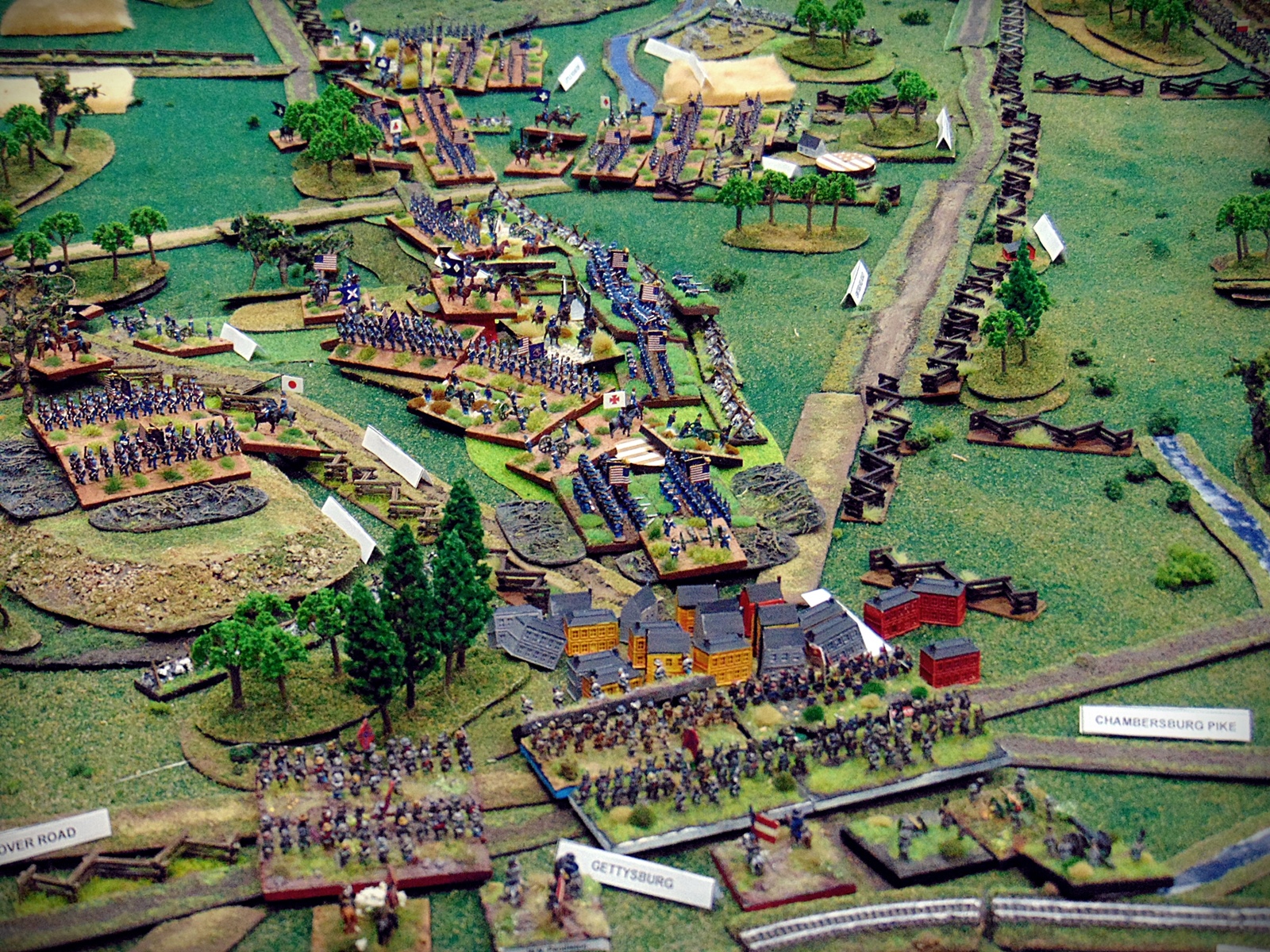
Battle of Gettysburg 2023Jakub and Maciej on Salute 2023
I’m here to promote miniature wargaming. You guys are amazing at what you do – do you see any threats to miniature wargames from video games?
Adam: The modern world moves so fast that computers offer easier access to entertainment. Our hobby is more time-consuming; you need to prepare models, go out to meet people, and find a gaming community. That’s why we’re working to make access easier and promote our hobby beyond just Bolter.
Grzegorz: Many people see wargaming as an opportunity to meet up – it’s a typical social gathering. You can play multiplayer online and chat, but it’s just not the same.
Jakub: A lot of people have discovered miniature wargaming through video games, like Dawn of War, which is based on tabletop games, or Total War: Warhammer, for example.
Maciej: These are two different worlds – it’s really a competition for free time. Both types of games compete with any other hobby, but video games are not a threat to miniature wargaming.
And one last question, what can you tell us about your system?
Grzegorz: The fundamental difference between these two systems is that Lee is a comprehensive system for land battles, where you can command armies amounting to tens of thousands of soldiers on the table. Controlling such a scale of troops requires time in itself. Togo, on the other hand, being a naval system, was designed to be fast-paced while retaining the atmosphere of naval warfare. This idea stems from the fact that we all suffer from a lack of time these days. Togo allows people to enjoy a two-hour meeting without having to dedicate countless hours. Understanding the rules of Togo takes just 15 minutes, whereas General Lee is a game for experienced generals who enjoy advanced gameplay.
Maciej:Napoleon is a system focused on commanding and conducting battles at the corps level—several divisions. The player must use the right formations to gain an advantage over the opponent. Lee is also a command system, but for larger-scale battles, where you take on the role of the supreme commander of an entire army. You face not only the challenge of managing the diverse personalities of your generals but also a new element absent in Napoleon: the fog of war. This often means making decisions blindly. Togo is a naval battle game that emphasizes planning maneuvers in advance and anticipating where your opponent might be, positioning yourself to best counter them.
GMBoardgames, with its systems Gods of War: Napoleon, Gods of War: Lee, and Gods of War: Togo, which focus on the 19th century, fill a niche dedicated to this historical period. This era saw significant changes in the art of warfare, travel, and industrial production. In the near future, the second edition of Gods of War: Togo will be released. Thanks to Kickstarter, this edition not only includes the British fleet but also features an English version—fingers crossed for the game’s success beyond our borders!
Thank you, Adam, Grzegorz, Jakub, and Maciek, for the opportunity to interview you. I wish you the best of luck in your projects, whether it’s creating new, exciting games or running a place like Bolter.
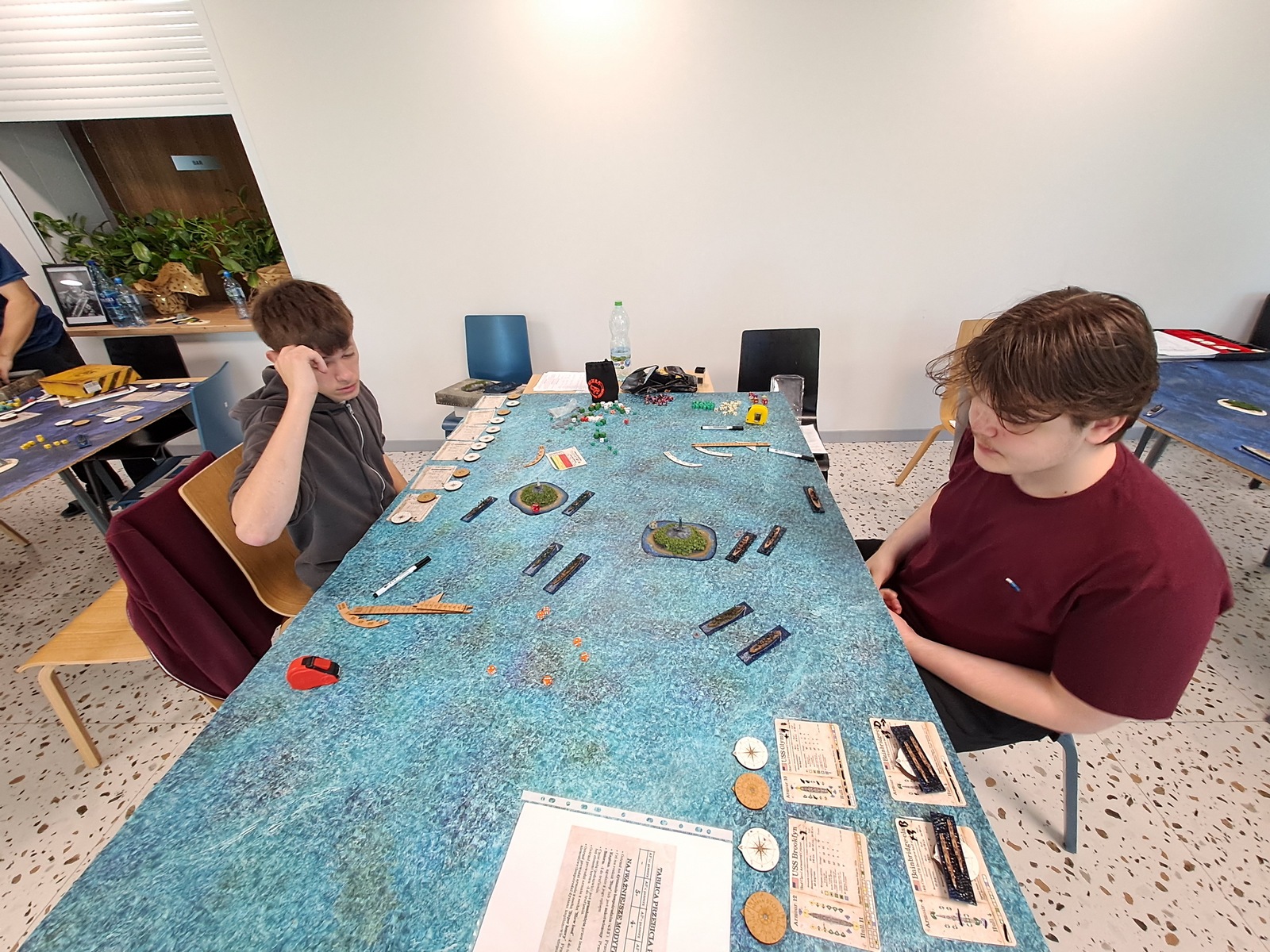
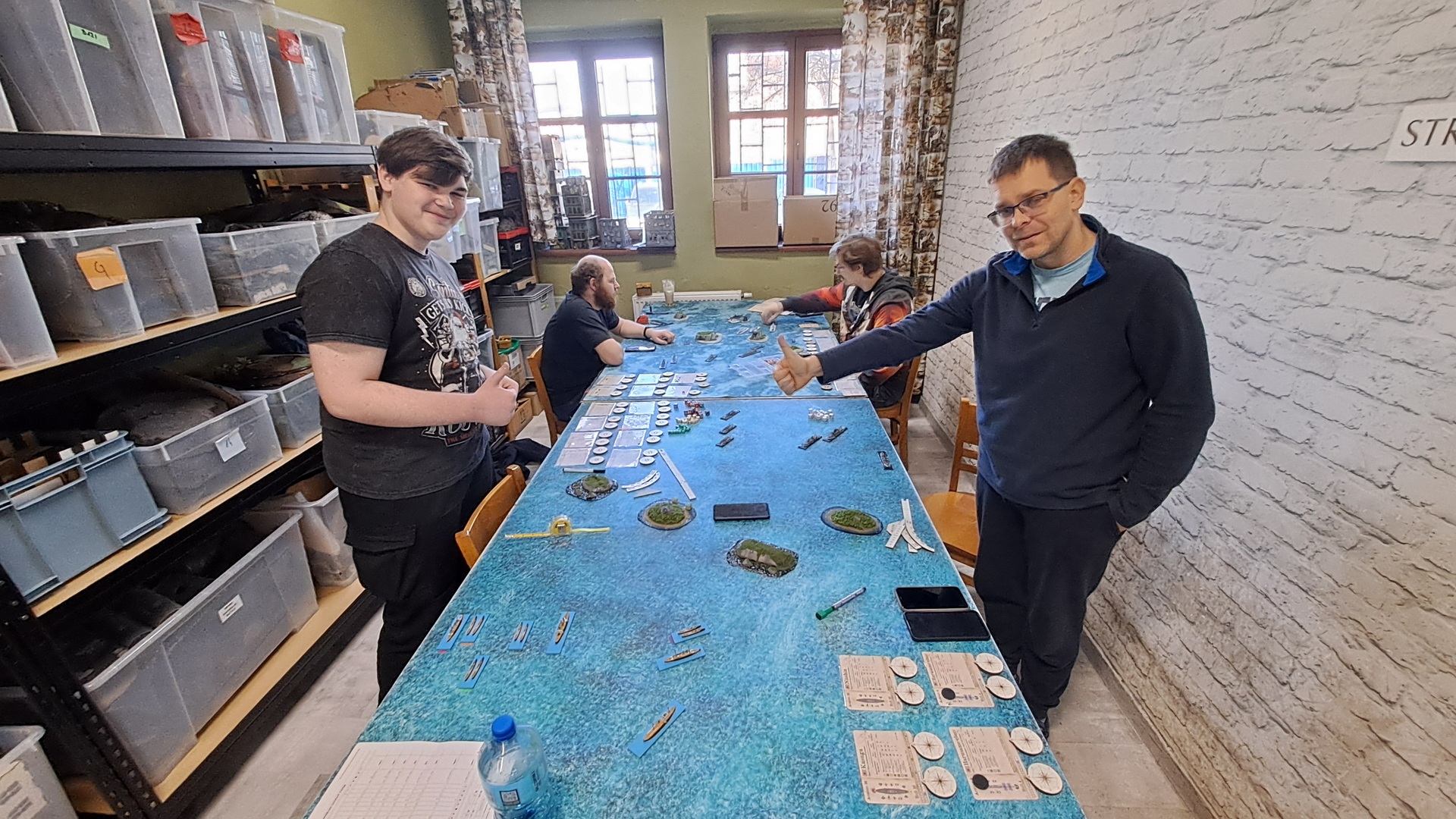
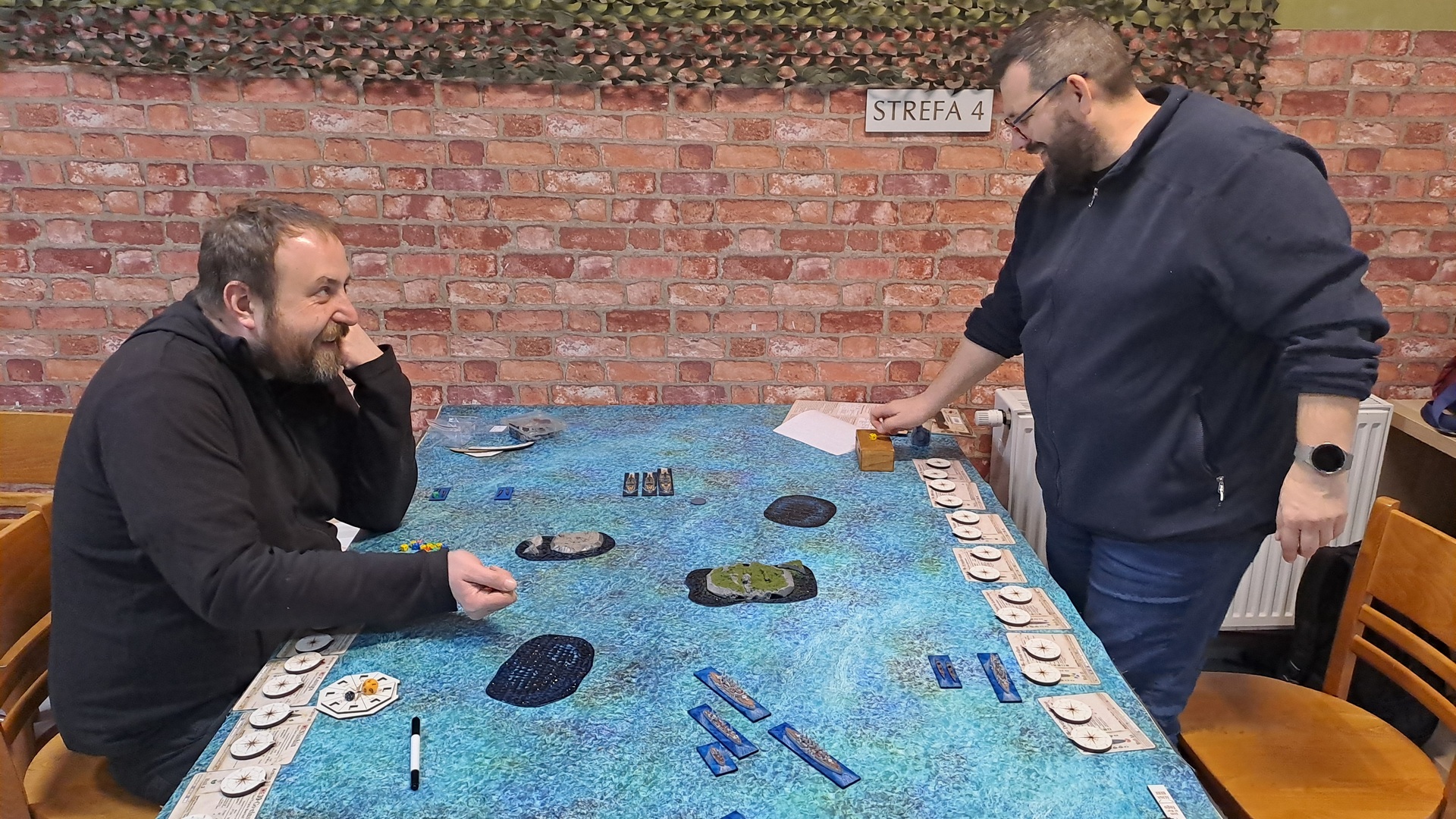
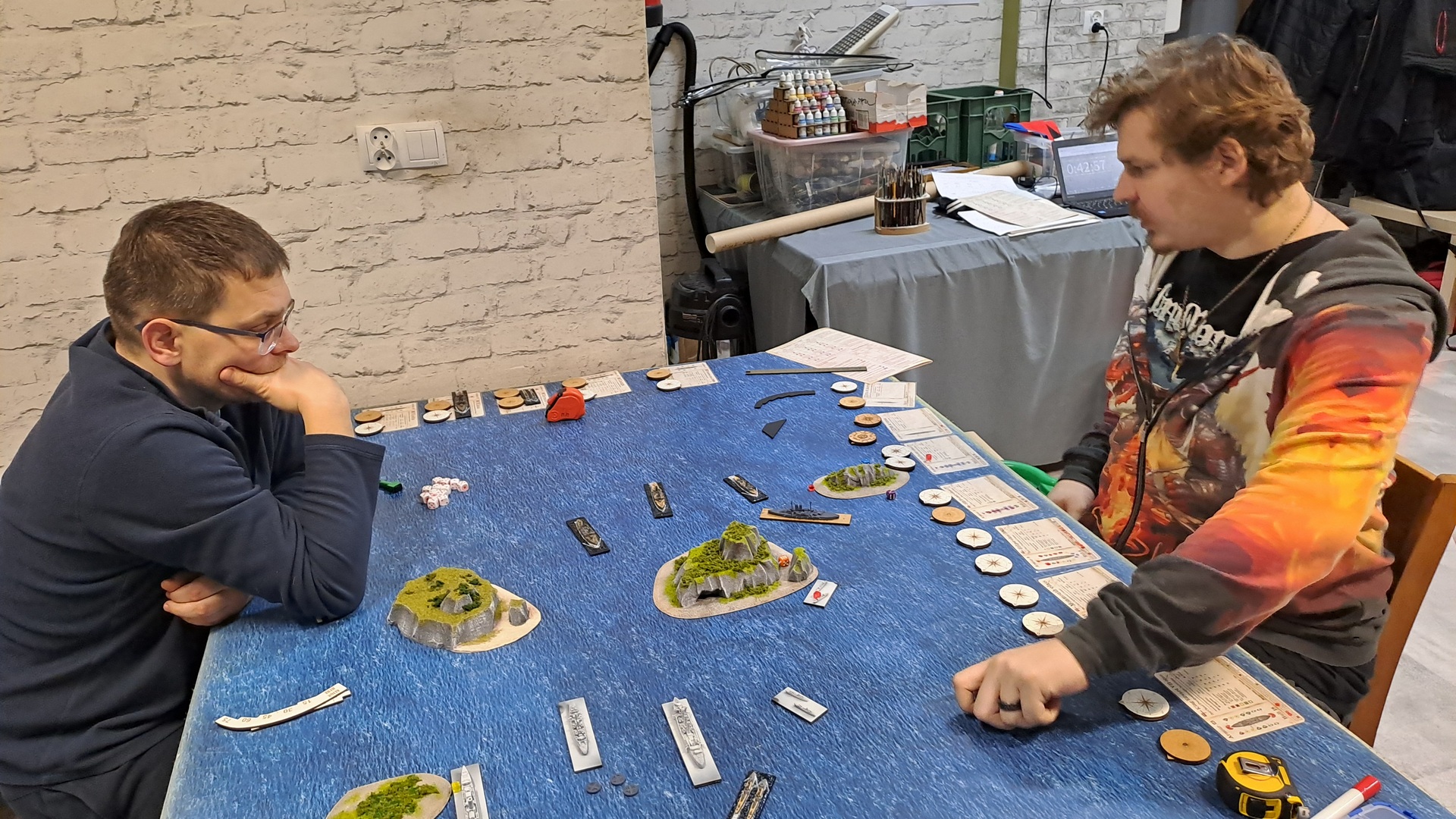
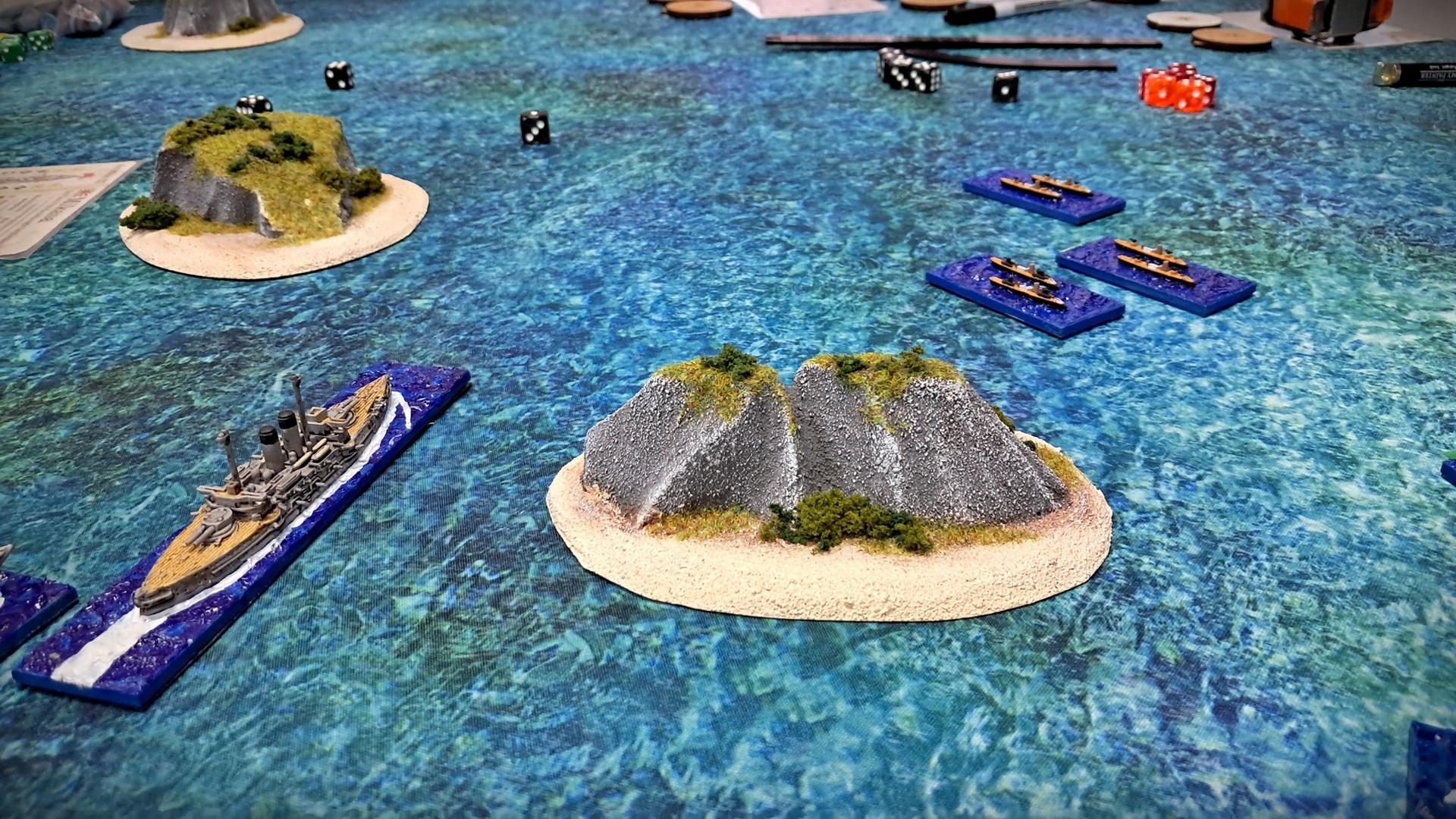
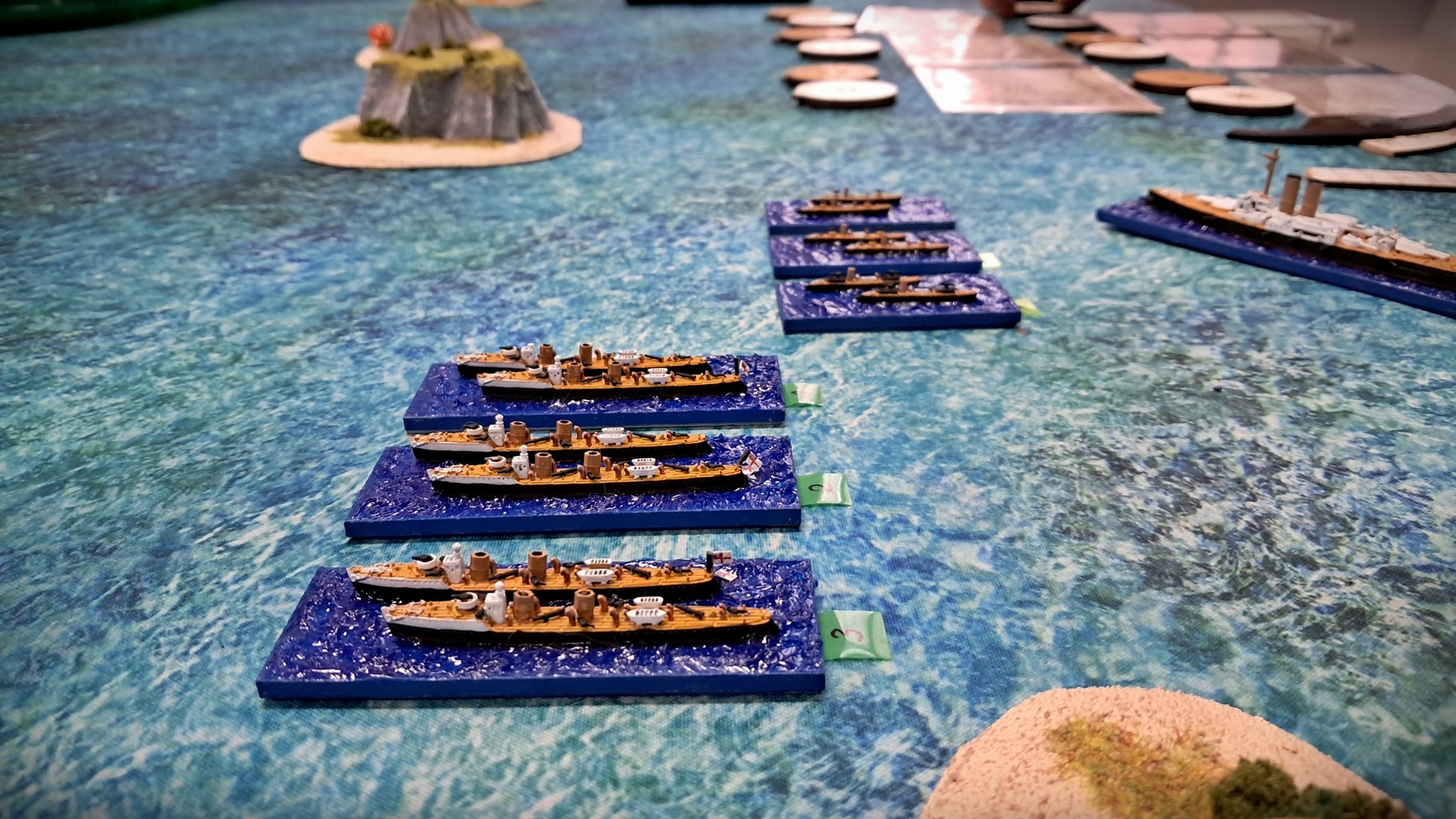
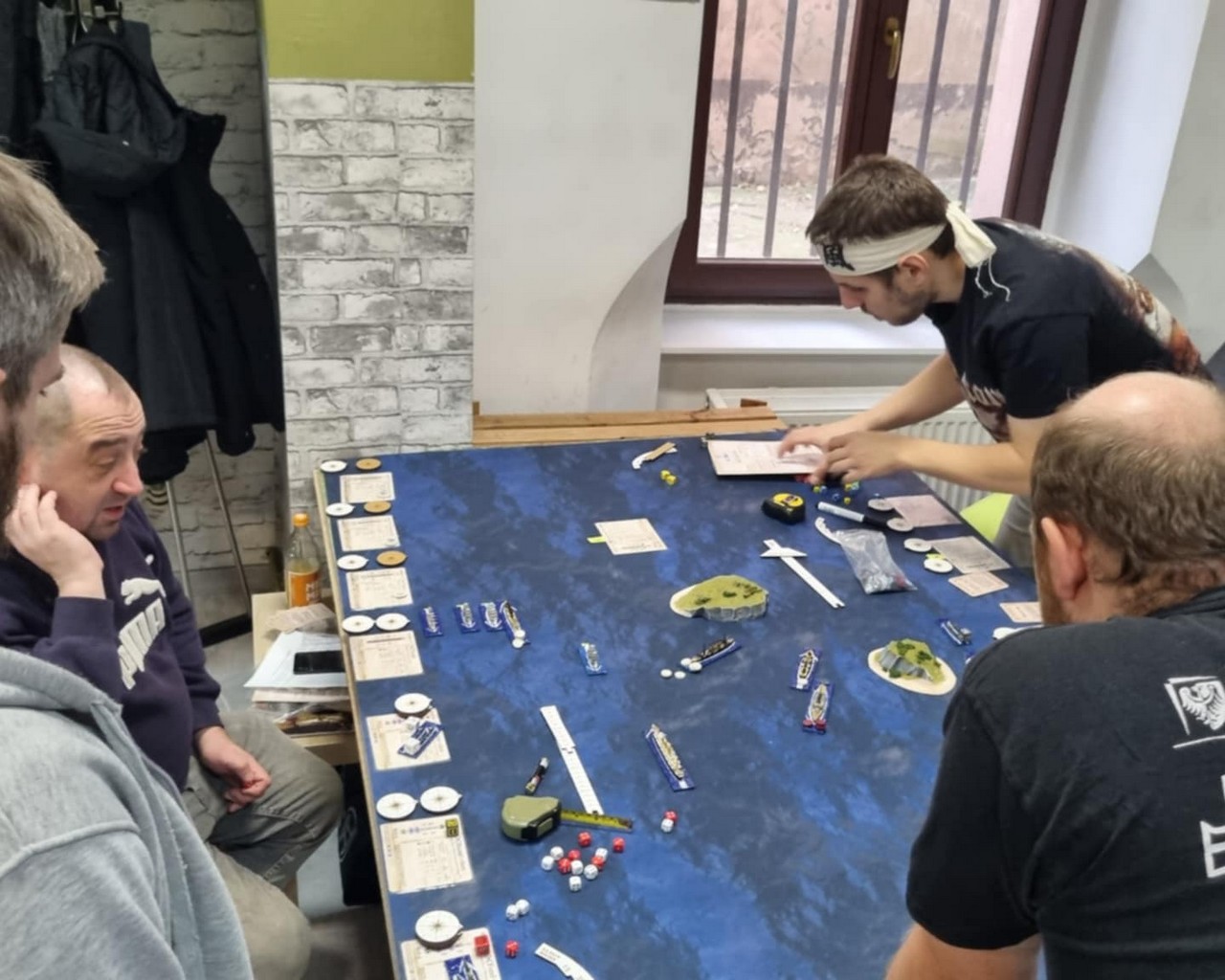
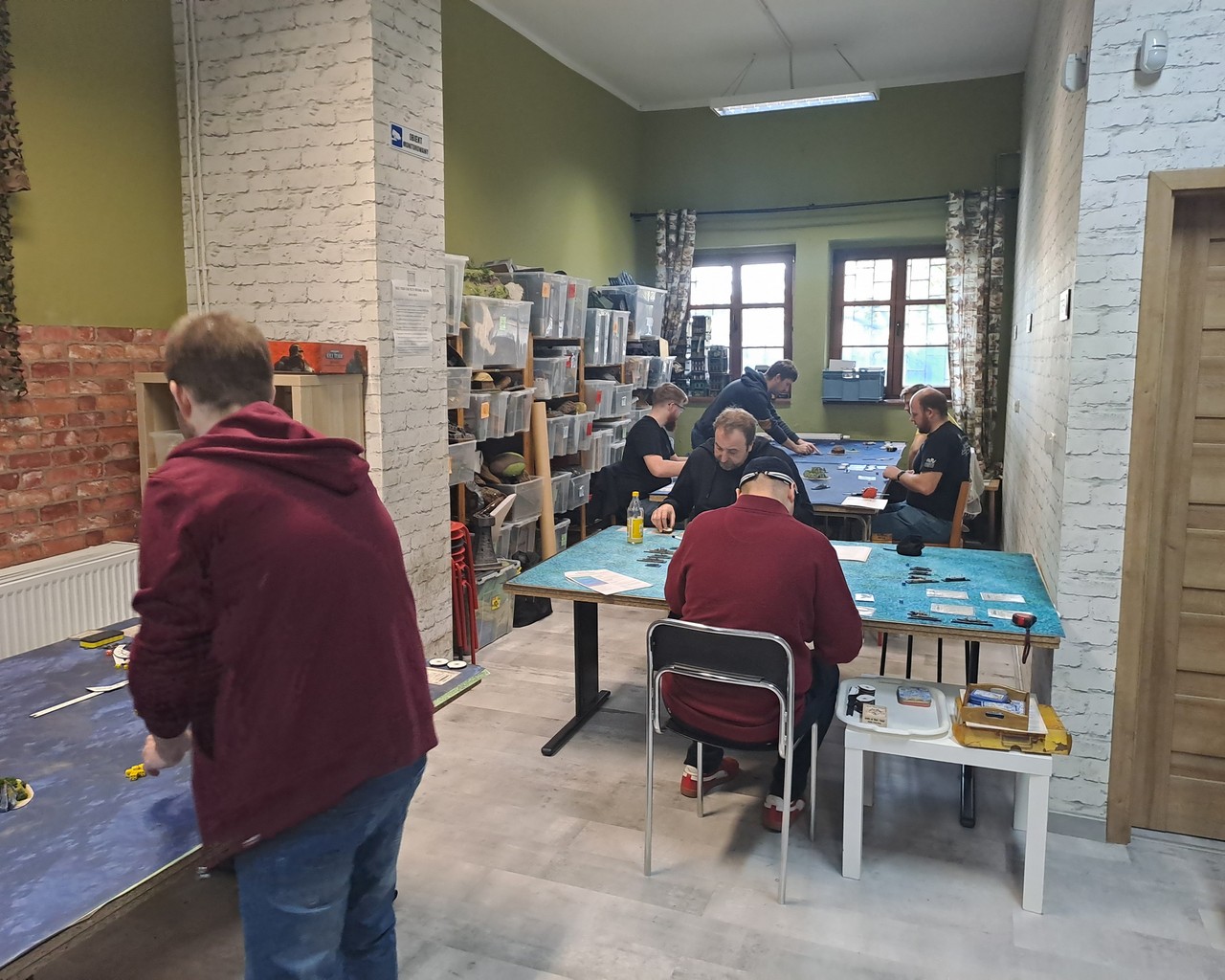
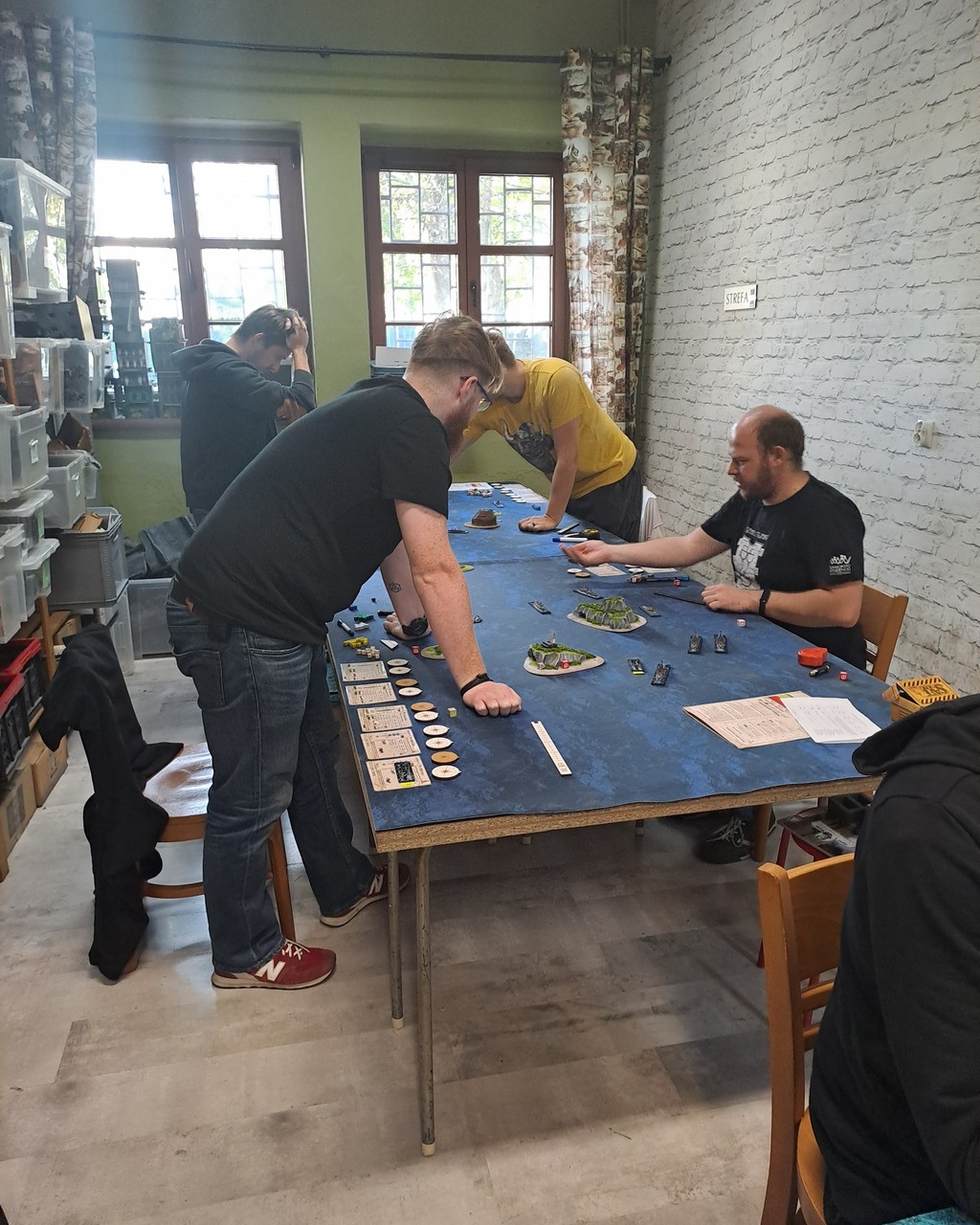
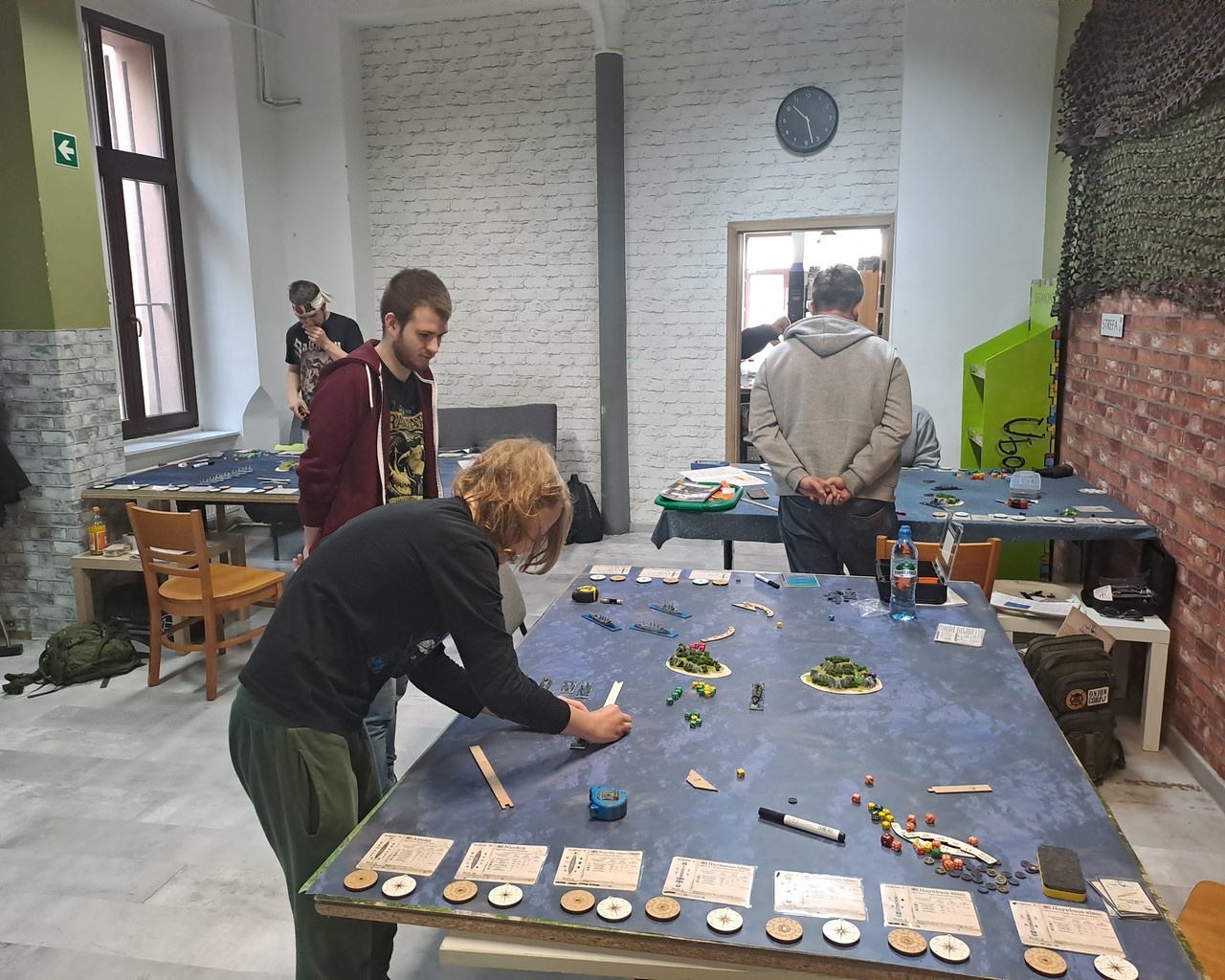
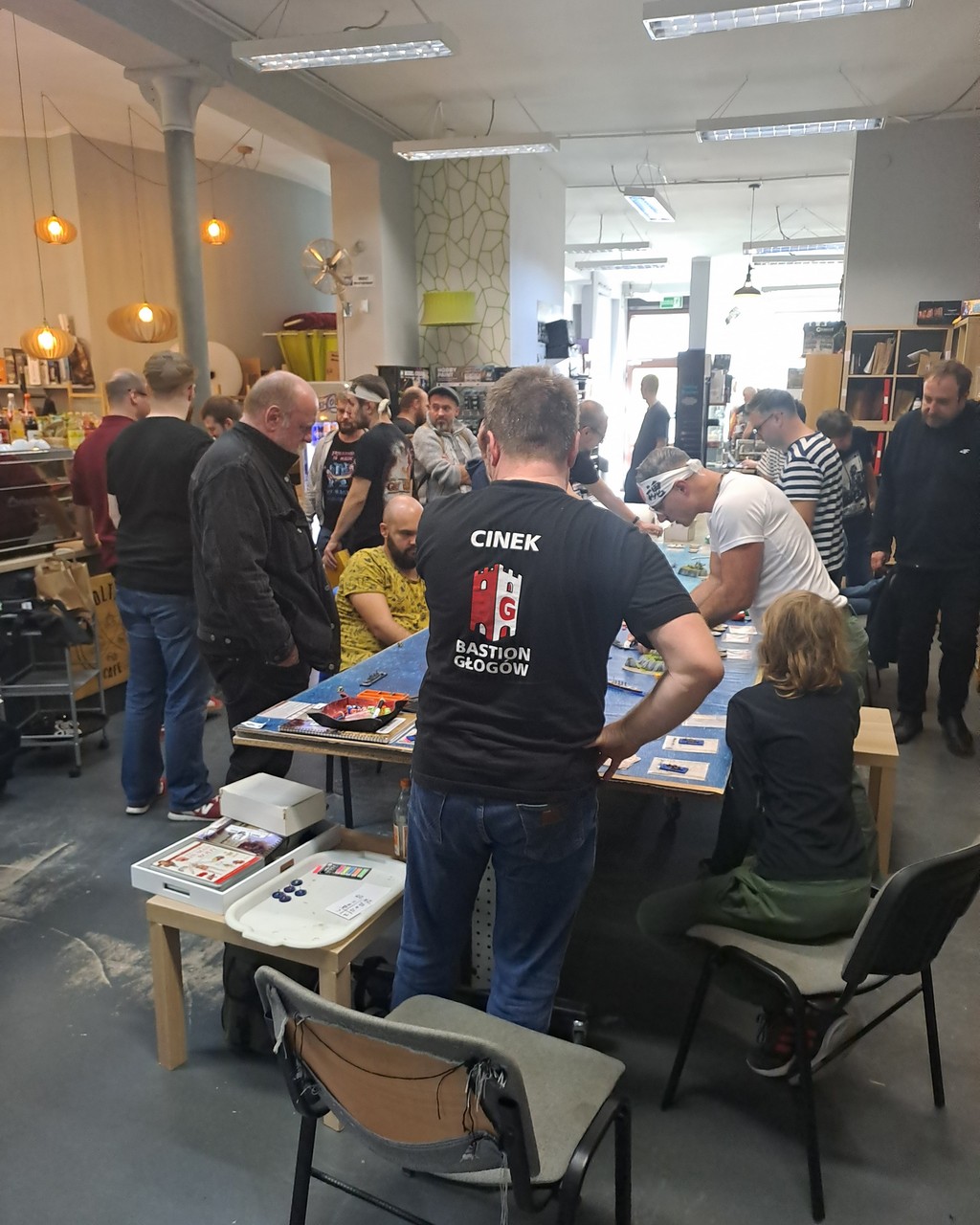
🇬🇧 On the weekend of October 19-20, the second championship of Poland in Gods of War: Togowill be held at the Bolter center in Wrocław. There were twenty players from different parts of Poland, from cities and towns such as: Bielsko-Biała, Głogów, Gorzów Wielkopolski, Sosnowiec, Warsaw, native Wrocław and neighboring Żerniki Wrocławskie. I keep my fingers crossed for even more people on the championship, both from Poland and abroad whether from the Czech Republic, Japan, Spain, Germany, Russia, Great Britain, The United States and any country where are people playing this amazing game.
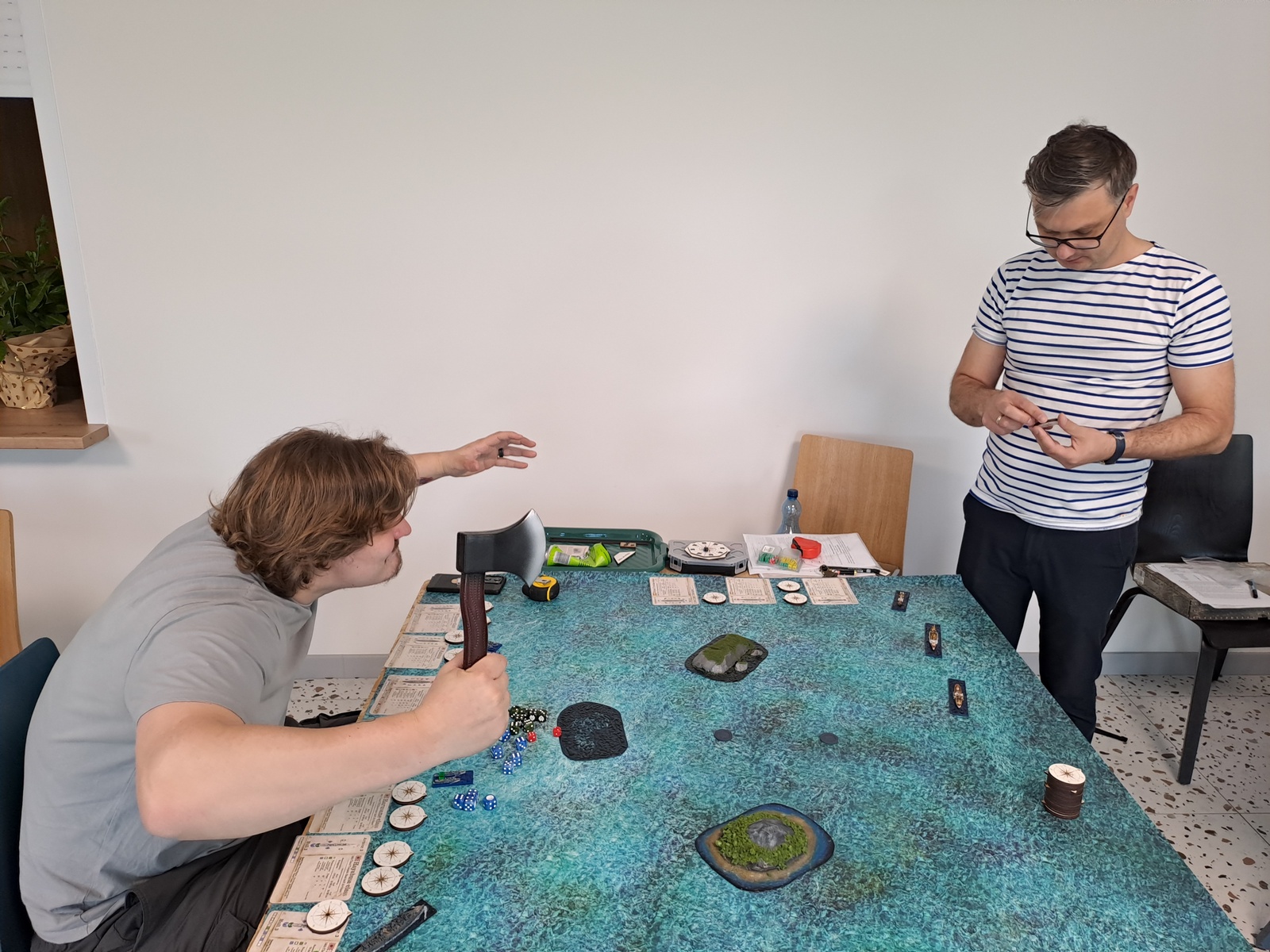
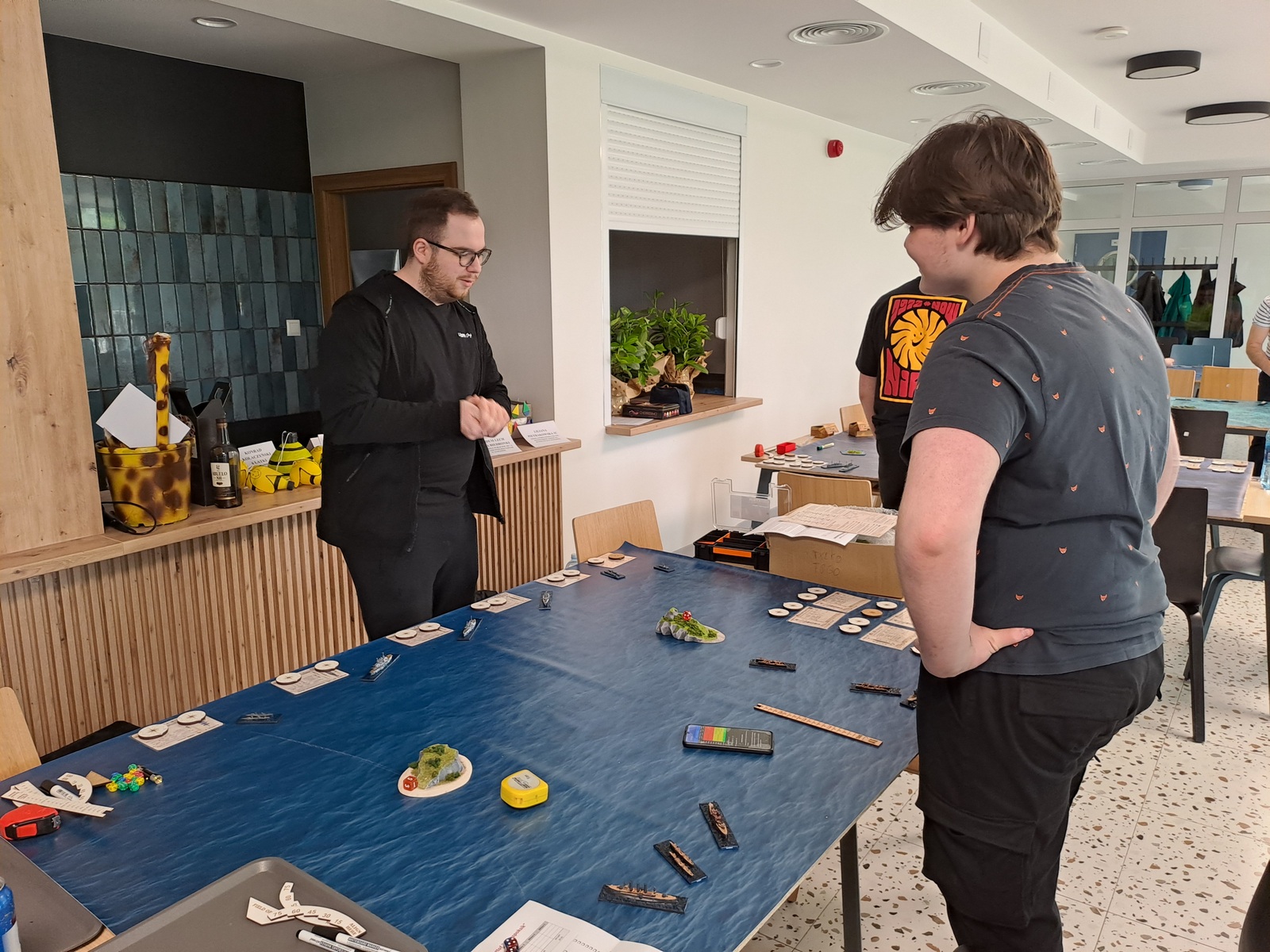
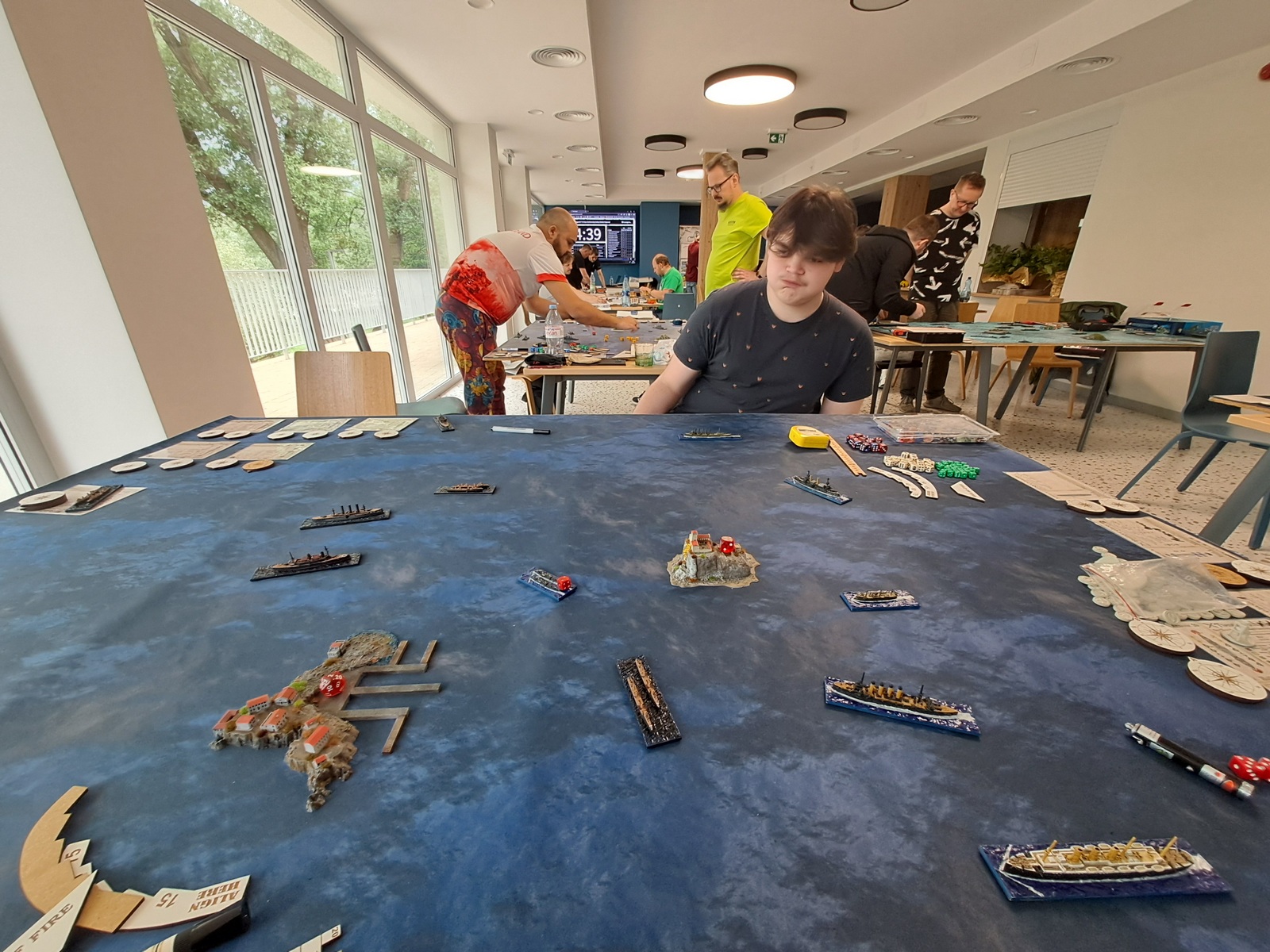
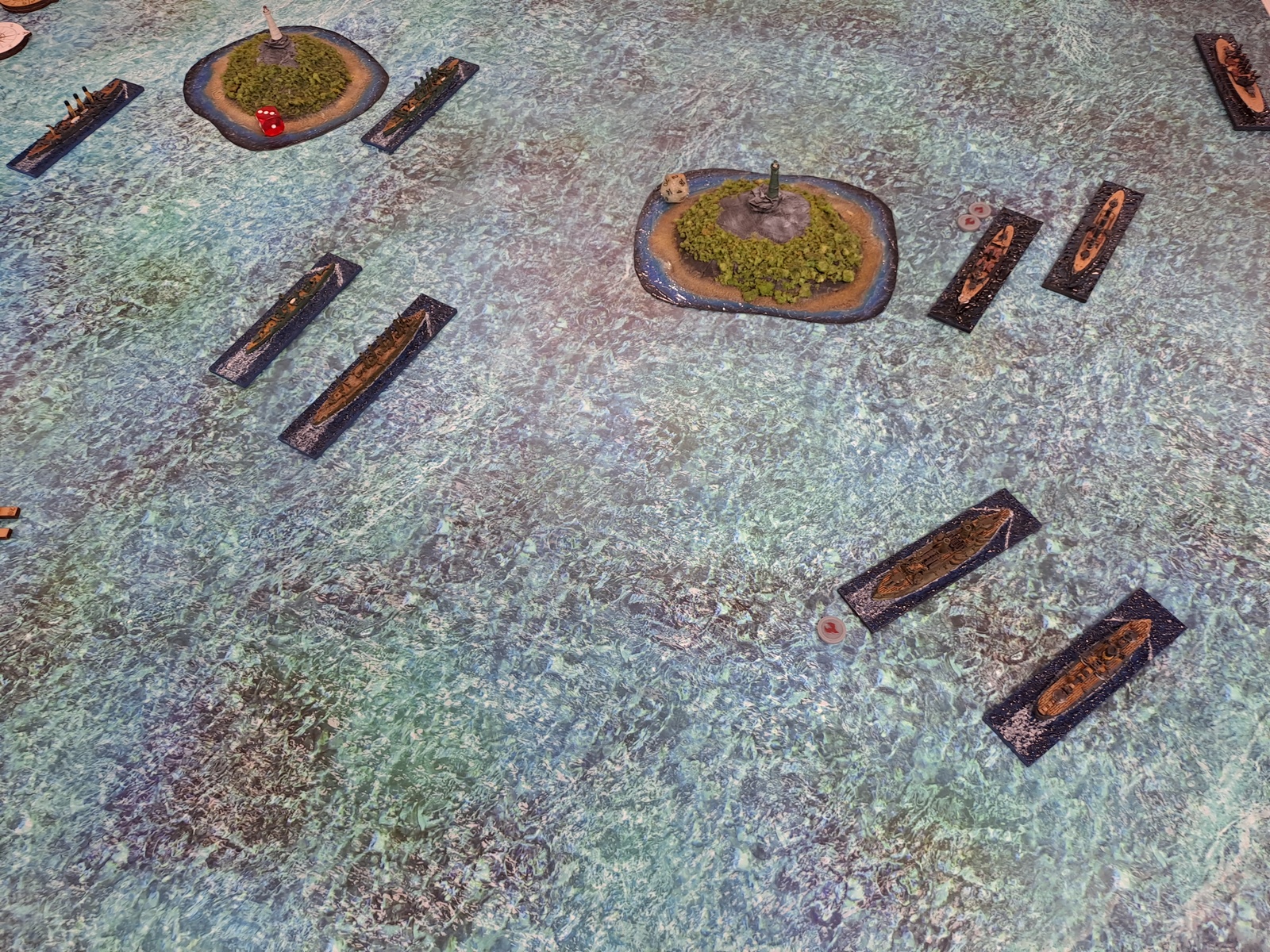
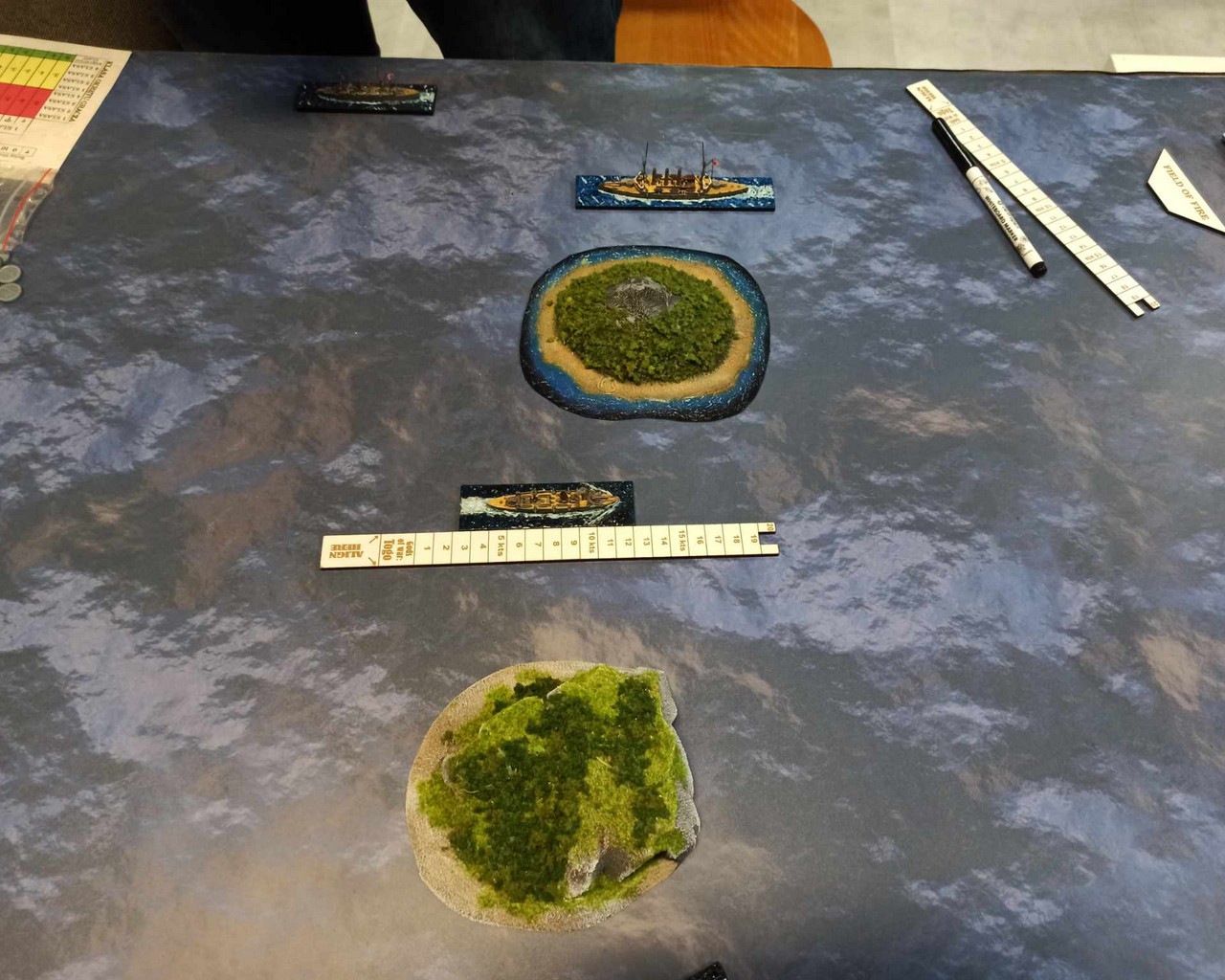
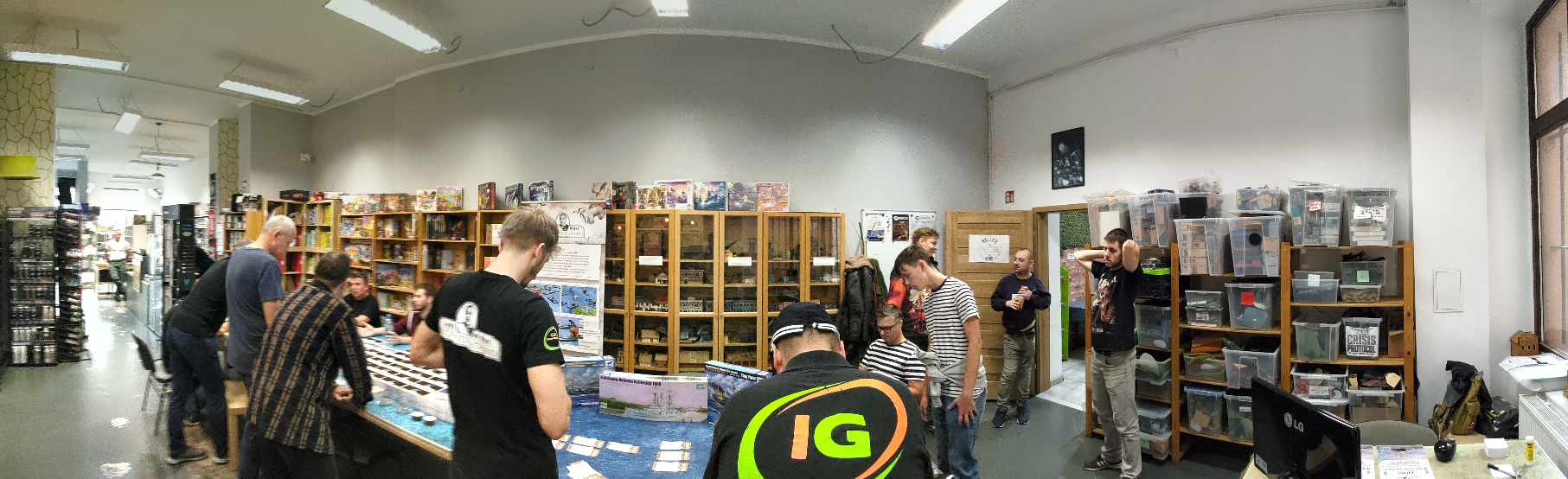
Was it worth coming to this tournament? Of course it is, just like it is worth trying to play this great system from the Wrocław studio GMBoardgames. An intimate event that took place amidst the roar of the guns of a few battleships and lots of smaller units – such as numerous cruisers, destroyers, torpedo boats and Japanese Katsuragi-class corvettes that were also visible at the event. The biggest advantage of this event is meeting people who play this system and with whom you don’t play every day. Of course, there were more advantages, because you could, for example, play an epic game with one of the publishers of Gods of War: Togo – which happened to me personally 😉 .
🇵🇱 W weekend 19-20 października we wrocławskim klubie Bolterodbyły się drugie mistrzostwa Polski w Bogowie Wojny: Togo. Do boju stanęło dwudziestu graczy z różnych części Polski w tym z takich miejscowości jak: Bielska-Biała, Głogów, Gorzów Wielkopolski, Sosnowiec, Warszawa, rodzimy Wrocław i sąsiadującye z nim Żerniki Wrocławskie. Osobiście trzymam kciuki za jeszcze więcej osób na kolejnych mistrzostwach, tak z Polski jak i z poza jej granic – z wielką chęcią w przyszłym roku we Wrocławiu zobaczę również naszych kolegów grających w Togo czy to z Czech, Japonii, Hiszpanii, Niemiec, Rosji, Wielkiej Brytanii, Stanów Zjednoczonych i każdego dowolnego kraju, w którym są gracze w tą świetną grę grający.
Czy było warto wpaść na ten turniej? Oczywiście, że tak, podobnie jak warto spróbować gry w ten świetny system wrocławskiego studia GMBoardgames. Kameralne wydarzenie, które odbyło się w huku dział nielicznych pancerników oraz mnóstwa mniejszych jednostek – takich jak liczne krążowniki, niszczyciele, torpedowce czy japońskie korwety klasy Katsuragi, które również były widoczne na tym wydarzeniu. Największym plusem tego typu wydarzenia jest spotkać ludzi, którzy grają w ten sam system co ty, a z którymi nie gra się na co dzień. Plusów oczywiście było więcej, bo można było na przykład stoczyć epicką rozgrywkę z jednym z wydawców Bogów Wojny: Togo – co mi się przytrafiło osobiście 😉 .
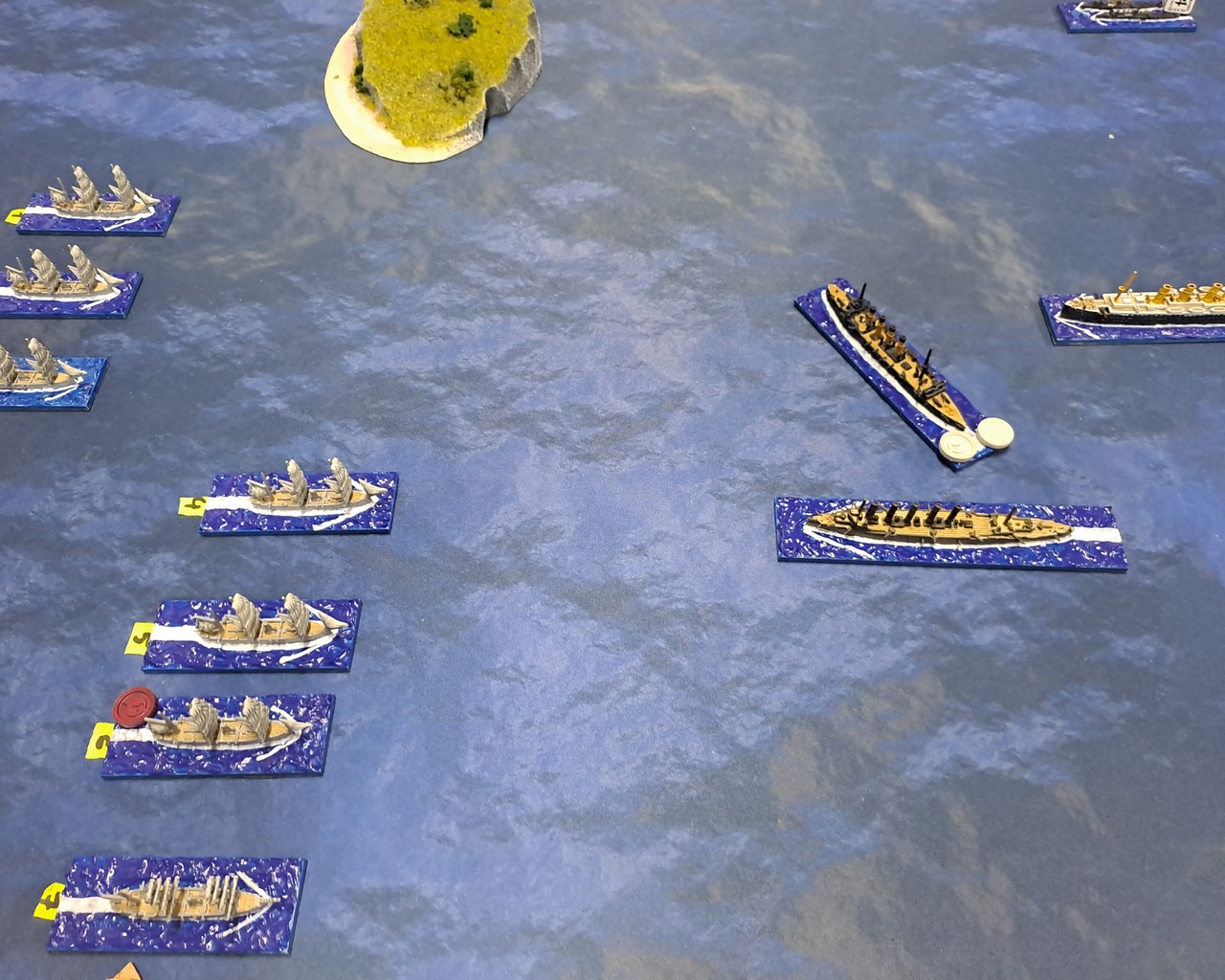
Photos from different sources, GMBoardgams, Gingerhead, Goldfish (I think) and from my camera.On the top left me, then on bottom Kuba, then Aspirant and on the top Cornholio. Lewy górny róg ja, niżej Kuba, na prawo Aspirant i w prawym górnym rogu Ździebło. Japanese fleet is perfect. Flota Japonii jest po prostu piękna. On the one side Mikasa and seven Katsuragi, on the other Russia. Po jednej stronie Mikasa i siedem Katsuragi, po drugiej Rosja.Fleet composed of Japanese Katsuragi. Flota złożona z japońskich Katsuragi.Who will take camera faster, thank you Torgill! Kto chwyci aparat szybciej, dzięki Torgill! Duderson&Torgill.Gingerhead&Aspirant.Cinek.Prizes. Nagrody.Almost all participants, three of us had to leave us. Prawie wszyscy uczestnicy z wyjątkiem trzech którzy musieli nas opuścić wcześniej.
Summary: – it was great to see a lot of people from Wrocław I haven’t seen lately! – great atmosphere in Bolter– thanks to Adam and Asia for the addition that day! – great time spent on feast and chatting after the first day of playing – thanks to the organizers! – More about Gods of War: Togo is HERE. Of course there are more entries about this great game on my blog. In case of any questions there is a great group on Facebook. – The official publisher of this great sea game at the turn of history is the Bolter club from Wrocław. – the link to the Tournekeeper is HERE.
Podsumowanie: – super było zobaczyć wiele osób z Wrocławia których ostatnio nie widuję! – świetna atmosfera w Bolterze – dzięki Adamie i Asiu za obecność tego dnia! – świetny czas spędzony na biesiadzie i pogawędkach po pierwszym dniu grania – dzięki organizatorom! – Więcej o Bogach Wojny: Togo można przeczytać TUTAJ. Oczywiście na moim blogu jest więcej wpisów o tej świetnej grze. W razie pytań odnośnie systemu istnieje sprawna grupa na Facebooku. – Oficjalnym wydawcą tej świetnej gry morskiej na przełomie dziejów jest wrocławski klub Bolter. – link do Tourneykeepera jest TUTAJ.
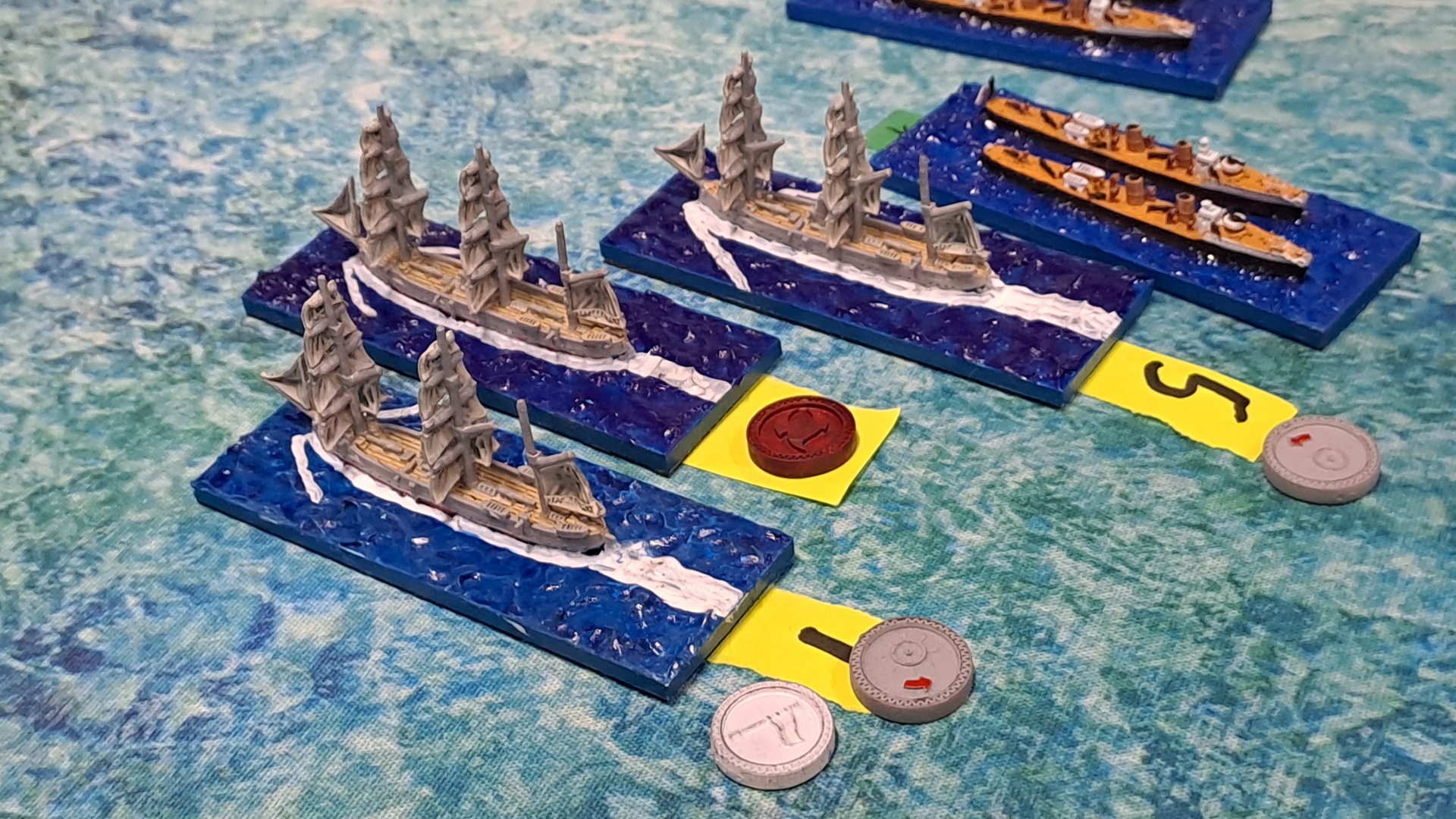
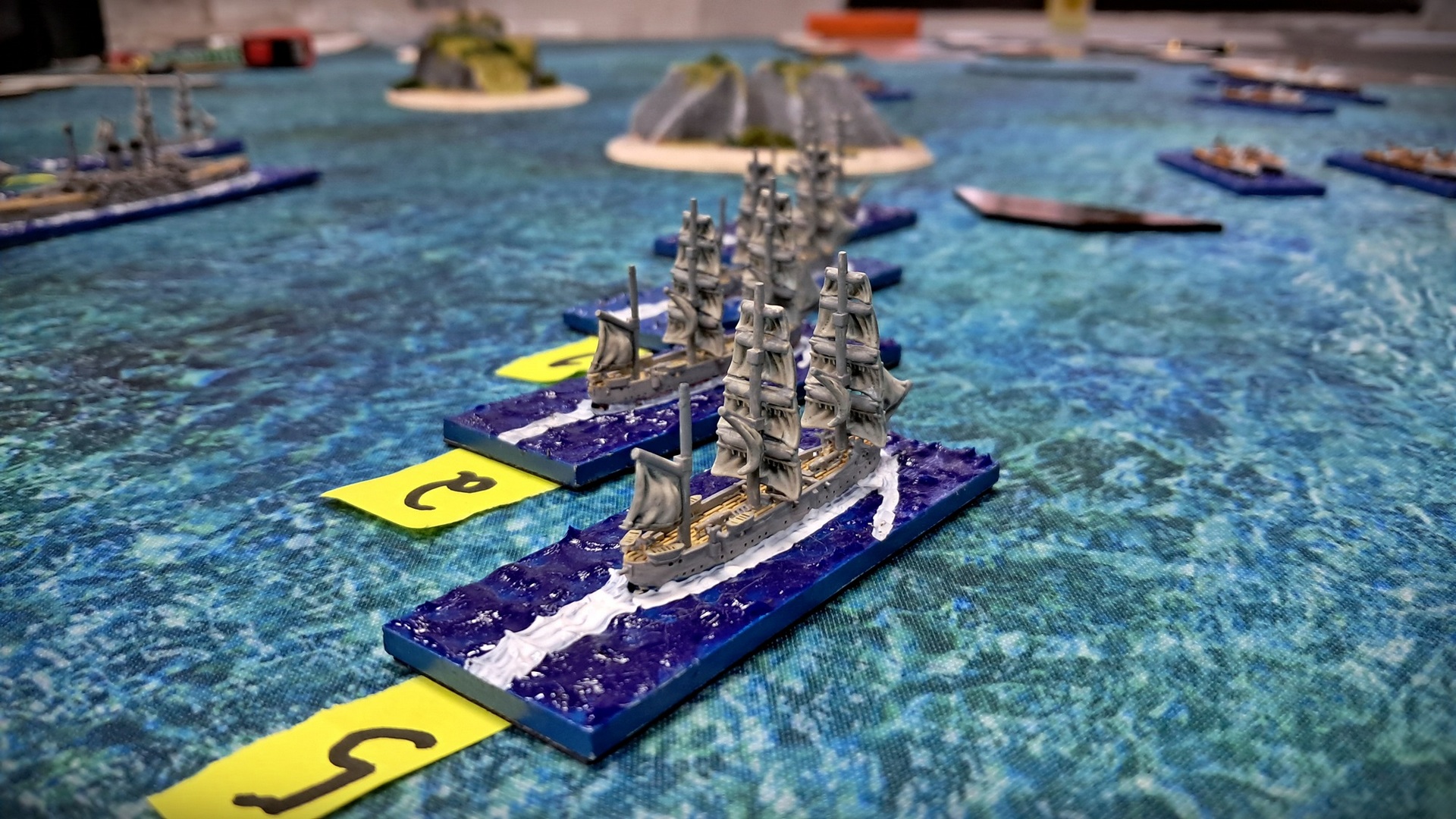
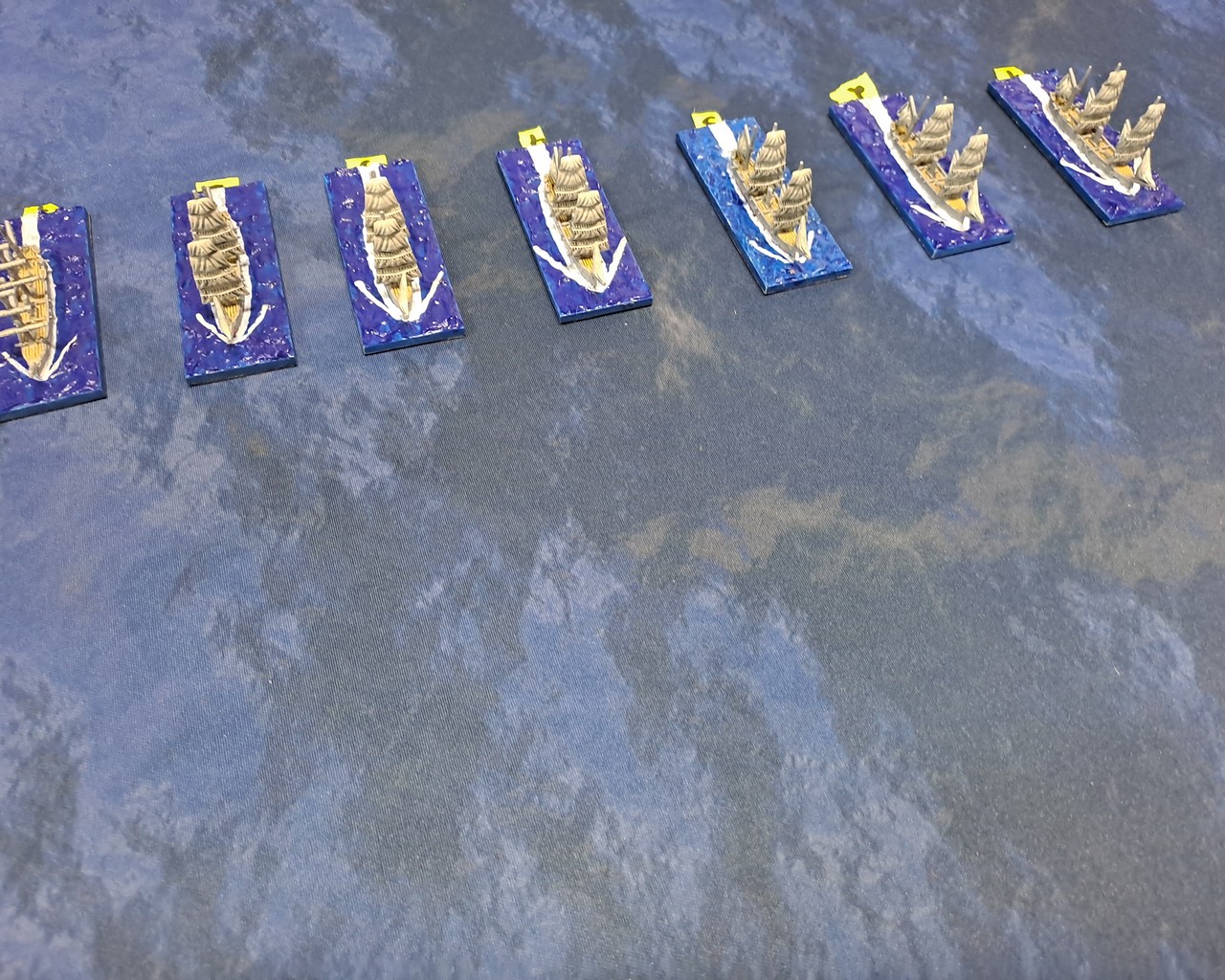
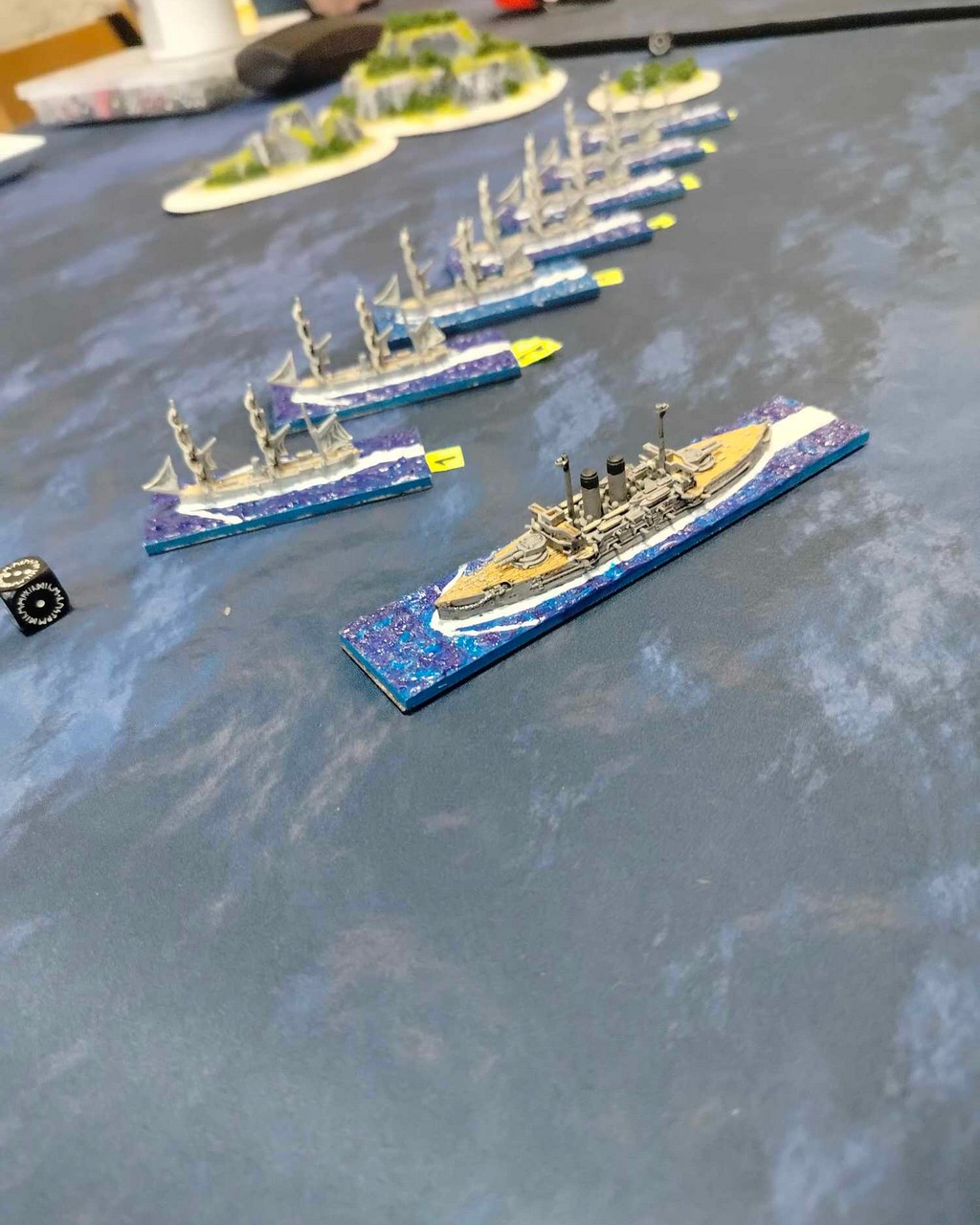
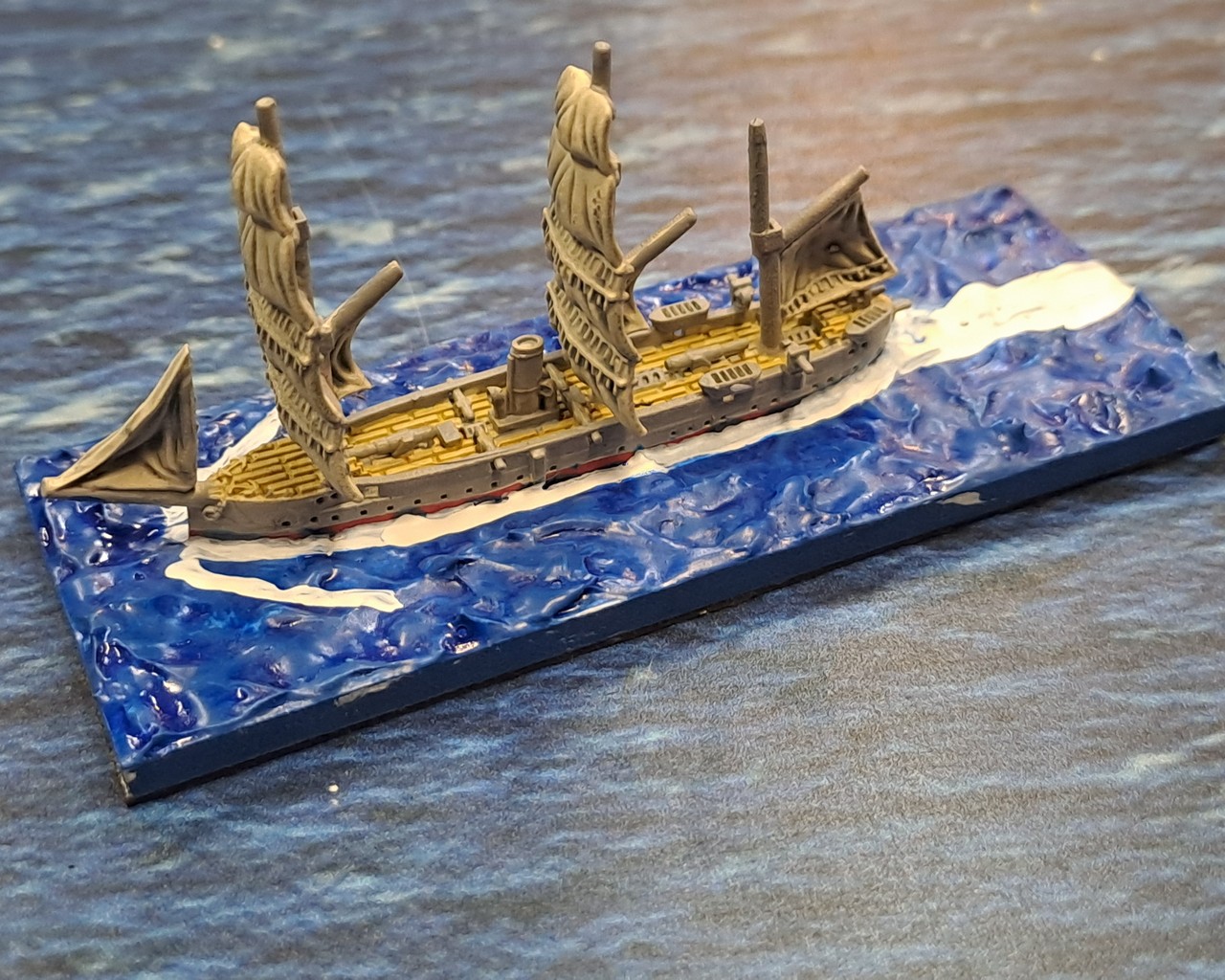
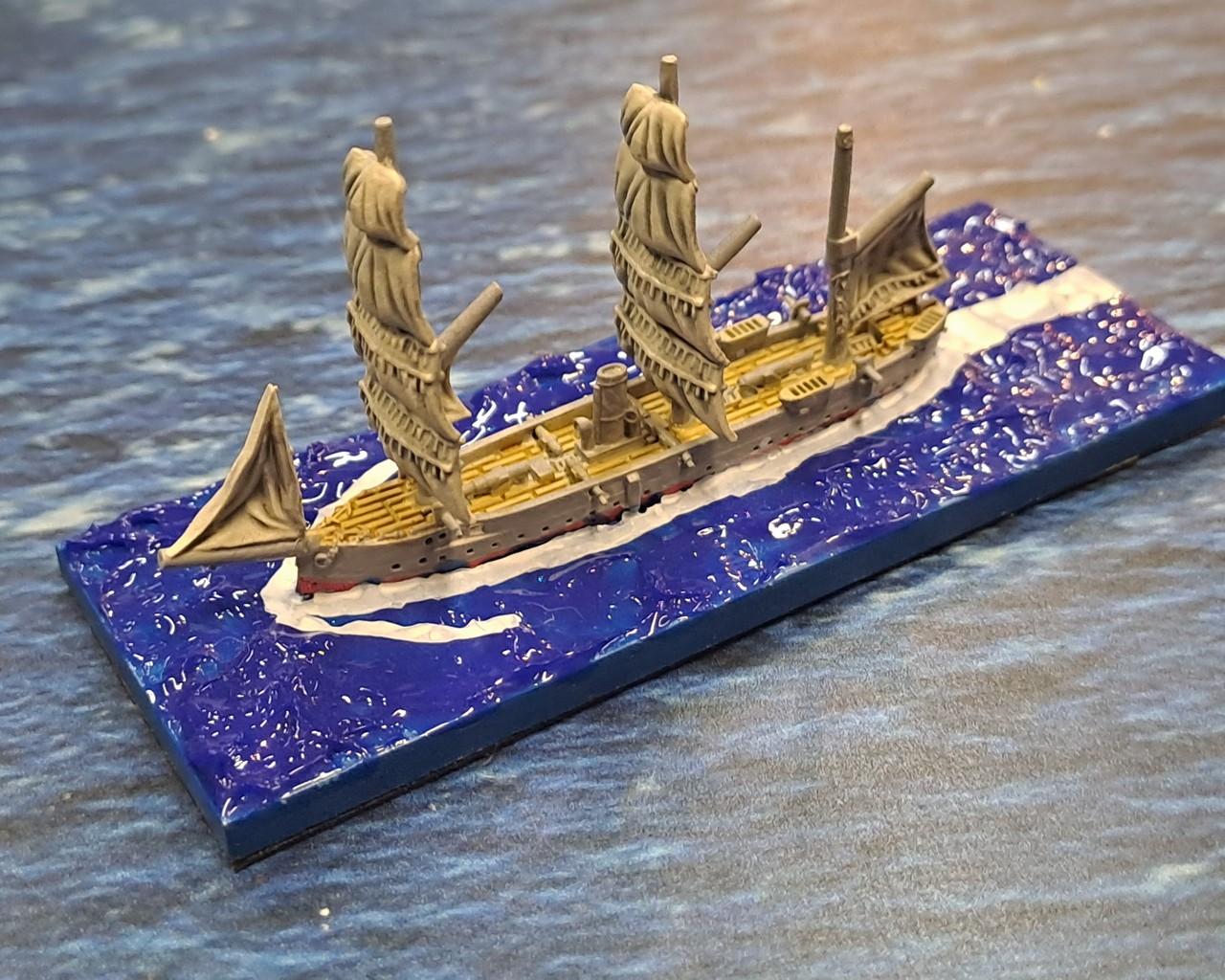
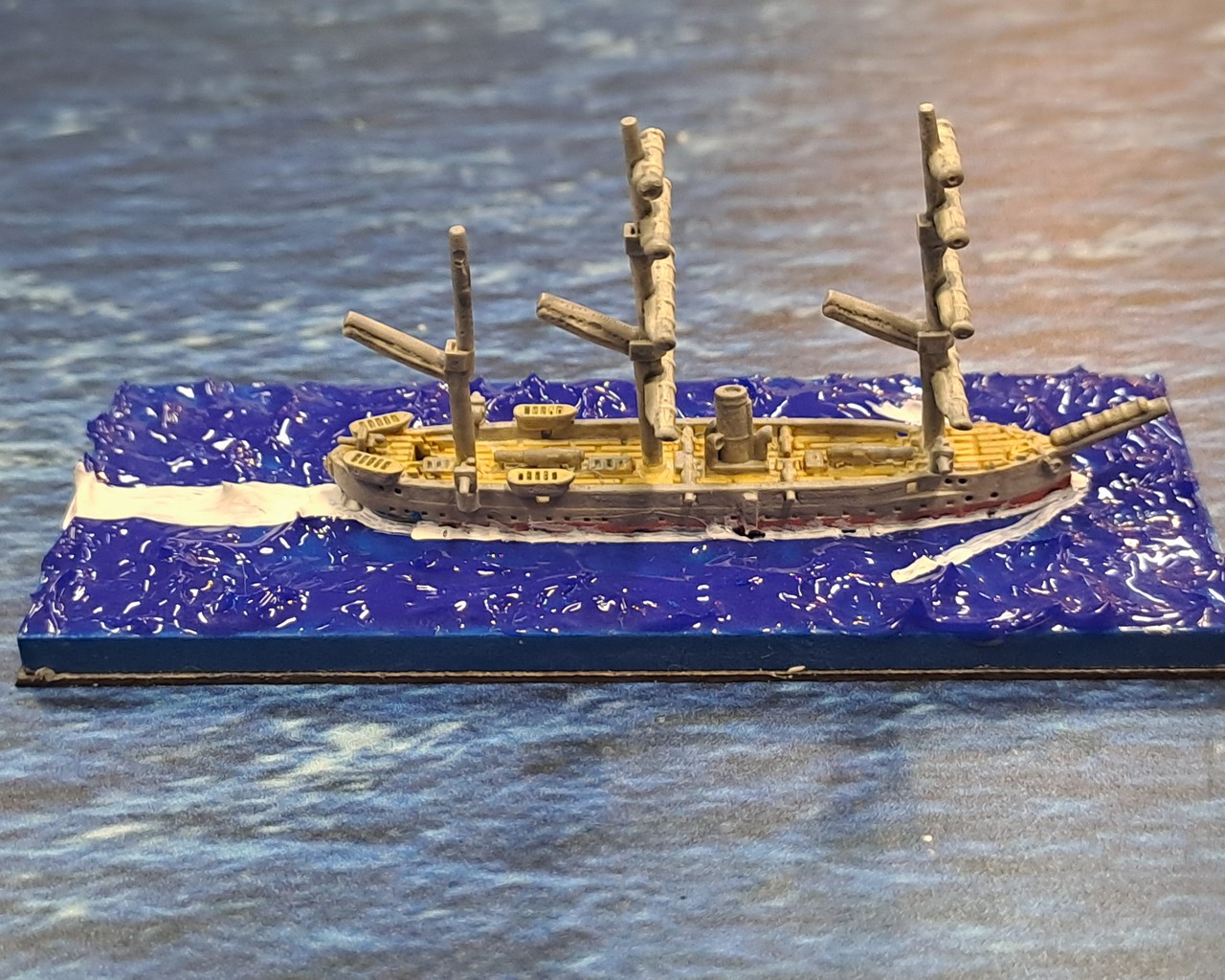
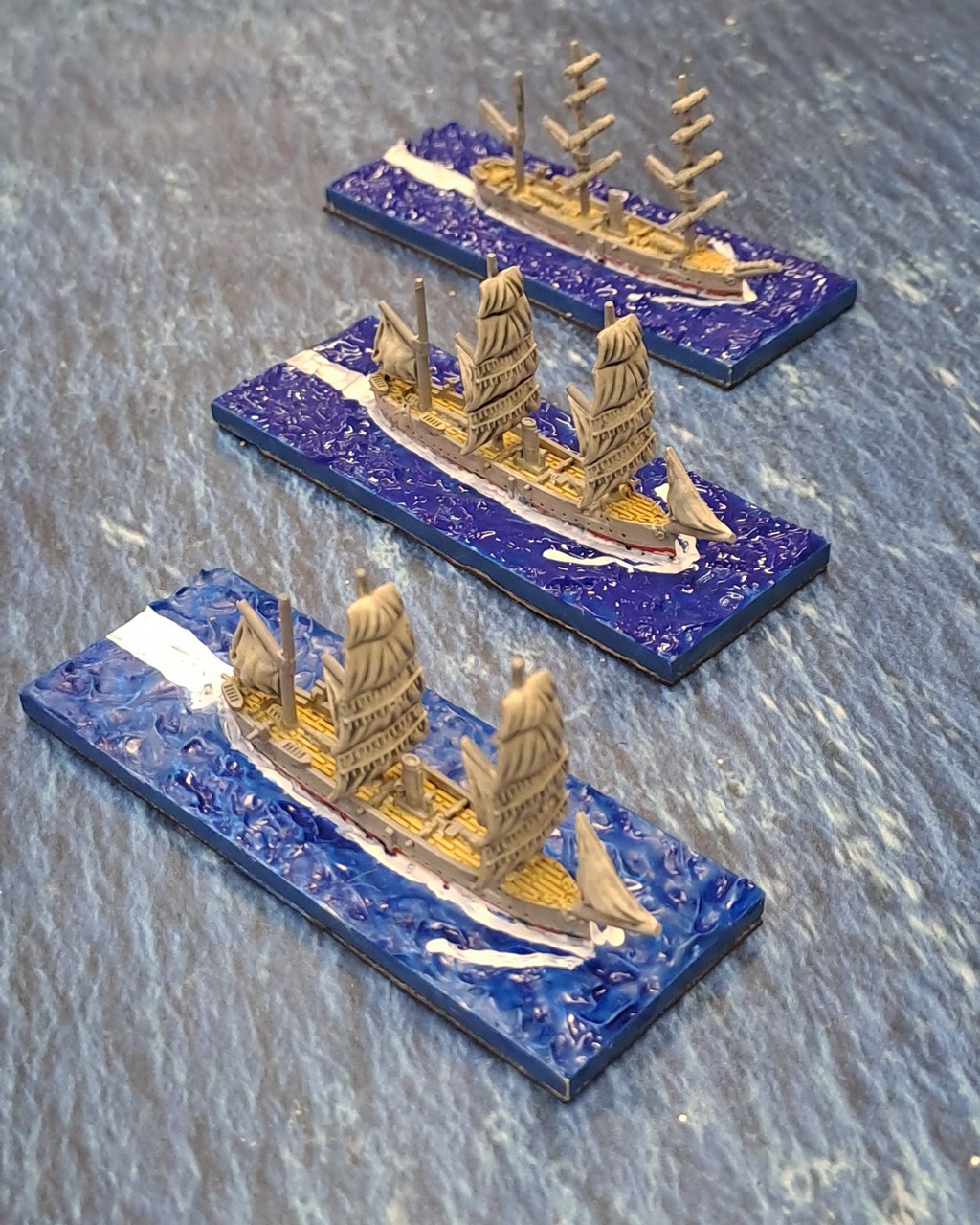
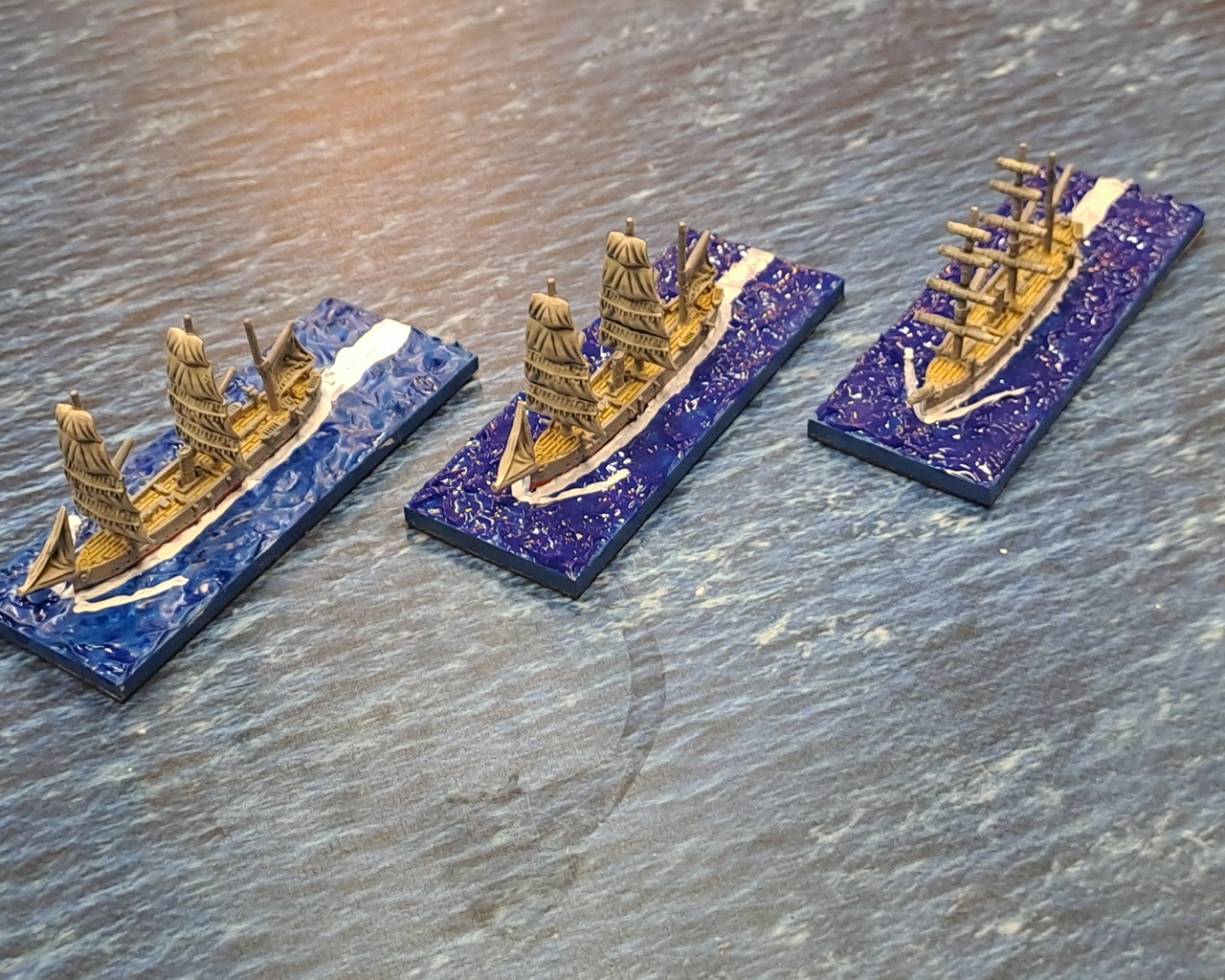
🇬🇧 During last weeks when most of my time I was sleeping and recovering I managed to finish three Katsuragi class corvettes for Nippon Kaigun or in English Japanese Empire Navy.
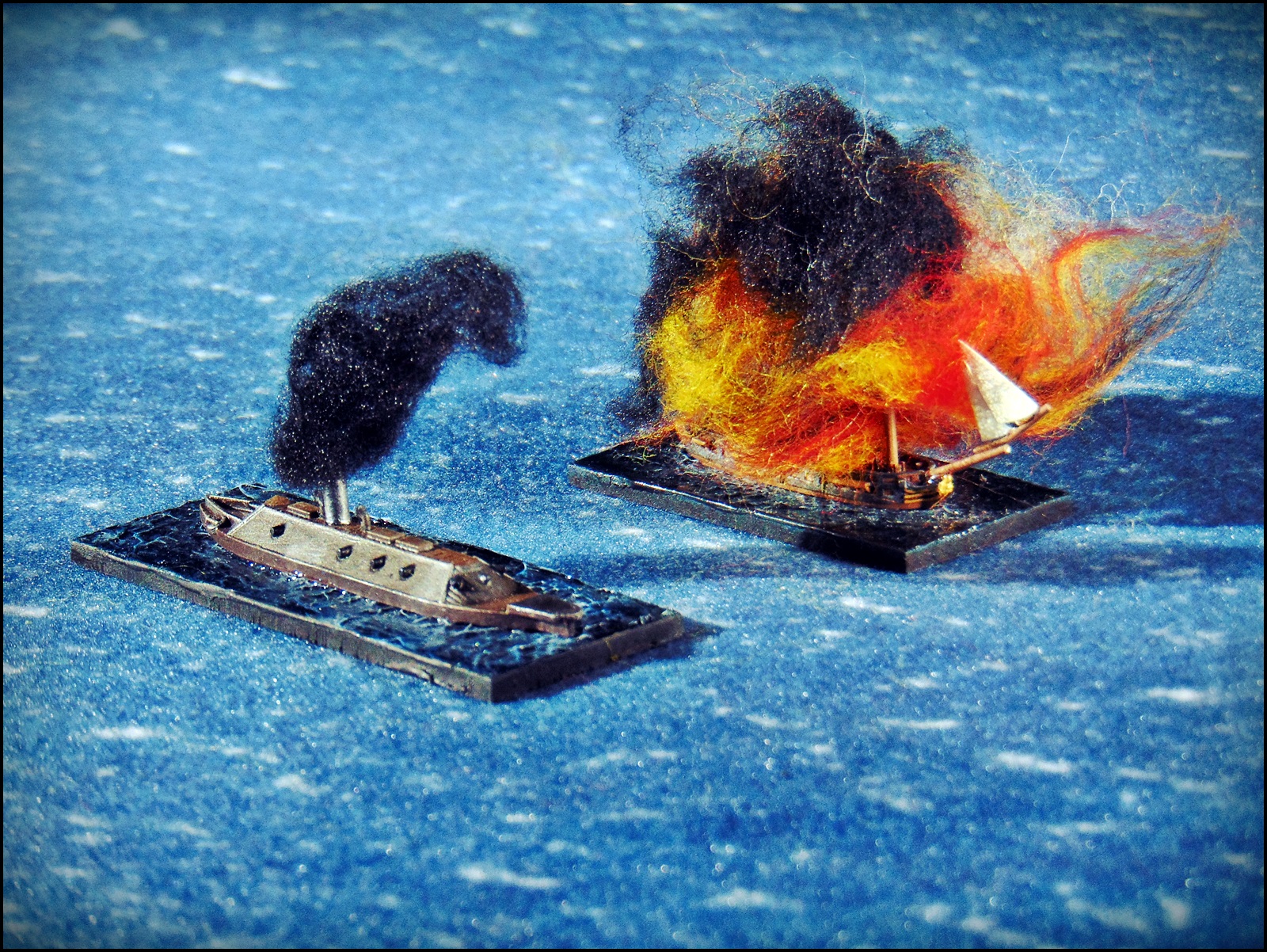
„The Katsuragi class was a three-ship class of composite hulled, sail-and-steam corvettes of the early Imperial Japanese Navy.
Two of the three ships of this type bore names that are very familiar to naval military enthusiasts. It’s Yamato and Musashi. It is therefore worth remembering that before these names were given to Japanese super battleships, they were worn by small corvettes.”
* – description of Katsuragi according to GMBoardgames.
🇵🇱 W ciągu ostatnich tygodni w trakcie który głównie spałem i wracałem do siebie udało mi się skończyć trzy korwety klasy Katsuragi dla Nippon Kaigun lub po polsku Marynarki Wojennej Cesarstwa Japonii.
„Katsuragi należał do liczącego trzy jednostki typu korwet o kompozytowych kadłubach, napędzanych żaglami i parą, wczesnej Cesarskiej Marynarki Wojennej Japonii.
Dwa z trzech okrętów tego typu nosiły nazwy bardzo dobrze znane entuzjastom militariów morskich: Yamato i Musashi. Warto więc pamiętać, że zanim te nazwy zostały nadane japońskim super pancernikom, nosiły je małe korwety.”
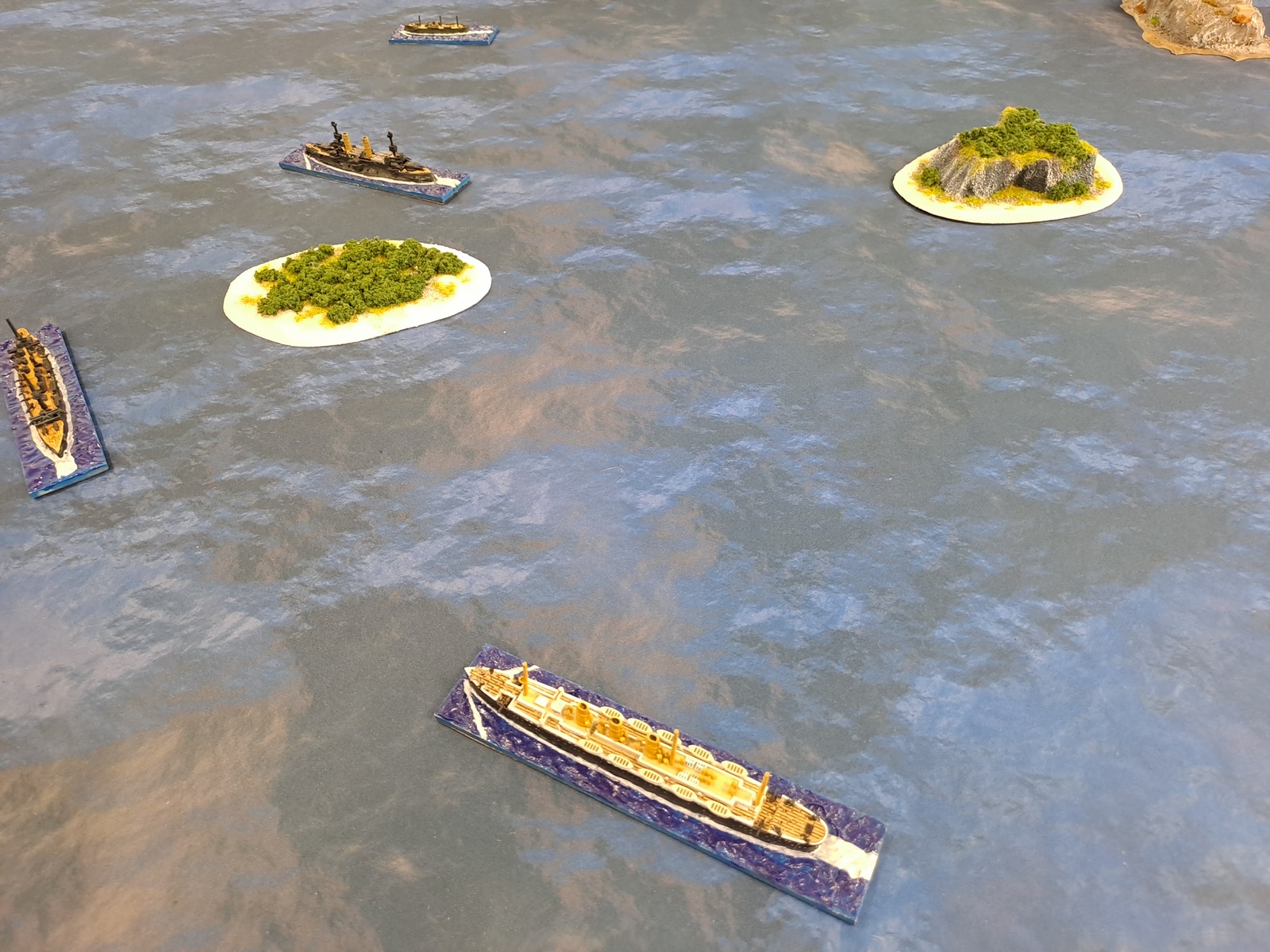
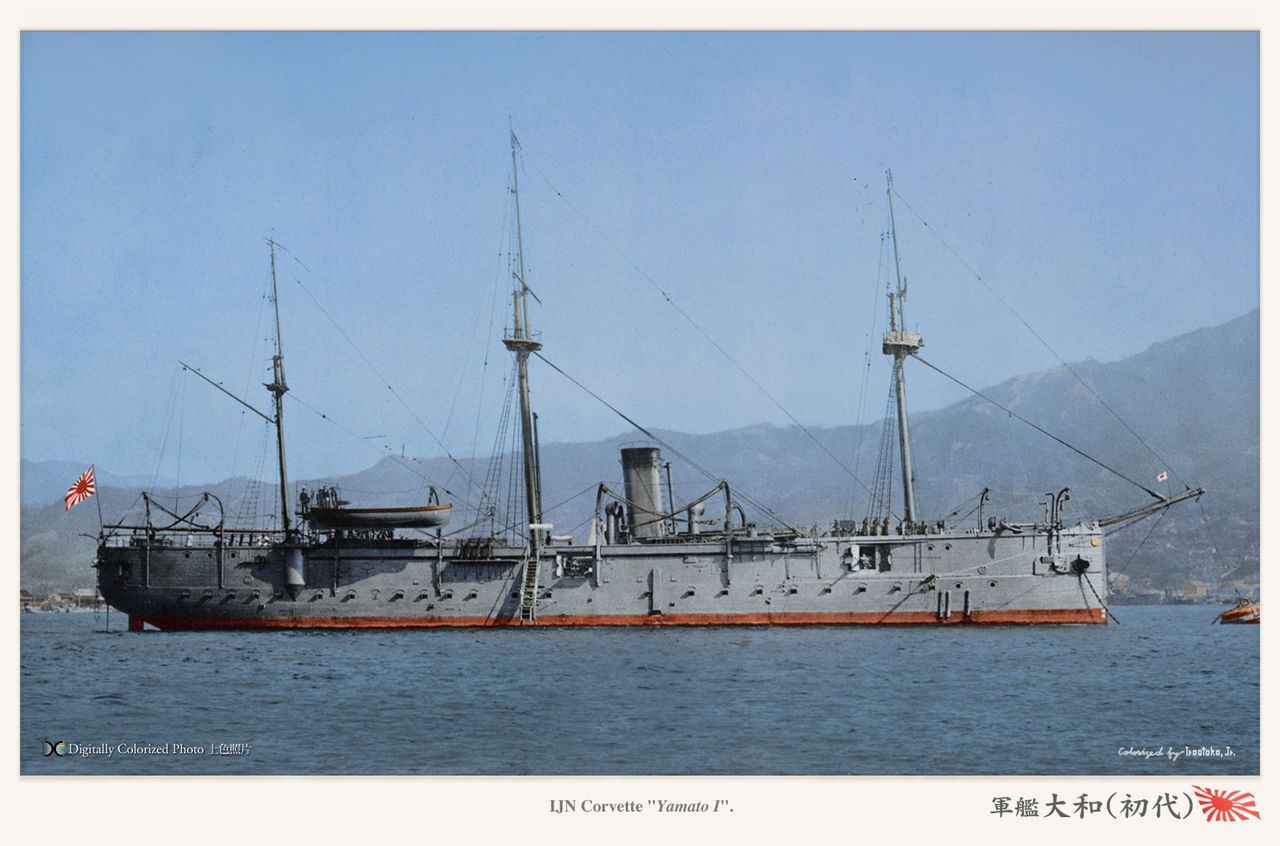
Summary: – a very nice change when it comes to painting sailing ships for a game in which they are very rare. – three ships of this class were built: Katsuragi, Yamatoand Musachi. – my inspiration for painting – look below.
Podsumowanie: – bardzo fajna odmiana jeśli chodzi o malowanie żaglowców do gry, w której bardzo nielicznie występują. – zbudowano trzy okręty tej klasy: Katsuragi,Yamato oraz Musachi. – moją inspiracją do malowania był obrazek – spójrz poniżej.





























































































































 tancreddebeauville
 Tancred’s Tabletop Tales