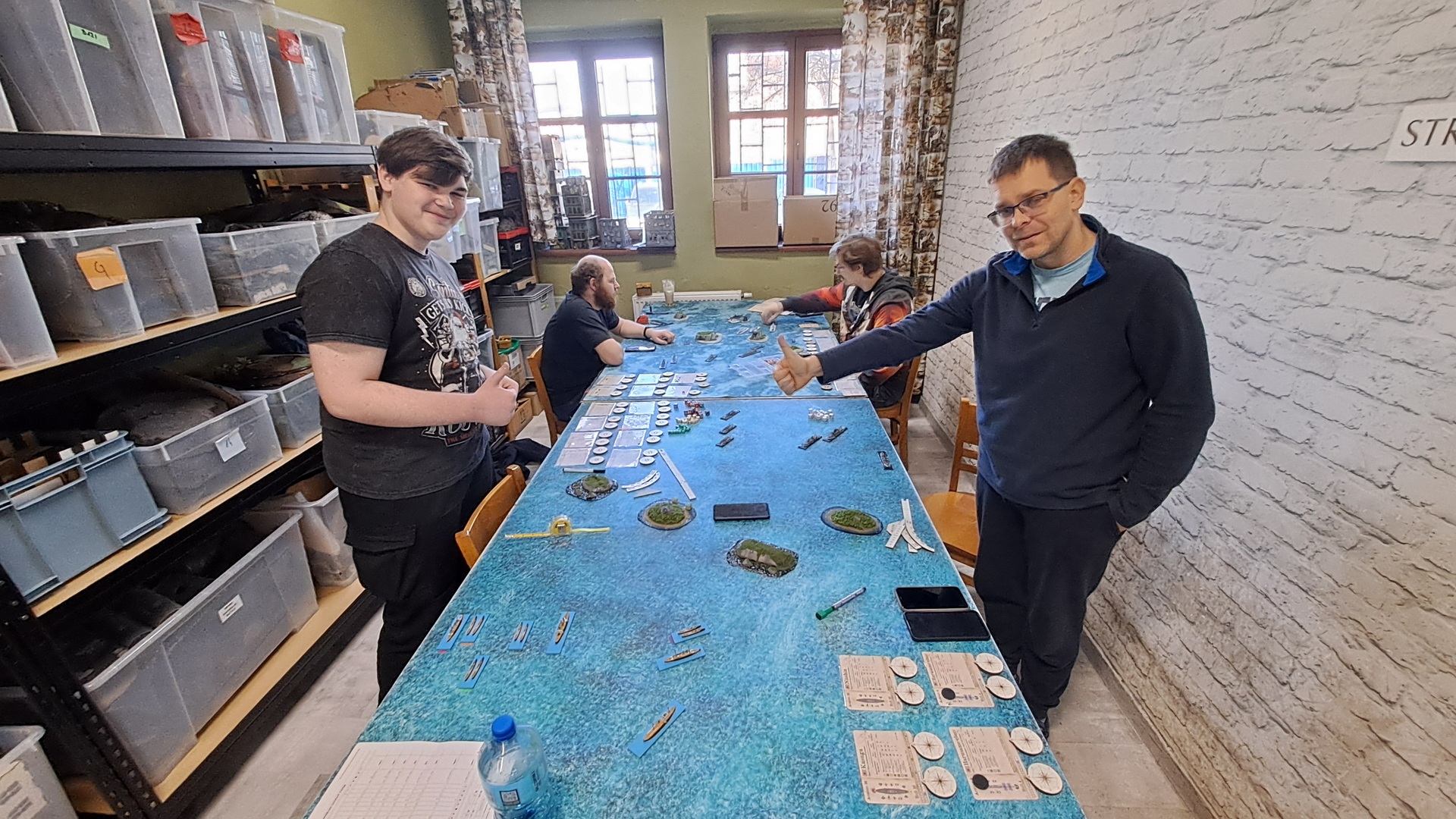
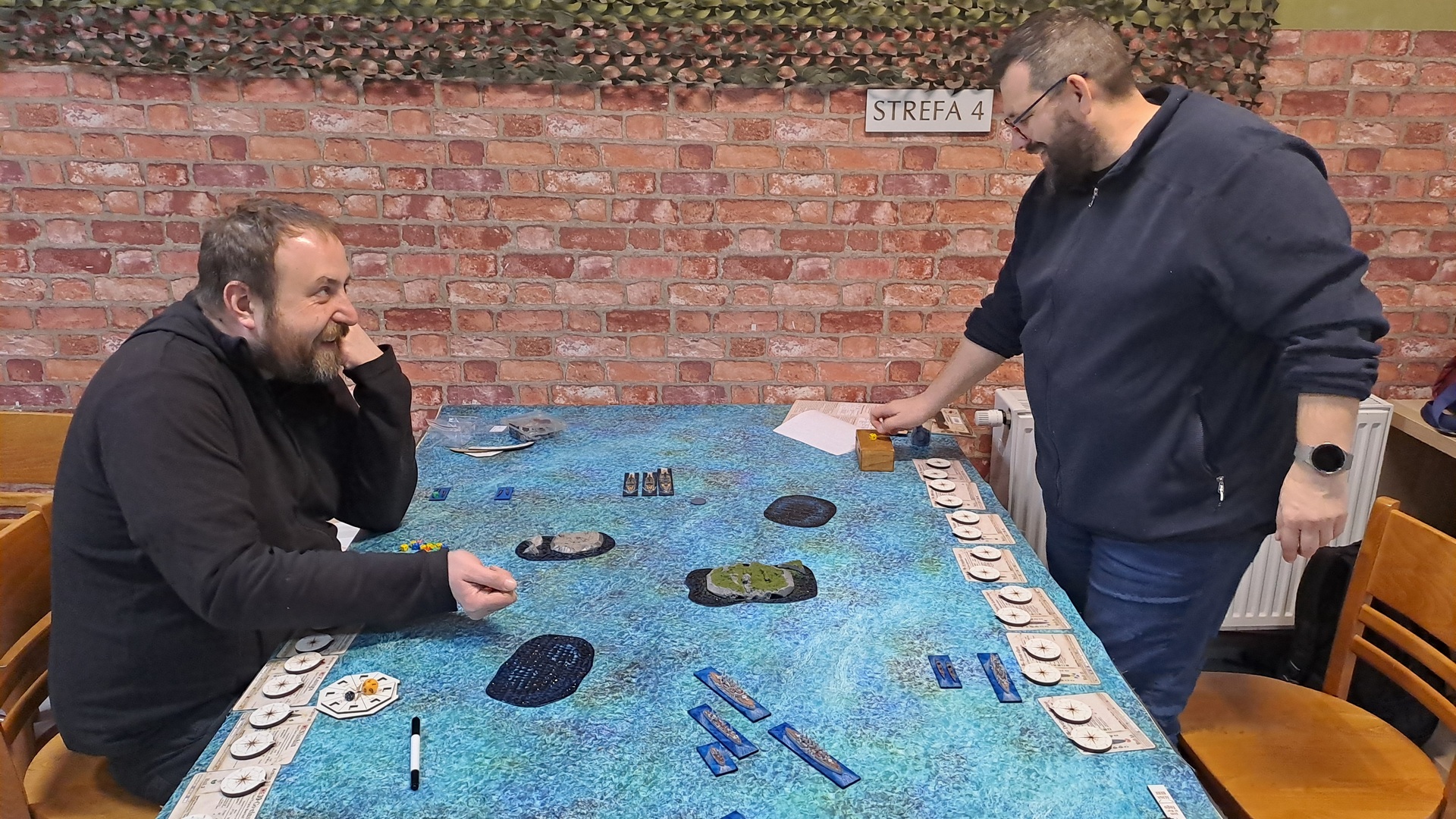
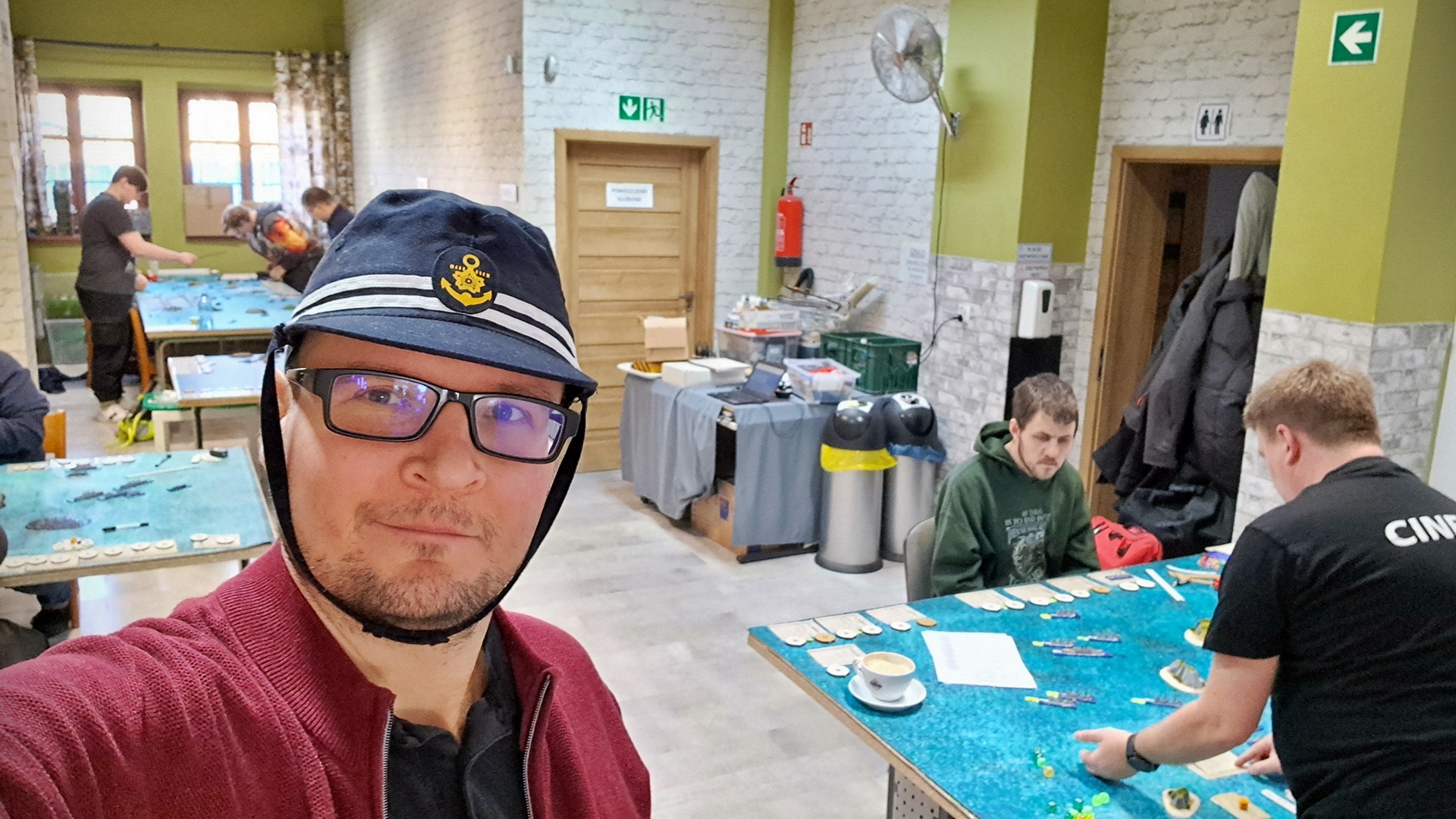
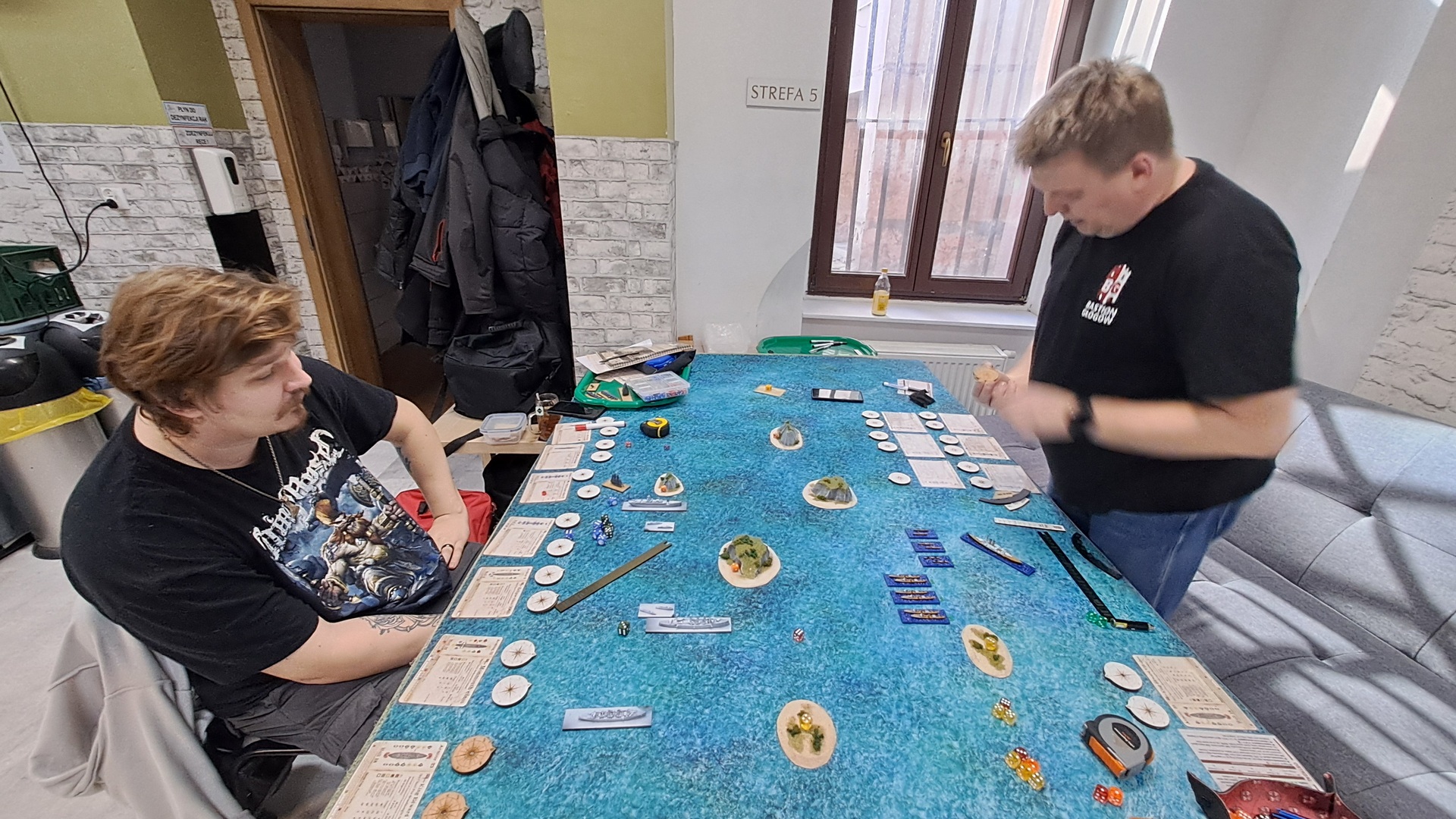
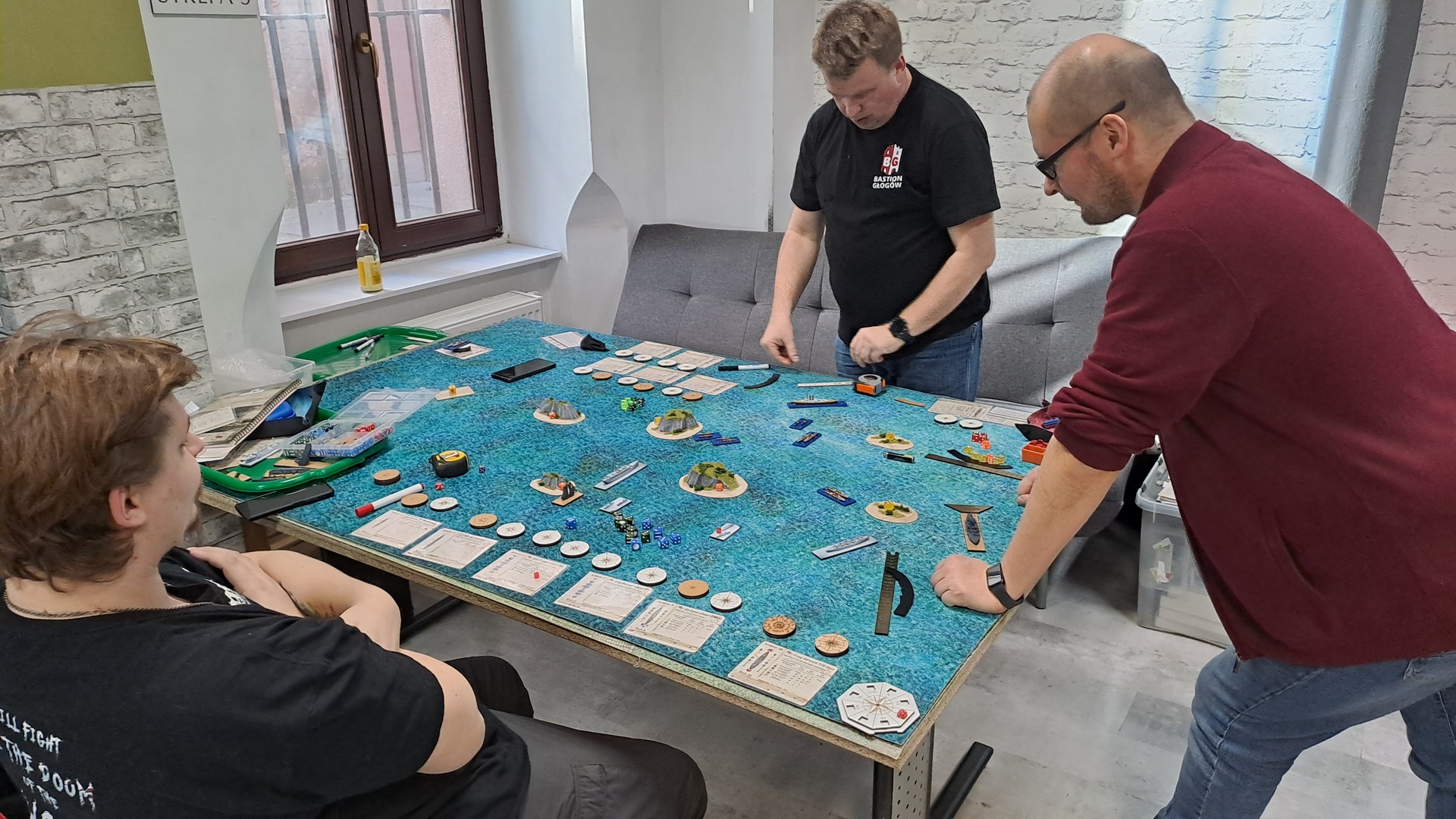
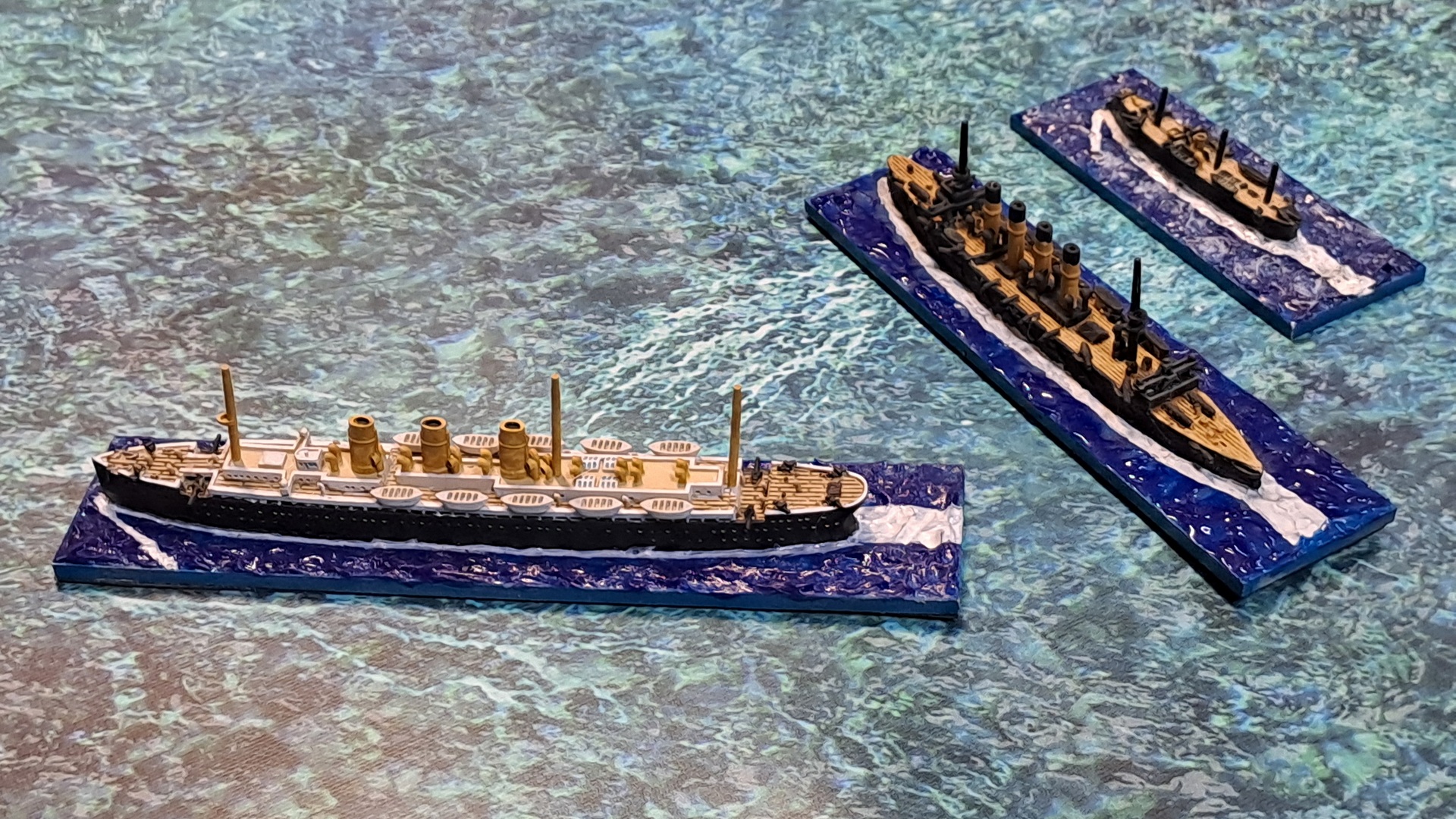
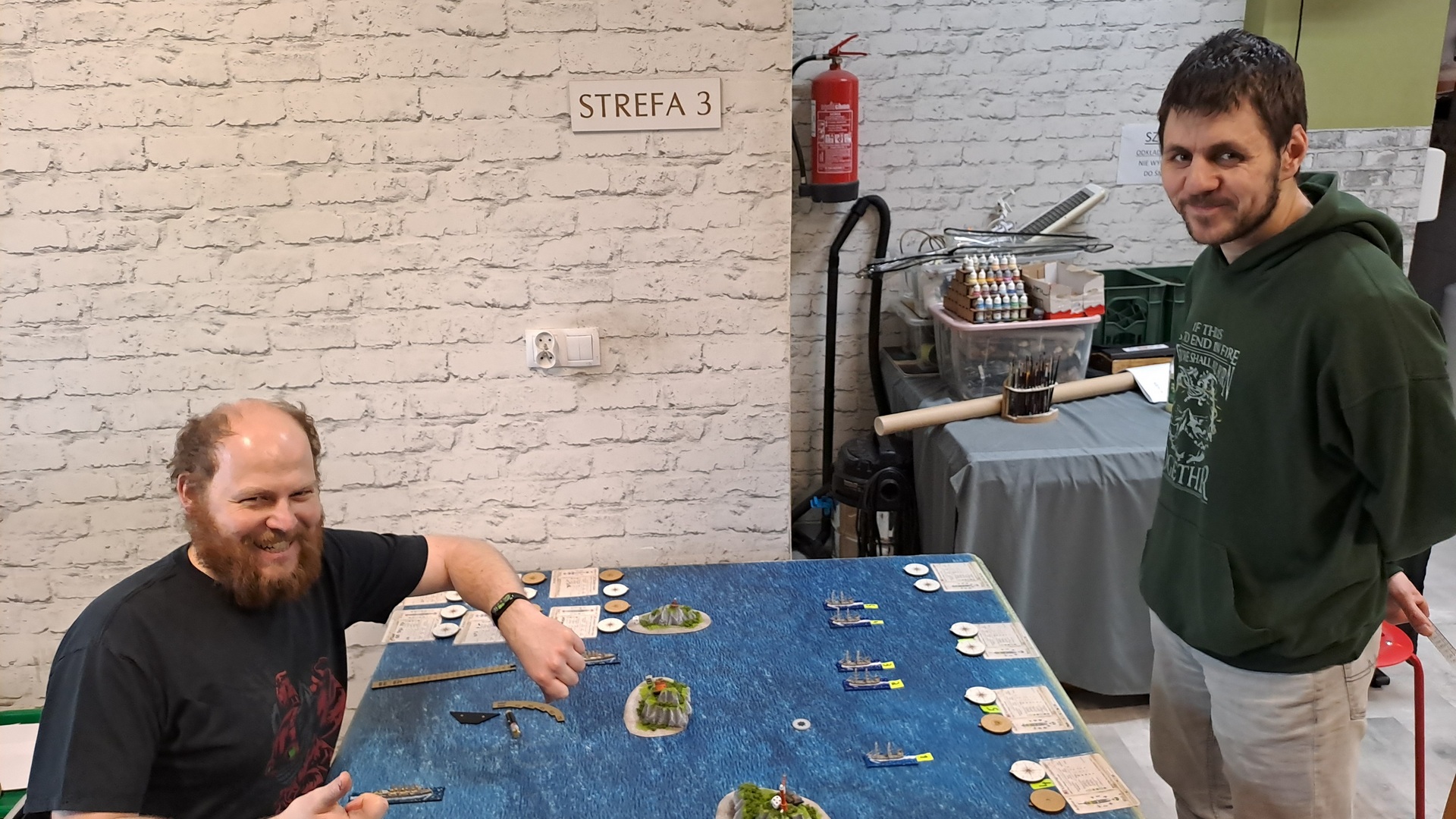
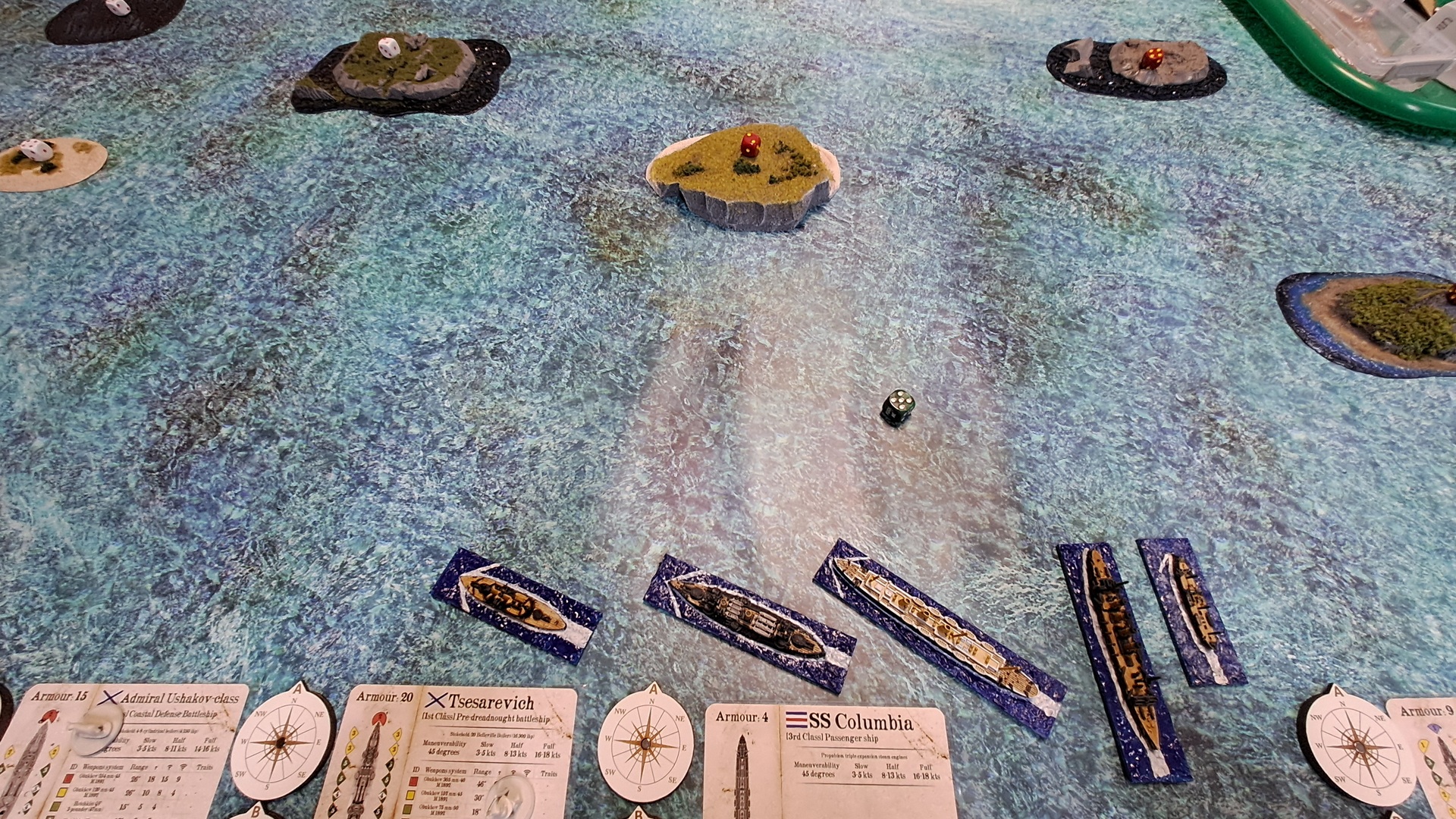
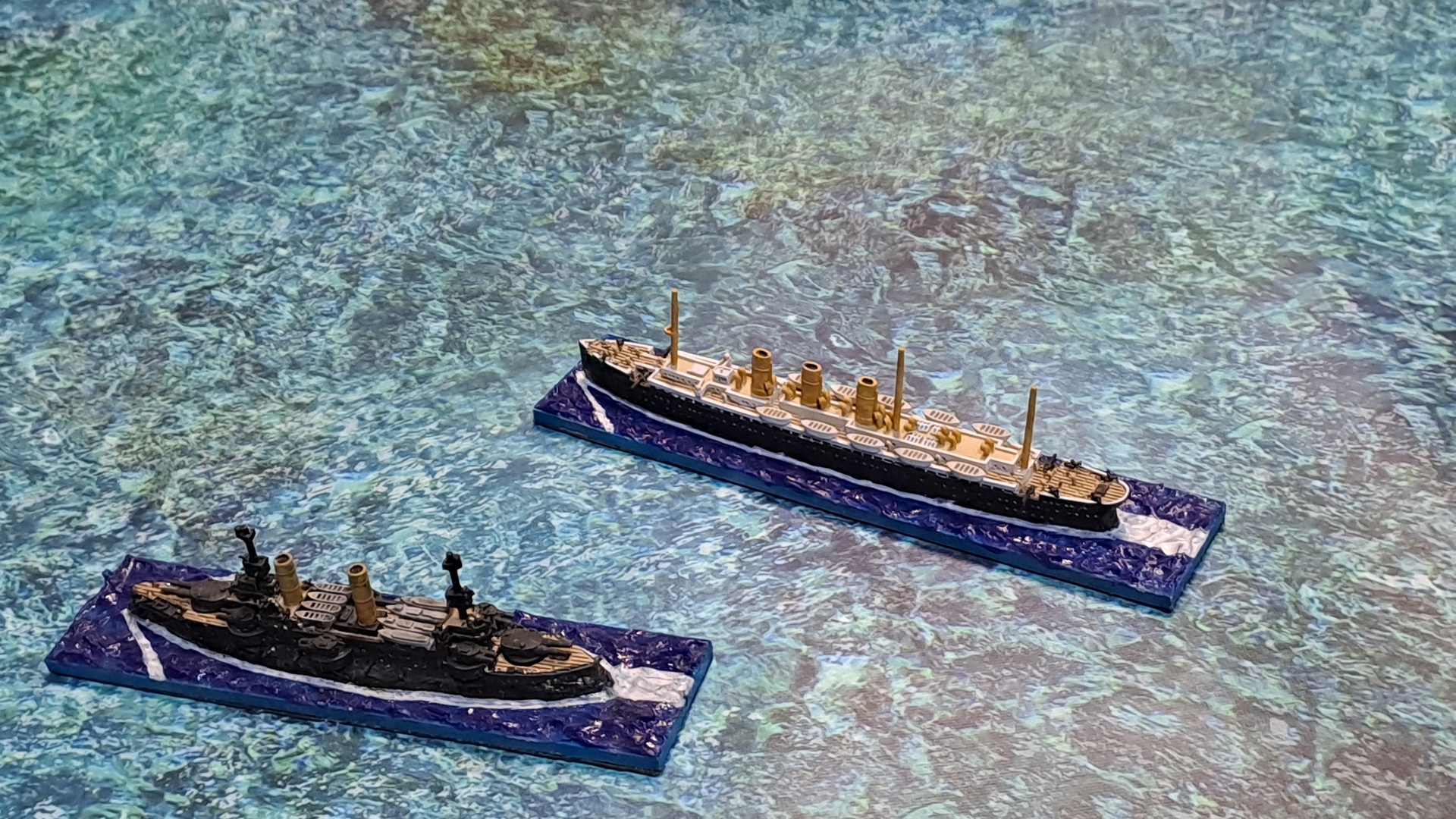
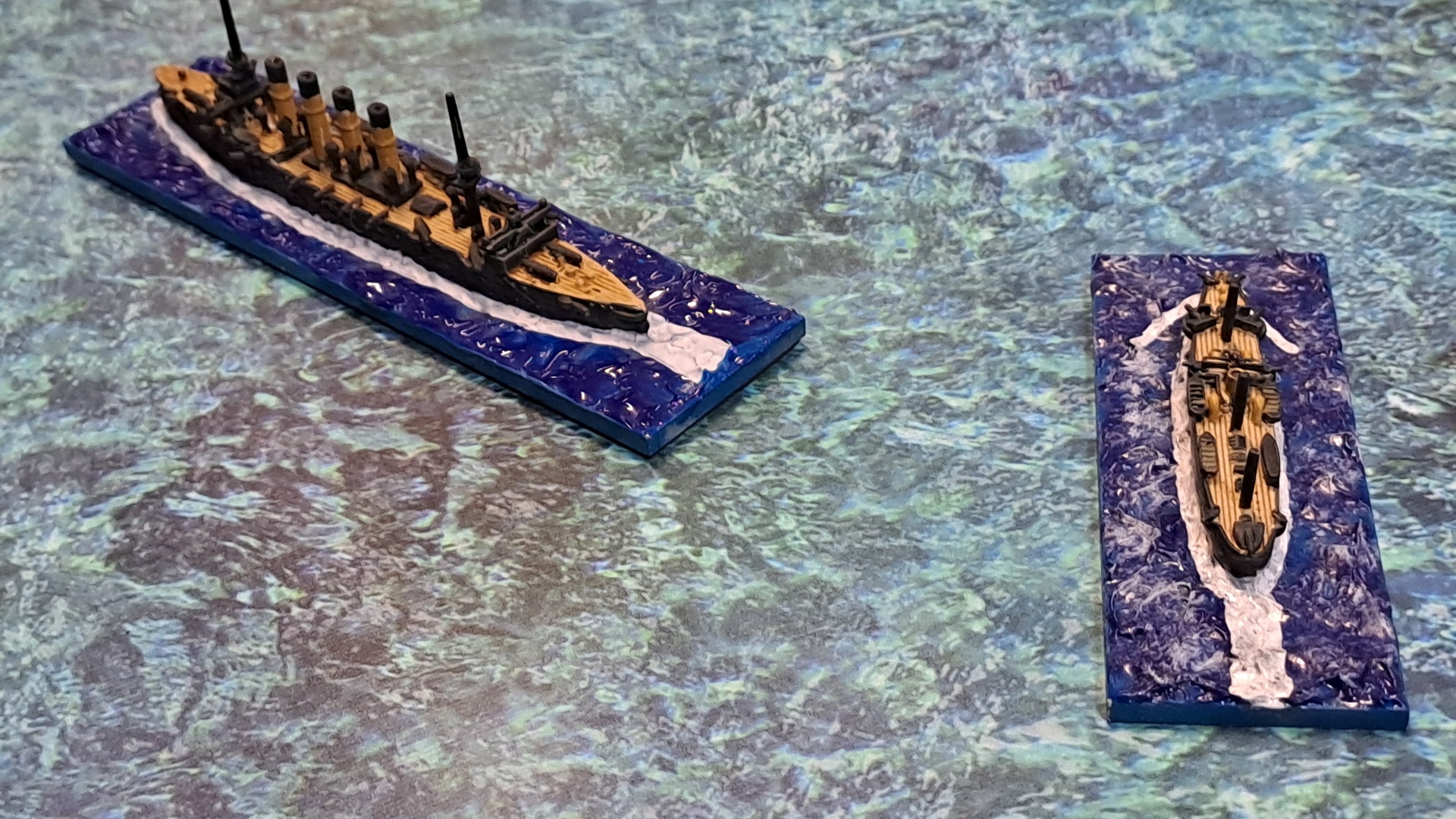
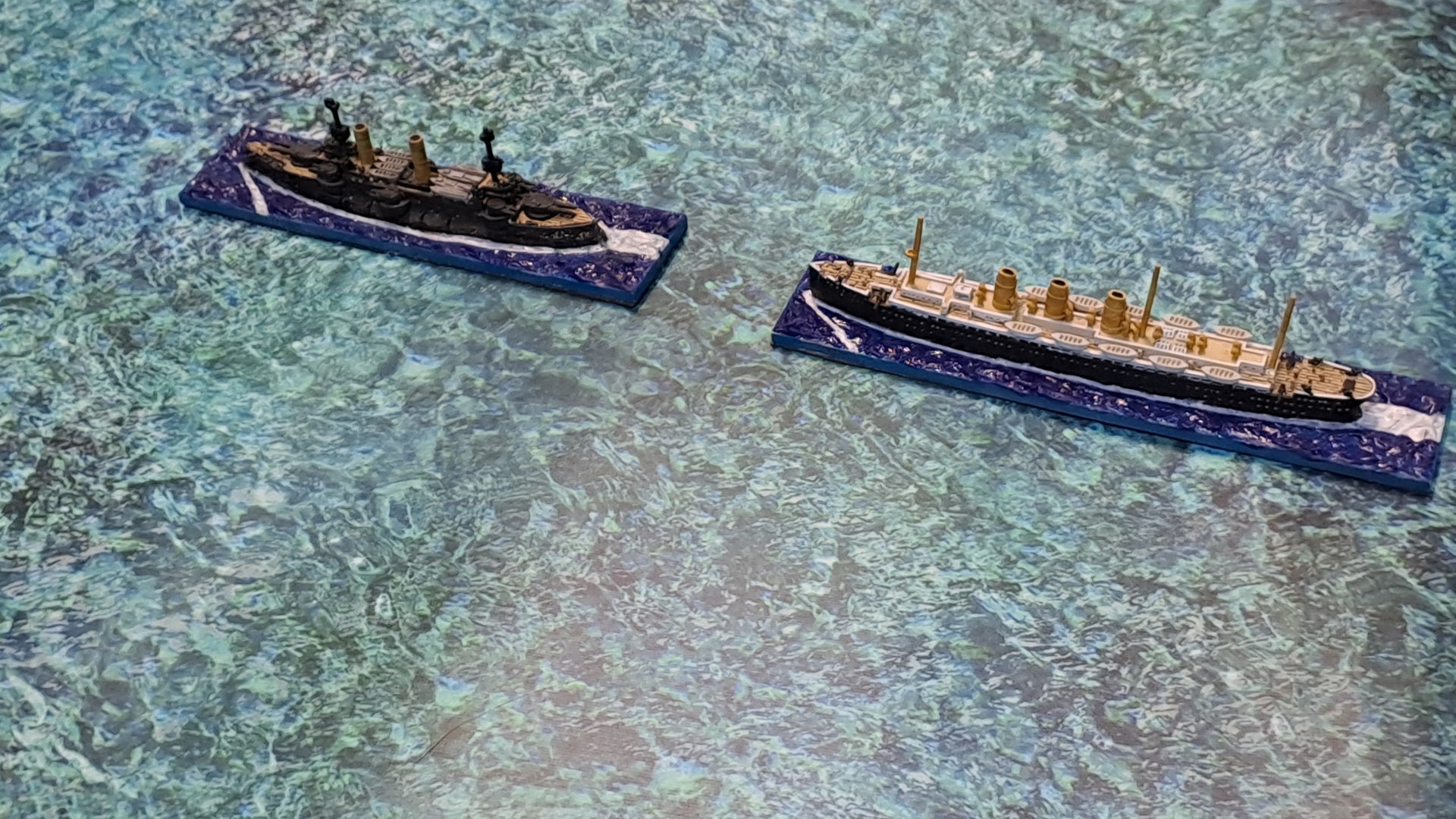
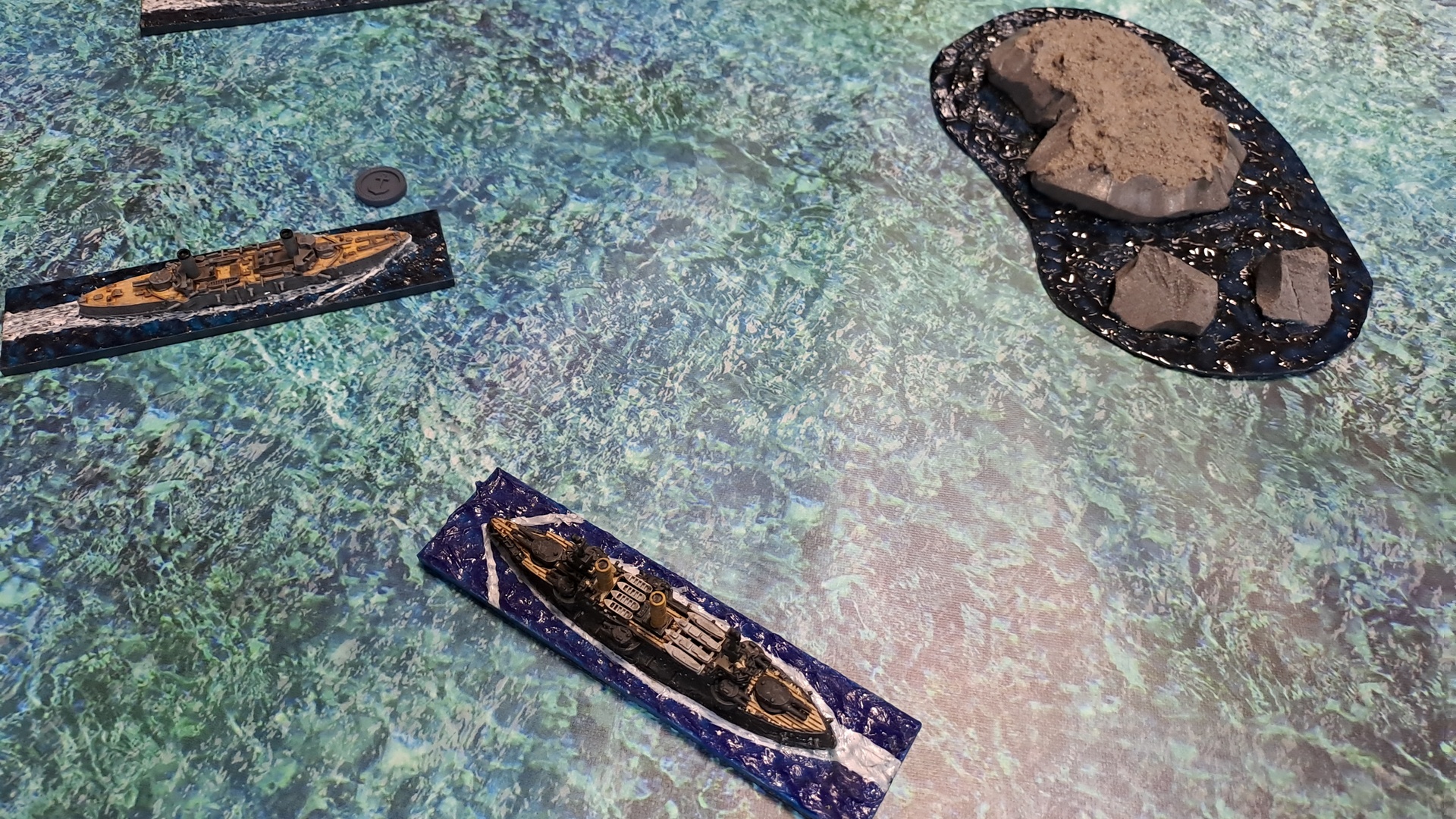
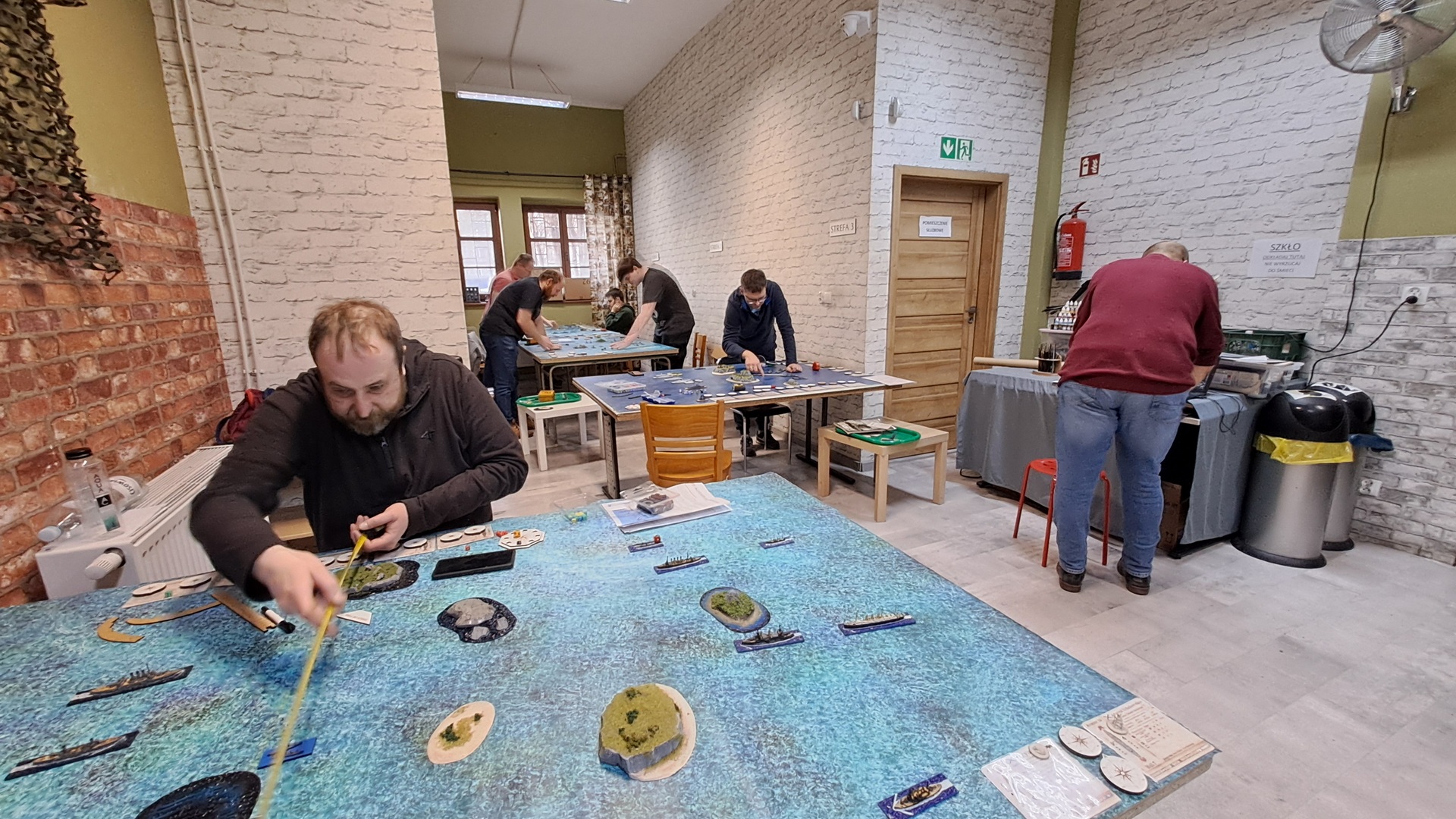
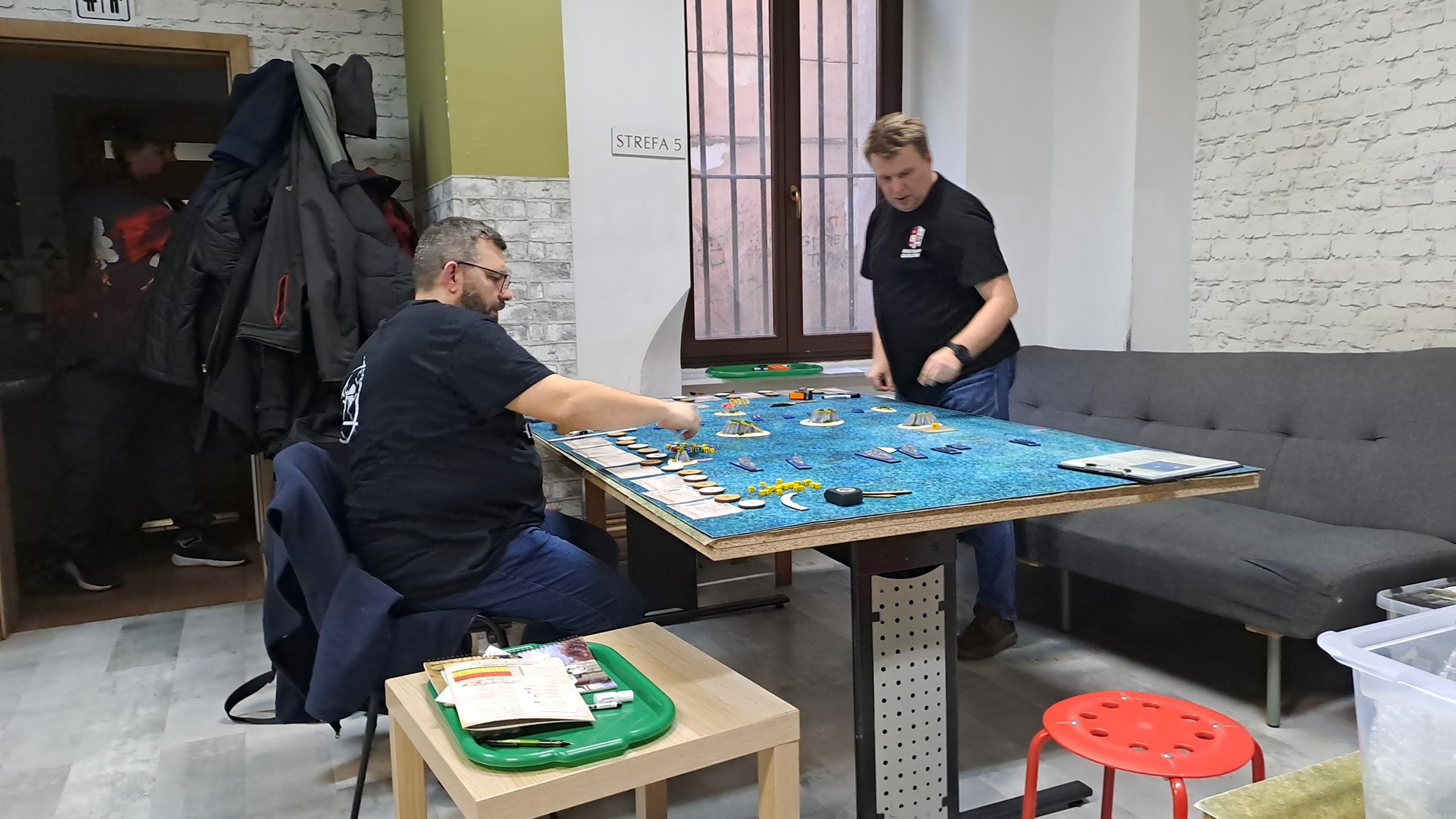
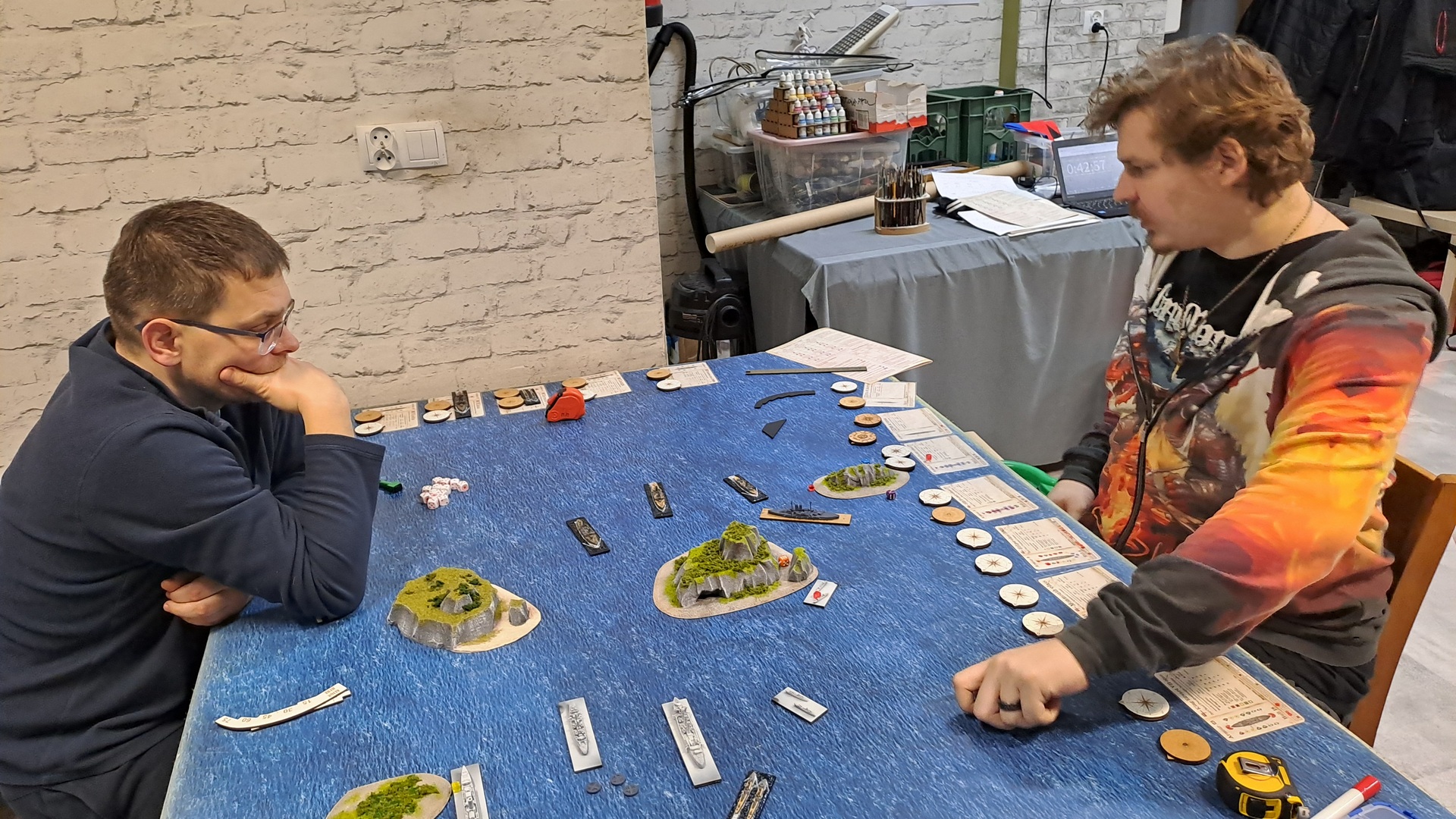
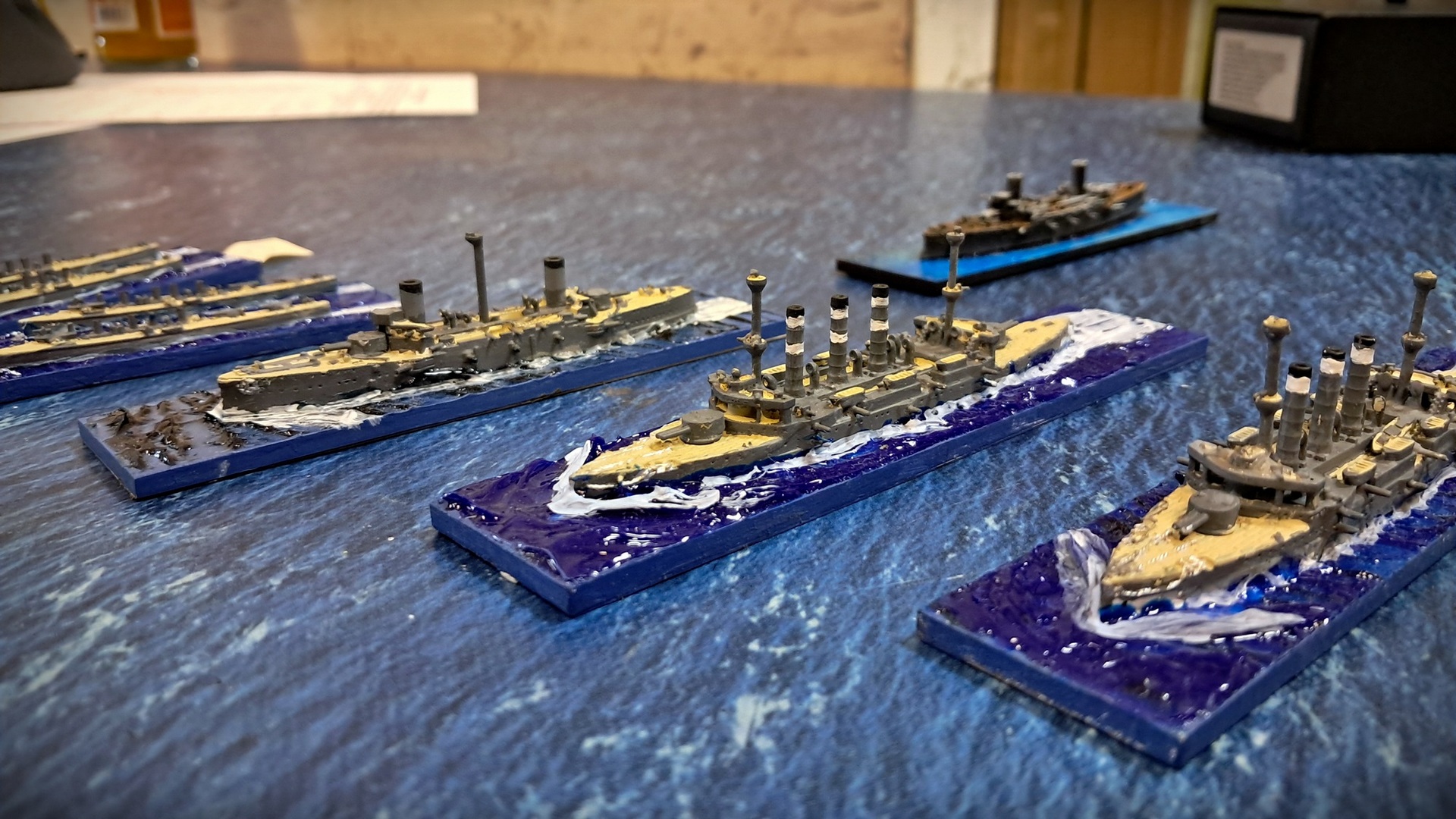
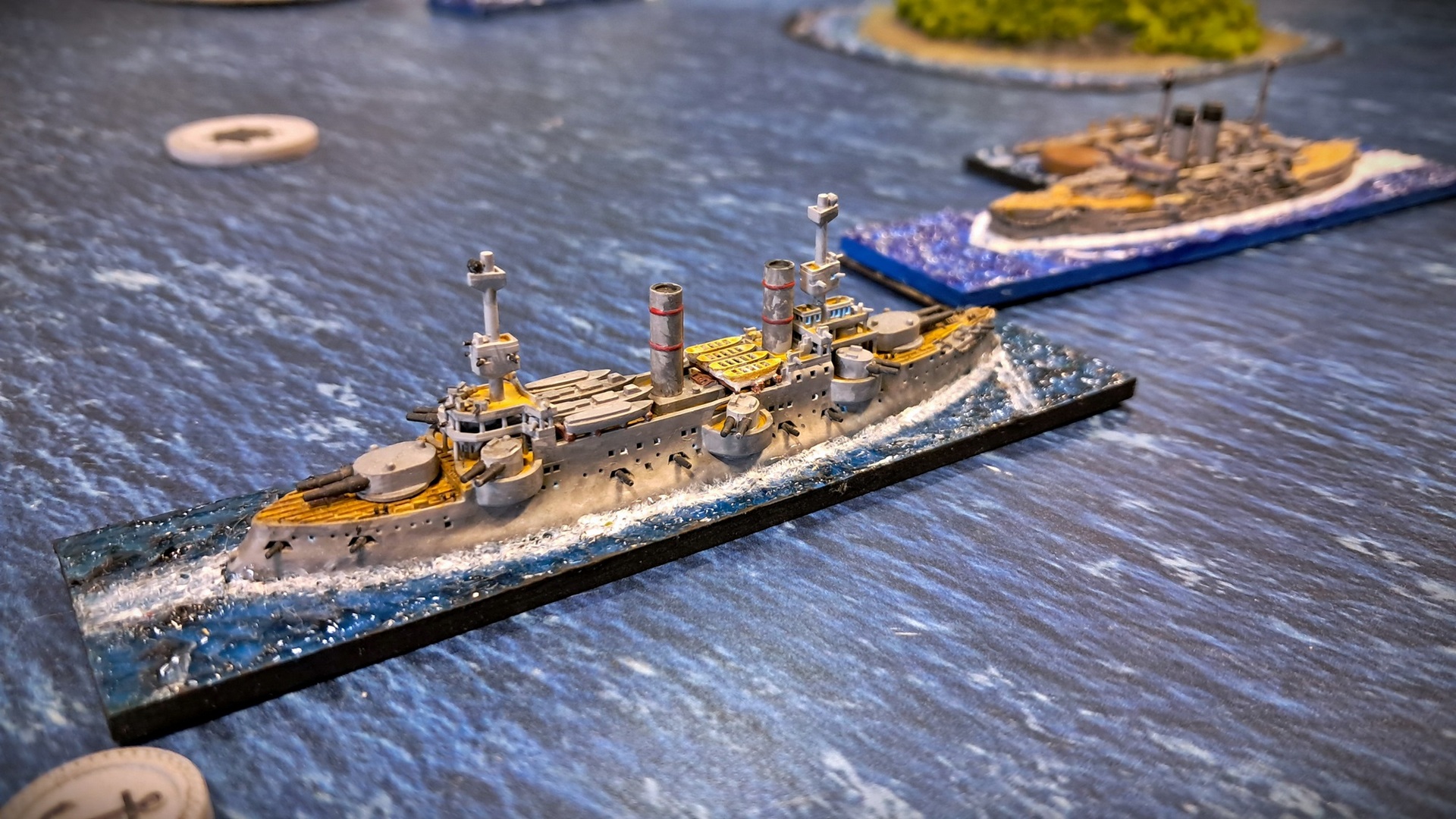
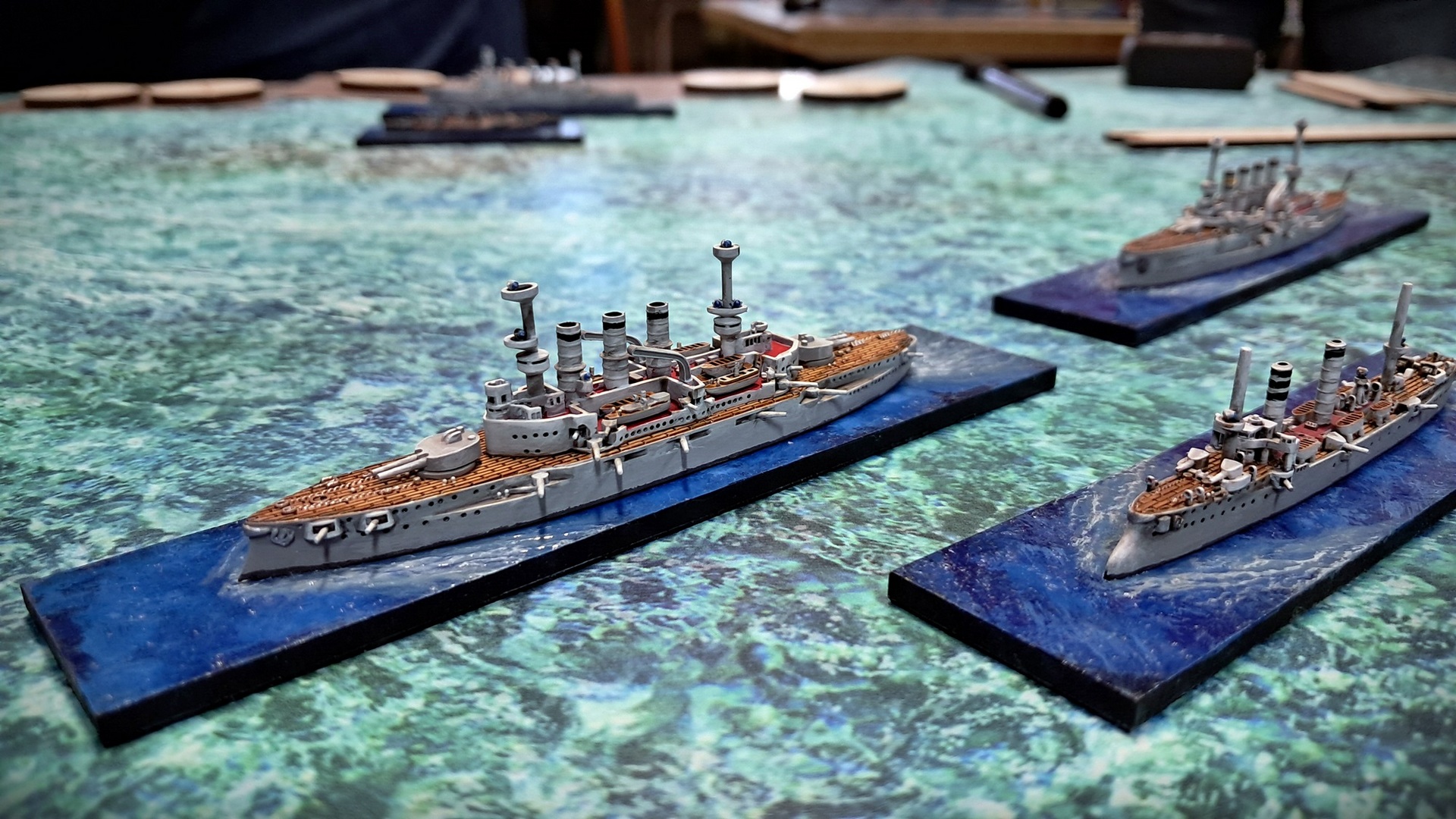
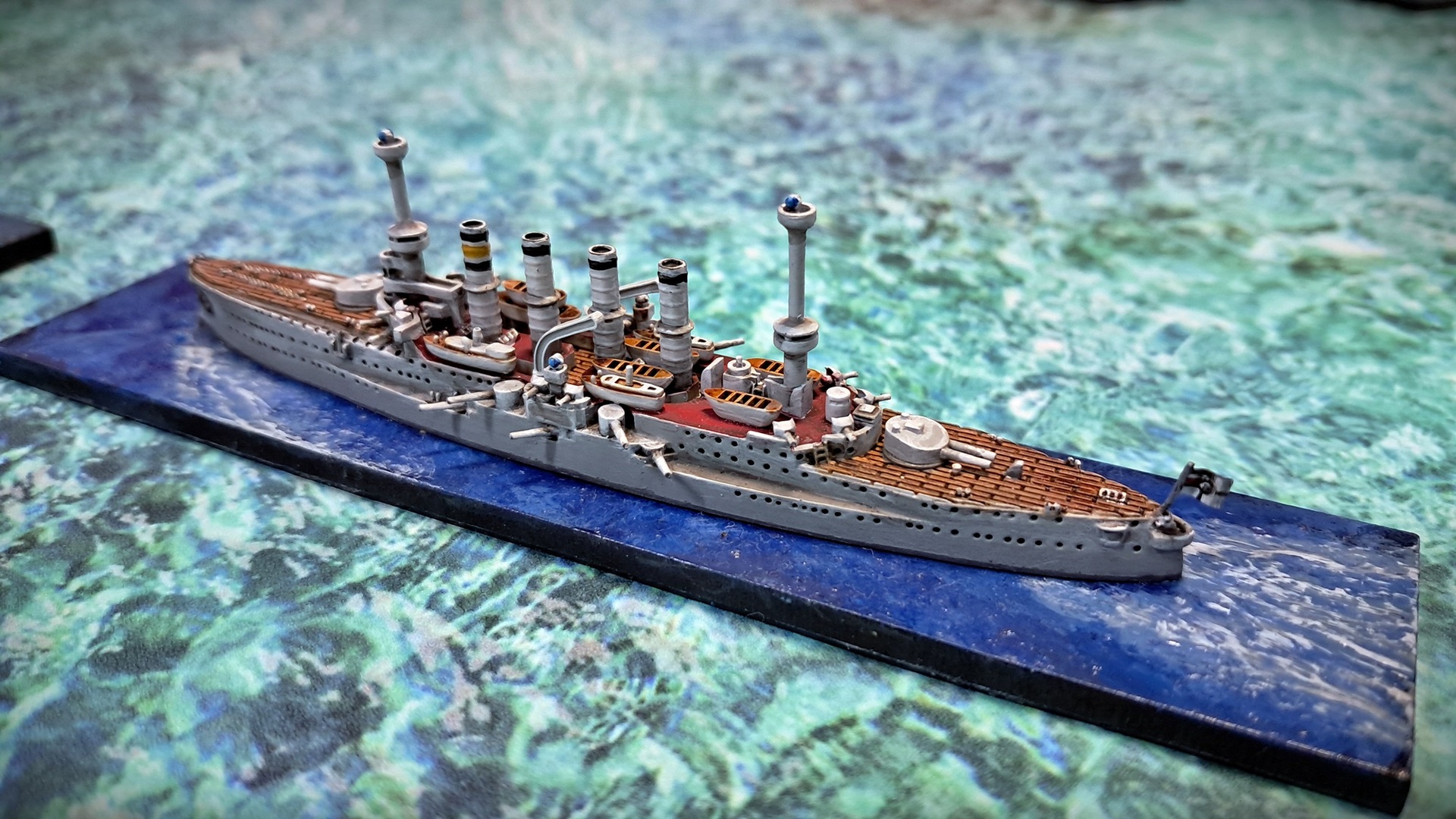
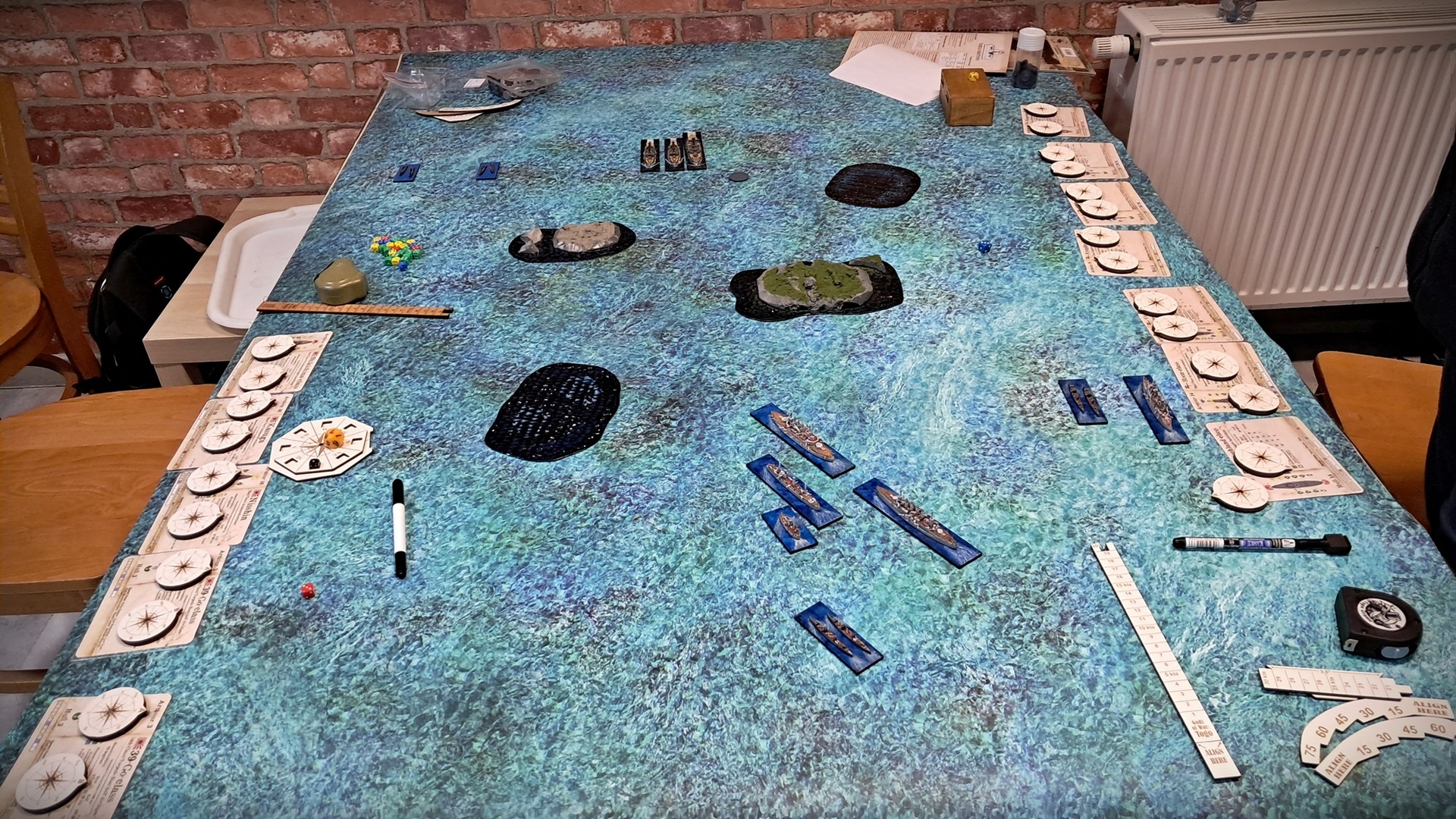
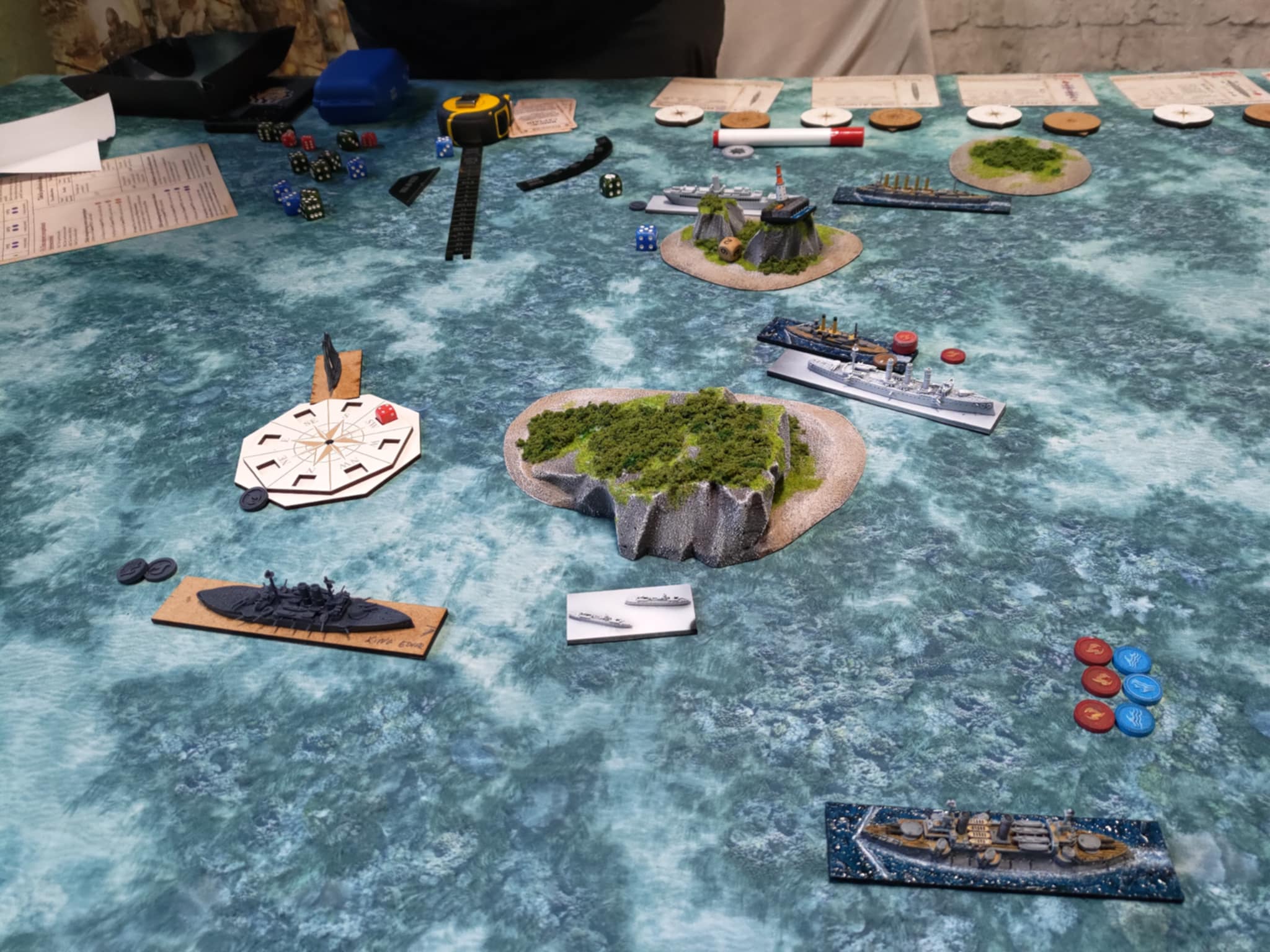
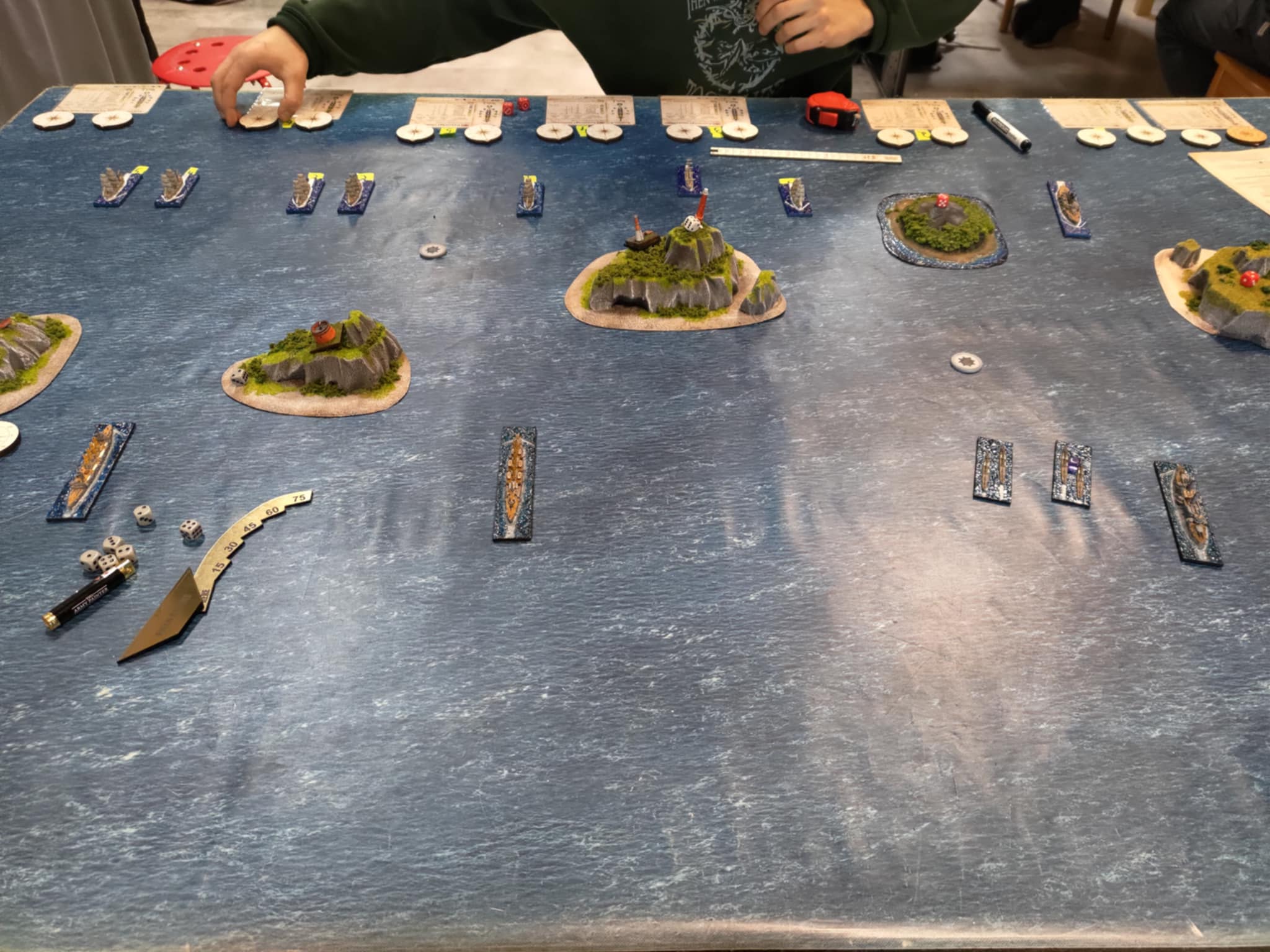
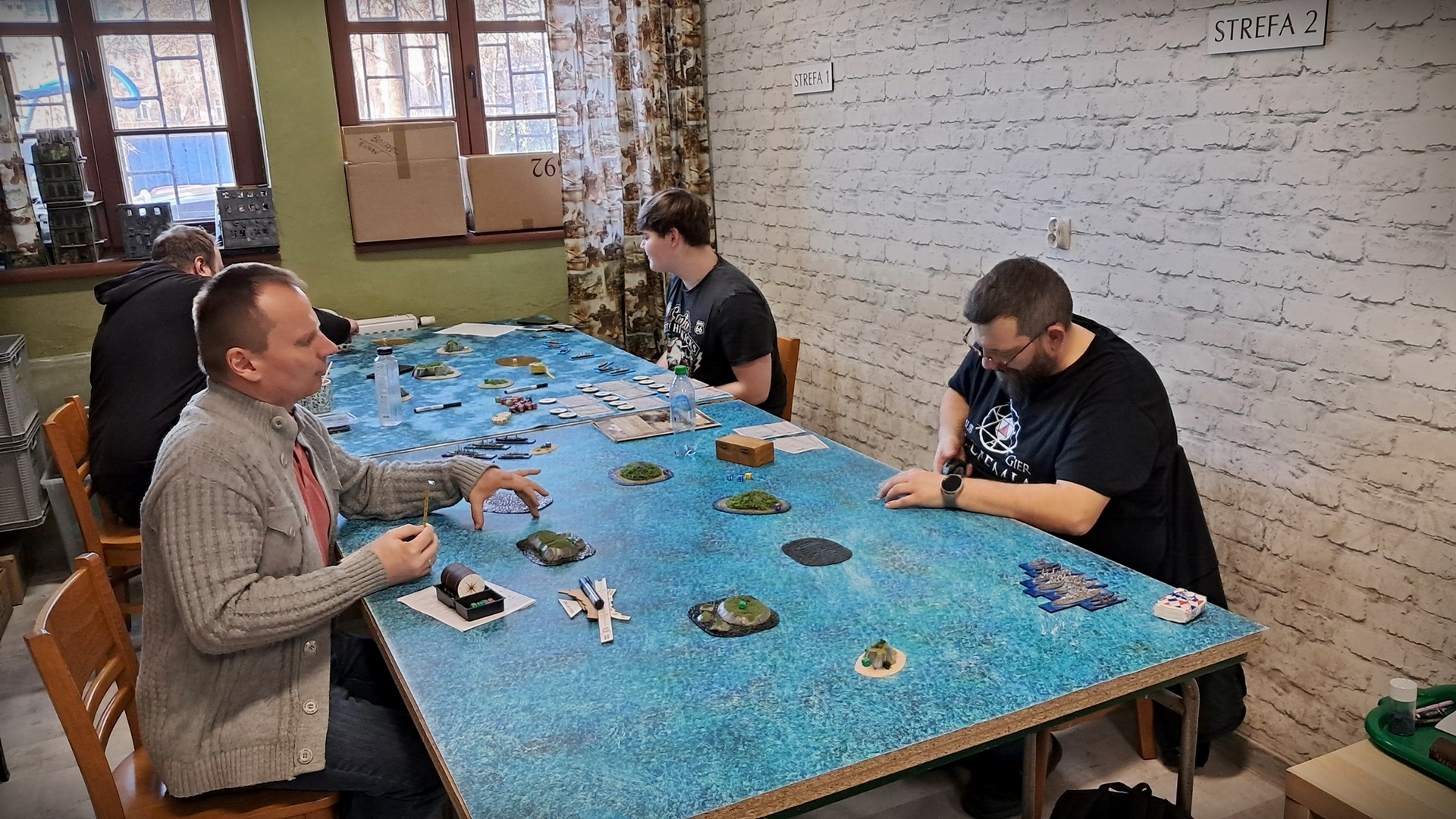
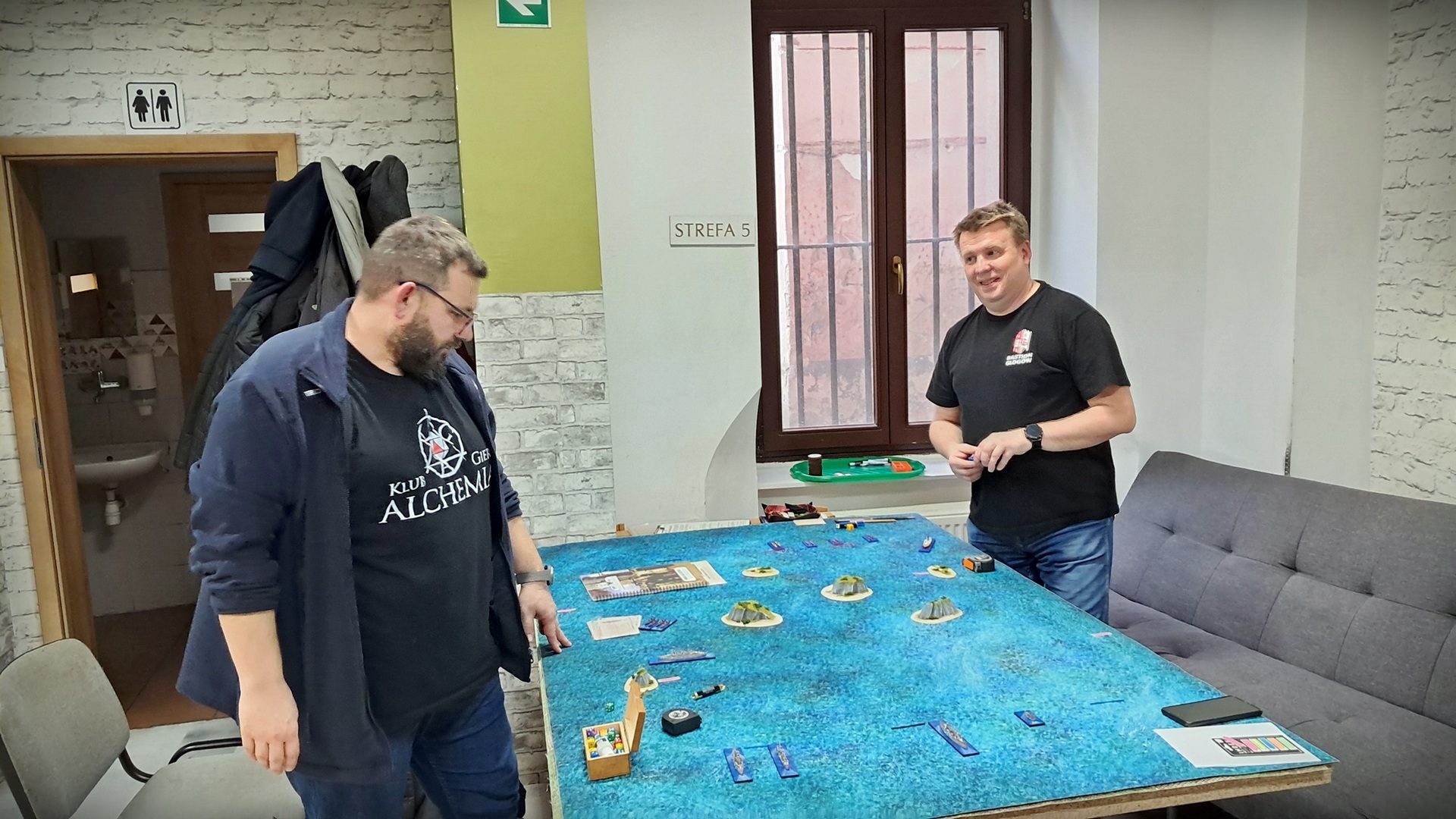
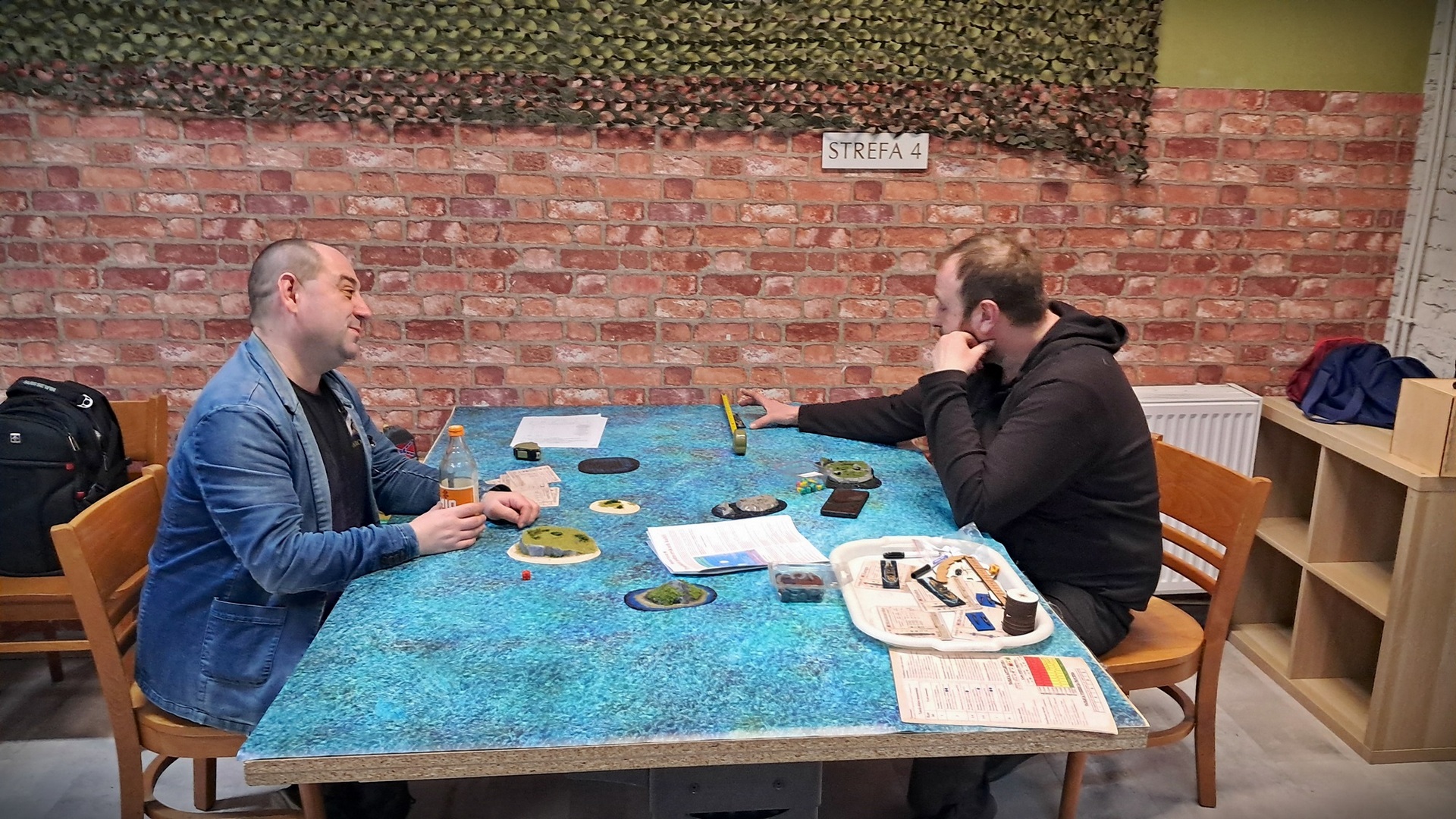
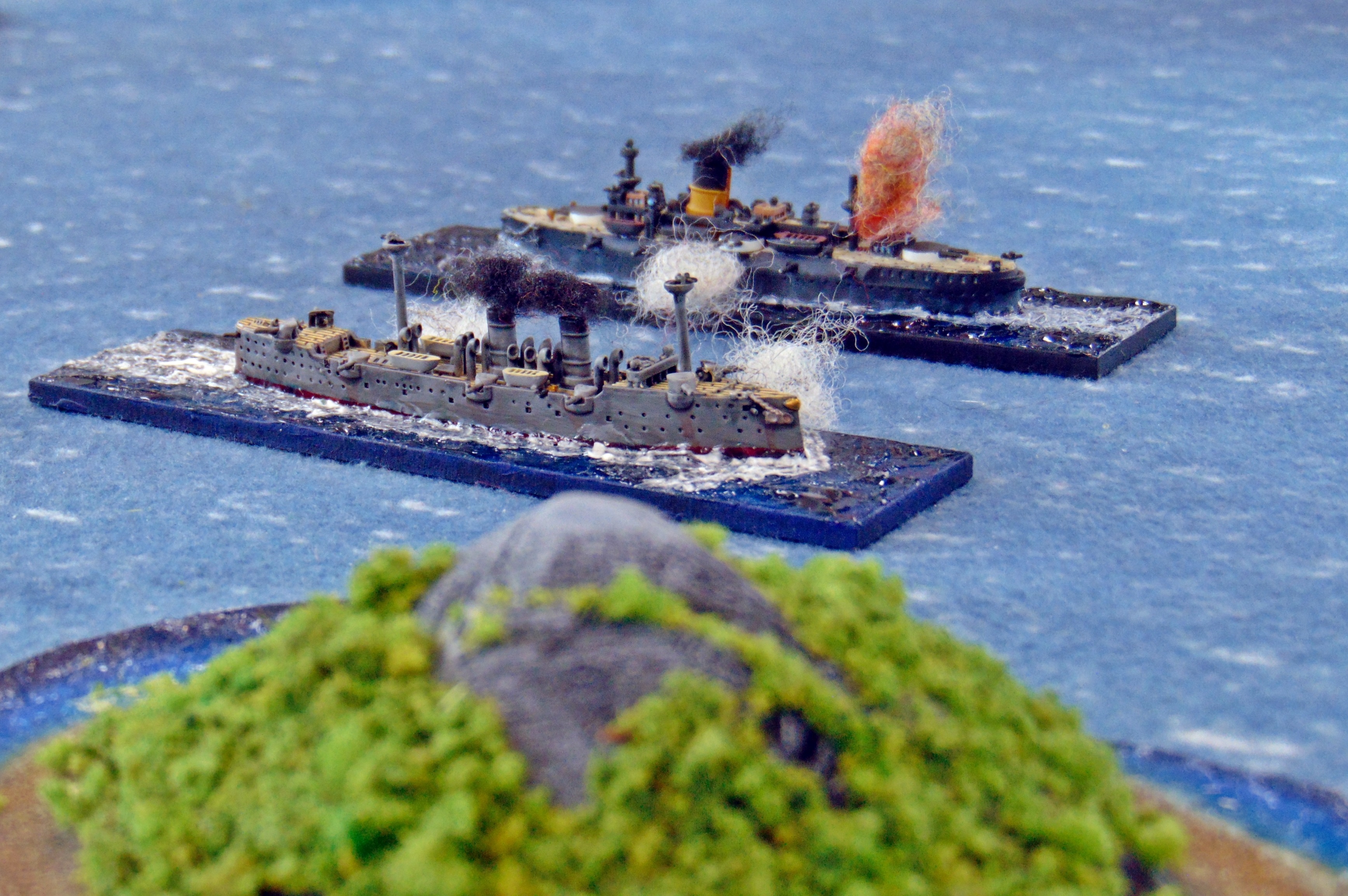
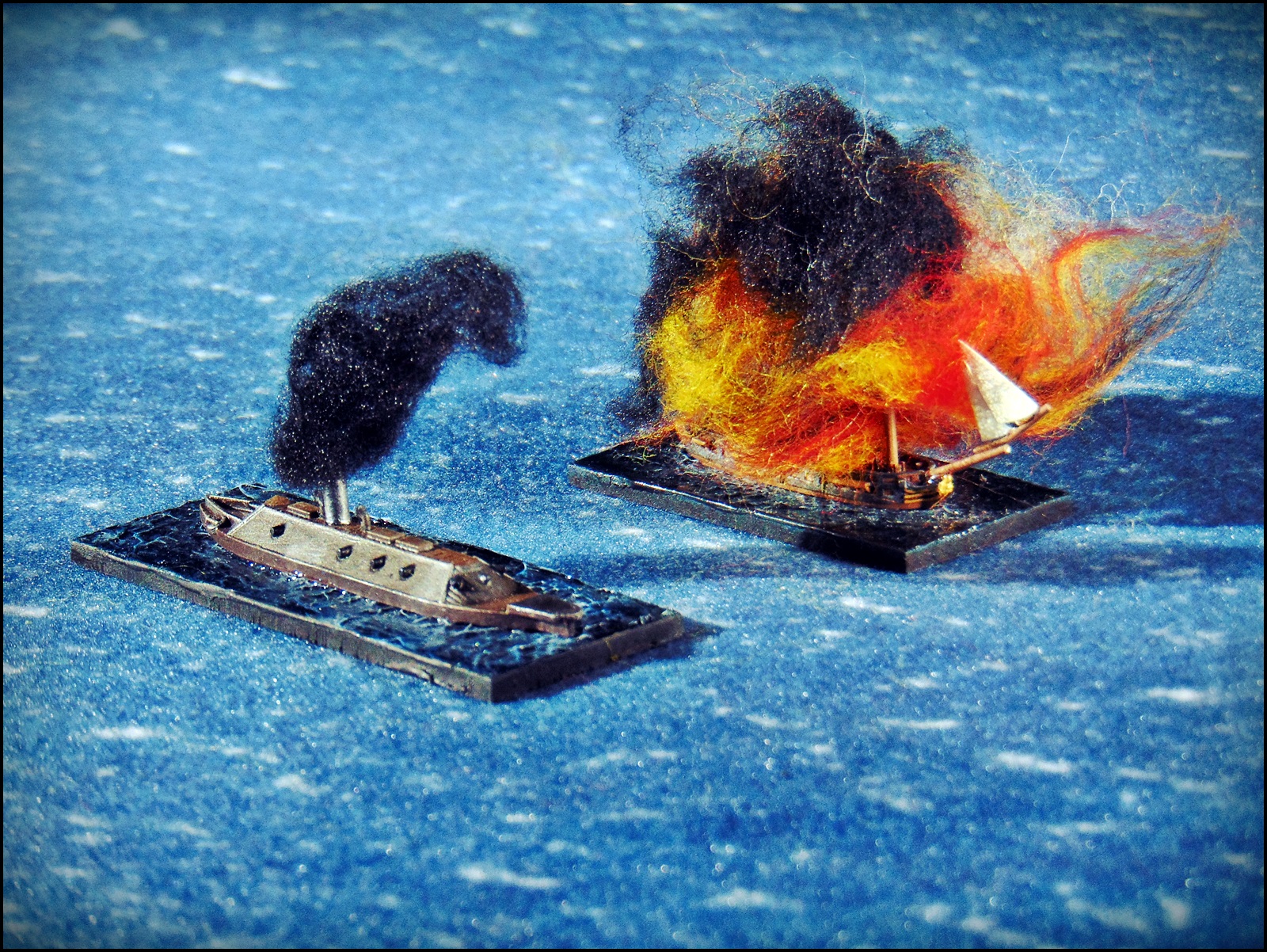
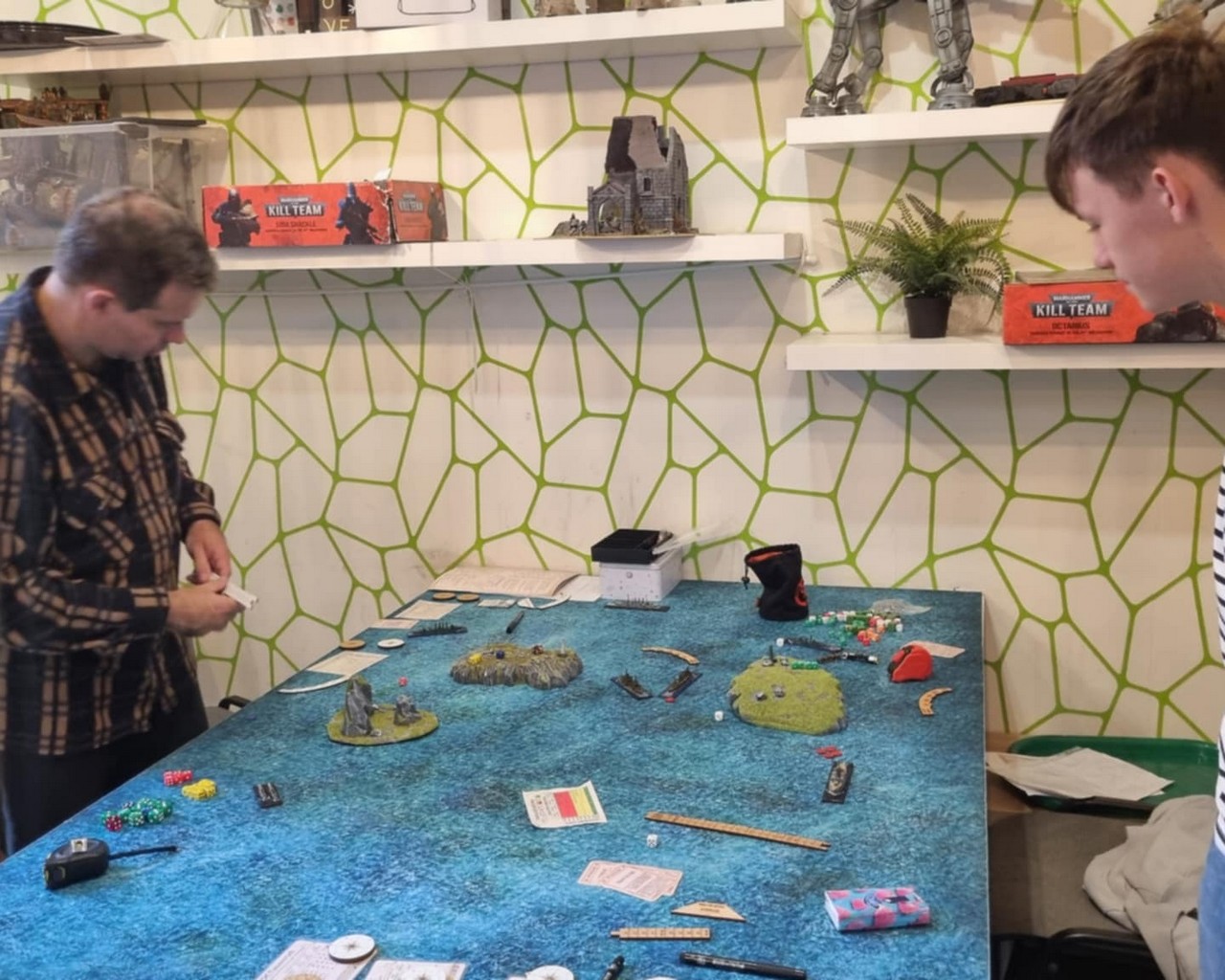
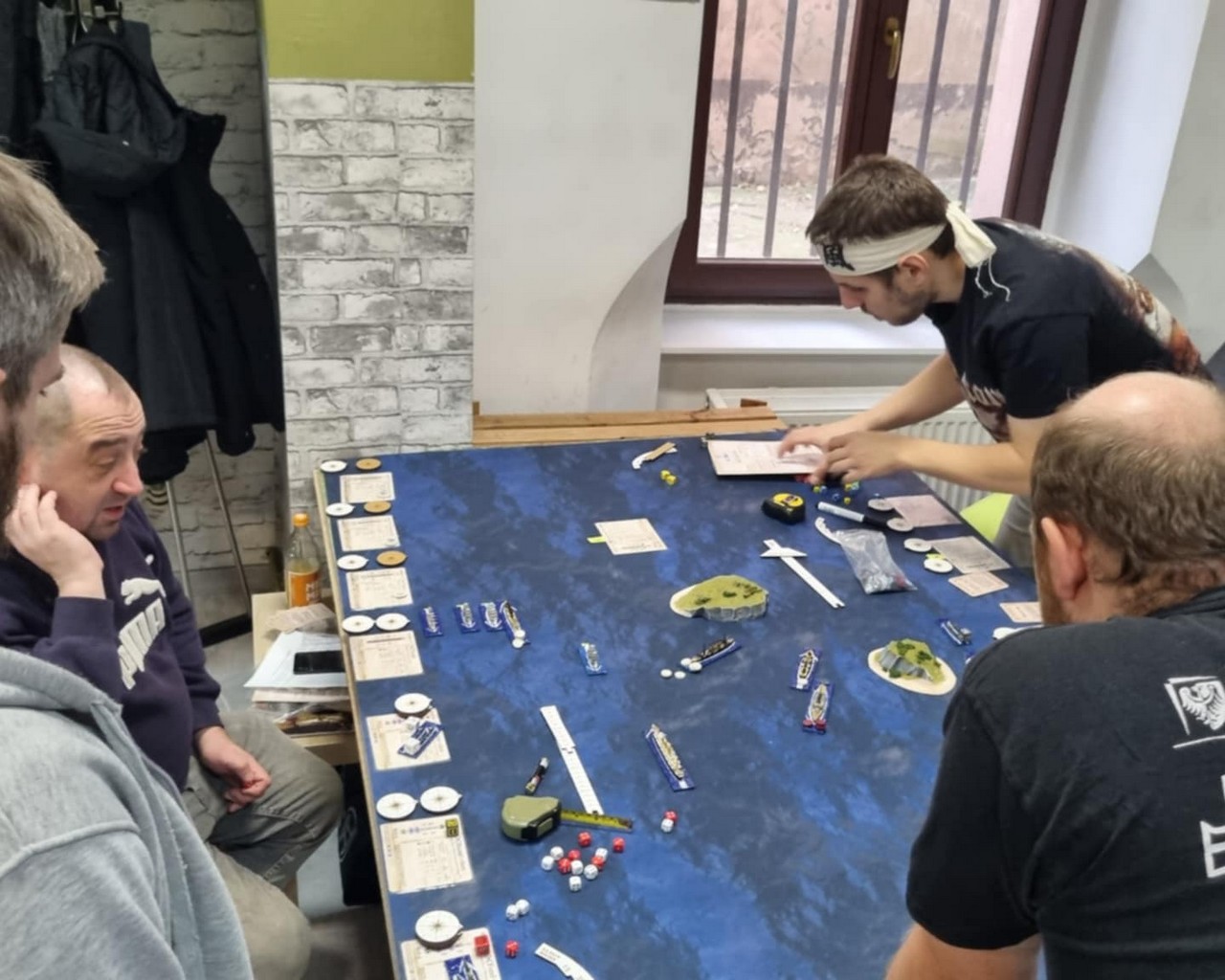
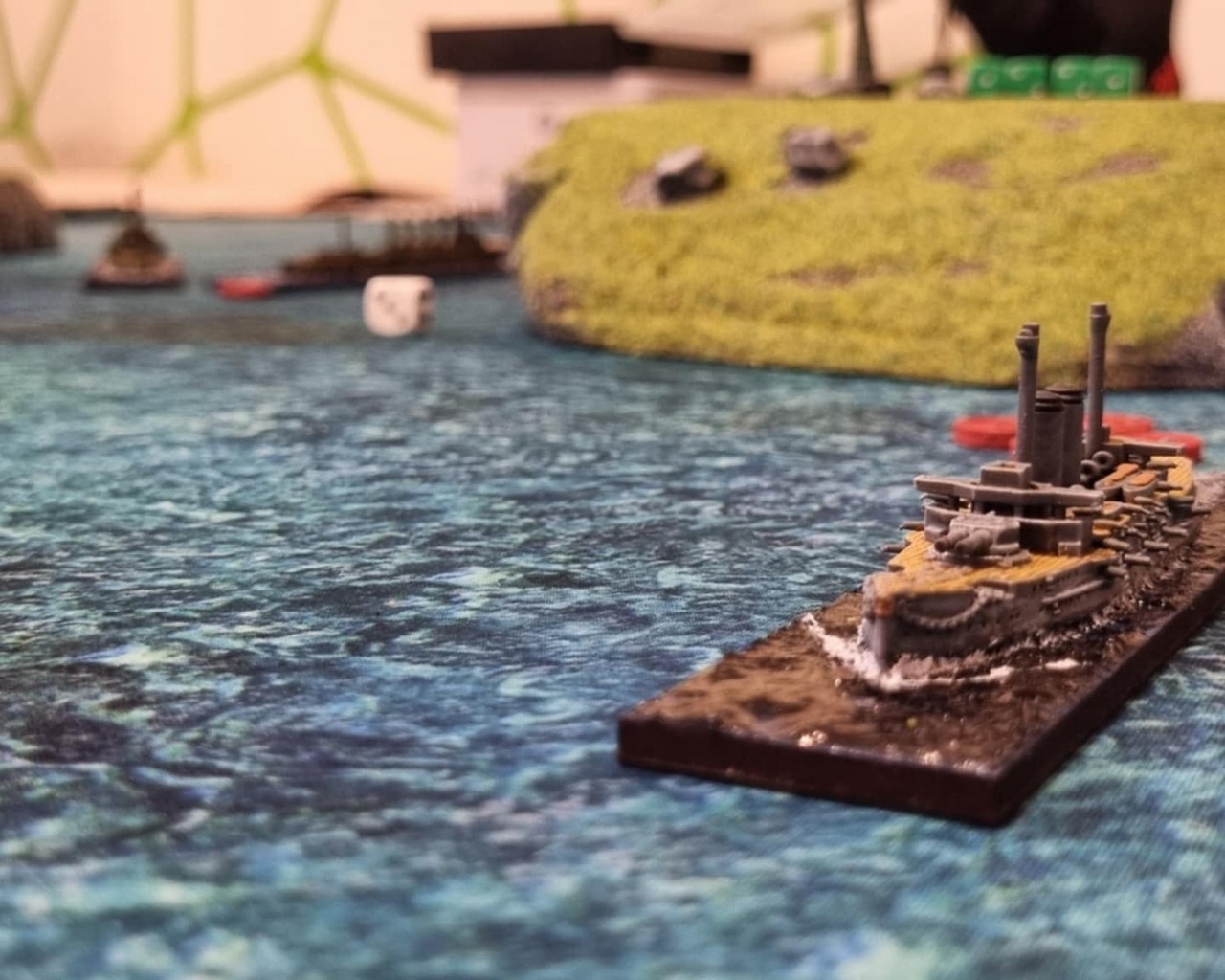
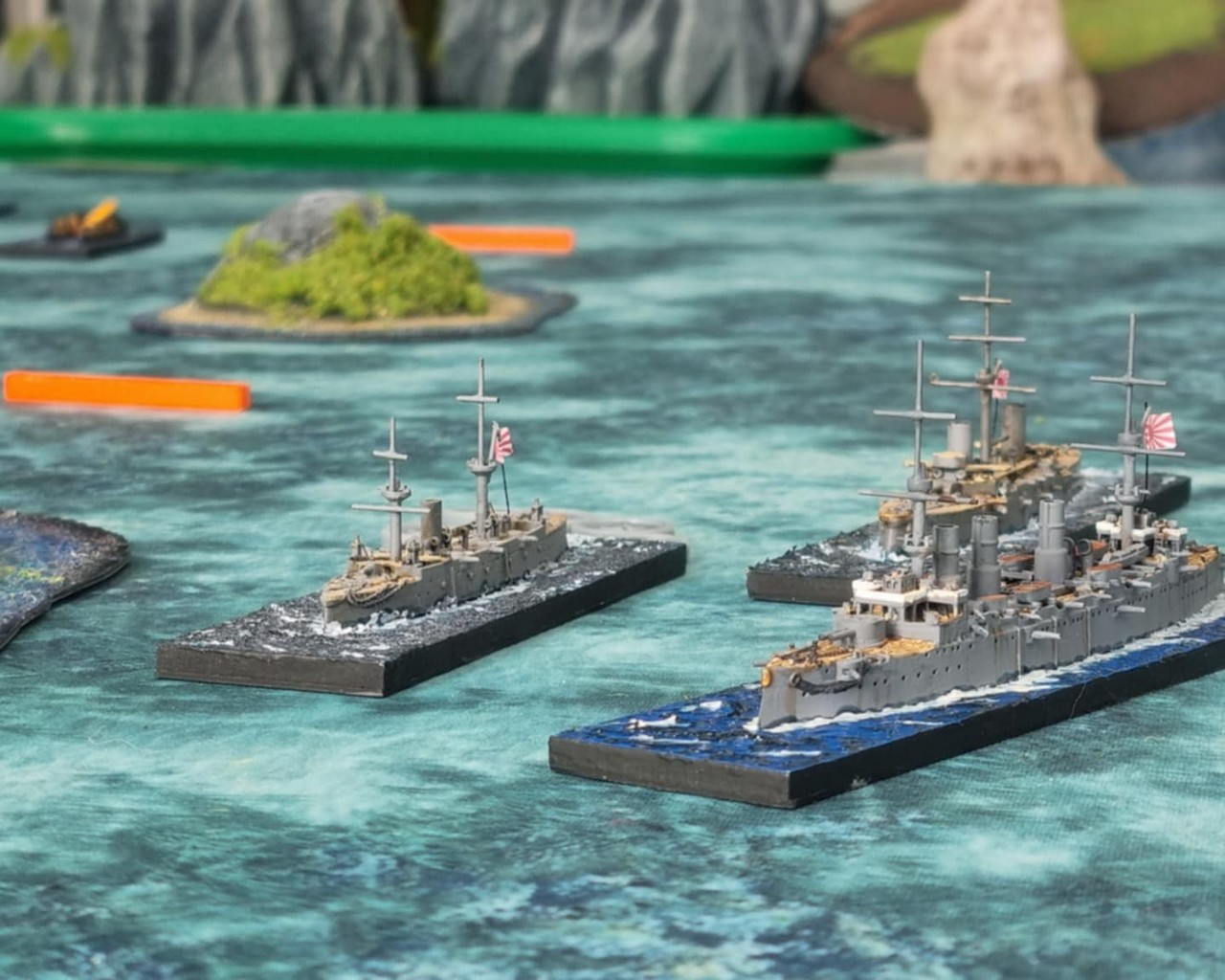
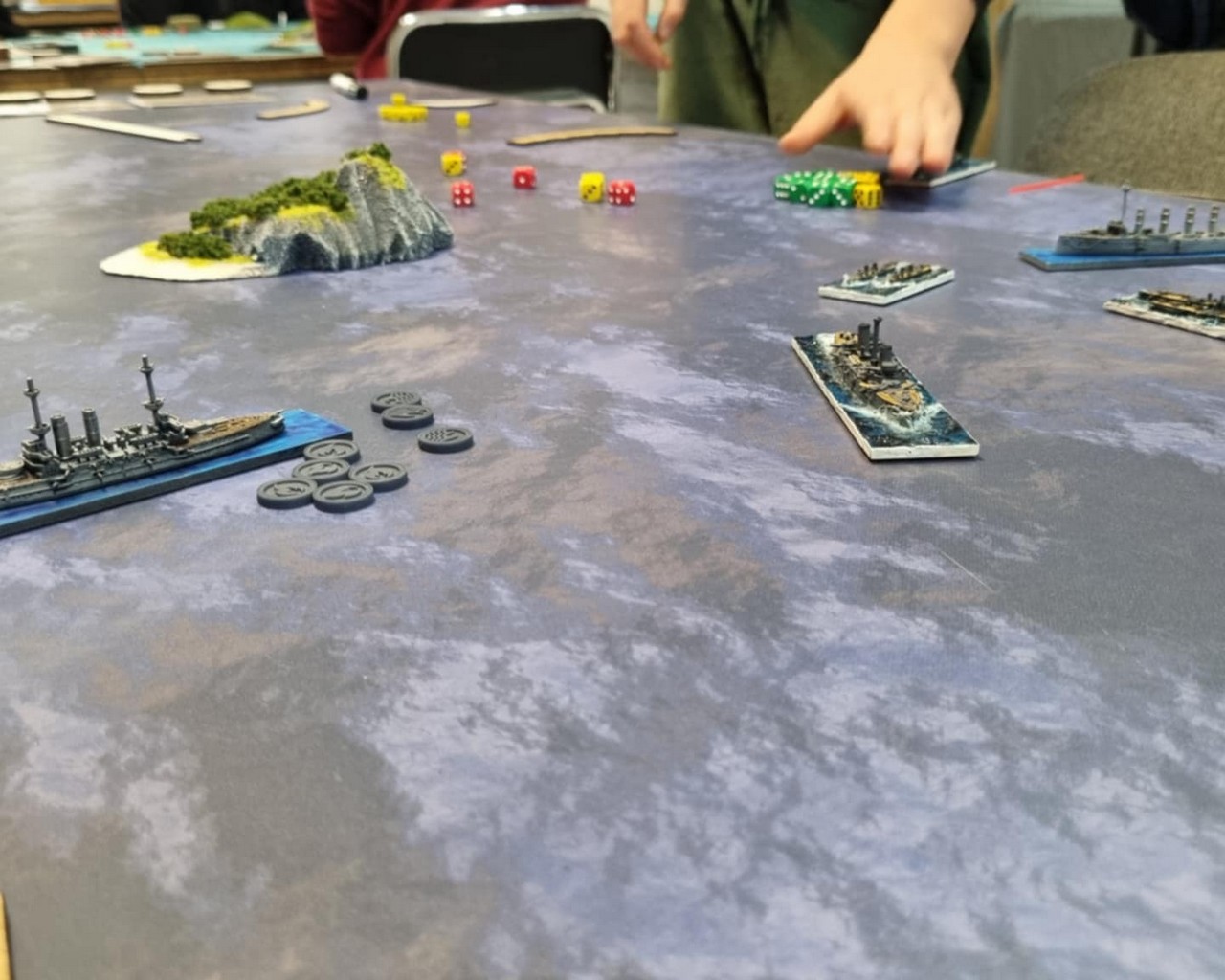
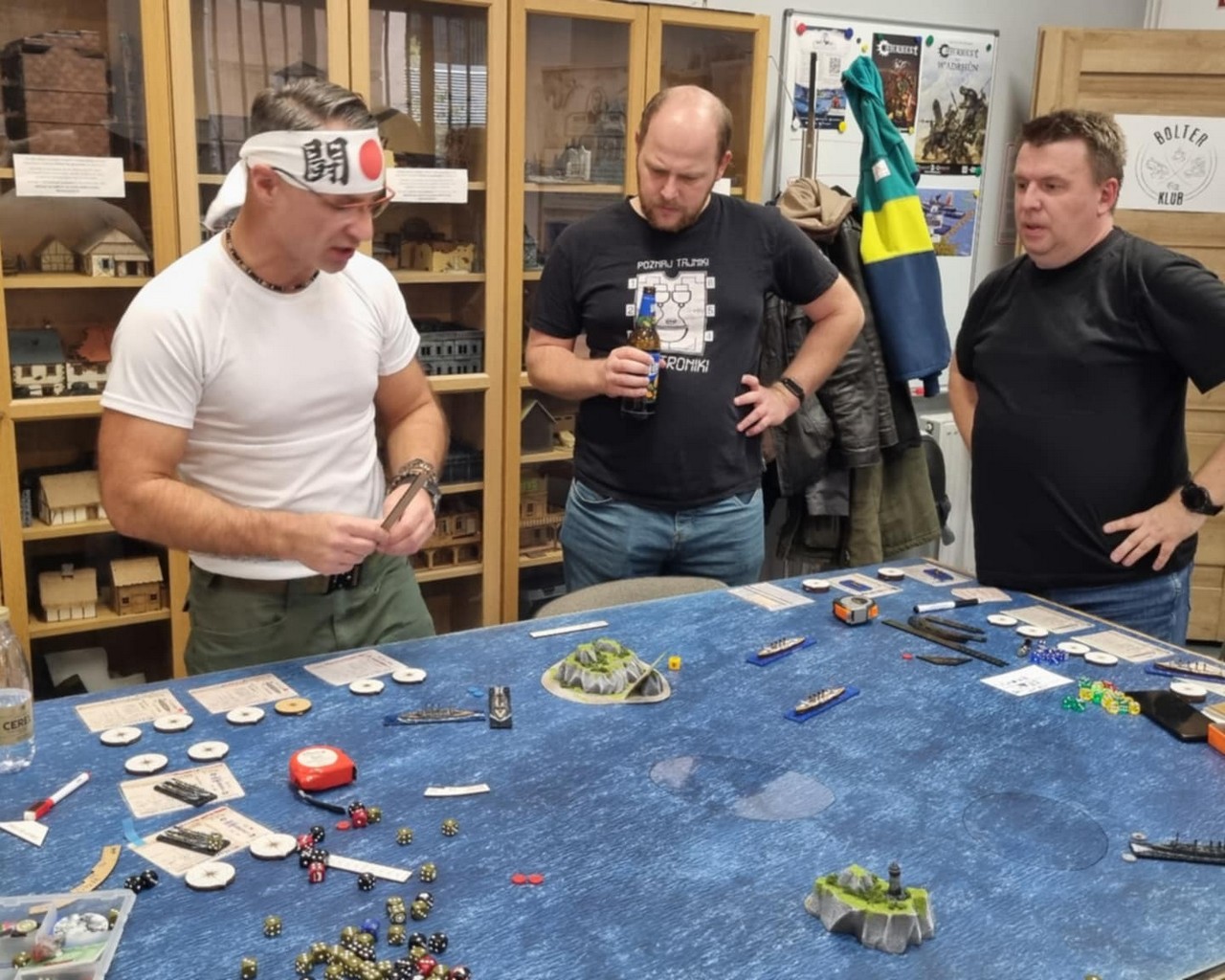
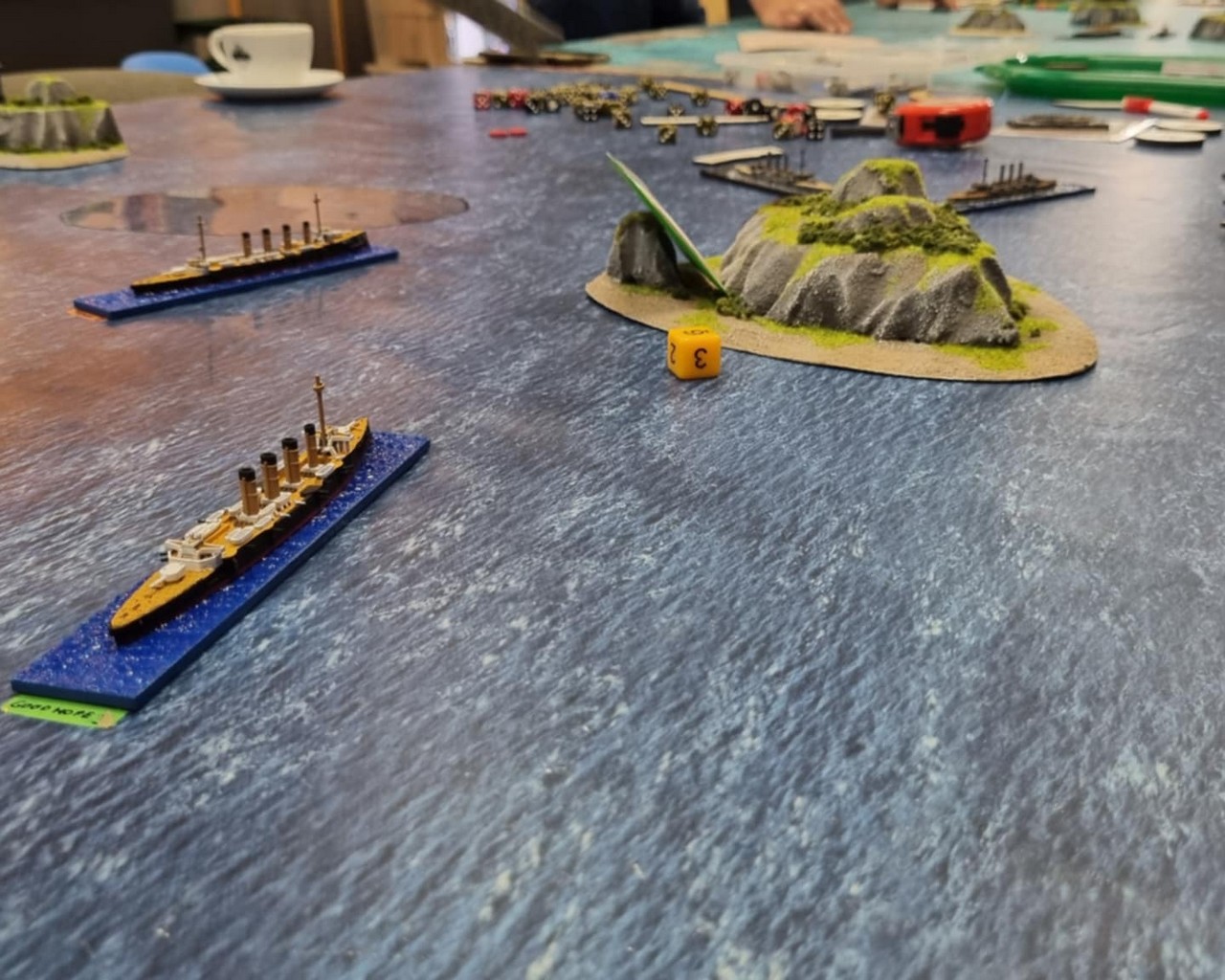
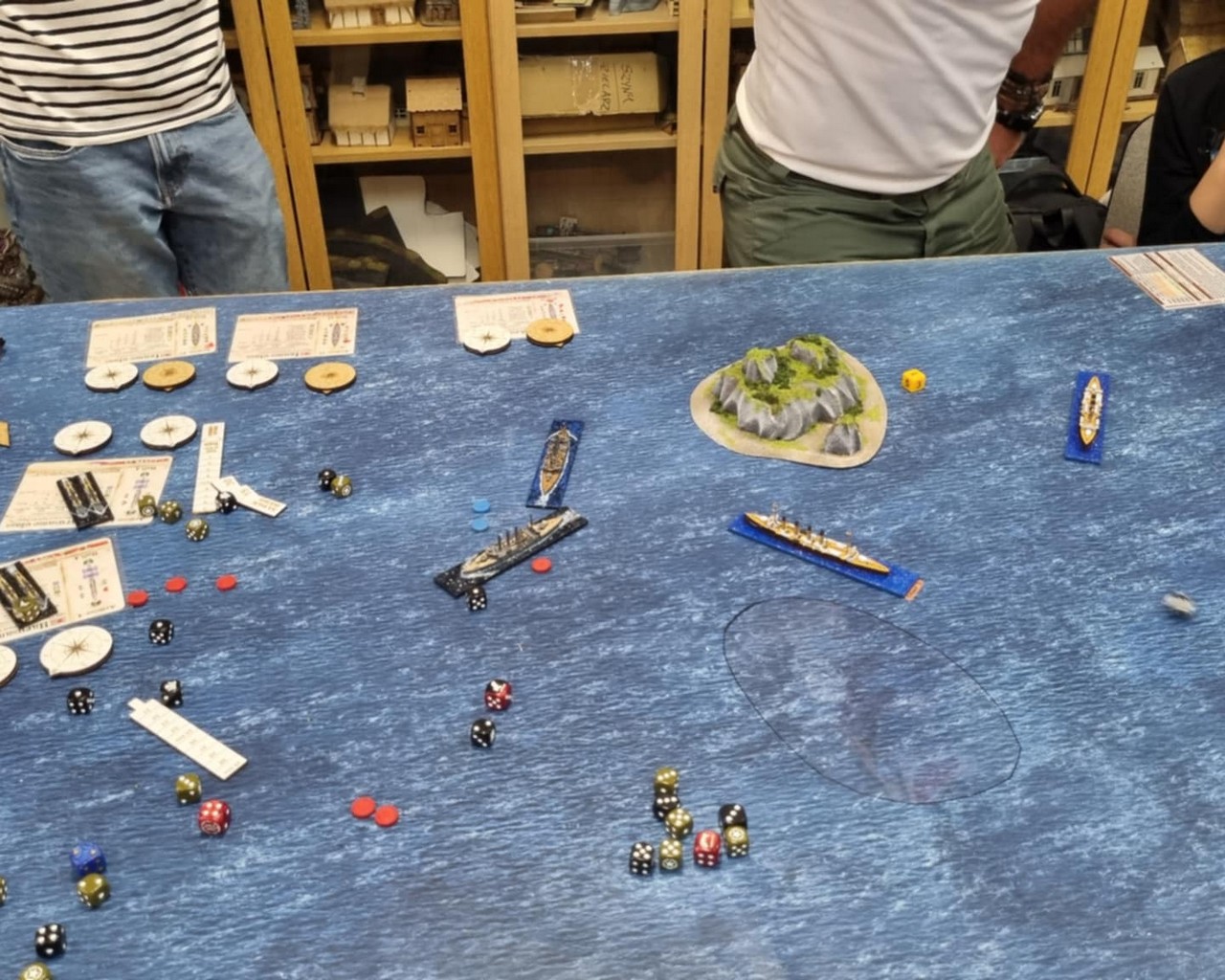
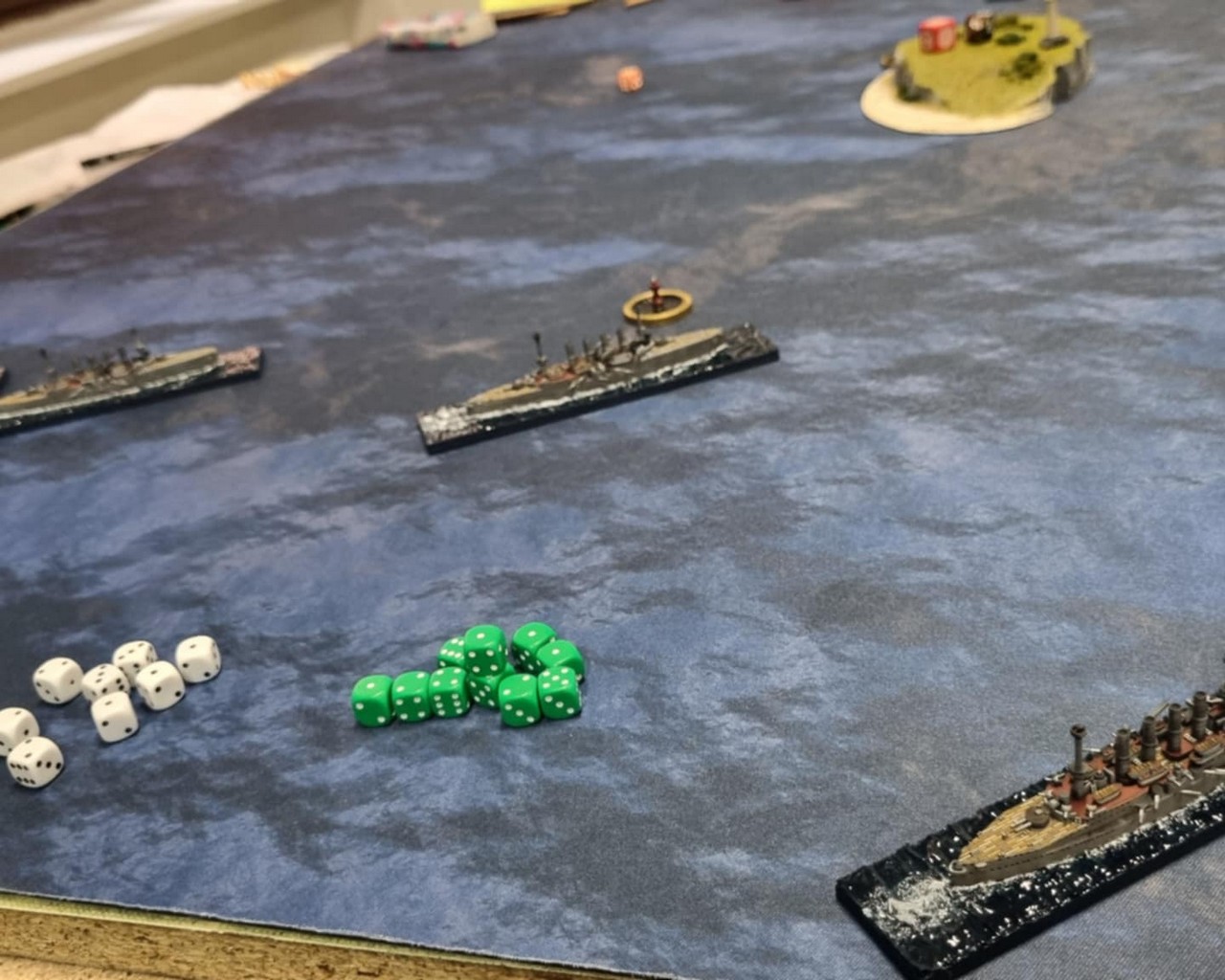
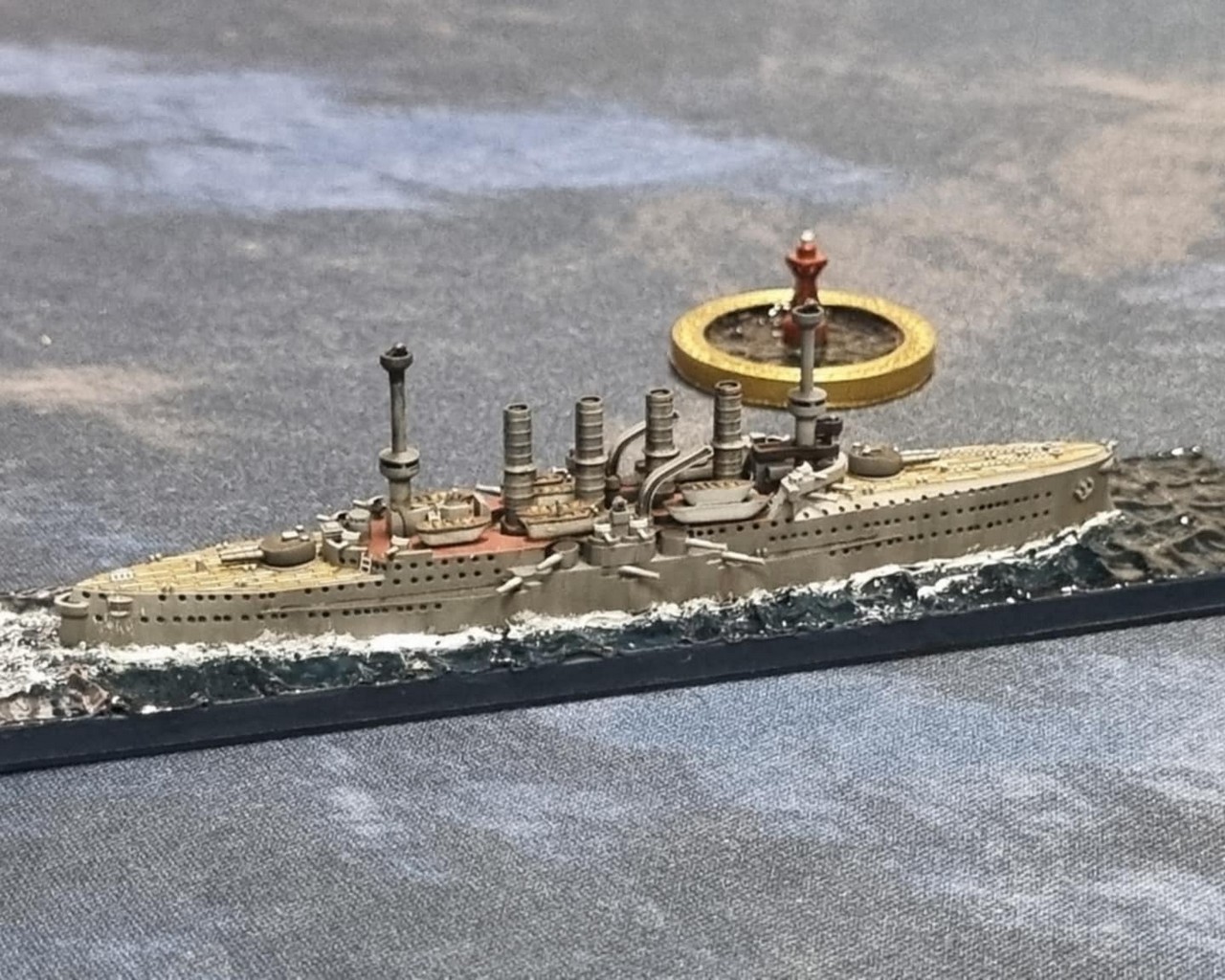
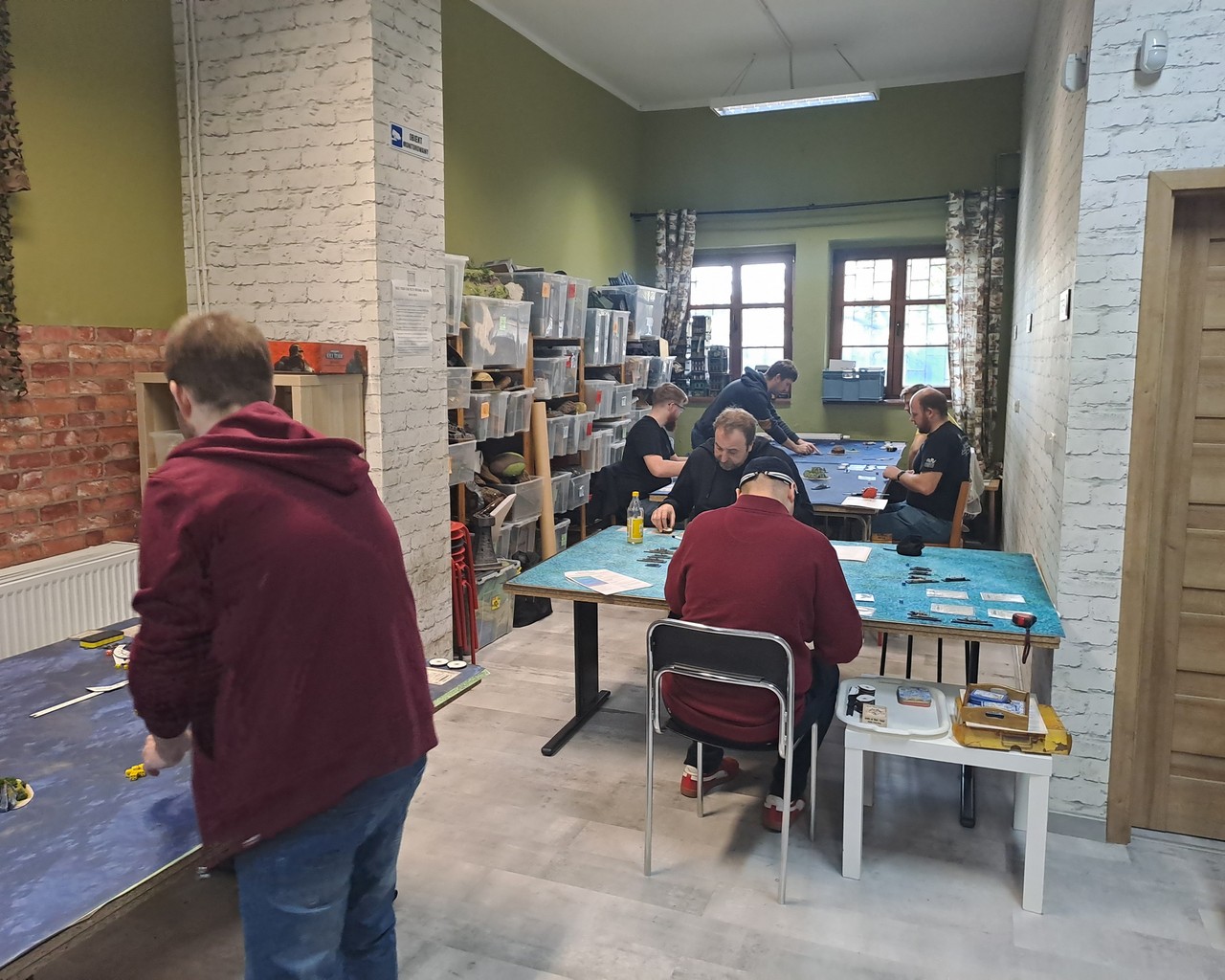
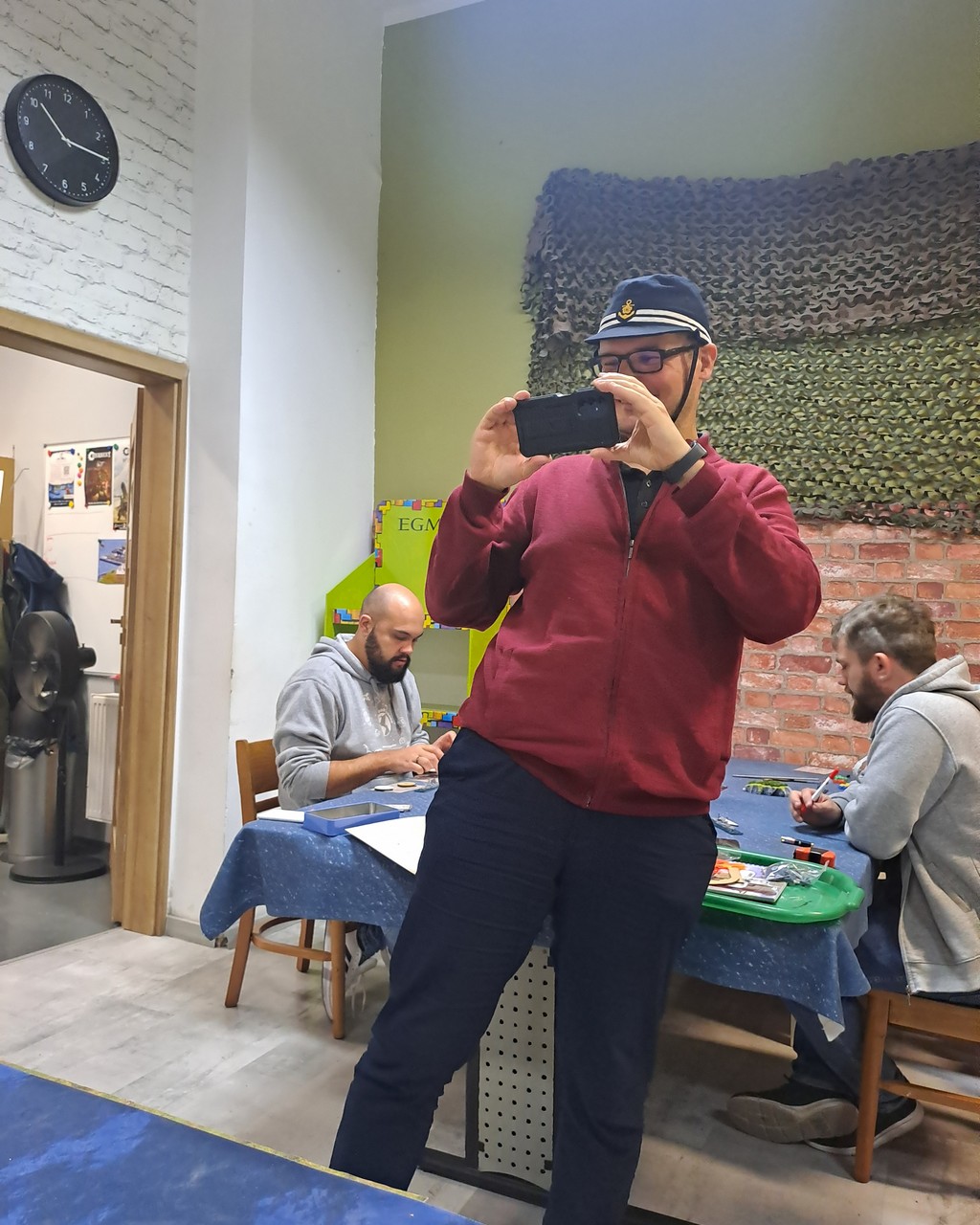
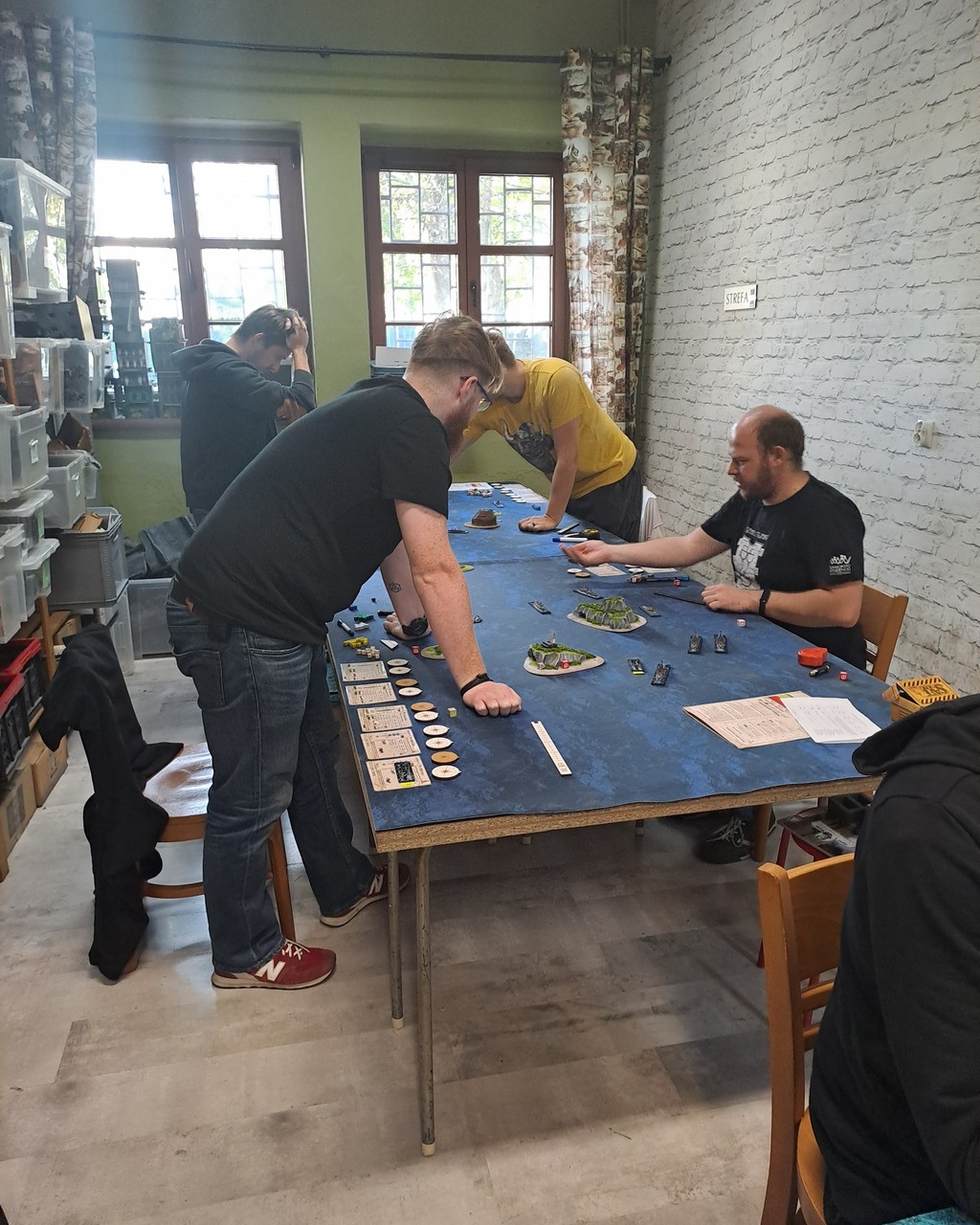
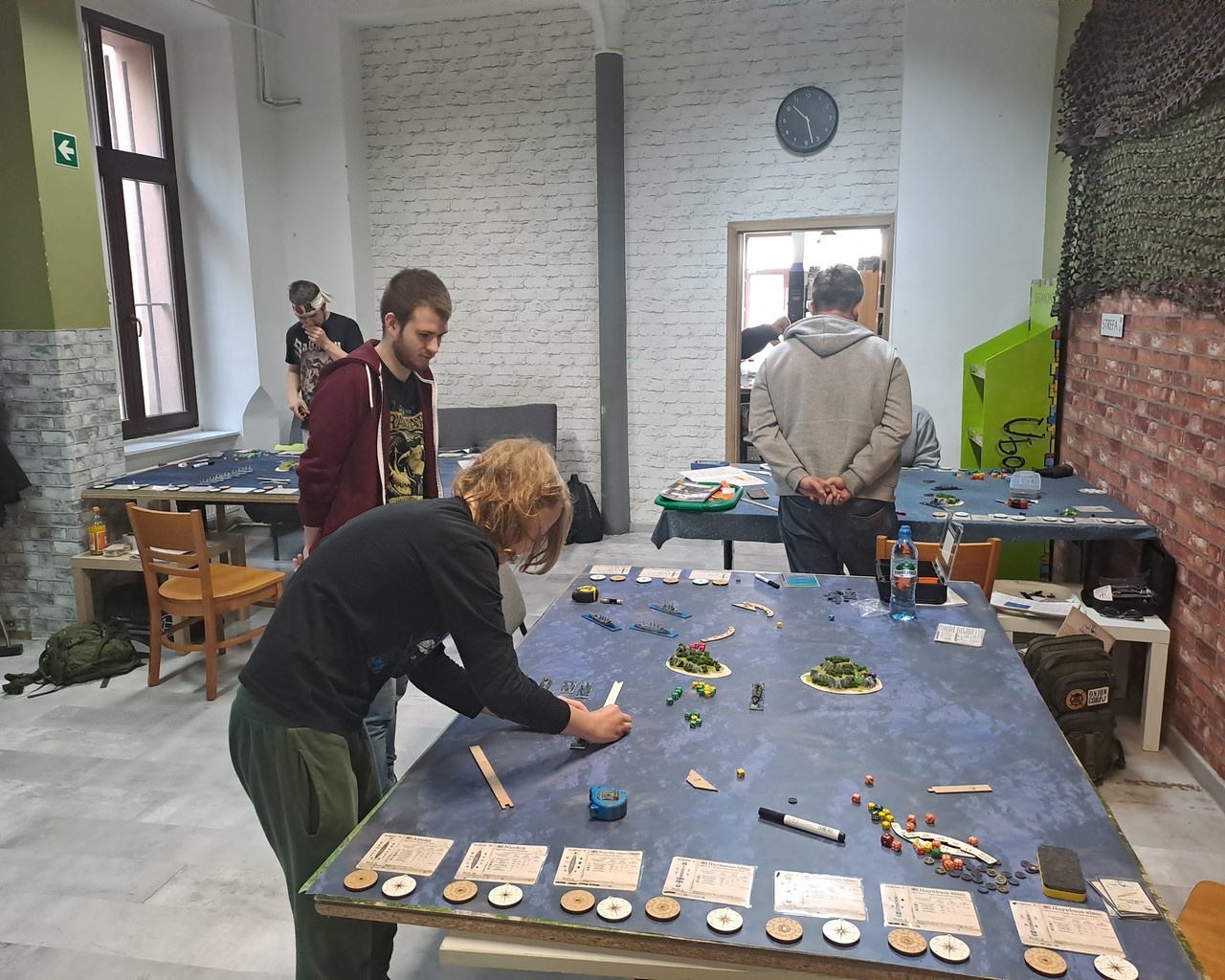
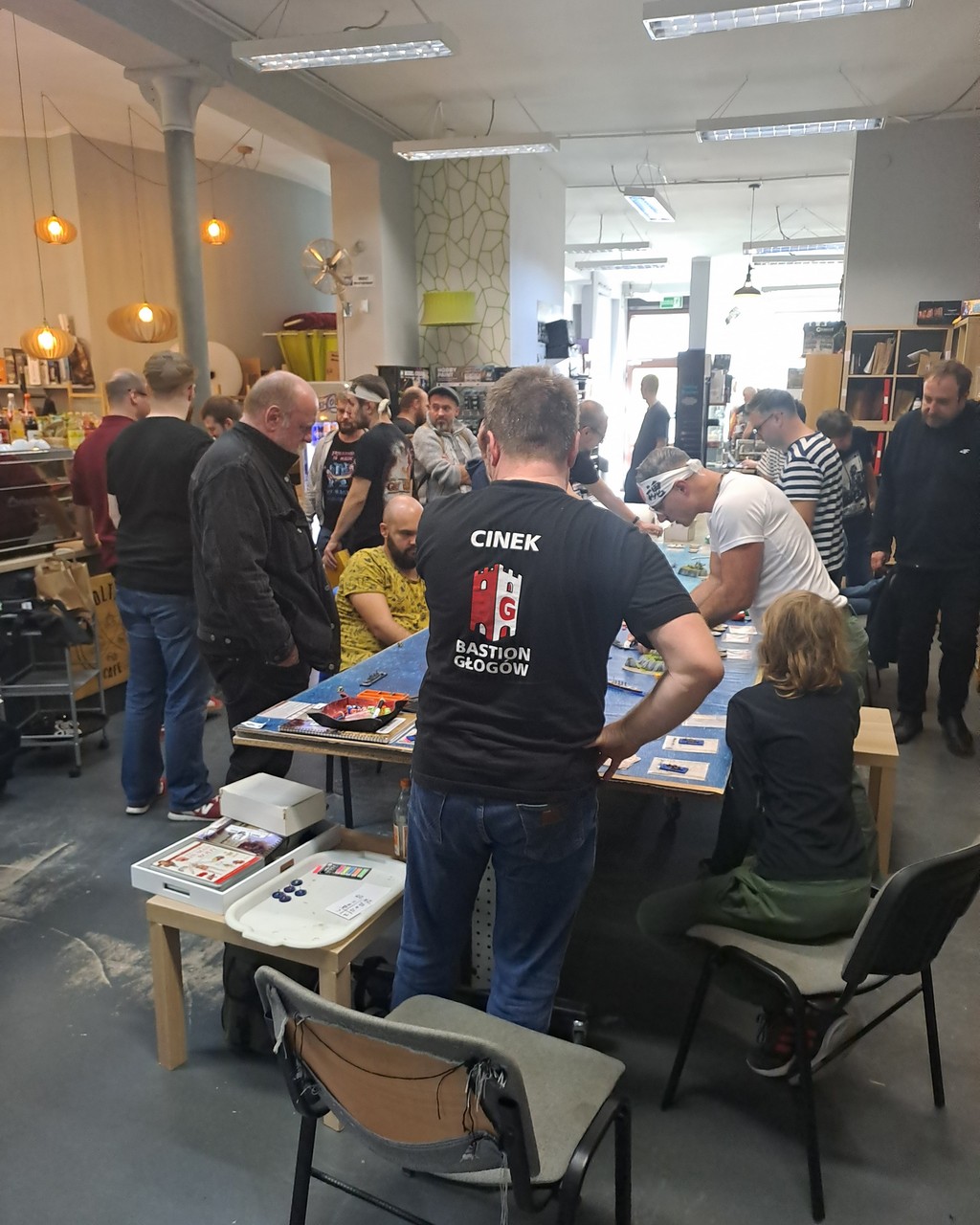
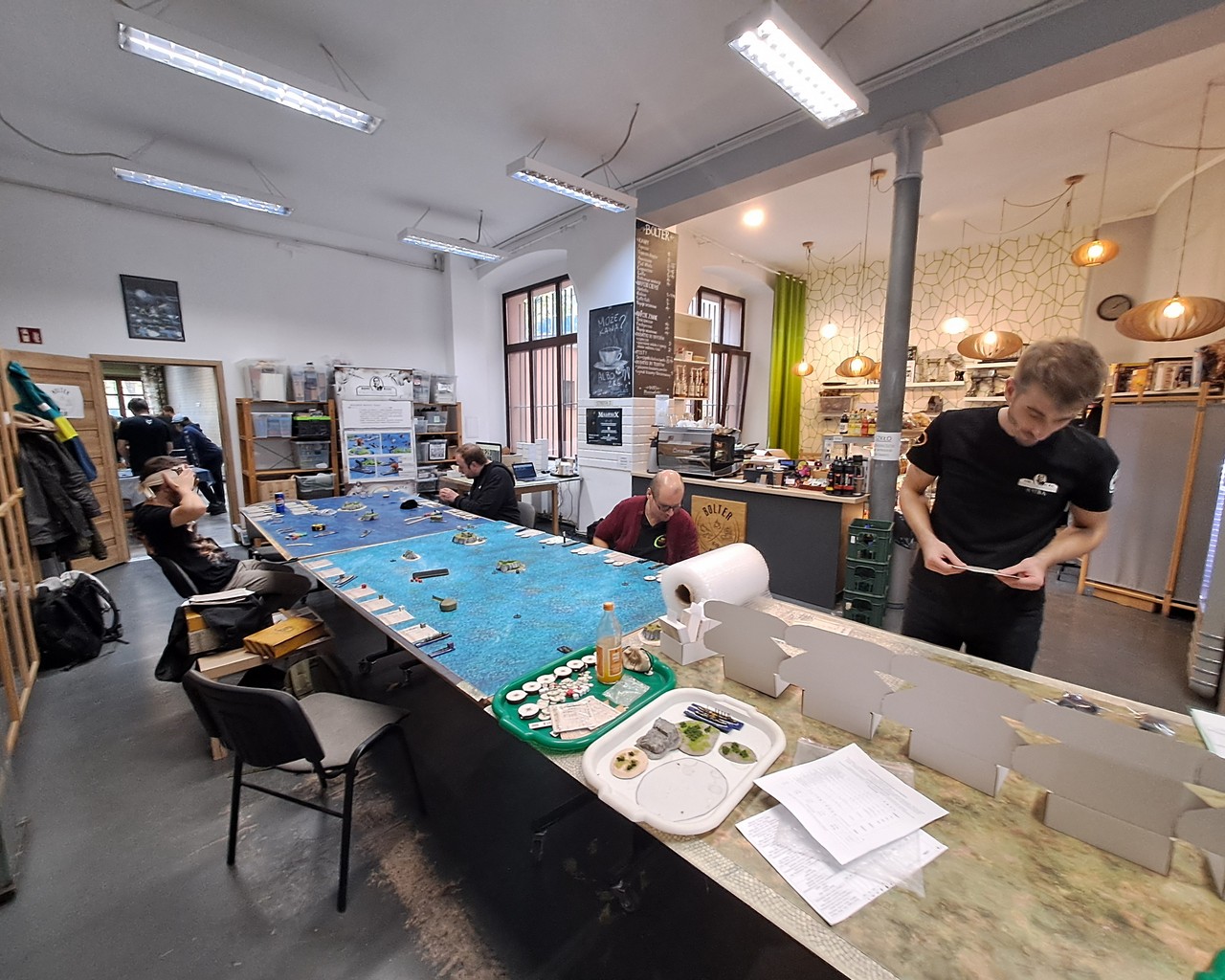
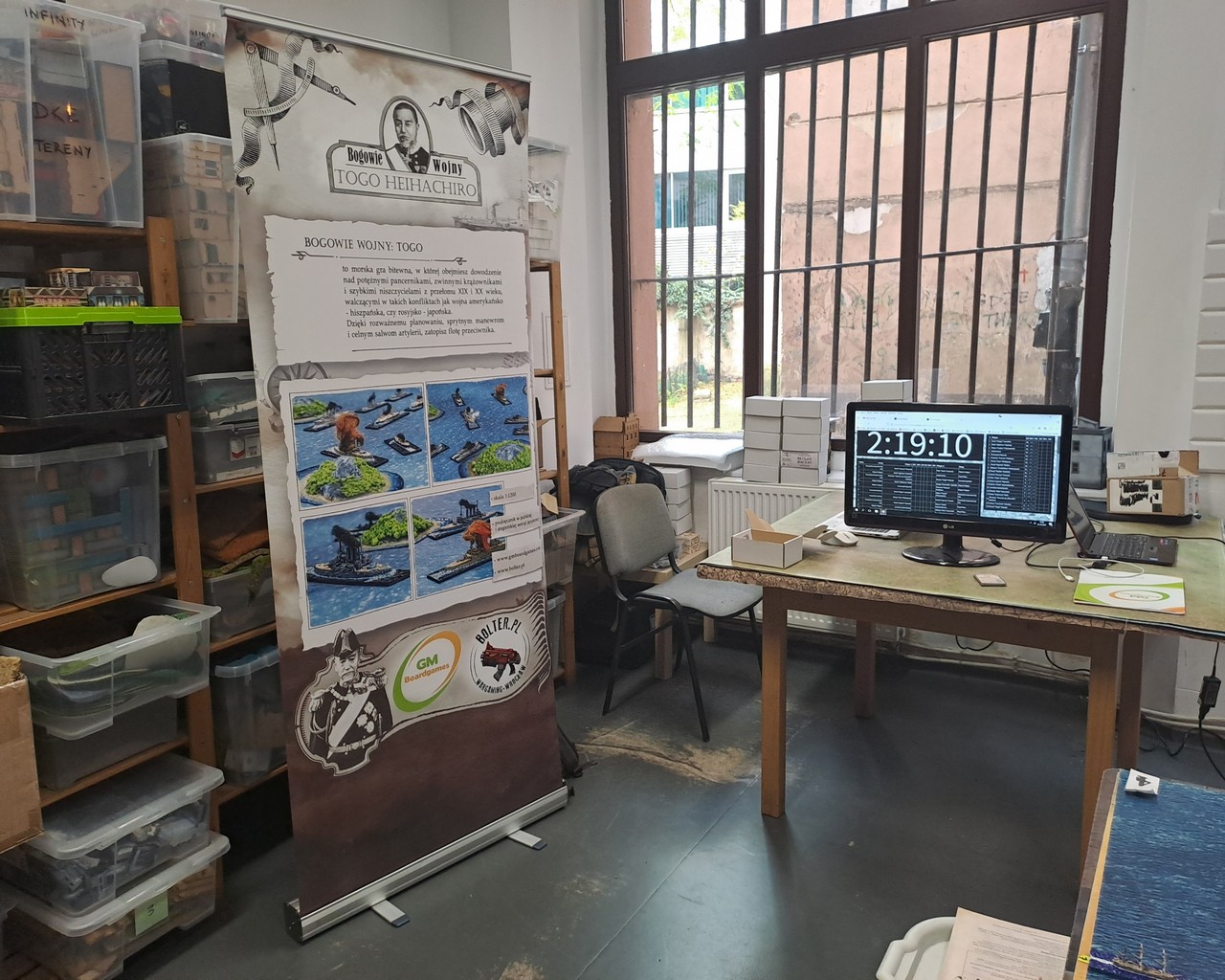
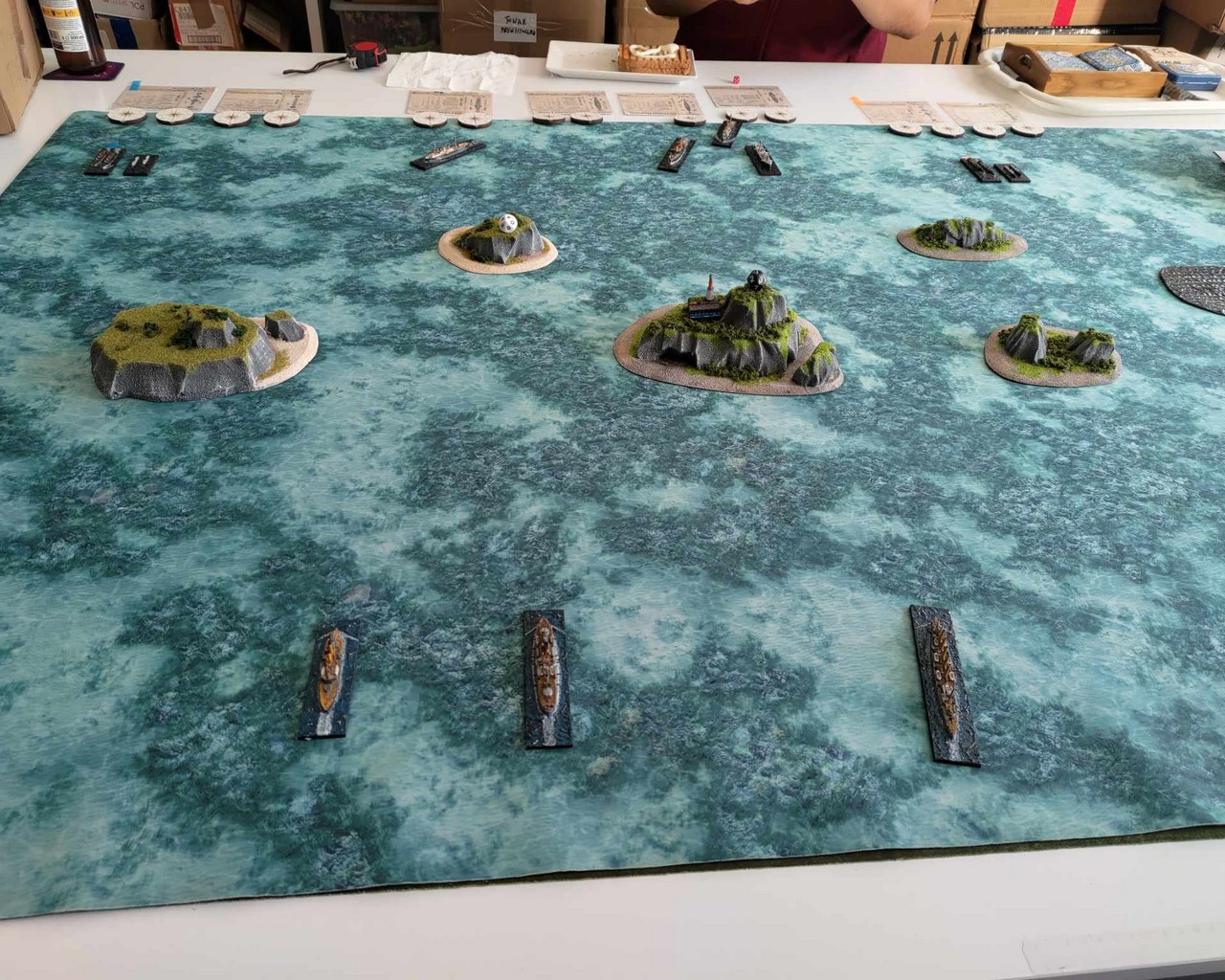
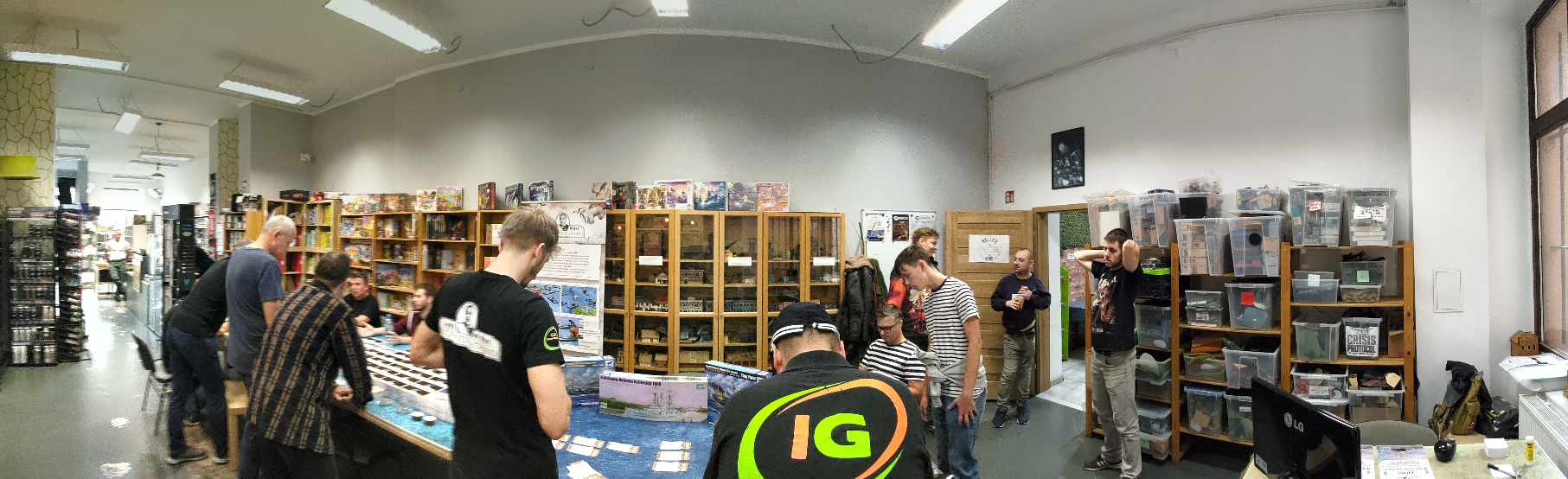
🇬🇧 Last Saturday, on February 22, 2025, another event took place in the capital of Lower Silesia – Wrocław: a tournament for Bogowie Wojny: Togo, organized by the creators of the system, GM Boardgames studio.
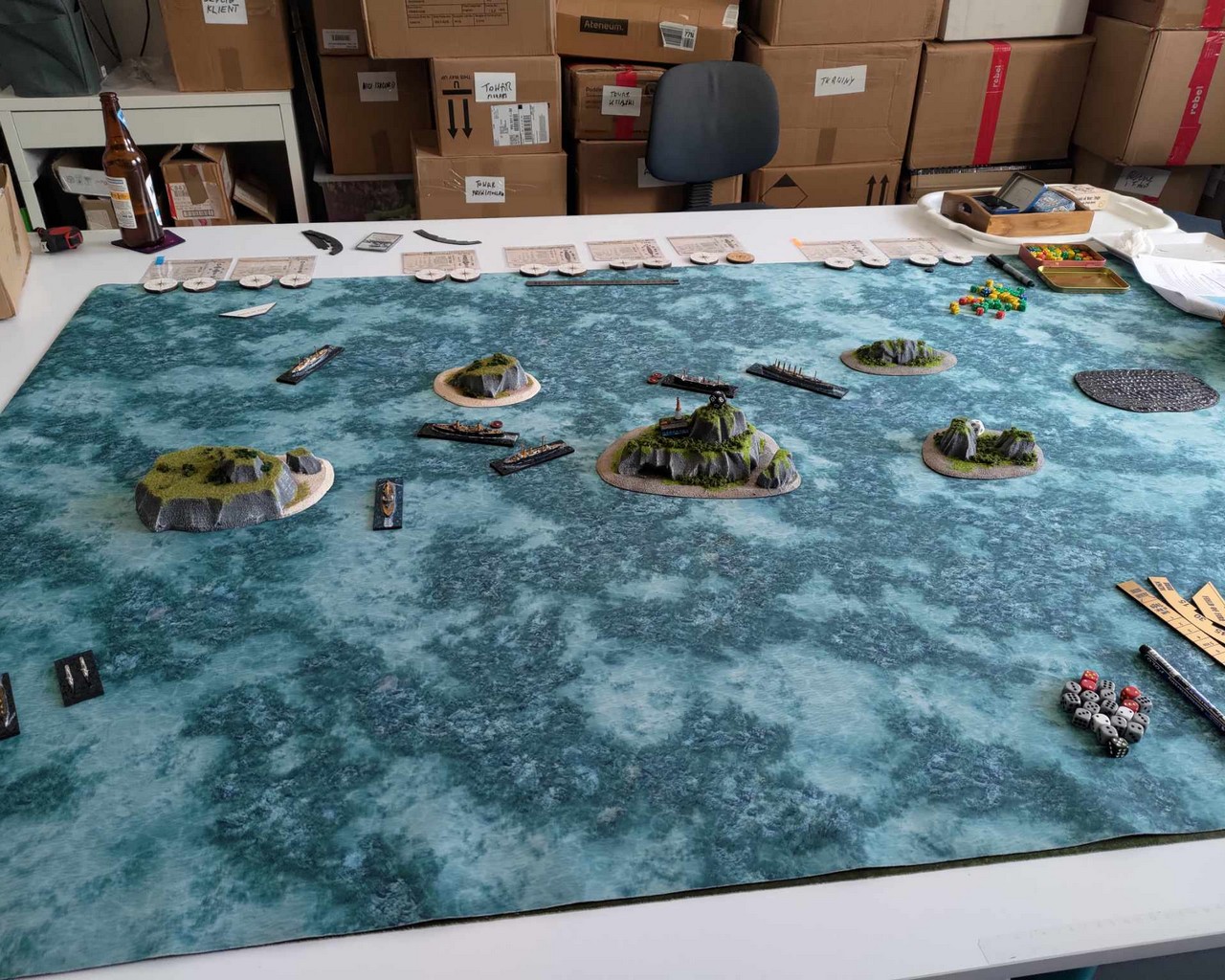
This time, we played with 2,000 points, which allowed for the appearance of battleships on the tables. During the tournament, whose event page is available HERE, each participant played three battles against opponents who traveled from Głogów, Kędzierzyn-Koźle, Sosnowiec, and Żerniki Wrocławskie.
The results and army lists can be viewed on Tournekeeper. The tournament was held at the Bolterin Wrocław, where most of the released fleets could be seen in action.
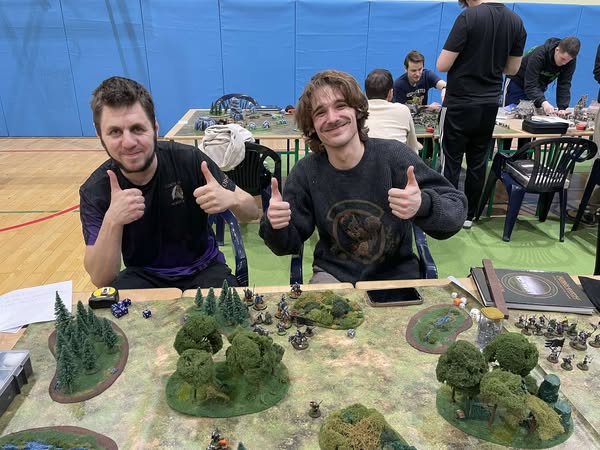
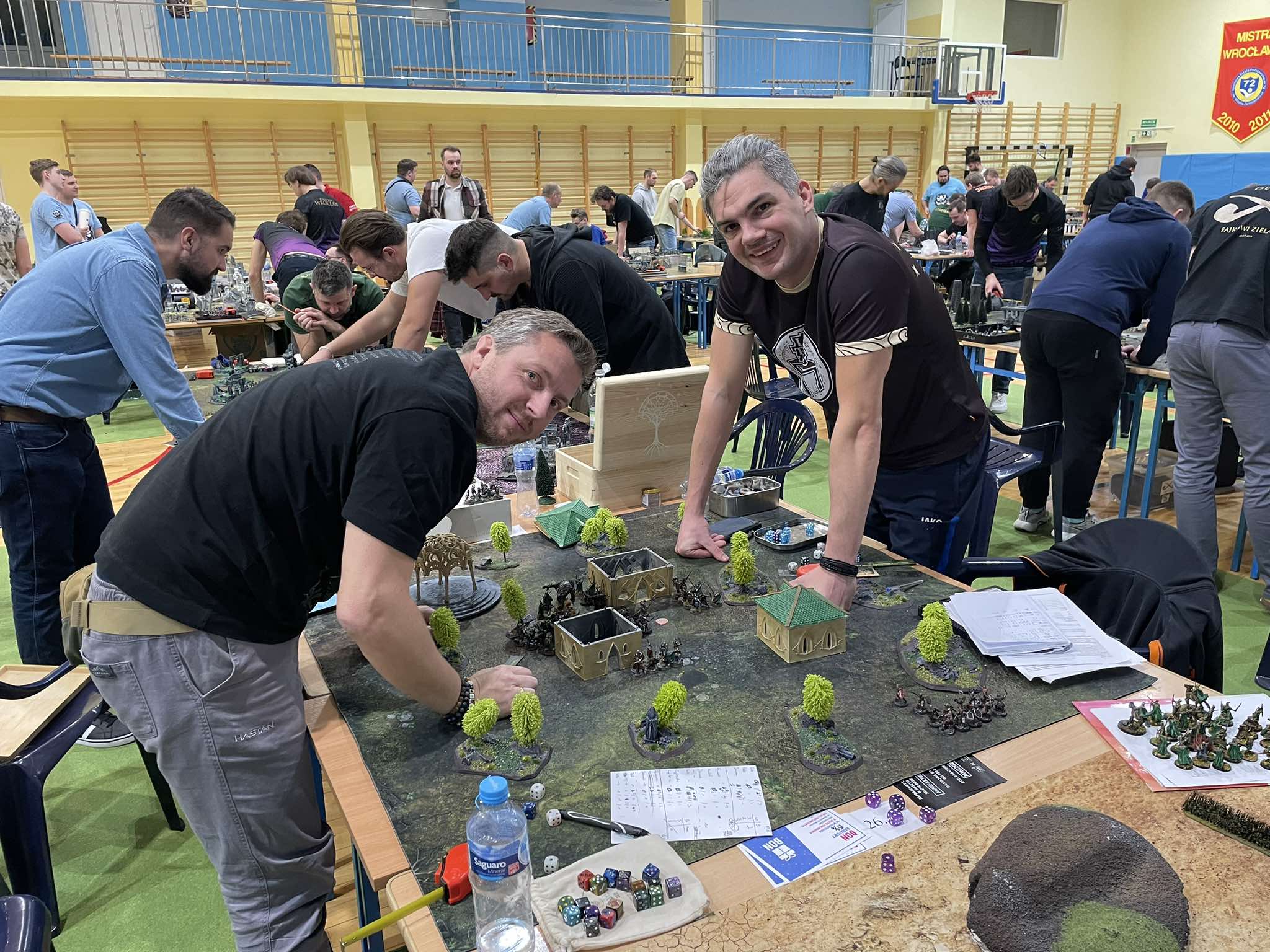
Below are some photos from the event.
🇵🇱 W ostatnią sobotę 22.02.2025 w stolicy Dolnego Śląska – Wrocławiu odbyło się kolejne wydarzenie w postaci turnieju w Bogów Wojny: Togo organizowane przez twórców tego systemu czyli studio GM Boardgames. Tym razem zagraliśmy na dwa tysiące punktów – dzięki czemu na stołach pojawiły się dna przykład pancerniki. W trakcie turnieju którego wydarzenie jest dostępne TUTAJ, każdy uczestnik rozegrał trzy potyczki z graczami, którzy dotarli do nas z Głogowa, Kędzierzyna Koźla, Sosnowca i Żernik Wrocławskich. Wyniki oraz rozpiski można podejrzeć na Tournekeeper. Turniej odbywał się we wrocławskim klubie Bolter i można było na nim spotkać większość wydanych do tej pory flot.
Poniżej trochę zdjęć z wydarzenia.
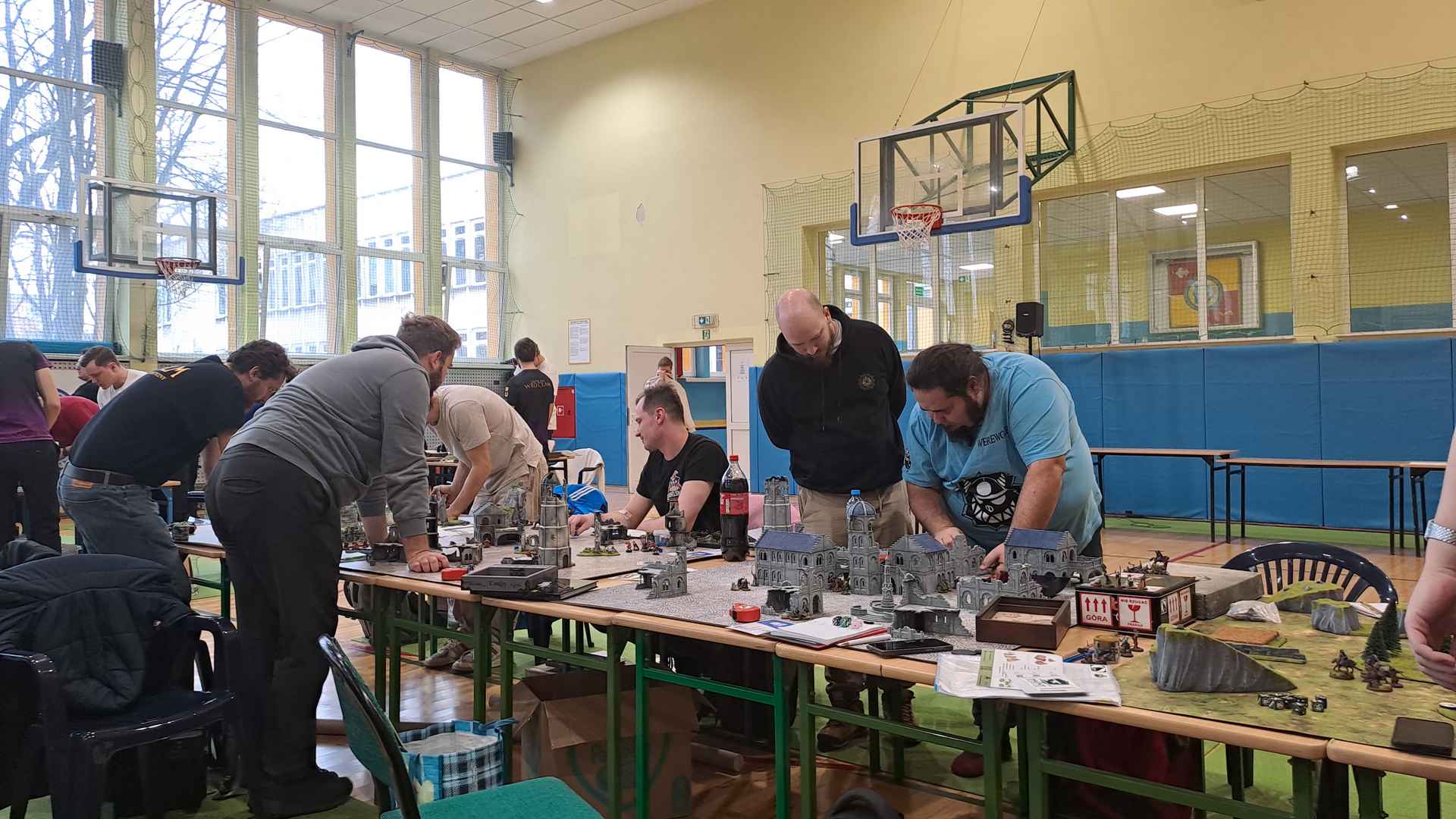
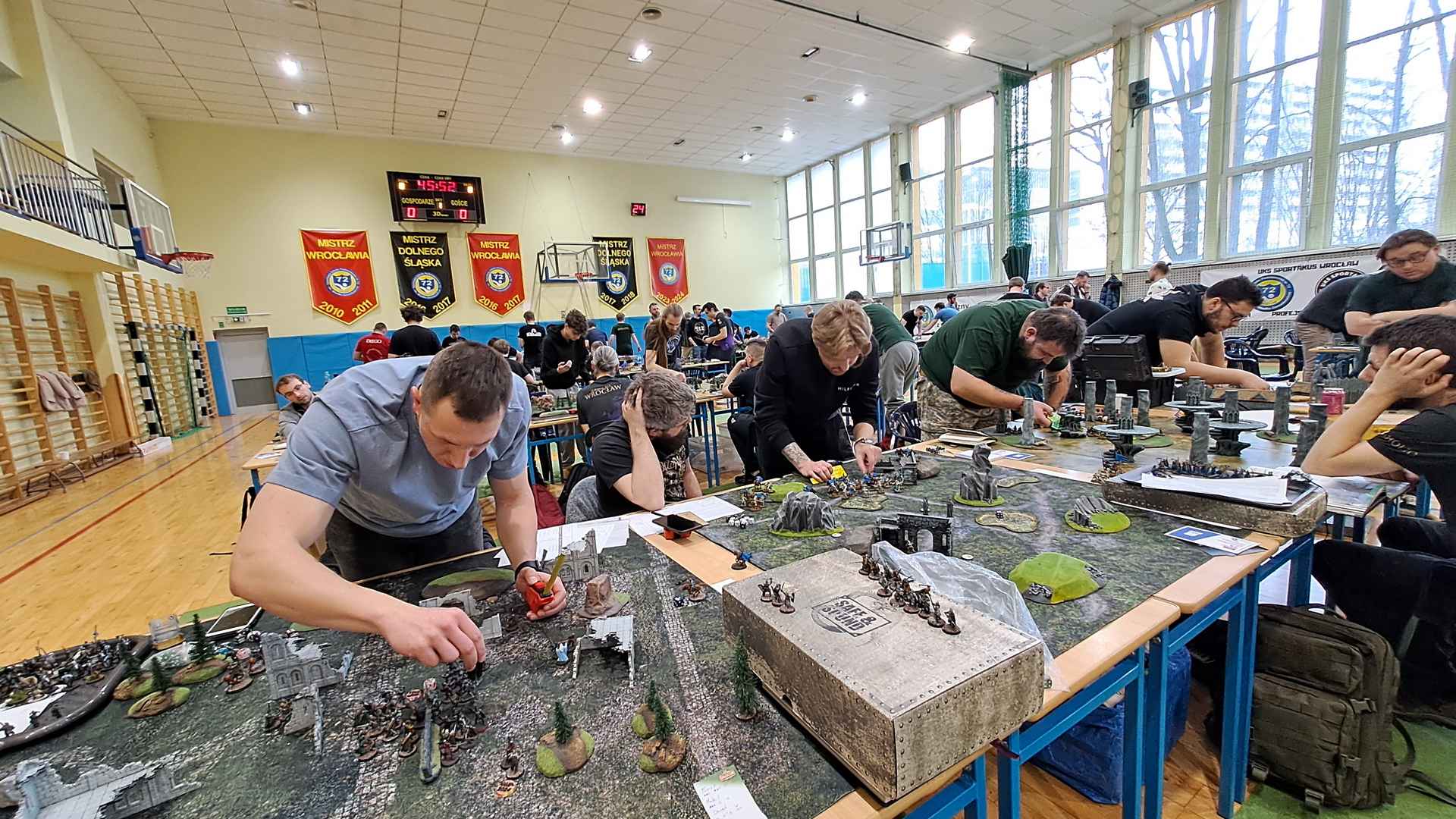
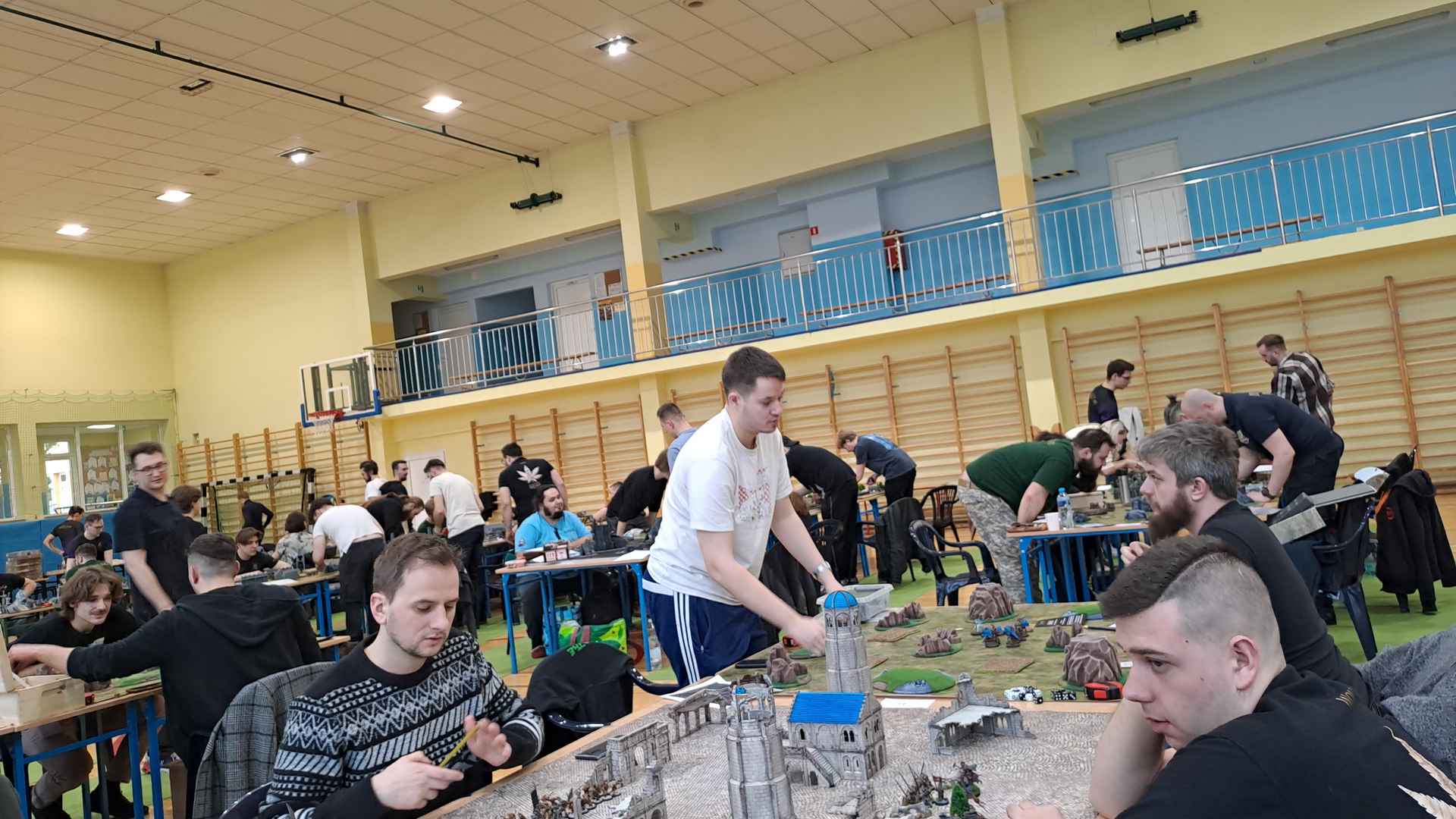
Zdjęcie od GM Boardgames. A photo from GM Boardgames.Zdjęcie od GM Boardgames. A photo from GM Boardgames.Zdjęcie od GM Boardgames. A photo from GM Boardgames.Zdjęcie od GM Boardgames. A photo from GM Boardgames.Zdjęcie od GM Boardgames. A photo from GM Boardgames.Zdjęcie od GM Boardgames. A photo from GM Boardgames.Zdjęcie od GM Boardgames. A photo from GM Boardgames.Zdjęcie od GM Boardgames. A photo from GM Boardgames.Zdjęcie od GM Boardgames. A photo from GM Boardgames.Zdjęcie od GM Boardgames. A photo from GM Boardgames.Zdjęcie od GM Boardgames. A photo from GM Boardgames.Zdjęcie od GM Boardgames. A photo from GM Boardgames.Zdjęcie od GM Boardgames. A photo from GM Boardgames.Zdjęcie od GM Boardgames. A photo from GM Boardgames.Zdjęcie od GM Boardgames. A photo from GM Boardgames.Zdjęcie od GM Boardgames. A photo from GM Boardgames.Zdjęcie od GM Boardgames. A photo from GM Boardgames.Zdjęcie od GM Boardgames. A photo from GM Boardgames.Zdjęcie od GM Boardgames. A photo from GM Boardgames.Zdjęcie od GM Boardgames. A photo from GM Boardgames.Zdjęcie od GM Boardgames. A photo from GM Boardgames.Zdjęcie od GM Boardgames. A photo from GM Boardgames.Zdjęcie od Aspirant. Photo from Aspirant.Zdjęcie od Aspirant. Photo from Aspirant.Zdjęcie od Aspirant. Photo from Aspirant.Zdjęcie od Aspirant. Photo from Aspirant.Zdjęcie od GM Boardgames. A photo from GM Boardgames.Zdjęcie od GM Boardgames. A photo from GM Boardgames.Zdjęcie od GM Boardgames. A photo from GM Boardgames.Zdjęcie od GM Boardgames. A photo from GM Boardgames.
Summary: – A great tournament with wonderful company—definitely looking forward to the next one! – And here’s a preview of upcoming releases from the publishers: http://www.gmboardgames.com/blog/en/starters-squadrons-and-new-ship-releases/ – personally, I’m eagerly waiting for the armored cruisers for my Imperial Russian fleet!
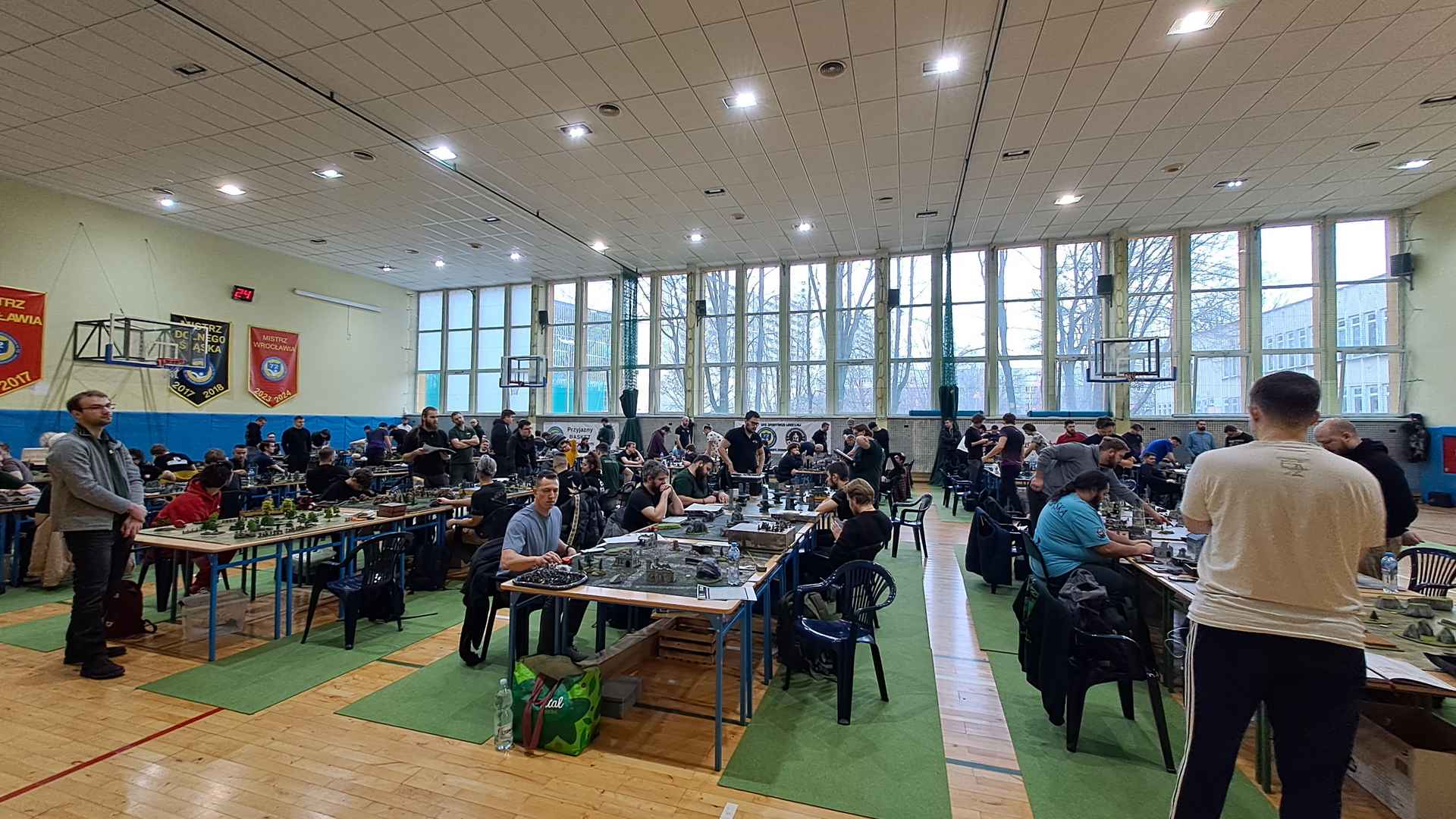
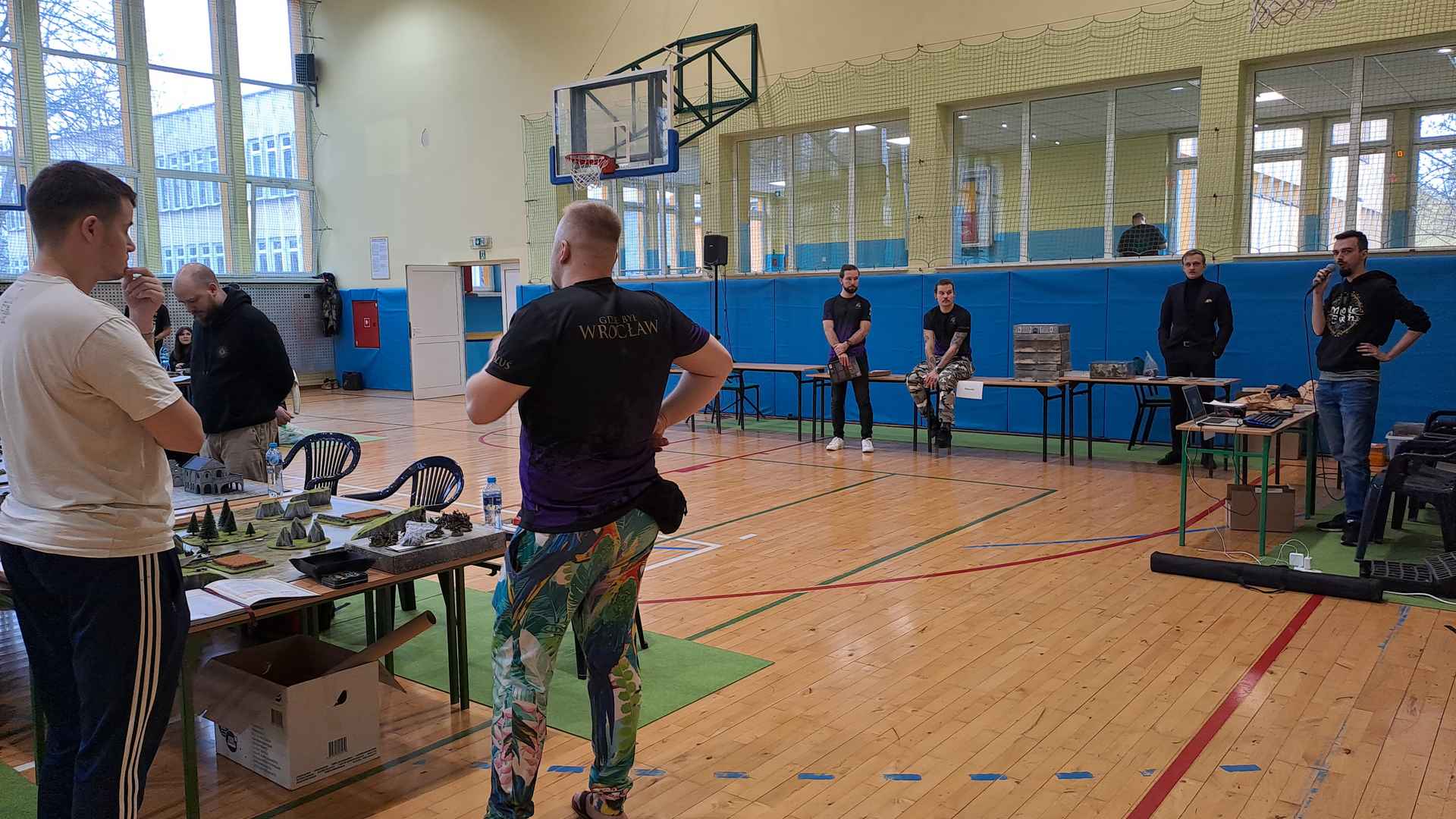
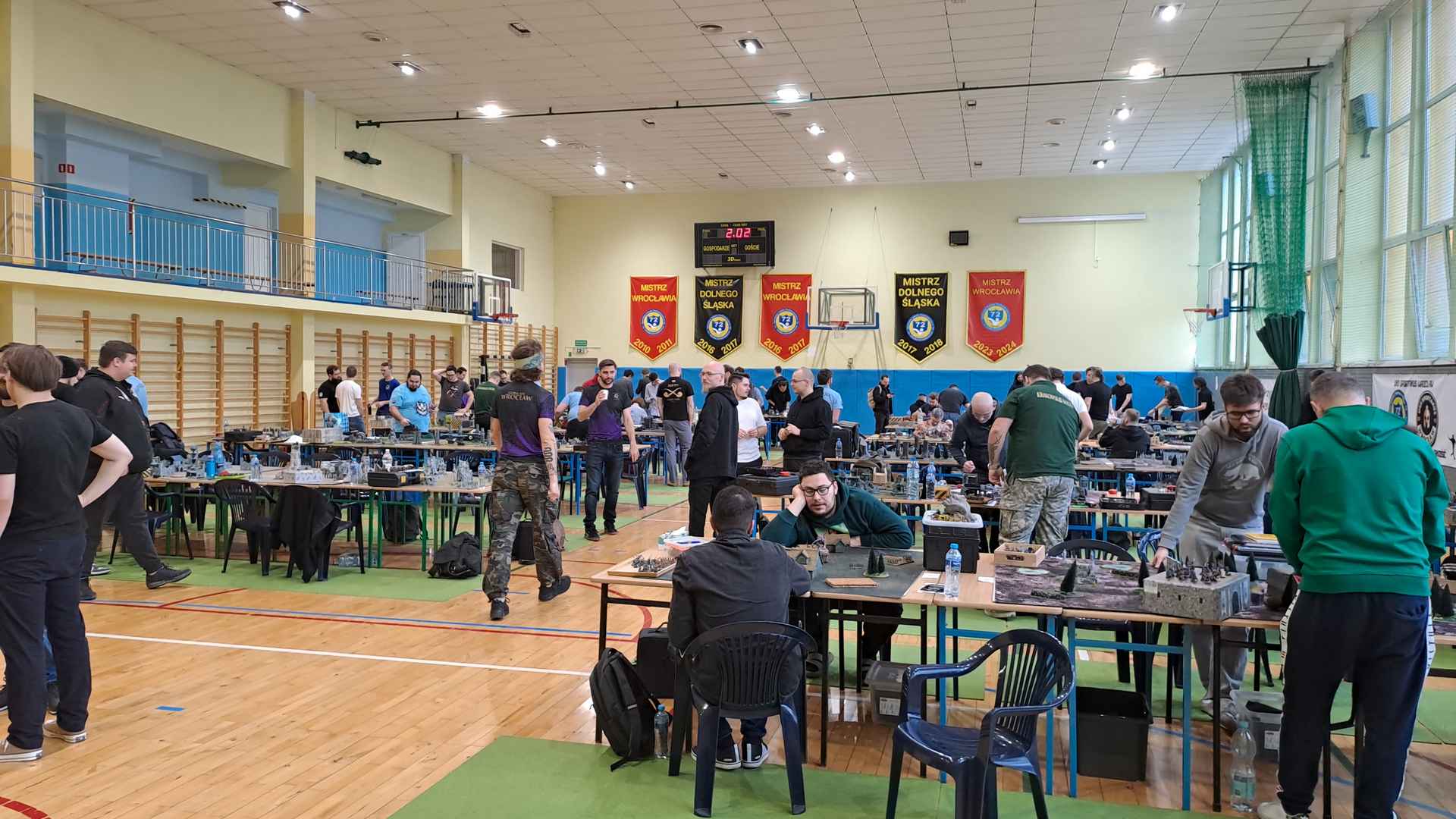
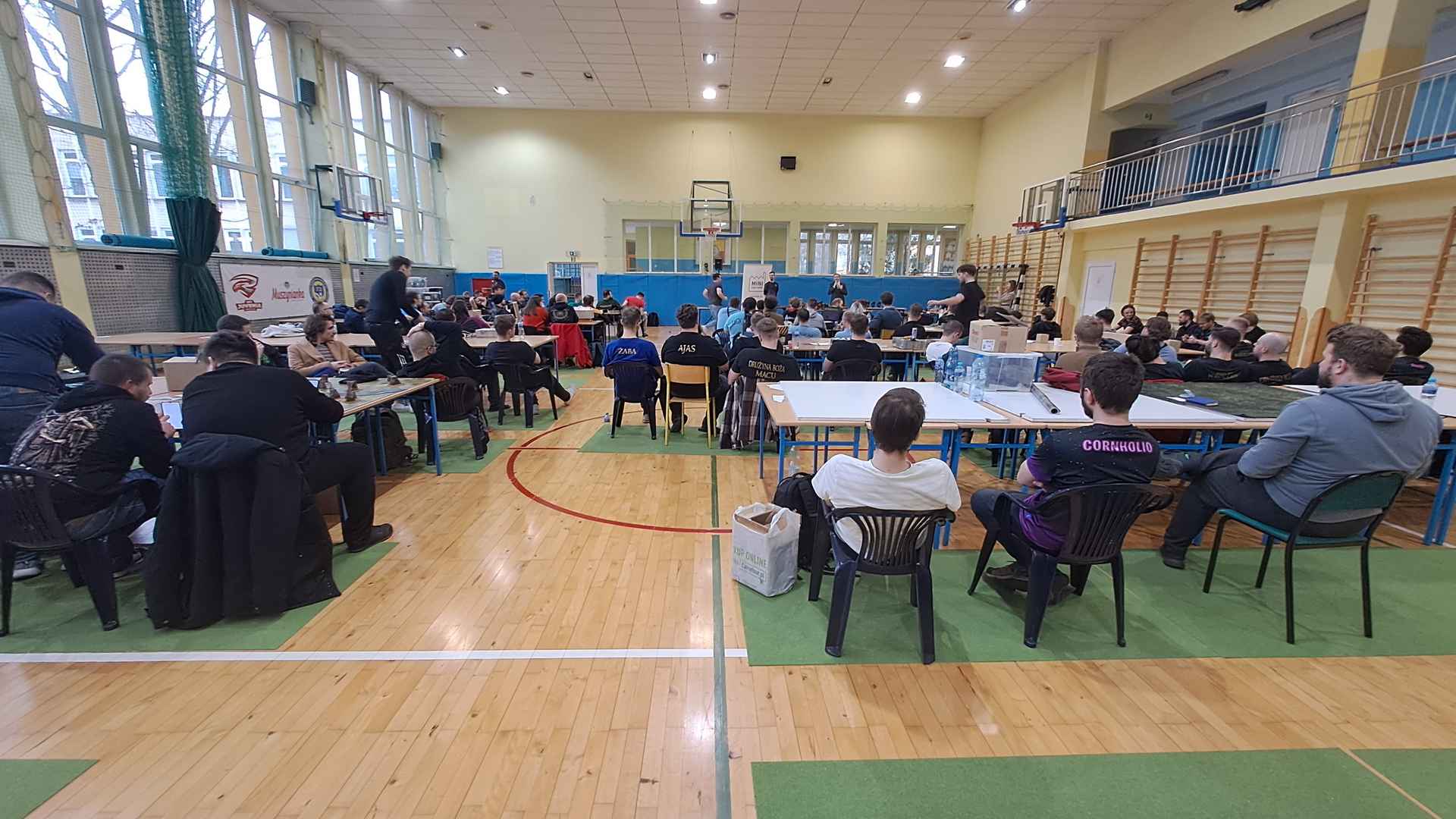
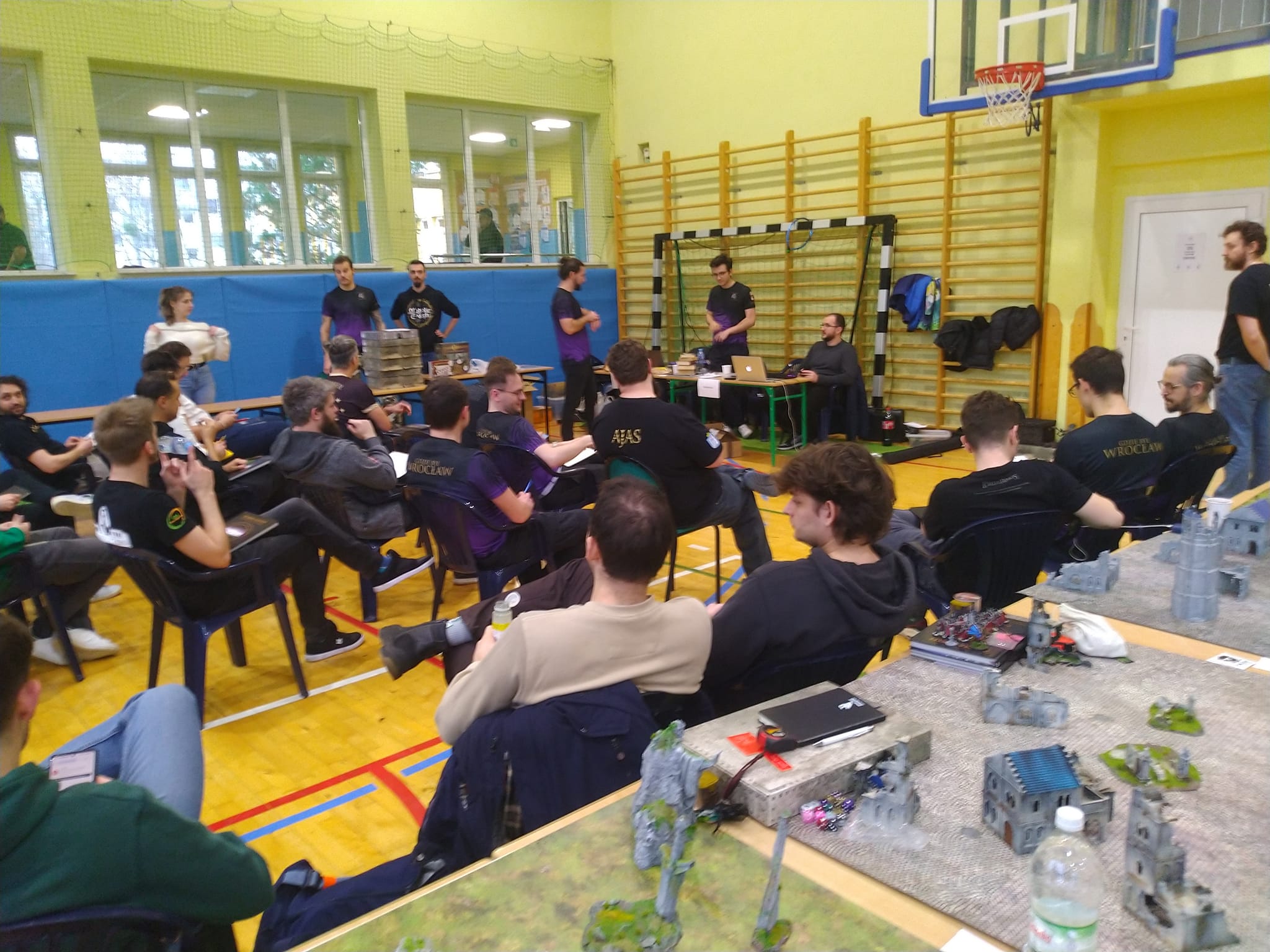
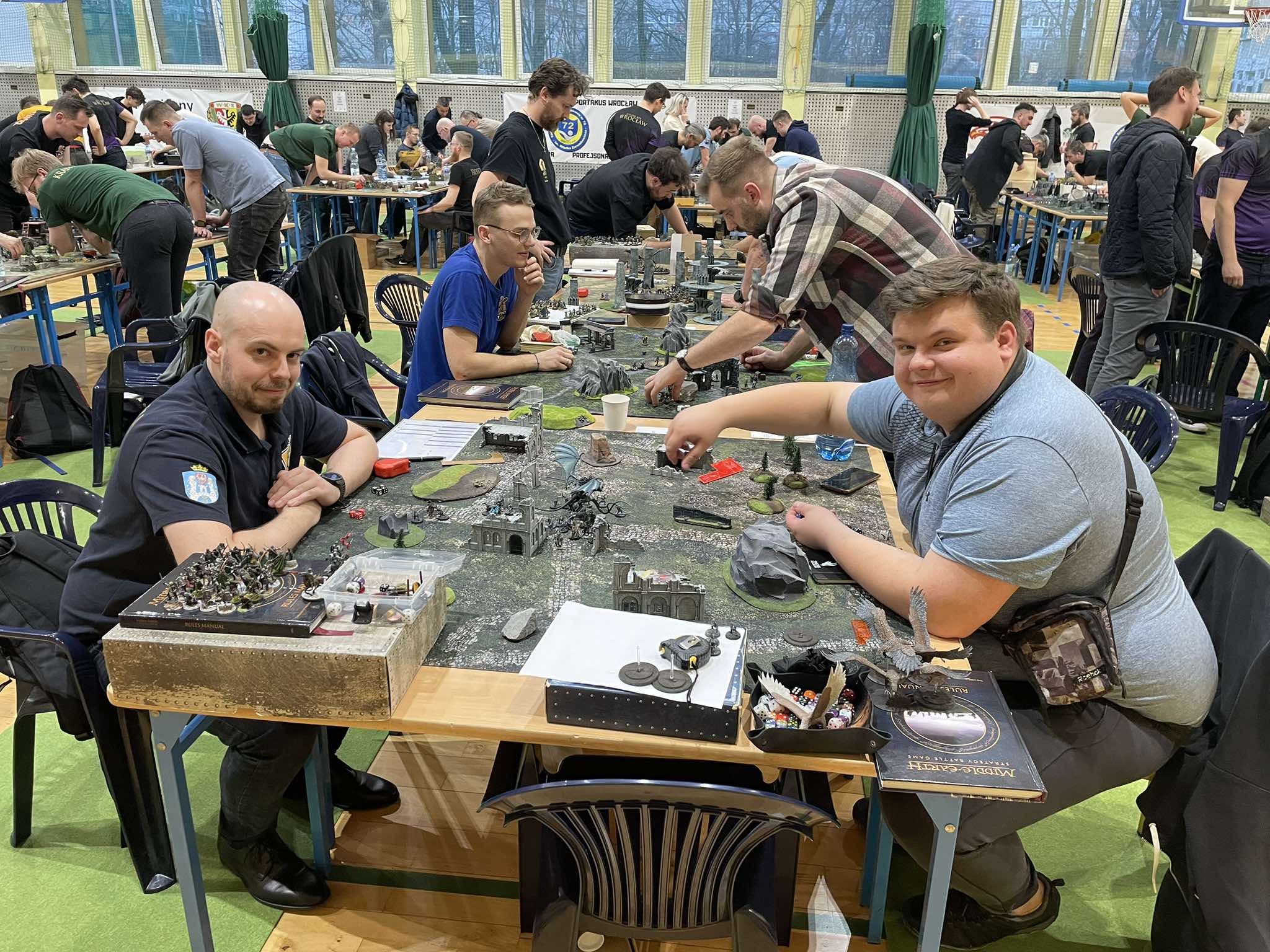
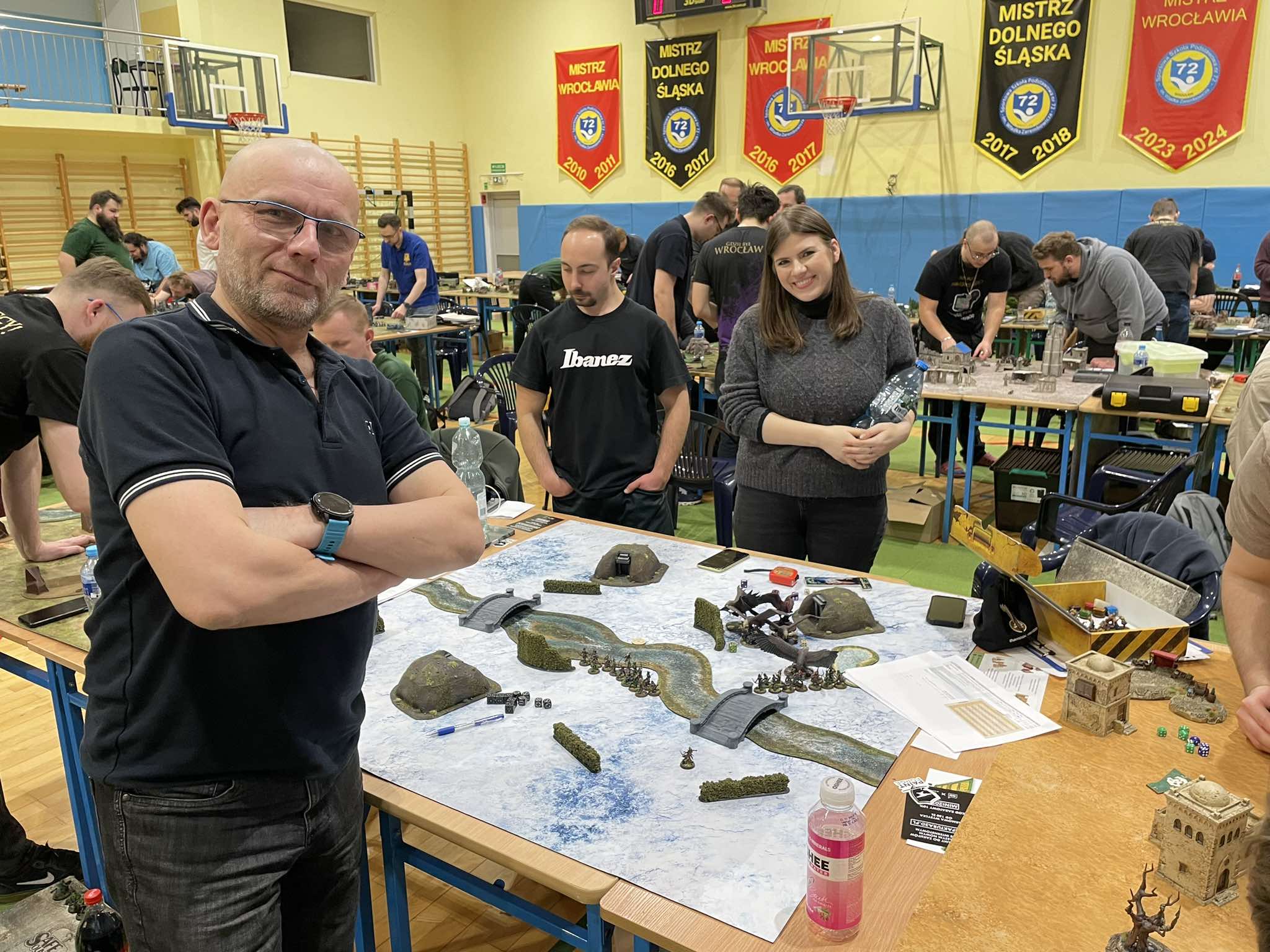
🇵🇱 Kiedy zamilknął szczęk oręża i kości zostały odłożone, a nasi drodzy goście z całej Polski po rozdaniu nagród rozjechali się bezpiecznie do swoich domów, zaczęliśmy przywracać porządek na sali gimnastycznej Sportowej Szkoły Podstawowej nr 72 imienia Władka Zarembowicza, w której mieliśmy przyjemność spędzić dwa świetne dni, w licznym gronie osób bo 96 osób – miejsc mieliśmy dla 104 zawodników i zawodniczek, z którymi ze względu na odległości mamy przyjemność grać głównie na turniejach klasy master organizowanych, przez ośrodki rozsiane po całym kraju. Cóż powiedzieć, były to dwa świetne dni spędzone w gronie miłośników figurkowego Władcy Pierścieni Mistrza.
🇬🇧 When the clatter of arms fell silent and the dice were set aside, and our dear guests from all over Poland safely returned to their homes after the award ceremony, we began restoring order in the gymnasium of Sports Primary School No. 72, named after Władek Zarembowicz. It was there that we had the pleasure of spending two fantastic days in the company of 96 participants—out of 104 available spots—whom we usually have the opportunity to play with only at master-class tournaments organized by centers scattered across the country due to distance. What can we say? These were two amazing days spent among fellow enthusiasts of the tabletop Lord of the Rings Masters game.
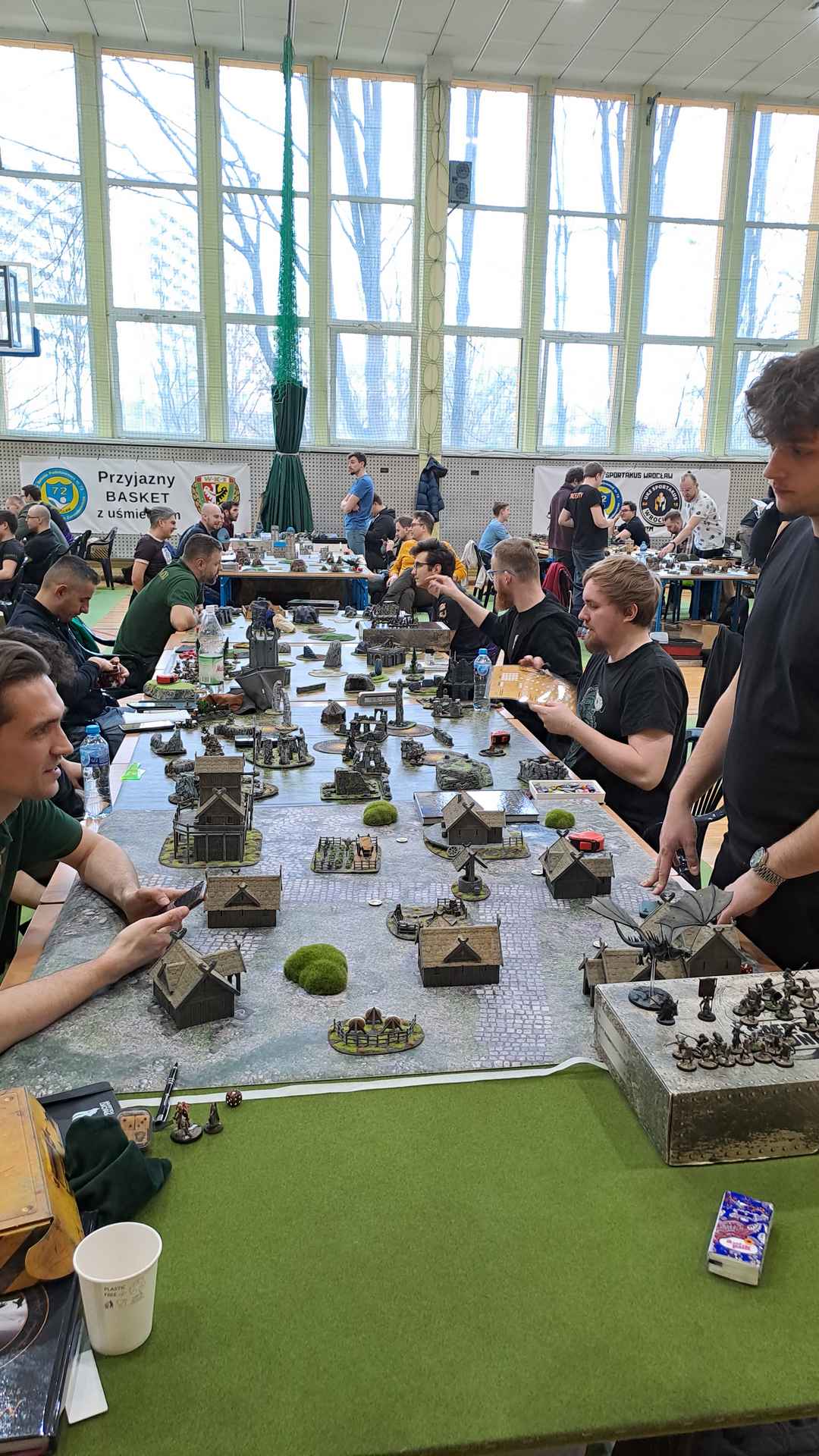
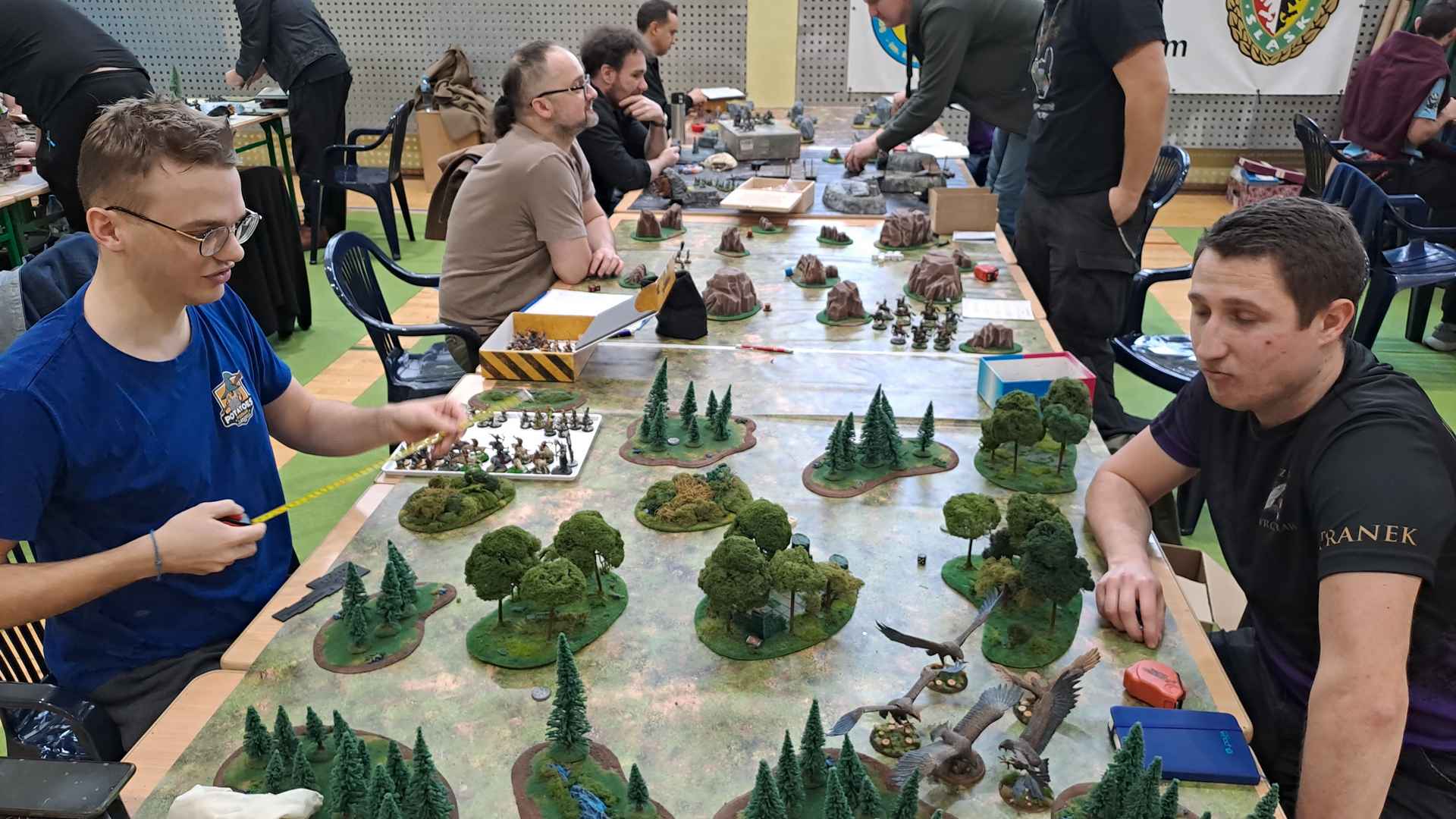
🇵🇱 Nasi drodzy uczestnicy przybyli do nas z Bydgoszczy, Białegostoku, Bielska Białej, Katowic, Krakowa, Lublina, Poznania, Warszawy (Ci ostatni przywieźli 13 stołów, jeszcze raz dzięki!). Nie jestem pewny, czy nie pominąłem jakiegoś ośrodka – a jeśli dajcie znać – uzupełnię! Wszyscy mieli okazję stanąć do sześciu potyczek, były to gry na 555 punktów, rozgrywane według najnowszej edycji Middle Earth: SBG. Nowa edycja, odświeżone zasady i nowe, ale stare armie, tylko podzielone na różne legiony, związane mocno ze scenami z filmu. Jako organizatorzy z Gdzie był Wrocławdołożyliśmy wszelkich starań, aby był to najlepszy master jakiego zorganizowaliśmy – w tym roku pierwszy raz pojawił się catering który pochodził z Margaret– w mojej opinii bardzo dobry, chociaż dla niektórych porcje mogłyby być większe, był cały czas ogólnodostępny stół z ciastami, herbatą i kawą. Uśmiech na twarzach uczestniczących osób i dobra zabawa, to najlepsze co może czekać organizatorów, pytania o las na 41 stole – tak, to był las z Tereny Do Gier, który wypożyczono nam w ramach wsparcia.
Więcej informacji o samych Indywidualnych Mistrzostwach Wszechświata można znaleźć TUTAJ na stronie wydarzenia. Wyniki można znaleźć na Championshub.
🇬🇧 Our dear participants came to us from Bydgoszcz, Białystok, Bielsko-Biała, Katowice, Kraków, Lublin, Poznań, and Warsaw (the latter brought 13 tables—thanks again!). I’m not sure if I missed any other location—if so, let me know, and I’ll update the list!
Everyone had the chance to take part in six battles, played at 555 points, following the latest edition of Middle-earth: SBG. The new edition features refreshed rules and new yet familiar armies, now divided into different legions closely tied to scenes from the movies.
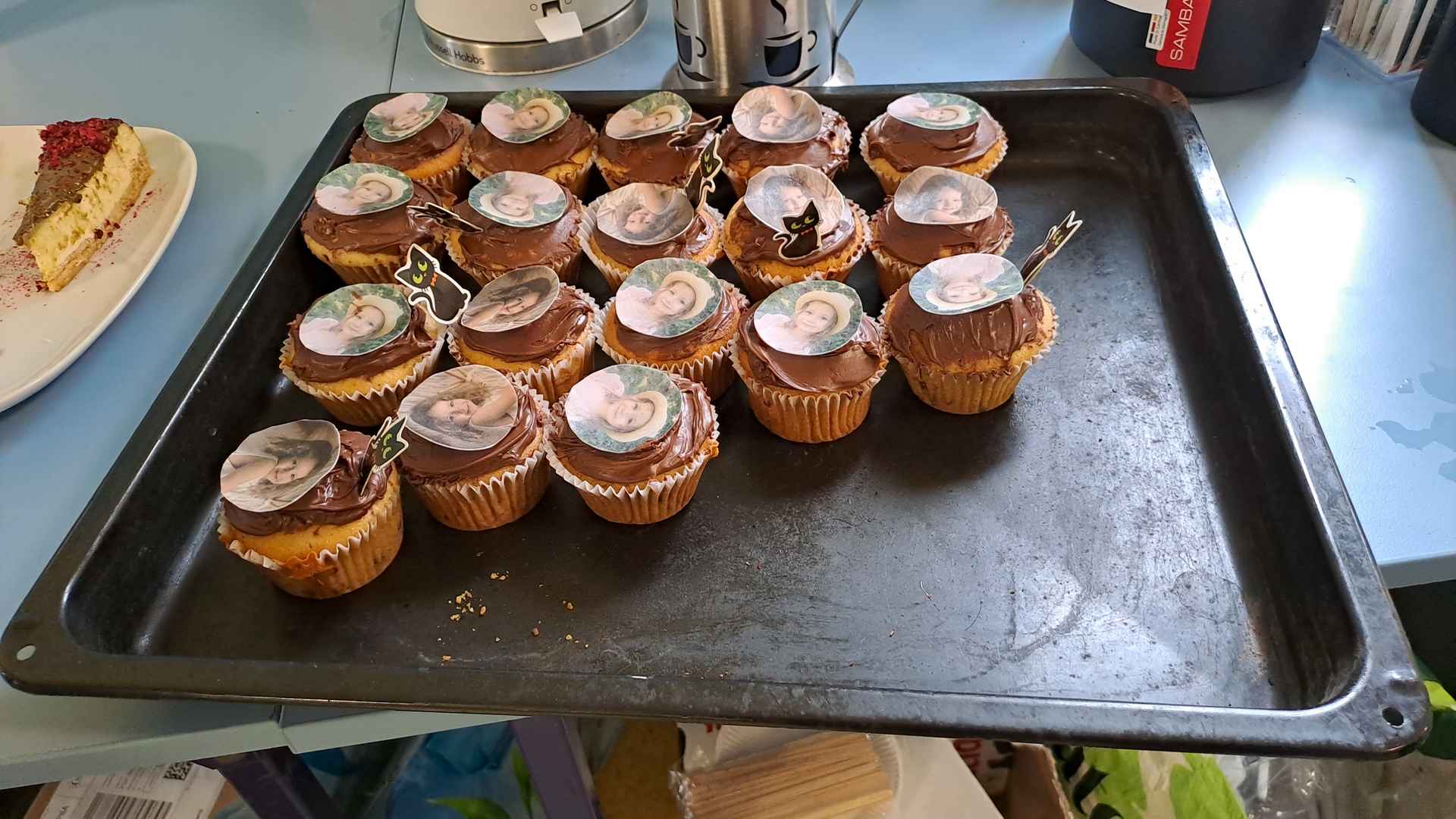
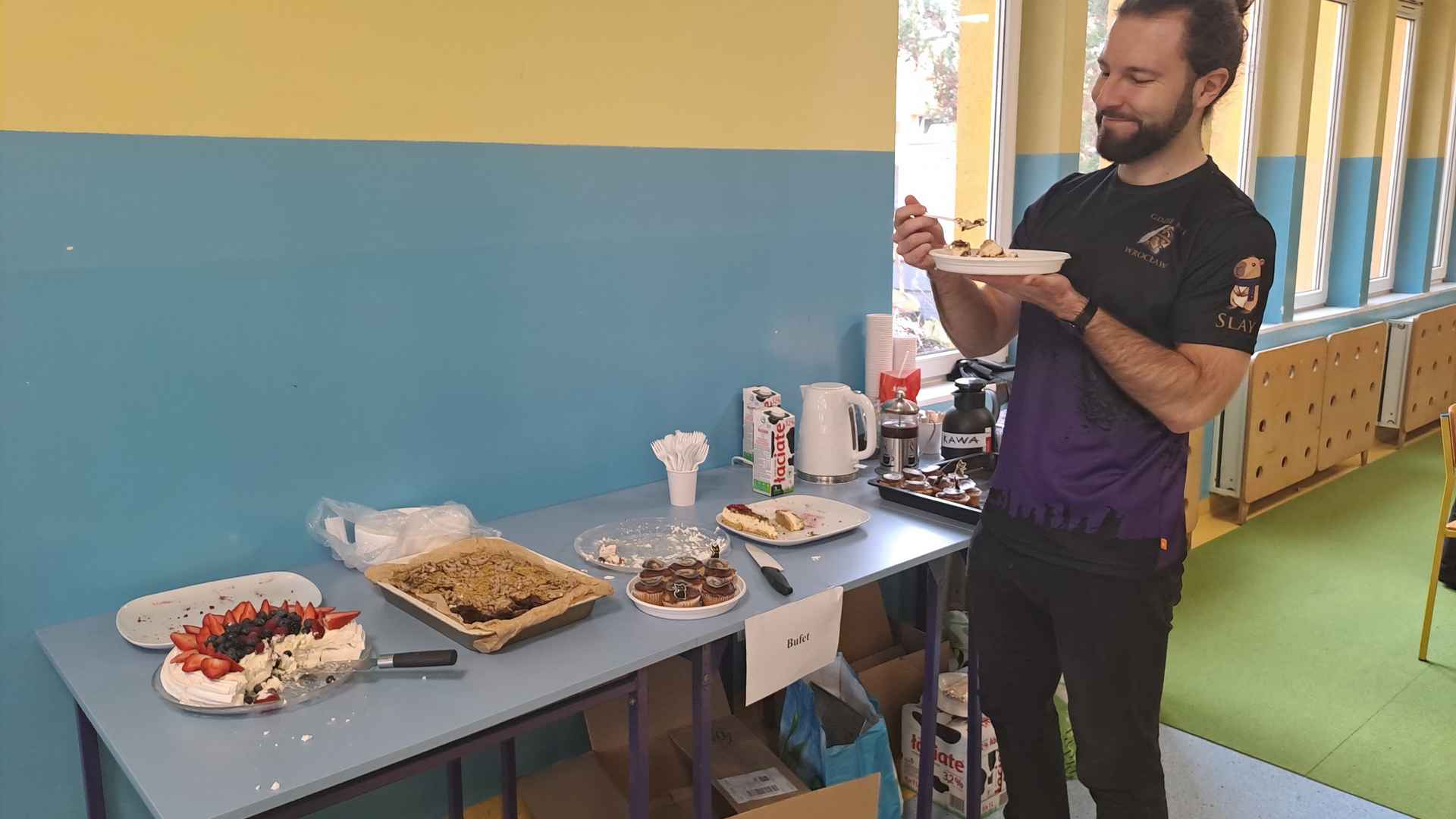
As organizers from Gdzie był Wrocław, we put in our best effort to make this the best Master event we’ve ever hosted. This year, for the first time, we had catering from Margaret—which, in my opinion, was very good, though some might have preferred bigger portions. There was also a table with cakes, tea, and coffee available throughout the event.
The smiles on the participants’ faces and the great atmosphere are the best rewards for the organizers. And for those asking about the forest on table 41—yes, it was a forest from Tereny Do Gier, which was kindly lent to us as part of their support.
More information about the Individual World Championships can be found HEREon the event’s website. The results can be found on Championshub.
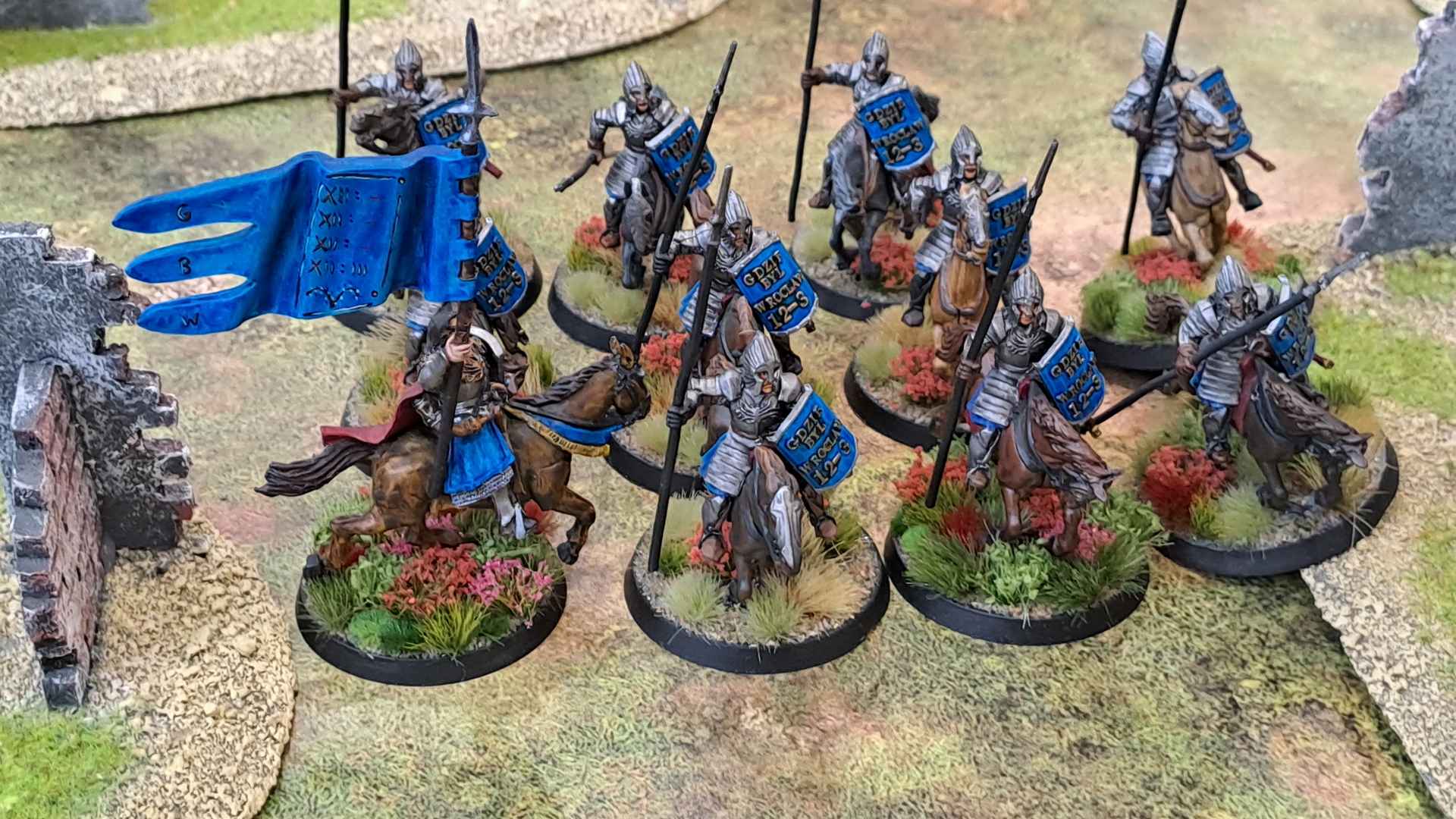
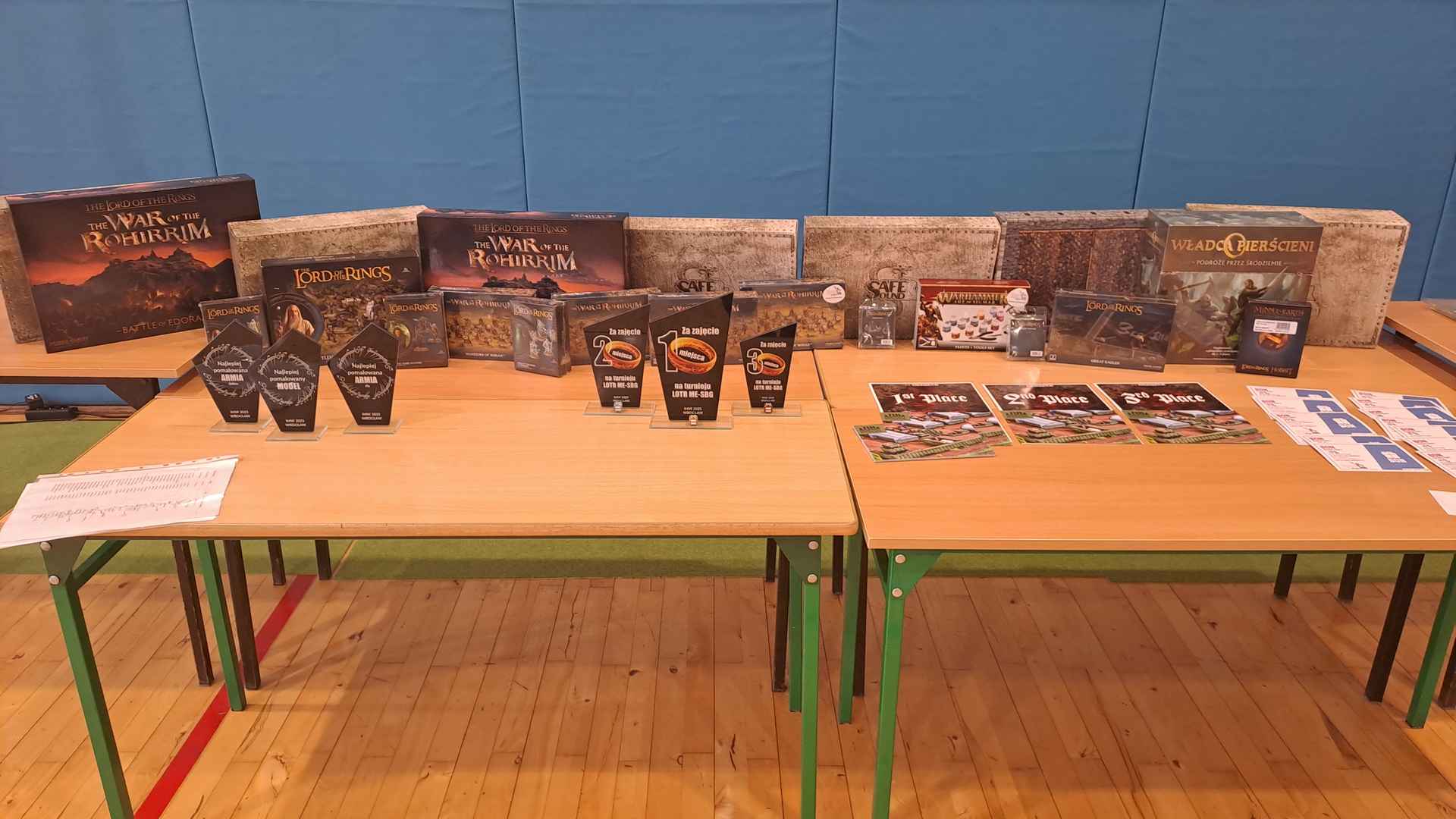
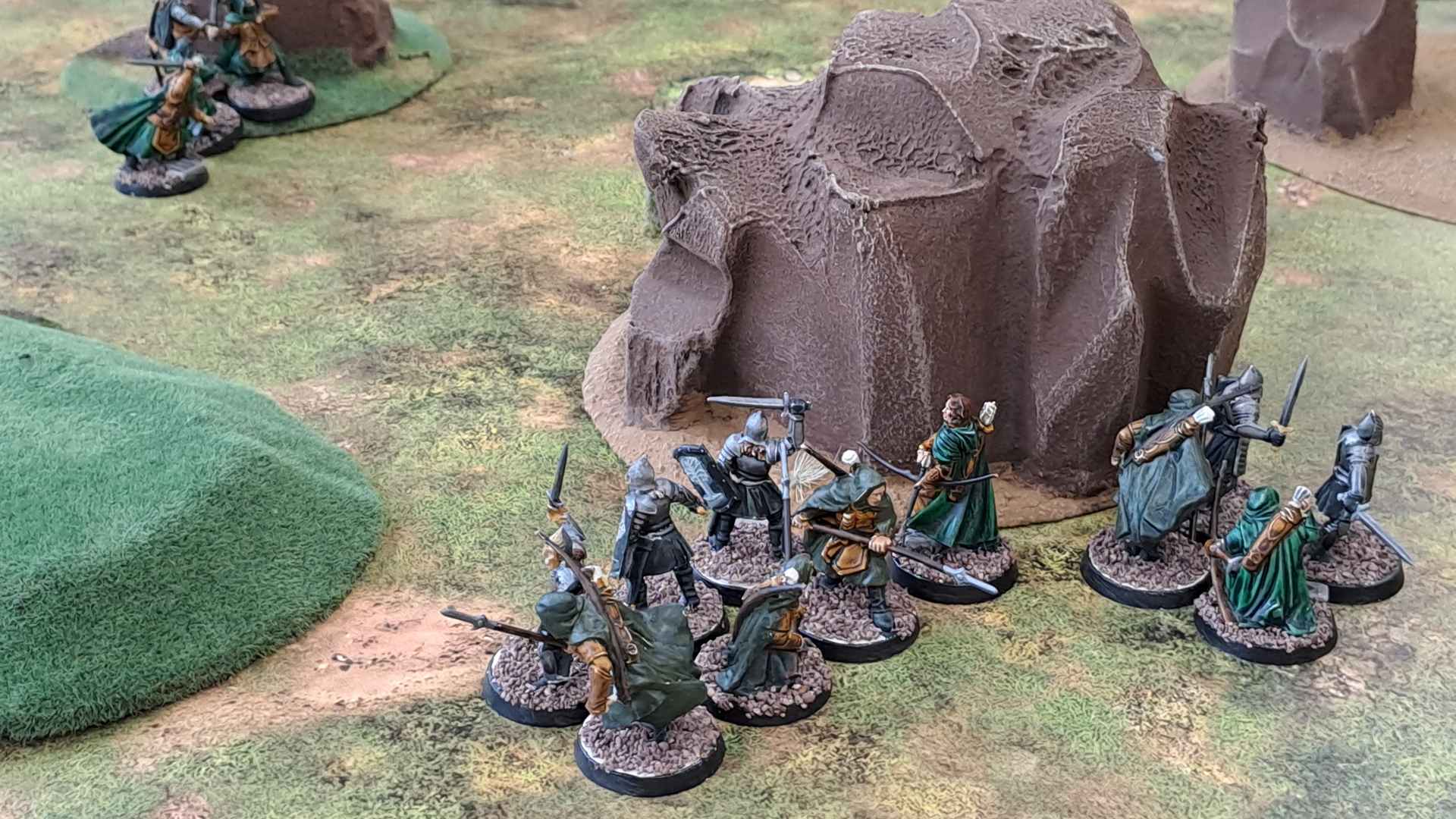
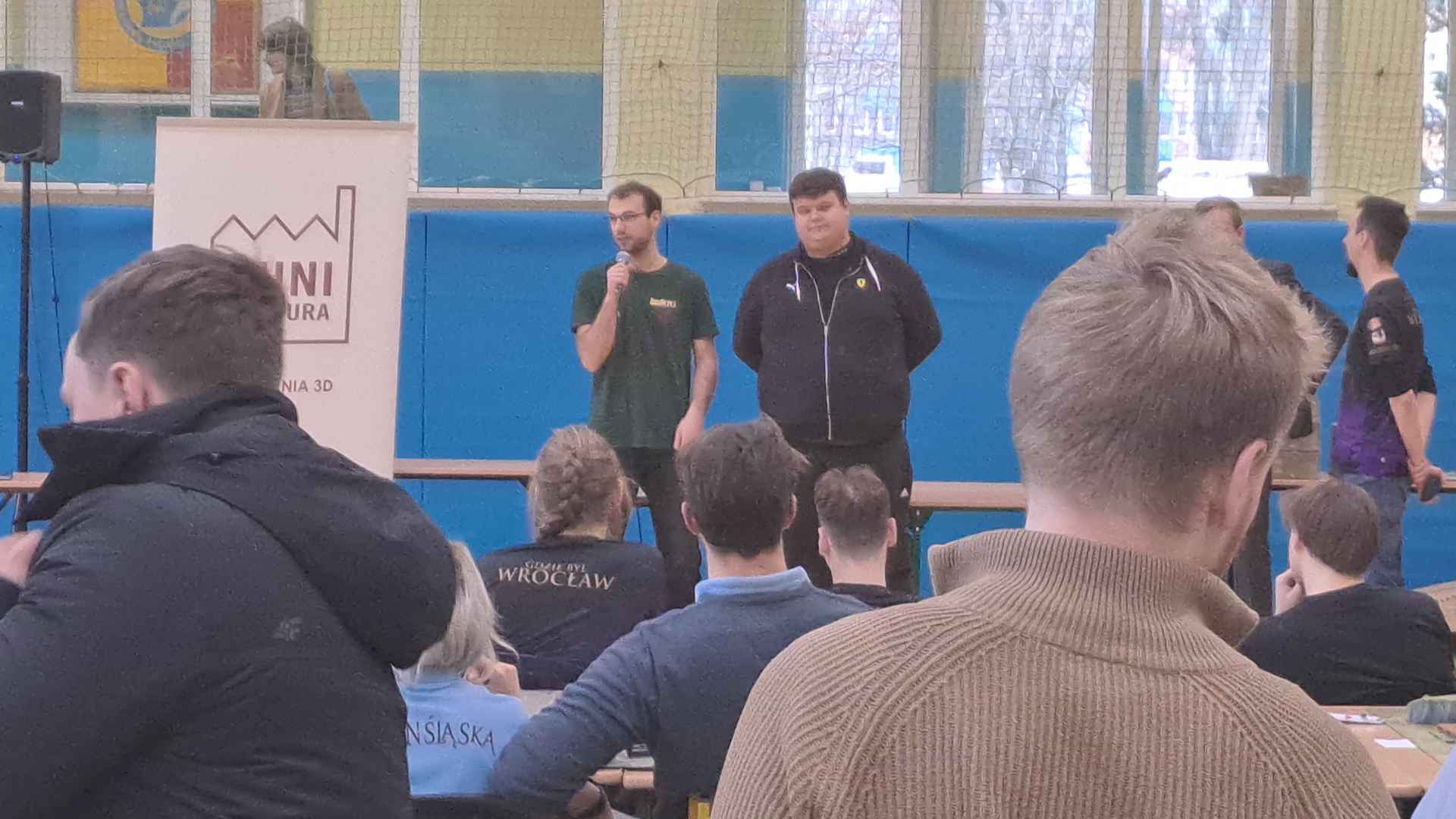
Paraolimpiada na obu stołach 😉 .Sztandar poświęcony DMP 2024.Quiz o Śródziemiu Adasia.Mega ciekawa gra z Andrzejem z Krakowa.Gra z Piotrkiem, jak zawsze przyjemna – nigdy wcześniej nie grałem na trolle.Dzięki Max za kawiarnię! Thank you Max for coffee corner!Gra z Jacentym, przegrana na własne życzenie, a było się tarczować na orki po wyjściu Saurona 😉 .Nasi sponsorzy i stół pełen nagród! Lothorien, loved and hated 😉 .
Wsparcia Indywidualnym Mistrzostwom Wszechświata udzielili następujący producenci z całej Polski i lokalne sklepy z Wrocławia, w kolejności alfabetycznej byli to następujący sponsorzy:
Bolter – jedno z tych miejsc we Wrocławiu związanych z grami figurkowymi, do których chce się wracać. Klubo-kawiarnia Bolter gdzie poza możliwością zakupu wszelakich systemów bitewnych i nie tylko posiada dużo miejsca do grania, a także można zjeść smacznego tosta, napić się pysznej kawy czy bezalkoholowych napojów wszelkiego rodzaju. Jest to zarazem miejsce w którym rozgrywamy nasze co miesięczne turnieje lokalne w Middle Earth: SBG. Tak więc jeśli chodzi o sam klub – dla każdego coś miłego, bo odnajdą się tutaj wszyscy, czy to gracze LoTR, czy to AoS, Blood&Plunder, Bolt Action, Conquest’a, Kill Team’a, The Old World, WFB i wielu innych systemów. Bolter o czym może nie każdy wie jest też wydawcą gier z serii Bogowie Wojny: Generał Lee oraz Togo. studia GMBoardgames.
Serdecznie dziękujemy Bolterowi za comiesięczną współpracę w kwestii lokalnych turniejów oraz za bycie sponsorem naszego wrocławskiego mastera – kolejny raz, to wiele dla nas znaczy!
Kromlech – w tym roku do grona sponsorów Indywidualnych Mistrzostw Wszechświata dołączyła firma Kromlech. Pytanie czym zajmuje się Kromlech lepiej zastąpić odpowiedzią czym się nie zajmuje. Na stronie firmy każdy gracz znajdzie coś dla siebie, czy to różnego rodzaju bitsy, budynki, miarki, modele figurek, podstawki, traye i inne akcesoria przydatne każdemu kto został wchłonięty przez hobby. Każdemu zainteresowanemu polecam zapoznać się ze stroną tej polskiej firmy, a Kromlechowi dziękujemy za wsparcie naszego turnieju!
Mag Planszowy – położony blisko Rynku, bo na ulicy Szewskiej wrocławski sklep, który w tym roku został jednym z naszych sponsorów i robi to w swojej historii pierwszy raz dla wydarzenia tej rangi, bo do tej pory zawsze wspierał własne wydarzenia odbywające się w swoich progach. Tym bardziej cieszymy się z tego, że dołączył do zacnego grona naszych sponsorów! W Magu Planszowym możecie nabyć wszelkiej maści gry planszowe i karciane, w czym Mag się specjalizuje, ale poza tym możecie zakupić tutaj wszelkiej maści akcesoria, RPG czy gry figurkowe wydawane przez Games Workshop, w tym naszego ulubionego Middle Earth: SBG.
W Magu Planszowym odbywają się turnieje w LoTR, dając szansę tym, którzy chcą grać częściej z różnymi ludźmi, a nie zawsze w tygodniu mają ku temu czas. Serdecznie dziękujemy za okazane wsparcie naszych Indywidualnych Mistrzostw Wszechświata 2025 i liczymy na liczne turnieje w bieżącym roku!
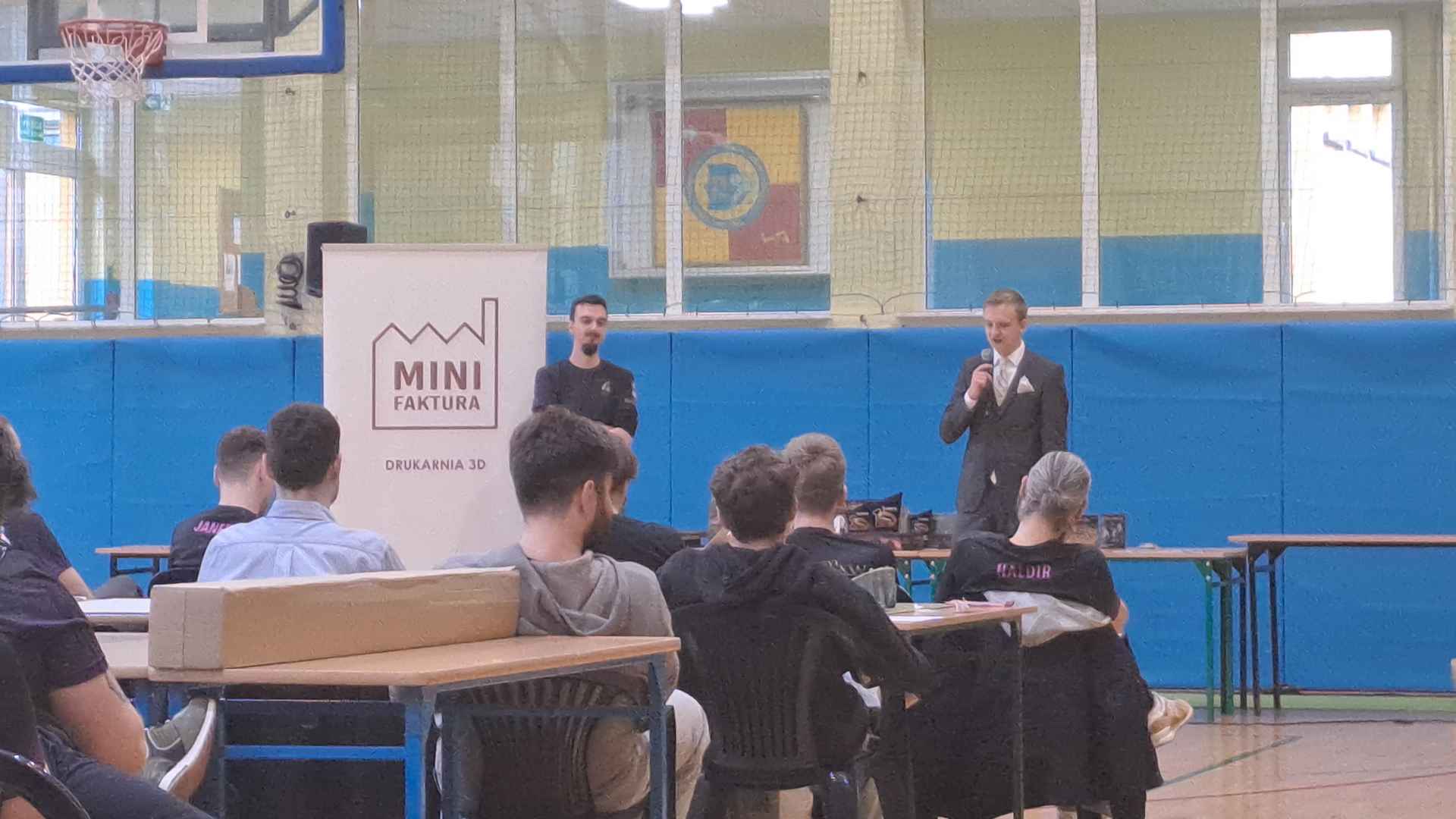
Minifaktura – Kolejny rok z rzędu możemy liczyć na fantastyczne wsparcie bez wątpienia najlepszej bitewniakowej drukarni 3d w Polsce! W tym roku po połączeniu sił z 3D MONKEY powiększyli ofertę najbardziej interesujących nas modeli pasujących do uniwersum Władcy Pierścieni od wielu producentów, dzięki czemu urozmaicenie armii nowymi i wyjątkowymi wzorami jest jeszcze prostsze! A to nie wszystko! Teraz zakupy możecie zrobić na nowej, regularnie uzupełnianej nowymi wzorami stronie internetowej: https://minifaktura3d.pl/
Opis od Kronos, dzięki!
Paintforge – czy to zwykły żołnierz Gondoru, czy ork z Mordoru, długowieczny i szlachetny Elrond czy jeszcze starszy i łaknący złota Smaug – z tuftami każdy model zyskuje w sobie więcej życia. Dzięki firmie Paintforge istniejącej na rynku od 2018 roku możemy ożywiać podstawki naszych modeli szeroką gamą tuftów oraz innych akcesoriów modelarskich które oferuje ta Polska firma. Tu swoje podziękowania kieruję do Paintforge które kolejny raz zostało sponsorem Indywidualnych Mistrzostw Wszechświata.
Playmaty –praktycznie każdy grający w dowolne gry figurkowe lubi grać na ładnych stołach z podłożem reprezentującym pole rozgrywającego się starcia, czy to jest starcie Dunharrow z korsarzami z Umbaru, ucieczka z kopalni Morii czy epickie starcie na polach Pellenoru. Bez barwnych mat reprezentujących arenę starć nie byłoby to możliwe. I tu do graczy wychodzą Playmaty firma posiadająca w swojej ofercie olbrzymi wybór mat do prawdopodobnie każdego systemu, w tym do naszego Middle Earth: SBG. Podziękowania do Playmat za wsparcie Indywidualnych Mistrzostw Wszechświata kolejny rok z rzędu.
Red Bull – Która to już bitwa? Tego nie pamięta nikt… Najtwardsi umieją się jeszcze przedstawić, reszta już tylko mimowolnymi skurczami nadgarstków rzuca kostkami w ciągłym wirze walki, czarów i inicjatyw… Gdyby tylko istniał jakiś sposób by wzbić się nad to wszystko niczym Gûlavhar i odzyskać utraconą energię, ale takowy nie istnie… Istnieje! Dzięki wsparciu RedBull, który doda Wam skrzydeł w kluczowych momentach, przy najważniejszych decyzjach. Dziękujemy, że będziecie z Nami i dodacie nam skrzydeł!
Safe&Sound – każdy gracz wie, że do bezpiecznego przechowywania najczęściej używanych armii najlepsze są solidne pudełka, a tych w swojej ofercie pruszkowska firma ma bardzo solidny wybór dla każdego systemu, a tym bardziej dla każdej armii do Middle Earth: SBG, czy to są nieliczne mężne elfy dowodzone przez Galadrielę, czy żyjący w cieniu Mordoru Gondorczycy pod wodzą Faramira, czy horda goblinów pod wodzą ich króla – każdy znajdzie coś dla siebie, czy to pudełka z pianką czy z płytką na modele zmagnetyzowane. Jak to mówią, dla każdego coś miłego! Dziękujemy Safe&Sound za bycie sponsorem naszego mastera!
Tereny do Gier – żaden stół do gry nie będzie nigdy gotowy do rozgrywek bez terenów, a te oferuje nasz kolejny sponsor – rodzinna firma T4G związana z markami TerenyDoGier.pl, Polish Front Miniatures i AM3D. Wielu z nas zaczynało z terenami, gdzie na kuchennym blacie książki robiły za górki, a różne inne obiekty wypełniały to, co sobie wyobraziliśmy – mam nadzieję, że dla większości z nas to daleka przeszłość, bo czy nie lepiej wyglądają nasze rozgrywki kiedy rangerzy pod wodzą Faramira urządzają zasadzkę na Mumakile w zalesionych wąwozach pogranicza Ithilien i Mordoru, gdy Boromir odzyskując nad sobą kontrolę walczy w obronie Merrego i Pippina, czy gdy dochodzi do starcia z Nazgulami na Wichrowym Czubie, kiedy Drużyna Pierścienia toczy bój o przeżycie w sali, w której pogrzebano Balina. Dziękujemy Terenom do Gier za wsparcie naszego mastera!
🇬🇧 Our dear participants have arrived from Bydgoszcz, Białystok, Bielsko-Biała, Katowice, Kraków, Lublin, Poznań, and Warsaw (the latter brought 13 tables—thanks again!). I’m not sure if I’ve missed any other city—if so, let me know, and I’ll update the list! Everyone had the opportunity to compete in six battles, played at 555 points according to the latest edition of Middle Earth: SBG. A new edition, refreshed rules, and new but familiar armies—now divided into different legions, closely tied to scenes from the movie.
As organizers from Gdzie był Wrocław, we did our best to make this the best Master tournament we’ve ever hosted. This year, for the first time, we introduced catering provided by Margaret—in my opinion, it was excellent, though some may have wished for larger portions. Additionally, there was a communal table with cakes, tea, and coffee available at all times. The smiles on participants’ faces and the fun atmosphere are the best rewards for us as organizers. And regarding the questions about the forest on table 41—yes, it was a terrain piece from Tereny Do Gier, generously lent to us for the event.
The Individual World Championships were supported by the following manufacturers from across Poland and local stores in Wrocław. In alphabetical order, our sponsors included:
Bolter
One of those places in Wrocław associated with miniature wargaming that you always want to return to. The Bolter Club-Café offers not only a wide selection of tabletop battle systems but also plenty of space to play, as well as delicious toast, great coffee, and a variety of non-alcoholic drinks. This is also where we hold our monthly Middle Earth: SBG tournaments. Bolter truly has something for everyone—whether you play LoTR, AoS, Blood & Plunder, Bolt Action, Conquest, Kill Team, The Old World, WFB, or many other systems. Not everyone may know that Bolter is also the publisher of Gods of War: General Lee and Togo by GMBoardgames.
A huge thank you to Bolter for their ongoing support of our local tournaments and for being a sponsor of our Wrocław Master event—once again, it means a lot to us!
This year, Kromlech joined the ranks of sponsors for the Individual World Championships. Instead of asking what Kromlech does, it’s easier to ask what they don’t do! Their website offers something for every hobbyist—bits, buildings, measuring tools, miniatures, bases, trays, and many other accessories essential for anyone immersed in the hobby. We highly recommend checking out this Polish company’s offerings, and we deeply appreciate their support of our tournament!
Located near the Market Square on Szewska Street, this Wrocław-based store became one of our sponsors this year for the first time at an event of this scale. Until now, Mag Planszowy had primarily supported events within its own premises, so we’re especially excited about their involvement! They specialize in board and card games but also stock RPGs, hobby accessories, and miniature games by Games Workshop, including our beloved Middle Earth: SBG.
Tournaments in LoTR are held at Mag Planszowy, giving players a chance to compete regularly against different opponents. We sincerely thank them for supporting the Individual World Championships 2025 and look forward to many more tournaments this year!
For another year in a row, we’ve had the fantastic support of Poland’s top 3D printing service for wargamers! After merging with 3D MONKEY, they expanded their range of Lord of the Rings-themed models from various manufacturers, making it even easier to enhance armies with unique and new designs. And that’s not all! You can now shop on their new website, which is regularly updated with fresh models.
Whether it’s a Gondorian soldier, an orc from Mordor, the noble Elrond, or even the gold-hungry Smaug—tufts bring every model to life. Since 2018, Paintforge has been helping us enhance our miniatures with a wide selection of tufts and other modeling accessories.
A big thank you to Paintforge for once again sponsoring the Individual World Championships!
Any tabletop gamer appreciates playing on visually appealing battlefields—whether it’s Dunharrow vs. Corsairs of Umbar, escaping the Mines of Moria, or an epic clash on the Pelennor Fields. Playmaty offers an extensive range of mats for virtually every game system, including Middle Earth: SBG.
A huge thank you to Playmaty for supporting the Individual World Championships for another year!
The toughest players can still introduce themselves, while the rest are merely rolling dice in an endless cycle of combat, magic, and initiative rolls. If only there were a way to rise above it all like Gûlavhar and regain lost energy—but wait, there is! Thanks to Red Bull, you’ll get wings at the most crucial moments when making game-changing decisions.
Every player knows that safe storage for their armies is essential. Safe&Sound, based in Pruszków, offers a fantastic range of cases tailored for any Middle Earth: SBG force—whether it’s a handful of noble Elves led by Galadriel, Gondorian warriors lurking in Mordor’s shadows under Faramir’s command, or a horde of goblins under their king. From foam trays to magnetic storage solutions, they have something for everyone!
A huge thank you to Safe&Sound for sponsoring our Master!
No battlefield is complete without terrain! Tereny do Gier, a family-run company behind TerenyDoGier.pl, Polish Front Miniatures, and AM3D, has been a tremendous supporter of our community.
Many of us started out using books and random household objects as terrain, but those days are behind us! Tereny do Gier allows us to recreate cinematic moments—whether it’s Faramir’s rangers ambushing Mumakil, Boromir’s last stand defending Merry and Pippin, or the Fellowship battling Nazgûl on Weathertop.
A heartfelt thank you to Tereny do Gier for supporting our Master!
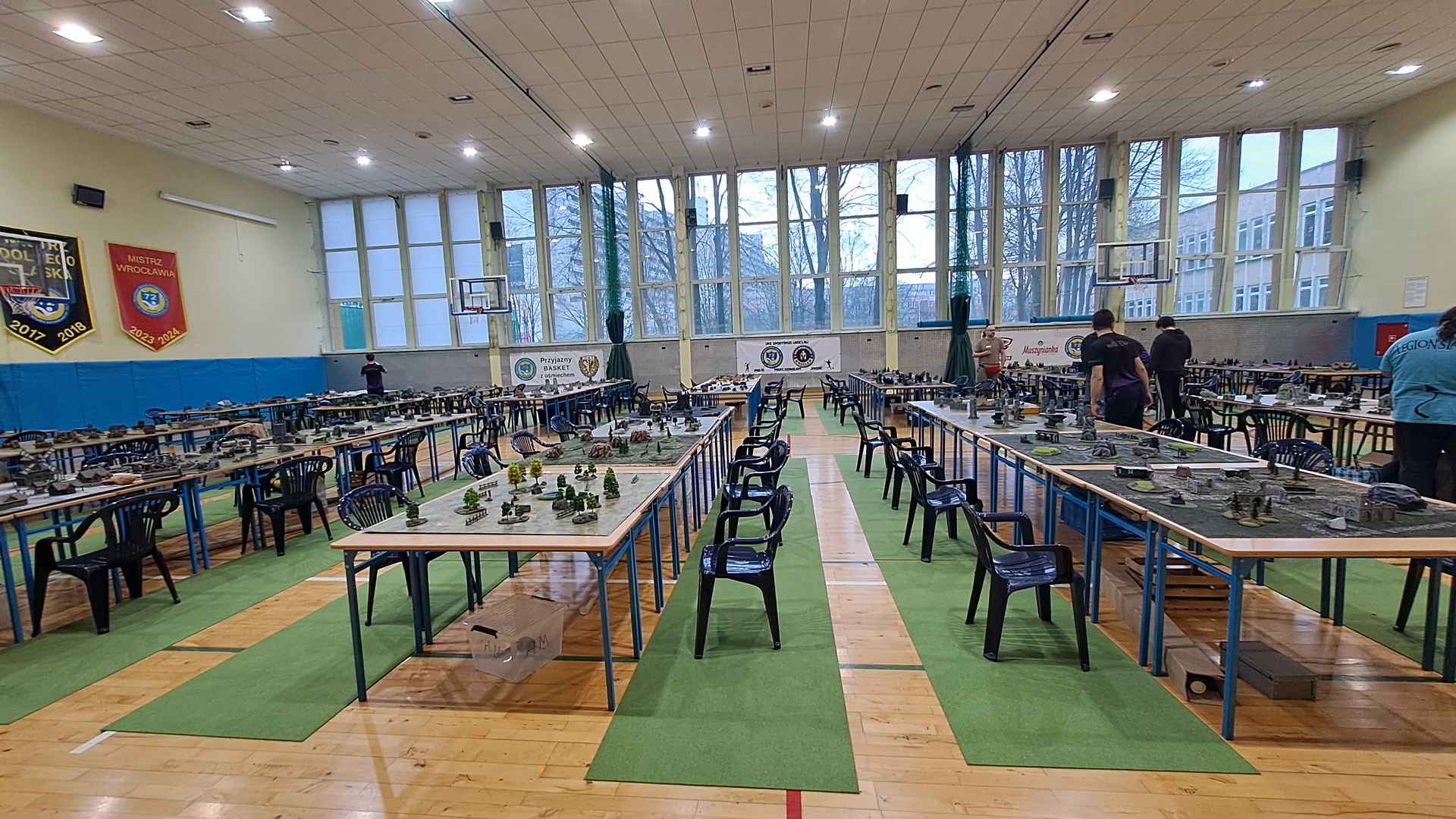
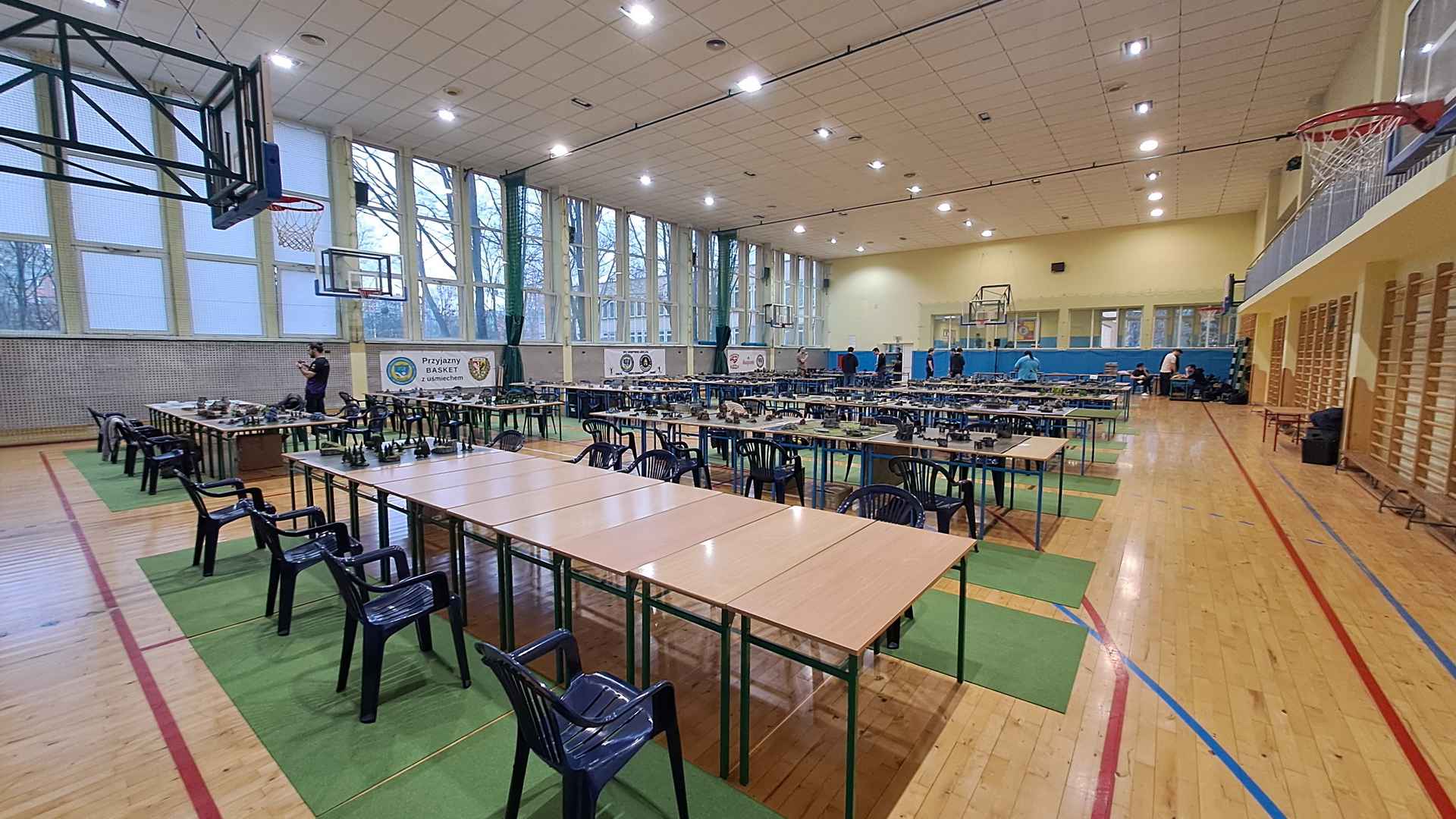
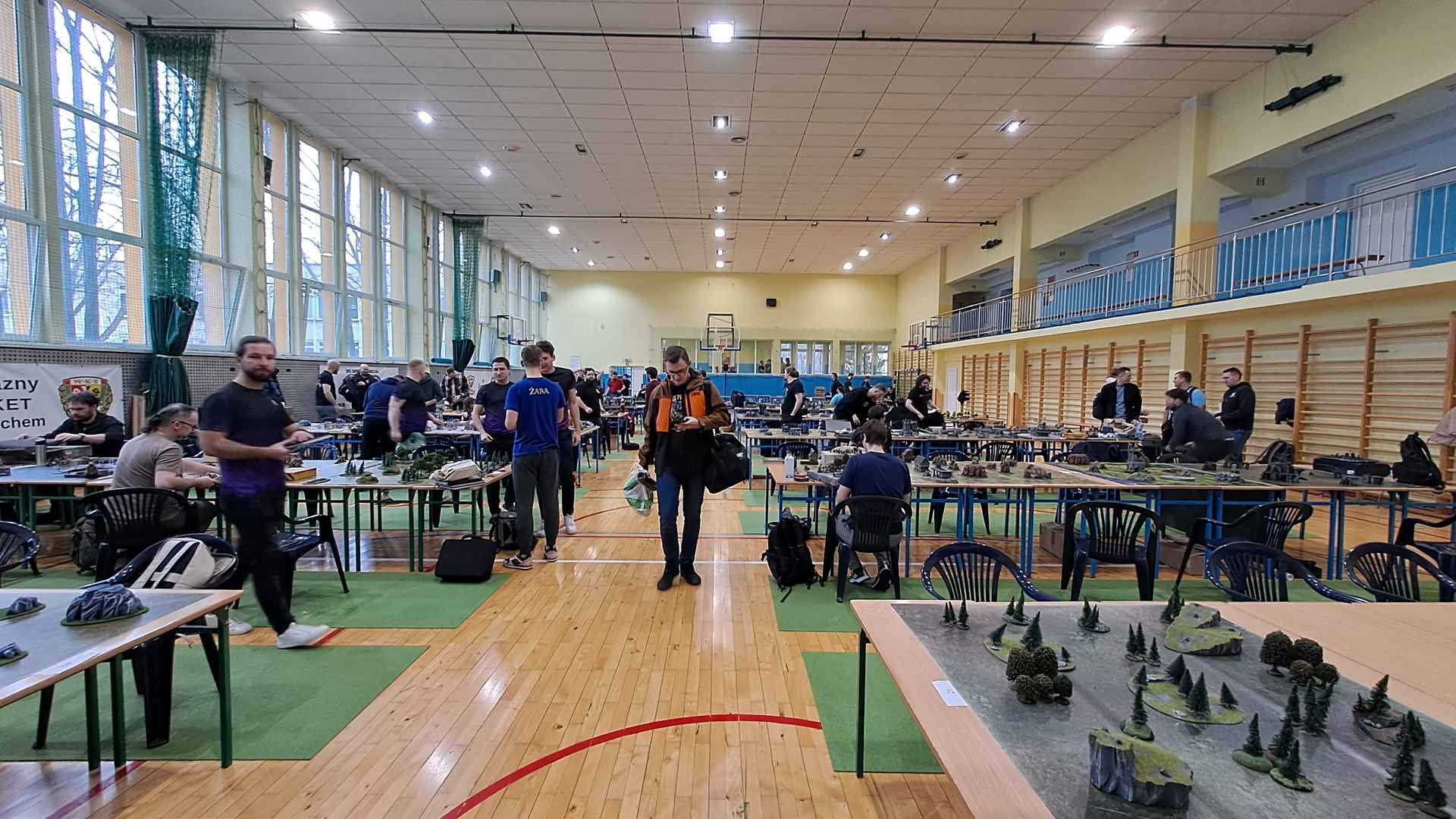
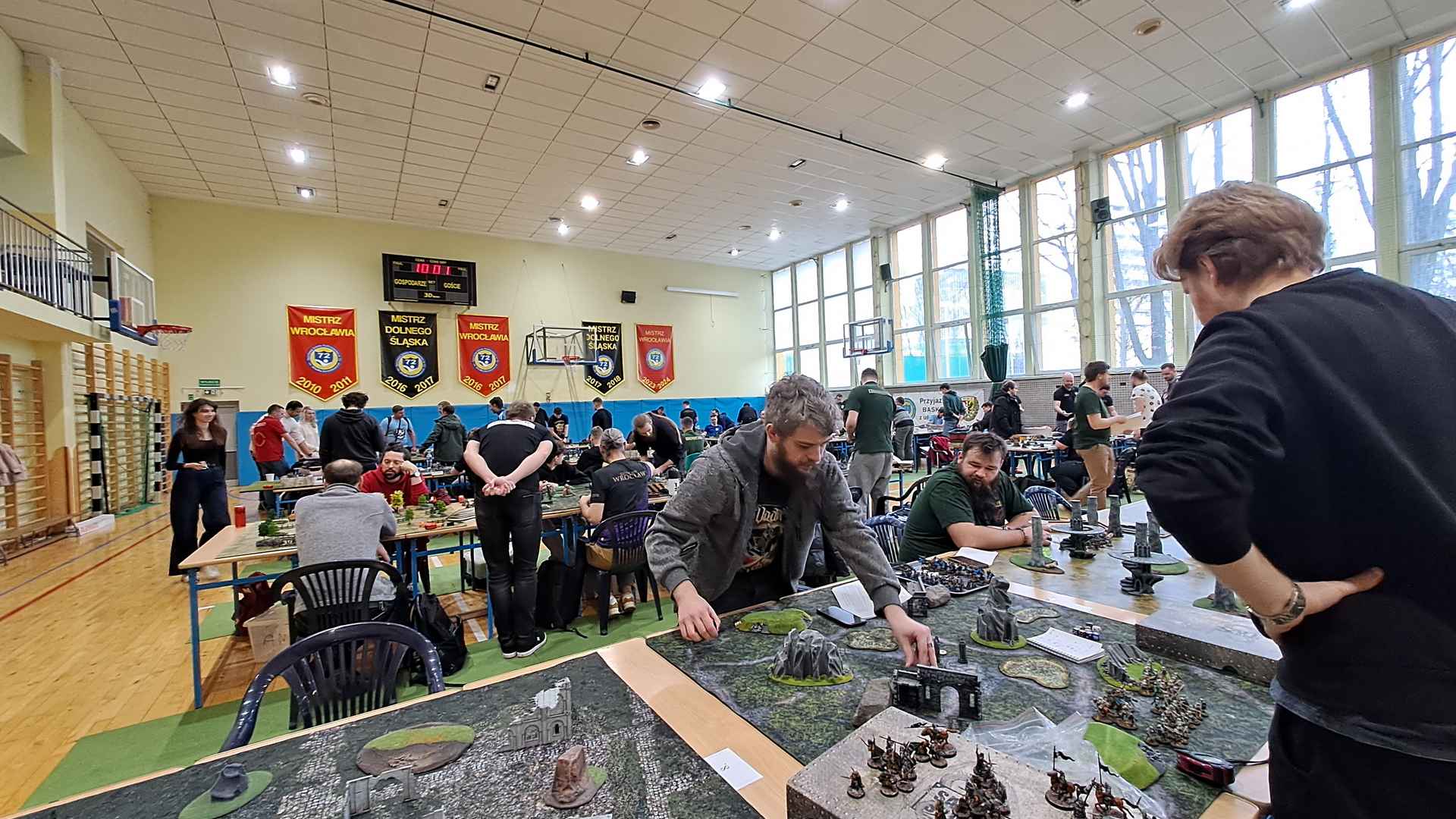
🇵🇱 Podziękowania za udostępnione miejsce należą się: Dyrekcji Sportowej Szkoły Podstawowej nr 72 imienia Władka Zarembowicza, mieszczącej się przy ulicy Trwałej 17-19 we Wrocławiu, dzięki uprzejmości której w dniach 1-2 lutego 2025 rozegraliśmy kolejne Indywidualne Mistrzostwa Wszechświata – mastera którego jako Gdzie był Wrocław organizujemy cyklicznie w stolicy Dolnego Śląska. W 2025 roku odbył się największy do tej pory turniej, który zorganizowaliśmy.
Podwoje szkoły sportowej na co dzień służące celom edukacyjnym kolejnych pokoleń, w ostatni weekend zamieniło się w równie gwarne miejsce wypełnione licznymi fanami Śródziemia Mistrza Tolkiena którzy zjechali tutaj z całej Polski, by toczyć dwudniowe boje w uniwersum znanym z literackich dzieł, a jeszcze bardziej upowszechnionym dzięki adaptacjom filmowym w reżyserii Petera Jacksona.
To wszystko nie byłoby możliwe bez pomocy wspomnianej wcześniej placówki oświatowej, której dyrekcji i personelowi należą się szczególne podziękowania, bez was nasz turniej klasy master mógłby w ogóle się nie udać, lub odbyć w o wiele mniejszym gronie – dzięki wam niemal setka graczy mogła zmierzyć się w walce o losy Śródziemia w figurkowej grze Middle Earth: SBG. Serdeczne podziękowania dedykujemy Dyrekcji, która udzieliła nam miejsca do gry, za co jesteśmy niezmiernie wdzięczni i liczymy na dalszą współpracę a także Paniom z obsługi, które czuwały nad szkołą w trakcie weekendu!
🇬🇧 Acknowledgments for the Provided Venue
Our sincere thanks go to the Management of the Sports Primary School No. 72 named after Władek Zarembowicz, located at Trwała Street 17-19 in Wrocław, whose generosity allowed us to host another edition of the Individual World Championships – Master, which we, as „Gdzie był Wrocław”, regularly organize in the capital of Lower Silesia. The 2025 tournament was the largest one we have organized so far.
The sports school, which usually serves as an educational institution for future generations, transformed last weekend into a lively gathering place filled with numerous fans of J.R.R. Tolkien’s Middle-earth, who traveled from all over Poland to engage in two days of battles set in the universe made famous by literary masterpieces and further popularized by Peter Jackson’s film adaptations.
None of this would have been possible without the support of this educational institution, whose management and staff deserve special recognition. Without you, our Master-class tournament might not have happened at all or would have taken place on a much smaller scale. Thanks to you, nearly a hundred players were able to compete for the fate of Middle-earth in the Middle-earth Strategy Battle Game (MESBG).
We extend our heartfelt thanks to the School Management, who provided us with a venue for our event, for which we are extremely grateful, and we look forward to future cooperation! Special thanks also go to the school staff, who took care of the facilities throughout the weekend!
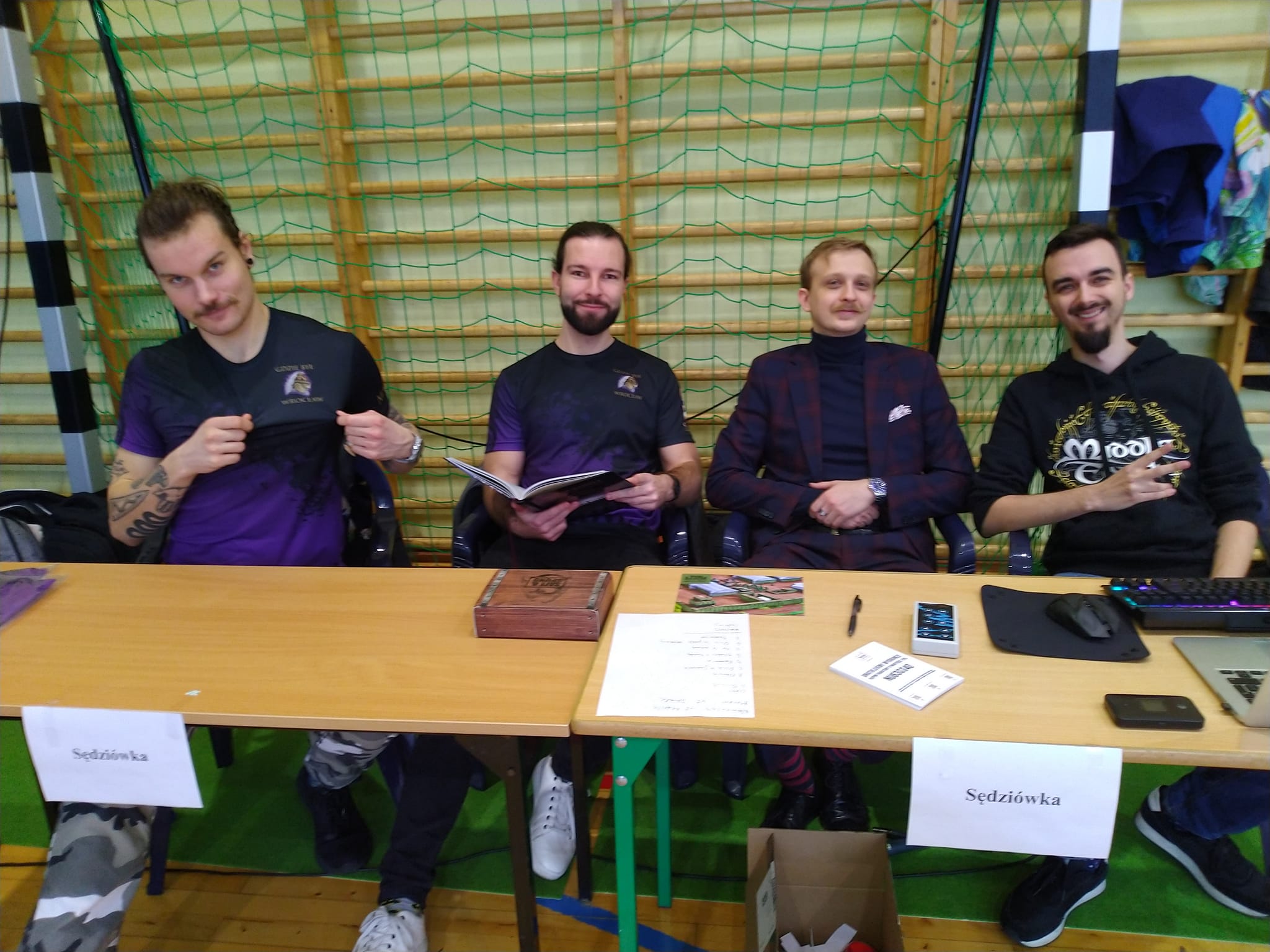
🇵🇱 Podsumowanie: – serdecznie dziękuję wszystkim naszym gościom za przybycie, to wydarzenie było dla was i bez was by nie istniało! – organizatorom i współorganizatorom z którymi współpracowałem nad tym, by Indywidualne Mistrzostwa Wszechświata wyszło w formacie, który każdy widział w szczególności: Adasiowi za organizację quizu o uniwersum Tolkiena, Kubie, Marianowi, Mauro – za pilnowanie, by budżet się spinał, Maxowi – za zorganizowanie cateringu oraz kawiarni, Slayowi, Walusiowi za zorganizowanie transportu i wszystkim tym którzy w jakimś stopniu byli odpowiedzialni za pomoc przy organizacji tego wydarzenia. – dziękuję wszystkim którzy użyczyli swoich mat czy terenów, a było trochę takich osób również z Wrocławia. – miałem sześć przyjemnych gier z graczami z różnych części Polski i mam nadzieję, że do zagrania w przyszłości!
🇬🇧 Summary: – I sincerely thank all our guests for coming—this event was for you, and without you, it wouldn’t have existed! – A huge thank you to the organizers and co-organizers with whom I worked to bring the Individual Universe Championships to life in the format everyone witnessed. Special thanks to Adaś for quiz about Tolkien universum, Kuba, Marian, and Mauro for keeping the budget in check, Max for organizing catering and the café, Slay, Waluś for handling transportation, and everyone else who, in any way, contributed to making this event happen. – big thanks to all who lent their mats or grounds, and there were some also from Wroclaw. – I had six enjoyable games with players from different parts of Poland, and I hope to play more in the future!
🇬🇧 This is my first post of 2025, dedicated to one of my favorite systems, which I haven’t played recently. A lack of time in January—partly due to spending a week on sick leave and partly because of my involvement in organizing the Wrocław Master tournament for Middle-earth: SBG—meant that if I posted anything, it was on the Wrocław Facebookgroup related to that system.
Nevertheless, it’s time to slowly get back to playing Bogowie Wojny: Togo. Lately, I’ve only been testing scenarios, and I can’t reveal much more—though I’m sure players will enjoy them. I also plan to return to Bolt Action (third edition) and Blood Red Skies. Of course, I’ll probably play Middle-earth most frequently.
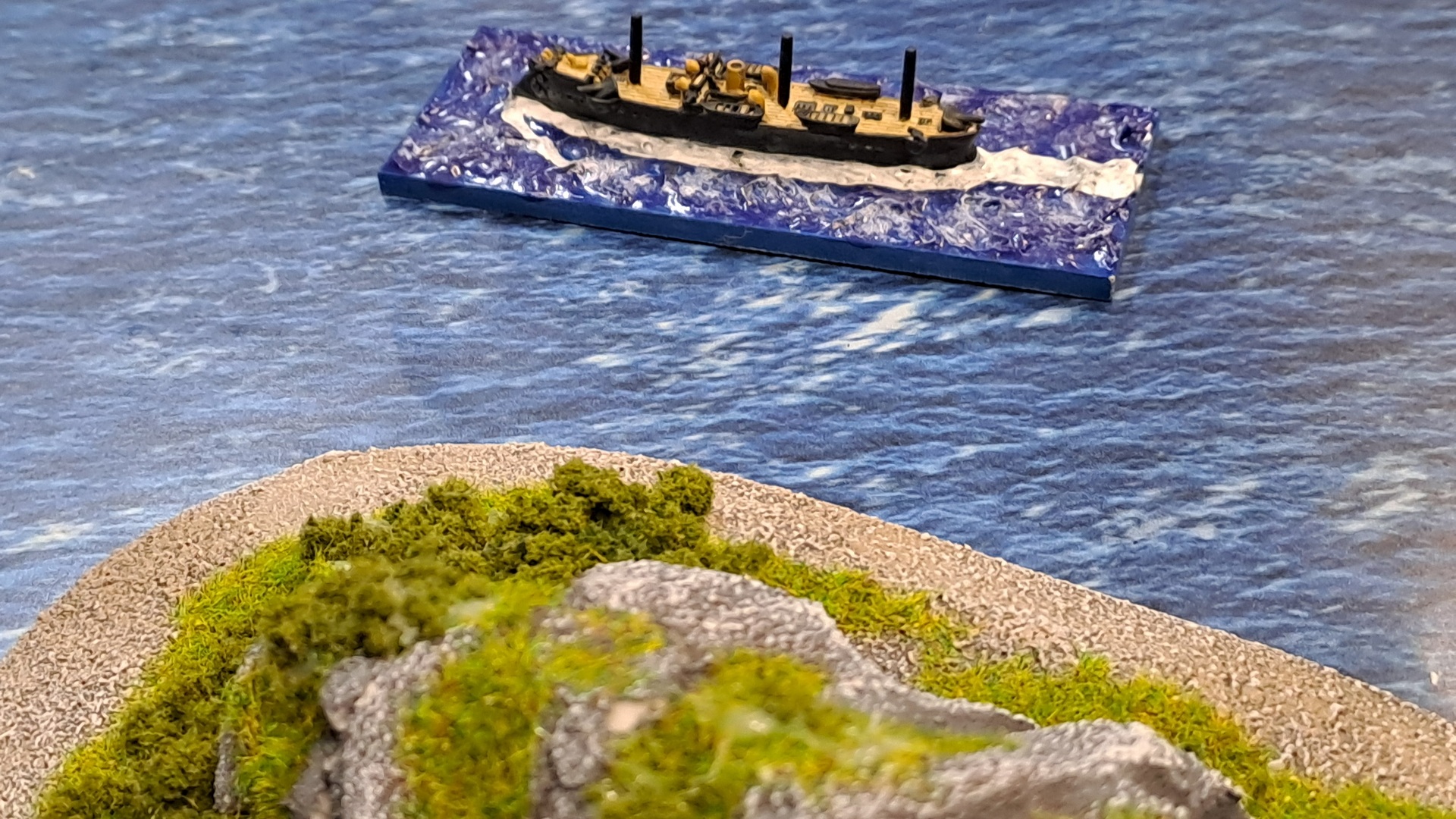
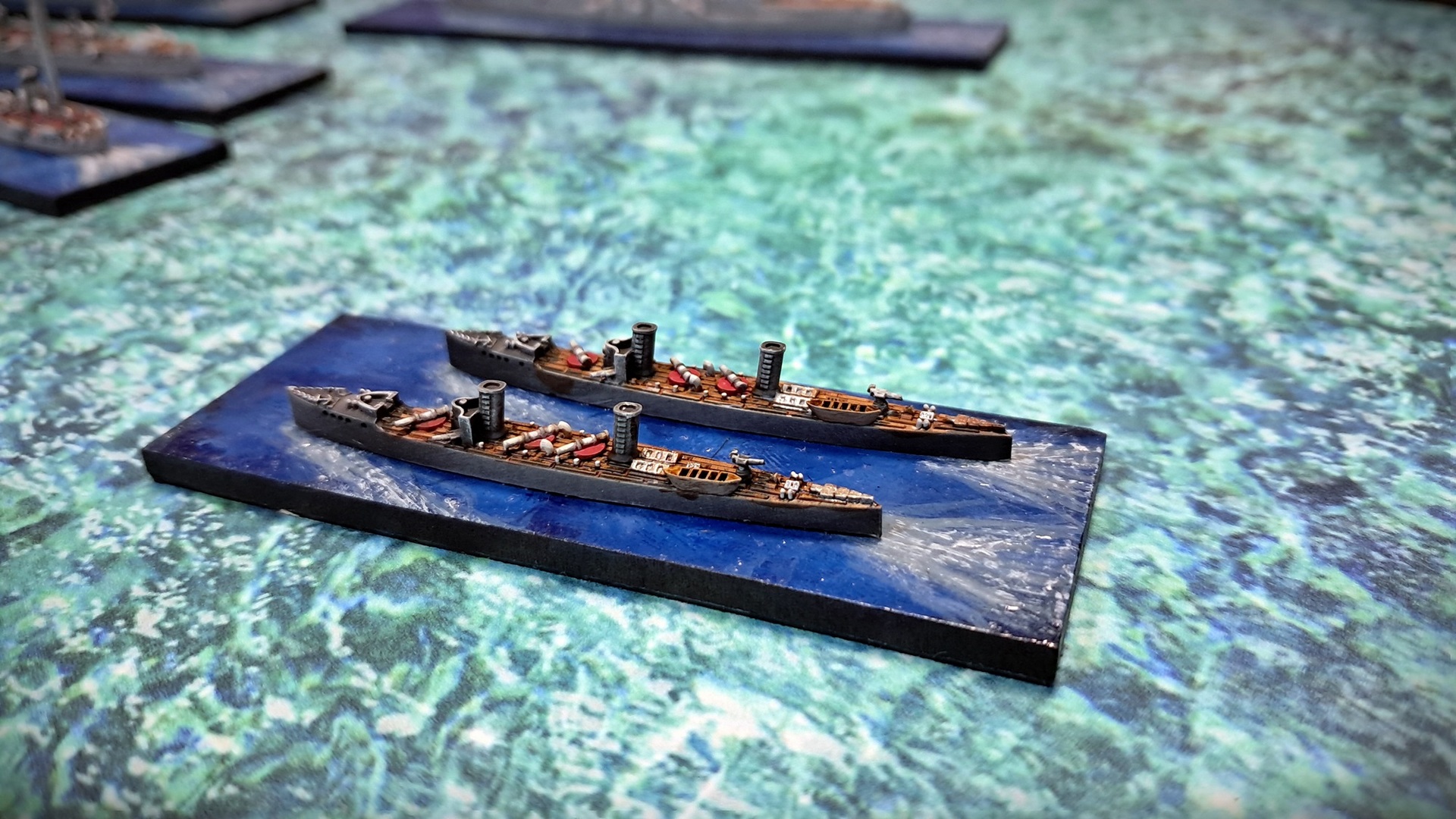
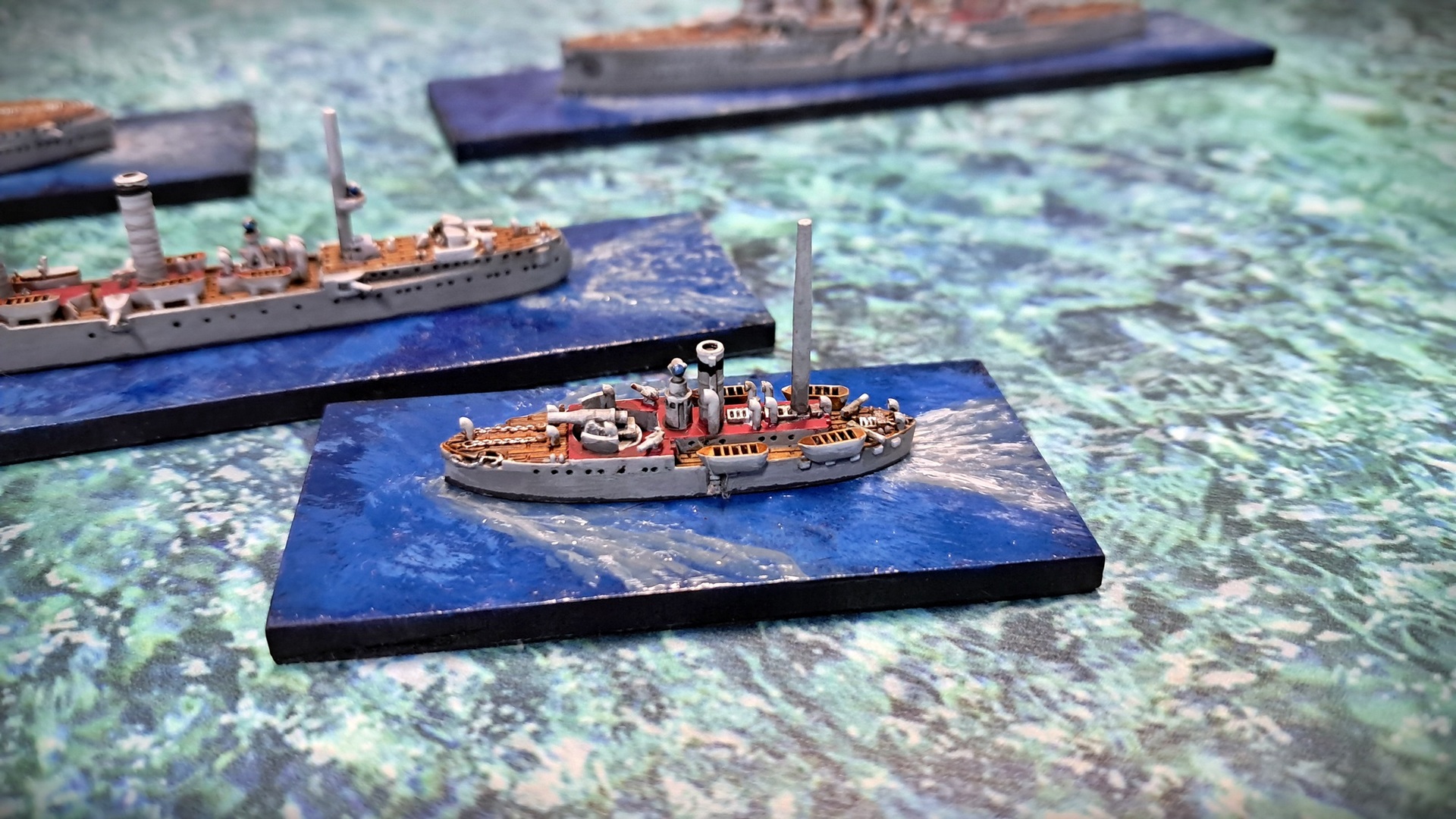
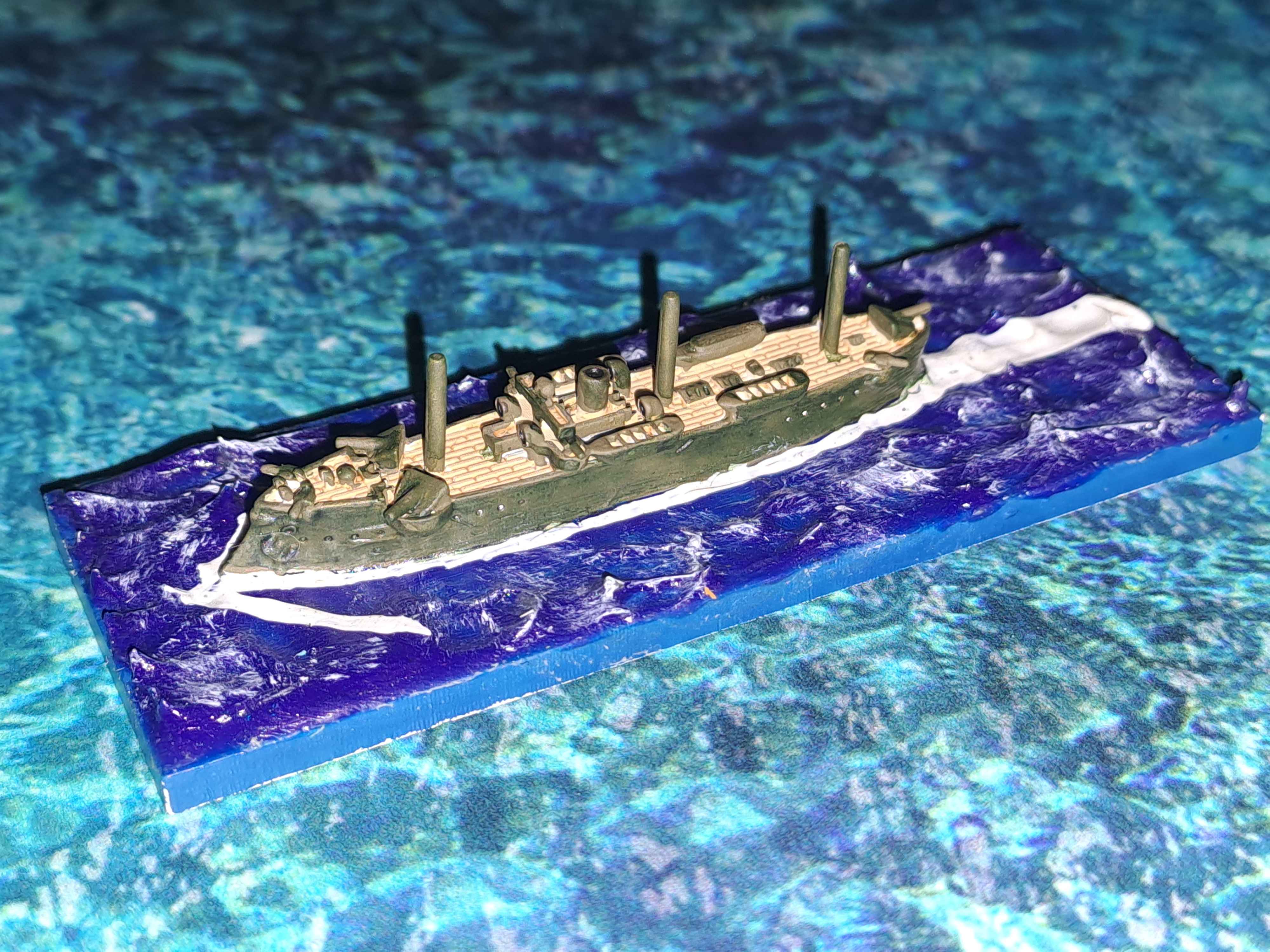
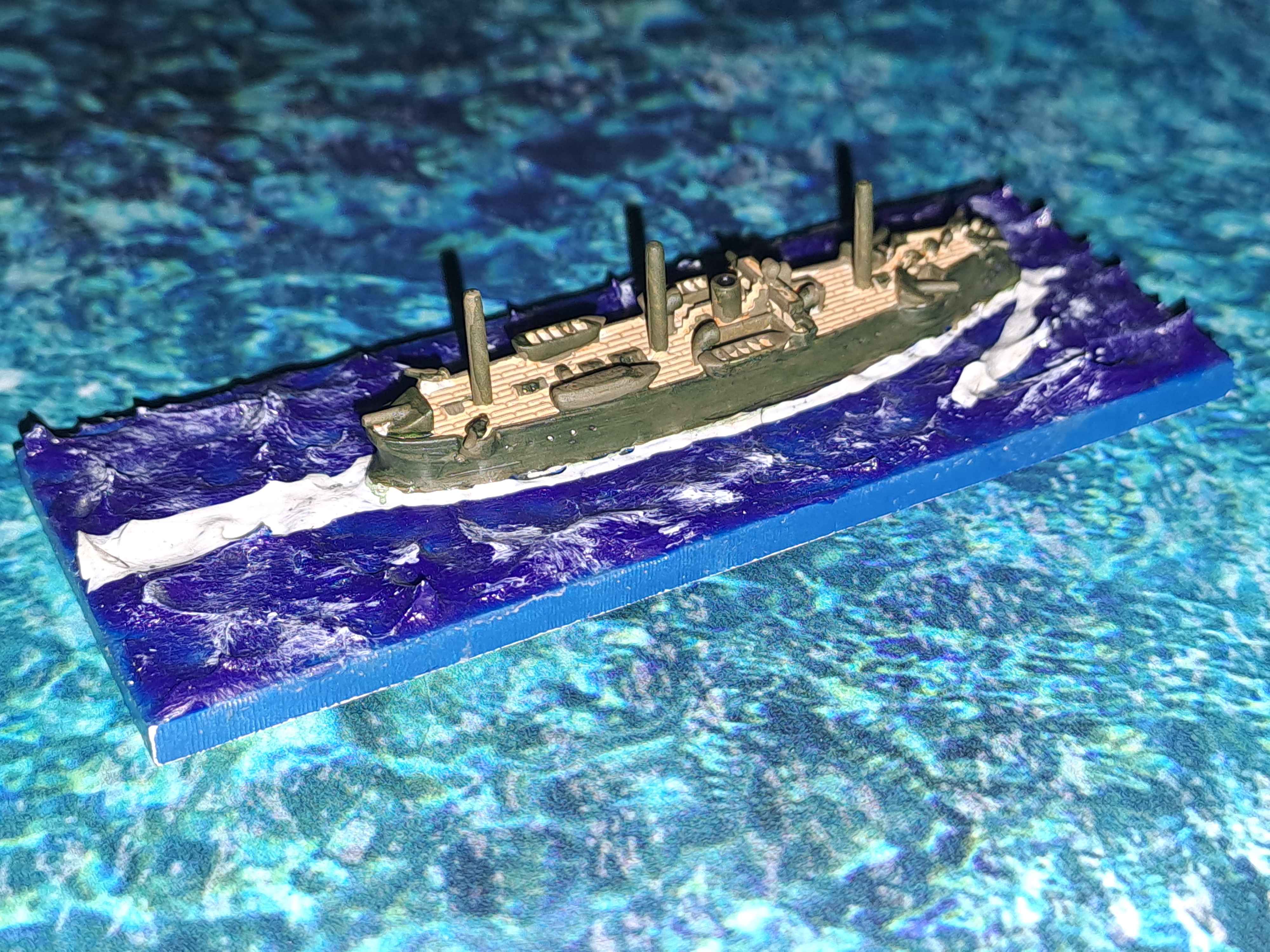
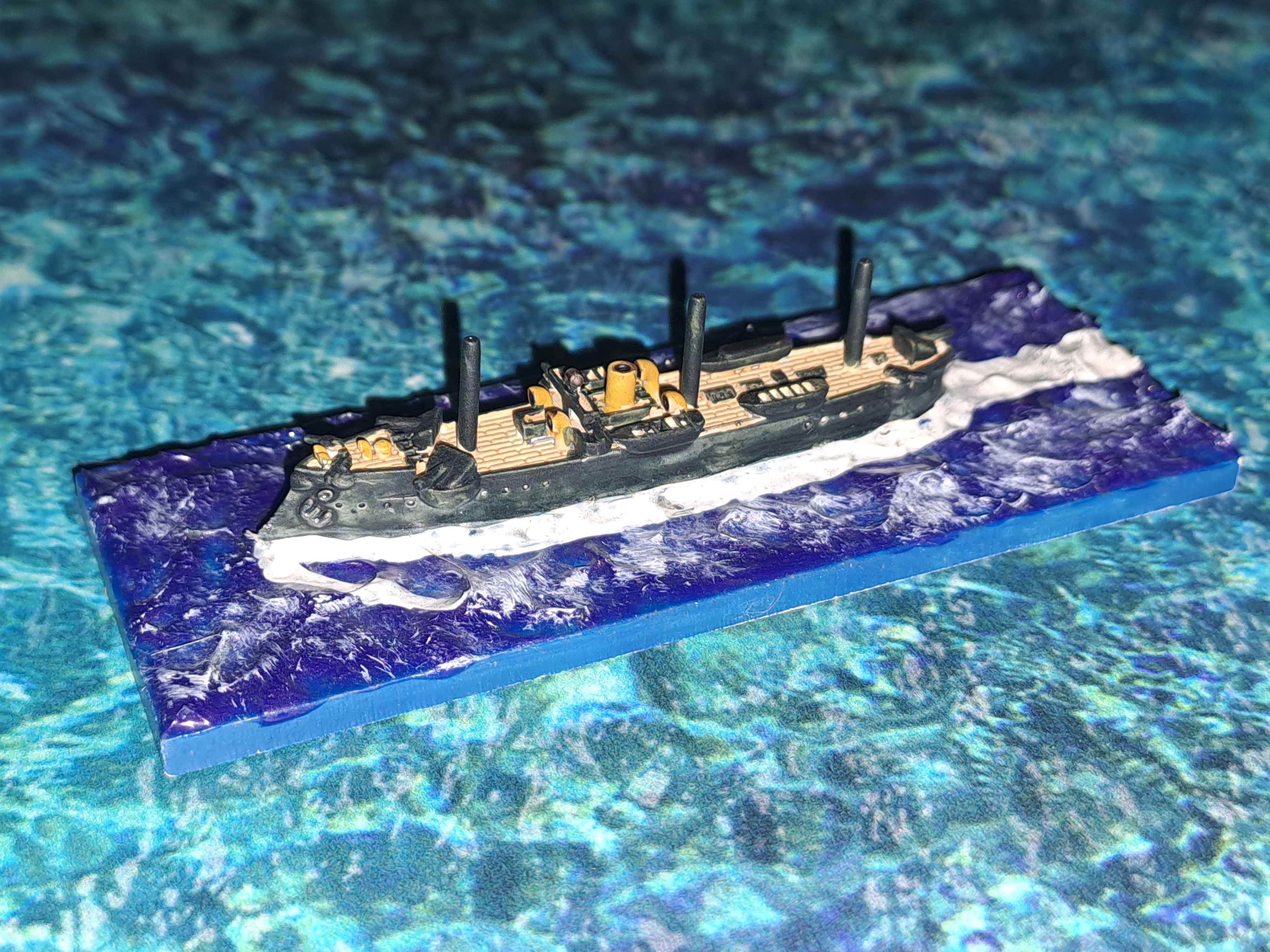
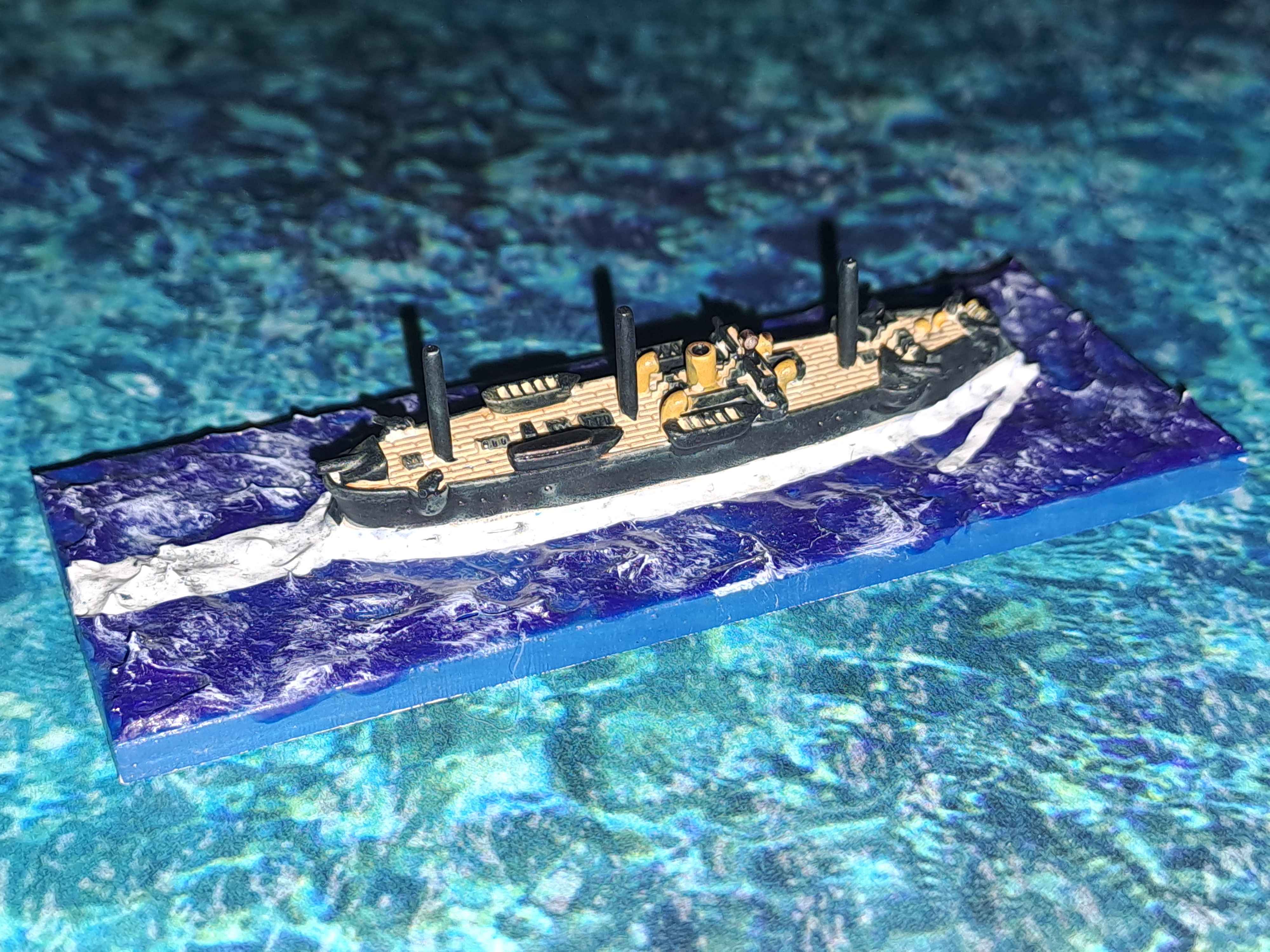
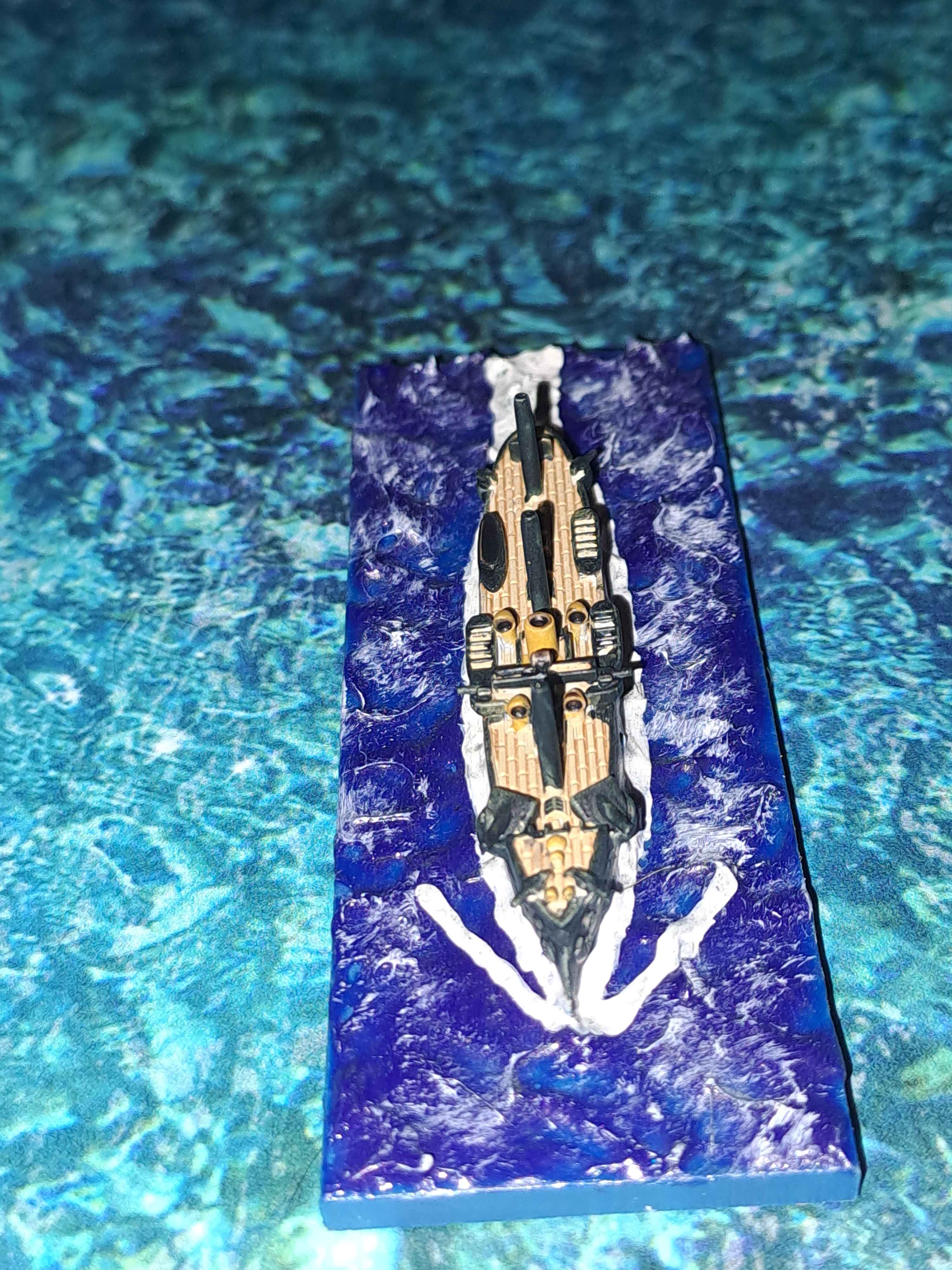
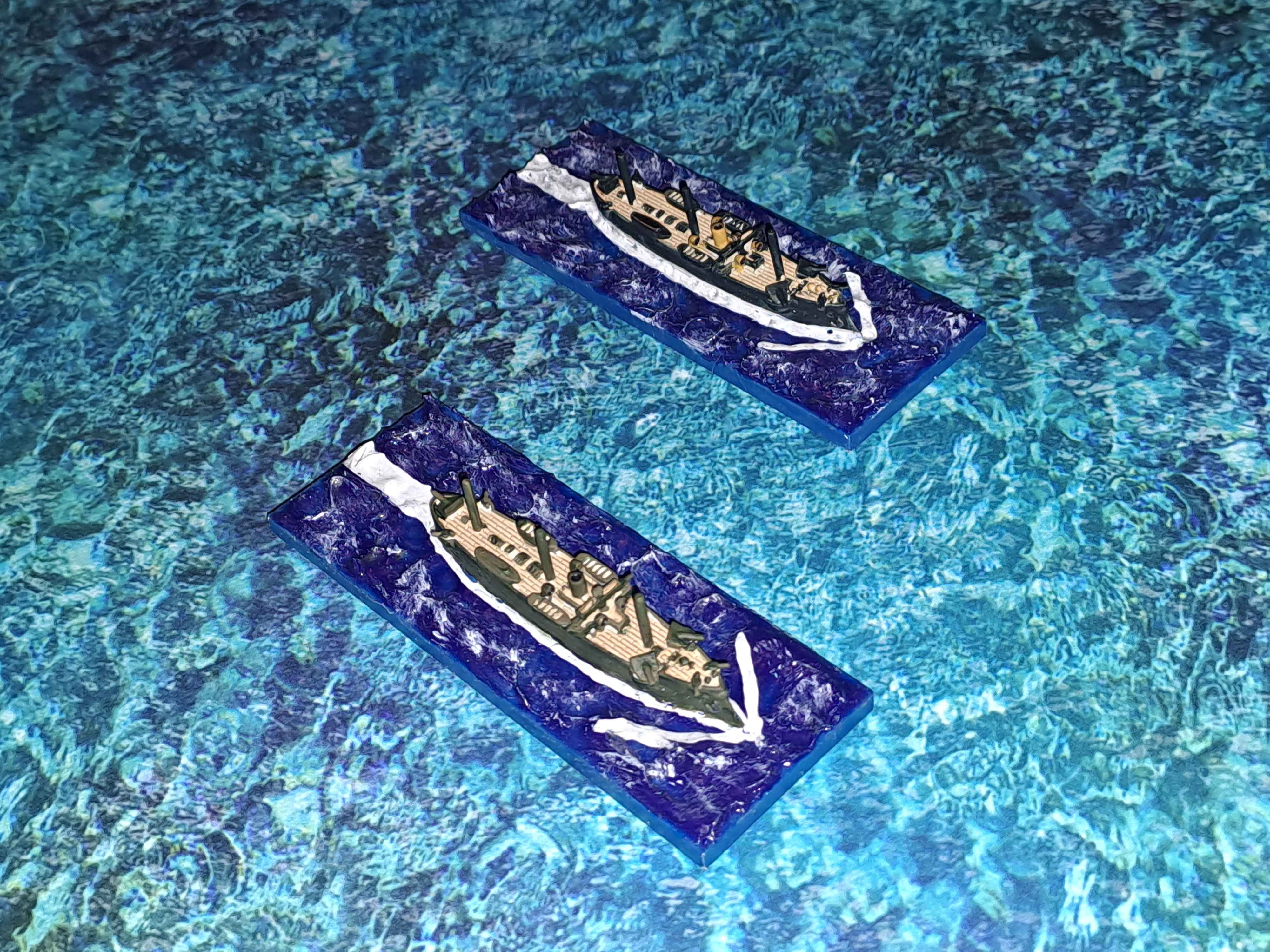
Below are pictures of two Russian Korietz-class (Koreanets-class) gunboats: Korietz, which served in Port Arthur, and Mandzhur, which served in the Baltic Fleet. Both have now reinforced my Rossiyskiy Imperatorskiy Flot—the Imperial Russian Navy. The remaining six ships of this class served in the Black Sea Fleet, and their names were Donets, Kubanets, Terek, Uralets, Chernomorets, and Zaporozhets (translated based on the names from this source).
With permission from GM Boardgames: The Korietz (Koreanets) class consisted of gunboats built in the 1880s by shipyards in Sweden and other locations. Two of these vessels (Korietz and Mandzhur) operated in the Pacific, while the rest served in the Black Sea.
Korietz took part in the Battle of Chemulpo alongside the cruiser Varyag. However, due to its weak armor, it stayed in the rear. Interestingly, the ship had not yet been repainted in wartime colors and still sailed in its original white paint.
Korietz can be a very useful unit, both in engaging light enemy vessels—since, as a Class 4 ship, it will have an easier time hitting them—and in harassing larger enemy ships. Its main armament consists of 203mm caliber guns.
🇵🇱 To pierwszy wpis w 2025 roku i jest poświęcony jednemu z moich ulubionych systemów, w którego ostatnio nie grałem. Brak czasu w styczniu związany z przespaniem tygodnia na urlopie chorobowym oraz w jakimś stopniu współudział w organizacji wrocławskiego mastera w Middle Earth: SBG sprawiły, że jeśli coś wrzucałem, to na wrocławską grupę na Facebooku związaną z tym ostatnim systemem. Mimo wszystko pora powoli wrócić do grania w Bogów Wojny: Togo – ostatnio były to testy scenariuszy i nic więcej dodać nie mogę, na pewno spodobają się graczom, a także do Bolt Action trzecią edycję czy Blood Red Skies. Oczywiście pewnie najczęściej będę grać w Middle Earth.
A poniżej zdjęcia dwóch rosyjskich kanonierek klasy Korietz (Koreańczyk), a mianowicie Korietza który pełnił służbę w Port Artur i Mandżura który pełnił służbę we flocie Bałtyckiej – oba właśnie wzmocniły mój Rossiyskiy Imperatorskiy Flot czyli flotę rosyjską. Pozostałych sześć służyło we flocie Morza Czarnego i były to okręty o nazwach: Doniec, Kubaniec, Teriec, Uraliec, Czarnomoczyk i Zaporożec (tłumaczenie własne bazując na nazwach stąd).
Za zgodą GM Boardgames: Korietz (Koreańczyk) to klasa kanonierek, zbudowanych w latach 80-tych XIX wieku przez stocznie m.in. w Szwecji. Dwie z jednostek tego typu (Korietz i Mandżur) operowały na Pacyfiku, pozostałe na Morzu Czarnym. Korietz wziął udział wraz z krążownikiem Wariag w bitwie pod Czemulpo, choć z uwagi na słabe opancerzenie trzymał się z tyłu. Co charakterystyczne nie zdążono jeszcze pomalować tego okrętu na barwy wojenne, nadal pływał pomalowany na biało. Korietz może być bardzo przydatną jednostką zarówno do walki z lekkimi jednostkami, będzie mu je łatwiej trafiać (bo sam jest okrętem 4 klasy), ale również do kąsania większych okrętów przeciwnika. Jego główne uzbrojenie stanowią bowiem armaty kalibru 203mm.
Korietz.Mandżur.Korietz&Mandżur.
Summary: – interesting page I found with model of Korietz is HERE. – really nice models, wish to see them soon on the board.
Podsumowanie: – interesująca strona z modelem Korietz jest TU. – bardzo ładne modele okrętów, mam nadzieję zobaczyć je wkrótce na stole.
🇵🇱Z okazji nadchodzącego roku 2025 życzę wszystkim Wszystkiego Najlepszego, oby nadchodzący rok nie był gorszy od odchodzącego, a najlepiej by był od niego lepszy. Dużo zdrowia, zamożności, perspektyw na lepsze jutro, bez głupich, biurokratycznych ograniczeń dla zwykłych ludzi i dla biznesów które stoją za zamożnością społeczeństw. Końca wojen, bo zwykłym ludziom one nie są potrzebne – cudze interesy które pochłaniają życia „sąsiadów” zza miedzy. Swojemu krajowi życzę polityków reprezentujących dobro Polaków oraz ludzi którzy żyją z nami w Polsce, a także normalizacji stosunków z Rosją, gdzie chociażby mam przyjaciółkę poznaną wieki temu na Last.fm i nie tylko nią zresztą, a także skąd mam przyjaciół i znajomych. Życzę polityków którzy nie szafują życiem swoich wyborców i wolą dialog, niż perspektywy wojny i wszystkiego co jest z tym związane.
🇨🇿U příležitosti nadcházejícího roku 2025 přeji všem všechno nejlepší, ať je příští rok minimálně stejně dobrý jako ten odcházející, a ideálně ještě lepší. Hodně zdraví, blahobytu, nadějných vyhlídek na lepší zítřek, bez hloupých byrokratických omezení pro obyčejné lidi a podniky, které jsou základem prosperity společností. Konec válek, protože obyčejní lidé je nepotřebují – cizí zájmy, které stojí životy „sousedů” odvedle, jim nepřinášejí nic dobrého.
Svému vlastnímu státu přeji politiky, kteří budou hájit dobro Poláků i všech, kdo s námi žijí v Polsku. Přeji také normalizaci vztahů s Ruskem, kde mám například kamarádku, kterou jsem poznal před lety na Last.fm, a nejen ji – mám tam přátele a známé. Přeji politiky, kteří nehazardují s životy svých voličů a dávají přednost dialogu před vyhlídkami na válku a vším, co s ní souvisí.
🇩🇪Anlässlich des kommenden Jahres 2025 wünsche ich allen alles Gute! Möge das kommende Jahr nicht schlechter sein als das scheidende, sondern am besten noch besser. Viel Gesundheit, Wohlstand und Perspektiven für eine bessere Zukunft, ohne unsinnige bürokratische Einschränkungen für einfache Menschen und die Unternehmen, die den Wohlstand der Gesellschaften tragen. Ein Ende der Kriege, denn einfache Menschen brauchen sie nicht – fremde Interessen, die das Leben der „Nachbarn“ jenseits der Grenze kosten.
Meinem Land wünsche ich Politiker, die das Wohl der Polen sowie der Menschen, die mit uns in Polen leben, vertreten. Ich wünsche mir auch eine Normalisierung der Beziehungen zu Russland, wo ich unter anderem eine Freundin habe, die ich vor Ewigkeiten auf Last.fm kennengelernt habe, und nicht nur sie, sondern auch weitere Freunde und Bekannte.
Ich wünsche mir Politiker, die nicht leichtfertig mit dem Leben ihrer Wähler umgehen, sondern den Dialog bevorzugen, anstatt auf die Perspektive von Krieg und all das, was damit verbunden ist, zu setzen.
🇷🇺С наступающим 2025 годом! Желаю всем всего наилучшего. Пусть наступающий год будет не хуже уходящего, а лучше него. Крепкого здоровья, благосостояния, новых перспектив для лучшего будущего, без глупых бюрократических ограничений для обычных людей и бизнеса, который является основой процветания общества. Конца войн, которые не нужны обычным людям — ведь это чужие интересы, отнимающие жизни „соседей” по другую сторону границы.
Своей стране я желаю политиков, которые будут представлять интересы польского народа и всех, кто живет с нами в Польше. Желаю нормализации отношений с Россией, где у меня есть подруга, с которой я познакомился много лет назад на Last.fm, и не только она, но и друзья и знакомые. Желаю политиков, которые не играют жизнями своих избирателей и предпочитают диалог, а не перспективу войны и всего, что с ней связано.
🇬🇧On the occasion of the upcoming year 2025, I wish everyone all the best. May the coming year be no worse than the one departing, and ideally, even better. Wishing you good health, prosperity, and opportunities for a brighter tomorrow, free from unnecessary bureaucratic constraints for ordinary people and the businesses that drive the wealth of societies.
May wars come to an end, as ordinary people have no need for them – wars serve foreign interests at the expense of the lives of „neighbours” across the border. To my own country, I wish for politicians who truly represent the well-being of Poles and all those who live with us in Poland. I also wish for normalized relations with Russia, where I happen to have a friend I met ages ago on Last.fm, as well as other friends and acquaintances.
May we have leaders who value the lives of their citizens, who prefer dialogue over the prospects of war and all that comes with it.
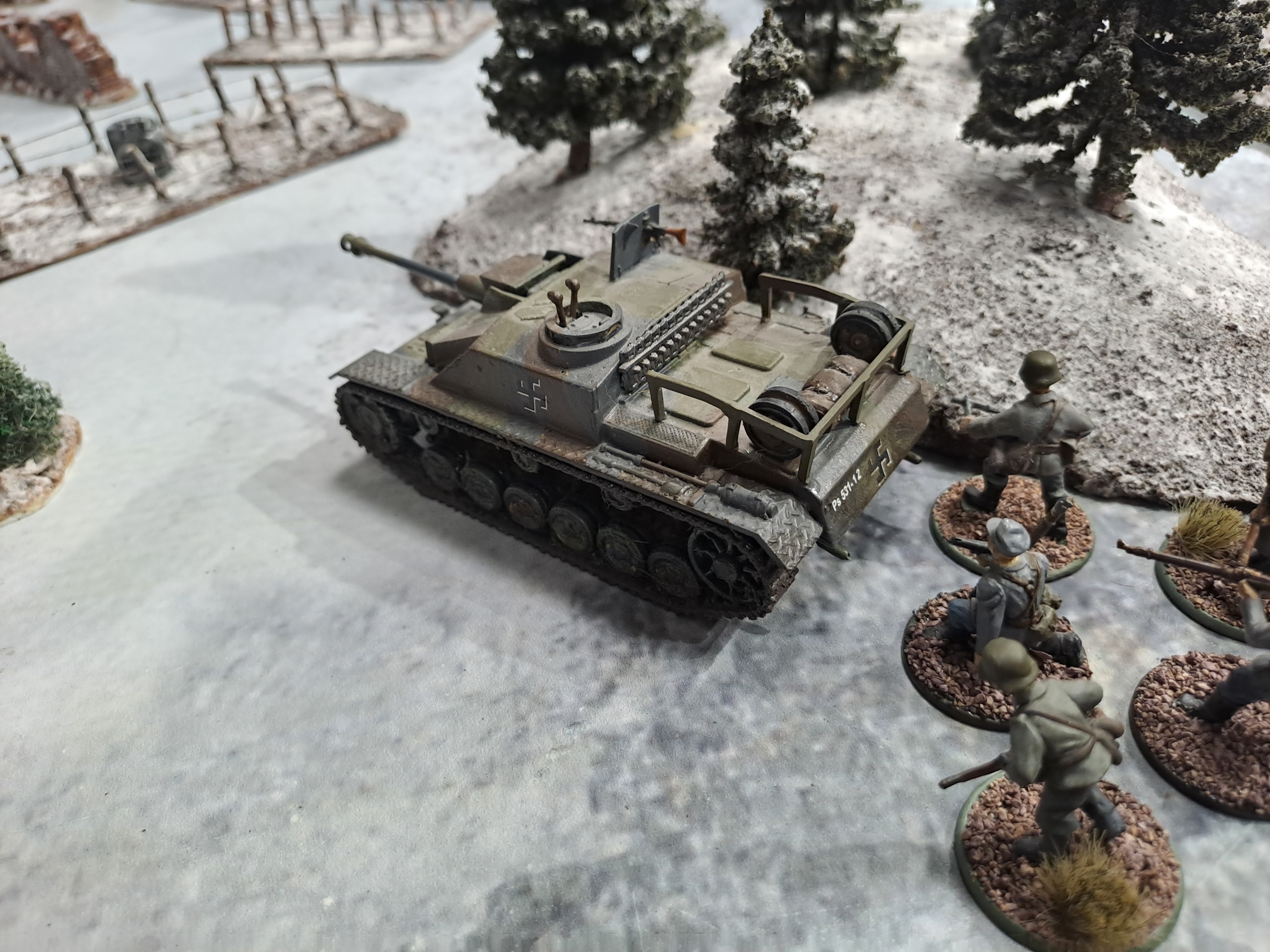
🇵🇱 W ostatnią sobotę 28.12.2024 wyruszyliśmy z Wrocławia do stolicy Wielkopolski – Poznania na wydarzenie w formie turnieju o nazwie Zimowy Turniej Bolt Action Poznań zorganizowane przez Kostką i Miarką. Na turnieju który odbył się w Wargamerze poza gospodarzami i naszą ekipą z Wrocławia byli także gracze z Międzyrzecza i Swarzędza. Do sobotnich starć nie udało się niestety dołączyć ekipie z Ostrowa Wielkopolskiego. Przed uczestnikami były trzy gry stoczono na bogato rozstawionych stołach obfitujących w gęsty teren wszelkiego rodzaju, bo pustynne miasteczko, tereny wiejskie, tereny miejskie czy np. zimowy stół kojarzony z Wojną Zimową czy szeroko rozumianym frontem wschodnim. Pojechaliśmy z Wrocławia w cztery osoby w ekipie Łukasz z Polską 1939′, Paweł z armią USA, Rafał z Niemcami i ja kolejny raz z Finlandią – Rosjan przemalowuję, więc póki co nimi nie gram. Udało nam się dotrzeć na czas – na szczęście po drodze nie wydarzyło się żadne zdarzenie losowe które mogłoby nas opóźnić.
Turniej odbywał się na 1250 i z limitem 20 kości rozkazu oraz innymi ograniczeniami jak np. brak możliwości wystawienia broni typu Katiusza czy Nebelwelfer – jak dla mnie sporo za dużo kości rozkazu – mniej kości sprawia, że gra jest płynniejsza – pewnie limit 15 mógłby znacznie przyspieszyć rozgrywkę. Graliśmy oczywiście w najnowszą edycję Bolt Action o numerze trzy. Było to moje kolejne podejście do tej edycji, która już przed wydaniem budziła u mnie i nadal budzi wątpliwości. Mimo tychże pojechałem spotkać świetnych ludzi z którymi dobrze bawiłem się na turniejach organizowanych w drugą edycję. Do trzeciej może kiedyś przywyknę, czas pokaże – po prostu nie lubię zmian, zwłaszcza takich jak te pomiędzy drugą a trzecią. Może podręcznikom armijnym i selektorom uda się naprawić to co w moich oczach mi się nie podoba.
Sam turniej odbył się w świetnej atmosferze, jak już wspomniałem były to trzy gry – rozgrywane na różnych stołach, obfitujących w liczne, ładne tereny. Pojawiły się przeróżnie zorganizowane armie – miło było zobaczyć Tygrysa 2 i inne pojazdy których nie spodziewałem się na turnieju z limitem 20 kości, na szczęście ten limit nie wpłynął na wybór ulubionych pojazdów przez graczy. Pierwszą grę rozpoczęliśmy po 9:30, ostatnią kończyliśmy około 18:00. Potem poszliśmy pogadać przy piwie, wróciliśmy do Wrocławia około 2-giej w nocy, sam wyjazd uważam za bardzo udany i na pewno dam sobie więcej czasu dla trzeciej edycji Bolt Action.
🇬🇧 On the last Saturday, December 28, 2024, we set out from Wrocław to the capital of Greater Poland – Poznań – to attend a tournament-style event called the Winter Bolt Action Tournament Poznań organised by Kostką i Miarką (in English: By Dice and Measure Tape) . At the tournament, held at Wargamer, besides the hosts and our team from Wrocław, players from Międzyrzecz and Swarzędz were also present. Unfortunately, the team from Ostrów Wielkopolski couldn’t join the Saturday battles. Participants engaged in three games played on beautifully arranged tables featuring dense terrain of all kinds: a desert town, rural areas, urban environments, and a winter-themed table reminiscent of the Winter War or the broader Eastern Front.
We traveled from Wrocław as a team of four: Łukasz with the 1939 Poland army, Paweł with the USA army, Rafał with the Germans, and myself, once again with Finland – my Russians are still being repainted, so I didn’t play with them. We managed to arrive on time – thankfully, nothing unexpected occurred during our journey that could have delayed us.
The tournament was played at 1250 points with a limit of 20 order dice and other restrictions, such as the inability to deploy weapons like the Katyusha or Nebelwerfer. For me, 20 order dice felt like too much – fewer dice make the game flow more smoothly. A limit of 15 would likely speed up gameplay significantly. We, of course, played using the latest edition of Bolt Action, version three. This was another attempt for me with this edition, which, even before its release, had raised concerns for me and still does. Despite these reservations, I went to meet great people with whom I had a wonderful time during tournaments organized under the second edition. Perhaps I’ll get used to the third edition over time – we’ll see. I simply dislike changes, especially those as significant as between the second and third editions. Maybe the army books and selectors will address the aspects I currently dislike.
The tournament itself took place in a fantastic atmosphere. As I mentioned, there were three games, played on various tables featuring numerous, beautiful terrains. A wide array of well-organized armies made an appearance – it was a pleasure to see a Tiger II and other vehicles I didn’t expect in a tournament with a 20-dice limit. Fortunately, this limit didn’t seem to affect players’ choice of their favorite vehicles. The first game began after 9:30 a.m., and we wrapped up the last one around 6:00 p.m. Later, we went for a chat over beers, and we returned to Wrocław around 2 a.m. I consider the trip very successful and will definitely give more time to the third edition of Bolt Action.
Moja pierwsza gra przeciwko Włochom Wojtka. My first game against Wojteks Italians.Sturmi.T-28.Pierwsza gra Łukasza. First Łukasz game.Wzgórze artylerii Wojtka. Artillery hill of Wojtek.Tiger II.Moja druga gra na USA. My second game against USA.Początek mojej trzeciej gry z Tymoteuszem. Beginning of my third game with Tymoteusz. Od tego momentu do końca zdjęcia Mateusza Bulińskiego. From this moment to the end are photos from Mateusz Buliński.Rozdanie nagród. Prizes.
🇵🇱Podsumowanie: – zawsze lubię wracać do ekipy z Poznania by pograć w Bolt Action i póki co najwięcej gier w trzecią edycję zagrałem w Poznaniu. Trzy gry wobec dwóch rozegranych u siebie. – cieszy fakt, że w Poznaniu środowisko Bolt Action żyje i ma się dobrze, a nasi koledzy zaakceptowali trzecią edycję i się dobrze bawią. – na pewno do zobaczenia niebawem!
🇬🇧Summary: – I always enjoy returning to the crew in Poznań to play Bolt Action, and so far, I’ve played the most games of the third edition there. Three games compared to two played in my hometown. – It’s great to see that the Bolt Action community in Poznań is alive and well, and our friends have embraced the third edition and are having a great time. – Definitely see you soon!
🇵🇱Poznań – miasto którego Muzeum broni pancernej posiada sprawny czołg Armii Czerwonej IS-2. Mam nadzieję, że w końcu uda mi się odwiedzić to muzeum. 🇬🇧Poznań – city which The Armoured Weapons Museum owns operable IS-2 Red Army tank. I hope that one day I will manage to visit this museum.
🇵🇱 Wesołych Świąt Bożego Narodzenia, zdrowych, pogodnych, dużo zdrowia dla was, waszych bliskich, przyjaciół, współpracowników. Zapomnienia o troskach dnia codziennego i dużego ładunku pozytywnej energii na ten świąteczny czas i kolejny rok. A światu którego część stanowię życzę pokoju tam gdzie go nie ma i polityków którzy reprezentują dobro swoich wyborców. Życzę pokoju naszym sąsiadom w Europie – Rosji i Ukrainie, pokoju na Bliskim Wschodzie – w Jemenie, Palestynie czy w Syrii oraz wszędzie tam gdzie tego pokoju brakuje.
🇨🇿 Veselé Vánoce, zdravé, klidné, plné zdraví pro vás, vaše blízké, přátele a spolupracovníky. Zapomenutí na starosti každodenního života a velkou dávku pozitivní energie na tento sváteční čas a do nového roku.
Světu, jehož jsem součástí, přeji mír tam, kde chybí, a politiky, kteří budou zastupovat dobro svých voličů. Přeji mír našim sousedům v Evropě – Rusku a Ukrajině, mír na Blízkém východě – v Jemenu, Palestině, Sýrii i všude tam, kde je ho potřeba.
🇩🇪 Frohe Weihnachten, Gesundheit und Heiterkeit sowie viel Gesundheit für euch, eure Liebsten, Freunde und Kollegen. Möget ihr die Sorgen des Alltags vergessen und eine große Portion positiver Energie für diese festliche Zeit und das kommende Jahr mitnehmen.
Für die Welt, deren Teil ich bin, wünsche ich Frieden dort, wo er fehlt, und Politiker, die das Wohl ihrer Wähler vertreten. Ich wünsche Frieden für unsere Nachbarn in Europa – Russland und die Ukraine, Frieden im Nahen Osten – im Jemen, in Palästina und in Syrien sowie überall dort, wo Frieden fehlt.
🇷🇺 Счастливого Рождества Христова, здоровья, радости и благополучия вам, вашим близким, друзьям и коллегам. Пусть заботы повседневной жизни уйдут на второй план, а праздничное время наполнится положительной энергией, которая останется с вами в следующем году.
Миру, частью которого мы являемся, я желаю мира там, где его нет, и политиков, которые действительно представляют интересы своих избирателей. Я желаю мира нашим соседям в Европе – России и Украине, мира на Ближнем Востоке – в Йемене, Палестине и Сирии, а также везде, где этот мир так необходим.
🇬🇧 Merry Christmas, filled with health, joy, and serenity, to you, your loved ones, friends, and colleagues. May you forget the worries of everyday life and embrace an abundance of positive energy during this festive season and the coming year.
To the world, of which I am a part, I wish peace where it is absent and leaders who truly represent the well-being of their people. I wish peace for our neighbors in Europe – Russia and Ukraine, peace in the Middle East – in Yemen, Palestine, and Syria, and everywhere else where peace is needed.
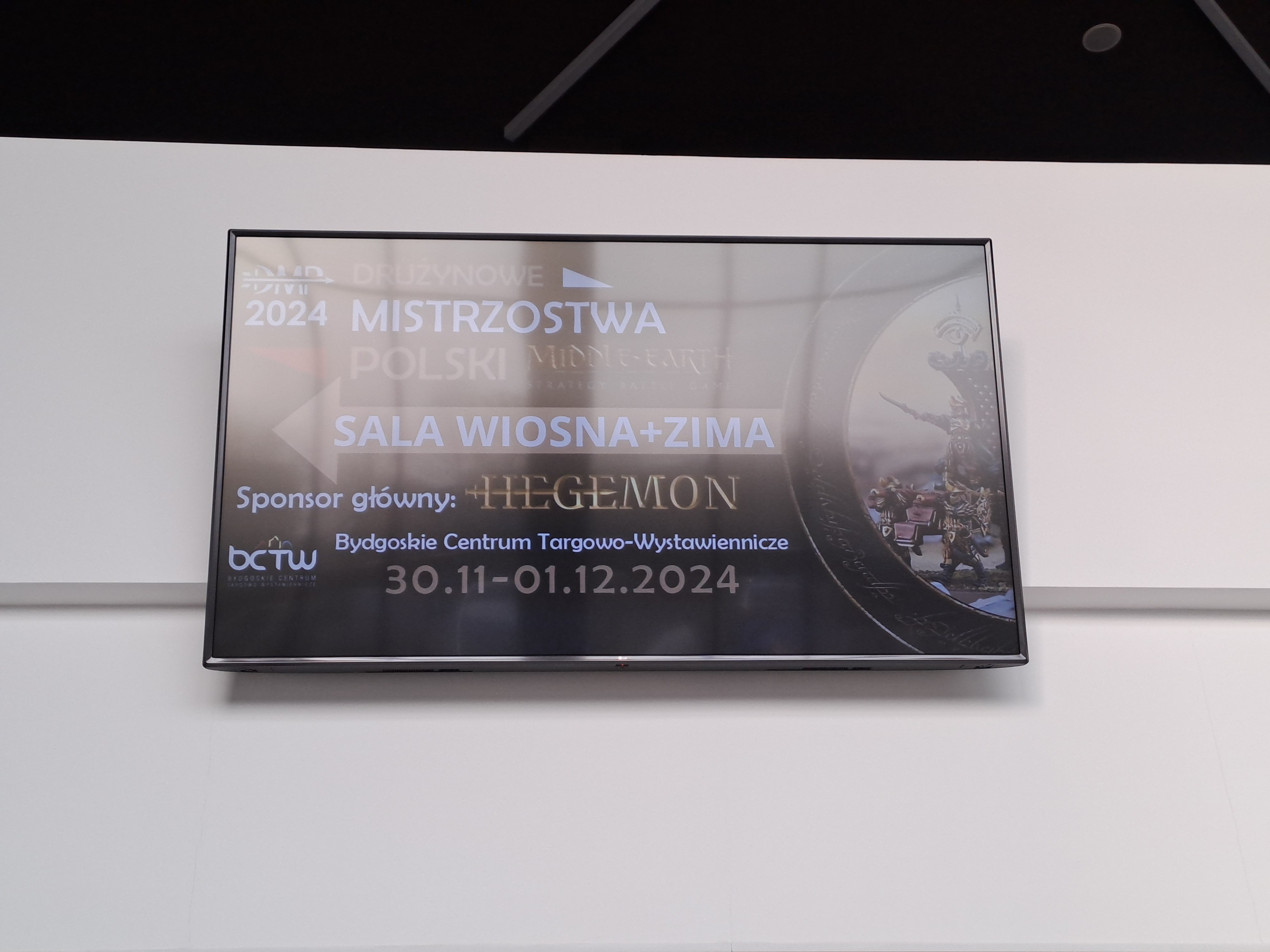
W ostatni weekend w Bydgoszczy na północy Polski odbył się największy turniej poświęcony grze figurkowej Middle Earth: SBG. Było to ostatnie tak wielkie wydarzenie poświęcone drugiej edycji tego systemu. Mój drugi wyjazd na DMP do Bydgoszczyi mam nadzieję, że nie ostatni – wielkie dzięki dla organizatorów za wkład jaki włożyli w to wydarzenie poświęcone Władcy Pierścieni rozgrywanemu za pomocą miniaturek wprost z pod pióra MISTRZA. Pojechaliśmy tam w większym gronie, jako część Gdzie był Wrocław, chociaż nie byliśmy tam jedyni z Dolnego Śląska i Opolskiego. Łącznie było nas ponad 20 osób. Nic dodać, nic ująć, wybraliśmy się dla dobrej zabawy, a niektórzy z nas zaszli wysoko, ale o tym za chwilę.
Zacznijmy od miejsca w którym graliśmy – zmieszczenie ponad 50 drużyn liczących 4 osoby każda nie jest proste – ale dla Bydgoskim Centrum Targowo-Wystawienniczym to nic trudnego – bardzo fajne miejsce i skorzystano tylko z ułamka jego przestrzeni – jedyne czego brakowało jak przed rokiem, to maszyny wendingowej z batonami, napojami z cukrem czy napojami energetycznymi. W pobliżu znajduje się na szczęście stacja benzynowa Orlenu, która najprawdopodobniej ratowała niejednego gracza chcącego zaopatrzyć się w napoje zawierające cukier czy po prostu kanapkę. Organizatorzy ze swojej strony oferowali uczestnikom wydarzenia gorące napoje, wodę, ciasteczka a także co uważam za olbrzymi plus obiad pierwszego dnia oraz kanapki dnia drugiego. Catering był smaczny i na pewno jest to jedna z wielu wartości dodatnich tego największego wydarzenia związanego z polską sceną Middle Earth: SBG.
Przechodząc do tego co podobało mi się w tych drugich w moim życiu Drużynowych Mistrzostwach Polski 2024(w skrócie DMP). Jest to świetne wydarzenie gdzie można zagrać z kolegami i koleżankami z różnych części kraju, można spotkać też znajomych poznanych chociażby na innych turniejach klasy master, organizowanych w całej Polsce – a jest ich łącznie jedenaście, ten w Bydgoszczy jest i mam nadzieję nadal będzie tym jedenastym, kończącym rok. Z tego miejsca mogę na podziękować naszej drużynie i jej szefowi Cornholio który robi sobie przerwę od wszelkich gier, Walusiowi za wiarę w nas i zdrowia Kubie, który niestety nie pojechał z nami, tak więc graliśmy we trzech, chociaż w dwóch pierwszych grach mieliśmy wsparcie w postaci graczy z drużyny która nie miała z kim grać – dzięki chłopaki! Miałem sześć świetnych gier z graczami oraz graczkami z różnych części Polski – w tym z Łodzią, Śląskiem, Warszawą i mieszaną drużyną Krakowską-Wrocławską złożoną z piękniejszej połowy świata. W żadnej grze nie miałem niekomfortowych sytuacji, w każdej dowiedziałem się czegoś nowego i z każdym z kim grałem z chęcią znowu zagram w przyszłości.
🇬🇧 Last weekend in Bydgoszcz, in northern Poland, the largest tournament dedicated to the Middle Earth: SBG miniature game took place. It was the last major event focused on the second edition of this system. It was my second trip to the Polish Team Championships (DMP) in Bydgoszcz, and I hope it won’t be the last. Huge thanks to the organizers for their incredible effort in putting together this massive event dedicated to The Lord of the Rings, played with miniatures inspired by the work of the MASTER.
We went as a larger group, representing „Where Was Wrocław„ though we weren’t the only ones from Lower Silesia and Opole regions. In total, there were about 20+ of us. We went mainly for fun, but some of us achieved great results, which I’ll get to shortly.
Let’s start with the venue – accommodating over 50 teams of 4 players each isn’t easy. But for the Bydgoszcz Trade and Exhibition Center, it was no problem. It’s a fantastic location, and only a fraction of its space was used. The only thing missing, just like last year, was a vending machine with snacks, sugary drinks, or energy drinks. Luckily, there’s an Orlen gas station nearby, which probably saved many players looking for a sugar boost or just a sandwich. The organizers provided participants with hot beverages, water, cookies, and, to their credit, a meal on the first day and sandwiches on the second. The catering was tasty and definitely one of the many positive aspects of this largest event on the Polish Middle Earth: SBG scene.
Moving on to what I enjoyed about this second Team Championship experience of mine in 2024 (DMP for short). It’s a fantastic event where you can play with friends from different parts of the country and meet people you’ve gotten to know at other master-class tournaments held across Poland – there are 11 of these in total, and the one in Bydgoszcz is, and hopefully will continue to be, the eleventh, concluding the year.
I’d like to take a moment to thank our team and its leader, Cornholio, who is taking a break from gaming, Walus for believing in us, and good health to Kuba, who unfortunately couldn’t join us. So we played as a team of three, although for the first two games, we were supported by players from a team that didn’t have enough members – thanks, guys!
I had six great games with players from various parts of Poland, including Łódź, Silesia, Warsaw, and a mixed Krakow-Wrocław team that included the more beautiful half of the world. In none of the games did I encounter any uncomfortable situations. In each, I learned something new, and I’d gladly play again with everyone I faced in the future.
Gdzie był Wrocław i przyjaciele z Brzegu! Gdzie był Wrocław and friends from Brzeg!Śniadanie. Breakfast. Widok z hotelu. View from hotel.Zdjęcia z ostatniej gry z Marceliną. Photos from the last game with Marcelina. Zdjęcie z gry Walusia z Polą. Photo from game of Waluś and Pola.Zdjęcie z pierwszej gry. Photo from first game.Waluś. Zdjęcie od Walusia. Photo from Waluś. Zdjęcie od Mikołaja Grodeckiego. Photo done by Mikołaj Grodecki.Zdjęcie od Mikołaja Grodeckiego. Photo done by Mikołaj Grodecki.Zdjęcie od Mikołaja Grodeckiego. Photo done by Mikołaj Grodecki.Zdjęcie zrobionę przez Julię z Krakowa. Photo done by Julia from Cracovia.Adam „Adaś” Chowaniec – MVP.Wicemistrzowie, dla mnie Mistrzowie tego turnieju! Vicemasters, for me Masters of this tournament!
Podsumowanie: – jeszcze raz wielkie dzięki dla organizatorów, za trud włożony w organizację tak dużego przedsięwzięcia jakim były, są i mam nadzieję nadal będą Drużynowe Mistrzostwa Polski! Bydgoszcz to fajne miejsce, pora pojechać tam dzień wcześniej i zobaczyć starówkę i po prostu usiąść w pubie! – dla naszych tzw. „przeciwników” z różnych rejonów Polski, ze szczególnym uwzględnieniem ostatniego starcia z drużyną Wiecznie głodne hobbity – super się z wami grało, a z Marceliną w naszej ostatniej grze poruszyliśmy wiele kwestii z książki oraz sporo rozmawialiśmy o kolejnej edycji. – odnośnie aplikacji Championshub jestem w stanie powiedzieć, że na tym etapie nie powinna być w ogóle używana do tak dużych wydarzeń. Chociaż sama w sobie wydaje się być ciekawym rozwiązaniem. – w imieniu Gdzie był Wrocław serdecznie zapraszam do uczestnictwa w wydarzeniu które organizujemy we Wrocławiu – Indywidualne Mistrzostwa Wszechświataczekają na wasz udział 😉 ! – więcej zdjęć jest również TUTAJ.
Summary: – Once again, a huge thank you to the organizers for the effort put into arranging such a large undertaking as the Polish Team Championships! Bydgoszcz is a great place; it’s time to arrive a day earlier, explore the Old Town, and simply relax in a pub! – To our so-called „opponents” from various regions of Poland, with a special mention of the final match against the team Eternally Hungry Hobbits – it was amazing playing with you! During my last game with Marcelina, we discussed many topics from the book and had a great chat about the next edition. – Regarding the Championshub app, I must say that at this stage, it should not be used for such large events. Anyway it could be interesting solution. – On behalf of Where Was Wrocław, we warmly invite you to participate in the event we’re organizing in Wrocław – the Individual Universe Championships are waiting for you to join 😉 ! – more photos are THERE.
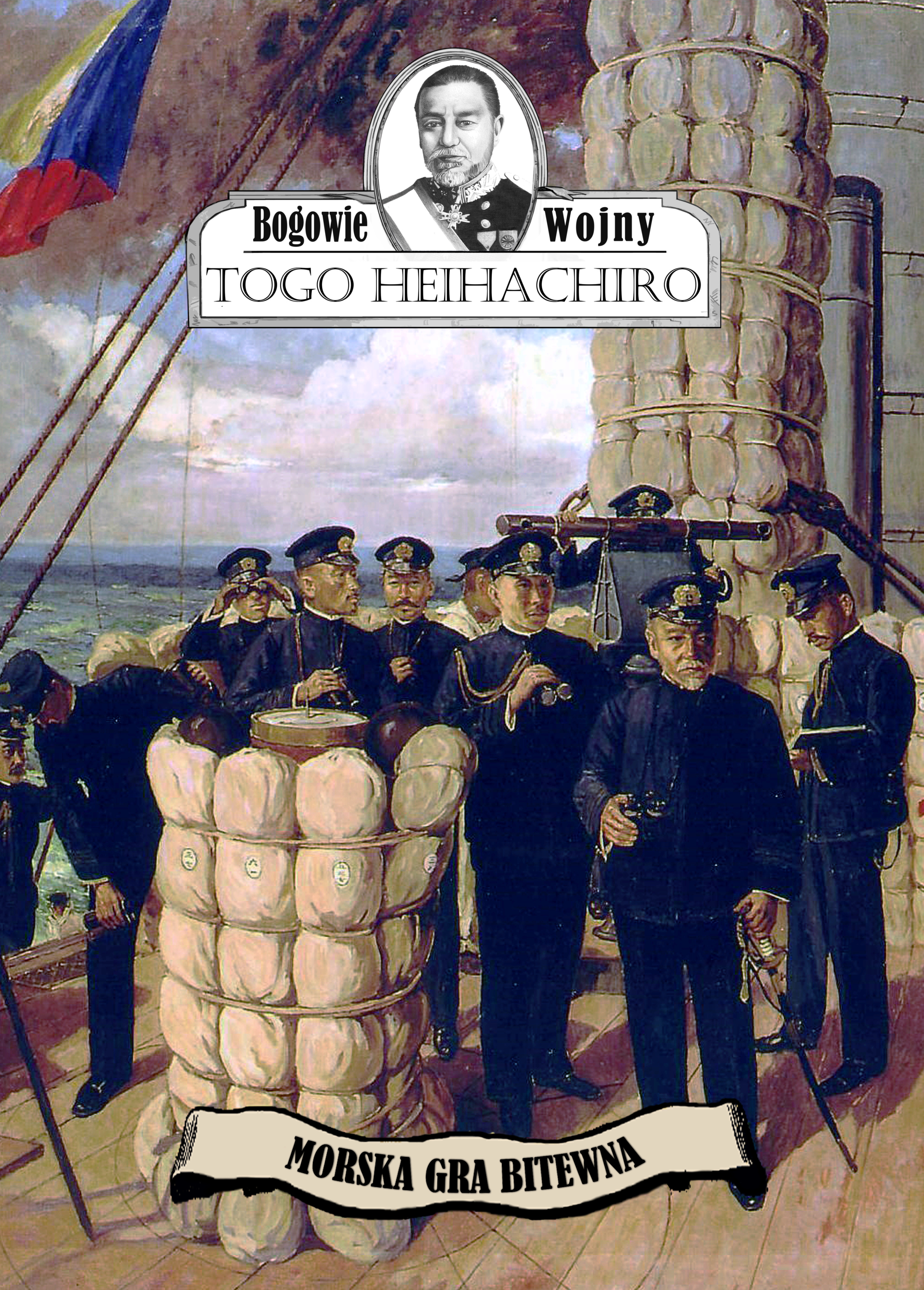
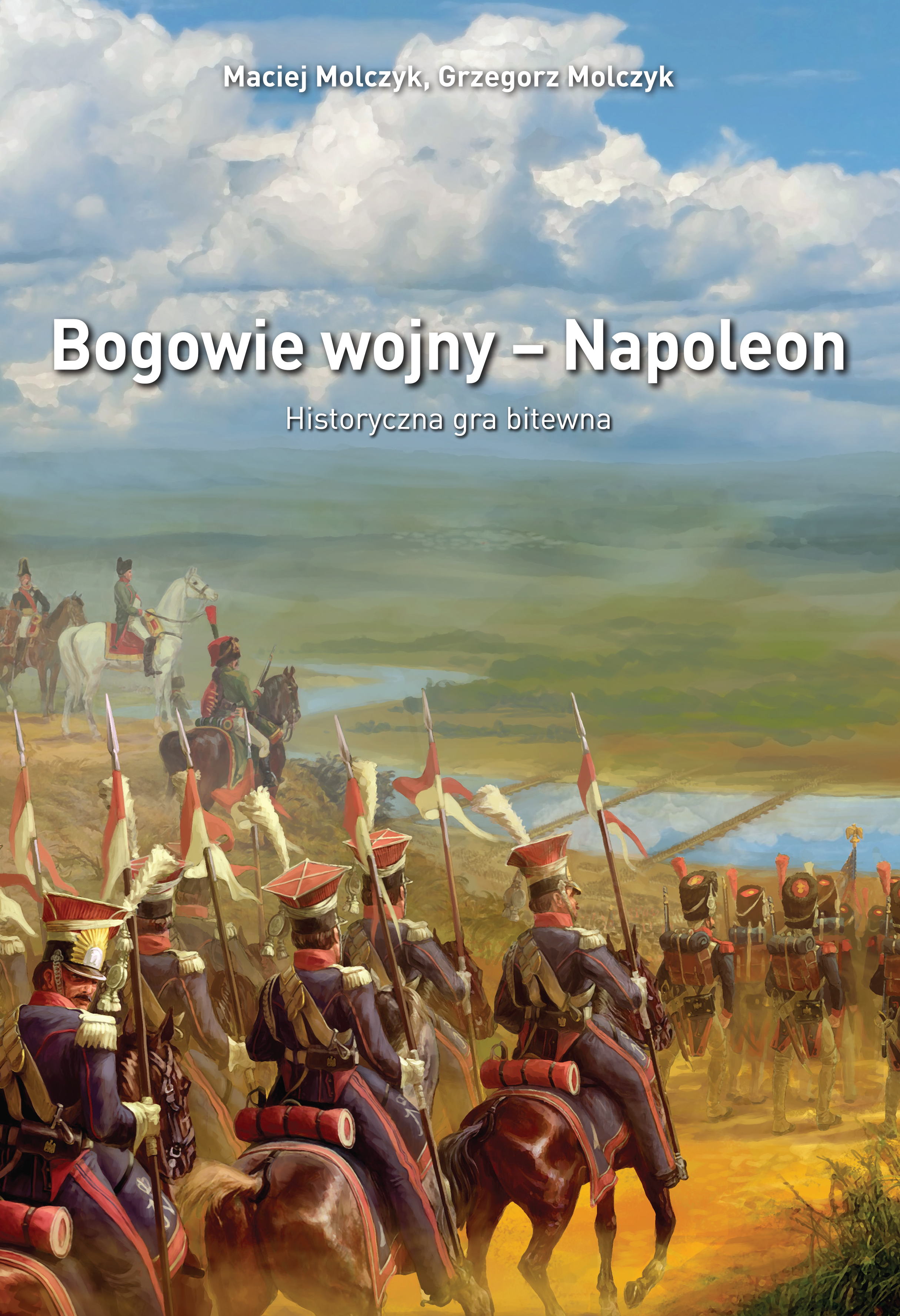
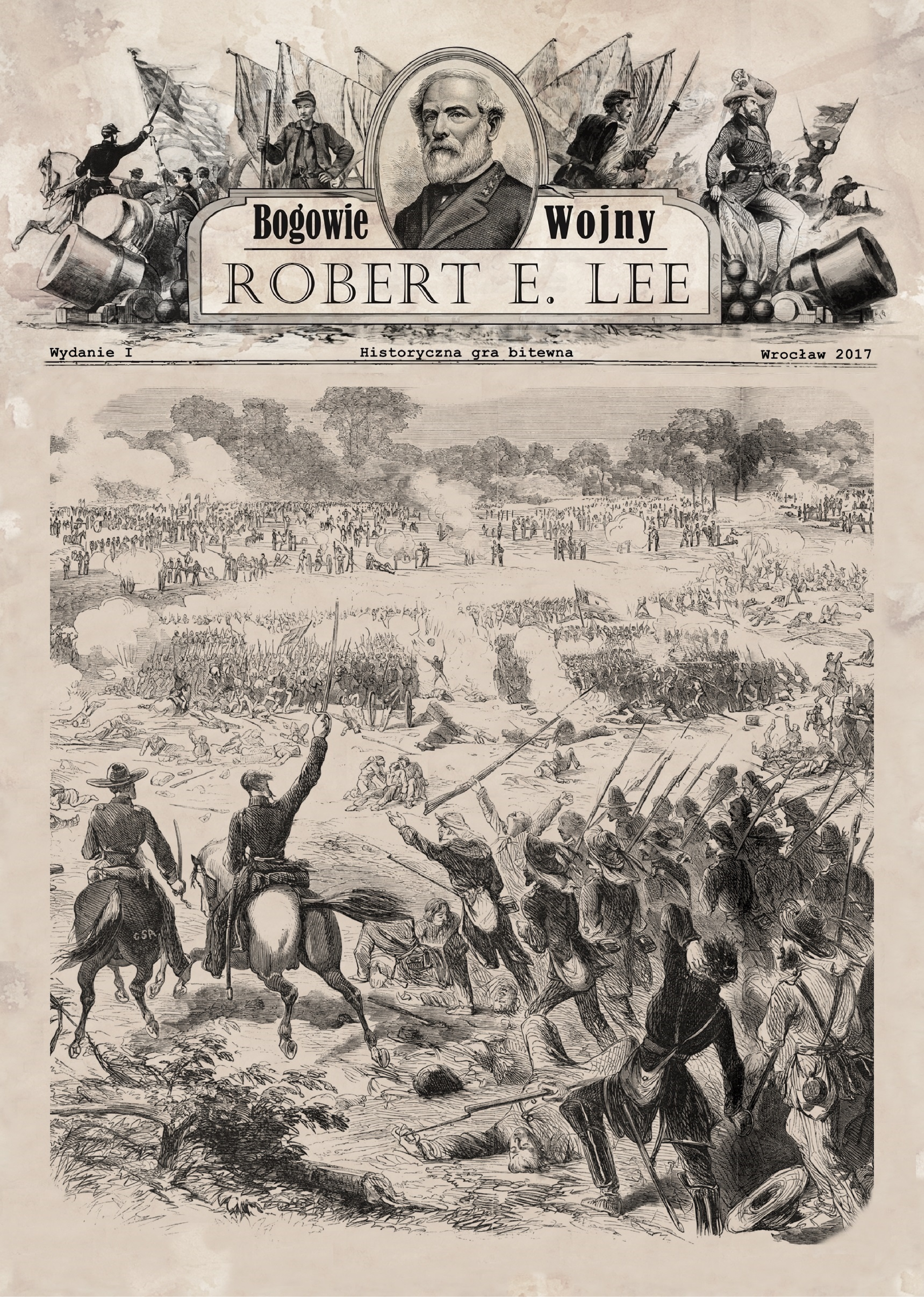
Interview with brothers Grzegorz and Maciej Molczyk – owners of GM Boardgames studio, Jakub Golec, a member of this esteemed team, and Adam Cwynar – owner of Bolterand the official publisher of the games under the banner of Gods of War: General Lee and Gods of War: Togo.
Maciej and AdamMolczyk brothersJakub
A long time ago, beyond seven seas, seven rivers, and seven mountains, in a nearby galaxy — specifically in the capital of Lower Silesia — there lived two brothers, Grzegorz and Maciej. Behind who they are today stood their late father, Teodor, of blessed memory, who sparked their interest in history (Historia magistra vitae est – History is the teacher of life – author) and the profound influence it had and continues to have on the world as we know it. He also taught them to draw conclusions from this discipline of knowledge, equal in rigor to mathematics.
And it all began with chess — who among you hasn’t played chess? Do you remember the plastic soldiers from the communists era (PRL in polish)? I do, as do my conversation partners, who were born in those times. Then came The Battle of the Pelennor Fields, Dragon games, Desert Storm, and that’s how it all started, and then…
Test game for Gods of War: NapoleonMap game, Gods of War: NapoleonGrzesiek creates a game with his son
Transitioning to our interview, let’s go:
Hello Adam, Grzesiek, Jakub, Maciej! How are you all doing? You probably know why we’re here, right?
Hey, yeah, Maciek mentioned that you wanted to talk to us.
How long have you been playing miniature games as players? What systems did you start with? Which systems have you played or are you still playing?
Adam: My first encounter with miniature games was in the early 1990s with Warhammer 40,000 2nd Edition and, to a lesser extent, Epic. At that time, I was serving in the military as a chronicler, and since there often wasn’t much to write about, I would sometimes paint miniatures during shifts. After Warhammer 40k 2nd Edition came the 3rd Edition, Warmachine 1st Edition, and along the way, I tried a wide range of systems like Anima Tactics, Infinity, and briefly Malifaux. Some systems resonated with me, and I stuck with them for longer, while others I set aside due to lack of time. At some point, I discovered Flames of War, which was my first exposure to historical miniature games. Without a doubt, it’s my favorite system, although there are other miniature games I enjoy, but there’s never enough time for everything.
Grzesiek: Gods of War: Napoleon, various systems treated as solution tests.
Jakub: 18 years in miniature wargaming, The Lord of the Rings by De Agostini, too many games to remember, but Middle-earth Strategy Battle Game and Middle-earth will always have a special place in my heart.
Maciej: Late 90s, Warhammer Fantasy Battle 4th/5th edition, my favorites are Bolt Action, Chain of Command, Warhammer Ancient Battles, and Warhammer Fantasy Battle.
When did you decide to start creating your own games? What was the beginning like?
Adam: From the very founding of Bolter, I was guided by the idea that it should be more than just a store.
Grzesiek: I joined Maciek when we were sitting at his house, and he suggested we create our own system.
Jakub: In 2007, I wrote my own game in a biology notebook – a system for using WFB miniatures in a skirmish-style game. The system was similar to Mordheim.
Kuba joined Gods of War during the era of Gods of War: Lee, and by chance, he proposed the activation system for Gods of War: Togo. (This was one of the ways he became part of the team.)
Maciej: At some point, I decided to quit Warhammer when I saw that a single miniature could take out 50 others. Around that time, a friend offered to help me with the Napoleonic era.
ø;
GM Boardgames – Is this not your only job? What else do you do in your lives, if it’s not a secret?
Adam: Since 2017, I’ve been running Bolter with my wife as a space for hobbyists like me.
Grzesiek: I’ve always been a man in the shadows, and I remain one.
Jakub: I’ve never worked at GM Boardgames. I’m from Bolter 🙂
Maciej: I’m a history teacher at a high school.
From my own knowledge, I can add that Maciek conducts very creative classes (author).
I played a few games in Bogowie Wojny: Lee, which is an amazing system, and I’m fascinated by Bogowie Wojny: Togo. You’ve also released Bogowie Wojny: Napoleon—why the 19th century? Ages change, but during that time, the world belonged to a few empires. The age of steam, iron, and numerous advancements in military technology and everyday life—what are your thoughts on this?
Maciej: The 19th century is a bit of a niche, apart from the Napoleonic Wars and the American Civil War. Comparing ships from the early 19th century with those from its end shows enormous changes—from sailing ships at the beginning of the century to steel behemoths like Mikasa, powered by steam engines, by its conclusion.
Grzesiek: The 19th century is extremely interesting, and there’s never been such a significant leap in the art of warfare as the one that occurred from its beginning to its end. We witnessed clashes where the technological gap between the sides was striking. Railroads, the age of steam—it’s a fascinating era.
Jakub: A great example is the Land of the Rising Sun, which made enormous progress in a very short period. Japan is the quintessence of the transformations of this century. The 19th century, aside from the Napoleonic period, is relatively unknown, but we aim to introduce it to as many people as possible to spark interest in this era.
When did you decide to collaborate with the best club-store in Wrocław, Bolter?
Maciej: Since the Napoleon days, we used to come and play at Bolter’s former location on Sokolnicza Street, where we were warmly welcomed and organized games in that system.
Grzegorz: I completely agree with Maciej’s statement.
Adam, creator of Wrocław’s gaming paradise for miniature enthusiasts and beyond, as well as the owner of Bolter, how did your collaboration with GMboardgames begin?
Adam: Our first collaboration started with the introduction of Bogowie Wojny: Napoleon (Gods of War: Napoleon)—the first game in the series—into our store’s catalog. Later, Maciek launched Bogowie Wojny: Lee (Gods of War: Lee) first edition, and we sold their metal models through the shop at the time. Then came a period of growth, and we decided to join forces to launch a Kickstarter for the second edition of Bogowie Wojny: Lee, aiming at the Western market. And from there, things really took off.
The Kickstarter included metal miniatures. However, after bad experiences with metal casting production, we decided to fully transition to a new technology.
Are there any secrets that players will receive in the near future? Maybe a new fleet for the Gods of War: Togo or something for the Gods of War: Lee?
Grzegorz, Jakub and Maciej: We can officially confirm that the British fleet from Kickstarter will be followed by a German fleet, and work is underway with Grant. As for further plans, the perspective is very distant, so for now we are working on what is planned for the near future.
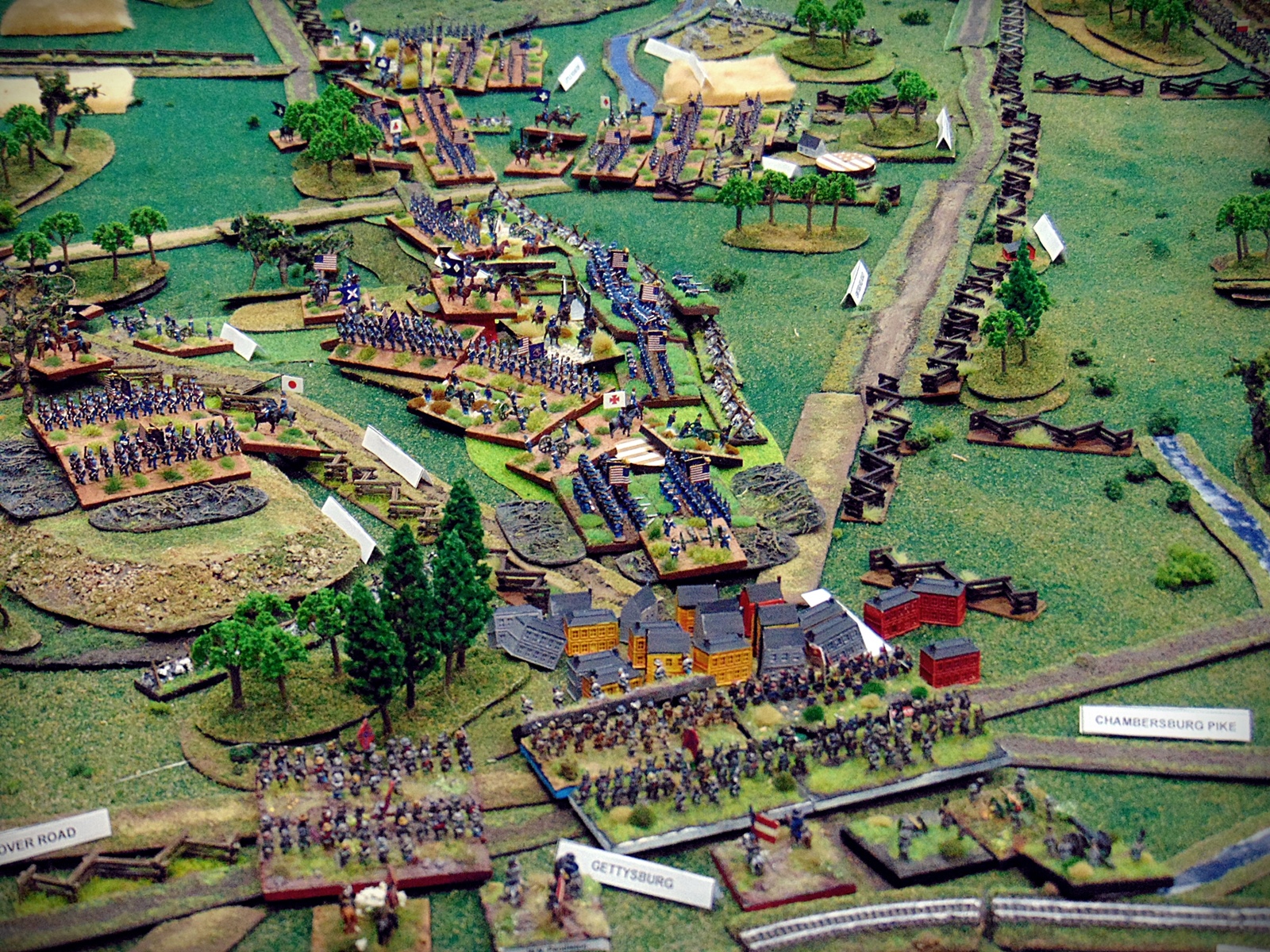
Battle of Gettysburg 2023Jakub and Maciej on Salute 2023
I’m here to promote miniature wargaming. You guys are amazing at what you do – do you see any threats to miniature wargames from video games?
Adam: The modern world moves so fast that computers offer easier access to entertainment. Our hobby is more time-consuming; you need to prepare models, go out to meet people, and find a gaming community. That’s why we’re working to make access easier and promote our hobby beyond just Bolter.
Grzegorz: Many people see wargaming as an opportunity to meet up – it’s a typical social gathering. You can play multiplayer online and chat, but it’s just not the same.
Jakub: A lot of people have discovered miniature wargaming through video games, like Dawn of War, which is based on tabletop games, or Total War: Warhammer, for example.
Maciej: These are two different worlds – it’s really a competition for free time. Both types of games compete with any other hobby, but video games are not a threat to miniature wargaming.
And one last question, what can you tell us about your system?
Grzegorz: The fundamental difference between these two systems is that Lee is a comprehensive system for land battles, where you can command armies amounting to tens of thousands of soldiers on the table. Controlling such a scale of troops requires time in itself. Togo, on the other hand, being a naval system, was designed to be fast-paced while retaining the atmosphere of naval warfare. This idea stems from the fact that we all suffer from a lack of time these days. Togo allows people to enjoy a two-hour meeting without having to dedicate countless hours. Understanding the rules of Togo takes just 15 minutes, whereas General Lee is a game for experienced generals who enjoy advanced gameplay.
Maciej:Napoleon is a system focused on commanding and conducting battles at the corps level—several divisions. The player must use the right formations to gain an advantage over the opponent. Lee is also a command system, but for larger-scale battles, where you take on the role of the supreme commander of an entire army. You face not only the challenge of managing the diverse personalities of your generals but also a new element absent in Napoleon: the fog of war. This often means making decisions blindly. Togo is a naval battle game that emphasizes planning maneuvers in advance and anticipating where your opponent might be, positioning yourself to best counter them.
GMBoardgames, with its systems Gods of War: Napoleon, Gods of War: Lee, and Gods of War: Togo, which focus on the 19th century, fill a niche dedicated to this historical period. This era saw significant changes in the art of warfare, travel, and industrial production. In the near future, the second edition of Gods of War: Togo will be released. Thanks to Kickstarter, this edition not only includes the British fleet but also features an English version—fingers crossed for the game’s success beyond our borders!
Thank you, Adam, Grzegorz, Jakub, and Maciek, for the opportunity to interview you. I wish you the best of luck in your projects, whether it’s creating new, exciting games or running a place like Bolter.
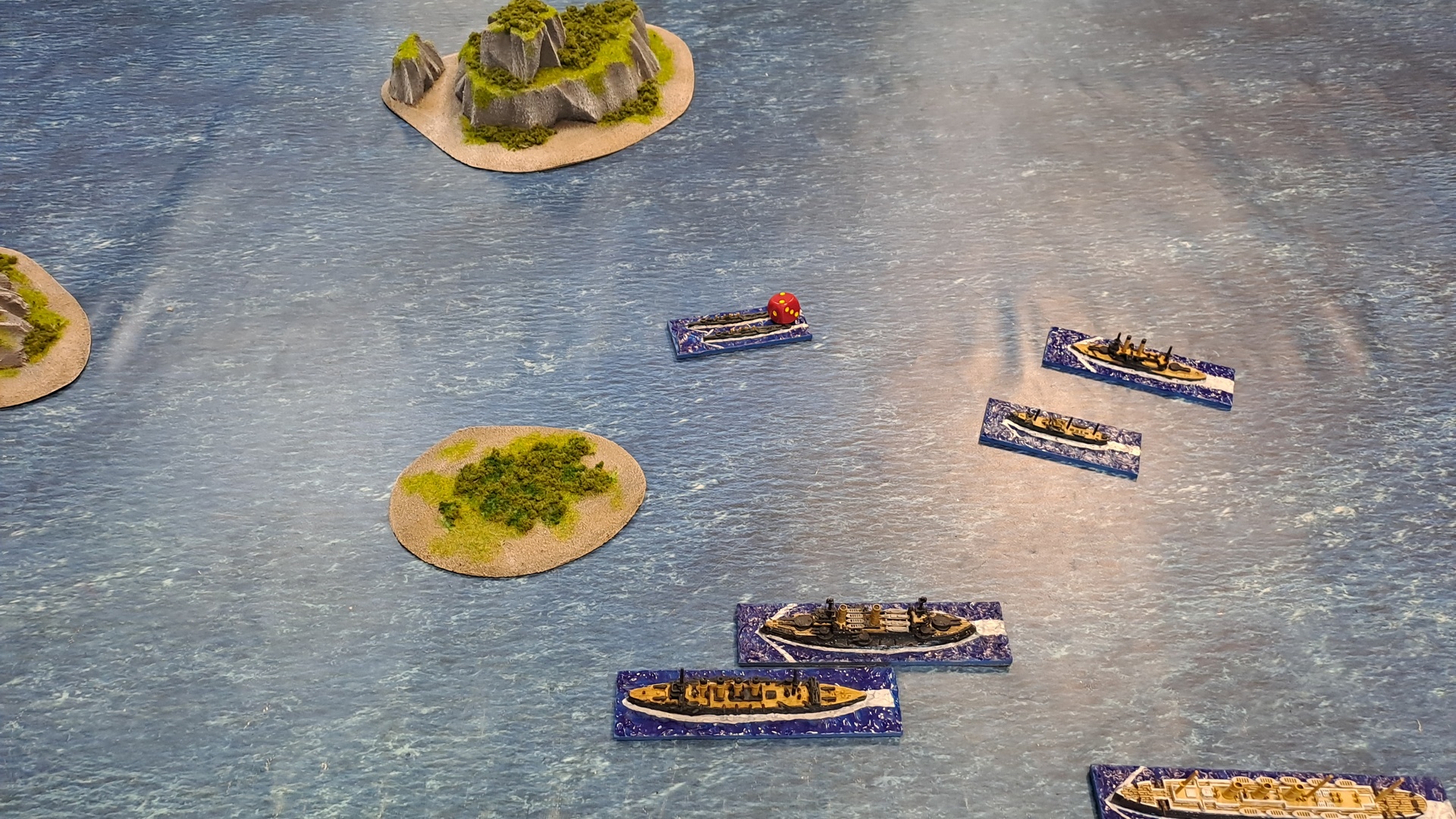
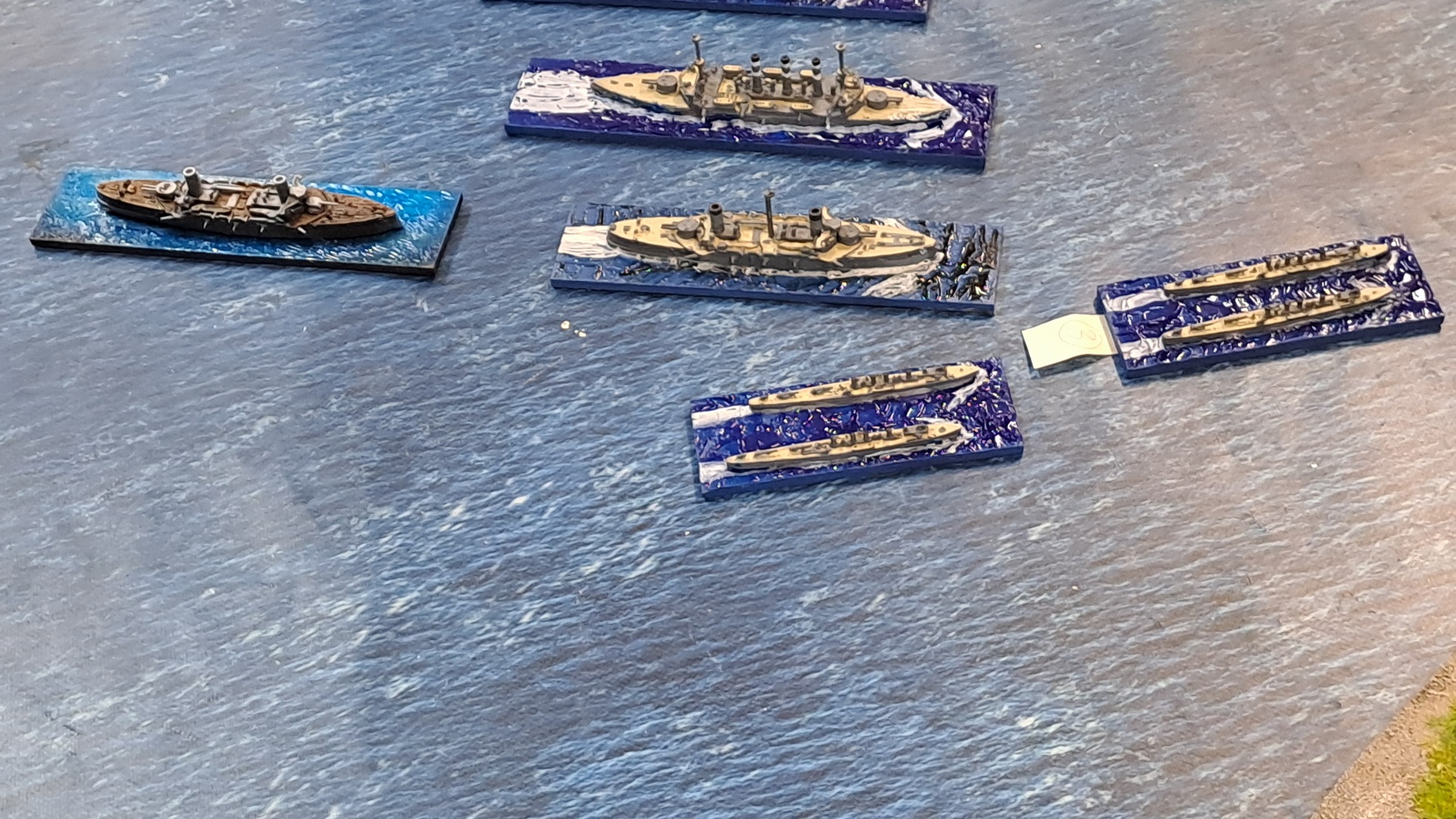
🇬🇧 On the weekend of October 19-20, the second championship of Poland in Gods of War: Togowill be held at the Bolter center in Wrocław. There were twenty players from different parts of Poland, from cities and towns such as: Bielsko-Biała, Głogów, Gorzów Wielkopolski, Sosnowiec, Warsaw, native Wrocław and neighboring Żerniki Wrocławskie. I keep my fingers crossed for even more people on the championship, both from Poland and abroad whether from the Czech Republic, Japan, Spain, Germany, Russia, Great Britain, The United States and any country where are people playing this amazing game.
Was it worth coming to this tournament? Of course it is, just like it is worth trying to play this great system from the Wrocław studio GMBoardgames. An intimate event that took place amidst the roar of the guns of a few battleships and lots of smaller units – such as numerous cruisers, destroyers, torpedo boats and Japanese Katsuragi-class corvettes that were also visible at the event. The biggest advantage of this event is meeting people who play this system and with whom you don’t play every day. Of course, there were more advantages, because you could, for example, play an epic game with one of the publishers of Gods of War: Togo – which happened to me personally 😉 .
🇵🇱 W weekend 19-20 października we wrocławskim klubie Bolterodbyły się drugie mistrzostwa Polski w Bogowie Wojny: Togo. Do boju stanęło dwudziestu graczy z różnych części Polski w tym z takich miejscowości jak: Bielska-Biała, Głogów, Gorzów Wielkopolski, Sosnowiec, Warszawa, rodzimy Wrocław i sąsiadującye z nim Żerniki Wrocławskie. Osobiście trzymam kciuki za jeszcze więcej osób na kolejnych mistrzostwach, tak z Polski jak i z poza jej granic – z wielką chęcią w przyszłym roku we Wrocławiu zobaczę również naszych kolegów grających w Togo czy to z Czech, Japonii, Hiszpanii, Niemiec, Rosji, Wielkiej Brytanii, Stanów Zjednoczonych i każdego dowolnego kraju, w którym są gracze w tą świetną grę grający.
Czy było warto wpaść na ten turniej? Oczywiście, że tak, podobnie jak warto spróbować gry w ten świetny system wrocławskiego studia GMBoardgames. Kameralne wydarzenie, które odbyło się w huku dział nielicznych pancerników oraz mnóstwa mniejszych jednostek – takich jak liczne krążowniki, niszczyciele, torpedowce czy japońskie korwety klasy Katsuragi, które również były widoczne na tym wydarzeniu. Największym plusem tego typu wydarzenia jest spotkać ludzi, którzy grają w ten sam system co ty, a z którymi nie gra się na co dzień. Plusów oczywiście było więcej, bo można było na przykład stoczyć epicką rozgrywkę z jednym z wydawców Bogów Wojny: Togo – co mi się przytrafiło osobiście 😉 .
Photos from different sources, GMBoardgams, Gingerhead, Goldfish (I think) and from my camera.On the top left me, then on bottom Kuba, then Aspirant and on the top Cornholio. Lewy górny róg ja, niżej Kuba, na prawo Aspirant i w prawym górnym rogu Ździebło. Japanese fleet is perfect. Flota Japonii jest po prostu piękna. On the one side Mikasa and seven Katsuragi, on the other Russia. Po jednej stronie Mikasa i siedem Katsuragi, po drugiej Rosja.Fleet composed of Japanese Katsuragi. Flota złożona z japońskich Katsuragi.Who will take camera faster, thank you Torgill! Kto chwyci aparat szybciej, dzięki Torgill! Duderson&Torgill.Gingerhead&Aspirant.Cinek.Prizes. Nagrody.Almost all participants, three of us had to leave us. Prawie wszyscy uczestnicy z wyjątkiem trzech którzy musieli nas opuścić wcześniej.
Summary: – it was great to see a lot of people from Wrocław I haven’t seen lately! – great atmosphere in Bolter– thanks to Adam and Asia for the addition that day! – great time spent on feast and chatting after the first day of playing – thanks to the organizers! – More about Gods of War: Togo is HERE. Of course there are more entries about this great game on my blog. In case of any questions there is a great group on Facebook. – The official publisher of this great sea game at the turn of history is the Bolter club from Wrocław. – the link to the Tournekeeper is HERE.
Podsumowanie: – super było zobaczyć wiele osób z Wrocławia których ostatnio nie widuję! – świetna atmosfera w Bolterze – dzięki Adamie i Asiu za obecność tego dnia! – świetny czas spędzony na biesiadzie i pogawędkach po pierwszym dniu grania – dzięki organizatorom! – Więcej o Bogach Wojny: Togo można przeczytać TUTAJ. Oczywiście na moim blogu jest więcej wpisów o tej świetnej grze. W razie pytań odnośnie systemu istnieje sprawna grupa na Facebooku. – Oficjalnym wydawcą tej świetnej gry morskiej na przełomie dziejów jest wrocławski klub Bolter. – link do Tourneykeepera jest TUTAJ.
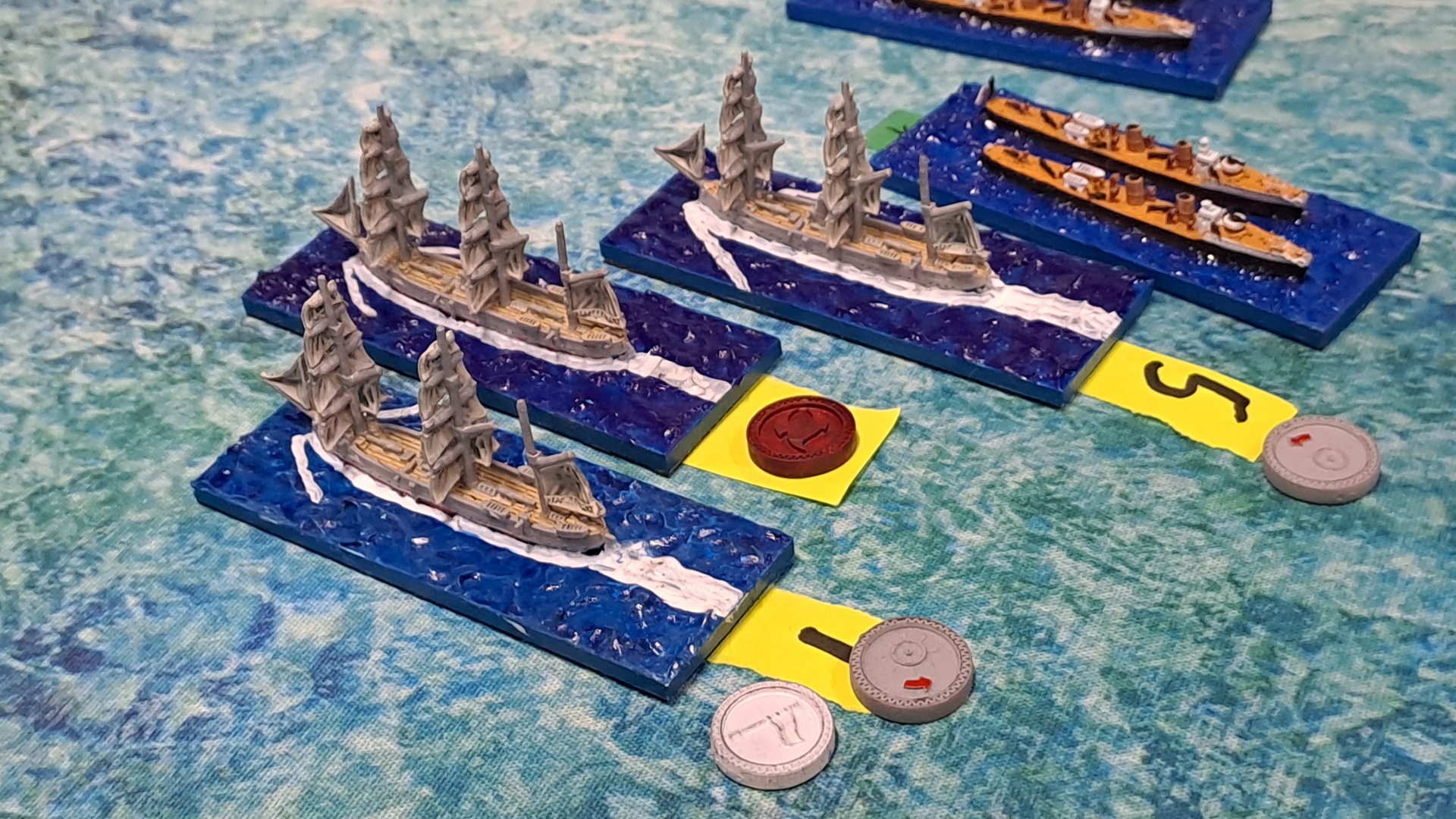
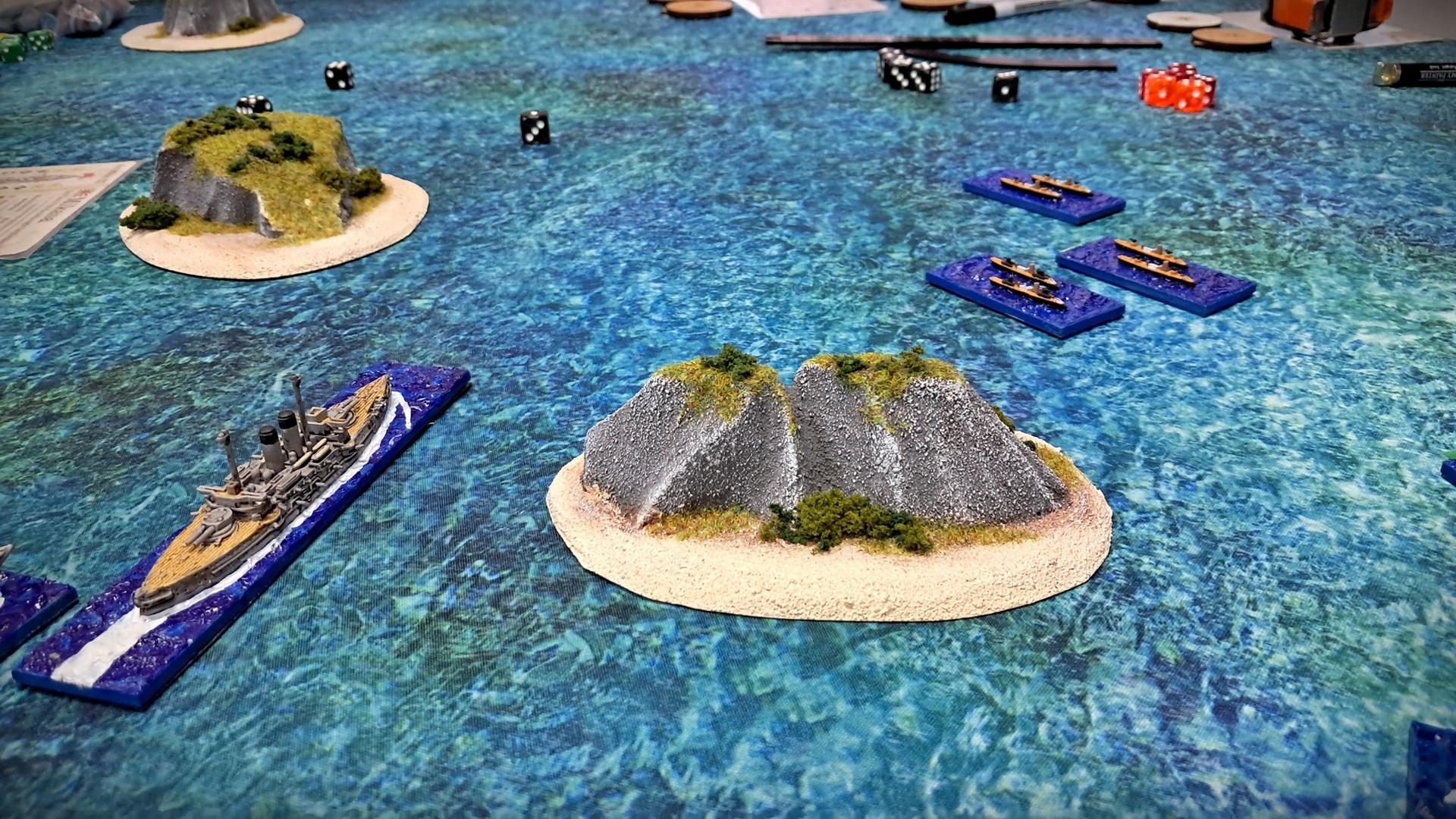
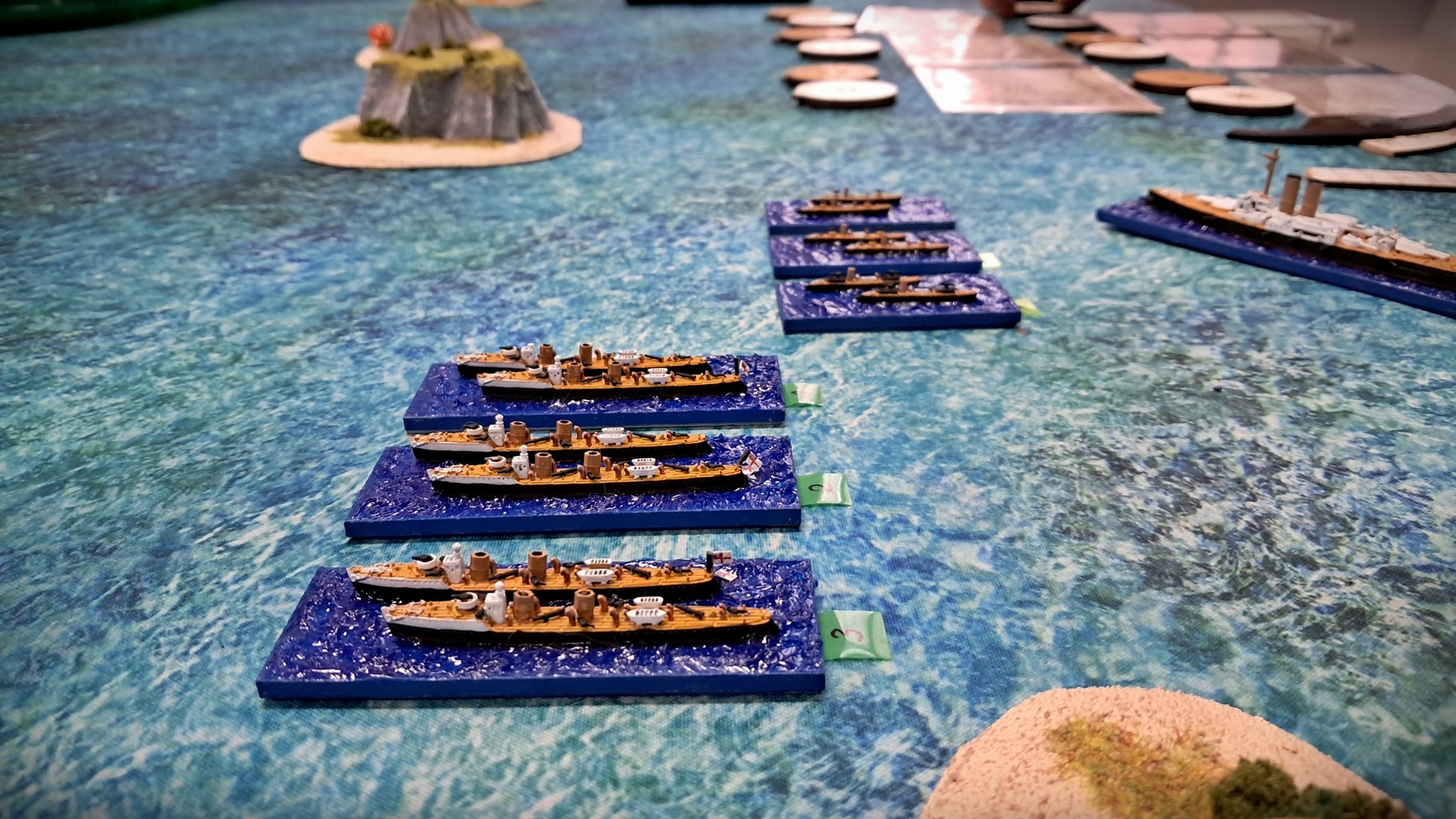
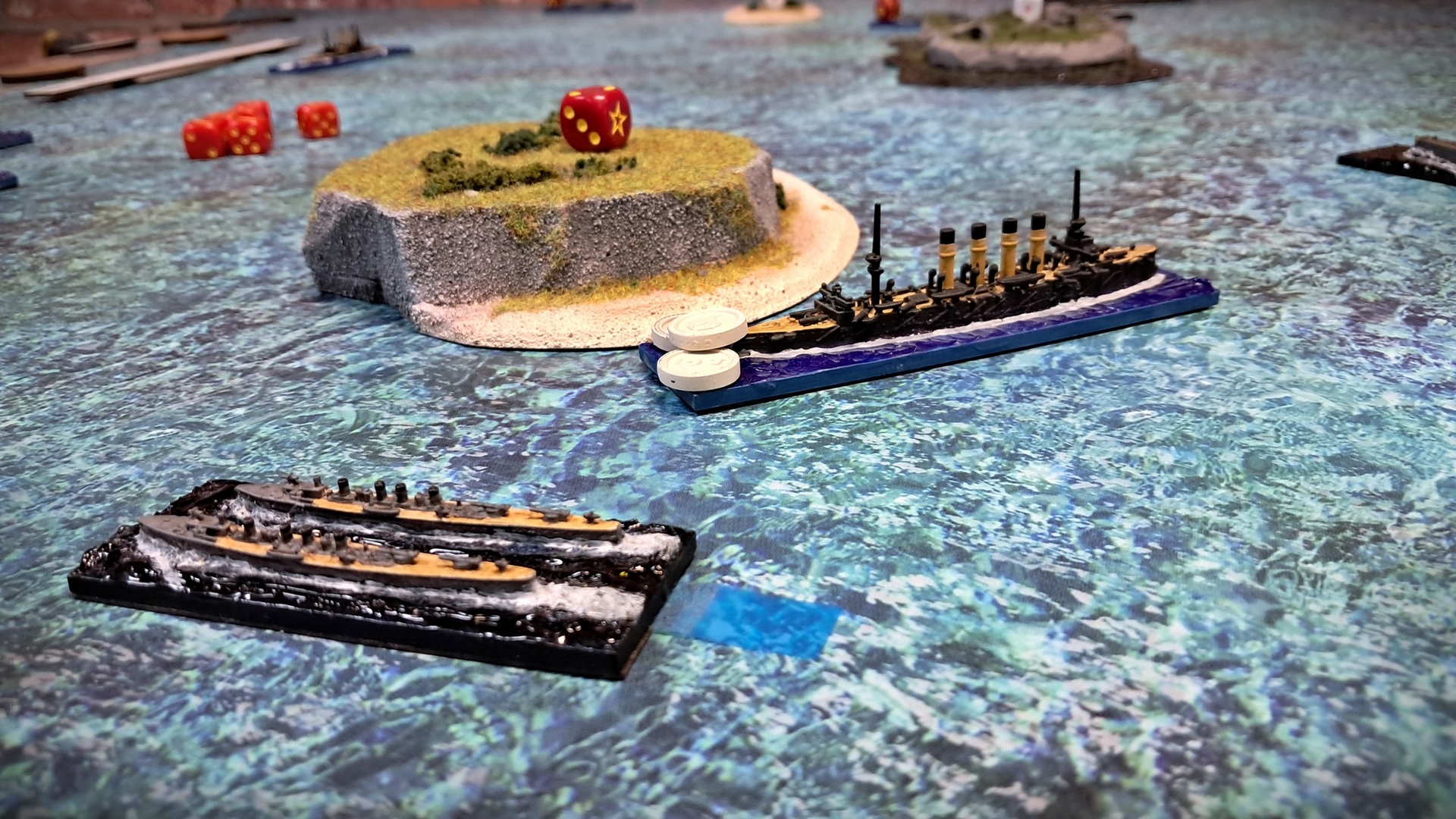
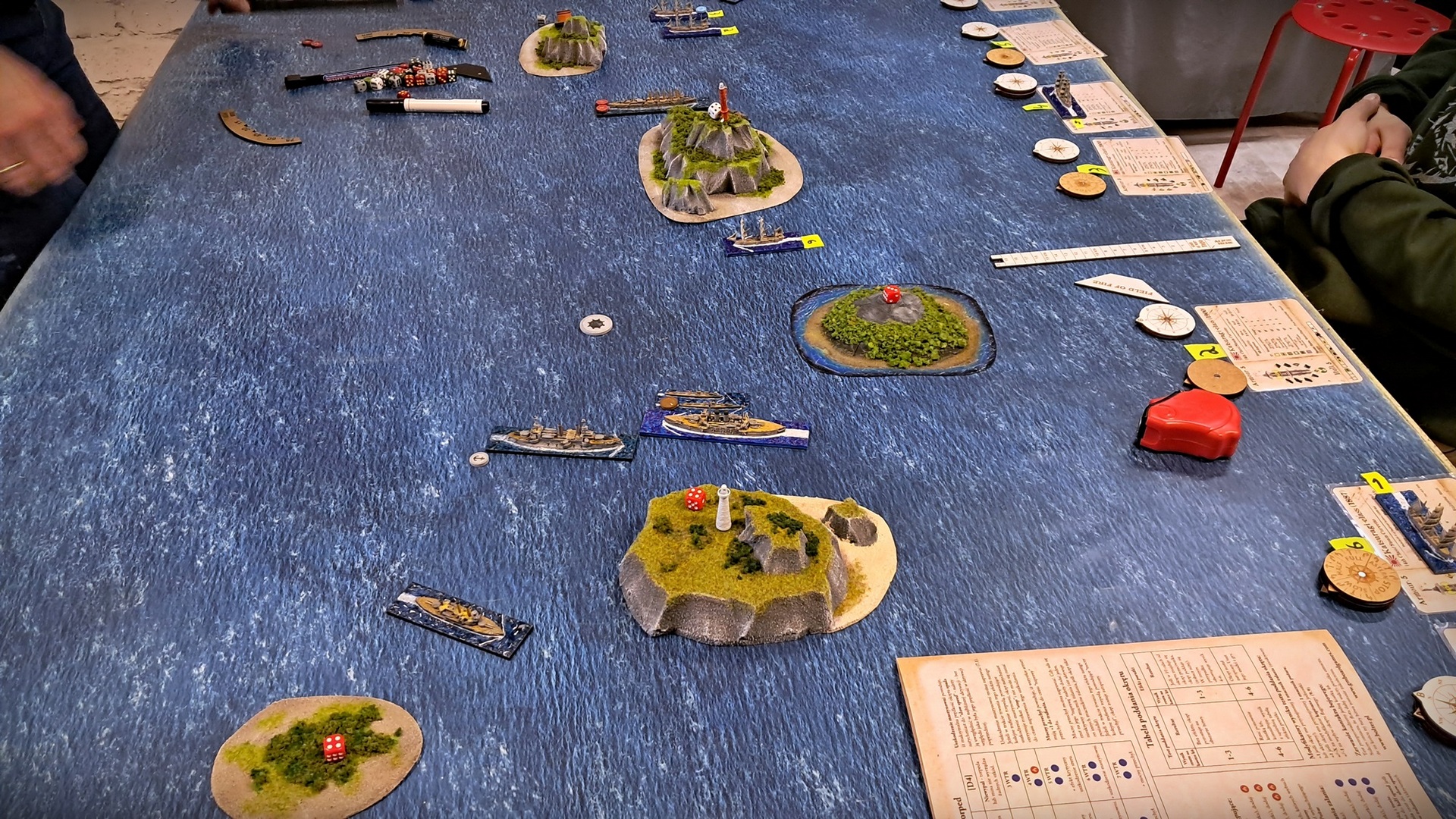
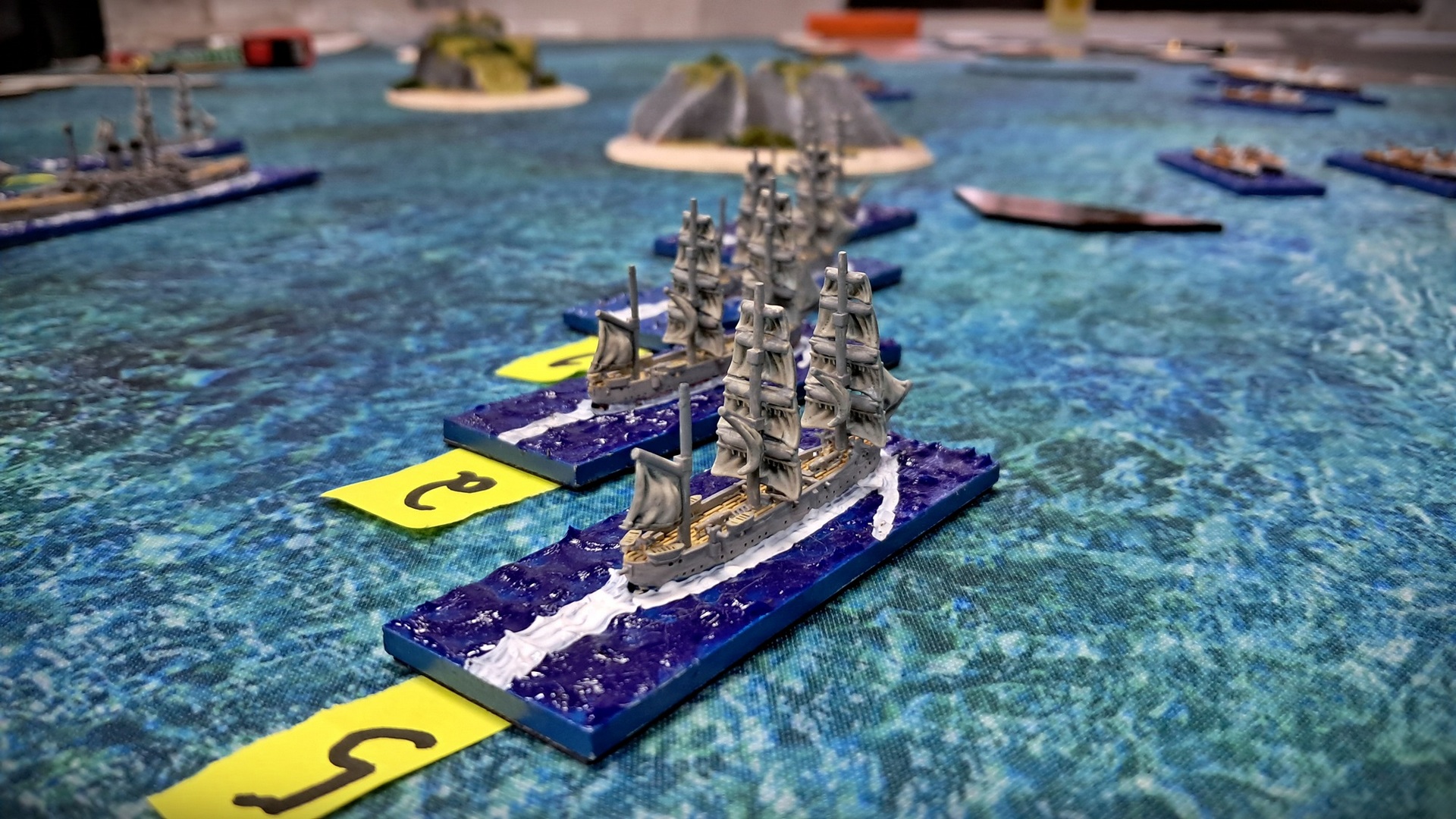
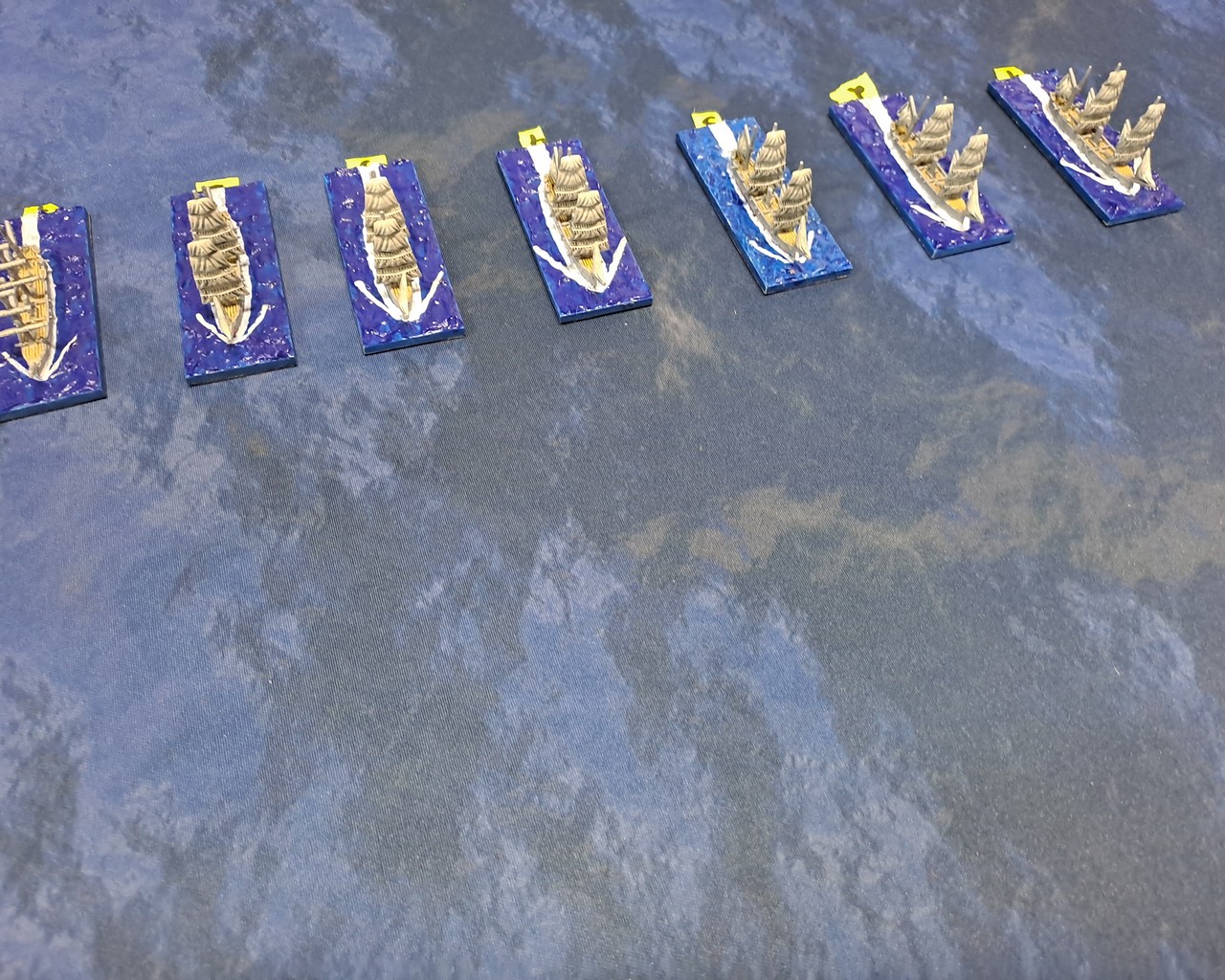
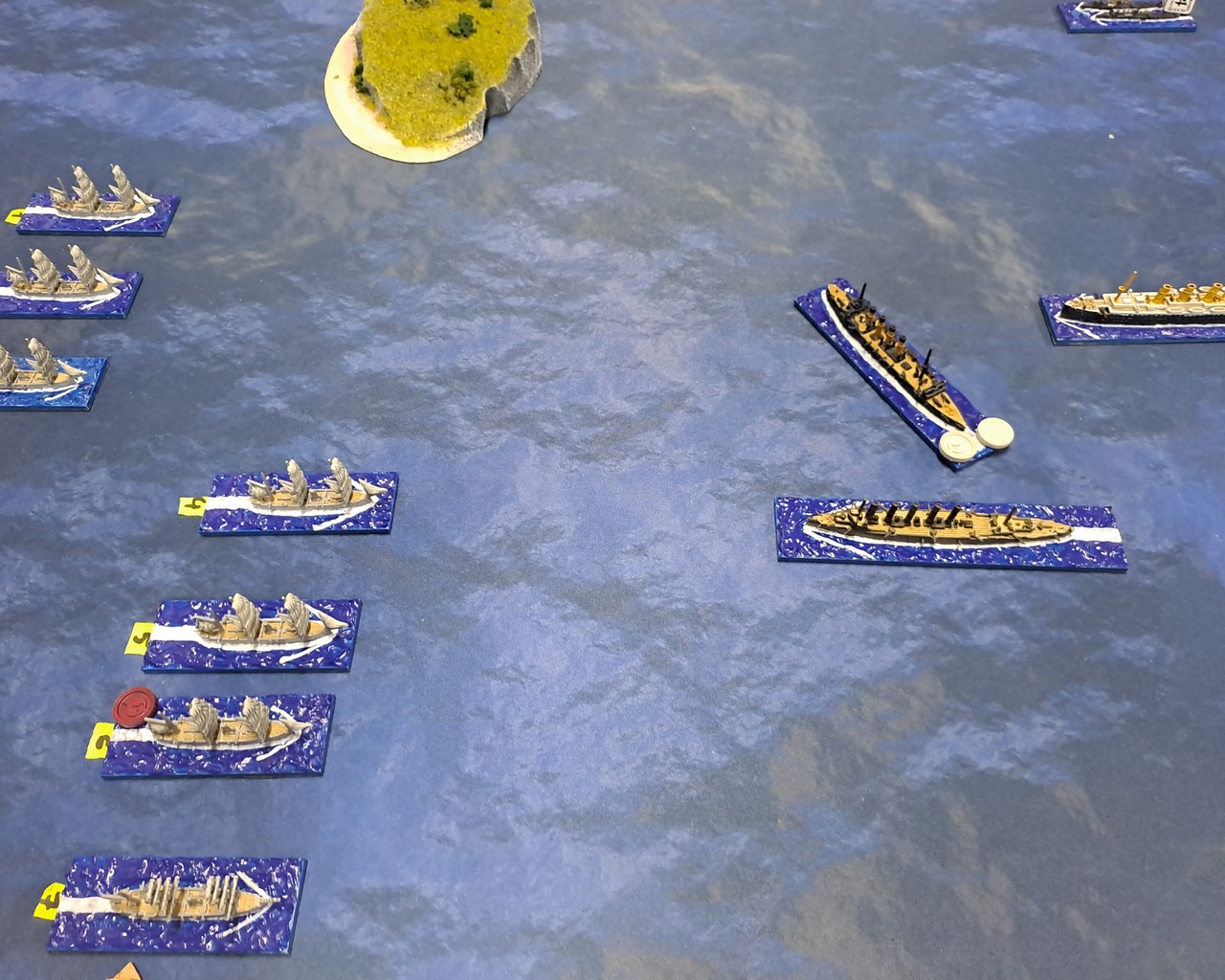
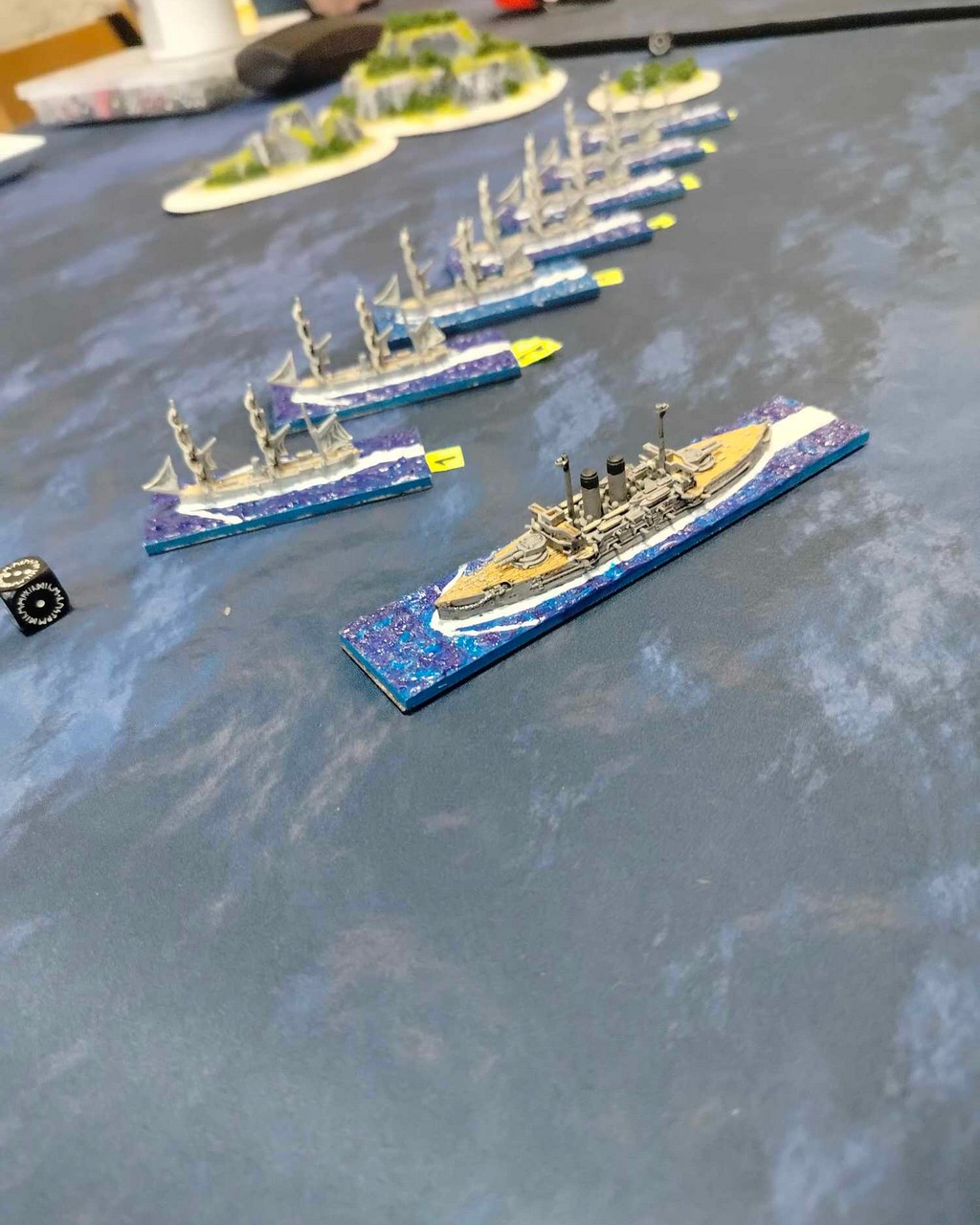
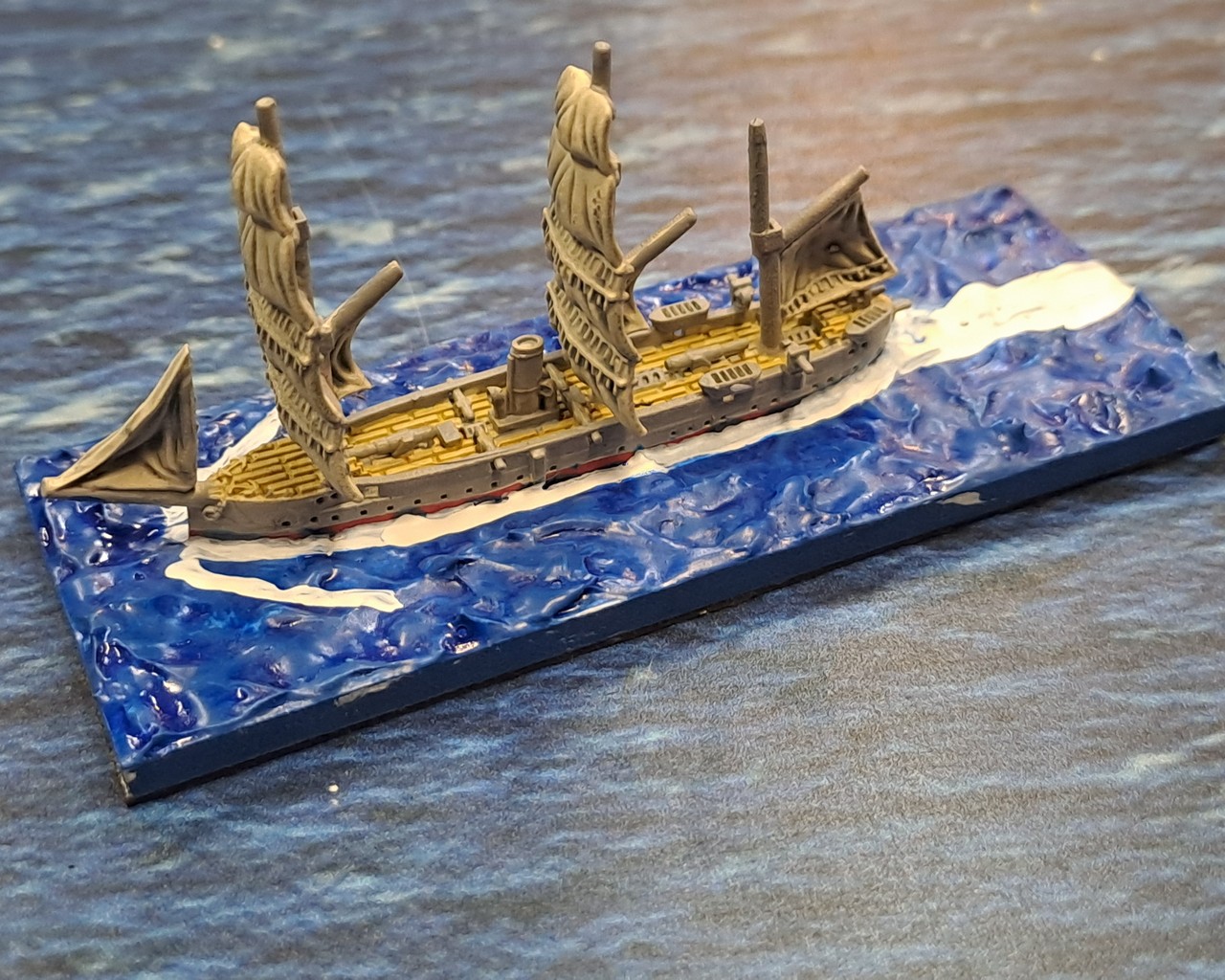
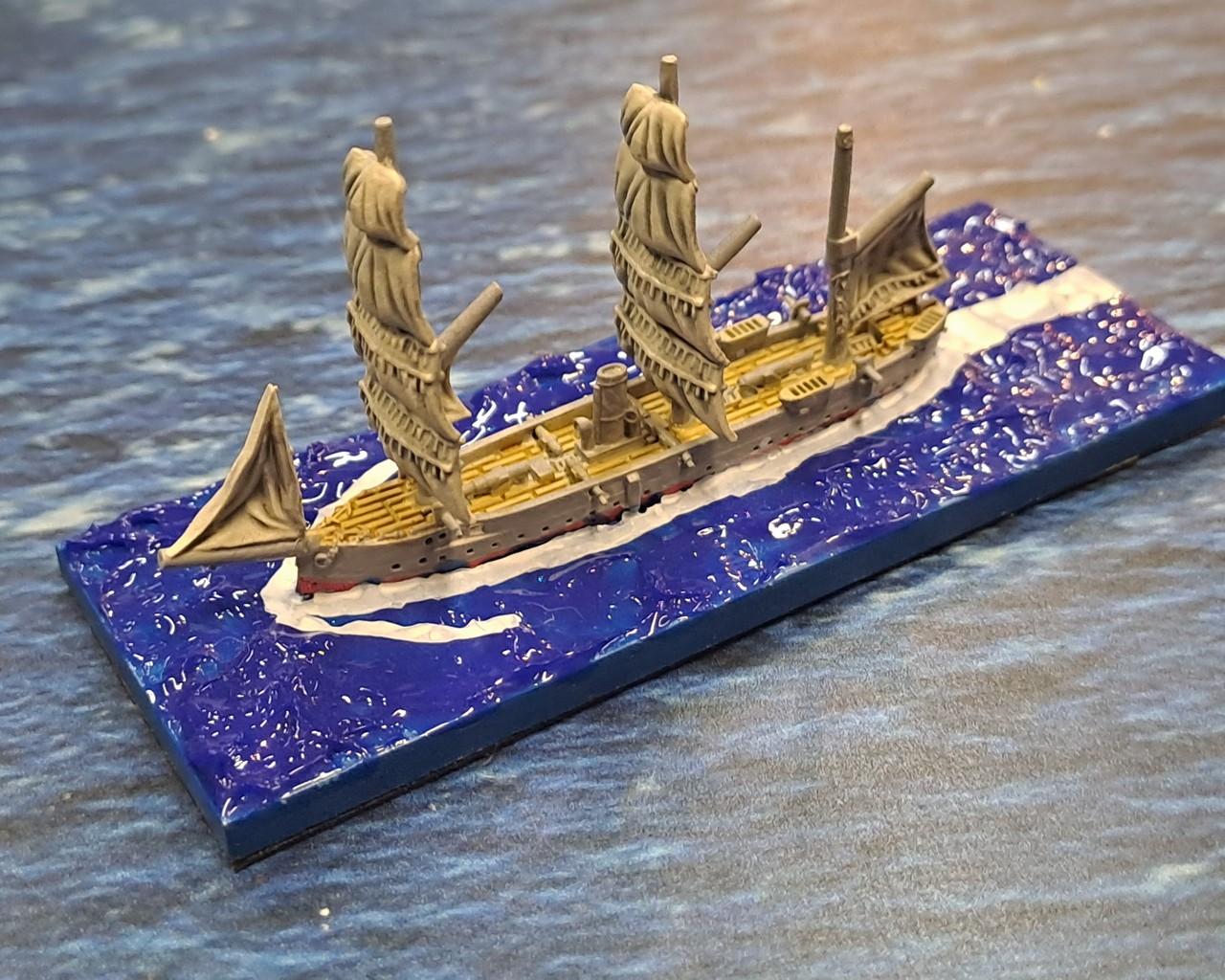
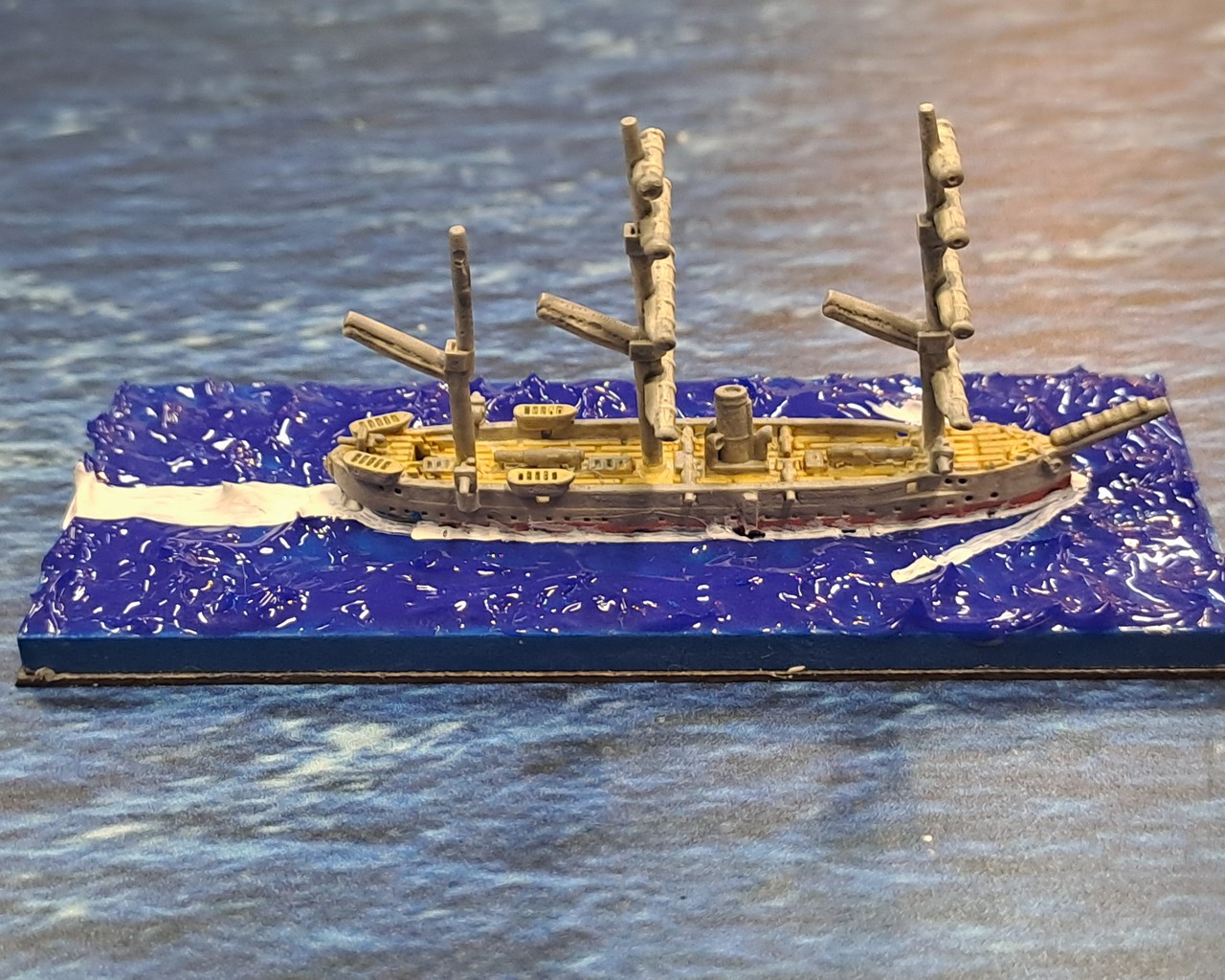
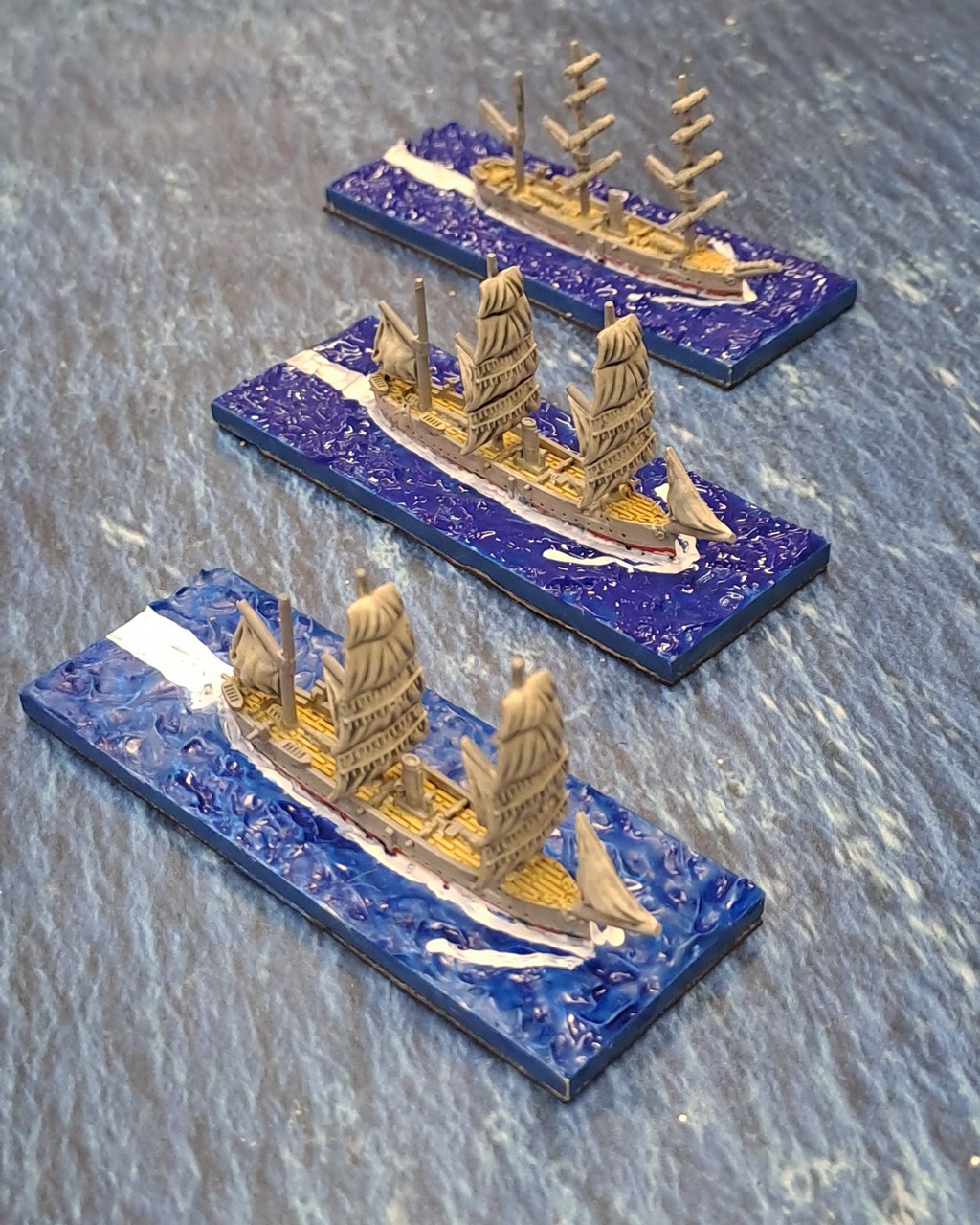
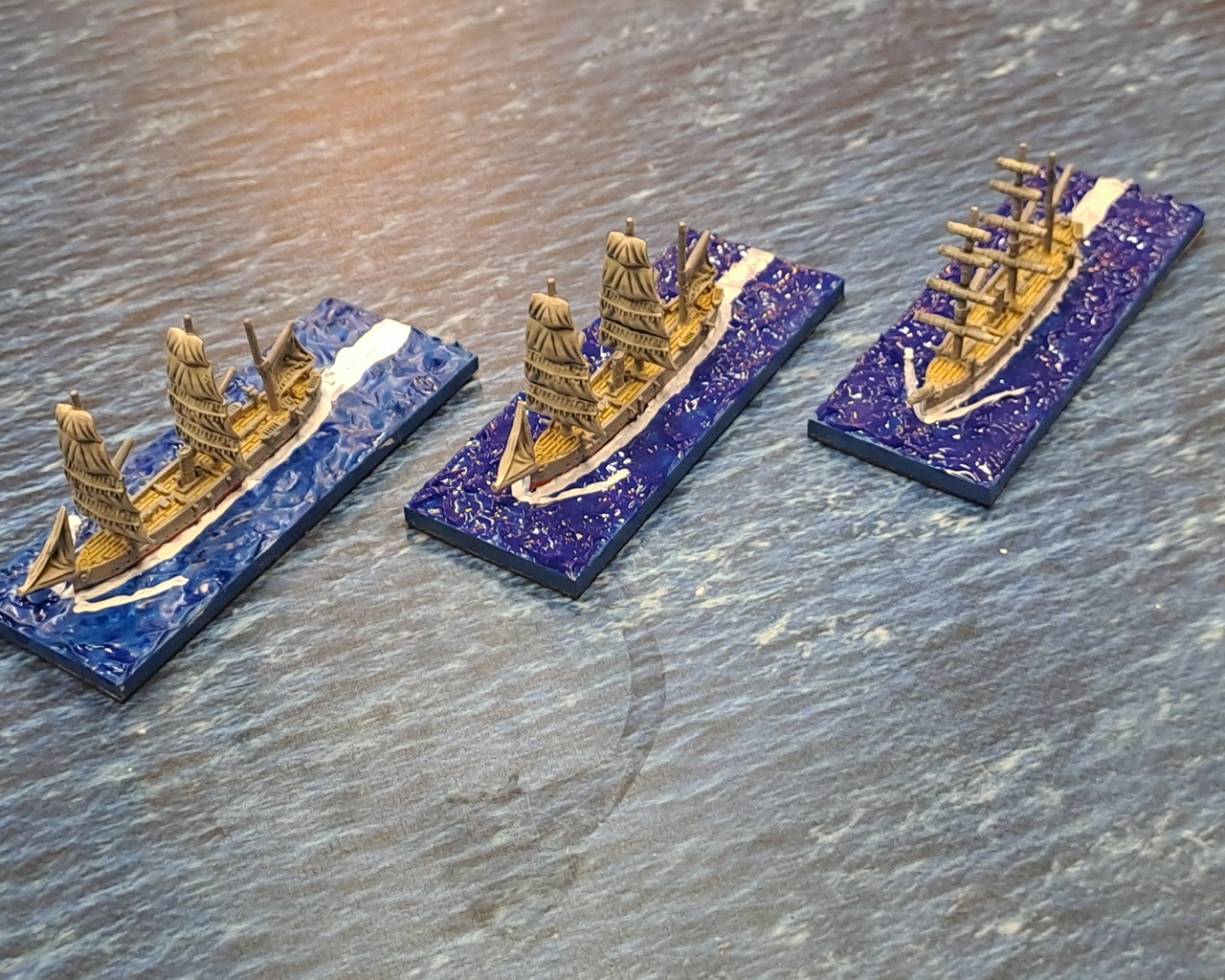
🇬🇧 During last weeks when most of my time I was sleeping and recovering I managed to finish three Katsuragi class corvettes for Nippon Kaigun or in English Japanese Empire Navy.
„The Katsuragi class was a three-ship class of composite hulled, sail-and-steam corvettes of the early Imperial Japanese Navy.
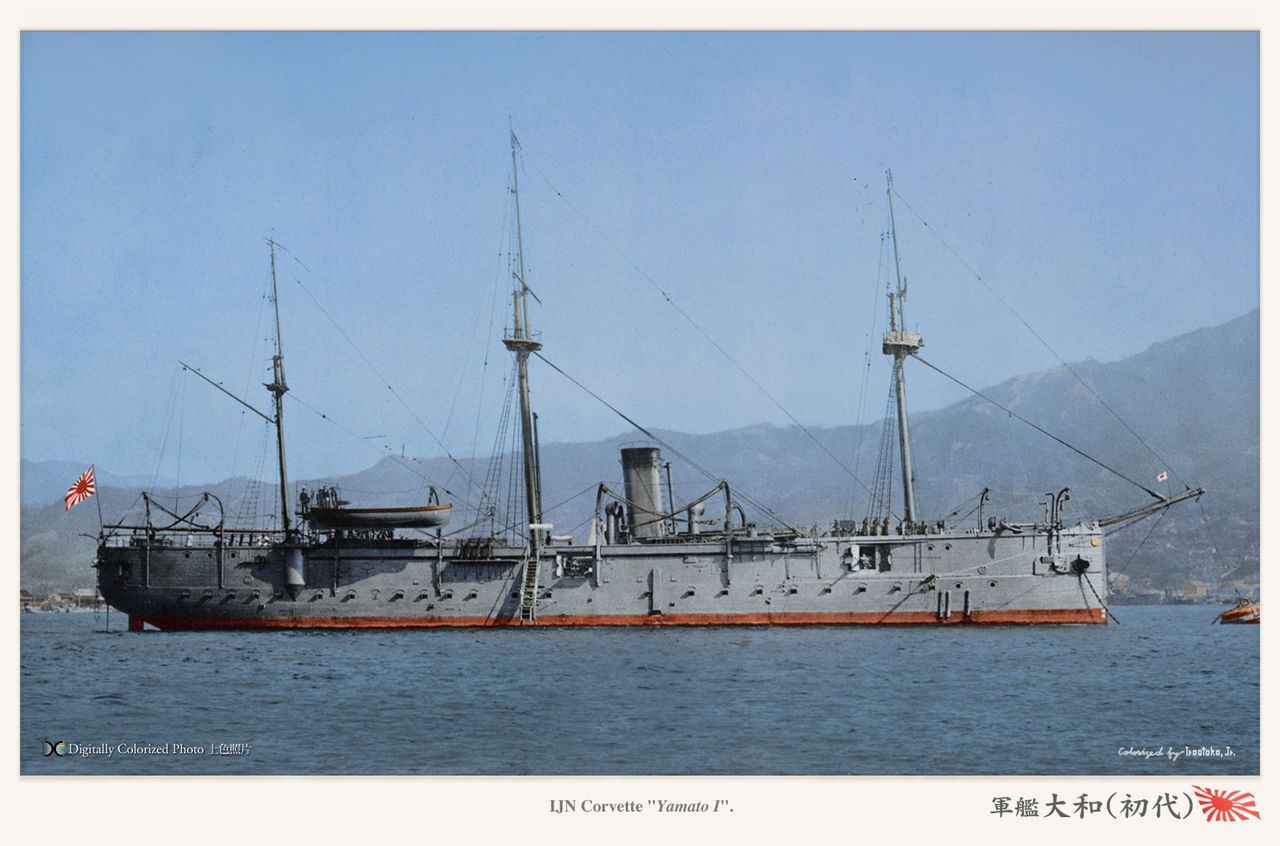
Two of the three ships of this type bore names that are very familiar to naval military enthusiasts. It’s Yamato and Musashi. It is therefore worth remembering that before these names were given to Japanese super battleships, they were worn by small corvettes.”
* – description of Katsuragi according to GMBoardgames.
🇵🇱 W ciągu ostatnich tygodni w trakcie który głównie spałem i wracałem do siebie udało mi się skończyć trzy korwety klasy Katsuragi dla Nippon Kaigun lub po polsku Marynarki Wojennej Cesarstwa Japonii.
„Katsuragi należał do liczącego trzy jednostki typu korwet o kompozytowych kadłubach, napędzanych żaglami i parą, wczesnej Cesarskiej Marynarki Wojennej Japonii.
Dwa z trzech okrętów tego typu nosiły nazwy bardzo dobrze znane entuzjastom militariów morskich: Yamato i Musashi. Warto więc pamiętać, że zanim te nazwy zostały nadane japońskim super pancernikom, nosiły je małe korwety.”
Summary: – a very nice change when it comes to painting sailing ships for a game in which they are very rare. – three ships of this class were built: Katsuragi, Yamatoand Musachi. – my inspiration for painting – look below.
Podsumowanie: – bardzo fajna odmiana jeśli chodzi o malowanie żaglowców do gry, w której bardzo nielicznie występują. – zbudowano trzy okręty tej klasy: Katsuragi,Yamato oraz Musachi. – moją inspiracją do malowania był obrazek – spójrz poniżej.















































































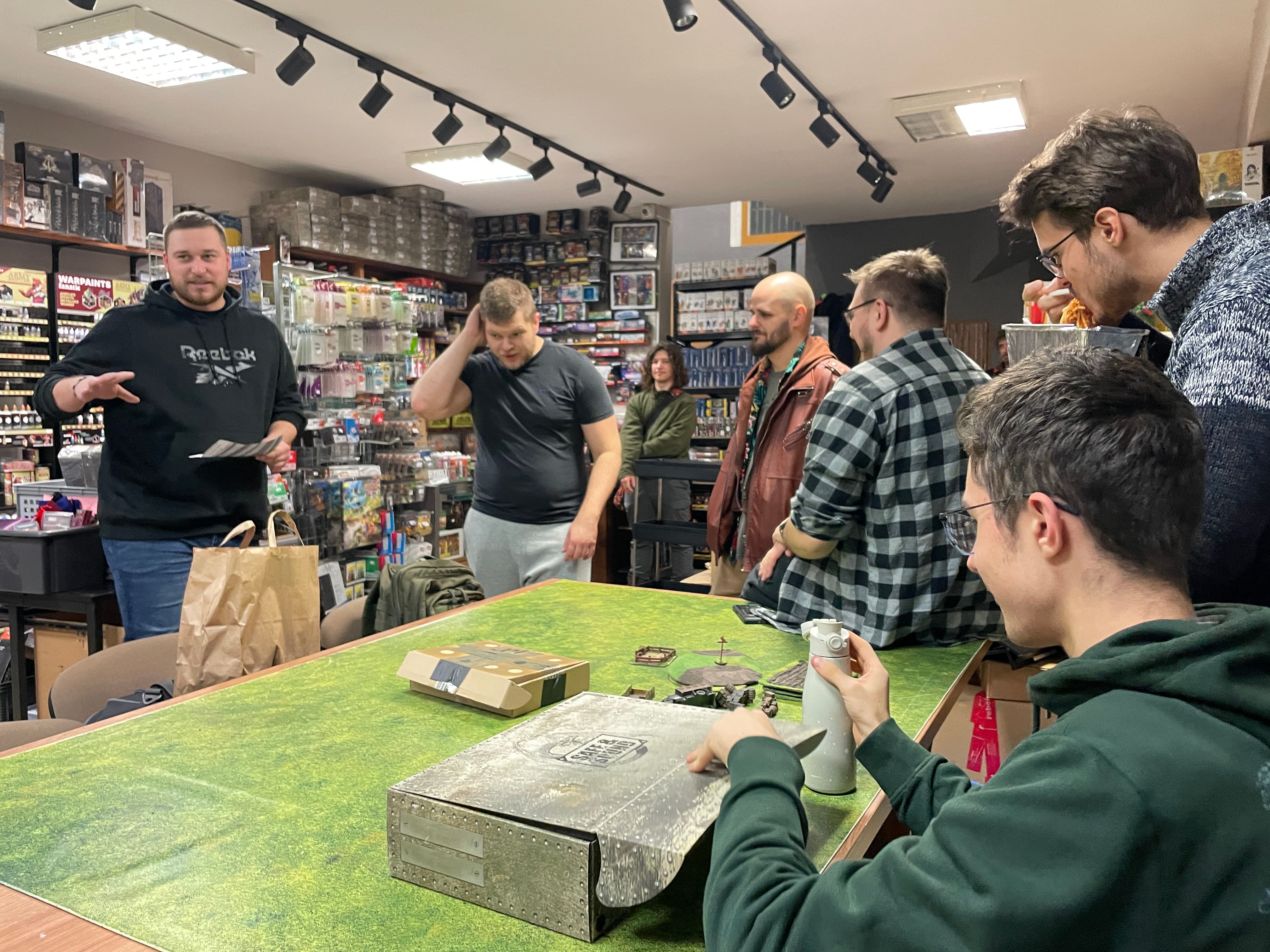

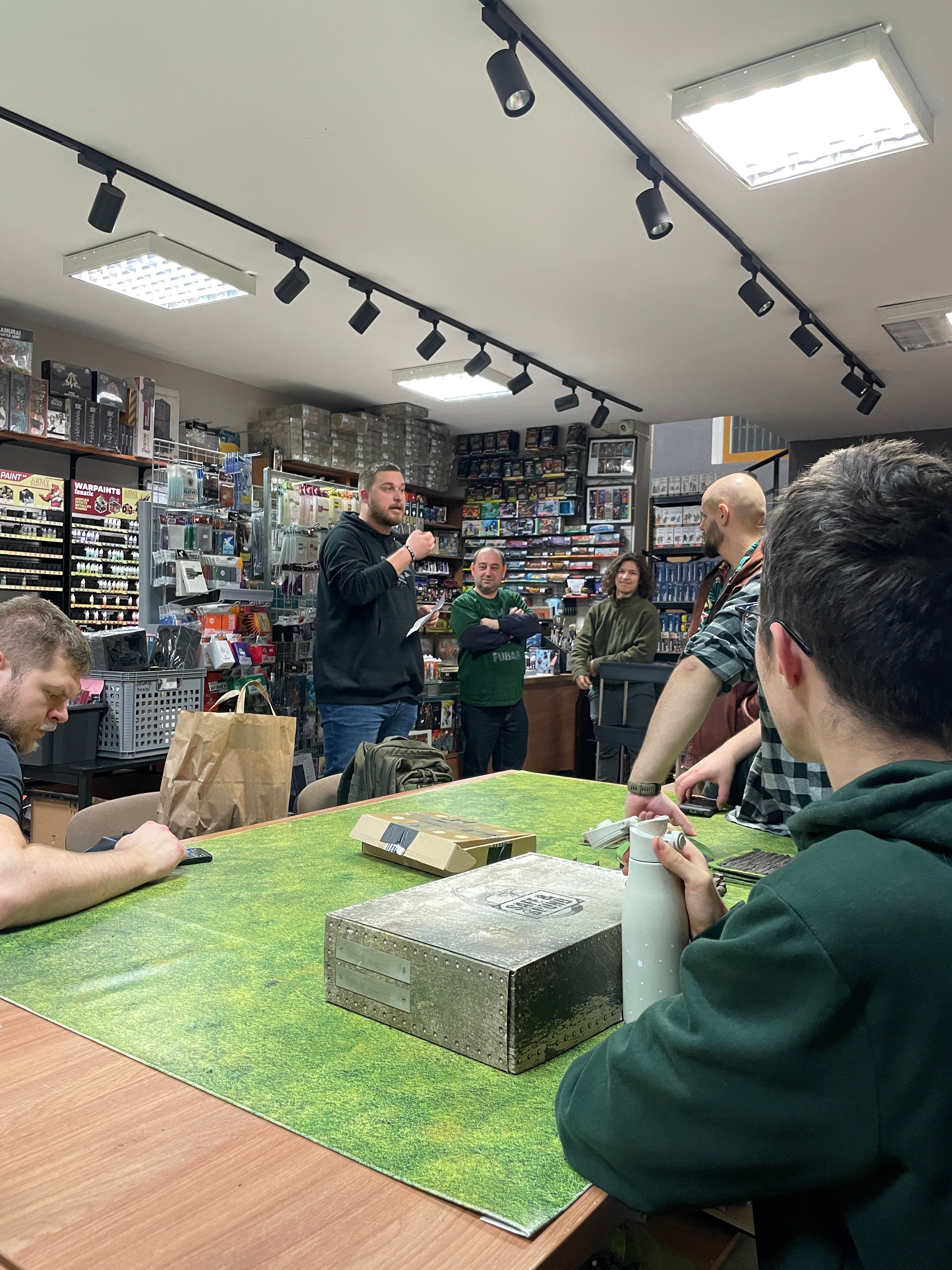


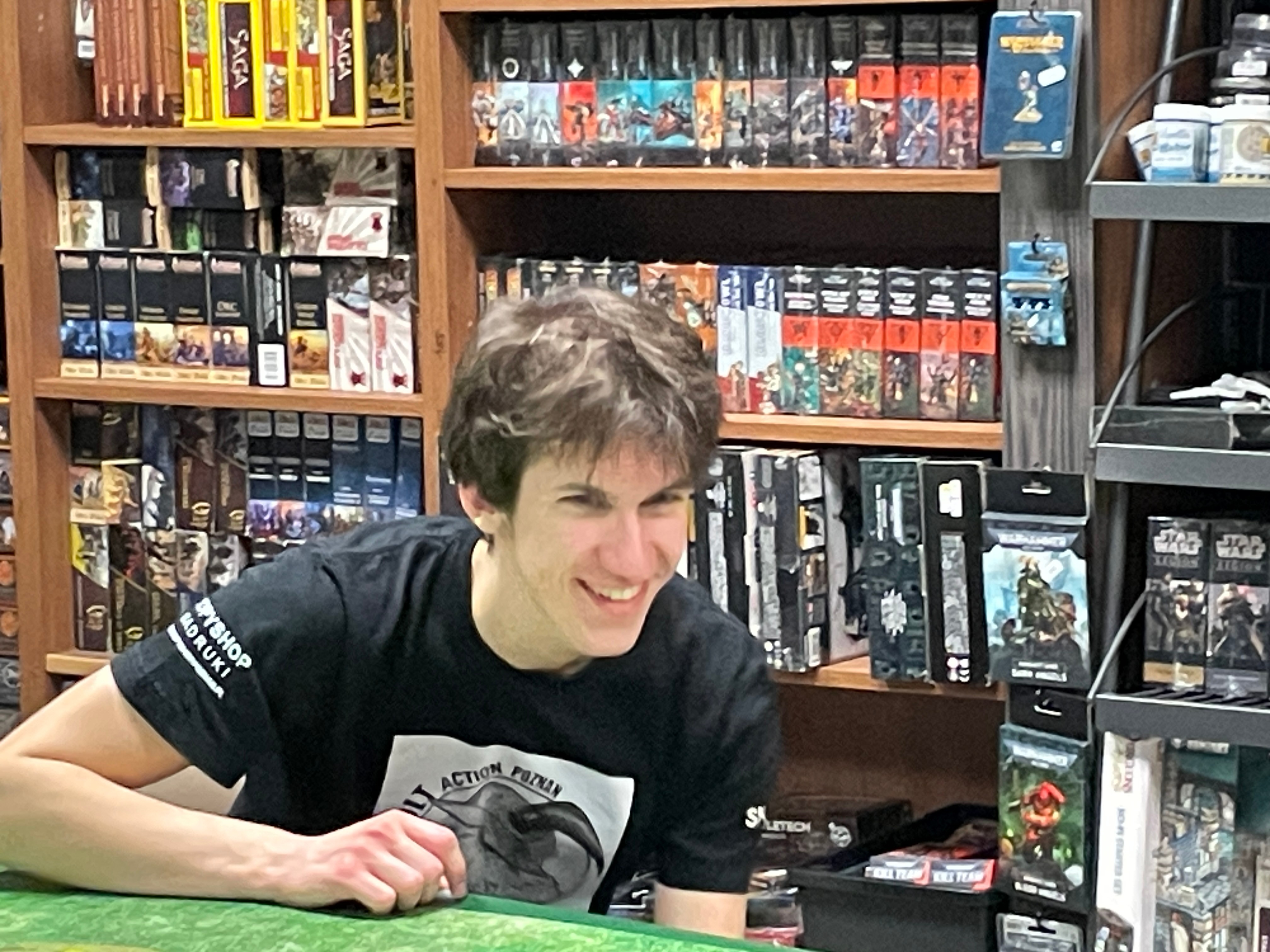







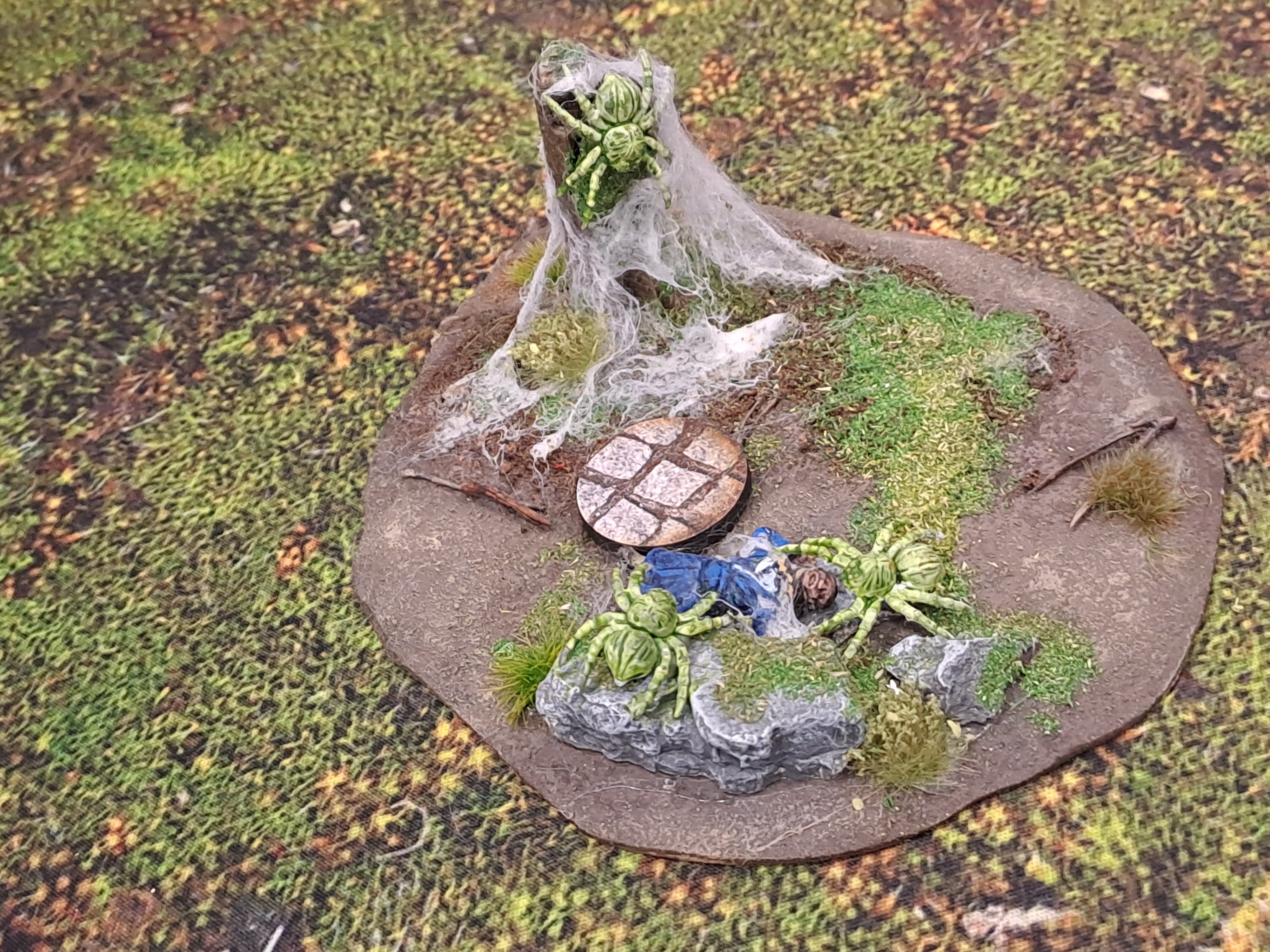
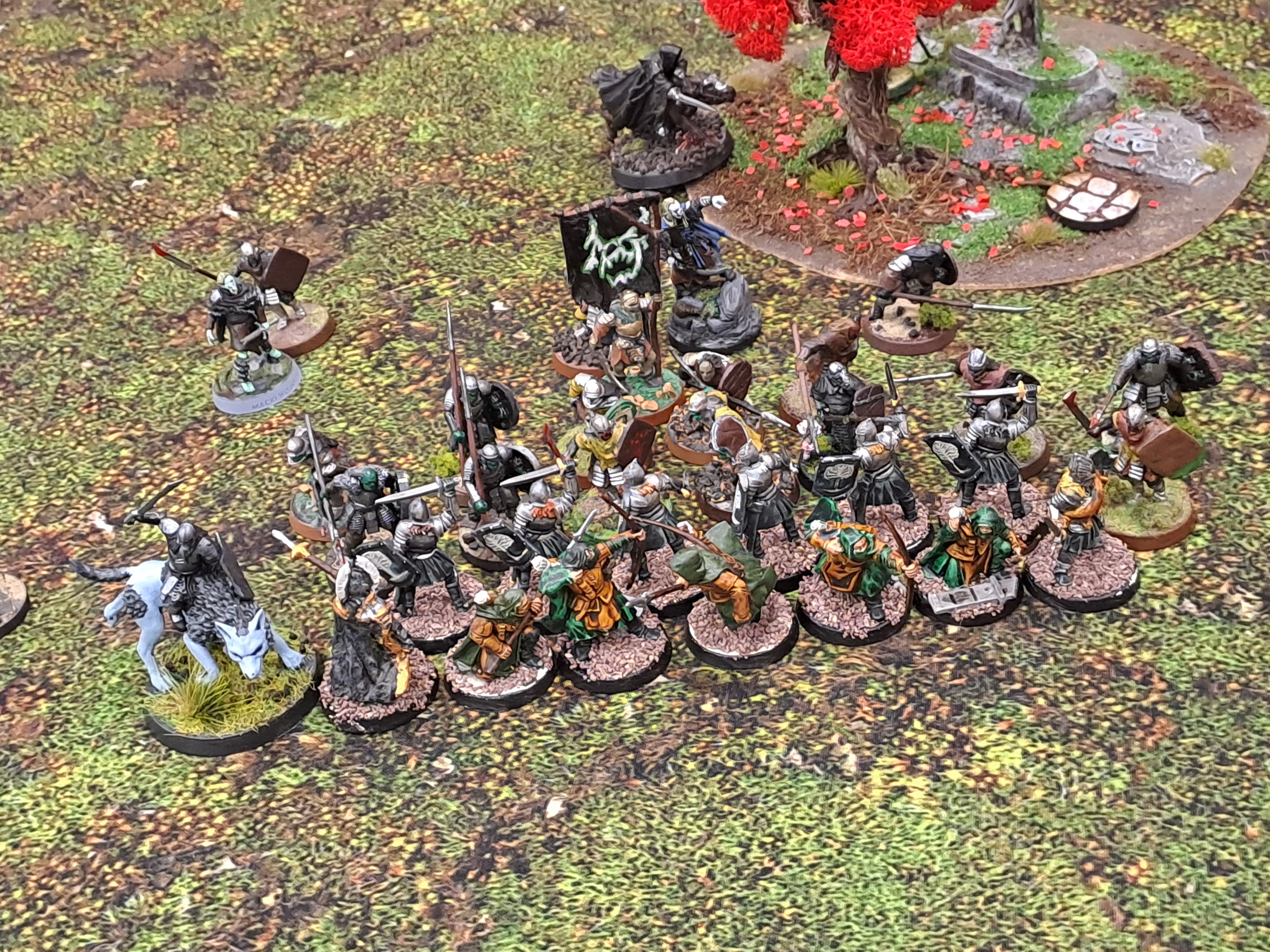

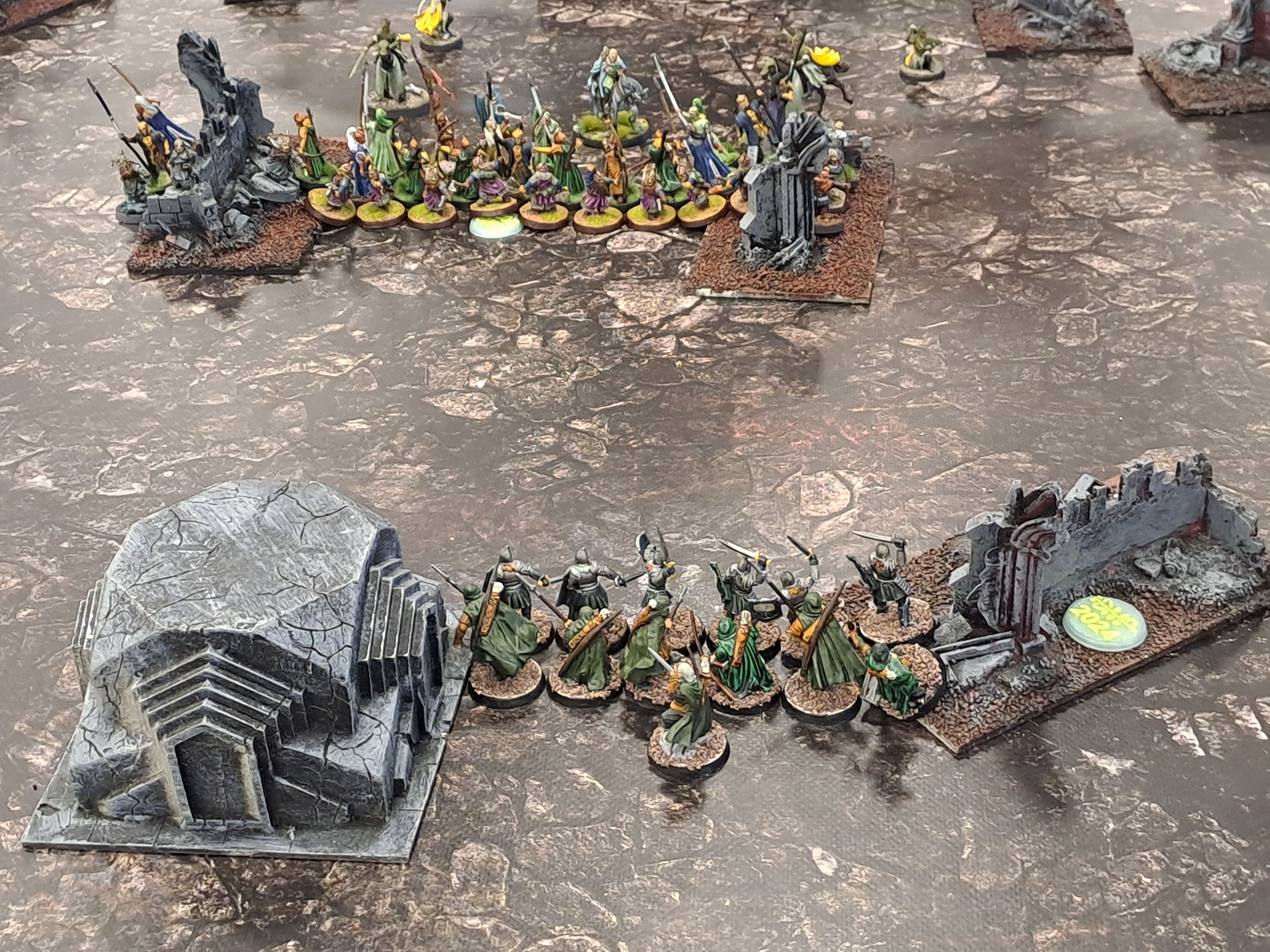


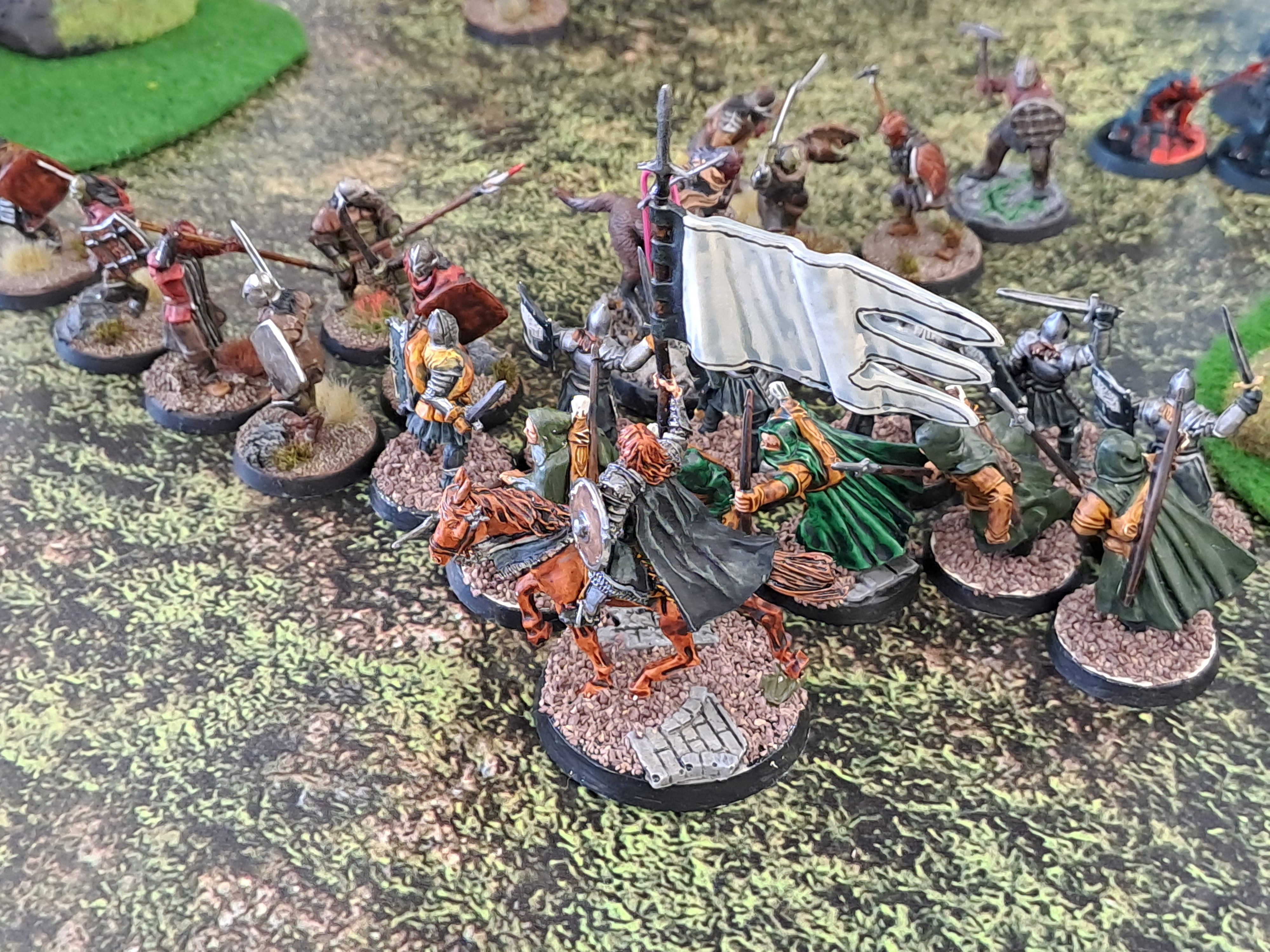
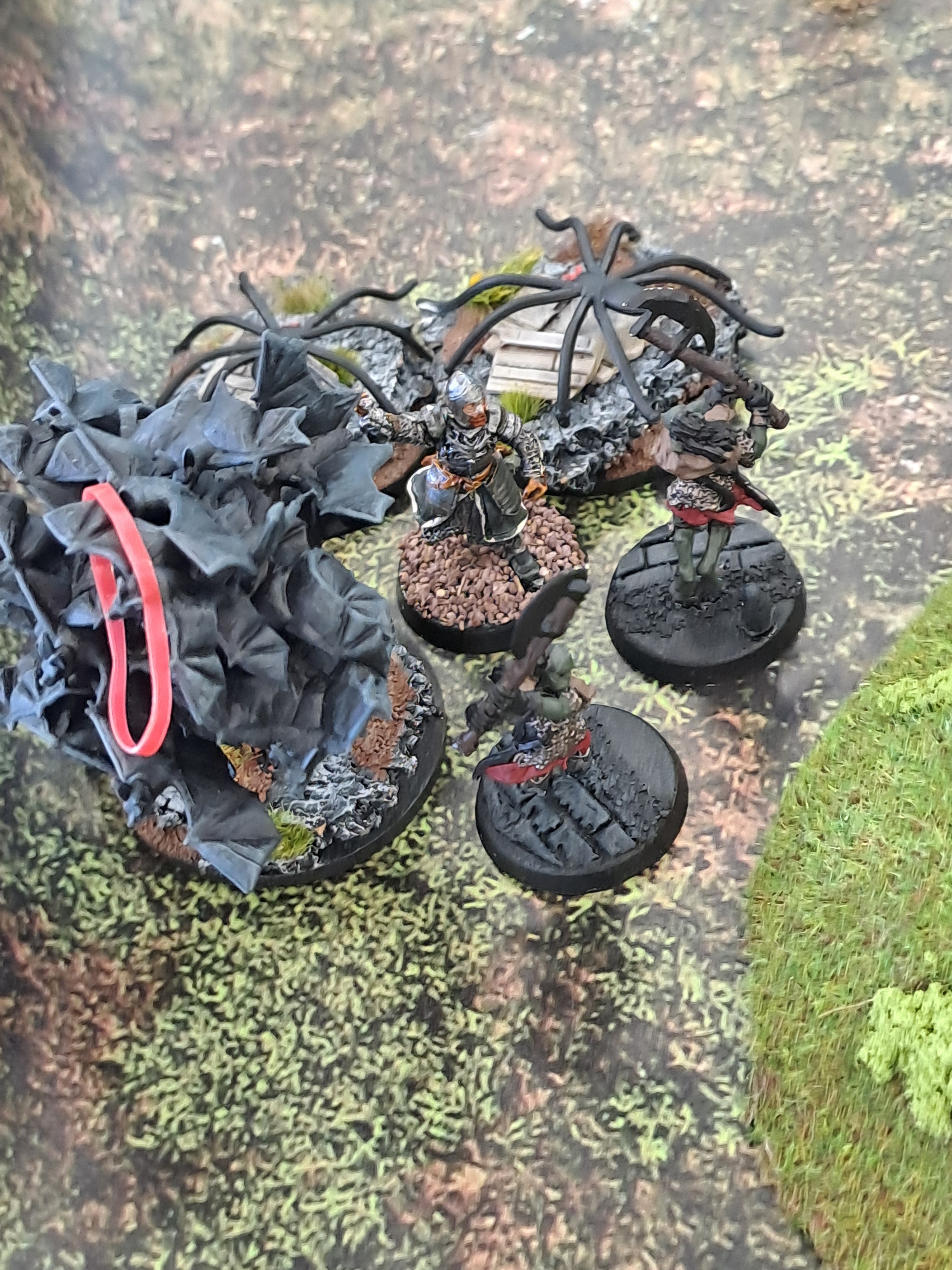

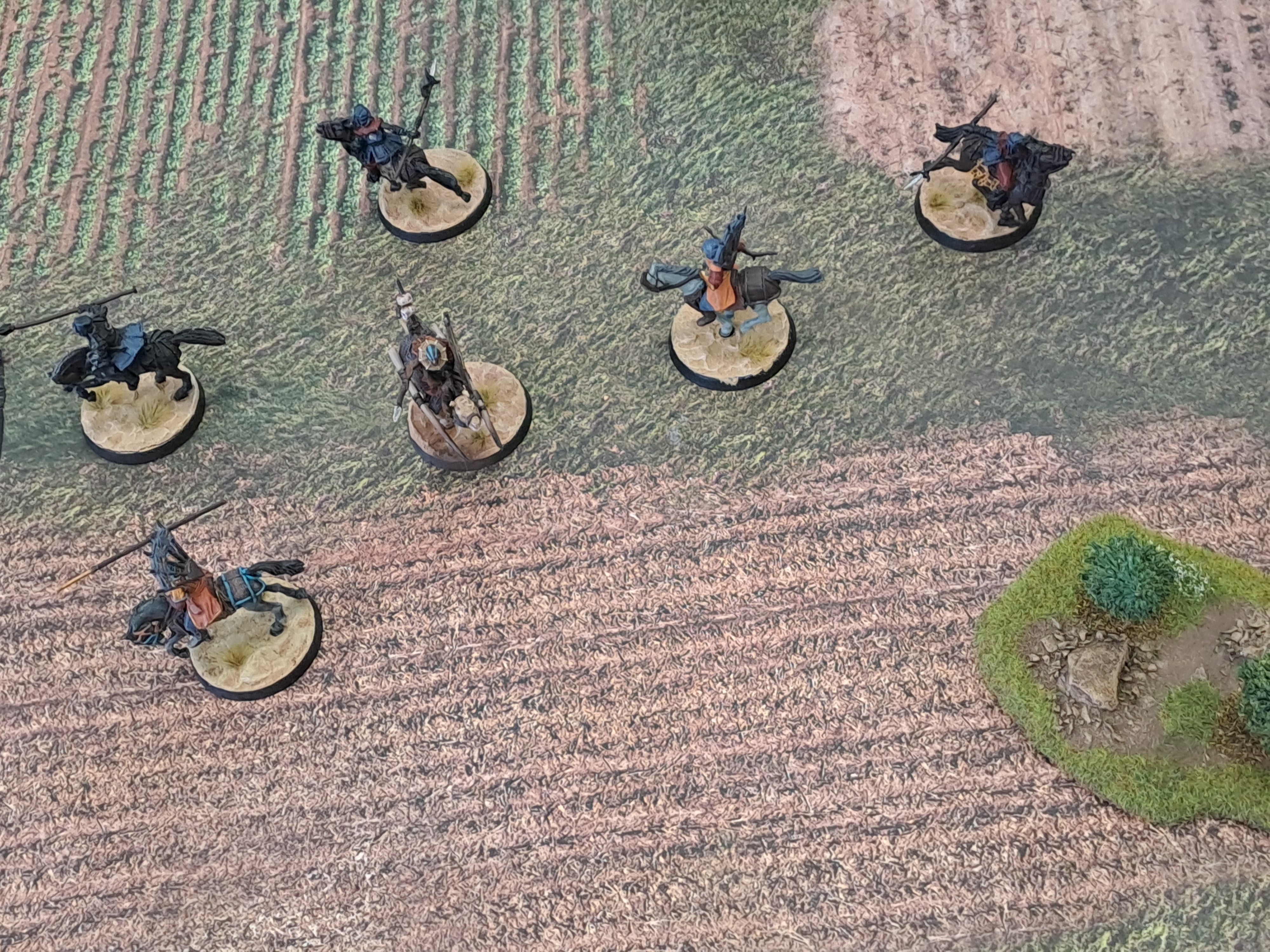
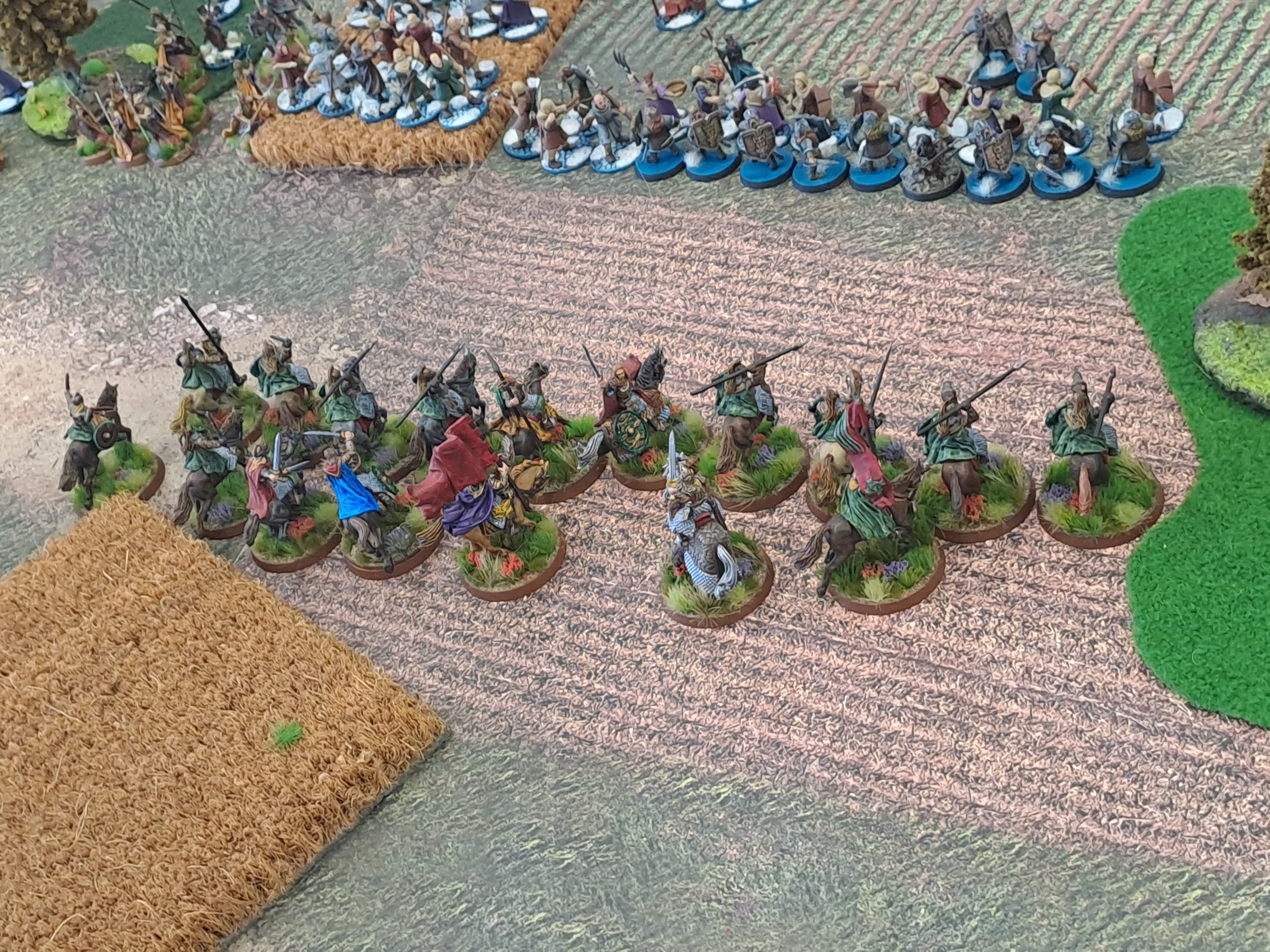

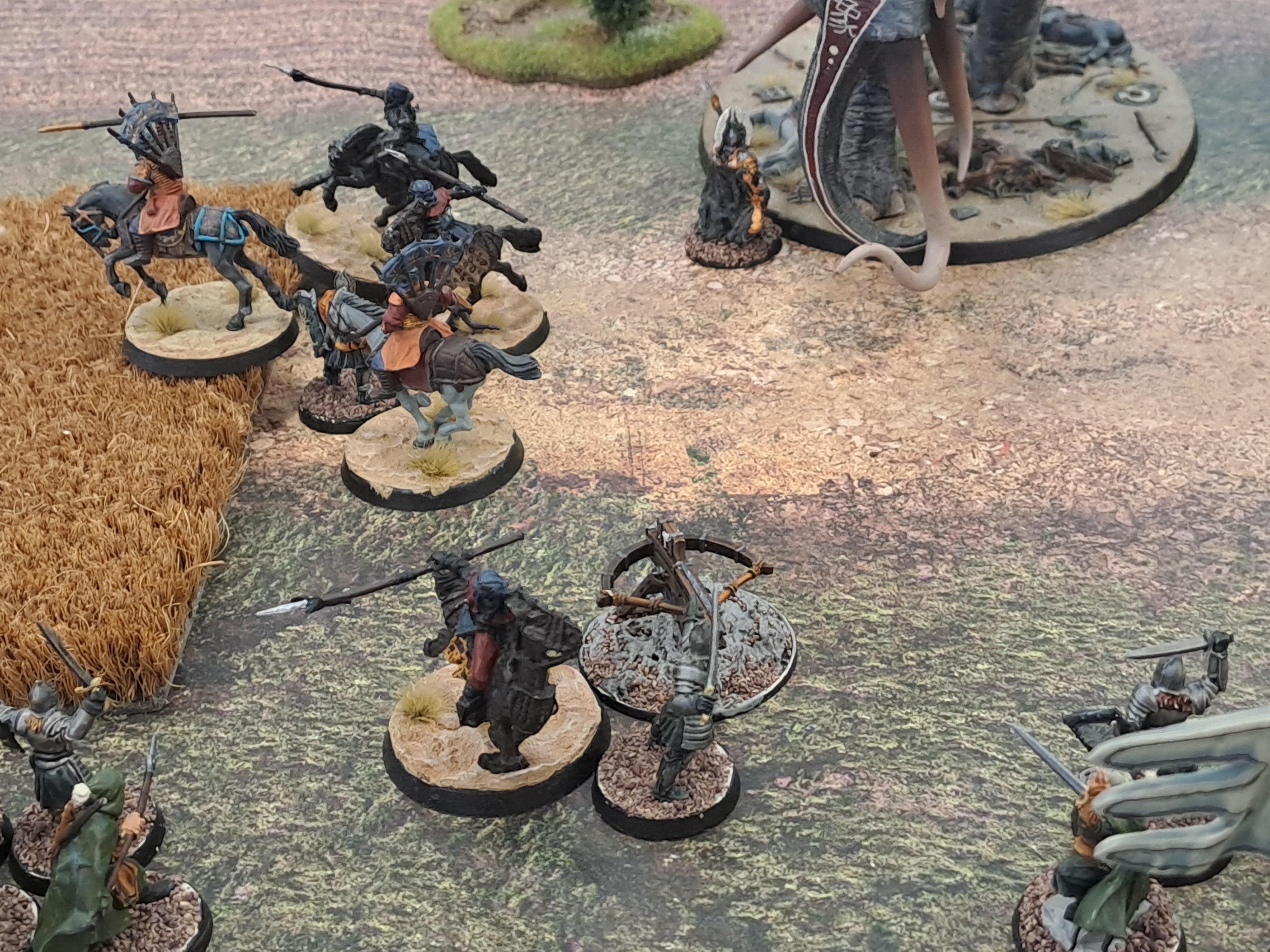


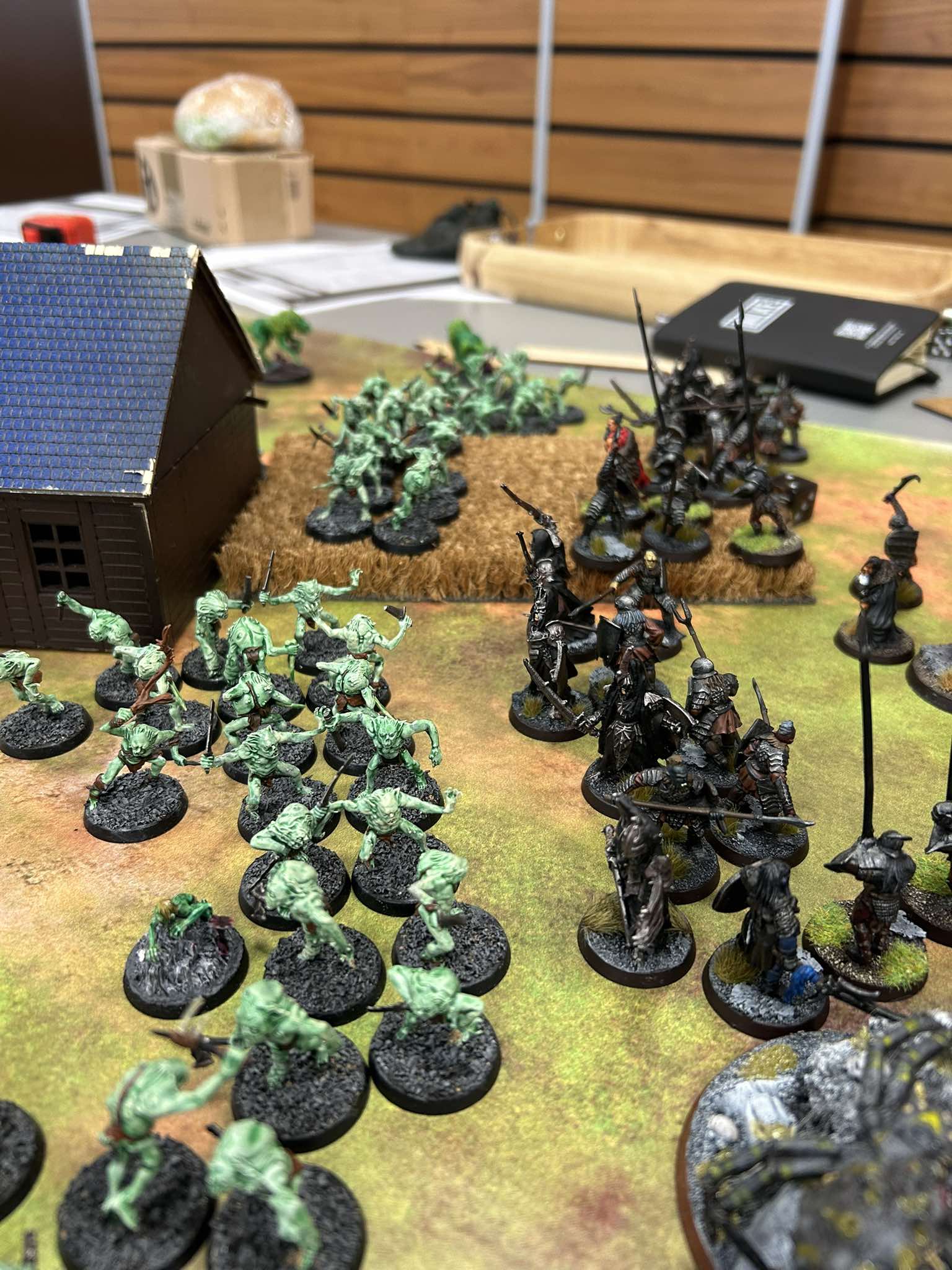

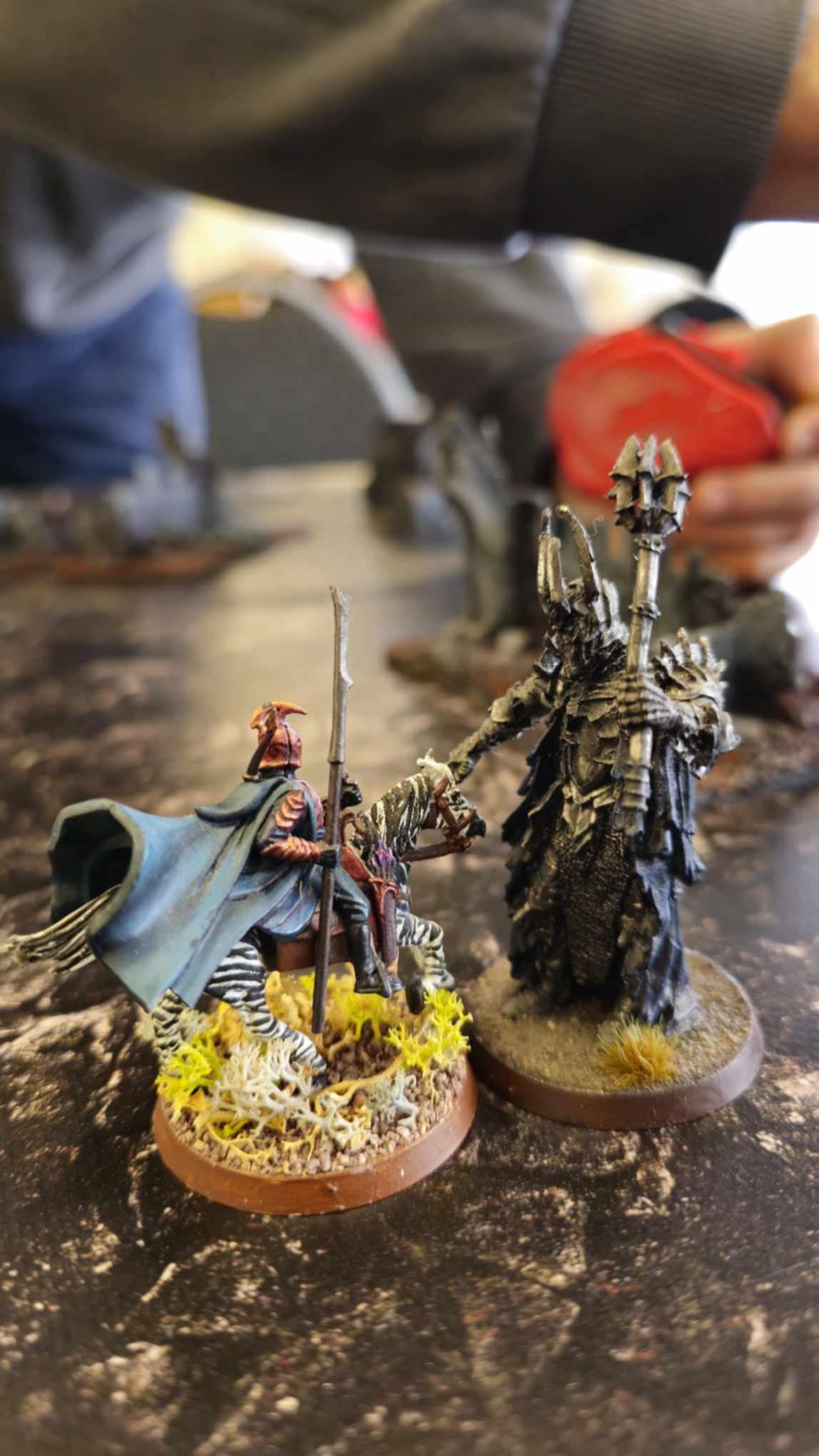
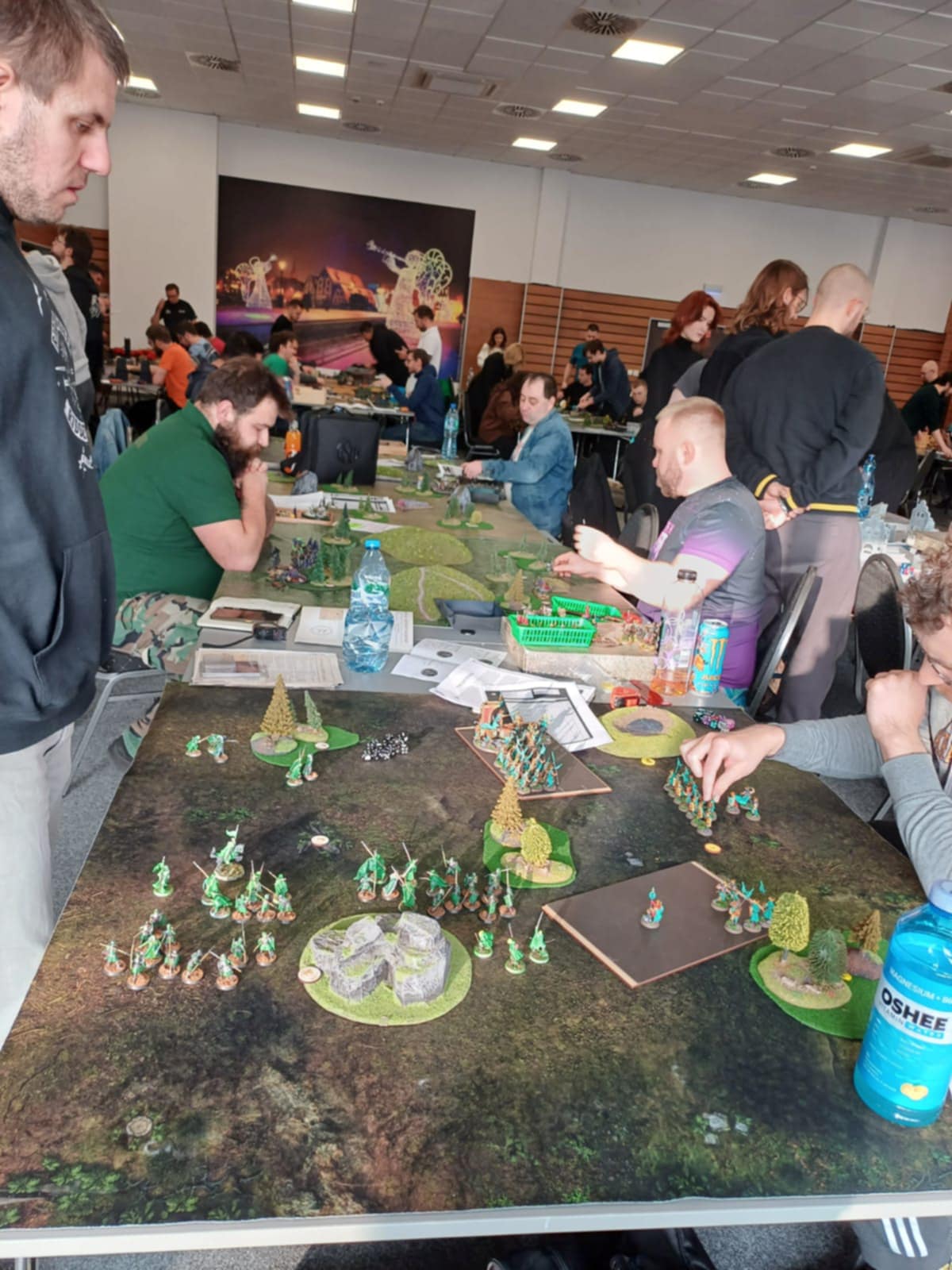




























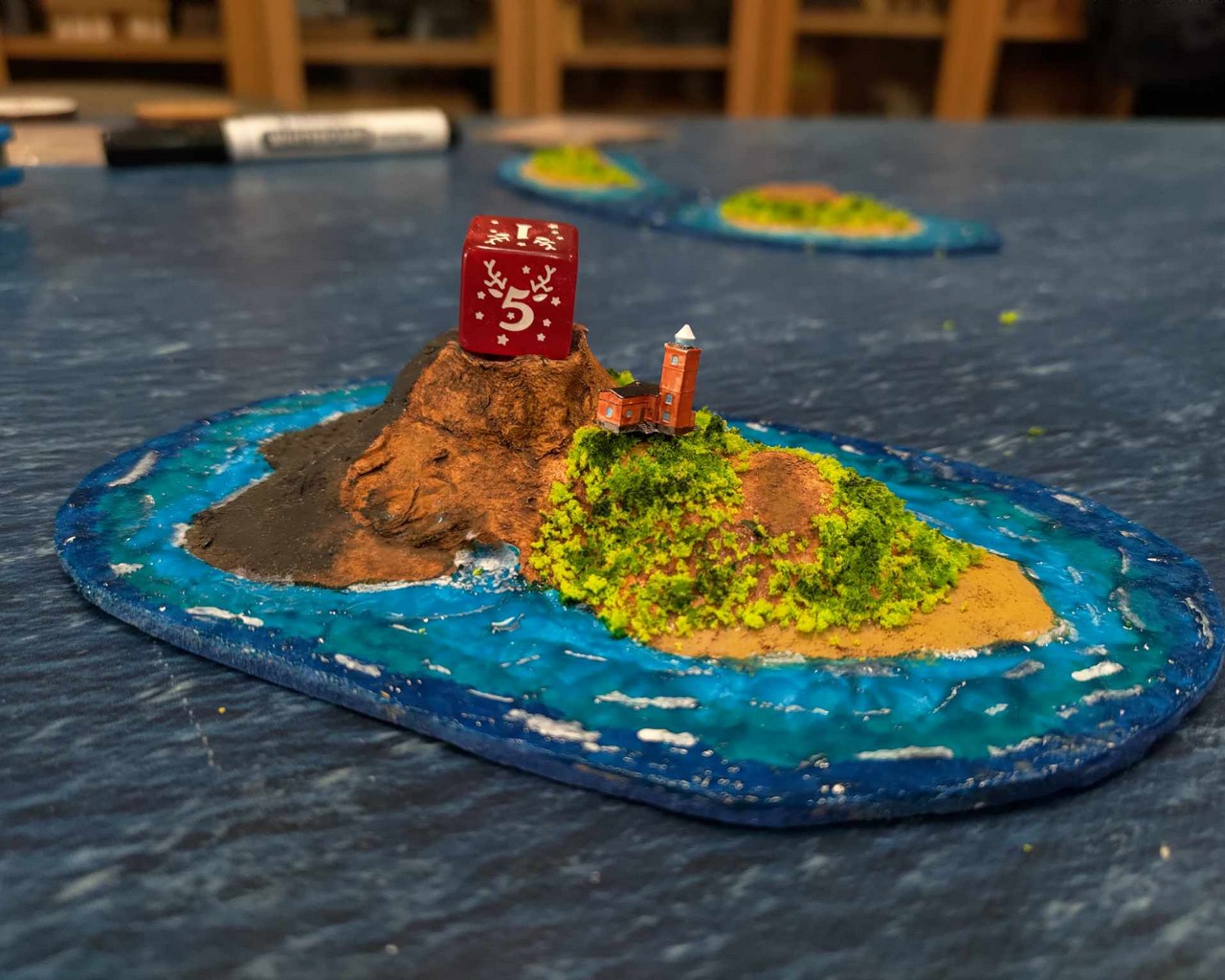

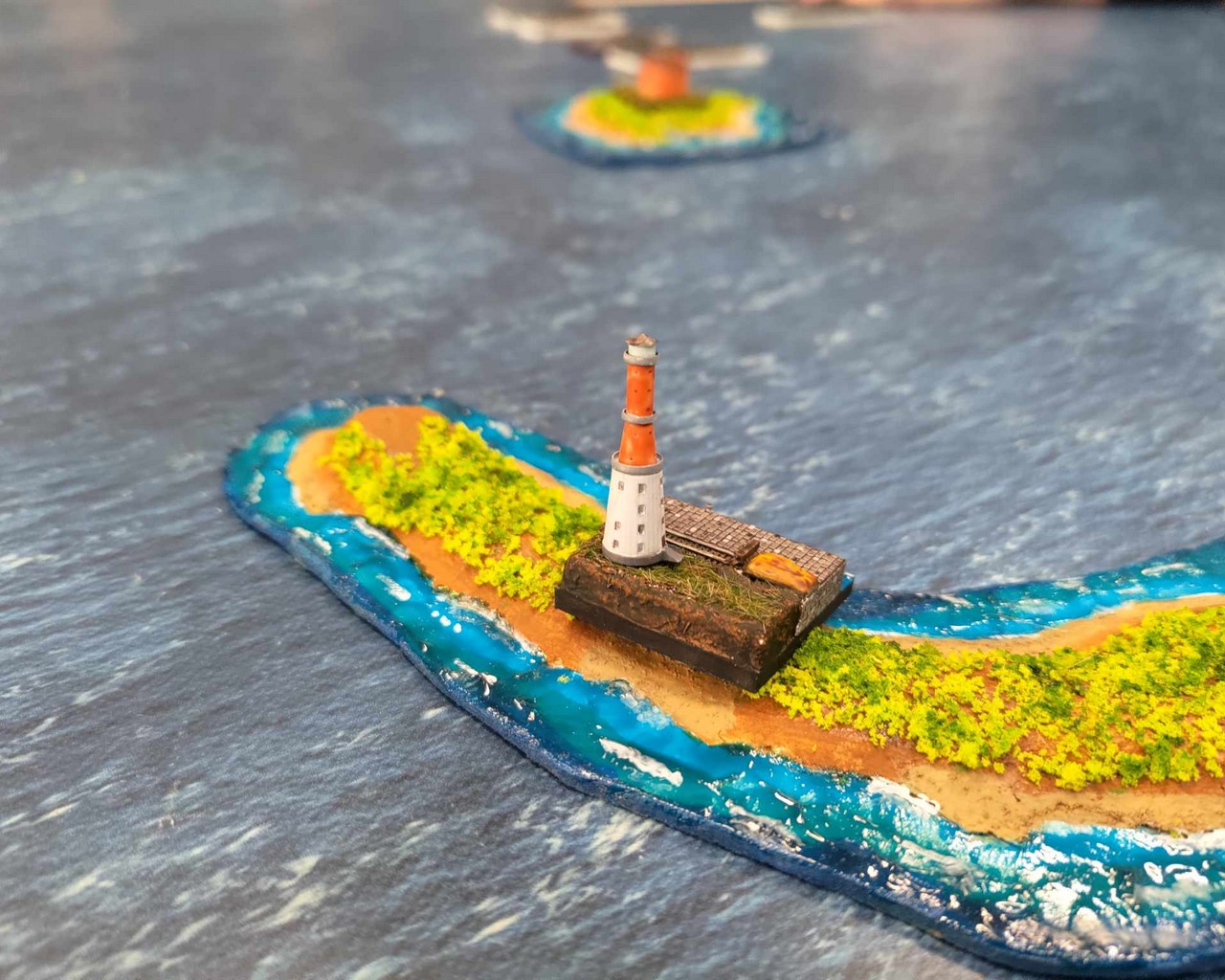

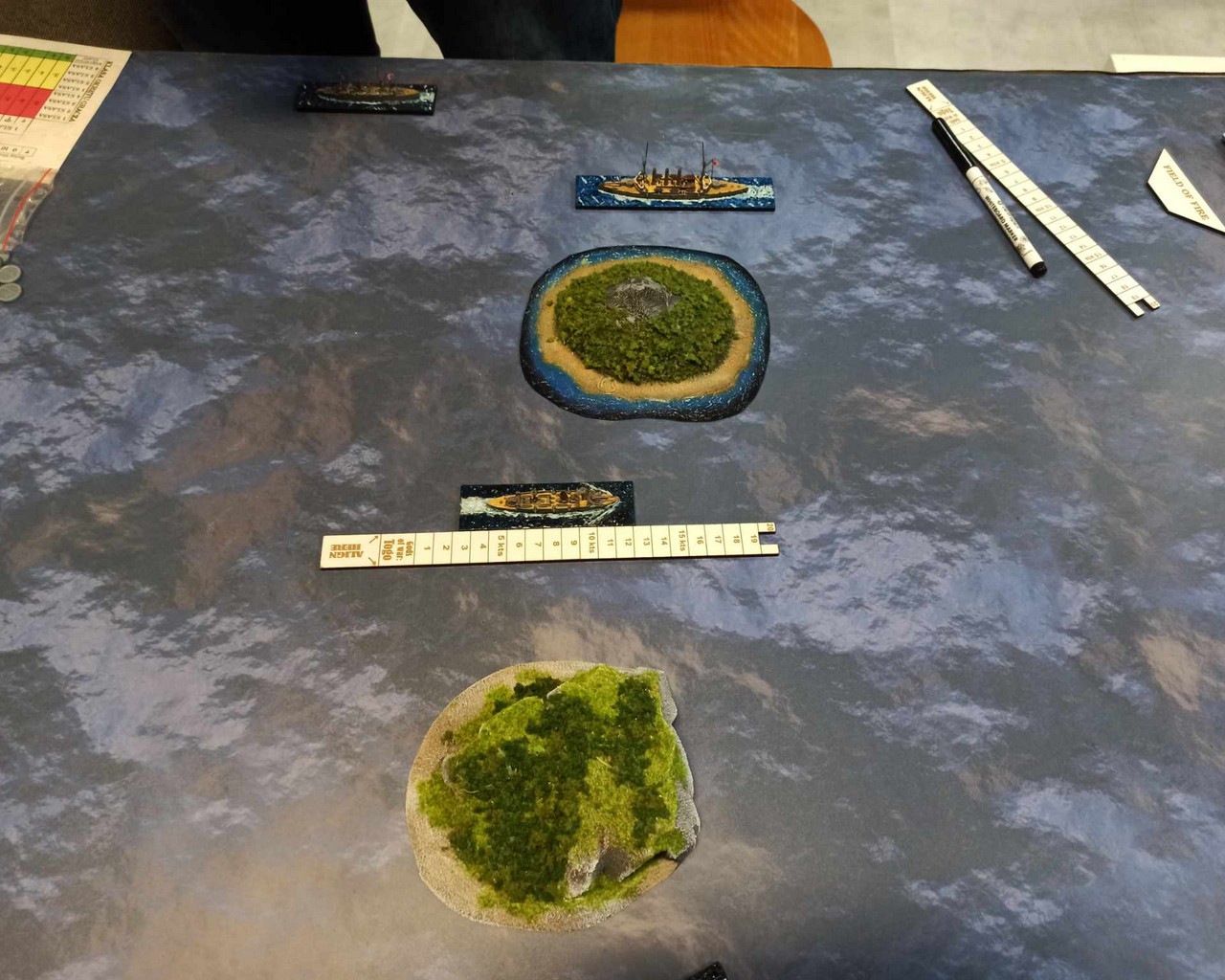








 tancreddebeauville
 Tancred’s Tabletop Tales