Gods of War: Togo – D`Iberville class 🇫🇷 (🇬🇧EN/🇵🇱PL) Wtorek, Czer 9 2026 

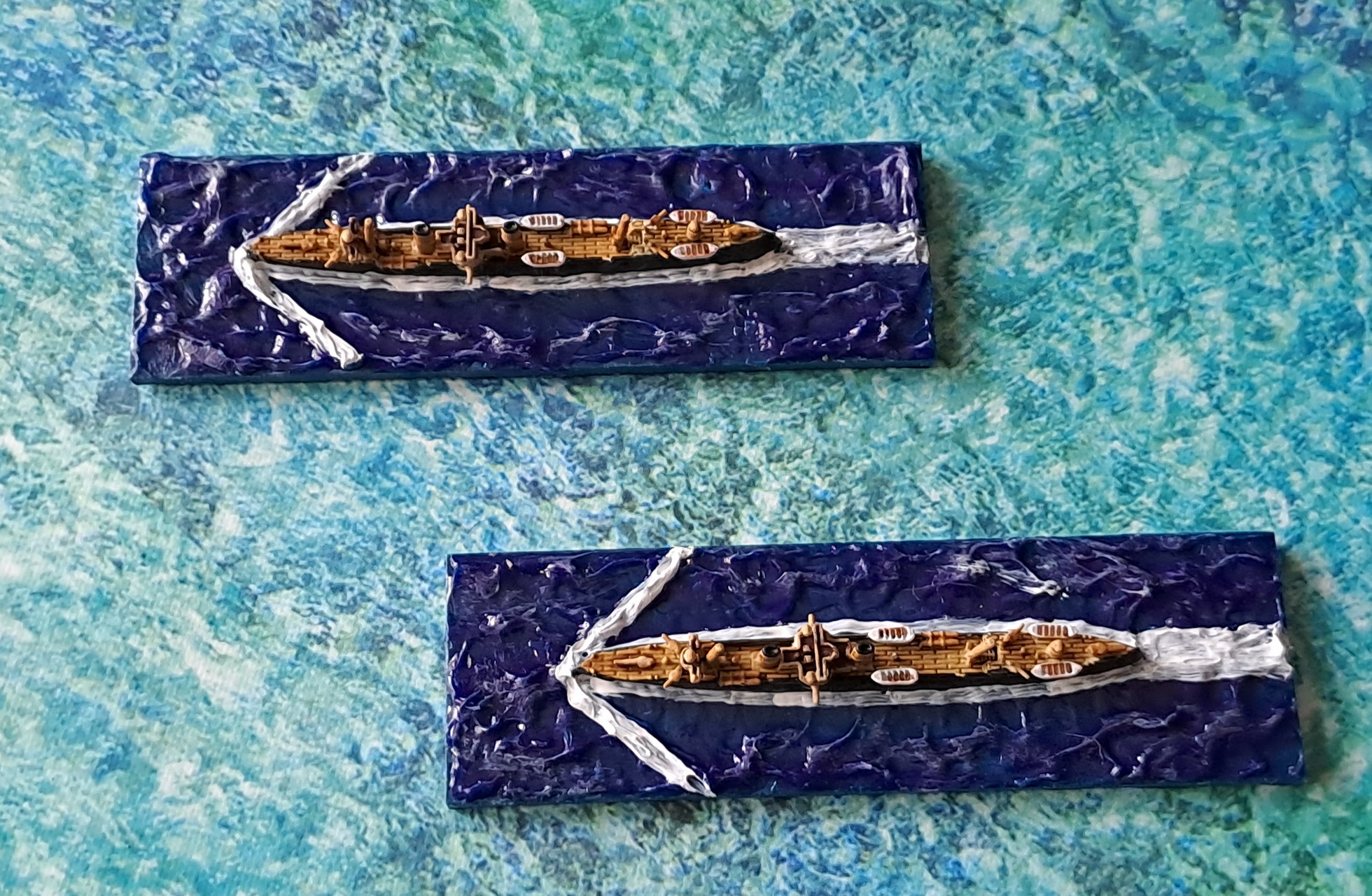
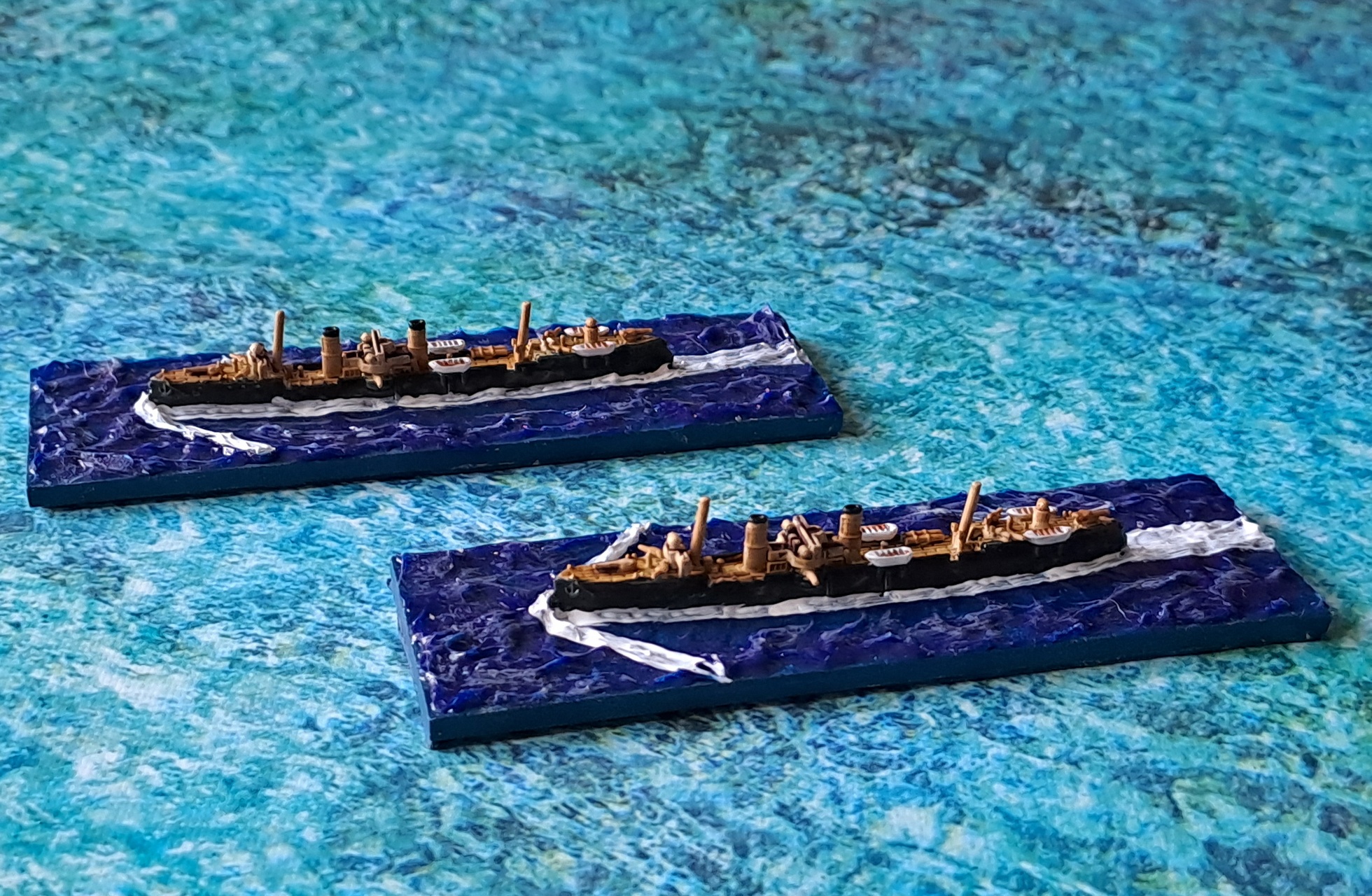
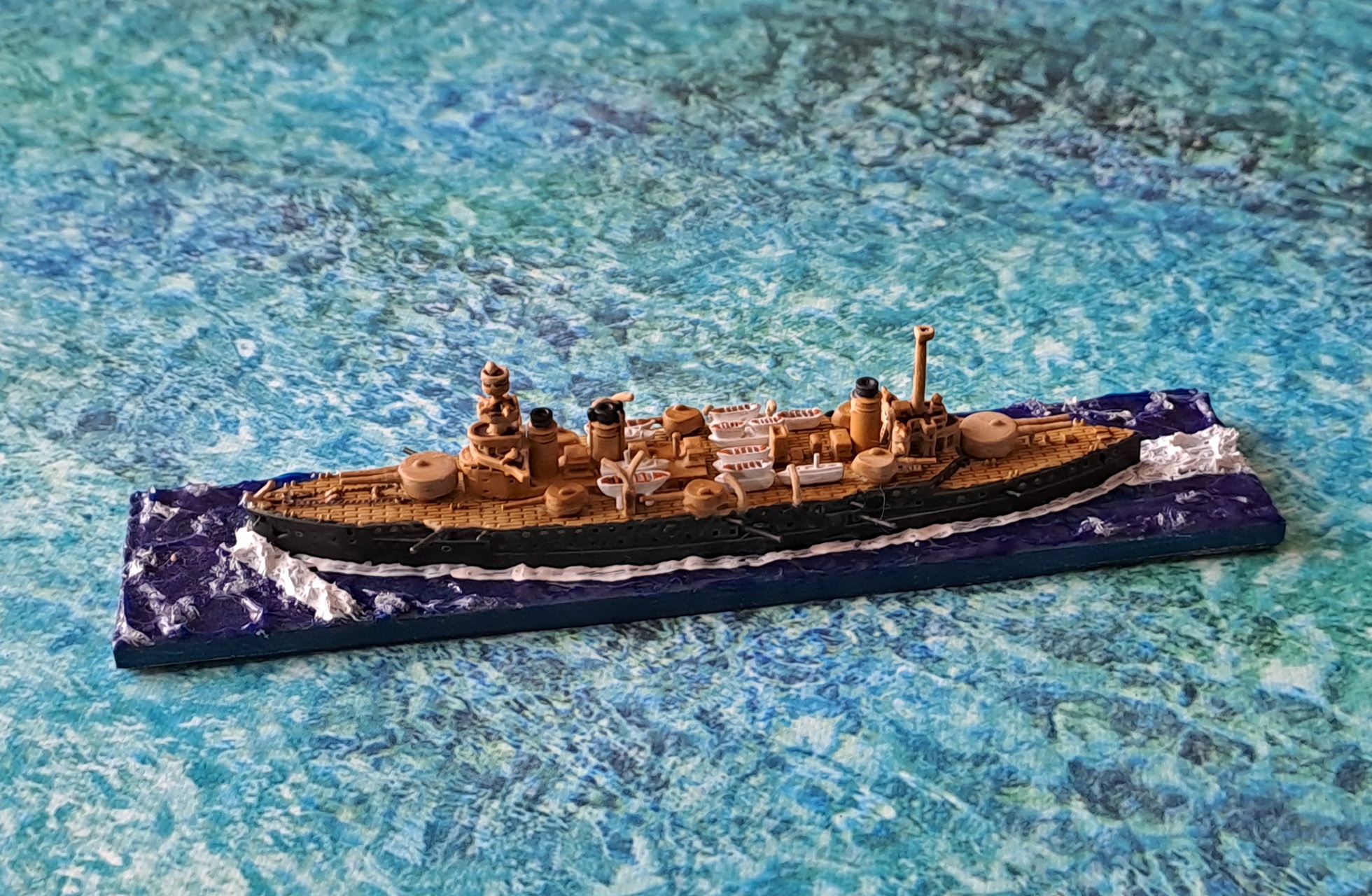
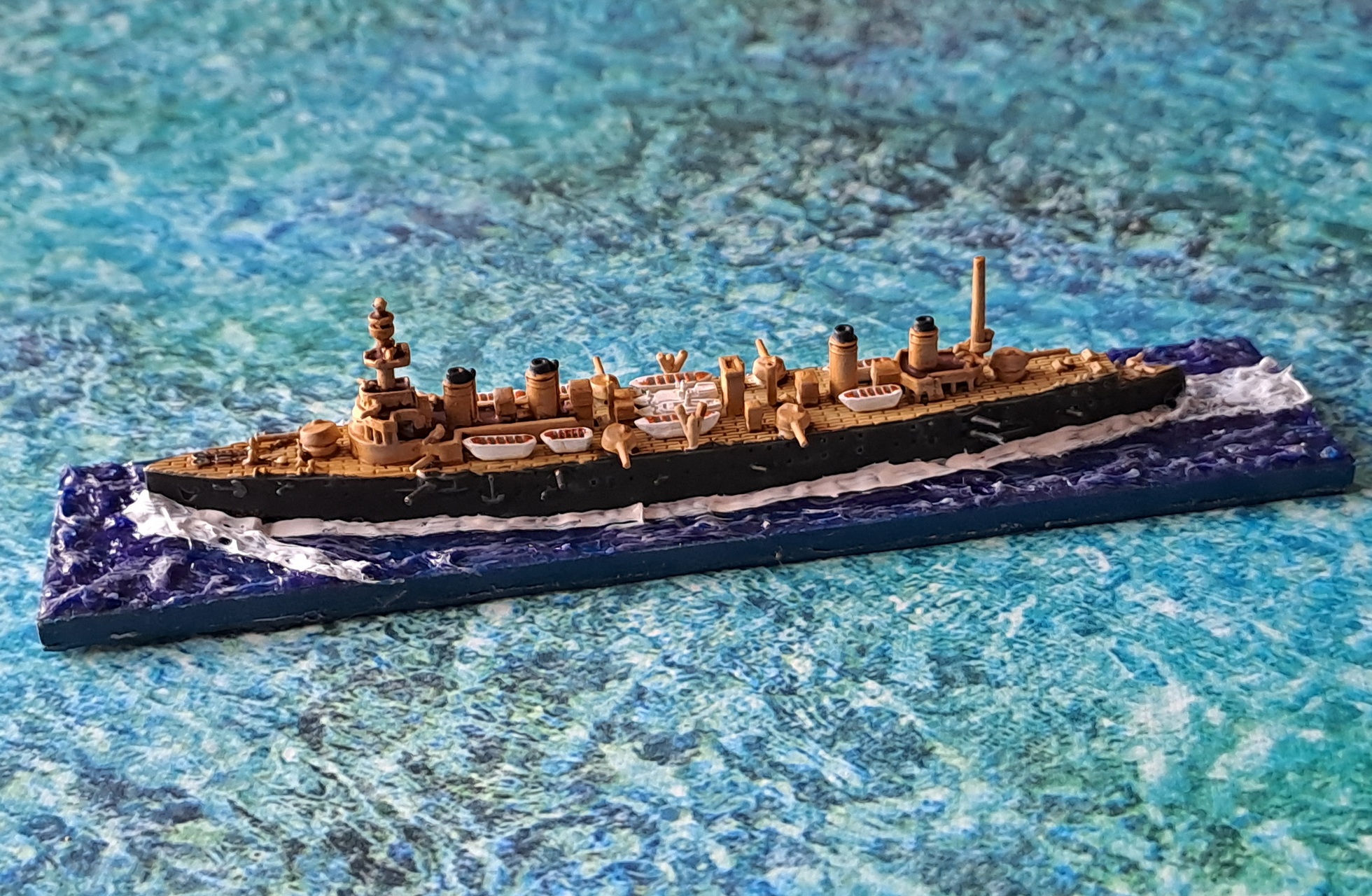
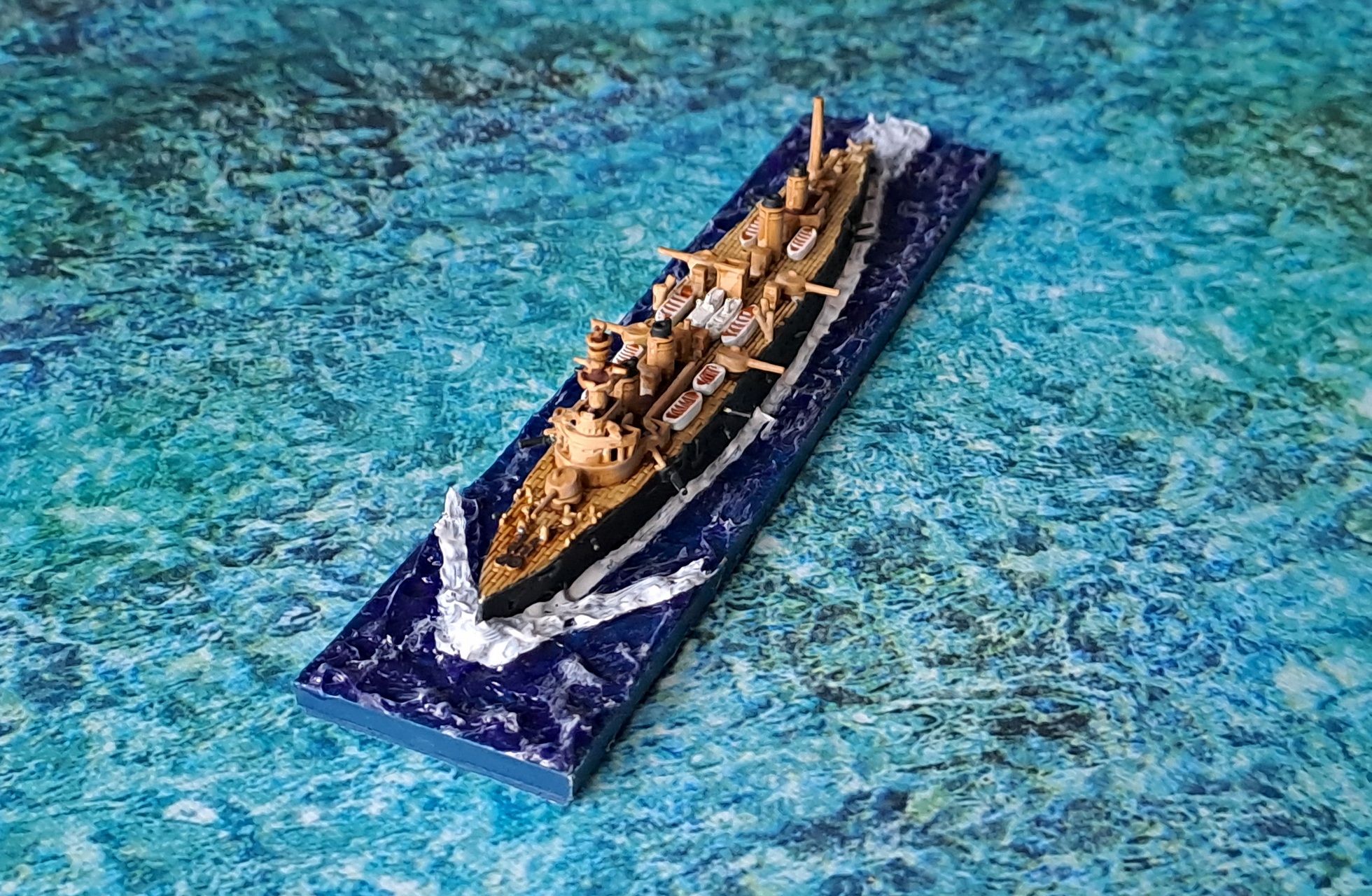
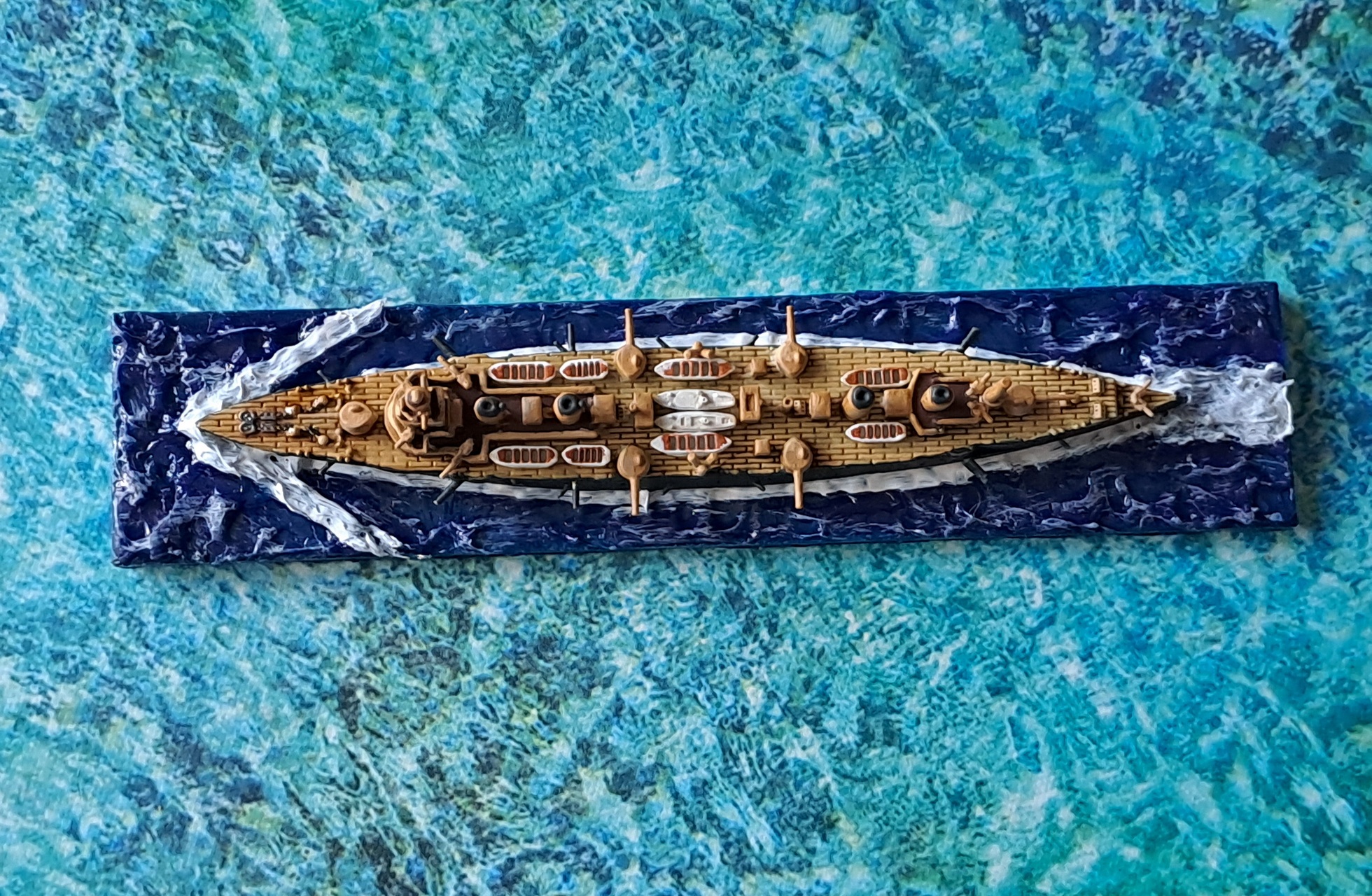
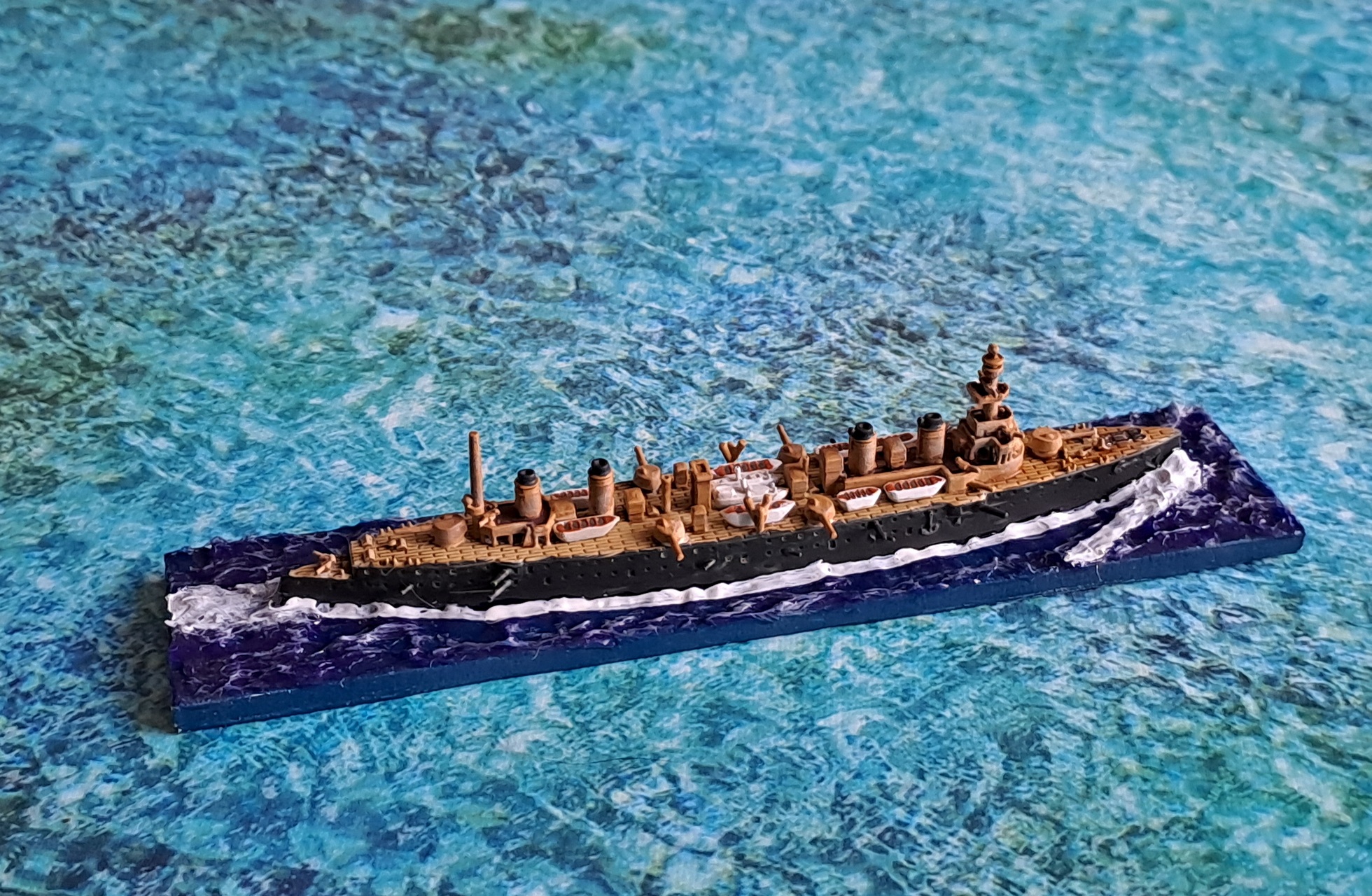
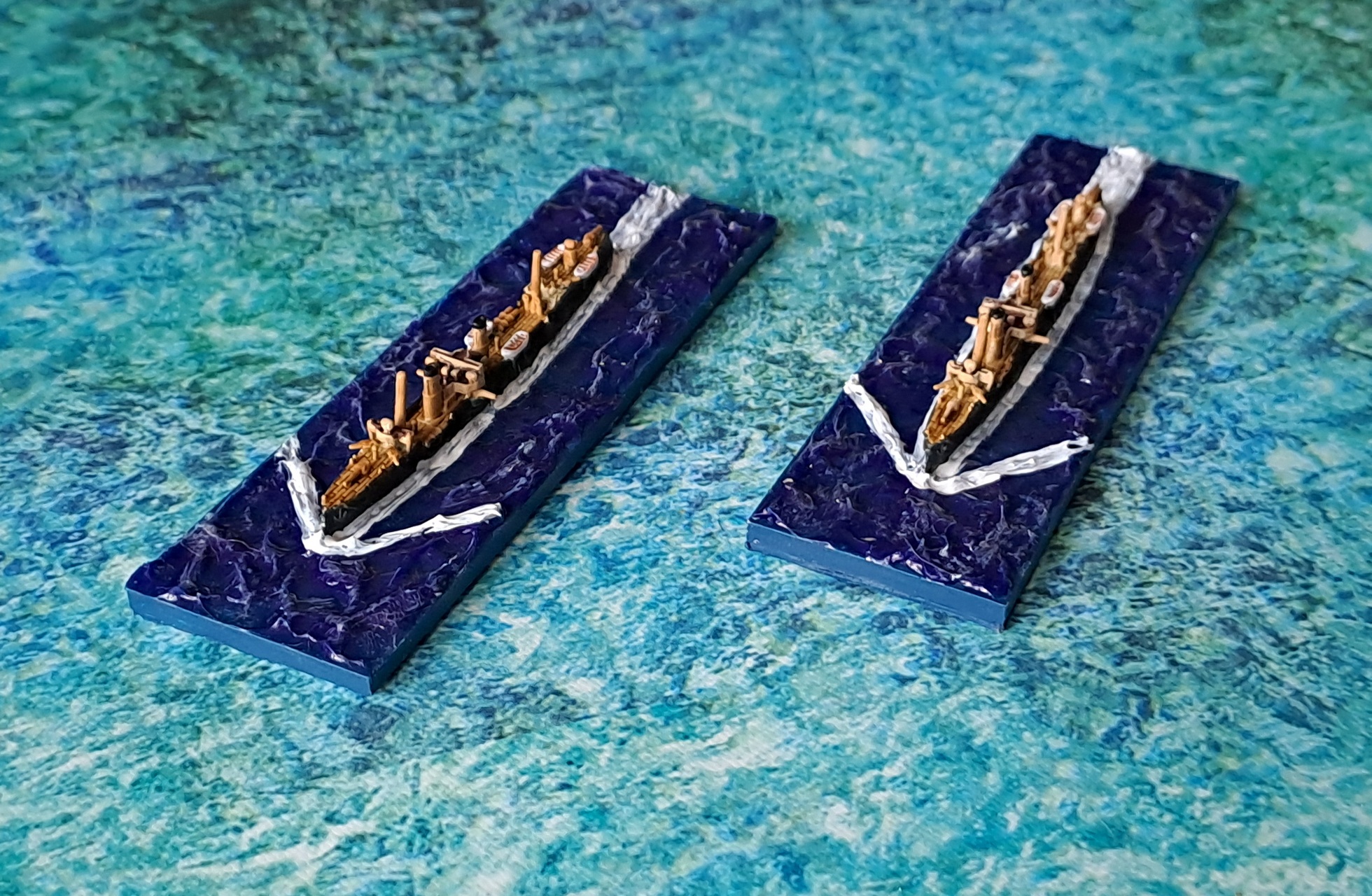
🇬🇧 Recently, along with Gloire and Liberté, I also painted two smaller vessels — D’Iberville-class torpedo cruisers. ⚓

Cornholio’s Marine Nationale squadron has been significantly reinforced, and I still have a second Gloire to finish — the one I got with the vouchers I won at Bolter. 🇫🇷🌊

The D’Iberville-class torpedo cruisers were built in the first half of the 1890s. The first vessel of the series was named in honour of the explorer Pierre Le Moyne d’Iberville. They displaced around 950 tons and measured 80 metres in length. Designed for speed and agility, they were powered by triple-expansion steam engines enabling a top speed of 21 knots, making them one of the fastest vessels of the French Navy at the time.

Her armament as a lead ship of the class consisted of one 100 mm (3.9 in) guns, three 65 (3 pounder) guns, seven 47 mm (1.9 in) guns, and six 450 mm (17,7 in) torpedo tubes. This combination allowed D’Iberville to engage both enemy large vessels and torpedo boats, while her speed enabled rapid reconnaissance and raiding missions.

D’Iberville’s service was largely in the Mediterranean and along the French Atlantic coast. She participated in numerous naval exercises and maneuvers, helping refine tactics for torpedo cruisers. Her design and performance influenced subsequent classes of French light ships.

In the game, D’Iberville represents a fast, lightly armoured vessel capable of devastating torpedo attacks, and protecting larger ships from small, aggressive enemy vessels.

* – description of the D`Iberville class by GMBoardgames.

🇵🇱 W ostatnim czasie wraz z Glorią i Libertii pomalowałem również dwie mniejsze jednostki – krążowniki torpedowe D`Iberville. ⚓
Eskadra Marine Nationale w służbie Cornholio została solidnie wzmocniona, przede mną jeszcze do dokończenia druga Gloire, którą wziąłem za wygrane w Bolterze bony. 🇫🇷🌊

Oczywiście to dopiero początek — w przyszłości na pewno zostanie wzmocniona kolejnymi jednostkami.

Krążowniki torpedowe typu D’Iberville zostały zbudowane w pierwszej połowie lat 90. XIX wieku. Pierwszy okręt serii otrzymał imię na cześć odkrywcy Pierre’a Le Moyne d’Iberville. Okręty te miały wyporność około 950 ton i długość 80 metrów. Zaprojektowano je z myślą o szybkości i zwrotności – maszyny parowe potrójnego rozprężania pozwalały osiągać 21 węzłów, co czyniło je jednymi z najszybszych jednostek francuskiej marynarki w tym czasie.

Uzbrojenie okrętu wiodącego obejmowało jedno działo kal. 100 mm, trzy działa kal. 65 mm, siedem dział kal. 47 mm oraz sześć wyrzutni torped kal. 450 mm. Takie połączenie uzbrojenia pozwalało D’Iberville atakować zarówno duże okręty, jak i torpedowce, a prędkość umożliwiała szybkie rozpoznanie i działania rajderskie.

D’Iberville służył głównie na Morzu Śródziemnym i wzdłuż wybrzeży Atlantyku. Brał udział w licznych ćwiczeniach i manewrach marynarki, przyczyniając się do rozwoju taktyki krążowników torpedowych. Jego projekt i osiągi miały wpływ na kolejne klasy francuskich lekkich okrętów.

W grze D’Iberville reprezentuje szybki, lekko opancerzony okręt, zdolny do niszczących ataków torpedowych oraz ochrony większych jednostek przed małymi, agresywnymi okrętami przeciwnika.

* – opis klasy D`Iberville wg GMBoardgames.
🇬🇧 Summary:
For a fourth-class ship, it is quite a large model – and there are two in the box, each with its own base.
– The ship has better armour than most units of this class in the game. It also has six torpedoes – the same number as, for example, the Russian Bujny class. Apart from torpedoes, it has a medium-calibre gun on the bow and a small number of light guns on both broadsides and at the stern. It is slower than most torpedo boats — after all, it is still a torpedo cruiser. A huge advantage is the ram.
– I think that its cost of 80 points means it will appear in more than one Marine Nationale squadron.

🇵🇱 Podsumowanie:
– Jak na czwartą klasę jest to całkiem spory model – a w pudełku są dwa, każdy ma swoją podstawkę.
– Okręt dysponuje lepszym pancerzem od większości występujących w grze jednostek tej klasy, poza tym posiada sześć torped – tyle co np. rosyjska klasa Bujny. Poza torpedami posiada armatę średniego kalibru na dziobie oraz nieliczną lekką artylerię na obu burtach i na rufie. Jest wolniejszy od większości torpedowców – mimo wszystko jest to krążownik torpedowy. Olbrzymią zaletą jest taran.
– Wydaje mi się, że koszt 80 punktów sprawi, że będzie się pojawiał w niejednej eskadrze Marine Nationale.

Gods of War: Togo – Liberté 🇫🇷 (🇬🇧EN/🇵🇱PL) Wtorek, Czer 9 2026 

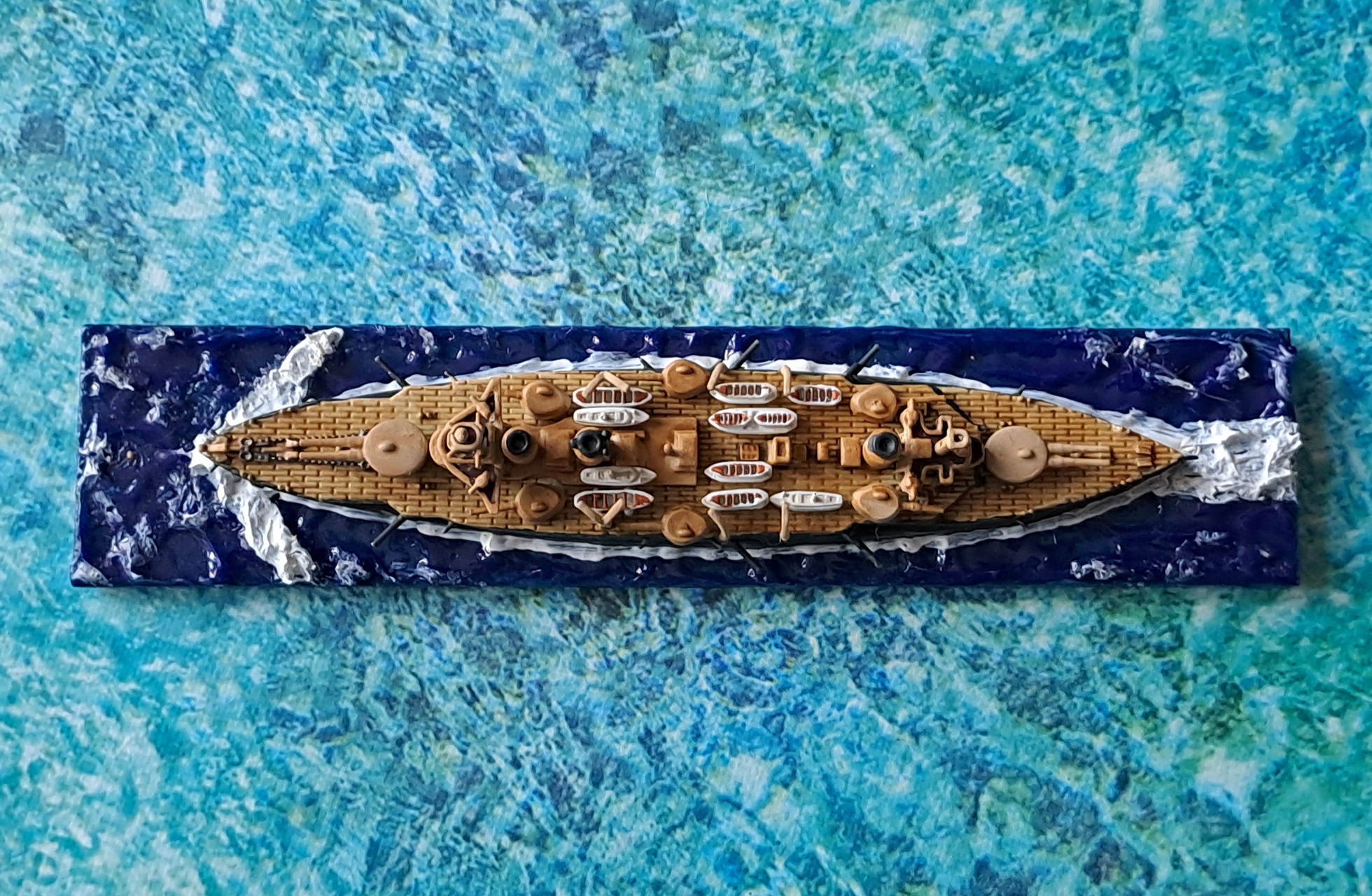
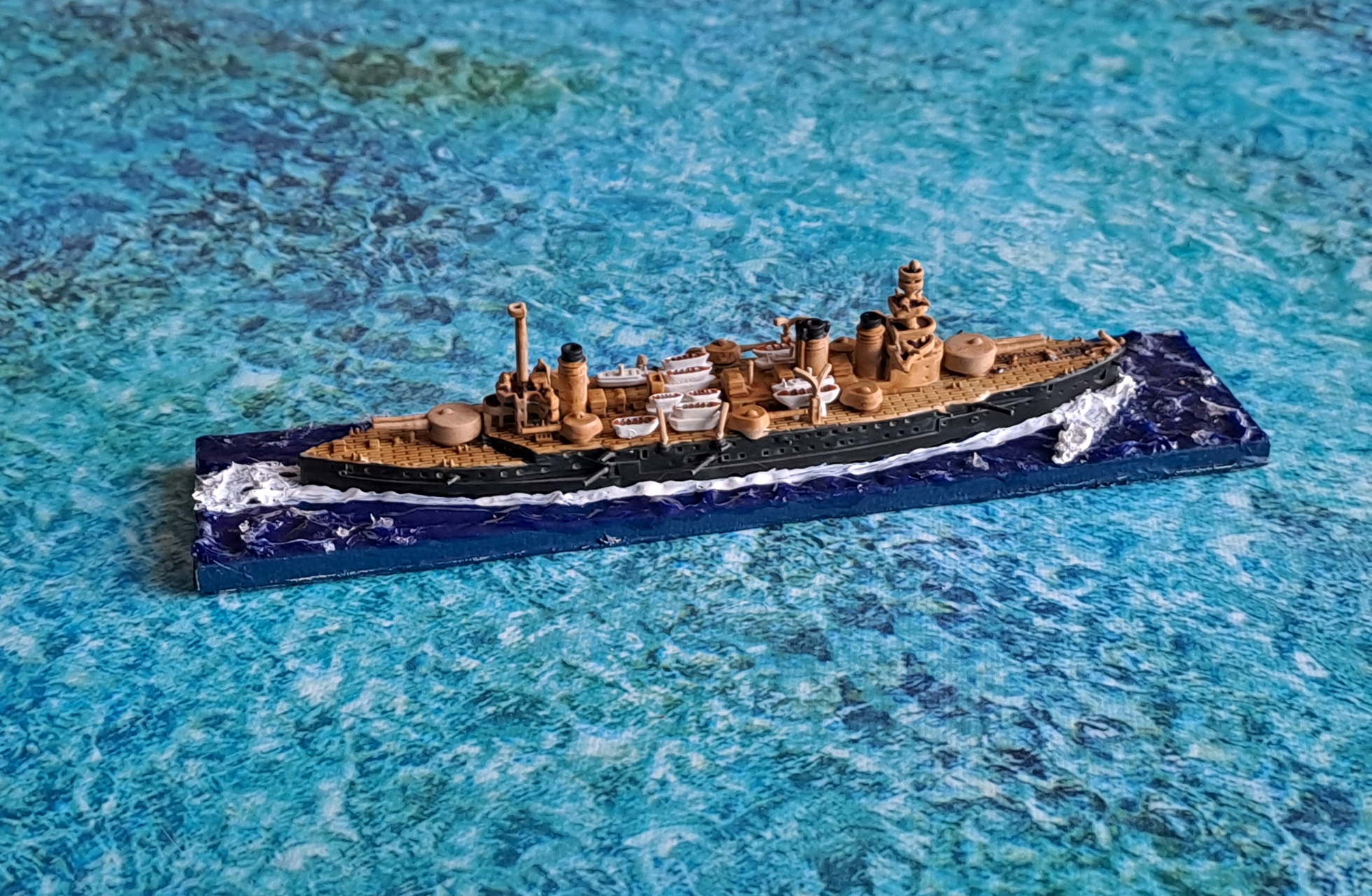
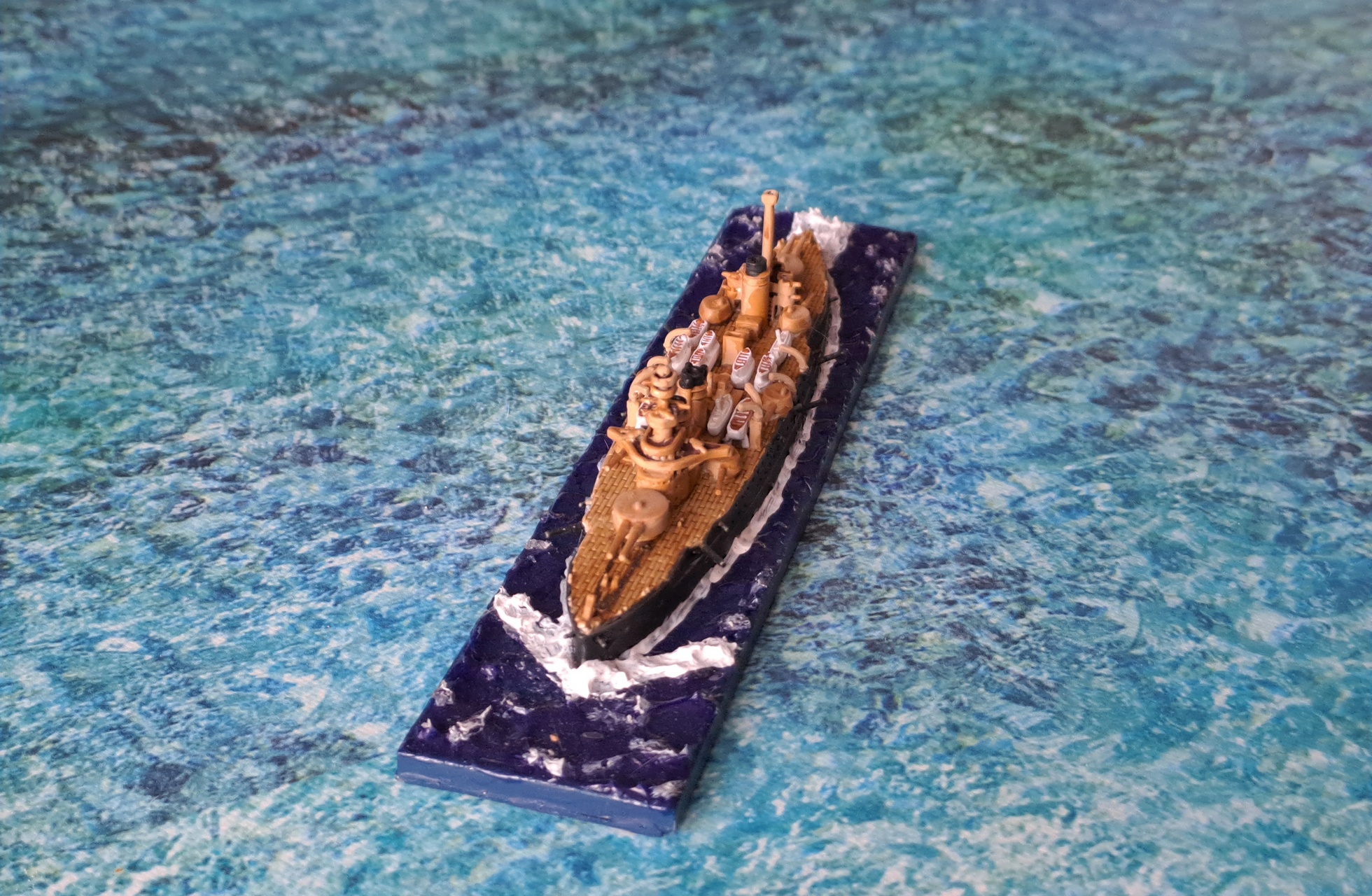
🇬🇧 Recently, I managed to launch the battleship Liberté — although this kit can also be used to build the battleship République. ⚓

With her launch, Cornholio has gained another battleship with a fighting chance against King Edward or the Martians. 🇫🇷🌊

The République-class consisted of two pre-dreadnought battleships built for the French Navy in the early 1900s. Their construction was a clear signal of France’s departure from the Jeune École concept and from building small battleships displacing no more than 12,000 tons. République and Patrie displaced 14,870 tons and measured 135 metres long, with a beam of 24.25 metres and a draught of 8.2 metres. Powered by three triple-expansion steam engines and 24 Niclausse boilers, they could reach 19 knots and carried a crew of around 750.

Their main armament included four 305 mm (12 in) guns in two twin turrets, supported by eighteen 164 mm (6.5 in) guns, twelve 65 mm (2,6 in) guns, and six 47 mm guns for close defence. Armour protection reached 280 mm on the belt and 360 mm on turrets.

After their launch, they became the most powerful French battleships. Already during construction, it was noticed that other navies were introducing a higher calibre of secondary artillery, but the work on the first two vessels was too far advanced; therefore, heavier guns were only introduced with the Liberté class.

République-class ships are powerful pre-dreadnoughts with strong armament and very good armour, able to withstand heavy fire while commanding the battle line.

* – description of the Liberté i République by GMBoardgames.

🇵🇱 W ostatnich czasie udało mi się zwodować pancernik Liberté – chociaż z tego zestawu można złożyć również pancernik République. ⚓

Wraz z jego wodowaniem Cornholio doczekał się kolejnego pancernika mającego szanse z Królem Edwardem czy Marsjanami. 🇫🇷🌊

Oczywiście to dopiero początek — w przyszłości na pewno zostanie wzmocniona kolejnymi jednostkami.

Typ République obejmował dwa pancerniki przeddrednoty zbudowane dla francuskiej marynarki na początku XX wieku. Ich konstrukcja była wyraźnym sygnałem odejścia Francji od koncepcji „Jeune École” i od budowy mniejszych pancerników o wyporności nieprzekraczającej 12 000 ton. République i Patrie miały wyporność 14 870 ton, długość 135 metrów, szerokość 24,25 metra i zanurzenie 8,2 metra. Trzy maszyny potrójnego rozprężania i 24 kotły Niclausse pozwalały osiągnąć 19 węzłów. Załoga liczyła około 750 ludzi.

Główne uzbrojenie obejmowało cztery działa kal. 305 mm w dwóch wieżach podwójnych, wspierane przez osiemnaście dział kal. 164 mm, dwanaście dział kal. 65 mm i sześć dział kal. 47 mm do obrony bliskiej. Opancerzenie sięgało 280 mm na pasie burtowym i 360 mm na wieżach artylerii głównej.

Po wodowaniu stały się najpotężniejszymi francuskimi pancernikami. Już w trakcie ich budowy zauważono, że marynarki innych państw wprowadzają silniejsze działa artylerii średniej, jednak prace nad pierwszymi dwoma okrętami były zbyt zaawansowane, aby wprowadzać zmiany – dlatego dopiero w typie Liberté zastosowano cięższe działa.

Pancerniki typu République to potężne przeddrednoty o silnym uzbrojeniu i bardzo dobrym opancerzeniu, zdolne wytrzymać silny ostrzał i przewodzić linii bojowej.

* – opis Liberté i République wg GMBoardgames.

🇬🇧 Summary:
– This kit gives you the option to build one of two battleships: Liberté or République.
– The assembly itself requires a bit of patience, as the kit includes boats and the cranes used to lower them into the water. The model itself is pleasant to put together – in my case, I decided to build Liberté.
– So, what are the differences between Liberté and République? Apart from a cosmetic difference in the amount of light artillery -one gun fewer per broadside on République – the biggest difference concerns the medium artillery. République has a total of nine medium guns per broadside with a range of 30″, while Liberté has only five on each broadside, but with a range of 38″ and much better penetration.
– Since I have told you about the differences, it is time to discuss this class of ship. Liberté/République are characterised by very good armour and good speed for ships of this class. Their light artillery is not as numerous as on Russian ships, while their heavy artillery has a slightly shorter range than, for example, the heavy guns of Borodino or Tsesarevich, but offers greater penetration. The ship also has a ram, which can sometimes come in handy 😉 .
– These ships are worth their cost: 865 points for Liberté and 870 points for République.

🇵🇱 Podsumowanie:
– Ten zestaw oferuje możliwość sklejenia jednego z dwóch pancerników czyli: Liberté lub République.
– Samo sklejanie wymaga odrobiny cierpliwości, ponieważ zawiera łodzie oraz żurawie do ich spuszczania na wodę, sam model jest przyjemny w montażu – u mnie padło na złożenie Liberté.
– Czym się więc różnią od siebie Liberté i République? Poza kosmetyczną różnicą w ilości lekkiej artylerii – jedno działo mniej na burtę u République największa różnica dotyczy średniej artylerii – République ma łącznie dziewięć średnich dział na burtę o zasięgu 30″, Liberté ma ich tylko pięć na każdą burtę, ale za to o zasięgu 38″ i o wiele lepszym przebiciu.
– Skoro opowiedziałem Wam o różnicach, to pora omówić te klasy okrętu – Liberté/République cechują się bardzo dobrym pancerzem i dobrą prędkością jak na okręt tej klasy. Lekka artyleria nie jest tak liczna jak w przypadku okrętów rosyjskich, za to ciężka artyleria ma nieco mniejszy zasięg od np. ciężkich dział Borodino czy Cesarewicza, za to większą siłę przebicia. Okręt ma również taran, który czasem się przydaje 😉 .
– Okręty są warte swojej ceny i kosztują 865 dla Liberté i 870 dla République.

Gods of War: Togo – Gloire class 🇫🇷 (🇬🇧EN/🇵🇱PL) Poniedziałek, Czer 8 2026 

🇬🇧 Some time ago, I managed to finish a French Gloire-class cruiser. ⚓ This ship has already joined the rest of Cornholio’s squadron. 🇫🇷🌊

At the end of the 19th century, various factions within the French Navy had differing visions of the role armoured cruisers were meant to play. The Gloire class was created as a compromise: it was concluded that a sufficiently large armoured cruiser could serve both as a raider and as a ship capable of accompanying the fleet. With a displacement of almost 10,000 tons, it could reach a speed of 21 knots and was armed with two 194 mm guns, eight 164.7 mm guns mounted in turrets and casemates, six 100 mm guns, as well as 22 light guns and five torpedo tubes. It was therefore a ship with considerable firepower, good armour protection, and high speed.

Five ships of this class were built and entered service from 1904 onwards. One of them, Sully, struck uncharted rocks in Asia, while the remaining four served during the First World War. They were scrapped during the interwar period. The longest-serving ship was Condé — converted first into a barracks ship and later into a target ship, she was sunk by Allied aircraft in 1944, 40 years after entering service.

The Gloire class is a very valuable addition to the Marine Nationale, offering an interesting alternative to other armoured cruisers. Thanks to its characteristics, it is capable of engaging any ship of this class in any enemy fleet on equal terms.

* – description of the Gloire class translated from Polish version.

🇵🇱 W ostatnich czasie udało mi się ukończyć francuski krążownik klasy Gloria. ⚓ Okręt ten już dołączył do reszty eskadry Cornholio. 🇫🇷🌊

Pod koniec XIX wieku różne frakcje w ramach francuskiej marynarki wojennej miały odmienne wizje na temat roli, jaką miałyby pełnić krążowniki pancerne. Typ Gloire powstał jako kompromis, uznano, że rolę zarówno rajdera, jak i okrętu, który mógłby towarzyszyć flocie, może pełnić odpowiednio duży krążownik pancerny. Dzięki wyporności prawie 10.000 ton, mógł rozwijać prędkość 21 węzłów i był uzbrojony w 2 armaty kalibru 194 mm, osiem kalibru 164,7 mm (w wieżach i kazamatach), sześć kalibru 100 mm, a także 22 lekkie armaty i 5 wyrzutni torped. Był zatem to okręt o pokaźnej sile ognia, dobrym opancerzeniu i szybkości.

Zbudowano 5 jednostek tego typu (oddawano je do służby od 1904 roku), z czego jedna (Sully) wpadła na nieoznaczone skały w Azji, pozostałe cztery walczyły w trakcie I wojny światowej. Zostały oddane na złom w okresie dwudziestolecia międzywojennego. Najdłużej w służbie został Condé – przemieniony na okręt koszary i potem okręt cel – został zatopiony przez alianckie lotnictwo w 1944 roku – 40 lat po wcieleniu do służby.

Typ Gloire jest jest bardzo wartościowym dodatkiem do Marine Nationale, stanowiąc ciekawą alternatywę dla innych krążowników pancernych, dzięki swoim parametrom może podjąć samodzielną walkę z każdym okrętem tej klasy w jakiejkolwiek flocie przeciwnika.

* – opis Glorii wg GMBoardgames.

🇬🇧 Summary:
– A very enjoyable cruiser to paint and assemble. It has numerous boats and cranes, for which it is good to have a bit of patience -and preferably an empty desk, in case any part slips from your hand or tweezers 😉 .
– As a ship for the game, it looks interesting thanks to its numerous medium-calibre guns, as well as quite a lot of light artillery. In addition, it has five torpedoes. What is also important – and something that, for example, Russian cruisers do not have – is that it has very good armour and considerable speed. It does not have a ram.
– If I played Marine Nationale, I would definitely consider a fleet list including Jeanne d’Arc and two Gloria-class ships. Its points cost is 340 points – so there is nothing left to do but start thinking about building cruiser-based lists.

🇵🇱 Podsumowanie:
– Bardzo przyjemny krążownik w malowaniu i składaniu Posiada liczne łodzie i żurawie do których dobrze mieć odrobinę cierpliwości i najlepiej puste biurko, gdyby jakiś element wypadł z dłoni czy pensety 😉 .
– Jako okręt do gry przedstawia się interesująco ze względu na liczną średnią artylerię, a także całkiem sporo lekkiej. Ponadto posiada pięć torped. Dodatkowo co ważne, a czego nie posiadają np. krążowniki rosyjskie posiada bardzo dobry pancerz oraz znaczną prędkość. Nie posiada taranu.
– Gdybym grał Marine Nationale, na pewno pomyślałbym o rozpisce zawierającej Joannę d’Arc oraz dwa okręty klasy Gloria – jego koszt punktowy wynosi 340 punktów – nic tylko myśleć o budowaniu rozpisek na krążownikach.