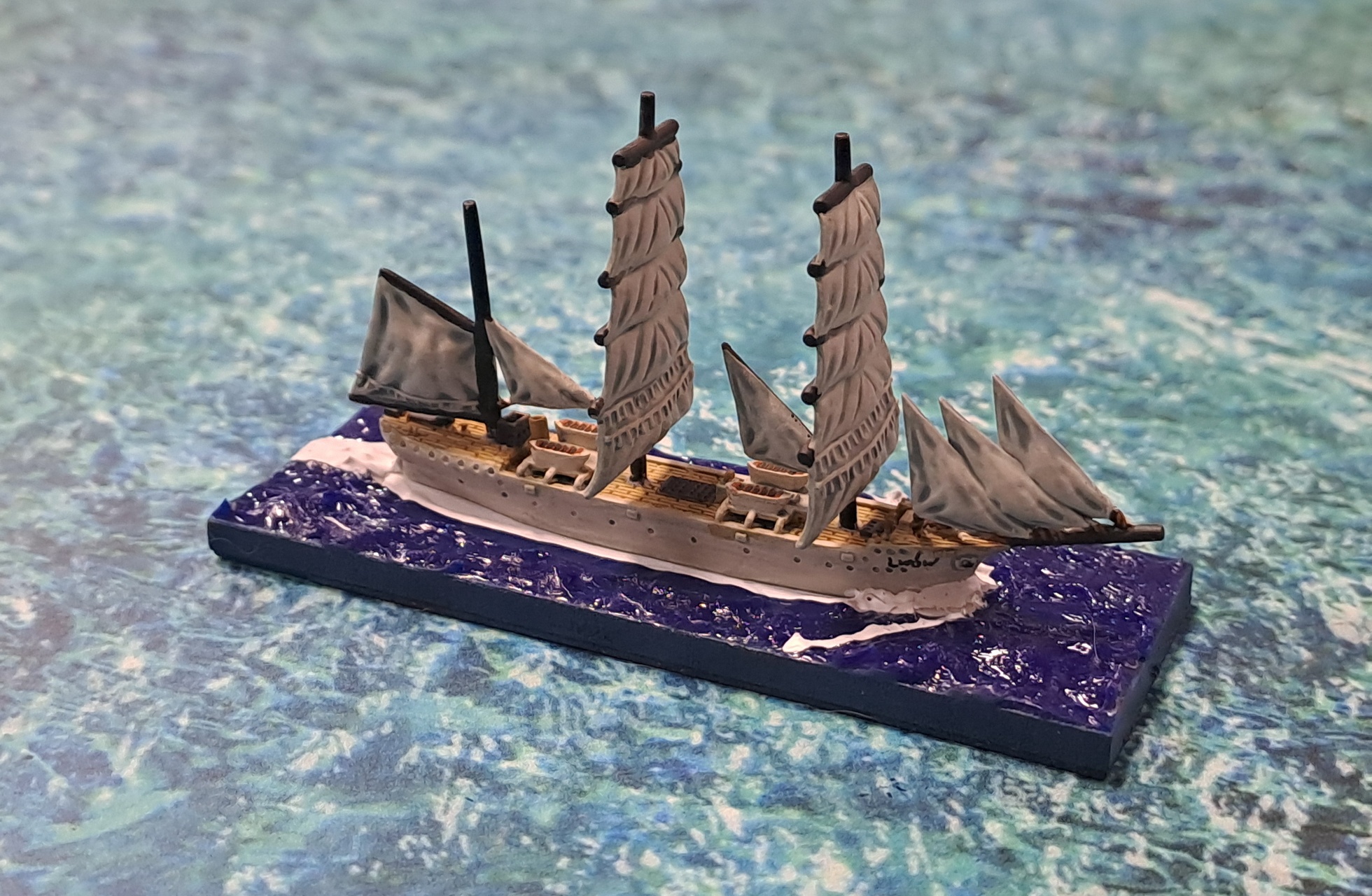
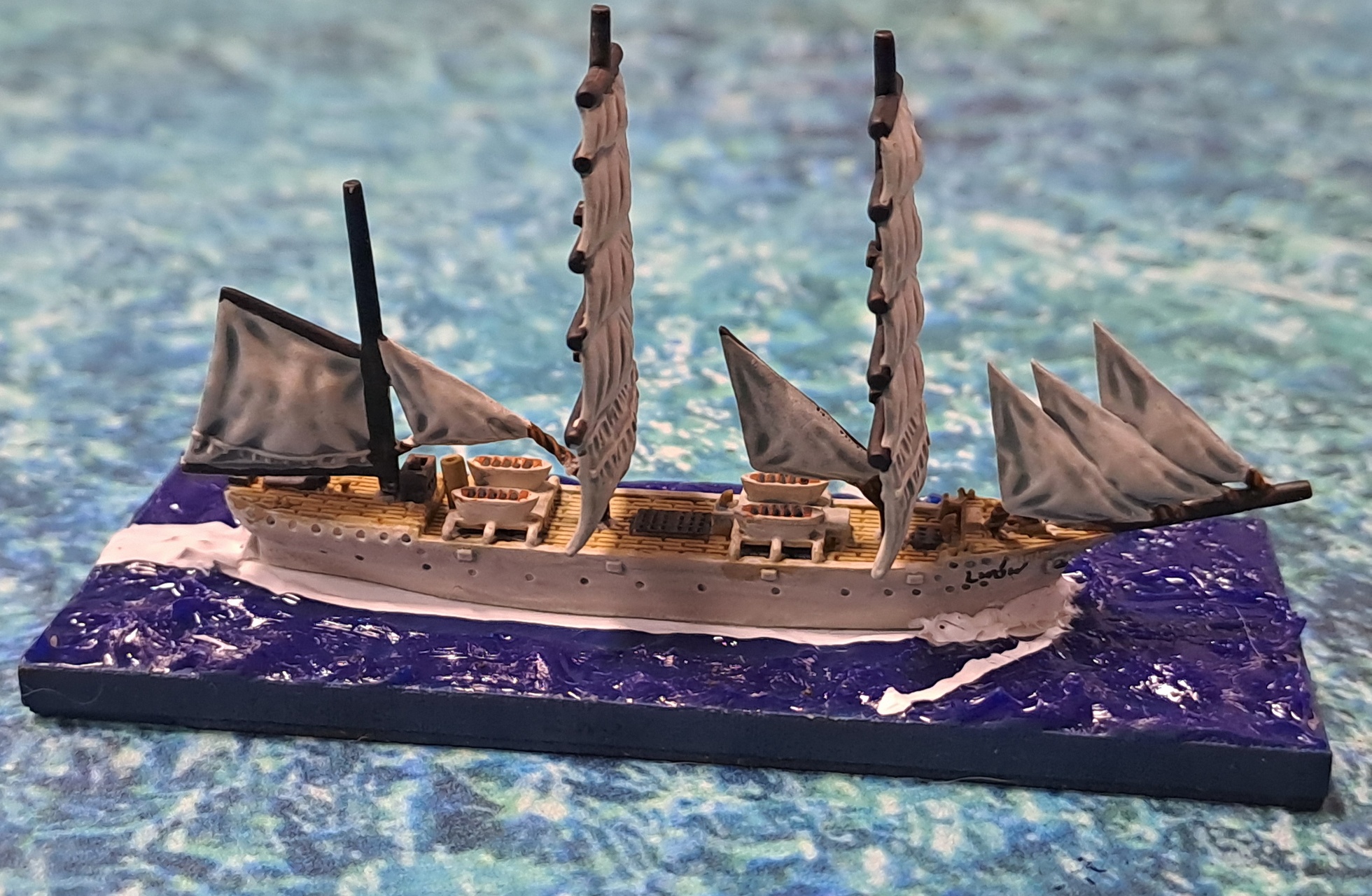
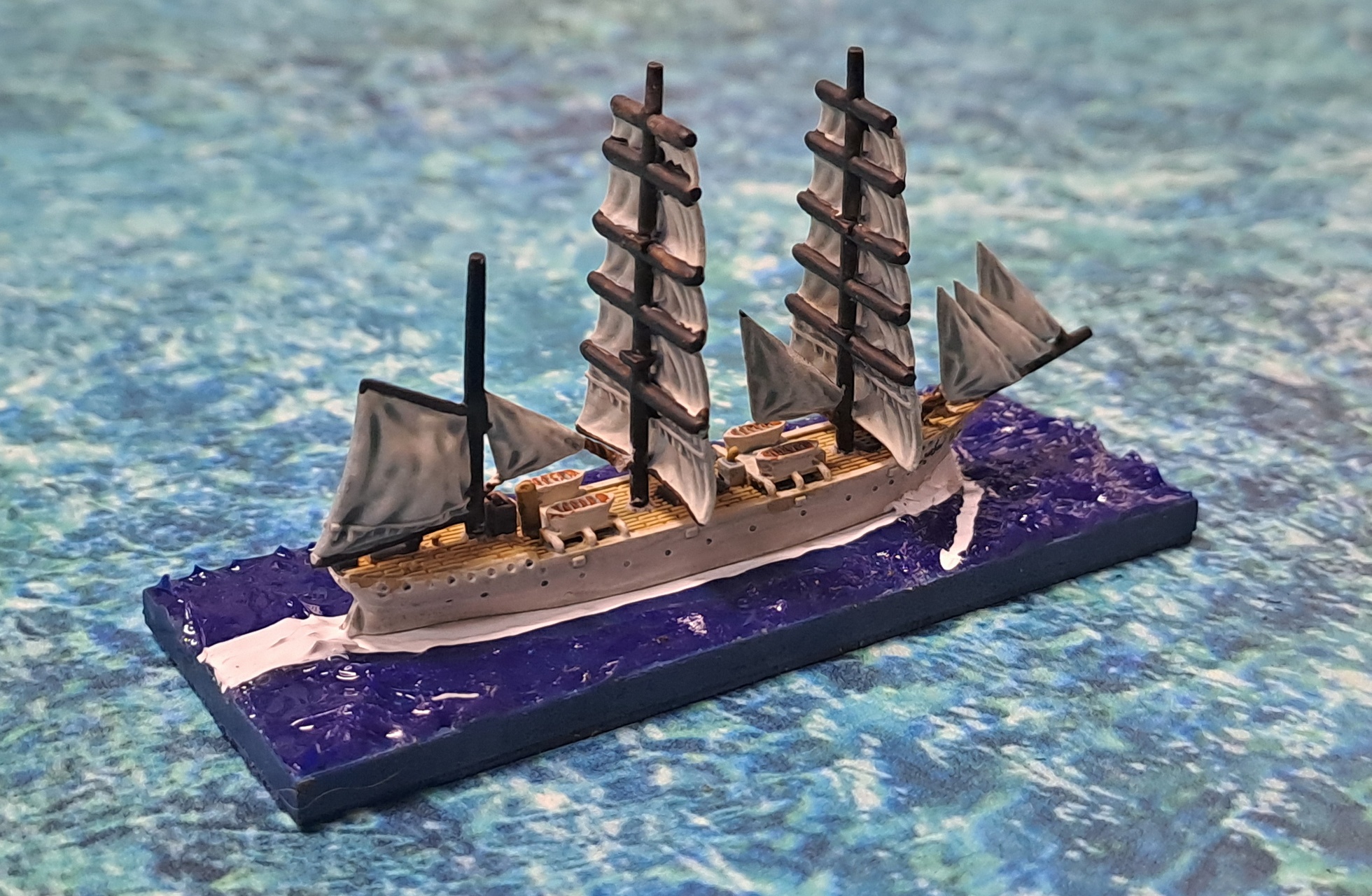
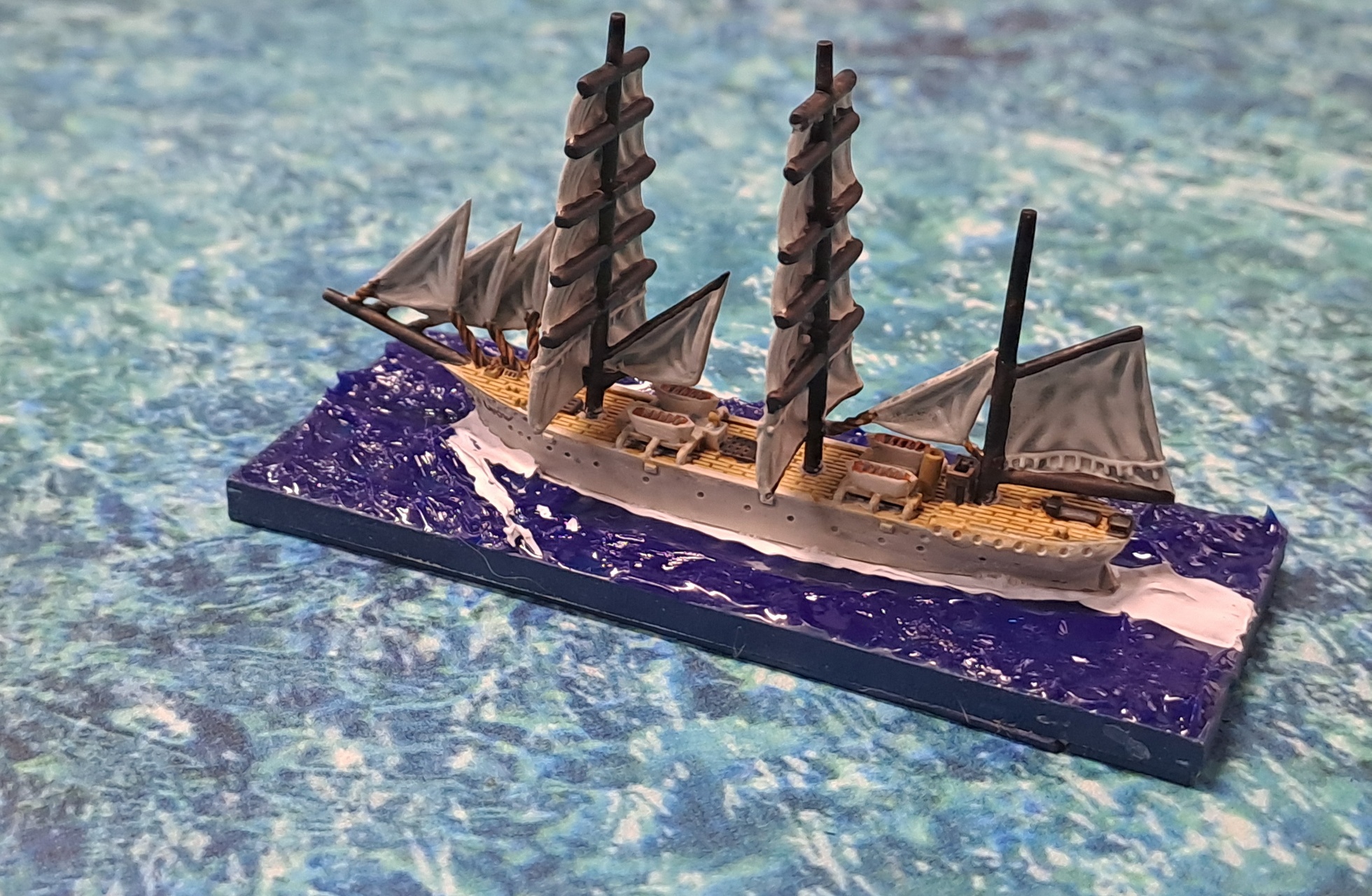
🇬🇧 In recent days, I managed to finish the Belem – another sailing ship that has survived to this day and now serves as a training vessel. As is often the case with models of this kind, painting and launching it was a pure pleasure and a moment of true relaxation. ⛵🎨
Belem is a French three-masted barque, launched in 1896. She displaces around 750 tons and measures 58 metres in length. Originally built as a cargo ship for the West Indies sugar trade, her sleek hull and full rig allowed her to carry significant cargo while remaining fast under sail (up to 12 knots).
Belem began her career transporting sugar and cocoa between the Caribbean and France. In 1901, while en route to the West Indies, she narrowly avoided disaster when the eruption of Mount Pelée destroyed the town of Saint-Pierre on Martinique; Belem was anchored safely in a nearby port and thus escaped the catastrophe.
In 1972 she was purchased for preservation and underwent extensive restoration, returning to her original glory as a sail training ship. Since then, she has participated in numerous sail training programs and maritime festivals, offering hands-on experience of classic sailing to generations of enthusiasts.
🇵🇱 W ostatnich dniach udało mi się ukończyć żaglowiec Belem – kolejną jednostkę, która przetrwała do naszych czasów i dziś pełni funkcję szkolnego żaglowca. Jak to zwykle bywa z tego typu modelami, jego malowanie i wodowanie było czystą przyjemnością i chwilą prawdziwego relaksu. ⛵🎨
Belem to francuski trójmasztowy bark, zwodowany w 1896 roku. Jego wyporność wynosi około 750 ton, a długość 58 metrów. Pierwotnie zbudowany jako statek towarowy do przewozu cukru z Indii Zachodnich, dzięki smukłemu kadłubowi i pełnemu ożaglowaniu mógł zabierać znaczny ładunek, zachowując przy tym dużą szybkość pod żaglami (do 12 węzłów).
Belem rozpoczął karierę, transportując cukier i kakao pomiędzy Karaibami a Francją. W 1901 roku, w drodze na Antyle, uniknął katastrofy – podczas erupcji wulkanu Mount Pelée, która zniszczyła miasto Saint-Pierre na Martynice, Belem stał bezpiecznie zakotwiczony w pobliskim porcie. W 1972 roku został zakupiony w celu zachowania i poddany gruntownej renowacji, przywracającej mu pierwotny wygląd żaglowca szkolnego. Od tego czasu uczestniczy w licznych programach szkolenia żeglarskiego i festiwalach morskich, dając kolejnym pokoleniom miłośników możliwość praktycznego doświadczenia klasycznego żeglowania.
Summary: – As with every sailing ship – I absolutely love painting them, from mighty galleons to more modern vessels like the Belem. ⛵ – It’s a civilian vessel worth 15 points, which reflects its in-game capabilities – nevertheless, it can be extremely useful in various scenarios, especially in missions such as island assaults or buoy control. – Its greatest strength lies in excellent maneuverability, and its small size allows it to easily hide behind the squadron’s larger warships. – You can read more about the game here 👉 Gods of War: Togo – Publisher’s Blog – The Belem model, like other ships, is available at the publisher’s store – Bolter.pl – Belem is a small yet remarkably versatile vessel that perfectly complements any fleet. Ideal for support, scouting, or transport missions – and a true centerpiece for any tabletop. A must-have for every naval enthusiast! 🌊
Podsumowanie: – Jak w przypadku każdego żaglowca – uwielbiam je malować, od potężnych galeonów po jednostki bardziej współczesne, takie jak Belem. ⛵ – To cywilna jednostka o wartości 15 punktów, co odpowiada jej możliwościom w grze – mimo to potrafi być niezwykle użyteczna w różnych scenariuszach, zwłaszcza w misjach takich jak desant na wyspę czy kontrola boi. – Jej największym atutem jest doskonała zwrotność, a niewielki rozmiar pozwala łatwo ukryć ją za potężniejszymi okrętami eskadry. – Więcej o samej grze przeczytacie tutaj 👉 Bogowie Wojny: Togo – Blog wydawcy – Model Belem, podobnie jak inne jednostki, dostępny jest w sklepie wydawcy gry – Bolter.pl – Belem to niewielka, lecz niezwykle wszechstronna jednostka, która doskonale uzupełnia każdą flotę. Idealna do zadań pomocniczych, zwiadowczych czy transportowych – a przy tym stanowi prawdziwą ozdobę stołu. Dla każdego miłośnika morskich klimatów to model obowiązkowy! 🌊
🇬🇧 Last weekend, the 2025 Polish Championship in Gods of War: Togo took place — which I wrote about [HERE] ⚓. Among the prizes for every participant was a unique, one-of-a-kind model of the sailing ship STS Lwów — a vessel that proudly served under the Polish flag in the 1920s.
It’s a true gem among models — perfect both as a transport ship capable of carrying a landing force and as an elegant display piece for any collection. ⛵🇵🇱
🇵🇱 W miniony weekend odbyły się Mistrzostwa Polski w „Bogowie Wojny: Togo” 2025, o których pisałem TUTAJ⚓. Wśród nagród dla każdego z uczestników znalazł się wyjątkowy, unikatowy model żaglowca STS Lwów – jednostki, która służyła pod polską banderą w latach 20. XX wieku.
To prawdziwa perełka wśród modeli – świetnie sprawdzi się zarówno jako transportowiec zdolny do przewozu desantu, jak i elegancka ozdoba każdej półki. ⛵🇵🇱
🇬🇧 Last Saturday, the authors of the fleet builder tool for Gods of War: Togo added the Marine Nationale, the French fleet. Its official debut will take place during this year’s Fields of Glory event in Niepołomice — and that’s already this coming weekend! Without waiting for the first ships to leave the shipyards, I decided to take a closer look at their profiles and describe them all, one by one, on my blog. I invite you to check out their short descriptions and unit cards. So let’s begin with the first one — the Republique-class battleship.
🇵🇱 W ostatnią sobotę w narzędziu do budowy flot do „Bogów Wojny: Togo” autorzy dodali Marine Nationale, czyli flotę francuską. Jej oficjalny debiut odbędzie się już podczas tegorocznych Pól Chwały w Niepołomicach — a to przecież nadchodzący weekend! Nie czekając na pierwsze okręty opuszczające stocznię, postanowiłem przyjrzeć się ich profilom i opisać je wszystkie, jeden po drugim na swoim blogu. Zapraszam do zapoznania się z ich krótkim opisem i kartami jednostek. A więc zacznijmy od pierwszego czyli pancernika Republique-class.
🇬🇧 Republique-class – a first-class ship with a cost of 895 points. This battleship is equipped with the standard number of heavy artillery guns and an extensive array of medium artillery. It features excellent armor and a solid hull. Although the range of its heavy artillery is not the greatest, it makes up for it with high penetration power. An additional advantage is its slightly higher speed compared to other ships of this class, as well as the presence of a ram.
🇵🇱 Republique-class – okręt pierwszej klasy o koszcie 895 punktów. To pancernik wyposażony w standardową liczbę dział ciężkiej artylerii oraz rozbudowaną artylerię średnią. Charakteryzuje się bardzo dobrym pancerzem i solidnym kadłubem. Choć zasięg ciężkiej artylerii nie należy do największych, nadrabia to wysoką siłą przebicia. Dodatkowym atutem jest nieco wyższa prędkość w porównaniu z innymi jednostkami tej klasy, a także obecność taranu.
🇬🇧 Liberté-class – a first-class battleship with a cost of 880 points. It is equipped with the standard number of heavy artillery guns and a somewhat more modest array of medium artillery. It boasts excellent armor and a solid hull. The range of its heavy artillery is similar to that of the Republique-class, while the medium artillery, though less numerous, stands out with its good range and firepower. An additional advantage is its slightly higher speed compared to other ships of this type, as well as the presence of a ram.
🇵🇱 Liberté-class – pancernik pierwszej klasy o koszcie 880 punktów. Wyposażony w standardową liczbę dział ciężkiej artylerii oraz nieco skromniejszą artylerię średnią. Dysponuje bardzo dobrym pancerzem i solidnym kadłubem. Zasięg ciężkiej artylerii jest zbliżony do jednostki klasy Republique, natomiast artyleria średnia, choć mniej liczna, wyróżnia się dobrym zasięgiem i siłą ognia. Dodatkowym atutem jest prędkość nieco wyższa niż u innych okrętów tego typu, a także obecność taranu.
🇬🇧 Suffren-class – a first-class battleship with a cost of 740 points. It is equipped with the standard number of heavy artillery guns and an exceptionally numerous array of medium artillery. Its armor and hull are solid, comparable to the standard of battleships across various fleets. The range of its heavy artillery is similar to the previously described units, while its speed is slightly lower than that of other battleships of this class. Additionally, the ship is fitted with a ram.
🇵🇱 Suffren-class – pancernik pierwszej klasy o koszcie 740 punktów. Wyposażony w standardową liczbę dział ciężkiej artylerii oraz wyjątkowo liczną artylerię średnią. Pancerz i kadłub są solidne, porównywalne ze standardem wśród okrętów liniowych różnych flot. Zasięg ciężkiej artylerii jest podobny do wcześniej opisanych jednostek, natomiast prędkość okrętu jest nieco niższa niż u innych pancerników tej klasy. Dodatkowo jednostka posiada taran.
🇬🇧 Massena-class – a first-class battleship with a cost of 620 points. Compared to other ships of this type, it carries fewer heavy artillery guns but is equipped with an exceptionally large array of medium artillery. Its armor and hull are solid, in line with the standard for battleships of this era. The range of its heavy artillery is similar to the previously described ships, though part of its medium-caliber artillery has a slightly shorter range. The ship’s speed is lower than that of most battleships in this class. It is also fitted with a ram. The Massena’s main advantages are its attractive cost and the very large number of medium artillery pieces.
🇵🇱 Massena-class – pancernik pierwszej klasy o koszcie 620 punktów. W porównaniu z innymi jednostkami tego typu dysponuje mniej liczną artylerią ciężką, ale za to wyjątkowo rozbudowaną artylerią średnią. Pancerz i kadłub są solidne, zgodne ze standardem dla pancerników tej epoki. Zasięg ciężkiej artylerii jest podobny do wcześniej opisanych okrętów, natomiast część dział średniego kalibru ma nieco krótszy zasięg. Prędkość jednostki jest niższa niż u większości pancerników tej klasy. Okręt wyposażono również w taran. Atutem Masseny pozostaje przede wszystkim atrakcyjna cena oraz bardzo liczna artyleria średnia.
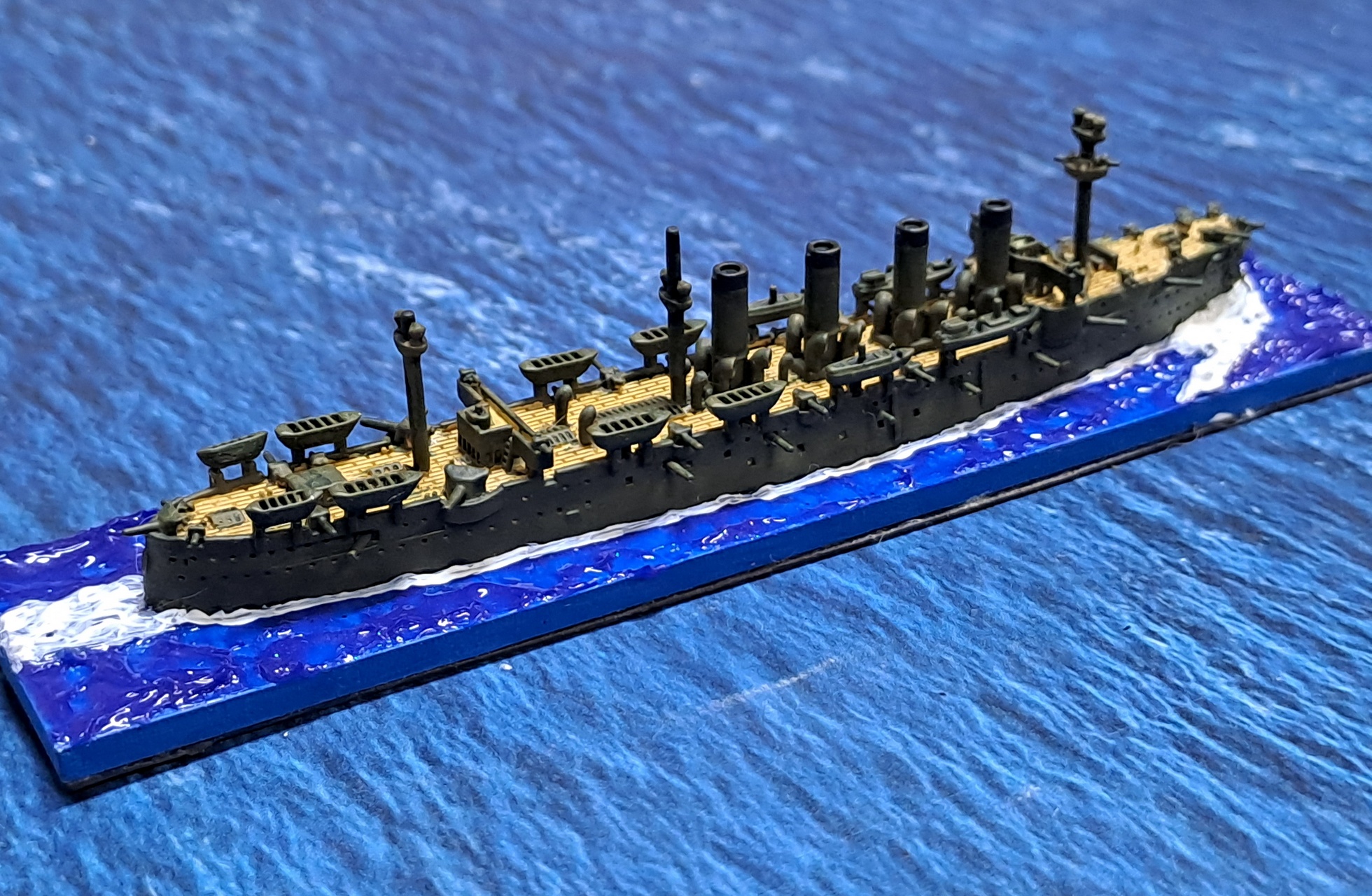
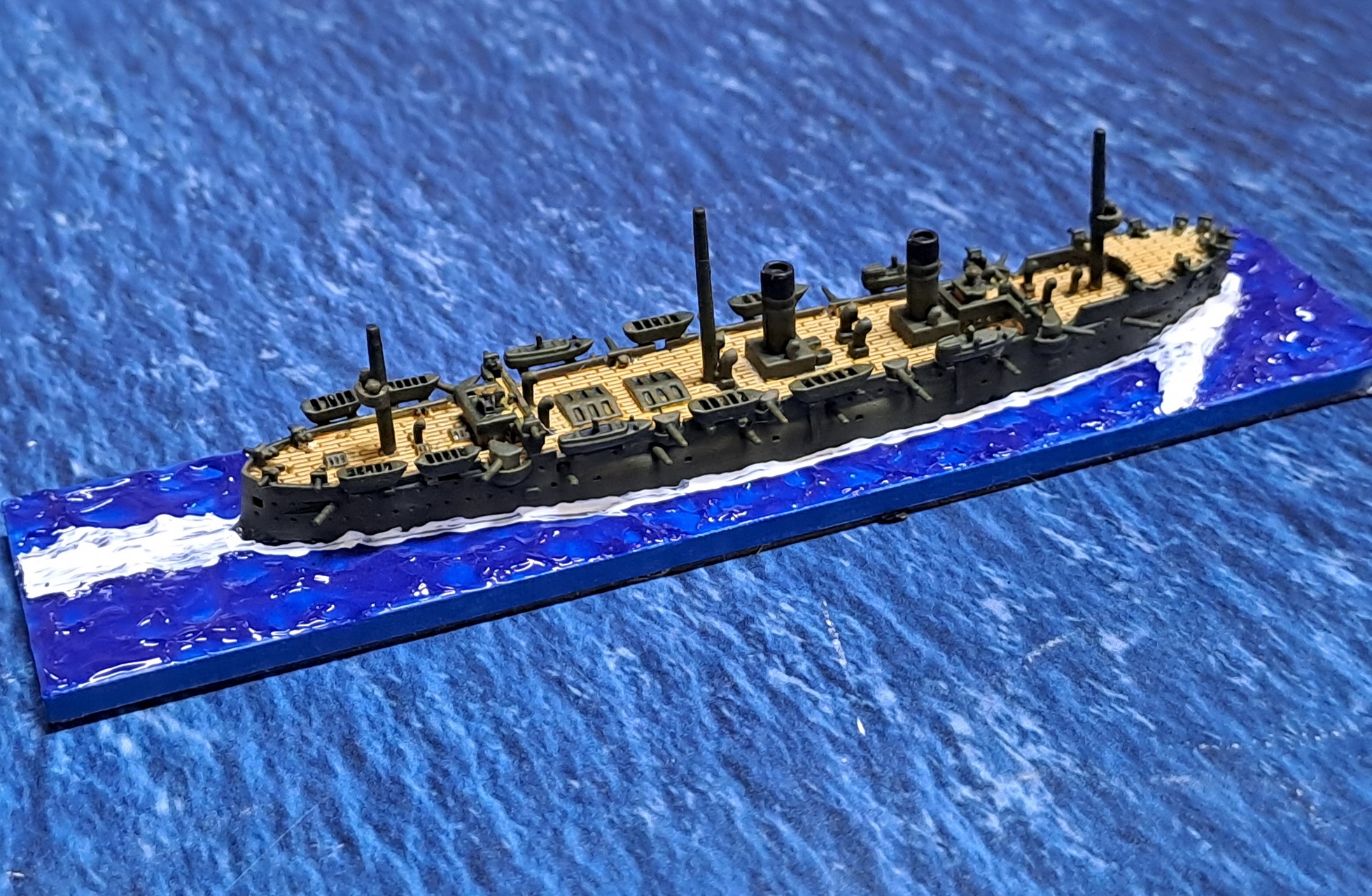
🇬🇧 Jeanne d’Arc-class – a second-class cruiser with a cost of 310 points. Equipped with a very large array of medium-caliber artillery, it stands out with excellent speed and remarkable armor for a ship of this class in Gods of War: Togo. Its solid hull further enhances its combat value. This is a ship well worth having in your fleet — its cost makes it a great choice even for lower-point battles.
🇵🇱 Jeanne d’Arc-class – krążownik drugiej klasy o koszcie 310 punktów. Wyposażony w bardzo liczną artylerię średniego kalibru, wyróżnia się świetną prędkością oraz znakomitym pancerzem, jak na jednostkę tej klasy w systemie Bogowie Wojny: Togo. Solidny kadłub dodatkowo podnosi jego wartość bojową. To okręt, który zdecydowanie warto mieć w swojej flocie – jego cena sprawia, że świetnie sprawdzi się również w rozgrywkach na mniejsze punkty.
🇬🇧 D’Entrecasteaux-class – a second-class cruiser with a cost of 260 points. Equipped with relatively few heavy-caliber guns, which nonetheless surpass the armament of most cruisers from other nations. In addition, it carries a fairly numerous medium artillery and torpedo armament. Its armor and hull are in line with the standard for ships of this class in the game. The ship’s strengths also include a ram and torpedoes, which significantly increase its combat versatility.
🇵🇱 D’Entrecasteaux-class – krążownik drugiej klasy o koszcie 260 punktów. Wyposażony w stosunkowo nieliczną artylerię ciężkiego kalibru, która jednak przewyższa uzbrojenie większości krążowników innych nacji. Do tego dochodzi całkiem liczna artyleria średnia oraz uzbrojenie torpedowe. Pancerz i kadłub odpowiadają standardowi dla jednostek tej klasy w grze. Atutami okrętu są także taran i torpedy, które zwiększają jego wszechstronność bojową.
🇬🇧 Friant-class – a third-class cruiser with a cost of 155 points. It is equipped with a fairly numerous medium-caliber artillery and solid armor. Another advantage is its ram, which makes it a dangerous opponent in close-range engagements.
🇵🇱 Friant-class – krążownik trzeciej klasy o koszcie 155 punktów. Dysponuje dość liczną artylerią średniego kalibru oraz solidnym pancerzem. Jego kolejnym atutem jest również taran, który czyni go groźnym przeciwnikiem w starciach na bliski dystans.
🇬🇧 D’Iberville-class – a fourth-class torped cruiser with a cost of 90 points. This is an inexpensive torpedo vessel, equipped with a fairly large number of torpedo launchers and surprisingly solid armor for a ship of this class. An interesting feature is the single medium-caliber gun mounted on the bow. An additional advantage is the presence of a ram, which is rarely found among ships of this category.
🇵🇱 D’Iberville-class – krążownik torpedowy czwartej klasy o koszcie 90 punktów. To niedroga jednostka torpedowa, wyposażona w dość liczne wyrzutnie torped oraz całkiem solidny pancerz, jak na okręt tej klasy. Ciekawostką jest pojedyncze działo średniego kalibru zamontowane na dziobie. Dodatkowym atutem jest taran, rzadko spotykany wśród jednostek tej kategorii.
🇬🇧 Framee-class – fourth-class destroyers with a cost of 125 points. A half-squadron of destroyers equipped with a standard number of torpedoes for vessels of this category, as well as a fairly large complement of light-caliber artillery. This is a fast and flexible formation, perfectly suited for escort and maneuvering operations.
🇵🇱 Framee-class – niszczyciele czwartej klasy o koszcie 125 punktów. Pół dywizjonu niszczycieli, wyposażonych w standardową liczbę torped dla jednostek tej kategorii oraz dość liczną artylerię lekkiego kalibru. To szybka i elastyczna formacja, doskonale sprawdzająca się w działaniach osłonowych i manewrowych.
🇬🇧 Mistral-class – fourth-class torpedo boats with a cost of 115 points. A half-squadron of torpedo boats equipped with numerous torpedo launchers for vessels of this category, along with better-than-standard armor. Their artillery armament is more modest, limited to a small number of light-caliber guns.
🇵🇱 Mistral-class – torpedowce czwartej klasy o koszcie 115 punktów. Pół dywizjonu torpedowców wyposażonych w liczne wyrzutnie torped, jak na jednostki tej kategorii, a także lepszy niż standardowy pancerz. Uzbrojenie artyleryjskie jest skromniejsze i ogranicza się do niewielkiej liczby dział lekkiego kalibru.
🇬🇧 Belem – a fourth-class sailing ship with a cost of 15 points. A charming vessel that serves primarily auxiliary roles in the game: it can transport landing troops or carry out non-combat tasks. While it cannot match the power of mighty ships of the line, it adds atmosphere and variety to the fleet.
🇵🇱 Belem – żaglowiec czwartej klasy o koszcie 15 punktów. Urokliwa jednostka, która w grze pełni głównie funkcje pomocnicze: może transportować desant żołnierzy lub realizować zadania niebojowe. Choć nie dorównuje potężnym okrętom liniowym, dodaje flocie klimatu i różnorodności.
🇬🇧 Of course, all the nations available in the game, along with their ships, can be viewed at the link below, which leads to the fleet builder tool: 👉 gmboardgames.com/togo/ab/index.php
🇵🇱 Oczywiście wszystkie dostępne w grze nacje, a wraz z nimi ich okręty, można obejrzeć pod poniższym linkiem prowadzącym do narzędzia do budowy floty: 👉 gmboardgames.com/togo/ab/index.php
🇬🇧 Summary: – The first ships of the French fleet look very promising and are tempting enough to make one want to start an adventure with the Marine Nationale. – The many battleships released at the start are quite diverse, giving players plenty of options — from heavily armored giants to lighter, more affordable vessels. – The situation is less favorable with second-class cruisers: while decent, the choice is very limited. Here, patience will be required until more ships of this class are released. – Third-class ships are represented by the excellent Friant-class cruiser. – The last category, fourth-class ships, includes as many as four units, one of which is a transport. In this case, the selection is solid right from the start. – In total, there are ten warships and one transport available — a strong lineup for a debut! Well done, GM Boardgames! – French ships are already available from the publisher’s store, the Wrocław-based Bolter club, at this address: https://bolter.pl/en_US/c/French-Navy/2037 – Their official debut will take place during Fields of Glory in Niepołomice – an event that every year attracts history and reenactment enthusiasts from all over Poland. – You can find more details about the event here 👉 polachwaly.pl
🇵🇱 Podsumowanie: – pierwsze jednostki do floty francuskiej wyglądają ciekawie i kuszą by rozpocząć swoją przygodę z Marine Nationale. – Liczne wypuszczone na starcie pancerniki są dość różnorodne, że jest w czym wybierać. Zaczynając od potężnie opancerzonych okrętów, przez te lżej opancerzone i tańsze punktowo. – Gorzej z krążownikami drugiej klasy, które mimo tego, że przyzwoite, są bardzo nieliczne w wyborze, tu pozostaje uzbroić się w cierpliwość i czekać na kolejne okręty tej klasy. – Okręty trzeciej klasy są reprezentowane przez świetny okręt klasy Friant. – Ostatnią klasę okrętów reprezentują aż cztery jednostki w tym jedna transportowa, tu na starcie nie ma co narzekać na wybór. – Łącznie do wyboru jest dziesięć okrętów i jeden transportowiec, nieźle jak na początek, tak trzymać GM Boardgames! – Okręty francuskie są już dostępne na sklepie wydawcy czyli wrocławskiego klubu Bolter pod tym adresem: https://bolter.pl/pl/c/Flota-Francuska/2037 – Ich oficjalny debiut będzie miał miejsce już podczas Pól Chwały w Niepołomicach – wydarzenia, które co roku przyciąga miłośników historii i rekonstrukcji z całej Polski. – Szczegóły o samym wydarzeniu znajdziecie tutaj 👉 polachwaly.pl
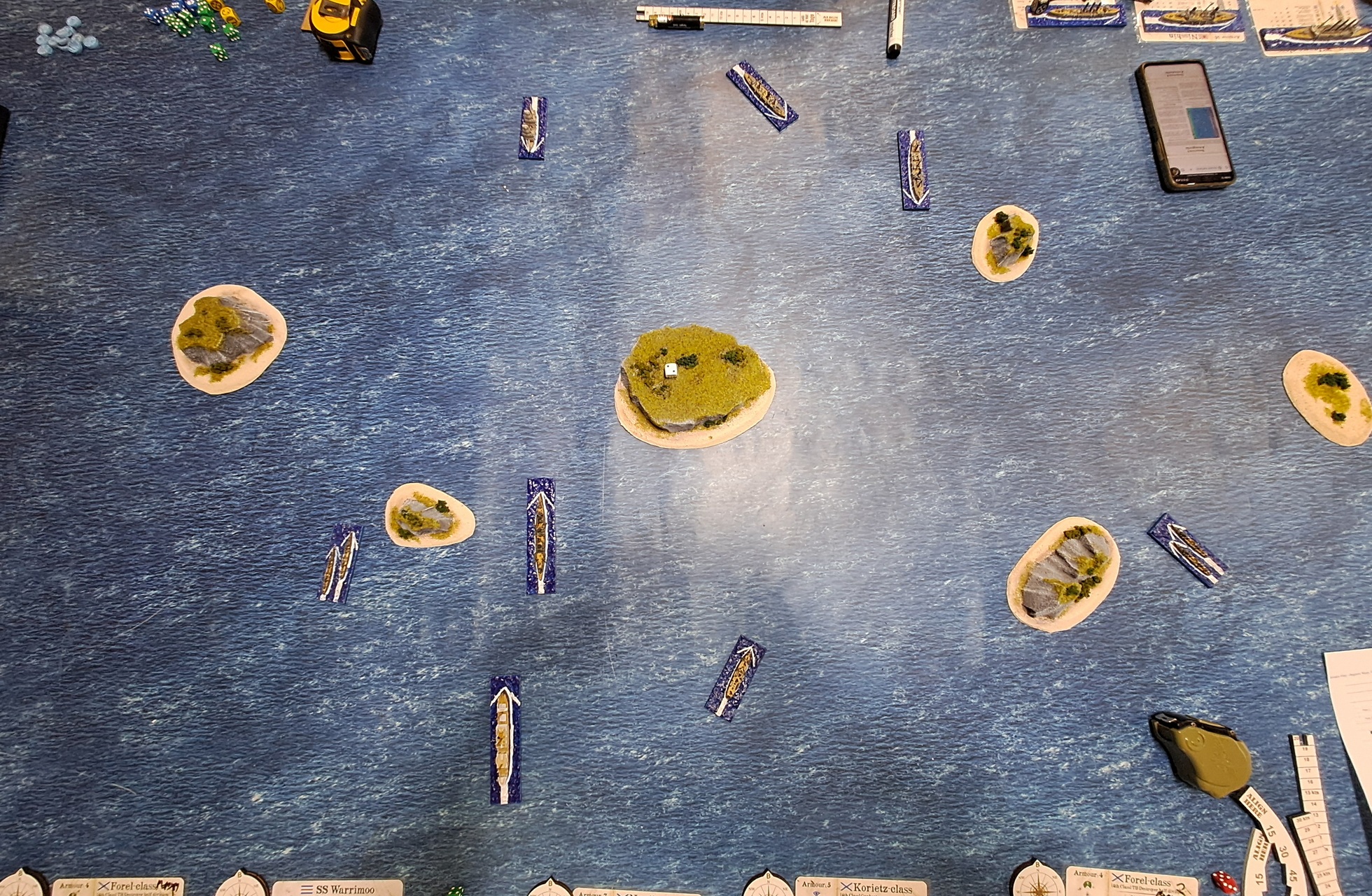
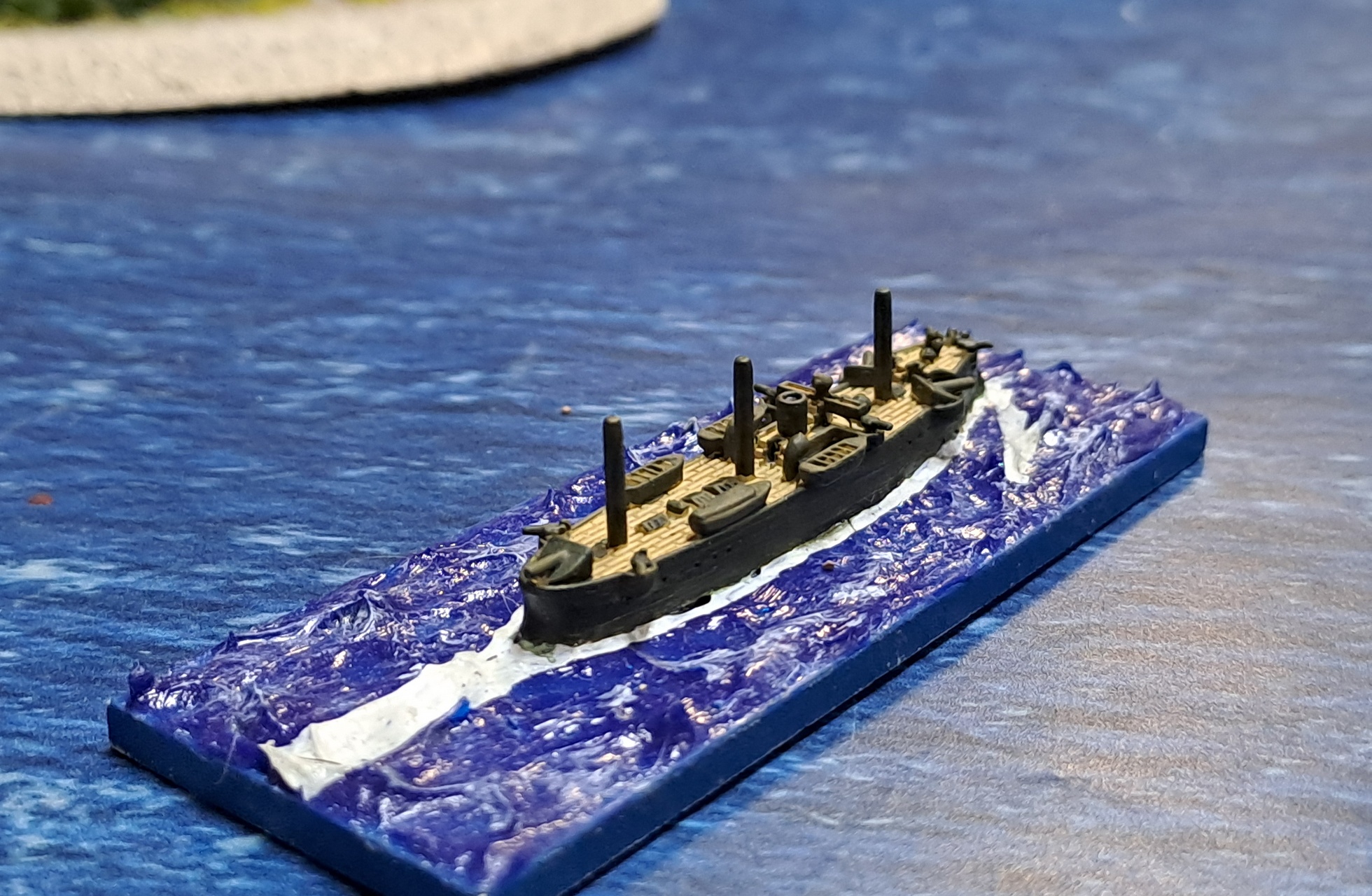
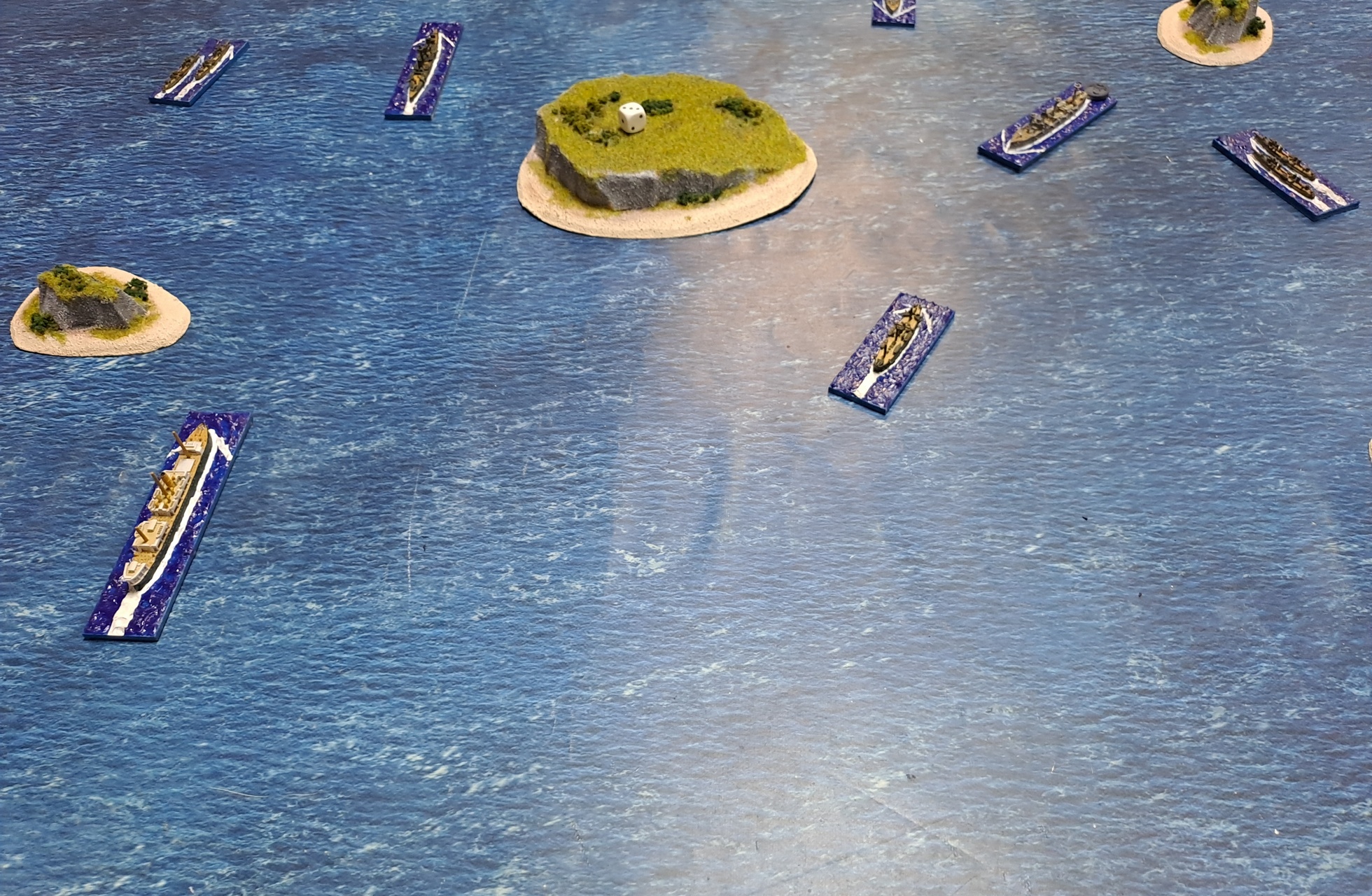
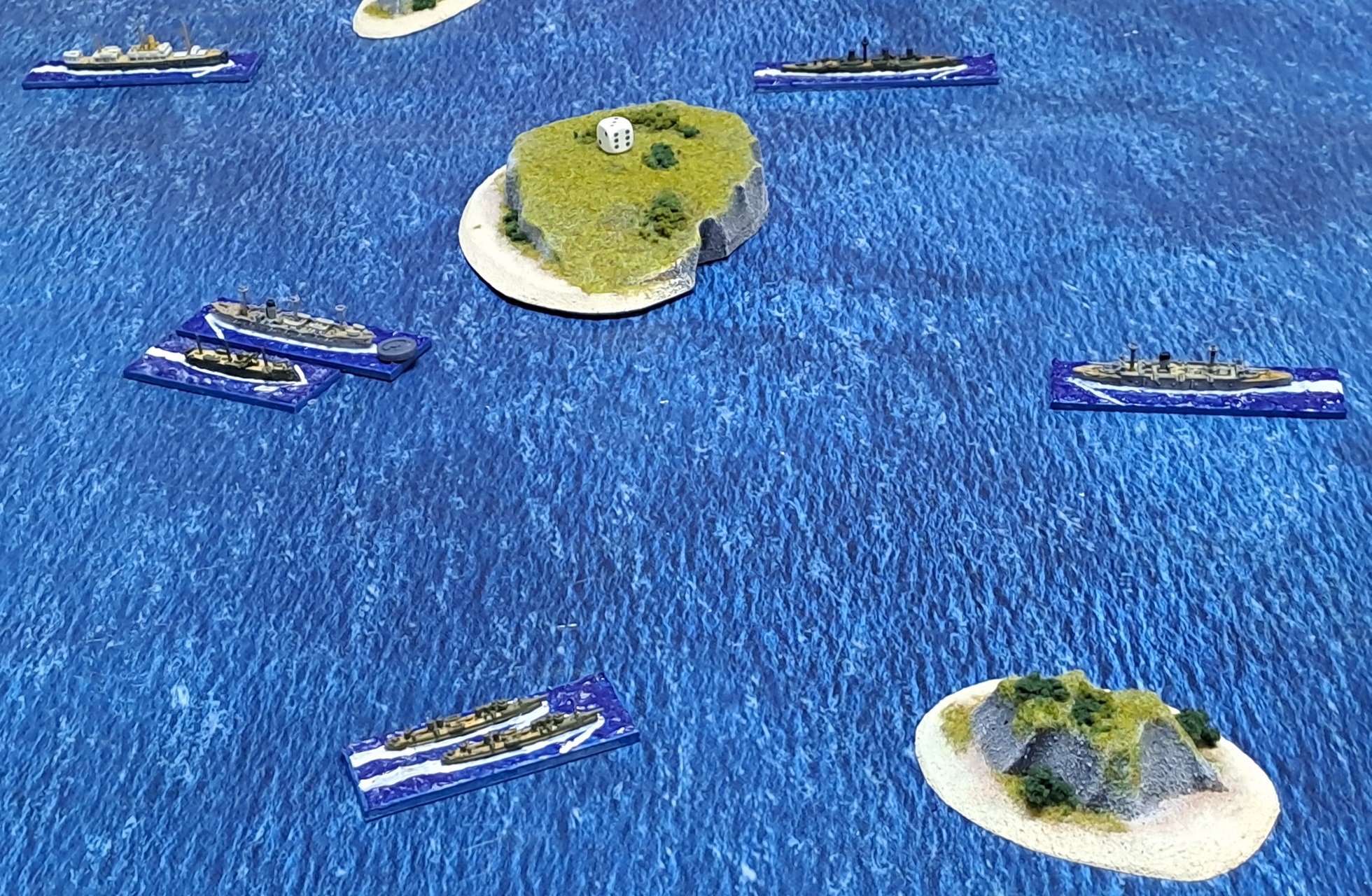
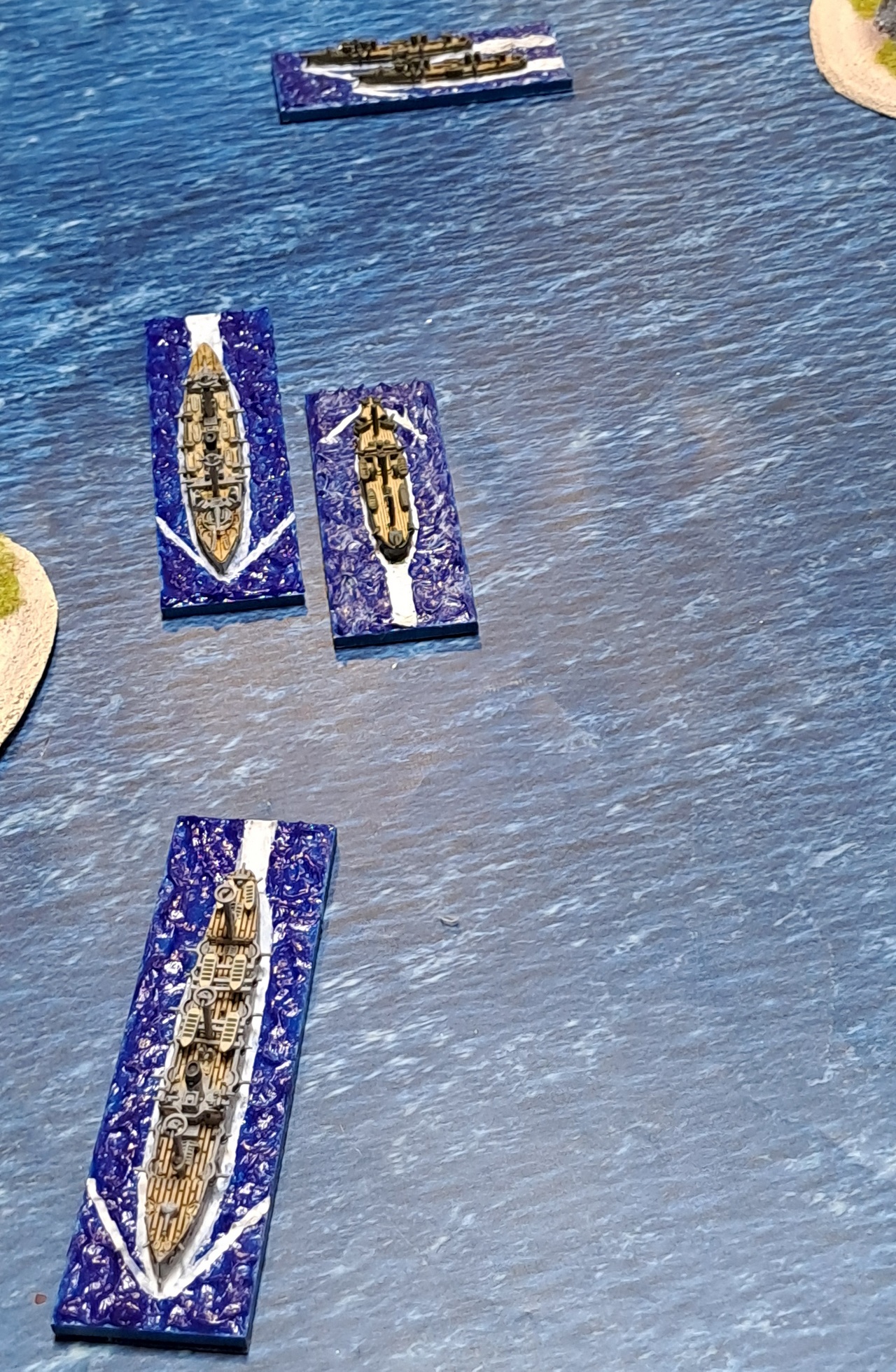
🇬🇧 Last Thursday at the Bolter club in Wrocław, Cornholio and I played a 1,810-point game, following the format of this year’s Polish Championships in Togo. I commanded the Russian fleet, which clashed with Łukasz’s Japanese fleet. We played a randomly drawn scenario, “Vanguard” from the Scenario Book (according to my knowledge it’s in translation), in which third- and fourth-class ships deploy in the first wave, while first- and second-class units enter the battle in turn three.
It was also the first game in which I fielded the recently released cruisers of the Vladivostok Squadron, which I wrote about [here]. The battle was full of turning points that you can see in the photo report below — numerous torpedo attacks (which, apart from a single hit, achieved nothing), both failed and successful ramming attempts, and daring raids into the enemy’s rear.
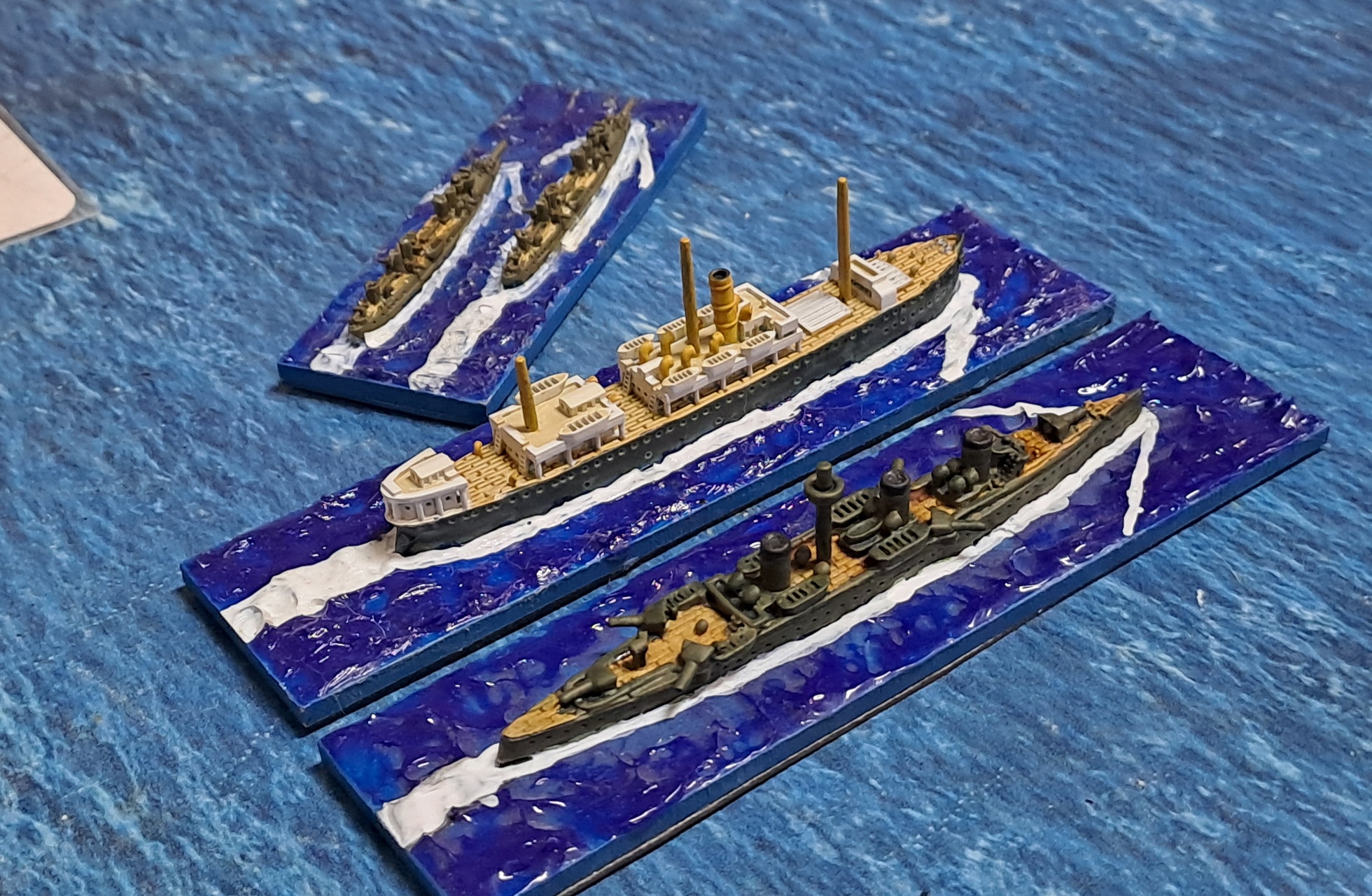
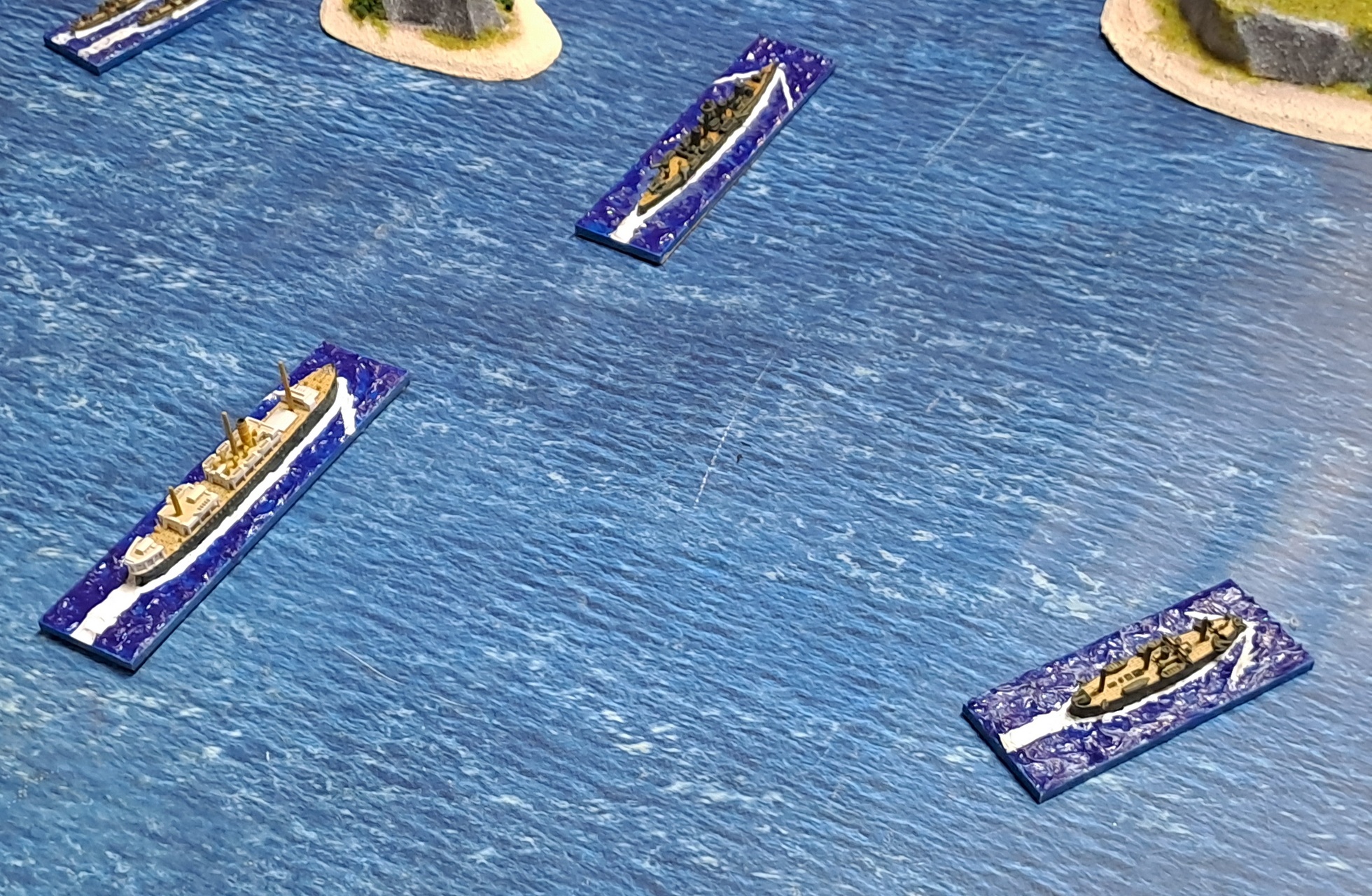
On the Japanese side, the following ships took part: Izumo, Kasuga, Nisshin, Naniwa, Chiyoda, Katsuragi, and the civilian ship SS Warrimoo. On the Russian side, the squadron included: Rossiya, Gromoboi, Rurik, Novik, Koreyets, two squadrons of Forels, and a vessel strikingly similar to the SS Warrimoo.
🇵🇱 W ostatni czwartek we wrocławskim klubie Bolterz Cornholio rozegraliśmy grę na 1810 punktów, format tegorocznych Mistrzostw Polski w Togo. Flota rosyjska którą dowodziłem starła się z japońską flotą Łukasza. Zagraliśmy wylosowany scenariusz „Awangarda” z Księgi Scenariuszy, w którym okręty i statki klasy trzeciej oraz czwartej wypływały w pierwszym rzucie. Jednostki klasy pierwszej i drugiej dołączały do bitwy w turze trzeciej. Była to pierwsza gra w której wykorzystałem niedawno wydane krążowniki eskadry Władywostockiej o której pisałem tutaj. W bitwie było wiele momentów zwrotnych które można obejrzeć w poniższej fotorelacji, a były to liczne ataki torpedowe – które poza jedną celną torpedą nic nie zrobiły, były nieudane i udane próby taranowania czy rajdy na tyły przeciwnika.
I tak po stronie Japońskiej w starciu wzięły udział następujące okręty: Izumo, Kasuga, Nisshin, Naniva, Chiyoda, Katsuragi i statek SS Warrimoo. Po stronie rosyjskiej eskadry były: Rossiya, Gromobój, Ruryk, Nowik, Koriejc, dwa dywizjony Foreli oraz jednostka łudząco przypominająca SS Warrimoo.
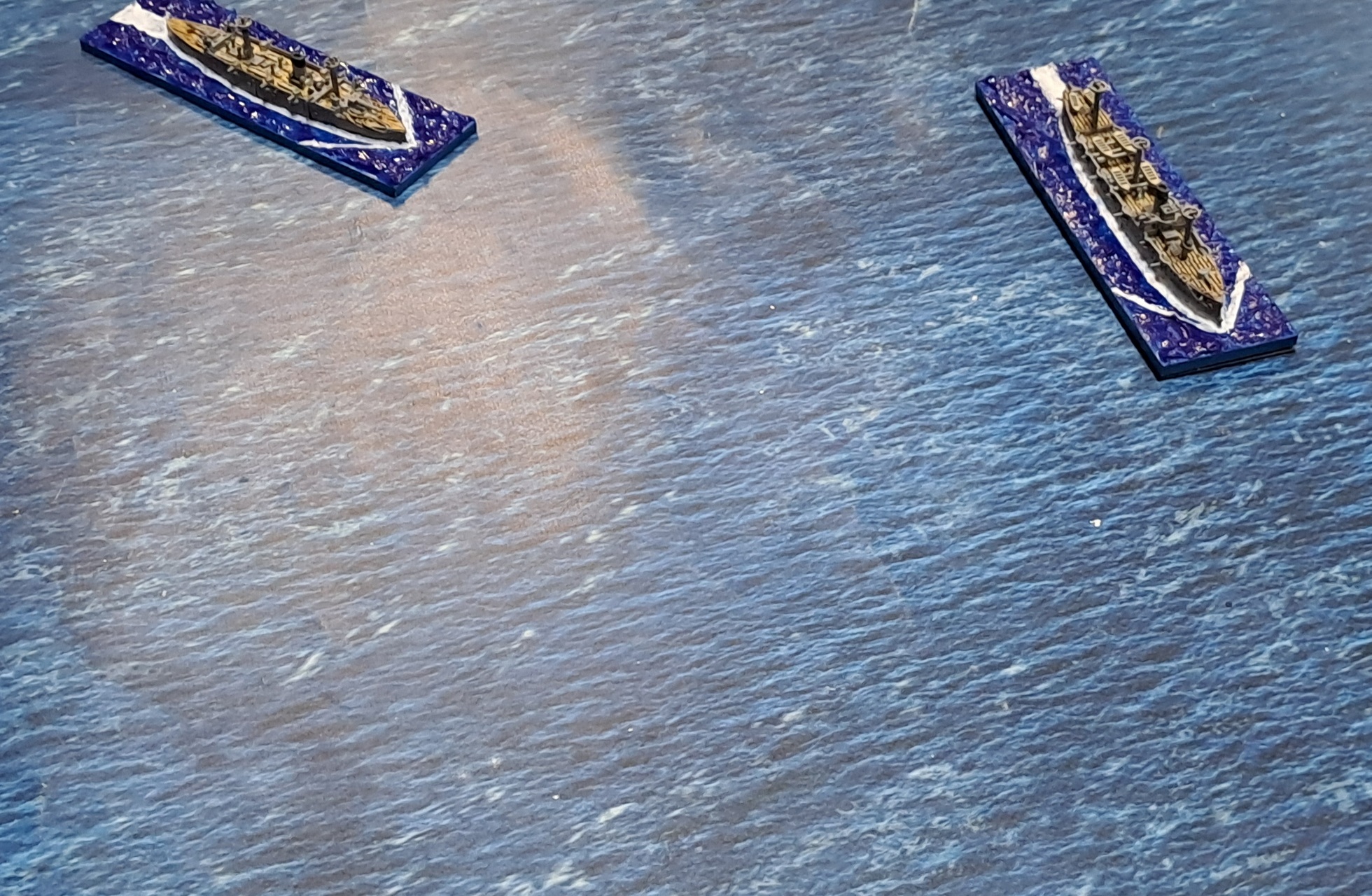
🇵🇱 Początek starcia. Pierwszy rzut złożony z jednostek 3&4 klasy. 🇬🇧 Beginning of batle. First wave composed of 3rd&4th classes.🇵🇱 Admirał Heihachirō Tōgō. 🇬🇧 Admiral Tōgō Heihachirō.🇵🇱 Od góry dywizjon Foreli nr 1, SS Warrimoo, Nowik. 🇬🇧 From top Forel’s division no 1, SS Warrimoo, Novik. 🇵🇱 Dywizjon Foreli nr 2. 🇬🇧 Forel’s division no 2.🇵🇱 🇬🇧 Katsuragi. 🇵🇱 🇬🇧 Chiyoda&Katsuragi.🇵🇱 🇬🇧 Chiyoda.🇵🇱 🇬🇧 Naniwa&Chiyoda.🇵🇱 Tura druga. 🇬🇧 Second turn.🇵🇱 Kanonierka Koriejc. 🇬🇧 Korietz gunboat.🇵🇱 Prawe skrzydkło – od lewej Koriejc, naprzeciw Chiyoda, po prawej dywizjon Foreli nr 2. 🇬🇧 Right flank — from the left Koreyets, opposite Chiyoda, and on the right Forel squadron no. 2.🇵🇱 Wymiana ognia między dywizjonem Foreli nr 1 a Katsuragi. 🇬🇧 Exchange of fire between Forel squadron no. 1 and Katsuragi.🇵🇱 Nowik krótką salwą zatopił Katsuragi. 🇬🇧 Nowik sank Katsuragi with a short volley.🇵🇱 Początek tury trzeciej. 🇬🇧 Beginning of third turn.🇵🇱 🇬🇧 SS Warrimoo.🇵🇱 Chiyoda mija Koriejca. 🇬🇧 Chiyoda passing through Korietz.🇵🇱 Ruryk. 🇬🇧 Rurik.🇵🇱 Forele zostały zatopione przez Niitakę. 🇬🇧 The Forels were sunk by Niitaka.🇵🇱 Rajd Nowika zakończył się gdy trafił na Japońskie okręty drugiej klasy. 🇬🇧 Novik’s raid came to an end when it encountered Japanese second-class ships.🇵🇱 Początek tury czwartej. 🇬🇧 Beginning of turn four.🇵🇱 Ostrzelana Chiyoda poszła na dno. 🇬🇧🇵🇱 Na pierwszym planie Ruryk, na drugim Rosja. 🇬🇧 On first plan Rurik, on second Rossiya.🇵🇱 Nieudana próba odwrotu dywizjonu Foreli. 🇬🇧 Failed retreat attempt by the Forel squadron.🇵🇱 Samotny Koriejc na przeciw Izumo i Kasuga. 🇬🇧 A lone Koreyets facing Izumo and Kasuga.🇵🇱 Niitaka. 🇬🇧 Niitaka.🇵🇱 Początek tury piątej. 🇬🇧 Beginning of turn five.🇵🇱 Kasuga celną salwą zatapia Koriejca. 🇬🇧 Kasuga sinks Koreyets with an accurate volley.🇵🇱 Po lewej od dołu: Rossiya, Ruryk, Gromobój. Po prawej: Izumo i Kasuga. 🇬🇧 On the left from the bottom: Rossiya, Rurik, Gromoboi. On the right: Izumo and Kasuga.🇵🇱 🇬🇧 Rossiya.🇵🇱 Ruryk. 🇬🇧 Rurik.🇵🇱 Izumo i Kasuga. 🇬🇧 Izumo and Kasuga.🇵🇱 Początek tury szóstej. 🇬🇧 Beginning of turn six.🇵🇱 SS Warrimoo podjął się nieskutecznej próby taranowania Niitaki. 🇬🇧 SS Warrimoo made an unsuccessful attempt to ram Niitaka.🇵🇱 Pojedynek ogniowy między Rurykiem a Izumo, zakończony uszkodzeniem stery tego pierwszego. 🇬🇧 A gunnery duel between Rurik and Izumo, ending with the rudder of the former being damaged.🇵🇱 Początek tury szóstej. 🇬🇧 Beginning of turn six.🇵🇱 SS Warrimoo zostaje zatopiony. 🇬🇧 SS Warrimoo is sunk.🇵🇱 Ruryk z uszkodzonym sterem skutecznie taranuje japoński krążownik Kasugę. 🇬🇧 Rurik, with a damaged rudder, successfully rams the Japanese cruiser Kasuga.🇵🇱 Celne salwy krążowników z eskadry władywostockiej zatapiają również Izumo. 🇬🇧🇵🇱 Ostatni okręt Cesarstwa Japonii zdołał pod osłoną zmroku opuścić pole walki. 🇬🇧 The last ship of the Japanese Empire managed to leave the battlefield under the cover of darkness.
🇵🇱 Podsumowanie: – starcie w okolicach Port Artur zakończyło się zwycięstwem floty carskiej Rosji nad flotą cesarstwa Japonii 64 do 34. – nowe rosyjskie krążowniki po pierwszym użyciu wywołały u mnie pozytywne wrażenie i na pewno jeszcze nie raz wrócą na stół. – nie jestem pewien czym zagram na Mistrzostwach Polski 2025, chcę mieć rozpiskę uniwersalną pod scenariusze, otwarte pytanie jest jedno – czy mieć we flocie pancernik. – rozpiska floty japońskiej:
🇬🇧 Summary: – The battle near Port Arthur ended with a victory for the Tsarist Russian fleet over the Imperial Japanese fleet, 64 to 34. – The new Russian cruisers made a very positive impression on me after their first outing, and they will certainly return to the table many more times. – I’m not yet sure what I’ll play at the Polish Championships 2025 — I want to have a versatile list for the scenarios. The open question is just one: should the fleet include a battleship? – Japanese roster sheet:
🇬🇧 Today I managed to finish a Russian battleship of the Borodino class. This is already the third ship of this type to come out of my workshop, and at the same time the first one to which I’m dedicating a separate blog post. The model was painted in the colors of the Baltic Fleet, where all five launched battleships of this class served.
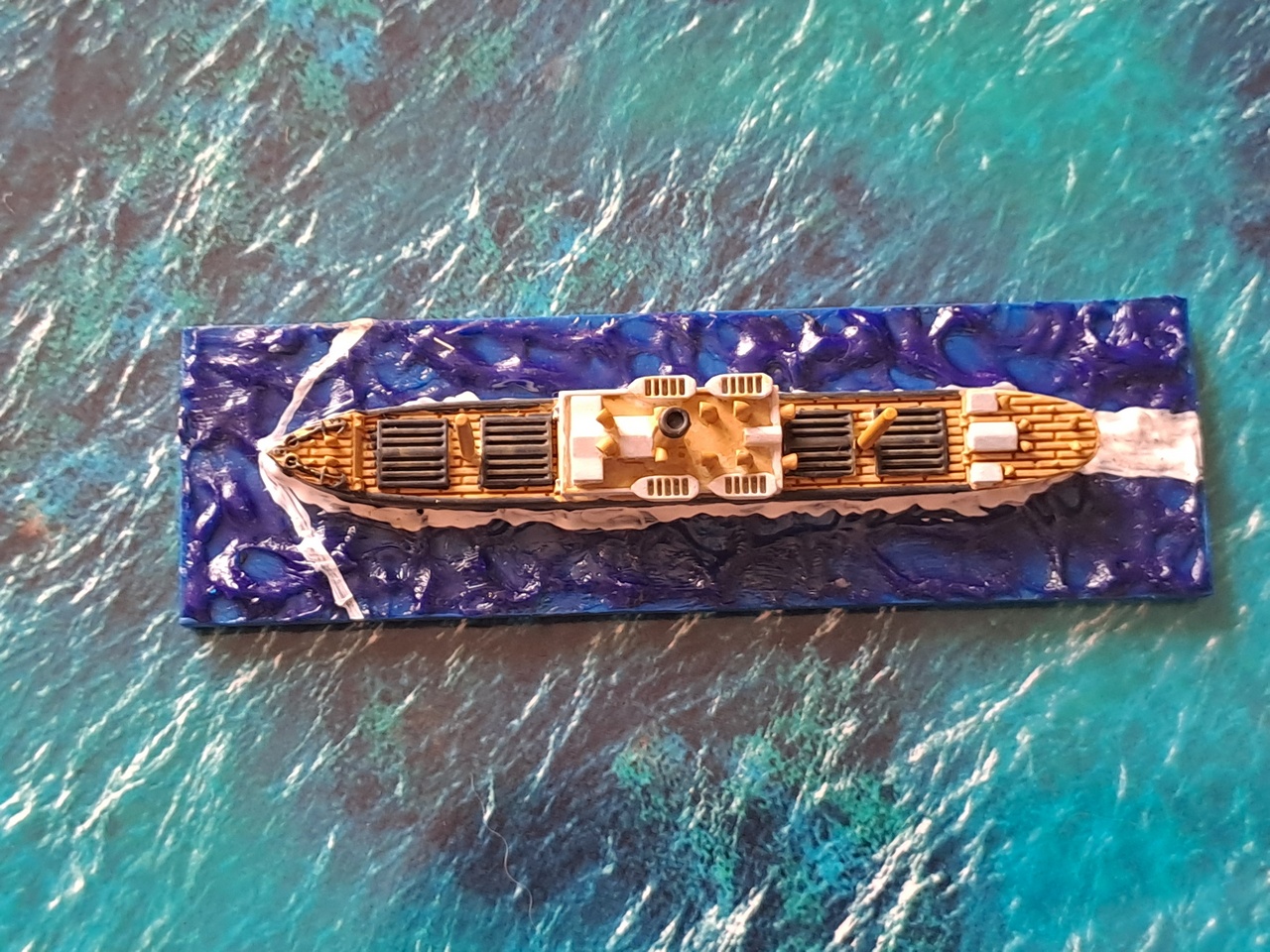
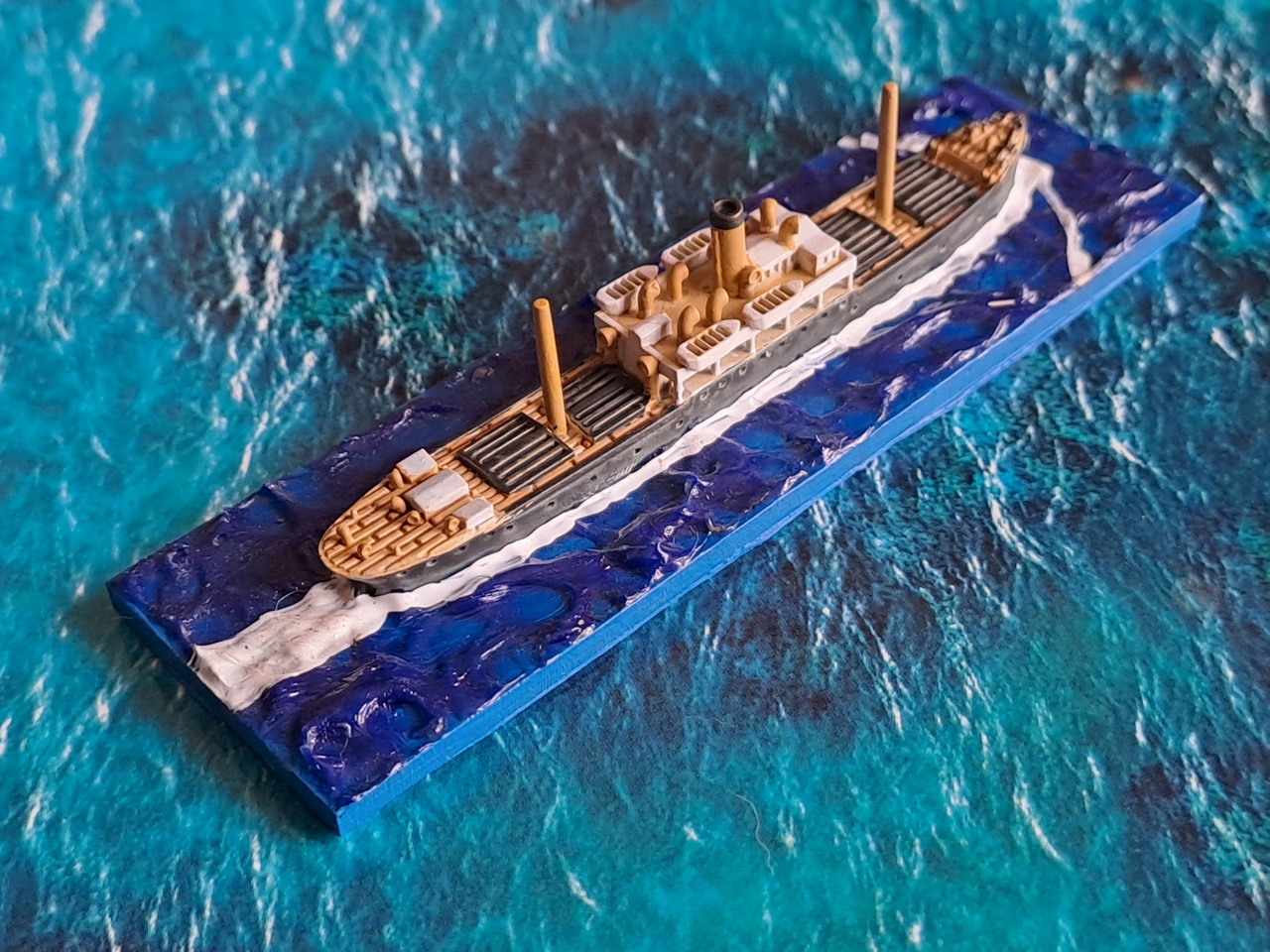
The Hitachi Maru was a 6,172 gross ton combined passenger-cargo ship built by Mitsubishi Shipbuilding in Nagasaki, for NYK Lines in 1898. She was requisitioned in 1904 by the Imperial Japanese Army during the Russo-Japanese War.
The greatest advantage of the Hitachi Maru is its speed, which is very high for a transport ship. It will allow you to try to bypass many enemy ships, e.g. during a convoy escort mission.
The transport ships in the game are universal, the same models can be used by any fleet.
* – description of the Hitachi Maru by GMBoardgames.
🇵🇱 Bogowie Wojny: Togo to system poświęcony flotom złożonym z okrętów wojennych, jednak można znaleźć też trochę perełek w postaci cywilnych jednostek takich jak ta, którą pomalowałem dzisiaj – Hitachi Maru – transportowiec posiadany przez kilka różnych nacji. SS Hitachi Maru został zbudowany w 1898 roku i zarekwirowany przez marynarkę wojenną Japonii 6 lat później. W trakcie wojny rosyjsko – japońskiej przydzielono jej zadanie transportu żołnierzy japońskich do Korei. Podczas jednego z takich rejsów, transportując ponad 1200 żołnierzy, w tym z rezerwowego pułku gwardii oraz ciężkie moździerze Kruppa, potrzebne do oblężenia Port Artur, pozbawiona eskorty, została zaatakowana i zatopiona przez rosyjskie krążowniki pancerne. Wydarzenie to nazwano „Incydentem Hitachi Maru”. Zaletą Hitachi Maru jest duża wyporność (która wpływa na wytrzymałość) i spora – jak na transportowce – prędkość (14 węzłów).
Summary: – Another civilian vessel, which in Bogowie Wojny: Togo serves as a transport ready for landings or other tasks such as cutting cables, has just left the shipyard.
Podsumowanie: – kolejna jednostka cywilna która w Bogowie Wojny: Togo jest transportowcem gotowym do desantów czy innych zadań jak przecinanie kabla opuściła stocznię.
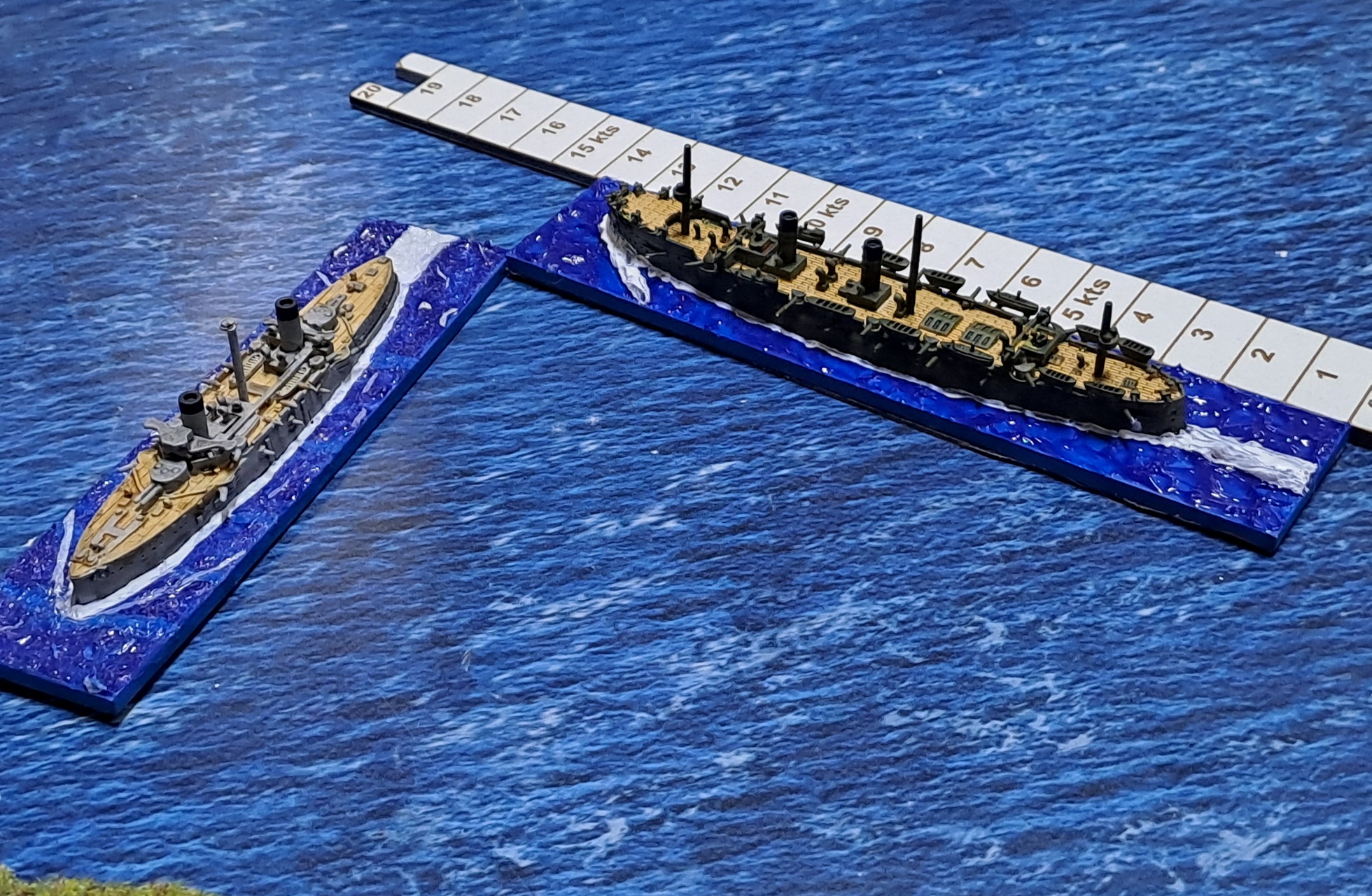
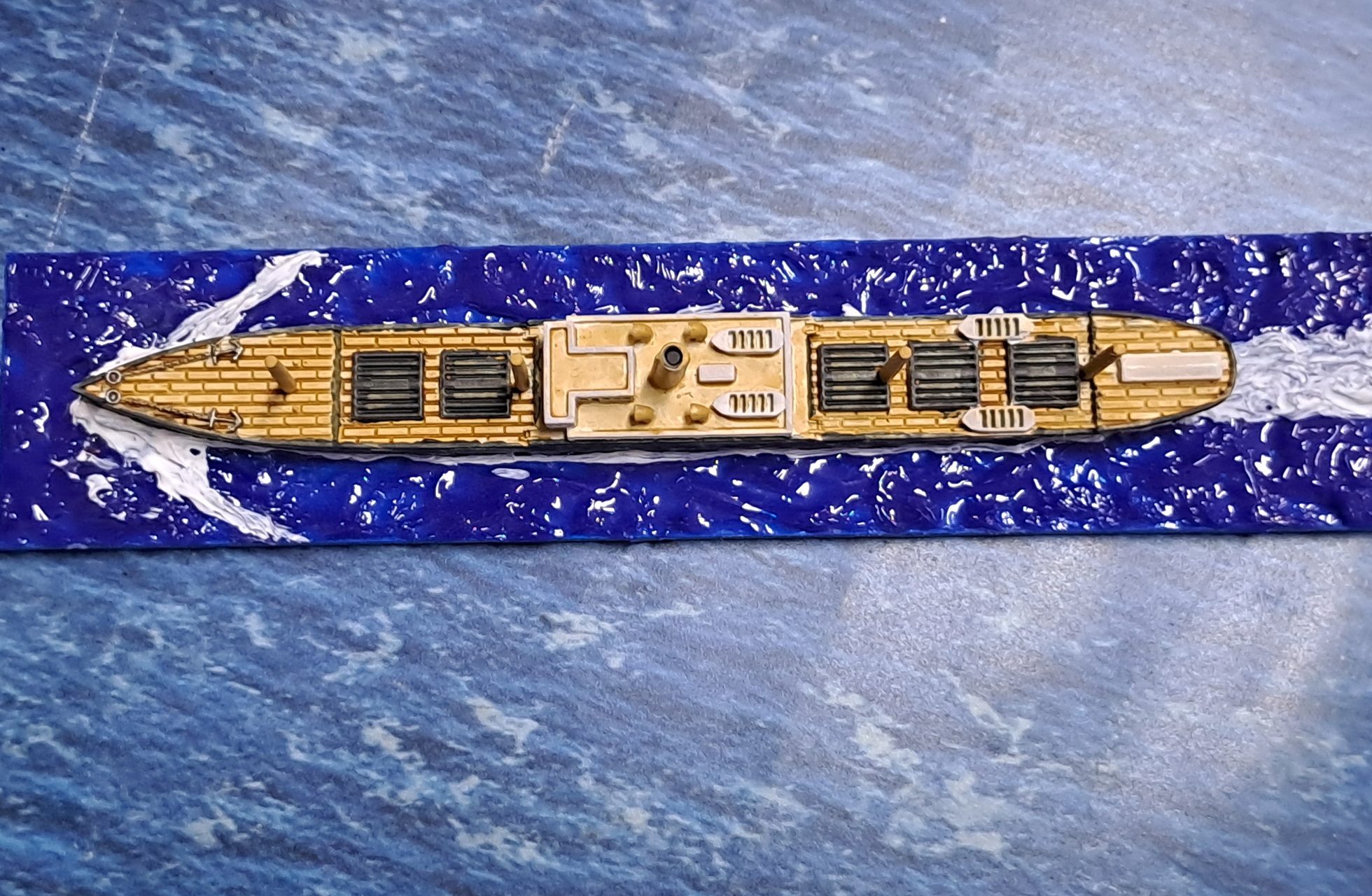
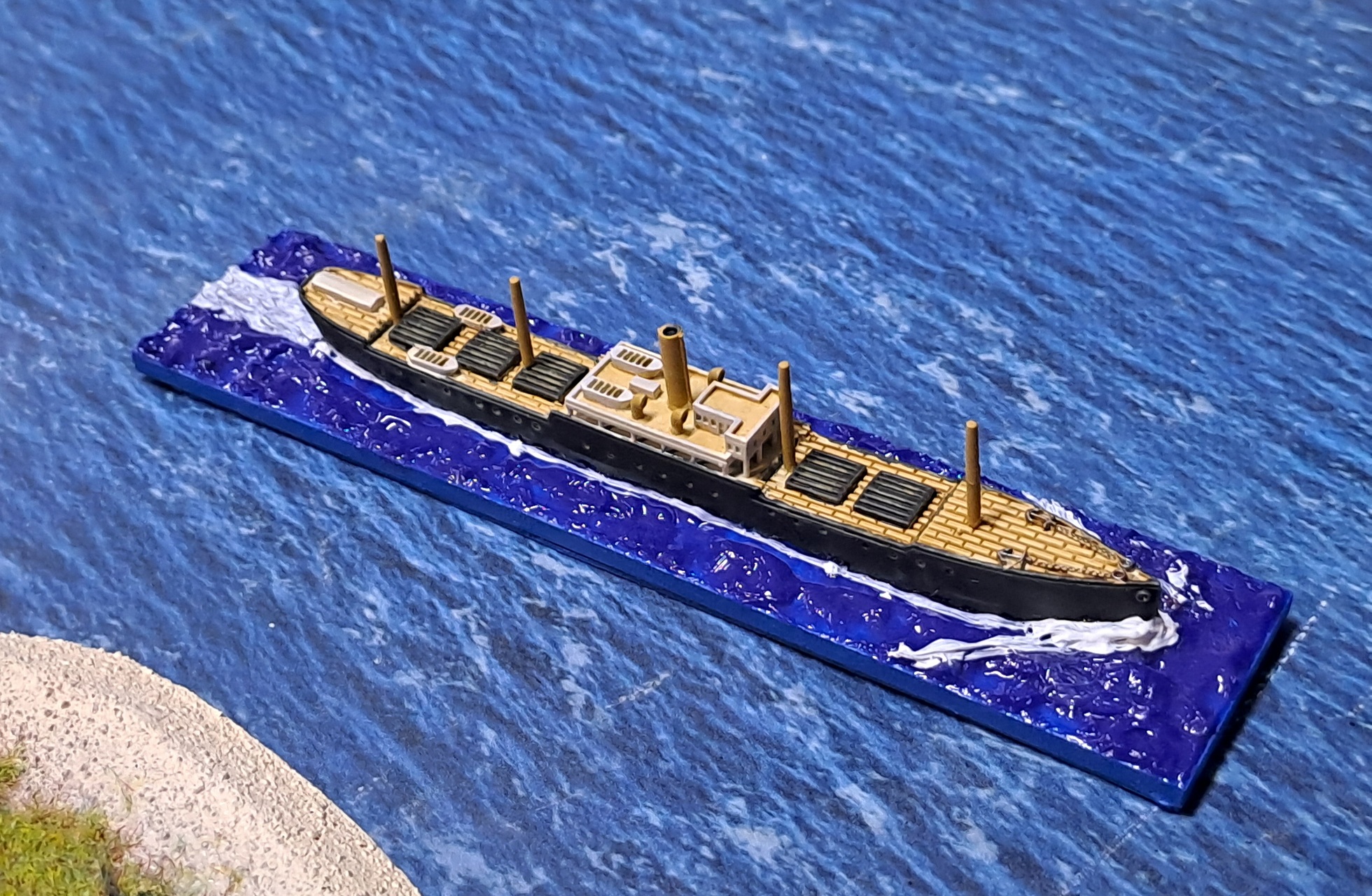
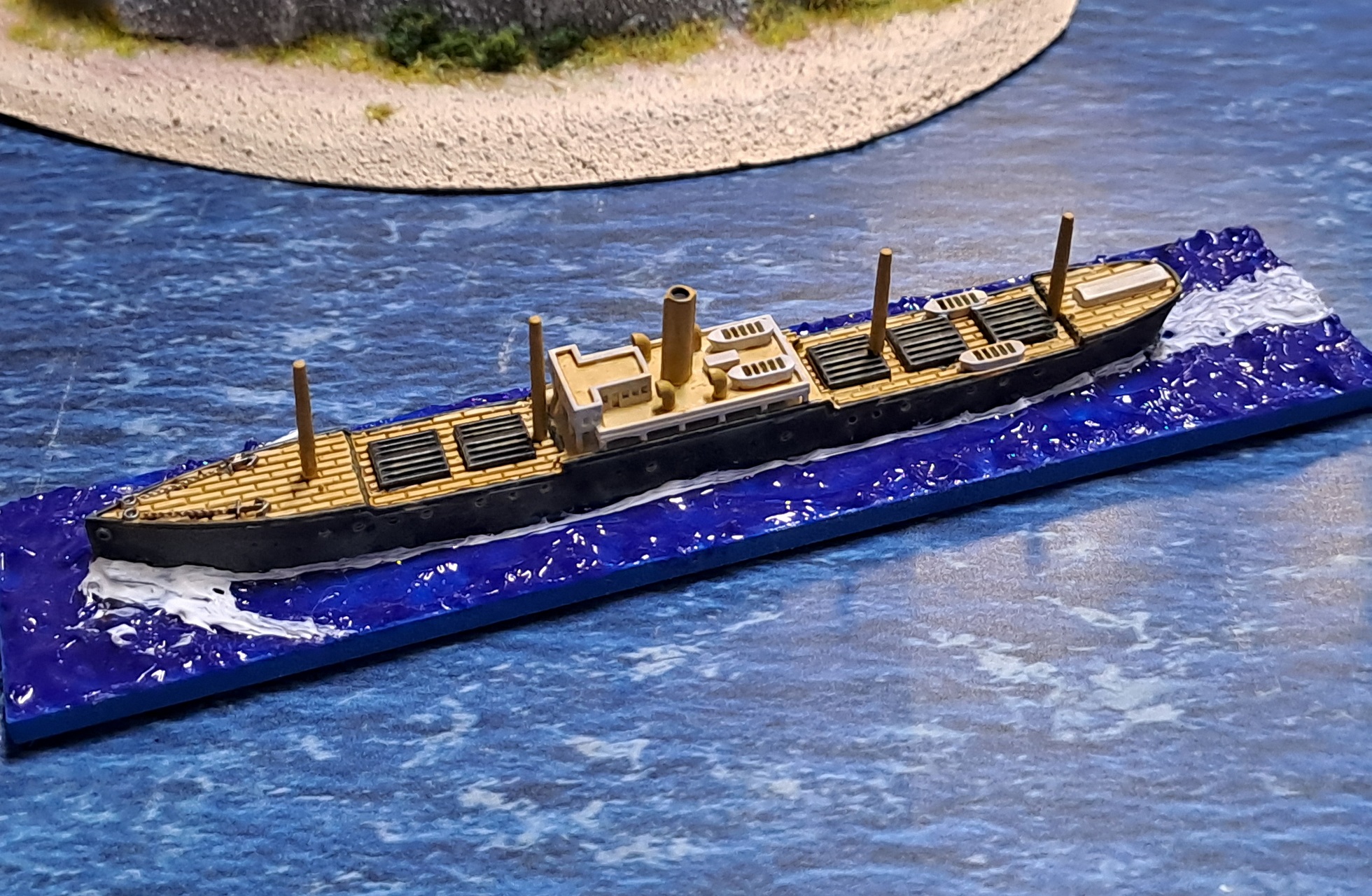
🇬🇧 On a hot July Saturday, I finally managed to finish the transport ship Clan Mackay for Bogowie Wojny: Togo.
„Clan MacKay was a cargo steamship that was built in 1894, had a fifty-year career under successive British, Australian, Chinese and Greek owners, was captured by Japan in the Second World War, and sunk by a United States Navy submarine in 1944.
She was built in England for the Clan Line as Clan Mackay.
The three sister ships were built as yard numbers 227, 228 and 229 and launched in 1894 as Clan Ross, Clan Campbell and Clan Mackay. Clan Mackay was the last of the three, being launched on 31 October 1894 and completed that December. They were the first Clan Line ships to be built with a straight stem instead of a clipper bow.
Clan Mackay’s registered length was 95.1 m, her tonnages were 2,600 GRT and 1,665 NRT. She was propelled by a single screw, powered by a three-cylinder triple-expansion engine, providing her with a speed of approximately 13 knots.
In September 1899 Clan Mackay was involved in a collision, as a consequence of which she was beached. She was repaired and returned to service.
The Clan MacKay was a fairly typical, small transport vessel of the late 19th and early 20th centuries. Its size and decent speed will make it a valuable addition to the fleet of any player. Its greatest value, however, lies in its incredible 50-year history, culminating in its service during ww2 as a Japanese “hell ship,” used to transport Allied PoWs.”
* – description of the Clan Mackay by GMBoardgames.
🇵🇱 W upalną lipcową sobotę udało mi się nareszcie skończyć statek transportowy – Clan Mackay do Bogów Wojny: Togo
„Clan MacKay był parowcem towarowym zbudowanym w 1894 roku, który miał pięćdziesięcioletnią karierę pod rządami kolejnych brytyjskich, australijskich, chińskich i greckich właścicieli, został zdobyty przez Japończyków podczas II wojny światowej i zatopiony przez amerykański okręt podwodny w 1944 roku.
Statek ten został zbudowany w Anglii dla Clan Line jako Clan Mackay. Trzy siostrzane statki zostały zbudowane jako numery stoczniowe 227, 228 i 229 i zwodowane w 1894 roku jako Clan Ross, Clan Campbell i Clan Mackay. Clan Mackay był ostatnim z trzech, został zwodowany 31 października 1894 roku i ukończony w grudniu tego samego roku. Były to pierwsze statki Clan Line zbudowane z prostą stewą dziobową zamiast dziobu kliprowego.
Zarejestrowana długość Clan Mackay wynosiła 95,1 m, tonaż wynosił 2 600 BRT. Był napędzany pojedynczą śrubą, zasilaną przez trzycylindrowy silnik potrójnego rozprężania, co zapewniało mu prędkość około 13 węzłów.
We wrześniu 1899 roku Clan Mackay brał udział w kolizji, w wyniku której osiadł na mieliźnie. Został naprawiony i powrócił do służby.
Clan MacKay był dość typowym, małym statkiem transportowym z końca XIX i początku XX wieku. Jego rozmiar i przyzwoita prędkość uczynią go cennym dodatkiem do floty każdego gracza. Jego największa wartość tkwi jednak w niesamowitej, 50-letniej historii, której kulminacją była służba podczas II wojny światowej jako japoński „statek piekielny”, wykorzystywany do transportu alianckich jeńców wojennych.”
🇬🇧 Few days ago I managed to complete another ship — this time a unique one: the SS Warrimo. Unique because it was a prize given to every participant at the 2024 Polish Championships in Gods of War: Togo.
In its history, the ship managed to be in a place where one part of it was in January 1, 1900, while another part was still in December 31, 1899. You can read more about the history of SS WarrimoHERE.
* translation to English done with use of ChatGPT.
🇵🇱 Parę dni temu udało mi się ukończyć kolejny, tym razem unikatowy statek SS Warrimo. Unikatowy, bo był nagrodą dla każdego z uczestników na Mistrzostwach Polski 2024 w Bogowie Wojny: Togo.
W swej historii statkowi udało się znaleźć w miejscu, gdzie jego część była w dniu 1 stycznia 1900, a część w dniu 31 grudnia 1899 roku. O historii SS Warrimo można przeczytać TUTAJ.
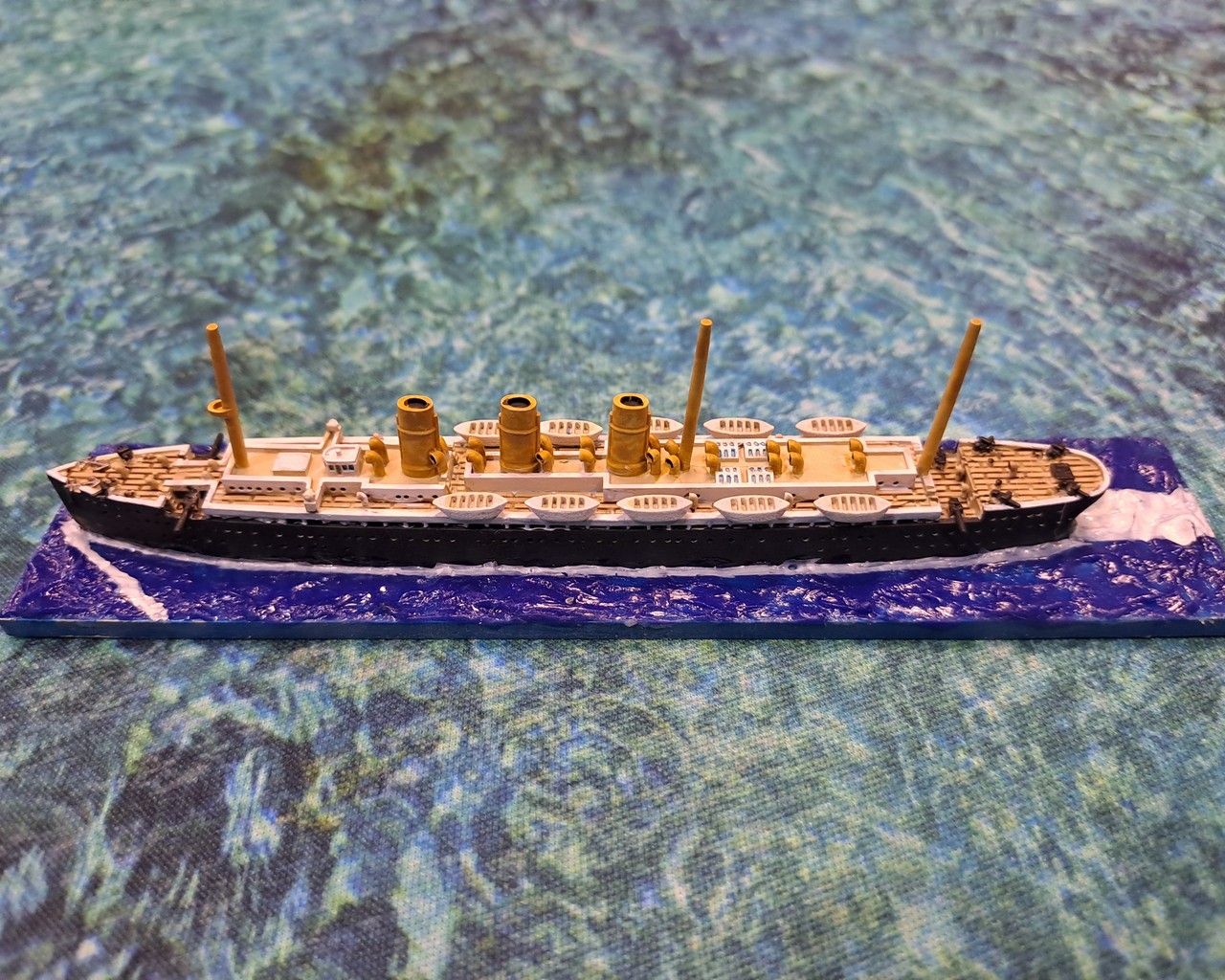
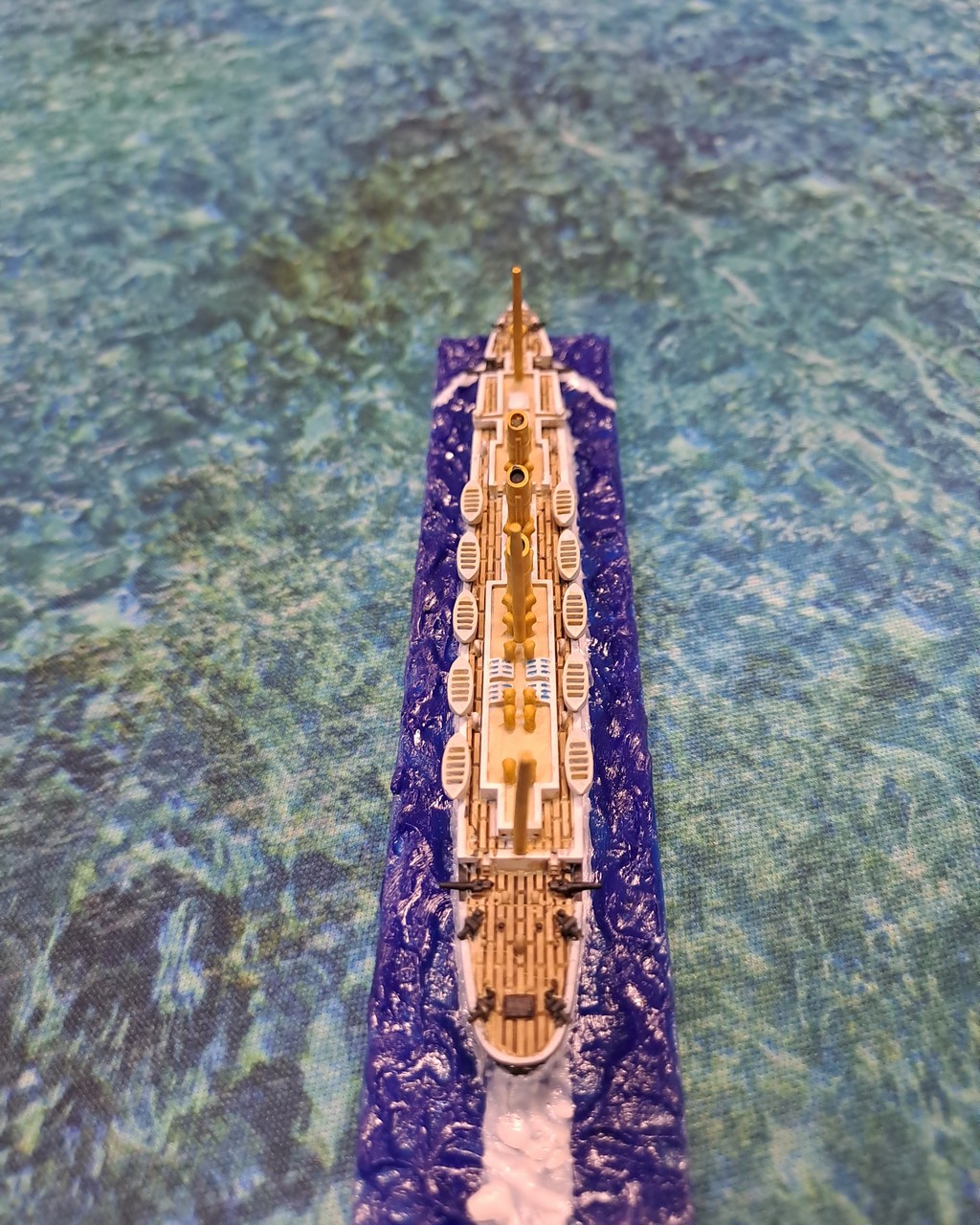
🇬🇧 In the last few days I managed to finish the SS Columbia, a very nice model to paint – a very nice addition to my Russian fleet.
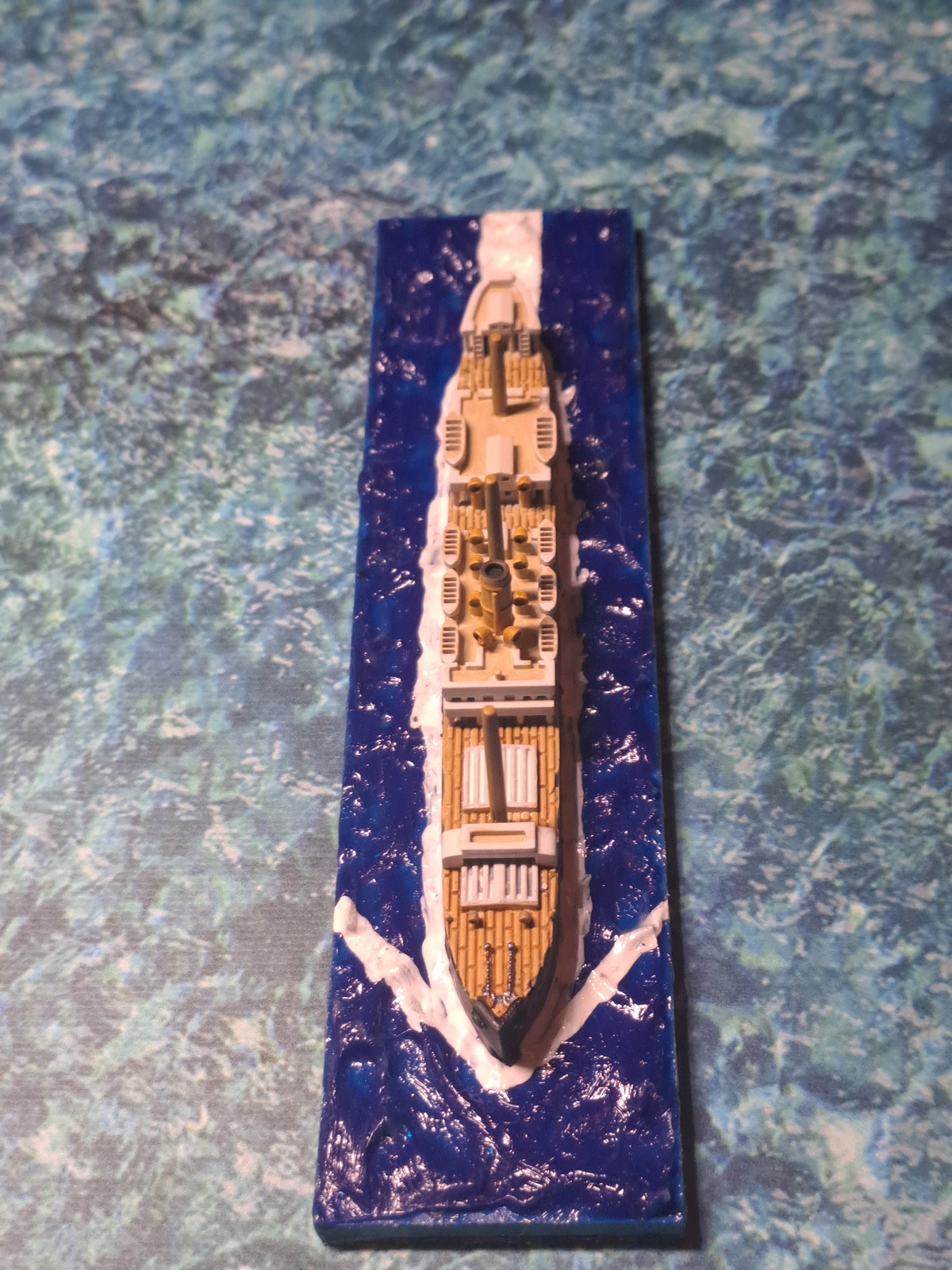
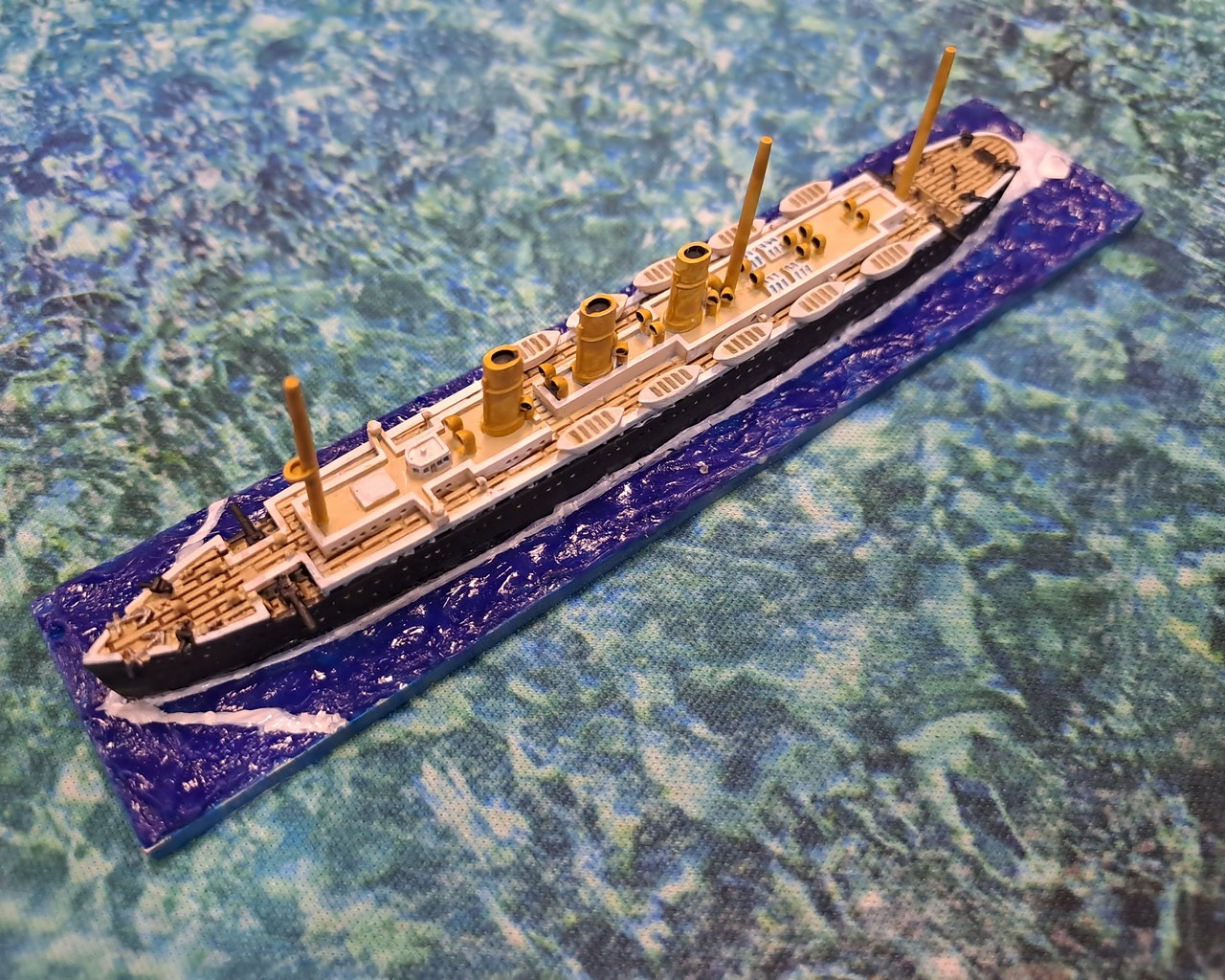
„SS Columbia was a commercial passenger ship, which served later as an Spanish auxiliary cruiser Rapido, and Russian auxiliary cruiser Terek. She was launched on 27 February 1889 and was delivered to Hamburg America Line soon thereafter.
On 8 April 1898, the Spanish Navy purchased Columbia from Hamburg America for Spanish–American War service as an auxiliary cruiser. Armed and renamed Rapido, she was commissioned on 20 April 1898. Rapido became part of the relief expedition for the Philippines. The war ended in August 1898 without Rapido seeing combat.”
* – description of SS Columbia according to GMBoardgames.
🇵🇱 W ostatnie dni udało mi się skończyć SS Columbię, model bardzo przyjemny w malowaniu – bardzo miły dodatek do mojej floty rosyjskiej.
„SS Columbia był statkiem pasażerskim, który później służył jako hiszpański krążownik pomocniczy Rapido i rosyjski krążownik pomocniczy Terek. Został zwodowany 27 lutego 1889 roku i wkrótce potem dostarczony do Hamburg America Line.
W dniu 8 kwietnia 1898 roku hiszpańska marynarka wojenna zakupiła „Columbię” od linii Hamburg America, aby przystosować tę jednostkę do służby na wojnie hiszpańsko-amerykańskiej jako krążownik pomocniczy. Uzbrojony i przemianowany na Rapido, wszedł do służby 20 kwietnia 1898 roku. Rapido stał się częścią nieudanej wyprawy ratunkowej dla Filipin. Wojna zakończyła się w sierpniu 1898 r., a Rapido nie brał udziału w walce.”
Summary: – a very pleasant model to paint, in the case of Russia there are two options for display – as SS Columbia, i.e. a transport ship, or as Terek, an auxiliary cruiser. – I painted the model with the following paints, mainly from Games Workshop: * water – Festering Blue, then Water Texture from Vallejo 26.203 Pacific Blue. * hull and artillery – Contrast Black Templar. White part of the hull including Ceramite White boats. * deck – Ushabanti Bone plus Agrax Earthshade. * chimneys – Zameri Desert. – I found inspiration for painting HERE. – More about Gods of War: Togo is HERE. Of course there are more entries about this great game on my blog. In case of any questions there is a great group on Facebook.
Podsumowanie: – model bardzo przyjemny w malowaniu, w przypadku Rosji dwie opcje wystawienia – jako SS Columbia czyli transportowiec lub jako Terek – krążownik pomocniczy. – model pomalowałem następującymi farbami, głównie z firmy Games Workshop: * woda – Festering Blue, następnie Water Texture z Vallejo 26.203 Pacific Blue. * kadłub oraz artyleria – Contrast Black Templar. Biała część kadłuba w tym łodzie Ceramite White. * pokład – Ushabanti Bone plus Agrax Earthshade. * kominy – Zameri Desert. – inspirację do malowania znalazłem TUTAJ. – Więcej o Bogach Wojny: Togo można przeczytać TUTAJ. Oczywiście na moim blogu jest więcej wpisów o tej świetnej grze. W razie pytań odnośnie systemu istnieje sprawna grupa na Facebooku.
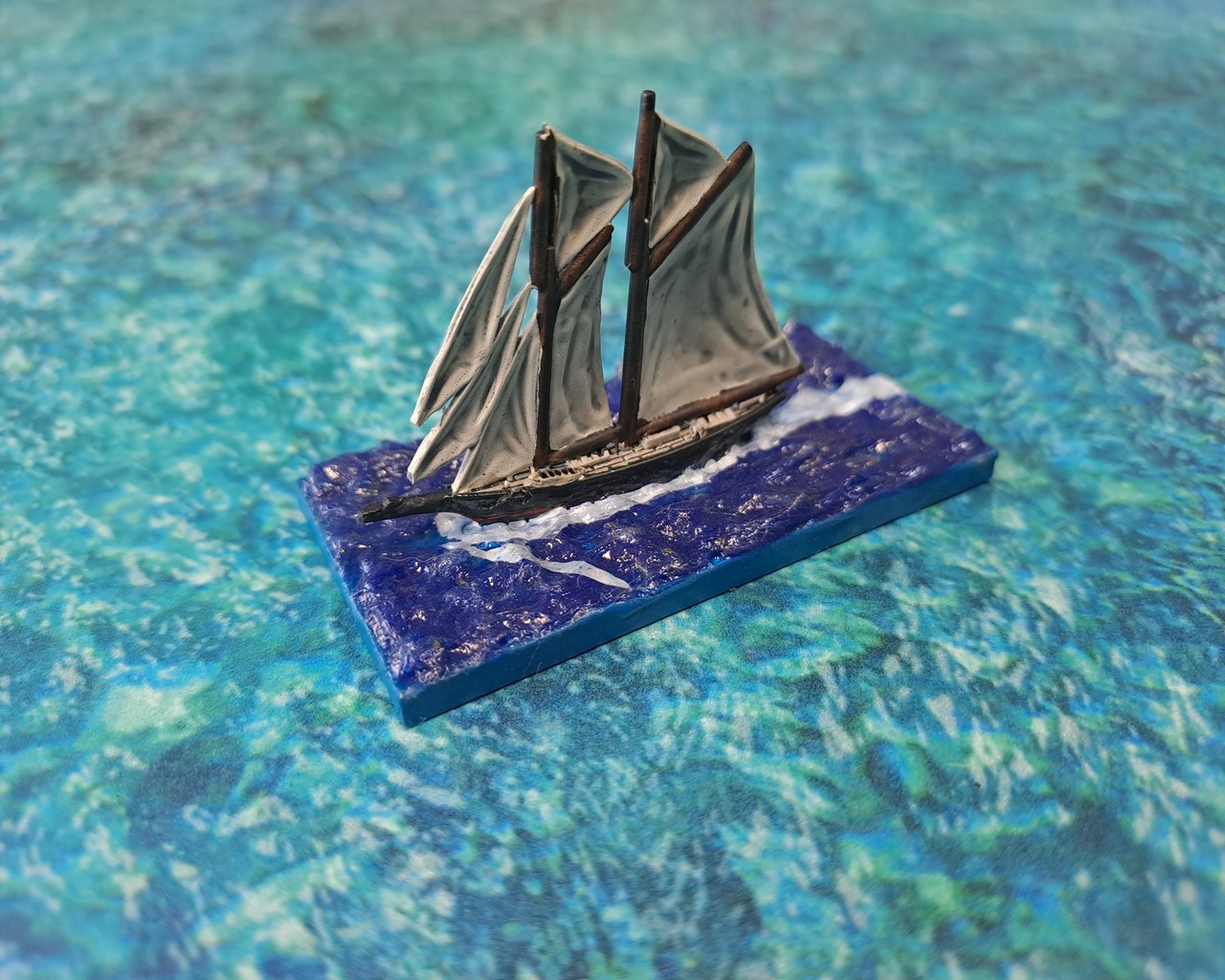
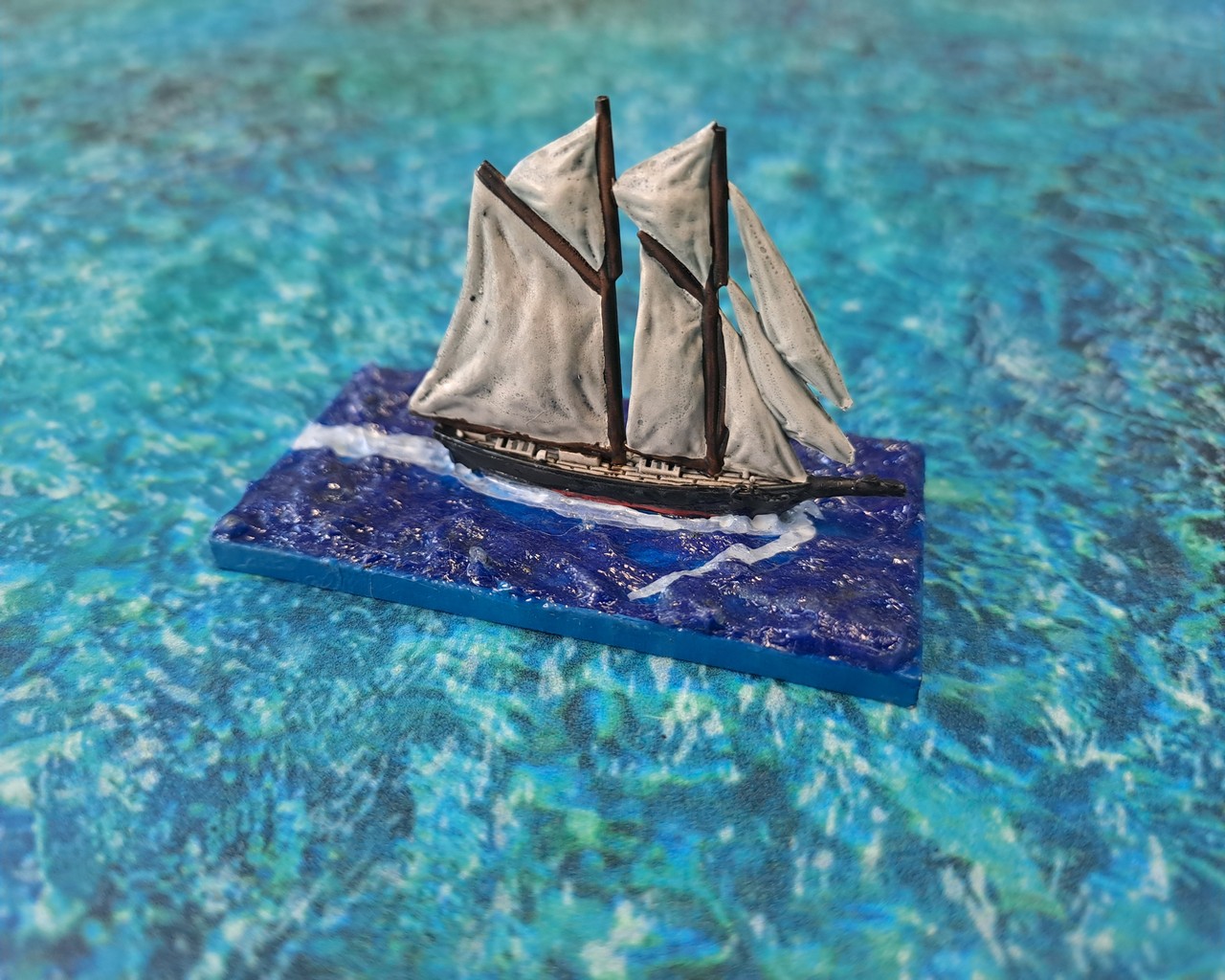
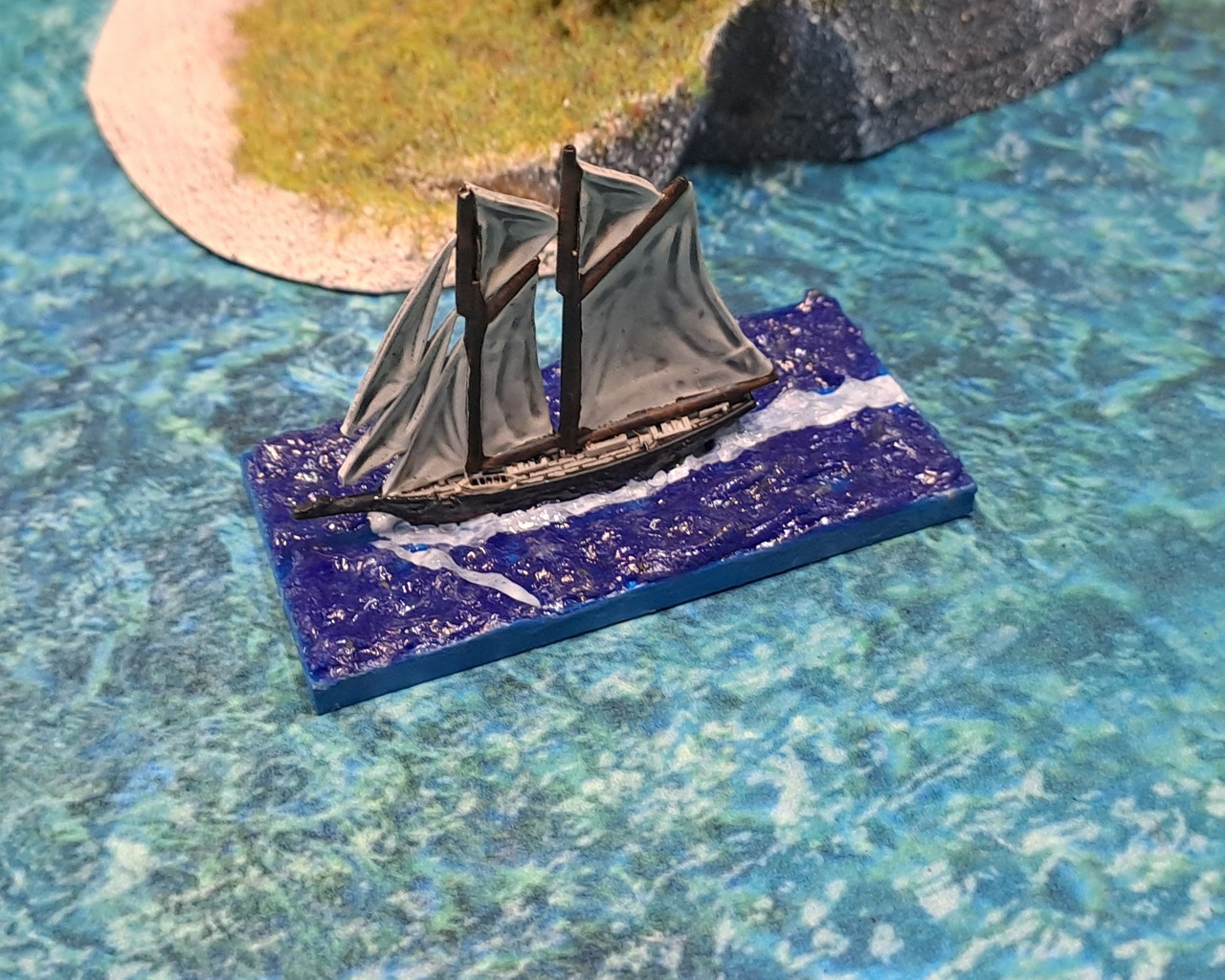
🇬🇧 Recently, I painted such a civilian vessel for Gods of War: Togo – it is a schooner launched after four months of construction on February 1, 1894 at the John F. James & Washington Tarr shipyard in Essex, Massachusetts. Originally it was used for fishing, the first catch recouped the cost of construction. The first captain was William Edward Morrissey, who named the vessel after the name of his daughter – Effie Maude Morrissey. After 30 years of service as a fishing vessel, in 1925 she was bought by Harold Bartlett and began her service in Arctic exploration. You can read more HEREand HERE– at the second link I found inspiration for painting. In the game itself, as far as I know, the unit is universal and can be used by any nation in the game.
🇵🇱 W ostatnim czasie pomalowałem taką cywilną jednostkę do Bogów Wojny: Togo – jest to statek typu szkuner zwodowany po czterech miesiącach budowy 1 lutego 1894 roku w stoczni John F. James & Washington Tarr w Essex, Massachusetts. Pierwotnie służył do połowu ryb, pierwszy połów zwrócił koszt budowy. Pierwszym kapitanem był William Edward Morrissey, który nadał jednostce nazwę od personaliów swojej córki – Effie Maude Morrissey. Po 30 latach służby jako jednostka do połowów, w 1925 wykupiona przeza Harolda Bartletta rozpoczęła służbę w eksploracji Arktyki. Więcej można przeczytać TUTAJi TUTAJ – pod drugim linkiem znalazłem inspirację do malowania. W samej grze z tego co wiem jednostka jest uniwersalna i może być wykorzystywana przez każdą występującą w grze nację.



































 tancreddebeauville
 Tancred’s Tabletop Tales