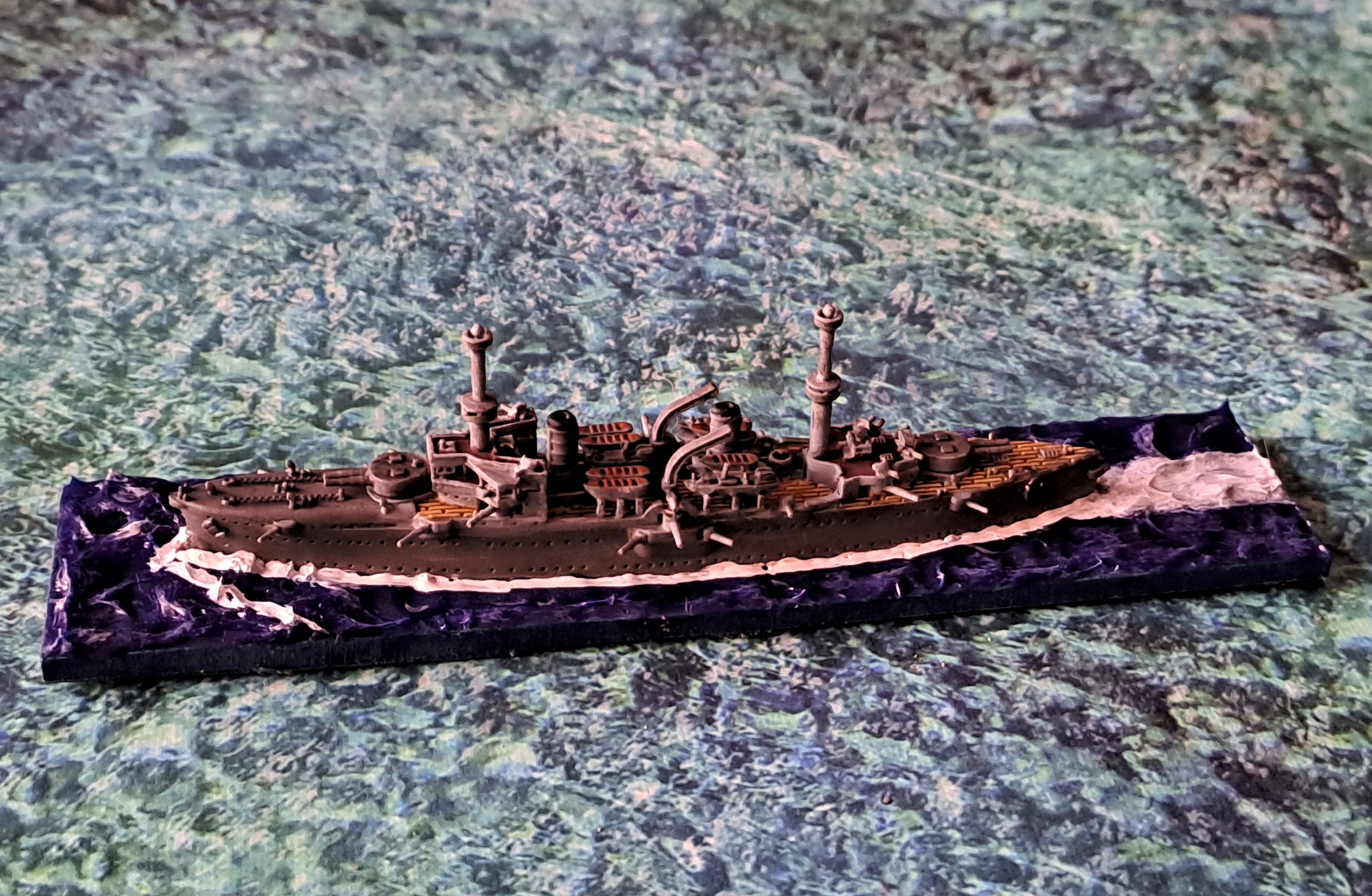
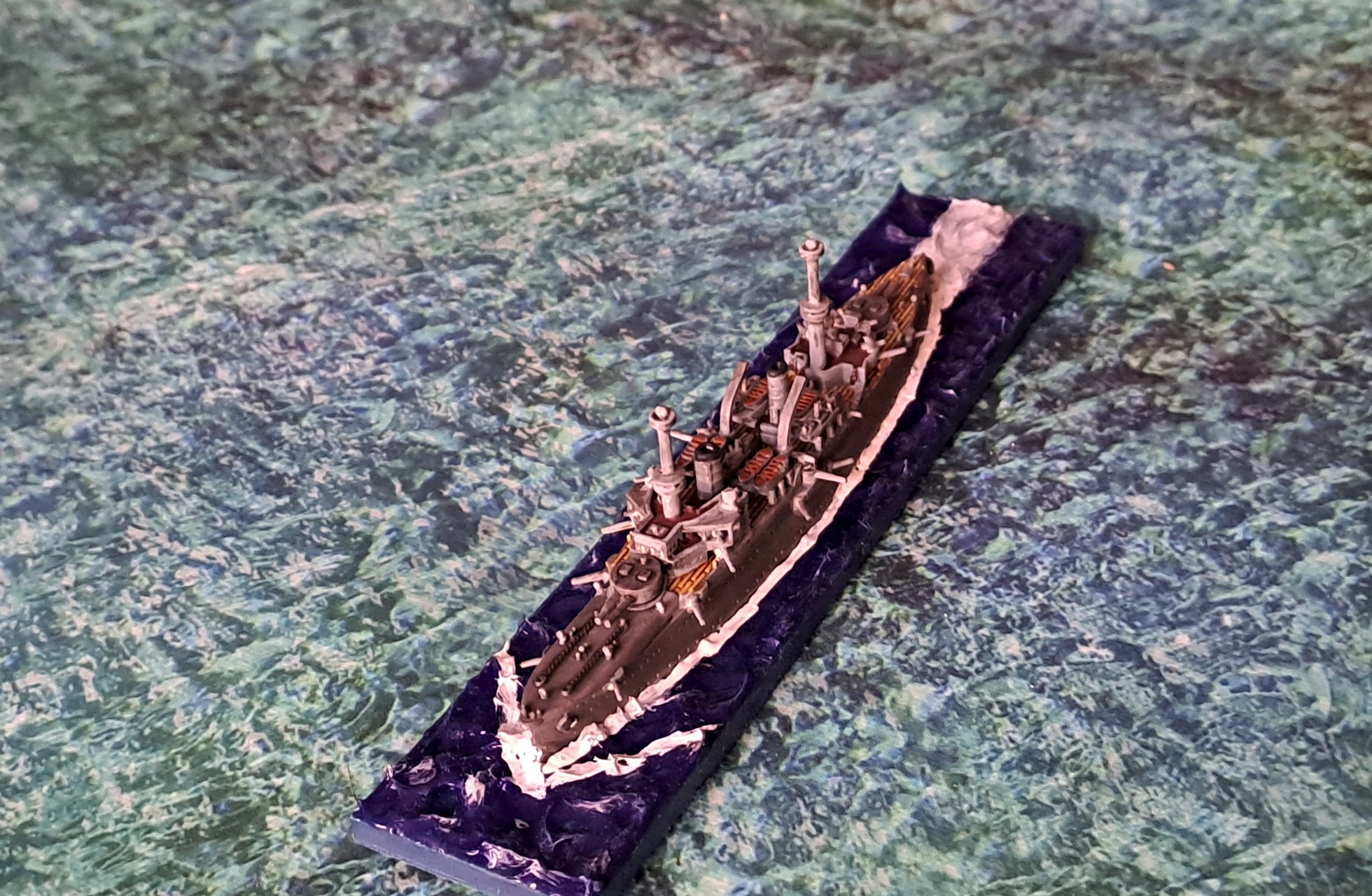
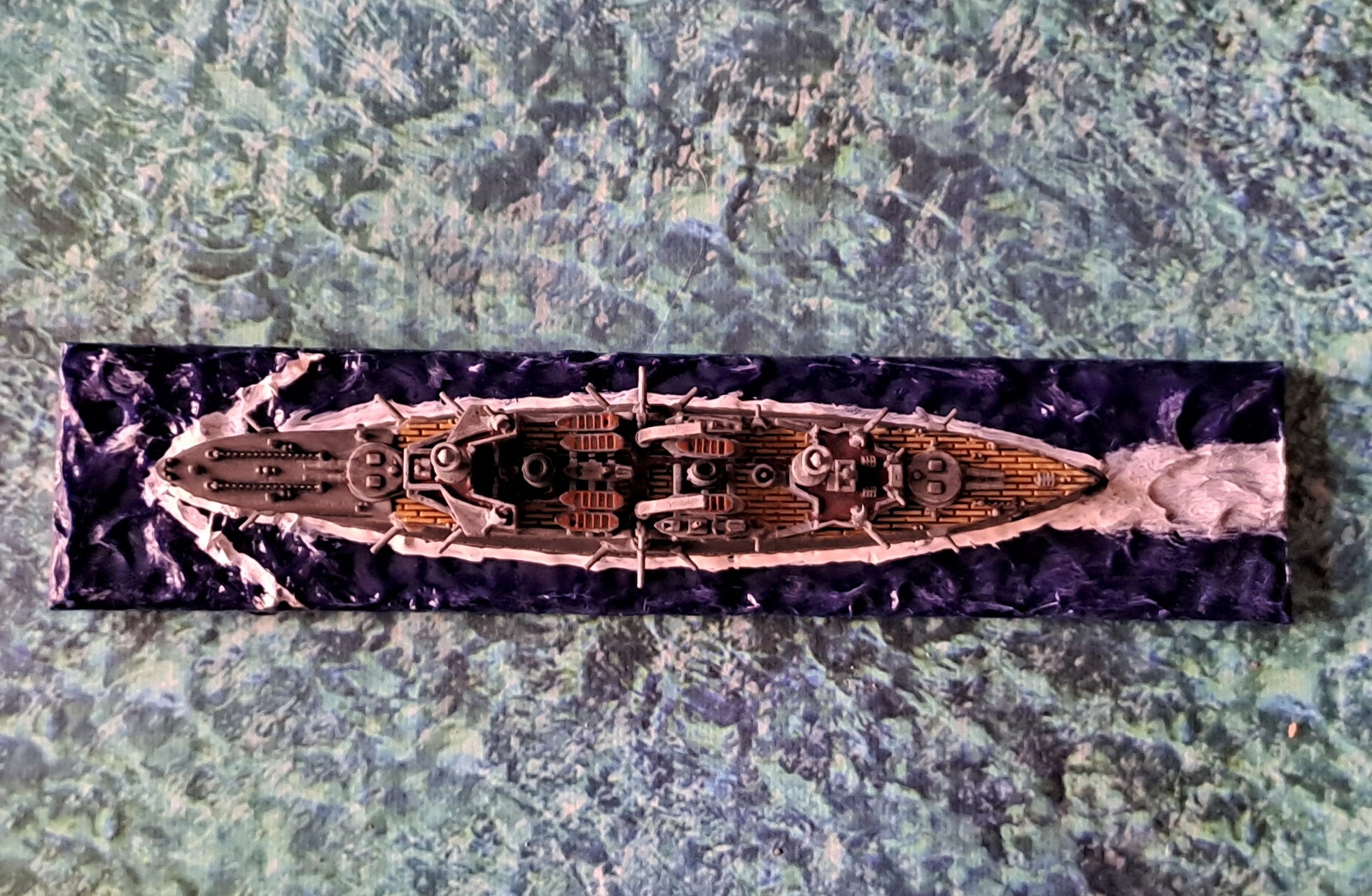
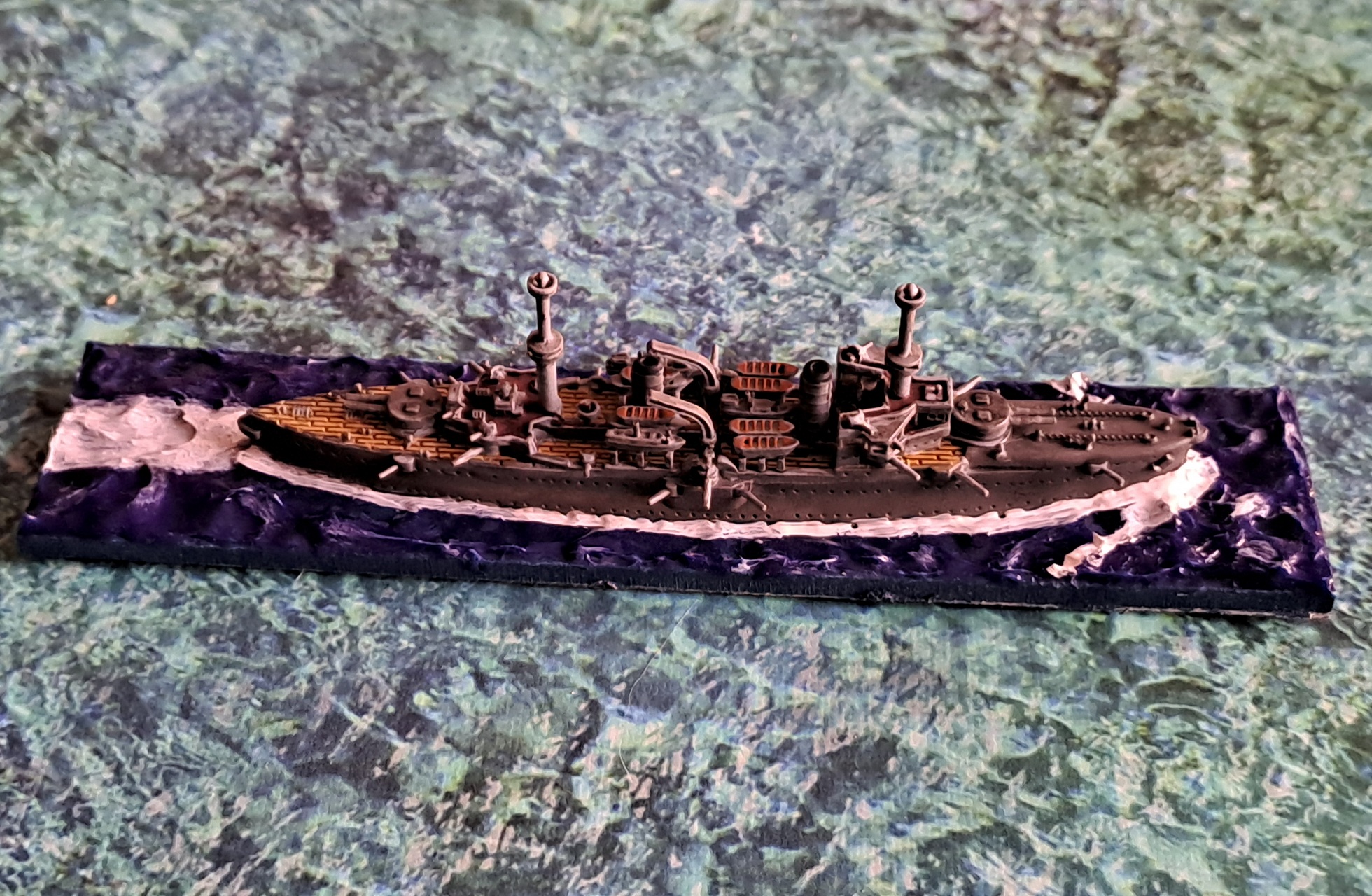
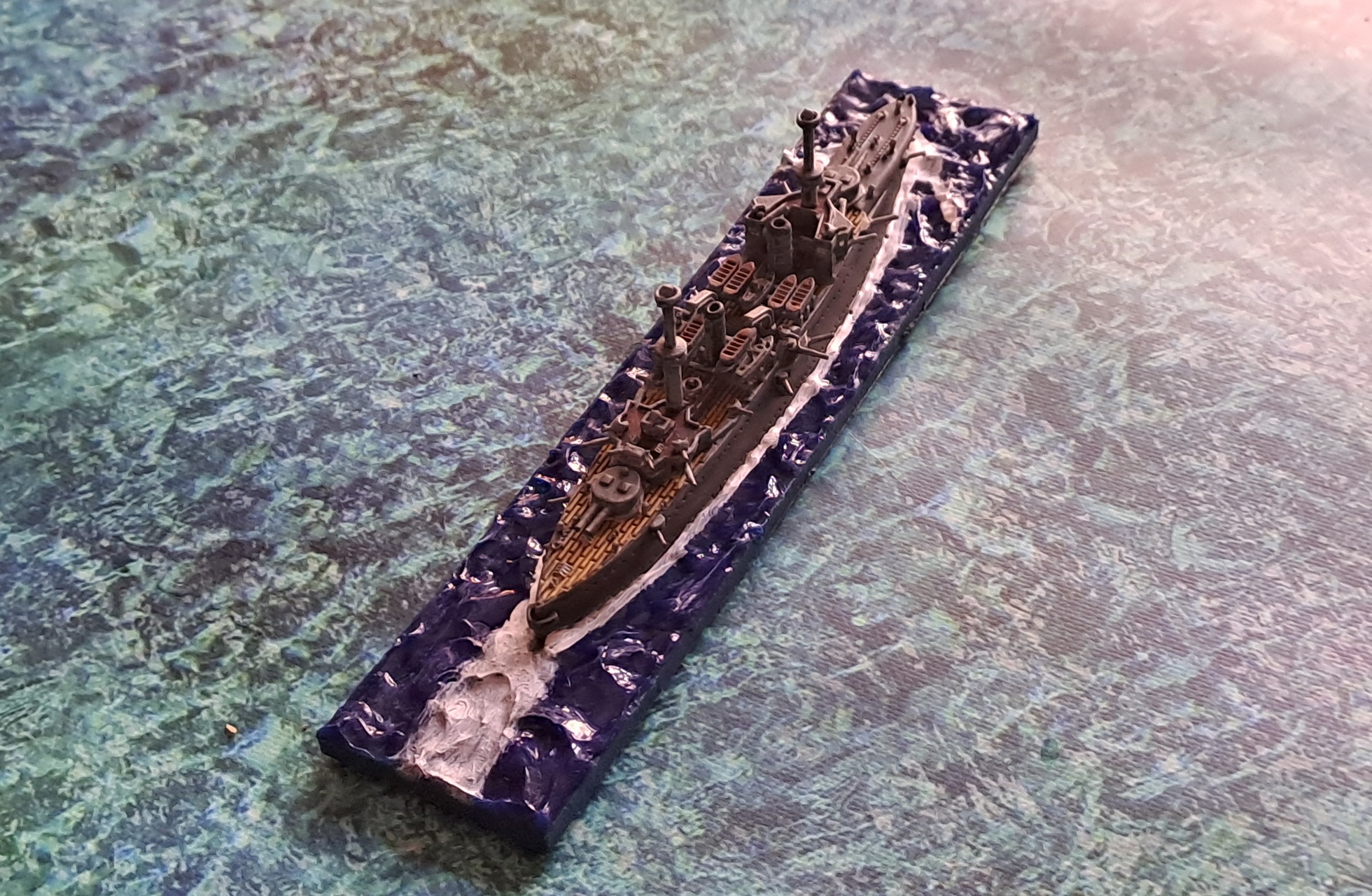
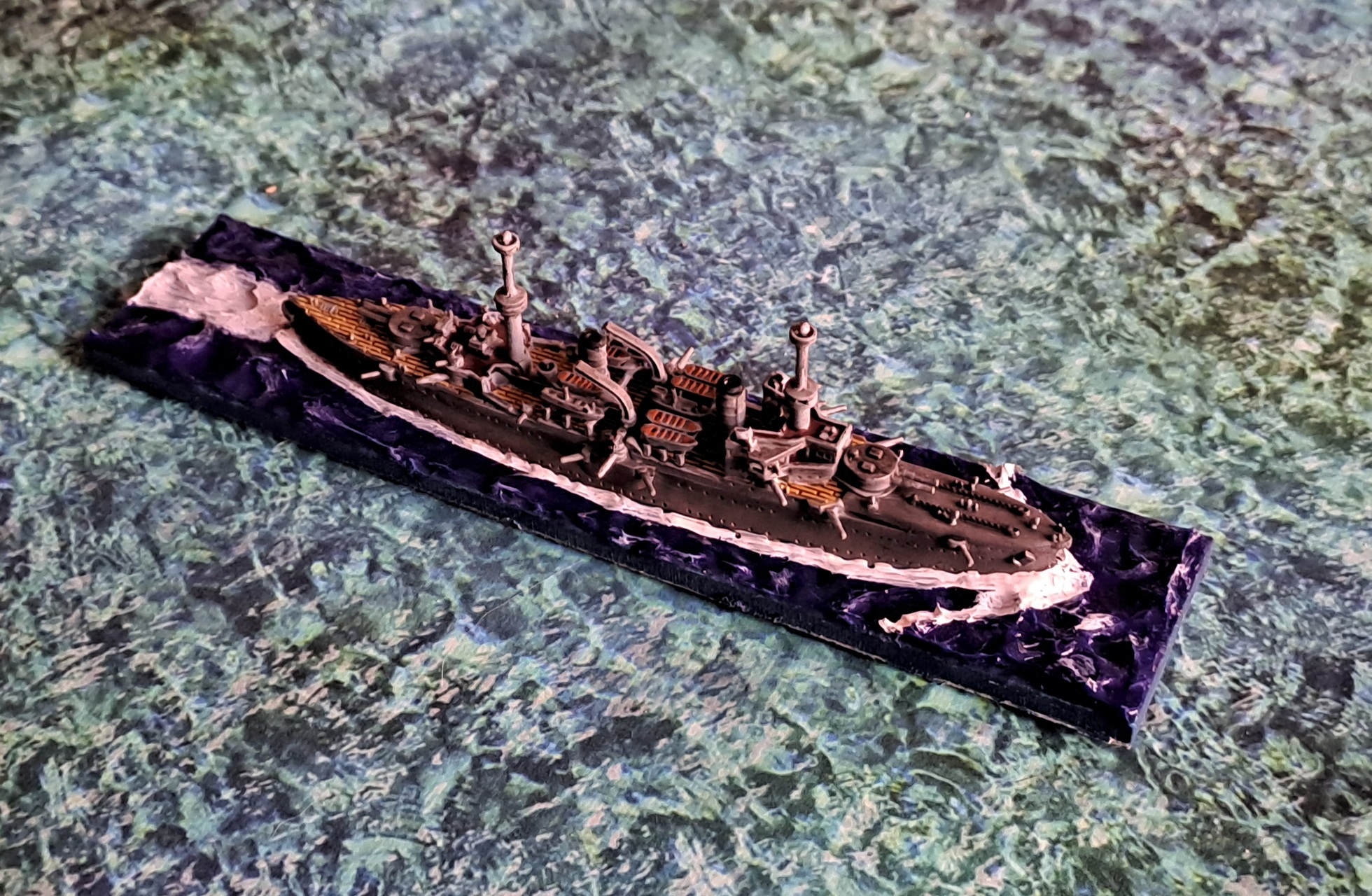
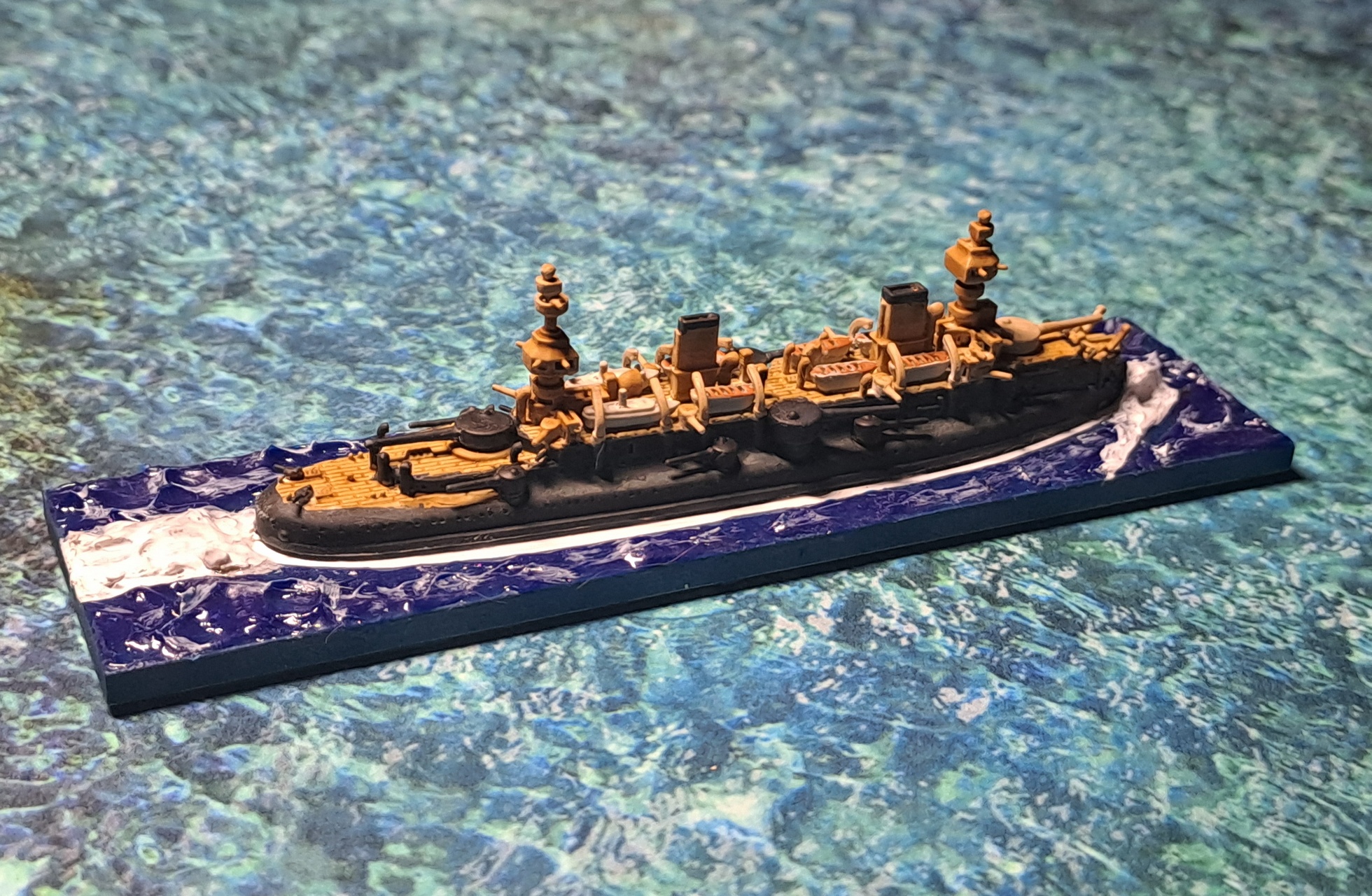
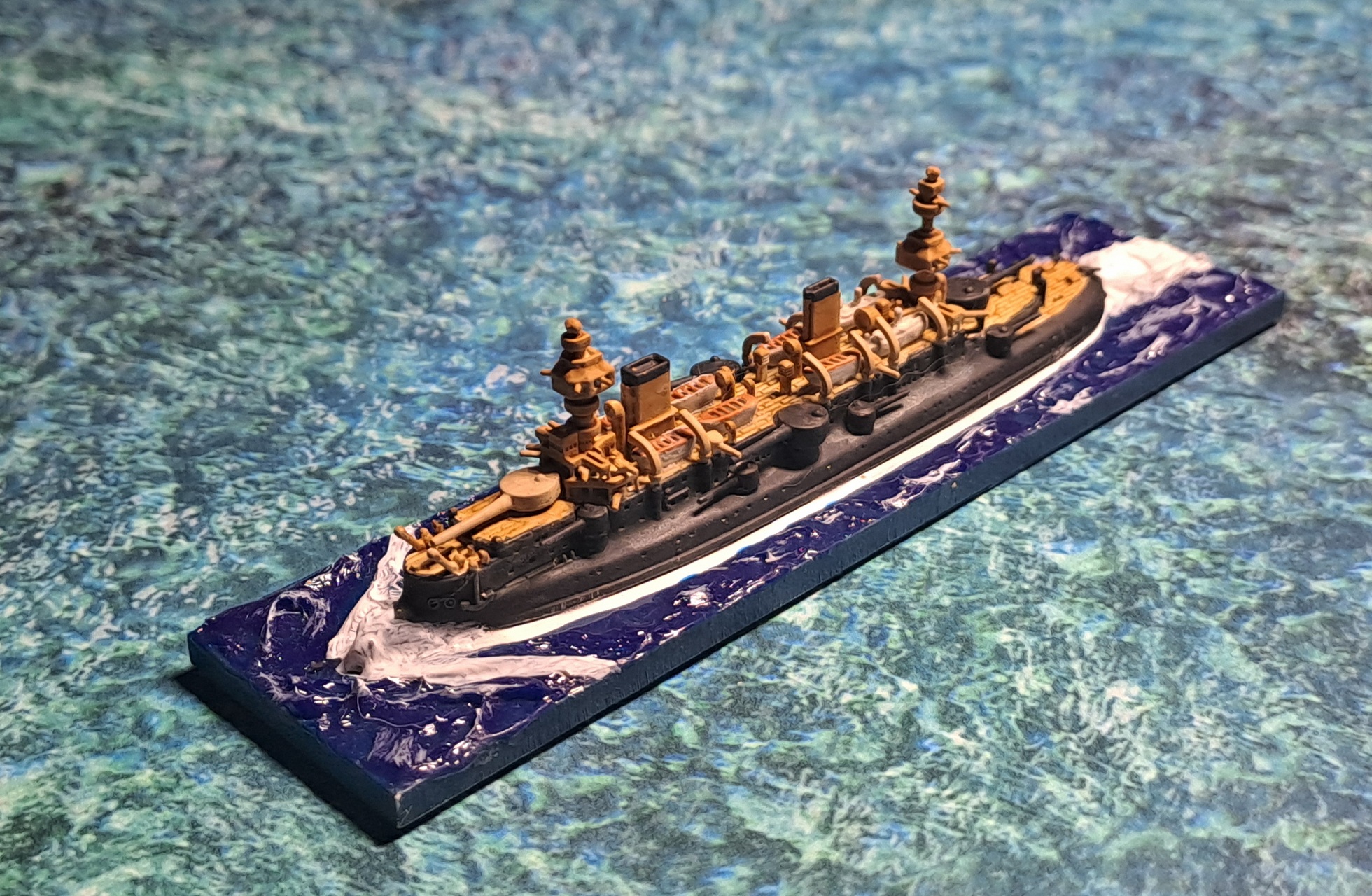
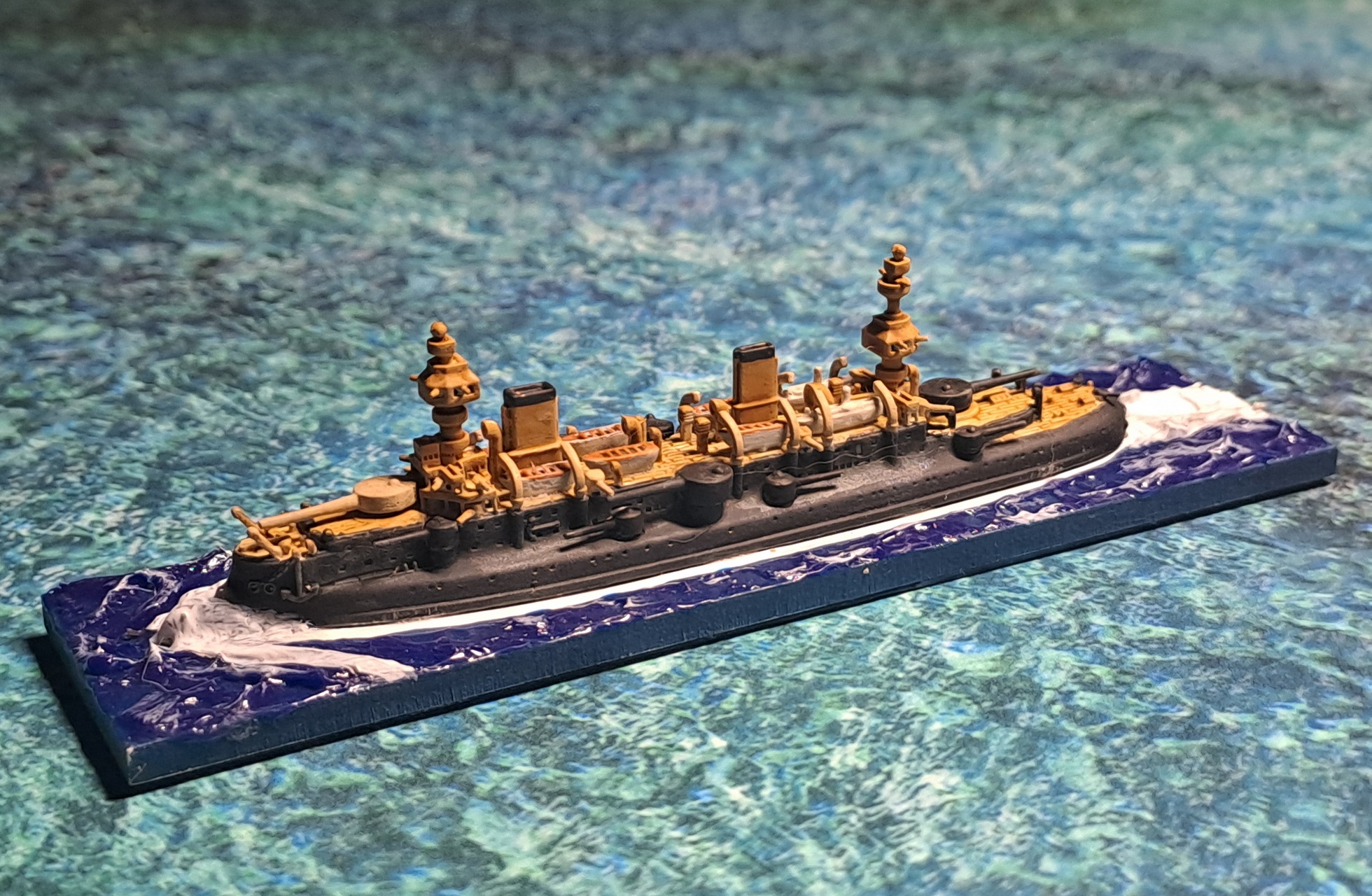
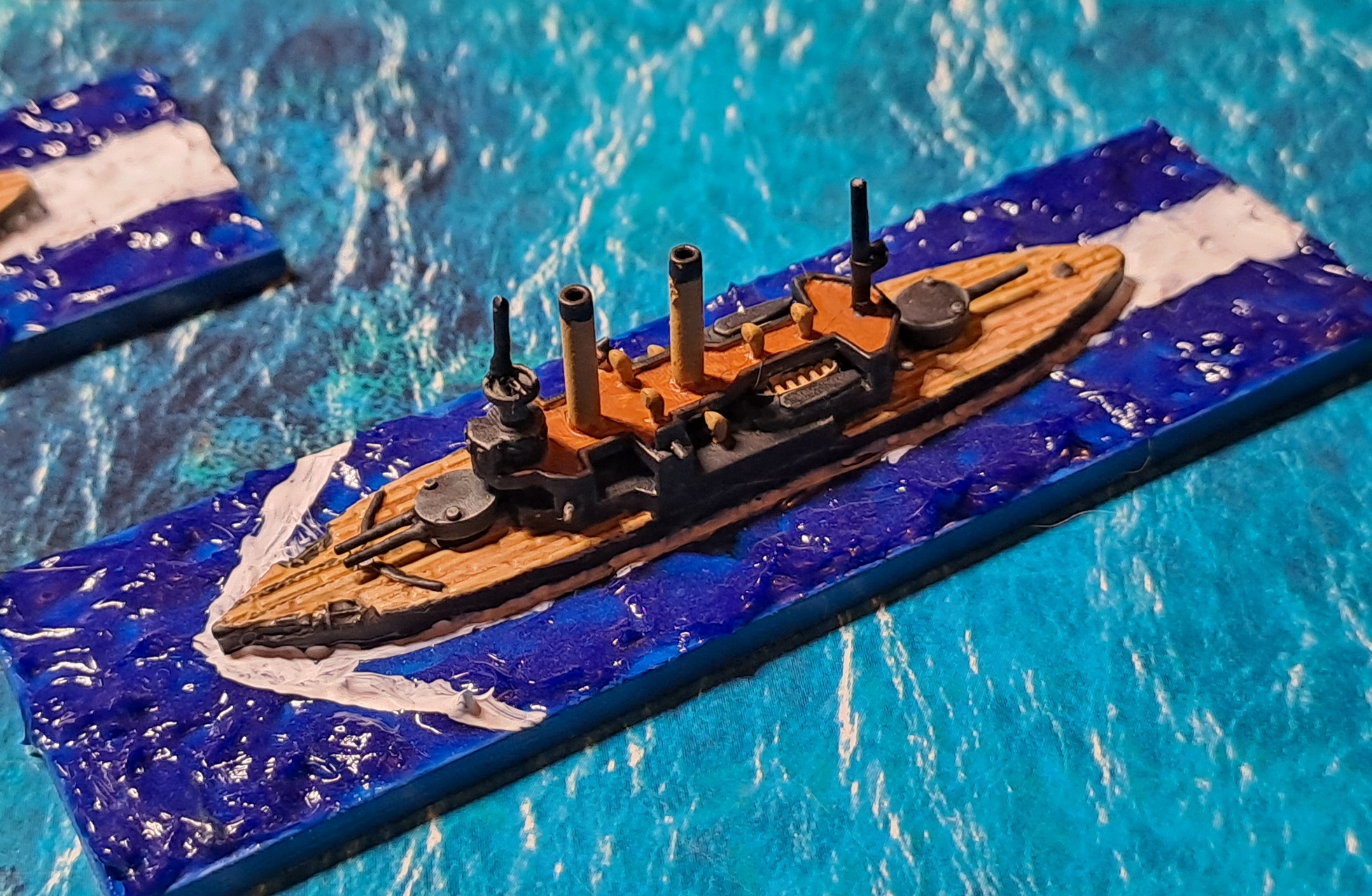
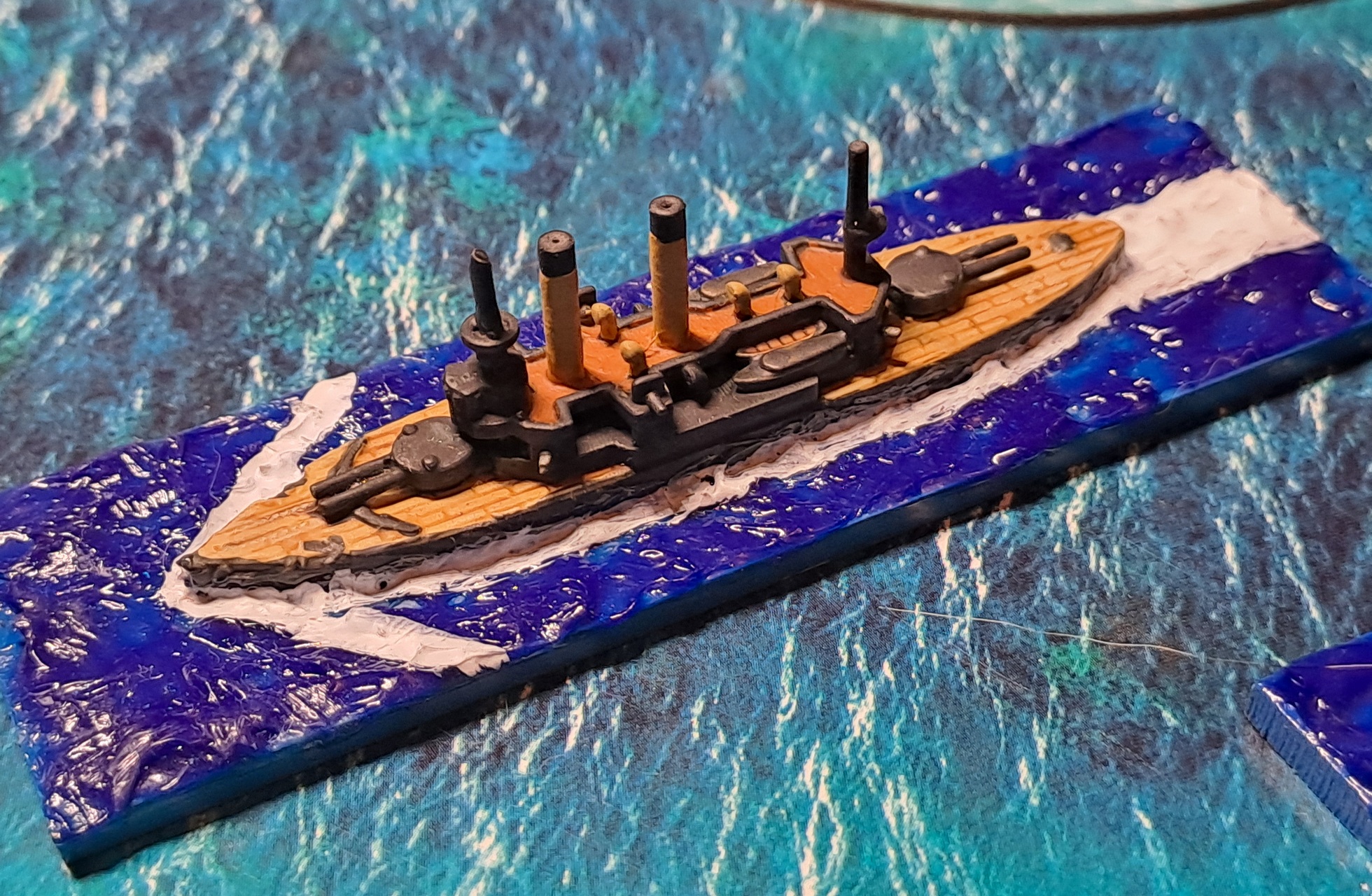
🇬🇧 Today I managed to finish SMS Fürst Bismarck — an armored cruiser for the Kaiserliche Marine, the fleet of the German Empire at the turn of the 19th and 20th centuries.
To complete the squadron and play the first game, I still need to finish the S90/G135 torpedo boat division and Roon. ⚓
SMS Fürst Bismarck was commissioned on 1 April 1900, on the birthday of Chancellor Otto von Bismarck, one of the architects of German unification “by blood and iron”. Interestingly, Bismarck was quite offended when the German Navy decommissioned the old corvette bearing his name. However, he was appeased when he was assured that the next great warship of the Kaiserliche Marine would be named after him. Unfortunately, the Iron Chancellor passed away before Fürst Bismarck was launched.
She was the first German armoured cruiser, an evolution of the Victoria Louise class. Many of the design features used in her construction were later adopted for subsequent German armoured cruisers.
The ship displaced nearly 10,700 tons, with engines capable of reaching almost 19 knots. Her primary armament included four 24 cm guns (in two turrets), twelve 15 cm guns, ten 8.8 cm guns, additionally machine guns and six torpedo tubes.
She had very thick armour, but her belt armour covered a relatively small area, a design approach that was beginning to be abandoned in favour of broader protection, based on lessons from the 1898 Spanish-American War and the 1894-1895 First Sino-Japanese War.
SMS Fürst Bismarck spent much of her career in the Far East, taking part in the suppression of the Boxer Rebellion. Before the First World War, she was converted into a training ship. By then, she was too outdated to have any real combat value and was ultimately disarmed, never taking part in the Great War.
She had a beautiful silhouette, with a distinctive tumblehome hull, and was well-armed for her time, although her relatively low speed was a drawback. Nevertheless, she will prove to be a valuable asset for any admirals commanding the Kaiserliche Marine.
* – description of the SMS Fürst Bismarck by GMBoardgames.
🇵🇱 Dziś udało mi się ukończyć SMS Fürst Bismarck – krążownik pancerny do Kaiserliche Marine — floty Cesarstwa Niemieckiego z przełomu XIX i XX wieku.
Do ukończenia eskadry i pierwszej gry pozostał jeszcze dywizjon torpedowców S90/G135 oraz Roon. ⚓
Krążownik pancerny SMS Fürst Bismarck został wcielony do służby 1 kwietnia 1900 roku, w rocznicę urodzin kanclerza Otto von Bismarcka, jednego z autorów zjednoczenia Niemiec („krwią i żelazem”). Co ciekawe Bismarck obraził się bardzo, kiedy niemiecka marynarka wycofała ze służby starą korwetę, która nosiła jego imię, ale dał się udobruchać, gdy przekonano go, że kolejny, wielki okręt Kaiserliche Marine będzie nosił jego nazwisko. Jednakże żelazny kanclerz zmarł zanim SMS Fürst Bismarck został zwodowany.
Okręt ten był pierwszym, niemieckim krążownikiem pancernym, rozwinięciem typu Victoria Louise. Wiele wykorzystanych w trakcie jego budowy rozwiązań było później powielanych w trakcie budowy kolejnych, niemieckich krążowników pancernych.
Wypierał prawie 10700 ton, a jego maszyny mogły go rozpędzić prawie do prędkości 19 węzłów. Główne uzbrojenie stanowiły cztery armaty kalibru 24 cm (w dwóch wieżach), dwanaście armat kalibru 15 cm i 10 armat kalibru 8.8 cm oraz dodatkowo karabiny maszynowe i sześć wyrzutni torped.
Okręt miał bardzo gruby pancerz, ale pas pancerny pokrywał dosyć małą powierzchnię, co było rozwiązaniem od czego zaczęto odchodzić w konstrukcji okrętów (np. bazując na doświadczeniach wojny 1898 roku, czy wcześniejszej japońsko – chińskiej).
SMS Fürst Bismarck spędził dużą część swojej służby na Dalekim Wschodzie, biorąc m.in. w tłumieniu powstania bokserów. Przed pierwszą wojną światową został przekształcony w okręt szkoleniowy. Zbyt przestarzały, aby mieć realną wartość bojową, został ostatecznie rozbrojony i nie wziął udział w wielkiej wojnie.
Okręt ten miał piękną sylwetkę, z charakterystycznym zawałem burtowym, a jak na swoją epokę był bardzo dobrze uzbrojony, choć jego słabszą stroną była stosunkowo mała prędkość. Będzie on jednak bardzo przydatnym okrętem dla wszystkich admirałów, dowodzących Kaiserliche Marine.
🇬🇧 Summary: – The ship was very enjoyable to paint; the cutters, lifeboats, and cranes proved especially straightforward to assemble. – A unique unit within its class, meaning only one such vessel can be fielded in the game. – A defining feature of the SMS Fürst Bismarck is its four heavy guns with solid penetration and range. These are complemented by a standard cruiser layout of medium-caliber artillery – six guns per side. The light artillery is also typical for its class (although ships like Rossija or Gromoboy can surpass it in this regard). Another standout feature of Bismarck is its six torpedoes – and the best kind at that, rated D4. – Its armor and displacement are quite respectable for a cruiser in the game; additionally, the ship is equipped with a ram. – The base cost is 460 points – a fair price for a vessel with solid heavy artillery and fairly strong armor. Since I’ve recently been playing mostly cruisers, it will undoubtedly always find a place in my German squadron. – All Gods of War asortiment is avaible on: https://bolter.pl/en_US/index.
🇵🇱 Podsumowanie: – Okręt bardzo przyjemny w malowaniu; kutry, szalupy oraz żurawie okazały się wyjątkowo przystępne w montażu. – Jednostka unikatowa w swojej klasie, dlatego w grze można wystawić tylko jeden taki okręt. – Cechą charakterystyczną SMS Fürst Bismarck są aż cztery ciężkie działa o dobrej sile przebicia i zasięgu. Uzupełnia je standardowa dla wielu krążowników liczba dział średniego kalibru – po sześć na każdą burtę. Lekka artyleria również utrzymana jest na typowym poziomie dla tej klasy (choć np. Rossija czy Gromoboj potrafią ją przewyższyć). Kolejną rzeczą która wyróżnia Bismarcka, to sześć torped – i to tych najlepszych, czyli D4. – Pancerz i wyporność są całkiem solidne jak na krążownik występujący w grze; dodatkowo okręt posiada taran. – Koszt bazowy wynosi 460 punktów – uczciwa cena za okręt posiadający porządną, ciężką artylerię i dość dobry pancerz. Ponieważ ostatnio gram głównie na krążownikach, bez wątpienia zawsze znajdzie miejsce w mojej niemieckiej eskadrze. – Cały asortyment do Bogów Wojny: Togo jest dostępny tutaj: https://bolter.pl/pl_PL/index.
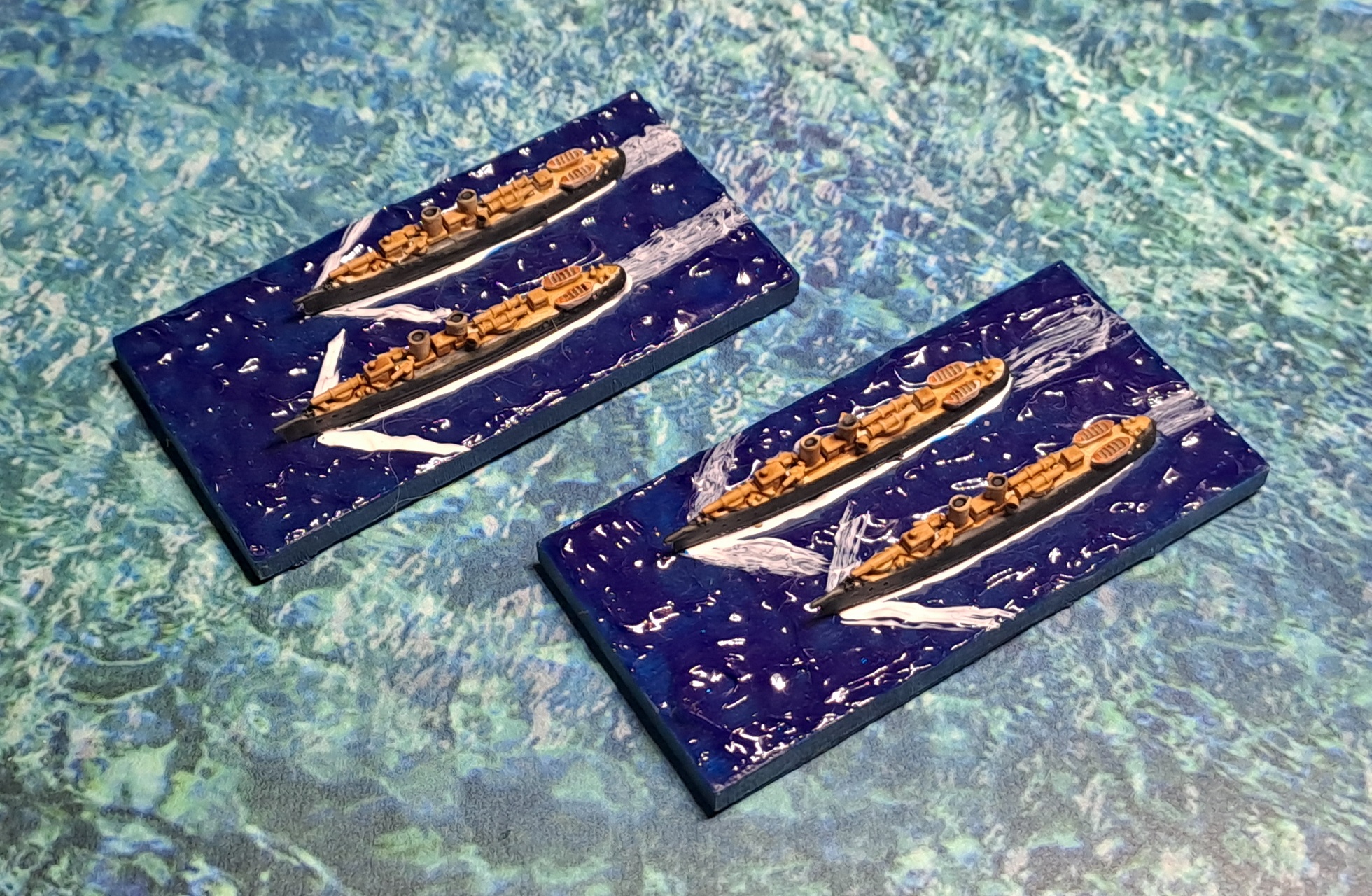
🇬🇧 In recent days, I managed to complete the Mistral-classtorpedo boat squadron. ⚓ With their launch, the French squadron is now fully ready to embark on its first battle. 🇫🇷🌊
Of course, this is just the beginning — it will definitely be reinforced with additional units in the future.
The Mistral-class consisted of six French torpedo boats, all launched in 1901 and built at the Normand, Graville, and Loire shipyards. Based on the earlier Cyclone design, these vessels were the first French torpedo boats to feature proper splinter armour. A 25 mm thick nickel-steel armoured box protected their engine rooms, while a 9 mm deck offered additional protection. The added armour increased their displacement by 18 tons, slightly reducing speed (to 26 kts).
Mistral-class torpedo boats measured 47 metres in length with a beam of 5.15 metres and a draught of 1.6 metres. They displaced 113 tons standard, with a crew of 30.
Their armament included two 15-inch torpedo tubes and two 47 mm QF guns, making them capable of both offensive torpedo strikes and self-defence against smaller vessels. All six vessels served actively during World War I, performing coastal patrols, escort duties, and fast attack missions. They were decommissioned and broken up between 1924 and 1928.
* – description of the Mistral class by GMBoardgames.
🇵🇱 W ostatnich dniach udało mi się ukończyć dywizjon torpedowców klasy Mistral. ⚓ Z ich wodowaniem francuska eskadra jest już w pełni gotowa, by ruszyć do swojego pierwszego boju. 🇫🇷🌊
Oczywiście to dopiero początek — w przyszłości na pewno zostanie wzmocniona kolejnymi jednostkami.
Typ Mistral obejmował sześć francuskich torpedowców, wszystkie zwodowane w 1901 roku w stoczniach Normand, Graville i Loire. Oparte na wcześniejszym typie Cyclone, były pierwszymi francuskimi torpedowcami wyposażonymi w prawdziwy pancerz przeciwodłamkowy. Niklowo-stalowe pudło pancerne o grubości 25 mm chroniło siłownię, a dodatkowa pokładówka 9 mm wzmacniała ochronę. Dodanie pancerza zwiększyło wyporność o 18 ton i nieco obniżyło prędkość (do 26 węzłów).
Torpedowce typu Mistral miały długość 47 metrów, szerokość 5,15 metra i zanurzenie 1,6 metra. Wyporność standardowa wynosiła 113 ton, a załoga liczyła 30 ludzi. Uzbrojenie obejmowało dwie wyrzutnie torped kal. 15 cali oraz dwa działa szybkostrzelne kal. 47 mm.
Wszystkie sześć jednostek aktywnie służyło podczas I wojny światowej, wykonując zadania patrolowe, eskortowe i ataki torpedowe. Zostały wycofane i złomowane w latach 1924–1928.
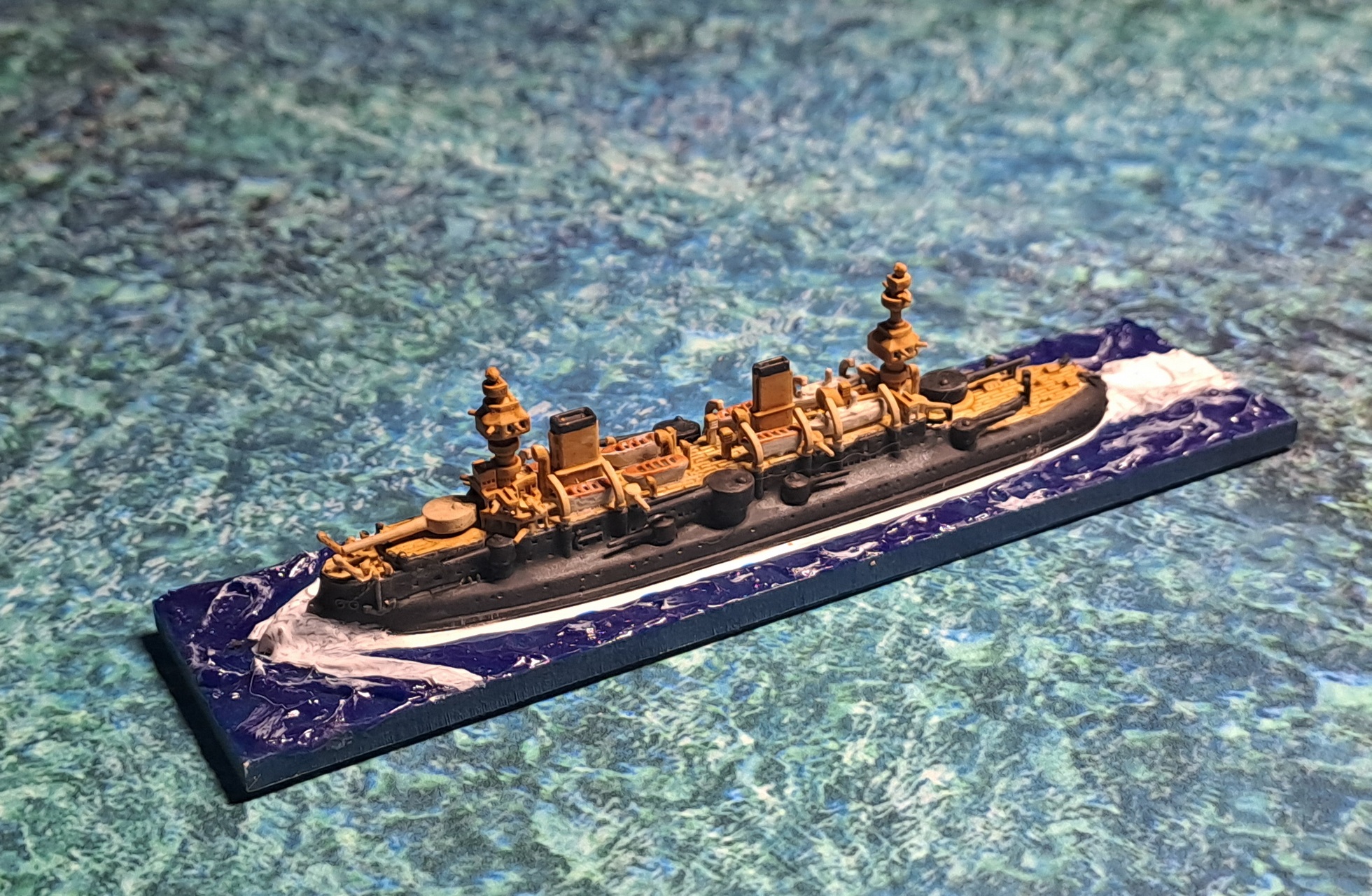
🇬🇧 In recent days, I managed to complete the D’Entrecasteaux cruiser. ⚓ The French squadron as a whole is getting closer to completion and setting out to the open sea. 🇫🇷🌊
In the mid-1890s two concepts of fleet development clashed within the French Navy. One – more traditional – supported the construction of small reconnaissance cruisers and large armoured cruisers. The other – associated with the Jeune École (Young School) – called for the creation of large, fast, armoured protected cruisers intended to serve as raiders or flotilla leaders in the colonies. The construction of D’Entrecasteaux was the result of the temporary dominance of the latter concept.
The ship was built by the Société Nouvelle des Forges et Chantiers de la Méditerranée and entered service in 1899 (five years after being launched). Her displacement was nearly 8,000 tons and her maximum speed was about 19 knots.
Her armament consisted of two 240 mm guns (no other French cruiser of that era carried such large guns), twelve 138 mm guns, twelve 47 mm guns, six 37 mm guns, and four torpedo tubes.
After entering service, she became the flagship of the French fleet stationed in Indochina. She took part in the suppression of the Boxer Rebellion and later served during the First World War. After the war, in 1927, she was sold to Poland, where she was first renamed the training hulk ORP Król Władysław IV, and later ORP Bałtyk. She remains the largest ship in the history of the Polish Navy.
* – description of the D’Entrecasteaux by GMBoardgames.
🇵🇱 W ostatnich dniach udało mi się ukończyć krążownik D’Entrecasteaux. ⚓ Eskadra francuska jako całość jest coraz bliższa ukończenia i wyruszenie na pełne morze. 🇫🇷🌊 W połowie lat 90. XIX wieku we francuskiej marynarce ścierały się dwie koncepcje rozwoju floty. Jedna – bardziej tradycyjna – opowiadała się za budową małych krążowników rozpoznawczych i dużych krążowników pancernych. Druga – związana ze szkołą „Jeune École” (Młoda Szkoła) – postulowała tworzenie dużych, szybkich, opancerzonych krążowników pancernopokładowych, które miały służyć jako rajdery bądź liderzy flotylli w koloniach. Budowa D’Entrecasteaux była wynikiem tymczasowej przewagi tej drugiej koncepcji.
Okręt zbudowała stocznia Société Nouvelle des Forges et Chantiers de la Méditerranée. Wszedł do służby w 1899 roku (pięć lat po wodowaniu). Jego wyporność wynosiła niemal 8000 ton, a prędkość maksymalna około 19 węzłów. Uzbrojenie składało się z dwóch dział kal. 240 mm (żaden inny francuski krążownik tej epoki nie miał tak dużych dział), 12 dział 138 mm, 12 dział 47 mm, 6 dział 37 mm oraz czterech wyrzutni torped.
Po wejściu do służby stał się okrętem flagowym francuskiej floty stacjonującej w Indochinach. Wziął udział w tłumieniu powstania bokserów, a następnie służył w czasie I wojny światowej. Po wojnie, w 1927 roku, został sprzedany Polsce, gdzie najpierw przemianowano go na hulk szkolny ORP „Król Władysław IV”, a później na ORP „Bałtyk”. Pozostaje największym okrętem w historii polskiej marynarki wojennej.
🇬🇧 Summary: – Just like the other French ships, the model is very enjoyable to paint. – However, it requires great caution when working with the lifeboat mounts — unfortunately, I wasn’t able to avoid damaging them. – A cruiser equipped with heavy artillery is something I can only envy as a commander of the Rossiyskiy Imperatorskiy Flot. On top of that, it has a standard amount of medium artillery. Without a doubt, it will be a reliable part of the French squadrons.
🇵🇱 Podsumowanie: – Tak jak pozostałe francuskie okręty, model jest bardzo przyjemny w malowaniu – Wymaga jednak dużej ostrożności przy pracy z mocowaniami szalup — niestety mnie nie udało się uniknąć ich uszkodzenia. – Krążownik wyposażony w ciężką artylerię to coś, czego jako dowódca Rossiyskiy Imperatorskiy Flot mogę tylko zazdrościć. Do tego posiada standardową ilość artylerii średniej. Bez wątpienia będzie pewnym elementem francuskich eskadr.
🇬🇧 In recent days, I managed to complete the beautiful first-class French battleship – Masséna. ⚓ The French squadron as a whole is getting closer to completion and setting out to the open sea. 🇫🇷🌊
Masséna, named in honour of Marshal of France André Masséna, was a battleship of the French Navy, built by Ateliers et Chantiers de la Loire shipyard and commissioned in 1898. She was a member of a group of five broadly similar battleships, along with Charles Martel, Jauréguiberry, Bouvet, and Carnot, that were ordered in response to the British Royal Sovereign class. Masséna displaced 11,735 tons and measured 112 metres in length. Her main battery consisted of two 305 mm (12 in) guns, and two 274 mm (10,8 in) guns in two single-gun turrets, one amidships on each side. Her secondary armament consisted of eight 138,6 mm guns, eight 100 mm (3.9 in) quick-firing guns, and twenty small calibre guns. In 1900, Masséna took part in very important manoeuvres, during which part of the French fleet simulated a blockade of Brest, followed by an attack on Cherbourg. In 1903, Masséna was transferred to the Mediterranean Squadron and placed in reserve. She was temporarily reactivated for the period of the great fleet manoeuvres. The ageing battleship was scuttled at the end of 1915 as a breakwater during the evacuation of the Entente forces from Gallipoli.
🇵🇱 W ostatnich dniach udało mi się ukończyć piękny francuski pancernik pierwszej klasy – Masséna. ⚓ Eskadra francuska jako całość jest coraz bliższa ukończenia i wyruszenie na pełne morze. 🇫🇷🌊 Masséna, nazwany na cześć marszałka Francji André Massény, był pancernikiem francuskiej marynarki, zbudowanym w stoczni Ateliers et Chantiers de la Loire i wcielonym do służby w 1898 roku. Należał do grupy pięciu pancerników o podobnej konstrukcji (obok Charles Martel, Jauréguiberry, Bouvet i Carnot), zamówionych w odpowiedzi na brytyjską klasę Royal Sovereign.
Masséna miał wyporność 11 735 ton i długość 112 metrów. Główne uzbrojenie składało się z dwóch dział kal. 305 mm (12 cali) oraz dwóch dział kal. 274 mm (10,8 cala) w pojedynczych wieżach, po jednej na każdej burcie, w części śródokręcia. Uzbrojenie dodatkowe obejmowało osiem dział kal. 138,6 mm, osiem dział kal. 100 mm oraz dwadzieścia dział małego kalibru.
W 1900 roku Masséna wziął udział w ważnych manewrach, podczas których część francuskiej floty symulowała blokadę Brestu, a następnie atak na Cherbourg. W 1903 roku przeniesiono go do Eskadry Śródziemnomorskiej i przeniesiono do rezerwy, choć na czas dużych manewrów został czasowo reaktywowany.
Podczas I wojny światowej, pod koniec 1915 roku, wysłużony pancernik został samozatopiony jako falochron podczas ewakuacji sił Ententy z Gallipoli.
🇬🇧 Summary: – The ship was a real pleasure to paint — working on it was highly satisfying. – The model consists of many components, which I painted in parallel with the hull, greatly simplifying the whole process. – Thanks to its affordable price and solid armament, including heavy artillery, it will surely become a frequent guest on the battlefields of Gods of War: Togo.
🇵🇱 Podsumowanie: – Okręt był bardzo przyjemny w malowaniu — praca nad nim sprawiała sporo satysfakcji. – Model składa się z wielu elementów, które malowałem równolegle z kadłubem, co zdecydowanie ułatwiło cały proces. – Dzięki swojej korzystnej cenie i solidnemu uzbrojeniu, w tym ciężkiej artylerii, z pewnością będzie częstym gościem na stołach bitewnych w Bogowie Wojny: Togo.
🇬🇧 In the past few days, I managed to finish the beautiful French third-class cruiser – Friant. ⚓ Just a few more ships to complete, and the French Marine Nationale will be ready to set sail for its first naval battles. 🇫🇷🌊
Three Friant-class cruisers were built in the first half of the 1890s. The naval manoeuvres conducted at that time clearly showed that France lacked modern cruisers that could serve as fleet scouts. This led to the development of the Friant-class cruisers. These units displaced just over 3,700 tons, measured just under 100 meters in length, and could reach a speed of about 18 knots, which was a decent value for the mid-1890s, though not groundbreaking. Their armament consisted of 6×164 mm guns, 4×100 mm guns, 8×47 mm guns, 3×37 mm guns, and two torpedo tubes. The three ships of this class were divided between the Northern Squadron and the Mediterranean Fleet, but in 1900, all three were sent to China to participate in suppressing the Boxer Rebellion. Two of these ships took part in World War I, albeit in a support role. These ships have a beautiful, classic French silhouette, with a characteristic strong tumblehome hull and a very prominent ram. Despite their relatively modest speed for their class, they were useful in fulfilling many auxiliary roles, including combat against destroyers, gunboats, controlling buoys, zones, and port bombardment. The six 164 mm guns made them a threat to any ship within their combat range.
🇵🇱 W ostatnich dniach udało mi się ukończyć piękny francuski krążownik trzeciej klasy – Friant. ⚓ Jeszcze kilka ukończonych jednostek i francuska Marine Nationale będzie gotowa, by wyruszyć na swoje pierwsze morskie zmagania. 🇫🇷🌊
Trzy krążowniki typu Friant zbudowano w pierwszej połowie lat 90. XIX wieku. Manewry morskie prowadzone w tym czasie jasno pokazały, że Francji brakuje nowoczesnych krążowników zdolnych pełnić rolę zwiadowców floty. To doprowadziło do powstania typu Friant.
Jednostki te miały wyporność nieco ponad 3700 ton, długość nieco poniżej 100 metrów i mogły osiągać prędkość około 18 węzłów – przyzwoitą w połowie lat 90., choć nie przełomową. Ich uzbrojenie obejmowało 6 dział kal. 164 mm, 4 działa kal. 100 mm, 8 dział kal. 47 mm, 3 działa kal. 37 mm oraz dwie wyrzutnie torped.
Trzy okręty tego typu rozdzielono pomiędzy Eskadrę Północną i Flotę Śródziemnomorską, ale w 1900 roku wszystkie wysłano do Chin, by uczestniczyły w tłumieniu powstania bokserów. Dwa z nich brały udział w I wojnie światowej, choć pełniły już rolę pomocniczą.
Te okręty mają piękną, klasyczną francuską sylwetkę, z charakterystycznym mocnym przewężeniem burt i wyraźnym taranem. Mimo stosunkowo skromnej prędkości jak na swoją klasę, były przydatne w wielu rolach pomocniczych: zwalczania niszczycieli, kanonierek, kontroli boi, stref, a także ostrzału portów. Sześć dział kal. 164 mm czyniło je groźnymi przeciwnikami dla każdego okrętu w ich zasięgu ognia.
🇬🇧 Summary: – I wrote about the Friant in my Marine Nationale summary before its debut at Fields of Glory — you can read about it in the blog post HERE. – Quoting from that post: it’s a third-class cruiser worth 155 points, equipped with a fairly large number of medium-caliber guns and solid armor. Another advantage is its ram, which makes it a dangerous opponent in close-range engagements. – The model itself was a real pleasure to paint, and the lifeboats were easy to place on the deck without any trouble. ⚓🎨
🇵🇱 Podsumowanie: – o Friancie napisałem w podsumowaniu Marine Nationale przed jej debiutem na Polach Chwały, możecie o nim przeczytać we wpisie na moim blogu TUTAJ. – przytaczając słowa z powyższego wpisu, jest to krążownik trzeciej klasy o koszcie 155 punktów. Dysponuje dość liczną artylerią średniego kalibru oraz solidnym pancerzem. Jego kolejnym atutem jest również taran, który czyni go groźnym przeciwnikiem w starciach na bliski dystans. – sam okręt malowało się bardzo przyjemnie, a szalupy ratunkowe nie sprawiały problemu z umieszczeniem ich na pokładzie. ⚓🎨
🇬🇧 In recent days, I managed to finish the Belem – another sailing ship that has survived to this day and now serves as a training vessel. As is often the case with models of this kind, painting and launching it was a pure pleasure and a moment of true relaxation. ⛵🎨
Belem is a French three-masted barque, launched in 1896. She displaces around 750 tons and measures 58 metres in length. Originally built as a cargo ship for the West Indies sugar trade, her sleek hull and full rig allowed her to carry significant cargo while remaining fast under sail (up to 12 knots).
Belem began her career transporting sugar and cocoa between the Caribbean and France. In 1901, while en route to the West Indies, she narrowly avoided disaster when the eruption of Mount Pelée destroyed the town of Saint-Pierre on Martinique; Belem was anchored safely in a nearby port and thus escaped the catastrophe.
In 1972 she was purchased for preservation and underwent extensive restoration, returning to her original glory as a sail training ship. Since then, she has participated in numerous sail training programs and maritime festivals, offering hands-on experience of classic sailing to generations of enthusiasts.
🇵🇱 W ostatnich dniach udało mi się ukończyć żaglowiec Belem – kolejną jednostkę, która przetrwała do naszych czasów i dziś pełni funkcję szkolnego żaglowca. Jak to zwykle bywa z tego typu modelami, jego malowanie i wodowanie było czystą przyjemnością i chwilą prawdziwego relaksu. ⛵🎨
Belem to francuski trójmasztowy bark, zwodowany w 1896 roku. Jego wyporność wynosi około 750 ton, a długość 58 metrów. Pierwotnie zbudowany jako statek towarowy do przewozu cukru z Indii Zachodnich, dzięki smukłemu kadłubowi i pełnemu ożaglowaniu mógł zabierać znaczny ładunek, zachowując przy tym dużą szybkość pod żaglami (do 12 węzłów).
Belem rozpoczął karierę, transportując cukier i kakao pomiędzy Karaibami a Francją. W 1901 roku, w drodze na Antyle, uniknął katastrofy – podczas erupcji wulkanu Mount Pelée, która zniszczyła miasto Saint-Pierre na Martynice, Belem stał bezpiecznie zakotwiczony w pobliskim porcie. W 1972 roku został zakupiony w celu zachowania i poddany gruntownej renowacji, przywracającej mu pierwotny wygląd żaglowca szkolnego. Od tego czasu uczestniczy w licznych programach szkolenia żeglarskiego i festiwalach morskich, dając kolejnym pokoleniom miłośników możliwość praktycznego doświadczenia klasycznego żeglowania.
Summary: – As with every sailing ship – I absolutely love painting them, from mighty galleons to more modern vessels like the Belem. ⛵ – It’s a civilian vessel worth 15 points, which reflects its in-game capabilities – nevertheless, it can be extremely useful in various scenarios, especially in missions such as island assaults or buoy control. – Its greatest strength lies in excellent maneuverability, and its small size allows it to easily hide behind the squadron’s larger warships. – You can read more about the game here 👉 Gods of War: Togo – Publisher’s Blog – The Belem model, like other ships, is available at the publisher’s store – Bolter.pl – Belem is a small yet remarkably versatile vessel that perfectly complements any fleet. Ideal for support, scouting, or transport missions – and a true centerpiece for any tabletop. A must-have for every naval enthusiast! 🌊
Podsumowanie: – Jak w przypadku każdego żaglowca – uwielbiam je malować, od potężnych galeonów po jednostki bardziej współczesne, takie jak Belem. ⛵ – To cywilna jednostka o wartości 15 punktów, co odpowiada jej możliwościom w grze – mimo to potrafi być niezwykle użyteczna w różnych scenariuszach, zwłaszcza w misjach takich jak desant na wyspę czy kontrola boi. – Jej największym atutem jest doskonała zwrotność, a niewielki rozmiar pozwala łatwo ukryć ją za potężniejszymi okrętami eskadry. – Więcej o samej grze przeczytacie tutaj 👉 Bogowie Wojny: Togo – Blog wydawcy – Model Belem, podobnie jak inne jednostki, dostępny jest w sklepie wydawcy gry – Bolter.pl – Belem to niewielka, lecz niezwykle wszechstronna jednostka, która doskonale uzupełnia każdą flotę. Idealna do zadań pomocniczych, zwiadowczych czy transportowych – a przy tym stanowi prawdziwą ozdobę stołu. Dla każdego miłośnika morskich klimatów to model obowiązkowy! 🌊
🇬🇧 Last Saturday, the authors of the fleet builder tool for Gods of War: Togo added the Marine Nationale, the French fleet. Its official debut will take place during this year’s Fields of Glory event in Niepołomice — and that’s already this coming weekend! Without waiting for the first ships to leave the shipyards, I decided to take a closer look at their profiles and describe them all, one by one, on my blog. I invite you to check out their short descriptions and unit cards. So let’s begin with the first one — the Republique-class battleship.
🇵🇱 W ostatnią sobotę w narzędziu do budowy flot do „Bogów Wojny: Togo” autorzy dodali Marine Nationale, czyli flotę francuską. Jej oficjalny debiut odbędzie się już podczas tegorocznych Pól Chwały w Niepołomicach — a to przecież nadchodzący weekend! Nie czekając na pierwsze okręty opuszczające stocznię, postanowiłem przyjrzeć się ich profilom i opisać je wszystkie, jeden po drugim na swoim blogu. Zapraszam do zapoznania się z ich krótkim opisem i kartami jednostek. A więc zacznijmy od pierwszego czyli pancernika Republique-class.
🇬🇧 Republique-class – a first-class ship with a cost of 895 points. This battleship is equipped with the standard number of heavy artillery guns and an extensive array of medium artillery. It features excellent armor and a solid hull. Although the range of its heavy artillery is not the greatest, it makes up for it with high penetration power. An additional advantage is its slightly higher speed compared to other ships of this class, as well as the presence of a ram.
🇵🇱 Republique-class – okręt pierwszej klasy o koszcie 895 punktów. To pancernik wyposażony w standardową liczbę dział ciężkiej artylerii oraz rozbudowaną artylerię średnią. Charakteryzuje się bardzo dobrym pancerzem i solidnym kadłubem. Choć zasięg ciężkiej artylerii nie należy do największych, nadrabia to wysoką siłą przebicia. Dodatkowym atutem jest nieco wyższa prędkość w porównaniu z innymi jednostkami tej klasy, a także obecność taranu.
🇬🇧 Liberté-class – a first-class battleship with a cost of 880 points. It is equipped with the standard number of heavy artillery guns and a somewhat more modest array of medium artillery. It boasts excellent armor and a solid hull. The range of its heavy artillery is similar to that of the Republique-class, while the medium artillery, though less numerous, stands out with its good range and firepower. An additional advantage is its slightly higher speed compared to other ships of this type, as well as the presence of a ram.
🇵🇱 Liberté-class – pancernik pierwszej klasy o koszcie 880 punktów. Wyposażony w standardową liczbę dział ciężkiej artylerii oraz nieco skromniejszą artylerię średnią. Dysponuje bardzo dobrym pancerzem i solidnym kadłubem. Zasięg ciężkiej artylerii jest zbliżony do jednostki klasy Republique, natomiast artyleria średnia, choć mniej liczna, wyróżnia się dobrym zasięgiem i siłą ognia. Dodatkowym atutem jest prędkość nieco wyższa niż u innych okrętów tego typu, a także obecność taranu.
🇬🇧 Suffren-class – a first-class battleship with a cost of 740 points. It is equipped with the standard number of heavy artillery guns and an exceptionally numerous array of medium artillery. Its armor and hull are solid, comparable to the standard of battleships across various fleets. The range of its heavy artillery is similar to the previously described units, while its speed is slightly lower than that of other battleships of this class. Additionally, the ship is fitted with a ram.
🇵🇱 Suffren-class – pancernik pierwszej klasy o koszcie 740 punktów. Wyposażony w standardową liczbę dział ciężkiej artylerii oraz wyjątkowo liczną artylerię średnią. Pancerz i kadłub są solidne, porównywalne ze standardem wśród okrętów liniowych różnych flot. Zasięg ciężkiej artylerii jest podobny do wcześniej opisanych jednostek, natomiast prędkość okrętu jest nieco niższa niż u innych pancerników tej klasy. Dodatkowo jednostka posiada taran.
🇬🇧 Massena-class – a first-class battleship with a cost of 620 points. Compared to other ships of this type, it carries fewer heavy artillery guns but is equipped with an exceptionally large array of medium artillery. Its armor and hull are solid, in line with the standard for battleships of this era. The range of its heavy artillery is similar to the previously described ships, though part of its medium-caliber artillery has a slightly shorter range. The ship’s speed is lower than that of most battleships in this class. It is also fitted with a ram. The Massena’s main advantages are its attractive cost and the very large number of medium artillery pieces.
🇵🇱 Massena-class – pancernik pierwszej klasy o koszcie 620 punktów. W porównaniu z innymi jednostkami tego typu dysponuje mniej liczną artylerią ciężką, ale za to wyjątkowo rozbudowaną artylerią średnią. Pancerz i kadłub są solidne, zgodne ze standardem dla pancerników tej epoki. Zasięg ciężkiej artylerii jest podobny do wcześniej opisanych okrętów, natomiast część dział średniego kalibru ma nieco krótszy zasięg. Prędkość jednostki jest niższa niż u większości pancerników tej klasy. Okręt wyposażono również w taran. Atutem Masseny pozostaje przede wszystkim atrakcyjna cena oraz bardzo liczna artyleria średnia.
🇬🇧 Jeanne d’Arc-class – a second-class cruiser with a cost of 310 points. Equipped with a very large array of medium-caliber artillery, it stands out with excellent speed and remarkable armor for a ship of this class in Gods of War: Togo. Its solid hull further enhances its combat value. This is a ship well worth having in your fleet — its cost makes it a great choice even for lower-point battles.
🇵🇱 Jeanne d’Arc-class – krążownik drugiej klasy o koszcie 310 punktów. Wyposażony w bardzo liczną artylerię średniego kalibru, wyróżnia się świetną prędkością oraz znakomitym pancerzem, jak na jednostkę tej klasy w systemie Bogowie Wojny: Togo. Solidny kadłub dodatkowo podnosi jego wartość bojową. To okręt, który zdecydowanie warto mieć w swojej flocie – jego cena sprawia, że świetnie sprawdzi się również w rozgrywkach na mniejsze punkty.
🇬🇧 D’Entrecasteaux-class – a second-class cruiser with a cost of 260 points. Equipped with relatively few heavy-caliber guns, which nonetheless surpass the armament of most cruisers from other nations. In addition, it carries a fairly numerous medium artillery and torpedo armament. Its armor and hull are in line with the standard for ships of this class in the game. The ship’s strengths also include a ram and torpedoes, which significantly increase its combat versatility.
🇵🇱 D’Entrecasteaux-class – krążownik drugiej klasy o koszcie 260 punktów. Wyposażony w stosunkowo nieliczną artylerię ciężkiego kalibru, która jednak przewyższa uzbrojenie większości krążowników innych nacji. Do tego dochodzi całkiem liczna artyleria średnia oraz uzbrojenie torpedowe. Pancerz i kadłub odpowiadają standardowi dla jednostek tej klasy w grze. Atutami okrętu są także taran i torpedy, które zwiększają jego wszechstronność bojową.
🇬🇧 Friant-class – a third-class cruiser with a cost of 155 points. It is equipped with a fairly numerous medium-caliber artillery and solid armor. Another advantage is its ram, which makes it a dangerous opponent in close-range engagements.
🇵🇱 Friant-class – krążownik trzeciej klasy o koszcie 155 punktów. Dysponuje dość liczną artylerią średniego kalibru oraz solidnym pancerzem. Jego kolejnym atutem jest również taran, który czyni go groźnym przeciwnikiem w starciach na bliski dystans.
🇬🇧 D’Iberville-class – a fourth-class torped cruiser with a cost of 90 points. This is an inexpensive torpedo vessel, equipped with a fairly large number of torpedo launchers and surprisingly solid armor for a ship of this class. An interesting feature is the single medium-caliber gun mounted on the bow. An additional advantage is the presence of a ram, which is rarely found among ships of this category.
🇵🇱 D’Iberville-class – krążownik torpedowy czwartej klasy o koszcie 90 punktów. To niedroga jednostka torpedowa, wyposażona w dość liczne wyrzutnie torped oraz całkiem solidny pancerz, jak na okręt tej klasy. Ciekawostką jest pojedyncze działo średniego kalibru zamontowane na dziobie. Dodatkowym atutem jest taran, rzadko spotykany wśród jednostek tej kategorii.
🇬🇧 Framee-class – fourth-class destroyers with a cost of 125 points. A half-squadron of destroyers equipped with a standard number of torpedoes for vessels of this category, as well as a fairly large complement of light-caliber artillery. This is a fast and flexible formation, perfectly suited for escort and maneuvering operations.
🇵🇱 Framee-class – niszczyciele czwartej klasy o koszcie 125 punktów. Pół dywizjonu niszczycieli, wyposażonych w standardową liczbę torped dla jednostek tej kategorii oraz dość liczną artylerię lekkiego kalibru. To szybka i elastyczna formacja, doskonale sprawdzająca się w działaniach osłonowych i manewrowych.
🇬🇧 Mistral-class – fourth-class torpedo boats with a cost of 115 points. A half-squadron of torpedo boats equipped with numerous torpedo launchers for vessels of this category, along with better-than-standard armor. Their artillery armament is more modest, limited to a small number of light-caliber guns.
🇵🇱 Mistral-class – torpedowce czwartej klasy o koszcie 115 punktów. Pół dywizjonu torpedowców wyposażonych w liczne wyrzutnie torped, jak na jednostki tej kategorii, a także lepszy niż standardowy pancerz. Uzbrojenie artyleryjskie jest skromniejsze i ogranicza się do niewielkiej liczby dział lekkiego kalibru.
🇬🇧 Belem – a fourth-class sailing ship with a cost of 15 points. A charming vessel that serves primarily auxiliary roles in the game: it can transport landing troops or carry out non-combat tasks. While it cannot match the power of mighty ships of the line, it adds atmosphere and variety to the fleet.
🇵🇱 Belem – żaglowiec czwartej klasy o koszcie 15 punktów. Urokliwa jednostka, która w grze pełni głównie funkcje pomocnicze: może transportować desant żołnierzy lub realizować zadania niebojowe. Choć nie dorównuje potężnym okrętom liniowym, dodaje flocie klimatu i różnorodności.
🇬🇧 Of course, all the nations available in the game, along with their ships, can be viewed at the link below, which leads to the fleet builder tool: 👉 gmboardgames.com/togo/ab/index.php
🇵🇱 Oczywiście wszystkie dostępne w grze nacje, a wraz z nimi ich okręty, można obejrzeć pod poniższym linkiem prowadzącym do narzędzia do budowy floty: 👉 gmboardgames.com/togo/ab/index.php
🇬🇧 Summary: – The first ships of the French fleet look very promising and are tempting enough to make one want to start an adventure with the Marine Nationale. – The many battleships released at the start are quite diverse, giving players plenty of options — from heavily armored giants to lighter, more affordable vessels. – The situation is less favorable with second-class cruisers: while decent, the choice is very limited. Here, patience will be required until more ships of this class are released. – Third-class ships are represented by the excellent Friant-class cruiser. – The last category, fourth-class ships, includes as many as four units, one of which is a transport. In this case, the selection is solid right from the start. – In total, there are ten warships and one transport available — a strong lineup for a debut! Well done, GM Boardgames! – French ships are already available from the publisher’s store, the Wrocław-based Bolter club, at this address: https://bolter.pl/en_US/c/French-Navy/2037 – Their official debut will take place during Fields of Glory in Niepołomice – an event that every year attracts history and reenactment enthusiasts from all over Poland. – You can find more details about the event here 👉 polachwaly.pl
🇵🇱 Podsumowanie: – pierwsze jednostki do floty francuskiej wyglądają ciekawie i kuszą by rozpocząć swoją przygodę z Marine Nationale. – Liczne wypuszczone na starcie pancerniki są dość różnorodne, że jest w czym wybierać. Zaczynając od potężnie opancerzonych okrętów, przez te lżej opancerzone i tańsze punktowo. – Gorzej z krążownikami drugiej klasy, które mimo tego, że przyzwoite, są bardzo nieliczne w wyborze, tu pozostaje uzbroić się w cierpliwość i czekać na kolejne okręty tej klasy. – Okręty trzeciej klasy są reprezentowane przez świetny okręt klasy Friant. – Ostatnią klasę okrętów reprezentują aż cztery jednostki w tym jedna transportowa, tu na starcie nie ma co narzekać na wybór. – Łącznie do wyboru jest dziesięć okrętów i jeden transportowiec, nieźle jak na początek, tak trzymać GM Boardgames! – Okręty francuskie są już dostępne na sklepie wydawcy czyli wrocławskiego klubu Bolter pod tym adresem: https://bolter.pl/pl/c/Flota-Francuska/2037 – Ich oficjalny debiut będzie miał miejsce już podczas Pól Chwały w Niepołomicach – wydarzenia, które co roku przyciąga miłośników historii i rekonstrukcji z całej Polski. – Szczegóły o samym wydarzeniu znajdziecie tutaj 👉 polachwaly.pl
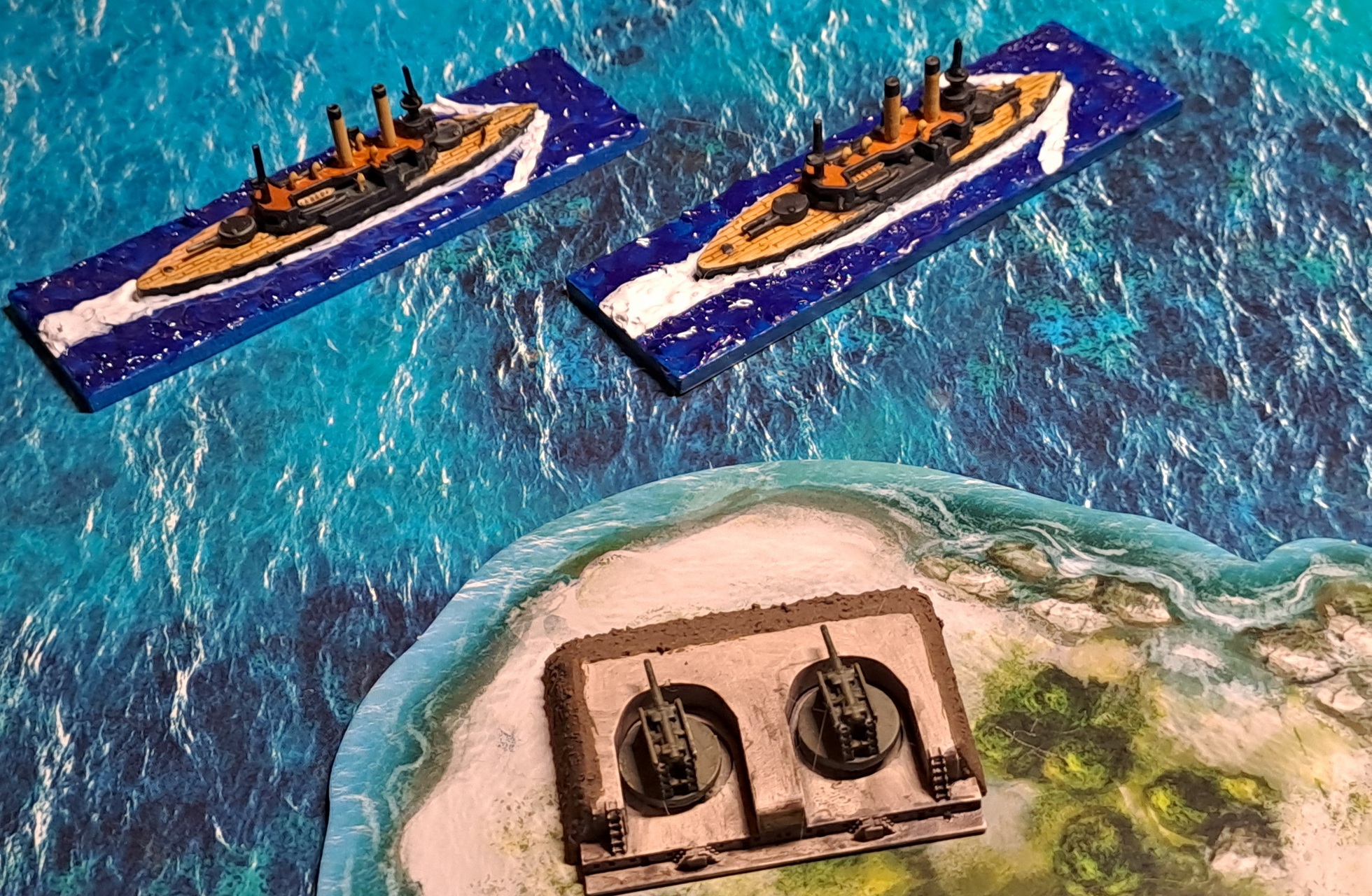
🇬🇧 In the past few days, I managed to finish the coastal defense battleship Admiral Apraksin. It can be built from the same kit as Admiral Ushakov – the only difference between the two ships lies in the aft main turret.
The Admiral Ushakov class were coastal defense battleships built for the Imperial Russian Navy during the 1890s to counter armored ships of the Swedish Navy. All three ships were stationed in the Baltic Sea when the Russo-Japanese war began and sailed with the Baltic Fleet around the Cape of Good Hope to the Pacific.
Despite her age, Admiral Ushakov will be a valuable ship in the player’s fleet. It is a good idea to keep it away from enemy battleships, although it may cause trouble for them, but it can handle most of the cruisers, as it has stronger armor and weapons.
The ship can be configured in two ways, as Admiral Ushakov and Sieniawin – with a stern turret that had two cannons, or Admiral Apraksin, with a stern turret that had one cannon.
* – description of the Admiral Apraskin&Ushakov by GMBoardgames.
🇵🇱 W ostatnich dniach udało mi się skończyć pancernik obrony wybrzeża – Admirała Apraskina, którego można zbudować z tego samego zestawu z którego jest Admirał Ushakow, oba okręty różnią się rufową wieżą główną.
Admirał Uszakow to typ pancerników obrony wybrzeża, zbudowanych w latach 90-tych XIX wieku. Ich celem było zwalczanie szwedzkich okrętów pancernych na Bałtyku.Wszystkie trzy okręty tego typu zostały wcielone w skład II Eskadry Pacyfiku i wzięły udział w bitwie pod Cuszimą.
Mimo swojego wieku Admirał Uszakow będzie wartościowym dodatkiem do floty gracza. Bardzo silnie uzbrojony, jak na swoją wielkość, z uwagi na silne uzbrojenie będzie bardzo dobrze spisywał się w walce z krążownikami, choć wodpowiednich warunkach może też ukąsić wrogie pancerniki.
Okręt można skonfigurować na dwa sposoby, jako Admirała Uszakowa i Sieniawina – z rufową wieżą, która miała dwie armaty, lub Admirała Apraksina, z rufową wieżą, która miała jedną armatę.
* – opis Admirała Apraskina&Ushakowa wg GMBoardgames.
Admiral ApraksinAdmiral Ushakov
Summary: – As I mentioned earlier, three ships of this class were built: Admiral Apraksin, Admiral Ushakov, and Admiral Senyavin – all named after distinguished commanders of the Imperial Russian Navy. – The main advantage of these vessels is, above all, their cost: 230 points for Admiral Apraksin, or 250 points for Admiral Ushakov and Admiral Senyavin. For this price, we get very solid armor (by the standards of Russian second-class ships), heavy main artillery, and a fairly numerous complement of medium and light guns. – The drawbacks, however, include low speed and poor seakeeping – in rough seas, the ship becomes even slower.
Podsumowanie: – Jak już wcześniej wspomniałem, powstały trzy okręty tej klasy: Admirał Apraksin, Admirał Uszakow i Admirał Sieniawin – wszystkie nazwane na cześć zasłużonych dowódców floty carskiej Rosji. – Zaletą tych jednostek jest przede wszystkim cena: 230 punktów za Admirała Apraksina lub 250 punktów za Admirała Uszakowa i Admirała Sieniawina. W tej cenie otrzymujemy bardzo dobry – jak na rosyjskie okręty drugiej klasy – pancerz, ciężką artylerię główną oraz dość liczną artylerię średnią i lekką. – Do wad należy zaliczyć niską prędkość i słabą dzielność morską (Poor Seakeeping) – przy wzburzonym morzu okręt staje się jeszcze wolniejszy.








 tancreddebeauville
 Tancred’s Tabletop Tales