Gods of War: Togo – Mistral 🇫🇷 (🇬🇧EN/🇵🇱PL) Wtorek, List 25 2025 

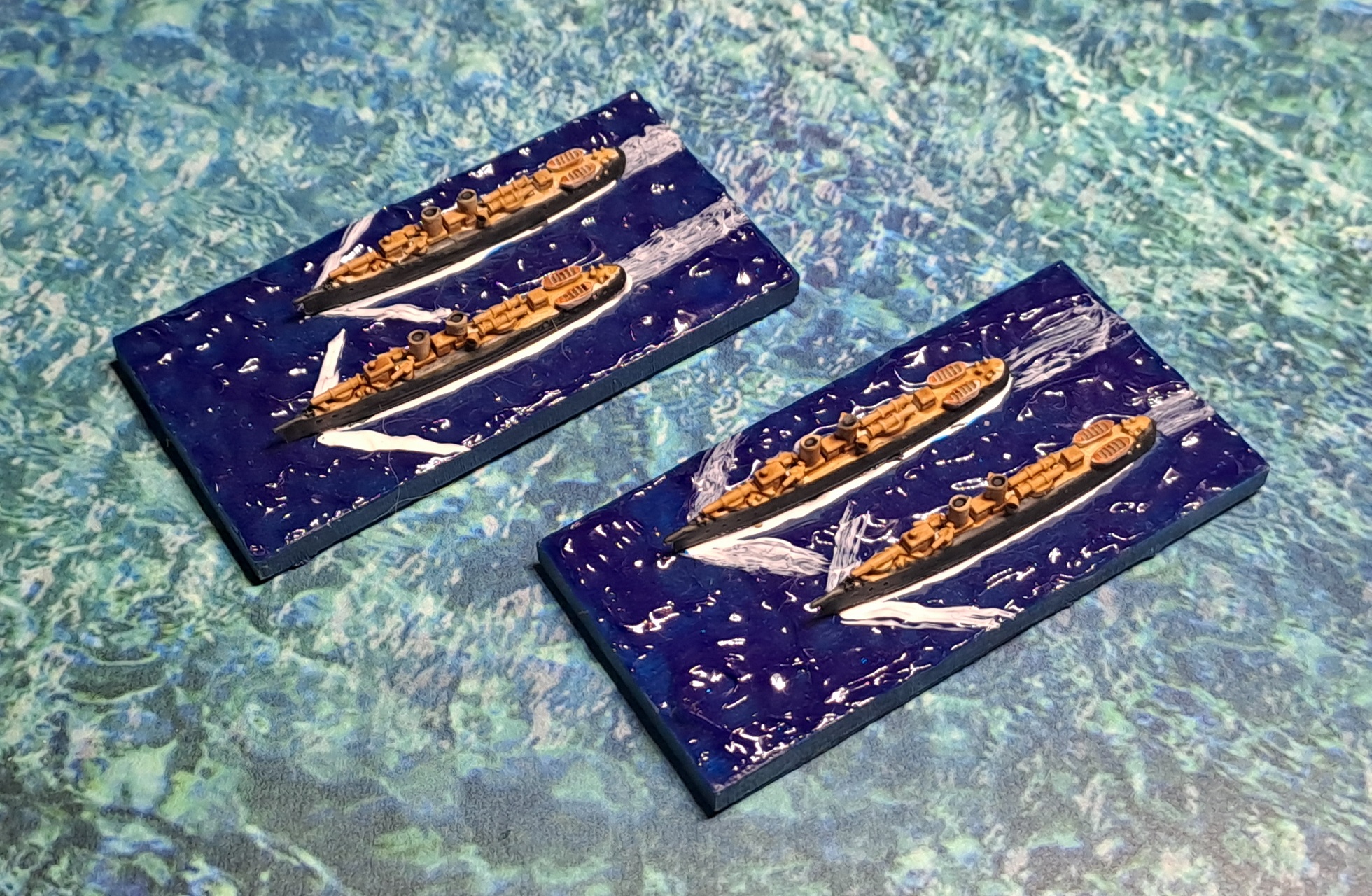
🇬🇧 In recent days, I managed to complete the Mistral-class torpedo boat squadron. ⚓
With their launch, the French squadron is now fully ready to embark on its first battle. 🇫🇷🌊

Of course, this is just the beginning — it will definitely be reinforced with additional units in the future.

The Mistral-class consisted of six French torpedo boats, all launched in 1901 and built at the Normand, Graville, and Loire shipyards. Based on the earlier Cyclone design, these vessels were the first French torpedo boats to feature proper splinter armour. A 25 mm thick nickel-steel armoured box protected their engine rooms, while a 9 mm deck offered additional protection. The added armour increased their displacement by 18 tons, slightly reducing speed (to 26 kts).

Mistral-class torpedo boats measured 47 metres in length with a beam of 5.15 metres and a draught of 1.6 metres. They displaced 113 tons standard, with a crew of 30.

Their armament included two 15-inch torpedo tubes and two 47 mm QF guns, making them capable of both offensive torpedo strikes and self-defence against smaller vessels. All six vessels served actively during World War I, performing coastal patrols, escort duties, and fast attack missions. They were decommissioned and broken up between 1924 and 1928.

* – description of the Mistral class by GMBoardgames.

🇵🇱 W ostatnich dniach udało mi się ukończyć dywizjon torpedowców klasy Mistral. ⚓
Z ich wodowaniem francuska eskadra jest już w pełni gotowa, by ruszyć do swojego pierwszego boju. 🇫🇷🌊

Oczywiście to dopiero początek — w przyszłości na pewno zostanie wzmocniona kolejnymi jednostkami.

Typ Mistral obejmował sześć francuskich torpedowców, wszystkie zwodowane w 1901 roku w stoczniach Normand, Graville i Loire. Oparte na wcześniejszym typie Cyclone, były pierwszymi francuskimi torpedowcami wyposażonymi w prawdziwy pancerz przeciwodłamkowy. Niklowo-stalowe pudło pancerne o grubości 25 mm chroniło siłownię, a dodatkowa pokładówka 9 mm wzmacniała ochronę. Dodanie pancerza zwiększyło wyporność o 18 ton i nieco obniżyło prędkość (do 26 węzłów).

Torpedowce typu Mistral miały długość 47 metrów, szerokość 5,15 metra i zanurzenie 1,6 metra. Wyporność standardowa wynosiła 113 ton, a załoga liczyła 30 ludzi. Uzbrojenie obejmowało dwie wyrzutnie torped kal. 15 cali oraz dwa działa szybkostrzelne kal. 47 mm.

Wszystkie sześć jednostek aktywnie służyło podczas I wojny światowej, wykonując zadania patrolowe, eskortowe i ataki torpedowe. Zostały wycofane i złomowane w latach 1924–1928.

* – opis Mistrali wg GMBoardgames.
🇬🇧 Summary:
– Small ships with a lot of details.

🇵🇱 Podsumowanie:
– Małe okręty z całkiem sporą ilością detali.

Gods of War: Togo – D’Entrecasteaux 🇫🇷 (🇬🇧EN/🇵🇱PL) Wtorek, List 25 2025 

🇬🇧 In recent days, I managed to complete the D’Entrecasteaux cruiser. ⚓ The French squadron as a whole is getting closer to completion and setting out to the open sea. 🇫🇷🌊

In the mid-1890s two concepts of fleet development clashed within the French Navy. One – more traditional – supported the construction of small reconnaissance cruisers and large armoured cruisers. The other – associated with the Jeune École (Young School) – called for the creation of large, fast, armoured protected cruisers intended to serve as raiders or flotilla leaders in the colonies. The construction of D’Entrecasteaux was the result of the temporary dominance of the latter concept.

The ship was built by the Société Nouvelle des Forges et Chantiers de la Méditerranée and entered service in 1899 (five years after being launched). Her displacement was nearly 8,000 tons and her maximum speed was about 19 knots.

Her armament consisted of two 240 mm guns (no other French cruiser of that era carried such large guns), twelve 138 mm guns, twelve 47 mm guns, six 37 mm guns, and four torpedo tubes.

After entering service, she became the flagship of the French fleet stationed in Indochina. She took part in the suppression of the Boxer Rebellion and later served during the First World War. After the war, in 1927, she was sold to Poland, where she was first renamed the training hulk ORP Król Władysław IV, and later ORP Bałtyk. She remains the largest ship in the history of the Polish Navy.

* – description of the D’Entrecasteaux by GMBoardgames.

🇵🇱 W ostatnich dniach udało mi się ukończyć krążownik D’Entrecasteaux. ⚓ Eskadra francuska jako całość jest coraz bliższa ukończenia i wyruszenie na pełne morze. 🇫🇷🌊

W połowie lat 90. XIX wieku we francuskiej marynarce ścierały się dwie koncepcje rozwoju floty. Jedna – bardziej tradycyjna – opowiadała się za budową małych krążowników rozpoznawczych i dużych krążowników pancernych. Druga – związana ze szkołą „Jeune École” (Młoda Szkoła) – postulowała tworzenie dużych, szybkich, opancerzonych krążowników pancernopokładowych, które miały służyć jako rajdery bądź liderzy flotylli w koloniach. Budowa D’Entrecasteaux była wynikiem tymczasowej przewagi tej drugiej koncepcji.

Okręt zbudowała stocznia Société Nouvelle des Forges et Chantiers de la Méditerranée. Wszedł do służby w 1899 roku (pięć lat po wodowaniu). Jego wyporność wynosiła niemal 8000 ton, a prędkość maksymalna około 19 węzłów.
Uzbrojenie składało się z dwóch dział kal. 240 mm (żaden inny francuski krążownik tej epoki nie miał tak dużych dział), 12 dział 138 mm, 12 dział 47 mm, 6 dział 37 mm oraz czterech wyrzutni torped.

Po wejściu do służby stał się okrętem flagowym francuskiej floty stacjonującej w Indochinach. Wziął udział w tłumieniu powstania bokserów, a następnie służył w czasie I wojny światowej. Po wojnie, w 1927 roku, został sprzedany Polsce, gdzie najpierw przemianowano go na hulk szkolny ORP „Król Władysław IV”, a później na ORP „Bałtyk”. Pozostaje największym okrętem w historii polskiej marynarki wojennej.

* – opis D’Entrecasteaux wg GMBoardgames.

🇬🇧 Summary:
Just like the other French ships, the model is very enjoyable to paint.
However, it requires great caution when working with the lifeboat mounts — unfortunately, I wasn’t able to avoid damaging them.
A cruiser equipped with heavy artillery is something I can only envy as a commander of the Rossiyskiy Imperatorskiy Flot. On top of that, it has a standard amount of medium artillery. Without a doubt, it will be a reliable part of the French squadrons.

🇵🇱 Podsumowanie:
Tak jak pozostałe francuskie okręty, model jest bardzo przyjemny w malowaniu
Wymaga jednak dużej ostrożności przy pracy z mocowaniami szalup — niestety mnie nie udało się uniknąć ich uszkodzenia.
Krążownik wyposażony w ciężką artylerię to coś, czego jako dowódca Rossiyskiy Imperatorskiy Flot mogę tylko zazdrościć. Do tego posiada standardową ilość artylerii średniej. Bez wątpienia będzie pewnym elementem francuskich eskadr.