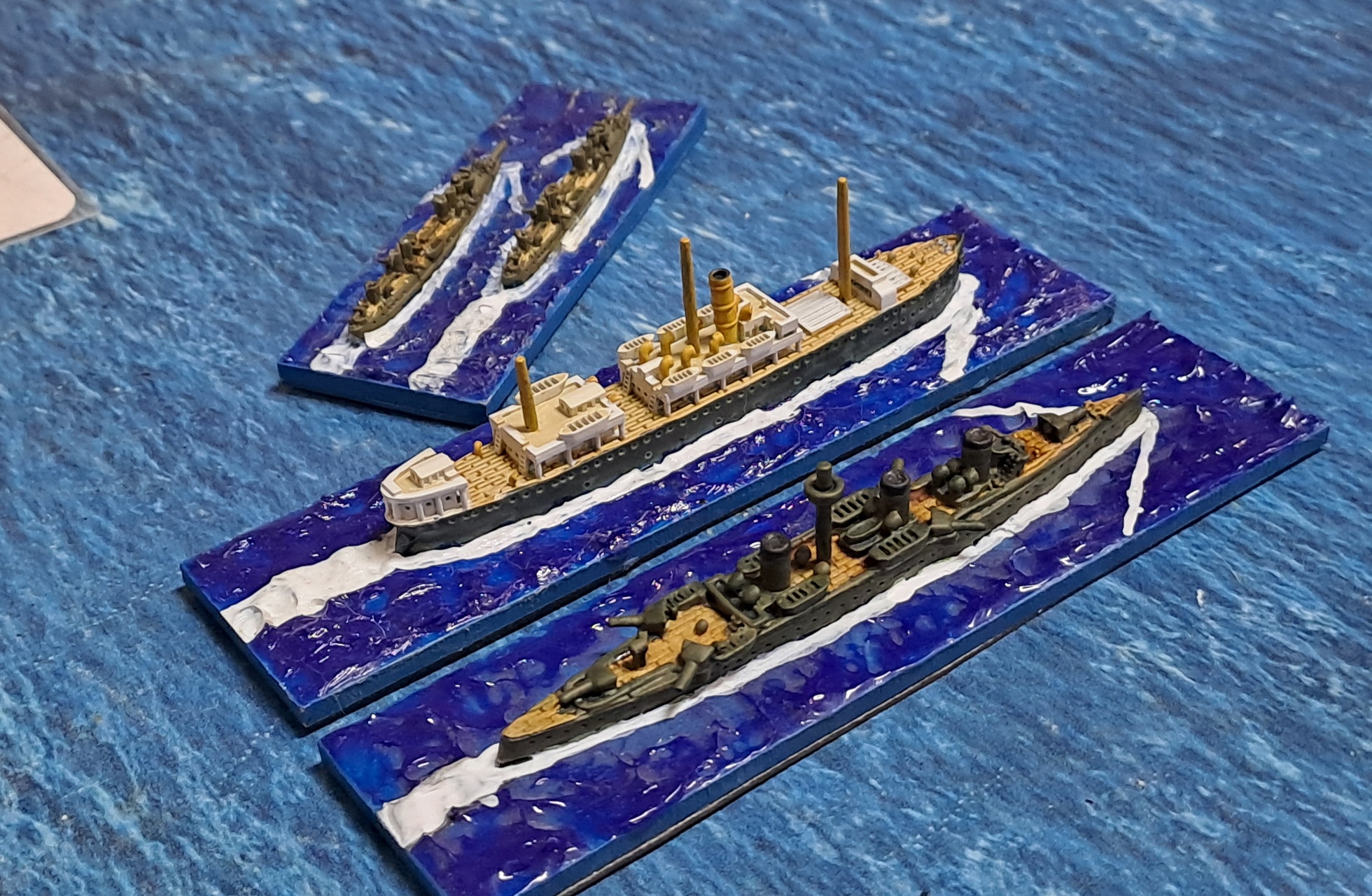
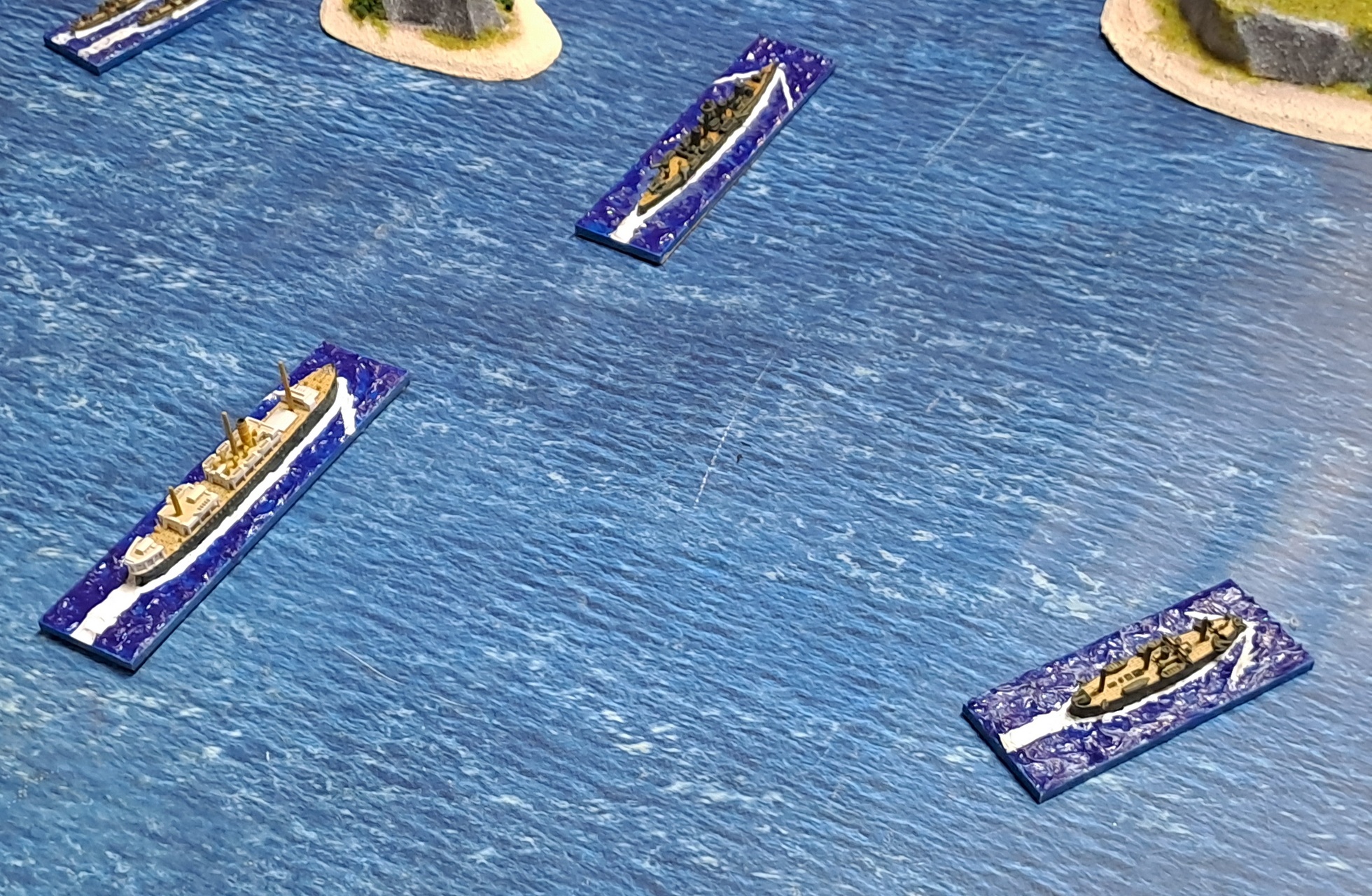
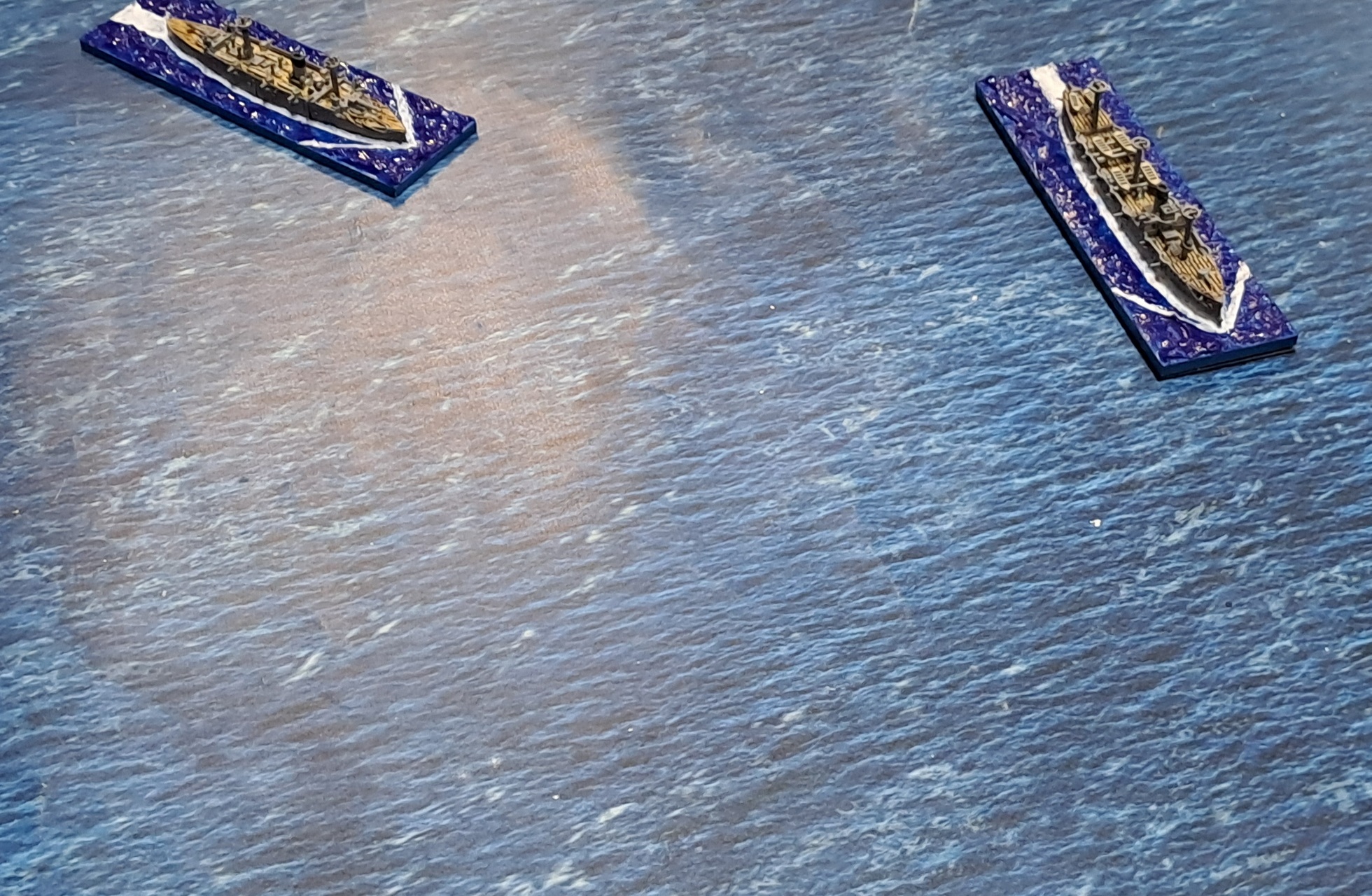
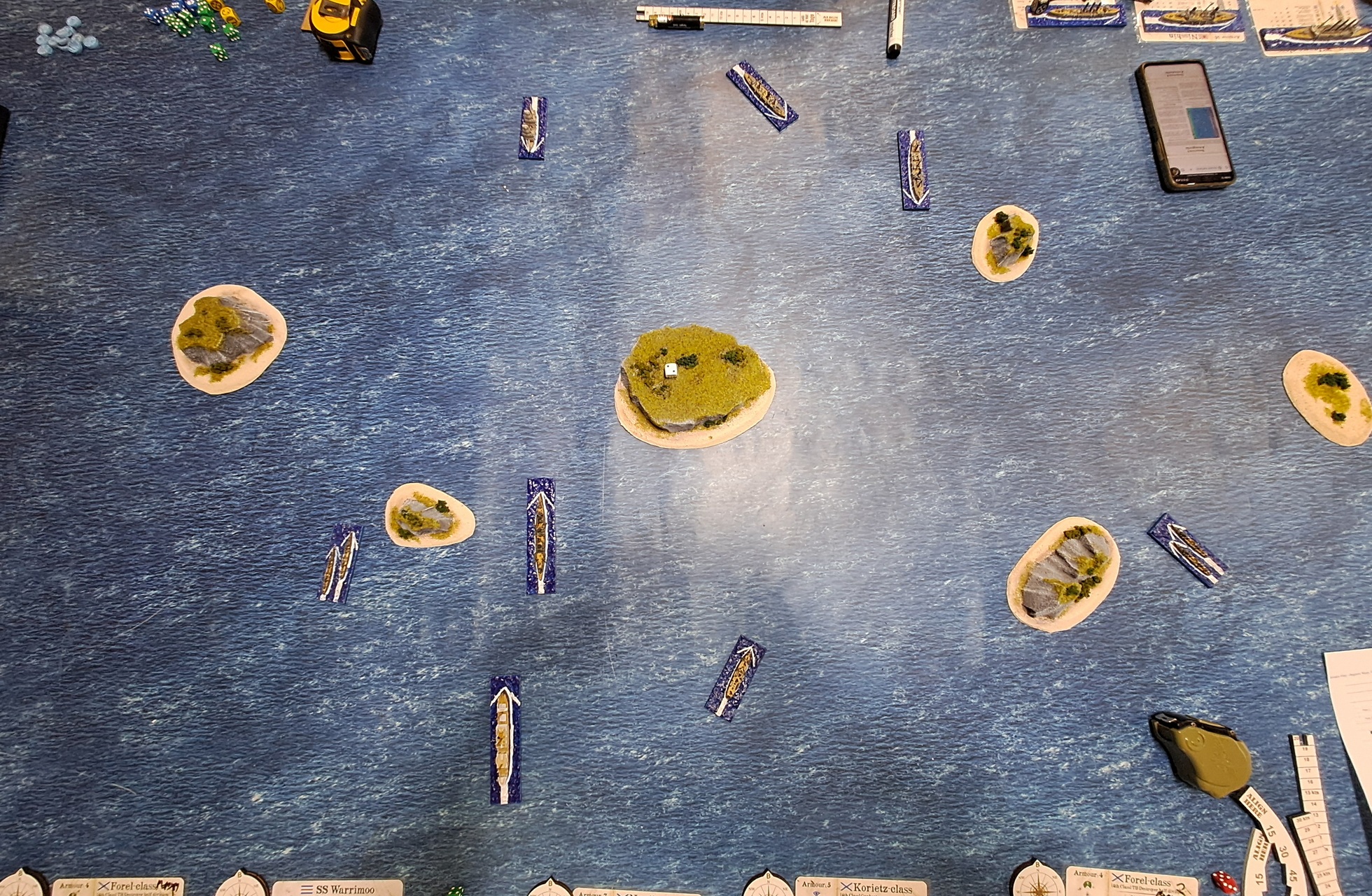
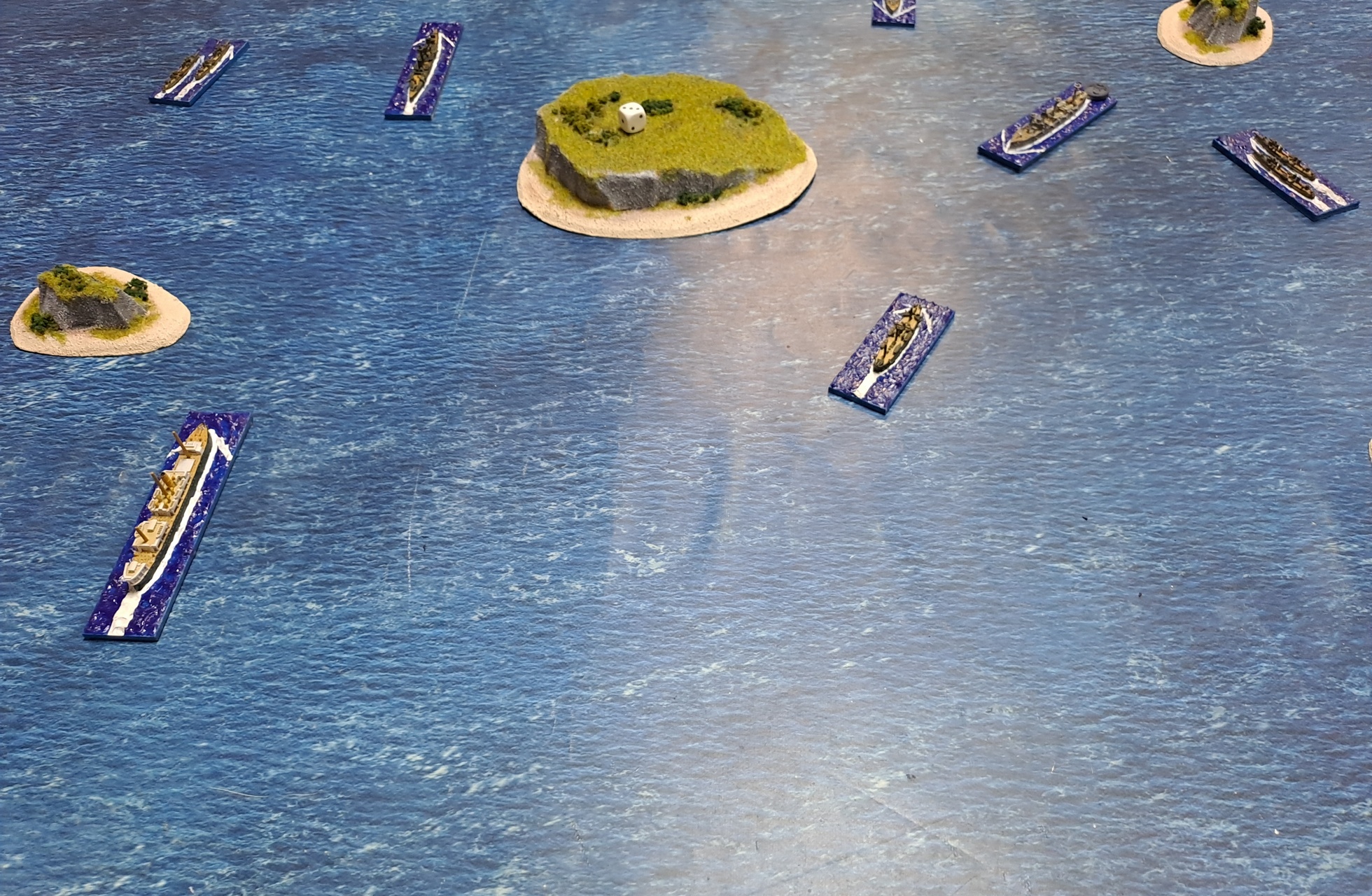
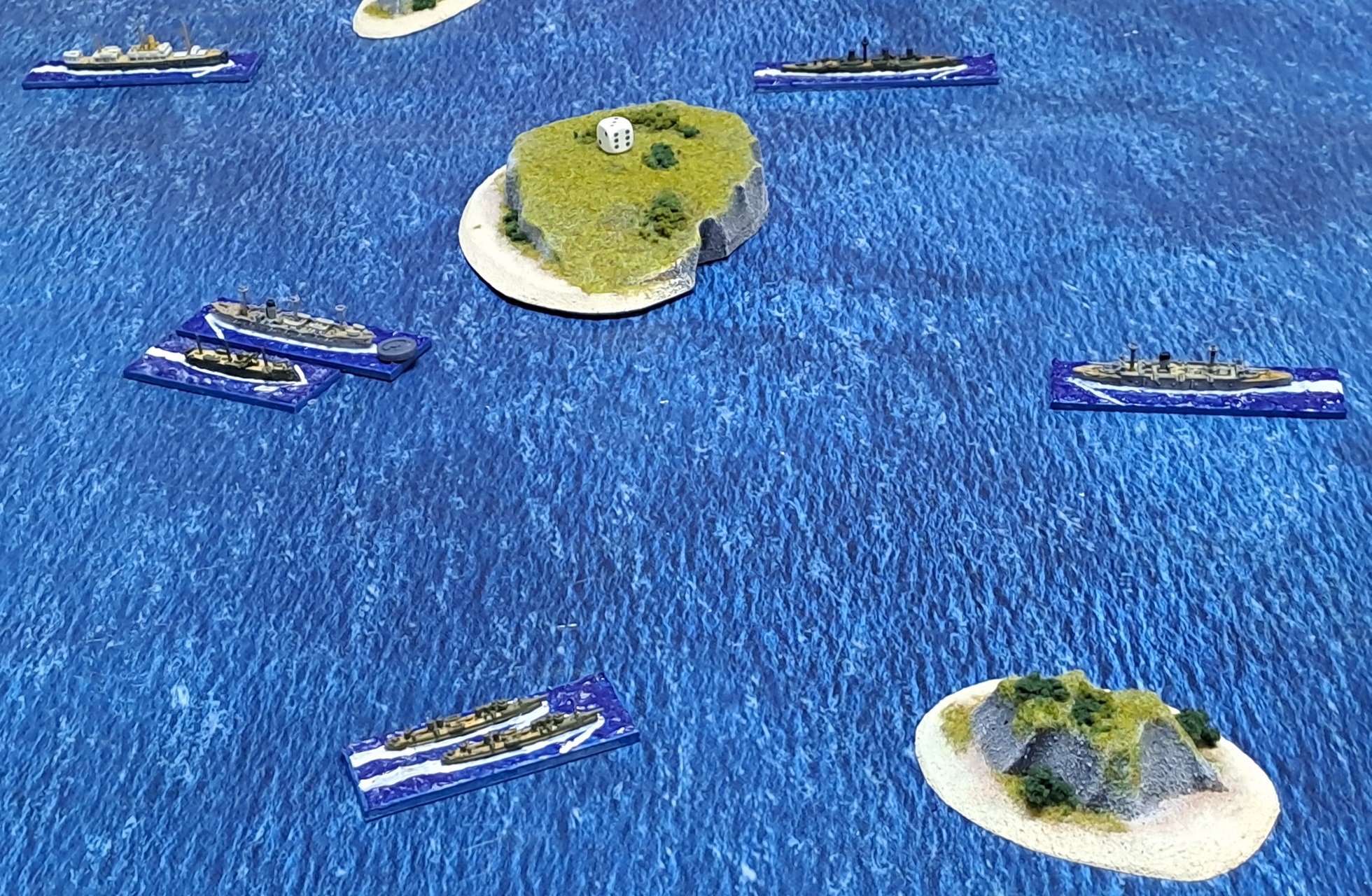
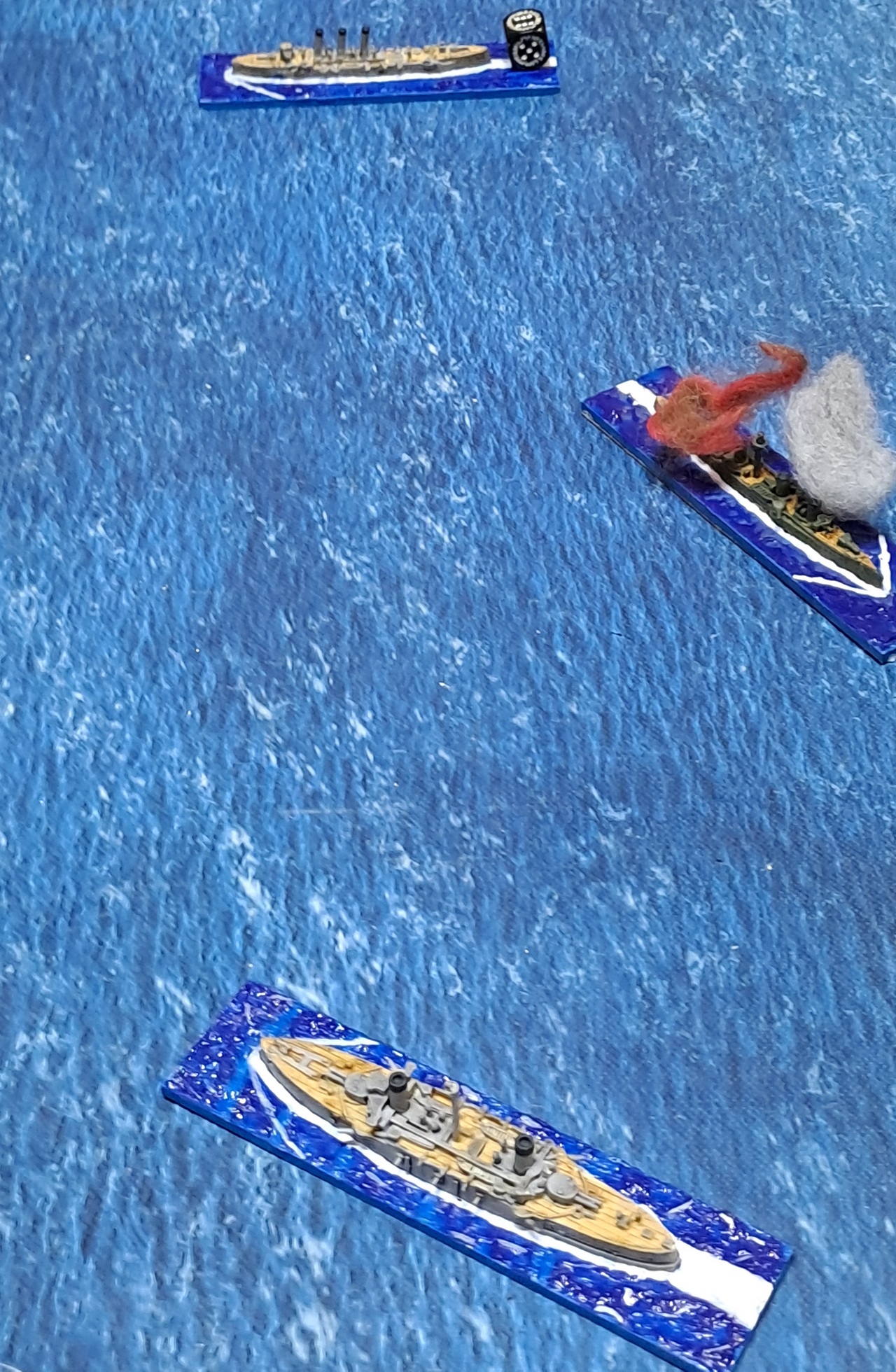
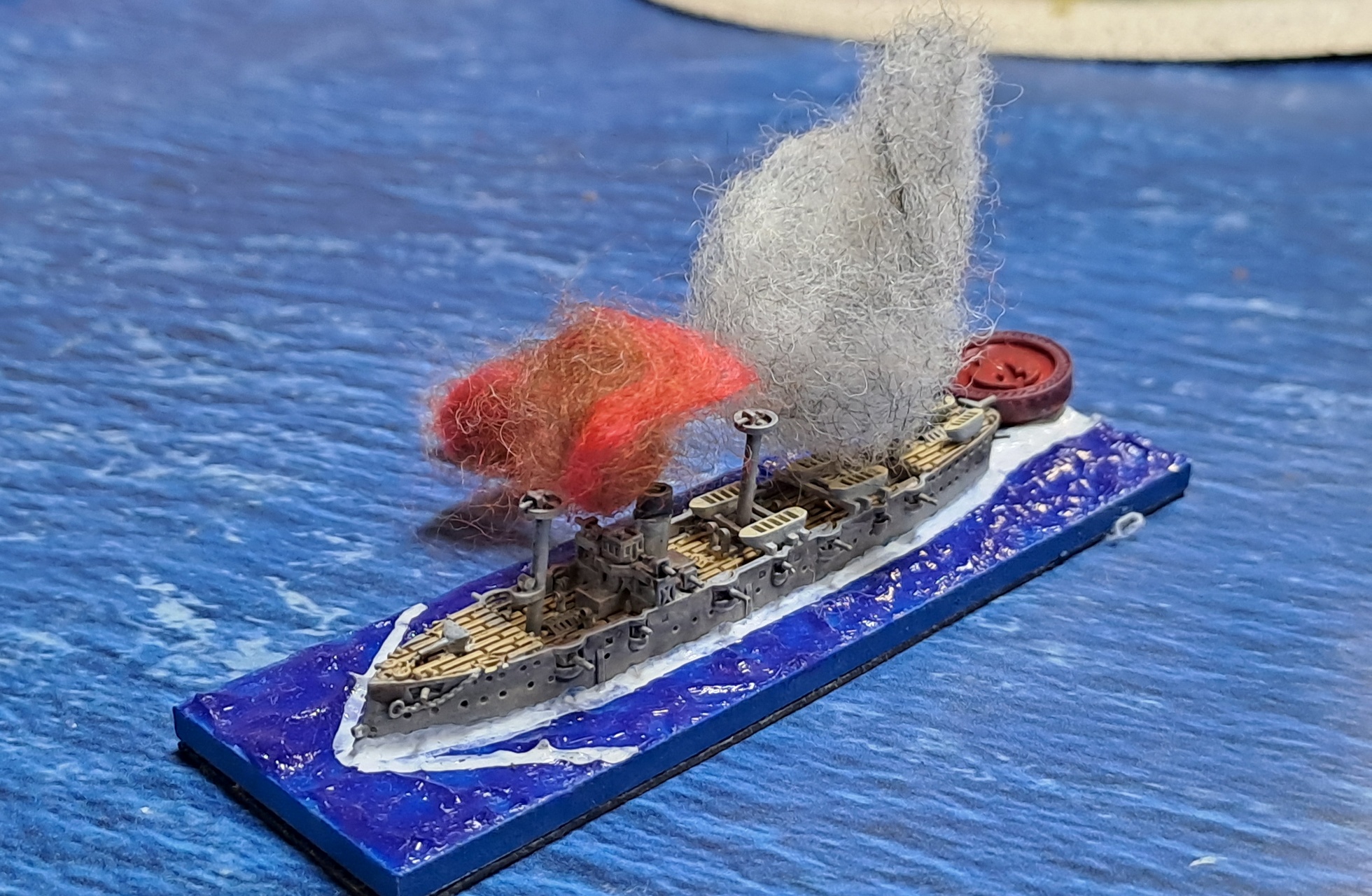
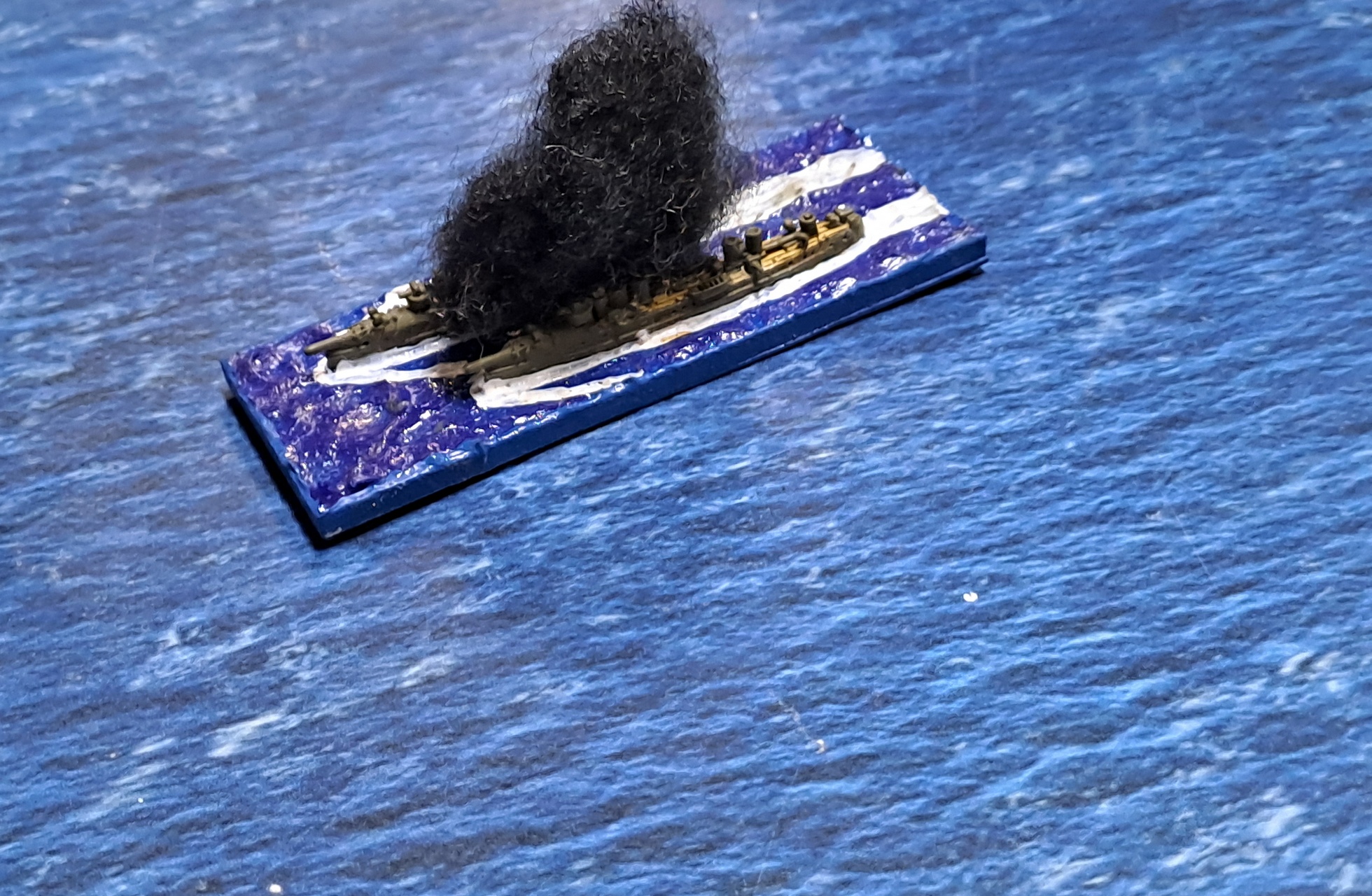
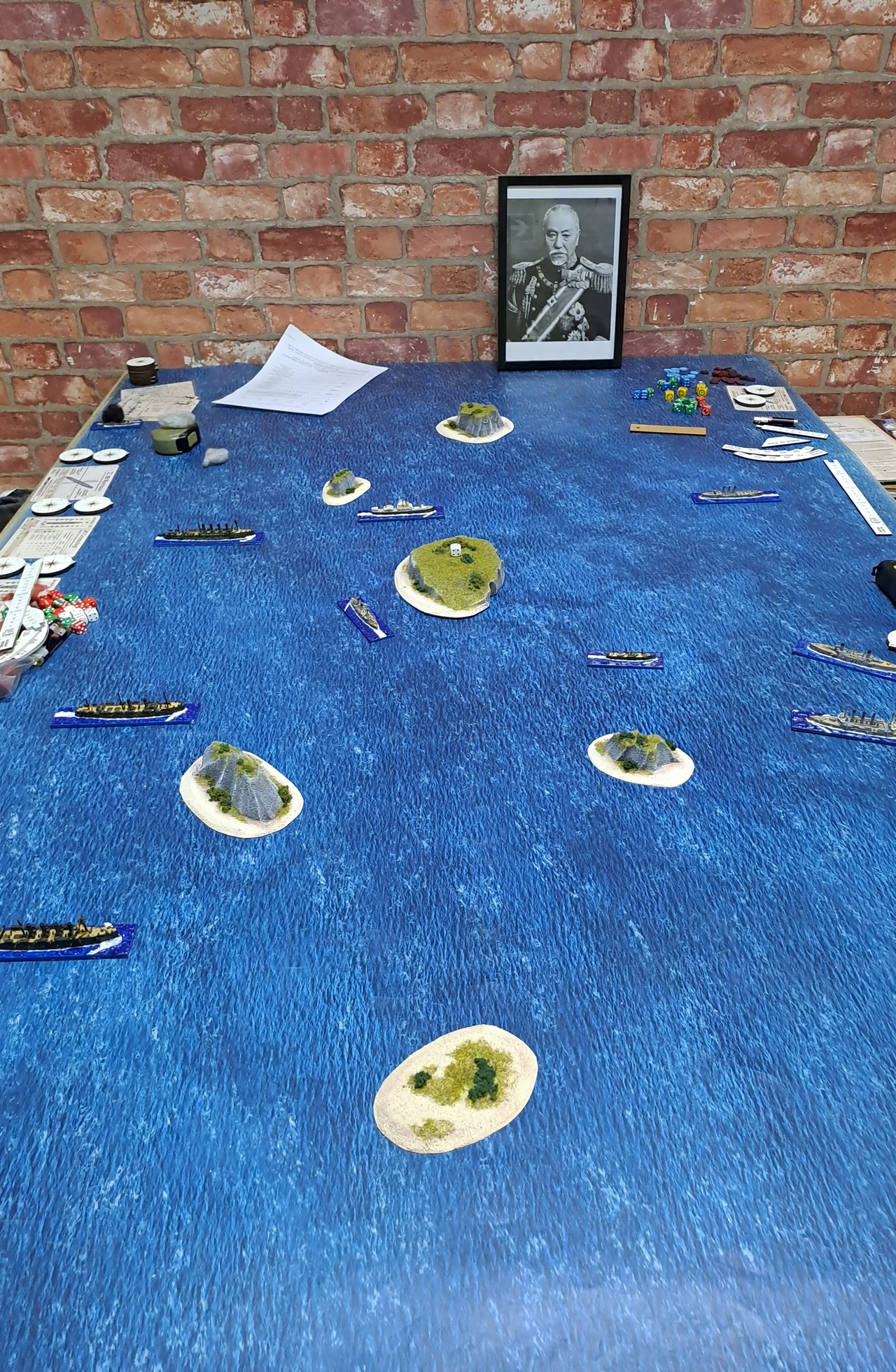
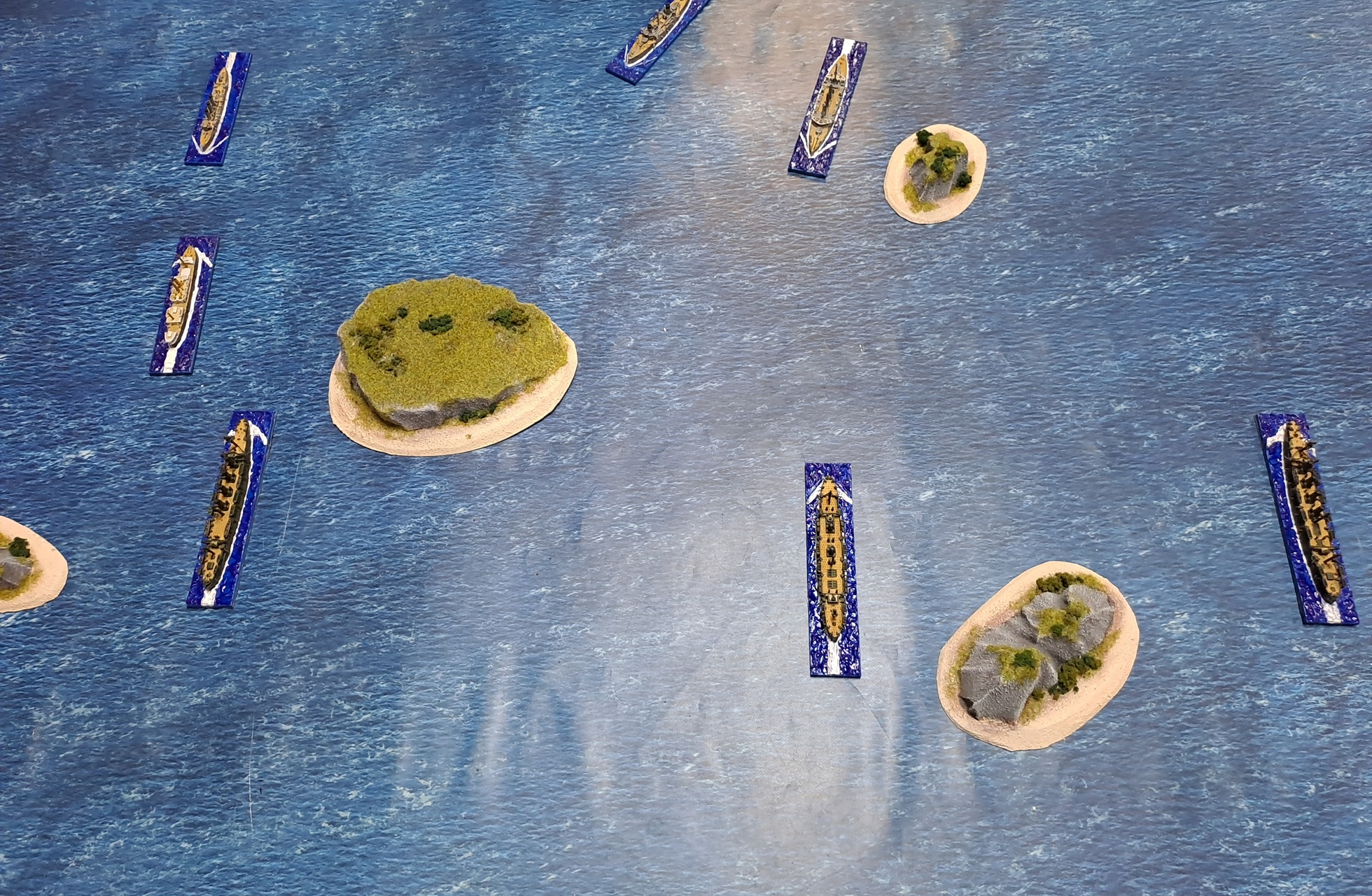
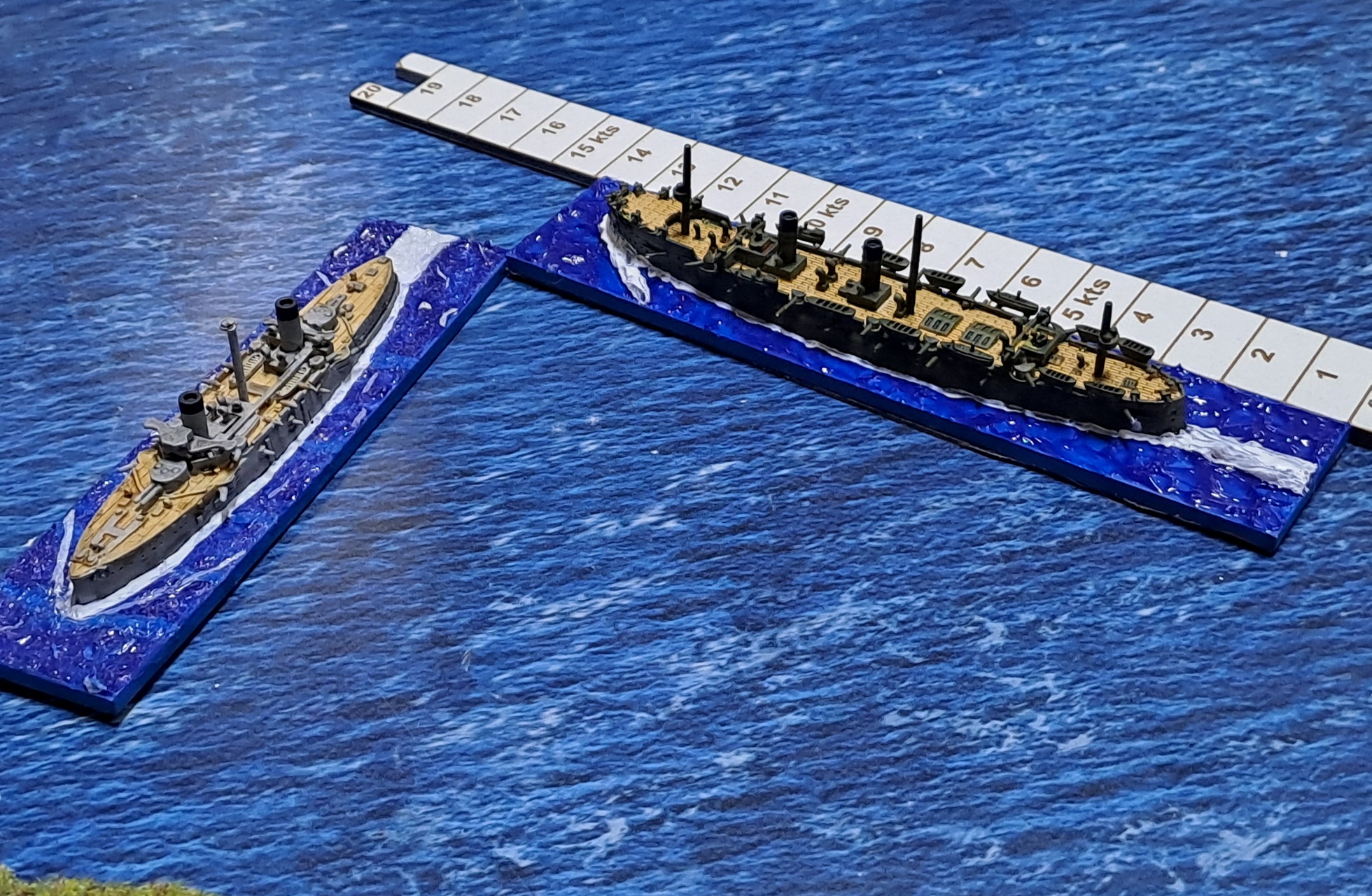
🇬🇧 Last Thursday at the Bolter club in Wrocław, Cornholio and I played a 1,810-point game, following the format of this year’s Polish Championships in Togo. I commanded the Russian fleet, which clashed with Łukasz’s Japanese fleet. We played a randomly drawn scenario, “Vanguard” from the Scenario Book (according to my knowledge it’s in translation), in which third- and fourth-class ships deploy in the first wave, while first- and second-class units enter the battle in turn three.
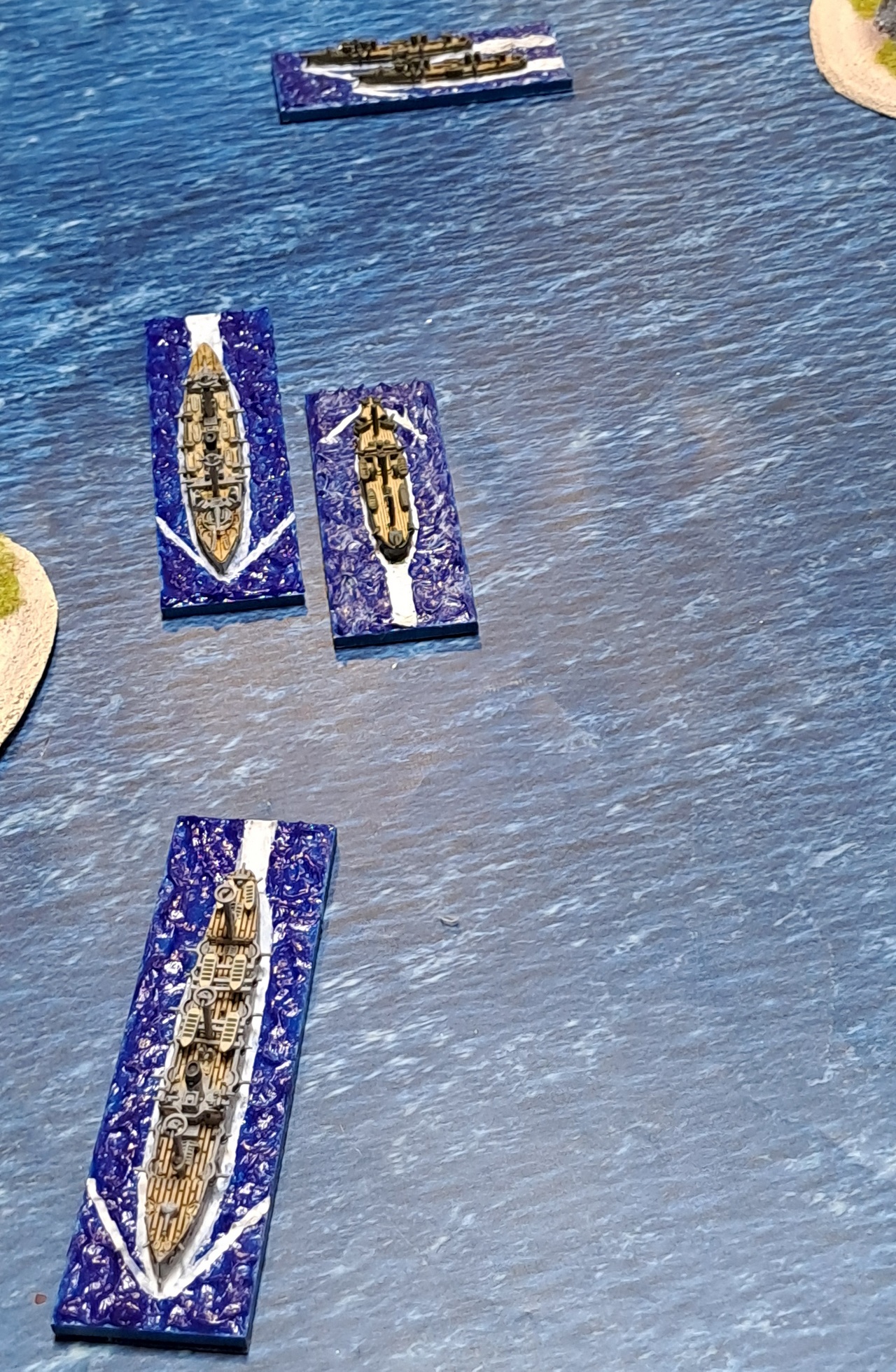
It was also the first game in which I fielded the recently released cruisers of the Vladivostok Squadron, which I wrote about [here]. The battle was full of turning points that you can see in the photo report below — numerous torpedo attacks (which, apart from a single hit, achieved nothing), both failed and successful ramming attempts, and daring raids into the enemy’s rear.
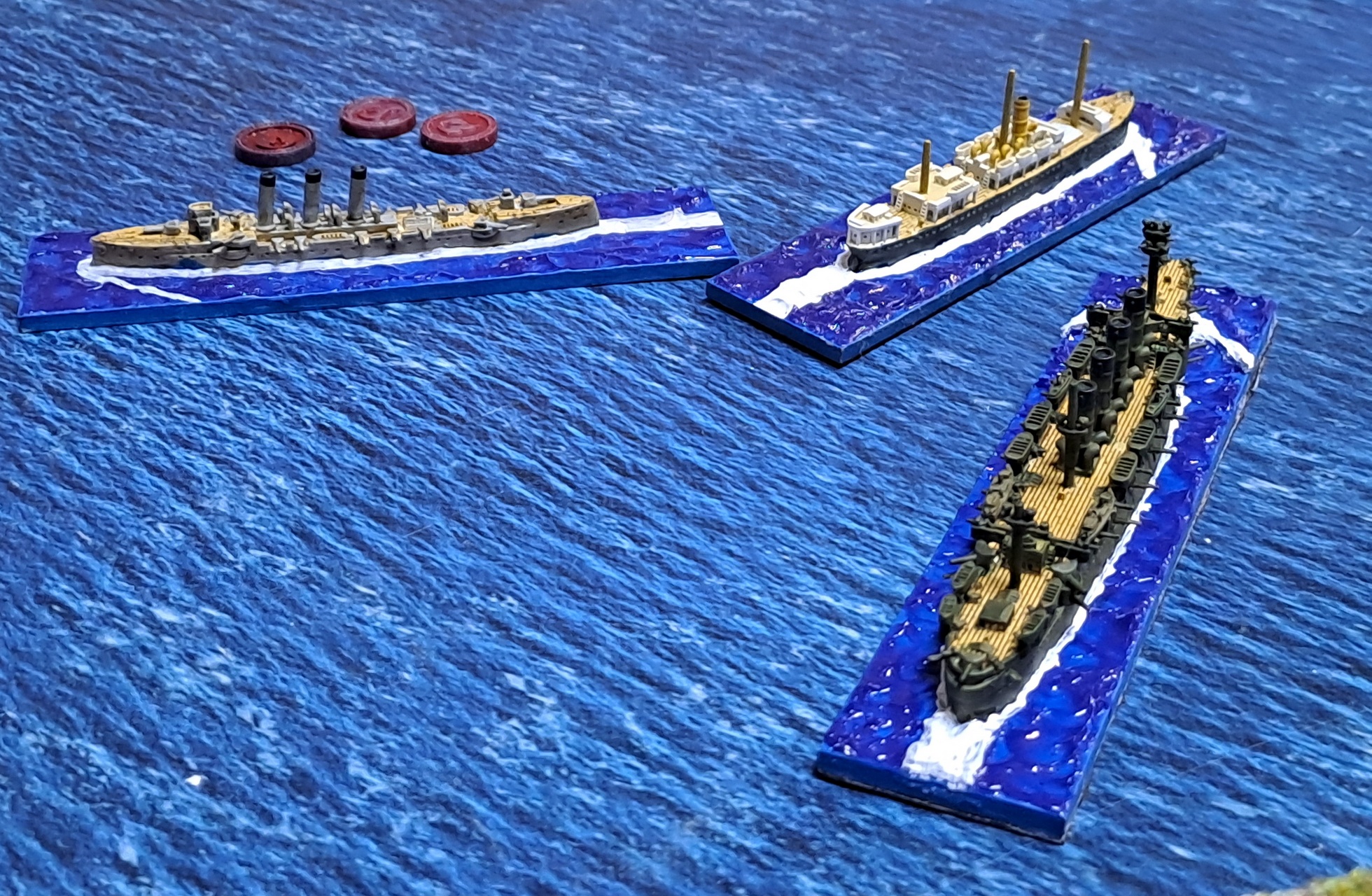
On the Japanese side, the following ships took part: Izumo, Kasuga, Nisshin, Naniwa, Chiyoda, Katsuragi, and the civilian ship SS Warrimoo.
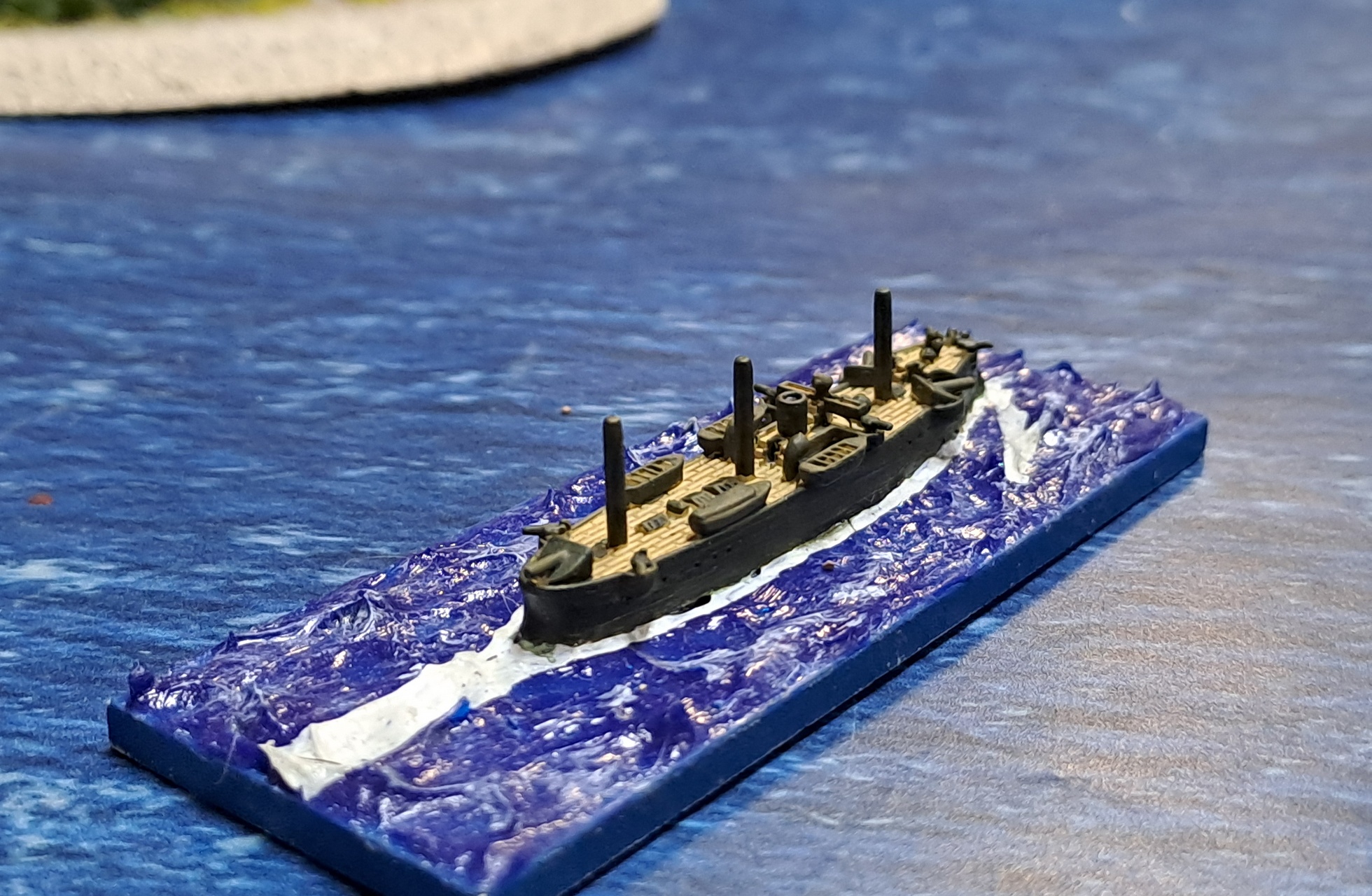
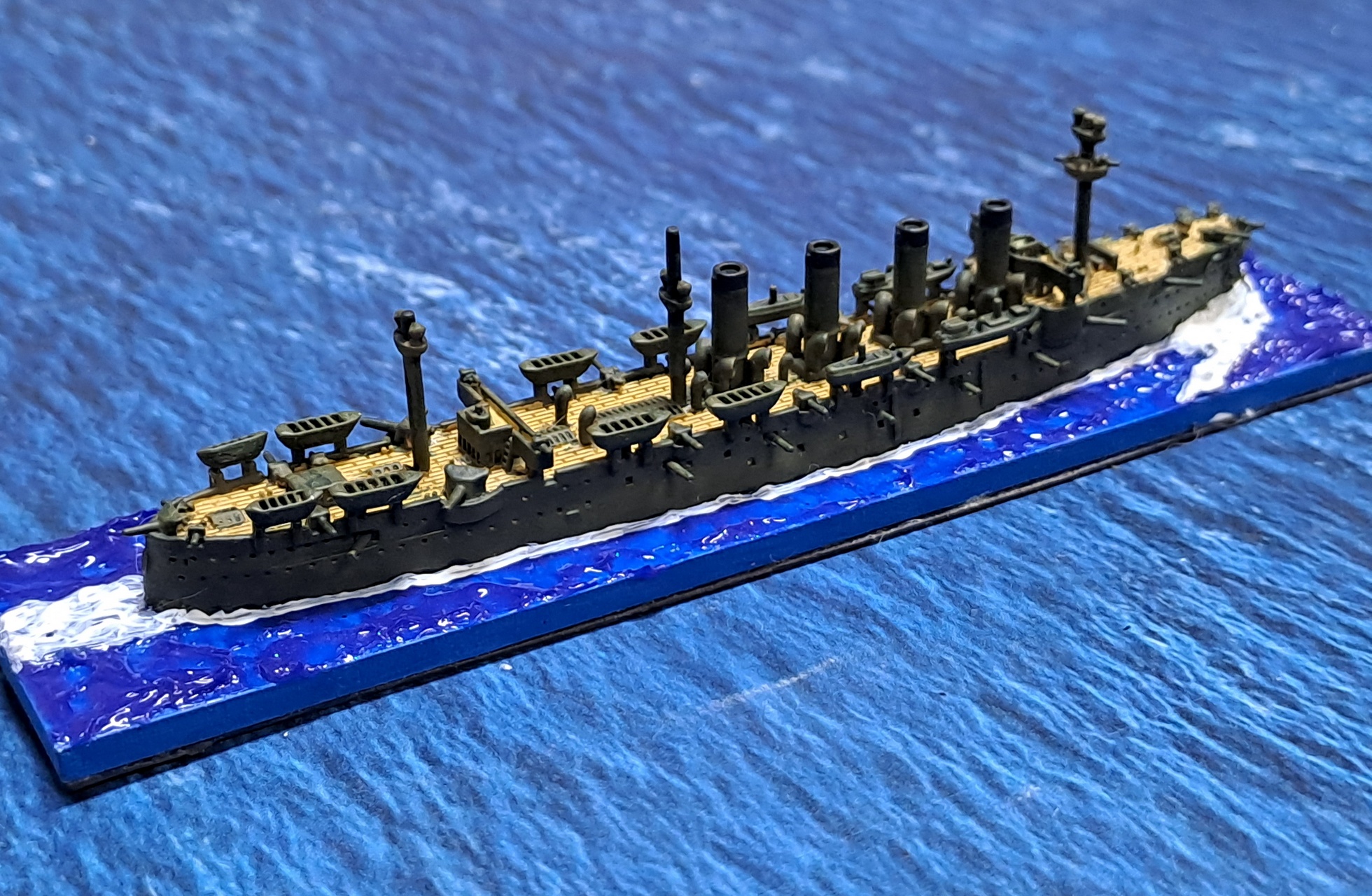
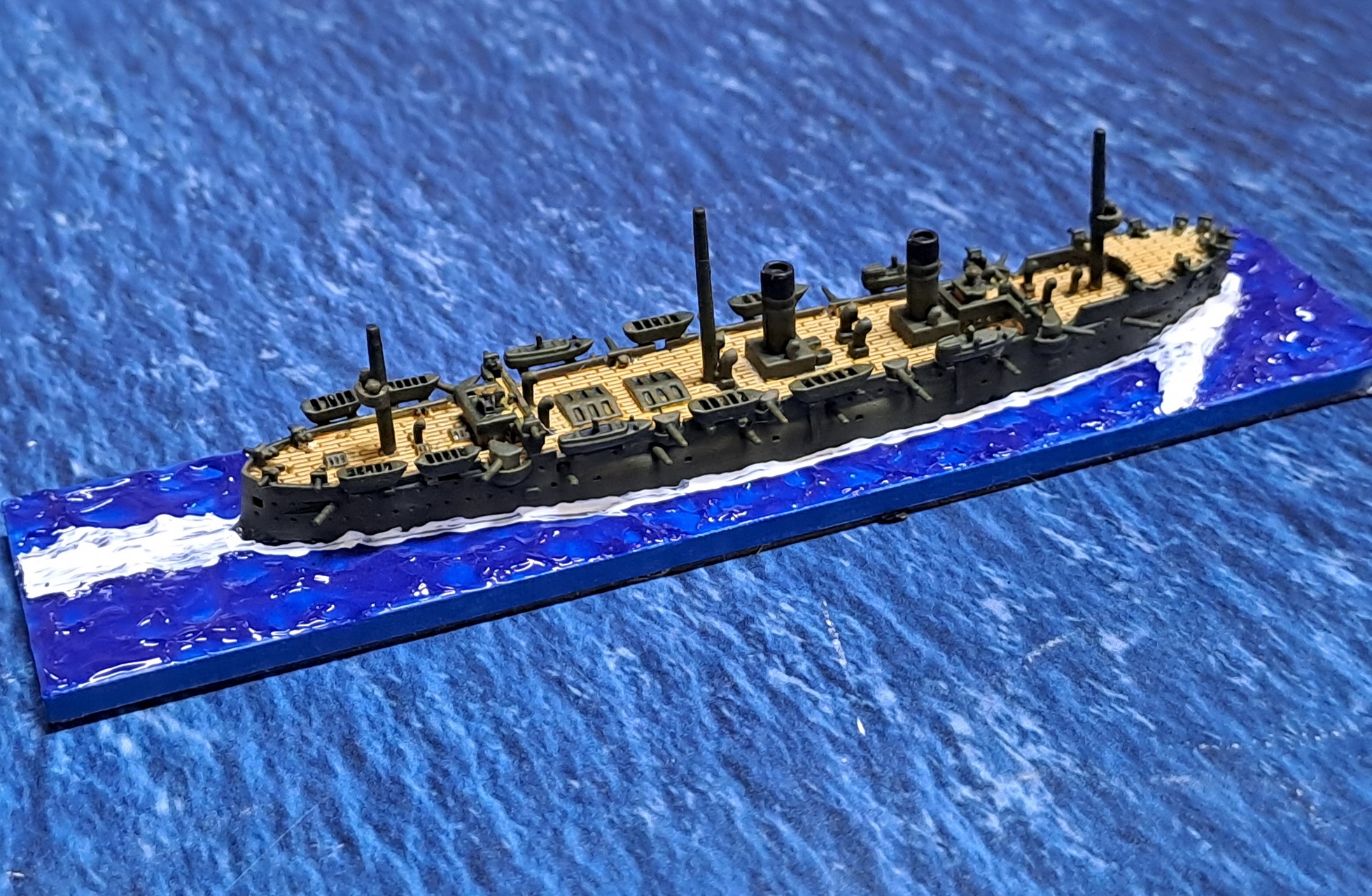
On the Russian side, the squadron included: Rossiya, Gromoboi, Rurik, Novik, Koreyets, two squadrons of Forels, and a vessel strikingly similar to the SS Warrimoo.
🇵🇱 W ostatni czwartek we wrocławskim klubie Bolter z Cornholio rozegraliśmy grę na 1810 punktów, format tegorocznych Mistrzostw Polski w Togo. Flota rosyjska którą dowodziłem starła się z japońską flotą Łukasza. Zagraliśmy wylosowany scenariusz „Awangarda” z Księgi Scenariuszy, w którym okręty i statki klasy trzeciej oraz czwartej wypływały w pierwszym rzucie. Jednostki klasy pierwszej i drugiej dołączały do bitwy w turze trzeciej. Była to pierwsza gra w której wykorzystałem niedawno wydane krążowniki eskadry Władywostockiej o której pisałem tutaj. W bitwie było wiele momentów zwrotnych które można obejrzeć w poniższej fotorelacji, a były to liczne ataki torpedowe – które poza jedną celną torpedą nic nie zrobiły, były nieudane i udane próby taranowania czy rajdy na tyły przeciwnika.
I tak po stronie Japońskiej w starciu wzięły udział następujące okręty: Izumo, Kasuga, Nisshin, Naniva, Chiyoda, Katsuragi i statek SS Warrimoo. Po stronie rosyjskiej eskadry były: Rossiya, Gromobój, Ruryk, Nowik, Koriejc, dwa dywizjony Foreli oraz jednostka łudząco przypominająca SS Warrimoo.























🇵🇱 Podsumowanie:
– starcie w okolicach Port Artur zakończyło się zwycięstwem floty carskiej Rosji nad flotą cesarstwa Japonii 64 do 34.
– nowe rosyjskie krążowniki po pierwszym użyciu wywołały u mnie pozytywne wrażenie i na pewno jeszcze nie raz wrócą na stół.
– nie jestem pewien czym zagram na Mistrzostwach Polski 2025, chcę mieć rozpiskę uniwersalną pod scenariusze, otwarte pytanie jest jedno – czy mieć we flocie pancernik.
– rozpiska floty japońskiej:
– rozpiska floty rosyjskiej:
🇬🇧 Summary:
– The battle near Port Arthur ended with a victory for the Tsarist Russian fleet over the Imperial Japanese fleet, 64 to 34.
– The new Russian cruisers made a very positive impression on me after their first outing, and they will certainly return to the table many more times.
– I’m not yet sure what I’ll play at the Polish Championships 2025 — I want to have a versatile list for the scenarios. The open question is just one: should the fleet include a battleship?
– Japanese roster sheet:
– Russian roster sheet:
 tancreddebeauville
 Tancred’s Tabletop Tales
Lots of action there! 🙂 I think I’d include a battleship, unless you think your armoured cruisers could tackle the opposition!
There are a lot of scenarios where it’s good to have more warships. Anyway I have one list with Oslabia and a lot others 😉 .
Wow matey lots of fun had I bet😉.
There were a lot of action there🙂.